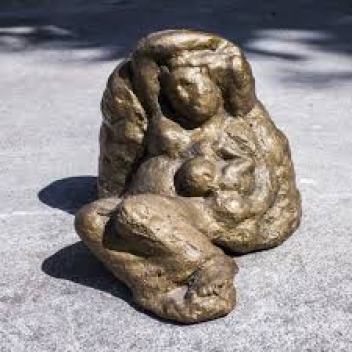
Noé Katz nació en la Ciudad de México en 1953 de padres judíos. Se inició como diseñador gráfico luego de estudiar en la escuela del INBA, en la Ciudadela, y continuó su formación en la academia de Bellas Artes de Florencia, con una beca de la embajada de Italia en México y de la Secretaría de Relaciones Exteriores.Ha incursionado en el dibujo, la pintura, la escultura y la obra mural, además de dedicarse al diseño editorial. Su obra forma parte de las colecciones del museo de arte moderno de México y otros museos del extranjero.Entre sus premios se puede mencionar el premio en el Museo Carillo Gil con el tema “Sobre el humor”. El premio de la Cámara Nacional de las Artes Gráficas en México, el premio de la revista Escala de Aeroméxico a la mejor portada con motivo del Mundial Francia ’98, el premio de la Cámara de Artes Gráficas de Brasil por su obra “El Ángel”, y quizá uno de los más representativos: El premio por su timbre postal conmemorativo a los 100 años de presencia judía en México. Adaptado de Enlace Judío de México
_________________________________________
Noé Katz was born in Mexico City in 1953 to Jewish parents. He began as a graphic designer after studying at the INBA school, in the Ciudadela, and continued his training at the Academy of Fine Arts in Florence, with a scholarship from the Italian embassy. in Mexico and the Ministry of Foreign Affairs. He has ventured into drawing, painting, sculpture and mural work, in addition to dedicating himself to editorial design. His work is part of the collections of the Museum of Modern Art in Mexico and other museums abroad. Among his awards we can mention the award at the Carillo Gil Museum with the theme “On humor”. The award from the National Chamber of Graphic Arts in Mexico, the award from Aeroméxico’s Escala magazine for the best cover on the occasion of the France ’98 World Cup, the award from the Brazilian Chamber of Graphic Arts for his work “El Ángel” , and perhaps one of the most representative: The award for its commemorative postage stamp for 100 years of Jewish presence in Mexico. Adapted from Enlace Judío de México
“My imagination leads me to design three-dimensional ideas. Sometimes I create on a smaller scale, imagining them being built in a much larger scale such as public spaces. Besides sculpture, I’m a full time painter who loves to let my imagination flow and I take pride in my technique as well. I enjoy the use of colors and smooth surfaces. I think that a person who wants to feel alive has to read, travel, love, and let himself be loved.” Noé Katz
_______________________
“Mi imaginación me lleva a diseñar ideas tridimensionales. A veces creo en una escala más pequeña, imaginando que se construyen en una escala mucho mayor, como los espacios públicos. Además de la escultura, soy un pintor a tiempo completo al que le encanta dejar fluir mi imaginación y también me enorgullezco de mi técnica. Disfruto el uso de colores y superficies lisas. Creo que una persona que quiere sentirse viva tiene que leer, viajar, amar y dejarse amar”. Noé Katz
____________________________________
El premio por su timbre postal conmemorativo a los cien años de presencia judía en México/The prize for its commemorative postage stamp for one hundred years of Jewish presence in México
Gertrud Herta Sojková Baum nació en 1909 en Berlín de padres judíos checos. Su padre, Rudolf Sojka, era ingeniero y tenía tratos comerciales con el presidente ecuatoriano Eloy Alfaro relacionados con el sistema ferroviario ecuatoriano. Pronto la familia se mudó a Praga, Checoslovaquia. Se matriculó en la Academia de las Artes de Prusia en Berlín. Su talento como pintora la llevó a exponer en Berlín; Con el ascenso al poder de Hitler y la invasión de Checoslovaquia por el Tercer Reich, la familia judía de Sojka se vio amenazada. En 1938, Sojka se casó con Dezider Schwartz. En 1942, la pareja fue transportada al campo de concentración de Majdanek, luego al campo de trabajo de Sered y luego, en 1944, al campo de concentración de Auschwitz. Trude es trasladado al campo de concentración de Gross-Rosen, liberado por los rusos. Nunca volvería a encontrar a Dezider Schwartz. Pero encontró en la Cruz Roja un periódico de su hermano mayor, Waltre, que buscaba a su familia. Vivía en Ecuador desde 1938. Waltre había sido invitado a Ecuador para dar conferencias de química en la Universidad Central del Ecuador y, decidió quedarse allí. Trude decidió unirse a ellos. “Cuando llegué al puerto de Guayaquil , mi hermano me esperaba con los brazos abiertos.” “Solo que cuando salí del barco, fui corriendo directo a abrazar un racimo de plátanos”, solía bromear Sojka. Sojka estaba fascinado por la cultura, los pueblos indígenas y el paisaje. Ella descubre es el arte autóctono y aborigen , que comienza a estudiar cuanto antes: una fuente de inspiración para sus propias obras. Sojka comienza a trabajar para su hermano y su esposa, tanto en su fábrica como en su tienda de artesanías, llamada AKIOS, (Sojka escrito al revés), en el Centro Histórico de Quito. Cuando Sojka llegó a Guayaquil, conoció a un buen amigo de su hermano Hans Steinitz, también sobreviviente del Holocausto, quien logró huir del campo de concentración de Sachsenhausen. Se casaron. Luego, la artista se dedica casi por completo a su arte. Por estos tiempos conoce a grandes artistas ecuatorianos como Gilberto Almeida, Víctor Mideros, Manuel Rendón o, durante los 90, o Pilar Bustos. Incluso llega a enseñar escultura a Oswaldo Guayasamín. Sus primeras pinturas en Ecuador, creadas en 1950, representan sus experiencias en Auschwitz. También trabajó mucho en torno al significado de su apellido: Sojka, un pájaro que deambula por los bosques del este de Europa. Posteriormente, volvió a estudiar, pero esta vez profundamente, el arte precolombino, especialmente el arte indígena tradicional ecuatoriano y sus diferentes divinidades. Por eso, introdujo a muchas de sus figuras en su forma de pintar expresionista europea, que es única. Mientras tanto, sus pinturas se volvieron más alegres: la naturaleza, el universo, las oraciones, los recuerdos nostálgicos de su amada Checoslovaquia se convirtieron en sus temas principales. A finales del siglo XX pintó muchas más figuras tiernas. Las obras de Trude Sojka también se consideran muy especiales debido a su técnica. La artista utilizó cemento, un material muy duro y de secado rápido, para realizar sus pinturas, al igual que haría sus esculturas, dando una segunda dimensión a la superficie generalmente plana. Se le ocurrió la idea porque le encantaba trabajar con arcilla, pero el cemento era más barato y desafiante. Para fijar el cemento a la superficie de madera o cartón, utilizó un pegamento que su hermano Walter Sojka, un químico, inventó solo para ella. Además, fue pionera en Ecuador, y probablemente también en América Latina, en utilizar materiales reciclados dentro de sus obras de arte, como vidrios rotos, piezas de metal, estructuras de ruedas, tejas, tapas de cubos de basura. Con motivo del 90 cumpleaños de Sojka, la Casa de la Cultura Ecuatoriana ” Benjamín Carrión ” le rindió homenaje, nombrándola “Artista emérita” y se realizó una exposición retrospectiva de sus obras. En 2001, Sojka sufrió un derrame cerebral. Logró superarlo con un mínimo de pérdida de memoria. Continuó haciendo pinturas y esculturas pesadas con cemento y materiales reciclados hasta los noventa y cinco años. Cuando sus manos se volvieron demasiado frágiles, dejó de trabajar con cemento. Sin embargo, nunca dejó de pintar y dibujar. Se murió en 2007.
Gertrud Herta Sojková Baum was born in 1909 in Berlin to Czech Jewish parents. His father, Rudolf Sojka, was an engineer and had business dealings with Ecuadorian President Eloy Alfaro related to the Ecuadorian rail system. Soon the family moved to Prague, Czechoslovakia. He enrolled at the Prussian Academy of Arts in Berlin. Her talent as a painter led her to exhibit in Berlin; With Hitler’s rise to power and the Third Reich’s invasion of Czechoslovakia, Sojka’s Jewish family was threatened. In 1938, Sojka married Dezider Schwartz. In 1942, the couple were transported to the Majdanek concentration camp, then to the Sered labor camp, and then, in 1944, to the Auschwitz concentration camp. Trude is transferred to the Gross-Rosen concentration camp, liberated by the Russians. She would never see Dezider Schwartz again. But he found in the Red Cross a newspaper of his older brother, Waltre, who was looking for his family. He had lived in Ecuador since 1938. Walter had been invited to Ecuador to give chemistry lectures at the Central University of Ecuador and decided to stay there. Trude decided to join them. “When I arrived at the port of Guayaquil, my brother was waiting for me with open arms.” “Only when I got off the boat, I ran straight to hug a bunch of bananas,” Sojka used to joke. Sojka was fascinated by culture, indigenous peoples and the landscape. She discovers indigenous and aboriginal art, which she begins to study as soon as possible: a source of inspiration for his own works. Sojka begins to work for his brother and his wife, both in their factory and in their handicraft store, called AKIOS, (Sojka written backwards), in the Historic Center of Quito When Sojka arrived in Guayaquil, she met a good friend of her brother Hans Steinitz, also a Holocaust survivor, who managed to escape from the Sachsenhausen concentration camp. They married. Later, the artist devotes herself almost entirely to her art. During these times he met great Ecuadorian artists such as Gilberto Almeida, Víctor Mideros, Manuel Rendón or, during the 90s, or Pilar Bustos. He even taught sculpture to Oswaldo Guayasamín. His first paintings in Ecuador, created in 1950, depict his experiences at Auschwitz. He also worked hard around the meaning of his last name: Sojka, a bird that roams the forests of eastern Europe. Later, he returned to study, but this time deeply, pre-Columbian art, especially Ecuadorian traditional indigenous art and its different divinities. For this reason, he introduced many of his figures in his European Expressionist way of painting, which is unique. Meanwhile, his paintings became more joyful: nature, the universe, prayers, nostalgic memories of his beloved Czechoslovakia became his main themes. At the end of the 20th century he painted many more cute figures. Trude Sojka’s works are also considered very special due to their technique. The artist used cement, a very hard and fast drying material, to make her paintings, as she would her sculptures, giving a second dimension to the generally flat surface. She came up with the idea because he loved working with clay, but cement was cheaper and more challenging. To fix the cement to the wooden or cardboard surface, she used a glue that her brother Walter Sojka, a chemist, invented just for her. In addition, it was a pioneer in Ecuador, and probably also in Latin America, in using recycled materials within its works of art, such as broken glass, metal pieces, wheel frames, roof tiles, and garbage can lids. On the occasion of Sojka’s 90th birthday, the Ecuadorian House of Culture “Benjamín Carrión” paid tribute to her, naming her “Emeritus Artist” and a retrospective exhibition of her works was held. In 2001, Sojka suffered a stroke. She managed to get through it with minimal memory loss. She continued to make heavy paintings and sculptures with cement and recycled materials until he was ninety-five years old. When his hands became too fragile, she stopped working with cement. However, he never stopped painting and drawing. He died in 2007.
Stella Sidinació en Sofía, Bulgaria, junto a sus padres iniciaron un éxodo por la persecución nazi, un largo viaje hasta Buenos Aires. Argentina, donde tenían parientes.
Allí se establecieron. Através de un cuaderno, bitácora de viaje de su mamá se generó una gran muestra sobre la epopeya familiar, en Argentina y en Bulgaria, auspiciada por la Vice-presidente de su país de nacimiento (2016/2019)
Estudió en las Escuelas Nacionales de Bellas ARTES obteniendo el título de profesora. Completó sus estudios con diferentes seminarios. Coordina su estudio de enseñanza artística desde el año 1983. Participó en numerosas Ferias Nacionales e Internacionales. Concursó en gran cantidad de Salones Nacionales e Internacionales, también por Internet. Integró muchas muestras colectivas en el país y el exterior. Obtuvo 20 Premios. Columnista de Artes Plásticas desde 1995. A partir de 1999 dirige y produce su propio programa dedicado a las Artes Visuales. Actualmente en www.conexionabierta.com.ar, sábados de 4 a 5 pm hora argentina.
Stella Sidi was born in Sofia, Bulgaria, together with her family, made an exodus from Nazi persecution and a long voyage to Buenos Aires. Argentina, where they had relatives.
They settled there. Through a notebook, the travel diary of her mother, a great exhibition was created about the family epic, in Argentina and in Bulgaria, sponsored by the vice president of his country of birth (2016/2019)
She studied at the National Schools of Fine Arts obtaining the title of teacher. She completed her studies with different seminars. Since 1983, She has coordinated her workshop for art study since 1983. She participated in numerous National and International Art Fairs. She participated in a large number of National and International Salons and also online.She joined many group exhibitions in the country and abroad. She obtained 20 Awards.Stella Sidi has been an Arts Columnist since 1995. Since 1999 he directs and produces her own program dedicated to the Visual Arts. Currently at www.conexionabierta.com.ar , Saturdays from 4 to 5 pm Argentine time.
Con motivo del 90 aniversario del establecimiento de relaciones diplomáticas entre Bulgaria y Argentina por invitación del Instituto Estatal de Cultura al Ministro de Relaciones Exteriores Fondo Nacional de Endowion “13 Siglos Bulgaria” presenta la exposición “Tour del Mundo por 270 Días” de Stella Sidi en el Ministerio de Relaciones Exteriores. La exposición forma parte de la colección de NDF “13 Siglos Bulgaria”. Se presenta por primera vez en 2019 bajo el patrocinio de la Sra. Iliana Yotova, Vicepresidenta de la República de Bulgaria, en el Salón “Prof. Dr.Sc.(Econ.) Vasil Gerov” del Fondo.
_____________________
On the occasion of the 90th anniversary of the establishment of diplomatic relations between Bulgaria and Argentina at the invitation of the State Institute of Culture to the Minister of Foreign Affairs National Endowion Fund “13 Centuries Bulgaria” presents the exhibition “World Tour for 270 Days” by Stella Sidi in the Ministry of Foreign Relations. The exhibition is part of the NDF collection “13 Centuries Bulgaria”. It is presented for the first time in 2019 under the patronage of Ms Iliana Yotova, Vice President of the Republic of Bulgaria, in the “Prof. Dr.Sc. (Econ.) Vasil Gerov” Hall of the Fund.
La vuelta al mundo en 270 días/Around the World in 270 Days — Libro de artista/Artist’s Book
_____________________________________
Proyecto de valorización de la memoria vivida y recreada con el presente en forma cinematográfica, mixturando soportes,técnicas, hechos y palabras no lineales. Un cuaderno, bitácora de viaje escrito en francés, del viaje de 9 meses de Sofía (Bulgaria) a Buenos Aires que realicé junto a mis padres en época de crisis causada por la guerra mundial, es el disparador. bordamos países como Turquía, Irán, Irak, India, China Japón, Hawaii, Estados Unidos. Atravesamos desiertos, mares, en barcos colmados de soldados, transcurriendo días en distintos puertos hasta conseguir nuevos destinos, sin pasajes definitivos. El viaje fué concebido a través del océano Pacífico y no del Atlántico. . . Una aventura emprendida con ansias de arribar a un destino seguro y esperanzador. Un reconocimiento al país cobijador,Argentina, y sobre todo revalorizar una epopeya moderna desde un objetivo simple como vivir en paz.
______________________________________________
A project of that valued the lived and recreated memory and with the present in cinematographic form, mixing supports, techniques, words and words in linear format. A notebook, a travel booklet written in French, of a 9-month trip from Sofia, Bulgaria to Buenos Aires, held together by my parents during the crisis caused by the World War, is the trigger. We touch on countries like Turkey, Iran, Irak, India, China Japan, Hawaii, United States. We cross deserts, seas, in the thatched boats of soldiers, spending days in different ports until we reach new destinations, without definitive passages. The journey was conceived across the Pacific Ocean, and not in the Atlantic. . . An adventure undertaken with the desire to arrive at a safe and hopeful destiny. A recognition of the coveted country, Argentina, and above all, giving new value to a modern epic from a simple objective like living in peace.
Myra Landau nació el 5 de diciembre de 1926 en Bucarest, Rumania. Después de un extenso viaje por Europa y Estados Unidos, se mudó a Brasil. Landau ha vivido durante un tiempo considerable en otros países ricos en cultura y diversidad social. Estas diversas culturas le han dado a su trabajo una mirada cosmopolita. Por ejemplo, el período que pasó en Brasil donde, en colaboración con el maestro Osvaldo Goeldi, realizó numerosas obras utilizando diversas técnicas gráficas. En México, Myra Landau ayudó a introducir una nueva técnica de grabado en metal, utilizando ácidos, pero impresa desde la superficie, llamada ‘Metal Relief’. Las obras de ‘Metal Relief’ le valieron una mención en la importante revista “El Nuevo arte de los metal”. Myra Landau tuvo su primera exposición individual en México en 1963. No se detuvo en las “artes del grabado”, sino que continuó su investigación en profundidad y finalmente tuvo éxito a través de la expresión del pastel sobre lino crudo. En 1974 comenzó a trabajar como profesora en la Universidad Veracruzana en la facultad de Bellas Artes. En 1975 se convirtió en investigadora a tiempo completo para el Instituto de Estética y Creación Artística de la Universidad Myra Landau. El currículum contiene más de sesenta exposiciones individuales y aproximadamente ciento cincuenta exposiciones colectivas en diferentes países; (México, Francia, Italia, Brasil, Estados Unidos, Perú, Uruguay, España, Costa Rica, Nicaragua, etc.) En 1994 reside en Roma, Italia, para luego trasladarse a Jerusalén, Israel, donde residió durante 6 años. Myra Landau vivió con su familia en Holanda, hasta su muerte en 2018.
________________________________________________
Myra Landau was born December 5, 1926 in Bucharest, Romania. After extensive travel throughout Europe and the United Sates she moved to Brazil. Landau has lived for a considerable time in other countries rich with culture and social diversity. These diverse cultures have given her work a cosmopolitan outlook. For example, the period she spent in Brazil where, in collaboration with Master Osvaldo Goeldi, she created numerous works using various graphic techniques. In Mexico, Myra Landau helped introduce a new technique of engraving on metal, utilizing acids, but printed from the surface, called ‘Metal Relief.’ The ‘Metal Relief’ works earned her mention in the important magazine “El Nuevo arte de los metal”, Myra Landau had her first individual exhibition in Mexico in 1963. She did not stop with “engraving arts” but continued her in-depth research finally succeeding through the expression of pastel on raw linen. In 1974 she began working as teacher in the Veracruzana University in the faculty of Fine Arts. In 1975 she became a full-time researcher for the Institute of Aesthetics and Artistic Creation at the University Myra Landau’s resume contains more than sixty individual exhibitions and approximately one hundred and fifty collective exhibitions in different countries;(Mexico, France, Italy, Brazil, United State, Peru, Uruguay, Spain, Costa Rica, Nicaragua, etc.).I n 1994, she has been resident in Rome, Italy, later moving to Jerusalem, Israel where she lived for 6 years. Myra Landau lived with her family in Holland, until her death in 2018.
Myra Landau nasceu em 5 de dezembro de 1926 em Bucareste, Romênia. Después de un extenso viaje por Europa y Estados Unidos, se mudó a Brasil. Landau viveu durante um tempo considerável em outros países ricos em cultura e diversidade social. Estas diversas culturas le han dado a su trabajo una mirada cosmopolita. Por ejemplo, o período que passou no Brasil, em colaboração com o maestro Osvaldo Goeldi, realizou numerosas obras utilizando diversas técnicas gráficas. No México, Myra Landau ayudó a introducir una nueva técnica de grabado en metal, utilizando ácidos, pero impresa from la superficie, llamada ‘Metal Relief’. Las obras de ‘Metal Relief’ o valieron uma menção na importante revista “El Nuevo arte de los metal”. Myra Landau tuvo sua primeira exposição individual no México em 1963. No se detuvo nas “artes del grabado”, não se deu continuidade à investigação em profundidade e finalmente alcançou o sucesso a través da expressão pastel sobre lino crudo. Em 1974, começou a trabalhar como profesora na Universidad Veracruzana na faculdade de Bellas Artes. Em 1975, foi convocada para a investigação de um tempo completo para o Instituto de Estética e Criação Artística da Universidad Myra Landau. El currículum contém más de sesenta exposiciones indivíduos y aproximadamente ciento cincuenta exposiciones colectivas em países diferentes; (México, França, Itália, Brasil, Estados Unidos, Peru, Uruguai, Espanha, Costa Rica, Nicarágua, etc.) Em 1994 residir em Roma, Itália, para luego trasladarse a Jerusalén, Israel, donde residió durante 6 años. Myra Landau vivió com sua família em Holanda, hasta su muerte em 2018.
________________________________________
El arte de Myra Landau/ The art of Myra Landau/ A arte de Myra Landau
Frans Krajcberg (Kozienice, Polônia, 1921 – Rio de Janeiro, 2017). Escultor, pintor, gravador e fotógrafo. Autor de obras que têm como principal característica a exploração de elementos da natureza, destaca-se por seu ativismo ecológico, que associa arte e defesa do meio ambiente. Nascido na Polônia, Krajcberg forma-se em engenharia e artes pela Universidade de Leningrado. Mais tarde, ao mudar-se para a Alemanha, ingressa na Academia de Belas Artes de Stuttgart, onde se torna aluno do pintor alemão Willi Baumeister (1889-1955). Sua carreira artística se inicia no Brasil, para onde migra em 1948, procurando reconstruir sua vida depois de perder toda a família em um campo de concentração durante a Segunda Guerra Mundial. Reside um curto período no Paraná (isolando-se na floresta para pintar). Muda-se para o Rio de Janeiro em 1956 e naturaliza-se brasileiro no ano seguinte. Ele retorna a Paris em 1958, onde permanece até 1964. De volta ao Brasil, em 1964, instala um ateliê em Cata Branca, Minas Gerais. A partir desse momento ocorre em sua obra a explosão no uso da cor e do próprio espaço. Começa a criar as “sombras recortadas”, nas quais associa cipós e raízes a madeiras recortadas. Em 1972, passa a residir em Nova Viçosa, no litoral sul da Bahia. Amplia o trabalho com escultura, iniciado em Minas Gerais. Intervém em troncos e raízes, entendendo-os como desenhos no espaço. Essas esculturas fixam-se firmemente no solo ou buscam libertar-se, direcionando-se para o alto. A partir de 1978, atua como ecologista, luta que assume caráter de denúncia em seus trabalhos: “Com minha obra, exprimo a consciência revoltada do planeta”. Krajcberg viaja constantemente para a Amazônia e Mato Grosso, e registra por meio da fotografia os desmatamentos e queimadas em imagens dramáticas. Dessas viagens, retorna com troncos e raízes calcinados, que utiliza em suas esculturas. Na década de 1980 realiza a série Africana, utilizando raízes, cipós e caules de palmeiras associados a pigmentos minerais.
Frans Krajcberg (Kozienice, Poland, 1921 – Rio de Janeiro, 2017). Sculptor, painter, engraver and photographer. The main characteristic of his work is the exploration of of nature. He is known for his ecological activism, that associates art and defense of the environment. Born in Poland, Krajcberg graduated in engineering and arts from the University of Leningrad. Later, when moving to Germany, he entered the Academy of Fine Arts in Stuttgart, where he became pupil of the German painter Willi Baumeister (1889-1955). His artistic career began in Brazil, where he moved in 1948, seeking to rebuild his life after losing the entire family in a concentration camp during World War II. He lived for a short period in Paraná (isolating in the forest to paint). He moved to Rio de Janeiro in 1956 and became a Brazilian citizen the following year. He returned to Paris in 1958, where he remained until 1964. Back in Brazil, in 1964, he set up an atelier in Cata Branca, Minas Gerais. From that moment on, his work explores the use of color and space itself. He begins to create the “cut up shadows,” in which he associates vines and roots with cut wood. In 1972, he moved to Nova Viçosa, on the southern coast of Bahia. He expands his sculptural work, begun in Minas Gerais, with trunks and roots, understanding them as drawings in space. These sculptures hold firmly to the ground or seek to liberate themselves, heading upwards. From 1978 on, he acts as an ecologist, a struggle that he denounces: “With my work, I express the revolted conscience of the planet.” Krajcberg traveled constantly to the Amazon and Mato Grosso, and recorded photographically dramatic images of deforestation by burning. From these trips, he returned with trunks and calcined roots, which he used in his sculptures. In the 1980s, he created the Africana series, using roots, lianas and stalks of palm trees associated with mineral pigment.