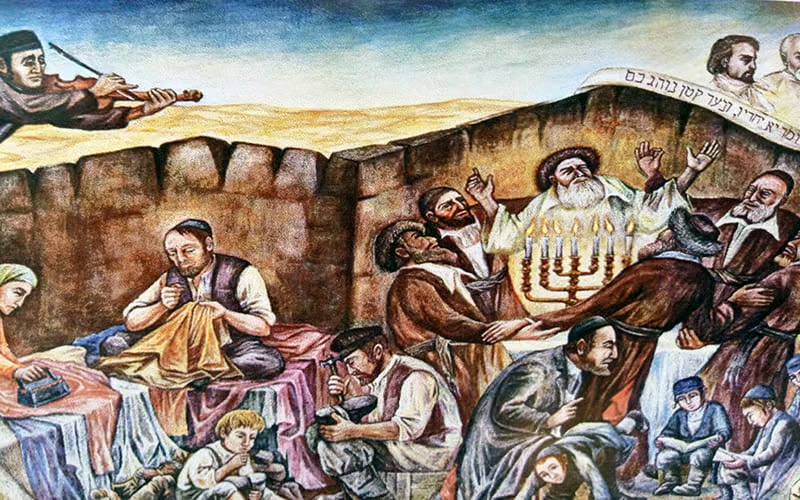
Fanny Rabel nació en 1922 en Polonia, en el seno de una familia judía que huyó a la Ciudad de México en 1937, cuando comenzó la Segunda Guerra Mundial. A los 17 años, comenzó su carrera artística, estudiando en la Escuela Nocturna para Trabajadores No. 1. Después de eso, fue contratada por David Alfaro Siqueiros para decorar los murales del Sindicato Mexicano de Electricistas y por Diego Rivera para trabajar en los murales del Palacio Nacional. Su primera exposición individual pública se realizó en 1941 en la Liga Popular Israelita en la Ciudad de México. Sus temas, composiciones y técnicas eran característicos de los conceptos del realismo social que la mayoría de los artistas de la época intentaban retratar. Realizó varios murales importantes con estos temas. En 1993, el Instituto Nacional de Bellas Artes reconoció sus 50 años de dedicación a las artes en el Palacio de Bellas Artes. Fanny Rabel, murió en 2008 a los 86 años en la Ciudad de México. Su cuerpo fue enterrado en el Panteón Israelita. Adaptado de la Galería Artspawn.
____________________________________________
Fanny Rabel was born in 1922 in Poland to a Jewish family that fled to Mexico City in 1937 when WWII began. At 17, she began her artistic career, studying at the Escuela Nocturna para Trabajadores No. 1. After that she was hired by David Alfaro Siqueiros to decorate the murals of the Mexican Syndicate of Electricians and by Diego Rivera to work on the murals at the Palacio Nacional. Her first public solo exhibit was held in 1941 at the Liga Popular Israelita in Mexico City. Her themes, compositions and the techniques were all characteristic of the concepts of social realism which most artists of the time tried to portray. She did several important murals with these themes. In 1993, the Instituto Nacional de Bellas Artes recognized her 50 years of dedication to the arts at the Palacio de Bellas Artes. Fanny Rabel, died on in 2008 at age 86 in Mexico City. Her body was buried at the Panteon Israelita. Adapted from Artspawn Gallery.
Bernardo Kucinski, ou B. Kucinski, nasceu em 1937 na cidade de São Paulo, Brasil. Formou-se em Física (1968) e doutorou-se em Ciências da Comunicação (1991) pela Universidade de São Paulo (USP), onde foi professor titular do Departamento de Jornalismo e Editoração da Escola de Comunicações e Artes (ECA). Entre 2003 e 2005, atuou como assessor da Presidência da República do Brasil durante o governo Lula da Silva. É autor de obras sobre política, economia e jornalismo, como Abertura: a história de uma crise (1982), A ditadura da dívida (1987), O que são Multinacionais (1991) e Jornalismo na era virtual (2005).
Sua estreia no campo literário ocorreu apenas aos 74 anos com o livro K.: relato de uma busca. Além deste, B. Kucinski também é autor de outras obras que abordam episódios traumáticos da história brasileira, como Você vai voltar pra mim e outros contos (2014), Júlia: nos campos conflagrados do senhor (2020) e O congresso dos desaparecidos: drama em prosa (2023). Também dedicou algumas páginas a contos que refletem questões contemporâneas, como Pretérito imperfeito (2017) e A Nova Ordem (2019).
____________________________________________
Bernardo Kucinski, or B. Kucinski, was born in 1937 in the city of São Paulo, Brazil. He graduated in Physics (1968) and earned a doctorate in Communication Sciences (1991) from the University of São Paulo (USP), where he was a full professor in the Department of Journalism and Publishing at the School of Communication and Arts (ECA). Between 2003 and 2005, he served as an advisor to the Presidency of the Republic of Brazil during the administration of Lula da Silva. He is the author of works on politics, economics, and journalism, such as Abertura: a história de uma crise A ditadura da dívida, O que são Multinacionais, and Jornalismo na era virtual.
His debut in the literary field occurred only at the age of 74 with the book K.: relato de uma busca [K.: Chronicle of a Search]. In addition to this, B. Kucinski is also the author of other works that deal with traumatic episodes in Brazilian history, such as Você vai voltar pra mim e outros contos , Júlia: nos campos conflagrados do senhor J, and O congresso dos desaparecidos: drama em prosa. He also wrote stories that reflect on contemporary issues, such as Pretérito imperfeito and A Nova Ordem.
___________________________________________
De:/From: K. do Bernardo Kucinski. Sao Paulo: Expressão Popular, 2011.
Sorvedouro de pessoas — capitulo 1
A tragédia já avançara inexorável quando, naquela manhã de domingo, K. sentiu pela primeira vez a angústia que logo o tomaria por completo. Há dez dias a filha não telefona. Depois, ele culparia a ausência dos ritos de família, ainda mais necessários em tempos difíceis, o telefonar uma vez por dia, o almoço aos domingos. A filha não afinava com sua segunda mulher.
E como não perceber o tumulto dos novos tempos, ele, escolado em política? Quem sabe teria sido diferente se, em vez dos amigos escritores do iídiche, * essa língua morta que só poucos velhos ainda falam, prestasse mais atenção ao que acontecia no país naquele momento? Quem sabe? Que importa o iídiche?
* O iídiche é falado pelos judeus da Europa Oriental e teve seu apogeu no início do século xx, quando se consolidou sua literatura; sofreu rápido declínio devido ao Holocausto e à adoção do hebraico pelos fundadores do Esta- do de Israel.
Nada. Uma língua-cadáver, isso sim, que eles pranteavam nessas reuniões semanais, em vez de cuidar dos vivos.
Associava o domingo à filha desde quando lhe trazia regalos no dia da feira. Súbito, lembrou rumores da véspera, no Bom Retiro; dois estudantes judeus da medicina teriam desaparecido, um deles, dizia-se, de família rica. Coisa da política, disseram, da ditadura, não tinha a ver com antissemitismo. Também sumiram outros, não judeus, por isso a Federação decidira não se meter. Esse era o boato, talvez nem fosse verdade; pois não diziam quem eram os rapazes.
Foi o rumor que o fez inquieto, não foi o domingo. Passou o dia discando um número de telefone que a filha lhe dera para urgências, mas o toque ecoava solitário. Sem resposta, nem à uma da madrugada, quando ela deveria estar de volta mesmo que tivesse ido ao cinema, de que tanto gostava, decidiu procurá-la no dia seguinte na universidade.
Naquela noite sonhou ele menino, os cossacos invadindo a sapataria do pai para que lhes costurasse as polainas das botinas. Despertou cedo, sobressaltado. Os cossacos, lembrou-se, haviam chegado justo no Tisha Beav, * o dia de todas as desgraças do povo judeu, o dia da destruição do primeiro templo e do segundo, e também o da expulsão da Espanha.
Sem saber o que temer, mas já temendo, e sem acordar a mulher, tirou o Austin da garagem e dirigiu rumo ao campus da universidade, distante na planície, do outro lado do emaranhado de arranha-céus. Conduzia devagar, demorando-se ao atravessar o centro, como se não quisesse chegar nunca; ossentimentos alternando-se entre a certeza de encontrá-la trabalhando normalmente e o medo do seu contrário. Por fim, atingiu o Conjunto das Químicas, onde estivera uma única vez, havia anos, quando a filha defendera seu doutorado perante um grupo de professores de semblantes severos, alguns deles formados ainda na Alemanha.
* Literalmente, o nono dia do mês de Av do calendário judaico, considerado maldito.
Ela não veio hoje, disseram as amigas. Hesitantes, olhavam de soslaio umas para as outras. Depois, como se temessem a indiscrição das paredes, puxaram K. para conversar no jardim. Então revelaram que havia onze dias que ela não aparecia. Sim, com certeza, onze dias, contando dois finais de semana. Ela, que nunca deixara de dar uma única aula. Falavam aos sussurros, sem completar as frases, como se cada palavra escondesse mil outras de sentidos proibidos.
Insatisfeito, agitado, K. queria ouvir outras pessoas — quem sabe os superiores da filha tinham alguma informação? Se ela tivesse sofrido um acidente e estivesse hospitalizada decerto teriam contatado a universidade. As amigas alarmam-se. Não faça isso. Por enquanto, não. Para dissuadi-lo, moderaram a fala, pode ser que ela tenha viajado, se afastado por alguns dias por precaução. Desconhecidos andaram perguntando por ela, sabe? Há gente estranha no campus. Anotam chapas de carros. Eles estão dentro da reitoria. Eles quem? Não souberam responder.
Persuadido a não procurar as autoridades universitárias, K. dirigiu em agonia do campus até um número da rua Padre Chico, que a filha lhe dera havia tempos, com a recomendação de só a procurar nesse endereço se acontecesse algo muito grave e ela não atendesse ao telefone. Um absurdo ele não questionado isso de só visitar se for grave, de só telefonar se for urgente. Onde ele estava com a cabeça, meu Deus?
Era um sobradinho geminado, dando diretamente para a rua, espremido entre uma dezena do mesmo tipo. Ao pé da porta, folhetos e jornais empoeirados denunciavam ausência prolongada dos moradores. Ninguém atendeu seus apertos inquisitivos de campainha.
Pronto, estava instalada a tragédia. O que fazer? Os dois filhos, longe, no exterior. A segunda esposa, uma inútil. As amigas da universidade em pânico. O velho sentiu-se esmagado. O corpo fraco, vazio, como se fosse desabar. A mente em estupor. De repente, tudo perdia sentido. Um fato único impunha-se, cancelando o que dele não fosse parte; fazendo tu- do o mais obsoleto. O fato concreto de sua filha querida estar sumida há onze dias, talvez mais. Sentiu-se muito só.
Passou a listar hipóteses. Quem sabe um acidente, ou uma doença grave que ela não quisesse revelar. A pior era a prisão pelos serviços secretos. O Estado não tem rosto nem sentimentos, é opaco e perverso. Sua única fresta é a corrupção. Mas às vezes até essa se fecha por razões superiores. E então o Estado se torna maligno em dobro, pela crueldade e por ser inatingível. Isso ele sabia muito bem.
K. rememorou cenas recentes, o nervosismo da filha, suas evasivas, isso de chegar correndo e sair correndo, do endereço só em último caso e com a recomendação de não passá-lo a ninguém. Atarantado, deu-se conta da enormidade do autoengano em que vivera, ludibriado pela própria filha, talvez mettida em aventuras perigosíssimas sem ele desconfiar, distraído que fora pela devoção ao iídiche, pelo encanto fácil das sessões literárias.
Ah, e o erro de ter se casado com aquela judia alemã só porque ela sabia cozinhar batatas. Malditos os amigos que o convenceram a se casar de novo. Malditos sejam todos. Ele, que nunca blasfemava, que tolerante aceitava as pessoas como elas eram, viu-se descontrolado, praguejando. Pressentiu o pior.
Pelo telefone, o amigo escritor, também advogado, orientou-o a dar queixa na Delegacia de Desaparecidos, embora advertindo que de nada adiantaria, era uma obrigação formal de pai. Ditou-lhe o endereço, na Brigadeiro Tobias, sede central da polícia. K. perguntou se ele ouvira falar do sumiço de dois alunos judeus da medicina. Sim. Era verdade. Já fora procurado por uma das famílias. E o que ele ia fazer? Nada. Nas prisões de motivação política, os tribunais estavam proibidos de aceitar pedidos de habeas corpus. Não há nada que um advogado possa fazer. Nada. Esta é a situação.
Na polícia fizeram ao velho poucas perguntas. A maioridos desaparecidos eram adolescentes que fugiam de pais b bados e padrastos que espancavam. K. explicou que a filha era professora da universidade em grau de doutora, era independente e morava só. Tinha seu próprio carro; não seria alguma coisa política?
Não quis se abrir com o delegado, apenas insinuou. Por isso também não lhe deu o endereço da Padre Chico, deu o seu como sendo o dela e o da loja como se fosse o seu. Sem perceber, K. retomava hábitos adormecidos da juventude conspiratória na Polônia. O delegado de plantão não gostou da conversa. Em casos políticos, estava proibido de se meter. Mas, condoído, registrou a queixa. Ele que esperasse e não falasse mais em política.
Procurar? Não, a polícia tinha mais o que fazer; uma professora universitária, de quase trinta anos, adulta e vacinada. Ele que esperasse, uma circular com a fotografia chegaria a todas as delegacias. Se ele não fosse avisado em cinco dias, podia tentar o Instituto Médico Legal, para onde encaminha- vam corpos não identificados de vítimas de atropelamentos e outros acidentes. Disse isso constrangido.
Assim começou a saga do velho pai, cada dia mais aflito, mais mal dormido. No vigésimo dia, depois de mais uma incursão inútil ao campus e à casa da Padre Chico, recorreu aos amigos do círculo literário; os mesmos que por descontrole havia amaldiçoado. Quem sabe conheciam alguém que conhecesse alguém outro, na polícia, no Exército, no sni, seja onde for dentro daquele sistema que engolia pessoas sem deixar traços. Com exceção do advogado, eram uns pobretões que não conheciam ninguém importante. O advogado mencionou vagamente um líder da comunidade do Rio que tinha acesso aos generais. Tentaria saber mais.
K. passou a contabilizar a duração da ausência da filha, outro preceito dos tempos da juventude. E não passava um dia sem que tentasse algo pela filha. Já não fazia outra coisa. Para dormir, passou a tomar soporíferos. Quando se completaram vinte e cinco dias, reuniu coragem e foi ao Instituto Médico Legal.
Falou da inexplicável ausência da filha, sem mencionar política. Mostrou sua foto de formatura, solene. Depois mostrou outra, diferente, ela magra e de olhar sofrido. Não, os funcionários não associavam aquele rosto a nenhum dos pouvos cadáveres femininos, todos negros ou pardos. Quase todos, indigentes. Para dizer a verdade, deve fazer mais de ano que não chega aqui um corpo não identificado de mulher branca.
K. saiu do iml aliviado; mantinha-se a esperança de encontra–la viva. Mas as fotografias do álbum dos indigentes e desconhecidos o deprimiram. Nem na época da guerra na Polônia deparara com rostos tão maltratados e olhos tão arregalados de pavor.
Foi então que, obcecado, passou a abordar fregueses que vinham pagar a prestação na loja, vizinhos da avenida, e até desconhecidos. A todos contava a história da filha. E sua fosquinha também sumiu, ele enfatizava. A maioria ouvia até o fim em silêncio, depois davam-lhe eventualmente uma tapinha nas costas encurvadas e diziam: eu sinto muito. Alguns poucos o interrompiam já no início, alegando hora marcada no médico, ou um pretexto parecido como se ouvir já os colocasse em perigo.
No trigésimo dia do sumiço da filha, K. leu no Estado de S. Paulo uma notícia que se referia, embora de modo discreto, a desaparecidos políticos. O arcebispo havia convocado uma reunião com “familiares de desaparecidos políticos”.
Estava escrito assim mesmo: “familiares de desaparecidos políticos”.
K. nunca entrara num templo católico, tal o estranha- mento nele provocado pela penumbra silenciosa das igrejas e pelas imagens de santos, que vislumbrava por entre vãos de porta. Tinha pelo catolicismo repulsa atávica, à qual somava desprezo pelas práticas religiosas todas, inclusive as do seu próprio povo. Na verdade, não era das pessoas e suas crenças que ele não gostava, era dos sacerdotes, fossem padres, rabinos ou bispos; ele os tinha como hipócritas. Mas, naquela tarde, nada disso importava. Uma autoridade importante, um arcebispo, ia falar sobre as estranhas desaparições.
Ao entrar no salão central da Cúria Metropolitana, K. sentiu o quanto o sumiço da filha já o havia mudado. Foi com simpatia que contemplou a imagem barroca da Virgem Maria situada no saguão, e outras de santos que desconhecia, postadas nos cantos. Quando chegou, a reunião já começara. Havia sessenta pessoas ou mais nas cadeiras bem mais numerosas dispostas no salão. Quatro senhores sisudos que pareciam advogados coordenavam o encontro, sentados em forma de meialua de frente para o público; uma freira escrevia num grande caderno.
Falava uma senhora de muita idade, talvez passando dos noventa, franzina, miúda, de óculos na ponta do nariz e cabelos brancos; seu marido voltava do exílio por Uruguaiana, chegou até um ponto de encontro pré-combinado, do lado de cá da fronteira, e desapareceu por completo, sem deixar vestígio, como se tivesse evaporado ou anjos o tivessem alçado aos céus. Um dos filhos tentou rastrear seus passos, foi a todos os hospitais, delegacias, estações de ônibus de Uruguaiana e nada, nenhum sinal. O filho, ao lado, corroborava o relato.
Depois falou outra senhora, de seus cinquenta anos, que se apresentou como esposa de um ex-deputado federal. Dois policiais vieram à sua casa, pedindo que o marido os acompanhasse à delegacia para prestar alguns esclarecimentos. Ele foi tranquilo, pois embora seu mandato de deputado tivesse sido cassado pelos militares, levava vida normal, tinha escritório de advocacia. Desde então, havia oito meses, nunca mais o viram. Na delegacia disseram que ele ficou apenas quinze minutos e foi liberado. Mas como? Como poderia ter desaparecido assim por completo? Essa senhora, muito elegante, estava acompanhada de quatro filhos.
Mais relatos de sumiços; todos queriam falar. E queriam ouvir. Queriam entender. Talvez do conjunto de casos surgis- se uma explicação, uma lógica, principalmente uma solução, uma maneira de pôr fim ao pesadelo. Uma jovem de não mais que vinte anos pediu para falar em nome de um grupo sentado à sua volta, “familiares dos desaparecidos do Araguaia”, disse ela. K. pela primeira vez ouvia alguém falar do Araguaia; ficou sabendo que muitos rapazes tinham sido presos pelas Forças Armadas no meio da floresta amazônica e executados lá mesmo.
O que trazia aquele grupo à reunião era algo insólito. O Exército alegava que nada disso tinha acontecido, apesar de um dos presos, apenas um, ter escapado e testemunhado tudo. Os familiares queriam enterrar seus mortos — que eles já sabiam mortos, mais de cinquenta, diziam, sabiam até a região aproximada em que foram executados, mas os militares insistiam que não havia corpo nenhum para entregar.
Um rapaz encontrou-se com a esposa no Conjunto Nacional para almoçarem juntos e os dois nunca mais foram vistos. À medida que falava, a mãe do rapaz mostrava aos vizinhos de assento as fotos do filho, da nora e do netinho. Um senhor levantou-se, disse que viera de Goiânia especialmente para a reunião. Seus dois filhos, um de vinte anos e o outro de apenas dezasseis, foram desaparecidos. Esse senhor gaguejava, parecia em estado catatônico. Foi o primeiro a usar a expressão “foram desaparecidos”. Também trazia fotos dos filhos. Depois dele, K. tomou coragem e contou a sua história. Já havia caído a noite e os relatos prosseguiam. Variavam cenários, detalhes, circunstâncias, mas todos os vinte e dois casos computados naquela reunião tinham uma característica comum assombrosa: as pessoas desapareciam sem deixar vestígios. Era como se volatilizassem. O mesmo com os jovens do Araguaia, embora este já se soubesse estarem mortos. A freira anotava caso por caso. Também recolhia as fotos trazidas pelos familiares.
K. tudo ouvia, espantado. Até os nazistas que reduziam suas vítimas a cinzas registavam os mortos. Cada um tinha um número, tatuado no braço. A cada morte, davam baixa num livro. É verdade que nos primeiros dias da invasão houve chacinas e depois também. Enfileiravam todos os judeus de uma aldeia ao lado de uma vala, fuzilavam, jogavam cal em cima, depois terra e pronto. Mas os goim* de cada lugar sabiam que os seus judeus estavam enterrados naquele buraco, sabiam quantos eram e quem era cada um. Não havia a agonia da incerteza; eram execuções em massa, não era um sumidouro de pessoas.
The tragedy had already advanced inexorably when, on that Sunday morning, K. felt for the first time the anguish that would soon overwhelm him completely. His daughter had not called for ten days. Later, he would blame the lack of family rituals, which were all the more necessary in difficult times, the phone calls once a day, the Sunday lunch. His daughter was not on good terms with his second wife.
And how could he not notice the turmoil of the new times, he, schooled in politics? Who knows if it would have been different if, instead of his friends who wrote Yiddish, * this dead language that only a few old people still speak, he had paid more attention to what was happening in the country at that moment? Who knows? What does Yiddish matter?
* Yiddish is spoken by the Jews of Eastern Europe and had its heyday at the beginning of the 20th century, when its literature was consolidated; it suffered a rapid decline due to the Holocaust and the adoption of Hebrew by the founders of the State of Israel.
Nothing. A corpse language, that’s what they mourned in these weekly meetings, instead of caring for the living.
He had associated Sunday with his daughter ever since he brought her gifts on market day. Suddenly, he remembered rumors from the day before, in Bom Retiro; two Jewish medical students had disappeared, one of them, it was said, from a wealthy family. A political thing, they said, a dictatorship thing, it had nothing to do with anti-Semitism. Others, non-Jews, had also disappeared, which is why the Federation had decided not to get involved. That was the rumor, perhaps it wasn’t even true; since they didn’t say who the boys were.
It was the rumor that made him restless, not Sunday. He spent the day dialing a phone number his daughter had given him for emergencies, but the ringing echoed alone. With no answer, not even at one in the morning, when she should have been back even though she had gone to the movies, which she liked so much, he decided to look for her the next day at the university. That night, as a boy, he dreamed of the Cossacks invading his father’s shoe shop so that he could sew them boot gaiters. He woke up early, startled. The Cossacks, he remembered, had arrived precisely on Tisha Beav, * the day of all the misfortunes of the Jewish people, the day of the destruction of the first and second temples, and also of the expulsion from Spain.
* Literally, the ninth day of the month of Av in the Jewish calendar, considered cursed.
Not knowing what to fear, but already fearing it, and without waking his wife, he took the Austin out of the garage and drove towards the university campus, far away on the plain, on the other side of the tangle of skyscrapers. He drove slowly, taking his time crossing the center, as if he never wanted to arrive; the feelings alternating between the certainty of finding her working normally and the fof the opposite. Finally, she reached the Chemistry Complex, where she had only been once, years ago, when her daughter had defended her doctorate in front of a group of stern-looking professors, some of whom had graduated in Germany.
She didn’t come today, her friends said. They glanced at each other hesitantly. Then, as if fearing the walls’ indiscretion, they pulled K. aside to talk in the garden. Then they revealed that she had not shown up for eleven days. Yes, of course, eleven days, counting two weekends. She, who had never missed a single class. They spoke in whispers, without finishing their sentences, as if each word concealed a thousand other words with forbidden meanings.
Dissatisfied and agitated, K. wanted to hear from other people — perhaps his daughter’s superiors had some information? If she had had an accident and was hospitalized, they would certainly have contacted the university. Her friends were alarmed. Don’t do that. Not yet. To dissuade him, they moderated their speech, maybe she had traveled, gone away for a few days as a precaution. Strangers have been asking about her, you know? There are strange people on campus. They write down license plates. They are inside the rectory. Who are they? They didn’t know how to answer.
Persuaded not to seek out the university authorities, K. drove in agony from the campus to a number on Padre Chico Street, which his daughter had given him some time ago, with the recommendation that he only call her at that address if something very serious happened and she didn’t answer the phone. It was absurd that he hadn’t questioned this about only visiting if it was serious, only calling if it was urgent. What was he thinking, my God?
It was a small semi-detached house, facing directly onto the street, squeezed in between a dozen of the same type. At the foot of the door, dusty pamphlets and newspapers denounced the prolonged absence of the residents. No one answered his inquisitive calls to the doorbell.
There you have it, the tragedy had set in. What to do? His two sons, far away, abroad. His second wife, a useless woman. His friends from university were in a panic. The old man felt crushed. His body was weak, empty, as if it were about to collapse. His mind was in a stupor. Suddenly, everything lost its meaning. A single fact imposed itself, canceling out everything that was not part of it; making everything obsolete. The concrete fact that his beloved daughter had been missing for eleven days, maybe more. He felt very alone.
He began to list hypotheses. Maybe an accident, or a serious illness that she did not want to reveal. The worst was arrest by the secret services. The State has no face or feelings, it is opaque and perverse. Its only crack is corruption. But sometimes even that closes for higher reasons. And then the State becomes doubly evil, through its cruelty and its untouchability. He knew that very well.
K. recalled recent scenes, his daughter’s nervousness, her evasions, her rushing in and out, only giving out the address as a last resort and with the recommendation not to give it to anyone. In a daze, he realized the enormity of the self-deception he had lived in, tricked by his own daughter, perhaps getting involved in extremely dangerous adventures without him suspecting, distracted as he had been by his devotion to Yiddish, by the easy charm of literary sessions.
Oh, and the mistake of having married that German Jew just because she knew how to cook potatoes. Damn the friends who convinced him to marry again. Damn them all. He, who never swore, who tolerantly accepted people as they were, found himself out of control, cursing. He sensed the worst. Over the phone, his writer friend, also a lawyer, advised him to file a complaint with the Missing Persons Police Station, although he warned him that it would be useless; it was a formal obligation as a father. He gave him the address, on Brigadeiro Tobias, the police headquarters. K. asked if he had heard about the disappearance of two Jewish medical students. Yes. It was true. One of the families had already looked for him. And what was he going to do? Nothing. In politically motivated arrests, the courts were forbidden from accepting habeas corpus petitions. There was nothing a lawyer could do. Nothing. That was the situation.
The police asked the old man few questions. Most of the missing people were teenagers who were running away from drunken fathers and stepfathers who beat them. K. explained that his daughter was a university professor with a doctorate degree, was independent and lived alone. She had her own car; couldn’t it be something political?
He didn’t want to open up to the police chief, he just hinted. That’s why he didn’t give her Padre Chico’s address either, he gave his as hers and the store’s as his own. Without realizing it, K. was returning to the dormant habits of his conspiratorial youth in Poland. The police chief on duty didn’t like the conversation. He was forbidden from getting involved in political matters. But, feeling sorry for him, he filed the complaint. He should wait and not talk about politics anymore.
Look for her? No, the police had better things to do: a university professor, almost thirty years old, an adult and vaccinated. He should wait, a circular with her photograph would reach all the police stations. If he wasn’t notified within five days, he could try the Forensic Medical Institute, where they sent unidentified bodies of victims of run-overs and other accidents. He said this embarrassed.
That’s how the old father’s saga began, each day more distressed, more sleepless. On the twentieth day, after yet another useless foray into the campus and into Padre Chico’s house, he turned to his friends from the literary circle; the same ones he had cursed out of sheer control. Maybe they knew someone who knew someone else, in the police, the Army, the SNI, wherever in that system that swallowed people up without leaving a trace. With the exception of the lawyer, they were poor people who didn’t know anyone important. The lawyer vaguely mentioned a community leader from Rio who had access to the generals. He would try to find out more.
K. began to count the length of his daughter’s absence, another precept from his youth. And not a day went by without him trying something for his daughter. He didn’t do anything else anymore. To sleep, he started taking sleeping pills. When twenty-five days had passed, he gathered his courage and went to the Forensic Medical Institute.
He spoke of his daughter’s inexplicable absence, without mentioning politics. He showed her graduation photo, solemn. Then he showed her another, different one, of her thin and with a suffering look. No, the employees did not associate that face with any of the few female corpses, all black or mixed-race. Almost all of them were homeless. To tell the truth, it must have been over a year since an unidentified white woman had arrived here.
K. left the hospital relieved; he still hoped to find her alive. But the photographs in the album of homeless and unknown people depressed him. Not even during the war in Poland had he come across such battered faces and eyes so wide with fear.
It was then that, obsessed, he began to approach customers who came to pay their installments at the store, neighbors on the avenue, and even strangers. He told them all the story of his daughter. And her little face had also disappeared, he emphasized. Most of them listened to him until the end in silence, then occasionally patted him on the hunched back and said: I’m so sorry. A few people interrupted him right from the start, claiming an appointment with the doctor, or some other excuse, as if listening would put them in danger.
On the thirtieth day after his daughter’s disappearance, K. read a news story in the Estado de S. Paulo that referred, although discreetly, to political disappearances. The archbishop had called a meeting with “relatives of political disappearances. It was written exactly like that: “relatives of political disappearances.”
K. had never entered a Catholic church, so strange was it to him because of the silent darkness of the churches and the images of saints that he glimpsed through the doorways. He had an atavistic repulsion towards Catholicism, to which he added a contempt for all religious practices, including those of his own people. In truth, it was not the people and their beliefs that he disliked, but the priests, whether priests, rabbis or bishops; he considered them hypocrites. But that afternoon, none of that mattered. An important authority, an archbishop, was going to speak about the strange disappearances.
As he entered the central hall of the Metropolitan Curia, K. felt how much his daughter’s disappearance had already changed him. He gazed with sympathy at the baroque image of the Virgin Mary in the lobby, and at other saints he did not recognize, placed in the corners. When he arrived, the meeting had already begun. There were sixty or more people in the many more chairs arranged in the hall. Four serious gentlemen who looked like lawyers were coordinating the meeting, seated in a half-moon shape facing the audience; a nun was writing in a large notebook.
A very elderly woman was speaking, perhaps in her nineties, frail, petite, with glasses on the tip of her nose and white hair; her husband was returning from exile in Uruguaiana, arrived at a prearranged meeting point on this side of the border, and disappeared completely, without a trace, as if he had evaporated or angels had lifted him to heaven. One of his sons tried to track his steps, went to all the hospitals, police stations, and bus stations in Uruguaiana, but found nothing, not a trace. His son, next to him, corroborated the story.
Then another woman spoke, in her fifties, who introduced herself as the wife of a former federal deputy. Two police officers came to her house, asking her husband to accompany them to the police station to provide some information. He was calm, because although his mandate as deputy had been revoked by the military, he led a normal life and had a law office. They had not seen him since then, for eight months. At the police station they said he had only stayed for fifteen minutes and was released. But how? How could he have disappeared like that completely? This very elegant lady was accompanied by her four children.
More reports of disappearances; everyone wanted to talk. And they wanted to listen. They wanted to understand. Perhaps from the set of cases an explanation, a logic, and above all a solution, a way to put an end to the nightmare, would emerge. A young woman of no more than twenty asked to speak on behalf of a group sitting around her, “relatives of the missing people from Araguaia,” she said. K. was hearing someone talk about Araguaia for the first time; He learned that many young men had been arrested by the Armed Forces in the middle of the Amazon rainforest and executed there.
What had brought that group to the meeting was something unusual. The Army claimed that none of this had happened, even though one of the prisoners, just one, had escaped and witnessed everything. The family members wanted to bury their dead—who they already knew were dead, more than fifty, they said, and even knew the approximate region where they had been executed—but the military insisted that there were no bodies to hand over.
A young man met his wife at Conjunto Nacional to have lunch together and the two were never seen again. As he spoke, the young man’s mother showed the neighbors photos of her son, daughter-in-law and grandson. A man stood up and said that he had come from Goiânia especially for the meeting. His two sons, one twenty years old and the other only sixteen, had disappeared. This man stuttered and seemed catatonic. He was the first to use the expression “they had disappeared.” She also brought photos of her children. After him, K. gathered up the courage and told his story. Night had already fallen, and the stories continued. They varied scenarios, details, circumstances, but all twenty-two cases recorded at that meeting had a common, astonishing characteristic: the people disappeared without a trace. It was as if they had evaporated. The same with the young people from Araguaia, although it was already known that they were dead. The nun wrote down each case. She also collected the photos brought by the relatives. K. listened to everything, astonished. Even the Nazis who reduced their victims to ashes recorded the dead. Each one had a number tattooed on their arm. Each death was recorded in a book. It is true that in the first days of the invasion there were massacres and later too. They lined up all the Jews of a village next to a ditch, shot them, threw lime on them, then earth and that was it. But the goyim of each place knew that their Jews were buried in that hole, they knew how many there were and who each one was. There was no agony of uncertainty; these were mass executions, not a sinkhole for people
Livros de Bernardo Kucinski/Books by Bernardo Kucinski
Isaac Markus, nacido en Uruguay, es Contador Público y Master en Administración de Empresas. Paralelamente a su actividad profesional se ha sentido atraído por la escritura de ficción, habiendo publicado con el seudónimo Iche Marx los libros de cuentos Camino al Cementerio (Editorial Rumbo) en el año 2012, Mirada de Outsider (Editorial Apeirón, como finalista del concurso Gregorio Samsa) en el año 2020, e Historias Ambiguas (Editorial Pampia) en el año 2025.
______________________________
Isaac Markus, born in Uruguay, is a Certified Public Accountant and holds a Master’s degree in Business Administration. In parallel to his professional activity, he has been drawn to writing fiction, having published under the pseudonym Iche Marx the short story books Camino al Cementerio (Rumbo Publishing House) in 2012, Mirada de Outsider (Apeirón Publishing House, as a finalist in the Gregorio Samsa competition) in 2020, and Historias Ambiguas (Pampia Publishing House) in 2025.
El doctor Fernández atendía ese día a sus pacientes ginecológicas, quienes aguardaban turno en la sala de espera y enfrentaban el aburrimiento mirando sus celulares o ensayando una mirada híbrida que simulaba otear el horizonte donde solo había paredes o cuadros, o echando un vistazo a las otras pacientes cuando creían que su examen no sería percibido.
Emanuela Colucci, una de ellas, no dejaba de observar con interés a la paciente de la silla de enfrente. Era una mujer de edad mediana, esa edad en la que las mujeres se plantean el eventual conflicto entre la sexualidad y la maternidad, entre la productividad y el placer válido por sí mismo, entre la juventud y la vejez, entre las energías desplegadas sin límites y la necesidad de racionalizarlas o limitarlas, entre la vida como objetivo hedonista o ético.
Pero más allá de las fuerzas que nos llevan a escudriñar a otras personas y preguntarnos por qué son como son, algo atribuible a la simple curiosidad o a la búsqueda de chimentos o quizás de un modelo comparativo que permita evaluarnos a nosotros mismos, el interés de Emanuela por la paciente de la silla de enfrente adolecía de cierta falta de inocencia.
Es que ella la había visto en el centro comercial de la zona en compañía del doctor Fernández, y ver a su ginecólogo en compañía de una fémina es algo que una mujer no deja pasar por alto, quedando su rostro grabado en la memoria. En aquella ocasión hizo una rápida evaluación de sus características, si era bonita, si era delgada, si estaba bien vestida y todos los aspectos que consideró relevantes y que el tiempo disponible permitía.
Y ahora estaba allí, en la silla de enfrente, tal como la recordaba, apenas con algunos pequeños cambios de vestimenta y maquillaje. Pero lo importante era saber qué era lo que estaba haciendo allí. ¿Sería acaso la esposa del doctor esperando ser atendida por alguna cuestión doméstica, o tal vez su amante transfigurada en simple paciente, o, más audaz aún, dispuesta a una sesión amorosa en pleno consultorio simulando ser atendida como paciente?
La curiosidad era excesiva como para que Emanuela no intentara hacer algo que le permitiera obtener respuestas, por lo que lanzó:
—Se hace larga la espera, ¿no?
La paciente de la silla de enfrente la observó durante algunos segundos y, sin que su mirada lograra ocultar un dejo de ironía, respondió:
—Sí. ¡Aunque este doctor vale la pena! —¡Por supuesto!
–¿Y hace mucho que se atiende con él?
—Menos de un año… ¡es excelente! Emanuela pensó que de ser la esposa del doctor habría hecho alguna referencia, aunque debía corroborarlo. Sigilosamente buscó en las redes sociales en su celular algún rastro de la vida privada del doctor y encontró fotos recientes en las que se encontraba rodeado de niños, probablemente sus hijos, y con una mujer, probablemente su esposa, quien no era la mujer de la silla de enfrente. La posibilidad de que fuera su amante adquiría mayor fuerza. ¡Ah, la muy zorra! ¡Ya vería que podría sonsacarle! Pero la mujer de la silla de enfrente, en lugar de mantener ese tipo de silencios prudentes que suelen acompañar las culpabilidades, arremetió con un comentario inesperado:
—Nos conocemos de algún lado, ¿verdad?
Emanuela pensó: ¿De qué diablos estaría hablando? ¿Habría captado mi mirada insistente el día en que la descubrí con el doctor en el centro comercial y también habría grabado mi rostro en su memoria?
—Pues en verdad no recuerdo. ¿De dónde nos conocemos?
—¿Tú eres la esposa del abogado Márquez?
Emanuela se inquietó: ¿De dónde conocería esta harpía a mi marido? ¿No le era suficiente con ponerle cuernos a la mujer del doctor? De pronto comenzó a sentir en su propia frente el surgimiento de una cierta excrecencia.
—Sí, pero… ¿de dónde lo conoces?
—Ah… es una larga historia… Otro día te la contaré, el doctor Fernández ya me está llamando para ingresar a la consulta…
_____________________________
The woman in the opposite chair
That day, Dr. Fernández was attending to his gynecological patients, who were waiting their turn in the waiting room and coping with boredom by looking at their cell phones or practicing a hybrid look that simulated scanning the horizon where there were only walls or pictures, or glancing at the other patients when they thought their exam would not be noticed.
Enanuela Colucci, one of them, could not stop observing with interest the patient in the chair in front of her. She was a middle-aged woman, that age in which women consider the eventual conflict between sexuality and motherhood, between productivity and pleasure valid in itself, between youth and old age, between energies deployed without limits and the need to rationalize or limit them, between life as a hedonistic or ethical objective.
But beyond the forces that lead us to scrutinize other people and ask ourselves why they are the way they are, something attributable to simple curiosity or the search for gossip or perhaps a comparative model that allows us to evaluate ourselves, Emanuela’s interest in the patient in the chair opposite her suffered from a certain lack of innocence.
She had seen her in the local shopping center in the company of Dr. Fernández, and seeing her gynecologist in the company of a woman is something that a woman does not let go by, leaving her face engraved in her memory. On that occasion she made a quick evaluation of her characteristics, if she was pretty, if she was thin, if she was well dressed and all the aspects that she considered relevant and that the available time allowed.
And now she was there, in the chair opposite, just as she remembered her, with only a few small changes of clothing and makeup. But the important thing was to know what she was doing there. Was she perhaps the doctor’s wife waiting to be seen for some domestic matter, or perhaps his lover transfigured into a simple patient, or, even more daring, willing to have a love session in the middle of the office pretending to be seen as a patient?
Emanuela was too curious not to try to do something that would allow her to get answers, so she said:
—It’s been a long wait, isn’t it?
The patient in the chair opposite looked at her for a few seconds and, without managing to hide a hint of irony, answered:
—Yes. Although this doctor is worth it! —Of course!
And have you been seeing him for a long time?
—Less than a year… he’s excellent! Emanuela thought that if she were the doctor’s wife she would have made some reference, although she had to confirm it. She stealthily searched social media on her cell phone for a trace of the doctor’s private life and found recent photos in which he was surrounded by children, probably his children, and with a woman, probably his wife, who was not the woman in the chair in front of her. The possibility that she was his lover gained strength. Ah, the bitch! She would see what she could get out of him! But the woman in the chair in front of her, instead of maintaining that kind of prudent silence that usually accompanies guilt, lashed out with an unexpected comment:
—We know each other from somewhere, right?
Emanuela thought: What the hell was she talking about? Had she caught my insistent glance the day I discovered her with the doctor in the shopping center and also recorded my face in her memory?
—Well, I really don’t remember. Where do we know each other from?
—Are you the wife of the lawyer Márquez?
Emanuela worried: Where did this harpy know my husband from? Wasn’t it enough for her to cuckold the doctor’s wife? Suddenly he began to feel the emergence of a certain growth on his own forehead. Emanuela worried: Where did this harpy know my husband from? Wasn’t it enough for her to cuckold the doctor’s wife? Suddenly he began to feel the emergence of a certain growth on her own forehead.
–Yes, but… where do you know him from?
–Ah… It’s a long story… I’ll tell you about it another day. Dr. Fernandez is calling me to come in for a consultation..
____________________________
Sombras en Venecia
La dulce borrachera del champagne nos hizo unir a la pareja de turistas argentinos que cohabitaban en la góndola, y acompañamos a grito pelado los cánticos napolitanos de los gondolieri. El eco de nuestras voces rebotando en los muros de esa ciudad irreal nos hacía sentir más cercanos a ella, como si el desafinado intercambio sonoro creara una especie de intimidad compartida.
Descendimos de la góndola y caminamos por las estrechas callejuelas bajo el guiño cómplice de las máscaras que desde los escaparates parecían invitar a un sensual baile de disfraces. La felicidad acechaba como algo fácil de acceder, pero el silencio entre nosotros nos hacía evocar las sombras del viaje.
“Los puentes, plazas y palacios se sucedían unos a otros sin dar indicio alguno…”. sin dar indicio alguno del camino de retorno al hotel. A punto de de desfallecer de cansancio divisamos una confitería ubicada en la intersección de dos canales. Un mozo de frac y moñita nos dio la bienvenida y nos condujo a una mesa desde la que se desplegaba una vista maravillosa. El día era hermoso, sin las nubes y lluvias que oscurecen el alma de la ciudad. Los barcos navegaban por los canales asemejando una marina en el centro de un paisaje urbano, y las palomas se posaban a un costado de nuestra mesa transmitiendo un mensaje de paz. Entonces la miré y volví a ser consciente de lo bella que era. Quise besarla, pero me rechazó diciendo:
—¿Crees que Venecia puede hacer que todo desaparezca?
Se levantó y se fue. Pensé que amar era transitar una infinidad de silencios e interpretaciones incorrectas. Solo en una ciudad que ahondaba mi melancolía, dejé que mis pasos me condujeran hacia cualquier lugar. Una casa lucía en su fachada la palabra nefesh, la que según la cábala era la dimensión del hombre centrada en la satisfacción de los instintos. Quise alejarme de la tristeza y entré a la casa. Descendí por una escalera de caracol hasta una sala en la que una tenue luz azulada iluminaba bellamente los cuerpos de hombres y mujeres desnudos penetrándose interminablemente…
Salí de la casa y continué caminado sin rumbo. Un cartel me hizo saber que había llegado al ghetto donde habría vivido Shylock en caso de haber existido. Pregunté sobre él a un rabino que pasaba a mi lado y me pidió que lo acompañara. Tras un extenuante ascenso por las escaleras de un vetusto edificio llegamos a la sinagoga. Al encenderse las luces recordé los tiempos en que visitaba a mi padre el «día del perdón» y escuchábamos el lamento del shofar que nos hacía pensar en nuestros errores. ¿También ahora estaría cometiendo un error? ¿Las barreras que me separaban de ella habrían sido creadas para que encontrara la forma de derribarlas? El rabino comenzó a leer viejos decretos que solo permitían a los judíos ejercer el oficio de prestamista al mismo tiempo se los condenaba por ello. Pero ya no estaba allí. Cuando retorné a la plaza central del ghetto, ella estaba observándome llegar como si siempre hubiera estado esperando. Una sonrisa se dibujó en sus labios; amor y odio podían coexistir bajo el manto de una fidelidad incorruptible. Venecia continuó hundiéndose en las tinieblas.
_______________________
Shadows in Venice
The sweet intoxication of champagne made us join the couple of Argentine tourists who were cohabiting in the gondola, and we accompanied the Neapolitan chants of the gondoliers at the top of our lungs. The echo of our voices bouncing off the walls of that unreal city made us feel closer to it, as if the out-of-tune sound exchange created a kind of shared intimacy.
—Yes, but… where do you know him from? —Ah… it’s a long story… Another day I’ll tell you about it, Dr. Fernandez is already calling me to come in for a consultation…
We got off the gondola and walked through the narrow streets under the knowing wink of the masks that seemed to invite us to a sensual costume ball from the shop windows. Happiness lurked as something easy to access, but the silence between us made us evoke the shadows of the trip.
without giving any indication of the way back to the hotel. About to faint from exhaustion we saw a confectionery located at the intersection of two canals. A waiter in a tuxedo and bow tie welcomed us and led us to a table with a wonderful view. The day was beautiful, without the clouds and rain that darken the soul of the city. The boats sailed through the canals, resembling a marina in the center of an urban landscape, and the pigeons perched on one side of our table, transmitting a message of peace. Then I looked at her and became aware of how beautiful she was. I wanted to kiss her, but she rejected me, saying:
—Do you think Venice can make everything disappear?
She got up and left. I thought that loving was going through an infinity of silences and incorrect interpretations. Alone in a city that deepened my melancholy, I let my steps lead me to any place. A house displayed on its facade the word nefesh, which according to the Kabbalah was the dimension of man centered on the satisfaction of instincts. I wanted toe escape sadness and entered the house. I went down a spiral staircase into a room where a soft blue light beautifully illuminated the bodies of naked men and women penetrating each other endlessly…
I left the house and continued walking aimlessly. A sign told me that I had arrived at the ghetto where Shylock would have lived if he had existed. I asked a rabbi who was passing by me about him and he asked me to accompany him. After an exhausting climb up the stairs of an old building we arrived at the synagogue. When the lights came on I remembered the times when I visited my father on the “day of forgiveness” and we listened to the wailing of the shofar that made us think of our mistakes. Was I making a mistake now too? Had the barriers that separated me from her been created so that I could find a way to break them down? The rabbi began to read old decrees that only allowed Jews to work as moneylenders while condemning them for it. But my mind was no longer there. When I returned to the central square of the ghetto, she was watching me arrive as if she had always been waiting. A smile appeared on her lips; love and hate could coexist under the cloak of an incorruptible fidelity. Venice continued to sink into darkness.
_________________________________
Camino al cementerio
Hay quienes se refugian en la fantasía de una vida después de la muerte, pero, en mi caso, intento soportar la conciencia de tan amargo destino simulando su inexistencia. Procuraba mantenerme alejado de los cementerios, pero mi cercanía con el muerto de turno no me dejó más alternativa que concurrir a su entierro.
Transitaba por una ruta que ya conocía desde que el paso del tiempo comenzó a cobrar sus víctimas entre amigos y parientes. Conducía absorto en mis pensamientos, cuando un suceso imprevisto me obligó a de tenerme. Los vehículos formaban delante del mío una larga cadena inmovilizada sin que nadie supiera qué sucedía.
La necesidad de llegar a tiempo hizo que intentara salvar el obstáculo tomando un ca mino lateral; confiaba que en algún momento se habilitaría una vía que permitiría retornar a la ruta. Pero el camino se esforzaba en mostrar su terquedad y parecía extenderse sin límite alguno.
Cuando ya conservaba pocas esperanzas de retornar a la ruta, arribé a una explanada que rodeaba una antigua casa de corte seño rial. La solemnidad del edificio tenía algún parentesco con la que suele rodear la idea de la muerte, y esto me hizo pensar que me hallaría frente al atrio de acceso al cementerio.
Entré a la vieja casona, donde una multitud de seres se ocupaban de menesteres indefinidos. Al acercarse un sujeto elegantemente vestido y dotado de expresión afable, le pregunté por el camino que me conduciría a las tumbas. El hombre permaneció en silencio varios minutos y luego se limitó a preguntar:
—¿Gusta tomar un cafecito
Acepté, advirtiéndole que disponía de poco tiempo. Mientras bebía el café, el hombre me continuó observando en silencio. Había algo irritante en su actitud, pero mi urgencia por llegar al entierro me hizo volver a preguntarle cómo acceder a las tumbas. Ante mi insistencia, la expresión del hombre se transformó brutalmente, y su voz, engrosada por la ira, se disparó como un latigazo:
—¡Tengo varios amigos castrados! ¿Por qué no les pregunta a ellos?
Aunque no comprendía su significado, la respuesta no auguraba momentos felices. Escapé de allí con el corazón golpeando con fuerza, atravesando cuanto espacio vacío se abría a mi paso. Sin certeza del lugar hacia el que me dirigía corrí hasta quedar exhausto y caer sobre una tierra recientemente removida. Ese húmedo contacto encendió una leve luz en mi mente. Creí intuir lo que sucedía, pero las pesadas paladas de tierra que de inmediato cayeron sobre mí me hundieron en la oscuridad más absoluta.
________________________________
On the way to the cemetery
There are those who take refuge in the fantasy of a life after death, but, in my case, I try to bear the awareness of such a bitter fate by pretending its nonexistence. I tried to stay away from cemeteries, but my proximity to the deceased on duty left me no alternative but to attend his burial.
I was traveling along a route that I already knew since the passage of time began to claim its victims among friends and relatives. I was driving absorbed in my thoughts, when an unexpected event forced me to stop. The vehicles in front of mine formed a long chain immobilized without anyone knowing what was happening.
The need to arrive on time made me try to overcome the obstacle by taking a side road; I hoped that at some point a path would open up that would allow me to return to the route. But the road tried to show its stubbornness and seemed to extend without any limit.
When I had little hope of returning to the route, I arrived at an esplanade that surrounded an old stately house. The solemnity of the building had some kinship with that which usually surrounds the idea of death, and this made me think that I would find myself in front of the entrance hall to the cemetery.
I entered the old house, where a multitude of beings were busy with undefined tasks. When an elegantly dressed man with a friendly expression approached, I asked him for the path that would lead me to the tombs. The man remained silent for several minutes and then simply asked:
–“Would you like to have a coffee?”
I accepted, warning him that I had little time. As I drank my coffee, the man continued to watch me in silence. There was something irritating about his attitude, but my urgency to get to the burial made me ask him again how to access the graves.
I agreed, warning him that I had little time. As I drank my coffee, the man continued to watch me in silence. There was something irritating about his attitude, but my urgency to get to the burial made me ask him again how to access the graves.
At my insistence, the man’s expression changed brutally, and his voice, thick with anger, shot out like a whip:
–“I have several castrated friends! Why don’t you ask them?”
Although I didn’t understand his meaning, the answer did not bode well for happy times. I escaped from there with my heart pounding, crossing every empty space that opened up before me. Unsure of where I was going, I ran until I was exhausted and fell on recently turned earth. That wet contact lit a faint light in my mind. I thought I sensed what was happening, but the heavy shovelfuls of earth that immediately fell on me plunged me into absolute darkness.
_______________________________
Metamorfosis
La foto de perfil de Internet de uno de los porteros del edificio donde vivo era la de un lobo feroz. El portero en cuestión (a quien desde que descubrí la foto comencé a denominar “el Lobo”) era básicamente muy afable, por lo que atribuí el hecho a un posible caso de doble personalidad o de personalidad encubierta.
Los otros porteros del edificio trataban de huir del lugar de vigilancia que se les había asignado, pero “el Lobo” nunca levantaba su trasero del asiento. En ese sentido era muy eficiente, salvo cuando se le pedía una tarea que implicara moverse del lugar. En esas ocasiones, dejaba pasar el tiempo para que el portero subsiguiente se hiciera cargo, o para que el condómino terminara olvidando su petición. Sería injusto, sin embargo, no reconocer que “el Lobo” estaba siempre con una sonrisa a flor de labios, pero supuse que lo haría para poder atraparme y comerme crudo cuando me tuviera entre sus garras. Aquella foto del perfil de Internet no podía ser inocente; reflejaba probablemente lo que sucede cuando se oculta el lado profundo del ser humano; las fuerzas del odio, del resentimiento, en principio ocultas, van adquiriendo fuerza hasta explotar un día en un ejercicio supremo de maldad.
No tenía pruebas que avalaran mis especulaciones. El Creador había vedado al ser humano cualquier comprobación fehaciente, ineluctable, de sus pensamientos. Ser es ser percibido decían algunos, pero nadie aseguraba que la percepción no fuera más que el engaño de un genio maligno.
Lo cierto es que a veces uno se harta de sus propias cavilaciones, y tantas dudas, tantos divagues, tanto escepticismo, tanto liberalismo, terminaron socavando mi posición primaria, y, en lugar de continuar con mi actitud preventiva, comencé a apreciar su sonrisa como algo merecedor de simpatía, de afecto, de solidaridad humana.
Comencé, a partir de ese momento, a hablar con él sin límite alguno, confiándole mis secretos más íntimos, tal como si fuera un amigo o un hermano. Ya estaba completamente entregado cuando llegué un día al edificio y me topé con un lobo de verdad sentado en la silla del portero, con sus fauces abiertas, sus colmillos blancos centelleantes entre tanta negrura y sus ojos inyectados de un odio profundo que no le perdonaban a la naturaleza el juego del que lo había hecho parte. Y así fue como me desvanecí a la primera mordida, perdiéndome el espectáculo de un ser humano exponiendo sus tripas y su sangre jugosa, algo que podría haber hecho las delicias de cualquier asador de animales.
_______________________________
Metamorphosis
The Internet profile picture of one of the doormen in the building where I live was that of a ferocious wolf. The doorman in question (whom I began to call “the Wolf” since I discovered the photo) was basically very affable, so I attributed the fact to a possible case of double personality or undercover personality.
The other doormen in the building tried to escape from the surveillance spot that had been assigned to them, but “the Wolf” never lifted his butt from his seat. He was very efficient in that sense, except when he was asked to do a task that involved moving from the spot. On those occasions, he would let time pass so that the next doorman could take over, or so that the condominium owner would end up forgetting his request. It would be unfair, however, not to acknowledge that “the Wolf” always had a smile on his lips, but I assumed he would do it so he could catch me and eat me raw when he had me in his claws. That Internet profile picture couldn’t be innocent; It probably reflected what happens when the deep side of a human being is hidden; the forces of hatred and resentment, hidden at first, gradually gain strength until one day they explode in a supreme act of evil.
I had no proof to support my speculations. The Creator had forbidden human beings any reliable, inescapable verification of their thoughts. To be is to be perceived, some said, but no one claimed that perception was nothing more than the deception of an evil genius.
The truth is that sometimes one gets fed up with one’s own musings, and so many doubts, so many ramblings, so much skepticism, so much liberalism, ended up undermining my primary position, and, instead of continuing with my preventive attitude, I began to appreciate his smile as something worthy of sympathy, affection, human solidarity.
From that moment on, I began to talk to him without any limits, confiding my most intimate secrets to him, as if he were a friend or a brother. I was already completely devoted when I arrived at the building one day and came across a real wolf sitting on the doorman’s chair, with its jaws open, its white fangs flashing in the darkness and its eyes filled with a deep hatred that did not forgive nature for the game it had made it a part of. And that was how I fainted after the first bite, missing the spectacle of a human being exposing its guts and juicy blood, something that could have delighted anyone who roasts animals.
Mariana Yampolsky nació en Chicago de padres judíos. Como fotógrafa tomó fotografías de muchas personas y lugares mexicanos. A la edad de diecinueve años en 1944, se mudó sola a México y no hablaba nada de español. “Desde el principio le gustó mucho México y su gente. Diez años después tuvo que tomar una decisión difícil”. Mariana se nacionalizó mexicana en 1954. Oscar, su padre, le enseñó a seguir sus sueños donde quiera que fuera. “Él le dio un fuerte sentimiento de confianza en sí misma que conservó toda su vida”. (Entrevista con Arjen Van der Sluis, 2/12/05) Mariana era artista, pero utilizó su arte como herramienta para hacer de México un lugar mejor para los pobres. Ella usó su arte para mostrar la belleza de México. Tomó fotografías de México y de los mexicanos durante cincuenta años. Creó dieciséis libros de su fotografía. Aunque Mariana Yampolsky era famosa, se preocupaba por las personas que fotografiaba. Ella siempre preguntaba antes de tomar fotografías por respeto a su privacidad. “Cuando fotografía en el campo, Mariana Yampolsky se acerca a la gente de un pueblo como si llevara una bandera blanca en las manos”. dice Vander de Sluis. Era maestra y ayudó a muchos huérfanos a encontrar familias. Fue famosa en México y su arte se mostró en otros países: Italia, Inglaterra, Francia, Yugoslavia, Holanda, Ecuador, Islandia, Alemania, Cuba, Australia y España.
Mariana Yampolsky was born in Chicago of Jewish parents. As a photographer she took pictures of many Mexican people and places. At the age of nineteen in 1944, she moved to Mexico by herself and did not speak any Spanish. “Right from the beginning, she liked Mexico and its people very much. Ten years later she had to make a difficult decision.” Mariana became a Mexican citizen in 1954. Oscar, her father, taught her to follow her dreams wherever she went. “He gave her a strong feeling of self-confidence that she kept all her life.” (Interview with Arjen Van der Sluis, 12/2/05) Mariana was an artist, but she used her art as a tool to make Mexico better for the poor people. She used her art was to show Mexico’s beauty. She took pictures of Mexico and Mexican people for fifty years. She created sixteen books of her photography. Though Mariana Yampolsky was famous, she cared for the people she photographed. She always asked before taking pictures out of respect for their privacy. “When she photographs in the field, Mariana Yampolsky approaches the people in a village as if she’s carrying a white flag in her hands.” says Vander de Sluis. She was a teacher, and she helped many orphans find families. She was famous in Mexico, and her art was shown in other countries: Italy, England, France, Yugoslavia, Holland, Ecuador, Iceland, Germany, Cuba, Australia, and Spain.