El terremoto en Venezuela y la respuesta de la comunidad judía/The Earthquake in Venezuela and the Response of the Jewish Community

Terremoto: cuando la naturaleza nos pone a prueba

La historia de una comunidad que convirtió el miedo en refugio y la solidaridad en respuesta

Por Raquel Markus-Finckler

Las tragedias suelen medirse en cifras: la magnitud de un terremoto, el número de fallecidos, los desaparecidos, los edificios colapsados, las viviendas inhabitables, los kilómetros de carreteras afectadas.  

Son datos indispensables; permiten organizar la respuesta, dimensionar el desastre, ponerle nombre a lo que no queremos nombrar.  

Pero existe otra forma de medir una tragedia, una que rara vez aparece en los balances oficiales: observar cómo reaccionan las personas cuando aquello que parecía inamovible deja de serlo de golpe.

La tarde del 24 de junio, Venezuela volvió a descubrir la fragilidad de una palabra que damos por sentada hasta el día en que la perdemos: hogar.

Dos fuertes movimientos sísmicos sacudieron el país y alteraron, en cuestión de segundos, la vida de miles de personas.  

Durante las horas siguientes comenzaron las réplicas, las evacuaciones preventivas, las inspecciones de emergencia y una larga noche en la que muchos venezolanos entendimos que el miedo no termina cuando la tierra deja de moverse. 

Permanece en cada pared agrietada, en cada edificio desalojado, en cada llamada que nadie responde y en la incertidumbre de no saber si el lugar al que uno desea volver seguirá siendo, realmente, un hogar.

Una comunidad herida desde adentro

La comunidad judía venezolana vivió esa misma incertidumbre.  

No desde una realidad paralela.  

Sino como parte de un país herido.  

Porque somos parte de este país. Siempre lo hemos sido.

Afortunadamente, las pérdidas humanas dentro de la kehilá fueron pocas. Pero muchas familias tienen hoy familiares, amigos o personas profundamente queridas entre los fallecidos o los desaparecidos. 

En una comunidad pequeña, el dolor rara vez permanece encerrado en una sola casa. Cruza generaciones, cruza sinagogas, cruza grupos de amigos y mesas familiares que llevan décadas compartiendo los mismos ciclos de celebración y duelo, hasta convertirse en algo que ya no pertenece a nadie en particular porque le pertenece a todos.

Más de cuatrocientas personas encontraron refugio en instalaciones comunitarias durante las primeras horas posteriores al terremoto. Otras doscientas fueron acogidas por familiares y amigos mientras esperaban saber el estado de sus viviendas. 

Días después, decenas seguían sin poder regresar. Algunas edificaciones, con daños visibles. Otras, bajo evaluación estructural, ese eufemismo técnico que significa: todavía no sabemos si pueden seguir de pie. Y, en muchos casos, aunque el edificio siguiera en pie, el miedo continuaba siendo demasiado grande para volver a dormir entre sus paredes.

Fue entonces cuando ocurrió algo que merece ser contado. No únicamente porque habla de la comunidad judía venezolana, sino porque recuerda para qué existen las comunidades cuando la naturaleza decide ponerlas a prueba.

El corazón que no cerró sus puertas

Para comprender lo que ocurrió, hay que entender primero qué representa Hebraica para quienes crecimos dentro de ella.

Definirla únicamente como un centro comunitario sería quedarse muy corto. Hebraica es el corazón social, deportivo y cultural de la comunidad judía caraqueña. 

Es el lugar donde varias generaciones aprendimos a nadar, descubrimos una disciplina deportiva, asistimos a conciertos, obras de teatro, talleres, colonias vacacionales, actividades que con el tiempo dejaron de ser eventos y se convirtieron en parte de lo que somos. 

Es uno de esos lugares donde los recuerdos personales terminan mezclándose con la historia colectiva hasta que ya no sabes bien dónde empieza uno y termina la otra.

Cuando el terremoto sacudió Venezuela, ese corazón también fue puesto a prueba… y respondió.

Las puertas permanecieron abiertas. Las familias comenzaron a llegar casi de inmediato. Algunas llevaban una pequeña maleta preparada a toda prisa. Otras solo alcanzaron a salir con la ropa que vestían y los documentos más importantes. Nadie sabía cuánto tiempo permanecería allí. Tampoco era la pregunta correcta en ese momento. Lo urgente era ofrecer seguridad.

Mientras Caracas seguía viviendo entre réplicas y evaluaciones estructurales, los pasillos comenzaron a llenarse de colchones improvisados, mantas, sillas convertidas en camas y familias enteras intentando recuperar el sueño después de una de las noches más largas que recuerda la ciudad. 

En la sede principal de la Unión Israelita de Caracas, en San Bernardino, el histórico Salón Baltuch también abrió sus puertas. Las inspecciones revelaron desprendimientos de revestimientos de piedra en varias columnas, grietas y daños que obligaron a restringir determinadas áreas, pero el espacio siguió funcionando porque la alternativa era dejar a familias sin dónde ir.

Una fotografía de esos primeros días resume lo que las palabras a veces no pueden. Una mujer mayor duerme profundamente sobre una sencilla silla plástica. Está cubierta por una manta rosada. No hay dramatismo en la escena. Tampoco desesperación. Solo el cansancio de quien, después de una jornada marcada por el miedo, encontró finalmente un lugar donde cerrar los ojos.

Hay fotografías que informan. Y hay fotografías que nos tambalean. Esa es una de ellas. Y lo que muestra no es la derrota de nadie, sino la dignidad de un lugar que cumplió su promesa más antigua: estar cuando se lo necesita.

La maquinaria invisible

Mientras algunas familias intentaban dormir sobre colchones improvisados y otras esperaban noticias sobre el estado de sus viviendas, una maquinaria silenciosa comenzaba a ponerse en marcha.

Sin sirenas. Sin necesidad de aparecer en los titulares. Pero era indispensable para que todo lo demás funcionara.

Voluntarios descargaban camiones. Otros clasificaban alimentos, medicamentos, agua potable, pañales, fórmulas infantiles y artículos de higiene personal. Equipos de trabajo reorganizaban espacios que, hasta unos días antes, habían servido para actividades deportivas, culturales o recreativas, y que ahora funcionaban como depósitos, comedores, centros de distribución y refugios. 

La cancha de fútbol se convirtió en estacionamiento provisional, donde varias familias prefirieron pasar la primera noche dentro de sus automóviles, convencidas de que el cielo abierto ofrecía más tranquilidad que cualquier edificio.

La respuesta fue coordinada por el Vaad Hakehilot, la Asociación Israelita de Venezuela, la Unión Israelita de Caracas y el resto de las instituciones comunitarias, que desde las primeras horas comenzaron a reunirse para evaluar daños, organizar refugios, distribuir ayuda y planificar los pasos siguientes.

Pero lo que las fotografías de esos días no pueden mostrar del todo es esto: muchas de las manos que clasificaban medicamentos y doblaban ropa pertenecían a personas que también lo perdieron casi todo. 

Algunos de los voluntarios dormían en Hebraica porque todavía no podían volver a sus casas. Otros seguían esperando noticias de familiares o personas queridas que permanecían desaparecidas.

Muchos regresaban cada noche a viviendas donde ya no había agua, ni electricidad, ni la certeza de que podrían seguir habitándolas. Y, sin embargo, al día siguiente volvían.

Compraban alimentos para donar cuando todavía necesitaban abastecer sus propias despensas. Clasificaban ropa para entregar cuando apenas contaban con la que llevaban puesta. Preparaban cajas para desconocidos mientras seguían esperando una llamada que confirmara que alguien a quien amaban apareció con vida.

Hay una pregunta que me persiguió durante todos esos días: ¿cómo se sigue siendo generoso cuando uno mismo todavía no sabe cuánto ha perdido?

No encontré una respuesta. Encontré evidencias. Y eso, descubrí, es lo más cercano a una respuesta que el periodismo puede ofrecer.

Cuando la solidaridad cruzó las fronteras

Mientras los voluntarios seguían descargando cajas en Caracas, los teléfonos no dejaban de sonar.

Las llamadas ya no llegaban únicamente desde distintos puntos de Venezuela. Llegaban desde México, desde Estados Unidos, desde Israel, desde Europa, desde distintos países de América Latina. La pregunta era casi siempre la misma: ¿qué necesitan?

La comunidad judía internacional respondió con una rapidez que solo puede entenderse cuando se conoce la fuerza de los vínculos que unen a comunidades separadas por miles de kilómetros, pero conectadas por una historia compartida y por siglos de memoria, que aprendieron a moverse junto con las personas porque no había otra forma de preservarlos.

A través de Friends of Yajad-Venezuela se activó una campaña internacional destinada a apoyar la recuperación de las familias afectadas y la reconstrucción de las instituciones comunitarias. 

El Movimiento Ain Letzion convocó a comunidades judías de distintos países a sumarse al esfuerzo. 

La organización CADENA, nacida en la comunidad judía de México y con larga trayectoria en emergencias humanitarias, ya se encontraba colaborando en Venezuela.

También llegaron especialistas y rescatistas con experiencia internacional.

Pero reducir esta historia únicamente a la solidaridad entre comunidades judías sería incompleto, y sería injusto con lo que realmente ocurrió. Los centros de acopio organizados en Hebraica comenzaron a recibir insumos destinados no solo a las familias de la comunidad, sino también a miles de venezolanos afectados por el terremoto. 

Las cajas no preguntaban el apellido de quien las recibiría. Los medicamentos no distinguían credos. El agua no preguntaba dónde rezaba quien tenía sed.

El dolor no necesita traducción.  

Y la comunidad judía venezolana lo habló con fluidez, en ambas direcciones: recibiendo ayuda y extendiéndola más allá de sus propios límites.

Lo que el concreto no puede sostener

Después vendrán las reparaciones. Volverán las actividades deportivas, los talleres, las risas de los niños, los conciertos y las conversaciones de siempre. Las grietas terminarán desapareciendo de muchas paredes. Otras tardarán más. Y algunas permanecerán para siempre en la memoria de quienes vivieron esos días, no como cicatrices sino como marcas de lo que fuimos capaces de ser cuando todo parecía romperse al mismo tiempo.

En la tradición judía existe un principio que ha atravesado generaciones: Kol Yisrael Arevim Zeh Lazeh. Todo Israel es responsable el uno del otro.

Durante estos días dejó de ser una enseñanza para convertirse en algo visible. Estuvo en cada colchón tendido para quien necesitaba descansar. En cada taza de café servida durante la madrugada. En cada voluntario que descargó un camión después de haber dormido apenas unas horas. En cada llamada llegada desde otro continente preguntando simplemente: ¿Qué necesitan?

Pero hubo otra enseñanza, menos antigua y quizá igual de poderosa.  

Que el dolor tampoco reconoce fronteras. Y que la solidaridad, cuando es verdadera, tampoco.

Hay estructuras que el concreto nunca podrá sostener…

Solo las personas.

raquelmarkuspro@gmail.com

@escritora.creativa

Earthquake: When Nature Puts Us to the Test

The Story of a Community That Turned Fear into Shelter and Solidarity into Action

By Raquel Markus-Finckler

Tragedies are usually measured in numbers.

The magnitude of an earthquake. The death toll. The missing. Collapsed buildings. Homes rendered uninhabitable. Roads destroyed.

These numbers matter. They help us grasp the scale of disaster and organize a response.

Yet there is another way to measure a tragedy, one that rarely appears in official reports: by watching how people respond when everything they believed was solid suddenly ceases to be.

On June 24, Venezuela was reminded of the fragility of a word we rarely question until the day we lose it: Home.

Two powerful earthquakes struck the country, changing thousands of lives within seconds.

What followed were aftershocks, emergency evacuations, structural inspections, sleepless nights and an unsettling realization shared by countless Venezuelans: fear does not end when the ground stops shaking.

It lingers.

It lingers in cracked walls, in evacuated apartment buildings, in unanswered phone calls and in the uncertainty of not knowing whether the place you long to return to will still be safe enough to call home.

A Community Wounded from Within

The Venezuelan Jewish community lived through that same uncertainty.

Not from the sidelines.

Not as detached observers.

But as part of a wounded nation.

Because we are part of this country.

We always have been.

Fortunately, the Jewish community suffered only a small number of direct losses. Yet for a community our size, no loss is ever small.

Many families now have relatives, close friends or loved ones among those who died or remain missing.

In a close-knit community, grief rarely stays confined to a single household. It travels across generations, through synagogues, schools, family tables and lifelong friendships until it becomes something shared by everyone.

The human loss was only the beginning.

More than four hundred people sought refuge in community facilities during the first hours after the earthquake.

Another two hundred found temporary shelter with relatives and friends while waiting to learn whether their homes were still safe.

Days later, dozens were still unable to return.

Some buildings had visible damage.

Others remained under structural evaluation, that technical expression which simply means: we still do not know whether it is safe to go back.

And in many cases, even when a building was declared structurally sound, fear remained too powerful to allow people to sleep inside its walls again.

That was when another story began.

One that deserves to be told.

Not simply because it belongs to the Venezuelan Jewish community, but because it reminds us why communities exist in the first place.

Especially when nature decides to test them.

The Heart That Never Closed Its Doors

To understand what happened next, one must first understand what Hebraica means to the Jewish community of Caracas.

Calling it merely a community center barely scratches the surface.

Hebraica is the social, cultural and athletic heart of Jewish life in Venezuela’s capital.

Generations learned to swim there.

Played their first matches on its courts.

Attended concerts, theater productions, workshops, summer camps and cultural events that eventually stopped being memories and became part of who they are.

It is one of those rare places where personal history quietly merges with collective memory until the two become almost impossible to separate.

When the earthquake struck Venezuela, that heart was tested as well.

And it answered.

Its doors remained open.

Families began arriving almost immediately.

Some carried hastily packed overnight bags.

Others had managed to leave home with nothing more than the clothes they were wearing and a handful of essential documents.

Nobody knew how long they would stay.

It was not even the right question.

The only priority was safety.

As Caracas continued to endure aftershocks and emergency structural inspections, Hebraica’s hallways slowly filled with mattresses, blankets, plastic chairs turned into makeshift beds and entire families trying to reclaim a few hours of sleep after one of the longest nights the city could remember.

At the headquarters of the Unión Israelita de Caracas in San Bernardino, the historic Baltuch Hall also became an emergency shelter.

Inspections revealed fallen stone cladding, cracked walls and other damage that forced certain areas to be closed. Yet the building remained operational because the alternative was to leave families with nowhere safe to go.

One photograph from those first days captures what words struggle to explain.

An elderly woman sleeps peacefully on a simple plastic chair beneath a bright pink blanket.

There is no drama in the image.

No spectacle.

Only the exhaustion of someone who, after a day ruled by fear, finally found a place where she could close her eyes.

Some photographs inform.

Others unsettle us.

This is one of them.

Not because it depicts defeat.

But because it preserves the quiet dignity of a place that fulfilled the oldest promise any community can make:

to remain open when someone has nowhere else to go.

And while hundreds of people were trying to sleep for the first time since the earthquake, another story was already unfolding.

Not in the sleeping quarters.

But in the hallways.

In the kitchens.

In storage rooms.

In parking lots.

In every corner where someone quietly decided that even in the middle of uncertainty, caring for others was still possible.

The Invisible Machinery

While some families struggled to sleep on improvised mattresses and others waited anxiously for news about the condition of their homes, another kind of response was quietly taking shape.

It had no sirens.

It made no headlines.

Yet without it, everything else would have fallen apart.

Volunteers unloaded trucks.

Others sorted food, drinking water, medicines, baby formula, diapers and hygiene supplies.

Entire teams transformed spaces that, only days earlier, had hosted sports activities, cultural events and community gatherings into warehouses, dining areas, distribution centers and temporary shelters.

The football field became a makeshift parking lot after engineers closed Hebraica’s multi-level garage as a precaution. Many families chose to spend that first night inside their cars, convinced that the open sky felt safer than any building still trembling with aftershocks.

The response was coordinated by the Vaad Hakehilot, the Asociación Israelita de Venezuela, the Unión Israelita de Caracas, Hebraica and the rest of the community’s institutions. From the earliest hours, they worked side by side, assessing damage, organizing shelters, coordinating relief efforts and planning the difficult days ahead.

But photographs can only reveal so much.

What they cannot fully capture is this:

Many of the hands sorting medicines and folding donated clothes belonged to people who had also lost almost everything.

Some of the volunteers were themselves sleeping at Hebraica because they still could not return home.

Others were waiting for news of relatives, friends or loved ones who remained missing.

Many returned each night to apartments without electricity, without running water or without the certainty that they would be able to live there again.

And yet, every morning, they came back.

They bought food to donate while their own kitchens still needed to be restocked.

They sorted clothes for strangers while wearing little more than what they had managed to leave home with.

They packed relief boxes while waiting for a phone call that might finally confirm that someone they loved had been found alive.

Throughout those days, one question refused to leave me.

How do people continue to give when they themselves no longer know how much they have lost?

I never found an answer.

I found evidence.

And I came to understand that, sometimes, evidence is the closest journalism can come to answering the questions that matter most.

Young people formed human chains beneath the Caracas sun, unloading trucks one box at a time.

Older adults carefully folded clothes for families they had never met while wondering whether they themselves would ever feel safe returning home.

Some arrived at Hebraica seeking shelter.

A few hours later, they had become volunteers.

No one asked them to.

No one assigned them a task.

They simply looked around, saw what needed to be done and began doing it.

Perhaps solidarity is never more authentic than when it is born in the middle of one’s own vulnerability.

And while that quiet network of compassion continued to grow inside Venezuela, another one was already beginning to form far beyond its borders.

When Solidarity Crossed Borders

As volunteers continued unloading relief supplies in Caracas, the phones never stopped ringing.

The calls were no longer coming only from different parts of Venezuela.

They came from Mexico.

From the United States.

From Israel.

From Europe.

From Jewish communities across Latin America.

The question was almost always the same.

“What do you need?”

The answer revealed that the emergency was only beginning.

Families still needed shelter.

Buildings still required structural inspections.

Communities needed food, medicines, drinking water and basic supplies.

And beyond the immediate crisis lay an even greater challenge: rebuilding lives.

The international Jewish community responded with remarkable speed, driven by the bonds that connect communities separated by thousands of miles but united by a shared history and a profound sense of mutual responsibility.

Through Friends of Yajad-Venezuela, an international fundraising campaign was launched to support affected families and help restore the community institutions that had suddenly become shelters and humanitarian centers.

The Ain LeTzion Movement called upon Jewish communities around the world to stand with Venezuela during one of the most difficult moments in its recent history.

On the ground, CADENA, the internationally recognized humanitarian organization founded by Mexico’s Jewish community, deployed teams to Venezuela, bringing experience, coordination and emergency support precisely when those resources were most urgently needed.

Additional rescue specialists and emergency response professionals also arrived from abroad, reinforcing local efforts and reminding Venezuelans that they had not been forgotten.

Every phone call.

Every donation.

Every volunteer.

Every shipment that crossed an ocean carried exactly the same message.

You are not alone

Yet reducing this story to solidarity within the Jewish world would leave out its most important chapter.

As international assistance arrived, the Venezuelan Jewish community was already looking beyond itself.

Collection centers established at Hebraica received food, drinking water, medicines, hygiene products, diapers, baby formula and clothing destined not only for Jewish families, but for thousands of Venezuelans affected by the earthquake.

The boxes never asked for a surname.

The medicines never asked about faith.

Water never asked where the thirsty prayed.

Pain needs no translation.

Neither does compassion.

The Venezuelan Jewish community spoke both languages fluently.

It received help.

And it gave it away.

Long before the last aftershock fades, buildings will be repaired.

Children will return to sports fields.

Theaters will fill again.

Conversations interrupted by fear will slowly resume.

Many cracks will disappear from walls.

Others will remain.

And some will survive only in memory.

In Jewish tradition there is an ancient teaching:

Kol Yisrael Arevim Zeh Lazeh.

All Israel is responsible for one another.

During these days, those words stopped being an idea.

They became visible.

They lived in every mattress laid out for someone who needed to sleep.

In every cup of coffee served before dawn.

In every volunteer unloading a truck after sleeping only a few hours.

In every voice calling from another continent to ask a single question:

“What do you need?”

But perhaps this earthquake revealed another truth as well.

One that belongs to everyone.

Not only to Jews.

Not only to Venezuelans.

When the ground beneath us gives way, what ultimately holds us together is not concrete.

It is one another.

There are structures that concrete will never be able to hold.

Only people can.

And perhaps that was the strongest structure left standing after the earthquake.–
Raquel Markus – FincklerPeriodista . Escritora . Poeta . Editora

@escritora.creativa

Raúl Pavlotzky (1918-1998): Pionero del Arte Geométrico en Uruguay/Pioneer of Geometric Art in Uruguay — Artista israelí-uruguayo/Israeli-Uruguayan Artist — Formas múltiples del arte abstracto/Multiple Forms of Abstract Art

Raúl Pavlotvsky

Raúl Pavlotsky nació en Israel y pasó su vida en Uruguay. Estudió con Guillermo Laborde y José Cúneo y luego se vinculó en la década del 50 con el grupo de geométricos del que fueran precursores José Pedro Costigliolo y María Freire. El también se encontró entre los concretistas de primera hora. Más adelante fue fundador del “Grupo 8″, otro punto de referencia para las vanguardias vernáculas.También cabe recordar su aporte a la serigrafía, no sólo en su propio terreno expresivo sino como técnico consumado que llevó a la plancha con gran refinamiento, muchas imágenes de sus colegas hoy apreciadas en galerías, museos y edificios. Desde la década del 50 y hasta fines de los 70 se encontró entre los artistas experimentales más importantes del Uruguay. Recibió numerosos premios en los Salones Municipales y las obras galardonadas hoy integran el acervo del Museo Blanes en Montevideo. En 1959 se le otorgó el Primer Premio del Salón Nacional y ese año también fue distinguido en la muestra internacional de arte de Punta del Este. Sus éxitos continuaron y en 1960 recibió el Primer Premio en el Certamen “Warthein” en Buenos Aires. En 1969 se hizo acreedor al Primer Premio del Concurso FUNSA.

______________________________

Raúl Pavlotzky was born in Israel and spent his life in Uruguay. He studied under Guillermo Laborde and José Cúneo, and later, in the 1950s, became associated with the group of geometric artists pioneered by José Pedro Costigliolo and María Freire. He was also among the early proponents of Concrete Art. Later, he was a founder of “Grupo 8,” another key reference point for the local avant-garde. It is also worth noting his contribution to serigraphy—not only within his own expressive practice but also as a consummate technician who, with great refinement, translated many of his colleagues’ images onto the printing plate—works that are today prized in galleries, museums, and public buildings. From the 1950s until the late 1970s, he was counted among Uruguay’s most experimental artists. He received numerous awards at the Municipal Salons, and his prize-winning works are now part of the permanent collection of the Blanes Museum in Montevideo. In 1959, he was awarded First Prize at the National Salon; that same year, he was also distinguished at the international art exhibition in Punta del Este. His successes continued, and in 1960, he received First Prize at the “Warthein” Competition in Buenos Aires. In 1969, he was awarded First Prize in the FUNSA Competition.

_________________________________________

Explicaciones/Explanations

La mayoría de las obras de Pavlotsky fueron realizadas con técnicas mixtas, resultado de la libre experimentación con los materiales característica de la plástica de la época. Otro rasgo destacado de estas obras es el variado tratamiento de la materia. La ausencia de motivos “reconocibles” es determinante para que la expresión en las obras sea pautada por el uso y combinación de distintos materiales como arena, telas e incluso chapas de metal.

_____________________

Most of Pavlotsky’s works were executed using mixed media—the result of the free experimentation with materials characteristic of the visual arts of that era. Another prominent feature of these works is the varied treatment of matter. The absence of “recognizable” motifs is a decisive factor in ensuring that the expression within these works is governed by the use and combination of diverse materials, such as sand, fabrics, and even metal sheets.

______________________________________________

 20090514 600x480

__________________________________________________________________

__________________________________________________

Sombrío/Dark

_______________________________________________

_________________________________________

Lugares/Places

_________________________________________________

Marco Schwartz — Novelista y periodista judío colombiano-español/Colombian Spanish Jewish Novelist and Journalist — “El salmo de Kaplan”/”Kaplan’s Psalm”– Un judío viejo y un presunto Nazi/A Jewish old man and a presumed Nazi–fragmento de la novela/excerpt from the novel

Marco Schwartz

___________________________________________

Marco Schwartz nació en Barranquilla en 1956 y reside en Madrid desde 1986. Posee la dual nacionalidad, española y colombiana. Sus cuatro abuelos eran judío polacos que llegaron a la costa norte colombiana en los años veinte del siglo pasado. Fue reportero y corresponsal en Nueva York de El Herald y obtuvo en 1983 el premio de periodismo Simón Bolívar. Tras su llegada a España, trabajó en los semanarios Cambio Hoy y El Siglo y desempeñó el cargo diplomático de El Periódico de Cataluña, trabajo que lo ha llevado a viajar a más de sesenta países. Su primera novela Vulgata Caribe fue publicado en español por el Taller Mario Muchnik en 2004. Ha publicado el ensayo Los amores de la Biblia. En 2015, la decisión de un juez en Barranquilla, Colombia, de ordenar una detención de tres días para el director del diario El Heraldo, Marco Schwartz, y la imposición de una multa por presunto desacato a una orden de rectificación generaron controversia en el país.

______________________________________________

Marco Schwartz was born in Barranquilla in 1956 and has resided in Madrid since 1986. He holds dual Spanish and Colombian citizenship. All four of his grandparents were Polish Jews who arrived on the northern coast of Colombia in the 1920s. He served as a reporter and New York correspondent for El Heraldo and was awarded the Simón Bolívar Journalism Prize in 1983. Following his arrival in Spain, he worked for the weekly magazines Cambio Hoy and El Siglo, and served as the diplomatic correspondent for El Periódico de Catalunya—a role that has taken him to more than sixty countries. His first novel, Vulgata Caribe, was published in Spanish by Taller Mario Muchnik in 2004. He has also published the essay Los amores de la Biblia. In 2015, a ruling by a judge in Barranquilla, Colombia—ordered a three-day detention for the editor-in-chief of the newspaper El Heraldo, Marco Schwartz, and imposing a fine for alleged contempt regarding a court-ordered correction—sparked controversy throughout the country.

_______________________________________________

_______________________________________

El salmo de Kaplan. Barcelona: Balacqua, 2006, pp. 38-46.

El viejo [Kaplan] había recuperado ya su buen ánimo cuando se bajó del taxi en la plaza de San Isidro, un rectángulo de cemento con media docena de bancos de madera, dos acacias frondosas y una estatua del santo labrador en el centro. Desempañó las gafas con el pañuelo, echó un vistazo de reconocimiento a su alrededor y, sin nada mejor que hacer, compró el diario y se sentó en una banca a esperar la partida del bus. Un titular de grandes caracteres en la primera plana del periódico atrajo de inmediato su atención:

«Yo curé de cáncer al Profesor». Leyó con avidez: «Un médico de Luruaco afirmó ayer, en declaraciones exclusivas a este diario, que hace alrededor de diez años atendió en su clínica particular al dirigente nazi conocido como Profesor. El facultativo, de nom-bre Ateneo Bermúdez, señaló que el paciente estaba aquejado de un cáncer de páncreas y acudió a su consulta para interesarse per-sonalmente por un medicamento revolucionario que había desa-rrollado el galeno con componentes de jugo gástrico de cuca-racha. El doctor Bermúdez contó que el enfermo, un anciano de aspecto extranjero que hablaba con dificultad el español, eludió durante toda la conversación revelar su identidad, pero un hom-bre de fisonomía andina que lo acompañaba y que parecía ser su asistente se refirió varias veces a él llamándolo Profesor. El doctor Bermúdez rehusó proporcionar más detalles sobre el encuentro, invocando la discreción que impone el juramento hipocrático». Acompañaba la información una fotografía del doctor Bermúdez en guayabera, sosteniendo con ambas manos una urna de cristal abarrotada de cucarachas. La noticia tenía todas las trazas de ser la clásica patraña de un matasanos de pueblo ávido de notoriedad. Sin embrago, Kaplan apreció un destello de inteligencia en la mirada del médico, leyó con vivo interés la información, la repasó una y otra vez a lo largo del trayecto hacia La Concha y, al apearse del bus, arrancó la página, la dobló con delicadeza y se la guardó en el bolsillo. Que el Profesor hubiera ingerido jugo gástrico de cucaracha, reflexionó, constituía un dato digno de atención, habida cuenta de la portentosa capacidad de supervivencia de esos insectos milenarios.

Jacobo Kaplan no recordaba haber estado antes en La Concha. En alguna ocasión ya difuminada en su memoria había pasado un fin de semana con Rebeca en Solimar, un balneario al norte de la provincia, y se habían hospedado en un hotel con una terraza enorme donde tocaba una orquesta y la gente bailaba a la luz de la luna. Mientras contemplaba desde la carretera el paisaje radiante de la playa, con sus elevados cocoteros y sus cabañas de madera, el viejo cayó en la cuenta de que llevaba muchos años sin disfrutar de unas vacaciones. A la mente se le vino de inmediato su fiel Rebeca, que a esa hora estaría limpiando con una bayeta las porcelanas de la sala o regando las plantas de la terraza, y se reprochó por no compensar tanta abnegación con veladas en restaurantes, viajes de placer, pequeñas joyas o cualquier detalle que materializara el afecto que sentía por su mujer. Aunque no era un hombre rico, sin duda podría permitirse de vez en cuando algúnasto superfluo con tan noble fin. Pero no se dejó distraer por semejantes reflexiones. Nada debía apartarlo del objetivo que lo había llevado esa mañana hasta La Concha. Ya encontraría más adelante tiempo y disposición de ánimo para endulzar la vejez de su querida Rebeca.

Por una calle plagada de grietas y cráteres que dividía en dos el pueblo emprendió la cuesta abajo desde la carretera hacia la playa. Avanzaba con lentitud, protegiéndose del sol con el perió-dico. Cada tanto se detenía a descansar y recargar sus maltrechos pulmones. El calor y la humedad contribuían a intensificar la sensación de ahogo que siempre lo acompañaba. En el trayecto se cruzó con algunos lugareños que subían con andar cansino a la ca-rretera para tomar el bus hacia Santa María. Tras una caminata fatigosa llegó al final de la calle y se encontró, tal como le había in-dicado Edith, con la casa amarilla de los cobertizos de palma. En una pared de la vivienda estaba pintado con letras rojas el nombre del establecimiento. Kaplan se percató de un detalle que le produ-jo un escalofrío jubiloso.

-Conque La Estrella –dijo, yrepitió varias veces el nombre, orgulloso de su hallazo.

Para evitar suspicacias y aparecer como un visitante más, el viejo se entregó a contemplar el paisaje con el codo apoyado en la balaustrada de cemento que rodeaba el patio del restaurante. De reojo, escrutaba el interior del establecimiento. En un rincón del patio, entre dos recios matarratones, colgaba una hamaca de colores desceñidos, pero nadie descansaba en ella. Tampoco ad-virtió señales de vida dentro de la casa. El pueblo entero, con sus modestas casas de cemento y techo de paja, parecía desanimado. Por las calles transitaban algunos perros famélicos y muy pocas personas, en su mayoría mujeres de aspecto fantasmal que car-gaban palanganas con agua. A esa hora los hombres se encontra-ban en plena faena pesquera o trabajando como aparceros en las fincas vecinas.

Kaplan echó un vistazo a su reloj. A falta de un plan con-creco de acción, dirigió sus pasos a las cabañas que se erigían en la ir-aoja de arena. Todos los establecimientos permanecían vacíos, al no ser fin de semana era poco probable que recibieran dema-siados visitantes a lo largo del día. Se instaló en el primero de ellos, desde el que podría divisar con mayor claridad los movimientos en La Estrella, y ordenó una gaseosa al hombre flaco y desgreñado que acudió a atenderlo. Sin apartar los ojos de la vivienda de paredes amarillas, se dedicó a beber sorbos de la botella a la espera de que de un momento a otro irrumpiera en escena el alemán. Pero pasaban las horas y la ansiada aparición no se producía. Al mediodía, exasperado por la tranquilidad reinante en el restaurante e incapaz de seguir soportando el bochorno húmedo que lo hacía sudar a chorros, llamó al encargado de la cabaña con el propósito de sonsacarle alguna información. Señalando con fingida indiferencia hacia La Estrella, le preguntó por las cualidades culinarias del establecimiento.

-Parece que está bien -dijo el hombre flaco mientras espantaba con una bayeta las moscas que intentaban posarse sobre la mesa. Pero al advertir que estaba elogiando de buenas a pri-meras un establecimiento rival, consideró pertinente introducir alguna matización-: Eso sí, aquí entre nos, y que conste que no lo digo yo, sino que se lo he oído a mucha gente, la mojarra que venden ahí no es la propia. Puede que sea más grande, pero no tiene ese saborcito concentrado de la mojarra de verdad. Y los patacones tampoco son la gran vaina, porque como que les echan mucho aceite. La gente no se da cuenta, pero hasta las cosas más simples tienen su ciencia. Para que salga un buen patacón hay que saber cortar el plátano en tajadas que no sean ni tan finas ni tan gruesas y después hay que freírlo en el aceite justo, y ya se sabe que lo justo es más difícil de conseguir en la sartén que en los tribunales, aunque, la verdad sea dicha, con los magistrados de esta tierra no sabría decir yo qué es más difícil que qué.

Kaplan reprimió con esfuerzo el impulso de cortarle la lengua a ese parlanchín. Las circunstancias aconsejaban un ejercicio de paciencia, así que permitió al hombre explayarse a su antojo. Sólo cuando entendió que el monólogo había llegado a su fin, preguntó, esta vez sin sutilezas, por el dueño de La Estrella.

-¿Don Julio? -dijo el hombre flaco echándose la bayeta al hombro-. Si le digo la verdad, es un tipo raro. No habla con nadie. Se pasa todo el día tirado en la hamaca, leyendo sin parar, y no hay quien lo mueva de ahí. Su mujer, la Josefa, es la que trabaja de verdad. Ah, también vive con ellos la hija. -El hombre se inclinó sobre la mesa hasta acercar el rostro al de su cliente y susurró con picardía-: Una hembrita de las que hacen tirar baba.

Kaplan forzó una sonrisa para no decepcionar a su interlocutor y dirigió otra vez la mirada hacia La Estrella.

-Así que don Julio -dijo poniéndose la mano como visera-. ¿Qué más se sabe de él?

El hombre flaco miró de pronto con suspicacia a su cliente.

-Me  parece que está muy interesado por el alemán, amigo -dijo-. ¿Está buscando algo en concreto? Si quiere vamos al grano y me pregunta lo que quiera saber, que si lo sé se lo digo, y si no, haya aquí paz y en el cielo gloria.

Kaplan se alarmó. De pronto lo asaltó el temor de que el hombre fuese un informante al servicio del alemán, como seguramente lo sería la mayoría de los habitantes del pueblo. Mirándolo fijamente a los ojos para imprimir sinceridad a sus palabras, le aseguró que no albergaba ningún interés particular por el due-ño de La Estrella y sostuvo que había preguntado por él por la sencilla razón de que su establecimiento era distinto a los demás, circunstancia anecdótica que le había suscitado cierta curiosidad.

-Pues para mí que usted busca algo, amigo -insistió el hombre con una sonrisa socarrona-. Esa preguntadera suya no es normal.

Kaplan se disponía a formular una irritada contrarréplica, ruando el hombre señaló hacia La Estrella y dijo:La voz burlona sacó a Kaplan de su estado de conmoción. El viejo bebió un sorbo de gaseosa para humedecerse la garganta e intentó una vez más convencer al hombre flaco de que el dueño de La Estrella no le suscitaba ningún interés especial; pero todos sus esfuerzos se estrellaron contra un muro infranqueable de in-credulidad y socarronería. Convencido de la inutilidad de su empresa, pidió la cuenta y se prometió obrar en adelante con mayor cautela para no alentar sospechas innecesarias. De vuelta hacia la carretera para tomar el bus de regreso a casa, pasó de nuevo junto a La Estrella, pero esta vez lo hizo por la acera de enfrente Kaplan se disponía a formular una irritada contrarréplica, ruando el hombre señaló hacia La Estrella y dijo:

-Hablando del rey de Roma.

De la casa de paredes amarillas salía en ese momento un an-ciano enjuto, de barba cana, ataviado de camisa blanca manga larga y pantalón verde y coronado con una boina azul turquí. El hombre se detuvo en el umbral, miró al cielo a través de sus gafas de montura negra y estiró con pereza los brazos, y después se encaminó lentamente hacia la hamaca, a unos pasos de los cobertizos. Kaplan se estremeció al divisarlo y entornó los ojos en un esfuerzo por captar su figura con toda la nitidez que le permi-tieran sus mermadas facultades visuales. Allí estaba, a tiro de piedra, su presa, recibiendo como un lagarto feliz la luz del mediodía, convencido de que nada ni nadie le perturbaría los años postre-ros de su existencia. Más que odio, Kaplan experimentó una rara mezcla de respeto y temor ante ese individuo de aspecto frágil que parecía incapaz de matar una hormiga, pero que, con la mis-ma mano con que ahora acariciaba unas lilas, no vacilaría en per-petrar la más salvaje iniquidad. La imagen tuvo una duración efímera. Al llegar a la hamaca, el anciano desapareció de la vista de Kaplan, que, sin embargo, siguió mirando hacia La Estrella con la boca abierta y la cara empapada de sudor.

-¿Qué le pareció?

La voz burlona sacó a Kaplan de su estado de conmoción. El viejo bebió un sorbo de gaseosa para humedecerse la garganta e intentó una vez más convencer al hombre flaco de que el dueño de La Estrella no le suscitaba ningún interés especial; pero todos sus esfuerzos se estrellaron contra un muro infranqueable de in-credulidad y socarronería. Convencido de la inutilidad de su em-presa, pidió la cuenta y se prometió obrar en adelante con mayor cautela para no alentar sospechas innecesarias. De vuelta hacia la carretera para tomar el bus de regreso a casa, pasó de nuevo junto a La Estrella, pero esta vez lo hizo por la acera de enfrente y no se detuvo a escudriñar el interior del establecimiento por temor a que lo delatara su curiosidad.

Esa noche, mientras jugaban su partida diaria de canasta en la cocina de la casa, Rebeca dijo a su marido con aire de indife-rencia, al tiempo que arrojaba una carta:

-¿Dónde estuviste toda la mañana? El viejo lanzó un naipe.

-Pagando el catastro.

Rebeca depositó sus cartas sobre la mesa, miró a su contrincante a los ojos y repitió la pregunta, esta vez con sequedad. Es-taba segura de que su marido le ocultaba algo, no sólo por el he-cho de que ya habían cancelado tiempo atrás ese impuesto, sino por la circunstancia mucho más reveladora de que por primera vez en muchos años no intentaba hacerle trampas en el juego. Jacobo Kaplan buscó una excusa más verosímil para justificar su ausencia matinal, pero las mentiras no acudieron a su lengua. Al fin se desmoronó ante la mirada inquisitiva de su mujer y, como un niño atrapado en una travesura, confesó con minucia notarial todo lo concerniente a la operación que había emprendido para capturar al alemán de La Concha. Habló del resurgimiento del nazismo, de hamacas sospechosas, de informantes disfrazados de camareros, de mojarras y patacones que servían de tapadera a una gigantesca confabulación antisemita. Dijo que tras la fachada del restaurante La Estrella, a sólo dos horas y media en bus de la ciudad, funcionaba el centro de operaciones del Profesor, que no sólo estaba vivo y coleando, sino que gozaba de espléndida salud. Rebeca lo escuchaba aterrada, con una mano sobre la boca y los ojos muy abiertos. No comprendía del todo el relato, pero intuía que se trataba de un asunto muy importante a juzgar por el tono de gravedad con que se expresaba su marido, a quien profesaba enorme respeto y admiración. Cuando el vie-jo concluyó su disertación, su mujer lo asió por las manos y le dijo angustiada:

-¿ Y tú piensas hacer todo solo? ¿Vas a andar por ahí persi-guiendo nazis así corno estás? Mírate, estás enfermo, no puedes casi ni caminar. El doctor ha dicho que necesitas descanso.

Kaplan dirigió una mirada altiva a su mujer y dijo:

-Si yo no soy para mí, ¿quién es para mí? Ycuando soy para

:ní mismo, ¿qué soy? Ysi no es ahora, ¿cuándo?

Rebeca no se tornó el trabajo de entender semejante galimatías e intentó disuadir a su marido de que llevase a cabo su descabellado plan. Lo primero que le vino a la cabeza fue sugerirle que pusiera d caso en manos de Simón Wiesenthal, el cazador de nazis.

-¿Wiesenthal?-replicó Kaplan-. ¿Puedes imaginar cuántos avispados deben de andar estos días llamando a Wiesenthal con el cuento de que tienen localizado al Profesor? Wiesenthal… Que otros molesten a Wiesenthal.

Rebeca propuso entonces a su marido que buscara apoyo en la comunidad; pero el viejo no sólo rechazó el consejo, sino que, con voz intimidante, prohibió a su mujer que hiciera el menor co-mentario en el club acerca de su proyecto.

-¿Por quéno hablas con Isaaquito? –ensayó finalmente Rebeca, implorante.

-Isaaquito…-dijo Kaplan con una amargura que intentó disfrazar de desdén-. Deja tranquilo a Isaaquito. Que se dedique a buscarle clientes a su suegro, que ya me ocupo yo de buscar a los enemigos de Israel.

Sobrepasada por el curso de los acontecimientos, Rebeca se levantó de la mesa y se dirigió a la alcoba, donde rompió a llorar rumbada en la cama. Su marido fue tras ella arrastrando las pantu-flas y se sentó a su lado en el borde del lecho.

-Esto lo hago por la familia, Rívkele, por ti, por Lotty, por Shmulik, por todos -le dijo acariciándole el cabello.

Cuando Rebeca hubo vertido todas sus lágrimas y se mostraba resignada a aceptar la nueva realidad del hogar, el viejo Kaplan quiso cerciorarse de que su plan permanecería en el más inexpugnable de los secretos.

_______________________________________

___________________________________________________

Old man [Kaplan] had already regained his good spirits by the time he stepped out of the taxi in San Isidro Plaza—a concrete rectangle featuring half a dozen wooden benches, two leafy acacia trees, and a statue of the patron saint of farmers standing in the center. He wiped the fog from his glasses with his handkerchief, cast a quick, appraising glance around him, and—having nothing better to do—bought a newspaper and sat down on a bench to wait for his bus to depart. A large-print headline on the front page immediately caught his eye:

“I Cured the ‘Professor’ of Cancer.” He read on avidly: “A physician from Luruaco claimed yesterday, in exclusive statements to this newspaper, that some ten years ago he treated the Nazi leader known as ‘The Professor’ at his private clinic. The doctor—identified as Ateneo Bermúdez—stated that the patient was suffering from pancreatic cancer and had visited his office to personally inquire about a revolutionary medication the physician had developed using components derived from cockroach gastric juices. Dr. Bermúdez recounted that the patient—an elderly man with a foreign appearance who spoke Spanish with difficulty—avoided revealing his identity throughout their entire conversation; however, a man with Andean features who accompanied him, and who appeared to be his assistant, referred to him several times as ‘The Professor.’ Dr. Bermúdez declined to provide further details regarding the encounter, citing the discretion mandated by the Hippocratic Oath.” Accompanying the article was a photograph of Dr. Bermúdez—clad in a guayabera shirt—holding up a glass jar filled to the brim with cockroaches. The story bore all the hallmarks of a classic hoax—the sort concocted by a small-town quack desperate for notoriety. However, Kaplan caught a glint of intelligence in the doctor’s gaze; he read the information with keen interest, poring over it again and again throughout the journey to La Concha, and upon stepping off the bus, he tore out the page, folded it delicately, and slipped it into his pocket. The fact that the Professor had ingested cockroach gastric juice, he mused, constituted a detail worthy of attention, given the prodigious survival capabilities of those ancient insects.

Jacobo Kaplan could not recall ever having been to La Concha before. On some occasion—now blurred in his memory—he had spent a weekend with Rebeca in Solimar, a seaside resort in the northern part of the province; they had stayed at a hotel with a vast terrace where an orchestra played and people danced beneath the moonlight. As he gazed down from the road at the radiant beachscape—with its towering coconut palms and wooden cabins—the old man realized that it had been many years since he had enjoyed a vacation. His faithful Rebeca immediately sprang to mind—she who, at this very hour, was likely dusting the porcelain figurines in the living room or watering the plants on the terrace—and he reproached himself for failing to repay such selfless devotion with evenings out at restaurants, pleasure trips, small pieces of jewelry, or any other gesture that might give tangible form to the affection he felt for his wife. Although he was not a wealthy man, he could undoubtedly afford—every now and then—some such frivolous expense for so noble a cause. Yet he did not allow himself to be distracted by such reflections. Nothing must divert him from the objective that had brought him to La Concha that morning. He would find the time—and the right frame of mind—later on to sweeten the twilight years of his beloved Rebeca.

Down a street riddled with cracks and craters—which bisected the village—he began his descent from the road toward the beach. He moved slowly, shielding himself from the sun with his newspaper. Every so often, he would pause to rest and catch his breath in his ailing lungs. The heat and humidity only served to intensify the sensation of breathlessness that was his constant companion. Along the way, he crossed paths with a few locals trudging wearily up toward the road to catch the bus to Santa María. After a grueling walk, he reached the end of the street and found himself—just as Edith had instructed—standing before the yellow house with the palm-thatched sheds. Painted in red letters across one of the building’s walls was the name of the establishment. Kaplan noticed a detail that sent a jubilant shiver down his spine.

“So, La Estrella,” he said, and repeated the name several times, proud of his discovery.

To avoid arousing suspicion and to appear as just another visitor, the old man gave himself over to contemplating the landscape, his elbow resting on the concrete balustrade that encircled the restaurant’s courtyard. Out of the corner of his eye, he scrutinized the establishment’s interior. In one corner of the courtyard, suspended between two sturdy matarratón trees, hung a hammock of faded colors, yet no one was resting in it. Nor did he detect any signs of life inside the house itself. The entire village—with its modest concrete houses and thatched roofs—seemed dispirited. A few famished dogs and very few people—mostly ghostly-looking women carrying basins of water—moved through the streets. At that hour, the men were either fully engaged in their fishing labors or working as sharecroppers on neighboring farms.

Kaplan glanced at his watch. Lacking a concrete plan of action, he directed his steps toward the cabanas standing on the sandy beach. All the establishments remained empty; as it was not the weekend, it was unlikely they would receive many visitors throughout the day. He settled into the first of them—from which he could most clearly observe the activity at La Estrella—and ordered a soda from the thin, disheveled man who came to serve him. Without taking his eyes off the yellow-walled house, he took slow sips from his bottle, waiting for the German to burst onto the scene at any moment. But the hours passed, and the awaited appearance did not occur. At noon, exasperated by the stillness pervading the restaurant and unable to endure the humid, stifling heat that left him dripping with sweat any longer, he called over the cabana’s attendant with the aim of coaxing some information out of him. Pointing toward La Estrella with feigned indifference, he inquired about the establishment’s culinary merits.

“Looks like it’s pretty good,” said the skinny man, shooing away with a dishcloth the flies attempting to land on the table. But upon realizing he was—quite out of the blue—praising a rival establishment, he deemed it appropriate to add a caveat: “Mind you—just between us, and mind you again, I’m not saying this myself, but rather repeating what I’ve heard from plenty of people—the mojarra they sell over there isn’t the real deal. It might be bigger, but it lacks that concentrated little burst of flavor you get from a true mojarra. And their patacones aren’t exactly anything to write home about either; seems to me they use way too much oil. People don’t realize it, but even the simplest things have a science to them. To make a good patacón, you have to know how to slice the plantain into pieces that are neither too thin nor too thick, and then you have to fry them in just the right amount of oil—and as everyone knows, finding that ‘just right’ balance is far harder to achieve in a frying pan than it is in a courtroom. Although—truth be told—given the magistrates in this part of the world, I couldn’t really say which is harder than the other.”

Kaplan struggled to suppress the urge to rip the chatterbox’s tongue right out of his head. Circumstances called for an exercise in patience, however, so he allowed the man to ramble on to his heart’s content. Only when he sensed the monologue had finally run its course did he ask—this time without any subtlety—for the owner of La Estrella.

“Don Julio?” said the skinny man, slinging the dishcloth over his shoulder. “To tell you the truth, he’s a bit of an oddball. He doesn’t talk to anyone. He spends his entire day sprawled out in his hammock, reading non-stop—and there’s no moving him from that spot. His wife, Josefa, is the one who actually does all the work. Oh, and their daughter lives with them, too.” The man leaned across the table, bringing his face close to his customer’s, and whispered with a lewd wink: “Quite a little looker—the kind that makes a man drool.” Kaplan forced a smile so as not to disappoint his interlocutor, then turned his gaze back toward La Estrella.

“So, Don Julio,” he said, shielding his eyes with his hand. “What else is known about him?”

The lanky man suddenly eyed his client with suspicion.

“You seem mighty interested in this German fellow, my friend,” he said. “Are you looking for something in particular? If you like, let’s just cut to the chase: ask me whatever you want to know. If I know the answer, I’ll tell you; and if I don’t—well, then let there be peace on earth and glory in heaven.”

Kaplan grew alarmed. Suddenly, he was seized by the fear that the man might be an informant in the service of the German—as, surely, the majority of the town’s inhabitants must be. Staring him straight in the eye to lend an air of sincerity to his words, he assured him that he harbored no particular interest in the owner of La Estrella, maintaining that he had asked about him for the simple reason that his establishment was unlike the others—a trivial detail that had merely piqued his curiosity.

“Well, I reckon you’re looking for something, friend,” the man insisted with a sly grin. “All this questioning of yours isn’t normal.”

Kaplan was about to formulate an irritated retort when the man pointed toward La Estrella and spoke. The mocking tone snapped Kaplan out of his state of shock. The old man took a sip of his soda to moisten his throat and tried once more to convince the lanky fellow that the owner of La Estrella held no special interest for him; but all his efforts crashed against an insurmountable wall of skepticism and sly amusement. Convinced of the futility of his endeavor, he asked for the bill and vowed to proceed with greater caution from now on, so as not to arouse unnecessary suspicion. On his way back toward the road to catch the bus home, he passed La Estrella once again—though this time, he did so from the opposite sidewalk. Kaplan was about to formulate an irritated retort when the man pointed toward La Estrella and spoke:

“Speak of the devil.”

At that very moment, a gaunt old man with a gray beard emerged from the yellow-walled house, clad in a long-sleeved white shirt and green trousers, and topped with a navy-blue beret. The man paused on the threshold, gazed up at the sky through his black-rimmed glasses, and lazily stretched his arms; then, he slowly made his way toward the hammock situated just a few steps from the sheds. Kaplan shuddered upon spotting him and narrowed his eyes in an effort to make out his figure with all the clarity his failing eyesight would allow. There he was—a stone’s throw away—his prey, basking like a happy lizard in the midday light, convinced that nothing and no one would disturb the twilight years of his existence. More than hatred, Kaplan felt a strange blend of respect and fear toward this frail-looking individual who seemed incapable of killing an ant, yet who—with the very hand that was now caressing a cluster of lilacs—would not hesitate to perpetrate the most savage iniquity. The image was fleeting. As he reached the hammock, the old man vanished from Kaplan’s sight; Kaplan, however, continued to stare toward La Estrella, mouth agape and face drenched in sweat.

“What did you think?”

The mocking voice snapped Kaplan out of his state of shock. The old man took a sip of soda to moisten his throat and tried once more to convince the skinny man that the owner of La Estrella held no particular interest for him; but all his efforts crashed against an insurmountable wall of incredulity and sly skepticism. Convinced of the futility of his endeavor, he asked for the bill and vowed to act with greater caution from then on, so as not to arouse unnecessary suspicion. On his way back toward the road to catch the bus home, he passed La Estrella again—but this time he walked along the opposite sidewalk and did not stop to scrutinize the establishment’s interior, for fear that his curiosity might betray him.

That night, while playing their daily game of Canasta in the kitchen, Rebeca asked her husband with an air of indifference—as she tossed down a card:

“Where were you all morning?” The old man threw down a card of his own.

“Paying the property tax.”

Rebeca laid her cards on the table, looked her opponent in the eye, and repeated the question—this time dryly. She was certain her husband was hiding something from her, not only because they had paid that tax long ago, but because of the far more telling fact that, for the first time in many years, he wasn’t trying to cheat at the game. Jacobo Kaplan searched for a more plausible excuse to justify his morning absence, but the lies would not come to his tongue. Finally, he crumbled beneath his wife’s inquisitive gaze and—like a child caught in mischief—confessed, with the meticulous detail of a notary, everything concerning the operation he had undertaken to capture the German from La Concha. He spoke of the resurgence of Nazism, of suspicious hammocks, of informants disguised as waiters, of fried fish and plantains serving as a cover for a gigantic antisemitic conspiracy. He claimed that behind the façade of the restaurant La Estrella—just two and a half hours by bus from the city—lay the operational hub of “The Professor,” who was not only alive and kicking but in splendid health. Rebeca listened in terror, one hand pressed over her mouth, her eyes wide with shock. She did not fully grasp the narrative, yet she sensed it was a matter of great importance, judging by the tone of gravity with which her husband—for whom she held immense respect and admiration—expressed himself. When the old man concluded his discourse, his wife grasped his hands and asked in anguish:

“And you intend to do all this alone? Are you going to go traipsing around chasing Nazis in your current state? Look at yourself—you’re sick! You can barely even walk. The doctor said you need rest.”

Kaplan cast a haughty glance at his wife and replied:

“If I am not for myself, who will be for me? And when I am for

myself alone, what am I? And if not now, when?”

Rebeca did not bother trying to decipher such gibberish; instead, she attempted to dissuade her husband from carrying out his hare-brained scheme. The first thought that crossed her mind was to suggest he hand the case over to Simon Wiesenthal—the Nazi hunter.

“Wiesenthal?” Kaplan retorted. “Can you imagine how many crackpots must be calling Wiesenthal these days with the tall tale that they’ve located The Professor? Wiesenthal… Let someone else bother Wiesenthal.”

Rebeca then suggested that her husband seek support from the community; But the old man not only rejected the advice; he went further, forbidding his wife—in an intimidating voice—from making the slightest comment at the club regarding his project.

“Why don’t you talk to Isaaquito?” Rebeca finally ventured, her tone imploring.

“Isaaquito…” Kaplan said, with a bitterness he attempted to mask as disdain. “Leave Isaaquito out of this. Let him stick to finding clients for his father-in-law; I’ll take care of finding the enemies of Israel.”

Overwhelmed by the turn of events, Rebeca rose from the table and retreated to the bedroom, where she collapsed onto the bed and burst into tears. Her husband followed her, shuffling along in his slippers, and sat beside her on the edge of the bed.

“I’m doing this for the family, Rívkele—for you, for Lotty, for Shmulik, for all of us,” he told her, gently stroking her hair.

Once Rebeca had shed all her tears and appeared resigned to accepting the new reality of their home, old Kaplan sought to ensure that his plan would remain the most impregnable of secrets.

______________________________________________________

Anatole Saderman (1904-1993) Maestro fotógrafo ruso-argentino-judío/Russian Argentine Jewish Master Photographer — “Retratos y botánica”/”Portraits and Botanicals”

Anatole Saderman — Autorretrato/Self-portrait

Anatole Saderman — Autorretrato/Self-portrait

____________________________________________________________

Anatole Saderman nació en Moscú en 1904, en el seno de una familia judía. En 1918, su familia emigró y se estableció en Berlín, donde Anatole estudió filología eslava, historia del arte y dibujo. Apremados por la crisis económica, abandonaron Europa rumbo a Sudamérica. Al embarcarse, su padre le regaló su primera cámara. En 1926, Anatole se estableció en Montevideo, donde conoció a Nicolás Yarovoff, un fotógrafo ruso que se convirtió en su mentor. Unos años más tarde, se reencontró con su familia en Asunción, donde inauguró su primer estudio: Foto Electra. En 1932, se trasladó definitivamente a Buenos Aires. En 1934, abrió su estudio en la calle Callao. Ilustró Maravillas de nuestras plantas indígenas y realizó su primera exposición individual en Amigos del Arte. Entabló vínculos con artistas e intelectuales locales y consolidó su enfoque en el retrato. En 1937, participó en el Salón Internacional del Foto Club Argentino y, un año después, presentó la exposición Retratos de artistas plásticos argentinos en la Sociedad Estímulo de Bellas Artes. Fue miembro fundador de la Asociación de Fotógrafos Profesionales y formó parte del Foto Club Argentino y del Foto Club Buenos Aires. En la década de 1950, participó en la Carpeta de los Diez. En 1960, el Fondo Nacional de las Artes adquirió para su colección cerca de 300 retratos de artistas argentinos realizados por Saderman y, en 1961, celebró su primera exposición retrospectiva. Se trasladó a Roma por dos años, donde fotografió paisajes urbanos. Incorporó la cámara de 35 mm y expuso sus retratos de artistas plásticos e intelectuales italianos en la Galleria La Nuova Pesa, en Roma. En 1966, reabrió su estudio en Buenos Aires, en la calle San Martín. Realizó diversas exposiciones en Argentina y participó en el Salón Internacional de Fotografía de Singapur. En 1974, se estableció en Santiago del Estero y publicó el libro Retratos y autorretratos. En la década de 1980, expuso en Barcelona y Valencia. Fue nombrado «Miembro Honorario» del Foto Club Buenos Aires y recibió el «Diploma al Mérito» en fotografía de la Fundación Konex. Falleció en Buenos Aires en noviembre de 1993, a solo unos meses de cumplir los 90 años.

Anatole Saderman was born in Moscow in 1904 to a Jewish family. In 1918, his family emigrated and settled in Berlin, where Anatole studied Slavic philology, art history, and drawing. Pressured by the economic crisis, they left Europe for South America. When embarking, his father gave him his first camera. In 1926, Anatole settled in Montevideo, where he met Nicolás Yarovoff, a Russian photographer who became his mentor. A few years later, he reunited with his family in Asunción, where he opened his first studio: Foto Electra. In 1932, he permanently moved to Buenos Aires. In 1934, he opened his studio on Callao Street. He illustrated Maravillas de nuestras plantas indígenas and held his first solo exhibition at Amigos del Arte. He became connected with local artists and intellectuals and affirmed his focus on portraiture. In 1937, he participated in the International Salon of the Foto Club Argentino, and a year later he presented the exhibition Portraits of Argentine Visual Artists at the Sociedad Estímulo de Bellas Artes. He was a founding member of the Association of Professional Photographers and was part of the Argentine Photo Club and the Buenos Aires Photo Club. In the 1950s, he participated in the Carpeta de los Diez (Portfolio of the Ten).  In 1960, the Fondo Nacional de las Artes acquired about 300 portraits of Argentine artists by Saderman for its collection, and in 1961 he held his first retrospective exhibition. He moved to Rome for two years, where he photographed urban landscapes. He incorporated the 35mm camera and exhibited his portraits of Italian visual artists and intellectuals at the Galleria La Nuova Pesa in Rome. In 1966, he reopened his studio in Buenos Aires on San Martín Street. He held several exhibitions in Argentina and participated in the International Salon of Photography in Singapore. In 1974, he settled in Santiago del Estero and published the book Portraits and Self-Portraits. In the 1980s, he exhibited in Barcelona and Valencia. He was named “Honorary Member” of the Foto Club Buenos Aires and received the “Diploma al Mérito” in photography from the Konex Foundation. He passed away in Buenos Aires in November 1993, just a few months shy of his 90th birthday.

_______________________________________________________________

Retratos/Portraits

Jorge Luis Borges – Escritor/Writer

Pier Paulo Passolini – Cineasta/Filmmaker

Carlos Alonso y Paloma — Escritor y su hija/Writer and his child

María Elena Walsh – Escritora/Writer

Antonio Berni – Pintor

Una mujer/A woman

Jorge de la Vega – Escritor/Writer

Juan Rodolfo Wilcock – Escritor/Writer

Marcela López Rey – Actriz/Actress

Timoteo Navarro – Escritor/Writer

Botánica/Botany

__________________________________________________________________________

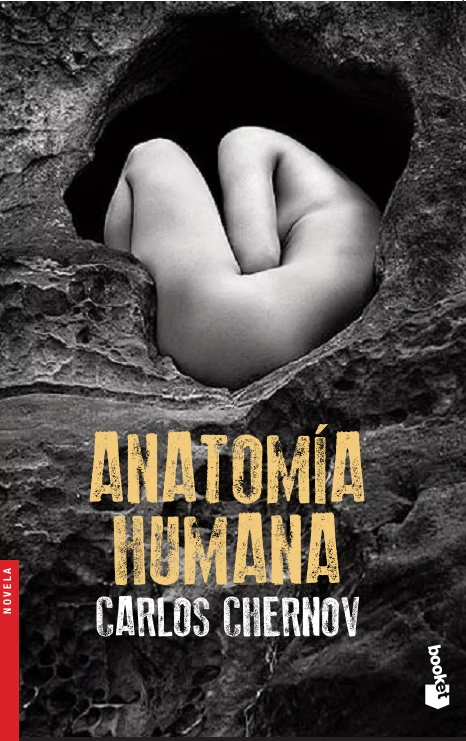
Carlos Chernov — Novelista y cuentista judío-argentino/Argentine Jewish Novelist and Short-story Writer — “Anatomía humana”/”Human Anatomy” Un fragmento de una novela experimental/An exerpt from an experimental Short-story

Carlos Chernov

______________________________________

Carlos Chernov nació en Buenos Aires en 1953. Comenzó a escribir poesía en la adolescencia y continuó haciéndolo mientras cursaba la carrera de Medicina. De esa época data su único libro de poemas, Movimientos en el agua, que permanece inédito. Desde que se recibió ejerce como psiquiatra y psicoanalista. En 1992 obtuvo el Premio Quinto Centenario del Concejo deliberante de Buenos Aires con un libro de cuentos, Amores brutales (Sudamericana, 1993) y al año siguiente el Premio Planeta de la Argentina con la novela Anatomía humana (Planeta, 1993). Después publicó La conspiración china, (novela, Perfil, 1997), La pasión de María (novela, Alfaguara, 2005), Amor propio (cuentos, Alfaguara, 2007) y El amante imperfecto, novela con la que obtuvo el Premio La otra orilla 2008 (Norma, 2008). Por El desalmado, (novela, Emecé, 2011) recibió el Primer premio de Novela Inédita de la Municipalidad de la Ciudad Autónoma de Buenos Aires. Recientemente publicó El sistema de las estrellas (novela, Interzona, 2017), Amo ( cuentos, Interzona, 2019) y Amor se fue (novela, Interzona, 2023) En 1999 dictó un curso sobre el cuento argentino en la Johns Hopkins University, en Baltimore, USA, bajo el título de “La carne en la literatura argentina”. Recibió la beca de la Civitella Ranieri Foundation en 2010. Su obra está traducida al inglés, italiano, francés y húngaro, y figura en numerosas antologías. Tiene una novela inédita: Rojo de garras y dientes.

_______________________________________________________

Carlos Chernov was born in Buenos Aires in 1953. He began writing poetry during his adolescence and continued to do so while pursuing his medical degree. His only book of poems, Movimientos en el agua, which remains unpublished, dates from this period. Since obtaining his degree, he has practiced as a psychiatrist and psychoanalyst. In 1992, he won the Quinto Centenario Prize from the Buenos Aires City Council for a short story collection, Amores brutales (Sudamericana, 1993), and the following year, he received the Planeta Prize of Argentina for his novel Anatomía humana (Planeta, 1993). Subsequently, he published La conspiración china (novel, Perfil, 1997), La pasión de María (novel, Alfaguara, 2005), Amor propio (short stories, Alfaguara, 2007), and El amante imperfecto—the novel for which he won the 2008 La Otra Orilla Prize (Norma, 2008). For El desalmado (novel, Emecé, 2011), he received the First Prize for Unpublished Novels from the Municipality of the Autonomous City of Buenos Aires. More recently, he published El sistema de las estrellas (novel, Interzona, 2017), Amo (short stories, Interzona, 2019), and Amor se fue (novel, Interzona, 2023). In 1999, he taught a course on the Argentine short story at Johns Hopkins University in Baltimore, USA, titled “La carne en la literatura argentina” (Flesh in Argentine Literature). He was awarded a fellowship by the Civitella Ranieri Foundation in 2010. His work has been translated into English, Italian, French, and Hungarian, and is featured in numerous anthologies. He has one unpublished novel: Rojo de garras y dientes

____________________________________________________

___________________________________________________________

1. El advenimiento del milenio

Después de aquella noche, Mario vivió en un mundo habitado casi exclusivamente por mujeres. Cuando los gritos lo despertaron, todavía ignoraba que la mayoría de los hombres ya había muerto.

Le dolía la cabeza, se sentía abombado. Miró a su alrededor, se encontraba en el departamento que alquilaba desde su separación, ocurrida siete meses atrás. En la luz mortecina del amanecer vio frente a su cama la jaula de los conejos y más allá, apiladas a un costado de la mesa, las dos valijas negras en las cuales transportaba los juegos de magia. De la puerta de entrada de su único ambiente colgaba una cartulina que imitaba un pergamino, en cuyo centro aparecía la figura de una pirámide invertida formada por el siguiente texto:

ABRACADABRA ABRACADABR ABRACADAB ABRACADA ABRACAD ABRACA ABRAC A B R A ABR A B A

Se lo habían entregado cuando se graduó en la escuela de magia: “Es un símbolo de nuestro oficio”, le explicaron, “también, una palabra cabalística muy antigua. Tiene poder contra la peste”.

De una percha de pie colgaba su frac de mago, los sobacos estaban aureolados de un sudor agrio con olor a caldo viejo. Durante los números de escapismo Mario transpiraba copiosamente; solía pasar vergüenza, a pesar de sus desesperadas maniobras tardaba demasiado en escabullirse del chaleco de fuerza. Al restregarse los ojos, percibió en sus manos la loción a lavanda que usaba para tapar el tufo de la orina de sus conejos. Cuando los sacaba de la galera, deslumbrados por la luz, los conejos se meaban de miedo entre sus dedos. De todas formas era inútil perfumarse, uno y otro olor habían quedado tan asociados entre sí que ambos le daban asco.

De repente, recordó los gritos. Pensó por un segundo que habían sido sus palomas, antes de acostarse las había dejado afuera. La jaula colgaba de una soga para tender la ropa, en el pozo de aire y luz. Se trataba de una especie de castigo –sonrió para sí mismo–; en las últimas noches las palomas lo habían despertado con sus arrullos y gorjeos. (Él llamaba a eso su “griterío sexual”, aun cuando no estaba seguro de que el cortejo fuera la causa del alboroto. Mario no entendía nada de palomas, solamente sabía dónde comprar una nueva cuando se moría la anterior.) La convivencia forzosa con los animalitos del oficio lo tenía harto. Era absurdo; frente al público los hacía aparecer y desaparecer a su antojo, en cambio, en la vida cotidiana, no sabía qué hacer con ellos.

Otra vez había dormido intranquilo, como casi todas las noches desde su separación. En la cama le costaba pensar, sentía confusión y desasosiego en las horas de la madrugada. En ese estado de fragilidad mental lo asaltaban temores ridículos. Por ejemplo, siempre había tenido miedo de pudrirse si permanecía demasiado tiempo inmóvil. Su amigo Rogelio aseguraba: “Si te quedás quieto un rato largo, vas a ver cómo las hormigas empiezan a subir por tus zapatos”. Acostado, durante las interminables horas del reposo, Mario imaginaba la agitación febril de las bacterias reproduciéndose en su sangre estancada. Su mal aliento de la mañana le confirmaba la sospecha de

de la mañana le confirmaba la sospecha de que estaba poniéndose rancio.

     Nuevos gritos lo obligaron a salir de esas cavilaciones. Al asomarse a la ventana, oyó un sollozo proveniente de los pisos infe­riores que estaba riores que fue en aumento hasta convertirse en un llanto continuo, escandido por largos gemidos de dolor. Mientras trataba de adivinar de dónde brotaban los lamentos, un alarido terrorífico le erizó los pelos de la nuca. Una voz femenina repetía en una letanía un nombre: “Enrique, Enrique, Enrique… ”. Se oían otros llantos más lejanos, sin excepción partían de mujeres adultas.

Unos golpes urgentes, aunque tímidos, dados a su puerta lo distrajeron de sus especulaciones.

–Ya voy… un minuto –gritó. Se puso los pantalones, un par de mocasines, la camisa del día anterior y un grueso suéter. Le abrió a una viejita simpática que, entre disculpas, le pidió que la ayudara a acostar a su esposo.

–Se durmió en el sillón y no lo puedo despertar. Debe estar descompuesto.

Cada vez que Mario oía esta palabra, con resonancias de maquinaria y aparato digestivo, se refería a alguien que ya había muerto y que pronto, efectivamente, entraría en estado de descomposición. En el departamento vio a un viejo sentado sobre un sillón tapizado en pana verde musgo, con una oscura mancha de grasa en el lugar donde apoyaba la cabeza. Usaba una robe de franela verde y estaba frente a dos televisores. El de abajo, más antiguo, servía de base al de arriba que, en ese momento, mostraba en la pantalla un crepitar de puntos de lluvia. “Fin de la transmisión”, pensó Mario.

–Vamos a llevarlo a la cama –propuso la mujer–, allí va a estar más cómodo.

Mario se metió entre el hombre y el respaldo del sillón, y lo sujetó por las axilas. Cañones de plumas de ganso y mechones de erectos pelos de caballo perforaban la trama del tapizado; cuando intentó levantar al viejo, le pincharon los costados. Lo abrazó mientras la mujer lo sostenía por las piernas. Mario sintió contra el pecho la espalda todavía caliente y húmeda de su vecino, y en la nariz el olor seborreico de su cuero cabelludo. Después de acostarlo en la cama, poniéndose rancio. Nuevos gritos lo obligaron a salir de esas cavilaciones. Al asomarse a la ventana, oyó un sollozo proveniente de los pisos infe­uno de los dos trató de averiguar si el hombre vivía.

Ella dijo en tono confesional:

–Toda la vida dormí con mis pies entre los de él, soy más bien de piel fría, sufro de la tiroides –aclaró–, ¡y él es tan tibio! ¡Su cuerpo es tan calentito!

Mario asintió en silencio, después le dijo que iba a buscar un médico. Ella estuvo de acuerdo.

Mientras esperaba el ascensor, oyó gritos en otros pisos. Algo antinatural estaba sucediendo. Los pasillos, antes familiares, le resultaban chocantes por su misma familiaridad. Se quedó perplejo observando los mosaicos de la escalera, le parecían rodajas de algún fiambre alemán; una gran morcilla de carne rojiza y pálidos ojos de grasa. Como si alguien hubiera mezclado, pegado y embutido piedra, cortándola luego en secciones cuadradas.

Salió del edificio. Apenas terminaba la noche, hacía frío. Se encontraba en la calle Paraguay, dobló por Aráoz, (solía tomar esa calle porque le gustaban los jacarandás, con sus flores aliladas, por desgracia todavía no era la época). Descubrió un auto chocado contra uno de estos grandes árboles. Había un hombre reclinado sobre el volante con la cabeza apoyada sobre los antebrazos cruzados, parecía dormido. Un gran danés empañaba las ventanillas con el hocico; lo sobresaltaron sus ladridos afónicos y cavernosos. Con cada jadeo, la saliva del animal chorreaba en regueros sobre el vidrio. Daba vueltas entre una ventanilla y otra, bloqueando sus intentos por ver si el hombre continuaba con vida. A pesar de la situación, a Mario le causaron gracia los testículos enfundados en piel grisácea, delgada y lampiña, bailoteando entre las ancas. Aunque lo atemorizaba, decidió abrir el coche. El perro salió apurado y, sin hacerle fiestas de ningún tipo, fue de inmediato a orinar contra un árbol. Mario palpó al hombre, supuso que estaba muerto.

Por la vereda pasó un grupo de mujeres. Tres de ellas arrastraban a una cuarta que se defendía sin mucha convicción. “Tal vez sea una médica”, se dijo Mario, pero no trató de acercarse. Decidió visitar a su ex mujer.

 La casa de Estela quedaba en Córdoba y Malabia, a unas diez cuadras. Cada tanto, se manifestaban nuevos signos de la tragedia. Lo desconcertaba andar por calles tantas veces transitadas y oír a cada paso mujeres llorando y gritando, y ver autos detenidos o estrellados. Se sentía como un actor en una película de ciencia ficción.

 Sobre ese telón de fondo se destacaban incidentes singulares. Una chica joven tiraba ropa de hombre por la ventana; tal vez interpretaba la ausencia nocturna del marido como un caso de infidelidad simple.

Más allá, una mujer se arrojó desde la terraza de un edificio en torre. Mario oyó una explosión en el cielo, sobre la copa de un árbol enorme, y luego vio caer una lluvia de ramitas, hojas y madera pulverizada. El cuerpo descendía en medio del estruendo. Se estrelló de cara contra los baldosones de cemento de la vereda. Un charco de sangre rodeó la cabeza fracturada; en la mano derecha todavía aferraba un rosario de cuentas de ónix. Un círculo de mujeres se quedó contemplando el cadáver pero ninguna se animó a tocarlo ni a darlo vuelta, acaso por el estado de su rostro. Pasó un rato, no acudieron ambulancias ni patrulleros. Mario siguió su camino.

 En el edificio donde había vivido con Estela no había electricidad. Mario subió por la escalera. Frente al departamento golpeó varias veces, después se empezó a impacientar. Lo torturaba la idea de que ella hubiera pasado la noche con otro hombre. Un ataque de celos lo impulsó a patear la puerta. Al fin se calmó, decidió esperarla, se sentó en la escalera y se preguntó por qué se quedaba.

Como pareja habían sido un desastre, pero Estela todavía lo atraía mucho. Le encantaban sus perfectos modales de mesa, su título de médica (se dedicaba a la cirugía plástica) y la seguridad con que encaraba cada uno de sus actos. Tenía el pelo negro, abundante y brilloso, el cutis mate y los ojos verdes. “Sos una belleza mediterránea”, le decía Mario, entre burlón y admirativo. Sobre todo, después de que un hombre la piropeó en la calle llamándola “gitana de civil”.

Habitualmente, Estela lo menospreciaba. Mario recordaba una escena en la que desnuda frente al espejo del botiquín del baño, mientras peinaba a gran velocidad los mechones de su cabellera, con los dedos en pinza y con gesto de estar pellizcando lana cruda, lo iba acusando de holgazanería, ineptitud para ganar dinero, falta de potencia sexual y otros delitos menores. Entretanto, él contemplaba con fascinación cómo el cuerpo flaco de su mujer temblaba, amoratado de frío, con la piel erizada y los pezones duros. Pero Estela permanecía impasible ante su propio padecimiento físico y solía continuar largamente con los reproches. Mario, idiotizado, pretendía apaciguarla, la abrazaba por atrás con deseo; entonces su mujer lo apartaba, asestándole un golpe en las costillas con sus codos filosos.

Mario calculaba que la había visto llorar a lo sumo dos o tres veces. De chica la habían operado de estrabismo y le había quedado una cicatriz en la esclerótica, al lado del iris. Era una línea blanca que, por lo general, apenas se advertía, pero con el llanto se congestionaba y durante varias horas tomaba un feo color encarnado. “Sangra por la herida”, pensaba él con cierto goce maligno. Esa línea sangrienta en medio del ojo le daba el aspecto de una alargada pupila de reptil. Mario suponía que la aspereza de Estela se debía, en parte, a esta marca. Como si desde la niñez se hubiera sometido a un largo entrenamiento para contener las lágrimas, tal vez inducida por algún adulto que no soportaba ver sus bellos ojos arruinados. Efecto curioso: una deficiente cicatrización de los tejidos le había agriado el carácter y, quizá, señalado la cirugía plástica como vocación de su vida.

      El ansia por seducir a su mujer lo sumía en estados de ensoñación tan sistemáticos que parecían un delirio, en ellos imaginaba que triunfaba en sus propósitos y conseguía tenerla a sus pies. Fueron escasas las oportunidades en las que se animó a rebelarse. En cierta ocasión, habían ido a una fiesta; Estela usaba un vestido bordado con lentejuelas malvas y violetas, que dibujaban su torso imitando un traje de luces. Era ropa prestada. En algún momento, mientras bailaban, las lentejuelas comenzaron a caerse –sus bordes filosos cortaban los hilos resecos que las unían al vestido–. Él estuvo toda la noche agachado sobre manos y rodillas, recogiendo las lentejuelas entre los zapatos lustrados y las piernas femeninas; entretanto, ella seguía bailando impasible. Mario entró al auto protestando y refunfuñó durante todo el trayecto de vuelta. Estaba harto de la altanería de su mujer. Estela no le contestó ni una palabra. Cuando se fueron a la cama, ella le dijo que se callara y comentó: “Solamente el clima húmedo es más pesado que un mal matrimonio”. Esa actitud de desechar de cuajo sus reclamos dejaba a Mario mudo. Dudaba de sí mismo, inventaba razonamientos aplacatorios por si su mujer continuaba enojada al día siguiente.

     El fin del vínculo se precipitó en medio de una discusión, durante la cual Mario aprovechaba para retocarse las uñas con un alicate. (Sus uñas de mago debían estar perfectas, el público miraba atentamente sus manos. Cuando tenía dinero iba a la manicura; si no, se las cortaba, limaba y esmaltaba él mismo.) La pelea se desarrollaba de un modo cortés, ninguno de los dos gritaba. Estela hablaba de manera burlona y distante de los reiterados fracasos económicos al día siguiente.

     El fin del vínculo se precipitó en medio de una discusión, durante la cual Mario aprovechaba para retocarse las uñas con un alicate. (Sus uñas de mago debían estar perfectas, el público miraba atentamente sus manos. Cuando tenía dinero iba a la manicura; si no, se las cortaba, limaba y esmaltaba él mismo.) La pelea se desarrollaba de un modo cortés, ninguno de los dos gritaba. Estela hablaba de manera burlona y distante de los reiterados fracasos económico de su marido. Estaba en lo cierto: le habían rescindido el contrato en un restaurante donde animaba almuerzos infantiles, su única entrada mensual fija. De repente, voló un fragmento de uña, pequeño y puntiagudo, y se incrustó en el ojo de Estela.

       –Idiota, cuántas veces te dije que saltan los pedazos, idiota… , sos idiota… –le gritaba entre lágrimas.

       El ojo se puso malo, tuvieron que ir al oculista, quien diagnosticó úlcera de córnea y lo tapó con un parche de gasa. Ella comentó con el médico, y con cuanta persona tuvo a su alcance, lo estúpido y asqueroso que era su marido para cortarse las uñas. Sus ojos siempre la preocupaban.

       Poco tiempo después, Estela lo echó. Puso sus valijas de mago y su ropa en la puerta. Fue la única vez que Mario se descontroló: tiró a su mujer sobre la cama y le vació encima el tacho de basura lleno de cáscaras de papa y cebolla.

     Decidió que no valía la pena esperarla. Afuera hacía frío, era una mañana de domingo soleada y fresca. Un día que no coincidía con la incomprensible desgracia que estaba ocurriendo. En las caras de las mujeres Mario observaba turbación y locura. Pensó que lo mejor hubiera sido usar su auto –un viejo Fiat–, se habría sentido más protegido. Eligió las calles menos transitadas. Caminaba de nuevo por Aráoz; a la altura de Soler encontró un policía muerto en la vereda. Aunque no cabía duda, se agachó para ver si respiraba. Notó que le habían robado el arma.

_______________________________________________________________

1. The Advent of the Millennium

After that night, Mario lived in a world inhabited almost exclusively by women. When the screams woke him, he was still unaware that the majority of men had already died.

His head ached; he felt groggy. He looked around; he was in the apartment he had been renting since his separation, which had occurred seven months earlier. In the dim light of dawn, he saw the rabbit cage facing his bed, and beyond it—piled to one side of the table—the two black suitcases in which he transported his magic props. Hanging from the entrance door of his studio apartment was a piece of cardstock made to look like parchment; at its center appeared the figure of an inverted pyramid formed by the following text:

ABRACADABRA ABRACADABR ABRACADAB ABRACADA ABRACAD ABRACA ABRAC A B R A ABR A B A

It had been given to him when he graduated from magic school: “It’s a symbol of our profession,” they explained, “also a very ancient Kabbalistic word. It has power against the plague.” His magician’s tailcoat hung from a standing hook, his armpits ringed with a sour sweat that smelled like stale broth. During escape acts, Mario perspired profusely; he was often embarrassed, for despite his desperate maneuvers, it took him too long to slip out of the straitjacket. Rubbing his eyes, he noticed on his hands the lavender lotion he used to mask the stench of his rabbits’ urine. When he took them out of the hat, dazzled by the light, the rabbits would urinate in fear between his fingers. In any case, it was useless to wear perfume; the two smells had become so intertwined that they both disgusted him.

Suddenly, he remembered the screams. For a second, he thought it had been his pigeons; he had left them outside before going to bed. The cage hung from a clothesline in the light well. It was a kind of punishment—he smiled to himself—the last few nights the pigeons had woken him with their cooing and chirping. (He called it their “sexual shouting,” even though he wasn’t sure courtship was the cause of the commotion. Mario didn’t understand.) no doves—he only knew where to buy a new one when the previous one died.) This forced coexistence with the little creatures of his trade had him fed up. It was absurd: in front of an audience, he could make them appear and vanish at will; yet in his daily life, he had no idea what to do with them.

Once again, he had slept fitfully—as he did almost every night since his separation. Lying in bed, he struggled to think; during the early hours of the morning, he felt nothing but confusion and unease. In this state of mental fragility, he was assailed by ridiculous fears. For instance, he had always been afraid that he would begin to rot if he remained motionless for too long. His friend Rogelio used to insist: “If you stay still for any length of time, you’ll see ants start crawling up your shoes.” Lying there, during those interminable hours of rest, Mario would imagine the feverish agitation of bacteria reproducing within his stagnant blood. His morning breath only served to confirm his suspicion—that he was going rancid.

New cries forced him out of his reverie. Peering out the window, he heard a sob coming from the lower floors, which grew louder until it became a continuous wail, punctuated by long moans of pain. As he tried to guess the source of the cries, a terrifying shriek made the hairs on the back of his neck stand on end. A woman’s voice was repeating a name in a litany: “Enrique, Enrique, Enrique…” Other cries could be heard further away, all from adult women.

A few urgent, though timid, knocks on his door distracted him from his speculations.

“I’m coming… just a minute,” he called out. He put on his trousers, a pair of loafers, yesterday’s shirt, and a thick sweater. He opened the door to a kindly old woman who, apologizing, asked him to help her put her husband to bed. “He fell asleep on the sofa and I can’t wake him up. He must be decomposing.”

Every time Mario heard this word, with its echoes of machinery and the digestive system, it referred to someone who had already died and who would soon, indeed, enter a state of decomposition.

Inside the apartment, he saw an old man sitting in an armchair upholstered in moss-green corduroy, with a dark grease stain right where his head rested. He was wearing a green flannel dressing gown and sat facing two televisions. The lower one—the older model—served as a stand for the upper one, which, at that moment, displayed nothing but a crackling screen of static. “End of transmission,” Mario thought.

“Let’s get him into bed,” the woman suggested. “He’ll be more comfortable there.”

Mario wedged himself between the man and the backrest of the armchair, then grasped him under the armpits. The quills of goose feathers and tufts of stiff horsehair poked through the weave of the upholstery; when he tried to lift the old man, they pricked his sides. He held him in an embrace while the woman supported his legs. Mario felt his neighbor’s back—still warm and damp—pressed against his chest, and caught the sebaceous scent of his scalp in his nostrils. After laying him down on the bed, one of the two tried to determine if the man was still alive.

She spoke in a confessional tone:

“All my life, I’ve slept with my feet tucked between his. I tend to run cold—I have a thyroid condition,” she clarified—”and he’s just so warm! His body is so cozy!”

Mario nodded silently, then told her he was going to fetch a doctor. She agreed.

While waiting for the elevator, he heard shouting on other floors. Something unnatural was taking place. The hallways—once so familiar—now struck him as jarring precisely *because* of that familiarity. He stood there, perplexed, gazing at the tiles on the stairwell; they reminded him of slices of some German cold cut—a massive blood sausage made of reddish meat and pale, fatty “eyes.” As if someone had mixed, glued, and packed stone together, then cut it into square sections.

He left the building. Night was just ending; it was cold. He was on Paraguay Street; he turned onto Aráoz (he usually took that street because he liked the jacarandas, with their lilac blossoms—unfortunately, it wasn’t the season yet). He spotted a car crashed against one of these large trees. There was a man slumped over the steering wheel, his head resting on his crossed forearms; he looked asleep. A Great Dane fogged up the windows with its snout; its hoarse, cavernous barks startled him. With every pant, the animal’s saliva ran in rivulets down the glass. It paced back and forth between the windows, blocking his attempts to see if the man was still alive. Despite the situation, Mario found himself amused by the dog’s testicles—encased in thin, hairless, grayish skin—dangling and bouncing between its hind legs. Although he was frightened, he decided to open the car door. The dog scrambled out and, without offering him any greeting whatsoever, immediately went to urinate against a tree. Mario felt the man’s body; he assumed he was dead.

A group of women passed by on the sidewalk. Three of them were dragging along a fourth, who was struggling against them without much conviction. “Maybe she’s a doctor,” Mario told himself, but he made no move to approach them. He decided to go visit his ex-wife.

Estela’s house was located at the corner of Córdoba and Malabia—about ten blocks away. Every so often, new signs of the tragedy would manifest themselves. It was disorienting to walk along streets he had traversed so many times before, hearing women weeping and screaming at every step, and seeing cars either stalled or wrecked. He felt like an actor in a science fiction movie.

Against this backdrop, singular incidents stood out. A young woman was throwing men’s clothing out a window; perhaps she interpreted her husband’s overnight absence as a simple case of infidelity.

Further on, a woman threw herself off the roof of a high-rise building. Mario heard an explosive sound in the sky, just above the crown of a massive tree, followed by a shower of twigs, leaves, and pulverized wood raining down. The body plummeted amidst the din. It smashed face-first onto the concrete paving slabs of the sidewalk. A pool of blood spread around the fractured head; in her right hand, she still clutched a rosary made of onyx beads. A circle of women stood gazing at the corpse, yet none dared to touch it or turn it over—perhaps because of the state of its face. Some time passed, but neither ambulances nor police cruisers arrived. Mario continued on his way.

There was no electricity in the building where he had lived with Estela. Mario climbed the stairs. Standing before the apartment door, he knocked several times; then, he began to grow impatient. He was tormented by the thought that she might have spent the night with another man. A fit of jealousy He felt the urge to kick down the door. Eventually, he calmed down; deciding to wait for her, he sat on the stairs and wondered why he stayed.

As a couple, they had been a disaster, yet Estela still held a powerful attraction for him. He loved her impeccable table manners, her medical degree (she specialized in plastic surgery), and the self-assurance with which she approached everything she did. She had thick, glossy black hair, a matte complexion, and green eyes. “You’re a Mediterranean beauty,” Mario would tell her—his tone a mix of mockery and admiration—especially after a man on the street had catcalled her, calling her a “gypsy in civilian clothes.”

Typically, Estela treated him with disdain. Mario recalled a particular scene: standing naked before the medicine cabinet mirror in the bathroom, she was rapidly combing through her thick hair—pinching the strands between her fingers as if carding raw wool—while simultaneously berating him for his laziness, his ineptitude at earning money, his lack of sexual potency, and various other minor offenses. Meanwhile, he watched with fascination as his wife’s slender body shivered—mottled blue from the cold, her skin goose-pimpled and her nipples hard. Yet Estela remained impassive in the face of her own physical discomfort, often continuing her tirade of reproaches for a long time. Mario, stupefied, would try to appease her, embracing her from behind with desire; but his wife would push him away, jabbing him in the ribs with her sharp elbows.

Mario reckoned he had seen her cry, at most, two or three times. As a child, she had undergone surgery for strabismus, leaving a scar on the sclera—the white of her eye—right next to the iris. It was a thin white line that, under normal circumstances, was barely noticeable; but when she cried, it would become engorged, turning an ugly crimson color for hours on end. “She’s bleeding from the wound,” he would think, with a certain malicious glee. That bloody line running through the center of her eye gave her the appearance of an elongated reptilian pupil. Mario surmised that Estela’s harshness was due, in part, to this mark—as if, since childhood, she had undergone a long regimen of training to hold back her tears, perhaps at the behest of some adult who could not bear to see her beautiful eyes ruined. A curious effect: poor tissue healing had soured her disposition and, perhaps, marked plastic surgery as her life’s vocation.

His yearning to seduce his wife plunged him into states of reverie so systematic that they bordered on delusion; in these daydreams, he imagined himself triumphing in his aims and succeeding in bringing her to her knees. Rare were the occasions when he mustered the courage to rebel. Once, they had gone to a party; Estela wore a dress embroidered with mauve and violet sequins that traced the contours of her torso, mimicking a *traje de luces*—a matador’s suit of lights. It was borrowed clothing. At some point, while they were dancing, the sequins began to fall off—their sharp edges severing the brittle threads that bound them to the dress. He spent the entire night down on his hands and knees, gathering the sequins from amidst polished shoes and women’s legs; meanwhile, she continued to dance, utterly impassive. Mario got into the car grumbling and continued to sulk throughout the entire drive home. He was fed up with his wife’s haughtiness. Estela did not utter a single word in reply. When they went to bed, she told him to be quiet and remarked: “The only thing heavier than a bad marriage is humid weather.” This attitude—dismissing his grievances root and branch—left Mario speechless. He began to doubt himself, concocting conciliatory arguments just in case his wife remained angry the following day.

The end of their relationship came to a head during an argument, throughout which Mario took the opportunity to tend to his nails with a pair of clippers. (His magician’s nails had to be flawless; the audience watched his hands intently. When he had money, he went to a manicurist; otherwise, he trimmed, filed, and polished them himself.) The quarrel unfolded in a remarkably civil manner; neither of them raised their voice. Estela spoke in a mocking, detached tone about his repeated financial failures.

The end of their relationship came to a head during an argument, throughout which Mario took the opportunity to tend to his nails with a pair of clippers. (His magician’s fingernails had to be perfect; the audience watched his hands intently. When he had money, he went for a manicure; otherwise, he cut, filed, and polished them himself.) The argument unfolded in a polite manner; neither of them raised their voice. Estela spoke with mocking detachment about her husband’s repeated financial failures. She was right: his contract had been terminated at a restaurant where he entertained at children’s luncheons—his only source of fixed monthly income. Suddenly, a small, sharp fragment of fingernail flew through the air and embedded itself in Estela’s eye.

“Idiot! How many times did I tell you the clippings fly everywhere? You idiot… you’re such an idiot…” she screamed at him through her tears.

His eye took a turn for the worse; they had to go to an eye specialist, who diagnosed a corneal ulcer and covered it with a gauze patch. She complained to the doctor—and to anyone else within earshot—about how stupid and disgusting her husband was when it came to clipping his nails. His eyes had always been a source of worry for her.

Not long after, Estela kicked him out. She placed his magician’s trunks and his clothes right outside the door. It was the only time Mario ever completely lost control: he shoved his wife onto the bed and dumped the entire contents of the trash can—full of potato and onion peels—all over her.

He decided it wasn’t worth waiting for her. It was cold outside—a sunny, crisp Sunday morning. It was a day that seemed utterly at odds with the incomprehensible tragedy currently unfolding. In the faces of the women he passed, Mario saw only bewilderment and madness. He thought it would have been better to take his car—an old Fiat—as he would have felt more protected. He chose the least-trafficked streets. He was walking along Aráoz Street once again when, near the intersection with Soler, he came across a dead police officer lying on the sidewalk. Although there was no room for doubt, he knelt down to check if the man was still breathing. He noticed that the officer’s gun had been stolen.

______________________________________________________

____________________________________________________________