


Carlos Chernov
______________________________________
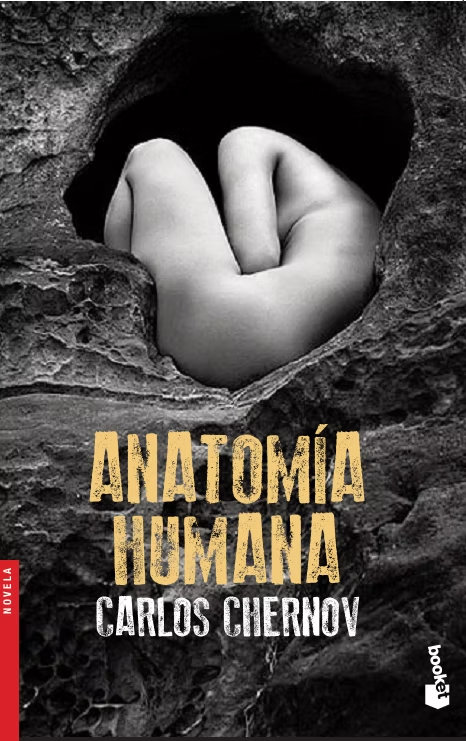
Carlos Chernov nació en Buenos Aires en 1953. Comenzó a escribir poesía en la adolescencia y continuó haciéndolo mientras cursaba la carrera de Medicina. De esa época data su único libro de poemas, Movimientos en el agua, que permanece inédito. Desde que se recibió ejerce como psiquiatra y psicoanalista. En 1992 obtuvo el Premio Quinto Centenario del Concejo deliberante de Buenos Aires con un libro de cuentos, Amores brutales (Sudamericana, 1993) y al año siguiente el Premio Planeta de la Argentina con la novela Anatomía humana (Planeta, 1993). Después publicó La conspiración china, (novela, Perfil, 1997), La pasión de María (novela, Alfaguara, 2005), Amor propio (cuentos, Alfaguara, 2007) y El amante imperfecto, novela con la que obtuvo el Premio La otra orilla 2008 (Norma, 2008). Por El desalmado, (novela, Emecé, 2011) recibió el Primer premio de Novela Inédita de la Municipalidad de la Ciudad Autónoma de Buenos Aires. Recientemente publicó El sistema de las estrellas (novela, Interzona, 2017), Amo ( cuentos, Interzona, 2019) y Amor se fue (novela, Interzona, 2023) En 1999 dictó un curso sobre el cuento argentino en la Johns Hopkins University, en Baltimore, USA, bajo el título de “La carne en la literatura argentina”. Recibió la beca de la Civitella Ranieri Foundation en 2010. Su obra está traducida al inglés, italiano, francés y húngaro, y figura en numerosas antologías. Tiene una novela inédita: Rojo de garras y dientes.
_______________________________________________________
Carlos Chernov was born in Buenos Aires in 1953. He began writing poetry during his adolescence and continued to do so while pursuing his medical degree. His only book of poems, Movimientos en el agua, which remains unpublished, dates from this period. Since obtaining his degree, he has practiced as a psychiatrist and psychoanalyst. In 1992, he won the Quinto Centenario Prize from the Buenos Aires City Council for a short story collection, Amores brutales (Sudamericana, 1993), and the following year, he received the Planeta Prize of Argentina for his novel Anatomía humana (Planeta, 1993). Subsequently, he published La conspiración china (novel, Perfil, 1997), La pasión de María (novel, Alfaguara, 2005), Amor propio (short stories, Alfaguara, 2007), and El amante imperfecto—the novel for which he won the 2008 La Otra Orilla Prize (Norma, 2008). For El desalmado (novel, Emecé, 2011), he received the First Prize for Unpublished Novels from the Municipality of the Autonomous City of Buenos Aires. More recently, he published El sistema de las estrellas (novel, Interzona, 2017), Amo (short stories, Interzona, 2019), and Amor se fue (novel, Interzona, 2023). In 1999, he taught a course on the Argentine short story at Johns Hopkins University in Baltimore, USA, titled “La carne en la literatura argentina” (Flesh in Argentine Literature). He was awarded a fellowship by the Civitella Ranieri Foundation in 2010. His work has been translated into English, Italian, French, and Hungarian, and is featured in numerous anthologies. He has one unpublished novel: Rojo de garras y dientes
____________________________________________________
___________________________________________________________
Anatomía humana
1. El advenimiento del milenio
Después de aquella noche, Mario vivió en un mundo habitado casi exclusivamente por mujeres. Cuando los gritos lo despertaron, todavía ignoraba que la mayoría de los hombres ya había muerto.
Le dolía la cabeza, se sentía abombado. Miró a su alrededor, se encontraba en el departamento que alquilaba desde su separación, ocurrida siete meses atrás. En la luz mortecina del amanecer vio frente a su cama la jaula de los conejos y más allá, apiladas a un costado de la mesa, las dos valijas negras en las cuales transportaba los juegos de magia. De la puerta de entrada de su único ambiente colgaba una cartulina que imitaba un pergamino, en cuyo centro aparecía la figura de una pirámide invertida formada por el siguiente texto:
ABRACADABRA ABRACADABR ABRACADAB ABRACADA ABRACAD ABRACA ABRAC A B R A ABR A B A
Se lo habían entregado cuando se graduó en la escuela de magia: “Es un símbolo de nuestro oficio”, le explicaron, “también, una palabra cabalística muy antigua. Tiene poder contra la peste”.
De una percha de pie colgaba su frac de mago, los sobacos estaban aureolados de un sudor agrio con olor a caldo viejo. Durante los números de escapismo Mario transpiraba copiosamente; solía pasar vergüenza, a pesar de sus desesperadas maniobras tardaba demasiado en escabullirse del chaleco de fuerza. Al restregarse los ojos, percibió en sus manos la loción a lavanda que usaba para tapar el tufo de la orina de sus conejos. Cuando los sacaba de la galera, deslumbrados por la luz, los conejos se meaban de miedo entre sus dedos. De todas formas era inútil perfumarse, uno y otro olor habían quedado tan asociados entre sí que ambos le daban asco.
De repente, recordó los gritos. Pensó por un segundo que habían sido sus palomas, antes de acostarse las había dejado afuera. La jaula colgaba de una soga para tender la ropa, en el pozo de aire y luz. Se trataba de una especie de castigo –sonrió para sí mismo–; en las últimas noches las palomas lo habían despertado con sus arrullos y gorjeos. (Él llamaba a eso su “griterío sexual”, aun cuando no estaba seguro de que el cortejo fuera la causa del alboroto. Mario no entendía nada de palomas, solamente sabía dónde comprar una nueva cuando se moría la anterior.) La convivencia forzosa con los animalitos del oficio lo tenía harto. Era absurdo; frente al público los hacía aparecer y desaparecer a su antojo, en cambio, en la vida cotidiana, no sabía qué hacer con ellos.
Otra vez había dormido intranquilo, como casi todas las noches desde su separación. En la cama le costaba pensar, sentía confusión y desasosiego en las horas de la madrugada. En ese estado de fragilidad mental lo asaltaban temores ridículos. Por ejemplo, siempre había tenido miedo de pudrirse si permanecía demasiado tiempo inmóvil. Su amigo Rogelio aseguraba: “Si te quedás quieto un rato largo, vas a ver cómo las hormigas empiezan a subir por tus zapatos”. Acostado, durante las interminables horas del reposo, Mario imaginaba la agitación febril de las bacterias reproduciéndose en su sangre estancada. Su mal aliento de la mañana le confirmaba la sospecha de
de la mañana le confirmaba la sospecha de que estaba poniéndose rancio.
Nuevos gritos lo obligaron a salir de esas cavilaciones. Al asomarse a la ventana, oyó un sollozo proveniente de los pisos inferiores que estaba riores que fue en aumento hasta convertirse en un llanto continuo, escandido por largos gemidos de dolor. Mientras trataba de adivinar de dónde brotaban los lamentos, un alarido terrorífico le erizó los pelos de la nuca. Una voz femenina repetía en una letanía un nombre: “Enrique, Enrique, Enrique… ”. Se oían otros llantos más lejanos, sin excepción partían de mujeres adultas.
Unos golpes urgentes, aunque tímidos, dados a su puerta lo distrajeron de sus especulaciones.
–Ya voy… un minuto –gritó. Se puso los pantalones, un par de mocasines, la camisa del día anterior y un grueso suéter. Le abrió a una viejita simpática que, entre disculpas, le pidió que la ayudara a acostar a su esposo.
–Se durmió en el sillón y no lo puedo despertar. Debe estar descompuesto.
Cada vez que Mario oía esta palabra, con resonancias de maquinaria y aparato digestivo, se refería a alguien que ya había muerto y que pronto, efectivamente, entraría en estado de descomposición. En el departamento vio a un viejo sentado sobre un sillón tapizado en pana verde musgo, con una oscura mancha de grasa en el lugar donde apoyaba la cabeza. Usaba una robe de franela verde y estaba frente a dos televisores. El de abajo, más antiguo, servía de base al de arriba que, en ese momento, mostraba en la pantalla un crepitar de puntos de lluvia. “Fin de la transmisión”, pensó Mario.
–Vamos a llevarlo a la cama –propuso la mujer–, allí va a estar más cómodo.
Mario se metió entre el hombre y el respaldo del sillón, y lo sujetó por las axilas. Cañones de plumas de ganso y mechones de erectos pelos de caballo perforaban la trama del tapizado; cuando intentó levantar al viejo, le pincharon los costados. Lo abrazó mientras la mujer lo sostenía por las piernas. Mario sintió contra el pecho la espalda todavía caliente y húmeda de su vecino, y en la nariz el olor seborreico de su cuero cabelludo. Después de acostarlo en la cama, poniéndose rancio. Nuevos gritos lo obligaron a salir de esas cavilaciones. Al asomarse a la ventana, oyó un sollozo proveniente de los pisos infeuno de los dos trató de averiguar si el hombre vivía.
Ella dijo en tono confesional:
–Toda la vida dormí con mis pies entre los de él, soy más bien de piel fría, sufro de la tiroides –aclaró–, ¡y él es tan tibio! ¡Su cuerpo es tan calentito!
Mario asintió en silencio, después le dijo que iba a buscar un médico. Ella estuvo de acuerdo.
Mientras esperaba el ascensor, oyó gritos en otros pisos. Algo antinatural estaba sucediendo. Los pasillos, antes familiares, le resultaban chocantes por su misma familiaridad. Se quedó perplejo observando los mosaicos de la escalera, le parecían rodajas de algún fiambre alemán; una gran morcilla de carne rojiza y pálidos ojos de grasa. Como si alguien hubiera mezclado, pegado y embutido piedra, cortándola luego en secciones cuadradas.
Salió del edificio. Apenas terminaba la noche, hacía frío. Se encontraba en la calle Paraguay, dobló por Aráoz, (solía tomar esa calle porque le gustaban los jacarandás, con sus flores aliladas, por desgracia todavía no era la época). Descubrió un auto chocado contra uno de estos grandes árboles. Había un hombre reclinado sobre el volante con la cabeza apoyada sobre los antebrazos cruzados, parecía dormido. Un gran danés empañaba las ventanillas con el hocico; lo sobresaltaron sus ladridos afónicos y cavernosos. Con cada jadeo, la saliva del animal chorreaba en regueros sobre el vidrio. Daba vueltas entre una ventanilla y otra, bloqueando sus intentos por ver si el hombre continuaba con vida. A pesar de la situación, a Mario le causaron gracia los testículos enfundados en piel grisácea, delgada y lampiña, bailoteando entre las ancas. Aunque lo atemorizaba, decidió abrir el coche. El perro salió apurado y, sin hacerle fiestas de ningún tipo, fue de inmediato a orinar contra un árbol. Mario palpó al hombre, supuso que estaba muerto.
Por la vereda pasó un grupo de mujeres. Tres de ellas arrastraban a una cuarta que se defendía sin mucha convicción. “Tal vez sea una médica”, se dijo Mario, pero no trató de acercarse. Decidió visitar a su ex mujer.
La casa de Estela quedaba en Córdoba y Malabia, a unas diez cuadras. Cada tanto, se manifestaban nuevos signos de la tragedia. Lo desconcertaba andar por calles tantas veces transitadas y oír a cada paso mujeres llorando y gritando, y ver autos detenidos o estrellados. Se sentía como un actor en una película de ciencia ficción.
Sobre ese telón de fondo se destacaban incidentes singulares. Una chica joven tiraba ropa de hombre por la ventana; tal vez interpretaba la ausencia nocturna del marido como un caso de infidelidad simple.
Más allá, una mujer se arrojó desde la terraza de un edificio en torre. Mario oyó una explosión en el cielo, sobre la copa de un árbol enorme, y luego vio caer una lluvia de ramitas, hojas y madera pulverizada. El cuerpo descendía en medio del estruendo. Se estrelló de cara contra los baldosones de cemento de la vereda. Un charco de sangre rodeó la cabeza fracturada; en la mano derecha todavía aferraba un rosario de cuentas de ónix. Un círculo de mujeres se quedó contemplando el cadáver pero ninguna se animó a tocarlo ni a darlo vuelta, acaso por el estado de su rostro. Pasó un rato, no acudieron ambulancias ni patrulleros. Mario siguió su camino.
En el edificio donde había vivido con Estela no había electricidad. Mario subió por la escalera. Frente al departamento golpeó varias veces, después se empezó a impacientar. Lo torturaba la idea de que ella hubiera pasado la noche con otro hombre. Un ataque de celos lo impulsó a patear la puerta. Al fin se calmó, decidió esperarla, se sentó en la escalera y se preguntó por qué se quedaba.
Como pareja habían sido un desastre, pero Estela todavía lo atraía mucho. Le encantaban sus perfectos modales de mesa, su título de médica (se dedicaba a la cirugía plástica) y la seguridad con que encaraba cada uno de sus actos. Tenía el pelo negro, abundante y brilloso, el cutis mate y los ojos verdes. “Sos una belleza mediterránea”, le decía Mario, entre burlón y admirativo. Sobre todo, después de que un hombre la piropeó en la calle llamándola “gitana de civil”.
Habitualmente, Estela lo menospreciaba. Mario recordaba una escena en la que desnuda frente al espejo del botiquín del baño, mientras peinaba a gran velocidad los mechones de su cabellera, con los dedos en pinza y con gesto de estar pellizcando lana cruda, lo iba acusando de holgazanería, ineptitud para ganar dinero, falta de potencia sexual y otros delitos menores. Entretanto, él contemplaba con fascinación cómo el cuerpo flaco de su mujer temblaba, amoratado de frío, con la piel erizada y los pezones duros. Pero Estela permanecía impasible ante su propio padecimiento físico y solía continuar largamente con los reproches. Mario, idiotizado, pretendía apaciguarla, la abrazaba por atrás con deseo; entonces su mujer lo apartaba, asestándole un golpe en las costillas con sus codos filosos.
Mario calculaba que la había visto llorar a lo sumo dos o tres veces. De chica la habían operado de estrabismo y le había quedado una cicatriz en la esclerótica, al lado del iris. Era una línea blanca que, por lo general, apenas se advertía, pero con el llanto se congestionaba y durante varias horas tomaba un feo color encarnado. “Sangra por la herida”, pensaba él con cierto goce maligno. Esa línea sangrienta en medio del ojo le daba el aspecto de una alargada pupila de reptil. Mario suponía que la aspereza de Estela se debía, en parte, a esta marca. Como si desde la niñez se hubiera sometido a un largo entrenamiento para contener las lágrimas, tal vez inducida por algún adulto que no soportaba ver sus bellos ojos arruinados. Efecto curioso: una deficiente cicatrización de los tejidos le había agriado el carácter y, quizá, señalado la cirugía plástica como vocación de su vida.
El ansia por seducir a su mujer lo sumía en estados de ensoñación tan sistemáticos que parecían un delirio, en ellos imaginaba que triunfaba en sus propósitos y conseguía tenerla a sus pies. Fueron escasas las oportunidades en las que se animó a rebelarse. En cierta ocasión, habían ido a una fiesta; Estela usaba un vestido bordado con lentejuelas malvas y violetas, que dibujaban su torso imitando un traje de luces. Era ropa prestada. En algún momento, mientras bailaban, las lentejuelas comenzaron a caerse –sus bordes filosos cortaban los hilos resecos que las unían al vestido–. Él estuvo toda la noche agachado sobre manos y rodillas, recogiendo las lentejuelas entre los zapatos lustrados y las piernas femeninas; entretanto, ella seguía bailando impasible. Mario entró al auto protestando y refunfuñó durante todo el trayecto de vuelta. Estaba harto de la altanería de su mujer. Estela no le contestó ni una palabra. Cuando se fueron a la cama, ella le dijo que se callara y comentó: “Solamente el clima húmedo es más pesado que un mal matrimonio”. Esa actitud de desechar de cuajo sus reclamos dejaba a Mario mudo. Dudaba de sí mismo, inventaba razonamientos aplacatorios por si su mujer continuaba enojada al día siguiente.
El fin del vínculo se precipitó en medio de una discusión, durante la cual Mario aprovechaba para retocarse las uñas con un alicate. (Sus uñas de mago debían estar perfectas, el público miraba atentamente sus manos. Cuando tenía dinero iba a la manicura; si no, se las cortaba, limaba y esmaltaba él mismo.) La pelea se desarrollaba de un modo cortés, ninguno de los dos gritaba. Estela hablaba de manera burlona y distante de los reiterados fracasos económicos al día siguiente.
El fin del vínculo se precipitó en medio de una discusión, durante la cual Mario aprovechaba para retocarse las uñas con un alicate. (Sus uñas de mago debían estar perfectas, el público miraba atentamente sus manos. Cuando tenía dinero iba a la manicura; si no, se las cortaba, limaba y esmaltaba él mismo.) La pelea se desarrollaba de un modo cortés, ninguno de los dos gritaba. Estela hablaba de manera burlona y distante de los reiterados fracasos económico de su marido. Estaba en lo cierto: le habían rescindido el contrato en un restaurante donde animaba almuerzos infantiles, su única entrada mensual fija. De repente, voló un fragmento de uña, pequeño y puntiagudo, y se incrustó en el ojo de Estela.
–Idiota, cuántas veces te dije que saltan los pedazos, idiota… , sos idiota… –le gritaba entre lágrimas.
El ojo se puso malo, tuvieron que ir al oculista, quien diagnosticó úlcera de córnea y lo tapó con un parche de gasa. Ella comentó con el médico, y con cuanta persona tuvo a su alcance, lo estúpido y asqueroso que era su marido para cortarse las uñas. Sus ojos siempre la preocupaban.
Poco tiempo después, Estela lo echó. Puso sus valijas de mago y su ropa en la puerta. Fue la única vez que Mario se descontroló: tiró a su mujer sobre la cama y le vació encima el tacho de basura lleno de cáscaras de papa y cebolla.
Decidió que no valía la pena esperarla. Afuera hacía frío, era una mañana de domingo soleada y fresca. Un día que no coincidía con la incomprensible desgracia que estaba ocurriendo. En las caras de las mujeres Mario observaba turbación y locura. Pensó que lo mejor hubiera sido usar su auto –un viejo Fiat–, se habría sentido más protegido. Eligió las calles menos transitadas. Caminaba de nuevo por Aráoz; a la altura de Soler encontró un policía muerto en la vereda. Aunque no cabía duda, se agachó para ver si respiraba. Notó que le habían robado el arma.
_______________________________________________________________
Human Anatomy
1. The Advent of the Millennium
After that night, Mario lived in a world inhabited almost exclusively by women. When the screams woke him, he was still unaware that the majority of men had already died.
His head ached; he felt groggy. He looked around; he was in the apartment he had been renting since his separation, which had occurred seven months earlier. In the dim light of dawn, he saw the rabbit cage facing his bed, and beyond it—piled to one side of the table—the two black suitcases in which he transported his magic props. Hanging from the entrance door of his studio apartment was a piece of cardstock made to look like parchment; at its center appeared the figure of an inverted pyramid formed by the following text:
ABRACADABRA ABRACADABR ABRACADAB ABRACADA ABRACAD ABRACA ABRAC A B R A ABR A B A
It had been given to him when he graduated from magic school: “It’s a symbol of our profession,” they explained, “also a very ancient Kabbalistic word. It has power against the plague.” His magician’s tailcoat hung from a standing hook, his armpits ringed with a sour sweat that smelled like stale broth. During escape acts, Mario perspired profusely; he was often embarrassed, for despite his desperate maneuvers, it took him too long to slip out of the straitjacket. Rubbing his eyes, he noticed on his hands the lavender lotion he used to mask the stench of his rabbits’ urine. When he took them out of the hat, dazzled by the light, the rabbits would urinate in fear between his fingers. In any case, it was useless to wear perfume; the two smells had become so intertwined that they both disgusted him.
Suddenly, he remembered the screams. For a second, he thought it had been his pigeons; he had left them outside before going to bed. The cage hung from a clothesline in the light well. It was a kind of punishment—he smiled to himself—the last few nights the pigeons had woken him with their cooing and chirping. (He called it their “sexual shouting,” even though he wasn’t sure courtship was the cause of the commotion. Mario didn’t understand.) no doves—he only knew where to buy a new one when the previous one died.) This forced coexistence with the little creatures of his trade had him fed up. It was absurd: in front of an audience, he could make them appear and vanish at will; yet in his daily life, he had no idea what to do with them.
Once again, he had slept fitfully—as he did almost every night since his separation. Lying in bed, he struggled to think; during the early hours of the morning, he felt nothing but confusion and unease. In this state of mental fragility, he was assailed by ridiculous fears. For instance, he had always been afraid that he would begin to rot if he remained motionless for too long. His friend Rogelio used to insist: “If you stay still for any length of time, you’ll see ants start crawling up your shoes.” Lying there, during those interminable hours of rest, Mario would imagine the feverish agitation of bacteria reproducing within his stagnant blood. His morning breath only served to confirm his suspicion—that he was going rancid.
New cries forced him out of his reverie. Peering out the window, he heard a sob coming from the lower floors, which grew louder until it became a continuous wail, punctuated by long moans of pain. As he tried to guess the source of the cries, a terrifying shriek made the hairs on the back of his neck stand on end. A woman’s voice was repeating a name in a litany: “Enrique, Enrique, Enrique…” Other cries could be heard further away, all from adult women.
A few urgent, though timid, knocks on his door distracted him from his speculations.
“I’m coming… just a minute,” he called out. He put on his trousers, a pair of loafers, yesterday’s shirt, and a thick sweater. He opened the door to a kindly old woman who, apologizing, asked him to help her put her husband to bed. “He fell asleep on the sofa and I can’t wake him up. He must be decomposing.”
Every time Mario heard this word, with its echoes of machinery and the digestive system, it referred to someone who had already died and who would soon, indeed, enter a state of decomposition.
Inside the apartment, he saw an old man sitting in an armchair upholstered in moss-green corduroy, with a dark grease stain right where his head rested. He was wearing a green flannel dressing gown and sat facing two televisions. The lower one—the older model—served as a stand for the upper one, which, at that moment, displayed nothing but a crackling screen of static. “End of transmission,” Mario thought.
“Let’s get him into bed,” the woman suggested. “He’ll be more comfortable there.”
Mario wedged himself between the man and the backrest of the armchair, then grasped him under the armpits. The quills of goose feathers and tufts of stiff horsehair poked through the weave of the upholstery; when he tried to lift the old man, they pricked his sides. He held him in an embrace while the woman supported his legs. Mario felt his neighbor’s back—still warm and damp—pressed against his chest, and caught the sebaceous scent of his scalp in his nostrils. After laying him down on the bed, one of the two tried to determine if the man was still alive.
She spoke in a confessional tone:
“All my life, I’ve slept with my feet tucked between his. I tend to run cold—I have a thyroid condition,” she clarified—”and he’s just so warm! His body is so cozy!”
Mario nodded silently, then told her he was going to fetch a doctor. She agreed.
While waiting for the elevator, he heard shouting on other floors. Something unnatural was taking place. The hallways—once so familiar—now struck him as jarring precisely *because* of that familiarity. He stood there, perplexed, gazing at the tiles on the stairwell; they reminded him of slices of some German cold cut—a massive blood sausage made of reddish meat and pale, fatty “eyes.” As if someone had mixed, glued, and packed stone together, then cut it into square sections.
He left the building. Night was just ending; it was cold. He was on Paraguay Street; he turned onto Aráoz (he usually took that street because he liked the jacarandas, with their lilac blossoms—unfortunately, it wasn’t the season yet). He spotted a car crashed against one of these large trees. There was a man slumped over the steering wheel, his head resting on his crossed forearms; he looked asleep. A Great Dane fogged up the windows with its snout; its hoarse, cavernous barks startled him. With every pant, the animal’s saliva ran in rivulets down the glass. It paced back and forth between the windows, blocking his attempts to see if the man was still alive. Despite the situation, Mario found himself amused by the dog’s testicles—encased in thin, hairless, grayish skin—dangling and bouncing between its hind legs. Although he was frightened, he decided to open the car door. The dog scrambled out and, without offering him any greeting whatsoever, immediately went to urinate against a tree. Mario felt the man’s body; he assumed he was dead.
A group of women passed by on the sidewalk. Three of them were dragging along a fourth, who was struggling against them without much conviction. “Maybe she’s a doctor,” Mario told himself, but he made no move to approach them. He decided to go visit his ex-wife.
Estela’s house was located at the corner of Córdoba and Malabia—about ten blocks away. Every so often, new signs of the tragedy would manifest themselves. It was disorienting to walk along streets he had traversed so many times before, hearing women weeping and screaming at every step, and seeing cars either stalled or wrecked. He felt like an actor in a science fiction movie.
Against this backdrop, singular incidents stood out. A young woman was throwing men’s clothing out a window; perhaps she interpreted her husband’s overnight absence as a simple case of infidelity.
Further on, a woman threw herself off the roof of a high-rise building. Mario heard an explosive sound in the sky, just above the crown of a massive tree, followed by a shower of twigs, leaves, and pulverized wood raining down. The body plummeted amidst the din. It smashed face-first onto the concrete paving slabs of the sidewalk. A pool of blood spread around the fractured head; in her right hand, she still clutched a rosary made of onyx beads. A circle of women stood gazing at the corpse, yet none dared to touch it or turn it over—perhaps because of the state of its face. Some time passed, but neither ambulances nor police cruisers arrived. Mario continued on his way.
There was no electricity in the building where he had lived with Estela. Mario climbed the stairs. Standing before the apartment door, he knocked several times; then, he began to grow impatient. He was tormented by the thought that she might have spent the night with another man. A fit of jealousy He felt the urge to kick down the door. Eventually, he calmed down; deciding to wait for her, he sat on the stairs and wondered why he stayed.
As a couple, they had been a disaster, yet Estela still held a powerful attraction for him. He loved her impeccable table manners, her medical degree (she specialized in plastic surgery), and the self-assurance with which she approached everything she did. She had thick, glossy black hair, a matte complexion, and green eyes. “You’re a Mediterranean beauty,” Mario would tell her—his tone a mix of mockery and admiration—especially after a man on the street had catcalled her, calling her a “gypsy in civilian clothes.”
Typically, Estela treated him with disdain. Mario recalled a particular scene: standing naked before the medicine cabinet mirror in the bathroom, she was rapidly combing through her thick hair—pinching the strands between her fingers as if carding raw wool—while simultaneously berating him for his laziness, his ineptitude at earning money, his lack of sexual potency, and various other minor offenses. Meanwhile, he watched with fascination as his wife’s slender body shivered—mottled blue from the cold, her skin goose-pimpled and her nipples hard. Yet Estela remained impassive in the face of her own physical discomfort, often continuing her tirade of reproaches for a long time. Mario, stupefied, would try to appease her, embracing her from behind with desire; but his wife would push him away, jabbing him in the ribs with her sharp elbows.
Mario reckoned he had seen her cry, at most, two or three times. As a child, she had undergone surgery for strabismus, leaving a scar on the sclera—the white of her eye—right next to the iris. It was a thin white line that, under normal circumstances, was barely noticeable; but when she cried, it would become engorged, turning an ugly crimson color for hours on end. “She’s bleeding from the wound,” he would think, with a certain malicious glee. That bloody line running through the center of her eye gave her the appearance of an elongated reptilian pupil. Mario surmised that Estela’s harshness was due, in part, to this mark—as if, since childhood, she had undergone a long regimen of training to hold back her tears, perhaps at the behest of some adult who could not bear to see her beautiful eyes ruined. A curious effect: poor tissue healing had soured her disposition and, perhaps, marked plastic surgery as her life’s vocation.
His yearning to seduce his wife plunged him into states of reverie so systematic that they bordered on delusion; in these daydreams, he imagined himself triumphing in his aims and succeeding in bringing her to her knees. Rare were the occasions when he mustered the courage to rebel. Once, they had gone to a party; Estela wore a dress embroidered with mauve and violet sequins that traced the contours of her torso, mimicking a *traje de luces*—a matador’s suit of lights. It was borrowed clothing. At some point, while they were dancing, the sequins began to fall off—their sharp edges severing the brittle threads that bound them to the dress. He spent the entire night down on his hands and knees, gathering the sequins from amidst polished shoes and women’s legs; meanwhile, she continued to dance, utterly impassive. Mario got into the car grumbling and continued to sulk throughout the entire drive home. He was fed up with his wife’s haughtiness. Estela did not utter a single word in reply. When they went to bed, she told him to be quiet and remarked: “The only thing heavier than a bad marriage is humid weather.” This attitude—dismissing his grievances root and branch—left Mario speechless. He began to doubt himself, concocting conciliatory arguments just in case his wife remained angry the following day.
The end of their relationship came to a head during an argument, throughout which Mario took the opportunity to tend to his nails with a pair of clippers. (His magician’s nails had to be flawless; the audience watched his hands intently. When he had money, he went to a manicurist; otherwise, he trimmed, filed, and polished them himself.) The quarrel unfolded in a remarkably civil manner; neither of them raised their voice. Estela spoke in a mocking, detached tone about his repeated financial failures.
The end of their relationship came to a head during an argument, throughout which Mario took the opportunity to tend to his nails with a pair of clippers. (His magician’s fingernails had to be perfect; the audience watched his hands intently. When he had money, he went for a manicure; otherwise, he cut, filed, and polished them himself.) The argument unfolded in a polite manner; neither of them raised their voice. Estela spoke with mocking detachment about her husband’s repeated financial failures. She was right: his contract had been terminated at a restaurant where he entertained at children’s luncheons—his only source of fixed monthly income. Suddenly, a small, sharp fragment of fingernail flew through the air and embedded itself in Estela’s eye.
“Idiot! How many times did I tell you the clippings fly everywhere? You idiot… you’re such an idiot…” she screamed at him through her tears.
His eye took a turn for the worse; they had to go to an eye specialist, who diagnosed a corneal ulcer and covered it with a gauze patch. She complained to the doctor—and to anyone else within earshot—about how stupid and disgusting her husband was when it came to clipping his nails. His eyes had always been a source of worry for her.
Not long after, Estela kicked him out. She placed his magician’s trunks and his clothes right outside the door. It was the only time Mario ever completely lost control: he shoved his wife onto the bed and dumped the entire contents of the trash can—full of potato and onion peels—all over her.
He decided it wasn’t worth waiting for her. It was cold outside—a sunny, crisp Sunday morning. It was a day that seemed utterly at odds with the incomprehensible tragedy currently unfolding. In the faces of the women he passed, Mario saw only bewilderment and madness. He thought it would have been better to take his car—an old Fiat—as he would have felt more protected. He chose the least-trafficked streets. He was walking along Aráoz Street once again when, near the intersection with Soler, he came across a dead police officer lying on the sidewalk. Although there was no room for doubt, he knelt down to check if the man was still breathing. He noticed that the officer’s gun had been stolen.
______________________________________________________
Libros de Carlos Chernov/Books by Carlos Chernov


____________________________________________________________