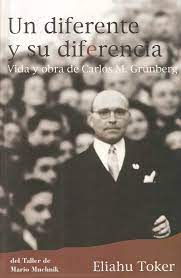
Carlos Grünberg ( 1903-1968) Poeta judío-argentino/Argentine Jewish Poet — “Mester de Judería”/”Master of Jewishness” — Alabando el judaísmo y repudiando el antisemitismo/In praise of Judaism and against anti-Semitism

Carlos Moisés Grünberg fue uno de los autores judíos más importantes e influyentes de su generación en Argentina. Nació en Buenos Aires en 1903 y falleció en 1968. Recibió su educación formal de la Universidad de Buenos Aires, obteniendo títulos avanzados en filosofía y derecho. En sus primeros volúmenes de poesía –Las cámaras del rey (1922) y El libro del tiempo (1924)- Grünberg mostró una estrecha filiación con el grupo de escritores de vanguardia de la década de 1920 conocidos como los martínfierristas, por su vinculación con la revista literaria Martín Fierro. También fue conocido por sus traducciones de Heinrich Heine y H.N. Bialik al español. Participó activamente en el movimiento sionista y fue nombrado enlace entre el Estado de Israel y Argentina en 1948. Carlos Grünberg no se disculpó en su expresión poética de la identidad judía, que buscó especialmente incorporar en sus últimas obras. Al igual que su contemporáneo César Tiempo (Israel Zeitlin), Grünberg se esforzó por definir la identidad argentino-judía en su poesía, un proyecto a veces doloroso pero siempre sincero. Su Mester de judería (1940) llevó un prefacio laudatorio de Jorge Luis Borges que lo consagró como poeta. Si bien muchos de los poemas hablan directamente de la situación precaria y, a menudo, peligrosa de los judíos en Argentina, Grünberg plantea claramente su fe en el país como una nueva patria llena de esperanza. Dado que su perspectiva como judío era secular, en este libro denuncia la religiosidad y declara su ateísmo con bastante fuerza y ​​coherencia. Junto a Un río de Babel (1965), el siguiente volumen de poesía de Grünberg, está marcado por los importantes acontecimientos históricos desde la publicación de Mester. Su trabajo ha tenido un impacto duradero en las generaciones posteriores y permanece como un testimonio de la imaginación poética como una fundición de identidad cultural.

__________________________________________________________

Carlos Moisés Grünberg was one of the most important and influential Jewish authors of his generation in Argentina. He was born in Buenos Aires in 1903 and died in 1968. He received his formal education from the University of Buenos Aires, earning advanced degrees in philosophy and law. In his first volumes of poetry –The King’s Chambers (1922) and The Book of Time (1924)- Grünberg showed a close affiliation with the group of avant-garde writers of the 1920s known as the martínfierristas, due to their links with the literary magazine Martin Fierro. He was also known for his translations of Heinrich Heine and H.N. Bialik to Spanish. He was active in the Zionist movement and was appointed liaison between the State of Israel and Argentina in 1948. Carlos Grünberg was unapologetic in his poetic expression of Jewish identity, which he especially sought to incorporate in his later works. Like his contemporary César Tiempo (Israel Zeitlin), Grünberg strove to define Argentine-Jewish identity in his poetry, a sometimes painful but always sincere project. His Mester de Judería (1940) carried a laudatory preface by Jorge Luis Borges that consecrated him as a poet. While many of the poems speak directly to the precarious and often dangerous situation of the Jews in Argentina, Grünberg makes clear his faith in the country as a new homeland full of hope. Since his perspective as a Jew was secular, in this book he denounces religiosity and declares his atheism quite strongly and consistently. Together with A River of Babel (1965), Grünberg’s next volume of poetry, it is marked by the important historical events since Mester’s publication. His work has had a lasting impact on subsequent generations and remains a testament to the poetic imagination as a foundry of cultural identity.

Alabar a los judíos

“Neo-judíos”

¡Hola luxemburgueses y franceses

y belgas y holandeses

daneses y noruegos

estonios, letones, lituanos y polacos,

austríacos y checos y eslovacos!

¡Oh yugostlavos, albaneses, griegos!

¡Lejanos indochinos!

¡Remotos filipinos!

            Hasta hace poco éramos nosotros y vosotros.

Nosotros los judíos y vosotros los otros.

Nosotros los abyectos,

Vosotros los selectos,

Nosotros los alógenos y exóticos,

Los raros y los estrambólicos,

Nosotros los autóctonos e indígenas

Los cuerpos aborígenes y las almas terrígenas.

Nosotros los expulsos, de viles desterrados

Vosotros los terricolas, clavados y enraizados

Nosotros, los errantes;

vosotros los estantes.

Nosotros los apátricas;

Vosotros los eupatrídas.

            Y ahora somos la hez y el estropajo,

Nivelación se ha hecho por abajo;

Y ahora somos todos judaísmo,

Nivelación ha hecho del abismo.

Y ahora somos todos—nosotros y vosotros—

Judíos, bien judíos los unos y los otros.

Judíos sempiternos

Y judíos modernos,

 judíos permanentes

y judíos recientes,

judíos perennales

y judíos actuales,

judíos barbicanos y judíos mancebos,

¡judíos viejos y judíos nuevos!

            ¡Salud judíos nuevos!

¡Salud judíos nuevos, neojudíos!   

¡Salud judíos nuevos!

judíos!

¡Salud, hermanos nuestros! ¡Salud, hermanos míos!

__________________________________________________

“Neo-Jews”

Hello, Luxembourgers and Frenchmen

and Belgians and Dutchmen

Danes and Norwegians

Estonians, Latvians, Lithuanians and Poles

Austrians, and Czechs, and Slavs!

Oh, Yugoslavs, Albanians, Greeks!

Distant Indochinese!

Remote filipinos!

Until recently we were we and you.

We the Jews and you the others.

We were the abject,

You the select.

We the allogenic and exotic,

The strange and eccentric.

We the autochthonous and indigenous

Aboriginal bodies and earthborn souls.

We the expelled, the vile exiles

You the earthtillers, firmly fixed and rooted

We, the wanderers;

You the remainers.

We without,

You with a state.

Now we are the dregs and throwaways,

Raised from below;

And now we are all Judaism,

The rising has left an abyss.

And now we are all — we and you —

Jews, one and another intensely Jewish

Eternally Jewish.

And newfangled Jewish,

permanently Jewish,

recently Jewish,

and currently Jewish

perennially Jewish

and up-to-date Jewish,

Jew with beards and beardless youths.

Old Jews and new Jews!

_______________________________

‘”Judeidad”

Bendita seas, cosa judía;

luz refulgente y esplendorosa,

maravillosa filosofía,

sabiduría maravilloso.

Por ti, no obstante ser un pigmeo,

gono esos cumbres sobresalientes

que sin la ayuda del quid hebreo

tan só;o alcanzan las excelentes.

Por ti, me yergo. Por ti me alxo.

Por ti descubro todo lo obliquo.

Por ti me choca todo lo falso.

Por ti me hiere todo lo inicua.

_________________________________

“Jewishness”

You are blessed, Jewish being

so resplendent and splendid.

Because of you, despite being a pygmy,

I gain those extreme heights

that only with the help of Hebraic crux

that only the excellent ones can reach.

Because of you, I stand up, Because of you I go upward.

Because of you I discover the meaning of everything unclear

Because of you all falsehoods shock me.

Because of you everything iniquitous injures me.

__________________________________________________________

Carlos Grünberg

Repudiar el antisemitismo

Semántica”

 Perro. Fig. Nombre que se daba

or afrenta o desprecio, especial-

mente a moros y judíos.

Dic. De la Acad. Española

   Dice el diccionario que el nombre de perro

se daba a los judíos, se daba a judíos!

¡Púdica mentira o estúpido yerro!

Se daba a los míos y se da a los míos.

El mote es pasado y encima presente.

Pasado y presente y encima futuro.

De todos los tiempos. En todo corriente.

Por todos seguro. Seguro. Seguro.

El mote de marras no es un arcaísmo,

Una palabreja perimida y rancia.

El mote es eterno como el fanatismo.

El mote es eterno como la ignorancia.

________________________________________

“Semantics”

Dog. Fig. name the was given

as an epithet or expression of  scorn, especial-

ly for Moors or Jews.

Dic. Of the Spanish Royal Academy

!The dictionary says that the name of dog

Was given to the Jews, is given to the Jews!

¡Chaste lie and stupid mistake!

It was given to my people. It is given to my people.

The moniker is past and upon the present.

Past and present and upon the future.

O f all times. In every trend.

Certain for everyone. Certain. Certain.

The moniker from the past is not an archaism,

A strange word and rancid trend.

The moniker is eternal like fanaticism.

The moniker is eternal like ignorance.

_______________________________________

“Insulto”

  Le has gritado judío con magnífica fura.

Le has gritado judío con soberbio coraje.

La palabra judío te parece una injuria.

La palabra judía te parece un ultraje.

Él creía un símbolo de gloria y de martirio.

La reputaba un signo der trágica grandeza.

Por su total pureza le equiparaba el lirio.

La equiparaba al lirio por su total belleza.

Ahora ve con ojos más linces y más sabios.

Ahora ve tan diáfanamente como quien palpa y toca.

Ve que todos los nombres ofenden en tus labios.

Que todas las palabras insultan en tu boca.

_________________________________________________

“Insult”

You have shouted “Jew” at him with magnificent fury.

You have shouted “Jew” at him arrogant courage.

The word “Jew” seems to you to be slander.

The word “Jew” seems to you and outrage.

The Jew believed it a symbol of glory and martyrdom.

He considered it a sign of tragic greatness.

For its complete purity he equated it to the lily.

He compared it to the lily for its total beauty.

Now he sees with eyes that are sharper and wiser.

Now he sees it transparently as one who feels and touches.

He sees that all the names offend you in your lips

That all the words insult you where it hurts.

________________________________________

“HINTLER”

   A raíz del discurso que el canci-

Lier Hitler proninció en el Reichs-

Tag el 30 de enero de 1934, con

motivo del primer aniversario del

 régimen nacionalsocialista, y que

fue propagado por radiotelefonía

al mundo entero.

El can—-ciller  sanguin—ario

expelió una anomalía

en el anipervers—ario

de su fierta tiranía.

La homilía del sic—ario

Pedorreada en Germanía,

Cundió de su tafan—ario

Por radiotelefonía.

El chusmaje legion—ario

De cierta cervecería

Escuchaba el sermón—ario.

  Y yo de pronto rugía:

¡Qué la voz de can—ario!”

Y el chusmaje me aplaudía.

Me aplaudía, tabern—ario.

Y yo alegre, me decía:

“¡Perro judío!  ¡Fals—ario!”

___________________________________________ 

HINTLER

         As a result of the speech of the chanci-

lor Hitler pronounced in the Reichs-

tag, January 30, 1934, in recognition

of the first anniversary of the

 nationalsocialist regime and that

was disseminated by radiotelephony

to the whole world.

The blood—-thirsty chan

forced out and anomaly

in the anipervers—ario

of his string tiranny.

The homily of the

hit—man

farted in Germany,

spread from his no—tes

by radiotelephony.

The legend—ary rabble

from a certain beerhall

heard his ser—mon.

and quickly roared:

“What a can—ary voice!

And the rabble applauded me, cru—dely.

And I, happy, said to myself,

Jewish dog!  Liar!

__________________________________

“Conflagración”

  El antisemitismo un fragmento

de la vasta injusticia universal.

Quizá le ponga fin en su momento

la ya fatal requemazón mundial.

¡Oh civilización antisemita!

¡Oh repugnante civilización!

¡Viva la hoguera en que arderás maldita!

¡Viva la fe requemazón!

__________________

“Conflagration”

Anti-Semitism is a fragment

of the vast universal injustice.

Perhaps it will put an end in its moment

The already fatal worldwide scorching.

¡Oh anti-Semitic civilization!

¡Oh repugnant civilization

¡Viva the bonfire in which you will burn, evil one!

¡Viva the already fatal scorching!

_________________________________________________

Lázaro Liacho– (1906-1969)– Poeta y escritor judío-argentino/Argentine-Jewish Poet and Writer — Poeta de la protesta judía /Poet of Jewish Protest –“Nacer judío” y otros poemas/”To Be Born Jewish” and other poems

Lázaro Liacho

__________________________________________________

LIACHO, LÁZARO (1906–1969), poeta, narrador, ensayista y periodista argentino. Nacido en Buenos Aires, Liacho era hijo de Jacobo Simón liachovitzky (1874–1937), un destacado periodista yiddish, que emigró a Argentina en 1894, fundó el primer diario argentino en yiddish, Der Tog, y el semanario Der Tsionist; en 1904 ayudó a establecer la Federación Sionista Argentina; también escribió una obra de teatro y cuentos. Lázaro Liacho estuvo asociado con los periódicos Mundo Israelita y Judaica, pero ganó reconocimiento principalmente como poeta. Su Bocado de pan (1931), Pan de Buenos Aires, 1940) y El hombre y sus moradas ,1961), reflejan su perspectiva tanto como judío y como argentino. Sus cuentos, Sobre el filo de la vida, 1969) tratan el Holocausto. Aunque expresó su amor y admiración por Israel y el sionismo, consideró el judaísmo como una realidad espiritual que se puede practicar en cualquier lugar y elogió a la Argentina como “la nueva Sión” en los poemas recogidos en Siónidas desde la pampa, 1969). En su poesía posterior, en particular Entre Dios y Satán , 1966), Liacho recurrió a temas bíblicos, religiosos y metafísicos.

_______________________________________

LIACHO, LÁZARO (1906–1969), Argentine poet, narrator, essayist, and journalist. Born in Buenos Aires, Liacho was the son of Jacobo Simón Liachovitzky (1874–1937), a noted Yiddish journalist, who immigrated to Argentina in 1894, founded the first Argentine Yiddish daily, Der Tog, and the weekly Der Tsionist; in 1904 he helped to establish the Argentine Zionist Federation; he also wrote a play and short stories. Lázaro Liacho was associated with the periodicals Mundo Israelita and Judaica, but won recognition mainly as a poet. His Bocado de pan (“Morsel of Bread,” 1931), Pan de Buenos Aires (“Bread of Buenos Aires,” 1940), and El hombre y sus moradas (“Man and His Dwellings,” 1961), reflect his outlook both as a Jew and as an Argentinean. His short stories (Sobre el filo de la vida, “On Life’s Cutting Edge,” 1969) deal with the Holocaust. Though he expressed his love and admiration for Israel and Zionism, he considered Jewishness as a spiritual reality that can be practiced anywhere and praised Argentina as “the new Zion” in the poems collected in Siónidas desde la pampa (“Odes to Zion from the Pampa,” 1969). In his later poetry, notably Entre Dios y Satán (“Between God and Satan,” 1966), Liacho turned to biblical, religious, and metaphysical themes.

___________________________________________________

“Sionidas desde la pampa”

“Nacer judío”

Nacer judío es una gloria cara

de sostener en medio de cristianos.

Malo es crecer judío entre paganos,

razón que sin razón está muy clara.

Hombres al fin, nos une y nos separa

el bien y el mal que enlaza a los hermanos,

pero somos juguete de villanos

que hacen de la justicia una cuchara.

No es un regalo, no, nacer judío.

Nadie elige un futuro tan sombrío.

Nadie quiere sufrir tanta aflicción.

Nacer judío es lágrima expiatoria,

es ser ave sin nido, migratoria,

nacer judío es no tener perdón.

_______________________________

“To Be Born Jewish”

To be born Jewish is an expensive glory

to maintain in the midst of Christians.

Evil to grow up Jewish among pagans,

unreasoning reason is very clear.

Men in the end, unite us and separate us

the good and evil that ties together brothers,

but we are the toy of villains.

Who make of justice a farce,  ??

It’s not a gift, no, to be born Jewish.

No one chooses a future so dark.

No one wants to suffer so much affliction.

To be born Jewish is an expiatory tear,        [as in crying]

it is a bird without a nest, migratory,

to be born Jewish is to not be pardoned.

________________________________________________

“Amor”

Si tanto es mi querer por ser judío

que todo amor yo proclamo verdadero,

por amor a lo justo el bien espero

porque en eternidad de amor confío.

Ni llanto ni expulsión, por ser judío,

impedirán que cuide fiel, entero,

este alto amor, forma de Dios lucero

del mundo de justicia que confío.

En el convulso mundo, marinero,

me cerca al mar que embate lo judío,

ansiado detener nuestro crucero.

Incierta condición de desafío

sobre encrespadas olas, mensajero,

viendo playas de amor en que confío.

_________________________

“Love”

If my desire to be Jewish is so great

that all love is true that I proclaim is true,

for love for the just I hope for the good

because of the eternity of love, I trust.

Not crying nor expulsion for being Jewish,

will keep me from caring, loyal, completely,

this exalted love, a form of God, bright star

of justice in which I trust.

The convulsed world, sailor,

brings me close to the sea that batters what is Jewish,

eager to stop our ship cruiser.

Uncertain condition of challenge

on the rough waves, messenger,

seeing beaches of love in which I trust.

___________________________________________________

“Hebrea argentina”

En la noche, la luna del Plata

te despiertan laudes lejanas;

voz hebrea te da serenata,

alma hebrea te tiende las manos.

En la noche o al sol, la honda pena

es tu selva de amores ardientes;

eres criolla de carne morena,

luz hebrea que aclara el torrente

Cada vez más nativa y más mía,

Argentina es tu gracia y tu estrella,

tu perfume moreno quería

porque es patria tu honor de doncella.

Desde el Andes tu gesto es abierto,

and en tu porte denuncias altiva,

la mujer como sal del desierto

hecha miel en la Pampa efusiva.

Por morena y judía y porteña,

te sublima el Cantar de Cantares,

dulce amor que a jurarte me empeña

el retorno a los viejos lugares.

Argentina y hebrea y amada,

nuevo mundo en mis brazos tendrás,

y en to carne morena y rosada,

nuevo mundo también me darás.

_________________________________________

“Hebraic Argentina”

At night, the moon of the Plata

distant praises awake you:

A Hebraic verse serenades you,

Hebraic soul it offers its hands to you.

At night or in the sun, the deep sorrow

Is your jungle of burning love:

You are criolla of dark skin,

Hebraic light the clears away the torrent.

More and more native and more mine,

Argentina is your grace and your star,

your dark perfume desired

because it is a home to your maiden’s honor.

From the Andes your movement is open

and in your demeanor, you arrogantly denounce,

the woman as salt from the desert

made into honey in the effusive pampas.

For being dark and Jewish and porteña

the Song of Songs ennobles you,

sweet love that compels me to swear to you

the return to olden places.

Argentina and Hebraic and loved,

You will have a new world in my arms,

and in your dark and rose-colored flesh.

you will give me a new world too.

__________________________________________________

“Israel”

Yo te sigo Israel para defenderte

del mundo que te lleva así humillado.

Mi escudo en ti para seguir tu suerte,

quiero en tu adversidad ser tu soldado.

Apenas hombre fui circuncidado.

Israel, ¿qué no doy para merecerte?

La sangre de Israel me ha bautizado,

ya tengo vida si me dan la muerte.

Mi palabra es humilde mensajera,

salmo que eleva el corazón judío

en la verdad que sangra su bandera.

El nazismo me arrastra hacia la hoguera

mientras el mundo danza su extravío.

Pero Israel, dando su sangre, espera.

________________________________________

“Israel”

Israel, I follow you to defend you

from the world that keeps you so humiliate.

My shield for you to follow your fortune,

I want to be a soldier in your adversity.

Scarcely a man, I was circumcised.

What won’t I give to you, Israel, to be worthy of you?

The blood of Israel has baptized me,

I already have life if they kill me.

My word is a humble messenger,

a psalm that raises the Jewish heart

in the truth that bloodies its flag.

Nazism pulls me to the oven,

while the world dances in evil,

but Israel, giving its blood, waits.

“Eternidad”

Así la encontraré, roja y entera,

aunque presente estrella enlutada,

porque si bien entera, desgajada

veré su eternidad de primavera.

He de admirarla hasta la luz postrera,

cuando sobre la tierra tenga echada

la órbita vacía, y levantada

la razón del destino y de la espera.

Ya veo los jaluzim, el instante

en que feliz, llega el judío errante,

pleno, a Tel Aviv, de puerta a puerta,

cantando pechos entre nuestros brazos.

Nunca a la Eternidad he de ver muerta

ni a Jerusalem hecha pedazos.

“Eternity”

I will find its so, red and complete,

although it may appear a grieving star,

because if as whole, it breaks off,

I will see the eternity of Spring

I ought to admire it until the last light,

when over the Earth may have thrown off

empty orbit, and raised up

the reason for destiny and for waiting.

In which, the Wandering Jew arrives,

happy, full, Tel Aviv, going door to door,

singing chests among our arms.

I never have to see Eternity dead

Or Jerusalem broken into pieces.

 __________________________

“Alma mía”

Un misterio me aferra con afán a la vida

pero nunca la vida le dará solución.

La verdad que reclamo vive esclava y vencida,

mi verdad es la lucha por la liberación.

Es tan grande la parte que llevo en la partida

que no pido ventaja, ni poder, ni ocasión,

sé que entrego alma y vida a una empresa encendida,

A una llama que arde dentro de mi corazón.

Sabemos ya que nada se consume en el mundo.

Frente a mí lo pasado surge de lo profundo

y aquí estoy aguardando el mundo por venir.

Más allá el misterio, surge ya la mañana.

La jauría retorna más pagana y villana,

alma mía judía, tú no puedes morir.

________________________________

“My Soul”

A mystery holds me strongly to life,

but life will never give a solution.

The truth that I reclaim lives enslaved and beaten,

My truth is the battle for liberation.

The part that I play in the fight is so great

That I don’t ask for advantage or power or opportunity,

I know that I give soul and live to a burning enterprise.

A flame that burns inside my heart.

We already know nothing consumes itself in the world.

Ahead of me, the past surges from the profound,

and I am here awaiting the world to come.

Apart from the mystery, the morning already rushes ahead.

The wolfpack returns even more pagan and evil,

my Jewish soul, you cannot die.

________________________________________________

“Canto al nuevo estado judío” (fragmento)

                                                 Al Dr. Abraham Mibashán

Ya vuelven todos, tiempo y espacio en la voz de los

Profetas,

En la locura del corazón y en la cordura del

músculo,

en la confesión de los que equivocaron,

y en la suprema satisfacción de los que estuvieron

en lo cierto.

Vuelven a ti, en el nuevo coro

con la música vital de las ametralladoras

y los carros tanques,

y el cañón y la granada, del grito combatiente

de tus hijos invencibles,

en ti, todos, Nuevo Estado Judío.

________________________________________

“Song to the New Jewish State” (fragment)

                                                 Al Dr. Abraham Mibashán

All have already returned, time and space in the voice of the

Prophets,

in the dove with its olive branch.

In the madness of the heart and in the sanity of the

muscle,

In the confession of those who were mistaken,

and in the supreme satisfaction of those who

were right.

They return to you, in the new chorus,

with the living music of the machine guns

and the tanks,

and the cannon and the grenade, of the combatant yell

of your invincible sons,

in you, all, New Jewish State.

_______________________________________________________________

Libros de Lázaro Liacho/Books by Lázaro Liacho

David Viñas (1927-2011) — Crítico social y novelista judío-argentino/Argentine Social Critic and Novelist — “Los dueños de la tierra”/”The Owners of the Earth” — fragmento/excerpt

images
David Viñas

Viñas, David

David Viñas nació en Buenos Aires en 1929. Estudió en el Liceo militar a causa de los problemas económicos familiares. Estudió Filosofía y Letras, allí conoció a algunos intelectuales. Fue uno de los fundadores, en 1953, de la revista Contorno. Al poco tiempo publicó su primera novela Cayó sobre su rostro. Recibió en 1962 el Premio Nacional de Literatura. En 1967 fue galardonado con el Premio Casa de las Américas, de La Habana (. También ha sido capital su aportación al ensayo con libros como Literatura argentina y realidad política: de Sarmiento a Cortázar o Rebeliones populares argentinas: De los montoneros a los anarquistas. La dictadura le robó a sus dos hijos, ambos acaban de ser padres cuando los detuvieron, y fueron desaparecidos por los militares, y lo obligó a exiliarse en México y España. En México fundó la editorial Tierra del Fuego junto a Pedro Orgambide, Jorge Boccanera, Alberto Ádelach y Humberto Costantini, en 1981. En 1984 pudo regresar a Argentina tras el fin de la dictadura. Fue nombrado titular de la Cátedra de Literatura Argentina de la Facultad de Filosofía y Letras de la Universidad de Buenos Aires. En los años siguientes se sucedieron los estrenos teatrales. En 1991 recibió la la Beca Guggenheim pero la rechazó como homenaje a sus hijos.

___________________________________________________

David Viñas was born in Buenos Aires in 1929. He studied at the Military Lyceum because of family financial problems. He studied Philosophy and Letters, there he met some intellectuals. He was one of the founders, in 1953, of the magazine Contorno. Soon after, he published his first novel. It fell on his face. He received in 1962 the National Prize for Literature. In 1967 he was awarded the Casa de las Américas Prize. His contribution to the essay has also been capital with books such as Argentine literature and political reality: from Sarmiento to Cortázar or Argentine popular rebellions: From the montoneros to the anarchists. The dictatorship stole his two sons, both of whom had just become parents when they were detained, and who were disappeared by the military, and forced him into exile in Mexico and Spain. In Mexico he founded the Tierra del Fuego publishing house together with Pedro Orgambide, Jorge Boccanera , Alberto Ádelach and Humberto Costantini, in 1981. In 1984 he was able to return to Argentina after the end of the dictatorship.He was appointed holder of the Chair of Argentine Literature at the Faculty of Philosophy and Letters of the University of Buenos Aires. Theatrical premieres followed, in 1991 he received the Guggenheim Scholarship but rejected it as a tribute to his children.

_____________________________________________________________________

De la novela “Los Dueños de la tierra”, 1958


images-1

“Esos de la Guardia Blanca”

Claro que estaban ésos de la guardia blanca. Vicente ya los conocía; en Buenos Aires, desde su departamento de la calle Ayacucho los había visto golpear a la gente del barrio en la semana de enero en 19.[i] Y rompían vidrieras y ensuciaban las sinagogas. Había sido un lunes y por las calles de la ciudad deambulaban algunos hombres solitarios y sudorosos, con las corbatas flojas y el saco en la mano. Los que acababa de ver en el puerto y los que tiraban bombas de alquitrán contra las sinagogas de Buenos Aires se parecían, desde la manera de golpear y reírse al mismo tiempo, hasta la insolencia se confeccionaban para insultar y pararse en medio de la calle con las piernas abiertas. Eran tipos que gritaban”—Judío sucio” con la misma calma que se instalaban a la salida de un jardín israelita para obligarles a cantar el Himno, “Oíd mortales el grito sagrado!” Sí, pensaba. Y desde su balcón de la calle Ayacucho había visto a esos chiquilines que cantaban destempladamente, espiando a sus maestras y esperando que les ordenasen que se callaran de una vez porque el Himno no se canta así, o que se largaran a correr hacia sus casas. Pero en 1910, cuando el Centenario.él, él mismo, Vicente había hecho algo parecido. Era más joven claro. Pero las balas de su revólver corrían por debajo del paño verde de los billares en esos cafés oscuros y bajos de la calle Libertad. Dos, tres, seis tiros sobre esas mesas mientras los parroquianos se apoyaban en sus tacos con inquietud hieráticos, extranjeros, pero con esa silenciosa y acusadora dignidad de las víctimas. Había olor a pólvora en aquella sala de billar. Un judío de rancho, insignificante, había seguido frotando la tiza sobre su taco. Vicente vació su revólver sobre una de las mesas de billar. Las balas se deslizaban por debajo del paño como unos extraños gusanos veloces y aturdidos. Eso había sido para divertirse, por cierto. Como él iba a pasar sus horas muertas en uno de los prostíbulos enfrente a los tribunales, le quedaba cerca. Era una diversión cercana. “Un trabajo a un paso de la farra”, comentaban en el Gimnasia y Esgrima. Los tribunales de un lado, y a la vuelta, el prostíbulo y los billares judíos de la calle Libertad. Todo ahí no más. ”Un verdadero centro de diversiones” proclamaba entonces. Pero es que todos los prostíbulos estaban atestados de judíos y muchos judíos andaban en ese negocio.[iii] “Las polacas”, les decían los amigos en el club. “Y una polaca le da vuelta y media a cinco francesas”.  Y todos se divertían con las judías que al fin de cuentas, eran lo mismo. Él, sus compañeros de la facultad en el año del Centenario y la guardia blanca en la semana de enero del 19. Pero con la diferencia que él lo había hecho para pasar el rato, total, no eran más que los paños de los billares. Además, unos días después había ido a pagarlos. Pasar el rato, de eso se trataba, porque él no tenía nada contra los judíos, que eran gente trabajadora y no se metían con nadie. Aunque un poco… un poco… ¿Cómo diría?, calculaba Vicente. Poco elegantes. Ahí estaba. No eran lindos los judíos y qué se la iba a hacer. Se nacío fiero o se nacía con pinta de macho. Una vez le habían comentado en la mesa de Ingenieros: “Usted es el precursor de las guardias blancas. Verá—“ Y Vicente no había sabido si se lo decían en serio o en divertirse. Él no tenía prejuicios. Y no pensaba eso para darse una explicación que lo tranquilizarse.

__________________________________________________________

[i] La Semana Trágica es el nombre con el que se conoce la represión y masacre sufrida por el movimiento obrero argentino, en la que fueron asesinadas cientos de personas en Buenos Aires, en la segunda semana de enero de 1919, La misma incluyó el único pogromo (matanza de judíos) del que se tiene registro en América. Dentro de la Semana Trágica se produjo el único pogromo (matanza de judíos) del que hay registro en el continente americano. El pogromo tuvo su epicentro en el barrio judío de Once. El pogromo se desató cuando promediaba la Semana Trágica y se sumaron a la represión los civiles de clase alta, Fue llevado a cabo por la Liga Patriótica Argentina, “la guardia blanca”; incendiaron sinagogas. Hubo centenares de muertos

[ii] La prostitución en Argentina fue dominada por judíos por muchos años. Fue terminado por protesta vehementes de la comunidad judía y legislación del gobiernos.

_____________________________________________________________________________________

From the novel: “The Rulers of the Earth, 1958”

images-1

_________________________________________________________

“Those of the White Guard”

Of course, those of the White Guard were there. Vicente knew them already; in Buenos Aires, from his apartment on Ayacucho Street, he had seen them strike the people of the neighborhood in the January week of 1919. [i]And they broke store windows and the befouled the synagogues. It had been a Monday and solitary and sweaty men wandered the streets, with their ties loose and their jackets in their hands. Those that he had just seen in the port and those who threw tar bombs at the synagogues of Buenos Aires seemed, from their manner to punch and laugh at the same time, to the insolence they had for insulting and stopping in the middle of the street with their legs apart. They were guys who shouted “Dirty Jew” with the same calmness who stood in the exit of a Jewish kindergarten to force them to sing the National Anthem, “Hear, O Mortals, the sacred shout!” Ye, he thought. And from his balcony on Ayacucho Street he had seen those little ones who were singing off-key, spying at their teachers and hoping that they would order them to be quiet at once because the Anthem was not song in that way, or that they leave to run home. But in 1910, which was the Centenary, he, he himself, Vicente had done something similar. Surely, he was younger. But the bullets from his revolver shot below the green cloth of the billiard tables in those dark and humble cafes on Libertad Street. Two, three, six shots over those tables while the neighbors were leaning on their cues. A Jew from the farms, insignificant, had continued rubbing the chalk on his cue. Vicente opened his revolver on a billiard table. The bullets slid under the billiard cloth like some strange and confused worms. This was for fun, of course. Just like he was going to spend his free time in one of the brothels near the courts. It was a nearby diversion. Work just a step from the party, they commented at Gym and Fencing . The gym on one side and, around the corner the Jewish brothel and billiard parlors on Liberty Street. Everything there. That’s it. A true center of entertainment, they proclaimed in those days. But it was that all the brothels were filled with Jews and many Jews were in that business. [ii]The Polish girls”, his friends in the club called them.  “And a Polish girl gives you more than five French girls and they all had a good time with the Jewish girls who, in the end were the same ones. He, his buddies from the college, in the year of the Centenary and the White Guards in the January week of 1919. But the difference was that he had done it to pass the time, they weren’t more that cloths on billiard tables, that’s all. Moreover, a few days later, he went over to pay for them. To pass the time, that’s what it was about. Because he didn’t have anything against the Jews, who were hard working people and don’t bother anyone. Although a little… a little. How would you say it?, Vicente  reckoned. Not elegant. That was it. The Jews weren’t attractive and what are you going to do. You are born fierce or you were born with a macho look. He had once heard commented at the Engineer’s table. “You are precursor of the White Guards. You’ll see.” And Vicente didn’t know whether if it was said to him seriously or in jest. He didn’t have prejudices. And he wasn’t thinking that to give himself an explanation that would calm him down.

_______________________

[i] Tragic Week is the name by which the repression and massacre suffered by the Argentine labor movement is known, in which hundreds of people were murdered in Buenos Aires, in the second week of January 1919, it included the only pogrom (massacre of Jews) that is recorded in America. Within the Tragic Week there was the only pogrom (massacre of Jews) of which there is record in the American continent. The pogrom had its epicenter in the Jewish quarter of Once. The pogrom was unleashed when Tragic Week was averaging and the upper-class civilians joined the repression. It was carried out by the Argentine Patriotic League, “the white guard”; synagogues burned. There were hundreds of deaths.

[ii] While prostitution in Argentina was dominated by Jews for many years., it was terminated by vehement protest from the Jewish community and government legislation.

Translation by Stephen A. Sadow

______________________________________________________________________

Bibliografía de David Viñas/David Viñas’ Bibliography

NOVELA/NOVEL

Cayó sobre su rostro (1955)

Los años despiadados (1956)

Un Dios cotidiano (1957)

Los dueños de la tierra (1958)

Dar la cara (1962)

En la semana trágica (1966)

Hombres de a caballo (1967)

Cosas concretas (1969)

Jauría (1971)

Cuerpo a cuerpo (1979)

Prontuario (1993)

Tartabul (2006)

La hermosa yegua

TEATRO/THEATER

Sarah Goldmann

Maniobras

Dorrego

Lisandro (1971)

Tupac-Amaru

Walsh y Gardel

ENSAYO/ESSAYS:

Literatura argentina y realidad política: de Sarmiento a Cortázar (1970)

De los montoneros a los anarquistas (1971)

Momentos de la novela en América Latina (1973)

Indios, ejército y fronteras (1982)

Los anarquistas en América Latina (1983)

Literatura argentina y política – De los jacobinos porteños a la bohemia anarquista (1995)

PREMIOS

Premio Guillermo Kraft (1957)

Premio Gerchunoff (1957)

Premio Nacional de Literatura (1962) y (1971)

Premio Casa de las Américas (1967)

Premio Nacional de Teatro (1972)

Premio Nacional de la Crítica

Luis Norberto León — Cuentista judío-argentino/Argentine Jewish Short-story Writer — “Fiesta Patria” “National Holiday”

14188111_1038286592953165_2402361393892717647_o
Luis Norberto León

__________________________________________________________

Luis León se graduó de la Facultad de Arquitectura, Diseño y Urbanismo (FADU). Ha dicho> Tiene su estudio de arquitectura propio en Buenos Aires. donde vive con su familia,  Ha dicho que sus puntos de vista “son difíciles de definir, faciles de detectar, prefiero los hechos positivos al relato y los discursos llenos de promesas vacuas, recibir a los pueblos originarios y escuchar sus pedidos a ponerle su nombre a una sala de casa de gobierno y dejarlos esperando en la calle… en fin es fácil de deducir”.

_____________________________________________

Luis León graduated for the School of Architecture, Design and Urbanism of the University of Buenos Aires. He has his own architectural Studio, in Buenos Aires where he lives with his family. He has stated that his views are “difficult to define, easy to detect, I prefer positive deeds to speeches full of empty promises facts of the story and the lectures full of empty promises, to receive, to receive native peoples and listen to their requests over listing their names in a government office and letting them wait in the street…so, it is each to deduce my actitud.


_____________________________________________________________________________


multimedia.normal.b0c2add88a97a43c.6d61796f325f6e6f726d616c2e706e67.png
Celebración del Feriado del 25 de Mayo/Celebration of the 25th of May Holiday                   Argentina

Fiesta patria

por

Luis León


Este cuento se basa en una historia verídica, extraída del testimonio grabado al Sr. Emanuel. Corrían los años cuarenta. El mundo presenciaba lo peor del virulento nazismo y en Argentina no faltaron simpatizantes que los avalaron con actos de discriminación, anti judaísmo y hasta violencia física contra grupos de la comunidad. Sólo el final feliz es imaginario, aunque el ambiente en que se desarrolla, el personaje del portero y la Escuela Francisco Desiderio Herrera son reales.

___________________________________________

Nissim no recordaba un 25 de mayo (1)  tan frío. Hacía casi diez años que subía al palco de madera frente a la Comisaría 27, para celebrar la fiesta patria. Es cierto que él no había nacido en este país, pero desde su llegada y aun estando arriba del barco que lo trajo,  lo adoptó como suyo. Esta tierra que aún no conocía, sería de él para siempre. Tal vez, porque le intrigó lo oscuro de las aguas frente al azul transparente del mar que miraba de niño. O a lo mejor, porque la ciudad vista a lo lejos, se le asemejó de pronto como una enorme caja de locum (2), limpia, blanca, ordenada, por consiguiente debería ser dulce como un locum, el dulce que su abuela le regalaba los sábados a la mañana al salir de la Gran Sinagoga de Izmir. Como representante de la Comunidad Sefaradí de Villa Crespo, junto a su amigo, portaban cada año una bandera de Argentina y otra judía. La primera, como símbolo de adhesión a este pueblo generoso que los recibió, la segunda en cambio, era un paño de esperanza que alguna vez podría flamear en la patria que su gente añoraba. Pero para Nissim estar allí era algo más de lo que se podía leer en su rostro, no era orgullo, sino una indescriptible gratitud. Gratitud hacia esta gente que le permitía compartir el piso de tablones, que algunos niños harían temblar en un rato, con un desgarbado malambo (3). Abajo, los vecinos, como un suave oleaje marino, iban y venían organizando su parte protagónica. Grupos de muchachos frente a la línea de largada para la carrera de embolsados y al costado del palco, recostados sobre unos postes, los dos únicos candidatos a escalar un palo enjabonado. Todos los años se presentaba la misma dupla, personajes aún jóvenes, de morochas facciones cortajeadas quizá, por los helados inviernos sureños. Uno era el repartidor de carbón, el otro sin oficio conocido. Al rondar las diez de la mañana el cielo se había cubierto de nubes haciendo más frío y húmedo el día patrio, el más patrio de los días argentinos. Nissim y sus amigos habían llegado muy temprano, como siempre. Fueron ubicados en primera fila por el comisario, viejo amigo y asiduo visitante del bar Izmir (4).Allí donde los inmigrantes sefaradíes de Villa Crespo y barrios vecinos, tomaban un anís queriendo saber por gente que hacía tiempo no veían. Pero al Negro (como se dejaba llamar el comisario) le gustaban las reuniones de los viernes por la noche. Entre comidas orientales picantes y sabrosas, y la turca moviendo sus caderas, gozaba aplaudiendo sin retaceos a los tañedores que hacían vibrar las cuerdas del ud y el mandolín al ritmo del derbaque. Quizá por eso, el Negro los puso en el palco cerca suyo, porque los sentía hermanos en la alegría, en ese difícil oficio de cuidar el orden que a veces significaba sumergirse hondo en la suciedad de los hombres. La concurrencia era ya numerosa, y el ánimo de jolgorio flotaba en los alrededores, incentivado por algunas bombas de estruendo explotadas en el playón de los bomberos. La gente disfrutaba del olor a pólvora en el aire frío de la mañana, llenando la vereda frente al Cine Rívoli. El maestro de ceremonias tardó un tiempo hasta silenciarlos, cuando comunicó que se entonaría la canción patria. A pesar que la seccional estrenaba un moderno altavoz eléctrico (de los que quizá había sólo un puñado en Buenos Aires) el himno fue voceado a pulmón, como se hizo siempre. En esas circunstancias, y tratándose del canto nacional, hubiera sido imposible aún para la maestra de música (de la Escuela Nº 2 del Distrito Escolar séptimo, Francisco Desiderio Herrera) allí presente, comprobar que desafinaban. Eran cientos de voces al unísono, algunos con la mirada movediza hacia la muchedumbre, otros con sus bocas llenas de solemnes conjugaciones, mirando al frente, jurando “con gloria morir” (5),mientras los bronces de una banda por primera vez presente en el barrio, se lucía en los pasajes más floridos de la melodía. El último “Oh juremos…” (5) desató los esperados aplausos. Sin ellos, el himno no termina; es difícil imaginar un final de la canción patria sin esas palmas que suben de nivel por unos segundos para desgranarse al fin en trozos, hasta desaparecer. Tras el llamado a silencio del locutor, que forzaba su garganta ante la falla del nuevo equipo, llegó el discurso de apertura. Nissim giró la cabeza y detrás de su amigo José, vio el palco colmado con varios conocidos, los del club social. La palabra “vecino”, pronunciada con énfasis por el comisario, reclamó su mirada al frente. Vecino era más que vecino. Vecino era hermano, compatriota de otra nacionalidad, era inmigrantes de diferentes latitudes, el carbonero Lorenzo entregando una negra bolsa en casa del rabino, el gallego del almacén de Camargo tratando de cortejar a la prima solterona de José, eran todos uno, sin diferencias, una enorme familia sacando frutos de la tierra entre calles del barrio a orillas del Maldonado, que cuando se inundaba sin piedad y el tranvía no se le animaba, sacaban los botes de su escondite para cruzar a los más exigidos. Nadie escatimó aplausos, sabían que no era un policía cualquiera. Al Negro, casi lo mata el tranvía el día que doña Clara cayó al suelo, cruzando imprudente la avenida; meses después, la historia volvía a circular como un escudo, que prendido en la gente, lo enorgullecía al exhibirlo. Fue él que al terminar, llamó a decir unas palabras al cura. A Nissim lo sorprendió que no fuera Bernardo (nombre paradójico), el párroco de San Bernardo, quien hablara. Dio vuelta su cabeza para descubrirlo entre los concurrentes, pero no estaba. El padre Bernardo, era un grandote bonachón con quien tomaba café a menudo, compartiendo historias de malevos y compadritos. El que comenzó a hablar en cambio, era un hombrecito diminuto de cara afilada y prominente nariz, cuya expresión producía miedo. A Nissim le costaba seguir el discurso, pues en las primeras frases ya había incluido una decena de veces la palabra Jesús, sin temor a agotar el nombre del Redentor antes de finalizar. El cura de mirada incisiva, giró su cabeza y Nissim absorto lo oyó decir – ¿qué hace entre estas, la bandera de un país inexistente?, y señaló como apuntando con un arma la bandera hebrea, – este paño que erosiona lo profundo del ser cristiano, porque precisamente es la insignia de los deicidas – Tanto él como su amigo José, comprendieron antes que el resto. No eran simples palabras del oscuro personaje en su negro atuendo. Buscaba unir odios perdidos, despertar difusos rencores en los difíciles principios de los años cuarenta. No quisieron que el comisario, que recién se daba por enterado del monótono chorro de odio encerrado en las palabras, se viera presionado a actuar. Ambos guardaron rápidamente la bandera que sostenían, enrollándola en torno al mástil, y con un pedido de permiso que no alcanzó a salir de sus gargantas, abandonaron el palco. Fueron sólo unos metros hasta la esquina de Acevedo, y doblaron donde estaba despejado de gente. No atinaron a mirarse, invadidos de una vergüenza infinita que opacó odio y estupor, caminaron con pasos largos y ligeros. En Camargo, vieron entornada una de las puertas del colegio; tenían, sin haberlo acordado, un solo objetivo: llegar a depositar las banderas en la habitación delantera de la sinagoga, quizá luego, podrían hablar de lo sucedido. Un llamado los sorprendió, como esperando que la historia volviera atrás, se detuvieron. Un Nissim, pronunciado por un hombre viejo, lo hizo mirar a su espalda. Era Roldán, el portero del Francisco Desiderio Herrera, que asomado a la vereda, lo reconoció y lo reclamaba. Nissim hubiera deseado no hablarle, no había manera de descorrer las palabras que habían quedado atravesadas en su interior, pero se acercó. – Qué elegante don Nissim – le dijo el hombre – cuánto hace que no se toma un mate en la portería, agregó invitador. Mi mujer está aprendiendo la receta de esos dulces que le pasó su señora, que a cambio le confió el secreto de nuestras empanadas correntinas -. Días después, ni él ni José (su entrañable amigo y compañero de travesía), se acordarían de lo escuchado en el portón del colegio, tampoco si la charla duró unos segundos o el monólogo del viejo Roldán fue largo. Sólo les quedó a ambos en el recuerdo, la presión del fuerte abrazo de despedida, y el saludo en guaraní que Roldán, como solía hacerlo, les brindó con afecto. Al alejarse unos pasos de la puerta del colegio, con una sonrisa cómplice, como niños, cada uno desplegó la bandera que portaba, acomodando sobre sus hombros los paños colgantes y avanzaron con paso marcial. Y así como gloriosos sobrevivientes de la primera línea de un ejército diezmado, marcharon los cien metros hasta entrar en la sinagoga. – Apuremos que quizá comience a llover y mi sobretodo nuevo puede arruinarse, dijo Nissim. – Sí, vamos que las mujeres deben estar esperándonos con las empanadas correntinas, respondió su amigo, abrochándose el abrigo para salir a la calle., abotonándose su abrigo.

________________________________________________

(1) El 25 de Mayo, se creó el primer gobierno patrio en Buenos Aires, independiente de la corona española. Es por lo tanto un día festivo y de celebración en Argentina.

(2) Tipo de bombones de Medio Oriente.

(3) El malambo es un zapateo individual o grupal, del folklore criollo argentino.

(4) Hoy demolido, fue el más famoso bar de concurrencia de judíos sefardíes, ubicado en el tradicional barrio de Villa Crespo, donde se comía, bebía y en ciertos días, concurrían músicos tradicionales y alguna bailarina oriental.

(5) Frase con que concluye el himno nacional argentino.

____________________________________________________________________________________________

images.jpg
Escuela º7  Francisco Desiderio Herrera

download
Dos banderas

___________________________________________________________________________________

National Holiday

by

Luis Norberto León


This short-story is based on a real event, extracted from the recorded testimony of Mr., Emanuel. It was the 1940s. The world was witnessing the worst of virulent Nazism, and in Argentina there was no lack of sympathizers who supported the Nazis with acts of violence, anti-Semitism and even physical violence against Jewish groups. Only the end of the story is imaginary, although the atmosphere in which is takes place, the character of the janitor and also the Francisco Desiderio Herrera School are real.


Nissim couldn’t remember a 25th of May so cold. (1) It had been almost ten years since he went up the wooden seat in front of the 27th precinct to celebrate the national holiday. It’s true that he hadn’t been born in this country, but since his arrival and even being aboard  the ship that brought him, he adopted it as his own. This country that he didn’t know would be his forever. Perhaps, because he was intrigued by the darkness of the waters compared with the transparent blue of the sea that he saw as a child. O more likely, because the city, seen from afar, soon seemed to him like an enormous box of locum (2), clean, white, orderly, and therefore ought to be as sweet as a locum, the candy that his grandmother gave him on Saturday mornings as he left for the Great Synagogue of Izmir.  As Representative of the Sephardic Community of Villa Crespo, together with his friend, each year carried an Argentine flag and a Jewish one. The first, as a symbol of belonging to this generous country that received them, the second, on the other hand, was a banner of hope that one day might wave in the country that their people longed for. But for Nissim to be there was something more than could be seen in his face, it wasn’t pride, but an indescribable gratitude. Gratitude toward this people that allowed him to share the dance floor, that some children would shake for a while with an awkward malambo (3) dancing. Below, the neighbors, like a soft sea wave, came and went organizing the part they were to play. Groups of boys front of the starting line for the sack race  and at the side of the  gallery, leaning on the posts, the only two candidates, to climb a soaped pole. Every year the same pair showed up, very young fellows, dark skinned chizzled faces, perhaps because of the frozen southern winters. One was a coal seller, the other of unknown occupation. At about ten in the morning, the sky had covered with clouds, making colder and more humid the holiday, the most important holiday for the argentinos. Nissim and his friends had arrived very early, as always. s They were placed in the front row by the commissioner , old friend and assiduous visiter of to the Izmir Bar.(4).Nobody skimped on applause, they knew that he was just any old policeman. Blacky, was almost killed the day that doña Clara fell to the ground, imprudently crossing the avenue; months thereafter, the story continued to circulate like an emblem, that, fastened to the people, made them proud to wear it. It was he, who on finishing, called on a priest to say a few words. Nissim was surprised that it wasn’t Bernardo (paradoxical name), the parish priest of San Bernardo, who spoke. He looked around to see if he could find him among the attendees, but he wasn’t there. Father Bernardo was large, good-hearted man with whom he often drank  coffee, sharing stories of thugs and troublemakers. The priest who began to speak, on the other hand, was a diminutive small man with a sharp face and prominent nose, whose expression brought forth fear. It was difficult for Nissim to follow the speech, since in the first phrases he had already included the word Jesus a dozen of times, without fearing use up the name of the Redeemer before ending. The priest with the incisive , turned his head toward Nissim who, engrossed, heard him say, “What is it doing with the others here, the flag of an inexistent country?” And he pointed as if he were aiming a gun at the Jewish flag, “This rag that erodes the profundity of the Christian being, because it is precisely the insignia of the deicides.” Nissim, like his friend José, understood before the rest. These were not simple words of an obscure figure in his black outfit. He was trying to bring together old hatreds, awaken vague resentments in the early days for the forties. They didn’t wait  until the commissioner, who just understood from the outpouring of hatred enclosed the words, felt it necessary to act. They two rapidly put away the flag they were carrying, rolling it up around the flagpole, and with a request to move by that didn’t reach succeed in escaping their throats, left the stands. It was only a few meters to the corner of Acevedo, and they turned where it was clear of people. They weren’t able to look at each other, invaded by an infinite shame that overshadowed hatred and stupor. They walked with long and light steps. In Camargo, they saw that one of the doors of the school was ajar. They had, without having agreed on it, a solo objective:  to be able to leave the flags in the front room of the synagogue. Perhaps then, they would be able to talk about what happened. A shout surprised them. As if hoping that history would reverse itself, they stopped. “Nissim”, pronounced by an old man, made him look back. It was Roldán, the janitor of Francisco Desiderio Herrera, who standing/appearing on the sidewalk, recognized him and called him back. Nissim would have preferred not to speak to him; there was no way to restrain the words that had continued to cross his insides, but he came closer. “How elegant, don Nissim,” the man said to him,” “how long has it been that we haven’t had mate together in the porter’s apartment, he added, invitingly. My wife is learning the recipe for those sweets that your mother gave her; in exchange, she entrusted her with the secret of our Corrientes-style empanadas.” Days later, neither he nor José (his close friend  and partner-in-crime) would remember what they heard in entrance to the school, nor if the chat lasted a few seconds or if Roldán’s monologue was very long. The only thing the two remembered was the pressure of the strong goodbye hug, and the greeting in guarani, that Roldán, as he was accustomed to do, gave them affectionately. On distancing themselves a few steps from the high school door, with a complicit smile, like children, each one unfurled the flag that he was carrying, placing on their shoulders the hanging cloth and advanced at a military pace. And like the glorious survivors of the first line of a decimated army, they marched the ten meters to the synagogue. “Let’s hurry because I think it’s going to rain, and my new coat could get ruined,” Nissim said. “Yes, let’s go. The girls must be waiting for us with Corrientes-style empanadas,” his friend responded, buttoning up his overcoat in order to go out onto the street.

_________________________________________

(1) The 25th of May, The first patriotic government was created in Buenos Aires,            independent of the Spanish government. For that reason, it is a holiday and day of celebration in Argentina.

(2)Type of candies from the Middle East.

(3)  The “Malambo” is a tap-dance, done individually or in groups, taken from Argentine rural folklore.

(4) Now demolished, the Izmir Bar was the most famous of those of the Sephardic Jews, located in the traditional Villa Crespo neighborhood , where you ate and drank and, on some days, brought together traditional musicians and an Oriental dance.

(5(  The phrase that ends the Argentine National Anthem.