Marcos Ricardo Barnatán — Escritor y poeta judío argentino-español/Argentine Spanish Writer and Poet “Los altares familiares”/”The Family’s Altars” –La experiencia del judaísmo de un muchacho /A boy’s experience of Judaism

Marcos Ricardo Bar-Natán

Marcos Ricardo Barnatán es un escritor argentino nacido en Buenos Aires en 1946, en el seno de una familia sefardita de origen hispano-sirio. Realizó sus primeros estudios y cursó Filosofía y Letras en su ciudad natal. En 1965 fijó su residencia en Madrid, aunque realiza frecuentes viajes a Argentina, Francia e Israel. Colabora habitualmente, en calidad de crítico literario, en las principales revistas españolas e hispanoamericanas. En 1971 publicó su primera novela, El laberinto de Sion, a la que siguieron Gor (1973), Diano (1982), y Con la frente marchita (1989). Sus narraciones completas integran La República de Mónaco (Seix Barral, 2000).En 2005 publicó en Editorial Alhulia Dos mil y una noches a modo de diario. Su poesía, que comparte los planteamientos de los novísimos y en la que las referencias a la cábala y a la cultura judía son una constante, resulta un personal hallazgo donde se entrecruzan la tradición castellana y las literaturas europeas en sus tendencias más cosmopolitas. Su obra poética se halla reunida en El oráculo invocado (1984), El techo del templo (1999) y Consulado general (2000)Entre sus ensayos destacan La Kábala (1974) y Borges, biografía total (1996).

Marcos Ricardo Barnatán is an Argentine writer born in Buenos Aires in 1946, into a Sephardic family of Spanish-Syrian origin. He made his first studies and studied Philosophy and Letters in his hometown. In 1965 he settled in Madrid, although he made frequent trips to Argentina, France and Israel. He regularly collaborates, as a literary critic, in the main Spanish and Latin American magazines. In 1971 he published his first novel, El laberinto de Sion, which was followed by Gor (1973), Diano (1982), and With the Withered Forehead (1989). His complete narratives make up La República de Monaco (Seix Barral, 2000). In 2005 he published in Editorial Alhulia Two thousand and One Nights as a newspaper. His poetry, which shares the approaches of the newest and in which references to the Kabbalah and Jewish culture are a constant, is a personal find where the Castilian tradition and European literatures intersect in their most cosmopolitan tendencies. His poetic work is found together in The Invoked Oracle (1984), The temple Ceiling (1999) and General Consulate (2000). His essays include La Kábala (1974) and Borges, Biography Total (1996).

________________________________________________________

________________________________

LAS ALTARES FAMILIARES          

Me despertaba agitado, siempre envuelto en un pesadilla engorrosa donde todo era trágico. No era felicidad. La casa a oscuras y silenciosa parecía un gran ataúd con su víctima luchando, absurdamente, por vivir. Desde mi cama y sin levantar la cabeza podía ver la ventana entreabierta, escondida tras los visillos y protegida por la persiana gris que ahuyentaba mis recelos, nadie podía entrar. Si estiraba el brazo era posible palpar el cable de la luz y su perilla, sentir la seguridad de que estaba en mis manos encender el velador, destrozar a las fantasías de la ambigüedad. Más allá el vaso de agua que mamá dejaba siempre a mi alcance para aliviar cualquier imprevisto ataque de tos. El reloj con sus luminiscentes agujas brillando a la mesilla, y el libro de historia adivinado en la página de la última lección. Una cortina ocultando al asesinos de Julio César.

         — Anoche, mientras comíamos, iba a contarlo cuando algo me detuvo, sentí de pronto vergüenza y callé

         Para entrever la puerta era necesario volverme y incorporarme sobre la cama un poco, entonces debía concentrar mi vista sobre ella para lentamente se dibujase el marco y más tarde la sombra del picaporte. Muchas veces después de un corto desvelo volvía dormirme y no despertaba hasta que golpeaban anunciándome que era hora de ir al colegio, pero otras veces, permanecía despierto acostumbrándome a la luz, velador oscuridad y a aquel nuevo universo espectral con sus planetas, camas espectral con sus planetas, , vaso de cama, ventana, visillo, persiana, cable de luz, perilla, velador, vaso de agua, reloj, mesilla, libro de historia y puerta. ¡Cuánta valentía era necesario para vencer mi horror! Cuando la claridad se filtraba en la habitación comenzaba a vestirme y al sonar de las golpes para salir a llevarme.

         –“¡Ustedes lo mataron! Yo lo sé, todos ustedes. . .”

         Si la noche se alargaba demasiado y las visiones turbaban mi descanso, las mantas hacía de fiel coraza y escudo para mi temor, temblando y sudando trataba de ocultarme entre ellos, de desaparecer para siempre bajo aquel, mullido cobijo. Olvidaba entonces todo mi poder, atemorizado por mis ensueños no reparaba en el cable en el cable de la luz ni en la perilla, no atinaba a estirar a estirar el brazo y encender, por el contrario me alejaba de la mesilla, internándome hacia la pared, acurrando y sollozante como un náufrago que rema desesperadamente hacia alta mar en ingenua búsqueda de la salvación.

          –“¡Ustedes lo mataron! Yo lo sé, todos ustedes. . .”

         –Papá había comido sin hablarnos, inquieto repitió la bendición del pan tan maquinalmente que no me di cuenta de ella. Mamá me miraba con cierta extrañeza, como se hubiera descubierto en mí algo insospechado, una cosa que le preocupaba más que mi tos o mis multiplicaciones. Tenía deseos de hablar, de decirles todo, pero ese silencio y esa mirada me intimidaron, No, no lo diré, es mejor que no diga nada. No puede ser verdad. ¡No es verdad!

         Mucho después cuando el abuelo me llevó por primera vez a casa de Rabbi Khaen, pude explicarme todo el temor, aquel enloquecido miedo nocturno que nadie conocía y que yo guardaba en el más impenetrable de los secretos. Fue entonces que comprendí el significado de aquellas visiones perturbadores. Rabbi Khaen me brindó con gran generosidad el arma más eficiente para combatirlas. Sólo sería necesario que mis labios infantiles pronunciaran el verbo primigenio, recitando la Shemá, una calma celestial me colmaba, la seguridad. Los malos espíritus abandonaron mi cuerpo, y otra vez la paz, la certidumbre del cable de la luz y el perilla, el velador, el vaso de agua simbolizando la custodia materna, el reloj con sus luminiscentes agujas brillando en la mesilla, y el libro de historia adivinado con la página de la última lección. Una cortina ocultando al asesino de Julio César. Sólo seis palabras repetidas con entusiasmo intenso hacían el milagro, seis palabras de fe, seis palabras de gloria, seis palabras también de propiedad, de exclusividad, de orgullo. Ya no necesitaba de la luz. Su presencia iluminaba la noche.

         –Enrique me había visto llorar de rabia en un rincón de la clase, mientras los compañeros gritaban en el patio sus últimos minutos de recreo. Lo vi entrar exaltado y a la vez comprensivo, queriendo consolar con un gesto todo mi dolor. . .

         —Déjalos, no saben lo que dicen. . .”

         –No podía ser verdad, nosotros no habían matado a nadie, ni mi padre, ni mi madre, ni mis abuelos. Nunca había visto a nadie que hubiera matado. . .En el solitario delirio de mi dolor comencé a odiar a ese desconocido del que nunca había oído hablar. La causa de mi llanto.

         –“Fueron los romanos—dijo mi primo–, te digo que fueron los romanos, me lo contó papá, los soldados de Roma lo crucificaron. . .”

         Ya no necesitaba de la luz, la Shemá era suficiente para iluminar y sobrevivir en las tempestades. Aprendí también a besar el mesusá antes de salir de la casa, y mi abuelo me prometió llevarme al tiempo los días de fiesta grande, De la inseguridad desoladora de mi orfandad sólo quedaron restos, cortos escalofríos que no llegaban nunca a dañar los cimientos del mundo feliz que mi abuelo y el Rabbi Khaen me habían construido. Supe que era parte de un orden, de un Gran Orden que no había nacido conmigo, sino que existía desde siempre y que sería eterno. El caos y la anarquía se habían borrado de mi espíritu. Él y nosotros teníamos un pacto sellado en nuestra piel, una indestructible alianza a través de los tiempos. Éramos Su Pueblo, y no nos abandonaría jamás. “Nunca, nunca abandonaré al pueblo mío”. ¿Por qué temer entonces? ¿Qué mejor protección que la de Él? Era fundamental que venciese mi miedo.

         La imagen de ese espeso cortinaje, extraído de algún grabado antiguo por el autor de mi libro de historia, siempre se me aparecía antes de dormirme. El asesino entre sus pliegues llevaba un puñal en la mano preparado para herir a Julio César que, coronado hacía unos instantes, se acercaba a él. Muchas veces creí adivinar su color granate, como el cortinado pesado que escoltaba el blanco encaje de Murano en la ventana del comedor, el puñal corto y brillante con mango de nácar, como un abrecartas que había en el despacho de papá. Una cortina ocultando al asesino de Julio César. Un perfume de rosas aterciopeladas en una habitación que abandoné para siempre. Sólo seis palabras hacían el milagro. Tía Luna me había mostrado aquel pesado libro que el abuelo guardaba con sumo cuidado en un armario del gran salón. Tenía cinco años, pero a pesar de los esfuerzos de mi padre aún, no concurría a un colegio. Todos temían por mi salud delicada y preferían enseñarme en casa las primeras letras.

Más tarde la opinión paterna prevaleció, pero entonces ya fue mucho más duro abandonar a los seres queridos. Luna siempre hablaba de París, de sus juegos infantiles y de la Plaza Lafayette, o de aquel delicioso helado de todas que las mañanas del domingo tomaban los hermanos en “La Boule de Neige”. Me resultaba difícil sostener el libro. Creo recordar sus gruesas pastas azules estampadas en oro. Tía Luna comprendía mi debilidad ayudándome sigilosamente para evitar en mí un vergonzoso sentimiento de impotencia. Era el gran libro del abuelo, en el que todos ponían los sumos cuidados, el libro que ocultaba ese secreto que daba luz al rostro de los que sufrían. Entonces era tan sólo un catálogo de letras desconocidas, páginas de extraños signos contorsionados y extremadamente negras. Los miraba uno a uno, maravillado en aquel laberinto indescifrable pero sin embargo profundamente amado. Era un deslumbrada]o colegial ante lustrosas figuras multicolores de desconocidos países, remotas latitudes de plenas de seguridad paradisíaca. Algo me decía ya que era el Gran Libro, el mítico receptáculo de todos los libros. Las grande capitulares estaban ornadas por complicadas filigranas, que yo seguía fiel en sus misteriosos caminos.

* * *

         –“Bueno te pongo una siesta. Pero mañana tenés que leer mucho mejor para que mantenga la nota.

Tía Luna decía que papá era muy exigente y exageraba demasiado cuando yo me equivocaba en una palabra.

–Estos no son métodos para enseñarle al pobre chico–exclamaba con cierta magnificencia, dándole la frase un tono de grandeza que hacía sonreír a mamá y enfurecía a papá. Yo rechazaba los libros de cuentos que casi siempre me regalaran mis tías. Me aburría mucho con aquellos cuadernos grandotes ilustrados con agresivos grabados que sólo decían tonterías. Prefería leer LA PRENSA o el VEA Y LEA, de mi abuela.

Más tarde, iba a devorar todas las novelas que llenan los estanterías de la habitación de Luna, y las que mamá resolvía comprarme después de secretas consultaciones con el abuelo. Tía Luna no me dejaba nunca con el libro cuando lo sacaba del armario, permanecía hasta que sea la hora de volverlo a su sitio. Era una parsimoniosa ceremonia, un rito semejante a su sobriedad en los momentos previos a la comida del domingo en casa del abuelo, en la que cada miembro de la familia buscaba su lugar, mirándose todos con prudencia, devolviendo luego acompasadamiento sus servilletas a la espera de la bendición patriarcal.

–Tia, quiero leer el libro.

Ella dejaba, por un momento, de saborear su chocolate y vainilla en la “Boule de Niege” y me ayudaba a sostenerlo con generosa paciencia. Interrumpía el breve paseo hacia el Bulevar Magenta y se acercaba al armario en búsqueda de aquel paraíso de papel y cartón donde comencé a temer y a amar a lo desconocido.

         El abuelo en su sillón bebía a sorbos pequeños sorbos tu tasita de café. Muchas tardes, me pedía que le leyese un trozo de Spinoza o algún poema de su Solomón Ibn Gabirol. La última vez que le leía a Gabirol, me había pedido “La Canción del Agua”. Le gustaba contarme sus sueños o hablarme de su abuelo, hermano de un famoso rabino de Safed.

         –Cuando mi abuelo me llevó a casa de su hermano, el rabbi, sentí miedo. Temía encontrarme allí con el olor asfixiante de las lámpara de aceite con aquel silencio tenebroso que yo adivinaba en la sinagoga.   

  Muchas noches, después de cenar, nos quedábamos horas junto al café y al agua de azahar.

–Las siete reglas de la interpretación que has aprendido son imprescindibles para comprender las sagradas y el espíritu de la Ley. Has obedecido las palabras de Hillel, el anciano. “No digas nunca estudiaré cuando tenga tiempo, pues nunca lo tendrás”.

      A veces lo dejaba dormido en su sillón y abandonaba la casa pensando en la serenidad del sueño, visión en la que crecían de sombras de un estirpe docta y temeroso de Dios.

_____________________________________________________

___________________________________________________

THE FAMILY ALTARS

I woke up agitated, completely involved in an intricate dream where everything was tragic. It wasn’t happy. The dark and silent house seemed like a large coffin with its victim, fighting absurdly, to live. From my bed and without lifting my head I could see the half-opened window, hidden behind the lace curtains and protected by the gray Venetian blinds that drove away my fears, nobody could enter. If I stretched my arm it was possible to touch electric wire and its switch, feel the sureness that was in my hands to turn on the night light, destroy the fantasies of the ambiguity. Further away, the glass of water the mama always left at my reach to alleviate any unexpected coughing attack. The clock with its luminescent hands shined on the table, and the history book specifically on the page beginning the  last lesson. A curtain hiding the assassins of Julius Cesar.

         In order to take a glimpse though door, it was necessary for me to turn around and straighten up a little on the bed, then I had to concentrate my vision on it to slowly make out the frame and then the shadow of the door handle. Often after a short moment of sleeplessness I would fall asleep again and not wake up until they knocked, announcing the it was time to go to school, but on other occasions, I remained awake accustoming myself to the light, the lamp dark, and to  a new spectral universe, spectral beds with their planets, glass of bed, window, lace curtains, Venetian blinds, electric wire, switch, glass of water, clock, bed table, history book and door. What courage was needed to overcome my horror! When the clarity filtered into the room, I began to get dressed and on hearing the knocks to get me up to leave.

         You killed him! I know it, all of you. . .!”

         If the night stretched out too long and the visions upset my rest, the covers made a faithful breastplate and shield for my fear, trembling and sweating. I tried to hide myself among them, to disappear forever under that fluffy shelter. I then forgot all my strength, terrorized by my dreams, didn’t make use of the electric cable or the switch, didn’t succeed in reaching out my arm and turning it on, on the contrary, I moved away from the night able, going in toward the wall, moaning and sobbing like a shipwrecked man who rows desperately toward the open sea in an ingenuous search for salvation.

         You killed him! I know it, all of you!

         Papa had eaten without speaking, uneasy, he repeated the blessing over the bread so mechanically that I didn’t notice it. Mama looked at my in a certain strange way, as if she had discovered in me something unexpected in me, something that worried her more than my cough or my multiplication tables. I really wanted to speak, to tell them something, but that silence and that  look intimidated me. No, no I won’t tell them, it’s better that I don’t say anything. It can’t be true. It’s not true!!

        Much latter when my grandfather took me for the first time to Rabbi Khaen’s house, I was able to explain all the terror, all that crazed nocturnal fear nobody knew and that I kept in the most impenetrable of silences. It was then that I understood the meaning of those perturbing visions.

        Rabbi Khaen, with great generosity, offered me the most efficient armament for combatting them. It would only be necessary that my child’s lips pronounce the primal words, reciting the Schma: a celestial calm filled me with security. The evil spirits abandoned my body, and once again, peace, the certainty of the electric wire and switch, the lamp, the glass of water, symbolizing maternal protection, the clock with its luminescent hands, shining on the night table and the history book set with the page from the last lesson. A curtain hiding the assassin of Julius Cesar. Only six words repeated with intense enthusiasm made the miracle, six words of glory, six words also of property, of exclusivity, of pride. I no longer needed the light. Its presence illuminated the night.

           Enrique had seen me cry with anger in a corner of the classroom, while, the other boys yelled in the patio during the last minutes of break. I saw him enter, exalted and at the same time understanding, wishing to console all my suffering with a gesture.

         Let them go, they don’t know what they are saying. . .”

It can’t be true, we hadn’t killed anyone, not my father, not my mother, not my grandparents. I had never seen anyone who might have killed. . .  In the solitary delirium of my pain, I began to hate this unknown ow whom I had never heard spoken. The cause of my crying.

”It was the Romans, my cousin said, I’m telling you that it was the Romans, Papa, the soldiers from Rome, crucified him . .”

        I no longer needed the light. The Shema was sufficient to illuminate and to survive in the storms. I learned also to kiss the Mesusa before leaving the house, and my grandfather promised to take me at the time of great holiday.

          From the bleak insecurity of my orphanhood only remains were left, short shivers that didn’t ever damage the foundation of the happy world that my grandfather and Rabbi Khaen had constructed for me. I knew that I was part of an order, of a Great Order that had not been born with me, but that always existed and would be eternal. The chaos and the anarchy had been erased from my spirit. He and we had a pact in our skin, an indestructible alliance through the ages. We were His People, and he would never abandon us. “Never, never will I abandon my people.” Why then fear? What better protection than His? It was certain that my fear would be defeated.

The image on that heavy cover, taken from some ancient print by the author of my history book, always appeared to me before I went to sleep. The assassin between the folds carried a dagger in his hand, preparing to wound Julius Cesar, who, crowned just a few instants before, approached him. Many times, I believed I could pick out his garnet color, like the heavy curtain that heard the white Murano lace in the dining room window, the short and brilliant dagger with a mother-of-pearl handle, like the letter opener that was in Papa’s office. A curtain hiding the assassin of Julius Cesar. A perfume of velveted roses in a room that I abandoned forever. Only six words made the miracle, Aunt Luna had shown me that heavy book that grandfather kept with great care in a living room closet. I was six-years-old, but even in spite of my efforts, I didn’t go to school. Everyone feared for my delicate health and preferred to teach me the first materials at home.

Later, my father’s opinion prevailed, put then it was far more difficult for me to leave my loved ones. Luna always spoke of Paris, of her childhood games and of the Plaza Lafayette.  Or of that delicious ice cream every Sunday morning that all the children had at the “Snow Ball.” It was difficult for me to hold the book. I believe I remember its thick blue covers stamped with gold. Aunt Luna understood my weakness slyly helping me avoid a shameful feeling of impotence. It was grandfather’s huge book, into which everyone put their greatest cares, the book that hid this secret that gave birth to the face of those who suffered. The, it was only a catalogue of unknown letters, pages of strange signs, twisted and extremely black. They looked at each other, marveling in that indecipherable labyrinth, that nevertheless profoundly loved. It was a dazzling collection, with lustrous multi-color figures of unknown countries, remote latitudes full of paradisal security. Something told me then that it was the Great Book, the mythical receptacle of all books. The great capitulars were made ornate by complicated watermarks, that I followed loyal to its mysterious paths.

***

“Okay, I’ll give you a 7. But tomorrow you have to  read a lot better so you can keep up your grades.”

Aunt Luna said that papa was very demanding and exaggerated when I made a mistake on a word. “These aren’t methods for teaching the poor boy,” he would exclaim with a certain magnificence, giving the phrase a tone of grandeur that made mama laugh and infuriated papa. I rejected the storybooks that my aunts almost always gave me. They bored me a lot, with those over-sized notebooks illustrated with aggressive prints that only said nonsense. I preferred to read my grandmother’s La Prensa or Vea y Lea.

Later on, I went on to devour all the novels that filled the shelves in Aunt Luna’s room, and those that mama decided to buy for me after secret consultations with my grandfather. Aunt Luna never let me keep the book when I took it out of the closet, it stayed only until it was time to return it to its place. It was a parsimonious ceremony, a rite similar to sobriety in the moments previous toe the Sunday meal in grandfather’s house, during which each member of the family sought his place, all looking at each other with prudence, later returning to adjusting their napkins, while waiting for  the patriarchal.

“Aunt, I want to read the book.”

She stopped, for a moment to enjoy her chocolate and vanilla in the “Boule de Neige” and helped me hold it with generous patience. She interrupted the short walk toward the Magenta Boulevard and she went towards the closet in search of that paradise of paper and cardboard where I began to fear and love the unknown.

Grandfather in his large chair, drank in small sips from his small cup of coffee. Many afternoons, he asked me to read to him a piece of Spinoza or some poem by Solomon Ibn Gabirol. The last time that I read Gabirol to him, he had asked for the ”Song of the Water” He liked to tell me his dreams or to tell me about his grandfather, brother of a famous rabbi from Safed. “When my grandfather took me to the house or his brother, the rabbi, I was afraid. I feared finding myself there with the asphyxiating odor of the oil lamp with that gloomy silence that I perceived in the synagogue.”

Many nights, after dinner, we spent hours near the coffee and the orange water.

“The seven rules of interpretation that you have learned are indispensable for understanding the sacred things and the spirit of the Law. You have obeyed the words of Hillel, the ancient one

Never say that I will study when I have time, but cause then you will never have it.”

At time, I left him sleeping in his great chair, and I abandoned the house, thinking about the serenity of the dream, a vision from which grew from the shadows a wise and frightening way of God.

Translation by Stephen A. Sadow

____________________________________________________

Libros de Marcos Ricardo Barnatán/Books by Marcos Ricardo Barnatán

_________________________________________________________________________

Mario Satz — Escritor y cabalista judío-argentino-español/Argentine Spanish Writer and Kabbalist — “La flauta de perdón”/”The Flute of Pardon”

Mario Satz

________________________________________________
Website of Mario Satz

Mario Satz — Amazon

_______________________________________________

SATZ, MARIO (1944–), poeta, autor y ensayista argentino y español. Nació en Coronel Pringles, Argentina. Sus extensos viajes tuvieron una influencia significativa en su escritura. Vivió en Israel durante tres años y desde 1978 vive en Barcelona, ​​España. Satz es un prolífico autor de poesía y obras de narrativa y no ficción que incluyen libros sobre la Cabalá y la historia judía. Su primera poesía está íntimamente relacionada con el mundo natural. Examina la belleza y el poder de la naturaleza en prácticamente todas sus manifestaciones terrenales. Las obras de no ficción del autor revelan su interés por la historia y el misticismo judíos y son evidencia de su capacidad para un pensamiento teológico profundo. Entre los textos representativos en esta línea se encuentran Poética de la Kábala (1985), Judaísmo: 4.000 años de cultura (1982) y El dador alegre: ensayos de Kábala (1997), además de autor de una vasta serie novelística titulada Planetario, que consta de cinco novelas que componen un sistema solar textual. Las novelas Sol (1976), Luna (1977) y Tierra (1978) forman una trilogía en la que el autor utiliza las ciudades de Jerusalén y Cuzco, Perú, como lugares para examinar la historia y la cultura latinoamericanas junto con la tradición judía. Las novelas posteriores, Marte (1980) y Mercurio (1990), no continúan la historia de la trilogía aunque forman parte del proyecto Planetario. Su libro Tres cuentos españoles (1988) adquiere una perspectiva mucho más centrada con el retrato de la España multicultural del siglo XIII en la que las culturas cristiana, musulmana y judía existieron y prosperaron una al lado de la otra. La novela Azahar (1996) continúa con la misma se centra en Iberia, esta vez con un enfoque en las tradiciones religioso-místicas desde la Cabalá hasta El Libro de los Muertos de Tibet.

Adaptado de Jewish Virtual Learning.

___________________________

SATZ, MARIO (1944– ), Argentine-Spanish poet, author, and essayist. He was born in Coronel Pringles, Argentina. His extensive travels had significant influence on his writing. He lived in Israel for three years and from 1978 he lived in Barcelona, Spain. Satz is a prolific author of poetry, and narrative and nonfiction works that include books about Kabbalah and Jewish history. His early poetry is intimately connected to the natural world. He examines the beauty and power of nature in practically all its earthly manifestations. The author’s nonfiction works reveal his interest in Jewish history and mysticism and are evidence of his capability for profound theological thinking. Representative texts in this vein include Poética de la Kábala (1985), Judaísmo: 4,000 años de cultura (1982), and El dador alegre: ensayos de Kábala (1997).He is also the author of a vast novelistic series titled Planetarium, which consists of five novels that comprise a textual solar system. The novels Sol (1976), Luna (1977), and Tierra (1978) form a trilogy in which the author utilizes the cities of Jerusalem and Cuzco, Peru, as sites for examining Latin American history and culture together with Jewish tradition. The subsequent novels, Marte (1980) and Mercurio (1990), do not continue the story of the trilogy though they are part of the Planetarium project. His book Tres cuentos españoles (1988) takes on a much more focused perspective with the portrayal of multicultural 13th century Spain in which Christian, Muslim, and Jewish cultures existed and thrived side by side.. The novel Azahar (1996) continues with the same focus on Iberia, this time with a focus on religious-mystical traditions from Kabbalah to The Book of the Dead from Tibet.

Adapted from Jewish Virtual Learning.

____________________________________________________

La flauta del perdón

–El perdón es una flauta de dos bocas—dijo el Rabí Lo Iadúa, el Desconocido, a su discípulo Daniel.

–¿Te refieres a la flauta doble de los griegos, al aulós o caramillo?—interrogó Daniel.

–Me refiero al perdón, tan difícil y tan necesario.            

Viajaban al Qumram para visitar las ruinas del antiguo monasterio de los esenios. En esa época crecían lirios en el desierto y los wadis murmuraban aguas humildes, ecos de las pasadas lluvias. En Jérico, el gran oasis extendía sus verdes redes de cultivos, sus altas palmas. Ligeramente triste, el Desconocido prosiguió:

           –Podemos perdonar si, a nuestra vez somos perdonados. Por eso el perdón es una flauta de dos bocas: no importa quien imprima el soplo de la música y quien la deje salir al aire del mundo. No importa quien haya herido primero ni tampoco la causa que motivó la agresión, el desprecio, la cruel ironía, la pequeña o gran traición. La música del perdón es un tiempo que fluye para curar las llagas de aquél que fuera detenido, falseado, deformado por nuestros actos.

          –De modo que no basta—terció Daniel, tratando de aclarar las oscuras enseñanzas del maestro—con que pidamos perdón, pues si el otro o la otra no nos responden, a su vez, con su pedido de perdón, el milagro de la reconciliación no se produce, ¿verdad?

          –Para las amarguras de la vida la flauta tiene ocho orificios, siete arriba y uno abajo. Los de arriba son nuestros sentidos-ojos, oídos, fosas nasales y boca–: el octavo hace vibrar el ombligo, sitio de transfiguración, huella de nuestra ligazón con el pasado de la especie, marca fraterna para todos. Perdonar es difícil porque quien expresa sus afectos, nunca sabe cuándo ni cómo serán recibidos y mal habituados, orgullosos, queremos una respuesta inmediata a nuestros actos, efectos visibles de nuestros actos invisibles. Quien pida perdón debe, antes, reconocer su error, lo equívoco de sus intenciones. Hay perdón auténtico cuando el fallo es reconocido y no se lo cubre con el polvo del engreimiento ni con la seda de omnipotencia. Ninguno de nosotros es tan perfecto—en relación al prójimo para pronunciar-esa horrible frase: es cosa suya.

          Frente al Mar Muerto, los ojos de los viajeros parpadearon deslumbrados por una luz mineral. Por fuera, se hallaban en el punto más bajo de la tierra. Por dentro, en cambio, Daniel y el Desconocido subían en melodías de flauta solar hacia las dos bocas del horizonte, el este y el oeste.

______________________________________________________

      The Flute of Pardon

      “Pardon is a flute with two mouths,” is a flute with two mouths,” said Rabbi Lo Yadua, the Unknown One to his disciple Daniel.

         “Are you referring the flute of the Greeks, the aulos, with its double reed or the pipes,” asked Daniel.

         “I am referring to pardon, so difficult and so necessary.

         They were traveling to Qumran to visit the ruins of the ancient monastery of the Essenes. At this time of year, lilies were growing in the desert, and the wadis humble waters murmured, echoes of past rains. In Jericho, the great oasis extended its green cultivated webs, its tall palm trees. A bit sad, the Unknown proceeded: “We can pardon, if  in turn, we are pardoned. For that reason, pardon is a flute with two mouths; it doesn’t matter who makes the sound of the music and who lets it go out to the world. It doesn’t matter who was hurt first nor even the cause that motivated the aggression, the slight, the cruel irony, the small or great betrayal. The music of pardon is a time that flows to cure the wounds of whom was detained, misled, deformed by our acts.”

         “So, then it is not enough,” Daniel commented, trying to interpret the obscure teachings of the master, “ that we ask for pardon, because if the other person doesn’t respond to us, in turn,with a request for pardon, the miracle of reconciliation doesn’t take place, right?”

         “For the bitter parts of life, the flute has eight orifices, seven above and one below. Those above are our senses-eyes, ears, nostrils and mouth-: the eighth causes the vibration of the naval; place of transfiguration the source of our link with the past of the species, fraternal marking for everyone. To pardon is difficult because whoever expresses his feelings, never knows when or how they will be received, and not in the habit, proud, we want an immediate response to our acts, invisible effects to our invisible acts. Whoever may ask for pardon should, before doing so, recognize his error, the mistake in his intentions. There is authentic pardon when the mistake is recognized and not covered by the dust of vanity or with the silk of omnipotence. None of us is so perfect to be able to pronounce-in relation to our neighbor-that horrible phrase: it’s your problem.

      Facing the Dead Sea, the travelers’ eyes blinked, dazzled by the mineral light. Outside, they found themselves in the lowest point on earth, Inside, in contrast, Daniel and the Unknown One rose with melodies of a solar flute toward the two mouths of the horizon, the east and the west.

Translation by Stephen A. Sadow

_________________________________________

Algunos de los libros sobre la Cábala de Mario Satz/Some of the books about the Kabbalah by Mario Satz

_______________________________________________________

Marcos Aguinis — Novelista y escritor judío-argentino/Argentine Novelist and Writer– “La gesta del marrano”/”The Epic of the Marrano” — De una novela sobre la Inquisición Española/Extract from the Novel about the Spanish Inquisition

Marcos Aguins

_______________________________________________________________________

Website — Marcos Aguinis

Marcos Aguinis es un autor con amplia formación internacional en literatura, neurocirugía, psicoanálisis, artes e historia. “He viajado por el mundo, pero también he viajado por diferentes profesiones”. Aguinis nació en Córdoba, Argentina en 1935, hijo de inmigrantes judíos. Tenía siete años cuando llegó la noticia de que los nazis habían matado a su abuelo y al resto de su familia que se había quedado en Europa. Él describe esto como el momento fundamental de su vida, y uno que finalmente lo llevó a escribir en un esfuerzo por cerrar esa herida, para reparar el “mecanismo roto de la humanidad”. Publicó su primer libro en 1963 y desde entonces ha escrito trece novelas, catorce colecciones de ensayos, cuatro colecciones de cuentos y dos biografías. La mayoría de ellos se han convertido en bestsellers y han generado entusiasmo y controversia. El Sr. Aguinis fue el primer autor fuera de España en recibir el prestigioso Premio Planeta por su libro “La Cruz Invertida” y su novela superventas “Contra la Inquisición” ha sido traducida a varios idiomas y elogiada por el Premio Nobel Mario Vargas Llosa como “Conmovedor canto de libertad” ….

del sitio web de Marcos Aguinis

___________________________________________

Marcos Aguinis is an author with extensive international training in literature, neurosurgery, psychoanalysis, the arts, and history. “I have traveled the world, but I have also traveled by different professions.” Aguinis was born in Córdoba, Argentina in 1935, the son of Jewish immigrants. He was seven years old when the news came that the Nazis had killed his grandfather and the rest of his family who had remained in Europe. He describes this as the pivotal moment in his life, and one that ultimately led him to write in an effort to close that wound, to repair the “broken mechanism of humanity.” He published his first book in 1963 and since then he has written thirteen novels, fourteen essay collections, four short story collections, and two biographies. Most of them have become bestsellers and have generated excitement and controversy. Mr. Aguinis was the first author outside of Spain to receive the prestigious Planeta Prize for his book “The Inverted Cross” and his best-selling novel “Against the Inquisition” has been translated into several languages ​​and praised by Nobel Prize winner Mario Vargas Llosa as a “moving song of freedom” ….

From Marcos Aguinis’ Website

_________________________________________________________

La gesta del marrano — Amazon

Against the Inquisition — Amazon

__________________________________________________

Francisco Maldonado da Silva

“La gesta del marrano” 

Prólogo de la novela.

.

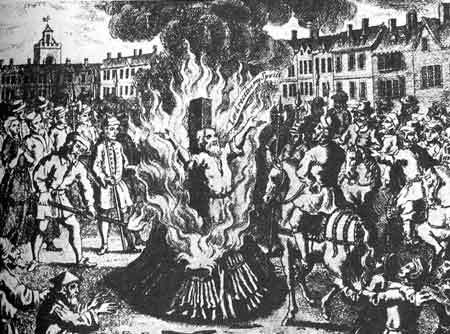
          Mugre, piel y huesos, con los tobillos y las muñecas ulceradas, por los grilletes, Francisco es una braza que arde bajo los escombros. Los jueces miran con fastidio a ese esperpento: un incordio decididamente intolerable.

           Hace diez año que lo han enterrado en las cárceles secretos. Lo sometieron a interrogatorios y privaciones. Lo enfrentaron con eruditos en sonoras controversias. Lo humillaron y amenazaron, pero Francisco Maldonado da Silva no cedió. Ni a los dolores físicos ni a las presiones espirituales. Los tenaces inquisidores sudan rabia porque no quieren enviarlo a la hoguera sin arrepentimiento ni temor.

           Cuando seis años atrás el reo afectó un ayuno rebelde que casi lo disolvió en cadáver, los inquisidores ordenaron hacerle comer a la fuerza, darle vino y pasteles; no toleraban que ese gusano les arrebatarse la decisión de su fin. Francisco Maldonado da Silva tardó en recuperarse, pero logró demonstrar a sus verdugos que podía sufrir no menos que un santo.

           En su maloliente mazmorra el estragado prisionero suele evocar su odisea, Nació en 1592, exactamente un siglo después de que los judíos fueron expulsados de España y Colón descubriera las Indias Occidentales. Vio la luz en el remoto oasis de Ibatín, en su casa predominaba el color pastel con manchones de azul. Luego se trasladó a Córdoba precipitadamente. Huían de una persecución que pronto les daría alcance. Navegó por tierras amenazadas: indios, pumas, ladrones, alucinantes salinas. Cuando cumplió nueve años, arrestaron a su padre en un desgarrador operativo. Un año después del hogar a su hermano mayor. Llegó a las once, y ya no quedaban en su vivienda bienes que no hubieran sido investigados y malvendidos por las implacables  autoridades. Su madre, vencida, casi loca, se entregó a la muerte.

           El llagado adolescente completó su educación en un convento: leía la Biblia y soñaba con una reparación aún inconfesable. Salvó a un apopléjico, cabalgó por los portentosas serranías de Córdoba y conoció las flagelaciones   más absurdas.

           Antes de cumplir dieciocho años decidió partir para Lima para graduarse de médico en la Universidad de San Marcos. Allí anhelaba re-encontrarse con su padre, todavía vivo ver baldado por las torturas de la Inquisición. Su viaje de miles de kilómetros en carretera y en mula lo llevó desde las infinitas pampas del Sur a la helada puna del Norte. Alternó con inesperadas acompañantes e hizo descubrimientos que le cambiaron la visión de su identidad. Descendió a la deslumbrante Lima, llamada Ciudad de los Reyes, para recibir la revelación final. Allí, además del encuentro dramático con su padre, conoció a Martín Porres, el primer santo negro de América, participó en las defensas de Callao contra el pirata holandés Spilpergen y se graduó en una brillante ceremonia.

La persecución, que había empezado en Ibatín y siguió en Córdoba, volvió a enardecerse en Lima. Decidió entonces embarcar hacia Chile: era un eterno fugitivo. Allí logró ser contratado como cirujano mayor del hospital de Santiago, porque era el primer profesional con títulos legítimos que llegaba al país. Su biblioteca personal superaba todas las colecciones existentes en conventos o reparticiones públicas. Visitó salones y palacios, alternó con autoridades civiles y religiosas, recibió halagos por su cultura. Y se casó con una hermosa mujer. Llegó a ser exitoso y apreciado; su bienestar reparaba la cadena de padecimientos anteriores.

          Un hombre común no habría alterado esta situación. Pero en su espíritu llameaba un tizón inextinguible, un rebelión que ascendía desde los abismos. Sabía que otra gente, como él, deambulaba por el mundo sosteniendo sus creencias en secreto. Era difícil, conflictivo, indigno. Contra la lógica de la conveniencia, optó por quitarse la máscara y defender sus derechos de manera frontal. Hasta entonces había sido un hipócrita, un marrano.

____________________________________________________________________________________


Auto de fe

______________________________________________________

“The Epic of the Marrano”

Prologue to the Novel

          Filthy, skin and bones, with his ankles and wrists ulcerated by the shackles. Francisco is a hot coal the burns under the rubble. The judges look with annoyance at that grotesque sight: a decidedly intolerable nuisance.

           Ten years have passed since they have buried gun in the secret prisons. They submitted him to interrogations and privations. The confronted him with scholars in sonorous arguments. They humiliated and threatened him, but Francisco Maldonado da Silva did not give in. Neither the physical pains nor the spiritual pressures. The persistent inquisitors sweated rage because they didn’t want to send him to the stake without repentance or fear.

           When, six years back, the prisoner affected a rebellious fast that almost dissolved him into a cadaver, the Inquisitors ordered that he be forcefully, giving him wine and cakes; they couldn’t tolerate that this worm snatch from them the decision of when he would die. Fernando Maldonado da Silva was slow to recuperate, but he was successful in demonstrating to executioners that could suffer no less than a saint.

          In his ill-smelling dungeon, the ravaged prisoner continued to think about his odyssey, He was born in 1692, exactly a century after the Jews were expelled from Spain and Columbus discovered the West Indies. He was born in the remote oasis of Ibatín. In his house, pastel colors predominated with large blotches of blue. Then then the family hastily moved to Córdoba. They fled a persecution that quickly caught up with them. They navigated through threatening territories: Indians, pumas, thieves, saline hallucinations. When he turned nine, the arrested his father in a heartbreaking operation. A year later they removed his older brother by force from their home. They arrived at home at eleven, and in their dwelling, no longer remained things that had not been investigated and sold cheaply by the implacable authorities.

           The suffering adolescent complete his education in a convent. He read the Bible and dreamed of a reparation not yet mentionable. He saved an apoplectic, he rode his horse through the marvelous mountains of Córdoba, and he encountered the most absurd flagellations.

          Before he turned eighteen, he decided to leave for Lime to graduate as a physician from the University of San Marcos. He yearned to find his father, still alive, XXX crippled by the tortures of the Inquisition. His voyage of thousands by road and by mule carried him from the infinite pampas of the South to the frozen puna of the North. Hi mingled with unexpected companions and he made discoveries that changed his vision of his identity. He descended to the dazzling Lima, called the City of Kings, to receive the final revelation. There, besides the dramatic meeting with his father, he met Martín de Porres, the first black saint of the Americas, participated in the defense of Callao against the Dutch pirate and he graduated in a splendid ceremony

           The persecution, that had begun in Ibatín and continued in Córdoba, blazed again in Lima. He then decided to embark for Chile: he was an eternal fugitive. There, he was able get a contract as the chief surgeon in the Santiago hospital, because he was the first professional with legitimate titles who arrived in the country. His personal library surpassed all the existing collections in convents or public distributions. He visited salons and palaces, socialized with civil and religious authorities, received praise for his culture. And he married a beautiful woman. He became successful and highly regarded; his wellbeing repaired the chain of earlier afflictions.

          An average man would not have changed this arrangement. But his spirit burned in an inextinguishable ember a rebellion that ascended from the abysm, He knew that other people like himself wandered through the world, maintaining their beliefs in secret. It was difficult, unsettling, shameful. Against the logic of advantage, he opted to take off his mask and defend his rights in a head-on manner. Until then, he had been a hypocrite, a marrano.

This translation by Stephen A. Sadow

______________________________________________________
Algunos libros de Marcos Aguinis/Some of Marcos Aguinis’ Books

Leonor Scliar-Cabral — Linguista e poeta brasileira judaica/ Brazilian Jewish Linguist and Poet — Poemas de Espanha velha (Sefarad) y de hoje/Poems from Olden Spain (Sefarad) and Today

Leonor Scliar-Cabral

Leonor Scliar-Cabral é doutora em Linguística pela Universidade de São Paulo e pós-doutorada pela Universidade de Montreal Professor Emérita da UFSC. Em 1991, ela se tornou presidente da Sociedade Internacional de Psicolinguística Aplicada e atualmente é membro honorário. Foi presidente da União Brasileira de Escritores (1995-1997) e presidiu a ABRALIN, durante o biênio 1997-1999. Pertence ao Conselho Editorial: Revista Internacional de Psicolinguística, Cadernos de Estudos Linguísticos, Letras de Hoje (fundadora), Revista ABRALIN entre outros. Pesquisadora do CNPq desde a década de 1970, coordena o Grupo de Pesquisa em Produtividade Linguística Emergente, alimentando a base de dados mundial CHILDES e os projetos “Ler & Ser: Combatendo o Analfabetismo Funcional” e Cátedra UNESCO MECEAL da UFSC. Junto com dezenas de artigos publicados no Brasil e no exterior estão seus livros: Introdução à Lingüística; Introdução à Psicolinguística (1990); Romances e canções sefarditas – séculos XV a XX (1990); Memórias de Sefarad (1994); Do senectute erotica (1998); Poesia Espanhola da Idade de Ouro (1998); “O outro, o mesmo” (In JL Borges, Obras completas, (1999); Cruz e Sousa, o Poeta do Exílio, versão poética para os franceses com M.-H. Torres das Lendas do Filme de Sylvio Back (2000); Princípios do sistema do alfabeto português e Guia Prático de Alfabetização (2003), The Sun Fell in Guaíba (2006); com CR Caldas-Coulthard; Unraveling Psycholinguistics: Basic Concepts (2008); Sagração da Alfabeto (2009); Psycholinguistics: Desafios Científicos e Tecnológicos (2010). Foi indicada como finalista do Prêmio Jabuti 2010, na Categoria Poesia, pela obra Consagrando o Alfabeto.

____________________________________________________

Leonor Scliar-Cabral holds a PhD in Linguistics from University of São Paulo and a postdoctoral degree from the University of Montréal Professor Emeritus, UFSC. In 1991, she became President of the International Society of Applied Psycholinguistics and is currently an Honorary Member. She was president of the Brazilian Union of Writers (1995-1997) and presided over ABRALIN, during the biennium 1997-1999. She belongs to the Editorial Board: International Journal of Psycholinguistics, Cadernos de Estudos Linguísticos, Letras de Hoje (founder), ABRALIN Magazine among others. Researcher at CNPq since the 1970s, she coordinates the Emerging Linguistic Productivity Research Group, feeding the world database CHILDES and the projects “Ler & Ser: Combating Functional Illiteracy” and UNESCO MECEAL Chair at UFSC. Along with dozens of papers published in Brazil and abroad are her books: Introduction to Linguistics; Introduction to Psycholinguistics (1990); Sephardic Romances and Songs – XV to XX Century (1990); Memories of Sefarad (1994); Of senectute erotica (1998); Spanish Poetry of the Golden Age (1998); “The other, the same” (In J.L. Borges, Complete Works, (1999); Cruz e Sousa, the Poet of Exile, poetic version for the French with M.-H. Torres of the Legends of the Film of Sylvio Back (2000); Principles of the Portuguese Alphabet system and Practical Guide to Literacy (2003), O sol caía in Guaíba (2006); with C. R. Caldas-Coulthard; Unraveling Psycholinguistics: Basic Concepts (2008); Sagração da Alfabeto (2009); Psycholinguistics Scientific and Technological Challenges (2010). She was nominated as a finalist for the 2010 Jabuti Prize, in the Poetry Category, for the work Consagrando o Alfabeto.

____________________________________________________

Poemas da Leonor Scliar-Cabral/

Poems by Leonor Scliar-Cabral

________________________________________________

Toledo

Toledo, Ciudad de Consuelo

Debrum nas janelas cegas e paredes de ladrilhos:

uma profusão de lírios orna estrelas de Davi,

nos idos de ha-Levi.

Os pedreiros muçulmanos te ergueram, Alamliquim,

as trinta e duas pilastras da toledana magia.

Estes trinta e seis degraus, rezando a cabala do Rabi,

salmodiavam até os banhos, nos idos de ha-Levi.

Os passos na pobre Aljama, paradas na Alcana rica,

separadas pelos muros e seus cerrados postigos.

Os segredos de tuas casas, se abriam para os jardins

internos com suas fontes cercados por alecrins,

nos idos de ha-Levi.

______________________________________________

Toledo, City of Consolation

Surrounding blind windows and tiled walls:

a profusion of lilies decorates stars of David,

ha-Levi long gone.

Muslim masons raised you up, Alamliquim,

the thirty-two pillars of the Toledano magic.

These thirty-six steps, saying the Rabbi’s cabal,

even melted in the baths, ha-Levi long gone.

The steps in poor Aljama, steps in rich Alcana

separated by the walls and their closed shutters.

The secrets of your houses, opened to the gardens

internal with its fountains surrounded by rosemary,

 ha-Levi long gone.

Translated by Stephen A. Sadow

___________________________________________________

Girona

Girona

Harab bem Ishaq e as consagradas lâmpadas;

palavras escuras sempre iluminadas.

Vozes de Provença, presságios nas calls

vinte-e-duas letras, vinte-e-dois degraus.

Intrincado Dédalo, de arcos e arcanos

e a estrela amarela e os vermelhos panos.

___________________________________________

Girona

Harab bem Ishaq and the consecrated lights:

obscure words always illuminated.

Voices of Provence, presentiments of the calls,

twenty-two letters, twenty-two steps

Intricate Daedalus, of arches and arcane things

and the yellow star and the red clothes

Translated by Stephen A. Sadow

______________________________________________

Granada

Shavout em Granada

Seus pezinhos sobem em alamedas

pelos jardins da Alhambra e suas roseiras

antes da lua cheia.

Romãs maduras penduradas em sua cesta

e dos vinhedos, cachos de uvas frescas,

antes da lua cheia.

Com a fragrante flor de laranjeira

você vai enfeitar as estrelas

antes da lua cheia

e os sinos tocam suas bênçãos

e o Rabino Yosef já começou a ler

antes da lua cheia.

Antes da tinta no sangue a lua cheia

estanque esta fonte para sempre

de uma fortaleza inacabada e eterna.

_____________________________

Shavout em Granada

Your small feet climb avenues

through the gardens of the Alhambra and its rose bushes

awaiting the full moon comes.

Ripe pomegranates hang from your basket

and from the vineyards, bunches of fresh grapes,

awaiting of the full moon.

With the fragrant orange blossom

you will garland the stars

awaiting the full moon

and the bells sound their blessings

and Rabbi Yosef already starts reading

awaiting the full moon.

Earlier than the color of blood in the full moon

this fountain impervious forever

to an unfinished and eternal fortress.

Translated by Stephen A. Sadow

__________________________________________________

Falso Discurso

“E tão bem estar só

              vagar a esmo pela minha casa

que fala das lembranças

              sem possíveis partilhas. . .”

Em solilóquio eu mesma me convenço.

“Como e bom estar só!

              Pinçar aquela foto esmaecida

do baralho escondido

captura do que fomos.”

Em solilóquio eu mesma me convenço.

              “Mais que nunca estar só!

              Ir ao jardim, colher fruto maduro

no almoço improvisado

a mesa, sem convivas.”

Em solilóquio eu mesma me convenço.

“Para sempre, estar só.

              Rolar na cama grande desgrenhada,

              e como um animal

sem máscara dormindo.”

Eternamente só

              Nos parques onde os pares se entrelaçam,

a falsa persuasão

inútil se recolhe

              e o solilóquio aos prantos se soterra.

____________________________________________

Deceiving Words

“It feels so good to be by myself.

              to wander through my house

that speaks of memories

              exempt of memories

in a soliloquy I convince myself of that.

“How good it is to be by myself!

       To fetch that faded out picture

in a hidden deck of cards,

a glimpse of what we were.”

In a soliloquy I convince myself of that.

              “More than ever, to be by myself!

              To go to the orchard, to grab a ripe fruit

in the improvised lunch

a table without guests.”

In a soliloquy I convince myself of that.

“Forever, to be by myself.

              To roll over on the big bed disheveled,

              and like an animal

sleeping with no mask.”

In a soliloquy I convince myself of that.

By myself for eternity.

       In parks where couples embrace,

the false perception

useless curls itself in

              and the soliloquy is flooded by tears.

Translated by Regina Igel

_________________________________________

Fogo e cinzas

Amarotei as cartas uma a uma

              E dos sonhos desfeitos fiz o fogo

              que Lilith me ensinou no paraíso

chama roubada

              Mas o musgo reveste por inteiro

              o irregular das pedras de meu muro,

              em flor o resedá e o laranjal,

              com seu perfume.

              É setembro dos ventos e do pólen,   

Das derradeiras cinzas de lareira,

              sopradas vida e morte nos caminhos

              inominados.

_____________________________________________

Fire and Embers

One by one I crushed the letters

       and of the end of my dreams I lit the fire

       taught to me by Lilith in paradise

stolen flame.

       But moss covers all

       the stones’ unevenness on my wall,

              the resedá and the orange tree are blossoming

with their perfume.

       It is March of winds and pollen,

of the last embers in the fireplace,

              life and death wafted along roads

              unnamed.

Translated by Regina Igel

________________________________

Sephirot

              Numa esfera perdida un paraíso

              Está a minha esfera não sei quando

E eu vou galgando em círculos os ramos

              secos de pomas.         

Os meus cabelos brancos se emaranham

              disfarce dos espinhos ressequidos,

onde eu busquei romãs, maças y figos

              do paraíso.

       Perdida estou, jamais, porém, meu sonho

e a rasgada pele em gretas geme

              as derradeiras gotas que alimentam

              o que está morto.

_________________________________________

Sephirot

       In a lost sphere a paradise

       waits for me I don’t know when

and I go on climbing in circles the branches

       dry of fruits.

       My gray hair is disheveled

       a mask for dried out thorns,

where I searched for pomegranates, apples and figs

              from paradise.

       I’m lost, but never my dream

and my torn cracked skin moans

       for the last drops that feeds

       what is dead.

Translated by Regina Igel

___________________________________________________________________________

Angelina Muñiz-Huberman — Novelista judío-mexicana/Mexican Jewish Novelist — “Los esperandos”- fragmento de la novela sobre piratas judíos judeoportugueses/ “Those Who Wait”- a section of the novel about Portuguese Jewish Pirates

images-3
Angelina Muñiz_Huberman

_________________________________________

Poemas místicos

Una historia cabalista

Cábala

________________________________________

Angelina Muñiz-Huberman nació en Francia en 1936, hija de refugiados republicanos de la Guerra Civil Española. Está radicada en México desde que tenía seis años. Trazó su ascendencia por parte de su madre de judíos conversos que nunca salieron de España. Después de leer intensamente el Viejo Testamento y sus comentarios y en particular los libros místicos de la Cábala, se convirtió formalmente al judaísmo.  Por muchos años, Muñiz-Huberman ha sido profesora de literatura comparada en la Universidad Autónoma de México. Es escritora de numerosas novelas como La guerra del unicornio (1983), El mercader de Tudela (1999), y El sefaradí romántico: la azarosa vida de Mateo Aleman II (2005). Es autora de muchos libros de poesía, entre ellos El ojo de la creación (1992) y La sal en el rostro (1998). Sus temas predilectos son la creación y la destrucción, la unión de opuestos, el centro de la existencia, y más recientemente, el exilio como un estado de vivir. Escribe con gran cuidado, midiendo cada palabra y haciendo caso de sus sonidos. Sus imagines son sugestivas y alusivas. Insinúa en los poemas su enorme erudición y su conocimiento profundo del misticismo y lo hace sin frustrar a su lector.

_____________________________

Angelina Muñiz-Huberman was born in France in 1936, daughter of Republican refugees from the Spanish Civil War. She has lived in Mexico since she was six years old. She traces her ancestry on her mother’s side to converted Jews who never left Spain. After reading intensely the Old Testament, its commentaries, and in particular the mystical books of the Kabbalah, she formally converted to Judaism. For many years, Muñiz-Huberman has been professor of comparative literature at the Autonomous University of Mexico. She is the author of many novels such as La guerra del unicornio (1983), El mercader de Tudela (1999), y El sefaradí romántico: la azarosa vida de Mateo Aleman II (2005). She is the the writer of many books of poetry, among them, El ojo de la creación (1992) y La sal en el rostro (1998). Her favorite themes are creation and destruction, and more recently, exile as a state of being. She writes with great care, considering each word and paying attention to how they sound. Her images are suggestive and allusive. Into her poems, she inserts her enormous erudition and her profound knowledge of mysticism, and she does so without frustrating her reader.

____________________________________________________

piratas-judios-08b________________________________________________________________________________________

Piratas

_____________________

“El cocinero de los piratas”

NO ES CUALQUIER COSA ser cocinero de unos famosos piratas. Unos piratas que han incursionado en casi todos los mares, que siempre han salido avante, que han obtenido cuantiosos botines, que, en tierra firme, también, han sabido desenvolverse y se han atrevido a ser espías, intermedios entre poderosos reyes, diplomáticos, escritores; que han urdido planes de ataque; han fundado colonias agrícolas y nuevas industrias; para, a la postre, retirarse a vivir de sus ganancias y convertirse en respetados miembros de su comunidad.

Si a esto añadimos que no eran cualesquier piratas, ni católicos, ni protestantes, ni musulmanes, sino judíos y que yo no era cualquier cocinero, sino un experto en las más exquisitas gastronomías, probadas y deliciosas recetas, con una sorprendente capacidad innovativa, aprovechando los más extraños y desconocidos sabores, en una palabra, que yo era un refinado gourmet y, aún más importante, que era un cocinero kósher.

Ante tales características empiezo en este momento a contar la historia de los llamados esperandos o piratas judeoportugueses del mar Caribe y del Mediterráneo. ¿Quiénes son los esperandos? Aquellos judíos de Sefarad, conversos forzados, que escapamos la persecución del Santo Oficio de la Inquisición y que hallamos nuevas fuentes de trabajo en las tierras recién descubiertas. Creamos los principales vías comerciales entre las nuevas tierras y Europa. Desarrollamos los cultivos de la caña de azúcar, del café, del cacao, del tabaco, del maíz, de la papa, y la explotación minería.

Hasta aquí iba bien todo, pero cuando el comercio     florecía nos eliminaron y los reyes de España y Portugal encargaron a la Inquisición nuestro hostigamiento, despojo y muerte. Los esperandos, ni cortos ni perezosos, buscamos otros lugares donde refugiarnos y acudimos a la protección de gobiernos protestantes que no habrían de perseguirnos. Holanda e Inglaterra nos permitieron establecernos y nos apoyaron, sobre todo ésta última, en su lucha contra los católicos. Fue así muchos de nosotros, expertos marinos y cartógrafos, y yo gran cocinero, nos convertimos en piratas del mar Caribe, al lado de los ingleses, para atacar los barcos españoles y arrebatar sus cargamentos.

A eso se debe que adoptáramos el nombre de esperandos para dar a conocer de manera velada nuestra identidad judía, a la espera de la llegada del Mesías, y distinguirnos de los cristianos.

Pues bien, para mi fue un gran honor preparar la comida para tan valientes personajes. Sobre todo, disfruté cuando me embarcaba bajo las órdenes de los capitanes Palanche, y cuando en cada una de nuestras excursiones fortuitas, mis dotes culinarias mejoraban Ahora quiero recordar una de nuestras incursiones.

La Burladora, el barco en el que entonces trabajaba, al avistar en el horizonte dos poderosos galeones españoles, enfiló la proa a toda velocidad, se introdujo entre las naves anulado su capacidad de maniobra, disparó  sus cañones por ambas bandas, siguió su veloz carrera y se esfumó.

A continuación nuestro barco de guerra, La Reina Esther, aprovechando de la confusión de los galeones españoles para atacarlos a su vez. Se hizo valer poderosamente, como verdadera reina, y los dejó a punto de hundirse para entonces iniciar el abordaje. Nuestra tripulación poseía una furia desatada y sus espadas centelleaban a diestra y siniestra sin dar reposo a los enemigos.

En poco tiempo dominaron a los españoles que no podían reponerse de lo que ocurría ante sus ojos. Pronto fueron empujados hacia la sentina quedando encerrados y despojados de sus armas.

Los piratas, en perfecto orden, desmantelaron las naves, y se llevaron un botín rico en monedas de oro, piedras preciosas, barras de plata y todo tipo de metales extraídos de las minas. La jornada resultó muy productiva y no contaron con ninguna baja. Prendieron fuego a las naves y se alejaron a toda vela para reunirse con La Burladora y dirigirse a puerto seguro. Lo que me daba tiempo preparar el exquisito banquete kósher en su honor, ya que nuestra sefardí manera de celebrar cualquier victoria es con una espléndida cena.

^^^^^^^^^^^^^^^^^^^^^^^^^^^^^^^^^^^^^^^^^^^^^^^^^

download-2

Lápida de un pirata judío/Tombstone of a Jewish Pirate

^^^^^^^^^^^^^^^^^^^^^^^^^^^^^^^^^^^^^^^^^^^^^^^^^^

“The Pirates’ Cook”

IT’S NO SMALL THING to be the cook for famous pirates. Pirates who have made raids in almost all the seas, who have always gotten ahead, who have obtained substantial bounties, who, on dry land, also, have known how to stay afloat  and have dared to be spies, intermediaries among powerful kings, diplomats, writers; who have plotted attack plans; have founded agricultural colonies; so, in the end, retire to live of their gains and become respected members of their community.

And if we add to this that they weren’t any old pirates, not Catholics, not Protestants, not Muslims, but Jews and that I wasn’t any old cook, but an expert in the most exquisite gastronomies, proven and delicious recipes, with a surprising innovative capacity, taking advantage of the strangest and unknown flavors, in  word, that I was a refined gourmet and, even more important, that I was a kosher cook.

Given such characteristics, I will begin, now, ro tell the story of those called “esperandos,” “those who wait” or Portuguese-Jewish pirates in the Caribbean and the Mediterranean seas. Who are the esperamdos? Those Jews from Sepharad, our term for Spain and Portugal, forced converts, we escaped the persecution of the Holy Office of the Inquisition and we found new sources of work in the recently discovered lands. We established the principal commercial routed between the new lands and Europa. We developed  the cultivation of sugarcane, coffee, cocoa, tobacco and corn. the potato and the exploitation of mining.

Up to that point, everything went well, but when commerce was flourishing, they got rid of us, and the kings of Spain and Portugal commissioned the Inquisition with our harassment, removal and death. The esperandos, bold as they come, sought other places of refuge and we turned to the Protestant governments that wouldn’t persecute us. Holland and England permitted us to organize ourselves, and they supported us, especially the second, in their fight against the Catholics. So it was that many of us, expert sailors and cartographers, and I, great cook, we became pirates of the Caribbean Sea, beside the English, to attack the Spanish ships and snatch their cargo.

That’s why we took on the name “esperandos” to let our hidden Jewish identity it be known, waiting for the coming of the Messiah, and to distinguish ourselves from the Christians.

Well, for me it was a great honor to prepare food for such valiant fellows. Above all, I enjoyed it when I embarked under the orders of the captains Palanche, and when in each of our chance excursions, my culinary gifts improved. Now I want to recall one of one of our attacks.

The Lady Prankster, the ship in which I then worked, on catching sight of two powerful Spanish galleons, headed its bow at full speed , got in between the two ships and nullifying their ability to maneuver, shot its cannons from both sides, continued on its swift course and disappeared.

Next, our warship, The Queen Esther, took advantage of the confusion of the Spanish galleons by attacking them in turn. She took on powerful value, like our true queen, and left them about to sink in order to then commence the boarding. Our crew possessed an unbridled fury and their swords flashed left and right, without giving quarter to their enemies.

In little time, they dominated the Spanish who couldn’t respond to what was appearing before their eyes. Quickly they were pushed toward the bilge, hemmed in and stripped of their arms.

The pirates, in perfect order, dismantled the ships and took with them a rich booty of gold coins, precious stones, bars of silver and every type of metal extracted from the mines. The day resulted very productive and without a single casualty. They set fire to the ships and got away at full sail to meet up with The Lady Prankster and head for a safe port. Which gave me time to prepare and exquisite kosher banquet in their honor, since our Sephardic way of celebrating any victory is with a splendid supper.

Translated by Stephen A. Sadow

^^^^^^^^^^^^^^^^^^^^^^^^^^^^^^^^^^^^^^^^^^^^^^^^^

Angelina Muñiz-Huberman:  Los Esperandos: Piratas judeoportugueses . . . y yo.                                  Ciudad México: Sepharad Editores, 2017, pp. 16.

_________________________________________

Algunos de los libros de Angelina Muñiz-Huberman

Some of the books by Angelina Muñiz-Huberman

___________________________________________________________________

piratas-judios-08b