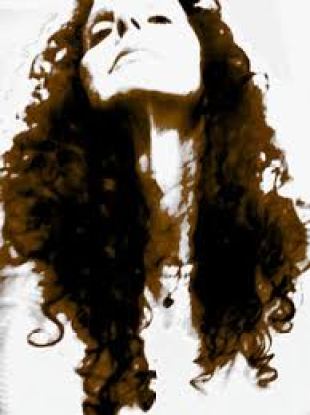
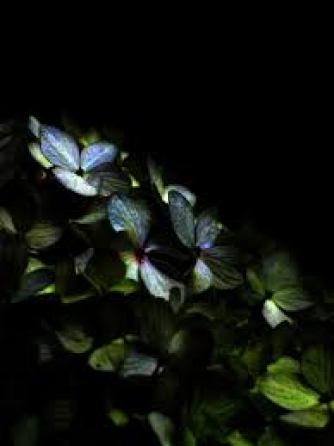
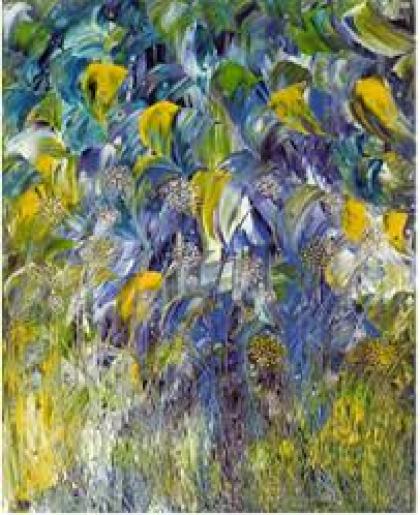
Eva Olivetti (1924-2013) — Artista visual judío-alemán-uruguayo/ German Uruguayan Jewish Artist–“Vistas de Montevideo y el campo”/Views of Montevideo and the Countryside”

Eva Olivetti

____________________________________

Eva Olivetti nace en Berlín, Alemania en 1924, hija de Karl Brager y Kähte Jacobsohn. Pintora. En 1939, a los quince años se radicó en Uruguay con su familia judía como parte de la oleada inmigratoria que escapó al nazismo. En 1948 se casó con Mario Olivetti. Entre 1949 y 1956 cursó la Licenciatura en Letras en la Facultad de Humanidades y Ciencias de la Universidad de la República. Entre 1956 y 1959 integró el taller del ceramista catalán Josep Collell. Entre 1959 y 1963 se incorporó al Taller Torres García siendo alumna de José Gurvich. Su obra gira en torno al paisaje, en obras de mediano y pequeño formato.Se caracteriza por lograr una atmósfera íntima, su sensibilidad se volcó en una pincelada leve, un trazo lineal casi ingrávido, una escala tonal de dorados y marrones apaciguados, donde lo material parece volatilizarse. Expuso individualmente en Uruguay desde 1960. El listado de muestras personales y participaciones colectivas es muy numeroso, habiendo realizado más de ochenta exposiciones.En 2003 le fue otorgado el Premio a la Trayectoria en el 38º Salón Municipal de Montevideo. Sus trabajos forman parte de colecciones particulares de América y Europa. Sus pinturas integran los acervos de museos de arte en Milán, París, Londres, Frankfurt, Viena, San Pablo, Buenos Aires y en el Museo Nacional de Artes Visuales en Montevideo, Uruguay. Fallece en Montevideo en 2013.

Adaptado de: http://museos.gub.uy/arteactivo/item/olivetti-eva.html

_____________________________________________________________________

Eva Olivetti was born in Berlin, Germany in 1924, daughter of Karl Brager and Kähte Jacobsohn. Painter. In 1939, at the age of fifteen, he settled in Uruguay with his family as part of the wave of immigration that escaped Nazism. In 1948, she married Mario Olivetti. Between 1949 and 1956, she completed a Bachelor of Arts at the Faculty of Humanities and Sciences of the University of the Republic. Between 1956 and 1959 she joined the workshop of the Catalan ceramist Josep Collell. Between 1959 and 1963 she joined the Torres García Workshop as a student of José Gurvich. Her work revolves around the landscape, in works of medium and small format. It is characterized by achieving an intimate atmosphere, his sensitivity is overturned in a slight brushstroke, an almost weightless linear stroke, a tone scale of calmed golds and browns, where he material appears to volatilize. She exhibited individually in Uruguay since 1960. The list of personal exhibitions and collective participations is very numerous, including more than eighty exhibitions. In 2003, she was awarded the Lifetime Achievement Award at the 38th Montevideo Municipal Hall. Her works are part of private collections in America and Europe. Her paintings are part of the collections of art museums in Milan, Paris, London, Frankfurt, Vienna, São Paulo, Buenos Aires and in the National Museum of Visual Arts in Montevideo, Uruguay. She died in Montevideo in 2013.

Adapted from: http://museos.gub.uy/arteactivo/item/olivetti-eva.html

____________________________________________________________

Pinturas de Eva Olivetti/ Paintings by Eva Olivetti

Esquina con árbol. óleo sobre cartón, 1970
Fachada de ciudad vieja, óleo sobre cartón, 1969
La nuez y el ángel
Paisaje, óleo sobre cartón, 1966
Día de pesca, óleo sobre cartón, 1978
Jarrón de flores, óleo sobre cartón, 1967
Pintura, óleo sobre madera, 1990
Texturas de una noche: Vista de Tacuarembó
De un catálogo de una exhibición en Chile
Figuras, óleo sobre cartón, s. f.
Naturalezas muertas, óleo sobre madera, s. f.
Escena de ciudad, óleo sobre madera, 1965
Árbol, óleo sobre papel pegado en fibra, s. f.,
Ciudad, óleo sobre madera, s. f.
Obra ampliada sin título
Otra mirada de Montevideo, óleo sobre cartón, 1965

_____________________________________________________

Eva Olivetti

Ángel Contín Cresto– Artista judío-venezolano/Venezuelan Jewish Artist — “Homenaje a los Víctimas del Holocausto”/ “Homage to the Victims of the Holocaust”

Ángel Contín Cresto

Ángel “Tuyo” Contín Cresto, artista nacido en 1951 en la ciudad de Coro. Desde finales del siglo pasado, lo suyo es una sola obsesión. Una tragedia universal, un genocidio sistemático. Para Contín es irrelevante que este episodio histórico cuya brutalidad lo impulsó, tras una larga meditación personal, a emprender una cruda interpretación a través de su arte, ocurriera mucho tiempo atrás, entre 1939 y 1945, en la etapa apocalíptica del llamado Tercer Reich. “Siempre pensé que no podía terminar el siglo XX sin que le rindiera un homenaje a estos seres humanos que vivieron el horror de un extermino sin precedentes en la historia”, confiesa el artista. Las primeras historias del Holocausto causaron una impresión indeleble en Contín en primer lugar de una forma visual, a través de desgarradoras imágenes recopiladas en varias publicaciones, un elemento que está claramente incorporado en varias piezas de esta colección. “Me impactaron mucho las fotografías reales del Holocausto, donde se puede observar las condiciones infrahumanas que sufrieron estas personas, un trato repugnante al ser humano”, explica. Una preocupación en particular lo impulsó para contribuir a mantener viva la memoria del exterminio judío: los llamados negadores del Holocausto,”la mayor y más persistente mentira de la historia”, subrayó Contín también quedó cautivado por las historias de artistas que se convirtieron en prisioneros del horror de la campaña de extermino nazi, a quienes particularmente dirige su homenaje. Por ejemplo, la historia del polaco Simon Pullmann, un extraordinario conductor de orquestas que quedó atrapado cuando visitaba el Gueto de Varsovia momentos antes que los alemanes invadieran Polonia, a fines de 1939. Se convirtió en el director de la Orquesta Sinfónica del Gueto hasta que murió, junto a todos sus compañeros músicos, entre ellos el joven violinista Ludwik Holcman, en el campo de concentración de Treblinka en 1944. También le impactaron las historias de Marysia Afzensztat, conocida como el “Ruiseñor del Gueto”, hija del director de la coral de la Sinagoga de Varsovia, asesinada durante el extermino nazi; la del director de Coro Infantil Israel Fajwiszys, ejecutado en el campo de concentración de Poniatowa, en Polonia; y la del artista plástico Félix Frydman, ejecutado en Treblinka, también  Contín dedicó una de las obras más simbólicas a otra notable víctima judía del Holocausto: La diarista alemana Ana Frank. “Ana Frank nos enriquece, nos enseña, nos lleva a la purificación del alma. Contín registra el testimonio de Helga Deen, una diarista alemana como Ana Frank que murió en el campo de concentración de Sobibor, Polonia. Deen dejó estas palabras: “Me siento tan única. Cada día vemos la libertad detrás de los alambres de espinos. Es demasiado. No puedo más y mañana, de nuevo. Pero quiero poder, quiero, porque si mi voluntad muere, muero también”.

______________________________________________________________________

Ángel Contín Cresto, artist born in 1951 in the city of Coro. Since the end of the last century, hers has been a single obsession. A universal tragedy, a systematic genocide. For Contín, it is irrelevant that this historical episode whose brutality prompted him, after a long personal meditation, to undertake a crude interpretation through his art, occurred a long time ago, between 1939 and 1945, in the apocalyptic stage of the so-called Third Reich. “I always thought that the 20th century could not end without paying homage to these human beings who lived through the horror of an extermination without precedent in history”, confesses the artist. The early Holocaust stories made an indelible impression on Contín in the first place in a visual way, through harrowing images collected in various publications, an element that is clearly incorporated in several pieces of this collection, through heartbreaking images collected in various publications, an element that is clearly incorporated in several pieces of this collection. ZZZZZ subhuman conditions that these people suffered, a disgusting treatment of human beings, ”he explains. One concern in particular prompted him to help keep the memory of Jewish extermination alive: the so-called Holocaust deniers, “the biggest and most persistent lie in history,” Contín stressed. He was also captivated by the stories of artists who became prisoners. of the horror of the Nazi extermination campaign, to whom he particularly addresses his tribute. For example, the story of the Polish conductor Simon Pullmann, an extraordinary conductor of orchestras who was trapped when visiting the Warsaw Ghetto just before the Germans invaded Poland in late 1939. He became the conductor of the Ghetto Symphony Orchestra until He died, along with all his fellow musicians, including the young violinist Ludwik Holcman, in the Treblinka concentration camp in 1944. He was also struck by the stories of Marysia Afzensztat, known as the “Nightingale of the Ghetto”, daughter of the director of the Warsaw Synagogue choir, murdered during the Nazi extermination; that of the director of the Israel Fajwiszys Children’s Choir, executed in the Poniatowa concentration camp, in Poland; and that of the plastic artist Félix Frydman, executed in Treblinka, Contín also dedicated one of the most symbolic works to another notable Jewish victim of the Holocaust: the German diarist Anne Frank. “Anne Frank enriches us, teaches us, leads us to purification of the soul. Contín records the testimony of Helga Deen, a German diarist like Anne Frank who died in the Sobibor concentration camp, Poland. Deen left these words: “I feel so unique. Every day we see freedom behind barbed wire. It’s too much. I can’t take it anymore and tomorrow again. But I want power, I want to, because if my will dies, I die too ”.

_____________________________________________

“Homenaje a los víctimas del Holocausto”/ “Homage to the Victims of the Holocaust”

__________________________________________________

____________________________________________________

Las obras de arte estãn en Miami y están disponible para exhibir. Contacte a este blog./The artworks are in Miami and are available to be exhibited. Contact this blog.

______________________________________

Sandra Beraha — Artista y poeta judío-ecuatoriana — Ecuadoran Jewish Artist and Poet

Sandra Beraja

___________________________________
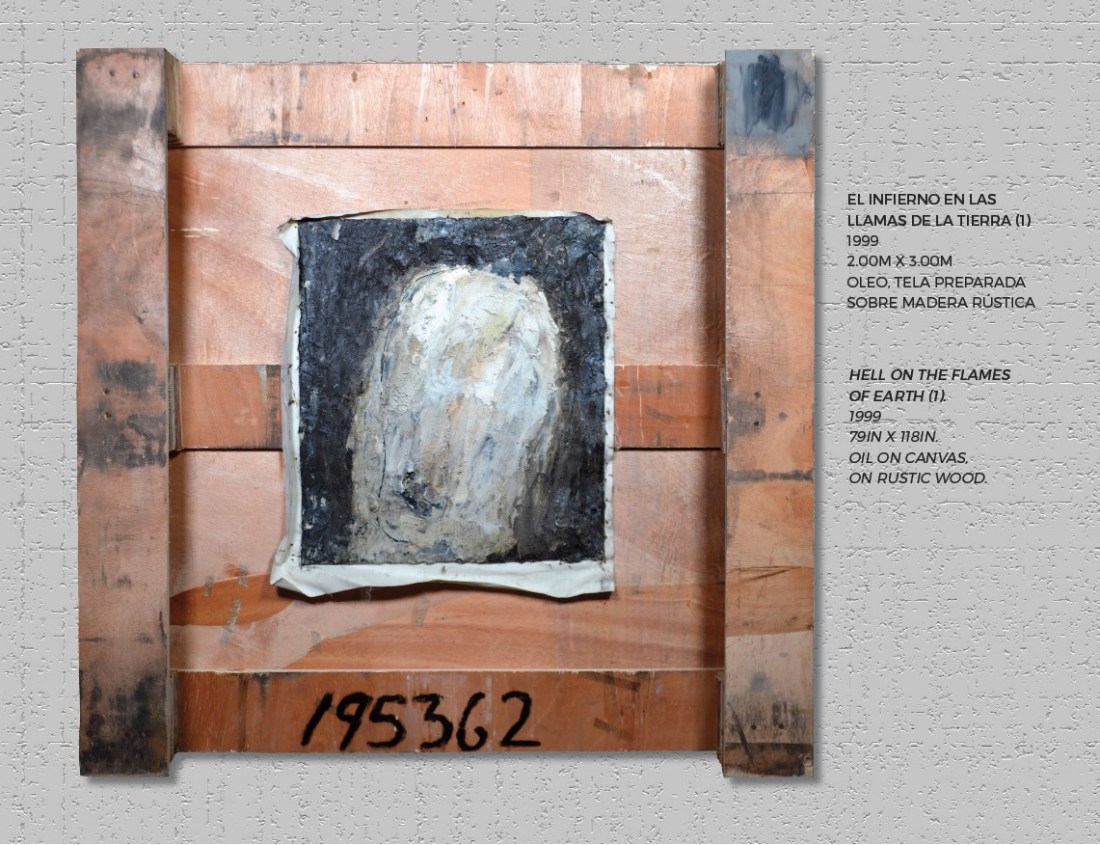
Entre los pintores latinoamericanos más exitosos, la forma de Sandra Beraha se compara con impresionistas anteriores, pero su uso de medios creativos, que incluyen tinta, pastel, acrílicos, lana, harina, madera, vidrio y especias la distingue. Sandra, quien comenzó su carrera como artista a los cuatro años, es una poeta publicada y líder en el campo de las artes visuales. Un punto culminante de su carrera, “Maravilloso Ecuador” (Ecuador maravilloso), una colección de más de 700 pinturas, muestra la belleza natural de su hogar durante tiempos de incertidumbre política. Los críticos han señalado: “Desde su regreso a Quito inició uno de los viajes más difíciles, el de elegir entre una de las múltiples fases de su personalidad creativa…” Sus colecciones más recientes combinan su pasión por la pintura con la fotografía digital. Las obras de Sandra se han presentado en América del Norte y del Sur.

___________________________________________________________

Among the most successful Latin American painters, Sandra Beraha’s form draws comparison to earlier impressionists, but her use of creative media, including ink, pastel, acrylics, wool, flour, wood, glass and spices sets her apart . Sandra, who began her career as an artist at age four, is a published poet and leader in the field of visual arts. A highlight of her career, “Marvilloso Ecuador” (Marvelous Ecuador) a collection of over 700 paintings, showcases the natural beauty of her home during politically uncertain times. Critics have noted, “Since her return to Quito she started one of the most difficult journeys –that of choosing among one of the multiple phases of her creative personality…” Her most recent collections combine her passion for painting with digital photography. Sandra’s works has been featured in both North and South America.

________________________________________________________

El arte de Sandra Beraja/ The Art of Sandra Beraja

_______________________________________________

Autorretrato

La poesía de Sandra Beraja/ The Poetry of Sandra Beraja

EL OLVIDO
 
Olvidé leer,
Olvido de olvidar,
Aquel olvido, así como nunca estar
Olvidaré.
 
FORGETTING
 
I forgot to read,
I forgot to forget.
That forgetting, thus like never being.
I will forget.

EL PASADO
 
¿Qué decir ya del pasado?
Lo que es.
Parte del tiempo que parte, parte.
 
THE PAST
 
Why still speak of the past?
What is.
A part of time that departs, departs.
 
LA DISCULPA
 
La disculpa es la culpa de ser,
Se mantiene en culpa por la disculpa.
 
THE EXCUSE

The excuse is the fault of being
One affirms guilt by the excuse.
 
________________________________________________ 

THE BATTLE
 
I have fought battles to reach your heart,
With mine naked to the storms.
 
Defeated I am by your thoughts.
So strong they are,
They buried my heart under the stones
That I placed in your yard.
 
There is where I lay,
Under the leaves that feel,
Under the snow that came.
 
Si tu amor fuera para siempre,
Viviría eternamente
En el aliento que respiras.
 
Es allí donde yo siento
Respirando tu aliento.
 
Es el amor
Donde te encuentro,
Como si sudara a borbotones
Las insensatez de la exageración,
 
 
Una producción al por mayor de ilusiones y desilusión
Correteando el cansancio
Me arrastro hacia la luz de mis errores.
 
Dispuesta a vivir a pesar de mí misma,
Dispuesta a descansar en los brazos del riesgo de ser/ imperfecta,
Me preparo a dormir en mi propia soledad.
 
Una vez más desnuda
Ante la falta de razón
Sudando a borbotones
Las ganas de compresión.
 
Nada tengo ya que decir
Y quisiera saber si lo que he dicho de algo ha servido.
 
¿Será que llegaré a silencio,
O que el silencio ha llegado a mí?
What am I thinking about.
 
Recuerdo más que pienso,
Porque no sé si recordar
Es pensar.
 
Los extremos desbordados
                       deformados
                            exagerados
 
huyen los sensatos
 
___________________________________
 
THE BATTLE
 
I have fought battles to reach your heart,
With mine naked to the storms.
 
Defeated I am by your thoughts.
So strong they are,
They buried my heart under the stones
That I placed in your yard.
 
There is where I lay,
Under the leaves that feel,
Under the snow that came.
 
If your love was forever
I would live eternally
In the breath your breath,
 
It is there where I feel
Breathing your breath.
The craziness of exaggeration.
 
It is love
Where I meet you,
As if I was sweating at the boiling point.
 
A wholesale production of illusions and disillusion
Chasing weariness
I drag myself toward the light of my errors.
 
Ready to live in spite of myself,
Ready to rest in the arms of the risk of being imperfect.
I prepare to live in my own solitude.
 
Once more naked
Before the lack of reason
Sweating at a boil
The desire for understanding.
 
And I would like to know if what I have said has had/an effect.
Will it be that I arrive at silence
Or that the silence has arrived to me.
 
I recognized them, didn’t I without knowing who they are
I don’t have anything left to say,
What am I thinking about.
 
I remember more than I think,
Because I don’t know it remembering
Is thinking.
 
I always return home.
I always take off my clothes
 
I have wanted to live with you more
I have wanted to love you.
 
He querido.
 
I rarely go anywhere
And much further.
 
I would like to know what I feel.
Perhaps that may be because I feel nothing that I don’t/ know that I feel.
 
I wish to believe what I tell myself
And I tell myself things not to believe in.
The story continues without knowing what I feel.
 
I have spent so much time with me and with my stories,
That now what do I tell myself?
 
The extremes exceeded
                            deformed
                                 exaggerated
 
flee the sensible.

_________________________________________________________

Leonardo Nierman — Artista visual y escultor judío-mexicano/Mexican Jewish Artist and Sculptor — “Genesis” y otras obras/”Genesis” and other works

download-3
Leonardo Nierman

__________________________

          Desde pequeño, Leonardo Nierman quería ser músico y se dedicó al violín casi dos décadas. Tomó clases particulares y posteriormente estudió en el Conservatorio Nacional de la Música en la Ciudad de México, dando un recital en el Palacio de Bellas Artes. Un día descubre que su talento es insuficiente y no corresponde a sus ambiciones de ser un gran músico y deja el violín. Inicia sus estudios en administración de empresas en la Universidad Nacional Autónoma de México. Un día, al pasar frente a una tienda de material para arte, mira con emoción las cajas de lápices de colores, piensa que el arte puede ser su nuevo hobby y compra pinturas, pinceles y un lienzo. En 1956, -a la edad de 24 años-, pinta su primer mural para el auditorio de su facultad, y a partir de entonces despega su carrera como artista plástico. Ha participado en más de 100 exposiciones individuales en galerías, museos y centros culturales en Norte y Sudamérica, Europa, Asia y Australia. Sus esculturas, pinturas, murales y gobelinos se pueden encontrar en las principales colecciones del mundo.

Algunos galardones que ha recibido son:

Palma de Oro a las Bellas Artes de Mónaco (1969)                                            Medalla Royce de Nueva York (1970)                                                                                           The Golden Medal of the League of Art de Chicago (1980)

Obra en colecciones públicas

Universidad de Harvard, Massachusett                                                                              Instituto de Arte de Detroit, Detroit, Michigan                                                                    Universidad Concordia, Irving, California                                                                    Universidad Yale, New Haven, Connecticut                                                              Northeastern University, Boston, Massachusetts                                                                      Instituto de Arte de Chicago, Illinois                                                                                          Museo del Vaticano, Italia                                                                                                         Museo de Arte Moderno en Haifa, Israel                                                                      Aeropuerto Internacional de Lambert-St. Louis                                                                       Sala Nezahualcoyotl, México, DF

Adaptado de: http://bsgaleria.mx/biografias/leonardo-nierman/

_____________________________________________________________

          Since childhood, Leonardo Nierman wanted to be a musician and devoted himself to the violin almost two decades. He took private lessons and later studied at the National Conservatory of Music in Mexico City, giving a recital at the Palace of Fine Arts. One day he discovers that his talent is insufficient and does not correspond to his ambitions of being a great musician and leaves the violin. He began his studies in business administration at the National Autonomous University of Mexico. One day, as he passes by a store of art supplies, he looks at the boxes of colored pencils with emotion, thinks that art can be his new hobby and buys paintings, brushes and a canvas. In 1956, -at the age of 24 –, he painted his first mural for the auditorium of his faculty, and from then on he took off his career as a plastic artist. He has participated in more than 100 individual exhibitions in galleries, museums and cultural centers in North and South America, Europe, Asia and Australia. His sculptures, paintings, murals and gobelins can be found in the main collections of the world.

Some awards he has received are:                                                                                          Golden Palm for the Fine Arts of Monaco (1969)                                                                  Royce Medal of New York (1970)                                                                                                  The Golden Medal of the League of Art in Chicago (1980)

Work in public collections:                                                                                                    Harvard University, Massachusetts                                                                                              Detroit Art Institute, Detroit, Michigan                                                                            Concordia University, Irving, California                                                                                        Yale University, New Haven, Connecticut                                                                                      Northeastern University, Boston, Massachusetts                                                                            Art Institute of Chicago, Illinois                                                                                              Vatican Museum, Italy                                                                                                              Museum of Modern Art in Haifa, Israel                                                                            Lambert-St. International Airport Louis                                                                                    Sala Nezahualcoyotl, Mexico City

Adapted from: http://bsgaleria.mx/biografias/leonardo-nierman/

Obras de arte de Leonardo Nierman/           Artworks by Leonardo Nierman

___________________________

Pinturas/Paintings

oleo-tributo-leonardo-nierman-190-x-190-mts-D_NQ_NP_751629-MLM26776907784_022018-F
Tributo

nierman3765-550x405
Enchanted Valley

download-1
Genesis

download
Firebird

____________________________________

Tapestry

Nierman-Tapestry-2-1
Tapiz/Wall-hanging tapestry

___________________________________

Escultora/Sculpture

Nierman-Sculpture_B_New-2
Bronze Sculpture

Nierman-Enigma-2-150
Enigma

Nierman-Sculpture-3a-150
Love

images-3
Bird in Flight

______________

Escultora pública/Public Art

I0512574-L
Flame of Friendship

LI-sculp-MF-010b
Flame of the Millenium – Chicago

images
University of Michigan Medical Center

images-4
St. Louis Airport

download-1
San Diego Park