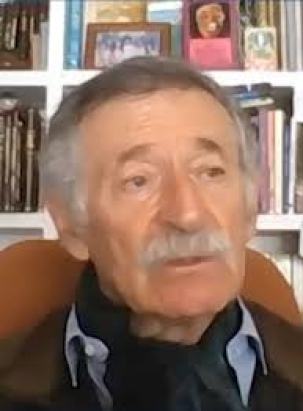
Mario Satz — Escritor y cabalista judío-argentino-español/Argentine Spanish Writer and Kabbalist — “La flauta de perdón”/”The Flute of Pardon”

Mario Satz

________________________________________________

Website of Mario Satz

Mario Satz — Amazon

_______________________________________________

SATZ, MARIO (1944–), poeta, autor y ensayista argentino y español. Nació en Coronel Pringles, Argentina. Sus extensos viajes tuvieron una influencia significativa en su escritura. Vivió en Israel durante tres años y desde 1978 vive en Barcelona, ​​España. Satz es un prolífico autor de poesía y obras de narrativa y no ficción que incluyen libros sobre la Cabalá y la historia judía. Su primera poesía está íntimamente relacionada con el mundo natural. Examina la belleza y el poder de la naturaleza en prácticamente todas sus manifestaciones terrenales. Las obras de no ficción del autor revelan su interés por la historia y el misticismo judíos y son evidencia de su capacidad para un pensamiento teológico profundo. Entre los textos representativos en esta línea se encuentran Poética de la Kábala (1985), Judaísmo: 4.000 años de cultura (1982) y El dador alegre: ensayos de Kábala (1997), además de autor de una vasta serie novelística titulada Planetario, que consta de cinco novelas que componen un sistema solar textual. Las novelas Sol (1976), Luna (1977) y Tierra (1978) forman una trilogía en la que el autor utiliza las ciudades de Jerusalén y Cuzco, Perú, como lugares para examinar la historia y la cultura latinoamericanas junto con la tradición judía. Las novelas posteriores, Marte (1980) y Mercurio (1990), no continúan la historia de la trilogía aunque forman parte del proyecto Planetario. Su libro Tres cuentos españoles (1988) adquiere una perspectiva mucho más centrada con el retrato de la España multicultural del siglo XIII en la que las culturas cristiana, musulmana y judía existieron y prosperaron una al lado de la otra. La novela Azahar (1996) continúa con la misma se centra en Iberia, esta vez con un enfoque en las tradiciones religioso-místicas desde la Cabalá hasta El Libro de los Muertos de Tibet.

Adaptado de Jewish Virtual Learning.

___________________________

SATZ, MARIO (1944– ), Argentine-Spanish poet, author, and essayist. He was born in Coronel Pringles, Argentina. His extensive travels had significant influence on his writing. He lived in Israel for three years and from 1978 he lived in Barcelona, Spain. Satz is a prolific author of poetry, and narrative and nonfiction works that include books about Kabbalah and Jewish history. His early poetry is intimately connected to the natural world. He examines the beauty and power of nature in practically all its earthly manifestations. The author’s nonfiction works reveal his interest in Jewish history and mysticism and are evidence of his capability for profound theological thinking. Representative texts in this vein include Poética de la Kábala (1985), Judaísmo: 4,000 años de cultura (1982), and El dador alegre: ensayos de Kábala (1997).He is also the author of a vast novelistic series titled Planetarium, which consists of five novels that comprise a textual solar system. The novels Sol (1976), Luna (1977), and Tierra (1978) form a trilogy in which the author utilizes the cities of Jerusalem and Cuzco, Peru, as sites for examining Latin American history and culture together with Jewish tradition. The subsequent novels, Marte (1980) and Mercurio (1990), do not continue the story of the trilogy though they are part of the Planetarium project. His book Tres cuentos españoles (1988) takes on a much more focused perspective with the portrayal of multicultural 13th century Spain in which Christian, Muslim, and Jewish cultures existed and thrived side by side.. The novel Azahar (1996) continues with the same focus on Iberia, this time with a focus on religious-mystical traditions from Kabbalah to The Book of the Dead from Tibet.

Adapted from Jewish Virtual Learning.

____________________________________________________

La flauta del perdón

–El perdón es una flauta de dos bocas—dijo el Rabí Lo Iadúa, el Desconocido, a su discípulo Daniel.

–¿Te refieres a la flauta doble de los griegos, al aulós o caramillo?—interrogó Daniel.

–Me refiero al perdón, tan difícil y tan necesario.            

Viajaban al Qumram para visitar las ruinas del antiguo monasterio de los esenios. En esa época crecían lirios en el desierto y los wadis murmuraban aguas humildes, ecos de las pasadas lluvias. En Jérico, el gran oasis extendía sus verdes redes de cultivos, sus altas palmas. Ligeramente triste, el Desconocido prosiguió:

           –Podemos perdonar si, a nuestra vez somos perdonados. Por eso el perdón es una flauta de dos bocas: no importa quien imprima el soplo de la música y quien la deje salir al aire del mundo. No importa quien haya herido primero ni tampoco la causa que motivó la agresión, el desprecio, la cruel ironía, la pequeña o gran traición. La música del perdón es un tiempo que fluye para curar las llagas de aquél que fuera detenido, falseado, deformado por nuestros actos.

          –De modo que no basta—terció Daniel, tratando de aclarar las oscuras enseñanzas del maestro—con que pidamos perdón, pues si el otro o la otra no nos responden, a su vez, con su pedido de perdón, el milagro de la reconciliación no se produce, ¿verdad?

          –Para las amarguras de la vida la flauta tiene ocho orificios, siete arriba y uno abajo. Los de arriba son nuestros sentidos-ojos, oídos, fosas nasales y boca–: el octavo hace vibrar el ombligo, sitio de transfiguración, huella de nuestra ligazón con el pasado de la especie, marca fraterna para todos. Perdonar es difícil porque quien expresa sus afectos, nunca sabe cuándo ni cómo serán recibidos y mal habituados, orgullosos, queremos una respuesta inmediata a nuestros actos, efectos visibles de nuestros actos invisibles. Quien pida perdón debe, antes, reconocer su error, lo equívoco de sus intenciones. Hay perdón auténtico cuando el fallo es reconocido y no se lo cubre con el polvo del engreimiento ni con la seda de omnipotencia. Ninguno de nosotros es tan perfecto—en relación al prójimo para pronunciar-esa horrible frase: es cosa suya.

          Frente al Mar Muerto, los ojos de los viajeros parpadearon deslumbrados por una luz mineral. Por fuera, se hallaban en el punto más bajo de la tierra. Por dentro, en cambio, Daniel y el Desconocido subían en melodías de flauta solar hacia las dos bocas del horizonte, el este y el oeste.

______________________________________________________

      The Flute of Pardon

      “Pardon is a flute with two mouths,” is a flute with two mouths,” said Rabbi Lo Yadua, the Unknown One to his disciple Daniel.

         “Are you referring the flute of the Greeks, the aulos, with its double reed or the pipes,” asked Daniel.

         “I am referring to pardon, so difficult and so necessary.

         They were traveling to Qumran to visit the ruins of the ancient monastery of the Essenes. At this time of year, lilies were growing in the desert, and the wadis humble waters murmured, echoes of past rains. In Jericho, the great oasis extended its green cultivated webs, its tall palm trees. A bit sad, the Unknown proceeded: “We can pardon, if  in turn, we are pardoned. For that reason, pardon is a flute with two mouths; it doesn’t matter who makes the sound of the music and who lets it go out to the world. It doesn’t matter who was hurt first nor even the cause that motivated the aggression, the slight, the cruel irony, the small or great betrayal. The music of pardon is a time that flows to cure the wounds of whom was detained, misled, deformed by our acts.”

         “So, then it is not enough,” Daniel commented, trying to interpret the obscure teachings of the master, “ that we ask for pardon, because if the other person doesn’t respond to us, in turn,with a request for pardon, the miracle of reconciliation doesn’t take place, right?”

         “For the bitter parts of life, the flute has eight orifices, seven above and one below. Those above are our senses-eyes, ears, nostrils and mouth-: the eighth causes the vibration of the naval; place of transfiguration the source of our link with the past of the species, fraternal marking for everyone. To pardon is difficult because whoever expresses his feelings, never knows when or how they will be received, and not in the habit, proud, we want an immediate response to our acts, invisible effects to our invisible acts. Whoever may ask for pardon should, before doing so, recognize his error, the mistake in his intentions. There is authentic pardon when the mistake is recognized and not covered by the dust of vanity or with the silk of omnipotence. None of us is so perfect to be able to pronounce-in relation to our neighbor-that horrible phrase: it’s your problem.

      Facing the Dead Sea, the travelers’ eyes blinked, dazzled by the mineral light. Outside, they found themselves in the lowest point on earth, Inside, in contrast, Daniel and the Unknown One rose with melodies of a solar flute toward the two mouths of the horizon, the east and the west.

Translation by Stephen A. Sadow

_________________________________________

Algunos de los libros sobre la Cábala de Mario Satz/Some of the books about the Kabbalah by Mario Satz

_______________________________________________________

Clara Weil (1924-1985) Cuentista judía-italiana-argentina/Italian Argentine Jewish Short-story Writer — “Por todos sus errores” – un cuento/”For All Their Sins” – A short-story

Clara Weil
Clara Weil

______________________________________

Clara Weil nació en 1924 en Malfoncone, Italia en el seno de una familia judía muy tradicionalista. En 1938, la familia emigró a la Argentina debido a las leyes raciales recién implantadas en Italia.

Con el tiempo, se incorporó al grupo de judíos italianos inmigrados que se había formado, a través del cual se puso en contacto con la judería argentina, a pesar de que no hablara idish.

A los 22 años sufrió una grave enfermedad que la tuvo postrado por más de un año. Es en ese periodo que nace en ella el deseo de escribir. Su espontánea creatividad y fantasía la inducen a escribir cuentos para niños, que nunca publicó.

No obstante su inagotable energía, sufre del trauma legado por la persecución racial y su grave enfermedad. Con el análisis supera con el tiempo la situación, logrando canalizar su mente hacia la contenida vocación de escritora.

Se inicia con la publicación de un libro de cuentos: Una cruz para los judíos (1982), seguido por otros: De amor a la condena (1984). Estaba en avanzada terminación de una novela cuando la muerte la sorprende en 1985, a temprana edad.

____________________________________________

Clara Weil was born in 1924 in Malfacone, Italy in heart of a very traditional Jewish family. In 1938, the family immigrated to Argentina because of the recently implemented racial laws in Italy.

After a while, she became part of a group of Italian Jewish immigrants, through which she made contact with the Jews of Argentina, even though she didn’t speak Yiddish.

At 22, Weil suffered a grave illness that kept her prostrate for more than a year. During this period, her desire to write was born. Her spontaneous creativity and fantasy induced her to write stories for children, that were never published.

Despite her tireless energy, she suffered from the  legacy of the traumas of racial persecution and her grave illness. With psychoanalysis, in time, she was able to overcome the situation, and succeeded in focusing her mind toward her repressed vocation as a writer.

Weil began with the publication of a book of short stories: Una cruz para los judíos/ A Cross for the Jews, 1982, followed by another: De amor a la condena/ From Love to Condemnation, 1984. She was in the last stages of completing a novel, when death surprised her in 1985, at an early age.

_____________________________________________

Kol Nidre oración/prayer

Moishe Oysher (1906-1958)

___________________

“Por todos esos errores”

El techo estrellado contemplaba la sinagoga con las luces escondidas, eran las luces que perforaban los diseños de los vitrales.

(La víspera del día del arrepentimiento había comenzado)

En aquella sinagoga en Belgrano, las largas paredes estaban colmadas por los que en silencio que encerraba cielo y muerte escuchaban:

Kol Nidre…Kol Nidre…

En la oración en cuya melodía de Max Bruch en la tibia voz del joven jazán devolvería lágrimas y aroma de un gueto olvidado.

MaxBruch.jpg
Max Bruch

Esa noche allí estaban aquellos judíos que durante el año no dejan de amar la sinagoga, de aquellos judíos a los que los judíos alemanes llaman Die drei tagen Juden y aquellos otros y aquellos otros…y aquellos otros…

***

Esa noche en esa sinagoga estaba Raquel. Ocupaba uno de los asientos de la cuarta baja de la planta baja. Raquel o Ruchele, como la llamaba el abuelo Schloime, que había trabajado toda su vida como vendedor ambulante. Vivió en un conventillo de Pasteur y Lavalle y apreciaba gefülte fish. Tenía por costumbre sostener con las palmas de las manos el vaso de té con la cuchara sumergida. Con un terrón de azúcar entre los dientes sorbía su té en silencio. Aquel anciano leía el Idishe Zeitung e iba del Schll de la calle Uriburu. Hoy la tierra lo ha borrado. La memoria de Rujele también lo ha olvidado

***

Con el silencio que encierra cielo y muerte, todos escuchan de pie: – Kol Nidre… Kol Nidre.

“¡Qué música hermosa! Como cantaba este muchacho…

Y el rabino, ese hombre es bárbaro… cuando habla parece un Dios… es buen mozo… en fin no le falta nada… Y claro, es un rabino de los de hoy… bien moderno…” se dice Raquel. Suspira encogiendo el abdomen. A su derecha, está su marido, Mario, que tiene al lado, Martín, el hijo menor. A la izquierda, está Vanina, la hija mayor.

Kol Nidre… Kol Nidre… prosiguió el canto. Como si quisiera alcanzar a deslizarse por memorias que no tienen continuidad. Raquel gira su cabeza en diagonal y una mitad almibarada acariciaba la larga cabellera de Vanina.

…”¡Esta hija mía es riquísima…! ¡Pero qué tonta! Venirse aquí vestida con esos buggies blancos y para colmo con unas botas como las de los tres mosqueteros… Es inútil que yo proteste Ya estoy harto de escuchar que quiere vestirse como sus amigas,

Después de todo tiene razón… tengo que admitir que mi hija es riquísima… Sí, una mina bárbara, como dicen los chicos de ahora. Mucha gente opina que parecemos como dos gotas de agua, pero creo que exageran cuando nos toman por gemelas.”

Raquel levanta el brazo derecho y sus dedos de la mando se deslizan por las mejillas como estuviesen controlándolas. El tiempo se marca por finas telarañas de arrugas en la frente y alrededor de los ojos se ha borrado en ella, por la cirugía. Esa cirugía no solamente ha dejado la piel de su rostro como pulida con esmeril, sino que ha hecho su nariz ganchuda luciera ahora tan respingada como la de Ingrid Bergman. Debajo de sus párpados, cubiertos por el maquillaje, asoman unos ojos grises como la niebl. Tiene los labios teñidos de lacre con un brillo dorado y su cabeza está envuelta en un nido de gruesos rulos del color de cobre que se confunden el uno con el otro.

Ella es una mujer consecuente. Dos vece a la semana somete sus carnes al rítmico encuentro de las manos de la masajista. Además, cada lunes por la mañana, con el cuerpo comprimido en la malla, levanta y baja sus piernas durante la clase de gimnasia. Por eso Raquel Jojén, a las cuarenta y seis años, es una mujer que enciende miradas, en particular en los ojos de los maridos de sus amigas.

 -Kol Nidre… Kol Nidre… Y el oficiante sigue en crescendo con su do-me-ri-me fa-“.

Raquel apoya su mano derecha sobre el diafragma. “Augmenté un kilo en un solo día, mejor dicho, en una sola comida. También ¡con la cena de anoche! ¡Esos Chalomy tienen una clase para recibir! Pero la pobre Sofía es realmente un bofe… y Dios sabe que yo no soy envidiosa. El marido en cambio es bárbaro… ¡Ah! Ese José es tan churro… yo, yo si no fuese una señora seria… pero no, yo no sería capaz a hacer sufrir a Mario. De no ser así, hace rato que ya me hubiese encamado con ese hombre… ¡Qué barbaridad! Estoy loca para pensar todo esto… y estando en la sinagoga. Pero, no hay nada que hacer. José es tan macho que a veces me ocurre que cuando miro en la tele esa película Casablanca y veo a Humphrey Bogart, me parece ver a José… y ver que me acaricia, me besa y me dice: –I love you- me derrito. Escucho esa canción: You must remember these o algo parecido y sigo derritiéndome… menos mal que nadie se da cuenta de que ni bien me mira, esos ojos tiñen de rojo hasta mis orejas… pero por Dios, tengo marido e hijos. ¿Qué locuras estoy pensando? Y la mente de Raquel vuelve a distraerse con los champiñones de la víspera, con el caviar de Irán, que parecía anoche navegar en los dos moldes de hielo apoyados sobre las fuentes de plata. Aquellas frutillas que le parecían del tamaño de mandarines, aquellos helados que estaban escondidos tras pirámides de almendras y nueces y esos crepes naufragados en el Gran Marnier que echaba llamas con franjas doradas y violáceas.

Raquel sostiene en las manos el libro de tapas azules que luce en el lomo las cinco letras hebreas Majsor. Sus labios se mueven y sus pupilas corren de derecha a izquierda. Vuelve a levantar la cabeza y se sorprende al ver a Déborah ya Simón Bokerinsky.

“Déborah ha venido empilchada como para un casamiento”, juzga la mente de Raquel. “Vanina no se cansa de decirme: – ¡Pero, má! Los Bokerinsky tendrá una mosca loca, pero son tan mersas… y él, para decirte, es una mierda-. Esta hija mía es tan mal hablada y tan hincha cuando se le ocurre decir que si Déborah tuviese un prótesis de brillantes, con tal de mostrarlos no cerraría jamás la boca… En fin, no hay que tomar muy en serio lo que dicen los chicos… “

Raquel recuerda que la semana pasada, Mario le comentó que Simón había tomado el costumbre de no levantar los pagarés firmados, y que entregaba a los acreedores cheques voladores. Si bien ella no entiende de finanzas no deja de opinar que Simón es un hombre inteligente y sabe de negocios. De no ser así, el año pasado no hubiese comprado la casa y un departamento en Punta del Este, Además, Simón, hace apenas meses, regaló a Déborah el piso de la calle Virrey del Pino, con pileta y sauna. Y Raquel está convencida de que nadie puede comprar tantas propiedades juntas, sin disponer de dinero.

La oración de Kol Nidre ha terminado. Hay crujido de sillas y murmullos. Una vieja señora con la cabeza cubierta de una mantilla de encaje blanco está sentada en uno de los asientos de la primera fila del piso alto con codos apoyados sobre la baranda. Sus pupilas, envueltos como en una niebla, lucha a través de los bifocales para mirar a ese rabino moderno, a esos que ocupan a la planta baja y aquellos que, por falta de lugar, permanecen de pie en los pasillos de la nave del templo. Un niño o dos o tres berrean en los brazos que los mecen espasmódicamente.

¡Silencio, por favor! – reclama el rabino.

____________________________

Libros de Clara Weil/Books by Clara Weil


_______________________

     “For All Our Those Sins”

The star-filled ceiling looked down upon the synagogue with its hidden lights, the lights that perforated the designs of the stain glass windows.

(The eve of the Day of Atonement had begun)

In that synagogue in Belgrano the large walls were filled with those who in a silence encerraba cielo y muerte escuchaban:

Kol Nidre…Kol Nidre…

In that prayer whose melody by Max Bruch song with the warm voice of the young jazán would bring back tears and aroma of a forgotten ghetto.

MaxBruch
Max Bruch

That night, those Jews who during year never stopped loving the synagogue, of those Jews whom the German Jews call Die drei tagen Juden and those others and those others… and those others…

***

That night in Raquel was in that synagogue. She occupied one of the seats in the lower fourth of the ground floor. Raquel or Ruchele as her grandfather Shloime called her, who had worked all his life as a peddler. He lived in a tenement on Pasteur and Lavalle and was fond of gurfülte fish. He had the custom of holding of holding in the palms of his hands a glass of tea with the spoon submerged in it. With a cube of sugar between his teeth, he sipped his tea in silence. That old man read the Idishe Zeitung and he went to the Schil on Uriburu Street. But now the land had erased it. Rujele’s memory had also forgotten it.

 With the silence that contains heaven and death, all listen, standing: Kol Nidre… Kol Nidre.

“What beautiful music! How that young man sang. . . And the rabbi, that man is marvelous. . . when he speaks, he seems like a God. . . He is a good fellow. . .  In short, he doesn’t lack anything. . .  And of course, he is a rabbi of those of today. . . very modern. . .“ Raquel said to herself. She sighed, pulling in her abdomen. At her right, was her husband, Mario, who had at his side Martín, his younger son. On the left, is Vanina, the older daughter.   

Kol Nidre…Kol Nidre… continued the chant. As if it wished to slip/ slide thought the memories that  didn’t have continuity. Raquel turned her head diagonally and half gently caressed Vanina’s long hair.

“This daughter of mine is so precious. . .” But so silly! To come here dressed in those white buggies and even worse with boots like those of the three musketeers. . .  It’s useless for me to protest. I’ve had enough of hearing that she wants to dress like her friends.

After all, she’s right. . . I have to admit that this daughter is very charming. .  Yes, a marvelous girl, like the kids say today. Many people think that we are like two drops of water, but I think they exaggerate when they take us for twins.

She is a consistent woman. Twice a week, she submits her flesh to the rhythmic touch of the masseuse’s hands. Moreover, every Monday morning, with her body compressed into her bathing suit, she raises and lowers her legs during the gym class. For that Raquel Jojén, at forty-six years old, is a woman who ignites glances, particularly in the eyes of the husbands of her friends.

Kol Nidre… Kol Nidre. . . And the officiant continues in crescendo with his do-mi-re-fa.”

If that were not so, quite a while ago, I would have already gone to bed with that man. . . How awful! I’m crazy for thinking all of this. . . and in the synagogue. But, there’s nothing to do about it. José is so macho that at times, it occurs to me when I see on television that film Casablanca, and I see Humphrey Bogart, I seem to see José. . . and to see that he caresses me, kisses me and tells me : “I love you, and I melt, I listen to that song: You must remember these or something like that and I go on melting. . . at least no one notices that I don’t even look good, with eyes stained with red up to my ears. . . But my God, I have a husband and children. What craziness am I thinking?

And Rachel’s mind was distracted again by the mushrooms of the previous evening, with the caviar from Iran, that last night seemed to navigate in the two molds of ice, supported by the silver platters. Those strawberries that seemed to be the size of mandarin oranges, those ice creams, hidden behind pyramids of  almonds and walnuts and those crepes shipwrecked in the Gran Marnier that threw out flames in golden and violet streaks.

Raquel held in her hands the book with blue covers on whose spine shine the five Hebrew letters Machzor. Her lips moved and her pupils run from right to left. She raised her head again and was surprised to see Déborah and Simon Dokerinsky.

“Déborah has come dolled up as if she were going to a wedding,” Raquel’s mind judged. “Vanina never tires of telling me: but ma, the Bokerinsky must have plenty of money, but they are so vulgar, , ,and he, to tell you the truth is a piece of shit. This daughter of mine is so crudely spoken and so begrudging when is occurs to her to say that Déborah has shiny false teeth, and so to show them she never keeps her mouth shut. . . “But, you can’t take seriously what children say.”

Raquel then remembers that last week, Mario commented to her that Simón had taken on the custom of not paying off his promissory notes and that he was sending checks that bounced to his creditors. If that had not been so, last year, he wouldn’t had bought the house and a department in Punta del Este. Moreover, Simón, only a few months ago, gave Déborah an apartment on Virrey del Pino Street, with a swimming pool and sauna. And Raquel was convinced that nobody can purchase so many properties at the same time, without having money to spend.

The Kol Nidre prayer had ended. There was a creaking of chairs and murmurs. An elderly señora with her head covered by a mantilla of white lace is sitting on one of the seats of the first row of the upper floor with her elbows leaning on the railing. Her pupils, covered as if with a mist, struggled through her bifocals to look at this modern rabbi, at those who occupied the ground floor and those who, for lack of space, stood in the hallways on the sides of the temple. A child or two or three bawled in the hands that rocked then spasmodically.

“Silence please!” The rabbi demanded.

Translation by Stephen A. Sadow

___________________________________________________