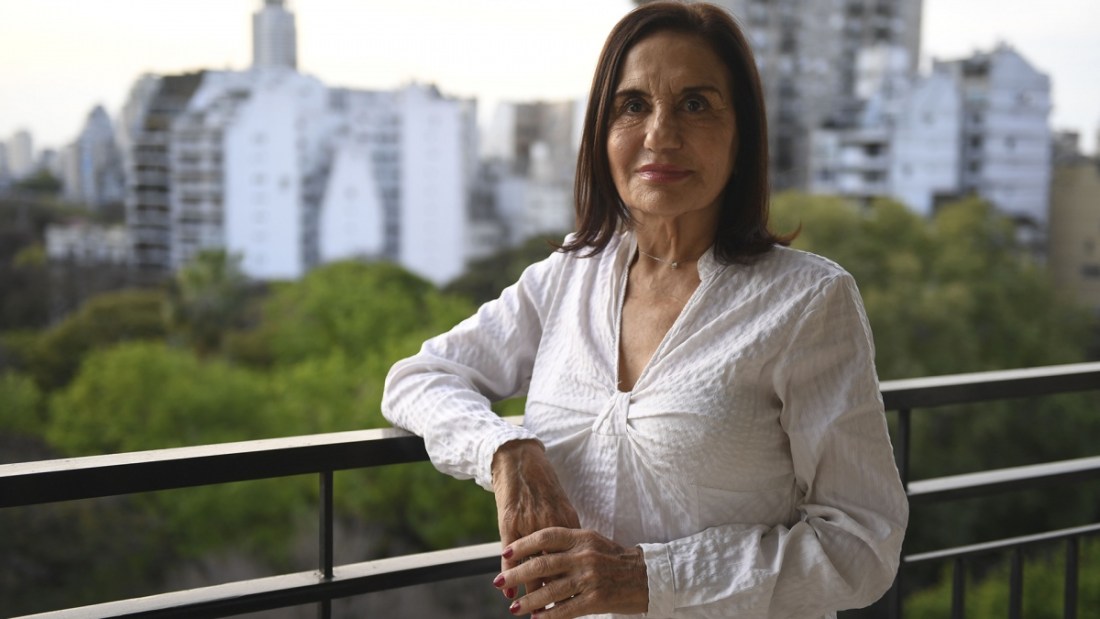
Carla Guelfenbein estudió biología en la Universidad de Essex. También estudió diseño gráfico en la Escuela de Arte St. Martin de Londres. De regreso en Chile, trabajó como directora de arte en BBDO y editora de moda en ELLE. Es autora de las novelas El revés del alma, La mujer de mi vida, El resto es silencio, Nadar desnudas, Contigo en la distancia y de varios cuentos que han aparecido en importantes revistas y antologías. Su obra ha sido traducida a 14 idiomas por las editoriales más prestigiosas de Europa. Guelfenbein es uno de los últimos fenómenos best-seller de la narrativa chilena. Su segunda novela desbancó a Dan Brown del primer puesto del ranking. Contigo en la distancia, ganó el importante premio Alfaguara, y se lanzó simultáneamente en España y Latinoamérica.
_________________________________________________
Carla Guelfenbein studied biology at Essex University. She also studied graphic design at St. Martin’s School of Art in London. Back in Chile she worked as Art director in BBDO and fashion editor at ELLE. She is the author of the novels El revés del alma, La mujer de mi Vida, El Resto Es Silencio, Nadar desnudas, Contigo en la distancia, and a number of short stories tenat have appeared in important magazines and anthologies. Her work has been translated into 14 languages by the most prestigious editorial houses in Europe. Guelfenbein is one of the last bestselling phenomenas of the Chilean narrative. Her second novel ousted Dan Brown in the top of the ranking. Contigo en la distancia, won the important Alfaguara prize, and was simultaneously launched in Spain and Latin America.
Vera Sigall, ahora de 80 años, ha vivido una vida misteriosa y ascética, alejada del foco literario. Este poderoso personaje tiene un profundo impacto en quienes la rodean: Daniel, arquitecto, vecino y amigo suyo, infeliz en su matrimonio y su carrera; Emilia, una estudiante franco-chilena que viaja a Santiago para escribir una tesis sobre la esquiva Vera; y Horacio, un aclamado poeta con quien Vera tuvo un romance tumultuoso y apasionado en su juventud. A medida que Daniel, Emilia y Horacio cuentan sus historias, reconstruyen el pasado de Vera y buscan sus propias identidades.
______________________________________
With You in the Distance — Summary
Vera Sigall, now 80 years old, has lived a mysterious, ascetic life far from the limelight of literary circles. This powerful character has a profound effect on those around her — Daniel, an architect and her neighbor and friend, unhappy in his marriage and career; Emilia, a Franco-Chilean student who travels to Santiago to write a thesis on the elusive Vera; and Horacio, an acclaimed poet with whom Vera had a tumultuous, passionate affair in her youth. As Daniel, Emilia and Horacio tell their stories, they reconstruct Vera’s past and search for their own identities.
Mi tutor de la universidad me había conseguido una beca, pero esta apenas cubría mis gastos. Por eso, con algunos ahorros, me compré una bicicleta Pashley de se-gunda mano y me ofrecí para hacer de repartidora en la verdulería del barrio. Don José, el dueño, aceptó de inmediato. Era hijo de inmigrantes españoles llegados en el Winnípeg. Nunca había vivido en España, pero conserva-ba el acento que debió heredar de sus padres. Llevaba boina, bigotes y un par de suspensores, entre los cuales emergía una gruesa panza. A la verdulería se entraba bajando tres escalones, donde un gato negro solía recostar-se. Cada mañana, después de hacer el reparto, me dirigía en mi bicicleta hacia la Biblioteca Bombal, en la calle Condell.
El primer día, una mujer delgada y menuda me abrió la puerta. Sin ser del todo anciana, llevaba un bastón y tenía el cabello cano. Apenas entré, me hizo pasar a un cuarto ocupado casi enteramente por un escritorio de caoba. La luz entraba apenas, a través de unos largos cortinones de terciopelo. Todo allí parecía haberse asentado hacía largo tiempo, y los colores y las cosas se fundían en una sola materia uniforme.
La biblioteca había sido fundada por la heredera de una gran fortuna en los años cincuenta. Buscaban reunir y rescatar textos de narradoras y poetas latinoamericanas, pero también tenían una colección de poemas y cartas de mujeres anónimas de origen sajón del siglo XIX.
-Mi nombre es Rosa Espinoza. En qué puedo ayudarle -me dijo una vez que ambas estuvimos senta-das, ella uas el escritorio atestado de libros y yo frente a ella.
Me llamó la atención su nombre. O sus padres lo habían hecho a propósito -lo que habría sido una cruel-dad- o no se habían percatado de lo que hacían.
Nada más sentarme, la señora Espinoza comenzó a hacerme una retahíla de preguntas: dirección, edad, señas de mis tutores en Francia, estudios. Asuntos de esa índole. En su anticuado computador anotaba las respuestas con lenta severidad, mientras tras sus gafas me escrutaba como si dentro de mi morral ocultara una bomba.
-¿Y qué pretende hacer aquí? -me preguntó
por fin.
Se sacó los anteojos, los cerró y, sosteniéndolos como un arma punzante, cruzó los brazos sobre la mesa. Me resultaba difícil entender lo que estaba ocurriendo. Horacio Infante me había insistido en que tan solo tenía que llegar hasta ahí y comenzar a trabajar.
-¿No lo sabe realmente?
La mujer negó con un gesto de la cabeza. Sus aros de perlas dejaban caer destellos sobre sus hombros. Iba vestida de colores claros que hacían juego con su pelo cano. Permanecí en silencio. No quería hablar del verdadero motivo que me había llevado hasta allí. Resguarda-do en mi interior, los confines a los cuales podía llegar eran ilimitados. Nombrarlo, en cambio, hubiera sido una forma de apresarlo y mutilarlo. Por eso había ideado un proyecto que me sirviera de pantalla: catalogar los papeles y archivos que Vera Sigall había donado hacía dos años y que según las averiguaciones de monsieur Roche, habían permanecido intocados.
-Quizás, antes de explicarme, quiera servirse una taza de té.
Sus ojillos rodeados de arrugas brillaron con un raro fulgor.
-Me encantaría -dije, y ella desapareció.
A través de la gruesa cortina entornada divisé las ramas desnudas de los árboles que se recortaban contra el cielo gris, formando una filigrana. Un mundo de árboles sin estrellas, murmuré. Eran las últimas palabras de Javier, el personaje principal de la primera novela de Vera Sigall.
La señora Espinoza volvió con un hombre que, tras ella, sostenía una bandeja de plata con una tetera azul grisácea y dos tazas del mismo color. El hombre dejó la bandeja sobre el escritorio, ayudó a la señora Espinoza a desembarazarse de su bastón y luego a sentarse.
-Gracias, Efraín -sonrió ella-. Efraín es el jardinero, mi chofer y el guardián de todo esto -añadió después de que él hubo desaparecido.
El aroma del té con especias llenó la estancia. La señora Espinoza lo sirvió con parsimonia.
-Está un poco caliente, tenga cuidado -hizo una pausa y luego continuó-: Ahora tal vez pueda decirme cuál es el objetivo de su visita a este lugar.
Levantó la cabeza, esperando que de mis palabras surgiera algo inesperado pero a la vez conocido, como una paloma del sombrero de un mago.
-Lo que quiero hacer… -dije, y me detuve.
-Vamos, hable.
Su voz sonaba dulce pero firme.
Apoyó la cabeza en el respaldo de su silla y fijó sus ojos desprovistos de ornamentación en los míos.
-Bueno, lo que quiero es analizar los distintos sentidos de los astros y los planetas en los escritos de Vera Sigall. Descubrir su origen. Eso a grandes rasgos. Llevo un tiempo en este estudio y no he llegado muy lejos.
No sé por qué lo hice, pero frente a esa mujer nombré por vez primera lo que me había llevado hasta ahí. Lo que me había dado la fuerza para atravesar el charco. Tenía la intuición de que había algo oculto en las estrellas de Vera Sigall. Algo que traspasaba las narraciones, los personajes y sus historias. Incluso las palabras. Intuía también que, hallándolo, encontraría algo de mí misma. Era una percepción que resultaba tan vaga e inasible que muchas veces se desvanecía. Bajé los ojos. Las manos me sudaban.
-Apenas la vi, supe que Horacio Infante estaba equivocado, y que su verdadero objetivo no era catalogar la obra de Vera Sigall. Usted no tiene cara de catalogadora. Yo no sabía abrazar a las personas. Pero añoré haber podido hacerlo.
Junto a ella, recorrí la biblioteca, un inmueble de dos pisos de estilo inglés. El primero albergaba la amplia estancia dispuesta para los estudiosos. Una vitrina con un taburete que había pertenecido a Alfonsina Storni se asomaba en un rincón. Según me explicó la señora Espinoza, Alfonsina lo llevaba con ella en sus largas caminatas por los páramos y se sentaba en él a pensar. La biblioteca se encontraba en el segundo piso. Eran tres grandes salas y en una de ellas había un gran mueble con cajones, clasificados por autora. Alcancé a distinguir a algunas: Clarice Lispector, Elena Garro, Silvina Ocampo y Alejandra Pizarnik.
Al cabo de un rato, ya estaba sentada en el primer piso frente a una de las cajas que Vera Sigall había donado a la biblioteca. Me llamó la atención un grupo de fotografías sujetas con una cinta negra. Los retratos de Vera Sigall son escasos. La prensa y los editores suelen reproducir siempre el mismo, uno en que, tras una incisiva seriedad, pareciera querer ocultar su belleza. Deshice el nudo con cuidado. Eran cinco fotografías en blanco y negro. Cuatro de ellas mostraban a personas que me resultaron desconocidas. La quinta era una fotografía de Vera junto a sus padres, Arón y Emma Sigall. Es una imagen ovalada. La madre, de rostro grueso y tosco, mira hacia la cámara con expresión preocupada, como si el destino le deparara un futuro difícil y ella con reciedumbre lo anticipara. El padre, con un traje humilde de quien está acostumbrado al trabajo, observa la cámara con determi-nación y severidad. Vera, una niña de no más de siete años, despide un aire intranquilo, misterioso.
En uno de los libros más importantes editados so-bre la obra de Vera Sigall, Benjamín Moser -su autor-puntualiza que todo lo que se refiere a sus datos biográfi-cos es ambiguo y muchas veces contradictorio. Nadie sabe a ciencia cierta cuántos años tenía cuando sus padres hu-yeron de la aldea de Chechelnik, en Ucrania, escapando de los pogromos. Según lo que él logró averiguar, llegaron a Moldavia por el río Dniester en una canoa. La exacta fecha de su arribo a Rumania y el viaje que hicieron después para llegar a Chile se pierden en una nebulosa. A lo largo de su vida, Vera se rodeó de enigmas y en las escasas entrevistas que aceptó, solía escudarse tras la misma res-puesta: «Mi gran misterio es que no tengo misterio».
Recuerdo la primera vez que leí uno de sus textos. El lenguaje mutaba en sus manos. Las palabras se reflejaban y reproducían unas a otras, como en las imágenes de los espejos cruzados, creando una sensación de desconcierto.
Dejé la fotografía sobre la mesa y cerré los ojos. Necesitaba absorber la emoción que me producía estar en el mundo de Vera Sigall. Pensé que tal vez había por fin encontrado mi lugar, entre esas paredes vetustas, entre las almas de todas esas mujeres. Allí nadie me alcanzaría. Nadie exigiría de mí lo que nunca podría darles.
Volví en mi bicicleta antes de que oscureciera. Los rayos de sol cruzaban el cielo como dardos, rebotando en mis ventanas de los altos edificios acristalados. Subía las escaleras hacia mi altillo, cuando me encontré con mis vecinos del piso nueve. Se presentaron como Juan y Franisco. Juan era alto y moreno, de modales pausados, vestía con escrupulosidad y elegancia. Francisco era bajo y for-aido, de mechas enhiestas y claras, ojos vivos, y en sus jeans gastados y en su suéter traía rezagos de pintura.
-Emilia Husson, ¿verdad? -me preguntó Juan.
.\.fe tendió una mano grande y oscura, con una amable formalidad. Yo asentí sin coger la suya. Él, leyendo quizás en mis ojos que no se trataba de un gesto de desdén, hizo caso omiso de mi falta y continuó-: Ya ves, hemos hecho nuestras averiguaciones con el conserje. Eres Emilia y vienes llegando de París.
-Bueno, no precisamente de París, vivo en Grenoble, pero para el caso supongo que da lo mismo.
Ambos sonrieron con franca simpatía.
-Hace más de un año que nadie vive en el altillo. Estábamos preocupados de quién podría llegar. Me alegro que seas tú, Emilia -dijo Juan mientras sacaba unas llaves de su bolsillo. -Esperamos verte seguido -dijo Francisco, y ambos desaparecieron tras la puerta de su departamento.
Cuando llegué a mi altillo, lavé los platos que había dejado de la cena y luego encendí mi computador. Tenía un largo mail de Jérome. Al día siguiente, partí a una de sus excursiones de montañismo. Esta vez intentaría llegar a la cima del Elbrús. Después de leerlo, le conté mi encuentro con the seńora Espinosa, el olor a polvo, la solemnidad de Efrain, el jardinero, el té aromático que mutó el orden de las cosas como un brebaje. También le conté de la fotografía de que había hallado, de sus ojos inquietos que parecían esperar algo.
My university advisor had gotten me a scholarship, but it barely covered my expenses. So, with some savings, I bought a secondhand Pashley bicycle and offered to work as a delivery girl for the neighborhood greengrocer. Don José, the owner, accepted immediately. He was the son of Spanish immigrants who had arrived on the Winnipeg. He had never lived in Spain, but he still had the accent he must have inherited from his parents. He wore a beret, a mustache, and a pair of suspenders, between which a thick belly peeked out. The greengrocer’s entrance was down three steps, where a black cat often lay. Every morning, after making my deliveries, I rode my bicycle to the Bombal Library on Condell Street.
The first day, a thin, petite woman opened the door for me. While not exactly elderly, she used a cane and had gray hair. As soon as I entered, she showed me into a room almost entirely occupied by a mahogany desk. Light filtered in, barely filtering through long velvet curtains. Everything there seemed to have settled long ago, and the colors and objects blended into a single, uniform mass.
The library had been founded in the 1950s by the heiress to a vast fortune. They sought to collect and preserve texts by Latin American women writers and poets, but they also had a collection of poems and letters by anonymous women of Anglo-Saxon origin from the 19th century.
“My name is Rosa Espinoza. How can I help you?” she said once we were both seated, she at the desk piled high with books and I across from her.
Her name caught my attention. Either her parents had chosen it on purpose—which would have been cruel—or they hadn’t realized what they were doing.
No sooner had I sat down than Mrs. Espinoza began bombarding me with questions: address, age, contact information for my guardians in France, education. Matters of that nature. She meticulously recorded my answers on her antiquated computer, while behind her glasses she scrutinized me as if I were hiding a bomb in my backpack.
“And what do you intend to do here?” she finally asked.
She took off her glasses, closed them, and, holding them like a sharp weapon, crossed her arms on the table. I found it difficult to understand what was happening. Horacio Infante had insisted that I simply had to get there and start working.
“Don’t you really know?”
The woman shook her head. Her pearl earrings shimmered on her shoulders. She was dressed in light colors that complemented her gray hair. I remained silent. I didn’t want to talk about the real reason that had brought me there. Sheltered within myself, the limits to which I could reach were boundless. To name it, however, would have been a way of imprisoning and mutilating it. That’s why I had devised a project to serve as a smokescreen: cataloging the papers and files that Vera Sigall had donated two years ago and which, according to Monsieur Roche’s investigation, had remained untouched.
“Perhaps, before I explain, you’d like to pour yourself a cup of tea.”
Her small, wrinkled eyes shone with a rare brilliance.
Vera Sigall. I thought that perhaps I had finally found my place, among those ancient walls, among the souls of all those women. There, no one could reach me. No one would demand of me what I could never give them.
I returned on my bicycle before dark. The sun’s rays crossed the sky like darts, bouncing off
the windows of the tall glass buildings. I was climbing the stairs to my loft when I ran into my neighbors from the ninth floor. They introduced themselves as Juan and Franisco. Juan was tall and dark-haired, with a measured manner, and dressed with meticulousness and elegance. Francisco was short and thin, with spiky, light-colored hair, lively eyes, and traces of paint on his worn jeans and sweater.
“Emilia Husson, right?” Juan asked me.
He extended a large, dark hand, with a polite formality. I nodded without taking his. He, perhaps reading in my eyes that it wasn’t a gesture of disdain, ignored my oversight and continued: “You see, we’ve checked with the concierge. You’re Emilia, and you’ve just arrived from Paris.”
“Well, not exactly from Paris, I live in Grenoble, but for all intents and purposes, I suppose it’s the same thing.”
They both smiled with genuine warmth.
“It’s been over a year since anyone has lived in the attic. We were worried about who might move in. I’m glad it’s you, Emilia,” said Juan as he took some keys from his pocket. “We hope to see you often,” said Francisco, and they both disappeared behind the door of their apartment.
When I got back to my attic, I washed the dishes I’d left from dinner and then turned on my computer. I had a long email from Jérôme. The next day, I left for one of his mountaineering excursions. This time I would try to reach the summit of Elbrus. After reading it, I told him about my encounter with Señora Espinosa, the smell of dust, the solemnity of Efraín, the gardener, the aromatic tea that altered the order of things like a brew. I also told him about the photograph I had found, about her restless eyes that seemed to be waiting for something.
Jaime Sarusky Miller (1931-2013), son of Jewish immigrants to Cuba, was a Cuban writer and journalist. In 1954 he traveled to Paris where he continued his university studies at the Sorbonne, where he earned his doctorate. Upon his return to Cuba in 1959, he began his professional journalistic work as editor and chief rotogravure editor of the newspaper Cuba (1965), head of the supplement and the cultural page of Granma (1967) and journalist for Bohemia (1971). He also collaborated with Lunes de Revolución, the magazine Casa de las Américas, INRA, Unión, Izvestia, Margen (France), Neue Deutsche Literatur (GDR), Nuevo Amanecer (Nicaragua). In 1965, he participated as a delegate in the International Congress of Writers held in Weimar, Germany. Since 1984, he worked as an editor for the magazine Revolución y Cultura. In 1987, he participated in the Lahti Biennial, Finland, with a text about contemporary Cuban narrative works. He was invited to give lectures on the Scandinavian community in Cuba at Stockholm University. In 1996, that year, he was invited by the Jewish Community Relations Council of San Francisco, California, to give a lecture on the Jewish community in Cuba. His work, The Adventure of the Swedes in Cuba, was presented at the Universities of Stockholm and Gothenburg. At institutions in Gothenburg and Copenhagen, he presented an overview of the Jewish community in Cuba, as he had done the previous year at institutions in New York. In 2011, the 20th Havana International Book Fair was dedicated to him.
Esta novela se basa en la realidad. William Walker (1824-1860)fue aventurero norteamericana y por unos años el presidente de Nicaragua. Se llamaba el Hombre de la Providencia.
_______________________________
This novel is based on historical events. William Walker (1824-1860) was an American adventurer, who, for several years was president of Nicaragua. He called himself the Man of Providence.
__________________________________________
Un hombre de suerte
Al tal William W. Providence lo conocí en una situación disparatada, cuando estuve en su campamento de Limón Agrio tratando de cobrarle una cuenta. Nunca antes había oído hablar de él, ni sabía nada de sus andanzas por México. Eso me lo contó el teniente Rawson después, al hacer un alto a la orilla del lago, frente al volcán, y el whisky le soltó la lengua. Sobre aquel mar plateado, mientras evocaba las hazañas propias y los incontables gestos temerarios de su jefe, Rawson parecía otro hombre, muy distinto al que entró días antes en la cantina. Yo lo observaba y detrás a los dos volcanes que emergían del islote como torres casi gemelas, y creía haber perdido toda noción del tiempo.
Hacía poco que habíamos celebrado el cumpleaños de la Abuela, y ya confirmábamos mi padre y yo que no se trataba de fantasmas, como se comentaba en la fiesta y murmuraban las comadres del pueblo. En su ranchito de Rosales, una noche sin luna, el viejo Abundio Arce creyó oír ruidos entre las matas de plátano y el corral, y aunque el silencio despejó sus temores, a la mañana siguiente comprobó desconsolado que varias gallinas y sus dos cerdos habían desaparecido. Algunos vecinos decían haber visto extraños soldados merodeando al amparo de la oscuridad, y el conductor de una de las diligencias que recorrían la Ruta del Tránsito hasta podía describirlos: atuendo estrafalario de los sombreros a las botas, piel blanca y una jerga como el inglés.
Confieso que la primera vez que nos hablaron de ellos, ni mi padre ni yo le concedimos demasiada importancia al asunto. Creímos que tales rumores venían ya cargados por excesos de la imaginación de la gente. Pero corno dice él, a los hombres nos cuesta mucho mirar el peligro de frente, y cuando por fin nos decidimos a hacerlo, ya estamos con un pie en el precipicio. Quizás por eso no quisimos ver nada anormal en el tipo que llegó aquella noche a la cantina con la mirada huidiza y una barba naciente salpicada por la lluvia. Estábamos habituados a una clientela de viajeros taciturnos y a menudo insolentes, siempre con prisa, vestidos a la buena de Dios y poco interesados en ocultar las navajas, revólveres y dagas que les abultaban la cintura o sobresalían por el pliegue de sus bolsillos.
Las Brisas del Lago era tal vez la cantina más abigarrada y pintoresca del país, y nosotros, los taberneros más discretos del mundo. Por allí, por el camino del oro, desfilaba la gente más loca, aventurera y delirante que había pisado la región desde los tiempos de la Conquista.
Por suerte o por desgracia, estábamos a mitad de camino del trayecto de la Ruta del Tránsito. Un enjambre de vapores, bergantines y clippers zarpaba regularmente de Nueva York o de Nueva Orleáns rumbo a San Juan del Este, en la costa caribeña, donde los pasajeros abordaban un bongo o un vaporcito que navegaba río arriba hasta San Ernesto, en la ribera oriental del lago. Entonces se embarcaban en naves de amplios salones y cómodos camarotes, que al cabo de unas horas la otra ribera, en el bullicioso laberinto del puerto de La Santa. Los loros y las cotorras sorprendían al viajero con sualgarabía, “Hey, California, gold” “Hey, California”, las: mujeres ofrecían canastas con mantas tejidas, petales bordados, abanicos, quesos, tamales y tortillas, entre otros artículos y objetos; aturdía a los pasajeros el griterío de cochereros, encargadores y muleros que se disputaban bolsas, baúles, y valijitas; y por fin, en los carruajes y diligencias de la Compañia del Tránsito, al trote de cuatro caballos que lucían bordas y colleras de cascabeles, emprendían el viaje hasta San Juan del Oeste -diecinueve kilómetros de huecos, polvo y canícula donde tendrían que esperar el vapor, clipper o bergantín que cubría la ruta a San Francisco. En esas horas o días, se mezclaban con los que regresaban y tenían así como un anticipo de su propio destino. En aquella turba se confundían fracasados, los que aspiraban a rehacer su vida en el este o enel sur de la Unión y los que ya no tendrían que buscar por los enriquecidos con un golpe de suerte o le audacia, vivían la fiebre del oro en una euforia permanente. Estos eran los menos. claro está, pues podían contarse con los dedos de una mano, entre Lodos los que pasaron alguna vez por la cantina.
El recién llegado vació de golpe un vaso de whisky, y acercándose a la ventana como si buscara el fresco de la noche, se pasó la mano por la frente. Era la señal convenida, sin duda, porque de inmediato entraron cuatro individuos que inmovilizaron a los escasos parroquianos levantando apenas sus rifles. El agua chorreaba todavía de sus anchos sombreros de fieltro, aunque de sus botas enfangadas sobresalían cuchillos de matarife. El hombre de la señal se acercó al mostrador y le dijo a mi padre que quería hablar a solas con él. Su acento era típico de la costa oeste, bien que se acostumbró su oído a escucharlo en el tiempo de sus andanzas por aquellos parajes. Mi padre lo miró de arriba abajo y sin decir palabra se dirigió a la puerta lateral que daba al almacén. Yo, haciéndome el distraído, los seguí.
-Hey, you!… -gritó uno de ellos acercándose-. Where are you going? Stay there!
-He’s my father–le respondí sin titubear-. What’s wrong with…?
El hombre no me dejó terminar:
-Oh, you speak English! -exclamó divertido. Y volviéndose hacia el otro–It’s ok, Mac.
Sonreí tímidamente. El hombre me dio una palmadita en el brazo.
-What’s your name, kid?
-Ricardo -dije-. Ricardo Vidal.
-Mine is Rawson. Lieutenant Rawson -precisó él-. Come on, Dick.
Cerró la puerta a sus espaldas y, mientras se quitaba el sombrero y lo sacudía, dijo que no teníamos nada que temer. Él y sus hombres eran soldados que venían de Norteamérica con un sólo propósito: liberamos de los conservadores porque ese Partido, como todos sabían, había violado los más elementales principios democráticos y ahora debía rendir cuenta de sus abusos. Pero no venía a hablar de política, sino de negocios, necesitaba-indicó con un gesto las cajas y barriles que se apilaban en un rincón- avituallar a su tropa, unos doscientos efectivos, y levantarle el ánimo con algunas garrafas de aguardiente o de whisky. ¿Siempre llueve tanto por aquí?
Eso fue todo. Los de California y Texas, y dos soldados con las escarapelas rojas del Partido Liberal en sus sombreros desteñidos, empezaron a cargar las provisiones en tres mulas: barriles de manteca y galletas, garrafas de ron y de whisky, harina…
-Bien, señor Vidal, no le quito más tiempo -dijo el teniente cuando la carga estuvo lista-. Tendré muy en cuenta sus servicios.
Mi padre lo miró fríamente.
-Son cincuenta y seis pesos, señor.
-Puede pasar· a cobrar al campamento -replicó él con una sonrisa maligna.
Miré a mi padre. Estaba rojo de cólera, el puño cerrado. Pensé en Schultz.
-Ahora mismo -dijo, disponiéndose a salir.
-¡Yo voy! –grité, dando un salto hacia la puerta. Y antes quemi padre pudiera impedírmelo, corrí detrás de los muleros que ya se perdían en la oscuridad doblados bajo el peso de la lluvia.
Fue así como lo conocí, sin poder imaginarme que iba a tenerlopegado a mí mientras durara aquella estúpida aventura. Desde lo alto de la cuesta miré hacia la cantina, un puntico en noche apenas iluminado por la luz del farol que colgaba sobre el anuncio. Después de todo, gracias a Dios que estaba vivo porque Rawson no era Schultz y esta vez ni siquiera tendría tiempo de huir. Lo había hecho años atrás no sé ni cómo, en un pueblo minero de California, cuando lo picó la fiebre del oro y estuvo trabajando en una mina a pesar de que el capataz. Sadsmile Schultz, no se cansaba de humillarlo llamándole “greaser” y cosas así. Mi padre simulaba no entenderlo hasta que un domingo, mientras bebía en la cantina del pueblo para sentirse menos solo, Schultz, bonacho como una cuba, le gritó delante de todo el mundo que se pusiera en cuatro patas y ladrara como un perro. Fue lo último que dijo en su vida. Mi padre, que nunca había matado una mosca, le cortó la yugular de un navajazo y no paró de comer hasta que estuvo en la goleta que lo llevó de San Francisco a Panamá y de Panamá a San Juan del Oeste. Sólo cuando se vio en La Victoria, la hacienda de la abuela doña Lilia, se sintió realmente seguro.
Me había rezagado y tuve que comer cuesta abajo para alcanzar a los muleros. En el llano la marcha fue haciéndose cada vez más lenta y fatigosa, con las mulas atascándose y resbalan do en los lodazales, y los hombres dando tumbos y tratando de entrar en calor a puro fuego de aguardiente.
Nos tomó casi dos horas divisar a lo lejos los primeros ranchos de Limón Agrio. El teniente respondió con una contraseña el alto de los centinelas y, cuando vine a ver; ya estaban descargando sus bestias en la casucha que servía de cocina. Algunas sombras cuchicheaban bajo los árboles. Los soldados fumaban y se pasaban de mano en mano sus canecas. Rawson se había desmontado dando órdenes y al pasar junto a mí me dijo en inglés que esperara, que iba a ver si el Presidente todavía estaba despierto. Yo me quedé pensando qué haría un hombre tan importante extraviado por aquellos parajes y en tan extraña compañía. Lo vi perderse tras el portón de la casona que alguna vez debió haber sido del patrón de la hacienda, porque a pesar de su evidente deterioro, aún conservaba el aliento de fortaleza con que su propietario la edificó.
Recostado al tronco de un aguacate esperé casi toda la no che, cabeceando y sin poder pegar los ojos bajo una densa nube de mosquitos. Sentí en el hombro la mano de un soldado y una voz que me decía en inglés que lo siguiera. Entramos al salón de la vieja residencia, el polvo y las telarañas flotando a la luz de un candil, y allí, junto a un tabique que acentuaba las penumbras y detrás de una mesa de madera, más que ver escuché la voz del hombre que me observaba desde su oscura, desconocida máscara. A su lado estaba Rawson, tieso como un palo.
-Aquí lo tiene, Presidente -dijo el teniente en inglés. Entonces se volvió hacia mí y me anunció que el coronel
William W Providence había tomado la decisión de pagarnos la cuenta tan pronto se posesionará de Granada, la capital. Además, añadió, prerrúaría generosamente mis servicios si los acompañaba en calidad de intérprete. ¿yo no sería conservador, verdad? Vi la mirada de Rawson, su mirada cómplice, y me di cuenta de que aquello no era una invitación sino una orden, aun antes de que el hombre se volviera hacia él para dar por concluido el encuentro.
-Take care of him, will you? -dijo.
Afuera me esperaba la frialdad de una mañana cenicienta gravitando sobre el ajetreo de la tropa, que por lo visto había recibido la orden de levantar el campamento. Dos columnas de conservadores armados habían sido detectadas cerca y al parecer se dirigían al puerto lacustre de La Santa. Pude tomar una jícara de café, y antes de que despuntara el sol ya estaba nuestro camino, alejándome cada vez más de mi casa. Aunque Rawson me trataba con amabilidad, y nunca volvió a mencionar la entrevista, yo sabía que era su rehén. “Take care of him” quería decir en realidad, “hazte cargo de este tipo y no lo pierda de vista”. Pensaba en eso mientras contemplaba los volcanes a torres de vigilia del lago, y él, después de rellenar de la cantimplora, me contaba entre carcajadas cómo ha aprendido “this fucking language” persiguiendo bandidos y “señoritas” en México, “bello país, by the way”, requisando ganado, cobrando impuestos y domando indias cerreras. Eran tiempos inolvidables y ésos se los debía al Presidente, cuando todavía no lo era, sino coronel. Lo había conocido en San Francisco cuando todavía no era jefe, jefe militar, sino periodista, y ya soñaba con colonizar esas tierras salvajes de la frontera con México. Y aquel día de abril habían vuelto a encontrarse en su oficina o del Industrial Adviser, como la primera vez, pero ahora frente a un mapa de la América Central. Para empezar, la República de Granada, mi país, aparecía enmarcada en un círculo rojo, una presa remota, pero al alcance de la mano, según le explicaba el propio Providence apuntando con una pluma de de ganso hacia la pared. Un territorio rico en recursos naturales, una situación geográfica envidiable -alzó la pluma, uniendo deun gesto las costas del Atlántico y del Pacífico-, y una población que los recibiría con los brazos abiertos. Brian Coleman, un hombre de toda su confianza con el que sostenía una amistad íntima, acababa de regresar de allí y lo sabía muy bien. Con cien hombres armados y dispuestos a todo, la campaña duraría a lo sumo tres semanas. Tal vez menos.
-Do you follow me?
Se quedó mirándolo. Rawson no sabía qué decirle, en realidad no podía ocultar su sorpresa. Había ido a platicar sobre el nuevo proyecto de colonización de Sonora y la Baja California, que Providence, dos años antes, uniera en un solo estado, del que no tardó en proclamarse presidente. Y ahora, así, de pronto…
Presidente, en Sonora y la Baja California, bajo sus órdenes, pasé los mejores momentos de mi vida. Tuvimos que abandonar el país, es cie1to, en una retirada táctica, pero siempre pensando en volver. Le confieso que todavía siento la nostalgia de esas tierras, que fueron nuestras y lo serían de nuevo si… Pero ante todo soy un soldado a sus órdenes, de manera que si usted dice México otra vez, Panamá, Cuba, Nicaragua, Presidente, it’s ok with me. Just tell me when.
Todavía recordaba cómo el coronel, con la mano extendida, se había acercado a él exclamando que no esperaba menos de un valiente. Yahora, a miles de kilómetros de distancia, miraba hacia el lago como si quisiera rescatar, en los destellos de aquella error me superlicie bmñida, la fascinación del momento preciso que lo había conducido a estas tierras. De pronto, para mi sorpresa, se volvió hacia mí y me puso una mano en el hombro.
-Listen, you’re a smart kid –dijo–. Jugando limpio, saldrás ganando…Tú y tu familia. Así que no tricks, ¿ok?
Claro que lo sabía. Rawson tenía una manera de hacerse entender con frases que eran al mismo tiempo amenazadoras y corteses. No parecía un simple aventurero. La Ruta del Tránsi to estaba llena de ese tipo de gente. No sé si consideró mi silen cio como un asentimiento pero él pareció darse por satisfecho. Sacudió la cantimplora, comprobó haciendo una mueca que no quedaba una gota de whisky y, con una voz de mando, se puso de pie.
En dos minutos, toda la tropa estaba de nuevo en movimiento. Avanzábamos por una zona boscosa, de pinos esmirriados y matorrales polvorientos, cuando se escuchó a poca distancia el chirrido de una carreta de bueyes. Rawson dio el alto levantando la mano, indicó a sus lugartenientes que lo siguieran y des apareció tras los pinos. Poco después se oyeron una voz de protesta y una maldición en inglés. Al reanudarse los chirridos, Rawson salió del bosque. Lo seguía una carreta que cargaba carne y cueros y que guiaba uno de sus jinetes. La columna emprendió nuevamente la marcha sin hacer el menor comenta Rawson se me acercó. En su voz creí notar un tono de disculpa ode cinismo, tal vez.
La guerra es la guerra, muchacho –dijo–. Si quieres triunfar,tienes que comer. Ysi quieres come…
No pude contenerme.
-Tienes que robar o reprimir o…
Él se encogió ligeramente de hombros.
-Le propuse comprarle la carga –dijo–. No aceptó.
A pesar de conocer muy bien ese tipo de compras, no dije nada.Tenía que andar como sobre una cuerda floja si quería salir ileso del lío en que me habían metido. Precisamente por ello no grité de alegría cuando reconocí al viejo Nicasio, arriero de la zona a quien yo había visto a menudo en la cantina con su hilera de mulos.
Horas antes tuve la corazonada de que andaba con suerte. Atrás quedaron los pinares y avanzábamos por una suave planicie de hierbas ralas y arbustos dispersos. Ese paisaje de pronto me resultó familiar. Quizás habíamos dado un rodeo y nos acercábamos por el oeste a Colina, que en toda la región era el pueblo más próximo al nuestro. Efectivamente. Poco después del mediodía cruzábamos el riachuelo que da acceso al caserío, con sus ranchos y sus casitas de caña y adobe y la pequeñaiglesia en cuyo campanario se alza una cruz de hierro que, se gún los vecinos, sirve de pararrayos en los días de tormenta.
No tardamos en averiguar que los conservadores se habían desplazado esa misma mañana de Rivas, donde vivaqueaba el grueso de su ejército, hacia La Santa. Rawson mandó a uno de sus hombres a avisar al Presidente, que por lo visto aguardaba sus noticias en las afueras del pueblo. En la placita, a un costa do de la iglesia, los hombres habían ido formando, y entretanto Rawson, a gritos, mezclando improperios en inglés y español, parecía estar preparándose para asaltar un cuartel. Era evidente que deseaba impresionar a los vecinos, muchos de los cuales se habían encerrado en sus casas, en tanto otros observaban indiferentes el trajín de una tropa tan abigarrada que cada vez le resultaba más difícil mantener la formación, pese a sus esfuerzos y a los de sus improvisados sargentos. Fue entonces cuando vi a Nicasio arreando sus mulas por un costado de la plaza, ajeno al tumulto, la algarabía y todo lo que no fuera el paso cansino de su recua. Iba a pasar junto a mí de un momento a otro. Miré hacia el teniente, embargado completamente en sus maniobras, y yo, que trataba de dominar mi nerviosismo, murmuré:
-Psht… Nicasio… Nicasio…
El viejo volvió la cabeza hacia mí, sorprendido. Yo hice un leve gesto con la mano.
-Soy Ricardo, el hijo de Eulogio Vidal, el cantinero de Ro sales. ¿Me recuerda?
Se quedó mirándome, inmóvil, y farfulló algo entre dientes. De pronto, noté en sus ojitos rasgados y en la comisura de sus labios un amago de sonrisa. Me había reconocido vagamente.
-Avísele a mi padre que estoy retenido -murmuré, casi deletreando las palabras-. A mi padre, Eulogio Vidal. Dígale que vamos para La Santa… ¿Me entiende?
Él miró a un lado y al otro, receloso, movió ligeramente la cabeza, me dio la espalda y arreó de nuevo sus mulas. En el centro de la plaza, incansable, Rawson seguía vociferando inútilmente.
__________________________________________
I met William W. Providence in a strange situation, when I was at his camp in Limón Agrio trying to collect a bill. I had never heard of him before, nor did I know anything about his adventures in Mexico. Lieutenant Rawson told me this later, as we stopped on the lakeshore, facing the volcano, and the whiskey loosened his tongue. Over that silvery sea, as he recalled his own exploits and the countless reckless gestures of his leader, Rawson seemed like a complete man, very different from the one who had entered the saloon days before. I watched him and, behind him, the two volcanoes that emerged from the islet like almost twin towers, and I thought I’d lost all sense of time. We had recently celebrated Grandmother’s birthday, and my father and I were already confirming that these weren’t ghosts, as was being discussed at the party and the town gossips whispered. At his little ranch in Rosales, one moonless night, old Abundio Arce thought he heard noises among the banana trees and the corral, and although the silence allayed his fears, the next morning he discovered, disconsolate, that several chickens and his two pigs had disappeared. Some neighbors reported seeing strange soldiers lurking under cover of darkness, and the driver of one of the stagecoaches traveling along the Ruta del Tránsito could even describe them: outlandish attire from hats to boots, white skin, and a slang reminiscent of English.
I confess that the first time we heard about them, neither my father nor I attached much importance to the matter. We believed such rumors were already loaded with the excesses of people’s imagination. But as he says, it’s hard for us men to face danger head-on, and when we finally decide to do so, we’re already with one foot on the precipice. Perhaps that’s why we didn’t want to see anything unusual in the man who arrived at the bar that night, his gaze shifty and his beard flecked by the rain. We were accustomed to a clientele of taciturn and often insolent travelers, always in a hurry, dressed in a pinch, and with little interest in hiding the knives, revolvers, and daggers that bulged at their waists or protruded from the folds of their pockets.
Las Brisas del Lago was perhaps the most colorful and picturesque bar in the country, and we were the most discreet innkeepers in the world. Through there, along the gold road, paraded the craziest, most adventurous, and most delirious people who had set foot in the region since the days of the Conquest.
Fortunately or unfortunately, we were halfway along the Ruta del Tránsito. A swarm of steamers, brigantines, and clippers regularly set sail from New York or New Orleans for San Juan del Este, on the Caribbean coast, where passengers boarded a bongo or small steamer that sailed upriver to San Ernesto, on the eastern shore of the lake. They then boarded vessels with spacious lounges and comfortable cabins, which a few hours later reached the other shore, in the bustling labyrinth of La Santa harbor. Parrots and parakeets surprised travelers with their clamor, “Hey, California, gold!” “Hey, California!” Women offered baskets with woven blankets, embroidered petals, fans, cheeses, tamales, and tortillas, among other items and objects; the passengers were stunned by the shouts of coachmen, foremen, and mule drivers vying for bags, trunks, and suitcases; and finally, in the carriages and stagecoaches of the Company of Transit, at the trot of four horses that wore borders and collars of bells, they began the journey to San Juan del Oeste – nineteen kilometers of holes, dust and heat where they would have to wait for the steamer, clipper or brig that covered the route to San Francisco. In those hours or days, they mingled with those returning, thus getting a taste of their own destiny. Mixed in with that crowd were losers, those who aspired to rebuild their lives in the east or south of the Union, and those who would no longer have to seek out those who had become rich through a stroke of luck or daring. They lived the gold rush in a state of constant euphoria. These were the minority, of course, since they could be counted on the fingers of one hand, among all those who had ever passed through the saloon.
The newcomer drained a glass of whiskey in one fell swoop, and approaching the window as if seeking the cool night air, he rubbed his hand across his forehead. It was undoubtedly the agreed-upon signal, because four individuals immediately entered, immobilizing the few patrons by barely raising their rifles. Water was still dripping from their wide-brimmed felt hats, although butcher’s knives protruded from their muddy boots. The signalman approached the counter and told my father he wanted to speak with him alone. His accent was typical of the West Coast, although his ears had grown accustomed to hearing it during his travels through those parts. My father looked him up and down and without saying a word headed for the side door leading to the warehouse. I, pretending to be distracted, followed them.
“Hey, you!” one of them yelled as he approached. “Where are you going? Stay there!”
“He’s my father,” I answered without hesitation. “What’s wrong with…?”
The man didn’t let me finish:
“Oh, you speak English!” he exclaimed, amused. And turning to the other, “It’s okay, Mac.”
I smiled shyly. The man patted me on the arm.
“What’s your name, kid?”
” Ricardo,” I said. “Ricardo Vidal.”
“Mine is Rawson. Lieutenant Rawson,” he clarified. “Come on, Dick.”
He closed the door behind him and, taking off his hat and shaking it, said we had nothing to fear. He and his men were soldiers who had come from America with one purpose: to free us from the Conservatives because that Party, as everyone knew, had violated the most basic democratic principles and now had to be held accountable for its abuses. But he didn’t come to talk politics, but business. He needed”—he gestured to the crates and barrels stacked in a corner—”to provision his troops, some two hundred strong, and lift their spirits with a few flagons of brandy or whiskey. Does it always rain so much around here?”
That was all. The Californians and Texans, and two soldiers with the red rosettes of the Liberal Party on their ragged hats, began loading the provisions onto three mules: barrels of butter and biscuits, jugs of rum and whiskey, flour…
“Good, Mr. Vidal, I won’t take up any more of your time,” said the lieutenant when the load was ready. “I’ll take your services seriously.”
My father looked at him coldly.
“That’s fifty-six pesos, sir.”
“You can go collect at the camp,” he replied with a malicious smile.
I looked at my father. He was red with anger, his fist clenched. I thought of Schultz.
“Right now,” he said, preparing to leave.
“I’m going!” I shouted, leaping toward the door. And before my father could stop me, I ran after the mule drivers who were already disappearing into the darkness, bent under the weight of the rain.
That’s how I met him, never imagining that I’d have him glued to me for the duration of that stupid adventure. From the top of the hill, I looked toward the saloon, a tiny dot in the night, barely illuminated by the light from the lantern hanging over the sign. After all, thank God he was alive because Rawson wasn’t Schultz, and this time he wouldn’t even have time to flee. He’d done it years before, I don’t know how, in a mining town in California, when he’d been bitten by gold fever and had to work in a mine even though the foreman, Sadsmile Schultz, never tired of humiliating him by calling him a “greaser” and things like that. My father pretended not to understand until one Sunday, while he was drinking in the town saloon to feel less lonely, Schultz, as good-natured as a skunk, yelled at him in front of everyone to get on all fours and bark like a dog. It was the last thing he ever said. My father, who had never killed a fly, cut his jugular vein with a knife and didn’t stop to eat until he was on the schooner that took him from San Francisco to Panama and from Panama to San Juan del Oeste. Only when he found himself at La Victoria, Grandma Doña Lilia’s hacienda, did he feel truly safe.
I had fallen behind and had to eat downhill to catch up with the muleteers. On the plains, the march was It became increasingly slow and tiring, with the mules getting stuck and slipping in the mud, and the men stumbling and trying to keep warm by the fire of aguardiente.
It took us almost two hours to make out the first huts of Limón Agrio in the distance. The lieutenant responded with a password to the sentries’ halt, and when I came to look, they were already unloading their beasts in the shack that served as a kitchen. A few shadows whispered under the trees. The soldiers smoked and passed their cans around. Rawson had dismounted, giving orders, and as he passed me, he told me in English to wait, that he was going to see if the President was still awake. I was left wondering what such an important man would do, lost in those parts and in such strange company. I watched him disappear behind the gate of the mansion that must have once belonged to the hacienda’s owner, because despite its obvious deterioration, it still retained the air of strength with which its owner had built it.
Leaning against the trunk of an avocado tree, I waited almost the entire night, nodding and unable to close my eyes under a dense cloud of mosquitoes. I felt a soldier’s hand on my shoulder and a voice telling me in English to follow him. We entered the living room of the old residence, dust and cobwebs floating in the light of a candle, and there, next to a partition that accentuated the darkness and behind a wooden table, I heard more than saw the voice of the man watching me from behind his dark, unfamiliar mask. Beside him stood Rawson, stiff as a stick.
“Here you are, President,” the lieutenant said in English. Then he turned to me and announced that Colonel William W. Providence had decided to pay our bill as soon as he took possession of Granada, the capital. Furthermore, he added, he would generously honor my services if I accompanied them as an interpreter. I wasn’t a Conservative, was I? I saw Rawson’s look, his knowing look, and I realized that this wasn’t an invitation but an order, even before the man turned to him to conclude the meeting.
“Take care of him, will you?” he said.
Outside, the coldness of an ashen morning awaited me, hanging over the hustle and bustle of the troops, who had apparently received the order to break camp. Two columns of armed Conservatives had been spotted nearby and were apparently heading for the lake port of La Santa. I was able to have a cup of coffee, and before dawn, I was on my way, moving further and further away from my house. Although Rawson treated me kindly, and never mentioned the interview again, I knew I was his hostage. Take care of him, actually saying, “Take care of this guy and don’t lose sight of him.” I was thinking about that while I gazed at the volcanoes like watchtowers across the lake, and he, after refilling his canteen, told me, laughing, how he learned “this fucking language” chasing bandits and “señorítas” in Mexico, “beautiful country, by the way,” requisitioning cattle, collecting taxes, and taming wild Indians. Those were unforgettable times, and I owed them to the President, when he wasn’t yet a President, but a colonel. I had met him in San Francisco when he wasn’t yet a chief, a military leader, but a journalist, and he was already dreaming of colonizing those wild lands on the border with Mexico. And that April day they had met again in his office, or at the Industrial Adviser, like the first time, but now in front of a map of Central America. To begin with, the Republic of Grenada, my country, appeared framed in a red circle, a remote prey, but within reach. Hand in hand, as Providence himself explained, pointing a goose feather toward the wall. A territory rich in natural resources, an enviable geographical location—he raised the feather, joining the Atlantic and Pacific coasts with a gesture—and a population that would welcome them with open arms. Brian Coleman, a man he trusted completely and with whom he maintained a close friendship, had just returned from there and knew it very well. With one hundred armed men ready for anything, the campaign would last at most three weeks. Maybe less.
“Do you follow me?”
He stared at him. Rawson didn’t know what to say; in fact, he couldn’t hide his surprise. He had come to talk about the new colonization project in Sonora and Baja California, which Providence, two years earlier, had united into a single state, of which he promptly declared himself president. And now, like this, all of a sudden…
“Do you know what I told him, kid?” he smiled, taking another sip of whiskey, while a band flew overhead.
“Mr. President, in Sonora and Baja California, under your command, I spent the best moments of my life. We had to abandon the country, it’s true, in a tactical retreat, but always thinking about returning. I confess that I still feel nostalgia for those lands, which were ours and would be again if… But above all, I am a soldier under your command, so if you say Mexico again, Panama, Cuba, Nicaragua, Mr. President, it’s okay with me. Just tell me when.
He still remembered how the colonel, with his hand outstretched, had approached him, exclaiming that he expected nothing less from a brave man. Now, thousands of miles away, he looked toward the lake as if he wanted to recapture, in the glimmering light of that enormous, saturated surface, the fascination of the precise moment that had brought him to these lands. Suddenly, to my surprise, he turned toward me and placed a hand on my shoulder. “Listen, you’re a smart kid,” he said. “Playing fair, you’ll win… You and your family. So, no tricks, okay?”
Of course I knew it. Rawson had a way of making himself understood with phrases that were simultaneously threatening and courteous. He didn’t seem like a simple adventurer. The Transit Route was full of that kind of people. I don’t know if he took my silence as assent, but he seemed satisfied. He shook his canteen, checked with a grimace that there was not a drop of whiskey left, and, with a commanding voice, stood up.
Within two minutes, the entire troop was on the move again. We were advancing through a wooded area of stunted pines and dusty scrub when the squeal of an oxcart was heard in the distance. Rawson halted with a raised hand, signaled to his lieutenants to follow him, and disappeared behind the pines. Shortly afterward, a voice of protest and a curse in English were heard. As the screeching resumed, Rawson emerged from the woods. He was followed by a wagon loaded with meat and hides, driven by one of his riders. The column He set off again without making the slightest comment. Wilson approached me. I thought I detected a tone of discretion or cynicism in his voice, perhaps.
“War is war, boy,” he said. “If you want to You have to eat. And if you want to eat.
You can’t contain me.
“You have to steal or put them down or…”
He shrugged slightly.
“I offered to buy the load,” he said. “He didn’t accept.”
Despite being very familiar with this type of purchase, I didn’t say anything. I had to walk a tightrope if I wanted to escape unscathed from the mess they’d gotten me into. Precisely for this reason, I didn’t shout with joy when I recognized old Nicasio, a local muleteer whom I had often seen at the cantina with his string of mules.
Hours before, I had a feeling I was in luck. The pine forests were left behind, and we were advancing across a gentle plain of sparse grass and scattered bushes. That landscape suddenly seemed familiar to me. Perhaps we had made a detour and were approaching Colina from the west, which in the entire region was the nearest town to ours. Indeed. Shortly after noon, we crossed the stream that leads to the hamlet, with its shacks and small houses made of cane and adobe, and the small church, whose bell tower holds an iron cross that, according to the locals, serves as a lightning rod on stormy days.
We soon learned that the Conservatives had moved that same morning from Rivas, where the bulk of their army was bivouacked, toward La Santa. Rawson sent one of his men to warn the President, who was apparently awaiting news on the outskirts of town. In the small square, to one side of the church, the men had been forming up, and meanwhile Rawson, shouting, mixing insults in English and Spanish, seemed to be preparing to storm a barracks. It was evident that he wanted to impress the locals, many of whom had shut themselves in their houses, while others watched indifferently the bustle of the troops so motley that each time. It was harder for him to maintain formation, despite his own efforts and those of his improvised sergeants. It was then that I saw Nicasio driving his mules along one side of the plaza, oblivious to the tumult, the hubbub, and everything except the weary gait of his pack. He was about to pass me at any moment. I looked toward the lieutenant, completely absorbed in his maneuvers, and I, trying to control my nervousness, muttered:
“Psht… Nicasio… Nicasio…”
The old man turned his head toward me, surprised. I made a slight gesture with my hand.
“I’m Ricardo, the son of Eulogio Vidal, the bartender at Rosales. Do you remember me?”
He stared at me, motionless, and mumbled something under his breath. Suddenly, I noticed in his slanted eyes and at the corner of his lips the hint of a smile. He had vaguely recognized me.
“Tell my father I’m being held,” I murmured, almost spelling out the words. “Tell my father, Eulogio Vidal. Tell him we’re going to La Santa… Do you understand?”
He looked from side to side, suspicious, shook his head slightly, turned his back on me, and snorted again. In the center of the plaza, Rawson continued to shout uselessly.
Ricardo Lindo en San Salvador, El Salvador, en 1947 en el seno de una familia judía de poetas e intelectuales, la trayectoria del escritor, poeta y crítico de arte Ricardo Lindo incluye una amplia lista de libros que revelan sus variados intereses y habilidades literarias. Entre sus poemarios publicados se destacan los libros Jardines, Rara Avis, Las monedas bajo la lluvia y El señor de la casa del tiempo. Sus trabajos de crítica incluyen un estudio poético sobre la pintura de El Salvador y el libro El esplendor de la arcilla, cuyo tema es el teatro popular en El Salvador. Y en narrativa, entre otros, Cuentos del mar, una colección de cuentos infantiles, y Lo que dice el Río Lempa, el libro de relatos mencionado antes, publicado en 1990 y Tierra, 1998.Toda esta obra en conjunción con su labor editorial al frente de la revista ARS, Segunda Época, en la cual viene fungiendo como director desde 1991. Murió en 2016.
____________________________________________
Ricardo Lindo in San Salvador, El Salvador, in 1947 within a Jewish family of poets and intellectuals, the career of the writer, poet and art critic Ricardo Lindo includes an extensive list of books that reveal his varied interests and literary skills. Among his published collections of poems, the books Gardens, Rara Avis, The Coins Under the Rain and The Lord of the House of Time stand out. His works of criticism include a poetic study on the painting of El Salvador and the book The Splendor of Clay, whose theme is popular theater in El Salvador. And in narrative, among others, Cuentos del mar, a collection of children’s stories, and Lo que dice el Río Lempa, the book of stories mentioned above, published in 1990 and Tierra, 1998. All this work in conjunction with his editorial work at front of the ARS magazine, Segunda Época, in which he has served as director since 1991. He died in 2016.
_____________________________________
“Tierra”
Aún reservaba la tierra otras bondades al curandero Otzilén. Se acercaban a él los muchachos deseosos de avanzar en la senda del conocimiento, y él habló entonces de las esferas que giran en la bóveda celeste, de la vida que late en las profundidades del Océano, y acabado el capítulo de la ciencia, habló también de su infancia en Tulum, y de los peces voladores, y de las ciudades sagradas, abandonadas en la selva desde siglos atrás por una inexplicable decisión de las deidades En sus conversaciones, don Pablo se refirió a la Gehena. Otzilén preguntó qué era eso. El cura se remontó a los tiempos antiguos, partiendo de los presentes. Habló de la ciudadela de Jerusalem, a cuyos pies se abría un pequeño valle calcinado por el sol, el valle de Hebrón. En ese lugar, en otro tiempo, se quemaban niños ante Moloch, dios pagano y abyecto, y era llamado Gehena el pequeñito valle, que más tarde, símbolo del Infierno, creció en la imaginación de los cristianos hasta convertirse en un magno espacio intemporal de suplicios por fuego. Y se extendió Pablo de Alcántara, hablando de la ciudadela amurallada de Jerusalem (que quiere decir “Id en paz”) de sus torres cercando las gigantes puertas, cada una recibiendo su nombre según los tratantes que comerciaban en el barrio aledaño: Puerta de los Caballos, Puerta de las Ovejas, y también por la cercanía de las fuentes de agua, materia preciosa en tierras desérticas. Puerta de las Aguas. Habló de los templos de la Ciudad Santa, cuyas agujas y cuyas cúpulas sobrepasaban la altura de los altos muros que la rodeaban, y eran visibles desde lejos. La iglesia hecha erigir por la madre de Constantino sobre la tumba de Cristo, la Gran Sinagoga, noble casa cuadrada con una estrella de seis puntas en la frente, los minaretes de las mezquitas, levantando sus espigados cuellos como camellos episcopales, el Domo de la Roca, cúpula cubierta de láminas de oro. Pero la pequefta Gehena no era nada comparable al formidable precipicio que se cortaba a pique al pie del Alcázar de Segovia, una de cuyas torres estaba destinada a despeñadero de judíos. Otzilén, ante la vivacidad de las descripciones de Jerusalem, preguntó a don Pablo si la había visitado. No era ese el caso. Pero era el clérigo de familia de judíos conversos, y muchas veces oyó a sus mayores relatos sobre la Ciudad Santa, y participó, de niño en las lamentaciones que acompañaban las efemérides de la destrucción del Templo, en cuartos cubiertos de ceniza. El cristianismo de don Pablo era, no obstante, verdadero, y no fingido como el de otros de sus congéneres, que optaron por cambiar de religión para permanecer en España.
Y recordó don Pablo el edicto de expulsión, que forzaba a los hebreos a cambiar de fe o a partir, y a Isaac Abarbanel, tesorero de sus Católicas Majestades, rogando a los Reyes revocar el edicto, y ofreciendo treinta mil monedas de plata por cada israelita. El Gran Inquisidor Torquemada arrojó al suelo su crucifijo pectoral, gritando al Rey Fernando que, si ellos vendieron al Cristo por treinta monedas, vendiese él ese crucifijo por las treinta mil monedas de Abarbanel. Y doscientos cincuenta mil judíos debieron abandonar la tierra que fuera de sus padres, de sus abuelos, de los abuelos de sus abuelos, sin llevarse más pertenencias de las que cupieran en un saco de viaje. Los que quedaron, fueron llamados marranos, y tal fue el caso de los padres de don Pablo. Pero a cuantos de sus parientes vio partir a un futuro incierto, como arrancándose el alma, a cuantos vecinos, y aunque él era muy pequeño entonces, supo que la vida había cambiado para siempre. Su padre, médico de oficio, debió dejar su profesión. Su madre horneaba pan, así que pusieron una pequeña panadería, para vender doradas hogazas a los cristianos, y en secreto, en la noche anterior a la pascua hebrea, ella cocinó los panes rituales, para que, en alcobas escondidas, a la luz de los cirios, los hijos de Abraham diesen gracias a Jehová por la inmensidad de sus dones. Ocasionalmente, uno de los asistentes a la fiesta judía dejaba de ir. Era víctima de una denuncia anónima, y su cuerpo, convertido en antorcha viviente, alumbraba con llamas siniestras, acompañadas de gritos desgarradores, la Gran Plaza. Pero él creyó en Jesús, y supo deslindar a la Inquisición de las palabras deEvangelio, y asumió voluntariamente las aguas del bautismo, y más tarde, tendido por tierra, recibió el carisma que lo consagraba sacerdote del crucificado. Tan distinto era, al cabo, un Dios perdonador de aquel otro, justiciero implacable, que tronaba en tantas páginas del Antiguo Testamento.
Añadió unas palabras de amor, don Pablo, para la seca Extremadura de su infancia, y se refirió a un bosque de otoño, al Norte, donde iba con sus padres y hermanos arecoger nueces, y recordó a su padre recitando, en hebreo, los versos de Shlomó Ibn Gabirol:
Con tinta de sus lluvias y rocíos,
con pluma de sus rayos luminosos,
y la mano de sus nubes, escribió el Otoño
en el jardín una carta de púrpura y añil.
Calló el clérigo. Otzilén, con cierto soma, le hizo ver que los españoles dieron el nombre de aftil al jiquilite, la planta de tinte azul. A punto seguido, le preguntó por qué eran odiados los de su raza. Don Pablo de Alcántara dijo que ningún grupo humano acepta que otro tengadiferentes costumbres, y que ve como defecto cuanto es, simplemente, distinto. Pero hizo mención de numerosos congéneres suyos que se enriquecieron a costa de otros, de préstamos cargados de intereses sanguinarios, que eran cobrados sin piedad, de avaros banqueros desfalleciendo de hambre sobre cofres de oro, en casas miserables donde se ahorraba hasta la sal.
Otzilén lo interrogó de nuevo. ¿Se llamaba, el cura, como decía? El nada respondió. Frunció el ceño, mirando a las nubes, y a ellas volvió también la mirada el hechicero. Después musitó don Pablo: -Shlomó, es decir, Salomón. Y tomó su camino, caviloso. Supo así, Otzilén, la razón de la simpatía que despertaba el clérigo en los indígenas, y viceversa. Él era, como ellos, el hijo de una raza maldita, despertándose en la Gehena de los males y las zozobras.
*****
The land still reserved other benefits for the healer Otzilén. The boys eager to advance on the path of knowledge approached him, and he then spoke of the spheres that rotate in the celestial vault, of the life that beats in the depths of the Ocean, and finishing the chapter on science, he also spoke of his childhood in Tulum, and of the flying fish, and of the sacred cities, abandoned in the jungle centuries ago by an inexplicable decision of the deities. And he talked about that. In his conversations, Don Pablo referred to Gehenna. Otzilén asked what it was that. The priest went back to ancient times, starting from the present. He spoke of the citadel of Jerusalem, at the foot of which opened a small valley scorched by the sun, the valley of Hebron. In that place, in another time, children were burned before Moloch, a pagan and abject god, and the little valley was called Gehenna, which later, a symbol of Hell, grew in the imagination of Christians until it became a great timeless space of torture by fire. And Pablo de Alcántara expanded, speaking of the walled citadel of Jerusalem (which means “Go in peace”) of its towers surrounding the giant gates, each one receiving its name according to the traders who traded in the surrounding neighborhood: Gate of the Horses, Puerta de las Ovejas, and also because of the proximity of water sources, a precious material in desert lands. Gate of the Waters. He spoke of the temples of the Holy City, whose spiers and domes surpassed the height of the high walls that surrounded it, and were visible from afar. The church built by Constantine’s mother over the tomb of Christ, the Great Synagogue, a noble square house with a six-pointed star on its forehead, the minarets of the mosques, raising their lanky necks like episcopal camels, the Dome of the Rock, dome covered in gold sheets. But little Gehenna was nothing comparable to the formidable precipice that was cut at the foot of the Alcázar of Segovia, one of whose towers was destined as a cliff for Jews. Otzilén, given the vividness of the descriptions of Jerusalem, asked Don Pablo if he had visited it. That was not the case. But he was a clergyman from a family of converted Jews, and many times he heard his elders tell stories about the Holy City, and he participated, as a child, in the lamentations that accompanied the anniversaries of the destruction of the Temple, in rooms covered in ashes. Don Pablo’s Christianity was, however, true, and not feigned like that of other of his peers, who chose to change their religion to remain in Spain. os adoratorios de tiniebla, adonde entraban únicamente los sacerdotes, y se extendió el hechicero refiriendo prodigios de Tenochtitlán, ciudad en la que estuvo unos días solo, treinta y tantos años atrás. Mas recordaba al Rey avanzando en la canoa real por los canales de la ciudad espléndida, como un sol erizado no de llamas, sino de plumas preciosas, entretejidas con arte insuperable.
Uno de los jóvenes hacía, en eso, una pregunta, y él contestaba con una respuesta que le sorprendía a él mismo. Él sabía cosas que él ignoraba que supiera. Más tarde se lo contó a don Pablo, y éste subrayó sus palabras con otras del Talmud:
-He aprendido de mis maestros. He aprendido de mis compañeros de estudio.
Pero he aprendido mucho más de mis discípulos.
Otzilén dejó pasar una pausa reflexiva y añadió:
-El haber sido amado por muchos me ha enseñado mucho. Y lo primero, a refrenar mi lengua. Si uno ama sólo a alguien o a algo, ofende fácilmente a los demás sin fijarse. Si uno ama al Amor, aprende que la mejor ciencia de la vida es dejar ser a los demás. y rió el brujo, y su risa volvió a ser cristalina, un manantial surgiendo de una peña. Don Pablo sonrió. Ese hechicero al que viera con temor, con respeto, con admiración, pero siempre con afecto, era hoy un poco su discípulo, o no el de él, sino el de una sabiduría heredada de un Dios severo, duro, que impuso diez leyes de piedra sobre un monte cuarenta veces santo.
—Otzilén no soy yo quien te habla. Otzilén, soy el monte Hebrón, y la nieve sobre el Hebrón. Otzilén, la tierra es apenas nuestra infancia, y la vida toda, que no puede ser sin amor. es únicamente ese Amor al cual vamos.
– ¿y tú quién eres, Pablo de Alcántara?
-Soy la oveja de cien buenos pastores. ¿Y tú?
-Yo soy mi raza, y ambos pensaron que sus respuestas eran intercambiables.
_____________________________________
The land still reserved other benefits for the healer Otzilén. Boys approached him, eager to advance on the path of knowledge, and he then spoke of the spheres that rotate in the celestial vault, of the life that beats in the depths of the Ocean, and finishing the chapter on science, he also spoke of his childhood in Tulum , and the flying fish, and the sacred cities, abandoned in the jungle centuries ago by an inexplicable decision of the deities. In his conversations, Don Pablo referred to Gehenna. Otzilén asked what it was that. The priest went back to ancient times, starting from the present. He spoke of the citadel of Jerusalem, at the foot of which opened a small valley scorched by the sun, the valley of Hebron. In that place, in another time, children were burned before Moloch, a pagan and abject god, and the little valley was called Gehenna, which later, a symbol of Hell, grew in the imagination of Christians until it became a great timeless space of torture by fire. And Pablo de Alcántara expanded, speaking of the walled citadel of Jerusalem (which means “Go in peace”) of its towers surrounding the giant gates, each one receiving its name according to the traders who traded in the surrounding neighborhood: Gate of the Horses, Puerta de las Ovejas, and also because of the proximity of water sources, a precious material in desert lands. Gate of the Waters. He spoke of the temples of the Holy City, whose spiers and domes surpassed the height of the high walls that surrounded it, and were visible from afar. The church built by Constantine’s mother over the tomb of Christ, the Great Synagogue, a noble square house with a six-pointed star on its forehead, the minarets of the mosques, raising their lanky necks like episcopal camels, the Dome of the Rock, dome covered in gold sheets. But little Gehenna was nothing comparable to the formidable precipice that was cut at the foot of the Alcázar of Segovia, one of whose towers was destined as a cliff for Jews. Otzilén, given the vividness of the descriptions of Jerusalem, asked Don Pablo if he had visited it. That was not the case. But he was a clergyman from a family of converted Jews, and many times he heard his elders tell stories about the Holy City, and he participated, as a child, in the lamentations that accompanied the anniversaries of the destruction of the Temple, in rooms covered in ashes. Don Pablo’s Christianity was, however, true, and not feigned like that of other of his peers, who chose to change their religion to remain in Spain.
And Don Pablo remembered the edict of expulsion, which forced the Hebrews to change their faith or leave, and Isaac Abarbanel, treasurer of their Catholic Majesties, begging the Kings to revoke the edict, and offering thirty thousand silver coins for each Israelite. The Grand Inquisitor Torquemada threw his pectoral crucifix to the ground, shouting to King Ferdinand that, if they sold Christ for thirty coins, he should sell that crucifix for Abarbanel’s thirty thousand coins. And two hundred and fifty thousand Jews had to leave the land that belonged to their parents, their grandparents, their grandparents’ grandparents, without taking more belongings than would fit in a traveling bag. Those who remained were called Marranos, and such was the case of Don Pablo’s parents. But he saw how many of his relatives he saw leaving for an uncertain future, as if tearing out his soul, how many neighbors, and although he was very small then, he knew that life had changed forever. His father, a doctor by trade, had to leave his profession. Her mother baked bread, so they started a small bakery, to sell golden loaves to Christians, and secretly, on the night before the Hebrew Passover, she baked the ritual breads, so that, in hidden alcoves, in the light of the candles, the children of Abraham gave thanks to Jehovah for the immensity of his gifts. Occasionally, one of the Jewish partygoers would stop coming. He was the victim of an anonymous complaint, and his body, turned into a living torch, illuminated the Great Plaza with sinister flames, accompanied by heartbreaking screams.
But he believed in Jesus and knew how to separate the Inquisition from the words of Gospel, and voluntarily assumed the waters of baptism, and later, lying by earth, received the charisma that consecrated him priest of the crucified. So different, after all, was a forgiving God from that other, implacable justice, who thundered in so many pages of the Old Testament. He added a few words of love, Don Pablo, for the dry Extremadura of his childhood, and he referred to an autumn forest, to the North, where he went with his parents and brothers to collecting nuts, and he remembered his father reciting, in Hebrew, the verses of Shlomo Ibn Gabirol:
With ink from its rains and dews,
with a feather of its luminous rays,
and the hand of its clouds, wrote Autumn,
in the garden a letter of purple and indigo.
The clergyman was silent. Otzilén, with a certain soma, made him see that the Spaniards gave the aphtil name for jiquilite, the blue dye plant. Next, he asked him why his race was hated. Don Pablo de Alcántara said that no human group accepts that another has different customs, and that sees as a defect everything that is simply different. But He mentioned numerous of his fellow men who became rich at the expense of others, of loans loaded with bloody interest, which were collected without mercy, of avaricious bankers fainting from hunger over chests of gold, in miserable houses where even salt was saved.
Otzilén questioned him again. Was his name, the priest, as he said? He answered nothing. He frowned, looking at the clouds, and the man turned his gaze to them too, magician. Then Don Pablo whispered: -Shlomó, that is, Solomon. And he took his way, brooding Thus, Otzilén, he knew the reason for the sympathy that the cleric aroused in the indigenous, and vice versa. He was, like them, the son of a cursed race, awakening in the Gehenna of evils and distress.
Max Dickmann nació de padres judíos inmigrantes en 1902 en Buenos Aires, Fue escritor argentino, periodista, novelista. Premio literario municipal por Madre América, 1935; Gente,1936; Los Frutos amargos, novela, 1942; Esta generación perdida, novela, 1945; También traducciones de John dos Passos, William Faulkner, PC Wren, Elmer Rice y Robert Sherwood. Miembro: Sociedad Argentina de Escritores, PEN Club.
_______________________________________
Max Dickmann; was born of Jewish immigrant parents in Buenos Aires in. 1902. He was an Argentine writer, journalist, novelist. He won the Buenos Aires Municipal Literary Prize for Madre América, 1935; Gente, 1936; Los frutos amargos, novel, 1942; La generación perdida, novel, 1945; Also, he translated books by John dos Passos, William Faulkner, Elmer Rice and Robert Sherwood. He was a Member of Argentine Society of Writers and PEN Club.
A diferencia de la gran mayoría de los escritores judíos de la Argentina de las décadas de 1930 a 1940, Max Dickmann no escribió para un público judío. Sus novelas fueron éxitos de ventas en todo el país y fueron populares entre todo tipo de persona. Lo que no se sabe es dónde aprendió tanto sobre la gente del río.
Unlike most Jewish writers in Argentina in the ’30s to ’40s, Max Dickmann did not write for a Jewish audience. His novels were best sellers throughout the country, popular with all sorts of people. What is not known is where he learned so much about the people of the river.
De:/From: Max Dickmann. Madre América. Buenos Aires: Santiago Rueda Editores, 1935.
“La carta”
Gabriel hizo un esfuerzo y consiguió sacar una pierna del barro que la aprisionaba, mientras la otra se le hundía con burbujeó, hasta la rodilla. El agua borrosa recalentaba por el sol de mediodía. Un alto juncal cerraba el horizonte a los pocos metros. El Mabensí flotaba cerca con proa llena de roncos finos, largos, verdosos, con un trajo oblicuo de la hoz en el extremo.
Esa hoz de juncos con crostas de barro, había costado a Gabriel toda una mañana de penoso chapoteo, haciendo desesperados esfuerzos para no hundirse, tirando de sus piernas como si quisiera sacarlas de un cepo, mientras las burbujas de barro se adhirieron a su piel, como sanguijuelas. Temía la espalda ardiendo, después de tres horas de sol, de un sol que brillaba en el agua como en un espejo, en medio de un silencio hosco a todo ruido, como si las manos de silencio ahogaron las gargantas del sonido.
Chapoteó en el agua que se arremolinaba en torno a sus piernas y alcanzó la borda del Mabensí. Cayeron adentro con ruido sordo, la hoz y el ancho cinturón de cuero. Bajo el casco, el agua era fresca. Lentamente, como para no sorprender el lanchón semidormido. Gabriel fue izándose hasta quedar sentado en la borda. Ahora sus pies flotaban como dos informes trozos de barro desleído, que hubieron ido subiendo desde el lecho del río, tiñendo el agua de concéntricos círculos terrosos. Hubo un rápido sonido acuoso y en torno al Mebensí flotaron luminosas burbujas.
Adentro, las tablas estaban recalentadas y el hilo de agua que se colaba en el fondo se secaba con rapidez. Gabriel fue remando lentamente agua en contra, bordeando el juncal y los matorrales de la costa baja, sobre la que caía el follaje verdinegro de un arbolado. A lo lejos, entre cielo y hoja, había de tortora espadaña y paja colorada.
La proa levantaba del Mabensí resbala en el agua sin ruido. Atrás, el remo gorgoteaba y la onda se dilataba hasta meterse en los pajonales. Hubo un corto aleteo y el silencio se rasgó en trizas cuando cantó el mirlo negro. El eco tableteó a lo lejos. Después todo volvió a ser un solo y blando zumbido en el que se oía el roncar de las moscas bravas en el agua de las charcas.
El riacho fue ensanchándose entre barrancas, en las que los juncos habían sido cortados a ras del agua.
El verde jugoso de la cortadera con sus hojas aserradas brillaba como gotas de esmeralda.
Gabriel enfiló el Mabensí en dirección de una barrera de álamos entre los que florecían algunas viejas sauces. La barranca se abría en un angosto tajo en la desembocadura de un arroyo.
En el agua quieta los tallos tiernos del irupé rodeaban las inmensas bandejas vere amarillentas y su flor carmesí. La sombra del follaje caía entre lampos de sol sobre la cabeza y los brazos desnudos de Gabriel.
Sintió sobre la piel un leve frescor, un honda bienestar que penetraba todo el cuerpo, como si de la sombra fuera descolgándose un invisible chorro de agua fresca,
Mascó con avidez, tirando en el fondo del lanchón, las anchas rebanadas de pan y carne que le había preparadp Camelia muy de mañana, rezongando porque él le decía siempre que era poco y que ella quería matarlo de hambre. Cerró los ojos y esperó que la rama que tapaba a un rayo de sol volviera a echarle sombra en la cara,
Camelia rajaba el largo trozo de pan con un cuchillo sin filo. Las manotas afanadas y la ancha boca llena de palabrotas y de sarcásticos risitas. “Para llevarte todo esto más que volvás a comer…¿o es que creés que voy a estarme preparándote estas viandas?…¡No, señor”…, y se plantaba frente a él con las manos en las caderas y los ojos bizcos tratando de mirar en la misma dirección. Alrededor de ella, los perros olisqueaban batiendo la cola. Por la angosta puerta de la cocina entraba el fresco de la mañana con el piar de los pollos y el cloque de las gallinas. Gabriel agarraba a Camila por los brazos y le daba afectuosos estrujones, que ella recibía con íntima satisfacción, que se empeñaba en disimular con todo género de protestas. Entonces el pan volvía a dividirse en rebanadas y gruesas lonjas de carne fría de la noche anterior cubrían la miga de manchas sanguinolentas. “Tres, cuatro, cinco; ¿te alcanzará con esto? – preguntaba Camelia con voz amable—y si no te alcanza a aguantarte el hambre, vení a comer aquí en lugar de andar vagando por los arroyos como si buscara a alguien” …
La cara de Gabriel volvió a quedar en sombra. Arriba dos hojas tiernas brillaban como cristales verdosos sobre los que cayera el sol. El resto del follaje se inmovilizaba en una quietud paralitica bajo el cielo pálido. Los sauces pendían sobre el agua vigilados por los álamos erguidos. El Mabensí se contorneó pesadamente y el agua chapoteó entre su borda y la barranca. La marea socavaba la tierra desarraigando los juncos que no encontraban suficiente apoyo en el barro arenoso, e iban poco a poco acostándose como gajos sin fuerza.
Gabriel se sentó y afirmó el bichero en unas estacas que había entre los yuyos. Le pareció oír el chapoteo de un remo y el arrastre de una chalana en el agua quita de algún arroyo. Venía el sonido como dando tumbos en la maleza y caía como un eco ahogado y lejano. Por instantes el silencio lo cubría todo; un silencio de espera, que palpitaba como un inmenso cuerpo vivo agazapado entre los árboles o suspendido de los doseles de ramas que bajaban hasta el agua. De ese lado la sombra se algareaba hasta la mitad del riacho; del otro la barraca se resacaba el sol. Contra esa pared de tierra, ramas y follaje, rebotaba ahora un largo silbado el golpeteo rítmico de un remo. Entre los juncos asomó la proa de una chalana cargada de troncos y estacones. Gabriel la reconoció en seguida. Silbó con los dedos en la boca y gritó parándose en la popa del Mabensí.
–¡Nazareno!
–¿Quién va? – preguntó una voz muy carca.
La embarcación desembocó en el riacho a espaldas de Gabriel. En pocas remadas se colocó en el medio del cauce y fue arrimándose hasta el Mabensí.
Gabriel vio que Nazareno tenía el sombrero echado sobre los ojos.
–Buena sombra te buscas, para esconderte – dijo el otro cuando se acercó.
–Y vos qué haces al sol, ¿secarte más todavía? – sonrió Gabriel
–¿Cómo qué hago? Me lo preguntas todavía, no ves que llevo estos carajos…
–¿Adónde?
–Adonde iba a ser sino a lo de Basualdo.
Nazareno se sentó en el fondo de la chalana. Al quitarse el sombrero la frente apareció húmeda y negra de pelos, como pegados por el sudor. Se olisqueó las manos y encongiendo la nariz: –estos cercos de thuya dejan un olor a resina que voltea – dijo, al tiempo que des un repasador a cuadros y se ponía a comer unos tomates grandes como puños.
Gabriel lo vio tragar durante un rato. Después sacó una botella y limpiando el gollete con el puño de la camisa, bebió haciendo gorgoritos. La nuez subía bajaba por el por el cuello flaco a cada trago. Volvió a pasarle el brazo por la boca y alargando la botella a Gabriel, dijo:
–Tres tragos solamente; mira que todo lo que tengo para hoy.
Gabriel puso un dedo donde le señaló Nazareno. Tragó un vino agrio y tibio que le volvió hasta la garganta en largos eructos.
–Has cortado bastante—dijo Nazareno, apuntando a los juncos–, pero muy amarillos.
–Es lo mejor que había; pero con cuatro días de sol estarán como ls buenos. Para cortar negro y verde hay que meterse en el barro hasta la barriga.
–Che—-¿y te da algo el tío por los manojos?
–Si saca veinte centavos por cada uno…. Qué querés que me dé… –encogiéndose de hombros.
-Que te dure la vocación, entonces –sonrió el otro—Y ya que de juncos se trata, dime Gabrielito… –bajando la voz– ¿no te ha dado la bizca nada a mí, eh?’’’ –y guiñó un ojo.
Gabriel hizo como que buscaba algo en los bolsillos del pantalón, después en el fondo del Mabensí y hasta debajo del asiento. Nazareno lo miraba moverse, suspenso el aliento y los ojos fijos en los manos,
–Nada, che…; hoy no se acordaba de vos—respondió Gabriel con sorna.
–¡Puñetas! ¿Y para eso revisas todo y me tienes esperando? –protestó el otro, acostándose en el fondo de la canoa.
Gabriel largó una carcajada y le tiró un manotón. Nazareno se tapó los ojos con el chamburgo y fingió dormir. Después de un rato dijo:
–Crece con ganas hoy este puñetero ríó…, y yo debo ir aguas arriba.
–Trajiste hoy “Es mi ilusión”, porque esperabas carta de Camelia.
–Que me lleve el diablo si he penado de ella.que con ésta me parece que voy volando… y cargo menos, dos cosas dignas de tenerse en cuenta.
–Sí … es mejor que el Mabensí –reflexionó Gabriel.
****************
Nazareno agarró el remo y sentándose en la popa empujó la chalana río abajo. Gabriel lo siguió.
*******************
Camelia miraba comer a Gabriel, apoyando en un de los troncos de la enramada. Tenía la cabeza inclinaba sobre un hombro y decía en voz muy baja.
–Se te ha perdido en el fondo de un bolsillo o en el Mabensí, y vos decís no lo has visto.
Gabriel sacudió la cabeza a la izquierda a la derecha. Tenía la boca llena de unos fideos duros y fritos, que apenas podía tragar.
–No, no te creo. Ya me diste lo mismo muchas veces—protestó—ella.
Hubo una nueva negativa y el ruido de una cuchara que caía en el plato.
–¿Hay otra cosa mejor, para comer? –preguntó –con la boca llena…Estos fideos de ayer son incomibles.
–¿Y qué ha de haber? Lo de siempre y un poco menos—respondió Camelia sin moverse.
–Si querés yo te escribo una carta una carta en lugar de Nazareno, y le dejó un lugar abajo la firma para el beso.
Camelia pateó con fastidio.
–Si yo sé que lo tenés guardada.
–Ya no se acuerda más de vos, anda detrás de otra, así que para qué te va a escribir.
–¡Sos un cochino si decís eso de Nazareno!
Los ojos gris plomo de la muchacha se pusieron horriblemente bizcos.
–¿Querés que lo sigamos un día para saber adónde va?
–A él no le sigue nadie… Y además no sé con qué lo vas a seguir. Con el Mabensí, acaso –ríó ella, despectiva.
–Con la chalana “Es mi ilusión”. –Gabriel guiñó un ojo maliciosamente.
Gabriel struggled and managed to remove one leg from the mud that imprisoned it, while the other sank with bubbling, up to his knee. The muddy water was warmed by the midday sun. A tall reed bed closed off the horizon a few meters away. The Mabensí floated nearby with a prow full of thin, long, greenish logs, with an sharp growth of reeds around the end of the boat.
That growth of reeds with mud crusts had cost Gabriel a whole morning of painful splashing, making desperate efforts not to sink, pulling at his legs, as if he wanted to free them from a trap, while the mud bubbled up. They adhered to his skin, like leeches. He feared is back would be sun burnt, after three hours of sun, a sun that shone on the water as in a mirror, in the midst of a sullen quiet, as if the hands of silence drowned out the throats of sound.
He splashed through the water that swirled around his legs and reached the side of the boat called the Mabensí. The sickle and the wide leather belt fell inside with a thud. Under the hull, the water was cool. Slowly, so as not to surprise the half-asleep boat. Gabriel hoisted himself up until he was sitting on the rail. Now his feet floated like two shapeless pieces of melted mud that had risen from the river bed, coloring the water with concentric earthy circles. There was a quick watery sound and luminous bubbles floated around the Mebensi.
Inside, the boards were overheated and the trickle of water that seeped into the bottom dried quickly. Gabriel slowly rowed against the water, skirting the reeds and bushes of the low coast, on which the black-green foliage of a tree fell. In the distance, between sky and leaf, there were cattails and red straw.
The raised bow of the Mabensí slips in the water without sound. Behind, the oar gurgled and the wave expanded until it entered the grasslands. There was a short flutter of wings and the silence was torn to shreds as the blackbird sang. The echo clattered in the distance. Then everything returned to a single, soft hum in which you could hear the snoring of wild flies in the water of the ponds.
The stream widened to a ravine, in which the reeds had been cut flush to the water.
The juicy green of the Cortadera with its serrated leaves shone like emerald drops.
Gabriel headed the Mabensí in the direction of a barrier of poplars among which some old willows were flowering. The ravine opened into a narrow gap at the mouth of a stream.
In the still water the tender stems of the irupé surrounded the immense yellowish vere trays and their crimson flower. The shadow of the foliage fell between patches of sun on Gabriel’s head and bare arms.
He felt a slight freshness on his skin, a deep well-being that penetrated his entire body, as if an invisible stream of fresh water were coming down from the shadow.
He munched greedily, throwing into the bottom of the boat the wide slices of bread and meat that Camelia had prepared for him very early in the morning, grumbling because he always told her that it was not enough and that she wanted to starve him to death. He closed his eyes and waited for the branch that was blocking a ray of sunlight to cast shadows on his face again.
Camelia was slicing the long piece of bread with a dull knife. Her busy hands and the wide mouth full of dirty words and sarcastic giggles. “Taking all of this away, it would be better if you eat here….or do you think I’m going on preparing these meals for you?…No, sir”…, and she stood in front of him with her hands on her hips and her cross-eyed eyes trying to look in the same direction. Around her, the dogs sniffed, wagging their tails. The cool morning air came in through the narrow kitchen door with the chirping of the chickens and the cluck of the hens. Gabriel grabbed Camila by the arms and gave her affectionate squeezes, which she received with intimate satisfaction, which she insisted on hiding with all kinds of protests. Then the bread was divided into slices again, and thick slices of last night’s cold meat covered the crumbs with bloody stains. “Three four five; Will this be enough for you? – Camelia asked in a kind voice – and if you can’t hold back your hunger, come eat here instead of wandering through the streams as if you were looking for someone…”
Gabriel’s face fell into the shadows again. Above, two tender leaves shone like greenish crystals on which the sun had fallen. The rest of the foliage froze in paralytic stillness under the pale sky. The willows hung over the water, watched by the upright poplars. The Mabensí rolled heavily, and the water splashed between its gunwale and the gulley. The tide undermined the earth, uprooting the reeds that did not find sufficient support in the sandy mud, and little by little they lay down like weak branches.
Gabriel sat down and secured the boat hook to some stakes between the weeds. He thought he heard the splash of an oar and the dragging of a barge in the shallow water of some stream. The sound came as if stumbling through the undergrowth and fell like a muffled and distant echo. For moments silence covered everything; a silence of waiting, which palpitated like an immense living body crouched among the trees or suspended from the canopies of branches that descended to the water. On that side the shadow stretched to the middle of the stream; on the other, the hut basked in the sun. Against that wall of earth, branches and foliage, a long whistling sound now bounced, the rhythmic tapping of an oar. The bow of a barge loaded with logs and stakes appeared among the reeds. Gabriel recognized it immediately. He whistled with his fingers in his mouth and shouted, standing on the stern of the Mabensí.
–Nazareno!
–Who’s there? – asked a very deep voice.
The boat passed into the stream, behind Gabriel. In a few strokes, he placed himself in the middle of the channel and moved closer to the Mabensí.
Gabriel saw that Nazareno had his hat pulled over his eyes.
“You’re looking for a good shadow to hide yourself in,” he said as the a other fellow came near.
–And what are you doing in the sun, drying yourself even more? – smilingly Gabriel
–What am I doing? You’re asking me; don’t you see that I’m carrying this shit…
–Where to?
–Where, if not to Basualdo’s.
Nazareno sat at the bottom of the barge. When he took off his hat, his forehead appeared wet and with black hair, stuck together by sweat. He sniffed his hands and crunched up his nose: “These thuya hedges leave a smell of resin that is overwhelming,” he said, while he took out a checkered cloth and began to eat some tomatoes as big as fists.
Gabriel watched him swallow for a while. After taking out a bottle and wiping the neck with the cuff of his shirt, Nazareno drank, gurgling. His Adam’s apple went up and down his thin neck with each swallow. He put his arm over his mouth again and, handing the bottle to Gabriel, said:
–Three swigs only; Look at everything I have today.
Gabriel put a finger where Nazareno pointed. He swallowed the warm, sour wine that returned to his throat in long belches.
”You have cut enough,” said Nazareno, pointing to the reeds, “but very yellow.”
–It’s the best there was; but with four days of sun they will be just as good. To cut black and green you have to get up to your belly in the mud.
–Che–and does the old man give you something for the bunches? –
-If he gives me twenty cents for each one… –What do you want him to give me … –shrugging his shoulders.
–“May your efforts work out, then,” the other smiled. “And since it’s about reeds, tell me Gabrielito…” – lowering his voice – “hasn’t the cross-eyed given you something at all, eh?” – and he winked. eye.
Gabriel pretended to be looking for something in his pants pockets, then in the hull of the Mabensí and even under the seat. Nazareno watched him move, his breath suspended and his eyes fixed on his hands,
–Nothing, che…; “She didn’t remember you today,” Gabriel replied sarcastically.
–Damn! And that’s why you check everything and keep me waiting? –the other protested, lying down in the bottom of the boat.
Gabriel laughed sarcastically and shook his hand. Nazareno covered his eyes with his hat and pretended to sleep. After a while he said
–This bloody river is growing with spirit today…, and I have to go upstream.
–You brought “It’s My Dream” today because you were expecting a letter from Camelia.
–The devil take me if I have thought of her. With this one it seems like I’m flying… and it weighs less, two things worth taking into account.
–Yes… it is better than the Mabensí –Gabriel reflected.
****************
Nazareno grabbed the oar and, sitting on the stern, pushed the barge down the river. Gabriel followed him.
******************
Camelia watched Gabriel eat, leaning on one of the trunks of the bower. He had his head tilted on one shoulder and said in a very low voice.
–It was lost at the bottom of a pocket or in the Mabensí, and you say you haven’t seen it.
Gabriel shook his head left and right. My mouth was full of hard, fried noodles that I could barely swallow.
–No, I don’t believe you. “You already gave me the same bull many times,” she protested.
There was another rejection and the sound of a spoon falling onto the plate.
–Is there anything better to eat? –he asked –with his mouth full…These noodles from yesterday are inedible.
–What should there be? The usual and a little less—Camelia responded without moving.
–If you want, I’ll write you a letter, a letter in Nazarene’s place, and leave a place below for the signature for the kiss.
Camelia stamped her feet in annoyance.
–Yes, I know that you have it.
–He doesn’t remember you anymore, he’s after someone else, so why would he write to you.
–You’re a pig if you say that about the Nazarene!
The girl’s lead gray eyes went horribly cross-eyed.
–Do you want us to follow him one day to find out where he is going?
–With the barge “It’s My Dream.” –Gabriel winked maliciously.
–No one catches him… And besides, I don’t know what you’re going to catch him with. With the Mabensí, perhaps –-he laughed, contemptuously.
Noemí Cohen es escritora argentina (Buenos Aires, 1956). Reside en Madrid. Es abogada y escritora. Exiliada en México durante la dictadura militar. Tras su retorno a Argentina, sus actividades profesionales la llevaron a vivir varios años en Washington. Asesoró en temas sociales a diversos gobiernos, fue funcionaria de la Organización de Estados Americanos (OEA( y consultora de la Organización Internacional del Trabajo (OIT), y del Banco Interamericano de Desarrollo (BID). Fue directora de Relaciones Internacionales de la Biblioteca Nacional de Argentina entre 2003 y 2006. Fue columnista del periódico Miradas al Sur. Noemí Cohen publicado las novelas Mientras la luz se va (2005), La esperanza que no alcanza (201) y Los celebrantes (2022).
____________________________________
Noemí Cohen is an Argentine writer (Buenos Aires, 1956). She lives in Madrid. She is a lawyer and writer. She was exiled in Mexico during the military dictatorship. After her return to Argentina, her professional activities led her to spend several years in Washington. She advised various governments on social issues, was an official of the Organization of American States (OAS) and a consultant to the International Labor Organization (ILO), and the Inter-American Development Bank (IDB). She was director of International Relations of the National Library of Argentina between 2003 and 2006. She was a columnist for the newspaper Miradas al Sur. Noemí Cohen has published the novels Mientras la luz se va (2005), La esperanza que no alcanza (2013) and Los celebrantes (2022)
De/From: Cuando la luz se va. Buenos Aires: Editorial Losada, 2005.
“La partida”
La tarde en que Sara le dijo que el día siguiente irían juntos a una tienda en el otro extremo de la Ciudad Vieja a comprar telas para bordar, supo que su madre había aceptado el pedido del primo Jaime; una vida cambiaría y nada podía decir. Desde pequeña, escuchó historias y pareceres sobre el primo que vivía solo desde hacía quince años en la Argentina, un lugar lejano cuyo nombre no podía pronunciar y en donde, se decía en la familia, nadie era pobre. También se decía que el primo era buen mozo, rubio y trabajador; pero era imposible que ella recordara algo, apenas tenía unos meses de haber nacido, cuando él que tenía veinte años, dejó la casa familiar y se fue primero a Francia y luego a Sudamérica.
Sara era viuda y tenía cinco hijos, tres de ellos mujeres, todos nacidos en Alepo. Ella era de Alejandría, había podido ir a la escuela, donde aprendió a leer y escribir y hasta algo de francés. En cambio, sus hijas, un poco por la costumbre del lugar y otro poco por la miseria, no sabían leer y sólo los varones fueron al colegio y hablaban francés. Las chicas se dedicaron a ayudarla en la casa y Elena además aprendió a tallar bronce; hacía armoniosos diseños que luego eran vendidas por el primo Faud en su bazar, al lado de la Sinagoga del shuk.
Cuando Elena comenzó a trabajar, cincelaba en bronce dibujos con símbolos judíos; tenía un gran sentido de la proporción de las formas, pero era analfabeta, y aún no se le había ocurrido que podía dejar de serlo. Años después, ese deseo se transformaría en una obsesión, pero eso es otra historia. En cambio, conoció muy pronto los símbolos de los otros porque los dueños de los bazares vecinos al de Faud pidieron piezas decoradas con diseños islámicos y las representaciones cristianas para vender a cualquier que pasara por las calles del shuk y no sólo a los judíos que salían de la sinagoga.
Al decorar las piezas de bronce con tan diferentes signos, aprendió el sentido de la armonía, supo el arte de combinar las formas, aprendizaje que le permitiría transitar la vida con la placidez de quien sabe que todo es mutable, aceptó algunas virtudes que hacen bueno a quien las tiene. Aunque también aprendió, viendo a su tío Faud negociar con los otros comerciantes, que no siempre eran virtuosas las relaciones con los extraños y menos aún en cuestiones de comercio.
Sara había criado a sus hijos en la tradición y la ética sefardíes; les enseñó a ser solidarios y honestos, a distinguir lo puro de lo impuro, lo limpio de lo no limpio y, por sobre todas las cosas, les habló de la recta razón que guía las acciones de una buena persona. Principios sencillos de aplicar, ayudan distinguir el bien del mal en las cosas concretas de la vida diaria y hacían previsibles las conductas. Transmitió esa herencia de verdades absolutas como si fuera parte de la naturaleza, como los hábitos de comida o higiene; no comer cerdo o no mezclar la carne y leche, descansar por el sábado, lavarse las manos antes de comer y, para las mujeres, ir todos los viernes al hamman; era el orden de su mundo y no se le ocurría que sus hijos lo pensaran distinto.
Al día siguiente de anuncio de la aceptación del pedido de mano, madre e hija comenzaron las caminatas por los barrios de la Ciudad Vieja donde vivían los judíos; en sus callecitas transitadas por camellos y mulas, pobladas por los gritos de los vendedores de habas, de aceitunas o de menta fresca, por las cinco llamados sonidos del almuecín que salían de los minaretes, únicas construcciones sobresalientes en esa laberíntica ciudadela. Subían y bajaban por esos paisajes angostos y polvorientos, debían conseguir todo lo necesario para prepara el ajuar y organizar la partida de Alepo. Elena no sabía que habría de viajar a un mundo tan distinto del suyo. “Alepo, La Blanche”, le decían los franceses a la ciudad, tal vez por sus casas blancas con balcones de piedras talladas en estilo andaluz, o tal vez por vestigios de un nombre que significaba de leche en arameo, herencia de una leyenda que señala a ese sitio como el lugar donde detuvo a ese sitio como el lugar donde se detuvo Abraham para alimentar a su rebaño o tal vez la otra, que cuenta sobre los antiguos de la
La primera salida fue para la casa de Marcos, el hermano mayor de Jaime, a buscar el giro postal enviado desde la Argentina. Les convidaron un té con hojas de menta, muy azucarada, propiciatorio de las dulzuras que le vendrían a la pequeña, según dijeron los parientes, quienes, a pesar de su pobreza, también habían preparado una bandeja de trufas, un manjar de lujo guardado en el sótano para una ocasión que mereciera celebrarse con tal exquisitez. Entre bendiciones y vaticinios de una prole numerosa de hijos varones, aconsejaron a su madre dónde comprar mejor las telas y objetos diversos que serían para el ajuar
Una mañana salieron temprano para ir hasta la avenida principal; en la tienda de un primo segundo compraron la seda blanca para hacer tres camisones y una bata, seda de color curdo para otro, una pieza de lino blanco para confeccionar seis juegos de sábanas y cuatro manteles, lino muy fino color salmón para dos camisones, muchos metros de puntilla blanca, y una pieza color natural de encaje de Bruselas. Otro día fueron hasta el shuk, para ir al negocio de otro primo, donde compraron tres alfombras. A Elena, la que más le gustó fue una que además del tradicional borde de diseños geométricos multicolores sobre un fondo marrón, tenía un centro de rombos recortados en azul y rojo oscuro. Era la más cara y también la que le parecía más linda; pensó en ponerla arriba de un diván de su futura casa. Con las otras dos, cubriría los colchones en los dormitorios; aún no sabía que en el otro lado del mundo las alfombras eran sólo usadas en el piso. Esa alfombra que tanto le gustó tendría el extraño destino trashumante de algunos objetos y sería llevada de ciudad en ciudad, con la impronta de algo portador de buena suerte.
La salida más importante fue ir a la joyería. Deslumbrada, encargó dos anillos de oro, uno con un rubí y el otro con una aguamarina y los aros haciendo juego. Eligió también una pulsera de oro con un ancho broche central en el que se unían cadenas muy finitas y donde se podían agregar otras más que quedaban sostenidas por ese centro. Esa pulsera sería su adorno permanente y fascinaría años después a sus nietas. La verían condimentar las comidas mientras ese oro en movimiento parecería un llamado a la gloria de los sabores inminentes. Como a toda mujer oriental, a Elena le gustaban los brillos y si eran joyas más aún, pero dada la pobreza en la que vivía, sólo le era posible mirarlas en las vitrinas de los negocios, donde quedaban petrificadas como un niño hambriento ante una vidriera de dulces. Con el transcurrir de la vida, su deseo se realizaba con frecuencia, pero las vitrinas de las joyerías le siguieron produciendo siempre ese mismo efecto de encantamiento. Ese día fue distinto, eligió a su gusto mientras sonreía pensado en el ruidito de sus pendientes y en el efecto del brillo en medio de su pelo rojo. Mientras, recordaba los dichos de las mujeres de su familia: si un hombre quiere a su mujer debe regalarle joyas, sobre todo oros, muchos oros, porque él es el protector contra los males. Le gustaba repetir para llamar a la buena suerte: Tocando oro y mirando la luna”.
En cuatro semanas, debía tomar el vapor hacia Marsella, desde donde embarcaría hacia la Argentina. Ese nombre era un sonido sin significado; en cambio, la intrigaba Jaime. Pensaba en él todo el tiempo mientras bordaba las prendas del ajuar disfrutando del rumor de la costura y del contacto del encaje y la seda en sus manos jóvenes estropeadas por el cincel, aún torpes para los trabajos más delicados.
Por la tarde, las mujeres de la familia y las vecinas sacaban sus sillas bajas al patio de la casa grande; repitiendo gestos y dichos que habían visto en sus madres y sus abuelas, se reunían alrededor de la novia para ayudarle en la costura del ajuar. Ella cosía, acompañada en silencio las risas y cuchicheos mientras trataba de encontrarle un rostro a su futuro marido de quien no tenía siquiera una foto. Sentía una mezcla de nostalgia anticipada y alivio; ya no iba a tener tardes de algarabía como ésas, pero se iba a casar con un hombre rico que la esperaba para cuidarla y darle todo lo necesario. El amor llegaba después, repetían desde siempre los dichos familiares, sentencia inapelable para consolar a las niñas ante las bodas arregladas con desconocidos y el miedo de la soledad prematura
No sabía nada de hombres, pero desde pequeña aprendió que el deber de la mujer era cuidar a su marido, cocinarle y darle hijos varones, también alguna mujer. Aunque hacía largo tiempo que Jaime vivía entre los otros, ella pensaba seguramente que era un buen hombre, como los de su familia, a pesar de algunos muy festejador de mujeres u otros entusiastas jugadores de cartas. Ayudaría a ese hombre si había desviado; le habían enseñado que sólo a través de la mujer bendiciones de Dios son concedidas a una casa, y el hogar es bendito cuando la mujer atiende a los destinos de la familia y que el hombre también será bendito y vivirá el doble de los años cuando ame y honre a su esposa.
A sur madres y a sus tías les gustaba repetir que los hombres no podían estar solos. ¿Cómo lavar, planchar o cocinar? Sólo aprendieron a ir al negocio, donde hablaban y, gracias a las palabras, cobraban dinero, Era necesario que tuvieran una mujer al lado para ser buenos, limpios y felices. Si ellas les decían a que ellos les gustaba, les hacían ricas comidas y algunas otras cosas, ellos después cumplían con la voluntad de sus mujeres. Había aprendido a hacer algunas comidas; conocía el placer del sabor al morder la masa crocante de un quipe, la textura aterciopelada del hummus o la dulzura húmeda y crujiente de una baclawa, pero no sabía cuáles serían esas cosas que provocaban risas y murmullos en las tías y en mamá mientras se juntaban en el patio de la casa grande, cuchicheando con complicidad mientras cocinaban para las fiestas, como luego también lo hicieron para preparar el ajuar.
Se iba sola y muy lejos a casarse con un desconocido. Nadie le preguntó si estaba de acuerdo; sólo tuvo permiso para elegir alguna joya, un adorno para su futura casa o una alfombra. Elena creyó que debía hacer algunas preguntas antes de partir, porque cuando estuviera lejos ninguna de las mujeres de la familia podría responderle y, entonces, se atrevió a susurrar que necesitaba sabe cómo era eso de cumplir con el marido para conseguir después todo lo deseado.
The afternoon in which Sara told her that the next day they would go together to a shop at the other end of the Old City to buy cloth to embroider, she knew that her mother had accepted the request from Cousin Jaime; her life would change, and she couldn’t say anything. From when she was little, she heard stories and opinions about the cousin who lived alone in Argentina for fifteen years, a faraway place whose name she couldn’t pronounce and where, within they family they said no one was poor. It was also said that the cousin was a good man, blond, a hard worker However, it was impossible that she remembers anything about him, she was barely a few months old, when he, at twenty, left the family home and went first to France and then to South America.
Sara was a widow with five children, three of them women, all of them born in Alepo. She was from Alexandria, had been able to go to school, where she learned to read and write and even some French. On the other hand, her daughters, in part because of the customs of the place and another part because of poverty, didn’t know how to read and only the boys went to school and spoke French. The girls dedicated themselves to help her at home, and Elena learned how to engrave bronze; harmonious designs that were then sold by Cousin Faud in his Bazar, at the side of the Synagogue of the shuk
When Elena began to work, she engraved bronze pictures with Jewish symbols; she had a fine sense of the proportion of the forms, but she was illiterate, and it had never occurred to her that she could begin to stop being so. Years later, this desire would be transformed into an obsession, but that’s another story. Instead, the quickly learned the symbols of the others, as the owners of the bazars neighboring Faud’s asked for pieces decorated with Islamic designs and Christian representations to sell to anyone who passed through the streets of the shuk and the not only to the Jews leaving the synagogue.
Decorating the pieces of bronze with such different signs, she learned a sense of harmony, she learned the art of combining forms, an apprenticeship that allow her to go through life with the calmness of somebody who knows that everything is mutable. She took on some virtues that do well for whoever has them. Although she also knew, watching her cousin Faud negotiate with the other merchants, who were not always virtuous in their dealings with strangers, even less when dealing with business.
Sara had raised her children in the Sephardic tradition and ethics; she taught them to be caring and honest, to distinguish the pure from the impure, and most of all, she spoke to them of the upright reason that guides the actions of a good person. Simple principles to apply, they help in distinguishing the good from the evil in the concrete things of daily life that guide the actions of a good person and made conduct to be expected. She transmitted that inheritance of absolute truths as if it was part of nature, like the habits of food and hygiene, to not eat pork or mix meat and milk, rest during the Sabbath, wash hands before eating, and for the women, to go every Friday to the hamman; it was the order of her world and it never occurred to her that her children might think differently.
The first outing was to Marcos’ house, Jaime’s older brother, to seek the postal order sent from Argentina. They invited them to have tea with mint leaves, heavily sugared, propitiatory to the sweets that would come to the little one, according to what her relatives said, who, despite their poverty, also had prepared a tray of truffles, a luxury food kept in the basement for an occasion that merited that was worthy of a celebration with such a delicacy. Between prayers and predictions from numerous offspring of boys, the advised her mother where to better buy the cloths and various objects that would be for the dowry.
One morning, they left early to go as far as the principal avenue; in the store of a second cousin, they bought the while silk to make three nightgowns and a bathroom, Kurdish-colored silk for another, a piece of white linen to sew into six pairs of sheets and four tablecloths, salmon-colored fine linen, and a piece of natural-colored Belgian lace. Another day, they went as far as the shuk, to negotiate with another cousin, where they bought three rugs. Elena liked best the one that went beyond the traditional borders of geometric design of multi-color geometrical designs on a maroon base, it had a center of uneven diamonds in blued and dark red. It was the most expensive and it also was the prettiest, she intended to put it above a couch in her future home. With the other two, she would cover the mattresses in the bedrooms; she did yet know that in the other side of the side of the world, rugs were used only on the floor. That rug that she liked so much, would have the strange human nomadic destiny that some objects do, and would be carried from city to city with the imprint of something that carries good luck.
The most important trip was to the jewelry store. Dazzled, she ordered two gold rings, one with a ruby and the other with an aquamarine and earrings to match, she also chose a gold bracelet with a wide central clasp in which brought together very fine chains and where she could add others that were held by the center. That bracelet with be her permanent adornment and years later would fascinate here granddaughters. They would see her season the dinners while that gold in movement seemed a call to the glory of the imminent flavors. Like all Eastern women, Elena loved sparkles, and if they were jewels, so much the better, but given the poverty in which she lived, it was only possible for her to look at them through store windows, where they remained petrified, like a hungry child before a store window of candy. With the passing of life, her desire was frequently fulfilled, but the jewelry store windows always produced in her the same feeling of enchantment. That day was different. She chose as she pleased, while she smiled thinking about the little sounds of her pendants and the effect of the shine in the middle of her red hair. Meanwhile, she remembered the sayings of the women of her family. If a man loves a woman, he ought to give her jewels, especially gold ones, lots of gold one, because he is the protector against evil. She liked to repeat to call for good luck: Touching gold and looking at the moon.
In four weeks, she had to take the steamship to Marseille, from which she would embark for Argentina. That name was a sound without meaning; in contrast, Jaime intrigued her. She thought about him all the time, while she sewed the clothing for the dowry, taking advantage of the sounds of the sewing and the contact with the lace in her young hands, damaged by the chisel, still awkward for contact of the lace, still clumsy for the most delicate jobs.
In the evening, the women of the family and neighbors, took out their low chairs to the patio of the great house; repitiendo gestures and saying that they had seen in their mothers and their grandmothers gather around bride to help her with the sewing of the dowry. She sewed, accompanied in silence the laugher, and whispering, while she tried to find the find a face for her of her future husband of whom she didn’t even have a photo. She felt a mixture anticipated nostalgia and relief; she still wasn’t ready. She still wasn’t ready to have an afternoon of rejoicing, like those, but she was going to marry a rich man who was waiting to take care of her and give her everything necessary. Love comes later, the family sayings repeated from time immemorial, a unappealable maxim to console the girls before arranged marriages with unknown men and the fear of premature solitude.
She knew nothing about men, but since she was a little girl, she learned that the responsibility of her husband, cook for him ad give him male children, also a girl. Although Jaime had lived a long time among others, she thought that surely, he was a good man, like those of her family, despite some who played around with women or others who played cards too much. She would help that man is he had strayed; they had taught her that only through the woman are God’s benedictions conceded to a home, and it is blessed when the woman attended to the future of the family and the man will also be blessed and will live twice the number of years when he loves and honors his wife.
Her mothers and her aunts liked to repeat that men can’t live alone. Wash, iron or cook? The only learned to go to business, where they talked. And thanks to their words, earned money. It was necessary that they had a woman at their side in order to be good, clean and happy. If they said to them what they wanted to hear, made them delicious dinners and some other things, they will then go along with the will of their wives. She had learned to make some meals; she knew the pleasure of taste, when biting into the crispy dough of a quipe, the velvety texture of hummus or the damp and crunchy sweetness of baklava, but she didn’t know what those things that provoked laughter and murmurs among the aunts and mama, could be, when they got together on the patio of the big house, gossiping with complicity while they were cooking for parties, and then they did so while preparing the dowry.
She was going alone and very far to marry and unknown man. No one asked her if she agreed; she only had permission to choose a jewel, an adornment for her future house or a rug. Elena believed that she should ask some questions before leaving, because when she was far away, none of the women of the family could answer her and then, she dared to sigh that she needed to know about how to fulfill her husband, so to obtain all that was later wished for.
Polifacético autor argentino, Marcelo Birmajer es novelista, escritor de cuentos, periodista cultural, ensayista, escritor de relatos, autor teatral, humorista, traductor… algunos de sus guiones cinematográficos han recibido premios com el Oso de Plata o el Premio Clarín. Como periodista, ha colaborado en numerosos periódicos y revistas de habla hispana.
En su vertiente como novelista, Birmajer se caracteriza por tratar frecuentemente temas y personajes judíos (ese era su origen), con finas descripciones y con gran sentido del humor. En la periodística, sus ensayos y artículos, están muy bien documentados y analizados con rigor.
Birmajer ha recibido varios premios, entre ellos el White Ravens, traduciéndose sus obras a varios idiomas.
_____________________________________________
Multifaceted Argentine author, Marcelo Birmajer is a novelist, short story writer, cultural journalist, essayist, short story writer, playwright, humorist, translator… some of his film scripts have received awards such as the Silver Bear or the Clarín Award. As a journalist, he has contributed to numerous Spanish-language newspapers and magazines.
In his novelist side, Birmajer is characterized by frequently dealing with Jewish themes and characters (that was his origin), with fine descriptions and with a great sense of humor. In journalism, his essays and articles are very well documented and rigorously analyzed.
Birmajer has received several awards, including the White Ravens, and his works have been translated into several languages.
De:/From: Marcelo Birmajer. El Club de las Necrológicas. Buenos Aires: Sudamericana, 2012, pp. 17-24.
UN HOMBRE RICO
Genaro se había hecho rico por su propia cuenta. Provenía de un sólido hogar de clase media, a su vez levantado de la nada por su padre. Pero él había llegado a ser un hombre rico, desahogado, con la capacidad de decidir qué día y en qué momento trabajar; su poder, sus contactos, eran logros exclusivamente personales. De hecho, representaban una ruptura con la vida esforzada y fatigosa de su padre y su madre.
El abuelo paterno, Jacinto Dabar, aunque recibía el mote de “turco” como cualquier sefaradí, provenía de Siria, específicamente de Damasco. Había dejado una esposa allá, y consiguió otras dos en la Argentina. A sus dos familias mantenía vendiendo exquisiteces orientales en un carrito ambulante—con la inscripción “Maijlef”–: lasamachín, kipe, murrak, bureka, kedaife. Cuando la esposa siria llegó a reclamar su parte, la sumó a pensionadas.
Como a la abuela de Gernaro, Raquel, y la otra esposa, Manuela—ambas judías sefardíes–, Jacinto las había conocido al mismo tiempo, no había prioridades ni bastardos; o todos eran legítimos o ninguno era. Pero mientras que los hijos de Manuela eran cinco, Lázaro era el único. Raquel dio ese único hijo sin dificultades; pero como si el vientre hubiera advertido antes que la propia mujer con quién ella se había casado, luego de Lázaro se tornó yermo.
De modo que Jacinto consideró que Manuela y su prole precisaban una casa; mientras que Raquel y su hijo, Lázaro, podrían vivir en un conventillo. Todos habitan en el barrio de Flores. Lo que inicialmente podría haber parecido una desventaja, en ningún caso un desprecio, para Raquel y Lázaro, acabó siendo un privilegio: porque cuando llegó la esposa siria, Menesa (al menos ese era su nombre en la Argentina), con sus dos hijos, Jacinto no tuvo más remedio que ubicarla en la misma casa que ocupaban—literalmente ocupaban, en el sentido de que no le pertenecía a Jacinto ni pagaba legalmente un alquiler–, Manuela y sus cinco hijos. Allí Jacinto dormía noche por medio, y hacía uso indiscriminado de sus dos esposas, confundiéndoles el nombre. Era bueno con los chicos.
Hasta Genaro recordaba con cariño a su abuelo, por los pocos años que lo tuvo cerca; el olor a almíbar en sus manos, los dedos parecían otra masita oriental. Sus abrazos delicados y sus palabras en ladino. Pero Lázaro lo odiaba. Le había dado una infancia horrible. Escapando a Siria cuando su nieto tenía cinco años, Jacinto abandonó en la Argentina a sus tres esposas y sus tantos hijos. Y el carrito.
En el 48, más corrido por las turbas de Damasco que por sus propias ganas, alcanzó fronteras con del recién nacido Israel, fue uno más de los 6.000 muertos, el uno por ciento de la población judía, caídos en la guerra de Independencia. Pero ni siquiera esta muerte permitió a Lázaro reconciliarse al menos con el recuerdo de su padre, su cerebro y corazón se dedicaron a una única aventura: conseguir una casa propia.
Aunque Lázaro nunca lo explicitó, el oficio que asumió—un verbo, para el caso, más adecuado que “eligió—era indudable una herencia paterna.
Trabajó de cadete de peleteros afortunados, de los textiles de las calles Nazca y Avellaneda, fue repartidor de diarios, y llegó a atender un negocio en el Once. En el Once conoció sus dos únicas certezas: el barrio en el que quería alzar su casa, y la mujer con la que deseaba pasar la vida.
Genoveva era blanca, tranquila, inteligente, pero no iluminista, con sentido común, de escondida sensualidad, nada ostentosa, ama de casa que no negaba su feminidad puertas adentro. Lázaro repitió durante medio siglo que Dios le había quitado como hijo se lo había dado como marido. Los padres de Genoveva efectivamente provenían de Smirna, Turquía, y eran más ilustrados que los de Lázaro. Pero el empuje, la fuerza, el tesón con que Lázaro persiguió sus obsesiones—su casa, su mujer, su barrio–, no podía ser opacado por libros ni jerarquías; ni siquiera por generaciones. Aunque le hubiera gustado llevar un destino profesional, arquitecto o ingeniero, una tarde de lluvia, todavía trabajando en el Once y viviendo en un departamento alquilado en Floresta, con Genoveva ya casados, ella cocinó lasmashín por primera vez como esposa, el aroma convocó a unos vecinos y nació lo que con el tiempo llegaría a llamarse El Imperio de Sefarad.
Por motivos no aclarados, Lázaro heredó el carrito de Jacinto. Pero no lo quiso conservar, y lo vendió a un botellero. En cambio, como ya se dijo, sin reconocerlo, se quedó con el oficio. Primero se encargó de comprar las materias primas para Genoveva y ella vendía, en casa, a los vecinos, que se acercaban a la ventana. Pero a Lázaro no le gustaba que su esposa entrara en contacto, a solas, con tantos extraños. La fama de los lasmashín crecía, y Genoveva no daba abasto. Lázaro consiguió trabajo en un puesto de diarios, casi por el mismo dinero que le pagaban en el negocio de tela, también en el Once, con la ventaja de atender el kiosko de tres de la mañana a doce del mediodía, y llegar a casa para trabajar codo a codo con Genoveva. Con este nuevo arreglo, el matrimonio apostó por más: kedaífes. A pedido del público, extendieron el repertorio a todo lo que había vendido Jacinto: kipe, murrak, bureka. Ya estaba todo inventado. No sin ávergüenza, Lázaro se vio obligado a comprar un carrito; con alegría contrató un cadete. Entonces abandonó el puesto de diarios, pero no su sueño de vivir en el Once.
Le pusieron El Imperio de Sefarad. Existe una pizzería, clásica de los judíos askenazíes de Villa Crespo, llamada Imperio también. Allí coinciden los judíos comunistas y los cuentapropistas, que inicialmente festejaron juntos la creación de Israel, y luego en 1956, cuando la URSS se puso hostil contra el estado judío, y mucho más de lo que ya era contra los judíos en general, se separaron. Pero el Imperio de Canning y Corrientes continuó como territorio neutral, alternándose los días de visitas los judíos pro-soviéticos y los judíos a secas.
Lázaro quiso abrir su propio Imperio, donde coincidirían todos los judíos sefaradíes, sin distinción de ideas ni orígenes, lo mismo los turcos, incluso libaneses, franceses e italianos. Lo consiguió por varios motivos: en primer lugar, que no hubo entre los judíos sefardíes ninguna zanja ideológica como la que, desde el Exilio hasta nuestros días, atenazaba a los judíos de la Europa fría, neuróticos y autodestructivos.
Cuando fue posible, frizó sus maravillosos productos, y los kipes viajaron a las provincias del Norte, en micros, igual que las telas y las ropas confeccionadas en los talleres de Flores, Floresta y el Once. Los vecinos de Flores y Floresta, y los del Once y Villa Crespo, sin distinción de orígenes, acudieron a la casa-despensa de Flores, que muy pronto dejó de ser casa y permaneció hasta el final como despensa y restaurante de parado, con dos empleados, más Genoveva y Lázaro: El Imperio de Sefarad.
Genero nació en el Once, en la calle Tucumán, entre Agüero y Anchorena, justo al frente al club Macabi—del que lo nombraron socio vitalicio y al que concurría hasta los 15 años–, el día que sus padres se mudaron. Lázaro nunca dejó de considerar un milagro el nacimiento de su primogénito el mismo día que concretaba su anhelo de casa propia en el Once. Genero, en la adultez, reacio a aceptar la mística de su nacimiento, afirmaba: “Un milagro es una casualidad vista por un creyente.”.
Genaro nació literalmente en casa, y Genoveva fue asistida por una de las señoras de la limpieza y un médico del club Macabi.
En ese momento, en Floresta, en El Imperio de Sefarad, los comerciantes comían de pie, acodados en unos pocos tablones de fórmica, durante la pausa del almuerzo.
Genero had become rich by his own means. He came from a solid middle-class home, in turn built from nothing by his father. But he had become a rich man, comfortable, with the ability to decide what day and at what moment to work; his power, his contacts, were exclusively personal achievements. In fact, they represented a rupture from the hardworking and exhausting life of his mother and father.
His paternal grandfather, Jacinto Dabar, even though he had the nickname, “Turk,” like any Sephardic Jew, he came from Syria, specifically Damascus. He had left behind a wife there, and he obtained two more in Argentina. He maintained his two families, selling oriental delicacies from a movable cart—with the inscription “Mailef”– lasmachín, kipe, murrak, bureka, kedaife. When the Syrian wife arrived to claim her art, he added her to his pensioners.
As for Genaro’s grandmother, Raquel, and the other wife, Manuela—both Sephardic Jews–, Jacinto had met them at the same time, there were no priorities or bastards; or they all were legitimate, or none was. But while Manuela had five children, Lázaro was an only child. Raquel gave birth to that only son without difficulties, but as if her womb had warned her before the woman herself with whom he had married, after Lázaro, he became impotent.
So that Jacinto considered that Manuela and her offspring required a house, while Raquel and her son Lázaro could live in a tenement house. They all lived in the Floresta neighborhood. What could initially could have appeared to be a disadvantage, though never a slight, ended up being a privilege: because when the Syrian wife Menesa (at least that was her name in Argentina) with her two kids, Jacinto had no choice than to put her in the same house that occupied—literally occupied, in the sense that it didn’t belong to Jacinto nor did he legally pay rent–. By Manuela and her five children. Jacinto slept there for half a night, and he made indiscriminate use of his two wives, confusing their names. He was good with the children.
Even Genaro remembered his grandfather with affection, for the few years that he had him nearby; the smell of syrup on his hands, the fingers that seemed to be another oriental pastry. His delicate arms and his words in Ladino. But Lázaro hated him. He had given him a horrible childhood. Escaping to Syria when his grandchild was five, Jacinto abandoned his three wives and their numerous children. And the cart.
In 1948, kicked out by the mobs of Damascus more than by his own wishes, he reached the borders of the recently born Israel, he was one of the 6,000 dead, one per cent of the Jewish population, fallen in the war of Independence. But not even that death allowed Lázaro to reconcile himself even with memory of his father, his brain and heart were dedicated to one adventure: getting his own house.
Although Lázaro never explicitly stated it, the trade that he assumed—a verb, for the case, more fitting that “chose”—was undoubtably a paternal inheritance.
He worked as an errand boy for fortunate furriers, of the textiles of Nazca and Avellaneda Streets, he was a newspaper deliverer and he ended up looking after a business in Once. In Once he encountered his two things, he was certain of: the neighborhood where he wanted to build his house and the woman with whom he desired to spend his life.
Genoveva was white, tranquil, intelligent, but not illuminist, with common sense, of hidden sexuality, not at all ostentatious, housewife who didn’t deny her femininity behind closed doors. Lázaro repeated for half a century that what God had taken away from his boyhood, He had given it back as a husband. Genoveva’s parents, indeed, came from Smyrna, Turkey, and were more cultured than Lázaro’s. But the spirit, the force, the determination with which Lázaro pursued his obsessions–his house, his wife, his neighborhood–, couldn’t be obscured by books or hierarchies, not even by generations. Although he would have liked to follow a professional destiny, architect, engineer, one rainy afternoon, still working in Once and living in an apartment in Floresta, already married to Genoveva; she cooked lasmashín for the first time as a wife, the aroma brought forth a few neighbors y was born the which with time would be called El Imperio de Sefarad. [The Empire of Sepharad.]
For reasons that were not clear, Lázaro inherited the food cart from Jacinto. But he didn’t want to keep it and he sold it to a junkman. On the other hand, as has already been said, without recognizing it, he already had with a trade. First, he took charge of buying the raw material for Genoveva, and she sold, at home, to the neighbors, who came up to the window. But Lázaro didn’t like the idea that his wife come in contact, alone, with so many strangers. The fame of the Lamashín grew, and Genoveva couldn’t keep up. Lazaro found a job at a newspaper stand tant paid him almost as much as the fabric store, also in Once, with the advantage of looking after the kiosk from three in the morning to twelve noon and arrive home to work along side Genoveva. With this new arrangement, the couple went further: kedaifes. On public demand, they extended their repertory to include everything that Jacinto had sold: kipe, murrak, bureka. Everything was in place. It was not without embarrassment that Lázaro saw himself obligated to buy a food cart; with joy, he hired an assistant. Then I left the news stand, but not his dream to live in Once.
They named it the Imperio de Sepharad. A pizzeria existed, typical of the Ashkenazi Jews of Villa Crespo, also called Imperio. There, the Communist Jews and those of the opposition, who initially celebrated the creation of Israel, and later in 1956, when the USSR became hostile to the Jewish State, and much more than it was already against towards Jews in general, they separated. But the Imperio of Canning and Corrientes continued as neutral territory, alternating the days open to the pro-Soviet Jews and the rest of the Jews.
Lázaro wanted to open his own Imperio, where all the Sephardic Jews would meet, without distinction of ideas or origin, the same for the Turks, including Lebanese, French and Italians. He achieved that for various reasons: in the first place because, among the Sephardic Jew, there was no ideological divide like that since the Exile to our times, tormented the Jews from the cold Europe, neurotic and self-destructive.
Whenever possible, they froze their marvelous products, and the kipes traveled in small buses, the same as the fabrics and clothing made in the workshops of Flores y Floresta, and those of Once and Villa Crespo. The neighbors of Flores and Floresta, and those of Once and Villa Crespo, of every background, came to the home-dispensary in Flores, so that soon it ceased to be a home and remained until the end as a dispensary and restaurant in which on stood, with two employees, plus Genoveva and Lázaro: El Imperio de Sefarad”.
Genero was born in Once, on Tucumán Street, between Agüero and Anchorena, right in front of the Macabí Club—to which they named him a life-time member and to which he went until he was 15–, the day that his parents moved. Lázaro never ceased to consider it a miracle the birth of his first-born son on the same day that he fulfilled his desire for his own home in Once. Genero, as an adult, unwilling to accept the mysticism of his birth: affirmed “a miracle is a coincidence viewed by a believer.”
Genero was literally born “at home.” And Genoveva was aided by a series of cleaning ladies and a doctor from the Macabí Club.
At that moment, in Floresta, in the Imperio de Sefarad, businessmen ate standing up, bent over a few thick planks of formica, during the lunch break.
David Viñas nació en Buenos Aires en 1929. Estudió en el Liceo militar a causa de los problemas económicos familiares. Estudió Filosofía y Letras, allí conoció a algunos intelectuales. Fue uno de los fundadores, en 1953, de la revista Contorno. Al poco tiempo publicó su primera novela Cayó sobre su rostro. Recibió en 1962 el Premio Nacional de Literatura. En 1967 fue galardonado con el Premio Casa de las Américas, de La Habana (. También ha sido capital su aportación al ensayo con libros como Literatura argentina y realidad política: de Sarmiento a Cortázar o Rebeliones populares argentinas: De los montoneros a los anarquistas. La dictadura le robó a sus dos hijos, ambos acaban de ser padres cuando los detuvieron, y fueron desaparecidos por los militares, y lo obligó a exiliarse en México y España. En México fundó la editorial Tierra del Fuego junto a Pedro Orgambide, Jorge Boccanera, Alberto Ádelach y Humberto Costantini, en 1981. En 1984 pudo regresar a Argentina tras el fin de la dictadura. Fue nombrado titular de la Cátedra de Literatura Argentina de la Facultad de Filosofía y Letras de la Universidad de Buenos Aires. En los años siguientes se sucedieron los estrenos teatrales. En 1991 recibió la la Beca Guggenheim pero la rechazó como homenaje a sus hijos.
David Viñas was born in Buenos Aires in 1929. He studied at the Military Lyceum because of family financial problems. He studied Philosophy and Letters, there he met some intellectuals. He was one of the founders, in 1953, of the magazine Contorno. Soon after, he published his first novel. It fell on his face. He received in 1962 the National Prize for Literature. In 1967 he was awarded the Casa de las Américas Prize. His contribution to the essay has also been capital with books such as Argentine literature and political reality: from Sarmiento to Cortázar or Argentine popular rebellions: From the montoneros to the anarchists. The dictatorship stole his two sons, both of whom had just become parents when they were detained, and who were disappeared by the military, and forced him into exile in Mexico and Spain. In Mexico he founded the Tierra del Fuego publishing house together with Pedro Orgambide, Jorge Boccanera , Alberto Ádelach and Humberto Costantini, in 1981. In 1984 he was able to return to Argentina after the end of the dictatorship.He was appointed holder of the Chair of Argentine Literature at the Faculty of Philosophy and Letters of the University of Buenos Aires. Theatrical premieres followed, in 1991 he received the Guggenheim Scholarship but rejected it as a tribute to his children.
Claro que estaban ésos de la guardia blanca. Vicente ya los conocía; en Buenos Aires, desde su departamento de la calle Ayacucho los había visto golpear a la gente del barrio en la semana de enero en 19.[i] Y rompían vidrieras y ensuciaban las sinagogas. Había sido un lunes y por las calles de la ciudad deambulaban algunos hombres solitarios y sudorosos, con las corbatas flojas y el saco en la mano. Los que acababa de ver en el puerto y los que tiraban bombas de alquitrán contra las sinagogas de Buenos Aires se parecían, desde la manera de golpear y reírse al mismo tiempo, hasta la insolencia se confeccionaban para insultar y pararse en medio de la calle con las piernas abiertas. Eran tipos que gritaban”—Judío sucio” con la misma calma que se instalaban a la salida de un jardín israelita para obligarles a cantar el Himno, “Oíd mortales el grito sagrado!” Sí, pensaba. Y desde su balcón de la calle Ayacucho había visto a esos chiquilines que cantaban destempladamente, espiando a sus maestras y esperando que les ordenasen que se callaran de una vez porque el Himno no se canta así, o que se largaran a correr hacia sus casas. Pero en 1910, cuando el Centenario.él, él mismo, Vicente había hecho algo parecido. Era más joven claro. Pero las balas de su revólver corrían por debajo del paño verde de los billares en esos cafés oscuros y bajos de la calle Libertad. Dos, tres, seis tiros sobre esas mesas mientras los parroquianos se apoyaban en sus tacos con inquietud hieráticos, extranjeros, pero con esa silenciosa y acusadora dignidad de las víctimas. Había olor a pólvora en aquella sala de billar. Un judío de rancho, insignificante, había seguido frotando la tiza sobre su taco. Vicente vació su revólver sobre una de las mesas de billar. Las balas se deslizaban por debajo del paño como unos extraños gusanos veloces y aturdidos. Eso había sido para divertirse, por cierto. Como él iba a pasar sus horas muertas en uno de los prostíbulos enfrente a los tribunales, le quedaba cerca. Era una diversión cercana. “Un trabajo a un paso de la farra”, comentaban en el Gimnasia y Esgrima. Los tribunales de un lado, y a la vuelta, el prostíbulo y los billares judíos de la calle Libertad. Todo ahí no más. ”Un verdadero centro de diversiones” proclamaba entonces. Pero es que todos los prostíbulos estaban atestados de judíos y muchos judíos andaban en ese negocio.[iii]“Las polacas”, les decían los amigos en el club. “Y una polaca le da vuelta y media a cinco francesas”. Y todos se divertían con las judías que al fin de cuentas, eran lo mismo. Él, sus compañeros de la facultad en el año del Centenario y la guardia blanca en la semana de enero del 19. Pero con la diferencia que él lo había hecho para pasar el rato, total, no eran más que los paños de los billares. Además, unos días después había ido a pagarlos. Pasar el rato, de eso se trataba, porque él no tenía nada contra los judíos, que eran gente trabajadora y no se metían con nadie. Aunque un poco… un poco… ¿Cómo diría?, calculaba Vicente. Poco elegantes. Ahí estaba. No eran lindos los judíos y qué se la iba a hacer. Se nacío fiero o se nacía con pinta de macho. Una vez le habían comentado en la mesa de Ingenieros: “Usted es el precursor de las guardias blancas. Verá—“ Y Vicente no había sabido si se lo decían en serio o en divertirse. Él no tenía prejuicios. Y no pensaba eso para darse una explicación que lo tranquilizarse.
[i] La Semana Trágica es el nombre con el que se conoce la represión y masacre sufrida por el movimiento obrero argentino, en la que fueron asesinadas cientos de personas en Buenos Aires, en la segunda semana de enero de 1919, La misma incluyó el único pogromo (matanza de judíos) del que se tiene registro en América. Dentro de la Semana Trágica se produjo el único pogromo (matanza de judíos) del que hay registro en el continente americano. El pogromo tuvo su epicentro en el barrio judío de Once. El pogromo se desató cuando promediaba la Semana Trágica y se sumaron a la represión los civiles de clase alta, Fue llevado a cabo por la Liga Patriótica Argentina, “la guardia blanca”; incendiaron sinagogas. Hubo centenares de muertos
[ii] La prostitución en Argentina fue dominada por judíos por muchos años. Fue terminado por protesta vehementes de la comunidad judía y legislación del gobiernos.
Of course, those of the White Guard were there. Vicente knew them already; in Buenos Aires, from his apartment on Ayacucho Street, he had seen them strike the people of the neighborhood in the January week of 1919. [i]And they broke store windows and the befouled the synagogues. It had been a Monday and solitary and sweaty men wandered the streets, with their ties loose and their jackets in their hands. Those that he had just seen in the port and those who threw tar bombs at the synagogues of Buenos Aires seemed, from their manner to punch and laugh at the same time, to the insolence they had for insulting and stopping in the middle of the street with their legs apart. They were guys who shouted “Dirty Jew” with the same calmness who stood in the exit of a Jewish kindergarten to force them to sing the National Anthem, “Hear, O Mortals, the sacred shout!” Ye, he thought. And from his balcony on Ayacucho Street he had seen those little ones who were singing off-key, spying at their teachers and hoping that they would order them to be quiet at once because the Anthem was not song in that way, or that they leave to run home. But in 1910, which was the Centenary, he, he himself, Vicente had done something similar. Surely, he was younger. But the bullets from his revolver shot below the green cloth of the billiard tables in those dark and humble cafes on Libertad Street. Two, three, six shots over those tables while the neighbors were leaning on their cues. A Jew from the farms, insignificant, had continued rubbing the chalk on his cue. Vicente opened his revolver on a billiard table. The bullets slid under the billiard cloth like some strange and confused worms. This was for fun, of course. Just like he was going to spend his free time in one of the brothels near the courts. It was a nearby diversion. Work just a step from the party, they commented at Gym and Fencing . The gym on one side and, around the corner the Jewish brothel and billiard parlors on Liberty Street. Everything there. That’s it. A true center of entertainment, they proclaimed in those days. But it was that all the brothels were filled with Jews and many Jews were in that business. [ii]“The Polish girls”, his friends in the club called them. “And a Polish girl gives you more than five French girls and they all had a good time with the Jewish girls who, in the end were the same ones. He, his buddies from the college, in the year of the Centenary and the White Guards in the January week of 1919. But the difference was that he had done it to pass the time, they weren’t more that cloths on billiard tables, that’s all. Moreover, a few days later, he went over to pay for them. To pass the time, that’s what it was about. Because he didn’t have anything against the Jews, who were hard working people and don’t bother anyone. Although a little… a little. How would you say it?, Vicente reckoned. Not elegant. That was it. The Jews weren’t attractive and what are you going to do. You are born fierce or you were born with a macho look. He had once heard commented at the Engineer’s table. “You are precursor of the White Guards. You’ll see.” And Vicente didn’t know whether if it was said to him seriously or in jest. He didn’t have prejudices. And he wasn’t thinking that to give himself an explanation that would calm him down.
_______________________
[i] Tragic Week is the name by which the repression and massacre suffered by the Argentine labor movement is known, in which hundreds of people were murdered in Buenos Aires, in the second week of January 1919, it included the only pogrom (massacre of Jews) that is recorded in America. Within the Tragic Week there was the only pogrom (massacre of Jews) of which there is record in the American continent. The pogrom had its epicenter in the Jewish quarter of Once. The pogrom was unleashed when Tragic Week was averaging and the upper-class civilians joined the repression. It was carried out by the Argentine Patriotic League, “the white guard”; synagogues burned. There were hundreds of deaths.
[ii] While prostitution in Argentina was dominated by Jews for many years., it was terminated by vehement protest from the Jewish community and government legislation.
Jacques Fux é graduado em matemática e mestre em ciência da computação pela UFMG, doutor e pós-doutor em literatura pela UFMG, pela Universidade de Lille 3 (França) e pela Unicamp, além de pesquisador visitante na Universidade de Harvard. Sua tese de doutorado, versão do livro Literatura e Matemática: Jorge Luis Borges, Georges Perec e o OULIPO (Perspectiva, 2016), recebeu em 2011 o Prêmio CAPES de melhor tese de Letras e Linguística do Brasil e foi finalista do Prêmio APCA de 2016. Antiterapias (Scriptum, 2012), seu romance de estreia, venceu o Prêmio São Paulo de Literatura 2013 e o manuscrito de Brochadas: confissões sexuais de um jovem escritor (Rocco, 2015), recebeu Menção Honrosa no Prêmio Cidade de Belo Horizonte. Foi finalista do Prêmio Barco a Vapor 2016. Publicou ainda Meshugá: um romance sobre a loucura, que saiu pela prestigiosa Editora José Olympio, e recebeu o Prêmio Manaus de Literatura 2016, e Nobel (José Olympio, 2018) em que realiza o sonho de todo escritor: ser laureado com um Nobel de Literatura.
_____________________________________
Jacques Fux has a degree in mathematics and a master’s in computer science from UFMG, a doctor and a post-doctor in literature from UFMG, the University of Lille 3 (France) and Unicamp, as well as a visiting researcher at Harvard University. His doctoral thesis, version of the book Literature and Mathematics: Jorge Luis Borges, Georges Perec and OULIPO (Perspectiva, 2016), received in 2011 the CAPES Award for the best thesis in Letters and Linguistics in Brazil and was a finalist in the 2016 APCA Award. Antiterapias (Scriptum, 2012), his debut novel, won the São Paulo Literature Award 2013 and the manuscript of Brochadas: sexual confessions of a young writer (Rocco, 2015), received an Honorable Mention in the Belo Horizonte City Award. He was a finalist in the Barco a Vapor Award 2016. He also published Meshugá: a novel about madness, published by the prestigious Editora José Olympio, and received the Manaus Literature Award 2016, and the Nobel Prize (José Olympio, 2018) in which he fulfills the dream of every writer: be awarded a Nobel Prize for Literature.
Então, se era para estudar, era para estudar. E se estava numa escola judaica atinha que rezar também. Não havia muito que questionar. Era para chegar cedo, rezar em hebraico—para não entender bem aquelas letras e músicas—e depois ir a sala de aula. Eu gostava das minhas aulas sobre a Torá, sobre o judaísmo e das aulas de hebraico. Ainda não era muito bom em hebraico. Ainda não sabia que poderia criar um Golem pela mera manipulação das letras hebraicas. Se soubesse, teria criado o mesmo Golem de Praga.O Golem de Bashevis Singer. Este Frankenstein judaico muito teria me ajudava a conquistar o amor de Silvinha e a repelir o profeta às avessas que sempre me perseguia. Mas eu desconhecia as relações entre letras e números. Não poderia imaginar (e v meus professores poderiam ensinar) as relações entre o Aleph, a matemática e um mundo literário completamente novo. Oh God, I could be bounded in a nutshell and count myself a King of infinite space. Também não tinha batido minha cabeça na escada para poder vislumbar a pequena esfera furta-cor, de quase intolerável fulgor, que me revelaria os segredos do universo. Mas estava suficientemente feliz com as explicações simplórias da vida. Da origem, da criação e da justiça divina. Era tudo muito simples. Deus me criou à sua imagem e semelhança. Eu era ainda mais parecido com Ele, segundo mamãe e papai. Criou o mundo e os animais. A luz da escuridão. E tudo isso em seis dias. E descansou no shabat. Estava tudo lá escrito. Pelo menos me diziam, já que não sabia muito bem ler hebraico, sobretudo sem as vogais. Ah, claro, havia dez mandamentos. O meu manual de conduta moral e ética já estava pronto. Nem precisava questionar nada. Sim, Ele era o senhor meu Deus e eu deveria acreditar nisso. Não deveria matar. Não poderia roubar. Não praticaria o adultério. Não desejaria a mulher do próximo. Não daria falso testemunho. Não criaria imagens. Honraria meu pai e mãe (claro e sempre!). Lembraria o shabat (o que tinha o Dror e era bom). Não pediria ajuda a Deus em vão. Ufa, eram tantos nãos. Mais como era bom, fácil e simples! Não tinha muito que questionar. Era seguir e ser feliz. Acredito que hoje alguns mandamentos, mudaram. Todos nós desejamos a mulher do próximo, desde que esse próximo não esteja ou seja tão próximo assim.
Ou que a mulher do próximo esteja numa revista, num site pornô o mesmo atravessando a rua. Já roubar, bem, roubar pequenas coisinhas na Machiné não era tão grave assim. Éramos todos judeus, numa, numa excursão de judeus, e estávamos tentando perpetuar nossa espécie. Já os outros mandamentos, esses tento cumprir.
Tudo corria muito bem, sum nenhuma questão mais polêmica, até que a nossa professora resolveu nos explicar sobre Darwin. A evolução das espécies. Que coisa complicada! As explicações não se fechavam muito bem. O sistema não era completo, consistente e coerente. Os teoremas da incompletude de Gödel já poderiam ser vislumbrados logo na Bíblia. Em 1925, outro jovem brilhante judeu chamado Gödel demonstrou que qualquer sistema formal capaz de fazer aritmética não é capaz de provar sus própria consistência. E além disso, esses sistemas são incompletos. Ora, se existe um Código da Bíblia e se acreditarmos na Cabala, o sistema bíblico torna-se incompleto, como já era de esperar. Assim poderíamos provar algo inconsistente: que Deus existe o que Deus não existe. Ficção? Com Darwin, a teoria do mundo seria diferente daquela contada em seis dias. Outras histórias bíblicas também perderiam o sentido. A seleção natural seria fruto da Arca de Noé? Noé os selecionou para perpetuar as espécies? Tudo muito confuso. E agora, José, em que acreditar? A festa acabou? A casa caiu? A Torá ruiu? E todas as histórias, parábolas, contos, civilizações que as versões de mamãe tinham me ensinado na escola, era tudo inventado? Toda essa história deveria contada como o Ilíada? Moisés seria como Ulisses? Não haveria compromisso com a verdade num livro escrito com inspiração divina? A divindade então era literária? Poesia? Besteira? Malditos Nazistas. O tempo se bifurca perpetuamente para inumeráveis futuros. Nesse encontro fomos inimigos. Todas essas histórias bíblicas poderiam estar num livro de seres imaginários? Fui ludibriando, novamente, pelo Dibouk? Se eu descobrisse quem era o mentiroso, arrenegado, anhangão, Pé-de-Pato. O -que-nunca-se-ri que falseou essa história, eu o colocaria em algum dos círculos do inferno dantesco. Fosse ele Darwin, fosse ele Deus! E eu tinha que descobrir. Tinha que revelar para o mundo o segredo. O meu fantasioso e literário segredo. Mas é lógico que o único caminho que conhecia era o de estudo.
***
As religiões voltadas todas para Deus e para o arrependimento. Para o arrependimento pelas faltas com Deus. Eu, que fui educado desde muito pequeno com os valores judaicos, não os associava à religião. A religião não ensinava a forma como deveríamos tratar as pessoas, o meio ambiente, nós mesmos. Ensinava esse temor divino. Esse medo e as
eternas oferendas que deveríamos fazer. O Deus católico era extremamente bondoso, mas era necessário extremamente receptivo a tudo o que ele pregava. Ou que pregavam por ele. O Deus judeu era um Deus justo. Justiça podia simbolizar rigor. Punição, Adoração. E eu, que gostava o gosto dos valores humanos, do respeito, admirava os valores judaicos. Não a religião, mas sua cultura milenar. Se dependêssemos dos ortodoxos judeus, haveria um colapso econômico. Famílias imensas existiriam. Existem. Todos esperando o tal do Mashiach, chegar. Nada de trabalhar. Só rezar. Nem todos poderiam ser rabinos. E sem trabalho, com alta taxa de natalidade, a economia ruiria. Lógico que há exceções. Em Nova Iorque, muitos ortodoxos trabalham demais. Em todos os lugares também.
Mas há um grupo de ultraortodoxos em Israel e nos EUA que não trabalha. Só rezar. Só espera o Mashiach. Não vai o exército. Não está de acordo com a existência do Estado Judeu. Aguarda. Alguns de elos até já encontraram o Amadinejah em um congresso revisionista de Shoah. E não fazem nada para contribuir, além de terem mais filhos. Israel assegura sua existência. Eles não. Foi um de esses que matou Isaac Rabin. O que tentou verdadeiramente fazer a paz. O que sonhou. Aquele que apertou a mão a Arafat num gesto inédito. Impensável na época. Surreal. Mas que foi morto por um extremista judeu. É interessante pensar que consta nos dez mandamentos um preceito explícito o não matarás. Na verdade, é um mandamento que diz não assassinarás. Assassinar é matar alguém inocente. Matar se direciona a alguém culpado, segundo a interpretação dessa Lei. Assim alguns ortodoxos condenaram á morte pelo acordo com Arafat. Por não desejar expandir o território judeu em busca de Israel Gdolá. A Israel bíblica. Segundo eles, Rabin foi morto, não assassinado. No era um inocente. Histórias de vida real. Mas, também, se a perpetuação do judaísmo dependesse somete dos liberais, alguns valores seriam perdidos. Muitos. Purim vivaria um Carnaval? A Rainha Ester seria uma Rainha de Bateria? Poderíamos fazer uma pequenina refeição no Yom Kipur? E alguns valores, crenças, marcos e fatos seriam mudados. Evolução natural? Não sé, mas acho que, existindo somete os liberais, teríamos outra religião. Com outra visão. Muitas vezes, boa. Muitas vezes, falha e incompleta. E eu não sabia muito bem em quem acreditar, em que acreditar nem por acreditar. Creio, assim, necessário esse duelo entre os religiosos, os liberais e os marginais, como eu, que não concordam com nenhum dos lados. Ou que concordam com os dos lados.
So, if it was to be studying, it was to be studying. And if it was in a Jewish school, it was yet to pray also. There was never much to question. It was to arrive early, to pray in Hebrew—to not understand well those letters and tunes—and then go to the classroom. I enjoyed my classes about Torah, Judaism and the Hebrew classes. Though I not was very good in Hebrew. Though I didn’t know that you could create a Golem by the mere manipulation of Hebrew letters. If I knew, I would have created the same Golem of Prague. The Golem de Bashevis Singer. This Jewish Frankenstein would have helped me a lot in conquering Silvinha’s love and to have the prophet chase away that craziness that always pursues me. But didn’t know the relationships between letters and numbers. I couldn’t imagine (and not even my teacher could teach) the relation between the Aleph, to mathematics and a completely new literary world. O God I could be bounded in a nutshell and count myself a king of infinite space. Moreover, I have never beaten my head against wall so I could have glimpse at a small iridescent sphere, of an almost intolerable brilliance, that would reveal to me the secrets of the universe. But I was sufficiently happy with simple explanations about life. Of the Beginning, the Creation and Divine Justice. It was all very simple. God created me in his image and resemblance. I was therefore very similar to Him, according to mother and father. He created the world and the animals He created the world and the animals. Light from darkness. And all this in six days. And He rested on Shabbat. It was all written down. At least they told me so, as I didn’t know how to read Hebrew very well, especially without the vowels. Oh, of course, there were ten commandments. My manual of moral conduct and ethics already was ready.
It wasn’t necessary to question anything. Yes, He, the Lord, my God and I should believe this. Thou shalt not kill. Thou shalt not steal. Thou shalt not desire your neighbor’s wife. Thou shalt not give false testimony. Thou shalt not create graven images. Honor your father and your mother (Most certainly and forever!) Remember the Sabbath and keep it holy (or do what Dror did and that was good enough. Don’t take God’s name in vain. Yikes! There were so many Shalt Nots. But they were good, easy and simple. There was never much to question. Follow and be happy. I believe that today some commandments have changed. We all want our neighbor’s wife, since that wife is or is not necessarily a neighbor. Or that your neighbor’s wife is in some magazine, some porno site or even crossing the street. As for stealing, stealing little things from the Macjané, the vending machine, wasn’t so serious either. We were all Jews, in a group of Jews, and we were tempted to perpetuate our species. As for the other commandments, those I try to follow.
Everything was just fine, without any other polemical questions, until our teacher decided to Darwin to us. The Evolution of the Species. What a complicated business! The explanations don’t fit very well. The system wasn’t complete, consistent or coherent. The theory of incompletion of Gödel could then be seen in the Bible. In 1925, another brilliant young Jew named Gödel demonstrated that any system that was capable of being proven mathematically, was not capable of proving its own reality. And because of this, those systems were incomplete. Now, if there exists a Biblical Code, and if we believe in the Kabbalah, the Biblical system becomes incomplete: that God exists or that God doesn’t exist. Fiction? With Darwin, a theory of the world would be different from that told in six days. Other Biblical stories would also not make sense. Natural selection would be the result of Noah’s Ark? Noah selected them to perpetuate the species? Everything is very confusing. And now, Joseph, who to believe? The party is over? The house falls? The Torah collapses? And were all the tales, parables, stories, civilizations, songs that had been taught in school all invented? All of that history should be told like the Iliad? Moses would be like Ulises? There couldn’t be compromise with the truth of a book written with divine inspiration? The Divinity, then, was literature? Poetry? Nonsense? Damn Nazis. Time perpetually divides into innumerable futures. At that meeting we were enemies. All those Biblical stories could be found in a book of imaginary beings. I was fooled once again by the Dibbuk? If I were to discover who was the liar, the cursed, the devil, the faker. Or, that scoffer who falsified that story, I would put him into the circles of Dante’s Inferno. Was it Darwin? Was it God? And I had to discover which.
I had to reveal the secret to the world. My fantastic and literary secret. But, logically, the only path that I knew was studying. I was looking for everything that I could find. And Astrophysics wasn’t sufficient to prove Darwin’s or God’s fallacy, at least so I believed. And I had to understand all that Jewish or scientific nonsense at six years old.
I had to reveal the secret to the world. My fantastic and literary secret. But, logically, the only path that I knew was studying. I was looking for everything that I could find. And Astrophysics wasn’t sufficient to prove Darwin’s or God’s fallacy, at least so I believed. And I had to understand all that Jewish or scientific nonsense at six years old.
***
The religions all returned to God and for repentance. For repentance for the failings with God. I, who was educated since I was very small with Jewish values, not those associated with religion. Religion didn’t teach the way in which we ought to treat people, the environment, ourselves. I taught fear of the divine. That fear and the eternal sacrifices that we ought to make. The Catholic God was extremely generous, but it was necessary to be very accepting of everything that He preached or that they preached for him. The Jewish God was a just God. Justice could symbolize rigor. Punishment. Adoration. And I, who liked or like human values, admired Jewish values, out of respect, I admired Jewish values. Not the religion, but its millennial culture. If we were to depend on the orthodox Jews, there would be and economic collapse. Immense families existed, exist. All waiting for such a Mashiach to arrive. Nothing about working. No working. Just prayer Not all of them could be rabbis. And without work, with a high birth, the economy collapsed. Of course, there were exceptions. In New York, many orthodox worked too much. In every other place, too.
But there was a group of ultra-orthodox in Israel and in the United States who didn’t work. Only prayer. Only waiting for the Meshiach to arrive. Didn’t go into the army. Didn’t agree with the existence of the State of Israel. Wait. Some of them had even met with Ahmadinejab in a revisionist congress dealing with the Shoah. And they didn’t do anything to contribute, other than having more children. Israel assures their existence. They don’t. It was one of those who killed Isaac Rabin. He who truly tried to make peace. Or so he dreamt.
The one who offered his had to Arafat in an unheard-of gesture. Unthinkable in that period. Surreal. But who was killed by a Jewish extremist. It is interesting to think that the Ten Commandments contains an explicit precept that thou shalt not kill. In fact, there is a commandment that says assassinate. Assassinate or kill someone innocent. To kill is used with someone guilty, according to the interpretation of that Law. So, some orthodox condemned to death for the agreement with Arafat. For not wanting to expand the Jewish territory in search of Israel Gadolà, Greater Israel. The Biblical Israel. According to them, Rabin was killed, not assassinated. He wasn’t an innocent. Stories of real life. But, moreover, if the perpetuation of Judaism were to depend on the liberals, some values would be lost. Many. Purim become a Carnival. Queen Esther would be a Queen of Drums. Would we be able to make a slight reference to Yom Kippur? And some values, beliefs, references and facts would be changed. Natural evolution? I don’t know, but I think that, with only the liberals existing, we would have a different religion. With another vision. Often good. Often faulting and incomplete. And I don’t know really know in which to believe or why to believe. I believe it to be necessary, therefore, this duel between the religious, the liberals and the marginalized. Like me, who doesn’t agree with either of the two sides. Or who agrees with both sides.
Mario Szichman nació en Buenos Aires en 1945, llegó a Caracas en 1967. Regresó a su ciudad natal en 1971 y, en 1975, volvió a Venezuela para quedarse por cinco años más. Se enamoró de Venezuela y su compromiso con el país estuvo vivo su muerte. En 1980, tras ganar el Premio de Literatura Ediciones del Norte de New Hampshire, Estados Unidos, por su novela A las 20:25 la señora entró en la inmortalidad, viajó a Estados Unidos, junto con su esposa Laura Corbalán. Se residenciaron en Nueva York, allí trabajó para la Associated Press y como corresponsal del periódico Tal Cual. Su obra: sus novelas históricas, seis de ellas reunidas en dos series: “La trilogía del mar dulce” formada por La verdadera crónica falsa, Los judíos del Mar Dulce y A las 20:25 la señora entró en la inmortalidad, novelas querelatan las peripecias de una familia judía que trata de reinventarse a fin de ser aceptada en la sociedad argentina y “La trilogía de la patria boba”, conformada por Los Papeles de Miranda, Las dos muertes del general Simón Bolívar y Los años de la guerra a muerte, novelas que narran las peripecias de los próceres de la independencia venezolana. Luego escribió La región vacía, sobre los atentados a las torres gemelas, cuya trama tiene como soporte una serie de crónicas que estuvo escribiendo a partir de los acontecimientos ocurridos el 9 de septiembre de 2001.
___________________________________
Mario Szichman was born in Buenos Aires in 1945, arrived in Caracas in 1967. He returned to his hometown in 1971 and, in 1975, returned to Venezuela to stay for five more years. He fell in love with Venezuela and his commitment to the country was alive his death. In 1980, after winning the Northern New Hampshire Editions Literature Prize, United States, for her novel At 20:25 the lady entered immortality, traveled to the United States, along with his wife Laura Corbalán. They resided in New York, where he worked for the Associated Press and as a correspondent for the newspaper Tal Cual. Her work: her historical novels, six of them brought together in two series: “The Sweet Sea Trilogy” formed by The True False Chronicle, The Jews of the Sweet Sea and At 20:25 the lady entered into immortality, novels that relate the vicissitudes of a Jewish family that tries to reinvent itself in order to be accepted in Argentine society and “The trilogy of the silly homeland”, made up of Los Papeles de Miranda, The two deaths of General Simón Bolívar and The years of the war a death, novels that narrate the adventures of the heroes of Venezuelan independence. Then he wrote The Empty Region, about the attacks on the Twin Towers, whose plot is supported by a series of chronicles that he was writing based on the events of September 9, 2001.
_____________________________________________
“Los judíos de la mar dulce”un fragmento
El primer día de navegación de los Pechof vieron la película titulada “Argentina. Tierra de Promisión”. La pantalla había sido dividida en cuatro partes, como un escudo de armas, y se veían trigales, vacas de perfil, barcos filmados desde abajo para que sus proas fueran vertiginosas, y una familia compuesta por madre, hijo, hija y perrito juguetón, mirando un sol radiante.
Los cuatro eran gente lindo, y alegre, y tenían la misma cara. La diferencia entre el hijo y el padre se debía al pelo pintado de gris al pelo pintado de blanco y las arrugas sonrientes en el entrecejo y en las comisuras de los labios.
En el país que habían preparado a gilada inmigrante, no había indios ni flechas envenenadas, ni selvas llenas de tigres y caimanes, ni mugre, ni casas viejas, ni Guardias Blancas, ni miserables, petisos, gordos, pájaros , of antisemitismo. Ese mundo tenía la tersura satinada de las páginas de “El Hogar”, la guita crecía en los árboles, y los inmigrantes se hacían domadores extraordinarios, ante los ojos primero burlones y luego asombrados de criollos que los invitaban a tomar un matecito con “Venga, paisano, se lo ha ganado en buena ley”. Todos subían en el escalafón y con el pasado borrado por la falta de antecedentes, un soldado se convertía en mariscal, lo albañiles en inyenieri y las punguitas en ladrones de guante blanco. En esa Argentina imaginaría la gente que hablaba de tú, los burros se llaman jumentos. Los limosas eran óbolos, los pobres usaban ropas remendadas pero pulcras, los grandes hombres nacían en humilde cuna, los padres se la pasan llevando a sus hijos a los desfiles para emocionarse al paso de los granaderos, nuestro amigo el policía se dedicaba a cruzar viejecitas, los niños hablaban en difícil, los sociedades de los fifís eran beneméritas instituciones, las distinguidas damas guardaban cama, los torneos de canasta tenían siempre lúcidos contornos y la gente se moría de mentira.
***
Los Pechof viajaron primero hacia el puro desierto amarillo y reconstruyeron el rompecabezas de un pasado del que querían adueñarse para liquidar el desarraigo. Se pusieron en la línea de partida del año mil ochocientos diez y salieron por devorarse los años que los separaron de los goim, de sus pitos intactos, de su genealogía perpetuada en retratos de óleo de Pueyrredón, Pellegrini o Morel; de sus generaciones de parientes generales, jueces o diputados, de sus abuelas duras, de facciones angulosas que se enfrentan a las hordas unitarios o federales, de ese idioma que ya había sido manoseado por antepasados en cuarta o quinta generación, y les había sido donado junto con los gestos tranquilos y despectivos del que se siente dueño del poder, tratando de añadir a esa casta de tipos grandotes, corajudos, vergalargas, que extendían las fronteras, o se la pasaban bien en París de pura joda, ya victoriosos, ya desplazados, pero siempre dueños de su tierra; el tímido recuerdo de un bisabuelo que se perdía en la memoria apenas subía a un barco para irse a Palestina llevando como único tesoro, unos tfilin escritos por un discípulo de Rashi, y unos antepasados de barba larga, trencitas en los sienes, shlapques redondo y nariz ganchuda, que buscaban con desesperación cualquier tipo de barba rubia y ojos azules para convertirlo en el meyiaj (meísas).
Tuvieron que apoderarse de una historia ajena, llena de mainzes raros. Los héroes se achicaban cuando terminaba la guerra de independencia y se convertían en caudillos sedientos de sangre. Los ejércitos libertadores que habían mezclado su banderas en la lucha contra el godo, recogían sus trofeos y sus muertos, y se iban a sus países a formar montoneras anárquicas. La gloria era reemplazada por la ambición y el renunciamiento por apetitos inconfesables. Los guerreros redujeron sus estatura y arruinaron sus perfiles, bajándose del caballo donde inmortalizaban sus proclamas y cubriéndose de barbas amenazantes. Hasta el tiempo se modificaba, y el cruce de los Andes ocupaba en los libros de historia el mismo espacio que el gobierno de Rosas.
Los Pechof tomaron partido por el bando de los vencedores y siguieron la línea Mayo-Caseros, terminando hechos unos antiperonistas que invitaban al almirante Rojas a las fiestas de la Daia.
[3] In Argentine political history: the Revolution of May, 1810 and the Battle of Caseros in 1853, when Rosas was defeated inaugurated the modern Argentine nation, according to the conservative and neo-liberal point of view. That is not accepted by the popular sectors.
[4] Almirante Rojas, vice-presidente de la golpe militar que derrocô a Perón en 1955 a el más sangriante de los que intervinieron of the military coup, autor de muchos fusilamientos de peronistas.
[5] Daia, el liderazgo de la comunidad judîa que se juntó con los anti-peronistas that en aquel entoincs. Dicho con ironîa para señalar el “ambiente” de la novela–esos judîos imigrantes como los Petchof que quería sre–medio cristiano y asimilado, igual a otros argentinos y aceptados por los que mandan.
The first day on board, the Pechoff family saw the movie, “Argentina. Promised Land.” The screen had been divided in four parts, like a coat of arms, and showed wheat fields, cows in profile, ships filled from below so that their prow were dizzying and a family composed to mother, son, daughter and playful little dog, looking a radiant sun.
The four were good happy people, and they the same face. The difference between the son and the father depended on the hair dyed grey or hair dyed white and the smiling wrinkles on the forehead and the corners of the lips.
In the country that had provided the easily-fooled immigrant, there were no Indians or poisoned arrows, or jungles full of tigers and crocodiles or filth or miserable people o small guys, fat guys or anti-Semitism. That world had the satiny smoothness of the pages of the middle-class “Home Journal,” the dough grew on trees, and the immigrants became excellent buckaroos, before the eyes of the at first scoffing and then amazed eyes of the locals who invited them later on to try to take a bit of mate with a “Come on over, “paisano,” my friend, you’ve truly earned it.” Everyone rose in social standing and with the past erased along with its lack of precedents , a soldier became a marshal, the bricklayers in “inyenieri,” engineers and, the pickpockets in white gloved criminals. In the imaginary Argentina, people spoke to “you, friend,” the burros are called donkeys. The alms were donations, the poor wore mended but beautiful clothing, the great men were born in humble cradles, the fathers spent their time bringing their children to parades to excite them with the passing of grenadiers, our friend the policeman dedicated themselves to helping little old ladies cross the street, the children spoke with tricky words, the societies of filthy rich were meritorious institutions, the distinguished ladies kept to bed, the canasta tournaments were always fairly played, and the peopled died of lying.
***
The Pechofs traveled first toward the pure yellow desert and reconstructed the jigsaw puzzle of a past of which they wanted to take hold of to sort out their position in it. The aligned themselves with the party of 1810 and set out to devour the years that separated them from the goyim, from their intact pricks, of their genealogy of oil portraits of Pueyrredón, Pellegrini or Morel, of generations of relatives who were generals, judges or deputies, of their tough grandmothers, of angular features that confront the Unitarian or Federalist hordes,[1]of that language that had been embellished by ancestors of the fourth or fifth generation, which they had been given together with serene and derogatory gestures of those who feel to be the owners of power, trying to add to this caste of huge, valiant, big-dicked, who extended the frontiers or who enjoyed themselves in Paris, partying all the time, already victorious, already supplanted, but always owners of their land; the timid recollection of a great-grandfather that was being lost in memory as soon as they went on to a ship to go to Palestine, carrying as his only treasure, son “tefillim” phylacteries written by a disciple of Rashi, and some ancestors with long beards, little curls on their temples, rounded black hats and very hooked noses, who desperately looked for any sort of blond beard and blue eyes to convert him into “meyiah,” the Messiah.
They had to take on a foreign history, full of “metzias,” strange stories. The heroes shrank when the War of Independence ended and they became blood-thirsty caudillos. The armies of liberation that had mixed their flags during the fight against the Spanish, collected their trophies and their dead and went on to form anarchical gangs. Glory was replaced by ambition and sacrifice for uncontrollable appetites. The warriors reduced their stature and ruined their profiles, dismounting their horses where they immortalized their proclamations and covering themselves with threatening beards. Even time was modified, the crossing of the Andes occupied in the history books the same space as the government of Rosas.[2]
The Pechofs took the side of the winners and followed the line Mayo-Caseres,[3] ending up as anti-Peronists who invited Admiral Rojas[4] to the parties hosted by the DAIA.[5]
[3] In Argentine political history: the Revolution of May, 1810 and the Battle of Caseros in 1853, when Rosas was defeated inaugurated the modern Argentine nation, according to the conservative and neo-liberal point of view. It is not accepted by the popular sectors.
[4] Admiral Rojas, vice-president of the military coup that overthrew Perôn in 1955 and the most bloody of the military who intervened also author of the execution of many Peronists
[5] DAIA, the official Jewish Community leadership that joined the anti-Peronsit forces at that time. Said with irony to signal the “atmosphere” of the novel—those immigrant Jews like the Pechofs wanted to be—half Christian and assimilated, equal to other Argentines,accepted by those who lead.
Mina Weil nació en Montefalcone, Italia en 1926. En 1936 a causa de la persecución fascista contra los judíos, su familia emigró a la Argentina. Con el esposo Alfredo, vivió un tiempo en Nueva York y en Londres. En Buenos Aires, nacieron sus cuatro hijos, plantó varios árboles y, ya en Israel donde se radicó a fines de 1989, escribió cuentos y esta novela. Fue la presidente de la Asociación Israelí de Escritores en Lengua Castellana, órgano representativo ante la Federación de Escritores de Israel.
__________________________________
Mina Weil was born in Montefalcone, Italy in 1926. In 1936, due to Fascist persecution against the Jews, her family emigrated to Argentina. With husband Alfredo, she lived for a time in New York and London. In Buenos Aires, where her four children were born, she planted several trees and, then in Israel where she settled in late 1989, she wrote stories and this novel. She was the president of the Israeli Association of Writers in the Spanish Language, part of the Federation of Writers of Israel. _______________________________________________________________
De:/From: Mina Weil. El último día. Buenos Aires: Acervo Cultural Editores. 1999.
Fatídico fue para los judíos de Italia el año 1938. La demencia hitleriana atravesó los Alpes. Sin encontrar obstáculo, anidó en el delirante del fascismo, dando publicamente a luz una Italia racista.
La judería italiana fue, a través de la palabra escrita, vapuleada, burlada, arrastrado, en el barro de la ignominia. La agresiones impresas se tornaron diarias.
Estábamos atrapados, zarandeados dentro de una burbuja que rodaba hacia destino ignota, se agrandaban y podía estallar en cualquier momento.
***
Esperábamos ansiosamente noticias de papá. Por razones obvias iba a escribir a casa de Norma. La carta llegó. Con su letra menuda y redonda papá había llenado varias hojas. Por unos días cambió el color de nuestra vida y se suavizó un poco el entrecejo de mamá,
“Buenos Aires es bellísima”, escribía. “Se respiraba libertad hasta por los poros. La gente es amable y aparentemente hay abundancia. En cualquier restaurante un pobre recibe, sin siquiera pedirlo, un plato grande de sopa y pan fresco. El pan es exquisito. Hay abundancia de trigo. Argentina es el granjero del mundo”. .
***
Ya no faltaba mucho tiempo. Teníamos fecha de partida. 12 de diciembre con vapor “Oceania”.
Mamá astutamente, hizo correr el rumor de que salíamos desde el puerto de Génova. El puerto era otro. Lo sabíamos solamente ella y yo.
Los días huyeron y robaron mi último octubre italiano.
***
Había estado guardado, durante años, en un estante del lavadero. Mamá sacó con mucho cuidado la funda empolvada de la pequeña y resquebrajada valija de cartón, reprimió un estornudo, y muy lentamente levantó la tapa.
Un talit con penetrante olor a lana vieja, gastado y amarillento.
Un Sidur de hojas tan delgadas que se hacían polvo al tocarlas.
Un Majzor un tanto en mejor estado.
El libro Der Judenstaat de Theodor Herzl y un enorme cantidad de folletos sionistas.
Un resto de vela de Havdalá envuelto en un pañuelo que alguna vez fue blanco.
Una gorra de gabardina gris con el forro deshecho.
–Es aquí donde guardó tu padre su sueño jaluziano.
Fue colocando cada cosa tal cual la había encontrado. Lo hizo con delicadeza con que se toca un flor que se va perdiendo sus pétalos.
–Espera aquí. Enseguida vuelvo—me dijo.
A los pocos minutos volvió con dos candelabros de plata que usábamos en Shabat y papel de diario.
Se arrodilló, arrugó un poco el papel. Envolvió cada candelabro con una hoja.
Eran las primeras páginas de las ediciones de la mañana de los diarios del 2 y del 3 de septiembre.
–No se darán cuenta que son los diarios que salieron con el decreta de las leyes raciales. ¡Hay que guardarlos! Será tu misión, Anna, mostrarles algún día a tus hijos Les contará—Sus ojos cálidos y acuosos se clavaron en los míos para grabar el mensaje.
–No se si tendremos la capacidad de perdonar. ¡Olvidar jamás!—pronunció este jamás con los dientes apretados y los puños cerrados.
Ersillia tenía razón cuando dijo: “Chiquita pero con la fuerza de un gigante”.
La bisagra chirrió. Cerró la valija. El clic de la cerradura oxidada guardó con el sueño de mi papá, también nuestra historia.
La envolvió en una toalla de lino blanca, como se viste un Séfer Torá. La colocó sobre la pila de sábanas y mantas—Aquí hay lugar para tu violín–dijo.
La tarea de empacar seguía. No había tiempo ni para lágrimas, ni para lamentos
***
Temido pero también ansiado, llegó el día. Bajamos las seis persianas del departamento. Seis ojos cerrados que no nos verían partir.
Recorrimos los amplios cuartos desiertos y fríos. Acariciamos sus paredes. Aspiramos por última vez su aire, para no olvidar el aroma. “Olerá a encierro si no lo habitan pronto”, pensé.
Ya íbamos a bajar cuando mamá de pronto, se golpeó la frente con una mano y exclamó: — ¡La Mezuza! ¡Casi la olvidamos!—Sacó de su cartera una pequeña lima de uñas. Forcejeando un poco logró sacar los dos clavitos. Fue un desgarro que sentimos en los más profundo. La mezuzá dejó su marca en la puerta de entrada. Será la señal que grite: “ Sépanse que aquí vivió un judío”.
Bajamos la escalera. Despacio, muy despacio, palpando la tersura de la vieja madera del pasamanos.
Las piernas parecen no responder a la orden de marcha.
La cuerda que nos ata se estira. . .no se rompe todavía.
Una tijera invisible logra finalmente cortarla.
Los pies parecen ahora más livianos. . .libres.
Una última mirada hacia atrás. La casa no se mueve, soy yo la que se aleja.
La ciudad se esfuma. Ya es recuerdo de mañana.
Estamos en el camino de montaña. Abajo está el mar. Trieste a la vista
***
Antes de subir a bordo, tuvimos que pasar por Aduana. Verificaron cuanto dinero llevábamos.
A mamá le hicieron pasar a una habitación que parecía un consultorio médico, y cerraron la puerta.
Me encontré sola, desamparada, frente a una mujerona de guardapolvo blanco, que sin decir una palabra, desabrochó mi abrigo. Me lo sacó con brusquedad.
Yo estaba asustadísima. Metió las manos en todos los bolsillos. Me hizo sacar los zapatos. Los revisó muy de cerca con sus ojos miopes. Me palpó por todos lados. No sé qué buscaba. Nada encontró. Me hizo abrir la boca y sacar la lengua. Se la saqué con fuerza y de buena gana.
–No me duele la garganta—le dije secamente.
–¿Tienes novio?
–No tengo—le contesté. No quise, pero me puse colorada.
–Está bien. . .cuando salga tu mamá, puedes irte.
Apretó mi brazo. Me detuvo—Un momento, señorita—dijo con su tono militar—no revisé tu carterita. ¿Qué hay aquí? A ver. . . iba diciendo en voz alta lo que sacaba: Pañuelo…lápiz, un libro de tapa roja. . . _–Lo abrió y preguntó con cierta ironía–: ¿Es chino?–¡No! Contesté enojada—es hebreo. Es mi Libro de Oraciones. ¡No lo toque! ¡Démelo!—Me lo devolvió.
–Supongo que está bien –dijo, torció la boca. Dio media vuelta. Fue a controlar a otra jovencita, seguramente tan asustada como yo.
Mamá salió abotonando su vestido. Estaba lívida. Apretaba fuertemente los labios. Señal de que nunca contará.
For the Jews of Italy, 1938 was a fateful year. The Hitlerian madness crossed the Alps. Without encountering any obstacle, it nested the deliria of Fascism, publicly giving birth to a racist Italy.
Through the written word, The Jews of Italy were, beaten up, made fun of, dragged through the mud of disgrace. The printed aggressions became daily events.
We were trapped, shaken within a bubble that rolled toward an unknown destiny, increased in size and could explode at any moment.
***
We anxiously awaited news about Papa. For obvious reasons, he was going to write to Norma’s house. The letter arrived. With his small and round handwriting, Papa had filled several pages. For a few days, the color of our lives changed and Mama’s brow softened.
“Buenos Aires is extremely beautiful”, he wrote. “You can smell freedom even through your pores. The people are friendly and apparently there is abundance. In every restaurant, a poor man, even without asking, is given a large bowl of soup and fresh bread. The bread is exquisite. There is an abundance of wheat. Argentina is the world’s farm. . .”
***
There wasn’t much time. We had a departure date. December 12 with the steamship Oceania.
Astutely, Mama started the rumor that we were leaving from the port of Genova. The real port was different. Only she and I knew.
For years, it had been kept on a shelf of the sink. With great care, Mama took out the dust covered case of the small and cracked cardboard case, held back a sneeze, and slowly raised the cover.
A talit with a penetrating smell of old wool, worn out and yellowed
A Sidur with pages so thin that they turn to dust when touched.
A Machzor in a bit better condition.
A book Der Judenstaat by Theodor Herzl and an enormous quantity of Zionist pamphlets.
The remainder if a Havdalah candle wrapped in a handkerchief that once was white.
A gray gaberdine cap with its lining torn.
“Here he kept his Zionist pioneer dreams alive.”
She was placing each thing just as she had found it. She did it with the delicacy with which you touch a flower that is losing its petals.
“Wait her. I’ll be right back,” she told me.
A few minutes later, she returned with two candelabras that we used on Shabat and pieces of newspaper.
She kneeled down, crumpled a bit of paper. She wrapped each candelabra with a sheet.
They were the first pages of the morning editions of the newspapers for the second and third of September.
“They won’t notice that they are the newspapers that came out with the decree of the racial laws. We have to keep them! It will be your mission, Anna, to show them to your children. You will tell them your story—He warm and watery eyes fixed on mine to imprint the message.”
“I don’t know if we will have the capacity to forgive. To forget, never!—she pronounced this never with her teeth clenched and her fists held tightly.
Ersilla was right when she said: “ A little on but with the strength of a giant.”
The hinge squeaked. She closed the case. The click from the rusted lock kept not only my father’s dream, but also our history.
She wrapped it in a white linen towel, as you dress a Sefer Torah. She placed it on a pile of sheets and blankets—There is room here for your violin—she said. The chore of packing continued. There was no time for tears of laments.
Feared but also longed-for, the day arrived. We lowered the six blinds of the apartment. Six eyes close that would not see us leave.
We went through the ample rooms, now deserted and cold. We caressed the walls. We breathed in for the last time its air, so not to forget its aroma. “It will smell closed up, if they don’t soon live here.” I thought.
We were already going down, when, suddenly, Mama, hit her head with a hand and exclaimed: –The Mezuzah! We almost forgot it!—She took from her handbag a small nail file. By struggling a bit, she was able to remove the two little nails. It was a pain that we felt most profoundly. The mezuzah left its mark on the entry door. It will be the sign that yells out: “Know that a Jew lived her.”
We descended the stairs. Slowly, very slowly, touching the smoothness of the old wood of the handrails.
The legs seem not to respond to the order to march.
The cord that ties us, stretches. . . it doesn’t break yet.
An invisible scissors finally cut it,
The feet seemed lighter now. . .free.
A last look back. The house doesn’t move. I’m the one who leaves.
The city fades away,
We are on the mountain road. The sea is below. Trieste can be seen.
***
Before embarking, we had to go through Customs. The checked on how much money we were carrying.
They made Mama go to a room that looked like a doctor’s office, and they closed the door.
I found myself alone, defenseless, in front of a large woman wearing a white smock, who without saying a word, unfastened my coat. She quickly took it away from me.
I was very scared. She put her hands in every pocket. She made me take off my shoes. She checked them over very carefully with her nearsighted eyes. She touched me everywhere. I don’t know what she was looking for. She didn’t find anything. She made me open my mouth and stick out my tongue. I stuck it out forcefully and willingly.
“I don’t have a sore throat. I said to her dryly.”
“Do you have a boyfriend?”
“No, I don’t.” I didn’t want to, but I blushed.
“Okay, when your mother comes out, you can leave.” She squeezed my arm. She stopped me. “One moment, Miss,” she said with her military tone of voice, “I didn’t check your little handbag. What do we have here? Let’s see.” She repeated out loud each thing she took out: handkerchief, pencil, a book with a red cover. . .” She opened it and asked with a certain irony: “Is it Chinese? “No!” I answered angrily, “It’s Hebrew. It’s my Prayer Book. Don’t touch it! Give it to me!” She returned it to me.
“I suppose it’s alright,” she said. She twisted her mouth. She turned around. She went over to check another little girl, surely as frightened as I.
Mama came out, buttoning her dress. She was livid. She squeezed her lips together. Signal that she would never tell what had happened.
Nacida en Caracas, Alicia Freilich Warshavsky, es hija de inmigrantes de origen judío polaco. Asistió a la Universidad Central de Venezuela, donde recibió un B.A. en literatura en 1960. Freilich comenzó su carrera de periodista en 1969, trabajando desde entonces en una columna sobre literatura y política informativa, con un enfoque en temas de niños y familiares, entre otros temas. Gravitó hacia historias que presentaban luchas de la vida real de la gente común, con artículos de perfil que han obtenido premios nacionales de escritura y honores internacionales. Freilich también ha publicado artículos independientes en la prensa venezolana. Además, su interés en los medios se proyectó en la atmósfera televisiva, cuando fue anfitriona de un programa de asuntos culturales en Televisora Nacional. Escribió un guión para un drama televisivo basado en la novela La Rebelión, del autor y presidente venezolano Rómulo Gallegos. Como educadora activa durante más de cuatro décadas, Freilich ha sido capaz de proporcionar instrucción en varios niveles en su disciplina desde la escuela primaria hasta la universidad, tanto en educación pública como privada. Su obra más conocida es Cláper (1987), una novela que muestra un sentido más profundo de pertenencia e identidad familiar durante un viaje espiritual y físico de un inmigrante judío a Estados Unidos a principios del siglo XX, que comienza en Polonia e incluye paradas en París. , Cuba y Estados Unidos antes de aterrizar en Venezuela. A través de los años, esta novela fue traducida al inglés y publicada por la University of New Mexico Press (EEUU). Freilich estuvo casado con Jaime Segal, un neurólogo, en 1962, hasta su divorcio en 1998. Tienen dos hijos, Ernesto y Ariel.
____________________________
Trabajos seleccionados
Libros
• Cuarta Dimensión • En clave sexymental: Aldemaro Romero a medio siglo creativo • Entrevistados en carne y hueso • Ilan Chester es verdad • La Venedemocracia • Legítima defensa • Triálogo, Notas de crítica urgente
Novelas
• Cláper (Traducido al inglés) • Colombina Descubierta • Vieja Verde (Traducido al inglés).
Born in Caracas, Alicia Freilich Warshavsky, is the daughter of immigrants of Polish-Jewish origin. She attended Universidad Central de Venezuela, where she received a B.A. in literature in 1960. Freilich began her journalism career in 1969, working since then on a column about literature and reporting politics, with a focus on children and family issues, among other subjects. She gravitated toward stories that featured real-life struggles of ordinary people, with profile articles that have garnered national feature-writing awards and international honors. Freilich also has published freelance articles in the Venezuelan press. In addition, her interest in the media projected into the television atmosphere, when she hosted a cultural affairs program at Televisora Nacional. She wrote a script for a television drama based on the novel La Rebelión, by the Venezuelan author and president Rómulo Gallegos. As an active educator for more than four decades, Freilich has been capable of providing instruction at various levels in her discipline from elementary school to university, both in private and public education. Her best-known work is Cláper (1987), a novel which shows a deeper sense of belonging and family identity during a spiritual and physical journey of a Jewish immigrant to America in the early twentieth century, which starts in Poland and includes stops in Paris, Cuba and the United States before landing in Venezuela. Through the years, this novel was translated into English and published by the University of New Mexico Press (EEUU). Freilich was married to Jaime Segal, a neurologist, in 1962, until their divorce in 1998. They have two sons, Ernesto and Ariel.
__________________________________
Selected works
Books
• Cuarta Dimensión • En clave sexymental: Aldemaro Romero a medio siglo creativo • Entrevistados en carne y hueso • Ilan Chester es verdad • La Venedemocracia • Legítima defensa • Triálogo, Notas de crítica urgente
Novels
Cláper (Translated into English – Colombina Descubierta – Vieja Verde (Translated into English
Llega la Semana Santa. El miércoles todavía abren los comercios. Desde que salgo de mi pensión, noto que las mujeres y hombres de todas las edades y en gran cantidad, van vestidos en túnicas moradas de tela gruesa. Algunos avanzan de rodillas como si en verdad fueran tullidos.
Decido seguir esa extraña manifestación silenciosa y así llego hasta la Basílica de Santa Teresa que está repleta de fieles apretujados, a su alrededor también.
Por la tarde luego de cerrar, paso de nuevo y entonces de lejos veo saliendo un Jésus de madera, cas arrastrándose bajo el peso de una gran cruz. Lo llaman Nazareno de San Pablo y va lentamente al centro de la multitud que lo pasea por las cercanías de la iglesia. A su paso ves que todos se persignan rogãndole ayuda por los males de salud.
Aquella inmensa cruz se vuelve mi martirio. Nadie me ha señalado en las calles como un criminal, pero de nuevo creo de advertir el odio, allá en Léndov, cuando la procesión de los cristianos en alguna Semana Mayor, culminó en piedras, palos y sangre . . . Como un asesino que acecha/ puñal en la mano/ a su víctima/ en altas horas de la noche/ así acecho tus pasos/ dios mío./ Mira tu piedad/ nunca me ha sonreído todavía a mí/ el nieto de Iscariote. . .? Es otra vez un poeta que me explica con sus versos que leí tantas veces y ahora sólo ahora, son poema mío. Gracias, Itzik Manger. . .
Casi corriendo, voy a bañarme y vestirme pues esa misma tarde celebramos nuestra primera cena de pascua. Es lógico. ¿No fue la comida pascual como ésta llamada la Última Cena?
Nos reunimos en la quinta moderna de los esposos /Tolder, muy religiosos. Han traído de Estados Unidos el vino de consagrar y pan de aflicción, esas galletas de harina sin levadura recuerdo del maná que comieron nuestros antepasados en sus cuarenta años de peregrinaje por el desierto para alcanzar la tierra santa de Abraham, de Isaac y de Jacob.
Como si fuera una sola voz todo el grupo canta — Esclavos fuimos del Faraón en Egipto, de donde dios sacó con potente mano y brazo protector. . .
Y una sola voz de verdad, la del hijito de los Berger, hace las cuatro preguntas de qué esta noche es diferente de los otros del año.
Nos servimos hierbas amargas porque fue amargo nuestra forzado cautiverio egipcio y comemos huevo cocido y remojado en agua salada para reproducir la vida plena sumergida en lágrimas de servidumbre, aunque tú sabes, mi teoría particular sobre esta costumbre de los huevos duros en agua de sal, es que a nuestros hermanos se les mojaron mucho los suyos al cruzar el Mar Rojo. . . Y dios sabe que no le falto el respeto con esta esta opinión sincera porque no es necesario creer que él nos puso la cosa tan fácil, abriendo el mar en dos para huyéramos. No tiene gracia. ¿Dónde queda entonces el espíritu de lucha? Yo pienso que Moisés era muy astuto y cruzó la parte más angosta en tiempo de sequía, como hice yo en el Oder sin ser tan grande como Moisés. Aprovechó la baja marea y es seguro de ella que allá más de los nuestros se ahogaron. ¿Y dónde está el milagro entonces? preguntarás tú. –En que calculó bien bien y se salvaron los necesarios para que sigamos existiendo como pueblo. . .
También probamos una crema de manzana triturada con nueces y vino para recordar la arcilla con que, año tras año pegamos los enormes ladrillos pues fuimos la mano de obra más barata para construir esas pirámides que admiras plácidamente hoy existiendo luego de tantos siglos ¿no?
Y el fin de aquella misma semana, soy testigo de un escena grotesca. En varias esquinas por donde transito queman un muñeco nombrado Judas. Es lo que llaman aquí un monigote, vestido con ropas viejas pero como nosotros, en flux de dril blanco y corbata. Antes de prenderle fuego lo cuelgan para significar su horca. Me resigno a no comprender el escarnio duele igual. Están cobrando la milenaria culpa a un correligionario mío de trapo y paja convertida en ceniza con gran contenido del poblacho,
Debo entonces agradecerme ¿verdad dio mío? Al menos esta vez, hoy, aquí, no soy la víctima de carne y hueso. . .
Holy Week is here. On Wednesday, the still open. From the moment I leave my boarding house I notice men and women of all ages and in large numbers wearing dark purple tunics made of heavy cloth. Some are kneeling as if they were really crippled.
I decide to follow that strange silent parade and arrive at the Basílica of Sta. Teresa packed with parishioners. That afternoon, after closing, I go again and at that time. I see from afar a wooden Jesus, dragging himself under the weight of an enormous crucifix. The refer to him as the Nazarene of St. Paul, He proceeds very slowly at the center of the crowd that accompanies him all around the church neighborhood. As he goes by, people cross themselves and beg his help for their many sorrows.
That immense crucifix becomes my martyrdom. No one has pointed me out as a criminal, but, once again I can feel the hatred I felt back in Lendov, when the Christian procession for the Holy Week would always end in stoning, beatings and bloodshed. . . .
Como un asesino
puñal en mano
a su víctima
en altas horas de la noche
así acecho tus pases, dios mío.
Mira, tu piedad
Nunca me has sonreído todavía
el nieto de Iscariot. . . .
———————-
Like an assassin who lurks
knife in hand
waiting for the victim
in the early hours of the morning
I search your steps my god
Your mercy has not yet smiled on me
I am the grandson of Judas Iscariot. . . .
Once again, the answer comes from the poet Itsik Manger whose verses I read so often, yet only know have become truly mine. Thank you, Itsik!
I run to bathe and dress because that same night we celebrate out first night Passover Seder. Nu! After all, wasn’t the other on. the so-called Last Supper, a pashal meal too?
We gather in the modern house of the very religious Tolders. From the Univter States, they get kosher wine and the bread of affliction, matzoh to remind us of the manna our ancestors ate during the forty-year journey through the desert on the way to the Holy Land of Abraham, Isaac and Jacob.
As if in unison, the whole group chants,
“We were the Pharaoh’s slaves in Egypt from
where He took us with a firm hand and an
outstretched arm.”
Then, one true voice, the Berger’s youngest son, asks the four questions that answer:
“Why is this night different from any other night?”
We partake of bitter herbs because we were forced captivity by the Egyptians was bitter; we eat hard boiled eggs-dipped in saltwater in order to produce life submerged in the tears of slavery. You know that something though? To me, eggs dipped in salt water comes from the fact that I always thought that our brothers got them wet when they crossed the Red Sea. God knows I have no disrespect for with this theory, but they way i see it, he wouldn’t have made things that easy for us by just separating the waters so that we could flee. To me that makes no sense at all. What would that do to our fighting spirit? No, I think Moses was a pretty smart fellow, and he crossed the narrowest point during the dry season, just like I did , when I crossed the Oder and I’m not even half as Moses was. No. He, like me, took advantage of the low tide. The others probably died. So, nu? Where is the miracle you ask? Ah, in that Moses calculated right! He save enough of us so that we could continue to exist as a people. Believe me, that’s a miracle!
We also had some chopped apples mixed with wine and nuts to remind ourselves of the mortar with which, year after year, we cemented together the giant bricks to hold the pyramids you admire so much today and have lasted for centuries. Weren’t we, after all, the cheapest labor around!
At the end of that same week, i witness a grotesque scene. On several street corners they burn a rag doll named Judas. It’s a puppet, dressed like us, in white linen suits and ties. Before setting him on fire, they hang him. I pretend not to understand but the mocking hurts just the same. I know that once again a fellow Jew is paying for a thousand year-year-old sin, only this one is made of cloth and straw. to the mob’s great delight, it turns into ashes.
I thank you, gottenyu, that this time, today, here, now, I am not the flesh and blood victim. . . .
Rosa Nissán Rovero nace en la Ciudad de México. Obtiene el título de periodista en la Universidad Femenina en 1957. Ha publicado: 1992 Novia que te Vea (también llevada al cine en 1999 y para la que participó como guionista), 1997 Tierras Prometidas, 1999 Hisho que te Nazca, 1999 No sólo para dormir es la noche (Cuentos), 2000. Like a Bride. Like a Mother,Traducción al inglés en un sólo tomo de Novia que te vea e Hisho que te Nazca, 2002, Los viajes de mi cuerpo, 2003 Horizontes sagrados, 2016 Trrri biutiful leidis y en 2019 Cuántas Rosas hay en un rosal, libro Autobiográfico.
Durante 20 años formó parte activa en el taller literario de Elena Poniatowska. A partir de 1997 imparte talleres literarios, y diversos talleres de autobiografía novelada.
Su obra es parte de trabajos internacionales sobre literatura y otros temas (Estados Unidos, España, Francia, Alemania, Canadá) y son parte del material obligatorio en cursos de diferentes universidades del mundo.
En 1993. recibió el Heraldo al mejor guión cinematográfico y el Ariel al mejor guión cinematográfico por su trabajo en Novia que te vea. En 1994 la Asociación de Periodistas y Escritores Israelitas de México le otorgan el Ariel León Dultzin, En 2002, la Academia Nacional de la Mujer de la Sociedad Mexicana de Geografía y Estadística la distinguió con el título de Maestra Emérita de México. .En 2005, recibió el Premio Coatlicue, otorgado por el Colegio de Mujeres en la Música. En este mismo año, la Comunidad Sefaradí y la Federación Sefaradí Latinoamericana le otorgaron el reconocimiento especial Algo de lo nuestro, por su trayectoria literaria.
Rosa Nissán Rovero was born in Mexico City. She received her certification as a journalist in the Universidad Feminina, She has published: 1992, Novia que te vea (also made into a movie in 1999, and for which she acted as the screenwriter, 1997 Tierras Prometidas, 1999 Hisho que te Nazca, 1999 No sólo para dormir es la noche (Short-stories), 2000 Like a Bride. Like a Mother—translation into English in one volume of Novia que te vea and Hisho que te Nazca, 2002, Los viajes de mi cuerpo, 2003 Horizontes sagrados, 2016 Trrri biutiful leidis y en 2019, Cuántas Rosas hay en un rosal, an autobiography.
For twenty years, she was an active part of the literary workshop of Elena Poniatowska. Since 1997, she has given literary workshops and and varied workshops about the autobiographical novel.
Her work forms part of international works about literature and other themes (United States , Spain, France, Germany and Canadá) and is required reading in courses in many world universities.
In 1994, Nissán received the Herald and Ariel prizes for the best cinematic script for her work on Novia que te vea. In 1994, the Association of Jewish Journalists awarded her the Ariel León Dultzin Prize. In 2002, the National Academy of Women of the Mexican Society of Geography and Statistics awarded her the title of the Emérita Teacher of Mexico. In 2003, she received the Coatlicue Prize from the Women’s College of Music. I the same year, The Sephardic Community and the Latin American Sephardic Federation awarded her a special recognition: “Something of Ours,” for her literary trajectory.
___________________________________________
_______________________________
La novela, autobiográfica en parte trata una tensión generacional entre unos padres de una familia sefardí en Ciudad México y su hija. Para los padres, inmigrantes de Turquía, es de sumamente importancia que su hija se case joven y les dé nietos masculinos. Oshinica, la heroína y narradora nacida en México, tiene otras ideas. — Cuando hablan los padres de Oshinica, palabras de ladino aparecen en su español.
_________________________________
“Novia que te vea”
fragmentos de la novela
Este domingo Becky y yo fuimos al Paso de Chapultepec, dicen que las que van se queman. De todas maneras fuimos, Y nos fue a todo dar, Andábamos en su VW azulito, paseando, mirando, riendo, Nos paramos en la glorieta de las ranitas a platicar con unos amigos de Becky; nos invitaron a cenar en un lugar maravilloso; El Chardas, donde toca el violín Elías Briskin. Yo estaba chiveadísima por que son muy grandes; Jack, un médico francés, que apenas llegó a México, es primo del doctor Maya, tan famoso; nos contó que ejercer aquí, tiene que revalidar su título y presentar exámenes. Mientras en sociedad con su primo, van a abrir una clínica de análisis clínicos.
–¿No sabes de una muchacha paisana que quiera ser secretaria?, me preguntó.
–No, pero si sé, te aviso. Yo quiero trabajar, y apenitas me salió la voz, pero no soy secretaria, aunque sí sé taquigrafía y mecanografía.
–Vente al laboratorio.
–No creo poder.
–Prueba…
–Voy a pedir permiso de mi mamá.
–¿Te hablo por teléfono para que avises? Abrimos en dos semanas. Estamos en Insurgentes casi frente a Sears.
Cuando le conté a mi mamá se puso feliz.
–Ya vez siquiera que estudiaste taquigrafía y mecanografía, ¿cuálo no queremos los padres para nuestros hishos? La madre es una señora de lo mejor, ya estuve hablando francés con ella, salimos parientes, una prima de Estambul es su sobrinica.
Ora se puso bien contenta con mi mamá.
No, ya son muchos líos en mi casa, mamá se puso como loca, suena el teléfono y cuelgan, me siento con mis cuadritos y pongo el rojo y suena otra vez, contesta mi mamá y cuelgan; dejo mi estambre y contesto. Lalo me dice: “Quiero verte, mi vida, voy a hacer mucho dinero para ti”. Mi mamá agarró la bocina y sin más le echó de gritos; le dijo que me deje en paz, que si no entiende español.
Ya no quiere dejarme salir con mis amigas, ni contestar el teléfono; dice que si lo veo, me saca de la escuela y de todo.
Hablé con Lalo y aunque se puso tristísimo, ya no lo voy a ver. ¿Qué quiere que haga? No puedo.
________________________________________
¡En que laboratorio tan elegante voy a trabajar!, la sala de espera tiene unas cortinas de manta blanca con rombos de colores pintados a mano; nunca he visto nada parecido; cuando me case quisiera tener unas así. No me canso de verlas.
Entrando está un escritorio reluciente para la secre: Yo. La máquina de escribir está fija y también puedo esconderla dando la vuelta, y queda libre la cubierta de la mesa. Estoy contenta de tener dónde guardar mi diario, las tarjetas de Lalo y las cartas de Frida, y que mi mamá no pueda esculcarme: es la primera vez en mi vida que tengo un lugarcito donde nadie puedo entrar, porque ella y su limpieza llegan a todos los rincones de la casa.
Detrás de mí, está el despacho de Jack, lleno de libros maravillosos y de muchas revistas de medicina, que son fáciles a entender. En el cubículo que está junto, recibimos a los que viene a sacar sangre y una plancha para tomas vaginales, luego está lo que propiamente es le laboratorio: microscopios, mesas de trabajo, frigeradores, centrífugas, pipetas, matraces, tubos de ensayo, probetas, al un recinto pequeño, donde se hacen los análisis de orina y excremento, cultivos y parasitoscópicos.
El lunes viene a quedarse de planta Rita, la joven que el otro día se encerró con Jack en su despacho. Creía que era su novia. Ella va a ser la química farmacobióloga responsable; tiene una trenza pelirroja muy muy grande, su cuerpo es largo y estirado y camina muy rápido se ve linda con su bata blanca.
Rita y yo recibimos nuestros primeros pacientes; me puse mi bata y mi mejor sonrisa y con un miedo espantoso, les abrí la puerta y me senté en mi escritorio para atenderlos; me enseñaron su receta, busqué el listo de precios en la lista de precios, saqué mi libreta de recibos y les pregunté y les pregunté: ¿cuánto van a dar a cuenta? Y los pasé a la sala de espera a que admiraran, como yo, las cortinas: le llevé a Rita la receta, preparó lo necesario y los hizo pasar dándoles instrucciones levantarse la manga para una toma de sangre.
Me quedé con ellos; no es cosa de salirse después de esperar este momento durante dos largas semanas. Me fascina la seguridad de Rita. No me canso de verla trabajar, asomarse al microscopio, entusiasmarse con lo que ve adentro, y llamarme para que yo también vea como son los glóbulos rojos, los blancos.
—————————————————————————-
[Cumplí] un mes trabajando y he aprendido muchas cosas; ahora cuando me llaman por teléfono para pedir instrucciones de cómo presentarse a los exámenes, las doy como si nada, como se llevara años en esto; si alguna mujer viene a un estudio vaginal, entro con ella y le digo muy amable y muy seria que se suba la plancha y se quite sus chones, con; con esta bata he de parecer enfermera porque me obedecen. A mí me daría una pena horrible que me acostaran así, es más, no me dejaré nunca; es una posición humillante, de desventaja junto al doctor y enfermeras, uno medio desnudo y ellos muy arregladitos.
Si no hay mucho trabajo de escritorio me voy volada a ver cómo trabaja Rita; de tantas análisis de orina que he visto ya sé cómo se hacen.
_________________
En la Femenina tienen la carrera de Laboratorista; el horario es en la tarde y son tres años.
–Búscate una amiga medio tiempo, y te metes a estudiar; sólo que vas a compartir tu sueldo con ella – me dijo Jack.
¡Qué bruto! ¡Qué cuate!, voy a ver quién me quiere trabajar aquí; quisiera abrazarlo y besarlo; las clases comienzan en dos semanas; no sé si voy a conseguir a alguien; ¿quién no va a querer un trabajo tan bonito? Lo gordo es cómo decirle a mis papás lo de una nueva carrera, bueno. . .más bien a mi mamá.
¡Laboratorista? Dios mío, esta niña nunca va a acabar!, estás loca?, ¿para qué quieres y esto agora! Estaba yo amán amán para que acabaras, ¡qué no va ver fin para esta desgraciada escuela?, no te basta con el mugroso título de periodista. ¡Dime por favor!, ¿para qué lo quieres, para colgar en el excusado?, para esto te va a servir; estás atavanada, a ver, ¿quién de sus amigas hace lo que tú? Dori ni terminó nada; se casó. Ni siquiera tiene un título; está feliz; el otro día la vi con su niña, me dio mil modos de alegría; está lindísima la niñita. Y tú, cuando gracias a Dios ya terminaste y eres periodista titulada y que tu papá te pagó tus estudios, se te ocurre otra carrera. Y cuándo vamos a descansar un poco para decir nuestra hija, sosdé ya gana su dinerito, ¡no!, apenas dos meses de sueldo y ya inventas algo nuevo, y sales con que quieres ser química. ¡Dios mío! ¿Por qué mos diste una hija sabia?, ¿por qué?, ande le afitan tantos estudios. ¿Y tú, Shamuel de qué estás tan calladico?, ¿por qué no le dices lo que me dishiste anoche?, ¿por qué me dejas siempre con el paquete?
Lo volteo a ver y me doy cuenta de que está de acuerdo.
¿Por qué me darán ganas de estudiar?, ¿y si acabé una cosa, no me conformo ya?
Me he estado acordando de Alicia, la que estudiaba periodismo, y eso que era abuelita. ¿Y si me caso y mi marido no me deja estudiar como a ella? ¿Encontraré un hombre que no me considere loca si ya casada quiero estudiar?
_____________________________________________
Cuando llegó mi papá de la tienda, dijo que Lalo entró a hablar con él, le dijo que si no se casa conmigo se va a matar y me va a matar a mí. Mi papá se puso furioso y le dijo: “Si quieres mátate tú”. Y ahora Lalo está loco, que cómo me va a dejar casar con ese trastornado.
Lalo, pobrecito de ti. Me da pena que mi familia le haga desprecios. Ya verás, te vas a superar y nadie se atreverá a hacértelos más. Y me voy a arrepentir de no haber tenido la fuerza para casarme contigo.
______________________________________________
Caminaba yo por el Parque México y me chiflaron muy insistentemente; vi a un muchacho guapísimo con suéter rojo, en un carrazo; ¡Era Lalo, qué bruto!, se parece a James Dean; cómo ha cambiado en estos tres meses que no nos hemos visto!; como siempre me cerró el ojo, se bajó de su coche último modelo y me acompañó hasta el laboratorio. Dijo que me ama, que no puede vivir sin mí.
–Cásate conmigo, te juro que no te vas a arrepentir, voy a hacerte feliz.
–Todavía no quiero, ya aprendí muchas cosas. Estoy estudiando ara laboratorista; pronto dejaré de ser secretaria; un día haré los análisis yo sola.
–¡Cásate conmigo y sigues estudiando!
Me quedé viendo con la boca y los ojos abiertos.
–De veras no te importaría que siguiera estudiando, ¿de veras?
–¿Por qué habría de importarme?
–¡No puede ser!, me estás vacilando, o como dicen los amigos de mi mamá: “Te dicen que sí, y cuando de casas no te dejan. A ver, si no te parece, ¿qué haces?” ¡Mentiroso!, eso es lo que eres, ya es hora que entro a trabajar, al rato te hablo. ¡Ah!, oye, ¡qué guapo que eres en ese suéter!, “es nuevo?
–¡No!, no puede ser, lo amo, lo adoro. Me ama. No sé qué me pasa; no puedo siquiera estar sentada en mi escritorio. ¡Claro que me caso!, pero ¡qué guapo estaba Lalo!, y después de tanto tiempo sin verlo, siento que lo quiero más.
_________________________________
Editado de: Rosa Nissán. Novia que te vea. México: Editorial Planeta Mexicana, 1992, pp. 147-154.
The novela, autobiographical in parte, deals with generational tension between the parents of a Sephardic family in Mexico City and their daughter. For the parents, immigrants from Turkey, it is of extreme importance that their daughter marry young and “give them” grandchildren. Oshinica, the heroine and narrator, born in Mexico, has other ideas. — When Oshinica’s parents speak, they use words from Ladino in their conversations.
____________________________________
“Like a Bride”
portions of the novel
This past Sunday, Becky and I went to Chapultepec Park. They say you can really get sunburned there. We went anyway. And we had a great time. We went in her blue VW, drove around, looked at everyone, laughed and parked at a kiosk in order to talk to some friends of hers. They invited us to a marvelous place called Las Chardas, where the musician Elías Briskin plays the violin. I was avoiding them like the plague because they were all older: Jack, a French doctor who has just arrived in Mexico is a cousin of Dr. Maya, who is very famous. He explained to us that in order to practice in Mexico, he has to revalidate his title and take some exams. In the meantime, he and his cousin are going to open up a laboratory for clinical analysis.
“Do you know any young person who might like to work as a secretary?’ he asked.
“No, I’ll let you know if I hear of someone. But I would like to work,” my voice was barely audible, “and I know dictation and typing.”
“Come by the laboratory.”
“I doubt if I’ll be able to.”
“Give it a try.”
“I’m going to ask my mother for permission.”
“I’ll give you a call and you can let me know. We open in two weeks. We’re on Insurgentes Street, in front of Sears.”
When I told my mother, she was happy.
“Don’t you see, you didn’t even finish dictation and typing, and who says we parents don’t know what’s best for our children? The new owner’s mother is a cultured person; I’ve already been talking to her in French, and we discovered that we’re related; a cousin of mine from Istanbul is her niece.”
Now my mother was really beaming.
No doubt about it, conflict rules in my house. My mom is going crazy. The telephone rings and then they hang up. I’m here with my knitting, working on red squares this time, and the phone rings again. My mom answers, but they hang up again. The next time, I put down my knitting and answer the phone.
“I want to see you,” said Lalo, “I need to see you, honey. I’m going to make a pile of money for you.”
My mom grabs the receiver from me and starts yelling at him, telling him to leave me alone and that he doesn’t understand Spanish. She doesn’t want to let me go out with my girlfriends or answer the telephone; and she says that if she sees me with him she’ll take me out of school and make life hard on me. I spoke with Lalo, and even though he was sad, I won’t be seeing him anymore. What am I supposed to do? This is too much!
______________________________________________
What a luxurious laboratory! The waiting room has some beautiful curtains with colorful designs on them. I’ve never seen anything like them. When I get married, I want to have the same thing. As you enter, there’s a new shiny desk for the secretary: that’s me. The typewriter can be stored away underneath the top of the desk. I’m happy to have a place to put my diary, Lalo’s cards, and Frida’s letters. Finally, my mom can’t go through my personal things. This is the first time in my life that I’ve had a little secret place where I can hide my things because my mom’s mania for cleaning reaches every corner of the house.
Behind my desk is Jack’s office, which is full of marvelous books and magazines about medicine that aren’t to understand. There is a small cubicle for taking blood and vaginal samples. At the back of the lab are the microscopes, lab tables, refrigerators, centrifuges, glass tubes, flasks, beakers, and Bunsen burners. At the other end is another room for analyzing urine and feces cultures.
Starting Monday, Rita will join us. She’s a young, beautiful girl who was alone with Jack in his office for the interview. I thought she was his lover. She’s going to be the head pharmacologist. She has a long red braid and a long thin body. She seems to walk fast wherever she goes. She’s pretty in her white smock.
Finally, Rita and I welcomed our first clients. I had to put on my smock and my best smile, because I was really nervous.
I opened the door and sat down to take care of our first customer. He showed me the doctor’s orders. I looked for the price of the analysis on my list, took out my receipt book and asked him how much he was going to give as down payment. Then I asked him to take a seat in the waiting room where he could admire, like me, the curtains. I took the doctor’s orders to Rita, prepared some other documents, and asked him to go into the cubicle and roll up his sleeve in order to take a blood sample.
I stayed around to watch. I couldn’t pass up waiting for this moment; it’s been two weeks. I’m fascinated with Rita’s professionalism. I never tire of watching her do her work, peer into the microscope, get excited about what she sees, and then calls me over to look at the red and white cells.
_____________________________________
. . . I have other reasons to be happy. I’ve just finished my first my first month at work, and I have learned many new things. Now, when someone calls for instructions for having an analysis done, I can do it with ease; it’s like I’ve been doing it for years. When a woman comes for a vaginal analysis, I go into the cubicle with her, and in a friendly but serious way, tell her to get on the examination table and take off her panties. I guess this white smock looks important because they do exactly as I say. I would feel pretty embarrassed if I had to get on that table myself. I’ll never do it. It’s such a humiliating position to be in—you’re at the mercy of the doctors and the nurses, lying there half naked while they’re formally dressed.
If we don’t have a lot of customers, I run back to watch Rita do her work. After seeing so many urine analyses, I know exactly how it’s done. I type up the remarks that makes in a notebook. XXC I always make an extra copy for myself, even though there are there urine tests and three different ones for feces. I’m going to do an analysis and compare it to hers; I bet they turn out the same.
_______________
They offer a program at my school that certifies you as a lab technician. They have an afternoon schedule, and it takes three years
“Find a friend who’ll work half time for you, and you can study; but you’ll have to split your salary with her.” Jack told me.
He’s cool! What a guy! I would love to hug and kiss him. Classes begin in two weeks. I know I’ll find someone. Who wouldn’t want to work in such a delightful atmosphere? The hard part will be telling my parents that I am starting a new degree program. My mom is going to have a fit.
“Lab technician? Oh, my God, this young lady will never grow up. Are you crazy? Why do you want to do this, and why now? I’ve been praying and praying for you to finish. Are we ever going to done with that damn school? Please tell me why? To hang your certificate in the bathroom? That’s all it will be good for. You’ve gone off the deep end. Okay, answer me this; do you have any friends who are doing such a silly thing? Dori never finished anything; she got married. She doesn’t have a certificate and she’s happy. I saw her the other day with her baby; I felt so happy for her. Her daughter is beautiful. And here you are—just when—thanks be to God—you got your certificate in journalism and your father finished paying for your studies, you come up with the idea to get another certificate. And when will be able to sit back and telling everyone that our daughter is earning her way a bit? But no, barely two months go by in your new job and you invent something new; now you want to be a chemist. Dear God, why did you give us and intelligent daughter? Why? Where does so much studying get you? And you, Shamuel, why don’t you tell what you told me last night? Why do I always have to be the one?”
I turn to him and see that he’s in agreement. Well, then why do I want to keep studying? I’ve already got one certificate, why shouldn’t I be happy with that? I’ve been thinking about Alicia, the woman who was studying journalism although she was already a grandmother. And what if I get married and my husband lets me study like her? Will I find a who won’t think I’m crazy because I want to continue studying after I get married?
__________________________________________
When my father arrived home from the store, he told me that Lalo had gone to see him. He told my dad that if he can’t marry me, he’s going to kill himself, and me as well.
“If that’s what you want, go ahead and kill yourself.” My father told him with anger.
Now he says that Lalo has gone crazy, and how could he ever allow me to marry a madman.
Lalo, I feel so sorry for you. I’m sorry my family doesn’t think much of you. You’ll see, things will get better and no one will trouble you ever again. I’ll always feel guilty for not having the courage to marry you.
________________________
I was walking through Mexico Park and they started whistling at me. I saw a really handsome guy wearing a red sweater, in a fancy car, no less. It was Lalo. Unbelievable! He looked like James Dean.
He’s changed so much in the three months we haven’t seen each other. As always, he winked at me, got out of his brand-new car, and walked me to the lab. He told me he loves me, and that he can’t live without me,
“Marry me, I swear you won’t be sorry. I will make you happy.”
“I don’t want to get married yet. I’m happy right now. I’ve been learning new things. I’m studying to be a lab technician; in fact, I’m going to quit as a secretary, and soon I’ll be doing the analysis all by myself.”
“Marry me, and you can continue your studies.”
My mouth fell open and my eyes popped out.
“Do you mean it really didn’t matter to you if I continued studying? Are you sure?”
“Why should it matter to me?”
“I can’t believe it. You must be joking with me. My mother’s friends say, ‘They always tell you yes, but after you get married, they say no.’ If you don’t like it, what are you going to do about it? Liar, that’s what you are. But now I’ve got to get back to work. I’ll talk to you later. Hey, you look really handsome in that sweater. Is it new?
No, this isn’t happening. I love him; I adore him. He loves me. I don’t know what’s happening. I can’t even sit at my desk. Of course, I will get married, but Lalo’s so handsome! And after not having seen him for a time. I feel like I love him even more.
______________________________________________
Edited from: Rosa Nissán. Like a Bride/Like a Mother. Albuquerque: University of New Mexico Press, 2002, pp. 171-182.