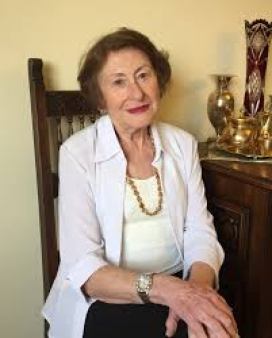
Efraím Szmulewicz (1911-??) Escritor judío-polaco- chileno/Polish Chilean Jewish Writer — Pionero en la literatura judío-chileno/A pioneer in Chilean Jewish literature — “Un niño judío”/”A Jewish Child” — fragmento de la novela/an excerpt from the novel

_________________________________________________________

El destacado fue un escritor y ensayista Efraím Szmulewicz ampliamente conocido en el ámbito nacional y la hispanoamericana. Su vida obedeció más que nada al interés de la Secretaria de Relaciones Culturales de Gobierno por promover entre los estudiantes el hábito de la buena lectura y también informar acerca del desarrollo literario nacional y sus proyecciones futuras. Szmulewicz es un escritor que avanza con claridad de consagrado y es humanista cabal. Tiene una amplia cultura, de diálogo ameno y de una experiencia vital en tratar los problemas que tiene la literatura contemporánea, como de las nuevas técnicas aplicadas para su mejor comprensión… Szmulewicz es un escritor cuyo objetivo no complica las obras y tiene un tono claro y muy personal compostura su sentir. Polaco de nacimiento, de amplias lecturas y una memoria poderosa. Ganó el Premio Municipal por su Biografía de Pablo Neruda. Escribió biografías de Gabriela Mistral y Vicente Huidobro y también de su Diccionario de la literatura chilena. Un hijo judío es una de sus cuatro novelas. — adaptado de Federico Tatter

___________________________________

The distinguished writer and essayist Efraím Szmulewicz was a figure widely renowned figure both nationally and throughout the Hispanic American sphere. His life was driven, above all, by the interest of the Government’s Secretariat of Cultural Relations in fostering the habit of quality reading among students, as well as in providing insight into the development of national literature and its future trajectory. Szmulewicz is a writer who moves with the assured clarity of an established master, and he is, at heart, a consummate humanist. Possessing a vast breadth of knowledge, he is a delightful conversationalist with a wealth of lived experience in addressing the challenges facing contemporary literature—including the new techniques applied to facilitate its deeper understanding. Szmulewicz is an objective writer who avoids overcomplicating his subjects; his tone is lucid, and his style reflects a deeply personal sensibility. Polish by birth, he is a voracious reader endowed with a powerful memory. He was awarded the Municipal Prize for his biography of Pablo Neruda. He has also authored biographies of Gabriela Mistral and Vicente Huidobro, as well as his Dictionary of Chilean Literature. Un hijo judío (A Jewish Son) is one of his four novels. — Adapted from Federico Tatter

___________________________________________________

De: Santiago de Chile: Empresa Editora Zig-Zag, (1940). 192 pp. con 6 b/n grabados de Carlos Hermosilla Alvarez. Gracias a Joel y Lilian Rosenthal por su ayuda en esta entrada/192 pp. con 6 b/w woodcuts by Carlos Hermosilla Alvarez./Thanks to Joel and Liliana Rosenthal for their help on this post.

___________________________________________________

(La historia tiene lugar en Polonia)

Capítulo Segundo

JOSEF tenía seis años y dormía con su madre. Los compañeros del “Cheider” (1) se burlaban de él… “tan grande y todavia duerme con la mamá; ¿será porque tiene miedo a las ánimas?”. Las burlas de liviano humor precedían a las criticas hirientes y de mala intención. Muchas veces el niño tuvo que morderse los puños y apretar los dientes para no llorar, al encontrarse con sus compañeros. Una pelea con Wolf, un niño de siete años y de la misma escuela, fue uno de los motivos que decidieron el comienzo del aislamiento parcial de Josef.       .

Wolf era un chiquillo robusto y vivía en el mismo edificio que Josef. Jugaban con botones. Los dos iban aumentando su desagrado por la compañía mutua. Habla entre ellos una rivalidad oculta, que se exteriorizaba en diversas ocasiones. Las tareas escritas y orales del hebreo daban generalmente un resultado de empate entre los dos. Wolf llevaba el tercer año de estudios, mientras que Josef cursaba el segundo. La lectura del Pentateuco con 1108 comentarios de Rashay era el punto álgido de la discordia. El profesor trataba de calmar los ánimos de los muchachos, dando a cada uno una tarea diferente para desarrollar, pero su esfuerzo era inútil.

En una tarde calurosa, cuando Josef le iba ganando todos los botones a su rival, éste intentó hacer trampa, corriendo uno de los botones para que la palma de Josef no alcanzase a abarcarlos. El tramposo fue descubierto por

_____________________

(1) Escuela religiosa judía, donde los niños se aprenden a leer la Biblia y a rezar, según los dictámenes de Moisés

************

otro compañero que estaba presente. Se entabló una pelea entre los dos jugadores. El rencor acumulado durante más de medio año se convirtió en una acción directa y decisiva. El combate se prolongó por la escalera de la casa de Wolf; y allí, éste, al ver salir a su padre, empezó a pegar con más furia. Josef estaba desesperado. Los golpes que recibió le enfurecieron más. En un momento de inconsciencia se dejó caer con los dientes en el muslo del rival. Wolf lanzó un grito angustia y le golpeó con el otro pie en plena cara. Josef cayó de la escalera con las narices y la boca ensangrentadas.  Acudieron su padre y su hermano.  El primero, al verle en ese estado, le pegó en presencia de su adversario; le tomó por una oreja y lo arrastró a la casa. Allí. quedó arrinconado en el patio, llorando furiosamente con una impotencia que le hacía renegar de su padre. Juró vengarse, no tanto por los golpes, sino por la enorme humillación en que su padre tuvo una parte considerable de culpa. Las heridas de su amor propio haciéndole olvidar las físicas. En este corazón tan pequeño se trababa en estos instantes una lucha feroz. De un laido, la niñez inconsciente con el estupor de ojos redondeados; del otro, la vergüenza de la derrota. Él era algo. Ya había sufrido un fracaso. Era el momento de hacerse fuerte para vencer a tanto enemigo. Consideraba que todo el mundo era su enemigo personal y que su misión no consistía en aclarar su inocencia, sino en vencer al “enemigo”. Las Ideas se sucedían con la rapidez de un rayo. . . “Cuando yo sea grande … ” No sabía a ciencia cierta lo que haría cuando fuese grande…, “de cualquier modo cobraré por la derrota … Todos vendrán a mi …  Además, seré un gran hombre…”

Llegó la tia Jaya, trayéndole dulces. No aceptó ninguno; y cuando ella fue a conversar con los padres, el dolor habla vencido a la soberbia. Josef lloraba ardorosamente y en silencio.

_______________

CAPÍTULO TERCERO

PARA Josef todo había cambiado. La preocupación por sus compañeros se hacía más escasa. Frecuentaba el par-que de la ciudad. Las burlas iban disminuyendo a medida que él se despreocupaba de ellas. Su rostro cobró una atmósfera grave y de preocupación interior. Seguía durmiendo con su madre, pero ya sabía que no está por miedo a los espíritus malos ni por ser muy niño, sino porque amaba mucho a su querida “mameshi” (1). Jugaba raramente con botones y al escondite. La madre le daba permiso para salir y él aprovechaba el tiempo. Iba al parque, tratando de no encontrarse con alguno de sus compañeros. Allí se ten-día sobre el pasto, de cara al cielo, mirando distraídamente a las blancas ovejitas que pastaban por las hierbas azules del firmamento. No siempre habla ovejas; entonces escuchaba el murmullo eterno del rio, que corría a ras de la avenida y por el que, con frecuencia, se deslizaban elásticamente botes con parejas o grupos. El agua estaba siempre transparente y tranquila; pero no así el cielo; éste se enfurecía a veces con una tormenta.

El río hablaba largo. El cielo tenla muchas ovejas e inagotable pasto. El sol desaparecía lentamente detrás de la barraca de Gotfried y las primeras estrellas le guiaban como para advertirle de la avanzada hora. Llegaba a la casa sin sentir el camino. El padre le reprendía por su indisciplina:

– ¿Son éstas horas de llegar a comer? La sopa y las papas están frías.

La madre le defendía con argumentos un poco humillantes para él. Que era un niño todavia y que necesitaba distraerse. Le molestaba, a ratos, •esta clase de defensa de parte de su madre; pero se lo perdonaba generosamente. Siempre sucedía lo mismo: el padre lo resondraba y la madre lo defendía. Por esto él amaba más a su madre que al padre. A éste le respetaba y le temía. A veces sentía un verdadero orgullo por el respeto que le inspiraba. Por cierto, que no se lo daba a entender. La diferencia en los afectos consistía en que a su madre la amaba; la amaba con toda franqueza, con todas las atribuciones manifiestas, mientras que al padre lo veneraba ocultamente con una adoración mística; como los adultos adoran y temen, al mismo tiempo, a Dios, quien resuelve todos los problemas y quien lo sabe todo. El padre de Josef sabia todo; y, más que eso, era convincente y se hacía obedecer.

Al acostarse, rezaba la última plegaria del día, y en silencio, rogaba a Jehovah para la salud de sus padres y por la de su hermano. Le imploraba que no mandara el ángel malo para quitarle los botones y las pelotitas de trapo (también tenía una de goma) durante el sueño. Josef supo que todo lo que era de él y lo que e encontraba a su alrededor pertenencia a Jehovah. No recordaba si esto se lo hablan contado o si lo tenía en la conciencia antes de nacer. Dios estaba en condiciones de quitarle el rio, los juguetes, las ovejitas del cielo, el profesor y aun sus propios padres. Bastaba un solo aliento de su boca divina.

Jehovah era el gran Dios que habitaba el inmenso terreno azul por donde se paseaban las ovejas blancas. El profesor le habla dicho que eran siete las esferas celestes y que en la última se encontraba la habitación dorada del Altísimo. Adonay, estaba siempre rodeado de una legión de ángeles. Cada uno de ellos poseía seis alas: dos para tapar la vergüenza, Dos para cubrir la cara, a fin de no perder la vista ante la deslumbrante claridad del espíritu de Él; y, por último, dos alas para volar. Rabí Jaim (así se llamaba el profesor) enseriaba a los alumnos una cantidad de tarjetas con las imágenes de Dios, de los ángeles y de otras celebridades celestes. Rabí Jalm decía que Dios era bueno; pero que no se debla abusar de su bondad, pues entonces se transformaba en implacable. Josef tenla mucho el enojo de Jehovah; más que el de su padre. Conocía el castigo que le esperaba al faltarle el respeto a éste, mientras que la pena del primero no 1a conocía. Siempre que el cielo se poníafurioso y lanzaba fuego y aguacero, Josef pronunciaba la frase hebrea que debiera servir, según las palabras del maestro, para espantar los truenos y relámpagos. Rezaba todos los días las tres plegarias de rigor, fuera de las frases pronunciadas en la cama, antes de dormirse, después de las cuales no era permitido hablar más aquel día. En estas últimas frases el niño ponla todo su ardor de creyente. Era para implorar que el día siguiente no lo encontrase sin los juguetes. Como era de esperar, el buen Dios no le quitaba las chucherías ni el alma que Josef hablaba confiado durante el sueño. Así transcurrieron los días y el muchacho seguía creyendo con más fervor en Él repetía diariamente las oraciones reglamentarias.

Otra duda representaba su nombre.

Que a él le llamaban Josef, no cabía duda; pero no sabía si este nombre sería siempre suyo, o si de un día a otro se lo cambiarían. Era natural que su madre se llamara “mad­re” y su padre, “padre”. Ellos eran grandes y los grandes lo saben y lo comprenden todo. Después de varios días de continua preocupación se atrevió a formular la pregunta a su mamá.

-Por supuesto que si: siempre te llamarán del mismo modo. Nunca te cambiarán el nombre. Además, yo no me llamo “madre”. Tengo otro nombre. ¿No oyes acaso que las vecinas me llaman Denora? Lo mismo sucede con tu padre; su nombre es David. Somos padres de ustedes y de nadie más. Algún serás padre y entenderás lo que esto significa.

No entendía las últimas palabras de su madre; pero le bastaban las primeras. Se sentía sobre un terreno firme con su nombre propio; era algo así como una personalidad.

Se acostó temprano y se durmió pensando en su nombre. El aire se hizo vago y comenzó a soñar:

Recostado sobre el pasto del parque, miraba hacia el cielo. El rio estaba quieto y los árboles cantaban gloria al Altísimo. De pronto sintióse un ruido y algo anubló ligeramente la atmósfera. Josef dirigió los ojos hacia el rio. Ante él .se encontraba un hombre vestido de negro y con un enorme cuchillo en una mano. Su rostro estaba cubierto con la misma tela que el cuerpo. Sólo se le velan los ojos a través de dos huecos. Eran profundos y penetraban con agudeza. los contornos de la cara, como también los del cuerpo, eran huesudos. Al hombre le seguía una sombra, que no estaba acostada sobre el prado. Andaba detrás de él, parada como si fuera otra persona. Josef trató de levantarse, pero no pudo. Una fuerza poderosa 1e sujetaba a la tierra. Apenas consiguió incorporar la cabeza; vio entonces que debajo de él estaba su propia sombra y que ésta no le dejaba levantarse. Mientras tanto, el extraño huésped se acercó y le habló de ·esta manera:

-Bienvenido a mi tierra, amigo. Llegaste en hora oportuna. Tendré el mayor placer en librarte de tu sombra con este cuchillo, pues de otra manera ella continuará reteniéndote en el suelo toda la vida; pero junto con la sombra perderás tu nombre y te llamarás “padre”. Aquí, en mi reino, todos andamos sin las sombras pegadas a los cuerpos. Ellas nos siguen detrás. Si quieres convencerte de mis palabras, llamaré a los míos.

Y sin esperar la respuesta de Josef, lanzó un silbido agudo y estridente.

De todas partes comenzaron a brotar hombres semejantes a él. El ruido era como las enormes alas. Detrás de ellos seguía un ejército de sombras livianas y transparentes a la luz de la luna.

-¿Ves?, todos son felices. ¿No es verdad? -se dirigió a los suyos.

-¡Sííííí!! Se oyó un vocerío terrible.

Josef tiritaba. Intentó gritar, pero no pudo sacar de la garganta más que un sonido sordo. Desesperado veía el muchacho el hombre acercársele con su enorme cuchillo en la mano y rodeado de sus amigos. El muchacho movía la cabeza derecha a izquierda. No, quería que le cortasen la sombra y le quitasen el nombre; pero el otro no le hizo caso y se dispuso a realizar su tarea.

Un sudor de escarcha envolvía todo el cuerpo del niño. La madre estaba al lado ide la cama. Josef la abrazó apoyando su cabeza en el pecho de ella, y murmuró:

–iMadre! -y su cuerpo cayó sobre el 1echo.

___________________________________________

(The story takes place in Poland)

Josef was six years old and still slept with his mother. His classmates at the Cheider (1) would mock him: “So big, yet he still sleeps with his mommy? Is it because he’s afraid of ghosts?” These lighthearted taunts soon gave way to hurtful, malicious criticism. Often, upon encountering his classmates, the boy had to bite his fists and clench his teeth to keep from crying. A fight with Wolf—a seven-year-old boy from the same school—was one of the events that marked the beginning of Josef’s partial isolation.

Wolf was a sturdy little boy who lived in the same building as Josef. They used to play games with buttons. As time went on, their mutual dislike for one another grew. A hidden rivalry simmered between them, surfacing on various occasions. Their written and oral Hebrew assignments usually ended in a tie. Wolf was in his third year of studies, while Josef was in his second. Reading the Pentateuch—along with the commentaries by Rashi—was the primary flashpoint of their discord. Their teacher tried to calm the boys down by assigning each a different task to complete, but his efforts were in vain.

One sweltering afternoon, just as Josef was winning all of his rival’s buttons, Wolf tried to cheat by nudging one of the buttons out of place so that Josef’s outstretched palm could not cover them all. The cheater was caught by

(1) A Jewish religious school where children learn to read the Bible and pray, in accordance with the precepts of Moses.

**************

another classmate who happened to be present. A brawl broke out between the two players. The resentment that had been festering for over six months finally erupted into direct, decisive action. The fight spilled out onto the stairwell of Wolf’s building; there, upon seeing his father emerge, Wolf began to strike with even greater fury. Josef was in despair. The blows he received only fueled his rage. In a moment of blind fury, he threw himself forward and sank his teeth into his opponent’s thigh. Wolf let out a cry of anguish and kicked him squarely in the face with his other foot. Josef tumbled down the stairs, his nose and mouth streaming with blood. His father and brother rushed to his side. The former, upon seeing him in such a state, struck him right there in the presence of his adversary; he grabbed him by the ear and dragged him into the house. There, he was left cornered in the courtyard, weeping furiously—a weeping born of a sense of helplessness that made him curse his own father. He vowed revenge—not so much for the blows themselves, but for the immense humiliation for which his father bore a considerable share of the blame. The wounds to his pride made him forget his physical injuries. Within that small heart, a fierce battle was being waged in those very moments. On one side stood unthinking childhood, with its wide-eyed bewilderment; on the other, the shame of defeat. He was somebody. He had already suffered a failure. Now was the moment to steel himself, to grow strong enough to vanquish so many enemies. He came to view the entire world as his personal foe, and his mission not as proving his innocence, but as defeating the “enemy.” Thoughts flashed through his mind with the speed of lightning… “When I grow up…” He did not know for certain what he would do when he grew up… “but one way or another, I will exact my price for this defeat… Everyone will come to me… And what’s more, I will be a great man…”

CHAPTER THREE

For Josef, everything had changed. His concern for his schoolmates was waning. He began frequenting the city park. The taunts diminished as he ceased to care about them. His face took on an air of gravity and inner preoccupation. He still slept with his mother, though he now knew that this was not out of fear of evil spirits, nor because he was still a little boy, but simply because he loved his dear “Mameshi” (1) so very much. He rarely played with buttons or at hide-and-seek anymore. His mother gave him permission to go out, and he made the most of the time. He would go to the park, trying to avoid running into any of his schoolmates. There, he would lie stretched out on the grass, face turned toward the sky, gazing absently at the little white sheep grazing amidst the blue grasses of the firmament. There were not always sheep; at such times, he would listen to the eternal murmur of the river, which flowed right alongside the avenue—a river along which boats carrying couples or groups would frequently glide with fluid ease. The water was always transparent and calm; the sky, however, was not; at times, it would rage with a storm.

The river spoke at great length. The sky held many sheep and inexhaustible pastures. The sun would slowly vanish behind Gotfried’s shed, and the first stars would guide him home, as if to warn him of the late hour. He would arrive at the house without even noticing the journey. His father would scold him for his lack of discipline:

“Is this a proper time to show up for dinner? The soup and potatoes are cold.”

His mother would defend him with arguments that, at times, felt somewhat humiliating to him—insisting that he was still just a child and needed to find ways to amuse himself. Occasionally, this manner of defense on his mother’s part would irk him; yet he would always forgive her for it with generous affection. It always played out the same way: his father would scold him, and his mother would defend him. For this reason, he loved his mother more than his father. The latter, he respected and feared. At times, he felt a genuine sense of pride in the respect his father inspired. Of course, he never let on. The difference in his affections lay in this: he loved his mother—loved her with utter openness, with all the overt expressions of affection—whereas he venerated his father in secret, with a mystical adoration; much as adults simultaneously worship and fear God—He who resolves all problems and knows all things. Josef’s father knew everything; and, more than that, he was commanding and ensured he was obeyed.

Upon going to bed, he would recite his final prayer of the day, silently beseeching Jehovah to grant good health to his parents and to his brother. He implored Him not to send the “bad angel” to take away his buttons and his little cloth balls (he had a rubber one, too) while he slept. Josef knew that everything he possessed—and everything that surrounded him—belonged to Jehovah. He could not recall whether he had been told this, or if the knowledge had been imprinted upon his consciousness even before he was born. God had the power to take away the river, his toys, the little sheep in the sky, his teacher, and even his own parents. A single breath from His divine mouth would suffice.

Jehovah was the great God who dwelt in the immense blue expanse where white sheep roamed. The teacher had told him that there were seven celestial spheres, and that within the last of them lay the golden chamber of the Most High. Adonai was always surrounded by a legion of angels. Each of them possessed six wings: two to conceal their nakedness, two to cover their faces—lest they lose their sight before the dazzling brilliance of His spirit—and, finally, two wings for flight. Rabbi Chaim (for that was the teacher’s name) would show his students a collection of cards bearing images of God, the angels, and other celestial luminaries. Rabbi Chaim taught that God was good, yet one must not take His goodness for granted, for then He would become implacable. Josef feared Jehovah’s wrath deeply—even more so than his own father’s. He knew the punishment that awaited him should he disrespect the latter, whereas the penalty exacted by the former remained an unknown quantity. Whenever the heavens grew furious, unleashing fire and torrential rain, Josef would recite the Hebrew phrase that—according to his teacher—was meant to ward off thunder and lightning. He recited the three obligatory prayers every day, in addition to the phrases spoken from his bed just before falling asleep—after which, no further speech was permitted for the remainder of the day. In these final utterances, the boy poured out the full fervor of his faith. They were meant to implore that the coming day would not find him bereft of his toys. As was to be expected, the good Lord never took away his trinkets—nor the soul that Josef, in his slumber, had entrusted to His care. Thus the days passed, and the boy continued to believe in Him with ever-increasing fervor, reciting his prescribed prayers day after day.

CHAPTER FOUR

Doubts arose quite frequently; yet, because his mother would invariably smile whenever he posed a question, he tended to harbor those doubts within his memory for a very long time. This gave him an air of eternal abstraction. His mother had told him that his questions were naive, but he could not understand why. He meditated upon all things—the stars, the rain—but above all, he dreamed of solving the problem of knowing the good Lord. Jehovah ought to be more condescending toward obedient children like him. Aunt Jaya had warned him that if he continued to insist on seeing Adonai, she would be able to grant him his wish; however, he must bear in mind that death would follow upon seeing Him, for such was the law. From that moment on, he never asked about God again.

Another doubt was about his name.

That they called him Josef, there was no doubt; but he did not know if this name would always be his, or if it would be changed from one day to the next. It was natural that his mother was called “mother” and his father, “father.” They were grown-ups, and grown-ups know and understand everything. After several days of constant worry, he dared to ask his mother the question.

“Of course,” she said, “they’ll always call you the same thing. They’ll never change your name. Besides, my name isn’t ‘mother.’ I have another name. Don’t you hear the neighbors calling me Denora? The same goes for your father; his name is David. We are your parents and no one else’s. Someday you’ll be a father, and you’ll understand what this means.”

He didn’t understand his mother’s last words, but the first ones were enough. He felt on solid ground with his own name; it was something like a personality.

He went to bed early and fell asleep thinking about his name. The air grew thin, and he began to dream:

Lying on the grass in the park, he gazed up at the sky. The river was still, and the trees sang glory to the Almighty. Suddenly there was a noise, and something slightly clouded the atmosphere. Josef turned his eyes toward the river. Before him stood a man dressed in black, holding an enormous knife in one hand. His face was covered with the same cloth as his body. Only his eyes were visible through two slits. They were deep and piercing. The contours of his face, like those of his body, were bony. A shadow followed the man, not lying on the meadow. It walked behind him, standing as if it were another person. Josef tried to get up, but he couldn’t. A powerful force held him to the ground. He barely managed to raise his head; then he saw that his own shadow was beneath him, preventing him from rising. Meanwhile, the strange guest approached and spoke to him thus:

“Welcome to my land, friend. You have arrived at an opportune time.” I will take the greatest pleasure in freeing you from your shadow with this knife, for otherwise it will continue to hold you to the ground for the rest of your life; but along with the shadow, you will lose your name and be called “father.” Here, in my kingdom, we all walk without shadows clinging to our bodies. They follow behind us. If you wish to be convinced of my words, I will summon my people.

And without waiting for Josef’s reply, he let out a sharp, piercing whistle.

Men like himself began to sprout from all sides. The noise was like enormous wings. Behind them followed an army of shadows, light and transparent in the moonlight.

“You see? Everyone is happy. Isn’t that right?” he said to his people.

“Yessss!” A terrible roar erupted.

Josef trembled. He tried to shout, but could only manage a muffled sound. Desperate, the boy watched the man approach him, his enormous knife in hand, surrounded by his friends. The boy shook his head from side to side. No, he didn’t want them to cut off his shadow and take his name; but the other man paid him no heed and proceeded to carry out his task.

A frosty sweat enveloped the boy’s entire body. His mother was beside the bed. Josef embraced her, resting his head on her chest, and murmured:

“Mother!”—and his body fell onto the bed.

_____________________________________________________

Carla Guelfenbein–Novelista judío-chilena/Chilean Jewish Novelist–“Contigo en la distancia”/”With You in the Distance”–un fragmento de la novela/an excerpt from the novel

Carla Guelfenbein

___________________________________________

__________________________________________________________

Carla Guelfenbein estudió biología en la Universidad de Essex. También estudió diseño gráfico en la Escuela de Arte St. Martin de Londres. De regreso en Chile, trabajó como directora de arte en BBDO y editora de moda en ELLE. Es autora de las novelas El revés del alma, La mujer de mi vida, El resto es silencio, Nadar desnudas, Contigo en la distancia y de varios cuentos que han aparecido en importantes revistas y antologías. Su obra ha sido traducida a 14 idiomas por las editoriales más prestigiosas de Europa. Guelfenbein es uno de los últimos fenómenos best-seller de la narrativa chilena. Su segunda novela desbancó a Dan Brown del primer puesto del ranking. Contigo en la distancia, ganó el importante premio Alfaguara, y se lanzó simultáneamente en España y Latinoamérica.

_________________________________________________

Carla Guelfenbein studied biology at Essex University. She also studied graphic design at St. Martin’s School of Art in London. Back in Chile she worked as Art director in BBDO and fashion editor at ELLE. She is the author of the novels El revés del alma, La mujer de mi Vida, El Resto Es Silencio, Nadar desnudas, Contigo en la distancia, and a number of short stories tenat have appeared in important magazines and anthologies. Her work has been translated into 14 languages by the most prestigious editorial houses in Europe. Guelfenbein is one of the last bestselling phenomenas of the Chilean narrative. Her second novel ousted Dan Brown in the top of the ranking. Contigo en la distancia, won the important Alfaguara prize, and was simultaneously launched in Spain and Latin America.

___________________________________________________

Vera Sigall, ahora de 80 años, ha vivido una vida misteriosa y ascética, alejada del foco literario. Este poderoso personaje tiene un profundo impacto en quienes la rodean: Daniel, arquitecto, vecino y amigo suyo, infeliz en su matrimonio y su carrera; Emilia, una estudiante franco-chilena que viaja a Santiago para escribir una tesis sobre la esquiva Vera; y Horacio, un aclamado poeta con quien Vera tuvo un romance tumultuoso y apasionado en su juventud. A medida que Daniel, Emilia y Horacio cuentan sus historias, reconstruyen el pasado de Vera y buscan sus propias identidades.

______________________________________

Vera Sigall, now 80 years old, has lived a mysterious, ascetic life far from the limelight of literary circles. This powerful character has a profound effect on those around her — Daniel, an architect and her neighbor and friend, unhappy in his marriage and career; Emilia, a Franco-Chilean student who travels to Santiago to write a thesis on the elusive Vera; and Horacio, an acclaimed poet with whom Vera had a tumultuous, passionate affair in her youth. As Daniel, Emilia and Horacio tell their stories, they reconstruct Vera’s past and search for their own identities.

_______________________________________________________________________________

Mi tutor de la universidad me había conseguido una beca, pero esta apenas cubría mis gastos. Por eso, con algunos ahorros, me compré una bicicleta Pashley de se-gunda mano y me ofrecí para hacer de repartidora en la verdulería del barrio. Don José, el dueño, aceptó de inmediato. Era hijo de inmigrantes españoles llegados en el Winnípeg. Nunca había vivido en España, pero conserva-ba el acento que debió heredar de sus padres. Llevaba boina, bigotes y un par de suspensores, entre los cuales emergía una gruesa panza. A la verdulería se entraba bajando tres escalones, donde un gato negro solía recostar-se. Cada mañana, después de hacer el reparto, me dirigía en mi bicicleta hacia la Biblioteca Bombal, en la calle Condell.

El primer día, una mujer delgada y menuda me abrió la puerta. Sin ser del todo anciana, llevaba un bastón y tenía el cabello cano. Apenas entré, me hizo pasar a un cuarto ocupado casi enteramente por un escritorio de caoba. La luz entraba apenas, a través de unos largos cortinones de terciopelo. Todo allí parecía haberse asentado hacía largo tiempo, y los colores y las cosas se fundían en una sola materia uniforme.

La biblioteca había sido fundada por la heredera de una gran fortuna en los años cincuenta. Buscaban reunir y rescatar textos de narradoras y poetas latinoamericanas, pero también tenían una colección de poemas y cartas de mujeres anónimas de origen sajón del siglo XIX.

-Mi nombre es Rosa Espinoza. En qué puedo ayudarle -me dijo una vez que ambas estuvimos senta-das, ella uas el escritorio atestado de libros y yo frente a ella.

Me llamó la atención su nombre. O sus padres lo habían hecho a propósito -lo que habría sido una cruel-dad-  o no se habían percatado de lo que hacían.

Nada más sentarme, la señora Espinoza comenzó a hacerme una retahíla de preguntas: dirección, edad, señas de mis tutores en Francia, estudios. Asuntos de esa índole. En su anticuado computador anotaba las respuestas con lenta severidad, mientras tras sus gafas me escrutaba como si dentro de mi morral ocultara una bomba.

-¿Y  qué pretende hacer aquí? -me  preguntó

por fin.

Se sacó los anteojos, los cerró y, sosteniéndolos como un arma punzante, cruzó los brazos sobre la mesa. Me resultaba difícil entender lo que estaba ocurriendo. Horacio Infante me había insistido en que tan solo tenía que llegar hasta ahí y comenzar a trabajar.

-¿No lo sabe realmente?

La mujer negó con un gesto de la cabeza. Sus aros de perlas dejaban caer destellos sobre sus hombros. Iba vestida de colores claros que hacían juego con su pelo cano. Permanecí en silencio. No quería hablar del verdadero motivo que me había llevado hasta allí. Resguarda-do en mi interior, los confines a los cuales podía llegar eran ilimitados. Nombrarlo, en cambio, hubiera sido una forma de apresarlo y mutilarlo. Por eso había ideado un proyecto que me sirviera de pantalla: catalogar los papeles y archivos que Vera Sigall había donado hacía dos años y que según las averiguaciones de monsieur Roche, habían permanecido intocados.

-Quizás, antes de explicarme, quiera servirse una taza de té.

Sus ojillos rodeados de arrugas brillaron con un raro fulgor.

-Me encantaría -dije, y ella desapareció.

A través de la gruesa cortina entornada divisé las ramas desnudas de los árboles que se recortaban contra el cielo gris, formando una filigrana. Un mundo de árboles sin estrellas, murmuré. Eran las últimas palabras de Javier, el personaje principal de la primera novela de Vera Sigall.

La señora Espinoza volvió con un hombre que, tras ella, sostenía una bandeja de plata con una tetera azul grisácea y dos tazas del mismo color. El hombre dejó la bandeja sobre el escritorio, ayudó a la señora Espinoza a desembarazarse de su bastón y luego a sentarse.

-Gracias, Efraín -sonrió ella-. Efraín es el jardinero, mi chofer y el guardián de todo esto -añadió después de que él hubo desaparecido.

El aroma del té con especias llenó la estancia. La señora Espinoza lo sirvió con parsimonia.

-Está un poco caliente, tenga cuidado -hizo una pausa y luego continuó-: Ahora tal vez pueda decirme cuál es el objetivo de su visita a este lugar.

Levantó la cabeza, esperando que de mis palabras surgiera algo inesperado pero a la vez conocido, como una paloma del sombrero de un mago.

-Lo  que quiero hacer… -dije, y me detuve.

-Vamos, hable.

Su voz sonaba dulce pero firme.

Apoyó la cabeza en el respaldo de su silla y fijó sus ojos desprovistos de ornamentación en los míos.

-Bueno, lo que quiero es analizar los distintos sentidos de los astros y los planetas en los escritos de Vera Sigall. Descubrir su origen. Eso a grandes rasgos. Llevo un tiempo en este estudio y no he llegado muy lejos.

No sé por qué lo hice, pero frente a esa mujer nombré por vez primera lo que me había llevado hasta ahí. Lo que me había dado la fuerza para atravesar el charco. Tenía la intuición de que había algo oculto en las estrellas de Vera Sigall. Algo que traspasaba las narraciones, los personajes y sus historias. Incluso las palabras. Intuía también que, hallándolo, encontraría algo de mí misma. Era una percepción que resultaba tan vaga e inasible que muchas veces se desvanecía. Bajé los ojos. Las manos me sudaban.

-Apenas la vi, supe que Horacio Infante estaba equivocado, y que su verdadero objetivo no era catalogar la obra de Vera Sigall. Usted no tiene cara de catalogadora. Yo no sabía abrazar a las personas. Pero añoré haber podido hacerlo.

Junto a ella, recorrí la biblioteca, un inmueble de dos pisos de estilo inglés. El primero albergaba la amplia estancia dispuesta para los estudiosos. Una vitrina con un taburete que había pertenecido a Alfonsina Storni se asomaba en un rincón. Según me explicó la señora Espinoza, Alfonsina lo llevaba con ella en sus largas caminatas por los páramos y se sentaba en él a pensar. La biblioteca se encontraba en el segundo piso. Eran tres grandes salas y en una de ellas había un gran mueble con cajones, clasificados por autora. Alcancé a distinguir a algunas: Clarice Lispector, Elena Garro, Silvina Ocampo y Alejandra Pizarnik.

Al cabo de un rato, ya estaba sentada en el primer piso frente a una de las cajas que Vera Sigall había donado a la biblioteca. Me llamó la atención un grupo de fotografías sujetas con una cinta negra. Los retratos de Vera Sigall son escasos. La prensa y los editores suelen reproducir siempre el mismo, uno en que, tras una incisiva seriedad, pareciera querer ocultar su belleza. Deshice el nudo con cuidado. Eran cinco fotografías en blanco y negro. Cuatro de ellas mostraban a personas que me resultaron desconocidas. La quinta era una fotografía de Vera junto a sus padres, Arón y Emma Sigall. Es una imagen ovalada. La madre, de rostro grueso y tosco, mira hacia la cámara con expresión preocupada, como si el destino le deparara un futuro difícil y ella con reciedumbre lo anticipara. El padre, con un traje humilde de quien está acostumbrado al trabajo, observa la cámara con determi-nación y severidad. Vera, una niña de no más de siete años, despide un aire intranquilo, misterioso.

En uno de los libros más importantes editados so-bre la obra de Vera Sigall, Benjamín Moser -su autor-puntualiza que todo lo que se refiere a sus datos biográfi-cos es ambiguo y muchas veces contradictorio. Nadie sabe a ciencia cierta cuántos años tenía cuando sus padres hu-yeron de la aldea de Chechelnik, en Ucrania, escapando de los pogromos. Según lo que él logró averiguar, llegaron a Moldavia por el río Dniester en una canoa. La exacta fecha de su arribo a Rumania y el viaje que hicieron después para llegar a Chile se pierden en una nebulosa. A lo largo de su vida, Vera se rodeó de enigmas y en las escasas entrevistas que aceptó, solía escudarse tras la misma res-puesta: «Mi gran misterio es que no tengo misterio».

Recuerdo la primera vez que leí uno de sus textos. El lenguaje mutaba en sus manos. Las palabras se reflejaban y reproducían unas a otras, como en las imágenes de los espejos cruzados, creando una sensación de desconcierto.

Dejé la fotografía sobre la mesa y cerré los ojos. Necesitaba absorber la emoción que me producía estar en el mundo de Vera Sigall. Pensé que tal vez había por fin encontrado mi lugar, entre esas paredes vetustas, entre las almas de todas esas mujeres. Allí nadie me alcanzaría. Nadie exigiría de mí lo que nunca podría darles.

Volví en mi bicicleta antes de que oscureciera. Los rayos de sol cruzaban el cielo como dardos, rebotando en mis ventanas de los altos edificios acristalados. Subía las escaleras hacia mi altillo, cuando me encontré con mis vecinos del piso nueve. Se presentaron como Juan y Franisco. Juan era alto y moreno, de modales pausados, vestía con escrupulosidad y elegancia. Francisco era bajo y for-aido, de mechas enhiestas y claras, ojos vivos, y en sus jeans gastados y en su suéter traía rezagos de pintura.

-Emilia Husson, ¿verdad? -me  preguntó Juan.

.\.fe tendió una mano grande y oscura, con una amable formalidad. Yo asentí sin coger la suya. Él, leyendo quizás en mis ojos que no se trataba de un gesto de desdén, hizo caso omiso de mi falta y continuó-: Ya ves, hemos hecho nuestras averiguaciones con el conserje. Eres Emilia y vienes llegando de París.

-Bueno, no precisamente de París, vivo en Grenoble, pero para el caso supongo que da lo mismo.

Ambos sonrieron con franca simpatía.

-Hace más de un año que nadie vive en el altillo. Estábamos preocupados de quién podría llegar. Me alegro que seas tú, Emilia -dijo Juan mientras sacaba unas llaves de su bolsillo. -Esperamos verte seguido -dijo Francisco, y ambos desaparecieron tras la puerta de su departamento.

Cuando llegué a mi altillo, lavé los platos que había dejado de la cena y luego encendí mi computador. Tenía un largo mail de Jérome. Al día siguiente, partí a una de sus excursiones de montañismo. Esta vez intentaría llegar a la cima del Elbrús. Después de leerlo, le conté mi encuentro con the seńora Espinosa, el olor a polvo, la solemnidad de Efrain, el jardinero, el té aromático que mutó el orden de las cosas como un brebaje. También le conté de la fotografía de que había hallado, de sus ojos inquietos que parecían esperar algo.

__________________________________________________________

________________________________________________

My university advisor had gotten me a scholarship, but it barely covered my expenses. So, with some savings, I bought a secondhand Pashley bicycle and offered to work as a delivery girl for the neighborhood greengrocer. Don José, the owner, accepted immediately. He was the son of Spanish immigrants who had arrived on the Winnipeg. He had never lived in Spain, but he still had the accent he must have inherited from his parents. He wore a beret, a mustache, and a pair of suspenders, between which a thick belly peeked out. The greengrocer’s entrance was down three steps, where a black cat often lay. Every morning, after making my deliveries, I rode my bicycle to the Bombal Library on Condell Street.

The first day, a thin, petite woman opened the door for me. While not exactly elderly, she used a cane and had gray hair. As soon as I entered, she showed me into a room almost entirely occupied by a mahogany desk. Light filtered in, barely filtering through long velvet curtains. Everything there seemed to have settled long ago, and the colors and objects blended into a single, uniform mass.

The library had been founded in the 1950s by the heiress to a vast fortune. They sought to collect and preserve texts by Latin American women writers and poets, but they also had a collection of poems and letters by anonymous women of Anglo-Saxon origin from the 19th century.

“My name is Rosa Espinoza. How can I help you?” she said once we were both seated, she at the desk piled high with books and I across from her.

Her name caught my attention. Either her parents had chosen it on purpose—which would have been cruel—or they hadn’t realized what they were doing.

No sooner had I sat down than Mrs. Espinoza began bombarding me with questions: address, age, contact information for my guardians in France, education. Matters of that nature. She meticulously recorded my answers on her antiquated computer, while behind her glasses she scrutinized me as if I were hiding a bomb in my backpack.

“And what do you intend to do here?” she finally asked.

She took off her glasses, closed them, and, holding them like a sharp weapon, crossed her arms on the table. I found it difficult to understand what was happening. Horacio Infante had insisted that I simply had to get there and start working.

“Don’t you really know?”

The woman shook her head. Her pearl earrings shimmered on her shoulders. She was dressed in light colors that complemented her gray hair. I remained silent. I didn’t want to talk about the real reason that had brought me there. Sheltered within myself, the limits to which I could reach were boundless. To name it, however, would have been a way of imprisoning and mutilating it. That’s why I had devised a project to serve as a smokescreen: cataloging the papers and files that Vera Sigall had donated two years ago and which, according to Monsieur Roche’s investigation, had remained untouched.

“Perhaps, before I explain, you’d like to pour yourself a cup of tea.”

Her small, wrinkled eyes shone with a rare brilliance.

Vera Sigall. I thought that perhaps I had finally found my place, among those ancient walls, among the souls of all those women. There, no one could reach me. No one would demand of me what I could never give them.

I returned on my bicycle before dark. The sun’s rays crossed the sky like darts, bouncing off

the windows of the tall glass buildings. I was climbing the stairs to my loft when I ran into my neighbors from the ninth floor. They introduced themselves as Juan and Franisco. Juan was tall and dark-haired, with a measured manner, and dressed with meticulousness and elegance. Francisco was short and thin, with spiky, light-colored hair, lively eyes, and traces of paint on his worn jeans and sweater.

“Emilia Husson, right?” Juan asked me.

He extended a large, dark hand, with a polite formality. I nodded without taking his. He, perhaps reading in my eyes that it wasn’t a gesture of disdain, ignored my oversight and continued: “You see, we’ve checked with the concierge. You’re Emilia, and you’ve just arrived from Paris.”

“Well, not exactly from Paris, I live in Grenoble, but for all intents and purposes, I suppose it’s the same thing.”

They both smiled with genuine warmth.

“It’s been over a year since anyone has lived in the attic. We were worried about who might move in. I’m glad it’s you, Emilia,” said Juan as he took some keys from his pocket. “We hope to see you often,” said Francisco, and they both disappeared behind the door of their apartment.

When I got back to my attic, I washed the dishes I’d left from dinner and then turned on my computer. I had a long email from Jérôme. The next day, I left for one of his mountaineering excursions. This time I would try to reach the summit of Elbrus. After reading it, I told him about my encounter with Señora Espinosa, the smell of dust, the solemnity of Efraín, the gardener, the aromatic tea that altered the order of things like a brew. I also told him about the photograph I had found, about her restless eyes that seemed to be waiting for something.

_____________________________________________________________________________

______________________________________________________________________________________

Eliah Germani–médico y cuentista judío-chileno/Chilean Jewish Physician and Short-story Writer– “El vecino palestino”/”The Palestinian Neighbor”–un cuento/a short-story

Eliah Germani

_________________________________________

Eliah Germani es un escritor judío-chileno cuyos relatos exploran la identidad judía, la espiritualidad y las experiencias de los judíos en Latinoamérica. Su obra retrata personajes complejos y sus inesperadas revelaciones vitales, enmarcadas en el contexto de la historia y la cultura judías. En sus colecciones Volver a Berlín (2010) y Objetos personales (2015), Germani presenta relatos que contienen misticismo judío y referencias al Talmud y a la cultura yidish. También explora temas como el exilio, la identidad y la memoria, reflexionando sobre el impacto del Holocausto y la dictadura de Pinochet en Chile. Volver a Berlín ganó el Premio del Consejo Nacional del Libro de Chile en la categoría de relatos inéditos. Sus cuentos han sido incluidos en la antología Puro Cuento (París: Marco Antonio de la Parra, 2004,) en Enclave: Revista de la creación literaria en español (CUNY, 2012), y en la revista literaria Hispamérica (Estados Unidos, 2013), en Brevilla: Revista de minificción (2017) y en Los huesos y otros cuentos, la antología del Cuento “Paula”. Concurso (Alfaguara, 2018). Es pediatra del Centro Médico de la Universidad de Concepción.

_______________________________________________

Eliah Germani is a Chilean-Jewish writer whose short-stories explore Jewish identity, spirituality and the experiences of Jews in Latin America. His work depicts complex characters and their unexpected life revelations, set against the background of Jewish history and culture. In his collections Volver a Berlín (2010) and Objetos personales (2015), Germani presents stories containing Jewish mysticism and references to the Talmud and Yiddish culture. He also explores themes like exile, identity and memory, often reflecting on the impact of the Holocaust and the Pinochet dictatorship in Chile. Volver a Berlín won the National Book Council of Chile Prize in the category of unpublished stories. His short-stories have been included in the anthology Puro Cuento (Paris: Marco Antonio de la Parra, 2004,) in Enclave: Revista de la creación literaria en español (CUNY, 2012), and in the literary journal Hispamérica (U.S.A, 2013), in Brevilla: Revista de minificción (2017) and in Los huesos y otros cuentos, the anthology of the “Paula” Short-Story Contest (Alfaguara, 2018.). He is a pediatrician at the University of Concepción Medical Center.

“¿Sushi o Latkes?”-cuento/story
“Mi hijo judío”

_________________________________________

El rabino estuvo de acuerdo en cambiar la mezuzá. Goldberg se había decidido a vivir con Daniela, en el departamento de ella, el mismo que ocupaba con su exmarido, y si bien no se trataba exactamente de una mudanza, la necesaria renovación de la vivienda tenía que incluir la mezuzá. Para Goldberg no podía ser kosher la mezuzá de su predecesor, así que cambiarla era un ineludible acto de purificación. Deseando marcar la diferencia, adquirió una más ornamentada, que se notara más, y quiso fijarla a la manera sefaradí, en posición vertical, y no inclinada hacia adentro como la anterior. Durante la ceremonia familiar de instalación, se reunieron en el pasillo no muy amplio del cuarto piso, Daniela, Goldberg y sus cuatro hijos, encabezados por el rabino, los hombres provistos de kipá, en una ceremonia inequívocamente judía. En el preciso momento en que el rabino explicaba la mezuzá, como escudo espiritual de la casa y de sus moradores, apareció el vecino de enfrente, desde el ascensor contiguo, Fady Samur, un árabe joven, de origen palestino. Les saludó de lejos, entre sorprendido y curioso, con un ademán no desprovisto de amabilidad. Dirigió una sonrisa cómplice a Daniela y continuó el breve trayecto hasta su puerta, sin poner atención a las palabras del rabino.

            Antes de vivir con Daniela, Goldberg ya cumplía un par de años como soltero de segunda mano. Su matrimonio había sido complicado, pero le parecía aún más tóxica la experiencia conyugal de Daniela. Su primera mujer era decoradora de interiores y debido a su trabajo, tenía un buen conocimiento del Feng Shui, cuyos preceptos practicaba antes que nada en casa, y de manera bastante ortodoxa, lo cual a Goldberg no pocas veces fastidiaba. Pero ahora, con el tiempo y la distancia, se daba cuenta de cómo lo había permeado esa filosofía, al punto de encontrarla bastante razonable, escuchando incluso la voz de su exesposa cada vez que visitaba una nueva casa. Desde el primer día sintió que el departamento de Daniela era un terreno contaminado, invadido por una mala vibra que era necesario expurgar. Cuando por fin decidieron mudarse juntos, ambos estuvieron de acuerdo en llevar a cabo una renovación radical.

Un encuentro casual con Fady Samur en el ascensor, permitió a Daniela presentar a los dos hombres. Así que eres palestino, dijo Goldberg. No sé si Dios o el diablo nos junta: yo soy judío. Bueno, por suerte somos humanos, ironizó Samur, además de chilenos, pero lo que más importa, somos vecinos, lo digo porque no hubo buena onda con el fulano anterior. ¿Y por qué crees que estamos saneando el departamento?, dijo Goldberg. Hacemos una limpieza energética. Energías limpias, como diría un ingeniero. Ya pintamos las paredes y renovamos los muebles. Entre paréntesis, nos disculpas por el ruido. No hay problema, dijo Samur, Daniela ya me lo había advertido, y también me habló de ti, creo que eres una buena elección para ella, de seguro mejor que el otro tipo, intuyo que seremos buenos vecinos.

Cuando Goldberg llegaba a casa, tocaba la mezuzá y se besaba la mano susurrando: “Dios me acompaña en mi entrada y en mi salida”.  Pasado el umbral, lo acogía el recibidor, luminosa antesala del living, donde la suave curva de los muebles lo invitaba al descanso y a la meditación. Las paredes, vestidas de colores claros, tamizaban armoniosas la luz de los ventanales, como un manto protector contra el ruido y la disarmonía exterior. El verde ficus del rincón, que habían plantado con Daniela, replicaba vigoroso la sana energía que ambos cultivaban. Juntos barrieron el jametz de la vida pasada, eliminaron las alfombras y rasparon las malas huellas del piso, pintaron de nuevo cada habitación, adquirieron muebles de madera clara y dieron otra luz a la cocina. Daniela renovó todas sus cosas, desde la ropa íntima hasta el colchón matrimonial, cambió la cama, las toallas y las cortinas. Goldberg, en la pared donde antes colgaba la Ketubá, dispuso un cuadrito prolijamente decorado, con la palabra hebrea “Anajnu”, que significa “Nosotros”, obra de su propia mano.

Un día por la tarde, al regresar, Goldberg pisó algo raro al salir del ascensor. Se detuvo para ver de qué se trataba y descubrió los restos pisoteados de la mezuzá. Supo enseguida que había sido vandalizada. El marco donde estaba atornillada se veía roto y astillado, delatando la violencia de la profanación. Un escalofrío de mil años lo estremeció, la persecución ancestral golpeaba en su remota puerta chilena. Pero ¿quién más sabía de la mezuzá? En un impulso visceral, se pegó al timbre del palestino. Samur apareció extrañado, portaba unos audífonos. A sus espaldas, una muda pantalla exhibía una orquesta sinfónica. Goldberg agarró por el brazo a Samur y lo llevó hasta su puerta violentada, mostrándole acusador el caos de la mezuzá. Samur, incrédulo, se quitó los audífonos. ¡Es horrible!, dijo. Goldberg le espetó que un ataque de ese tipo no era otra cosa que antisemitismo. ¿No pensarás que tengo algo que ver en esto?, protestó Samur. ¿Por qué habría de romper tu símbolo judío? Debes saber que soy astrónomo y como tal, incluso bromeaba con tu puerta, imaginaba que habías puesto un timbre al cielo.

Confundido, intentando disculparse, Goldberg ofreció un café a Samur, quien accedió aliviado. Comentó que nunca había ocurrido algo así en el edificio, incluso en tiempos del escandaloso vecino anterior, que tenía puros enemigos. A Goldberg le agradó el comentario sobre su antecesor, sintió que le daba un respiro. Samur observó a su alrededor complacido, han hecho una buena renovación, dijo, se ve muy acogedor, se respira un aire diferente. Goldberg ignoraba que Samur conociera de antes el departamento y se sintió como un advenedizo. Este atentado es puro antisemitismo, dijo Samur, quien hace algo así, no lo hace por amor a los palestinos, lo hace por odio a Israel, por odio a los judíos, aquí en Chile, a 13.000 kilómetros de distancia, es una pura estupidez, algo que no ayuda a nadie, que solo extiende el conflicto. Como astrónomo, toda la vida me ha conmovido la infinitud del Universo y, sencillamente, no puedo entender que en este planeta mínimo nos malgastemos la vida destruyéndonos. ¿Sabes qué es lo opuesto del odio? Es precisamente aquella dimensión donde tendríamos que movernos. No apagaremos el fuego con más fuego, no tendremos resultados distintos si repetimos siempre lo mismo.

A la llegada de Daniela, Samur ya se había ido. Durante la cena, más que la conmoción de Goldberg, la abrumó el malentendido con el vecino. La avergonzaba la hostilidad de su exmarido contra “el turco”, y ahora Goldberg, con su metida de pata, repetía de nuevo la injusticia. Quiso hacerle saber cosas que él ignoraba: Fady Samur fue su ángel guardián en los malos tiempos, él llamó a los carabineros cuando su marido la golpeaba, él le dio refugio en ese período crítico, él le dio fuerzas para salir adelante. ¿Y entonces, por qué no siguieron juntos?, inquirió celoso Goldberg. Cómo se te ocurre, dijo Daniela, yo no podía más, solo quería desaparecer, estaba fundida. Pero en circunstancias normales, insistió Goldberg, ¿no habría sido distinto? Te equivocas, ¿no sabes acaso que Fady es gay? No se le nota, dijo Goldberg. Incluso lo encuentro parecido a tu hermano. Sí, en verdad se parecen, dijo Daniela.  Es el parentesco semita, ironizó Goldberg, se nota que somos primos. ¿Y si no fuese gay te hubieses enamorado de él? Daniela respondió con un gesto de impaciencia. Pero Goldberg no se rindió. ¿Te resultaba complicado que él no fuese judío? Nunca lo pensé y jamás me importaría, respondió desafiante Daniela. Y por mi parte, deberías entender que no te da ventaja ser judío si te comportas como un niño.

Después de un largo baño caliente, Daniela se durmió rendida, de espaldas a Goldberg. A él le costó conciliar el sueño. Con la luz apagada, se quedó leyendo en su celular: Rabbi Kliger menciona tres categorías generales: tesis, antítesis y síntesis. Las dos primeras son limitadas por definición, ya que los opuestos se niegan mutuamente, pero el tercer camino, el intermedio, es infinito, pues incluye ambos opuestos y no está limitado por ninguno de ellos.

Cuando por fin se quedó dormido, Goldberg soñó con Fady Samur. Soñó que viajaban juntos por el mundo, dos emisarios, un palestino y un judío, ambos profetas de las energías limpias. Ellos sí hacían las cosas de manera diferente. Eran los magos de la buena vibra.

Septiembre. 2025

_______________________________________________________

_______________________________________

The rabbi agreed to replace the mezuzah. Goldberg had decided to live with Daniela in her apartment, the same one she lived in with her ex-husband. While it wasn’t exactly a move, the necessary renovation of the home had to include the mezuzah. For Goldberg, his predecessor’s mezuzah couldn’t be kosher, so replacing it was an unavoidable act of purification. Wanting to emphasize the difference, he acquired a more ornate, more noticeable one and wanted to affix it in the Sephardic manner, upright, rather than tilted inward like the previous one. During the family installation ceremony, Daniela, Goldberg and his children gathered in the narrow hallway on the fourth floor, led by the rabbi, the men wearing yarmulkes, in an unmistakably Jewish ceremony. At the very moment the rabbi was explaining the mezuzah, as a spiritual shield for the house and its inhabitants, the neighbor from across the hall, Fady Samur, a young Arab of Palestinian origin, appeared from the adjacent elevator. He greeted them from a distance, somewhere between surprised and curious, with a gesture not lacking in friendliness. He gave Daniela a knowing smile and continued the short walk to his door, not paying attention to the rabbi’s words.

Before living with Daniela, Goldberg had already been a second-hand bachelor for a couple of years. His marriage had been complicated, but he found Daniela’s marital experience even more toxic. His first wife was an interior decorator, and due to her job, she had a good understanding of Feng Shui, whose precepts she practiced first and foremost at home, and in a fairly orthodox manner, which often annoyed Goldberg. But now, with time and distance, he realized how that philosophy had permeated him, to the point of finding it quite reasonable, even hearing his ex-wife’s voice every time he visited a new house. From day one, he felt that Daniela’s apartment was a contaminated land, invaded by a bad vibe that needed to be expelled. When they finally decided to move in together, they both agreed to undertake a radical renovation.

A chance encounter with Fady Samur in the elevator allowed Daniela to introduce the two men. “So you’re Palestinian,” Goldberg said. “I don’t know if God or the devil brings us together: I’m Jewish. Well, luckily we’re human,” Samur joked, “as well as Chilean, but what matters most is, we’re neighbors. I say this because there weren’t any good vibes with the previous guy.” “And why do you think we’re cleaning up the apartment?” Goldberg said. “We’re doing an energetic cleansing. Clean energies, as an engineer would say. We’ve already painted the walls and refurbished the furniture. By the way, excuse us for the noise.” ‘No problem,” said Samur, “Daniela had already warned me, and she also told me about you. I think you’re a good choice for her, certainly better than the other guy. I have a feeling we’ll be good neighbors.”

When Goldberg would arrive home, he would touch the mezuzah and would kiss his hand, whispering, “God accompanies me as I enter and as I leave.” Crossing the threshold, he was welcomed by the foyer, a bright anteroom to the living room, where the soft curves of the furniture invited him to rest and meditate. The walls, dressed in light colors, harmoniously filtered the light from the windows, like a protective blanket against the noise and disharmony outside. The green ficus tree in the corner, which Daniela and he had planted, vigorously replicated the healthy energy they both cultivated. Together they swept away the chametz of their past lives, removed the rugs and scraped the bad traces from the floor, repainted each room, bought light-colored furniture, and brightened the kitchen. Daniela renewed all her belongings, from her underwear to her double mattress, and changed the bed, towels, and curtains. Goldberg placed a carefully decorated painting on the wall where the ketubah used to hang, featuring the Hebrew word “Anachnu,” meaning “We,” his own work.

One afternoon, on returning home, Goldberg stepped on something strange as he exited the elevator. He stopped to see what it was and discovered the trampled remains of the mezuzah. He knew immediately it had been vandalized. The frame where it was screwed was broken and splintered, betraying the violence of the desecration. A thousand-year-old chill shook him; ancestral persecution was pounding at his remote Chilean door. But who else knew about the mezuzah? On a visceral impulse, he pressed the Palestinian doorbell. Samur appeared, puzzled, wearing headphones. Behind him, a silent screen played a symphony orchestra. Goldberg grabbed Samur by the arm and led him to his broken door, accusingly showing him the mess of the mezuzah. Samur, incredulous, took off his headphones. “It’s horrible!” he said. Goldberg told him that an attack of that kind was nothing more than anti-Semitism. “You don’t think I have something to do with this?” Samur protested. “Why would I break your Jewish symbol? You should know that I’m an astronomer, and as such, I even joked about your door, imagining you’d put a doorbell on heaven.”

Confused, trying to apologize, Goldberg offered Samur a coffee, who agreed with relief. He commented that nothing like this had ever happened in the building, even during the time of the scandalous previous neighbor, who had nothing but enemies. Goldberg liked the comment about his predecessor; he felt it gave him a break. Samur looked around with satisfaction. “They’ve done a good renovation,” he said, “it looks very cozy, it has a different air.” Goldberg didn’t know that Samur had known the apartment before, and he felt like an outsider. This attack is pure anti-Semitism, said Samur. Whoever does something like this doesn’t do it out of love for the Palestinians, they do it out of hatred for Israel, hatred for the Jews. Here in Chile, 13,000 kilometers away, it’s pure stupidity, something that helps no one, that only exacerbates the conflict. As an astronomer, I’ve always been moved by the infinity of the Universe, and I simply can’t understand why on this tiny planet we waste our lives destroying each other. Do you know what the opposite of hatred is? It’s precisely that dimension we should be moving towards. We won’t put out the fire with more fire; we won’t get any different results if we always repeat the same thing.”

By the time Daniela arrived, Samur had already left. During dinner, more than the shock of Goldberg, she was quite disturbed by the misunderstanding with the neighbor. She was ashamed of her ex-husband’s hostility toward “the Turk,” and now Goldberg, with his blunder, was repeating the injustice again. She wanted to let him know things he didn’t know: Fady Samur was her guardian angel in bad times, he called the police when her husband beat her, he gave her shelter during that critical period, he gave her the strength to get through it. “So why didn’t you stay together? Goldberg jealously inquired. “How could you think it,” Daniela said, “I couldn’t take it anymore, I just wanted to disappear, I was exhausted.” “But under normal circumstances,” Goldberg insisted, “wouldn’t it have been different?” “You’re wrong, don’t you know that Fady is gay?” “You can’t tell,” Goldberg said. “I even find him similar to your brother.” “Yes, they really do look alike,” Daniela said. “It’s the Semitic relationship,” Goldberg joked, “it’s obvious we’re cousins. And if he wasn’t gay, would you have fallen in love with him?” Daniela responded with an impatient gesture. But Goldberg didn’t give up. “Was it difficult for you that he wasn’t Jewish?” “I never thought about it, and I never would have cared,” Daniela responded defiantly. “And for my part, you should understand that being Jewish gives you no advantage if you behave like a child.”

After a long, hot bath, Daniela fell asleep soundly, her back to Goldberg. He struggled to sleep. With the light off, he stayed up reading on his cell phone: Rabbi Kliger mentions three general categories: thesis, antithesis, and synthesis. The first two are limited by definition, since opposites negate each other, but the third path, the middle one, is infinite, as it includes both opposites and is not limited by either of them.

When he finally fell asleep, Goldberg dreamed of Fady Samur. He dreamt that they were traveling the world together, two emissaries, a Palestinian and a Jew, both prophets of clean energy. They did things differently. They were the magicians of good vibes.

Sept. 2025

___________________________________

Libros de Eliah Germani/Books by Eliah Germani

_______________________________________________

Homenaje a Marjorie Agosín, (1955-2025) poeta, narradora, académica, educadora y activista en el campo de los derechos humanos y los derechos de las mujeres–judía-chilena-norteamericana/Homage to Marjorie Agosín (1955-2025) Chilean American Jewish Poet, Fiction Writer, Academic, Educator and Activist in Human Rights and Women’s Rights

Marjorie Agosín

_____________________________

El 7 de octubre – Poemas
Memorias trenzadas – Poesía y fotos

Como tantos otros que la conocieron, yo quería mucho a Marjorie. Solo nos veíamos de vez en cuando, en sus lecturas en Cambridge y Maine, y en mis visitas a su casa en Wellesley. Pero siempre que la veía, nuestra conversación parecía retomar el hilo donde la habíamos dejado. Marjorie me decía que sentía a sus familiares fallecidos caminar con ella; podía acudir a ellos en busca de consuelo y consejo. Echaré de menos su consuelo y sus consejos.

Por Steve Sadow, Director del Blog

____________________________

Like so many others who knew her, I loved Marjorie. We only saw each other from time to time, at her readings in Cambridge and Maine and my visits to her home in Wellesley. But whenever I would see her, our conversation would seem to begin where we had just left off. Marjorie told me she could feel her deceased relatives walk along with her; she could turn to them for comfort and advice. I will miss her comfort and advice.

_______________________________

Por Ruth Behar, Profesor de Antropología. University of Michigan

Un tributo a Marjorie Agosín

Escribo esta esquela con el corazón roto para recordar y rendir homenaje a mi amiga, la renombrada poeta y escritora Marjorie Agosín. Hace apenas unos meses hablábamos por teléfono sobre la idea de esperar hasta los 70 años para dejar la vida laboral, y ella me dijo que después ya no quería viajar, solo quería quedarse en casa y escribir.

Marjorie falleció el 10 de marzo de 2025, a los 69 años, solo tres meses antes de su setenta cumpleaños, en su hogar en Wellesley, MA. Luchó contra el cáncer durante casi un año, eligiendo con coraje mantener secreta su enfermedad, compartiéndola solo con su esposo. Escribió hasta el último día de su vida.

Cualquiera que esté familiarizado con la inmensa obra de Marjorie estará de acuerdo en que hemos perdido a una gigante de la literatura en el ámbito de los estudios Judeo-Latinoamericanos. Sin duda, se destacó como la poeta y escritora Judeo-Latinoamericana más elocuente, erudita, profunda y prolífica que residía en los Estados Unidos.

Su voz fue esencial en la redefinición de la frontera entre America y América, desafiando todas las suposiciones establecidas con anterioridad.

Fue una figura clave en la fundación del campo de la escritura judía latina y la escritura judía latinoamericana, tejiendo originales conexiones entre patrias y diásporas. Mucho antes de que se volviera un tema más frecuente, puso de relieve la singular hibridez de la identidad Jewtina y construyó una comunidad literaria para escritoras que compartían este legado mixto.

En sus múltiples e impresionantes facetas como poeta, narradora, editora, académica, educadora y activista en el ámbito de los derechos humanos y los derechos de las mujeres, Marjorie sobresalió como escritora creativa, pensadora valiente y mujer de integridad, pasión, generosidad y brillantez.

Fue una fuente de inspiración y fortaleza, un modelo a seguir para las latinas en el mundo académico que, como ella, sentían orgullo de su herencia judía. Creía en el poder de la escritura como un medio para buscar justicia y fue reconocida por su labor con un premio excepcional y prestigioso de las Naciones Unidas, que le otorgó el Leadership Award in Human Rights.

Nacida en Bethesda, Maryland, en 1955, Marjorie Agosín creció en Chile, adonde regresó con apenas tres meses de edad junto a sus padres, Moisés Agosín y Frida Halpern, una familia judía chilena.

Se establecieron en Santiago, rodeados de su familia extendida, y vacacionaban en El Quisco, un pueblo cercano a Isla Negra, donde alguna vez residió Pablo Neruda. Junto a su hermana Cynthia (n. 1952) y su hermano menor Mario (n. 1963), Marjorie pasó su infancia y primera adolescencia en Chile durante la década de 1960, estudiando en el Instituto Hebreo de Santiago de Chile.

En 1971, a los dieciséis años, Marjorie se trasladó con su familia a Athens, Georgia. Su padre, médico y bioquímico, aceptó un puesto como profesor de química en la universidad, sin imaginar cuánto tiempo permanecerían allí. Sin embargo, tras el golpe militar de Augusto Pinochet y el derrocamiento del gobierno democrático de Salvador Allende, la familia comprendió que no podría regresar a Chile.

Marjorie, se sentía fuera de lugar en Estados Unidos, donde constantemente tenía que explicar su identidad a personas que no entendían cómo podía ser rubia, hablar español sin parecer latina y, además, ser judía.

Escribía cartas a sus amigas en Chile, evocando flores, fragancias y todo lo que había perdido. Con el tiempo, al asumir la escritura como su vocación, comprendió que era una escritora en el exilio, para quien “la memoria se convierte en su aliada más preciada, así como en su obsesión más perturbadora”, como expresó en su libro de ensayos Ashes of Revolt  (1996). 

Obtuvo su licenciatura en Filosofía y Literatura Española en la Universidad de Georgia en 1976. Posteriormente, en 1982, completó su maestría y doctorado en Literatura Latinoamericana en la Universidad de Indiana.

Ese mismo año, comenzó a enseñar en el Departamento de Español del Wellesley College, donde ofreció cursos sobre escritoras judías, América Latina y escritura creativa. Con el tiempo, fue distinguida con el título de Andrew Mellon Professor in the Humanities.

Disfrutaba impartiendo seminarios pequeños en Wellesley y estableciendo vínculos cercanos con sus estudiantes. Sin embargo, nunca dejó de regresar a su amado Chile, que la honró con el Premio Gabriela Mistral a la Trayectoria Distinguida.

Marjorie escribía en español. Siempre en busca de un hogar, un tema que impregnó toda su obra, encontraba en su lengua materna el refugio más auténtico, aunque en su infancia escuchó hablar en yidis, dominaba el hebreo y hablaba el inglés con un acento musical. Eligió que sus textos fueran traducidos al inglés para sus lectores en Norteamérica. Quería ser reconocida a través de la traducción, ser una mujer traducida. Como expresó en El alfabeto en mis manos: una vida de escritura (1999): “Soy una escritora judía que escribe en español y vive en América”.

Exploró múltiples géneros, desde la poesía hasta la memoria, el ensayo, la narrativa y la literatura infantil. Su voz era lírica en cualquier forma de escritura, y la poesía era indispensable en su vida. En sus versos abordó los temas de la memoria, la historia, la pérdida y el exilio, centrándose a menudo en los deseos y sueños de las mujeres.

No evitó los temas difíciles: escribió sobre el horror de las torturas, las desapariciones y los desmembramientos ocurridos en Chile, así como sobre su propia conciencia de la culpa del sobreviviente. En Las zonas del dolor (1989), dio voz a una desaparecida, una mujer que decía de sí misma:

“No tuve testigos / de mi muerte, / nadie realizó rituales, escribió epitafios… / y cuando llamen mi nombre / apareceré / porque nunca fui a mi / propio funeral.”

Marjorie veía una conexión entre el genocidio perpetrado por las dictaduras latinoamericanas en los años 70 y las víctimas judías del genocidio nazi.

Este tema aparece en sus escritos sobre Ana Frank. Creció contemplando una pequeña fotografía de Ana, que le había entregado su abuelo José, un judío vienés que vivía en Santiago de Chile. Al escribir los poemas de su libro Querida Ana Frank (1994), se convirtió en la niña a la que había mirado durante tanto tiempo: “Soy Ana Frank, / tengo trece años / pero también miles de años. / Huelo a humo y vejez / cubriendo los rostros del miedo.”

Sintiendo un vínculo espiritual con el exilio de los sefardíes, escribió una serie de poemas oníricos en Las islas blancas (The White Islands, 2016), en los que lamenta la expulsión de los judíos de España y al mismo tiempo que celebra las memorias imborrables que dejaron.

Se inspiró en conversaciones con descendientes que encontraron un hogar en Salónica y en las islas griegas de Rodas y Creta, así como en los Balcanes, lugares a los que viajó para conocer las historias de muchos que perecieron en el Holocausto.

“Solo quise escribir sobre ellos,/ narrar su feroz audacia,/ sus travesías por los corredores del Mediterráneo.” Marjorie amaba los mares del mundo y era consciente de las penas que guardaban. Escribió: “Se llevaron a todos los judíos de Rodas/ en un día soleado, como todos los días apacibles del mar Egeo.” Y se preguntó: “¿Qué hay más allá de las palabras?/¿Qué miras más allá del horizonte,/ donde el mar se funde con el cielo?”

Luego, durante la pandemia de Covid-19 cuando viajar no era posible, encontró la lucidez para escribir Más allá del tiempo de las palabras (Beyond the Time of Words, 2022), con el propósito de brindar consuelo a los lectores y ofrecer un santuario de poemas. Capturó la desesperación de aquel tiempo en estos versos conmovedores: “Solo la ausencia habita en mí,/ todo lo que fue y lo que no será,/ cosas arrebatadas y olvidadas./ Poseo el alma de un náufrago/ que todo lo anhela.”

Las voces y las historias de sus ancestros siempre estuvieron cerca de su corazón, entre ellas las de sus bisabuelas, quienes escaparon de Viena y Odesa para encontrar un nuevo hogar en Chile.

Lamentablemente, el antisemitismo del que huyeron las siguió al otro lado del mar, avivado por los colonos alemanes que se establecieron en el sur de Chile y por los criminales de guerra nazis que llegaron después de la Segunda Guerra Mundial.

Marjorie también escribió sobre muchos otros miembros de su familia: sus abuelos, sus tíos y tías, cuyas historias quedaron grabadas en su memoria. Sus memorias, Una cruz y una estrella: recuerdos de una niña judía en Chile (1997; 2022) y Siempre de otra parte: mi padre judío (1998), son relatos conmovedores de la vida de su madre y su padre.

En estas obras, buscó expresar la importancia fundamental de dar testimonio tanto del trauma como de la resiliencia judía. En Una cruz y una estrella, narrada en fragmentos que reflejan el vaivén de la memoria, dio voz al peso del miedo intergeneracional que cargaban su madre y otros miembros de su familia:

“En las pesadillas, los judíos sueñan con estaciones de tren flotando entre la niebla y con puertas que se cierran contra las cenizas.”

Entre las exigencias de la docencia y su propia escritura, Marjorie mantuvo un firme compromiso con la difusión de la obra de escritoras judías latinoamericanas, acercándolas a lectores de Estados Unidos y del mundo.

Las numerosas antologías que editó son testimonio de su esfuerzo por construir comunidades de escritoras y explorar las diversas formas en que la identidad judía se narra en distintos contextos latinoamericanos. La casa de la memoria: relatos de escritoras judías de América Latina (publicada originalmente en 1999 y reeditada en 2022) fue la primera antología de su tipo en inglés. En ella reunió treinta relatos de escritoras judías de diversas nacionalidades, entre ellas México, Argentina, Chile, Brasil y Cuba. Posteriormente, publicó un volumen dedicado a la poesía, Las hijas de Miriam: poetas judías latinoamericanas (2001), que permitió a los lectores descubrir una asombrosa diversidad de voces poéticas.

Su curiosidad por las historias de vida de otras escritoras judías la llevó a realizar entrevistas para su libro Viajeras inciertas: conversaciones con mujeres judías inmigrantes en América (1999). Tuve el honor de ser entrevistada por Marjorie y de convertirme en el sujeto de su mirada antropológica, una experiencia que atesoro profundamente.

En años recientes, buscó crear antologías que cruzaran fronteras y dieran voz a inmigrantes y exiliados desde una área geográfica más amplia.

En el volumen Hogar: un paisaje imaginado (2016), reunió a escritores de diversos lugares, incluyendo Grecia, Hungría, Jamaica y Egipto, cada uno narrando el viaje único que los llevó a construir un nuevo hogar en Estados Unidos. Siempre consciente de que los hogares son tanto reales como imaginados, escribió: “El hogar es un barco que viaja incesantemente, que arriba, pero zarpa en los puertos de nuestra imaginación.”

En la última etapa de su carrera, Marjorie se adentró en la literatura para preadolescentes creando la hermosa novela Viví en el Cerro Mariposa  (2012), por la cual la Asociación de Bibliotecas de América (ALA) le otorgó la Medalla Pura Belpré, un reconocimiento a obras que celebran la identidad latina. Más tarde, publicó una impresionante secuela, Los mapas de la memoria: regreso al Cerro Mariposa  (2020), donde abordó el complejo tema del trauma político y su impacto en jóvenes que intentan comprender el pasado y el presente en Chile. Poco antes de su fallecimiento, finalizó el manuscrito de la tercera novela de la serie Cerro Mariposa.

Marjorie tenía una profunda espiritualidad en su forma de vivir. Aunque no era religiosa en el sentido tradicional, su identidad judía era inquebrantable, al mismo tiempo que mantenía una apertura hacia la interconexión y la fluidez entre las diferentes creencias. Como recordó en El alfabeto en mis manos (1999), la celebración de Pésaj en Chile formaba parte de la mezcla de culturas judía y católica con la que creció: “Todo en Pésaj tenía el aroma de violetas, y luego llegaba la Semana Santa, y comíamos pescado del Pacífico que, como el pan ácimo, habían descendido del cielo.”

Marjorie Agosín deja su legado en su esposo, John Wiggins, a quien conoció en la Biblioteca de la Universidad de Georgia en la primavera de 1973; su hijo, Joseph Wiggins Agosín; su hija, Sonia Wiggins Agosín; su hermano, Mario Agosín; su hermana, Cynthia Agosín, y su familia extendida en Chile. También deja una inmensa red de amigas y amigos, colegas, estudiantes y lectores que aman su obra y agradecen el mundo que creó con su imaginación y sus palabras.Hace años, Marjorie escribió un poema, “Más que la paz”,  en Las zonas del dolor, que quizás refleja lo que ella deseaba una vez que partiera. Que todos los que la extrañamos profundamente podamos desearle la paz que ella describió con tanta claridad.

[Traducido al español por Vivianne Schnitzer]

__________________________

“Más que la paz”

No quiero nombres

ni tumbas

para mis muertos

ni compartir cementarios

con huesos extraviada

sólo denme

mi colchón de hojas

sólo déjenme

regresar a mis bosque

___________________________

Translation by Ruth Behar

Emma Weiss jamás había visto el mar aunque se lo imaginaba cobrizo como los caballos indomables de sus antepasados vieneses y de su madre, Frida Weiss, quien lo llevaba recogidos en un lazo azul como si en guardaba los secretos anudados de sus de sus travesía y rivales. Siempre el mar aparecía como un horizonte insondable o como sueños y con música de fondo de agua que Emma Weiss inventaba cada anochecer en los remotos paisajes Osorno, Chile, donde el silencio y la oscuridad de las planicies pululaban y el silencio, y el silbado de animales presagiaba el cambio y los nacimientos de niños y árboles.

       Su padre había escapado mucho antes de los tatuajes se la guerra; dicen que lo había hecho por un acto de amor y fe.  Enamorado de una exquisita y valiente cantante de cabaret en los trasnochados barrios de la ciudad.  Había decidido a dar fin a ese ilícito amor, y en el mes de junio, cuando era posible pasearse al aire libre y el olor incompresible de las flores silvestres, redundaba la redondez del aire, José Weiss decidió emigrar al último rincón del mundo. Fue a Valparaíso, ciudad de puertos y colinas iluminadas. Entonces se despidió temeroso de Adelina, de sus piernas fugaces y su traje de brillo, ya que presagiaba por su uso enloquecido, sus arrugas insinuantes y vencidas, los comienzos del estropicio, los bombardeos sin sentido y el fracaso indiscutible de toda amenaza y guerra. Se despidieron en la plaza con esa certeza de los que permanecen queriéndose, cercanos a la tierra y a la curvatura de los besos. Eligieron aún la festividad del lugar, donde familias enteras gozaban como si fueran inmortales porque había sol y niños en las bancas de antiguas maderas.

          Emma Weiss se preparaba para viajar a Valparaíso por primera vez, acercarse a oler el mar, verlo alzando y misterioso en todo su esplendor y delirio. También Emma conocería a su abuela Helena, quien había permanecido encerrada en el sótano de la casa de casa de Adelina porque era la madre de José Weiss, porque era judía. Había que cuidar la ciudad, rondar las calles antes de dirigirse al sótano, fijarse muy amanecida que nadie los acechaba y Adelina solía entrar como a hurtadillas para brindar la paz y su sonrisa como alimento que entregaba en las delgadas de Helena.

         Juntas recordaban a José Weiss y cerraban postigos para encender una vela. Iluminar las almas muertas y recordar aquel navegante judío quien llegó como un alma en pena, descendiendo desde lo más hondo de su ahuecado destino a las extrañas faldas de Valparaíso con una hija de meses en los brazos.

        La noche del viaje en tren, desde Osorno hasta Valparaíso, Emma Weiss planchó su vestido de lino color violeta, cepilló una y otra vez su espeso y sombrío cabello par soñar nada más que con su abuela Elena y con el mar. Imaginaba al mar, con la inocencia de las primeras cosas, como cuando se miró desnuda bajo los postigos de su cuarto y se puso bella en una redondez que amanecía. Imaginaba bañada el él, dejando que el agua la llenara de vida y la poblaba de algas, y durmió como si el mar hubiera entrado en sus ojos, como si las historias de terror de los niños enviados en los trenes de la demencia se hubieran hundido en la corteza misma del sargazo.

           En el tren, recorrieron enormes pastizales, animales humildes y derrotados y el olor a humo que impregnaba el paisaje. Ya nadie les recordaba a la Europa partida en dos porque supieron salvarse a tiempo y gracias al amor de Adelina que permitió que José Weiss llegara a las costas chilenas antes de recibir la orden de arresto.

         A Emma le transpiraba la mano. Muy rara vez miraba a su padre, que aún llevaba su sombrero de Vienna y la mirada de Adelina en sus ojos de un verde espeso.

          El puerto de Valparaíso parecía desordenado, como si Dios o los constantes terremotos se hubieran olvidado a propósito de armarlo, y la ciudad parecía más bien un cordel de melenas despeinadas y los cerros eran de tamaño de las personas. Tal vez por eso no le extrañó a Emma ver un ataúd bajando del cerro o una novia corriendo por los pedregales.

         El día era azul intenso y el cielo se confundían. José ya había divisado el barco su madre Elena a quien no había visto desde hace trece años. No pudo dejar de recordar cuando fue ella misma, quien tenía la intuición de una clarividente, le inició a partir y besándole el cuello en silencio, le brindó la bendición del viajero. Pero José Weiss pensaba en Adelina en su blusa brillosa que solía ponerse en noches, antes de los espectros de la muerte y de bombas que parecían palomas negras envestidas de mala fortuna.

          Las manos de Emma Weiss sudaban: ella se desató el lazo violeta y su cabello se asemejaba cada vez m s a las algas cobrizas. Alguien le tiró unas serpentinas y ella tímida las tiró al mar, pensado que tal vez caerían en el cabello de su abuela. Y ahí estaba el mar piadoso, recibiendo a los emigrantes, sujetando las naves y los candados del alma, y ella ya le permanecía porque había soñado que su cuerpo era una cuna de peces en el regazo. Entonces, de pronto, José divisó a Emma Weiss: venía con el mismo sombrero de tul, más pequeña y más delgada su cara, y su pelo, cargaba el recuerdo de muchos muertos. Pero comprendía que se había decidido por la vida y que vería a José con su sonrisa también de verano y sus ojos parecidos a los bosques.

         Ansiosos los familiares tiraban serpentinas. Otros tocaban pequeñas cornetas de papel añejo que resonaban en el esplendor de los cerros. Era extraño y alado Valparaíso, loco en su cordura y al que llegaban los marineros, los que se despedían de los amores y los abatidos cuerpos después de las iras de la guerra.

          Entonces, Elena, digna, erguida, descendió de la cubierta y distinguió los ojos de su hijo, distinguió a su nieta Emma que la miraba con todo el delirio y la ilusión de sus trece años. Los besó tranquila porque sabía que había llegado a tierra segura, les pidió un sorbo de agua, y le entregó a José un pequeño sobre doblado.

         Emma Weiss se sintió feliz de poder de tener a su abuela, de haber abrazado y visto a su padre que le obsequiaba una blusa dorada que tenía la extraña mezcla de esplendor y pobreza como sus lazos de familia.

_____________________________________

Emma Weiss had never seen the sea, although she imagined it coppery like the untamed horses of her Viennese ancestors and her mother, Frida Weiss, who wore them tied up in a blue ribbon as if guarding the knotted secrets of her journeys and rivals. The sea always appeared like an unfathomable horizon or like dreams, with the background music of water that Emma Weiss invented every evening in the remote landscapes of Osorno, Chile, where the silence and darkness of the plains swarmed, and the silence and the whistling of animals foreshadowed change and the births of children and trees.
Her father had escaped the war long before the tattoos; they say he had done it as an act of love and faith. He had fallen in love with an exquisite and brave cabaret singer in the city’s nightlife neighborhoods. He had decided to end that illicit love, and in the month of June, when it was possible to walk in the fresh air and the incomprehensible scent of wildflowers filled the air, José Weiss decided to emigrate to the farthest corner of the world. He went to Valparaíso, a city of ports and illuminated hills. Then he fearfully said goodbye to Adelina, to her fleeting legs and her shiny dress, for it foreshadowed, through its frantic use, its suggestive and defeated wrinkles, the beginnings of destruction, the senseless bombings, and the undeniable failure of all threats and wars. They said goodbye in the plaza with the certainty of those who remain in love, close to the earth and the curve of kisses. They also chose the festivities of the place, where entire families rejoiced as if they were immortals because there was sunshine and children on the ancient wooden benches. Emma Weiss was preparing to travel to Valparaíso for the first time, to come and smell the sea, to see it rising and mysterious in all its splendor and delirium. Emma would also meet her grandmother Helena, who had remained locked in the basement of Adelina’s house because she was José Weiss’s mother, because she was Jewish. They had to take care of the city, patrol the streets before heading to the basement, making sure very early in the morning that no one was watching them, and Adelina would sneak in to offer peace and her smile like nourishment, which she delivered to Helena’s delicate lips.
Together they remembered José Weiss and closed the shutters to light a candle. To illuminate the dead souls and remember that Jewish navigator who arrived like a lost soul, descending from the depths of his hollow destiny to the strange slopes of Valparaíso with a months-old daughter in his arms.
The night of the train ride from Osorno to Valparaíso, Emma Weiss ironed her violet linen dress, brushed her thick, dark hair over and over, dreaming of nothing but her grandmother Elena and the sea. She imagined the sea, with the innocence of the first things, like when she had looked at herself naked under the shutters of her room and become beautiful in a dawning roundness. She imagined herself bathed in it, letting the water fill her with life and populate her with seaweed, and she slept as if the sea had entered her eyes, as if the horror stories of children sent on the trains of dementia had sunk into the very crust of the sargassum.
On the train, they traveled through vast pastures, humble and defeated animals, and the smell of smoke that permeated the landscape. No one reminded them of the Europe split in two because they knew how to save themselves in time, thanks to Adelina’s love, which allowed José Weiss to reach the Chilean shores before receiving the arrest warrant.
Emma’s hand was sweating. She rarely looked at her father, who still wore his Vienna hat and Adelina’s gaze in his thick green eyes.
The port of Valparaíso seemed in disarray, as if God or the constant earthquakes had deliberately forgotten to put it together, and the city looked more like a string of disheveled hair, and the hills were the size of people. Perhaps that’s why Emma wasn’t surprised to see a coffin being lowered from the hill or a bride running through the scree.
The day was intensely blue, and the sky was a blur. José had already spotted the ship, his mother Elena, whom he hadn’t seen for thirteen years. She couldn’t help but remember when it was she herself, with the intuition of a clairvoyant, who had initiated him to leave and, silently kissing his neck, offered him the traveler’s blessing. But José Weiss was thinking of Adelina in her shiny blouse that she used to wear at night, before the specters of death and bombs that looked like black doves bearing ill fortune.
Emma Weiss’s hands were sweating; she untied her violet ribbon, and her hair was becoming more and more like coppery seaweed. Someone threw some streamers to her, and she timidly threw them into the sea, thinking that perhaps they would fall into her grandmother’s hair. And there was the merciful sea, welcoming the emigrants, holding the ships and the locks of the soul, and she now remained with him because she had dreamed that her body was a cradle of fish in her lap. Then, suddenly, José saw Emma Weiss: she was wearing the same tulle hat, her face smaller and thinner, and her hair carried the memory of many dead people. But he understood that she had decided for life and that she would see José with his summer smile and his eyes like forests.
Anxious family members threw streamers. Others blew small horns made of old paper that resonated in the splendor of the hills. Valparaíso was strange and winged, mad in its sanity, where sailors arrived, those who said goodbye to their loves and their battered bodies after the wrath of war.
Then, Elena, dignified and upright, descended from the deck and saw her son’s eyes, saw her granddaughter Emma looking at her with all the delirium and excitement of her thirteen years. She kissed them calmly because she knew she had reached safe land, asked them for a sip of water, and handed José a small folded envelope.
Emma Weiss felt happy to have her grandmother with her, to have hugged and seen her father giving her a golden blouse that had the strange mixture of splendor and poverty like their family ties.

Translation by Steve Sadow

____________________________

Algunos libros de Marjorie Agosín/Some of Marjorie Agosín’s Books

Novels

  • Las arpilleras: Una historia con hilo y aguja. Santiago, Chile: Editorial Mis Raices, 2021.
  • The Flowering Tree. Illustrated by Francisca Yanez, translated by Alison Ridley. Santiago, Chile: Editorial Mis Raices, 2018.
  • El arbol florido. Santiago, Chile: Editorial Mis Raices, 2018.
  • Ana Reimaginando: El Diario De Ana Frank. Santiago, Chile: Das Kapital Ediciones, 2015.

Young Adult Novels

  • The Maps of Memories: Returning to Butterfly Hill. New York: Simson & Schuster, 2020.
  • I Lived on Butterfly Hill. New York: Simon & Schuster, 2012.

Memoirs

  • Austin, TX: University of Texas Press, 2000. With Emma Sepúlveda.
  • The Alphabet in My Hands: A Writing Life. New Brunswick, NJ: Rutgers University Press, 2000.
  • Always from Somewhere Else: My Jewish Father. New York: Feminist Press, 1998.
  • A Cross and a Star: Memoirs of a Jewish Girl in Chile. New York: The Feminist Press, 1997; United Kingdom: Garnet Publishing, 1997; Albuquerque, NM: University of New Mexico Press, paperback edition, 2022 (with a foreword by Ruth Behar).
  • The Guardian of MemoryAldo Izzo and the Ancient Jewish Cemetery of Venice. Dorset, England: Solis Press, 2023.

Books of Poetry

  • Mollica, Richard, and Marjorie Agosín. A Manifesto: Healing a Violent World. Tunbridge Wells, UK: Solis Press, 2019.
  • The White Islands / Las Islas Blancas. Translated by Jacqueline C. Nanfito. Chicago: Swan Isle Press, 2016.
  • Harbors of Light / Puertos De Luz. Translated by E. O. O’Connor. Buffalo, NY: White Pine, 2016.
  • The light of desire. Chicago: Swan Isle Press, 2009.
  • At the Threshold of Memory: New and Selected Poems. Buffalo, NY: White Pine Press, 2003.
  • Noche estrellada. Santiago, Chile: Lom Ediciones, 1996; Miami, FL: University of Miami North South Center, 1996.
  • Dear Anne Frank. Washington, DC: Azul Edition, 1994.
  • Circles of Madness. Fredonia, NY: White Pine Press, 1992.
  • Zones of Pain. Fredonia, NY: White Pine Press, 1989.
  • Brujas y Hogueras: Mexico: Antología Poética, La Máquina Eléctrica, 1988.

            Anthologies Edited

  • A Sea of Voices: Women Poets of Israel, an International Anthology. Santa Fe, NM: Sherman Asher, 2009.
  • From Chile to the World: 70 Years of Gabriela Mistral’s Nobel Prize: De Chile Al Mundo: 70 Años Del Premio Nobel De Gabriela Mistral. Edited by Marjorie Agosín, Gloria Garafulich Grabois. New York: Gabriela Mistral Foundation, 2015.
  • Home: An Imagined Landscape. Tunbridge Wells, UK: Solis Press, Kent, 2016.
  • Writing towards Hope: Human Rights in Latin America. New Haven: Yale University Press 2006.
  • Memory and Oblivion: The Modern Jewish Culture in Latin America Today. Austin, TX: University of Texas Press, 2004.
  • Miriam’s Daughters: Jewish Latin American Women Poets. Santa Fe, NM: Sherman Asher Publishing, 2000.
  • Uncertain Travelers: Jewish Women Emigrants to the Americas. Hanover, NH: University Press of New England, 1999.
  • The House of Memory: Jewish Stories from Jewish Women of Latin America. New York: The Feminist Press, 1999.
  • A Map of Hope: Women Writers and Human Rights. New Brunswick, NJ: Rutgers University Press, 1999.
  • A Map of Hope: Women Writers and Human Rights. London: Penguin Books, 1999.
  • These Are Not the Sweet Girls: 20th Century Latin American Women Poets. Fredonia, NY: White Pine Press, 1993.
  • A Gabriela Mistral Reader. Fredonia, NY: White Pine Press, 1993.
  • Surviving Beyond Fear: Women, Children and Human Rights in Latin America. Fredonia, NY: White Pine Press, 1993.
  • Landscapes of a New Land: Short Stories by Latin American Women Writers. Fredonia, NY: White Pine Press, 1989. Second edition, February 1993.
  • ___________________________________________________________________________

________________________________

Hernan Rodríguez Fisse — Novelista judío-chileno — “Prefiero Chile”/ “I Prefer Chile” — fragmentos de la novela sobre el éxito de los inmigrantes judíos de Chile/Excerpts from the novel about the success of Jewish Immigrants in Chile

Hernan Rodríguez Fisse

__________________________________

Hernan Rodríguez Fisse nació en Santiago de Chile en 1950, siendo su padre nacido en Edirne y su madre en Estambul. Ambas familias descienden de judíos exiliados de España en 1492. Emigraron a Chile en 1949. Es Licenciado en Administración Pública por la Universidad de Chile y Postgraduado en Periodismo por la Universidad Católica de Chile. Tiene un Magíster en Ciencias Políticas y un Doctorado en Relaciones Internacionales. Es profesor de negocios internacionales y negociación empresarial y resolución de conflictos en la Universidad de Chile, Universidad de Santiago y Universidad Federico Santa María. Es Director y Editor de la revista de arte, ciencia y literatura Zejel y Colaborador permanente de las revistas El Amaneser de Estambul, Aki Yerushalayim de Israel, Foro de México. Ha sido líder de la comunidad sefardí de Santiago durante los últimos treinta años y en la actualidad enseña ‘djudezmo’ a los miembros.

_________________________________

Hernan Rodríguez Fisse was born in Santiago de Chile in 1950, his father being born in Edirne and his mother in Istanbul. Both families descend from Jews exiled from Spain in 1492. They emigrated to Chile in 1949. He has a degree in Public Administration from Universidad de Chile and a graduate degree in Journalism from Catholic University of Chile. He has a Master of Arts in Political Science and a Doctor in International Relations. He teaches international business and business negotiation and conflict resolution at the Universidad de Chile, Universidad de Santiago, and Universidad Federico Santa Maria. He is Director and Editor of the Art, Science and Literature magazine Zejel and a permanent Collaborator of the magazines El Amaneser of Istanbul, Aki Yerushalayim of Israel, Foro of Mexico. He has been a leader of the Sephardic community of Santiago for the past thirty years and at present teaches ‘djudezmo’ to the

___________________________________

La obra ganadora de la 26ª versión del Premio Revista de Libros, en la categoría biografías y memorias, organizado por CMPC y El Mercurio, corresponde a un bello retrato de una familia de inmigrantes provenientes de Turquía a comienzos de los años 30. Jacques Rodríguez –turco sefardita– es el protagonista de esta historia de viajeros, inmigrantes, trabajadores y entusiastas; una vuelta por el mundo que arranca en Estambul, sigue por París y termina en Valparaíso, Santiago y Osorno, arraigándose definitivamente en Chile.

____________________________________

The prize-winning work of the 26th version of the Revista de Libros Award, in the biographies and memoirs category, organized by CMPC and El Mercurio, corresponds to a beautiful portrait of a family of immigrants from Turkey in the early 1930s. Jacques Rodríguez – Sephardic Turk – is the protagonist of this story of travelers, immigrants, workers and enthusiasts; a tour of the world that starts in Istanbul, continues through Paris and ends in Valparaíso, Santiago and Osorno, definitively taking root in Chile.

_______________________________________

Las camisas y corbatas que Jacques vendía en la tienda eran de la marca Wings y estaban fabricadas por una empresa nacional de propiedad de dos socios, los señores Luis Nun y Max German, cuyas oficinas estaban ubicadas en la calle Salas 344 de Santiago. Los pedidos eran tomados por vendedores viajeros, quienes visitaban todas las tiendas y casas comerciales del país viendo lo que faltaba. Lo mismo ocurría con la ropa destinada a la venta. Cuando algún producto se agotaba, la tienda enviaba un telegrama a la fábrica o al proveedor, especificando el detalle de los despachos que requería. El vendedor viajero era quien se encargaba de visitar todas las casas comerciales y de revisar los stocks, y ganaba un porcentaje de las ventas totales. Al día siguiente del cumpleaños de Jacques, en agosto de 1939, Luis Nun, uno de los propietarios de la fábrica de camisas Wings, visitó la tienda de Osorno, y después de reunirse con los dueños de La Femme Chic saludó personalmente a cada uno de los vendedores. Al momento de estrechar su mano, Jacques sintió que le depositó un pequeño papel muy doblado y le guiñó el ojo, sin que nadie de los presentes se diera cuenta. Al retirarse, Jacques se fue a un costado del local para abrir el papel y leyó: «Lo espero a almorzar en el Jockey Club». Muy extrañado concurrió a la cita, con la misma sensación de cuando trabajaba en la Casa Rosemblitt de Santiago, antes de llegar a Osorno. Fue así como el dueño de las camisas Wings le ofreció el trabajo de vendedor viajero de la zona entre Rancagua y Puerto Montt, y la representación de su marca. Le pagarían una comisión del diez por ciento por las ventas a todas las casas comerciales. Además le permitían incluir otras marcas, siempre que no fueran competencia directa, es decir, ni camisas ni corbatas. Con este nuevo trabajo Jacques podría aumentar sus ingresos de manera significativa, aunque el sueldo no incluía el pago de viáticos y debía financiar los hoteles, el transporte y la comida por su propia cuenta. Si bien esto último implicaba un gran riesgo —porque involucraba gastos antes de las primeras pagas—, Jacques quedó muy entusiasmado con la oferta y le daría su respuesta a don Luis en un plazo máximo de treinta días, vía telegrama. Durante ese tiempo Jacques conversó con cada uno de los vendedores viajeros que llegaron a la tienda, entre los cuales estaba Rafael Conforti, quien representaba a Tejidos Caffarena. Conforti le explicó que el trabajo no era fácil por el tiempo que se estaba fuera de casa, que sumado equivalía a unos seis meses al año. Él hacía un mínimo de cinco giras al año recorriendo los negocios de Rancagua, San Fernando, Curicó, Talca, Linares, Chillán, Concepción, Los Ángeles, Temuco, Valdivia, Osorno y Puerto Montt. Le enfatizó que era fundamental tener varias marcas para incrementar sus ingresos; él, por ejemplo, le vendía a La Femme Chic solo los productos Caffarena, pero también tenía los calzados Guante y las telas Yarur, entre las marcas más importantes que ofrecía entre sus clientes. Luego de mucho meditar, Jacques tomó la decisión y mandó a Santiago el siguiente telegrama: «Acepto trabajo ofrecido. Siempre y cuando obtenga otras muestras. Agradezco contactos con firmas comerciales». Dos semanas después le llegó la respuesta: «Impermeables Búfalo necesita vendedor viajero».

Jacques se puso en contacto con aquellas firmas a las que podría ofrecer sus servicios de vendedor viajero por el sur. Se reunió con León Cherniavsky, quien le entregó la representación de los impermeables Búfalo, que tenían un popular eslogan que daban por radio: «Cuando llueve todos se mojan, menos los que usan impermeables Búfalo». Don León, delante de Jacques, llamó a la fábrica de casacas de Grossman y Cía. y le dijo al dueño que tenía al mejor vendedor para el sur, así que le recomendó entregarle muestras, ya que en enero iniciaría su primera gira. Apenas cortó se comunicó con otro amigo, de apellido Mireman, y le pidió que preparara su mejor muestrario de pañuelos para el nuevo vendedor estrella. Al día siguiente, mientras retiraba las muestras, Jacques le comentó a Grossman que le gustaría vender también ropa interior masculina y calcetines, por lo que lo contactó con los dueños de las fábricas de camisetas y calzoncillos Smart y calcetines Peruggi. En ambas obtuvo la representación, así que reunió más de seis marcas y siete productos diferentes, tal como se lo había recomendado Conforti. Preparó, con mapa en mano, su primera gira nacional entre Rancagua y Puerto Montt.

Tras el descanso del feriado, llegó a la fábrica de camisas Wings, donde le tenían preparado un completo muestrario con diferentes diseños, incluyendo uno de cuello paloma que se usaba con «humitas». Los colores y diseños de las corbatas eran muy combinables y le adjuntaron una lista con los precios de cada artículo. Le hicieron entrega, además, de un bloc para anotar los pedidos, hecho con tres copias y calcos, ya que debía dejar una para el cliente, otra para solicitar los despachos y la tercera para él a modo de respaldo. Hizo lo mismo con cada una de las marcas de la cual era representante y, al llegar a retirar las casacas, el señor Grossman le informó que lo había visitado el dueño de la fábrica de paraguas Cosmos, quien era su amigo, y le había dejado un muestrario, por si le interesaba llevárselo, respetando la comisión del diez por ciento de las ventas. Jacques aceptó, pero cuando le entregaron los impermeables Búfalo, se arrepintió de haber aceptado los paraguas, ya que la cantidad de mercadería superaba lo imaginado. Sumó en total cuatro valijas y dos baúles, más la maleta donde pondría su ropa. Su pasaje en el tren hasta Osorno tenía fecha para el 6 de enero de 1940 y le había costado doscientos cuatro pesos. Llamó de inmediato a su amigo Julio Recordón Burnier para reservar una habitación en su hotel. Este le ofreció ir a buscarlo a la estación, y tras contarle Jacques la cantidad de muestras que llevaba consigo calcularon que tendrían que hacer por lo menos dos viajes con su Buick. Jacques estaba agradecido y emocionado por el ofrecimiento de su amigo sureño. En el Hotel Burnier le facilitaron uno de los salones de reuniones para su trabajo. Se instaló en el cubículo de la telefonista y fue llamando, uno por uno, a todos los dueños o encargados de compras en los locales que vendían ropa de hombre, a quienes citó en distintos horarios. La gran mayoría concurrió a su improvisado «salón de ventas», donde exhibía sus muestrarios mientras un mozo del hotel les ofrecía café con galletas o un pisco sour, si era la hora del aperitivo. Toda su gestión comercial fue una verdadera revolución, ya que, hasta ese momento, lo habitual era que el vendedor viajero se presentara en el local con sus maletas, sin ninguna privacidad. Al cuarto día de trabajo, el total de ventas hizo que Jacques vislumbrara un futuro muy positivo.

Al quinto día hizo un análisis con las muestras de mayor venta y partió con ellas, en tren, hasta Puerto Montt, recorriendo más liviano los ciento treinta kilómetros de distancia. En 1940 Puerto Montt no tenía infraestructura hotelera, ni siquiera algo parecido al Burnier. Jacques se alojó dos noches en una residencial e hizo las ventas al estilo tradicional, visitando local por local. Puerto Varas tenía un antiguo hotel llamado Bellavista, y allí se quedó, pero como eran pocas las tiendas en la ciudad, prefirió visitarlas personalmente. Con el dueño de la Casa Kauak inició una larga amistad y jugaba con él al dominó, al mediodía o por la tarde, una vez que cerraba la tienda, contemplando el volcán Osorno y su nieve eterna. En Temuco se alojó en el Hotel La Frontera, cuyo dueño era Julio Recordón Borel, padre de su amigo del mismo nombre. Allí le dieron facilidades similares a las del Hotel Burnier, permitiéndole usar un salón para recibir a los clientes. La estrategia de Jacques fue visitar personalmente todos los locales de venta de ropa masculina e invitar a los propietarios o encargados al hotel para una exhibición de la mercadería. En esta ciudad existían numerosos inmigrantes provenientes de ciudades que pertenecieron al Imperio Otomano, como Monastir, Salónica, y la mayoría de ellos hablaban en castellano antiguo, por lo que Jacques fue muy bien recibido —incluso lo invitaban a cenar a sus casas— y aseguró sus ventas en la zona. Informado de que en Valdivia tendría el mismo problema que en Puerto Montt respecto a la falta de hoteles, decidió viajar desde Temuco con menos muestras, y durmió en una modesta residencial donde amaneció con el cuerpo picado de pulgas. La amistad con un señor Ergas, dueño de la principal tienda de la calle Picarte en Valdivia, le permitiría en el futuro alojarse en su residencia. Asimismo, el dueño de la Casa Taboada lo invitaba a cenar a su casa cada vez que cerraban un negocio. Valdivia, con su río que cruzaba la ciudad, le recordaba Estambul con su Bósforo. Quedó maravillado con la ciudad y aprovechó de pasear en un pequeño vapor por Niebla, Mancera y Corral. Escuchó que los alemanes pronunciaban faldivia y los chilenos le decían que era «la perla del Calle-Calle». Después de Viña del Mar y Puerto Varas, Valdivia se convertiría en su tercera ciudad favorita. Años después se haría cliente frecuente de los mazapanes que allí se fabricaban y de la tortilla de erizos que preparaban en el Club Español. Concepción fue desde un principio una gran incógnita para Jacques, pues no sabía cómo funcionaba su comercio tras el terremoto del año anterior. Llegó al Claris Hotel en la calle Caupolicán, pero como no estaban los dueños, no le dieron ninguna facilidad para exhibir la mercadería. Sus ventas no serían muy auspiciosas, ya que solo le compraron sus mercancías en dos negocios de la ciudad: La Sastrería Inglesa, en la calle Aníbal Pinto, y Casa García, en Barros Arana. Años después, Concepción se convertiría en la mejor plaza comercial del sur de Chile. En la vecina ciudad de Los Ángeles logró vender mucho más que en la capital regional; recién se había construido el Hotel Mariscal Alcázar y recurrió a sus clubes sociales para almorzar y cenar. En Chillán observó que la reconstrucción avanzaba a paso acelerado, pero como el daño había sido tan grande, la preocupación principal de su población era obtener alimentos antes que comprar ropa.

Luego de treinta y cinco días de intenso trabajo, Jacques regresó a Santiago con la certeza de que debía introducir algunos cambios en su próxima gira, la cual comenzaría en abril. La principal modificación consistiría en dividir su periplo en tres etapas. En un primer viaje cubriría desde Puerto Montt a Temuco y regresaría a Santiago. Luego partiría para vender en Concepción, Los Ángeles y Chillán. Y finalmente se concentraría en las ciudades más cercanas a la capital, llegando solo hasta Linares. Tenía claro que esto significaba un aumento en el gasto de transporte, pero no sería tan agotador al hacerlo de un modo más eficiente, aprovechando la venida a Santiago para visitar las fábricas y apurar los pedidos de sus clientes. Los encargados de los despachos se convirtieron en sus fieles aliados, gracias a los generosos obsequios que Jacques les ofrecía.

Su segunda gira de ventas fue mucho más exitosa gracias a sus mejoras y obtuvo muy buenas comisiones. Trabajar viajando era lo que más disfrutaba Jacques, pues calzaba muy bien con su personalidad, y lo tenía muy entusiasmado. Su buen gusto lo ayudó a mejorar, poco a poco, los muestrarios según sus conocimientos del cliente sureño. Y se concentró además en los artículos de mayor rotación, dejando de lado los de muy baja venta. Se dio cuenta de que las camisas y corbatas que él usaba tenían mayores ventas y aprovechó entonces su porte para exhibir sus propios artículos. Pero el entusiasmo que sentía Jacques por su trabajo se opacaba al enterarse de lo que ocurría en Europa en medio de la Segunda Guerra Mundial. Una foto del diario le informaba que las tropas alemanas desfilaban bajo el Arco de Triunfo en París el 14 de junio de 1940. Un terrible nudo se apoderó de su garganta.

Transcurrido menos de un año desde que tuvieron su primera salida, Jacques adquirió en la Joyería París un anillo de compromiso y le pidió matrimonio. Amelia le dijo que sí y fijaron como fecha el mes de septiembre de 1942 para realizar la boda, determinando, además, que sería en una sencilla ceremonia en el Registro Civil, de modo que cada uno pudiera mantener sus respectivas creencias religiosas: ella era católica, él, judío. Asumieron que cada uno profesara su fe libremente, con respeto y sin interferencias, y acordaron que los hijos serían judíos. Se retrataron juntos en el mismo estudio fotográfico de aquella primera vez

No habían pasado ni tres días cuando una carta de su hermano David se cruzó con la suya. Llegó al domicilio de Ernesto. «Tenemos boda en Estambul. Me voy a casar con Fortunée Fisse Cohen, prima de las mellizas Cohen que tú conocías. Estamos de novios hace bastante tiempo, pero como me han llamado al Ejército tres veces, porque no se sabía si Turquía participaría de la guerra, hemos estado postergando la fecha del matrimonio. Será el 22 de marzo de 1942, en la sinagoga Apollon, si es que no se presenta ningún inconveniente. Estoy contento con mi novia, es muy dulce, cariñosa y por supuesto muy linda. Es la tercera de cinco hermanas y tiene un solo hermano, que es el mayor. El padre es dueño de un negocio en el Bazar de las Especias de Estambul, por lo que los aliños no faltarán en nuestras comidas».

El 8 de septiembre, en la oficina del Registro Civil de la comuna de Santiago, se efectuó la ceremonia de matrimonio entre Jacques y Amelia. Ernesto fue el testigo de boda de Jacques, y de Amelia fue su hermano Carlos. Por la noche realizaron una sencilla fiesta en el Hotel Crillón, de la calle Ahumada, y partieron a las Termas de Jahuel a disfrutar de su luna de miel

De equipar el nuevo hogar se encargó Amelia, quien a partir de la boda se hizo cargo de administrar todo el ingreso familiar, dejando en poder de Jacques solo lo indispensable para sus giras. Dos años después serían los primeros clientes que abrieron una cuenta corriente bipersonal a nombre de ambos en el recién inaugurado Banco Israelita, que estaba en la calle San Antonio esquina Moneda.

En marzo del mismo año, un especialista confirmó el embarazo de Amelia. . . El 3 de octubre de 1943 nació un robusto varón en la Clínica Central de la calle San Isidro, a quien llamaron David, dejando muy contenta a la familia en Estambul. A la semana de nacido, el primogénito fue circuncidado por un rabino, de acuerdo a los preceptos de la religión judía. Pronto comenzarían a llamarlo Davico, para diferenciarlo del tío. La foto del recién nacido, con sus datos escritos al reverso en letra verde, fueron enviados por correo hasta Turquía. Jacques estaba dichoso, era padre y a su vez convertía en abuelos a los suyos. La generación de los nacidos en Chile había comenzado. La decisión del inmigrante, de quedarse en Chile, daba su primer fruto.

Hernán Rodríguez Fisse. Prefiero Chile (Spanish Edition) . Ediciones El Mercurio. Kindle Edition.

________________________________________

Libros de Hernan Rodríguez Fisse/Books by Hernan Rodríguez Fisse

__________________________________________

members.

Andrea Jeftanovic–Novelista judío-chilena/Chilean Jewish Novelist–“Hasta que se apaguen las estrelllas”/”Until the Stars Go Dark” — fragmento del cuento de una hija y su padre/excerpt from the short-story about a daughter and her father

Jeftanovic, Andrea. No aceptes caramelos de extranjeros Barcelona.Editorial Comba. Kindle, 2015.

Amazon

Andrea Jetanovic es narradora, ensayista y docente judío-chilena. De primera formación socióloga y luego Doctora en Literatura Hispanoamericana (Universidad de California en Berkeley). Es autora de siete libros. Entre los títulos de ficción están Escenario de guerra, Geografía de la lengua, No aceptes caramelos de extraños y Destinos errantes. En el campo del ensayo, publicó Conversaciones con Isidora AguirreHablan los hijos y Escribir desde el trapecio. La mayoría de ellos cuentan con ediciones en diversos países de habla hispana y han sido traducida al danés, inglés, portugués, serbio; entre otros.  Su obra ha recibido diversos reconocimientos, entre los que destacan Pen Translates Awards (Reino Unido), Círculo de Críticos de Arte de Chile, Consejo Nacional del Libro/Ministerio de las Culturas Chile, Premio Municipal, Juegos Literarios Gabriela Mistral. Además, ha sido invitada a residencias fuera de Chile por la DAAD, AECI- Española, Fundación Ford y por universidades en Estados Unidos y Europa. Como investigadora ha trabajado en la línea de la memoria y las pos-memorias en autores de Europa y el Cono Sur. También, ha explorado en dramaturgia latinoamericana. En su afán de rescate de autoras y creadoras, ha fungido de antologadora del trabajo de Pía Barros (Una antología Insumisa), de la brasilera Clarice Lispector y una extensa colaboración con la fotógrafa chilena Julia Toro. Combina su labor literaria con su rol docente en la Facultad de Humanidades de la Universidad de Santiago de Chile.

De su Website

___________________________________________

Andrea Jeftanovic is Chilean Jewish writer, author of the novels Escenario de Guerra , (published in UK by Charco Press) and Geografía de la lengua (Love in a Foreign Language), and of two volumes of short stories: No aceptes caramelos de extraños (Don’t Take Candy from Strangers) and Destinos errantes (Roving Destinations). In addition, has published the essays Conversaciones con Isidora Aguirre (Dialogues with Isidora Aguirre), Hablan los hijos (Children Speak), y Escribir desde el trapecio (Write from the Trapezoid.) Her work has received several prizes, including the Chilean Art Critics Circle Award and the National Book and Reading Council Award, Pen Translates Awards. Her books has been translated into several languages and it appears in international as well as local anthologies. As a researcher, she has worked in the field of memory and post-memories in authors from Europe and the Southern Cone. She has also explored Latin American dramaturgy. In her quest to rescue female authors and creators, she has compiled anthologies of the work of Pía Barros (Una antología insumisa) and the Brazilian Clarice Lispector, and has collaborated extensively with the Chilean photographer Julia Toro. She studied sociology at the Catholic University in Santiago de Chile and afterwards she did a PhD in Latin American Literature at the University of California, Berkeley. Jeftanovic is a theater critic, combines her literary work with academics at Universidad de Santiago de Chile. From her Website

Médico chileno con su paciente

_________________________________________________

Mi padre, un enfermo orientado en el tiempo y en el espacio, memoria de largo plazo impecable, confusos los últimos diez años, contacto visual, personalidad retraída, dificultad para expresarse oralmente, disfonía por rigidez en las cueras vocales. cuerdas vocales. Un tedioso gesto que perdía bajo los efectos de la marihuana, es más, su habla se volvía nítida, modulada.

Después de unas degluciones pensativas, esa forma que tienen los viejos de razonar con la boca.

Apuntaba con el dedo trémulo y giraba el cuello como un muñeco a cuerda por la falta de dopamina. Sacábamos la cabeza por un extremo de la ventana, contábamos astros, adivinábamos galaxias, trazábamos la elipse de los planetas. Fantaseábamos con una visión de telescopio. El cielo, un tejado para nuestras minúsculas existencias. Mi padre con su conocimiento enciclopédico me corregía, yo siempre confundía los planetas con las estrellas, erraba la ubicación de las constelaciones, no distinguía la luz de los satélites del parpadeo de los aviones. Dejábamos derivar cuando teníamos la punta de la z demasiado helada.

Cuando fumábamos, mi padre tenía un tos fijo, se reía del calendario de la d, se quedaba quieto en el cinco de t o en el veintitrés de octubre o el ocho de enero. Un anuario regalado el departamento de adulto mayor de la municipalidad, junto con la caja de víveres fin de año. Sus labios balbuceando algo.

Mi padre hecho de cosas por decir.

….

   —¿Cómo se llama el caballero? Tu nombre, probablemente no completé tu nombre.

    —¿Usted es su hija, no? El señor está grave. ¿Qué opina de la ventilación mecánica? Yo, impávida, esperando que adivinara la respuesta que no me atrevía a emitir:

   —Firme aquí, por favor.

   —Si fuera mi padre, yo no firmaría así.

   La mano no me tembló frente al formulario, es tan difícil    despedir a alguien durante tantos años, verlo consumirse, deteriorarse, dejar de ser la persona original, sentir lástima, ver su sufrimiento, el dolor encubierto, los días largos y tediosos, perder a los amigos, perderse a sí mismo, ¿Qué día es hoy? ¿Quién es el presidente de Chile?

   —Presidenta, Presidenta, papá.

   —No importa, porque nosotros en Chacabuco…

—Y tú dale con Chacabuco.

   En cierto momento vi los ojos húmedos de mi padre, yo desnuda en mi frialdad, por suerte un pañuelo en mi bolso para sorber tristezas. Conté uno, dos, tres, cuatro, cinco. No podía ser yo su madre si era su hija; no lo cogía en brazos porque no tenía la fuerza física necesaria; si lo acurrucaba, sentiría temor a que ordenasen que nos separáramos de manos, de abrazos. Mis piernas acalambradas, mareada por el olor a medicinas, el doctor en el umbral de la puerta con una crucecita en la mitad del pecho.

   —No quiero molestar, pero debo examinarlo, señor.

Mi padre contemplaba con fervor casi religioso a ese muñeco con bata y estetoscopio que empujaba con el dedo, balanceaba la barriga en un vaivén nervioso, una corriente de aire estimulaba sus opiniones.

—Escucho una arritmia por ahí, los pulmones están algo obstruidos, la orina demasiado oscura. ¿Ha podido evacuar? Mi padre asintiendo, el análisis de azúcar a la espera, el médico con el índice en el resultado; «setenta y ocho años no son setenta y ocho meses, amigo, tenga paciencia, para esto estamos nosotros, usted tranquilo y esto es un disgusto, no es más, un problema de la edad, cosas del paso del tiempo, resignarse».

   —¿Señor, ha perdido el apetito?

   Mi padre negando, mi padre sabiendo y no sabiendo su estado de gravedad, observando al médico antes de observarme a mí, admitiendo que era un conjunto de palitos de huesos, unas vísceras flácidas, el paciente de la cama de al lado vino a despedirse de nosotros. Esa noche la enfermera se quedó más tiempo en la sala de pacientes críticos, el kinesiólogo vino sin interesarse en nada: «¿Para qué me llaman si este señor ya no…?» Le dirigí una mirada de odio, porque mi padre estaba vivo y requería ayuda para salir del anquilosamiento corporal tras tantos días recostado. Le pregunté con sorna si había kinesiólogos forenses y me fui.

    —Doctor, ¿no podría pasar dos veces al día?

    —Esto es algo entre un hospital y una clínica privada, tengo otros pacientes a la espera.

Sonrisa correcta, olor a jaboncillo, una mano que se extiende en un «buenas noches» bajito. Le doy el alta mañana bajo su responsabilidad. Firme aquí, su pulgar, tendrá que traerme una declaración notarial. Yo apoyaba la cabeza en el ventanal de esta clínica-hospital y echaba un vistazo a los adornos navideños en los árboles, el río Mapocho un delgado hilo zigzagueante, de reojo contemplaba la silla de la habitación con los exámenes finales de mis alumnos aún sin corregir. Tenía avidez de la ciudad afuera, contaba cinco estrellas, un reno, un viejo pascuero, dos pesebres. Calculaba los beneficios del plan del seguro, si son tres días y el ochenta por ciento del día cama, pero el cien por ciento de las medicinas, el setenta y cinco de los exámenes radiológicos.  

    ¿Cuánto daba? ¿Cuánto ya debíamos al establecimiento? ¿Y si lo traslado a otro centro médico con mejor cobertura? Despertó abruptamente y me abordó:

   —¿En qué piensas?

Mi padre girando el cuello con la rigidez del Parkinson.

Mi padre con el leve temblor de manos del Parkinson.

Mi padre caminando con los pasos arrastrados del Parkinson. Mi padre garabateando algo en la servilleta con la letra diminuta del Parkinson.

Mi padre hablando con las masticaciones del Parkinson.

En el Hogar la enfermera con labial color carmín se confesaba con cada pariente, se quejaba, «yo que no le he hecho mal a nadie para soportar el relato de estas vidas minúsculas». Reanudaba la marcha obligando al hombre de la bolsa de orina a alcanzarla cuando estaba a punto de rebalsarse, palabras que luchaban unas con otras en las cartas inventando promesas. El hervidor se encendería en un chasquido, un fulgor y nada, las enfermeras del turno de noche esperando las burbujas para un té deslavado, se notaba cómo engordaba por su cuello de iguana, una chispa; ellas conversando entre sí, qué bien las entendía a pesar de su mudez. De vez en cuando, la enfermera depositaba un sobre en mi bolsillo. ¿La mensualidad? ¿El testamento de mi padre? ¿La cuenta de los insumos médicos de la última neumonía? No me atrevía a abrir el sobre hasta llegar a casa. Los días lunes era el control médico en el Hogar, una doctora tan anciana como ellos los examinaba uno a uno, balanzas de pesar esqueletos, porque no existían músculos ni tendones, huesos sí, el cuerpo transformándose en otra cosa, las enfermeras les cogían las manos, los alineaban en la camilla exhibiendo evidencias de un sospechoso lunar en el hombro, otra verruga pequeña, varices inflamadas. Todos salían con recetas de medicamentos y los familiares abordaban las farmacias de noche con frascos y cajas de laboratorios extranjeros.

   —Le gustan mis dedos de pianista, ¿no se nota? Las enfermeras buscaban los cierres de vestidos, de faldas, de los pantalones de caballero para permitir la revisión de los abdómenes, de la piel, el control de la escara sacra en la zona alta de los glúteos.

   —Ayúdenos con los botones, ande, no sea malito. —A su papá le faltan pañales, ya no alcanza con los tres diarios. La enfermera me lo dice en voz demasiado alta, mi padre siente vergüenza y mira por la ventana.

   —Mañana.

   Mascullo en voz baja: «Sabe, hace unos años, unas dos décadas atrás, este hombre que se orina en los pantalones se la habría cogido, me escucha, porque era varonil, seductor, no, no era este viejito enclenque, medía más de un metro ochenta porque caminaba erguido, su musculatura era fuerte porque practicaba deporte, tenis, atletismo, equitación, lo que le pidieran. No, no dependía de otros para bañarse ni para comer. Sí, la hubiese seducido y usted le habría devuelto risas coquetas. En la escuela era campeón de cien metros planos, con o sin obstáculos, volaba por los aires con sus zapatillas de clavo que rozaban las vallas. Uno, dos, tres, el disparo de la carrera que se redondeaba en doce segundos, un récord entre los colegios ingleses, vamos corre a la velocidad del rayo y cruza la meta rompiendo la tensa y delgada cuerda que se corta con el impulso del torso.»

Mi padre, una noche, extraño, saltándose la rutina de la lectura de los diarios, el semblante más definido tras varios redondeos:

   —Me da vergüenza decirlo, promete que no te enojarás conmigo. Hablaba con una revista delante de la cara: —No me mires que si no, no me atrevo… Estoy enamorado.

   —¿De quién?

   —De la Olguita, la de la habitación 314.

   —¿Y desde cuándo?

   —Fue en el paseo a la playa.

   —¿Y es mutuo?

   —No te rías, no sé.

   —No, pero estoy sorprendida, y ¿qué vas a hacer?

    Se encogió de hombros. Hacia el fin de año organizaban un paseo a la costa, un bus municipal los llevaba por el día, en la mañana había trajín, los ancianos con sombreros de ala ancha, protector solar, algo de espíritu de paseo de curso, de niños preparándose para la aventura, vigilados por las enfermeras que no vestían delantales, sino pantalones de licra que dejaban al descubierto abdómenes abultados. La dueña escoltándolos en una camioneta. Loncheras, medicamentos en cajitas, tanques de oxígeno, sillas de ruedas. Mi padre y su novia juntos sin importar lo que pudiesen decir, dos viejoscomo en las bodas verdaderas, caminando sendero arriba en medio de un torbellino de hortensias. Se protegían, se escondían de los demás, siempre tomados de la mano en el comedor, frente al televisor, en los talleres de memoria, de manualidades, de cine. Mi padre la observaba con ternura desde su corazón amorfo, su diabetes controlada, sus arterias del cerebro amenazadas por el colesterol, sus manos temblorosas, su cuello rígido por el Parkinson.

    Visitaba a la Olguita en su habitación después de varios cuidados: peinarse, el perfume, el pañuelito. Los observo con una pizca de celos. Su novia tiene ochenta años, la pobre, casi ochenta y es una niña, separa del sofá apoyándose en los codos y se detiene a mitad de camino oyendo no sé qué, asegura que es el teléfono y el teléfono nada; la semana pasada juraba que era la máquina de coser y ahora que es el motor del auto de su hija que no ha venido nunca a visitarla. Comparten la afición por las fotografías. Se sientan en el sofá de dos cuerpos frente a un álbum que aprecian con lentitud, se detienen en algunas imágenes en una especie de sonrisa dirigida a la infancia. Pero, de pronto, alguna página se cierra de golpe y ella hunde la cabeza en el pecho de mi padre. Solloza, hipea, no la voz de mujer, sino la voz de una niña acobardada. Mi padre acomodándose los lentes y haciéndonos señas, el pulgar hacia la derecha y hacia la izquierda, un rumor en tus ojos que no quise percibir y la garganta tragando de nuevo, creí que mi nombre, ¿fue en el almuerzo con los compañeros, señora?, ¿qué compañeros? Al despedirnos, al momento en que creí oírte decir mi nombre, yo hice una pregunta que no entró a tu campo auditivo.

   Mi padre hecho de cosas por decir.

   Susurrándome «soy el que tiene la pierna rota, un relámpago en la mano». Me recuerdo paralizada, incapaz de fabular, hasta que observaba que la enfermera jefe, imperfecta en su carmín en los labios, era un perro de rebaño conduciendo a aquellas ovejas a lo largo de los pocos días que les quedaban. Un hombre sin nombre sustituyó al señor de la cama próxima.

   En las salas los muebles escasos amplificaban los ecos. Miré hacia la puerta, la enfermera jefe hizo el ademán de levantarse, pero siguió sentada con la cabeza entre las manos. La enfermera y el carmín, el maquillaje disimula, la blusa nueva disimula, al cambiar de ropa el cuerpo cambia igualmente aunque esté deprimida, pide un vaso de agua, aprovecha el descanso y hojea una revista, una segunda revista, se aburre de las revistas, pone música, la música la entristece, le caen unas lágrimas por las mejillas mofletudas. «No me río de nada.»

    Me recuerda a no sé qué persona de hace varios lustros, de la época en que yo aún era una niña. Tambalea, le sugiero que vuelva a sentarse, perovella en medio del cuarto, lista para quejarse, despertando una ojeada inquisitiva.

   —Estos viejos lo ensucian todo.

   —Tenga paciencia, es un mal día.

     —¿Hace cuánto tiempo que nadie se acerca a mí?

     —¿Por qué hay tanto humo acá?

     —¿Fuman? ¿Qué fuman?

    Mi padre no dejando de aspirar y exhalar, respirando la nube de humo y sonriendo, parlanchín, divagando para sí. Algunas disgregaciones con la quijada algo trabada.

   —Váyase, señorita o señora, o llamamos a la Jefa.

   La enfermera pone los brazos en la cintura y me mira ofuscada.

   —Esto es inconcebible, váyase a su casa.

  Mi padre comenzó a hablar de cólicos, cerraba los ojos y le daba una punzada, en la oscuridad buscando con la palma sosegar su abdomen. ¿Otra punzada? Más malestar que náusea, un sabor ácido, una languidez que desaparecía antes de los resultados. Dolores que estremecen, atento al cuarto del fondo, atravesando el pasillo, observando la puerta, demorándose, con las manos en los bolsillos, llaman a la enfermera del carmín, siguió llamando durante hora, minutos, siglos, sigue llamando a las enfermeras y ellas asombradas conmigo. Después del incidente, de haber sido citada por la dueña del Hogar, comencé a traer bizcochos rellenos de hierba. La marihuana mezclada con la harina y el huevo daba una contextura áspera, pero igual de eficaz.

   —¿Papá, has escuchado del Valle del Elqui?

   —Sí, claro, hippies y la Madre Cecilia; todos unos embusteros.

   —Ya se fueron, quiero llevarte allá.

   —¿Y qué hay allá?

   —Muchas estrellas, el mejor cielo del planeta, las estrellas fugaces más nítidas. También hay laderas de viñas, olivos, ríos, valles, caminos de tierra; te va a gustar.

   —¿Y cuándo?

   —El viernes, en dos días más.

Lo escuchaba en el cuarto de baño entre grifos rabiosos; yo, nerviosa por miedo que lo viesen salir con un pequeño bolso sin permisos ni excusas. Yo, sentada en el banquito en el que deja ella en medio del cuarto, lista para quejarse, despertando una ojeada inquisitiva.

llevarte allá.

   —¿Y qué hay allá?

   —Muchas estrellas, el mejor cielo del planeta, las estrellas fugaces más nítidas. También hay laderas de viñas, olivos, ríos, valles, caminos de tierra; te va a gustar.

   —¿Y cuándo?

   —El viernes, en dos días más.

   Lo escuchaba en el cuarto de baño entre grifos rabiosos; yo, nerviosa por miedo a que lo viesen salir con un pequeño bolso sin permisos ni excusas. Yo, sentada en el banquito en el que deja ropa. Salió a medio vestir, agitado. Llamé a la enfermera para impedir que se pusiese los zapatos sin calcetines, los tobillos demasiado pálidos pidiendo ayuda, yo con un hilito de voz. La enfermera observando displicente.

   —Mi padre no anda descalzo, ¿ha oído? La enfermera atando cordones y maniobrando calzadores, ya sin prestar atención:

   —No me toque, qué cosa, déjeme el cuello en paz.

   —Señor, no lo he rozado siquiera.

   —Me ha rasgado el pantalón, me ha hecho daño. Al final los calcetines en el bolsillo de la chaqueta, un retoque a las solapas, la corbata perfecta, el exceso de chaqueta en su cuerpo encogido. Escribe en una libreta una frase que no entiendo, articula palabras como si los diptongos fuesen bisagras.

   —Despídete de la Olguita.

Miró no con los ojos lánguidos, con las cuencas vacías.

   —Son unas vacaciones, no dramatices. No vale la pena que te aflijas.

   Expresé un atisbo dubitativo.

   —¿De todas maneras seguimos el plan?

   —Sí, claro. Lo dijo frunciendo las mejillas y los ojos grises también pasmados, sin valor de pedir que lo terminaran de vestir. Regresó varios minutos después con los ojos acuosos, pero decidido. Las ambulancias en el garaje sin conectar las sirenas de pánico, la enferma despidiéndose en la puerta y la convicción de no más hospitales con hortensias, caminando con cautela debido al corazón, la diabetes, a una vena en el cerebro que al secarse podría llevarse dos tercios de los recuerdos consigo. Creí que iba a llorar, pero no, comprobaba el pañuelo en el bolsillo de la chaqueta gastada.

En el asiento del copiloto una caja de perfume llena de hierba. Mi padre la tomó, la abrió, olió con una profunda aspiración y sonrío.

   —Escóndela debajo del asiento, nos pueden parar los pacos. Mi padre y yo en el auto rumbeando hacia el norte, en el primer peaje preguntó.

   —¿Por cuánto tiempo nos vamos de viaje?

   —¿Quieres una medida de tiempo precisa? Encogió los hombres, levantó una ceja y contempló el trébol de autopistas.

—Hasta que se apaguen las estrellas.

Mi padre con su conocimiento enciclopédico me corregía, yo

siempre confundía los planetas con las estrellas, erraba la

ubicación de las constelaciones, no distinguía la luz de los

satélites del parpadeo de los aviones. Un mecanismo de

        corazón precario que se atrasaba constantemente uno o dos

pasos en relación con la vida.

________________________________________

Milky Way Arch over the Atacama Desert ...

La Vía Láctea sobre el desierto de Atacama en Chile/The Milky Way over the Atacama Desert in Chile

___________________________________

Andrea Jeftanovic. No aceptes caramelos de extraños. Editorial Comba. Barcelona. Kindle Edition

My father, a patient oriented in time and space, impeccable long-term memory, confusing the last ten years, eye contact, withdrawn personality, difficulty expressing himself orally, dysphonia due to rigidity in the vocal cords. vocal cords. A tedious gesture that he lost under the effects of marijuana, in fact, his speech became clear, modulated.


After some thoughtful swallows, that way old people have of reasoning with their mouths.
He pointed with a trembling finger and turned his neck like a wind-up doll due to the lack of dopamine. We stuck our heads out of the window, counted stars, guessed galaxies, and traced the ellipse of the planets. We fantasized about a telescope vision. The sky, a roof for our tiny existences. My father, with his encyclopedic knowledge, corrected me, I always confused the planets with the stars, I misplaced the constellations, I did not distinguish the light of satellites from the flickering of airplanes. We let it drift when the tip of the z was too frozen.
When we smoked, my father had a constant cough, he laughed at the D calendar, he would sit still on the fifth day or the twenty-third of October or January eighth. A yearbook was given to the municipality’s senior department, along with the end-of-year grocery box. His lips babbling something.

My father made of things to say.

….

   —What is the gentleman’s name? Your name, I probably didn’t fill in your name.

   —You are his daughter, aren’t you? The gentleman is in a serious condition. What do you think about mechanical ventilation? I’m impassive, waiting for him to guess the answer that I didn’t dare to give:

   —Please sign here.

   —If he were my father, I wouldn’t sign.

    My hand didn’t shake in front of the form, it’s so difficult to say goodbye to someone for so many years, to see them waste away, deteriorate, stop being the original person, feel pity, see their suffering, the hidden pain, the long and tedious days, lose friends, lose yourself, what day is it today? Who is the Mr. President of Chile?

   —Madam President. Madam President, Dad.

   —It doesn’t matter, because we in Chacabuco…

    —Come on! Chacabuco!

   At one point I saw my father’s wet eyes, I was naked in my coldness, luckily, I had a handkerchief in my bag to soothe my sadness. I counted one, two, three, four, five. I couldn’t be his mother, if I was his daughter; I didn’t hold him in my arms because I didn’t have the physical strength; if I hugged him, I would be afraid they would order us to separate–from holding hands, from hugging. My legs were cramped, I was dizzy from the smell of medicine, the doctor was standing in the doorway with a little cross in the middle of his chest.

   —I don’t want to bother you, but I must examine you, sir.

   My father looked with almost religious fervor at that doll with a lab coat and stethoscope that pushed with his finger, his belly swayed nervously, a current of air stimulated the doctor’s conclusions.

     —I hear an arrhythmia there, his lungs are somewhat obstructed, his urine too dark. Have you been able to evacuate? My father nodding, waiting for the sugar test, the doctor with his index finger on the result; “seventy-eight years are not seventy-eight months, my friend, be patient, we are here for this, you can be calm, and this is a disappointment, it is nothing more, a problem of age, things that come with the passage of time, accept it.

   —Sir, have you lost your appetite?

   My father denying it, my father knowing and not knowing about his serious condition, looking at the doctor before looking at me, admitting that he was a set of bone sticks, flaccid viscera, the patient in the next bed came to say goodbye to us. That night the nurse stayed longer in the critical patient room, the kinesiologist came without being interested in anything: “Why are you calling me if this man is no longer…?” I gave him a look of hatred, because my father was alive and needed help to get out of the bodily stiffness after so many days lying down. I asked him sarcastically if there were forensic kinesiologists and I left him

   —Doctor, couldn’t you come by twice a day?

  —This is something between a hospital and a private clinic, I have other patients waiting.

   Correct smile, smell of soap, a hand that extends a soft “good night.” I’m discharging him tomorrow; you will be responsible for him. Sign here, your thumb, you’ll have to bring me a notarized statement. I leaned my head against the window of this clinic-hospital and glanced at the Christmas decorations on the trees, the Mapocho River, a thin zigzag thread, out of the corner of my eye, I looked at the chair in the room with my students’ final exams still uncorrected. I was eager for the city outside, I counted five stars, a reindeer, a Santa Claus, two Nativity scenes. I calculated the benefits of the insurance plan, if it’s three days and eighty percent of the bed day, but one hundred percent of the medicines, seventy-five percent of the x-ray tests. How much would they give? How much did we already owe the establishment? What if I transfer him to another medical center with better coverage? He woke up abruptly and approached me:

   —What are you thinking about?

My father turning his neck with the stiffness of Parkinson’s.

My father with the slight trembling of Parkinson’s hands.

My father walking with the shuffling steps of Parkinson’s. My father scribbling something on the napkin in the tiny handwriting of Parkinson’s.

My father speaking with the chewing of Parkinson’s.

   At the Home, the nurse with the carmine-colored lipstick confessed to each relative, complained, “I who have done no harm to anyone have to bear the story of these tiny lives.” She would resume her march, forcing the man with the urine bag to catch up with her when it was about to overflow, words that fought each other in the letters inventing promises. The kettle would turn on with a click, a flash and nothing, the nurses on the night shift waiting for the bubbles for a watered-down tea, you could see how she was getting fatter on her iguana neck, a spark; They were talking to each other, I understood them so well despite their muteness. From time to time, the nurse would put an envelope in my pocket. The monthly payment? My father’s will? The bill for the medical supplies from the last pneumonia? I didn’t dare open the envelope until I got home. Mondays were the medical check-ups at the Home, a doctor as old as they were examined them one by one, scales weighing skeletons, because there were no muscles or tendons, bones yes, the body transforming into something else, the nurses took their hands, lined them up on the examination table displaying evidence of a suspicious mole on the shoulder, another small wart, swollen varicose veins. They all left with prescriptions for medicine, and the relatives approached the pharmacies at night with bottles and boxes from foreign laboratories.

     —You like my pianist fingers, didn’t you notice? The nurses looked for the zippers on dresses, skirts, or the men’s trousers to allow the examination of the abdomen, the skin, the control of the sacral scar in the upper part of the buttocks.

    —Help us with the buttons, come on, don’t be difficult. —Your father is out of diapers, the three a day are not enough. The nurse tells me in a very loud voice, my father feels ashamed and looks out the window.

   —Tomorrow.

     I mutter in a low voice: «You know, a few years ago, about two decades ago, this man who wets his pants would have fucked you, listen to me, because he was manly, seductive, no, he wasn’t this weak old man, he was more than six feet tall as he walked upright, his muscles were strong because he played sports, tennis, athletics, horseback riding, whatever they asked of him. No, he didn’t depend on others to bathe or eat. Yes, he would have seduced you, and you would have returned flirtatious laughter. At school he was a champion in the hundred-meter dash, with or without obstacles, he flew through the air with his spiked shoes that brushed the hurdles. One, two, three, the time of the race that was rounded off in twelve seconds, a record among English schools, come on, he runs at lightning speed and crosses the finish line breaking the tense, thin rope cut by the momentum of his torso. »

My father, one night, a stranger, skipping the routine of reading the newspapers, his face more defined after several rounds:

   —I’m ashamed to say it, promise you won’t get angry with me. He spoke with a magazine in front of his face: —Don’t look at me, otherwise I wouldn’t dare… I’m in love.

    —With whom?

    —With Olguita, from room 314.

    —And since when?

   —It was on the walk to the beach.

   —And is it mutual?

   —Don’t laugh, I don’t know.

   —No, but I’m surprised, and what are you going to do?

   He shrugged. Towards the end of the year they organised a trip to the coast, a municipal bus took them for the day, in the morning there was hustle and bustle, the old people in wide-brimmed hats, sunscreen, a bit of a school trip spirit, children preparing for the adventure, watched over by nurses who didn’t wear aprons but Lycra trousers that left bulging abdomens exposed. The owner escorting them in a van. Lunch boxes, medicines in boxes, oxygen tanks, wheelchairs. My father and his fiancée together, no matter what they might say, two old folks like at a real wedding, walking up the path in the middle of a whirlwind of hydrangeas. They protected each other, they hid from the others, always holding hands in the dining room, in front of the television, in the memory workshops, in crafts, in film. My father watched her tenderly from his amorphous heart, his controlled diabetes, his brain arteries threatened by cholesterol, his trembling hands, his neck stiff from Parkinson’s.

   He visited Olguita in her room, after taking various preparations: combing his hair, perfume, handkerchief. I watch them with a hint of jealousy. His girlfriend is eighty years old, poor thing, almost eighty and she is a child, she moves away from the sofa leaning on her elbows and stops halfway listening to I don’t know what, she assures me it is the telephone and then not the telephone; last week she swore it was the sewing machine and now it is the engine of the car of daughter who has never come to visit her. They share the love of photography. They sit on the two-seater sofa in front of an album that they look at slowly, they stop at some images with a kind of smile directed at childhood. But suddenly, some page closes suddenly and she buries her head in my father’s chest. She sobs, hiccups, not a woman’s voice, but the voice

of a frightened child. My father adjusting his glasses and making signs to us, thumbs to the right and thumbs to the left,

a murmur in your eyes that I did not want to perceive and my throat swallowing again, I thought it was my name, was it at lunch with the colleagues, madam?, what colleagues? When we said goodbye, at the moment when I thought I heard my name, I asked a question that did not enter your hearing field.

    My father full of things to say.

   Whispering to me “I am the one with the broken leg, a lightning bolt in his hand.” I remember being paralyzed, unable to fabulate, until I observed that the head nurse, imperfect in her lipstick, was a flock dog leading those sheep throughout the few days they had left. A man without a name replaced the man in the next bed.

   In the wards the sparse furniture amplified the echoes. I looked towards the door, the head nurse made the gesture of beginning to get up but remained seated with her head in her hands. The nurse and the lipstick, the makeup conceals, the new blouse conceals, when she changes clothes the body changes just the same even though she is depressed, she asks for a glass of water, takes advantage of the break and looks through a magazine, a second magazine, she gets bored of the magazines, she puts on music, the music saddens her, a few tears fall down her chubby cheeks. “I don’t laugh at anything.”

   She reminds me of someone from several decades ago, from the time when I was still a child. She staggers, I suggest she sit down again, but she stands in the middle of the room, ready to complain, awakening an inquisitive glance.

—These old men dirty everything.

—Be patient, it’s a bad day.

—How long has it been since anyone came near me?

—Why is there so much smoke here?

—Do they smoke? What do they smoke?

My father, breathing in and out, smiling, chattering, rambling to himself. Some ramblings are with his jaw slightly locked.

         —Go away, Miss or Madam, or we’ll call the Chief.

   The nurse puts her arms on her waist and looks at me angrily.

   —This is inconceivable, go home.

   My father began to talk about colic, he closed his eyes and felt a pang, in the darkness trying to calm his abdomen with his palm. Another pang? More discomfort than nausea, a sour taste, a languor that disappeared before the results. Pains that shake, attentive to the back room, crossing the corridor, watching the door, lingering, with hands in pockets, they call the nurse in lipstick, he continued calling for hours, minutes, centuries, he continues calling the nurses and they were amazed at me. After the incident, after having been summoned by the owner of the Home, I began to bring biscuits filled with pot. The marijuana mixed with flour and egg gave a rough texture, but it was just as effective.

   —Dad, have you heard of the Elqui Valley?

   —Yes, of course, hippies and Mother Cecilia; all liars.

   —They’ve already left, I want to take you there.

   —And what’s there?

   —Lots of stars, the best sky on the planet, the clearest shooting stars. There are also slopes of vineyards, olive trees, rivers, valleys, dirt roads; you’ll like it.

    —And when?

   —On Friday, in two days.

   I listened to him in the bathroom between raging faucets; me, nervous for fear that they would see him leave with a small bag without permission or excuses. Me, sitting on the stool, she leaves in the middle of the room, ready to complain, awakening an inquisitive glance.

take you there.

   —And what’s there?

    —Lots of stars, the best sky on the planet, the clearest shooting stars. There are also vineyard slopes, olive trees, rivers, valleys, dirt roads; you’ll like it.

   —And when?

   —On Friday, in two days.

   I listened to him in the bathroom between raging taps; me, nervous for fear of being seen leaving with a small bag without permission or excuses. Me, sitting on the stool where he leaves clothes. He came out half-dressed, agitated. I called the nurse to stop him from putting on his shoes without socks, his ankles too pale asking for help, me with a thread of voice. The nurse watching indifferently.

    —My father doesn’t walk barefoot, did you hear? The nurse tying laces and maneuvering shoehorns, no longer paying attention:

    —Don’t touch me, what a thing, leave my neck alone.

    —Sir, I haven’t even touched it.

   —He ripped my pants, he hurt me. In the end, the socks were in the pocket of the jacket, a touch-up to the lapels, the perfect tie, the excess of jacket on his shrunken body. He writes in a notebook a sentence that I don’t understand, he articulates words as if the diphthongs were hinges.

   —Say goodbye to Olguita.

   He looked at me not with languid eyes, but with empty sockets.

   —It’s a vacation, don’t be dramatic. It’s not worth it for you to grieve.

   I expressed a doubtful look.

—Are we going to continue with the plan anyway?

—Yes, of course. He said it with his cheeks furrowed and his grey eyes also stunned, without the courage to ask to finish dressing him. He returned several minutes later with watery eyes but determined. The ambulances in the garage not turning on the panic sirens, the sick woman saying goodbye at the door and the conviction of no more hospitals with hydrangeas, walking cautiously because of the heart, diabetes, a vein in the worn-out brain that, when it dried out, could take two-thirds of the memories with it. I thought he was going to cry, but no, he was checking the handkerchief in the pocket of his worn jacket.

   On the passenger seat was a perfume box full of pot. My father took it, opened it, sniffed deeply, and smiled.

   —Hide it under the seat, the cops might stop us. My father and I were in the car heading north, at the first toll booth. he asked.

    —How long are we going on the trip?

   —Do you want a precise measure of time? He shrugged, raised an eyebrow, and looked at the cloverleaf of highways.

   –Until the stars go out.

My father, with his encyclopedic knowledge, corrected me. I

always confused planets with stars, misplaced the

constellations, could not distinguish he light of

satellites from the blinking of airplanes.

A precarious heart mechanism

that was constantly

one or two steps behind

in relation to life.

______________________________________________

Jacques Sterenberg–Artista visual judío-peruano-chileno-israelí/Peruvian Chilean Israelí Artist — “Mujeres, hombres y la tierra”/”Women, Men and and the Land”

Jacques Sterenberg

________________________________

Jacques Sterenberg –Website-Contact

Jacques Sterenberg nació en 1959 en Lima, Perú. Como hijo de madre chilena, su nacimiento fue inscrito en el Consulado de Chile en Lima y a los tres años llegó a vivir a nuestro país. Es Licenciado en Artes Plásticas por la Universidad de Chile. Durante su formación fue invitado a participar en la muestra “Arte & Textos, Provincia Señalada”(1983) realizada Santiago, Chile. En 1994 se trasladó a Israel tras obtener una beca para artistas otorgada por el Jerusalem Post.  En ese mismo país, en el cual se radicó, tomó cursos de impresión y pintura industrial, así como también de diseño gráfico computacional. Además, vivió y trabajó en Estados Unidos entre 1998 y 1999, posteriormente volvió a Tel Aviv. Su estadía en el extranjero permitió la internacionalización de su carrera, durante la cual ha exhibido sus obras en Israel, Estados Unidos, Alemania, Francia, Hungría, España y Holanda, destacándose sus exposiciones individuales “To the Moon and Back” (2015-2014)  en Menashe Art Gallery, Israel, y “Los dos juntos y cada uno por separado” (2017) en Granot Factories, Israel; además fue parte de “Art Beyond Boundaries” (2016-2017) que transitó por diversas ciudades de Estados Unidos.  No obstante, Sterenberg ha mantenido siempre contacto con Chile, esto se refleja en su participación en muestras colectivas de la Galería Artium, los años 2012 y 2015, y en la exposición “Eduardo Torres & Jacques Sterenberg”(2011) en Galería Trece, todas en Santiago. Entre los reconocimientos obtenidos en el desarrollo de su carrera, destaca el primer lugar en el concurso “Postal Card Inter Ministerial Committee For Outstanding Artists “(1996), en Tel Aviv, Israel.

__________________________________

Jacques Sterenberg was born in 1959 in Lima, Peru. As the son of a Chilean mother, his birth was registered at the Chilean Consulate in Lima and at the age of three he came to live in our country. He has a degree in Plastic Arts from the University of Chile. During his training he was invited to participate in the exhibition Arte & Textos, Provincia Indicada (1983) held in Santiago, Chile. In 1994 he moved to Israel after obtaining an artist scholarship from the Jerusalem Post. In that same country, where he settled, he took courses in industrial printing and painting, as well as computer graphic design. In addition, he lived and worked in the United States between 1998 and 1999, later returning to Tel Aviv. His stay abroad allowed the internationalization of his career, during which he has exhibited his works in Israel, the United States, Germany, France, Hungary, Spain and Holland, highlighting his individual exhibitions “To the Moon and Back”(2015-2014) in Menashe Art Gallery, Israel, and “Both Together and Each Separately” (2017) at Granot Factories, Israel; He was also part of “Art Beyond Boundaries” (2016-2017) that traveled through various cities in the United States. However, Sterenberg has always maintained contact with Chile, this is reflected in his participation in group exhibitions at the Artium Gallery, in 2012 and 2015, and in the exhibition “Eduardo Torres & Jacques Sterenberg” (2011) at Galería Trece, all in Santiago. Among the many recognitions achieved in his career, the first place in the “Postal Card Inter Ministerial Committee For Outstanding Artists” competition (1996) in Tel Aviv, Israel stands out.

______________________________________________

______________________________

Sterenberg develops his paintings using an intense color palette, in which primary colors predominate, which he contrasts with each other and complements with the use of gray scales to develop “unnatural” nuances in his landscapes and portraits. The latter are characterized by the minimalism of the hieratic features and expressions of the characters who star in the works.

Adaptado de “Museo de Bellas Artes de Chile“/Adapted from “Museum of Fine Arts of Chile”

_________________________________________________

Sin palabras/Without words

______________________________________________________________

______________________________________________________________________

Daniela Roitstein–Novelista judío-argentina, radicada en México/Argentine Jewish Novelist, living in Mexico –“Escote masculino”/”Masculine Neckline”–fragmento de la novela/excerpt from the novel

Daniela Roitstein

__________________________________

Daniela Roitstein nació en Buenos Aries. “Escritora, editora, comunicadora. Profesora de estudios hebreos y judaicos. Me especializo en comunicación escrita y redes sociales. Soy autora de la novela Escote hombre publicada en Chile, y obtuve premios literarios en Argentina y Australia, tanto en textos de no ficción como de ficción. Soy cofundadora y directora de Editorial Furtiva. He traducido textos del inglés al español. Soy Licenciada en Derecho por la UB de Buenos Aires, y Postgrado en Comunicación y Periodismo. de la Universidad Hebrea de Jerusalén. Hablo hebreo e inglés con fluidez. Comunicación y Periodismo de la Universidad Hebrea de Jerusalén. Hablo hebreo e inglés con fluidez”.   Desde su página de Facebook.

Daniela Roitstein was born in Buenos Aires. “Writer, editor, communicator. Professor of Hebrew and Judaic studies. I specialize in written communication and social networks. I am the author of the novel Escote masculino published in Chile, and I was awarded literary prizes in Argentina and Australia, both in non-fiction and fiction texts. I am co-founder and director of Editorial Furtiva. I have translated texts from English to Spanish. I have a Law degree from the UB in Buenos Aires, and a Postgraduate Degree in Communication and Journalism from the Hebrew University of Jerusalem. I am fluent in Hebrew and English.”   From her Facebook page.

__________________________________________

________________________________________________________________

De: Daniela Roitstein: Escote Masculino. Kindle:

Después del incendio fui una vez a la sinagoga. Era viernes a la noche, había salido la primera estrella y un impulso entre atávico y moderno me llevó al templo de mi juventud.

En medio de la crisis económica había resurgido en Buenos Aires una tendencia a la religiosidad practicante.

El Antiguo Testamento es una fascinación para mí. Sé que Eva nació de la costilla de Adán, que Caín mató a Abel y que Esav se perdió por un plato de lentejas. Pero, además de los relatos básicos, me atrapan los personajes menores. Del relato de Job, por ejemplo –el sufriente sin motivo, el conejillo de Indias de Dios– mi preferido es Elihú: un personaje que aparece apenas perfilado, joven testigo del sufrimiento de Job que acude silencioso al drama. Elihú, que escucha atento y calla. El que cuando ve que las palabras de los Sabios no prosperan y que Job las rebate con argumentos que los deja mudos, se convierte en orador incisivo. Nace. Puedo imaginarlo con su túnica larga y una mirada avivada de color azul como el Mediterráneo. Es él quien le reprocha a Job «¿piensas ser más justo que Dios?», dejando en claro que ve lo que otros ignoran: el mayor pecado del supuesto justo es su soberbia. Elihú conoce a Job. Sabe de él. Cuando Job afirma: «Había hecho yo un pacto con mis ojos y no miraba a ninguna doncella», ¿qué habrá pensado Elihú? ¡Una mentira y una injuria para el género masculino, mi queridísimo Job! ¡Una invitación a que te despreciemos, por hacerles creer a nuestras mujeres que semejantes pactos son siquiera factibles!

Job me era indiferente. A quien yo admiraba era a Elihú.

Eso, junto con ciertos recuerdos de infancia, hicieron el resto del camino.

El frío había guardado a los judíos de Belgrano en el calor de sus casas calefaccionadas y no éramos muchos los feligreses. Me senté bien al fondo, en una fila de sillas azules en la que no había nadie más. Siempre olía a recién pintado allí. La alfombra, también azul, obraba maravillas para contrarrestar la frialdad que generaba el gran tamaño del lugar. Era desconcertante que solo se llenara de verdad en las Altas Fiestas. Para esas fechas yo iba al templo que solían ir mis abuelos, el de la calle Cosio, donde nadie rezaba mucho, pero tampoco simulaba hacerlo. Indescifrables hilos unían las palabras sagradas que los viejos decían a destiempo, mientras las viejas intercambiaban recetas de strudel de manzana y el dato de la pescadería en la que molían mejor el pescado, la cebolla y la zanahoria para el guefilte fish. Cosio era el útero, Belgrano el corazón. Yo, quemadas mis cosas, necesitaba recuperar mi ritmo cardiaco, sentirme vivo. Me llevaron mis piernas hasta la fila donde me sentaba cuando llegaba tarde, aunque esta vez eran recién las siete y media y éramos pocos. Era temprano pero tarde, muy tarde; en algún lugar era muy tarde para mí. Tomé el libro de rezos. Mis manos sudaban sin motivo. Me las sequé en los costados de mi Levi’s 501, el más clásico de la marca, que adquirí en la primera compra grande que hice con Laura para reaprovisionarme. Vestirme con un 501 era reafirmar lo existente, saber que el cielo no había caído. Para arriba me había puesto una Lacoste rosa, regalo de Norita: No te hubieras molestado, Norita/«Pero necesitás ropa, Ignacio, y además la compré en oferta»/Esa frase se esperaría que la diga yo, Norita/Se sonríe, cómplice, y me abraza.

Sonaron los acordes anunciando la entrada del rabino; en los últimos años la gente tomó la costumbre de ponerse de pie para recibirlo, como si fuera el Santo Padre. Yo no, siempre me incomodaron las jerarquías. Me quedé sentado y me sentí pequeño viendo desde mi última fila las espaldas de toda la congregación de pie frente al altar. dio miedo y yo apuraba mis pasos torpes para no detenerme demasiado frente a él. ¿Qué ven que yo no veo? ¿Qué miran? ¿Será qué me estoy perdiendo el fin del mundo?  La espera de Oelze, artista de la década del treinta que mi abuelo admiraba a pesar de su origen alemán, que pendía majestuoso sobre la cómoda de estilo de la casa, se quemó con todas mis otras cosas. Mi mamá quiso dármelo cuando murió mi padre. Recuerdo un detalle del cuadro en el que una mujer y un hombre parecieran estar desertando de la escena. Si siguieran caminando tropezarían el uno con el otro, pero el misterio de los cuadros reside, justamente, en su quietud. De chico pensaba que el hombre lo sabía todo y por eso huía. ¿Y ella? Entendía algo que los demás solo alcanzaban a atisbar. Huía a conciencia.

Sobrecogido me hundí en la silla azul. Por instinto me toqué la cabeza confirmando que todo –pelos y kipá– estaba en su lugar. Con ese gesto, una mujer sentada a cierta distancia de mí creyó que la estaba saludando y me sonrió con una familiaridad que me incomodó. No lograba ubicarla en ningún compartimento de mi memoria. Con su mano derecha, con breves sacudidas espasmódicas de su palma, bajito y apenas por encima de su ombligo, me saludó, como una adolescente contenta. Agucé la vista mientras hacía una mueca, mezcla de sonrisa y estornudo reprimido, un enjambre de movimientos con mi cabeza, ojos y manos para disimular el olvido con un saludo cordial. La que me saludaba no era una visión del famoso cuadro sino una mujer entre robusta y contundente vestida de verde, con cartera verde, zapatos verdes y un pequeño pañuelo alrededor del cuello. El pelo negro lacio y corto, y anillos verdes, pulseras verdes y uñas muy largas. Maquillaje en los párpados del mismo color. ¿De dónde la conocía? Seguí el servicio religioso en una especie de trance, ya que por algún motivo que yo a conciencia ignoraba, la aparición me había encendido una reserva de energía de la que carecía desde el incendio. Me ponía de pie y sentía su mirada en mis omóplatos. Me volvía a sentar y veía su sonrisa, pero la sonrisa seductora era ahora como de abuela, de amiga de mi madre, como diciendo «cuánto has cambiado». O «no cambiaste nada». Lo mismo da: una sonrisa de alguien que no me ve hace mucho tiempo.

Poco a poco, la sinagoga se fue llenando, la gente ocupó los asientos de siempre, como si fueran entradas de cine numeradas. Allá la que tiene una hija bulímica, pero lo esconde. Más a la izquierda, de traje a rayas y zapatos lustrados en la calle Florida, el dueño de la importadora de televisores. A su lado, el del quebrado Banco Patricios, impasible, seguido de una rubia envuelta en una remera de color plata que le marca rollos desagradables. A todos, todos, los conocía más o menos bien, en sus miserias y glorias. Pero la mujer de verde se me escapaba del fichero. Cuando abrieron las puertas del arca donde están guardadas las Torot, disponiéndonos a cantar la plegaria Aleinu, en la página ciento cuarenta seis de nuestros sidurim, y quedaron a la vista las sagradas escrituras en rollos vestidos de hilos dorados y plateados, se elevó mi espíritu. Quien no ha visto nunca la recámara de la sinagoga abierta de par en par, mostrando los rollos de los cinco libros de Moisés engalanados, no ha visto nada aún. El Pueblo del Libro ataviaba a su obra magna con corona y vestido de reina. Y en el interior, la palabra. Los allí presentes estiramos nuestros brazos en símbolo de respeto, besando de lejos el texto, reverenciando en ese beso la tradición y, por qué no, una cierta magia. Era el momento de pedir, esa era la costumbre en mi familia. Resultaba un poco pagano, como si reverenciáramos al becerro de oro, pero funcionaba. Cerré mis ojos y me conecté con una parte de mí que solo se me revelaba en esas circunstancias. Lo normal hubiera sido pedir algo cercano a: Dios, dame fuerzas, ayudame a salir adelante, a no deprimirme y a recuperar todas mis cosas. Pero en lugar de ello, pedí: Dios, me siento mal pero no abatido, solo quiero saber quién soy ahora. No permitas que recupere mis viejas cosas.

En el balanceo natural de quienes están rezando, mis pies se despegaban del suelo medio centímetro hacia adelante, hacia atrás, hacia adelante, hacia atrás, de forma automática y sin ninguna intención de mi parte de sumarme a los pájaros danzantes. Era solo una inercia del cuerpo que resultaba bastante ventajosa.

__________________________________________________________

________________________________________

From: Daniela Roitstein: Escote Masculino. Kindle.

After the fire I went to the synagogue once. It was Friday night, the first star had risen and an impulse somewhere between atavistic and modern took me to the temple of my youth.

Amid the economic crisis, a tendency toward practicing religiosity had reemerged in Buenos Aires.

The Old Testament is a fascination for me. I know that Eve was born from Adam’s rib, that Cain killed Abel and that Esau was lost over a plate of lentils. But, in addition to the basic stories, the minor characters captivate me. From the story of Job, for example – the sufferer without reason, God’s guinea pig – my favorite is Elihu: a character who appears barely outlined, a young witness of Job’s suffering who comes silently to the drama. Elihu, who listens attentively and remains silent. He who, when he sees that the words of the Wise Men do not prosper and that Job refutes them with arguments that leave them mute, becomes an incisive speaker. Born. I can imagine him with his long robe and a lively look of blue like the Mediterranean. It is he who reproaches Job “do you think you are more just than God?”, making it clear that he sees what others ignore: the greatest sin of the supposedly righteous is his pride. Elihu meets Job. He know about him. When Job states: “I had made a covenant with my eyes and looked at no maiden,” what must Elihu have thought? A lie and an insult to the male gender, my dearest Job! An invitation for us to despise you, for making our women believe that such pacts are even feasible!

I was indifferent to Job. The one I admired was Elihu.

That, along with certain childhood memories, made it the rest of the way.

The cold had kept the Jews of Belgrano in the warmth of their heated houses and there were not many of us parishioners. I sat at the back, in a row of blue chairs where there was no one else. It always smelled freshly painted there. The carpet, also blue, worked wonders to counteract the coldness generated by the large size of the place. It was disconcerting that it only really filled up on the High Holidays. Around that time, I went to the temple that my grandparents used to go to, the one on Cosio Street, where no one prayed much, but they didn’t pretend to do so either. Indecipherable threads united the sacred words that the old men said at the wrong time, while the old women exchanged recipes for apple strudel and the information about the fishmonger where they best ground the fish, onion and carrot for the guefilte fish. Cosio was the womb, Belgrano the heart. With my things burned, I needed to get my heart rate back, to feel alive. My legs carried me to the row where I sat when I was late, although this time it was only seven thirty and there were few of us. It was early but late, very late; somewhere it was too late for me. I took the prayer book. My hands were sweating for no reason. I dried them on the sides of my Levi’s 501, the brand’s most classic, which I acquired on the first big purchase I made with Laura to restock. Dressing in a 501 was reaffirming what existed, knowing that the sky had not fallen. Upstairs I had worn a pink Lacoste, a gift from Norita: You wouldn’t have bothered, Norita/”But you need clothes, Ignacio, and I also bought them on sale”/That phrase would be expected from me, Norita/He smiles, complicit, and hugs me.

The chords sounded announcing the rabbi’s entrance; In recent years people have taken to standing up to receive him, as if he were the Holy Father. Not me, hierarchies always bothered me. I stayed seated and felt small watching from my last row the backs of the entire congregation standing in front of the altar. It was scary and I hurried my clumsy steps so as not to stop too long in front of him. What do you see that I don’t see? What are they looking at? Am I missing the end of the world? The wait for Oelze, an artist from the 1930s that my grandfather admired despite his German origin, who hung majestically over the style chest of drawers in the house, burned up with all my other things. My mother wanted to give it to me when my father died. I remember a detail of the painting in which a woman and a man seemed to be leaving the scene. If they continued walking, they would trip over each other, but the mystery of the paintings lies precisely in their stillness. As a child I thought that man knew everything and that’s why I ran away. And she? She understood something that others could only glimpse. I consciously fled.

Overwhelmed I sank into the blue chair. Instinctively I touched my head confirming that everything – hair and kippah – was in place. With that gesture, a woman sitting at a distance from me thought I was greeting her and smiled at me with a familiarity that made me uncomfortable. I couldn’t locate it in any compartment of my memory. With her right hand, with brief spasmodic shakes of her palm, low and barely above her navel, she greeted me, like a happy teenager. I squinted as I made a grimace, a mixture of a smile and a repressed sneeze, a swarm of movements with my head, eyes, and hands to hide the forgetfulness with a cordial greeting. The one who greeted me was not a vision of the famous painting, but a robust and forceful woman dressed in green, with a green purse, green shoes, and a small scarf around her neck. Short straight black hair, and green rings, green bracelets, and very long nails. Makeup on the eyelids of the same color. Where did you know her from? I followed the religious service in a kind of trance, since for some reason that I was consciously unaware of, the apparition had ignited a reserve of energy in me that I had lacked since the fire. I would stand up and feel her gaze on my shoulder blades. I would sit down again and see her smile, but the seductive smile was now like that of a grandmother, of my mother’s friend, as if to say, “how much you have changed.” Or “you didn’t change anything.” It doesn’t matter: a smile from someone who hasn’t seen me in a long time.

Little by little, the synagogue filled up, people occupied the usual seats, as if they were numbered movie tickets. There is the one who has a bulimic daughter but hides it. Further to the left, in a striped suit and polished shoes on Florida Street, the owner of the television importer. At his side, the man from the bankrupt Banco Patricios, impassive, followed by a blonde wrapped in a silver T-shirt that gives him unpleasant impressions. They knew everyone, everyone, more or less well, in their miseries and glories. But the woman in green escaped my file. When they opened the doors of the ark where the Torot are kept, preparing to sing the Aleinu prayer, on page one hundred and forty-six of our siddurim, and the sacred scriptures came into view in scrolls dressed in gold and silver threads, my spirit was lifted. . . He who has never seen the chamber of the synagogue wide open, showing the scrolls of the five books of Moses decorated, has not seen anything yet. The People of the Book adorned their magnum opus with a crown and a queen’s dress. And inside, the word. Those present stretched out our arms as a symbol of respect, kissing the text from afar, reverence in that kiss the tradition and, why not, a certain magic. It was time to ask, that was the custom in my family. It was a bit pagan, like we were worshiping the golden calf, but it worked. I closed my eyes and connected with a part of me that was only revealed to me in those circumstances. The normal thing would have been to ask for something close to: God, give me strength, help me move forward, not get depressed and get all my things back. But instead, I asked: God, I feel bad but not down, I just want to know who I am now. Don’t let me get my old things back.

In the natural balance of those who are praying, my feet left the ground half a centimeter forward, backward, forward, backward, automatically and without any intention on my part to join the dancing birds. It was just an inertia of the body that was quite advantageous.

______________________________________________

Scholmit Baytelman–Actriz de cine, teatro y televisión y también poeta israelí-chilena/Israeli Chilean Actress of Stage, Screen and Cinema and also a Poeta

Schomit Baytelman

——————————————-

_____________________________________

hlomit Baytelman was born in Afula, Israel. When he was 2 years old, her family moved to Santiago, Chile. In the midst of a political crisis in the country and at a time when local production was in very poor conditions after the coup d’état, she unexpectedly became the first sex symbol of Chilean cinema. Her character as the teenage prostitute Julio begins in July (1984), which sexually initiates the young protagonist, installs her in the erotic imagery of Chileans and to this day her nude scenes are remembered, practically unpublished in the country’s cinematographic history. In 1971 she graduated from the Theater School of the University of Chile and did performances in La remolienda and Tres tristes tigres, by Alejandro Sieveking, and El misántropo, by Moliere. Her career in local television has continued for more than thirty years, participating as a protagonist or as a guest actress in various comedy series and television series; Among the latter, her main roles are those of Tardío Sol, El secreto Isabel’. Casagrande, La gran mentira and El juego de la vida. One of the notable performances, other than soap operas, was joinin the cast of “La manivela”, a prestigious comedy program on Chilean television. In recognition of her work, in 1981 she was chosen best actress of the year and in 1982 and 1983, she was considered the most popular actress. At the beginning of the nineties, she actively participated in the creation of the Universal Anti-Censorship Movement (MUAC), through which Chilean film workers waged a battle to eliminate the dictatorial residues in culture: prior censorship in cinema, which would allow prohibiting the exhibition of national and foreign films in local theaters. In 1992 and 1994 she published two books of poems: Escritos para un amor inconcluso y Textos de anticipo.

________________________________________________

Me llamo Shlomit

Me llamo Shlomit. Nací en Afula, en la Galilea.

Me contaban que, en el mismo tiempo, en el mismo lugar

nació un niño arabe.

Viví en en Ramoth Meneshe, el kibutz donde mis padres

sacaban piedras todavía.

Me trajeron a la Amèrica del Sur, la tierra

donde ellos habían nacidos de padres extranjeros.

Así la historia vuelve y se va; gira hacia

uno y otro lado, nos lleva sobre aguas torrentosas.

Naufrago anclado en Buenos Aires, para tomar el

interminable tren transandino calado por el frío

del carro de 2a.

Y aquí encuentro en Santiago

explicando este nombre que tiene algo de Biblia y piedra

y calor del aire del desierto y una música.

____________________________________________

My Name is Shlomit

My name is Shlomit. I ws born in Afula, in the Galilee.

I am told that an Arab child

was born in the same time, at the same place.

I lived in Ramoth Menashe, the kibbutz where my parents

are still pulling stones from the ground.

They brought me to South America, the land

where they were born, of foreign parents.

So does history turn and come back, it winds around

one and another side, it carries us over rushing waters.

Shipwreck anchored in Buenos Aires, to catch the

interminable train across the Andes, chilled to the bone

in the second class, coach car.

And I find myself in Santiago

explaining the name that has a lot of the Bible and stone

and the heat of the desert air and music.

Translation by Elizabeth Horan

_________________________________________________

Las caras de Shlomit Baytelman/The Faces of Shlomit Baytelman

_________________________________________________________

Los roles de Shlomit Baytekman/The roles of Shlomit Baytelman

_

YouTube en español y es brevel/A Short YouTube of Shlomit Baytelman in Spanish with many photos from her movies

Posters

____________________________________________

Libros de poemas de Shlomit Baytelman/Poetry Books by Shlomit Baytelman

__________________________________________________________________

Cynthia Rimsky–Novelista judio-chilena, radicada en Argentina/Chilean Jewish Novelist, living in Argentina–“La puerta en el muro”/”The Door in the Wall”–Un viaje emotional de una judío-chilena por la ex-Yugoslavia/A Chilean Jewish Woman’s emotional travels through the former Yugoslavia

Cynthia Rimsky

______________________________________

“La puerta en el muro”

De: Cyntha Rimsky. La Puerta en el muro. La novela: Santiago de Chile, Sangría, 2009.  

Poco después de la dictadura en Chile, una chilena se encuentra en ex Yugoslavia:

La cara interior de la puerta está tapiada por una gran bandera de la ex Yugoslavia. En vez de medalla, el hombre pegó sobre la tela recortes de periódicos. Me dejó guiar por la fotografía de la reunión en que el traidor selló la paz, la del criminal de guerra con un grupo de soldados, la del bombardeo de Dubrovnik, la fotografía de la matanza de civiles en Mostar y la de él mismo, soldado entre los bárbaros.   El hombre que se comprometió de palabra ante la bandera de Yugoslavia a dar la vida por su país, que creyó a su Presidente cuando anunció por cadena nacional que el país estaba en peligro, que luchó en el ejército serbio, que en medio de una guerra se dio cuenta de que su Presidente había mentido y, en vez de participar en una guerra, estaba participando en un genocidio; el hombre que desertó y abandonó a sus amigos, muchos de los que murieron en la línea de fuego, me narra los últimos años de su recortes de periódicos, la imagen enmarcada de su santo. Todos los días, entre la medianoche y las dos de la tarde, este hombre contempla al hombre que comete traición.  

“Hasta la religión cree en el arrepentimiento”, pienso mirando al santo a los ojos.   

El hombre que perdió el honor dos veces, al combatir y al desertar, me enseña las arrugadas palabras del dictamen legal que acusa su cobardía. La sentencia a pasar ocho años en una celda y el dictamen de la junta médica que atribuye su deserción a una locura temporal. No aparecen narradas las visitas que madre hace diariamente a la celda para abrir la cama donde no duerme la conciencia.  

–Vuelve a trabajar como abogado.  

–¿Y pido justicia con la mano que empuñé el fusil?    

–Podríamos arrendar una casa deshabitada en Perast y ofrecer alojamiento a los turistas, o abrir un restaurante que sirva comida y bebida todo el año, no como hacen aquí.   –Eres buena para esas cosas.   Cuento el hombre que en este viaje aprendí a conocer el principio racional de las cosas, a conservar repollos en agua con sal, a ahorrar dinero para el combustible use usaremos en invierno, a abrir las ventanas y dejar escapar el humo, a regar un tostado con aceite de oliva, a cuidar de un perro, a armar un hogar con una cortina y un mantel, a conservar la comida en potes plásticos.  

–Yo puedo hacer eso—replica sorprendido

—No es difícil—le digo.  

–¿Estás seguro?  

–Si es lo que es lo que quiero, podré hacerlo. ¡Y eso quiero! – exclama.  

–Tendrás que llevar sólo lo necesario—le digo.   El hombre contempla la bandera del país que ya no existe, los recortes de periódico con las fotografías de los asesinos, la imagen enmarcada del santo, los dibujos animados que emiten después de las noticias, la jarra con jugo en polvo, los libros de derecho, filosofía y ética que no volvió a leer desde la guerra. Le hablo de los libros del esposo de Moira, de las estanterías del Café Literario, del jugo de chirimoyas, del bar de abajo, de las peleas de mi vecina y su esposo, el río Mapocho, del parque Forestal, de mi amiga cuyo hijo se arrojó a la línea férrea después de pasar la tarde en una calle desconocida sin que nadie se acercara a escuchar sus dudas. Pero el hombre que pasa las noches en vela, contemplando el error del mundo no necesita palabras, sino los compasivos cuidados que proporciona una fe que ya no tengo.  

Frontera Montenegro/Croacia….Dubrovnik. A la entrada de la ciudad un gran mapa da a conocer los lugares que resultaron destruidos durante el bombardeo a Croacia. Los achurados indican si la bomba cayó sobre un monumento histórico, una calle, una casa, un cuarto de la casa; si destruyó los cimentos, el techo, el techo y los muros o sólo los muros. Desde el cuarto del hombre que desertó la guerrano es posible ver los marcos rotos de las ventanas, los fragmentos de vidrio, la pata de la silla, el plato ennegrecido, la lana del colchón.  

Split. Está lloviendo, no reconozco por qué calles ando. ¿Diez de Julio, Coquimbo, Maipú, San Diego? Al final de un pasaje penumbroso creo distinguir una tienda que vende pañuelos bordados, trozos de género, vestidos de terciopelo, un abrigo de astracán, colchones de cuna, almohadas ennegrecidas. En el mostrado distingo a un viejo solitario, me cruzo con una joven que camina con una novela en la mano. Una madre, su hija y su nieta salen de la pastelería. Aspiro el aroma de los bullicios de espinacas, papa y quesillo. Tengo la sensación de que desde mi llegada una mano me guía hacia lo que el viaje me tiene reservado.  

Las doce.  

Doblo el mapa y lo guardo, atravieso una plaza, me cruzo con un grupo de universitarios. Parecen aliviados de haber abandonado el estudio para salir al mundo, algunos desaparecen en un bar que vende cervezas del litro como en el barrio universitario de República, en Santiago. La mano invisible me conduce hasta un edificio neoclásico de impresionante fachada que confundo con un hospital, que confundo con una oficina pública. Las letras esculpidas me advierten que estoy ante la Facultad de Derecho de Split, donde estudió el hombre junto al que me senté en el bar de Kotor hasta que abandoné la ciudad por la puerta abierta en el muro.     De la escala de mármol paso un espacioso vestíbulo. En las paredes hay anuncios que no comprendo. Las baldosas son blancas y negras como la terraza de la casa donde ya no viven Moira y su esposo. Me siento en los escalones que conducen al segundo piso y las salas de clases, contemplo el lugar al que el hombre que dejé en Kotor acudió diariamente antes que lo enviaran a cumplir con su palabra. La escalera que subió y bajó, la oscura pieza donde sacó fotocopias, los avisos que publican las notas que lo hicieron pasar de curso, la secretaria que no quiso ayudarle a retirar su diploma. Desde aquí no se alcanza a distinguir el cuarto donde el hombre y yo pasamos la noche en vela ante la palabra que hubimos de cumplir y no cumplimos.    

Dubrovnik

____________________________________________________________

“The Door in the Wall”

From: Cyntha Rimsky. La puerta en el muro. Santiago de Chile, Sangría, 2009.  

Shortly after the end of the Chilean dictatorship, a Chilean woman finds herself in the former Yugoslavia:

The interior face of the door is covered up by a large flag of the former Yugoslavia. Instead of a medal, the man pinned newspaper clippings on the fabric. I let myself be guided toward the photograph of the meeting in which the traitor sealed the peace, that of a war criminal with a group of soldiers, that of the bombarding of Dubrovnik, the photograph of the murder of civilians in Mostar and the one of himself, a soldier among the barbarians.  

The man pledged his word before the flag of Yugoslavia to give his life for his country, who believed his President when he announced on a national channel that the country was in danger, that he fought on the Serbian army, that in the midst of the war he came to the conclusion that his President had lied and, instead of participating in a war, he was participating in a genocide: the man who deserted and abandoned his friends, many of whom died in the line of fire, narrated to me the last few years of his newspaper clippings, the framed of his saint. Every day, between midnight and two in the afternoon, this man contemplates the man who commits treason.

“Even religion believes in repentance,” I think, looking at the saint’s eyes.  

The man who lost his honor twice, by fighting and by deserting, shows me the wrinkled words of the legal ruling that charges his cowardliness. The sentence to eight years in a cell and the statement of the medical group that attributes his desertion to a temporary madness. The visits that his mother make daily to the cell to open the bed where the conscience doesn’t sleep are not mentioned.        

“Go back to work as a lawyer.”        

“And I ask for justice with the hand that held the rifle?”        

“We could rent an uninhabited house in Perast and offer accommodations for tourists or open a restaurant the serves foot and drink all year long, not like they do here.”        

“You are good at such things. “        I

tell the man that during this trip I learned to know the rational principal, to conserve cabbage in water with salt, to save money for fuel we will use in winter, to open the windows and let the smoke escape, to dampen a piece of toast with olive oil, to take care of a dog, to make up a home with a curtain and a tablecloth, to conserve food in plastic pots.     

“I can do that,” he replies, surprised. “It’s not difficult,” I tell him.      

“Are you sure?”      

“If that’s what I want, I will be able to do it. And I want that!” he exclaims.       

“You will have to carry only what is necessary, “ I tell him.     

The man contemplates the flag of the country that no longer exists, the newspaper clippings with the photographs, the framed image of the saint, the comics that are put out after the news, the jar of powdered juice, the books of law, philosophy, and ethics that he hasn’t read since the war began. I tell him about Moira’s husband’s books, of the shelves in the Literary Café, the custard apple juice, the bar downstairs, the arguments between my neighbor and her husband, the Mapocho River, the Forrestal Park, of my friend whose son threw himself against the iron wire, after spending the afternoon on an unknown street without anyone coming by to hear his doubts. But the man who spends his nights awake, contemplating the error of the world doesn’t need words, only the compassionate caring that provides a faith that I no longer have.  

The Frontier: Montenegro/Croatia…

Dubrovnik. At the entrance of the city, a large map shows the places that were destroyed during the bombing of Croatia. The markers indicate if the bomb fell in a historical monument, a street, a room of a house, if it destroyed the foundation, the roof and the walls or only the walls, From the room of the man who deserted the war, it’s not possible to see the broken window frames, the shards of glass, the foot of the chair, the blackened plate, the wool of the mattress.   Split. It’s raining, I don’t recognize the streets where I walk. Diez de Julio, Coquimbo, Maipú, San Diego? At the end of a shadowy, I think I distinguish a store that sells embroidered handkerchiefs, bits of woven cloths, velvet dresses, an astrakhan overcoat, baby mattresses, blackened pillows. At the counter, I distinguish an old lonely old man, I bump into a teenage girl who is walking with a novel in her hand. A mother, her daughter and her granddaughter leave the bakery. I breath in the aroma of those buns of spinach, potato, and flan. I have the sensation that since my arrival, a hand guides me toward what the trip has in store for me.     

Twelve o’clock.     

I fold the map and I put it away, I cross a plaza, pass a group of university students. They seem relieved to have abandoned studying to go out unto the world, some disappear into a bar that sells beer by the liter as in the República university neighborhood in Santiago. The invisible hand directs me to a neoclassical building with an impressive facade that I confuse with a hospital, that I confuse with a public office building. The sculpted letters let me know that I a m in front of the Law School of Split, where the man studied with whom I sat next to in the Kotor bar until I abandoned the city through the open door in the wall.     

From the marble stairs, I passed a spacious vestibule. On the walls are announcements that I don’t understand. The tiles are black and white with the like the terrace of the house where Moira and her husband no longer live. I sit on the steps that lead to the second floor and the classrooms. I contemplate the place where the man I left in Kotor arrived daily before they sent him to keep his word. The stairs that he climbed and descended, the dark room where he made photocopies, the notices that publish the grades that let him pass the program, the secretary who didn’t want to help him pick up his diploma. From here, it’s not possible to make out the room where the man and I spent the night awake because of the word that had to reach but we didn’t reach it.

Translation by Stephen A. Sadow

______________________________________________

______________________________________________________

Mauricio Avayu–Artista judío-chileno, radicado en EEUU/Chilean Jewish Artist, living in the United States–“La Torá como fuente de arte”/”The Torah as a source of art”

El artista judío nacido en Chile, Mauricio Avayu,(1968- ) dijo: “Al principio quería hacer toda la Torá, pero cuando comencé a estudiar para el proyecto me di cuenta de que sería imposible”, aunque comenzó el proyecto a fines de 2013 y solo completó la sección del mural para Génesis. Cada libro de la Torá se representará a través de ocho pinturas; incluirá 40 pinturas que representarán secuencialmente los eventos de la Torá. Avayu se refiere constantemente a la Torá antes de continuar con su trabajo. Su proceso consiste en leer la Torá , Midrash y Rashi varias veces; solo entonces las imágenes comienzan a venir a su cabeza, dice: “La parte difícil en comparación con lo que he hecho antes es que aquí no soy totalmente libre”, dice Avayu. “Con otros proyectos, tendría la inspiración y las herramientas y comenzaría a pintar. Con este proyecto, no puedo hacer eso. Tengo que comenzar a estudiar, y solo después de eso puedo comenzar mi trabajo”. Comenzó a asistir a la escuela judía en Ecuador a los 10 años y realizó dibujos de personajes y eventos de la Biblia para el anuario escolar. Hasta el momento, la obra solo se ha exhibido en Chile y EE. UU. Fue inaugurada la primera noche de Hanukkah en diciembre de 2013 en la casa del presidente de Chile.

Adaptado del Jerusalem Post

_____________________________________________________

Chilean-born Jewish artist Mauricio Avayu (1968- ) said, “At first I wanted to do the whole Torah, but when I started studying for the project I realized it would be impossible,” though he started the project in late 2013 and only completed the mural section for Genesis. Each book of the Torah will be represented through eight paintings; It will include 40 paintings that will sequentially represent the events of the Torah. Avayu constantly refers to the Torah before continuing his work. His process involves reading the Torah, Midrash, and Rashi multiple times; only then do the images start to come to her head, she says, “The hard part compared to what I’ve done before is that I’m not totally free here,” says Avayu. “With other projects, I would have the inspiration and the tools and start painting, “says Avayu. “With other projects, I would have the inspiration and the tools and start painting. With this project, I can’t do that. I have to start studying, and only after that can I start my work.” He began attending a Jewish school in Ecuador at the age of 10 and drew pictures of characters and events from the Bible for the school yearbook. So far, the work has only been exhibited in Chile and the United States. It was inaugurated on the first night of Hanukkah in December 2013 in the house of the President of Chile.

Adapted from the Jerusalem Post

_______________________________________________________________

El arte bíblico/Art from the Bible — Mauracio Avalu

The Mural

Divine Inspiration

Bereshit Torah

The Wind Warrior

Ezequiel’s Bull

The 12 Israel Tribes

Gabriel Archangel

The Binding of Issac

Shofar

Sunset in Zell

The Mural

72 G-D names

The Hug

_____________________________________________________

Raquel Jodorowsky (1927-2011) Poeta y escritora judío-chilena- peruana/Chilean-Peruvian Jewish Poet and Writer — “Poemas del corazón”/”Poemas from the Heart”

Raquel Jodorosky

Raquel Jodorowsky, pintora, poeta y ensayista, nació a una familia judía en Tocopilla, Chile; vivió en Perú por más de cincuenta años y se nacionalizó peruana. Inició su carrera literaria en Santiago de Chile al ganar un concurso de poesía juvenil y el Premio Municipal en 1949. Ese mismo año se trasladó a Lima, Perú, para estudiar Antropología en la Universidad Mayor de San Marcos, con una beca del Ministerio de Educación. En México se dio a conocer con una exposición de trece cuadros inspirados en sus poemas, para esa ocasión se reunieron los pintores Lilia Carrillo, José Luis Cuevas, Felgueres, Gironela y otros. En los años sesenta recorrió el continente americano para dar a conocer su trabajo poético y pictórico. Parte de su obra está recogida en antologías publicadas en España, Alemania, Italia y Argentina. Se inclinó, asimismo, por una literatura insólita o extraña. En Territorios que explorar se refiere a la piedra como materia viva; en Antología breve Era 2000 intenta fusionar la ciencia a la poesía y Poemas escogidos, su última publicación, es un viaje al centro de la mente. Catalogada como poeta onírica y surrealista, perteneciente a la Generación del 50, en Perú, se le relacionó con el grupo de poetas del nadaísmo, junto a los escritores Gonzalo Arango, Jaime Jaramillo Escobar y otros. Mostró sus constantes búsquedas a través de lo formal o lo temático. En Alnico y Kemita se inclinó por lo novedoso del tema: “un nuevo circuito electrónico con personajes de la próxima era”. La poeta recurrió a la cibernética para cuestionar lo alejados que estamos de la naturaleza, así como para darle a la ciencia un carácter más humanitario. Sus ensayos y notas literarias denotaron su interés por las expresiones culturales y artísticas de los grupos minoritarios de América y Asia, e incluyó en sus estudios a las culturas prehispánicas del Perú.

Raquel Jodorowsky, painter, poet, and essayist, was born to a Jewish family in Tocopilla, Chile. She lived in Peru for more than fifty years and became a Peruvian national. He began his literary career in Santiago de Chile by winning a youth poetry contest and the Municipal Prize in 1949. That same year she moved to Lima, Peru, to study Anthropology at the Universidad Mayor de San Marcos, with a scholarship from the Ministry of Education. In Mexico she became known with an exhibition of thirteen paintings inspired by his poems, for that occasion the painters Lilia Carrillo, José Luis Cuevas, Felgueres, Gironela and others met. In the sixties he toured the American continent to publicize his poetic and pictorial work. Part of his work is collected in anthologies published in Spain, Germany, Italy and Argentina. He also leaned towards an unusual or strange literature. In Territories to Explore he refers to stone as living matter; In a brief Anthology, Era 2000, she tries to merge science with poetry, and Selected Poems, her publication, is a journey to the center of the mind. Cataloged as a dreamlike and surrealist poet, belonging to the Generation of 50, in Peru, she was associated with the group of Nadaísmo poets, together with the writers Gonzalo Arango, Jaime Jaramillo Escobar and others. He showed his constant searches through the formal or the thematic. In Alnico and Kemita, she leaned towards the novelty of the theme: “a new electronic circuit with characters from the next era”. The poet turned to cybernetics to question how far we are from nature, as well as to give science a more humanitarian character. Her essays and literary notes denoted his interest in the cultural and artistic expressions of minority groups in America and Asia, and he included the pre-Hispanic cultures of Peru in his studies.

Raquel Jodorowsky on Facebook

__________________________________________________________

Poemas de Raquel Jodorowsky/Poems by Raquel Jodorowsky

Ama, amor

Ama, amor

mientras yo estoy lejos.

Dentro de mí sostengo tu rostro inigualable

y le doy eternidad.

Creces en mí. No cambias.

Sólo el amor da el rostro de lo eterno.

Besa otras bocas

tan bellas como la mía

mientras estoy lejos.

No dejes que el tiempo

torne de agua tu mirada de animal

y seque tu belleza y ponga puntos blancos

en tu crin dorada y vuelva de paja

tus cabellos como los locos.

Ámame, amor

en otras

mientras estoy lejos.

 No sea que se te olvide

el ejercicio de dar.

_____________________________________

Love, my Love

Love, my Love

while I am far away.

inside me I hold your incomparable face

and I make it eternal.

You grow in me. You don’t change.

Only love makes your face eternal.

You kiss other mouths,

as beautiful as mine,

while I’m far away.

Don’t let time

take the water from fierce face,

and dry your beauty and place white spots

on your golden mane and turn your hair

to straw as crazy men do.

Love, my love,

with others,

while I am far away.

Don’t let it happen that you forget

the practice of giving.

_______________________________________________________________________

No me relaciono

No me relaciono con el desastre

ni con la muerte.

Soy un as-pájaro que come vida

adaptado a diámetros de luna y sol.

Una mujer pacífica en un mundo de batallas.

Hay tanta cólera en la mente de los hombres

¿Cuándo van a comprender que hay

un camino distinto

para llegar a los grandes poderes?

Porque

¿qué cosa duradera redime la violencia?

¿Qué es lo que la sangre lava para siempre?

Si todo queda realmente negro

bajo una costra de tristeza.

Nuestro espíritu no está hecho para matar

y a veces mata

en el nombre moderno de Dios

que es el Dios de las excusas.

¡Cómo quisiera que esta humanidad no sea

una flor de música destinada a quemarse!

Cómo olvidar las tradiciones, los Dráculas

las artes-trampas que dirigen la decapitación

desaparecen ciudades o gobiernan las almas

introduciendo microbios que carcomen

la alegría de vivir.

De suerte que estos errores invaden un siglo

confunden los pueblos y alteran

el movimiento del corazón del hombre.

Hemos olvidado lo grandioso que somos.

Mi poesía siente fría en este mundo

donde no me relaciono con la especie.

…Y mientras ellos caen yo resisto…

____________________

I Don’t Associate with

I don’t associate with disaster

or with death.

I am an ace-bird that eats life

adapted to diameters of moon and sun.

A pacific woman in a world of battles.

There is so much anger in the hearts of men.

When are they going to understand that there is

a different road

to arrive at the great power?

For,

what long-lasting thing redeems violence?

What is it that blood washes for all times?

If everything stays truly black

under a crust of sadness.

Our spirit is not made for killing,

and at times it kills

in the modern name of God

that is the god of the excuses.

How I wish that this humanity not be

a musical flower destined to burn itself up!

How to forget the traditions, the Dracula

the arts—traps that direct the decapitations,

make cities disappear or govern the souls,

introducing microbes that eat into

the joy of living.

So that that these errors invade a century,

confuse peoples and alter

the movement of man’s hearts.

We have forgotten the grandness that we are.

My poetry feels cold in this world.

Where I don’t relate with the species.

…And while they fall, I resist.

______________________________

Declaración

Ya no me importa el escombro de la experiencia

ese pasado con pies de plomo, no me sirve

su arquitectura y engranaje roto

en el umbral de otros tiempos.

Hoy deseo la existencia sin nombre

el fuego del agua que corre

en la búsqueda del alma.

Quiero entrar en los juegos de otro solvidar

los mínimos instrumentos del terror

la prolija piel que han marcado las torturas

No creo más en lo humano y sus enigmas

Ni el viento que hace muecas

sobre un río de lenguas desatadas

No quiero abrir los cajones antiguos

y que salte el espíritu de un ancestro

de barro y rostro desplumado. No quiero volver

a la casa devastada llena de alas

de mariposas quebradas.

Nada de lo que tuve que aprender

Nada de pintar todo de rojo las catedrales del olvido

Sólo quiero vestirme de flor

de hoja que incendia

y respirar como respira el mundo

en redondo, sin principio ni fin

Sola hacer frente a la soledad de mi destino

Y vivirlo más y mejor.

_______________________________________________________

De qué sitio

De qué sitio distante nos trajeron a la existencia

Aquí llegamos de cualquier parte de otro mundo

Empujados hacia el espesor de los espejos

Como lamentos amarrados en un límite remoto.

Cada uno caminando solo con sus ídolos a cuestas

Mientras el alma asciende moviendo sus flecos

Entre aves negras que silban un canto de carbón.

Cuerpo del Hombre

Un fuego quemándose a si mismo

Criatura limitada que a partir de la nada

Prueba la comida de los ángeles

Emerge el Hombre hecho de tierra

Tierra de santos de verdad

Tierra de santos de mentira

Tierra de santos que murieron

Todo queda dentro de la tierra

Como palpitación de estrella sumergida

O barro inerte besando la eternidad.

Entre tambores que tocan señales de avance

Entre lo profano y lo sagrado

El Hombre vive

Hasta desembocar con gran ocultamiento

En otra luz…

____________________________________________

From What Place

From what distant place were we brought to existence? 

Here we arrive from whatever part of another world

Pushing toward the thickness of the mirrors

Like laments tied t a remote limit.

Everyone walking along with his idols on his back

While the soul ascends moving its fringes

Among black birds that whistle a chant of coal.

Body of Man

A fire burning itself

Limited creature that on coming from nothing

Tastes the food of the angels

The Man emerges made of earth

Earth of saints of truth

Earth of saints of lies

Everything stays withing the earth

Like a palpitation of submerged star

Or inert mud kissing eternity.

Among drums that play signals of advance

Between the profaned and the sacred

Man lives

Until flowing with great concealment

In another light…

_____________________________________________

Al son de la música sideral

Al son de la música sideral

el mundo va danzando

nadie sabe a dónde

colgado en el espacio soberano

donde todo explota

y se crea otra vez.

Y nosotros aquí adentro, sin sentido

con nuestras locas vidas

buscando la seguridad

mientras la tierra corre por el cosmos

en trece movimientos, salta adelante

se inclina a un costado luego al otro

gira en sí misma, retrocede un grado

da vueltas como un trompo de luz.

Nosotros, inmóviles buscando

la eternidad

somos llevados nadie sabe a dónde

metidos bajo las sábanas del misterio total.

At the Sound of the Sideral Music

At the sound of sideral music

the world goes dancing on

Nobody knows to where,

Hanging in sovereign space

Where everything explodes

And creates itself again.

And we, here inside, without sense

with our crazy lives

looking for the security

while the earth runs through the cosmos

in thirteen movements, jumps ahead

leans to one side and then to the other

spins around itself, retrocedes a degree

gyrating like a top of light.

We, immobile seeking

Eternity

We are carried nobody knows where

Placed under the bedsheets of the complete mystery.

______________________________________________

En el quinto día del quinto mes

En el quinto día del quinto mes

se inicia el bautismo del tigre.

Se le hace beber algunas gotas de un líquido sagrado

para que se convierta en mensajero

del espíritu de la Montaña de Diamante.

Ahí se encuentran de manera visible

rostros de sabios y nombres dados a cada piedra

y donde quedó esculpido el Modelo de la Creación.

Si alguien visita en persona la Montaña de Diamante

tragando carbones encendidos podrá vivir en más de una dimensión

sin tener que abandonar la tierra.

______________________________________________________

In the Fifth day of the Fifth Month

In the fifth day of the fifth month

The baptism of the tiger begins.

It is made to drink a few drops of a sacred liquid.

So that it becomes a messenger

of the spirit of the Mountain of the Diamond.

There they find in a visible way

Faces of wisemen and names given to each stone

And where the Model of Creation sits sculpted.

If anyone visits the Mountain of Diamond

swallowing recently burning, he will be able to live in another

 /dimension

without fear of abandoning the Earth.

Y si fija la mirada en la región del misterio

podrá contar cuántos Dioses desterrados

danzan en una sola lágrima del tigre.

En los mundos de arriba,

hay el camino de otras gentes

Un poblado de espíritus

de hombres y mujeres

que desaparecen y vuelven a aparecer.

Salen de la piel hasta que la aurora

encuentra al buscador.

En los rumbos de lo alto

se reconocen los poetas

que poseen una

el ala derecha

Sopla hacia el cielo

tu pensamiento y lo verás…

And if the gaze is fixed in region of mystery,

it will be able to count how many exiled Gods

dance in a single tear of the tiger.

In the worlds above,

There is the road of other peoples.

A population of spirits

of men and women

who disappear and reappear.

They go from the skin until the dawn

meets the seeker.

On the way to the heights,

they recognize the poets

who possess the right wing.

Blow your thoughts

toward heaven and you will see.

_________________________________________________

El secreto

Ha pasado un siglo.

Un día alguien levantará

una piedra abandonada

para estudiar

el pasado del mundo.

Y ahí debajo, ensombrecido

estará mi poema.

Nadie sabrá repetirlo.

Sobre la tierra, nuevos hombres

nuevos sonidos, nuevos poetas

van trabajando y cantan.

Así mis lágrimas quedarán

en secreto para siempre.

Y yo estaré feliz, con mi pena sólo mía

en un poema que no puede ya contaminar.

Impronunciada, inexistente

sólo heredando el peso de las piedras…

___________________________________________

The Secret

A century has passed.

one day someone will raise

an abandoned stone

to study

the world’s past.

And there below, in shadows

will be my poem.

Nobody will know who to repeat it.

Over the Earth, new men,

new sounds, new poets

go on working and sing.

There, my tears will stay

in secret forever,

And I will be happy, with only my grief

in a poem that can no longer corrupt

unsaid, inexistent,

only inheriting the weight of the rocks…

____________________________________________

Aquí estamos

Aquí estamos las madres negras

petrificándonos

como un raro ejemplar

de otras edades.

Sin que estas palabras

puedan cambiar

las decisiones de los hombres

que mantienen los pueblos

en la sombra.

Aquí estamos las mujeres poderosas

rodeadas de atormentadores

reducidas a cenizas

por la mano del hombre.

¿Dónde va a florecer nuestra familia

si se contamina la vida

en el Pacífico

y hacen estallar el espacio

rompen el aire de

dragones imaginarios

si desequilibran las nieves de los Polos

y también las profundidades de la tierra?

Dónde alimentar la sonrisa de los hijos

con peces muertos, vegetales muertos, aire muerto

alimento envenenado

cabellos, piel, el color de los ojos

envenenado

la alegría de vivir envenenada.

Sin que ninguna de mis palabras

pueda cambiar nada.

Aquí me desintegro

sin haber tomado parte

ni ser poeta comprometida

con cualquiera de esas mentes

destructoras

de mis generaciones sobre la tierra.

________________________________________________

Here We Are

Here we are the black mothers,

petrifying ourselves

like a rare example

form other ages.

Unless these words

may change the decisions of the men

who maintain the towns

in shade.

Here we are the powerful women,

surrounded by tormentors,

reduced to ashes

by man’s hand.

Where will our family flourish,

if life is contaminated

in the Pacific

ant they make space explode,

they break the air of imaginary dragons,

if they unbalance the snows of the Poles

And also the depths of the Earth?

Where to feed the smile of the children

With dead fish, dead vegetables, dead air

Poisoned food

Hair, skin, the color of eyes

Poisoned

The joy of living, poisoned.

Without any of my words

being able to change anything.

Here I disintegrate,

without having taken part,

without having been a committed poet

with whichever of those destructive

minds

of my generations on Earth.

______________________________________________

Translations by Stephen A. Sadow

__________________________________________________________

Libros de Raquel Jodorowsky/Books by Raquel Jodorowsky

Patricia Israel (1939-2011)– Artista política judío-chilena/Chilean Jewish politically-oriented artist

Patricia Israel

Patricia Israel (1939-2011) nació en Temuco, Chile, y realizó sus primeros estudios en la Academia de Escultura de Tótila Albert para luego cursar pintura y grabado en la Escuela de Bellas Artes de la Universidad de Chile. Vivió en Argentina y Venezuela. fue pintora y grabadora de origen judío adscrita a la corriente del Neo-expresionismo. Entre los ejes temáticos de su trabajo están las diversas situaciones que simbolizan la relación del humano con el mundo, desarrollando temas específicos, como el del holocausto judío, pero que traspasado al ámbito del arte, representa dolores y horrores universales. Esa unión se presenta siempre bajo un pulcro tratamiento formal que permite vislumbrar al dibujo como soporte de su imaginario, utilizando tanto el color como la tela misma, como soporte de la composición. Ese modus operandi, que ha sido la punta de lanza de su producción desde el inicio, le permitió en sus trabajos más recientes abordar con más fuerza temas americanistas. Partiendo su investigación en textos literarios, rescataba imágenes iconográficas como el conquistador y los dominados, representando la aún utópica liberación sudamericana.Israel fue la primera mujer en ganar la Bienal Internacional de Arte de Valparaíso (1991) algo muy significativo para ella, ya que desde muy el comienzo de su carrera asumió y defendió su postura como mujer, chilena y latina en defensa de la injusticia de género como analogía del sufrimiento de los oprimidos. De ahí que su pintura “Mujer” del mismo año sea un homenaje a esta lucha.Su obra ha sido exhibida internacionalmente destacando su participación en la Bienal de Venecia en 1974 y el Premio Altazor a las Artes Nacionales recibido el año después de su muerte, en 2012.

_____________________________________

Patricia Israel (1939-2011) was born in Temuco, Chile and studied at the Tótila Albert Sculpture Academy, before studying at the School of Fine Arts of the University of Chile. She lived in Argentina and Venezuela. She was a painter and engraver of Jewish origin attached to Neo-expressionism. Among the thematic axes of her work are the various situations that symbolize the human relationship with the world, developing specific themes, such as the Jewish Holocaust, but which, transferred to the field of art, represents universal pain and horror. This union is always presented under a neat formal treatment that allows us to glimpse the drawing as a support for his imaginary, using both color and the fabric itself, as a support for the composition.That modus operandi, which has been the spearhead of his production from the beginning, allowed her to address Americanist themes more forcefully in his most recent works. Starting her research in literary texts, she rescued iconographic images such as the conqueror and the dominated, representing the still utopian South American liberation. Israel was the first woman to win the Valparaíso International Art Biennial (1991), something very significant for her, since from the very beginning of her career she assumed and defended her position as a woman, Chilean and Latina in defense of gender injustice, as an analogy for the suffering of the oppressed. Hence, his painting “Woman” from the same year is a tribute to this fight. Her work has been exhibited internationally, highlighting his participation in the Venice Biennale in 1974 and the Altazor Award for National Arts received the year after her death in 2012.

_____________________________________________________________________

_____________________________________________

Obras de Patricia Israel/Works by Patricia Israel

América despierta, Serigrafía,160 x 100 x 3 cm, 1972

Por Patrica Israel y Alberto Pérez

Militares de Pinochet con la pintura de Patricia Israel y Alberto Pérez

2020 MAVI Exp Encuentros improbables @FIbarra (23) web
“Mujer” (1991) Óleo sobre tela. 150,5 x 130,5 cm

Prócer anónimo

“Lava”

El conquistador y los dominados

Lo privado

Fray Bartolome de las Casas

El + Muerte = Relajo, serie Oscurasamérica, Pintura, Técnica mixta, 149,5 x 150,5 cm, s/f.

Una historia de amor, 160cm x 2113 cm, 2011

Un lugar de oración, técnica mixta, 2011-12

Warrior with parrot circa 1995. Mixed media Size 184 x 177 cm

Por qué No, Oleo sobre cartón. 28 x 21 cm, 1988.

Seregrafía/Engraving, 2011

La Conquista, Aguafuerte, 17×18 cm

_____________________________________________________________________

Patricia Israel en París – Poster

_________________________________________________

Patrica Israel

__________________________________________

Ariel Dorfman — Escritor judío-chileno-norteamericano/Chilean-American Jewish Writer — “Pies”/”Feet” — un poema de resistencia/A poem of resistence

_________________________________________

Ariel Dorfman

___________________________________________________

Ariel Dorfman (1942- ) es un autor chileno-estadounidense, nacido en Argentina. Desde que escribió How to Read Donald Duck, ha acumulado un impresionante cuerpo de ficción, poesía, memorias y no ficción, traducido a más de cincuenta idiomas. Sus obras, incluidas La muerte y la doncella (convertida en una película de Roman Polanski) y Purgatorio, se han representado en más de cien países. Activista de derechos humanos, colabora regularmente en publicaciones como el New York Times, The New York Review of Books y The Guardian, junto con muchos otros periódicos de todo el mundo. Entre sus libros más recientes se encuentran las novelas Los fantasmas de Darwin, Cautivos y La oficina de compensación, el cuento infantil La rebelión de los conejos y Voces del otro lado de la muerte, una colección de poemas. Él y su esposa Angélica dividen su tiempo entre Chile y Durham, Carolina del Norte, donde es Profesor Emérito Distinguido de Literatura en la Universidad de Duke.

_______________________________________________

Ariel Dorfman (1942- ) is a Chilean-American author, born in Argentina. Since writing How to Read Donald Duck, he has built up an impressive body of fiction, poetry, memoirs and non-fiction, translated into more than fifty languages. His plays, including Death and the Maiden (made into a film by Roman Polanski) and Purgatorio, have been staged in over one hundred countries. A human rights activist, he contributes regularly to publications such as the New York Times, The New York Review of Books and the Guardian, along with many other papers around the world. Among his most recent books are the novels Darwin’s GhostsCautivos and The Compensation Bureau, the children’s story, The Rabbits’ Rebellion, and Voices from the Other Side of Death, a collection of poems. He and his wife Angélica divide their time between Chile and Durham, North Carolina, where he is a Distinguished Emeritus Professor of Literature at Duke University.

_______________________________________________________

_______________________________________________

“Pies”

Es un asunto de pies.

Nos se trata de mi voluntad. Mis pies nos se van

a mover de acá. Los de mi padre no se fueron. Los de

mi hermano tampoco. Se hicieron sangre en la trinchera,

la lenta trinchera del día al día. Edificaron cada casa

de esta tierra, levantaron las alambradas para mirarlas

siempre por afuera, fabricaron preservas que nunca

pudimos comer.

         Mírame los pies. Son raíces ya. Tendrían que

cortarme a partir de las rodillas, tendrían que fusilarme

tantas veces como hay árboles. No tenían balas para eso.

         Quemaron las banderas con que habíamos cubierto

el cielo, con que nos uníamos en la fe de los colores.

Abrieron el cemento para enterrar en su blanca y dura

llanura las miles de voces. Fui maquinista. Deshicieron

los rieles para que descarrilláramos. Fui campesino.

Helaron las cosechas. Fui litógrafo. Mezclaron

las letras hasta que nadie sabía leer.

         Creen que nos hemos ido, que nos hemos callado

que es otra manera de irse.

         Que tengan cuidado.

         Para irse, los pies te tienen que obedecer. No los

últimos quiltros del mercado me hubieran obedecido

una tala orden. Mis hijos me hubieran desconocido si la

hubiera sugerido, me hubieran desheredado de lo poco

que tenemos, de la mirada que nos queda de negros

relámpagos, de los hombros que no saben separarse

cuando las cosas se ponen difíciles.

              Aquí estoy. He trabajado toda la vida y ahora no hay pega.

He ahorrado y en este día debo vender el

biberón de mi guagua, el marco de la ventana,

el techo de madera de mi casa. Mírame los dedos de la mano.

Usted no puede mirar adentro: no puede saber si digo

verdad cuando afirmo que adentro podría ser primavera,

que están brota que brotando las ramas de nuevo.

Pero no es mentira.

              Sé que no me creerán cuando digo que es cosa de

pies, pies que no saben cruzar fronteras ni esbozar

el camino del astillo, de muslos que no aprendieron el

lenguaje ambiguo de las escondidas, que no tienen en

su vocabulario el barro en que otros se hunden, que

no tienen su brújula la dirección de la cobardía.

Otro es nuestro barrio. Mi barro. Mi barro que palpita

como un sol de sangre, una orquesta gruesa de muertos.

unos ríos interiores que se van endureciendo hueso a

 hueso hasta ser roca, y de roca puente y de puente

 avenida y montaña.

              Todo esto lo digo con tanta convicción sólo

 lo creo a medias. No siempre me parece cierto.

              Pero es bueno cuando lo siento, lo sepa decir

                                                       así.

       Porque me anda, porque deja voz a mis pies. Porque

después de haberlo dicho alguna vez, mi mujer puede

contestarme en silencio cuando aviso que estoy

cansado, que ya no me aguanto más de rabia y de hambre

y de soledad y de los rostros de los niños cuando

se comen a los gatos de la población, ella no tiene sino

que señalar la tierra de pies, la ciénaga de padres y

hermanos que se han caminado tanto que finalmente

disponen del derecho de algo más que su olor, su polvo

y sucia melodía densa sin consuelo. Ese derecho

lo defenderán, darán tributo a tanto andariego

musicante, a tanto arar semillas por mucho que nos

hayan mutilado la raíz.

       Lo que quiero decir es que no me iré de esta tierra

mía.

       Que tengan cuidado cuando me patean, cómo me

marchan encima, las botas con que arrugan el corazón

de mis nietos, que se cuiden.

No nos ven, pero aquí estamos.

Es la tierra la que ha de pedirles cuenta.

Es la tierra la que se queda.

Es la tierra.

___________________________________________________

__________________________________________

“Feet”

It’s a matter of feet.

It has nothing to do with my will. My feet are not going

to move from here. My father’s didn’t go. My brother’s either.

They became blood in the trenches,

the slow trenches of day to day. They built every house

of this land, they put up wire fences in order to always see them

from outside, they made preserves that we never could eat.

              Look at my feet. They are already roots. They will have

cut me off, starting at the knees, they will have to shoot me

as many times as there are trees. They don’t have bullets for that.

              They burnt the flags with which we had covered

the sky, with which we united in the faith of the colors.

They opened the cement to bury the thousands of voices in

their white and hard plains. I was a machinist. They took up

the rails so that we go derail. I was a campesino. They froze

the harvests. I was a lithographer. They mixed up

the letters until nobody knew how to read.

They believe that we have gone, that we have shut up

which is another way to leave.

       They’d better be careful.

       To leave, the feet have to obey. Not even the

last mutts in the market would have obeyed

such an order from me. My children would have disowned me if

I had suggested it, they would have disowned

the little that we have, of the gaze that is left to us from black

lightning bolts, of the shoulders that don’t know how to separate

when things become difficult.

       I am here. I have worked all my life and now there is no

job. I have saved and this day I must sell

my toddler’s baby bottle, the window frame, the wooden roof

of my house. Look at the fingers of my hands. You can’t see

inside: you don’t know anything if I say the

truth when I affirm that inside it could be Spring,

that bloom what blooming the new branches.

But it is a lie.

I know that they won’t believe me when I say it is about

feet, feet that don’t know how to cross frontiers or plan

the way to the slinter, of thighs that didn’t learn the

ambiguous language of the hide-and-seek, that don’t have in

their vocabulary the mud in which others sink, that

don’t have on their compass of the direction of cowardice.

Other is our neighborhood. My neighborhood. My neighborhood/

that beats

like a sun of blood, thick orchestra of dead men,

some interior rivers that get stronger, bone by

bone until becoming rock, from rock bridge and for bridge

avenue and mountain.

       Everything that I say with so much conviction I only

Believe in part. It doesn’t always seem certain to me.

       But it good when I feel it, I may know to say it

                                                          so.

Because I walk, because I give voice to my feet. Because

after having said it once, my wife can

answer me in silence when I mention that I am

tired, that I can no longer tolerate anger and hunger

and solitude and the faces of the children when

they eat cats from the population, she has only

to point to the earth of feet, the swamp of parents and

brothers who have walked so much that they finally

have the right to something more than their odor, their dust

and dirty, dense melody without consolation.

They will defend that right; they will give tribute so much musician-like

wandering, to so much plowing seeds for a long time that for us

have mutilated the roots

       What I want to say is that I won’t leave this land

of mime.

       Let them be careful when they kick me, in how

They walk over me, the boots with which they wrinkle the heart

of my grandchildren, that they take care.

They don’t see us, but we are here.

It is the land that ought to ask them for the bill.

It is the land that remains.

It is the land.

_______________________________________________

Unos libros de Ariel Dorfman/Some of Ariel Dorfman’s Books

___________________________________________________________________________________

Adina Darvasi-Iaker (1927-2014) Novelista e historiador argentina-rumana-chilena-israelí /Romanian Chilean Argentine Israelí Novelist and Historian– “El viaje”/”The Voyage” –fragmentos de la novela increíble sobre una huída de la Shoá/excerpts from an incredible novel about an escape from the Holocaust

Adina Darvasi-Iacker

________________________________________________

Adina Darvasi nació en Buenos Aires en 1927. A los dos años de edad la familia se trasladó a Santiago de Chile. Los primeros años de la escuela primaria los cursó en el colegio Manuel de Salas.A raíz del divorcio de sus padres, en 1937 viajó con su padre a Hotín, (entonces Rumania) poco antes del comienzo de la Segunda Guerra Mundial. Durante la guerra fue deportada junto con su padre y el resto de los habitantes judíos de Hotín, al gueto Moguilev, Transnistria-Ucrania, donde padeció horribles persecuciones raciales, por parte de soldados alemanes y rumanos. Adina permaneció en el gueto dos años y medio. Debido a intensas gestiones realizadas por su madre, quien residía en Santiago, un diplomático argentino logró rescatar a la niña del gueto, gracias a su nacionalidad argentina. Enseguida fue aceptada a un colegio de monjas francesas, Notre Dame de Zión en Bucarest, en cuyo internado permaneció hasta mediados del año 1944 – cuando partió a Palestina (bajo mandato británico) En Jerusalén ingresó al liceo ‘Haguimnasia Haivrit’ en el cual terminó sus estudios secundarios. En 1947 volvió a Santiago, reuniéndose con su madre. Realizó sus estudios universitarios en la Facultad de Arquitectura de la Universidad de Chile, recibiéndose de arquitecta en el año 1962. En 1972 se radicó en Israel, con su esposo y tres hijos, lugar de su residencia permanente. Junto con ejercer su profesión, Adina ha dedicó varios años al estudio de literatura iberoamericana en la Universidad Hebrea de Jerusalén.

__________________________________________________

Adina Darvasi was born in Buenos Aires in 1927. When she was two, the family moved to Santiago de Chile. Following the divorce of his parents, in 1937 she traveled with her father to Hotín, (then Romania) shortly before the start of the Second World War. During the war she was deported along with her father and the rest of the Jewish inhabitants of Hotín, to the Moguilev ghetto, Transnistria-Ukraine, where she suffered horrible racial persecution by German and Romanian soldiers. Adina remained in the ghetto for two and a half years. Due to intense efforts by her mother, who lived in Santiago, an Argentine diplomat managed to rescue the girl from the ghetto, thanks to her Argentine nationality. She was immediately accepted to a French nuns’ school, Notre Dame de Zión in Bucharest, in whose boarding school she remained until mid-1944 – when she left for Palestine (under British mandate). In Jerusalem, she studied at ‘Haguimnasia Haivrit’ where she completed her high school studies. In 1947 she returned to Santiago, meeting with her mother. She completed her university studies at the Faculty of Architecture of the University of Chile, graduating as an architect in 1962. In 1972, she settled in Israel, with her husband and three children, the place of her permanent residence. Along with practicing her profession, Adina devoted several years to the study of Ibero-American literature at the Hebrew University of Jerusalem. She died in 2014.

__________________________

“El viaje”

Primera parte:

Embarque, agosto 1937

¿Cómo así de repente, un viaje en barco? –se admiró Dana mientras probaba el vestido de seda celeste con aplicaciones blancas. Papá aceptaba comprarle lo que quería, pedir no más. ¡Qué buenos! Probar y probar. Porque de la casa partieron con un bolso de mano, sin más equipaje.

        –Le queda linda—sonrió la vendedora—es el color de sus ojos. ¿Un abriguito tal vez? Azul con botones dorados.

       –Sí, claro, las tardes son frescas y estaremos un mes en el mar [. . .]

       El barco inglés le parecía enorme, con sus múltiples cubiertas a distintos niveles; todo flamante, por la pintura flamante. Oropresa, qué nombre raro. Dana imaginó lingotes y más lingotes de oro en sus profundas bodegas, alineadas e fila como los soldaditos de plomo del hermano de Chepa.

       –Papá, déjame a mí en la cama de arriba, así, estaré justo frente a la ventana redonda mirando al mar. Mira, mira como los pájaros están rodando al barco. ¿Nos acompañarán todo el viaje?

         –Todavía no sabe. [. . .]

         Golda no tenía hijos; hace pocos meses Fani había muerto. Todo en la enorme casa-quinta de Hotin emanaba olor a mortajas; se podía decir, sin errar, que la muerte vivía en cada rincón, mueble y adorno. Se la mencionaba sin cesar, en las comidas, al levantarse; de noche, se escuchaban gritos de angustia: Fani, Fani.

         Dana veía las fotografías de Fani dispersas por todos los cuartos, enmarcada y colgadas en los muros; sueltas, de diversos tamaños, sobre los muebles. La mirada penetrante de ultratumba la perseguía; trataba de cruzar las manos como la muerta, de sonreír con la comisura de los labios hacia abajo; no lo lograba; el peinado tampoco podía copiarlo. [. . .]

         Fani, brillante, buena y hermosa, era inigualable e inalcanzable. Dana lo odiaba, un odio estéril; lo peor que se le puede es desear a un enemigo–la muerte—no venía al caso. . . por el contrario, sólo si resucitara, llegaría la salvación; pero Dana sabía que, aparte de Jesucristo, nadie había resucitado. Nunca, aun tratando mucho, podrá, ni siquiera remotamente, parecerse a la difunta. [. . ]

         Por Golda quien propuso a Hanán venir de América a vivir con ellos, el tío opinó distinto: ¿Para qué liquidar todo? Que se divorcie allá y rehaga su vida en sin volver a Hotín. El tío no estaba demasiado dolorido, le molestaba el timbre de una voz infantil, el correr; no quería encariñarse con la policía de nuevo, no podía. [. . .]

¡Vienen los rusos! Ocuparon la zona, Hotín y Chernovitz también: Se repartieron con los alemanes hasta territorios polacos – exclamó el primo Aquiba, al escuchar el último noticiero radial. [. . .]

  La inseguridad comenzó a reinar, las dudas, el susurro, que

no escuchen. . .: ! Hasta las paredes escuchan—[. . . ] ¿Estaremos en la lista negra?

         No, no alcanzarían a deportarlos; en todo caso, no los rusos. [. . .]

Seconda parte

Tempesdad, June, 1941

Hija mía, me espantan las noticias de los diarios: la guerra aproximándose a vuestra zona; tu papá, ¿llevaría al frente? ¡Qué temor! Tú, por lo menos, te quedarás a salvo con los tíos [. . .]

         El ensordecedor ruido de los motores despertaron a Dana; corrió a la ventana: –Me parecía distinguir a los pilotos con sus anteojos y gorros negros–. Escuchó estampidos, descargan las bombas [. . .] La guerra lejana, cosa de diarios y noticiarios radiales, había llegado, se escuchaba y se palpaba.[. . .]

         Llegado el día señalado, acorralaron a los judíos de Hotín en la explanada frente al mercado, donde estacionaban los campesinos en días de feria, con sus ovejunos y vacunos. Había miles de deportados. mujeres, niños y hombres envueltos por un nube de misterio: –¿Por qué nos echan, cuál es nuestro pecado? ¿Esta noche, dónde dormiremos? ¿Saldremos vivos? ¿Se volvieron locos los soldados? –Confundieron delito con locura. [. . .]

         Los deportados avanzaban lentamente, acongojados, escoltados por militares romanos armados, con plenos poderes de abusar, herir y matar.[. . .]

         Los niños no cesaban su llanto desgarrador; el murmullo de los adultos perplejos seguía: ¿a dónde? ¿por qué? Polvo levantado por el viento, pegado a los narices, al pelo, a la ropa, al cuerpo sudorosa. Comenzó a oscurecer; la luna apareció, llena, desconcertada.

         Primera noche de su vida en la inhóspita intemperie; la fatiga no permitía razonar, sólo imperaban las necesidades primarias, sensoriales: calor, frío, hambre, dolor. [. . .] Luego, muy luego, a Dana se le irían acabando las fuerzas.

         Con el alba, los soldados renovaron la marcha forzada, arriando como a un ganado, gritando, a latigazos. –¡Ahora no puedo más! Tengo ampollas reventados en el otro pie, me duele tanto. [. . .]

Soldados del Ejército Rumano 1943

         Se vio rodeada de extraños, oprimidos, amenazados; sintió escalofrío ante el desamparo y soledad infinita. Sobre el lecho de hojas y ramas secas, inició el juego: morirse como liberación de tormento.[. . .]

        Ahora es noche allá, mientras estás durmiendo sobre su almohada, ¿te acordarás de mí en tus sueños? ¡Cuánto te quisiera!   [. . .]

         La primera víctima, una criatura de meses, murió asfixiada entre bártulos. La madre: –Quizá Dios me la quitó antes de sufriera más; en vez de llorar debería agradecer. [. . .]

          –Algo me camina por la cabeza—se admiró Dana–¿serán hormigas?

         Ojalá hubiesen sido hormiguitas:  ¡eran piojos! Invasión de piojos, grandes amarillentos, asquerosos, con huevos adheridos porfiadamente a los pelos; no había manera de librarse de ellos. Asco de sí misma: arrancarse, huir, sin tener a dónde ni cómo.      [. . .]

         Divisaron el río Dniester; cerca del embarcadero se distinguía un puente destruido, dinamitado por los rusos al retirarse; faltarían meses, hasta que los alemanes comenzaron a construir uno nuevo con el trabajo forzado de los deportados.       [. . .]

        Llegó la hora de seguir hasta el otro lado del río Dniester, y no pasarían desaparecidos con el tumulto de antes. La balsa se deslizó lentamente, suavemente, hacia el nuevo desvío caótico de sus vidas. [. . .]

         Hija mía, tu odio, lo palpo; traspasa continentes, mares y océanos, penetra en todos mis poros. [. . .]

        Simultáneamente les dio tifus exantemático; padre e hija yacían en el cuarto grande. Katia atendiéndolos. Fiebre altísima. Dana sentía palpitaciones en la cabeza, perdido en los sentidos por el delirio. Compresas de agua fría, era lo único disponible. [. . .]

        Comenzó una larga convalecencia. Hanán se recuperó pronto; Dana, de ojos hundidos y piel transparente, le costó volver a caminar.

        –Conseguí miel. Pan negro con miel te dará vigor. Hay que raptarte la cabeza, todos lo hacen después del tifus; así crece el pelo más sano y tupido.

        –¡No, no quiero! Papá, por favor, ¡no! – se defendió Dana.

        El tacto espinoso del cráneo, le quedaría eternamente pegado a las yemas de los dedos; el pelo demoró siglos en crecer. El hecho de que muchos anduviesen rapados en el guetto de Moguilev, no aliviaba en absoluto la angustia ni la humillación. Era como estar marcada, fuera de la estrella amarilla obligatoria, los rapados, los salvados de tifus.

          El minúsculo espejo de la dentista muerta mostraba una imagen fea; irremediablemente fea. [. . .]

      Me gustaría tanto saber lo que pasa en tu pequeño cerebro. Qué de pensamientos, qué de reproches, qué de juzgar tan severo. Sí, tú eres mi tribunal implacable y más despiadado. Mi bella hija, para el deleite de otros ojos .[. . .]

      Escapar: que termine; vislumbrar un fin tan utópico como desprenderse de la propia sombra. No, no había indicios, apoyos, signos, la nada absoluta invadía el horizonte. Muros insalvables de incertidumbre acorralado y oprimiendo, aumentando la angustia. En el impecable cielo azul. En cuyo espesor Dios se había desintegrado, quedaban estrellas y sueños bordados con hilos de polvo dorado.[. . .]

     –Ha llegado a Moguilev el delegado de la Cruz Roja Internacional, el señor Charles Kolb—informó Hanan, entrando en la calle—pretende prestar ayuda a los deportados. Ofreció a quienes tienen parientes en las Américas, transmitir misivas muy cortas: cuatro, cinco palabras, no más.

           NOUS MOURONS DE FAIM, DANA. La dirección (de su madre), la recordaba muy bien: Plaza Ñuñoa 19, Santiago de Chile. [. . .]

       Hacia fines de 1943, los sobrevivientes de esta deplorable migración eran 78.000 de los 200.000 deportados a Ucrania en 1941. Conferencia XVII del Comité Internacional de la Cruz Roja.Stockholm, agosto de 1948.

Tercera Parte

RETORNO octubre 1943

Una orden al comandante de la guarnición: Preparar las formalidades para el traslado de Dana I., ciudadana argentina, hacia Bucarest. El permiso de salida del guetto Moguilev, firmado por el mismo General Atonescu, había llegado anoche.[. . .]

      Como un terremoto en día claro. Dana no pensó, invadida de emoción, todo se desplazó, se volcó, sí, alegría, futuro. . . Peligros, sí, salir, correr y obliterar el pasado; pronto, ahora, al instante. El horizonte por fin se deslumbró, desconocido, confuso, pero existente. [. . .]

            De madrugada, en la calle desierta, quedó recortada y grabada la silueta de su padre, cuyos ojos brillosos rehusaban admitir la separación; acaso el último adiós, mientras el vehículo militar avanzaba pesadamente hacia el reconstruido puente sobre el río Dniester.[. . .]

      Vértigos, superarlos y controlarlos; idiomas en desuso, rescatarlos, aplicarlos; códigos nuevos, adaptarlos, asumirlos. . . Dana terminaba el día agobiada, con migrena persistente.[. . .]

      El Nuncio hizo las gestiones pertinentes: las monjas francesas de Notre Dame de Sion (en Bucarest) se harán cargo de su educación. Es un colegio particular de niñas, con muy buen internado. Allí permanecerá hasta nuevas instrucciones.[. . .]

¡La euforia me invade! ¡Vives! [. . .}

Noviembre 1947

Aeropuerto, Santiago de Chile, 1948

      Distingo la silueta, ahí estás, lejos, con tu maleta en el suelo. Sí, eres tú, buscándome en la mirada, aún no me ves, a pesar de mis señas, porque todos hacen señas. Vinieron en busca de alguien, con rostros sonrientes. Yo, aquí parada, once años, con mejillas húmedas, aunque prometí no llorar; mi mente turbada. Se diluyen los recuerdos: estás tú y tu rostro, tu cuerpo del mío, tus lágrimas, se funden en las mías, empañan la vista, siento los latidos, el pestañear y los sollozos ahogados. . .El ayer sellado junto al hoy cambiante, mirándonos; buscaremos juntas, respuestas que no siempre hallaremos.

November 1947

   Going down the steps from the plane, he didn’t hurry her pace; gain five minutes, eternity. . .not seeing her yet, the first word, perhaps the hug.

         She made out her at customs, behind the glassed-in parameter, tall, grayed hair, smoked up eyeglasses, shaking her am toward the public. Then would come the tears, the furtive kisses. A tangle of emotions, mute, tactile; the two, perhaps, intertwined, dissipating accumulated rancor. [. . .]

__________________________________________________

_______________________________________________________

“The Voyage”

First Part

Embarking, June, 1937

How can it be that suddenly, a voyage in a ship? Dana was amazed while she tried on the silk dress, sky-blue with white appliqué. Papa agreed to buying her the dress, no more asking. Who nice! To try on and try on. For they left the house with a hand bang, without any luggage.

      “It looks pretty on your,” smiled the saleslady, “It’s the color of your eyes. A small coat, perhaps, blue with golden buttons.

         Yes, of course, the afternoons are cool and we will be at sea for a month.[…]

        The English ship seemed enormous to her, with multiple decks at different levels, all brand new, brand new in the picture. Orapesa, what a strange name. Dana imagined lingotes and more lingotes of gold in it deepest holds, lined up like her brother Chepa’s little lead soldiers.

          Papa, let me have the top bed, so, I will be just in front of the round window. Look, look how the birds are flying around the ship. Will they accompany us for the entire trip?”

                 “We don’t know yet. […]

      –Ana ven, ha ocurrido algo terrible. Recibí un telegrama. Están en un barco, fuera de las aguas territoriales. ¡Ana, se robó a la niña!

      Lo recuerdo todo, porque el tiempo no borra, acaso ni mitiga ,ni eso. Quiero que tú sepas mi verdad, aunque no sé si algún día te mostraré porque el daño está hecho y vidas no se hacen como los tejidos a palillos. . .[. . .]

          Traté explicarle: –No se me atreví a confesártelo por cobarde, por temores. . . procura comprenderme, no puedo mentirte más.

          ¿Tratar de comprenderte? ¿De qué está hablando? Me destrozas con un cuchillo filoso, hundido sin piedad en lo vivo. ¿Tania, por qué? ¡Cinco años compartidos!

         Yo no abarcaba todavía la magnitud del desastre. Habló de dejar la casa. En ningún momento sospeché la venganza que preparaba[. . .]

         –Jamás se debe reconocer infidelidades; un amante es pasajero por definición Se habría acabado en unos años más, sin ocurrencias, Tania, hay cosas, que un marido no tiene para qué saberlas [. . .]

          Le engañé largo tiempo; fue inevitable, porque hubiese sido como querer detener una cascada: mi pasión era la vida misma, el fuego y el mar, ¿Cómo hubiese podido renunciar? Tania, ¡Una simple mortal![. . .]

         I remember everything. Because time doesn’t erase, perhaps not even mitigate, not that. OI want you to know my truth, although I don’t know if some day I will show you because the damage is done and lives aren’t made like a weaving of toothpicks.[. . .]

         “I tried to explain it to her. . .”I didn’t try everything to you, as a coward, for fears…try to understand me, I can’t lie to you anymore.

Try to understand you?” What are you talking about? You destroy me with a sharp knife, plunged, without remorse in the living. Tania, why” Five years shared.

I can’t get my arms around the magnitude of the disaster. He spoke of leaving home. At no time did I suspect the vengeance that was prepared.”.[. . .]

You should never pay attention to infidelities; a lover is a passerby by definition. It would have ended in a few more years, without trouble, Tania, there are some things, that a husband doesn’t need to know.[. . .]

I deceived him for a long time, it was inevitable, because it would have been like wanting to stop a waterfall: my passion was like itself, the fire and the sea, how could I have stopped? Tania, a simple mortal!”    

Septiembre 1937

Golda didn’t have children; Fani had died a few months before. Everything in the entire house-estate gave off the odor of shrouds; it could be said, correctly, that death lived in every corner, piece of furniture and adornment. She was spoken of endlessly, at the meals, on awakening; at night shouts of anguish were heard: Fani, Fani.

Dana saw the photographs of Fani, spread around the all the rooms, framed and hung on the walls, separate, of different sizes, on the furniture. The penetrating face from beyond the grave pursued her, she tried to cross her hands like the dead woman, to smile with the ends of lips pointing down; she didn’t  do it[ she couldn’t copy the hairstyle either. [. . .] on the contrary, only if she were brought back to life, would there be salvation; but Dana knew that, apart from Jesus Christ, nobody had come back

Fani, brilliant, good and beautiful was better than all and unreachable. Dania hated her, a sterile hate; the worst she could do is wish for an enemy—death—didn’t fit that description. . .on the contrary, only if she were to come back to like, could there be salvation, but Dana knew that, apart from Jesus Christ, no one had come back. Never, even trying hard, will she, not even remotely, look like the dead woman.[. . .]

For Golda, who proposed to Hanán the idea of going to America to live with them, the uncle disagreed. Why sell off everything? Get divorced here and remake your life without returning to Hotín. The uncle wasn’t in too much pain, the timbre of a child’s voice bothered him, the running, he didn’t want to be of interest to the police once more, he couldn’t [. . .]

Segunda parte

Storm June 1941

         My daughter, the news in the papers shocks me: the wa ris  coming close to your zone, your father, will they bring him to the front” What fear. You, at least, will stay safe with your aunts and uncles.

The deafening noise of the motors woke Dana; she ran to the window: “I could distinguish the pilots with their glasses and their black caps.” She heard shots and bombs drop[. . .]The distant war, thing of the newspapers and radio reports, had arrived, it was heard, touched.[. . .]

         The appointed day having arrived, the rounded up the Jews of Hotín in the esplanade in front of the market, where the peasants parked on holidays, with their sheep and cattle. There were thousands of deportees, women, children, children, surrounded in a cloud of mystery: “Why are they throwing us out, what is our sin? Tonight, where will we sleep? Will we get out of this alive? Have the soldiers gone crazy.” They confused crime with madness.

The deportees were advancing slowly, distressed, listening for the armed Rumanian soldiers, with full powers to abuse, wound, kill.  [. . .]

The first victim, a nine-month-old little girl, died, suffocated by the gear. The mother: “Perhaps God took her away from me before she suffered more; instead of crying, I should be thankful.  [. . .]

         “Something walked over my head,” Dana wondered. “Ants?”

         If only they had been ants: they were lice. An invasion of lice, yellowed, disgusting, with eggs adhering perfidiously to the hairs; there was no way to get free from then. Disgust with herself: to pull herself out, to flee, without having a where or a how.[. . .]

          They could spot the Dniester River; near to the pier, could be seen a destroyed bridge, dynamited by the Russians as they retreated; it would be months until the Germans began to construct a new one with the forced labor of the deportees.{. . .]

         The hour came for continuing toward the other side of the Dienster River, and they would pass hidden by the earlier tumult. The raft slid slowly, softly, toward the new chaotic detour of their lives [. . .]

         The children didn’t cease their heartrending crying, the murmuring of the perplexed adults followed: “to where? Why?” Dust, lifted by the wind, stuck to their noses, skin, clothing, sweating bodies.[. . .] It began to get dark, the moon appeared, distressed.

         The first night of her life in the inhospitable outdoors; fatigue didn’t allow for reasoning, only the primary sensorial necessities were important: heat, cold, hunger, pain.[. . .] Later, much later, Dana’s strength was failing.

         With the dawn, the soldiers renewed the forced march, led, like a herd of cattle, yelling, whiplashes. “I can’t go anymore! I have broken blisters on the other foot, it hurts so much.[. .. .]

Soldiers of the Romanian Army, 1944

Now it is night there, while you are sleeping on your pillow. Do you remember me in your dreams? How much I would love you![. . .]

         My daughter, your hatred, I feel it; it crosses continents, seas and oceans, it penetrates in all my pores.[. . .]

Simultaneously, they caught tick-born typhus : father and daughter lay in the large room. Katia, taking care of them. Very high fever. Dana felt palpitations in her head, lost in the feelings of delirium. Compresses of cold water, it was the only thing available.[. . .]

The long convalescence began. Hanán quickly recovered; Dana, with sunken eyes and transparent skin, it was hard for her to walk again.

“I got hold of some honey. Black bread with honey will give you strength; it’s necessary to shave your head; so that the hair grows back health and thick.

“No, I don’t want to! Papa, no, please! ” Dana defended herself.

The spiny touch of the skull would be eternally be stuck to her finger tips; the hair took centuries to grow back. The fac that many walked with shaved heads in the Moquilev ghetto, didn’t alleviate in the slightest the anguish and the pain. I was like being marked, beyond the obligatory yellow star, the shaved ones, those saved from typhus.

The miniscule mirror from the dead dentist showed an ugly image, irremediably ugly. [. . . ]

“I would so much like to know what is happening in your little head. What thoughts, what reproaches, what of judging so severely. If you are my implacable and most dismissive tribunal. My beautiful daughter, for the delight of other eyes. [. . .]

To escape: let it end: to glimpse an end so utopic as detaching her won shadow. No, there were no signs, hints, supports, signs, the absolutely nothing on the horizon. insolvable walls of uncertainty, locked up and oppressed, augmenting the anguish. In the impeccable blue sky. In whose thickness, God had disintegrated; there were dreams embroidered with threads of golden dust.

“The delegate of the International Red cross, Mr. Charles Kolb has arrived at Moguilev,” Hanán imformed them, entering the street—He intends to give help to the deportees. He offered to those who have relatives in the Americas, to transmit very short missives: four, five words, no more.

NOUS MOURINS DE FAIM, DANA, the address of her mother, she remembered it quite well: Plaza Ñunu, Santiago de chile. [.. .]

Toward the ends of 1943, the survivors of this deplorable migration were 79,000 of the 200.000 deported to th Ukraine in 1941, Conference of XVII of the International Red Cross. Stockholm, August, 1948.

The “delegate of the International Red cross, Mr. Charles Kolb has arrived at Moguilev,” Hanán imformed them, entering the street—He intends to give help to the deportees. He offered to those who have relatives in the Americas, to transmit very short missives: four, five words, no more.

NOUS MOURINS DE FAIM, DANA, the address of her mother, she remembered it quite well: Plaza Ñunu, Santiago de chile. [.. .]

Toward the ends of 1943, the survivors of this deplorable migration were 79,000 of the 200.000 deported to the Ukraine in 1941, Conference of XVII of the International Red Cross. Stockholm, August, 1948.

         Vertigos, overcome them and control them: languages in disuse, save them, apply them: new codes of behavior, adapt them, assume them. . .Dana ended the day exhausted, with a persistent migraine.{. . .]

         The Nuncio took care of the necessary details: the French nuns of Notre Dame of Sion (Bucharest) will take charge of her education. It is a private school for girls, with a very good boarding school. She will stay there until new instructions.[. . .]

¡The euphoria invades me! ¡You are alive!

Airport of Santiago de Chile, 1948

      Al bajar las escalinatas del avión, no apresuró el paso; ganara otros minutos, la eternidad. . .no verla todavía, la primera palabra, acaso el abrazo.

      La divisó desde la aduana, detrás del parámetro vidriado; alta, canosa, anteojos ahumados, agitando un brazo entre el público. Luego vendrían las lágrimas, los besos furtivos. Una maraña de emociones, mudas, táctiles; las dos, tal vez, entrelazadas, disipando rencores acumulados.[. . .]

     I distinguish the silouette, there you are, far away, with your  suitcase on the floor. Yes, it is you, looking for my face, you still don’t see me, in spite of my signals. The come looking for someone. Wit smiling faces. I, standing here, eleven years, with damp cheeks, although I promised not to cry, my mind disturbed. The memories become diluted: you are here and your face, your body from mine, your tears, they merge into mine, mist up sight, I feel the heartbeats, the blinking and the stifled sighs. . .The yesterday closed together with the changing today, looking at each other, we sill search together, answers that we won’t always find.

___________________________________________________

Libros de Adina Darvasi-Iaker/Books by Adina Darvasi-Iarker

__________________________________________________

Ana Vásquez-Bronfman (1932-2009) — Socióloga y novelista judío-chilena-francesa/Chilean French Jewish Sociologist and Novelist — “El ‘ser’ judío”/ “On’Being Jewish'” — Un comentario/A Commentary

Ana Vásquez-Bronfman

Ana Vásquez-Bronfman fue una socióloga y escritora judía chilena. Exiliada del país durante la dictadura de 1973, se trasladó a París, donde trabajó como profesora e investigadora en el Centro Nacional de Investigaciones Científicas. Gran parte de su obra literaria se centró en la herencia cultural de los judíos en la América Latina predominantemente católica, los efectos de la dictadura militar sobre los derechos humanos y los prejuicios raciales y el exilio. Su investigación evaluó la psicosociología de los niños y la sexualidad de las mujeres. Ganó un premio Nacional del Libro en Chile por su ficción y una medalla de bronce del Centro Nacional Francés de Investigaciones Científicas por su beca. Como escritora: ha publicado 6 novelas y varios cuentos, entre las cuales destacan: Abel Rodríguez y sus hermanos, 1981, Corazón Rebelde. 2002, 1985, en coautoría con su hijo Cacho Vásquez), Los búfalos, los jerarcas y la hueseraMi amiga Chantal, 1991, Los mundos de Circe, 2000. Ganadora del premio del Consejo Nacional del Libro 1999; Las jaulas invisibles, 2002). Sus novelas y cuentos han sido traducidos y publicados en Francia, Alemania, Inglaterra y Holanda.

____________________________________

Ana Vásquez-Bronfman was a Chilean Jewish sociologist and writer. Exiled from the country during the 1973 dictatorship, she moved to Paris, where she worked as a professor and researcher at the National Center for Scientific Research. Much of her literary work focused on the cultural heritage of Jews in predominantly Catholic Latin America, the effects of the military dictatorship on human rights and racial prejudice, and exile. Her research evaluated the psychosociology of children and the sexuality of women. She won a National Book Award in Chile for his fiction and a bronze medal from the French National Center for Scientific Research for his scholarship. As a writer: she has published 6 novels and several short stories, among which the following stand out: Abel Rodríguez and his brothers, 1981, Corazón Rebelde. 2002, 1985, co-authored with his son Cacho Vásquez), Los bufalos, los jerarcas y la huesera, Mi amiga Chantal, 1991, Los mundos de Circe ( 2000. Winner of the 1999 National Book Council Award; Las jaulas invisibles, 2002). His novels and short stories have been translated and published in France, Germany, England and the Netherlands.

____________________________________________

Sobre el “ser” judío

           “Ser judía” tiene un significado, no en ninguna definición emblemática de ese “ser”, ni a ninguna adhesión religiosa ni ideológica. Yo vivo el “ser judía como una pregunta, como una búsqueda yo se replantea constantemente en función de las nuevas realidades que surgen y que a su vez provocan nuevos cuestionamientos. Si miro hacia atrás en mi memoria, me encuentro entre una secuencia de compromisos y de rupturas ideológicas, que la mayor parte de veces he vivido en estado de desgarramiento y a la vez asombro. . . como si nunca estuviera suficientemente y al la vez de asumir lo que me está sucediendo. Y lo que interpreto en un comienzo como mis incoherencias, aparece más tarde como la revelación de compromisos latentes y profundos que han estado siempre en mí, tejiendo un esqueleto de mi misma que surge como un imagen desconocida y a la vez verdadera. Al mismo tiempo, siento que mi camino no es solamente mío. Creo que mis padres, a su manera y bajo otras formas de expresión, ya habían iniciado muchas de estas rupturas, tal vez, al tratar de asumir mi judaicidad en este marco, sólo estoy continuando y avanzado en un proceso en que ellos, y muchos otros, ya se habían adentrado.

       La vida de mi familia estuvo marcada por las persecuciones y por el encierro material y psicológico que significaba el ghetto. La más remota imagen que mi padre evoca de su propia memoria era un pogrom. A él que sentía tan ruso, le costaba sobreponerse a esa impresión de profundo desconcierto que tuvo cuando se dio cuenta de que eran los mismos rusos los que perseguían en él al judío. Frente al odio irracional y violento de los pogroms, eligieron irse. Hoy en día, esa inmigración se hubiera llamado exilio.

    Si mis abuelos y padres tuvieron el valor de abandonar por siempre a los que amaban y el lugar donde habían nacido, si perdieran lo poco que tenía (que para ellos, que para ellos representaba mucho), fue porque imaginaban que atravesando el océano empezarían una nueva vida. América significaba salir de ghetto, no en un sentido metafórico sino como un proceso real y definitivo.

             Para mis padres, el encierro, con todos tus matices, representaba el pasado; en su propio proyecto de abrir  puertas y entrar en este siglo con plenos derechos. Aún adolescentes, ya deseaban hacer suyas las grandes ideas que orientaban al mundo occidental de su época.

       Así, crecieron y se hicieron adultos impulsados por la creencia de que el progreso era irreversible. Puesto que, gracias al conocimiento (especialmente científico), la sociedad evolucionaba, “la religión”—todas las religiones—aparecía ante sus ojos como la materialización del primitivismo y la negación del progreso.

      Mis padres, sus amigos, la gente que conocían, el entorno social, todos ellos se desprendieron de la religión como quien se libera de un freno para avanzar y aprender. En esa perspectiva, conservar los viejos rituales traídos de Rusia equivalía a perpetuar lo más retrogrado de propia herencia, las remanentes de un mundo acabado.

       De esa manera el “ser judío” es algo impreciso, donde el Shabat se mezcla con el motze y las costumbres del ghetto con la religión, yo crecí sin oír hablar en idish, sin conocer a un rabino, sin saber que el mundo se dividía en id y en goy, convencida de que las berenjenas y el borscht eran tan chilenos como el vino y el choclo. Yo crecí imbuida de la fe que tenían mis padres en el progreso y en una ciencia por encima de toda sospecha.

       Sin embargo, los hermosos ideales no sirven de protección contra la estupidez y desde pequeña, como le sucede a cualquier judío, me discriminaron por serio. Con una ingenuidad positivista, recibía el rechazo avergonzándome casi por aquellos que me insultaban, compadeciéndolos por su ignorancia. No tenía un marco teórico ni ideológico ofenderme, no conocí la historia de los judíos, ni los mitos y prejuicios en lo que a los judíos se refiere. El insulto duele y no se olvida. ¿Cómo hacer, me decía, para que nunca más suceda? Buscaba caminos, y encontré aquellos que estaba para ver ya asumir.

       Al terminar el liceo, ya me había integrado en ese gran movimiento que definíamos como revolucionario. En aquella época, en el extremo sur de América, el comunismo encarnaba para nosotros la imagen de un mundo nuevo donde aboliríamos todas las discriminaciones. . .

       En esos años de los compromisos absolutos, el texto de Sartre sobre la cuestión judía nos hizo, a muchos, el efecto de una bomba. Sartre discutía la permanencia de la identidad judía cuando se estaba construyendo el estado judío, planteando que si bien ese poderoso sentimiento de identidad había sido un elemento constitutivo de la Diáspora, cada judío se encontraba ahora una elección esencial y definitiva. Para Sartre, desde el momento en que existía un estado, el contenido de la identidad judía se transformaba, y cada judío debía elegir entre el nuevo estado de Israel o la asimilación.

       Disyuntiva imposible que él planteaba desde su racionalidad exterior, pero que recibíamos con un impacto de lo que Sartre significaba para nosotros, precipitándonos en una desgarradora coherencia-incoherente. Nadie podía olvidar ni ignorar de donde venía, menos aún cuando empezaban a publicarse testimonios sobre los campos de exterminio, cristalizando en cada uno de nosotros una toma de conciencia progresiva e ineludible. . .

     He vivido un destierro colectivo, donde estábamos conscientes del alcance político, donde cada individuo podía explicar la relación entre su exilio y la política del tirano. Un destierro donde re-invocábamos nuestras raíces chilenos, imaginando que viviríamos en el extranjero como un espacio sin medida ni valor, un especie de paréntesis cuyo cierre estaría marcado por el retorno.

       Pero en sobre-impresión sobre este exilio compartido, yo percibía en mí voces antiguas, viejos relatos de otros destierros que ni siquiera tuvieron consciencia de serlo. Lentamente recuperaba imágenes desconocidos, mi tío huyendo a Estambul para embarcarse hacia cualquier lugar en el mundo donde quisieran XXXX, la vieja bobe de Kishiniev, rogándole a ese muchachito que era mi padre cuando partió, que se llevara el samovar de la familia. Volví a escuchar esas recomendaciones con que me martillaban los oídos cuando era chica, esa insistencia para que aprendiera idiomas, esos tíos que daban consejos sin que sin que se los pidiera, repitiendo que más vale un diploma que una casa o un negocio, porque el diploma viaja con uno, y entendí esos mensajes que antes encontraba ridículos como la mejor herencia de los que han tenido huyendo.

       Al mismo tiempo que iba descubriendo esa sabiduría de Diáspora, los mitos que estructuraban nuestro proyecto de sociedad terminaron por derrumbarse, arrastrando consigo los modelos, las utopías e incluso el sentido de retorno.. . .En esta encrucijada, mi trayectoria personal se deslinda buscando caminos propios. . .Escribir ha sido unos de ellos, un camino para entender y explicar(se). . .

       En el ámbito social donde yo vivo, el definir como judío implica una definición frente al Estado de Israel. En Europa, ninguna persona que ha nacido y vive en un país se siente obligada a delimitarse frente a la política de su gobierno. Ser judío y vivir en cualquier lugar del mundo que no sea Israel, exige una definición constante de las propias opciones frente a ese estado. Existe una extraña alquimia que nos hace sentirnos responsables por cada niño palestino que muere en la intifada y avergonzarnos por los bravatas de un rabino racista. No sé si son muchos de los judíos de la Diáspora que se enreden en esta absurda gimnasia retórica, y sospecho cada vez más que hay una trampa en la naturaleza de este compromiso social que nos despoja de capacidad crítica. De todas maneras, desde aquí y en el ahora, para mí ser judía implica también esta mala conciencia que a veces se transforma su sufrimiento cuando son los nuestros los que protagonizan los crímenes racistas.

       Por último, ser judío es saber que uno siempre será una víctima potencial del racismo. . .[A] comienzos de mayo, la televisión mostró las imágenes de un cementerio judío profanado. Era aquí, en el sur de Francia, en Carpentras. Entonces súbitamente nos dimos cuenta que la violencia solapada y anónima estaba también entre nosotros. Uno se siente poseído por un miedo insensato, quisiera huir inmediatamente, adonde sea. Pero no era sola yo, la extranjera, que creía atrapada en una pesadilla, mis amigos franceses sentían ese mismo reflejo de perseguidos.

No estábamos solos, sin embargo, y en algunas horas, la protesta surgió y creció en toda Francia como una marea. En París, una gigantesca manifestación, de la Plaza de la República a la Bastilla, llenó las calles con un silencio grave y decidido. Los miles y miles de personas, que afluían sin banderolas partidarias, marchaban la decisión de los franceses de impedir que desarrolle el anti-semitismo.

       Y en ese preciso momento, en que la reacción espontánea nos sobrecogía y nos llenaba de orgullo, en distintas puntos de la gran Plaza, los grupos judíos más reaccionarias desplegaron las banderas de Israel y empezaron a distribuir sus símbolos, tratando de darle a esa manifestación multitudinaria un carácter exclusivo y militante que no tenía. Yo estaba con un grupo de amigos que no son judíos, que se habían movilizado porque sentían el antisemitismo de Carpentras como un afrenta a su propia integridad de personas. En la urgencia del momento y en la simultaneidad de los protagonistas, pude ver el desconcierto en sus rostros, ¿a quien estaban defendiendo y qué estaban justificando?

       Y yo, que me sentía visceralmente comprometida, también me detuve a preguntarme qué luchas estaba asumiendo y qué políticas apoyaba en la espontaneidad de mi protesta.

       ¿Dónde se amarran mis identificaciones cuando, para mí, ser judía no se apoya en una religión en la que no creo, ni en la preservación de las tradiciones que no comparto? ¿Cómo se explica este sentimiento, que de todas maneras existe y me define?. . . Quizás esos interrogantes y esta búsqueda ansiosa e insistente constituyen la trama en que se teje mi manera personal de “ser judía”.

____________________________________________

Ana Luisa (Nicha) Bronfman-Weinstein (Ana Vásquez-Bronfman )

_______________________________________________

On “Being” Jewish

“Being” Jewish” has a meaning, not in any emblematic  definition to that “being,” nor in any religious or ideological adhesion. I live “being Jewish” as a question, as a search that I constantly pose again in function of the near realities that come up and that in turn provoke new questioning. If I look backwards in my memory, I find myself among a new set of compromises and ideological ruptures, that most of the time I have lived in a state of upheaval and sometimes amazement, as if I was never capable and at the same time had to accept responsibility for what was happening to me. And what I interpret in a beginning as my own incoherencies, appears later as the revelation of the latent and profound compromises that have always been in me, weaving a skeleton of myself that appears like an unknown and at the same time true image. At the same time, I feel that my way is not only mine. I believe that my parents, in their own way and under other forms of expression, many of these ruptures had already initiated, perhaps, when trying to take on Jewishness in this form, I am only continuing and advancing in a process in which they, and many more had already entered.

     My family’s life was marked by the persecutions and by the material and psychological enclosure that the ghetto signified. My father’s earliest image that my father evokes from his own memory was a pogrom. To him, who felt so Russian, it was hard for him to impose over that impression of profound bewilderedness that he had when he realized that it was the same Russians that persecuted him and the Jews. Facing the irrational and violent nature of the pogroms, the chose to leave. These days, that kind immigration would be called exile.

If my grandparents and parents had the courage to leave forever those they loved and the place where they had been born, if the lost the little they had (and for them it represented a great deal), it was because they imagined that crossing the ocean, they would begin a new life. America meant leaving the ghetto, not in a metaphoric sense, but in a real and definitive process. For my parents, the closing in, all the aspects, represented the past, in their own project to open doors and enter this century with full rights. Still adolescents, they had already decided to make theirs the great ideas that oriented the western world during their times.

So, they grew up and became adults impelled by the belief that progress was irreversible. Since, thanks to knowledge (especially scientific) the society was evolving, “the religion”–all the religions—seemed to be in their eyes the materialization of primitivism and the negation of progress.

My parents, their friends, the people they knew, their social circle, all of them untied themselves from religion like someone who frees himself from a brake to advancing and learning. In that perspective, to conserve the old rituals brought from Russia, equaled the perpetualizatión of the most retrograde of their own inheritance, the remnants of a world that was over.

Nevertheless, the beautiful ideals don’t serve as any protection against stupidity, and from the time I was little, as happens to any Jew, I was seriously discriminated against. With a positivist ingenuousness, I received the rejections by being almost ashamed for those who insulted me. I didn’t have any theoretic or ideological framework to orient me, I didn’t know the history of the Jews nor the myths and prejudices that referred to the Jews. The insult hurts and isn’t forgotten. “What can I do”, would say to myself, so that it would never happen again?” I searched for pathways, and I found those that were already available.

On finishing high school, I had already joined that great movement that we defined as revolutionary. In that period, in the extreme south of America, Communism embodied for us the image of a new world where we would abolish all types of discrimination. . .

       In those years of absolute commitment, Sartre’s text about the Jewish question had for us, many of us, the effect of a bomb. Sartre discussed the permanence of Jewish identity when the Jewish state was being constructed, arguing that if that strong sense of identity had been a constitutive element in the Diaspora, every Jew now was finding himself the need for an essential and definitive choice.

      For Sartre, since the moment in which a state existed, the content of Jewish identity was transformed, and every Jew ought to choose between the new state of Israel or assimilation, an impossible dilemma that he posed from his rationality outside of the situation, but that we received with an impact that Sartre signified for us, precipitating us int a heart-wrenching incoherent-coherence. Nobody could forget or not know from where he came, even less when they began to publish testimonies about the extermination camps, crystalizing in each a progressive and ineludible force.

     I have lived through a collective exile, where we were conscious of its political significance, where each individual could explain the relationship between his exile and the politics of the tyrant. An exile where we re-vindicated our Chilean roots, imagining that we would live abroad as a space without measure or value, a type of parenthesis whose end would be marked by return.

       But placed over this collective exile, I perceived in myself ancient voices, old stories of other exiles, that weren’t even seen as such. Slowly, I recuperated unknown images, my uncle fleeing to Istambul to embark on ship that would take him to any country that would accept him, the old grandmother from Kishniev, begging that boy who was my father to carry with him the family’s samovar. I heard once more those recommendations they hammered into my ear when I was a little girl, that insistence on learning languages, those uncles who gave advice without being asked, repeating that a diploma was more important than a house or a business, because the diploma travels with you, and I understood those messages that I had before found ridiculous as the greatest inheritance who have had to flee.

      Finally, to be Jewish is to know that you will always be the potential victim of racism…In the beginning of May, the images of a profaned Jewish cemetery were shown on television. It happened here, the south of France, in Carpentras. Then, suddenly, we realized that the underhanded and anonymous violence was also among us. You felt possessed by a senseless fear, wishing to flee immediately, to wherever it might be. But it wasn’t only me, the foreigner, who felt trapped in a nightmare, my French friend felt that same reflex of being persecuted.

      In the social sphere where I live, defining oneself as Jewish implies a definition in relation to the State of Israel. In Europe no person who was born and lives in a country feels the need to delimit himself by the politics of his government. To be Jewish in any place in this world other than Israel, requires a constant redefinition one’s own options relevant to that state. A strange alchemy exists that makes us feel responsible for each Palestinian child who dies in the Intifada and feel ashamed for the threats of a racist rabbi. I don’t know if there are many Jews in the Diaspora who get involved in that absurd rhetorical gymnastics and more and more I suspect that every time there is a trap in this social compromise that strips us of our critical capacity.

       We weren’t alone, though, and in a few hours, the protest surged and grew on all of France like a tide. In Paris, a gigantic protest march, from the Place de la Republique to the Bastille, filled the streets with a grave and resolute silence. The thousands and thousands of people who crowded together without party banners, marched for the decision of the French to impede the rise of anti-Semitism.

     And at that precise moment, when the spontaneous reaction startled and filled us with pride, in distinct parts if the great Plaza, the most reactionary Jewish groups unfurled Israeli flags and began to distribute its symbols, trying to give that multitudinous protest an exclusive and militant character that it didn’t have. I was with a group of friends who aren’t Jews, who had come out because the felt the anti-Semitism in Carpentras as an affront to their own integrity. In the urgency of the moment and the simultaneity of the protagonist, I could see the upset in their faces: who were they defending and what were they justifying?

     And I, who felt myself viscerally committed, I also stopped to ask myself which fights I was taking on and which politics I was supported in the spontaneity of my protest.

       Where do I tether my identifications when, for me, being Jewish doesn’t depend on a religion in which I don’t believe, or in the preservations of the traditions that I don’t share? How do I explain this feeling, that in all ways exists and defines me?. . .Perhaps those questions and this anxious and insistent search constitute the plot in which is woven my personal way of “being Jewish.”

____________________________________________

Libros de Ana Vásquez-Bronfman/Books by Ana Vásquez-Bronfman

Sara Karlik — Escritora judío-paraguaya-chilena/Paraguayan Chilean Jewish Writer — “Nocturno para errantes eternos”/”Nocturne for Eternal Wanderers” — fragmentos de la novela sobre el exilio/Excepts from the novel about exile

Sara Karlik de Arditti

_________________________________________

Sara Karik de Arditti nació en Asunción en 1935. Es narradora y dramaturga. Reside en Chile desde hace muchos años, pero mantiene sus lazos estrechos con el Paraguay. Obtuvo los títulos de Contadora Pública y de Profesora Superior de Piano en Paraguay y el diploma de idioma y literatura franceses otorgado por la Universidad de París. Tiene en su haber una vasta producción y ha publicado sus obras en diversos países de América y Europa, además del Paraguay. En el género cuentístico ha dado a conocer títulos como: La oscuridad de afuera (1987)Entre ánimas y sueños (1987), Demasiada historia (1988), Efectos especiales (1989), Preludio con fuga (1992), Presentes anteriores (1996), El arca de Babel (2002) y La inquietud de la memoria (2005). En el género de la novela, es autora de La mesa larga (1994), Nocturno para errantes eternos (1999), El lado absurdo de la razón (2002) y La conciencia indefensa (2004). También ha escrito la obra teatral No hay refugio para todos (1993) y el libro Cuatro ensayos literarios (2008). Obtuvo numerosas distinciones, entre las que sobresalen las siguientes: seleccionada por el jurado para optar al Premio Planeta de Novela 1990, Barcelona, y el XII Premio “Herralde” de Novela 1994, Barcelona, además de haber sido finalista de la XXXVI Edición del Premio Sésamo 1991, Madrid; Accésit (2° Premio) del XVIII Premio de Novela Corta “Gabriel Sijé” 1993, en Alicante, España; Mención Honrosa en los Juegos Florales de Vicuña 1991, Chile. En Paraguay, fue la ganadora del Primer Premio del Primer Concurso de Novela “Premio Gabriel Casaccia” convocado en 1999 por la Cooperativa Universitaria del Paraguay y la Editorial El Lector. Ese mismo año obtuvo el segundo premio en el concurso Elena Ammatuna de Cuento Corto, entre otras distinciones

Adaptado de: Sociedad de Escritores del Paraguay

________________________________________

Sara Karik de Arditti was born in Asunción in 1935. She is a storyteller and playwright. She has lived in Chile for many years, but maintains close ties with Paraguay. She obtained the titles of Public Accountant and Senior Piano Professor in Paraguay and the French language and literature diploma awarded by the University of Paris. He has a vast production to his credit and has published his works in various countries of America and Europe, as well as Paraguay. In the short story genre, she has released titles such as: The Darkness Outside (1987), Between Souls and Dreams (1987), Too Much History (1988), Special Effects (1989), Prelude with Fugue (1992), Previous Presents (1996) ), The Ark of Babel (2002) and The Restlessness of Memory (2005). In the novel genre, she is the author of The Long Table (1994), Nocturnal for Eternal Wanderers (1999), The Absurd Side of Reason (2002) and Defenseless Consciousness (2004). He has also written the play There is no refuge for all (1993) and the book Four literary essays (2008). It obtained numerous distinctions, among which the following stand out: selected by the jury to opt for the 1990 Planeta Novel Prize, Barcelona, ​​and the XII “Herralde” Novel Prize 1994, Barcelona, ​​in addition to being a finalist in the XXXVI Edition of the Prize Sesame 1991, Madrid; Second Prize (2nd Prize) of the XVIII Prize for Short Novel “Gabriel Sijé” 1993, in Alicante, Spain; Honorable Mention in the Floral Games of Vicuña 1991, Chile. In Paraguay, she was the winner of the First Prize of the First Novel Contest “Gabriel Casaccia Prize” organized in 1999 by the Cooperativa Universitaria del Paraguay and Editorial El Lector. That same year, she won the second prize in the Elena Ammatuna Short Story contest, among other distinctions.

Adapted from the: Sociedad de Escritores de Paraguay

_____________________________________________________

Nocturno para errantes eternos  — fragmentos de la novela

Quizás remitirse al pasado sea un mal de familia, una forma de vida. Además, está el temor de que el presente no tome represalias por el hecho de ser constantemente nuevo y de que volver al pasado sea un precio para adquirir derechos presentes. El futuro mejor no mencionarlo, pues era un asunto que concernía sólo a los dioses, y todos estaban de acuerdo en que no era aconsejable meterse con los dioses. No en balde los grandes libros atestiguan las supuestas prepotencias de las que habían hecho gala los hombres del pasado y de las consiguientes penas que tuvieron que padecer.

Estar «en familia» también era un modo de vida, y quien carecía de ella debía ampararse en otra. Entonces surgían las familias voluntarias, generalmente las que disponían de suficiente espacio en sus casas, estableciéndose de inmediato una relación que, con el curso de los años, desarrollaba un parentesco a veces más profundo que la misma consanguinidad.

Era mucho lo que había que comprender y aceptar en ese estado de observador pasivo con cargo al futuro que conformaban los años indecisos, esos que se equilibraban entre la edad de no ser y querer ser a la vez, una situación sordamente aceptada por quienes ya habían pasado los años cortos y pretendían haberse convertido en depositarios absolutos de la verdad, un mundo dividido entre niños y adultos sin posibilidad de acercamiento, uno donde la palabra cautiva debía permanecer en ese estado, esperando la liberación del cautiverio que sólo vendría con la edad.

No era fácil aceptar o entender que las abuelas y bisabuelas vistiesen siempre de luto por lo que pudiera pasar, para no toparse con la sorpresa y, el tiempo tuviera que correrse y dejarlas entrar para volver a emerger «de acuerdo con la ocasión y como Dios manda». Entrar en desajustes de opinión, carecía de sentido. Parecían heroínas de tragedias pasadas, herederas de tierras áridas. Oscilaban entre la aceptación de la vida y sus placeres y los cargos morales que se elevaban como vestales en reclamos de juicios pendientes. La vida en sí era un acto culpable. Por lo menos eso traslucía la cara de la abuela a través de sus lunares rubios. El amor era aceptado como ensayo de contrición, sólo disminuido por el nacimiento de una criatura como feliz consecuencia.

***

La bisabuela, a quien también llamábamos la gran abuela o la abuela vieja, era un tema aparte. Buscaba los «vacíos de la ciudad» para encontrarse. Pero eran vacíos diferentes a los que había dejado atrás, cuando la utopía la obligó a cambiar la suya por otra lejana y diferente, como si los recuerdos con que se nace pudieran ser trasplantados o la nostalgia amarrada de algún modo a cierta raíz especial para que cunda hasta esbozar de memoria la ciudad propia, la extraviada por superposición impuesta.

***

La travesía de la familia, de uno y otro lado, estuvo plagada de miserias que luego se transformaron en historia. Se recurría a ella para tranquilizar dudas y afirmar la elección de la tierra nueva. Una de las abuelas tenía su propio mirador para atisbar el pasado con esos ojos que manejaba como si fuesen taladros o incubadoras de sentires. Hablaba de aldeas, una palabra que hacía delirar la imaginación con su alcance de otras épocas, de blancos y azules como si fuesen los únicos colores del arco iris. Sólo después, cuando pude relacionar el blanco con intensos inviernos nevados, fui capaz de programar la imaginación para ubicarme en esas tierras altas o bajas, no lo sé, pero sí tan lejanas que su abandono era sin vuelta atrás. El azul quizás representaba la cercanía de una ilusoria escalera de Jacob que la abuela Bea guardaba en algún rincón de su aguante para tiempos no tan aguantables, una escalera que la pudiese suspender del aire y tocar el cielo, «para lo cual tendré que arreglarme las manos», decía, «pues el trabajo las torna duras y pueden arañar la superficie».

Todo lo dicho por ella cobraba características de narración fantástica, capaz de homologar los viajes de Gulliver o cualquier otra historia de aventuras. Aunque viniendo de su boca uno podía tener la seguridad de que era de buena fuente y con poca imaginación, sólo la suficiente para que no se note que era auténtica. Me temo que no pocas mujeres, sin considerar las circunstancias, hacen de pronto uso de algún tipo de escalera similar para compensar situaciones de poca monta.

Mi madre, ya perteneciente a la tierra nueva, se adentraba en el sentir de la abuela para comprenderla, conversar con ella sobre los años pasados, buscando compartir lo no experimentado, situarse en esa tierra de origen para ayudarla a una mejor adaptación. El tiempo era ancho y profundo y en él podían caber pasados antiguos o recientes hasta hacer con ellos pliegues y repliegues y proyectarlos sin que nada se pierda por el camino. No era tarea fácil. Había que hacer gala del recuerdo, atar la memoria a un mástil y convertirse en una suerte de Ulises multiplicado, pero con una prohibición diferente: no la de desoír a las sirenas, sino la de no caer en olvidos que desatendieran las tradiciones. Porque de eso también se trataba, de mantener el bagaje espiritual y religioso y continuaron la nueva tierra con costumbres que no pudiesen incomodar otras, sino enriquecerlas.

***

Pienso que la abuela Bea era poseedora de recursos mágicos que le permitían salvaguardar ese aire ingenuamente débil que la hacía verse como una madona descendida de su pedestal, pero sin perder por eso el aire de madona.

Sin restarle fuerza a la influencia de la canícula en esa ciudad de país subtropical, debo reconocer que la fabulación también hacía lo suyo, hasta el punto de forzarme a programarla para su incorporación a la memoria y transitar por ella hasta convencerme de que, pulsando alguna tecla, sería posible rescatar el recuerdo, casi como si se tratara del archivo de una computadora. Sin embargo, ninguna fantasía deja de tener atisbos de realidad, una realidad receptora que funde elementos absurdos hasta incorporarlos como necesidad imprescindible. Es así que siempre he intentado evitar el alejamiento desmedido de una u otra influencia, ambas necesarias para el desarrollo normal de una adolescencia normal.

   ***           

La abuela Bea afirmaba que se debía poner la distancia a salvo del sentimiento y también del olvido. Pienso que era una experta en distancias y en lo que éstas producen, arrastran o encierran. De hecho, tuvo que traspasarlas casi como se hace con el tiempo o fundirlas por el camino para evitar molestias en el desarrollo futuro de los días. Era preciso hacerlo a medida que se cruzaban fronteras, sin la seguridad de que constituirían actos temporales, de que habría posibilidad de regresos o que el avance hacia más fronteras, multiplicadas por la necesidad, se volvería constante. No haber cruzado océanos a la edad irrepetible de las sorpresas, de la claridad de juicios sin manchas, me deja en inferioridad de condiciones frente a esa gente, la mía, que voluntaria u obligadamente cambió paisajes, climas e idiomas, sin dejar de lado la fuerza de la religión.

***

¿Se era feliz en ese entonces con tan rígido y apretado estilo de vida? ¿Había algún parámetro para medirla felicidad? Para mi madre, sus paradigmas eran Perel, Elsa y los excesos que ellos se permitían, sin pensar mucho en dificultades que en el futuro pudiesen revertir la excelente situación alcanzada. La visión de un porvenir negro o desordenado siempre produjo en mi padre un alto grado de temor, lo que fue transferido a un miedo de vivir plenamente, recordando la vida dura llevada en su pueblo natal.

***

Mi padre no creía en segundas oportunidades. Tampoco en vivir con un estilo que estuviese en desacuerdo con la realidad de sus ingresos, Y si éstos mejoraban, entonces se resistía a cambiar el modo de vida de la familia ante el temor de que, una vez probado algo mejor, su habitual conformismo dejase de ocupar su lugar. A veces daba la impresión de que un nuevo destierro podría estar amenazándole y de ahí su esfuerzo para aferrarse al país de adopción. De modo que la posibilidad de cualquier nuevo destierro estaba fuera de su horizonte. A pesar de su enfermizo respeto por el cumplimiento de las leyes, sobre todo las impositivas y laborales -que no era así en el caso de Perel-, su gran dedicación al trabajo, casi sin horario, lo deparó al final una situación relativamente acomodada, en tanto que Perel y otros inmigrantes habían llegado, en el mismo lapso, a acumular más bienes de los que mi padre mismo imaginaba.

***

Mi nacimiento tuvo lugar en «la casa de la esquina», como se la conoció. Dicen que hubo estruendo de bombos y platillos, pues yo era la primera mujer de la familia nacida en la tierra nueva, ya que la abuela había tenido sólo hombres y el hermano que me antecedía  también era hombre. De modo que, como ocurre con los reinos, mi nacimiento fue realmente celebrado, aunque no puedo asegurar que fuese con tanta pompa. Los festejos tampoco duraron una semana, aunque lo mío fue un acontecimiento muy importante en el estrecho mundo en que nos movíamos, narrado en colores todavía antes de que el cine resignara el blanco y negro.

__________________________________________________

Nocturne for Eternal Wanderers

fragments from the novel

Perhaps, adhering to the past runs in the family, a way of life. Moreover, there is the fear that the present won’t take reprisals for the it’s being constantly new and to return to the past may be the price of acquiring the present’s prerogatives. Its better not to mention the future, since it was a matter that concerned only the gods. Not for nothing, the great books testify to the supposed arrogance of those that had made the men of the past show off and the consequent punishment that they had to suffer.

To be “in the family” was also a way of life, and whoever lacked it ought to find shelter in another. Then the voluntary families emerged, generally those who had available sufficient space in their house, establishing immediately a relationship, as the years passed, developed into a kinship at times deeper than that of consanguinity.

It was very hard to understand and accept in that state of passive observer charged with the future that shaped the indecisive years, those that balanced between the age of not being and the desire to be at the same time, a situation dully accepted by those who had already passed the short years, and intended to have been converted into absolute depositories of the truth, one where the captive word should stay in that state, awaiting the liberation from the captivity that only would come with age.

It was not easy to accept or understand that the grandmothers and great-grandmothers always dressed in mourning for that which might happen, to not stumble upon surprise, and time ought to run by and allow them emerge again “according the occasion and as God commands.” To enter into disagreements of opinion made no sense. They seem like heroines of past tragedies, heirs to arid lands. They oscillated between acceptance of life and its pleasures and moral responsibilities that they elevated like vestals in complaints of pending judgment. Life in itself was a guilty act. At least that was revealed by the blond moles on the grandmother’s face. Love was accepted as an act of contrition, only diminished by the birth of a baby as a happy consequence.

***

The great grandmother, whom we also called the grand grandmother or the old grandmother, was another story. She searched for the “empty spaces of the city” to find herself. But they were different empty spaces from those she had left behind, when the utopia obliged her to exchange hers for another faraway and different, as if the memories with which one is born could be transplanted or the nostalgia tied by some way to a certain special root so they spread until they insinuated the memory of the city itself, the missed one by an imposed superposition.

***

The journey of the family, from one place to another, was plagued by miseries that then were transformed into memories. It fell to her to quiet doubts and affirm the election of the new land. One of the grandmothers had her own vantage point for keeping track of the past with those eyes that she managed as if they were drills or incubators of feelings. She spoke of villages, a word that made the imagination delirious with the contact of other times, of whites and blues as if they were the only colors of the rainbow. Only later, when I could connect the white with immense, snow-covered winters that I was able to program my imagination in those high or low lands, I don’t know, but yes, so far away that’s its abandonment made return impossible. The blue, perhaps, represented the nearness of an illusory Jacob’s ladder in which grandmother Bea kept some part of her strength for unbearable times, a ladder that could suspender her in the air and touch the sky, “for which I will have to repair my hands” she said, “since the work makes them hard and  they can scratch the surface.”

Everything said by her took on the characteristics of a fantastic narration, capable of equaling the travels of Gulliver or whatever adventure story. Though coming from her mouth, one could be sure that it was from a good source and with little imagination, only the sufficient that you didn’t notice that it wasn’t authentic. I fear that not a few women, without considering the circumstances, make quick use of some kind of similar ladder to compensate for situations of little importance.

My mother, already belonging to the new land, penetrated the feeling of the grandmother in order to understand it, converse with her about the past years, seeking to share what she hadn’t experiences, situate herself in that land or origin to help her adapt better. The time was wide and deep and in it they could fit old or recent pasts until making from them folds and refolds and project them so that nothing is lost along the way, it wasn’t an easy task. It was necessary to show off the memory, tie the memory to a mast and convert it into a multiplied luck if Ulysses, but with a different prohibition; not that of not hearing the sirens, but that of not falling into forgetting that disregarded the traditions. Because of that, it also tried to maintain the spiritual and religious baggage and they continued on in the new land with customs that couldn’t disturb others, only enrich them.

***

I think that Grandmother Bea was the possessor of magical resources that permitted her to safeguard that ingenuously week air that allowed her to be seen as a Madonna descended. from her pedestal, but without losing that air of being a Madonna. Without taking away strength from the midsummer heat of this city of a subtropical country, I have to realize that the story-telling also made it hers, until the point of forcing me to program it for its incorporation in the memory and move it through her until convincing me that by striking any key, it would be possible to rescue the memory, almost as if it dealt with a computer file. Nevertheless, no fantasy was lacking bit of reality, a receptive reality that combined absurd elements until incorporating them as an indispensable necessity. In that way, I have always tried to avoid the disproportionate distance of one influence from the other, both necessary for the development of a normal adolescence.

***
Grandmother Bea affirmed that one ought to put distance safely away from feeling and also forgetting. I think that she was an expert in distances and in what they produce, drag along or enclose. In fact, she had to cross them almost as is done with time or merge them along the way to avoid trouble in the future development of the days. It was necessary to do it order to cross frontiers, , without the security that would constitute acts in time, of which there would be the possibility of returns or that the advance toward more frontiers, multiplied by necessity, would become constant. Not having crossed oceans at the unrepeatable age of surprises, of the clarity of judgments without stains, leaves me in inferior condition before these people, mine, qho voluntarily or obligatorily changed countries, landscapes, climates and languages, without leaving behind the force of religion.

***

Were they happy in that time with such rigid and cramped style of life? Was there some parameter to measure happiness? For my mother, her paradigms were Perel, Elsa and the excesses that they allowed themselves, without thinking much about the difficulties the in the future might reverse the excellent situation that had been achieved. The vision of a black or disorganized future always produced in my father a high level of fear, which became a fear of living fully, remembering the hard life carried out in his native land.

***                       

My father didn’t believe in second opportunities. Nor in living in a style that could be in disagreement with the reality of his income. And, if that improved, then he resisted changing the family’s way of life, because of the fear that once having tasted something better, their habitual conformism would cease to occupy its place. At times, he gave the impression that a new exile could be threatening him and from there his effort to cling to the adopted country. In spite of his meagre respect for the following of laws, above all those dealing with taxes and work—that was not so in Perel’s case–, his great dedication to work, almost without limit, provided him at the end a relatively comfortable situation, while Perel and other immigrants had been able to accumulated, in the same period of time, more goods that my father himself imagined.

***

My birth took place in “the house on the corner,” as it was known, They say that there was the loud noise of drums and plates, as I was the first woman of the family born in the new country, since the grandmother had only had men and the brother who preceded me was also man. So that, as occurs in the kingdoms, my birth was truly celebrated, although I can’t assure that it was with so much ceremony. The celebrations didn’t last for a week either, although mine was an important event int eh narrow world in which we moved, narrated in colors still, before the movies resigned themselves to black and white.

Translated by Stephen A. Sadow

____________________________________________________

Algunos de los libros de Sara Karlik/

Some of Sara Karlik’s Books

Corina Rosenfeld — Poeta judío-chilena/Chilean Jewish Poet — “Alcancé a ver mi reflejo” y otros poemas/”I reached to see my reflection” and other poems

Corina Rosenfeld

Corina Rosenfeld. Poeta y profesora universitaria chilena, Rosenfeld es profesora emérita del Departamento de Literatura de la Universidad de Chile, en las áreas de Teoría Literaria y Métodos de Investigación Literaria. Ha publicado el libro El pensamiento religioso de Edith Stein, numerosos trabajos en su especialidad, y también libros de poesía. Ha participado en cursos y seminarios en Alemania e Israel. Es co-editora de PARES CUM PARIBUS.

____________________________________

Corina Rosenfeld. Chilean poet and university professor, Rosenfeld is an emerita professor in the Department of Literature of the University of Chile, in the areas of Literary Theory and Literary Research Methods. She has published the book The Religious Thought of Edith Stein, numerous works in her specialty and also books of poetry. She has participated in courses and seminars in Germany and Israel. She is co-editor of PARES CUM PARIBUS.

_____________________________________________________________________

P

Poemas/Poems

“Alcancé a ver mi reflejo”

Alcancé a ver mi reflejo

en un ojo de buey,

       Desde entonces la mansedumbre

habitó mis ojos.

       Pero el destierro

quisiera ser más potente

y un tronco de vidrio

desea retenerme,

       Por eso camino entre mansos sueños

mientras el espejo se ríe un poco

de los reflejos que alguna vez ha visto.

       Hay fantasmas

que parecen vivientes.

Pueblan el aire que respiro,

junto a mí contemplan lunas

y el sol cuando se cae de la tarde.

       Han ido dejando sus ropas vacías en mi casa.

Ya no sé a quien pertenecían

ni si soy ya uno de ellos

y otros ahora contemplan

mi vestimenta inútil

en un cuarto

que ya quedó vacío.

Hoy recuerdo tu voz ida:

como lamento marino azota mis oídos.

     Me preguntas por mis noches,

danzando por quebradas de aire,

cayendo hacia mis aguas

como cascadas interrumpidas.

       Hay recuerdo tu voz ida:

como lamento azota mis oíos

danzando por quebradas de aire,

cayendo hacia mis aguas

como cascadas interrumpidas.

       Pero nunca antes recordé voces.

Ahora la tuya no me da tregua:

Es un caudal

Que me fluye

hacia la fuente en la cual

tú fuiste a beber tu inicio.

_________________

“I caught up with my reflection”

I caught up with my reflection

In a bull’s-eye window.

       After that humility

filled my eyes.

       But exile

sought to overwhelm me

and a tree-trunk of glass

to hold me prisoner.

And so, I walk among peaceful dreams

while the mirror laughs a little

at the reflections it had seen before.

       There are ghosts

who appear  alive.

They populate the air I breathe,

along with me they study moons

and the sun when it declines in the afternoon

They have left, leaving their empty clothes in my house.

I don’t yet know to whom they belonged

Nor if am I yet one of them

And others now inspect

My useless clothing

In an already

deserted room.

Today I remember your departed voice:

as an oceanic lament lashes my ears.

       You ask me about my nights,

dancing among shards of air,

falling into my waters

like uninterrupted cascades.

       But never before did I remember voices.

Now yours won’t leave me in peace:

it is a force of water

that carries me with it

toward the spring from which you

drank your beginning.

____________________________

Carpintero del tiempo…

Carpintero del tiempo,


sol caminante,


enhebrando en cada segundo


recuerdos entreverados de luz.


     Me preguntas por mis noches,

porque jamás tuviste una.
     

¿Cómo responderte,


si nunca seguí tus pasos,


concentrada como estaba


en mi trayectoria de sombras?

__________________________

“Carpenter of Time”

Carpenter of time,

wandering sun,

woven into every second,

memories interspersed with light.

Because we never shared one,

you ask me about my nights.

       How do I answer you,

If I have never followed in your footsteps,

focused as I was

on my own trajectory of shadows?

___________________________________________

“La noche no se detiene en mis párpados”

La noche no se detiene en mis párpados

ni el viento en mi mano.

¿Dónde quedará su hálito,

si traspasan toda frontera

sin dejar huella?

De mi infancia no tengo más recuerdos

que el de estar ante puertas cerradas.

Cada una tenía (me dijeron) su propia llave

que las abriría a su debido tiempo.

——————–

“The night does not tarry on my eyelids”

The night does not tarry on my eyelids

Nor the wind on my hand.

Where will its breath linger

if they cross every frontier

without leaving a trace?

I have no more memory of my childhood

than being stopped before closed doors.

Each one (they told me) had its own key

that would open it at the right time.

_____________________________________________

Poemas breves/Brief Poems

Cuando llegó ese momento

no supe que entonces

emprendería vuelo al viento.

_______________________

When that moment arrived

I didn’t then know

I would launch my flight into the wind.

__________________________

Ahora deseo no haber abierto

pero ya es demasiado tarde:

ya no hay ninguna puerta

ni tampoco puerto alguno.

___________________

Now I wish I had not opened it

but already too late:

there is no door

or any port.

________________________

Cuando todo esté cumplido

(como estaba predicho)

Sentiré la tentación de romper el libro.

__________________

When everything is fulfilled

(as was foretold)

I will feel the temptation to rip up the book.

___________________________

Cuando caiga en ella (como también está predicho)

sólo entonces me daré cuenta

que lo que me alcanza

es el imperio de la palabra dicha.

___________________________________

When I fall into it (as was also foretold)

only then will I understand

that what has reached me

is the empire of the spoken word.

_________________________________________

Controlo el girar de la tierra

equilibrada en un bastón y si se entromete un caracol

habrá temblor de pena.

Ahora tengo tantos recuerdos:

hipertrofiada memoria soy

en un mundo despoblado.

___________________

I control the spin of the earth

balanced on a cane and if a snail gets in the way

there will be a trembling of sorrow.

Now I have so many memories:

I am memory hypertrophied

in a deserted world.

_________________________________

Me pregunto qué sentirán mis huesos

cuando les llegue el turno

de poblar otros recuerdos.

____________________

I wonder what my bones will feel

when their turn comes

to people other memories.

_______________________

No sé que hacer con las palabras

porque despojan en material de papel y aire

la densidad de nuestras cosas.

Lo no dicho es un secreto revelado a nadie:

cada cosa sigue la de antes.

________________

I don’t know what to do with words

because they scatter in the stuff of paper and air

the density of our affairs.

What is not said is a secret revealed to no one:

Each thing remains as it was before.

__________________________________________________

Translated by Stephen A. Sadow and J. Kates

___________________________________________

Marjorie Agosín (1955-2025)– Poeta y escritora judío-chilena-norteamericana/ Chilean American Jewish Poet and Writer/Samuel Shats — Fotógrafo judío-chileno/Chilean Jewish Photographer — “Memorias trenzadas”/”Braided Memories”

Marjorie Agosín

___________________________________

. . . Alison Ridley

____________________________________________________

. . . Alison Ridley.
_______________________________________________
Helene Halpern

____________________________________________

Memorias trenzadas/Braided Memories

Amazon.uk
https://www.amazon.co.uk/Braided-Memories-Marjorie-Agos%C3%ADn/dp/1910146382/ref=sr_1_1?dchild=1&keywords=9781910146385&qid=1592393637&sr=8-1

https://www.bookdepository.com/Braided-Memories-Marjorie-Agosin-Alison-Ridley-Samuel-Shats/9781910146385 – /Entrega por todo el mundo/Delivery Worldwide

—————————————————————–

________________________________________________________

La poeta

Marjorie Agosín nació en Chile en 1955. Comenzó a escribir poesía cuando era niña, y luego de que su familia se mudó a Atenas, Georgia, en 1969, continuó escribiendo poemas en español. Recibió una licenciatura de la Universidad de Georgia y una maestría y un doctorado de la Universidad de Indiana. Agosín es autor de numerosas colecciones de poesía, entre ellas En el umbral de la memoria: poemas nuevos y seleccionados (White Pine Press, 2003); Toward the Splendid City (Prensa Bilingüe / Editorial Bilingüe, 1994), ganadora del Premio de Literatura Latina 1995; y Sargasso (White Pine Press, 1993). Agosín, que escribe principalmente en español, invoca con frecuencia temas de desplazamiento e inmigración en su poesía. En una entrevista con Blackbird, ella dice: “Siento que no pertenezco. Me siento un extraño, lo cual es muy bueno para un poeta, sentirse un extraño”. Agosín es también autor de varias obras en prosa, entre ellas A Cross and a Star: Memoirs of a Jewish Girl in Chile (University of New Mexico Press, 1995) y I Lived on Butterfly Hill (Atheneum Books, 2015), ganadora del premio 2015 Premio Internacional del Libro Latino en ficción para adultos jóvenes.nActivista de derechos humanos, Agosín es conocida por su trabajo en la promoción de la justicia social y el feminismo. En 1998, recibió un Premio al Liderazgo de las Naciones Unidas en Derechos Humanos, y en 2002, el gobierno de Chile le otorgó el Premio Gabriela Mistral por logros en la vida. Galardonado con el prestigioso premio español Letras de Oro. Agosín es profesor de español en Wellesley College. Vive en Wellesley, Massachusetts.

The poet

Marjorie Agosín was born in Chile in 1955. She began writing poetry as a child, and after her family moved to Athens, Georgia in 1969, she continued to write poems in Spanish. He received a BA from the University of Georgia and an MA and Ph.D. from Indiana University.nAgosín is the author of numerous collections of poetry, among them On the Threshold of Memory: New and Selected Poems (White Pine Press, 2003); Toward the Splendid City (Prensa Bilingüe / Editorial Bilingüe, 1994), winner of the 1995 Latin Literature Award; and Sargasso (White Pine Press, 1993). In an interview with Blackbird, she says: “I feel like I don’t belong. I feel like a stranger, which is very good for a poet, to feel like a stranger.” Agosín is also the author of several prose works, including A Cross and a Star: Memoirs of a Jewish Girl in Chile (University of New Mexico Press, 1995) and I Lived on Butterfly Hill (Atheneum Books, 2015), winner of the award 2015 International Latin Book Award in fiction for young adults. A human rights activist, Agosín is known for her work promoting social justice and feminism. In 1998, he received a United Nations Leadership Award in Human Rights, and in 2002, the Chilean government awarded him the Gabriela Mistral Award for achievements in life. Recipient of the prestigious Letras de Oro Spanish award, Agosín is a Spanish professor at Wellesley College. She lives in Wellesley, Massachusetts.

__________________________________________________

El fotográfo

Samuel Shats nació en Santiago, Chile y tiene un doctorado en ingeniería de la Universidad de Tel Aviv. Trabajó como docente, investigador y emprendedor antes de dedicarse a la fotografía. Su carrera fotográfica comenzó en 1969 cuando ingresó al Cine Club de Fotografía de Chile, institución que presidió de 1994 a 1996. En 1983 comenzó a desarrollar sus proyectos fotográficos personales. Ha expuesto en más de 17 exposiciones individuales y 30 exposiciones colectivas en Chile, Israel, Argentina, Brasil y Estados Unidos. Además de su actividad creativa ha sido juez, comisario y docente y ha dirigido un taller de creación fotográfica durante años.

__________________________________________________________________

The Photograph

The Photographer

Samuel Shats was born in Santiago, Chile, and holds an Engineering PhD from Tel Aviv University. He worked as a teacher, researcher, and entrepreneur before dedicating himself to photography. His photographic career began in 1969 when he joined the Chilean Photo Cine Club, an institution he chaired from 1994 to 1996. In 1983 he began to develop his personal photographic projects. He has exhibited in more than 17 individual exhibitions and 30 group exhibitions in Chile, Israel, Argentina, Brazil and the United States. In addition to his creative activity he has been a judge, curator and teacher and has directed a photographic creation workshop for years.

____________________________________________________________________________________________________

La traductora

Alison Ridley llegó a Hollins University en 1991 después de completar su doctorado.en la Universidad Estatal de Michigan. Los intereses de investigación del profesor Ridley incluyen la picaresca española y el drama español del siglo XX. Ha publicado artículos sobre el dramaturgo español Antonio Buero Vallejo y la novela picaresca Guzmán de Alfarache. También ha presentado ponencias en congresos nacionales e internacionales.

_________________________________________________________________________

The translator

Alison Ridley came to Hollins in 1991 after completing her Ph.D. at Michigan State University. Professor Ridley’s research interests include Spanish picaresque and 20th century Spanish drama. He has published articles on the Spanish playwright Antonio Buero Vallejo and the picaresque novel Guzmán de Alfarache. He has also presented papers at national and international conferences.

_______________________________________________________________________

Algunos libros de Marjorie Agosín/Some of Marjorie Agosín’s Books

______________________________________________________________________________________

Las sinagogas de Chile/ The Synagogues of Chile

Las sinagogas de Chile

A lo largo de todo Chile hay cerca de 18 mil judíos, y aquellos activos dentro de la comunidad rondan los 10 mil. Las distintas comunidades se organizan bajo la Comunidad Judía de Chile. Hay 6 comunidades conservadoras y 3 ortodoxas dentro de la comunidad, con alrededor 8 sinagogas. Hay también sinagogas progresistas y de Chabad.

Chile cuenta con 2 colegios hebreos. Uno es el Instituto Hebreo, con una población de cerca de 1,500 niños. Y otro colegio ortodoxo un poco más alejado de la ciudad capital.

_______________________________________________________________________

The Synagogues of Chile

Throughout Chile there are about 18 thousand Jews, and those active within the community are around 10,000. The different communities are organized under the Chilean Jewish Community. There are 6 conservative and 3 Orthodox communities within the community, with around 8 synagogues. There are also Reform and Chabad synagogues.

Chile has 2 Hebrew schools. One is the Hebrew Institute, with a population of about 1,500 children. And another Orthodox school a little further from the capital city.

________________________________

Algunas sinagogas de Chile/Some of the Synagogues of Chile

_________________________________

download-5.jpg
Centro Israelita de Santiago

conoce-la-comunidad-judia-2.jpg
Centro Israelita de Santiago Interior

7801
Mercaz Tefila -CIS – Santiago

download
Sinagoga Moguen David – Santiago

download-1.jpg
Sinagoga Maguen David Interior


download-3.jpg
Gran y Vieja Sinagoga

download.jpg
Gran Sinagoga – Interior

images-13.jpg
Sinagoga Aish  HaTorá-  Interior -Santiago

3387.jpg
Beit Jabad de Chile -Santiago

download-10.jpg
Sinagoga Bikur Jolim -Santiago

7max nordau valparaiso.jpg
Sociedad Israelita Max Nordau – Valparaíso

images-1.jpg
Congregación “Angel Kreitman” Interior – Concepción

images-11.jpg
Congregación Israelita de Temuco Interior -Temuco


Sinagogas mexicanas fuera de Ciudad México

KLEZMER LATINOAMERICANO/ KLEZMER LATINOAMÊRICANO/ LATIN AMERICAN KLEZMER

download

____________________________________________________________

Klezmer proviene de orígenes yiddish que significa literalmente “instrumentos de canción”. Se usa ampliamente para referirse a las tradiciones musicales populares de los judíos Ashkenazi de Europa del Este. Definir el repertorio y las raíces de Klezmer con exactitud es una tarea compleja. Entre sus fuerzas perdurables está la capacidad de integrarse y combinarse con un espectro de tradiciones musicales donde sea que se encuentre la diáspora judía: los Balcanes, Europa oriental e ibérica, el norte de África, el Medio Oriente y las Américas. La música Klezmer es tocada, disfrutada y bailada enérgicamente por las poblaciones judías de América Latina.

______________________________

Klezmer vem de origens iídiche, que significa literalmente “instrumentos de música”. É amplamente usado para se referir às tradições musicais populares dos judeus asquenazes da Europa Oriental. Definir o repertório e as raízes de Klezmer com exatidão é uma tarefa complexa. Entre suas forças duradouras está a capacidade de integrar e combinar com um espectro de tradições musicais onde quer que a diáspora judaica seja encontrada: os Bálcãs, a Europa Oriental e Ibérica, o Norte da África, o Oriente Médio e as Américas. A música Klezmer é tocada energeticamente, apreciada e dançada pelas populações judaicas da América Latina.

_________________________________

comes from Yiddish origins meaning literally “instruments of song.”  It is broadly used to refer to the popular musical traditions of Eastern Europe’s Ashkenazy Jews.  Defining Klezmer repertory and roots with exactness is a complex task. Among its enduring forces is a capacity to integrate and combine with a spectrum of musical traditions wherever Jewish diaspora is found:  the Balkans, Eastern and Iberian Europe, North Africa, the Middle East, and the Americas. Klezmer music is energetically played, enjoyed and danced to by the Jewish populations of Latin America.

_________________________________________________________________________________________

Klezmer 

________________________________________________________________________________________

Argentina

__________________________________________________________________________________________

César Lerner y Marcelo Moguilevsky formaron un dúo prolífico que hizo una importante contribución y abrió nuevas tendencias en la música Klezmer en Argentina. Han contribuido a la recreación del estilo Klezmer desde 1996 sin pretensiones antropológicas.         ———————————–

Cesar Lerner and Marcelo Moguilevsky formed a prolific duo making an important contribution Klezmer music in Argentina. They have contributed to the recreation of Klezmer style since 1996 without anthropological pretension.

___________________________________________________________________________________________

Brasil

Banda Klezmer Brasil

________________________

APOIANDO KLEZMER:  INSTITUTO DA MÚSICA JUDAICA – BRASIL
tem como missão promover, divulgar, ensinar, preservar e desenvolver a música do povo judeu, essa grande e maravilhosa herança, em benefício da presente e das futuras gerações.

__________________________

SUPPORTING KLEZMER: THE INSTITUTE OF JEWISH MUSIC -BRAZIL                                  Its mission is to promote, disseminate, teach, preserve and develop the music of the Jewish people, this great and wonderful heritage, for the benefit of the present and future generations.

__________________________________________________________________________________________

Chile

_________________________________________________________________________________________
Santiago Klezmer Band, es una banda formada por músicos chilenos, dedicada a tocar parte del repertorio más representativo de la música klezmer y yiddish swing..

___________________________________

Santiago Klezmer Band, is a band formed by Chilean musicians, dedicated to playing part of the most representative repertoire of Klezmer and Yiddish swing music._

____________________________________________________________________________________

México

___________________________________________________________________________________________

Benjamin Shwartz, violista, pianista y compositor decidió experimentar con sonidos antiguos y nuevos y sabores diferentes en 2003 integrando la música Klezmer desde un punto de vista mexicano. Klezmerson combina con gracia melodías y ritmos de la tradición judía de Europa e interactúa con influencias gitanas y mexicanas, crea una fusión peculiar que incluye improvisaciones de rock, funk y jazz.

_____________________________________

Benjamin Shwartz, violist, pianist and composer decided to experiment with old and new sounds and different flavors back in 2003 integrating Klezmer music from a Mexican standpoint. Klezmerson gracefully combines melodies and rhythms from Europe’s Jewish tradition and interacts with gypsy  and Mexican  influences, it creates a peculiar fusion including rock, funk and jazz improvisations

_________________________________________________________________________________________

_______________________________________________________________________

La Klezmeron Orkestra FINOLI surge por interés de aprender, difundir y disfrutar la música klezmer y otros folclores europeos, como la música de los balcanes, no necesariamente en el ámbito estrictamente judío, sino abrirnos a la sociedad uruguaya en su conjunto. El repertorio incluye composiciones propias del grupo, cada vez más, y melodías tradicionales con arreglos originales, donde fusionamos con la música uruguaya y otras expresiones.  — Fernando Natan

_______________________________________

La Klezmeron Orkestra FINOLI came about in the interest of learning, disseminating and enjoying Klezmer music and other European folklores, such as the music of the Balkans, not necessarily in the strictly Jewish sphere, but open to Uruguayan society as a whole. The repertoire includes the group’s own compositions, more and more, and traditional melodies with original arrangements, where we merge with Uruguayan music and other expressions. — Fernando Natan

____________________________________________________________________________________________


Museos judíos de América Latina/ Museus judaicos de America Latina/ Jewish museums of Latin America

Visite online a los museos judíos de América:

Visite online os museus judaicos de America Latina:

Visit online the Jewish Museums of Latin America:

_________________________________________________

images

Museo Judío de Buenos Aires

___________

En 2010, Con la artista visual Perla Bajder, la curadura Irene Jaievsky y Steve Sadow hicimos una exhibición de libros de artista, compuestos de poesía, arte de poetas y artistas judío-latinoamericanos en el Museo Judío de Buenos Aires. Los libros de artist incluyen biografías de todos los participantes y traducciones de los poemas al inglés por Stephen A. Sadow y J. Kates. Para ver los libros de artista

________________________________

In 2010, the artist Perla Bajder, la curadura Irene Jaievsky y Steve Sadow put on an exhibition of artist books, composed of poetry and art by Latin American Jewish poets, artists at the Jewish Museum of Buenos Aires.  The show included biographies of all the participants and the poems translated into English by Stephen A. Sadow and J. Kates.     To see the Artist’s Books

____________________

Museo del Holocausto de Buenos Aires/Holocaust Museum of Buenos Aires

Museo del Holocausto

__________

Museu judaico de São Paulo/Jewish Museum of São Paulo

São Paulo

___________

Museu Judaico Do Rio de Janeiro/Jewish Museum of Rio de Janeiro

Rio de Janeiro

____________

Museo Judío Tuve Maizel de la Ciudad de México — Museo Histórico Judío y del Holocausto/Tuve Maizel Jewish Museum of Mexico City — Museum of Jewish History and of the Holocaust

Céxico

____________

museo

Museo Interactivo de Chile

10622854_761225740598517_154727842084933116_n

Museo judío del Perú/Jewish Museum of Peru

Perú

____________

5fa21cd9e0d2531a2f1dfdffbab46f70_L

Museo de la Shoá del Uruguay/                                Holocaust Museum of Uruguay

Uruguay

__________

Museo-Judio-del-Paraguay-abc-color-2013-04-portalguarani

Museo judío del Paraguay/Jewish Museum of Paraguay

Paraguay

__________

84museo judio costa rica


Museo de la Comunidad Judío de Costa Rica/Museum of the Jewish Community of Costa Rica

Costa Rica

___________

2-2

Museo Sefardí de Caracas “Morris E. Curiel”/”Morris E. Curiel” Sephardic Museum of Venezuela

Museo Sefardí – Caracas, Venezuela

_______________________________________________


David Preiss — Poeta y psicólogo judío-chileno/Chilean Jewish Poet and Psychologist — Sabática”, “Jerusalem” y otros poemas/ Sabática,” “Jerusalem”and Other Poems

121EE841-3732-441E-B9F2-9E89BE210135
David Preiss

________________________________________________________________

David Preiss (Santiago, 1973) es autor de los libros de poemas Señor del vértigo, Y demora el alba, Oscuro mediodía y Bocado así como de Retrato en movimiento, antología preparada por el autor de su trabajo literario. Realizó su doctorado en Psicología en Yale University. Es Profesor Titular de la Escuela de Psicología de la Pontificia Universidad Católica de Chile, donde realiza investigación sobre psicología de la escritura y psicología de la creatividad.

El crītico Roberto Onell indicó: “Preiss integra el conjunto de poetas, jóvenes en los 90, que comenzaron con una poesía vuelta sobre sí misma, con renovado lirismo y reflexión. Así, la tópica dictadura chilena quedó relativamente suspendida ante esta reconcentración del discurrir poético. En un diálogo expectante, este gesto era una indagación en las fuentes, a ver si era posible -significativo- seguir haciendo poesía. Y precisamente esta discontinuidad en la abominación dio señal de la gravedad de las lesiones autoritarias; montar la máquina del contraataque hubiera evidenciado una agilidad aún en pie. Soslayar Señor del vértigo en la reinauguración democrática es esquivar un horizonte donde comprender ya no solo el terror nacionalsocialista, sino todo el humano sufrimiento ocasionado por manos humanas. Señor del vértigo es el luto que nos abisma con nosotros mismos.” (Revista de Libros de El Mercurio, Santiago, 3 de Enero de 2016)

_____________________________________________________

David Preiss (Santiago, 1973) is the author of the book of poems Señor del vértigo, Y demora el alba, Oscuro mediodía y Bocado as well as Retrato en movimiento, an anthology prepared by the author of his literary work. He completed his PhD. in Psychology at Yale University. He is a Full Professor in the School of Psychology of the Pontíficia Universidad Católica de Chile, where he conducts research on the psychology of writing and the psychology of creativity.

According to the critic Roberto Onell, “Preiss is one of the group of poets, young people in the 90s, who began with a poetry turned on itself, with renewed lyricism and reflection.” Thus, the topic of the  Chilean dictatorship was, for the most part, suspended. In the face of this reconcentration of the poetic discourse, in an expectant dialogue, this effort was an inquiry into the sources, to see if it was possible -significant- to continue making poetry, and precisely this discontinuity with the abominations committed by the government signaled the seriousness of the authoritarian injustices; a counterattack would have shown an ongoing poetic flexibility. To ignore Lord of the vertigo as part of the democratic reopening is to avoid a horizon in which to understand not only the National Socialist terror, but all the human suffering caused by human hands Lord of the vertigo is the mourning the abysms within  ourselves (Book Review of El Mercurio, Santiago, January 3, 2016)


Poesía de David Preiss/Poetry by David Preiss

___________________________________

SABÁTICA

¿En qué jornada el día se renueva?

¿Qué día cae el día sobre ti?

El tiempo ha de pasar: palabras

que los seres queridos dejan en la mesa:

pan, sal, vino.

El fuego acerca a Dios; aleja al forastero.

El Shabat ocupa las esquinas del altar.

-Tú, ¿por qué no te arrimas a recoger tu bendición?

Inclinan la cabeza.

Caen ante su fantástico dominio.

Aquel que teme a Dios no hace apuestas sobre el tiempo.

Nada le faltará, salvo la memoria.

Ésta es la mesa de los justos, donde nunca falta el alimento.

Las oraciones han caído ante la mesa.

Él toma una solamente.

Masca en el silencio.

__________________________________________

SHABBAT

On which working day does the day renew itself?

Which day does the day fall onto you?

Time has to pass: words

in which the loved ones leave on the table:

Bread, salt, wine.

Fire near God; the stranger moves away.

Shabbat occupies the corners of the altar.

“You, why don’t you move nearer to receive your blessing?”

They bow their heads.

They fall before His formidable dominion.

That one who fears God doesn’t make wagers on time.

Nothing will be lacking to him, except memory.

This is the table of the just, where food is ever present.

The prayers have fallen on the table.

HE takes only one.

HE chews in silence.

________________________________________ 

JERUSALEM

Nunca se desvistió Jerusalem, siempre visité los brazos de sus

calles,

arrugadas,

elementales,

hundidas en la piedra;

siempre estuve en sus santuarios y bebí del sabor profano

de sus vísperas, siempre uní mi licor a sus mujeres,

nunca dejé atrás a sus umbrales, no partieron mis abuelos

ni los abuelos de mis abuelos en el largo clavel de las

generaciones.

He cruzado el mundo sin dejar Jerusalem.

He desperdigado mi alma como una semilla bondadosa.

He amado en tierra extraña.

He besado mis labios con un carbón encendido

y todavía no enmudezco.

Mis pies se quedaron en la piedra y mis pasos rodean el mundo

como a una laguna sin saciar su sed.

Volverán a Jerusalem sin haber salido de sus puertas:

no tendrá luto mi corazón: serafines y centinelas celan su alegría

como a un mineral sagrado y escondido.

Sólo el mar implorará por visitar Jerusalem.

Por tocar la fragancia de su piedra.

_________________________________________

JERUSALEM

Jerusalem never unclothed, I always visited the arms of its

streets,

wrinkled,

elemental,

sunken in the rock;

I was always in its sanctuaries and I drank of the profound flavor

of its yesterdays; I always shared my liquor with its women,

I never left behind its thresholds, my grandparents or the

grandparents did not leave the long carnation of the generations.

I have crossed the world without leaving Jerusalem behind.

I have scattered my soul as a good-natured seed.

I have loved in strange land.

I have kissed my lips on a burning coal

and I am still mute.

My feet stayed on the rock, and my steps circle the world

as at a pond without satiating their thirst.

They will return to Jerusalem without having left its doors:

there will be no grief in my heart: angels and sentinels ensure its joy,

like sacred and hidden mineral.

Only the sea will beg to visit Jerusalem.

To touch the fragrance of its stone.

_______________________________________

 Y AL POLVO VOLVERÁS

(Sobre Majdanek)

¿Qué hay, Dios mío, más allá de la chimenea que se estira?

¿Homero al decir de Sócrates?

¿El polvo para darle a mis huesos trocados en ceniza?

¿Dios como la bruma?

Devuelve mi polvo, oh Señor del polvo,

antes del intacto blanco de mis huesos,

no quiero rasgarme en las ramas de Polonia,

no quiero este vértigo sin tumba, sin rocío

allá sobre la tierra,

no quiero desafiar al eco y crecer en su distancia hasta vaciarme,

oh Señor del vértigo,

amenazo con anudarme en una estrella, demorar la llegada de la

tarde

y persistir en plena luz del día tristemente intacto.

¿Quién pudiera recoger el crepúsculo de mis pies?

__________________________________

AND YOU WILL RETURN TO DUST

(About Majdanek)

What’s that, dear God, beyond the chimney that shoots up?

Homer on speaking to Socrates?

The dust to give to it my truncated bones in ash?

God as the haze?

Return my dust, oh Lord of dust

before the intact whiteness of my bones,

I don’t want to scratch myself on the branches of Poland.

I don’t want this vertigo without a tomb, without dew

on the ground.

I don’t want to challenge the echo and to grow in its distance until I am empty

Oh, Lord of vértigo,

I threaten to tie myself to a star,  delay the arrival of the

evening

and persist in the full light of day sadly intact.

Who could collect the twilight of my feet?

                                              de Señor del vértigo

___________________________________

EL HIJO DEL PACTO

Yo no escogí este pacto.

Pero su memoria empieza

el día que mi padre

en convenio con mi madre

se deciden a marcarme

con una herida transparente

en la mitad de la ciudad

sitiada por los tanques:

es el año 1973

y tú serás un judío latino-

americano, un oxímoron

que ama y que respira,

hablarás una lengua

que no es tuya, habitarás

una patria provisoria,

serás un extranjero

entre los tuyos;

te odiarán y te amarán.

Mi memoria escapa, vuela

y se detiene

en San Cristóbal, Venezuela;

se establece lentamente

en improvisadas sinagogas

donde un minian de judíos olvidados

celebraba los días temibles

en los Andes tropicales:
el cantor

pedía perdón por las faltas

que cometimos y que no cometimos

en un idioma traído de los ghettos

mientras los niños escapaban

de la muerte y de su voz

explorando los imaginarios áticos

de un futuro inexplorado.

Cual pequeños Ulises,

desafiaban imaginarias sirenas,

muy lejos de su dios.

En vez de ese antiguo hebreo

mi memoria aprende castellano

con el silabario hispano-

americano y lee las postales

que llegaban desde el Maule

o de un Santiago siempre gris:

Era la letra de mi abuela

encomendándome al mesías

ya negado por mis padres,

despachando con sus cruces invisibles

las fotos de altas cumbres, mares fríos,

la nieve que mi infancia imaginaba

en el medio de los trópicos, los puertos

o las plazas de provincia con niños

y palomas y chinchineros,

imágenes

de un país sin rostro,

donde sucedían cosas

que mi abuela no contaba

y que entraban y salían

de las pesadillas de mi padre

y de mi madre como el viento

entra y sale de una casa abandonada

repentinamente por sus huéspedes.

En San Cristóbal, mi memoria se topa

con las chanzas sobre Chile

de los compañeros de colegio

que odio todavía -qué feo ese país

donde las montañas caen sobre el mar:

contra ellos, mi memoria colecciona

figuritas de greda y artesanías de cobre

y bordados tejidos por las mujeres de Chile,

y banderitas, muchas banderitas,

y escucha a mis padres hablar de volver,

cuando volver.

Pero mi memoria se aleja más

de mi patria imaginaria

y cruza el Williamsburg Bridge

en un subway pintado con grafitis

-un tren, siempre el sonido del riel-

junto a judíos, negros y latinos,

rumbo a Brooklyn

entre las voces del húmedo verano

y el incomprensiblemente familiar

sonido del yiddish:

en los departamentos de la City

se encuentra

con las manos de la babe

enterradas en la harina

de jalot de tamaños gigantescos

mientras el tzaide bromea

y canta con mi padre

viejas melodías traídas desde una Europa

ya sacrificada

sobre manteles plásticos manchados

con vino Manischewitz y con esperma

de las velas que como las vidas de los mártires

nunca acaban de extinguirse

y no podemos apagar en un suspiro:

es el mismo fuego

con que he marcado y encendido

a la espalda de cada Navidad

ocho veces cada vez

la fiesta de las luces

mientras dejo en mi ventana

contra el verano del sur inhóspito

un viejo candelabro.

Mi memoria sube y baja de modelos

de aviones olvidados, bólidos del cielo

que el siglo veinte ha devorado,

y se queda para siempre,

de regreso en el centro de Santiago,

–Serrano,

esquina de Tarapacá-

en un lugar entre el cielo y el suelo

caminando hacia el altar,

cargando la Torá,

-cómo pesaban sus palabras en mis brazos-

bajo los vitrales encendidos

por la luz primaveral

de la Gran Sinagoga

del Círculo Israelita de Santiago

donde restablece su pacto y su memoria

ante unos cuantos sobrevivientes

que no podían olvidar:

era el uno de noviembre, día

de los muertos -mil novecientos

ochenta y seis- mientras afuera

seguían matando

trece años también.

  A mis padres

Inédito

________________________

SON OF THE PACT

“Son Of the Pact”

I didn’t choose this pact.

But its memory begins

the day when my father

in agreement with my mother

decided to mark me

with a transparent wound

in the middle of the city

besieged by the tanks.

It is 1973. You

will be a Latin-American

Jew, an oxymoron

that loves and breathes,

you will speak a language

that is not yours, you will inhabit

a transitory homeland,

you will be a stranger

among your own:

they will hate and they will love you.

My memory runs away,

flies and stops

in San Cristobal, Venezuela;

it slowly settles

in improvised synagogues

where a minyan

of forgotten Jews

celebrated the Days of Awe

in the tropical Andes.

The chazzan asked forgiveness for the sins

that we committed and that we didn’t commit

in a language brought from the ghettos

while the children escaped

from death and from his voice

exploring attics

in an uncharted future:

as little Ulysses,

they challenged imaginary sirens,

far away from his god.

Instead of that ancient Hebrew

my memory learns Spanish

with the Hispanic-

American ABC and reads the postcards

arriving from Maule

or from an always grim Santiago:

it was my grandma’s handwriting

entrusting me to the Messiah

already denied by my parents,

dispatching with its invisible crosses

the pictures of high peaks, cold seas,

the snow that my childhood imagined

in the middle of the tropics,

the ports and the rural plazas

with children and doves

and chinchinero drummers, images

of a faceless country

where things were happening

that my grandma didn’t share

and that entered and exited

the nightmares of my father

and my mother as the wind

enters and exits

a house whose

guests

suddenly withdrew.

In San Cristobal, my memory runs into

the jokes about Chile

made by my schoolmates

–-how ugly that country was,

its mountains falling

into the sea.

Against them, my memory collects

clay figurines and copper crafts

and embroidery woven by the women of Chile,

and little flags, lots of little flags,

and listens to my parents

talk about returning, when to return.

But my memory moves away

from my imaginary homeland

and crosses the Williamsburg Bridge

in a subway train covered with graffiti

–a train, always the sound of the rail–

along with Jews, Blacks and Latinos,

heading to Brooklyn

among the humid summer voices

and incomprehensibly familiar

Yiddish sounds.

In the apartments of the city

it finds

my bubbe’s hands

buried in the flour

of gigantic Challas

while my tzaide jokes

and sings with my father

old melodies

carried from a Europe

already sacrificed

over plastic tablecloths

stained with Manischewitz wine

and wax from the candles

that like the martyrs’ lives

never end extinguishing

and we can’t blow out with just a sigh:

it’s the same fire

I have used to mark and to celebrate

behind every Christmas

eight times each time

the Festival of Lights

while I leave in my window

against the southern summer

an old candelabra.

My memory goes up and down

from forgotten planes,

sky racers that the twentieth century

has devoured, and it stays

forever in return

walking towards the altar

between heaven and earth,

carrying the Torah,

–how its heavy

words weighed

on my arms–

under the stained glass

illuminated

by the spring light

in the Great Synagogue of the Israelite

Circle of Santiago

–Serrano and Tarapaca–

where it renews its pact

in front of a few survivors

that could never forget: it was

the first of November, Day

of the Dead — Nineteen

eighty-six — while outside

they were killing

for thirteen years as well.

                                                                                                                             To my parents

–Trans. by Stephen A. Sadow with David Preiss.

_______________________________________________________

Eliah Germani — Cuentista judío-chileno/Chilean-Jewish Short-Story Writer — “¿Sushi o Latkes?”/”Sushi or Latkes?”

E. Germani.jpg

Germani – “Mi hijo judío” -cuento/story

Eliah Germani. Autor de Volver a Berlín (2010), Premio del Consejo Nacional del Libro de Chile en la categoría cuentos inéditos, y de Objetos Personales (2015). Relatos suyos fueron incluidos en la antología Puro Cuento (Marco Antonio de la Parra, 2004), en Enclave: Revista de la creación literaria en español (CUNY, 2012), en la revista de literatura Hispamérica (U.S.A, 2013), en Brevilla: Revista de minificción (2017) y en Los huesos y otros cuentos, la antología del Concurso de Cuentos Paula (Alfaguara, 2018). Es médico pediatra en el Centro Médico de la Universidad de Concepción.

___________________________________

Eliah Germani, Author of Volver a Berlín (2010,) winner of National Book Council of Chile Prize in the category of unpublished stories, and of Objetos personales (2015). His short-stories have been included in the anthology Puro Cuento (Paris: Marco Antonio de la Parra, 2004,) inEnclave: Revista de la creación literaria en español (CUNY, 2012), in the literary journal Hispamérica (U.S.A, 2013), in Brevilla: Revista de minificción (2017) and in Los huesos y otros cuentos, the anthology of the “Paula” Short-Story Contest (Alfaguara, 2018.). He is a pediatrician at the University of Concepción Medical Center.

 ________________________________________________________

download-3.jpgimages-1.jpg

¿Sushi o Latkes?

Por

Eliah Germani ©

     Goldstein apretó nervioso el acelerador, todos los semáforos pretendían detenerlo, se le aparecían una y otra vez cerrándole el paso con su rojo obstinado. Tenía el tiempo justo para llegar al aeropuerto, no podía perder el avión, el porvenir de su negocio dependía de aquel encuentro. A esa hora los japoneses ya volaban de Sao Paulo rumbo a Buenos Aires. Goldstein debía viajar desde Santiago para encontrarse en Ezeiza con ellos, en un salón vip especialmente reservado. Allí, antes de que los japoneses continuaran viaje a Tokio, tendrían la reunión de aproximación personal a su proyecto. Más tarde, Goldstein pernoctaría en un hotel de la Avenida Córdoba y por la mañana retornaría a Chile. Pero esta era la hora del taco y su auto avanzaba con una lentitud agobiante. El viaje había surgido de repente, sin planificación, a último momento, como un golpe de suerte que no se podía dejar pasar. Por fortuna ya tenía en la cartera su ticket electrónico, solo llevaba equipaje de mano y en el aeropuerto no debería hacer más que embarcar. Su encuentro con los japoneses era un reconocimiento importante: el pequeño ingeniero chileno había llamado la atención de los capos de la microelectrónica. A última hora pidió a Nurit que le preparara el bolso de viaje. La llamó desde la oficina. ¿Y Janucá?, reclamó Nurit sorprendida. ¿Te olvidaste de Janucá? ¡Si tenemos todo preparado para esta noche! Goldstein se sintió culpable. En nombre del trabajo de nuevo pasaba por alto una festividad que a su familia le importaba. ¡Verdad que es hoy día!, se trató de disculpar. Te esperaremos en casa para encender la primera vela, dijo Nurit, no puedes decepcionar a los niños. Es imposible, a esa misma hora estaré volando. ¿Y si cambias tu cita para otra fecha? ¿Y disgustar a los japoneses? ¡Impensable! Ellos son los que ponen las reglas. Sería pésimo alterarles la agenda. Nurit no ocultó su desencanto y sin despedirse colgó el teléfono. Pero después preparó el bolso de viaje para Goldstein, y se lo fue a dejar a la oficina. Evitó encontrase con él, no quería verlo. La secretaria se hizo cargo del bolso, con un guiño de complicidad femenina.

       El control de pasaportes se prolongó más de la cuenta. La larga fila de pasajeros avanzaba con una calma exasperante. Cuando Goldstein llegó hasta la policía ya habían anunciado el embarque de su vuelo. Apenas cumplida la revisión personal se apresuró a retirar su bolso, que emergía desde el escáner con una insoportable lentitud. Pero un policía le ordenó seguirle hasta el mesón de control. Debo revisar su equipaje, explicó. Sí, pero rápido, por favor… Estoy a punto de perder el vuelo. El policía, con una parsimonia enervante, se puso unos guantes desechables y abrió el bolso. Como un prolijo cirujano que examina un abdomen abierto, comenzó a explorar en su interior. Dos segundos más tarde, con gesto triunfante, alzó ante el sorprendido Goldstein un candelabro de Janucá. Usted lleva un objeto metálico, un objeto contundente que no está permitido en el equipaje de mano, dijo mientras le tomaba el peso al candelabro, como si se tratase de un arma peligrosa. Disculpe, no tenía idea… mi mujer me preparó el bolso. Goldstein comprendió la buena intención de Nurit, su deseo de que al menos en la habitación del hotel pudiese cumplir el ritual de Janucá. Había incluido un par de velas y, precisamente, el viejo candelabro de la abuela, tal vez por ser el más fácil de empacar en un bolso de mano. A los ojos del policía, el tierno gesto de Nurit parecía un intento de encubrir un instrumento potencialmente letal.  Es un elemento romo que pertenece a la lista de los artículos prohibidos, reiteró. ¿El candelabro? ¡Pero si es inofensivo! La única función de un candelabro es dar luz, replicó Goldstein. Puede dejarlo en su equipaje de bodega, sugirió el policía, no está permitido en la cabina. Eso es imposible, ya cerraron mi vuelo, gimió Goldstein. Entonces tendremos que eliminarlo, concluyó inconmovible el policía. Goldstein vio con desesperación que su viejo candelabro se iría al basurero. Era herencia de la Oma, se lo había dedicado a él, el nieto mayor. Por un segundo se le apareció su imagen de jovencita, aquella fotografía en blanco y negro de cuando emigró a Chile. La imaginó procurando salvar su pobre equipaje de los controladores nazis, la última humillación antes de escapar de Alemania. Y se vio a sí mismo dialogando con los directivos japoneses, jugándose la oportunidad de su vida. También imaginó la soledad del hotel en Buenos Aires y la noche de Janucá, despojada de luz sin su candelabro, sin esa llamita de tiempos antiguos, ese legado de incontables generaciones que persistía a pesar de tantas fronteras adversas. Porque justamente hoy era su turno de revivir ese milagro de supervivencia. Goldstein, olvidando las reglas, exigió con brusquedad el candelabro. Entonces no se podrá embarcar, advirtió el policía. Démelo de una vez, reclamó Goldstein. Sin el candelabro no me embarco.

     Pensativo caminó hacia el estacionamiento. Era prioritario excusarse con los japoneses, puntualmente, apenas pusieran pie en Buenos Aires. Con ironía pensó que se había ganado más de diez mil puntos en contra. Recordó la caja de chocolates finos que llevaba como regalo de presentación y decidió que ahora sería para Nurit. Pero tenía que  llamar a casa. Respondió su hija. Con el tono más natural del mundo, Goldstein le dijo que acababa de salir de la oficina, que ya estaba en camino, que se alegraba de la celebración en familia. Y supo que su alegría no era fingida. Los niños lo esperaban para la cena de Janucá, que ellos mismos habían preparado con Nurit. Latkes en lugar de sushi, pensó, y esa fue su primera sonrisa en toda la jornada. Invadido por un genuino bienestar aceleró hacia la autopista. Llegaría a casa justo a tiempo para recitar la vieja oración de gratitud al Eterno, “que hizo milagros a nuestros antepasados en aquellos días, y en estos tiempos”. Y junto a la ventana encendería una velita en el candelabro de la abuela. Sabía que su luz le traería paz.

_________________________________________________________________________________________

images.jpgimages-1

“Sushi or Latkes?”

By

Eliah Germani

     Goldstein nervously put his foot down on the accelerator, all the traffic lights were trying their best to stop him. They would appear time and time again, blocking his way with their obstinate red. He just had just enough time to arrive at the airport. He couldn’t miss the first plane out; the future of his business depended on that scheduled meeting. By this time, the Japanese must already be flying from Sao Paulo on their way to Buenos Aires. Goldstein needed to travel from Santiago to Buenos Aires’ Ezeiza Airport to meet with them, in an especially reserved VIP lounge. There, before the Japanese continued on to Tokyo, they would meet in person about his project. Then, Goldstein would spend the night at a hotel on Cordoba Avenue and, in the morning, return to Chile. But this was rush hour and his car was advancing with tiresome slowness. The trip had come up suddenly, without planning at the last moment, like a stroke of luck that he couldn’t pass up. Fortunately, he already had his boarding pass in his wallet, he brought only a carry-on bag, and once in the airport, he had only to board. His meeting with the Japanese was an important recognition for him: the insignificant Chilean engineer had caught the attentions of the capos of microelectronics. At the last minute, he had asked Nurit to pack his bag. He called her from the office. Hanukkah!, protested Nurit, surprised. “You forgot Hanukkah? We have everything prepared for tonight! Goldstein felt guilty. Because of work, he had once again ignored a holiday that was important to his family. Of course, it’s today! he tried to apologize. We will wait for you at home to light the first candle, Nurit said, “you can’t disappoint the children. It’s impossible, by that time, I’ll be in the air. Can’t you change your appointment to another date? And upset the Japanese? You can’t do that! They are the ones that make the rules. It would be terrible to change the schedule on them.  Nurit didn’t hide her displeasure, and without saying goodbye, she hung up the phone. But later, she made up the travel bag for Goldstein, and she went off to leave it at his office. She avoided meeting him; she didn’t want to see him. The secretary took charge of the bag, with a wink of feminine complicity.

     Passport control took much too long. The long line on passengers moved forward with an exasperating calm. By the time, Goldstein reached security, they had already announced that his flight had begun boarding. Having barely passed through the x-ray machine, he hurried to retrieve his bag that was emerging from the scanner with an unsupportable slowness. But the inspector ordered him to follow him to the inspection table. I have to check your luggage, he explained. Yes, but quickly please. . .I’m about to miss my flight. The inspector, with an exasperating lack of urgency, put on his disposable gloves and opened the bag. Like a meticulous surgeon, examining an open abdomen, he began to explore its interior. Two seconds later, with a triumphant gesture, he raised in front of a surprised Goldstein, a Hanukkah menorah. You are carrying a metal object, a blunt object that is not permitted in carry-on baggage, he said, while weighed the candelabra in his hand, as if he were dealing with a dangerous gun. Forgive me, I didn’t know. . .my wife packed the bag. Goldstein understood Nurit’s good intentions, her wish that in the hotel room, he could at least fulfill the Hanukkah ritual. She had included a pair of candles, and precisely, his grandmother’s menorah, perhaps because it the easiest one to pack in a carry-on. In the eyes to the inspector, Nurit’s tender gesture appeared to be an intent to hide a potential lethal instrument. It’s a blunt object, something that is on the list of things that are prohibited. He reiterated. The candelabra?  It is clearly inoffensive. It’s only function is to give off light. Goldstein replied. You can put it in your checked baggage, the guard continued, but it is not permitted in the cabin. That’s impossible! They’ve already closed the flight, Goldstein groaned. In that case, we will have to remove it, the inspector finished, unmoved. In desperation, Goldstein saw that his old menorah would be thrown into the trash. I was an inheritance from his Oma, it had been dedicated to him, the oldest grandson. For a second, an image of her as a young girl appeared to him, that old black and white photo, taken when she immigrated to Chile. He imagined her somehow being able to save her scant baggage from the Nazi inspectors, the final humiliation, before escaping from Germany. And he envisioned himself conversing with the Japanese, gambling for the opportunity of his life. He also imagined the solitude of the hotel in Buenos Aires and Hanukkah night, divest of light without his candelabra, without that little flame from ancient times, that legacy of uncountable generations who persisted in spite of so many adverse frontiers. Because today precisely, it was his turn to rekindle that miracle of survival. Goldstein, forgetting the rules, abruptly demanded the candelabra. In that case, you won’t be able to board, the guard warmed. Give it to me immediately, demanded Goldstein. Without the candelabra, I’m not boarding.

     Pensively, he walked to the parking lot. It was imperative to apologize to the Japanese, who, punctual, had scarcely set foot in Buenos Aires. With irony, he thought that he had won ten thousand points against himself. He remembered the box of fine chocolates that he was bringing as a gift of introduction, and he decided that now it would be for Nurit. He had to call home. His daughter answered. With the world’s most natural tone of voice, he told her that he had just left the office, that he was on his way, that he was happy about the family celebration. And he knew that his happiness was not feigned. The children were waiting for him for the Hanukkah dinner, that they themselves had prepared with Nurit.  Latkes in place of sushi, he thought, and with that came his first smile of the entire day. Overwhelmed with a genuine feeling of well-being, he accelerated toward the highway. He would arrive home just in time to recite the old prayer of gratitude to the Eternal One, “that he made miracles for our ancestor in those days, in these days,” And next to the window, he would light a little candle on his grandmother’s menorah. He knew that its light would bring him peace.

Translated by Stephen A. Sadow ©

_________________________________________________

download-1.jpg

download-3.jpg

Objetos personales por Eliah Germani