
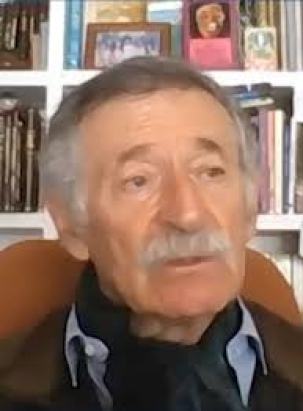
Iair Rubin
__________________
Iair Rubin naciรณ en Buenos Aires en 1941. En la Argentina fue miembro del moviยญmiento juvenil sionista “Hashomer Hatzair”, en el que asumiรณ diferentes cargos desde su adolescencia y en cuya direcciรณn participรณยญ en los aรฑos 60. Se radicรณ en Israel en 1964 y se incorยญporรณ en el kibutz Harel, en las colinas prรณxiยญmas a Jerusalรฉn y junto a la frontera jordaยญna. Alternรณ el trabajo agrรญcola en el kibutz con tareas comunitarias y educativas. Ejerciรณ funciones educativas en comunidadesยญ judรญas en Chile, Ia Argentina, Braยญsil y paรญses latinoamericanos. Cursรณ estudios de ciencias sociales en la Universidad Hebrea de Jerusalรฉn, en la que obtuvo una maestrรญa en sociologรญa de educaciรณn. Participรณ en proyectos eduยญcativos en la universidad, diversas municipalidades, ones del Ministerio de Educaciรณn, el Centro Social “Mishan” de la Histadrut, la Agencia Judรญa y la Organizaciรณn Sionista Mundial. Reside en Jerusalรฉn.
____________________________
Iair Rubin was born in Buenos Aires in 1941. In Argentina he was a member of the Zionist youth movement “Hashomer Hatzair”, in which he assumed different positions from his adolescence and in whose direction he participated in the 60s. He settled in Israel in 1964 and He incorporated Kibbutz Harel, in the hills near Jerusalem and next to the Jordanian border. He alternated agricultural work on the kibbutz with community and educational tasks. He carried out educational functions in Jewish communities in Chile, Argentina, Brazil and Latin American countries. He studied social sciences at the Hebrew University of Jerusalem, where he obtained a master’s degree in sociology of education. He participated in educational projects at the university, various municipalities, ones of the Ministry of Education, the “Mishan” Social Center of the Histadrut, the Jewish Agency and the World Zionist Organization. He resides in Jerusalem.
_________________________________________________

__________________________________________
Las colinas de Granada y los rรญos de Amazonas
-iShalom! -oรญ a mis espaldas y me volvรญ sorprendido, pues no esperaba escuยญchar el saludo familiar que solemos intercambiar con mis compatriotas preยญcisamente en aquel lejano hotel del Amazonas, situado en la capital de! estaยญ do brasileรฑo norteรฑo y tropical.
Me encontraba frente a la mesa de recepciรณn de! suntuoso hotel; no coยญnocรญa a nadie y, aparentemente, nadie me conocรญa. Unos dรญas antes habรญa lleยญgado a aquella tierra hรบmeda y calurosa para cumplir funciones en el seno de la pequeรฑa comunidad judรญa local; habรญa terminado mi trabajo la noche anterior y me preparaba a cerrar cuentas y partir de regreso a San Pablo. No ocultaba mi presencia pero tampoco la ostentaba, asรญ que me asombro que alguien me saludara con un “Shalom” pronunciado en voz alta y clara. No; no estaba soรฑando y lo oรญdo no era producto de mi imaginaciรณn.
Los reflejos me hicieron volver velozmente para enfrentarme con el oriยญgen del saludo. Definitivamente, era un desconocido; se trataba de un homยญbre algunos aรฑos mas joven que yo, de estatura mediana y la tez oscura tรญpiยญca de los brasileรฑos del norte. Me observaba con rostro risueรฑo, afable y nada amenazante, pero no sabรญa quien era. Como no suelo hablar con desconocidos y menos aรบn en la selva brasileรฑa, ni siquiera en el lobby de un respetable hotel, me atrevรญ a vencer la resistencia inicial y le conteste educadamenยญte con otro cordial “iShalom!”
Para su gran desilusiรณn, me volvรญ hacia el mostrador de recepciรณn para terminar de pagar mi cuenta, despedirme gentilmente del conserje, repartir algunas propinas entre quienes me habรญan atendido solรญcitamente durante aquellos dรญas, tomar el bolso y la carpeta de trabajo y dirigirme hacia un sillรณn mullido para esperar el taxi que me llevarรญa al aeropuerto. La sorpresa no habรญa pasado y me sentรญ inquieto mientras me dedicaba a observar a quien hace tan sรณlo unos minutos me habรญa saludado y dejado perplejo y preocuยญpado. No, no habรญa ningรบn motivo de preocupaciรณn: era un personaje caracยญterรญstico de! norte brasileรฑo, vestido con la ropa tรญpica de! trรณpico, de buen porte, facciones agradables e inteligentes, simpรกtico y amable. Al parecer, tambiรฉn el cerraba sus cuentas y se preparaba para partir. Un sujeto comรบn y corriente que no implicaba ninguna amenaza ni motivo de preocupaciรณn. No parecรญa judรญo. Definitivamente, era brasileรฑo: de pura cepa norteรฑa, ta! vez con algo de portuguรฉs, pero de judรญo, nada.
Por lo visto, tampoco yo parezco judรญo y ya me confundieron con turco, griego o italiano. No exhibo ningรบn sรญmbolo que me identifique oficialmenยญte como ta!; no uso el solideo que distingue a los judรญos religiosos, no llevo una cadena con la Estrella de David ni tampoco la chamsa de los judรญos orienยญtales que, al parecer, los protege de! ma! de ojo y les da buena suerte en los negocios. Nada. Ningรบn signo que me identifique como judรญo o israelรญ. Tamยญpoco mi carpeta o mi bolso llevan inscripciones en hebreo que me seรฑalen como ta!, ni tarjeta de identificaciรณn de viaje; nada. No es que oculte mi conยญdiciรณn judรญa ni mi ciudadanรญa israelรญ; todo lo contrario, son motivo de proยญfundo orgullo para mรญ, pero tampoco las luzco como bandera, sobre todo en mis viajes a lugares exรณticos.
Hacรญa cinco o seis dรญas que me encontraba en Manaos. Mas allรก de mis funciones especรญficas en la pequeรฑa comunidad judรญa, dediquรฉ los momenยญtos libres a conocer esa pintoresca ciudad y a recorrer sus largas calles y sus amplias avenidas, invadidas por los colores y aromas provenientes de las aguas profundas y de la selva. Notรฉ el activo comercio de productos llegados de lejanas tierras orientales, europeas y americanas; visitรฉ la vieja sinagoga de clara influencia marroquรญ y las iglesias barrocas y coloniales. Por ultimo, recorrรญ los fantรกsticos y contradictorios restos arquitectรณnicos de un mundo opulento: la รpera del Amazonas, emula de aquella otra que se levanta en Milan y que allรญ, en la proximidad de la jungla brasilera, hospedara con orgullo hada ya varias dรฉcadas las mรกs famosas orquestas de! mundo y los mรกs prestigiosos cantantes de รณpera europeos, para deleite y ostentaciรณn de la aristocracia local, enriquecida entonces con la explotaciรณn del caucho, hoy extinguida.
Durante horas caminรฉ por los mercados y las ferias, rodeado por la a!garabia de un pueblo alegre y a la vez resignado a una vida de esfuerzos y privaciones, sumergido en una variedad infinita de frutos tropicales desconocidos y de especias e hierbas que curan los males de! cuerpo y las penurias del alma. Vรญ los peces mas exรณticos y los pรกjaros mas coloridos del mundo, y me invadiรณ el aroma de las frituras espesas y las salsas excitantes. Desde la baยญranda ruinosa observรฉ el rio ancho y turbio, que trae sus aguas correntosas, lIenos de barro y semillas, frutos y cortezas, grandes navรญos y barcas endebles, desde el corazรณn del Nuevo Continente. Bajรฉ al puerto, el famoso puerto floยญtante de Manaos con cientos de embarcaciones amarradas y otras que llegan y parten, creando por instantes el encuentro de las mercancรญas con los traยญbajadores portuarios y mercachifles, de pasajeros que arrastran sus modestos atados y su precaria existencia por esa vรญa de agua y lodo que los transporta desde las profundidades de esa Amรฉrica oscura y mestiza, con los sueรฑos, esperanzas y alegrรญas.
Cientos de barcazas y navรญos, miles de rostros curtidos por un sol implaยญcable y lluvias prolongadas. Cada embarcaciรณn tiene un nombre de significaยญdo misterioso, que incita a descifrar los secretos del pasado y los enigmas de un futuro incierto. Cada navรญo tiene un destino diferente y propio, pero tambiรฉn la realidad de un mundo distante a conocer y descubrir. Cada rostro enยญcierra una historia fascinante y una vida ruda e incierta, envuelta en rรญos desยญbordados e islas anegadas, a la bรบsqueda permanente de y tierra firme donde plantar un รกrbol y construir una casa, que volverรก a inundarse el prรณximo invierno. Manaos, tierra de aromas y colorido sin fin, de ruidos ensordecedores en las calles y de hondos silencios en sus rรญos profundos.
El taxi habrรญa de llevarme en poco tiempo al aeropuerto, arrancรกndome de ese mundo mรกgico y colorido para transportarme a una San Pablo cosยญmopolita y gris. Mientras tanto, sentado en el lobby de! hotel, contemplaba a quien -tal vez inocentemente- habรญa conseguido inquietarme con el tan judรญo “Shalom”. Ambos permanecemos en nuestros sillones a la espera de algo: yo esperaba a mi taxi; ยฟy el?
Volvi a mirarlo largamente; me devolviรณ una mirada franca, abierta y amistosa, por lo que decidi encararlo para satisfacer mi curiosidad y disipar de una vez por todas mis preocupaciones y sospechas.
-ยฟPor quX me saludรณ con un “Shalom”? -preguntรฉ directamente.
-Porque entendรญ que el seรฑor es judรญo. ยฟAcaso no lo es? -respondiรณ sonriendo, satisfecho de sรญ mismo.
–ยฟY cรณmo sabe que soy judรญo, si se puede saber? -preguntรฉ un poco inquieto.
-Por las letras impresas en las hojas de su carpeta -las seรฑialรณ y agregรณ una nueva pregunta-:
-ยฟNo es hebreo?
Observรฉ la carpeta que llevaba bajo el brazo y comprobรฉ que, por descuiยญdo, algunas hojas habรญan quedado al descubierto y mostraban unas lineas en hebreo.
-Pues, sรญ. Es una revista en hebreo -Esta vez fui yo quien agrego una pregunta-: ยฟEl seรฑor entiende hebreo?ยญ
-No, no entiendo. Pero conozco las letras, y estaba seguro de que eran hebreas -contesto.
Se hizo un corto silencio, con la expectativa de que, una vez iniciado el dialogo, la conversaciรณn empezara a fluir. Al parecer, ambos habรญamos terยญminado nuestras respectivas ocupaciones y no tenรญamos mayor prisa. Volvรญ a observarlo detenidamente: era un hombre de unos cuarenta anos, de tez osยญcura, rostro agradable y ojos inteligentes que reflejaban la tรญpica picardรญa braยญsilera. Por la calidad de su ropa podia entender que pertenecรญa a la clase media acomodada, tal vez un industrial o ejecutivo en viaje de negocios. Tambiรฉn el llevaba un portafolio y una carpeta tan abultada como Ia mรญa con diarios y papeles, pero no en hebreo.
-Pues, sรญ. Es una revista en hebreo -Esta vez fui yo quien agrego una preยญgunta-: ยฟEl seรฑor entiende hebreo?
-No, no entiendo. Pero conozco las letras, y estaba seguro de que eran hebreas -contestรณ.
Se hizo un corto silencio, con la expectativa de que, una vez iniciado el dialogo, la conversaciรณn empezara a fluir. Al parecer, ambos habรญamos terยญminado nuestras respectivas ocupaciones y no tenรญamos mayor prisa. Volvรญ a observarlo detenidamente: era un hombre de unos cuarenta anos, de tez osยญcura, rostro agradable y ojos inteligentes que reflejaban la tรญpica picardรญa braยญsilera. Por la calidad de su ropa podia entender que pertenecรญa a la clase media acomodada, tal vez un industrial o ejecutivo en viaje de negocios. Tambiรฉn el llevaba un portafolio y una carpeta tan abultada como Ia mรญa con diarios y papeles, pero no en hebreo.
-ยฟEI seรฑor es judรญo? -preguntรฉ sin mucho convencimiento y con bastanยญ te curiosidad, tratando de reanudar la conversaciรณn interrumpida.
-No. No soy judรญo -respondiรณ un poco indeciso-. No… en realidad bueno… es un poco complicado… Judรญo, judรญo en realidad no soy… Ahora no Io soy, pero un poco sรญ, ya que mi familia en un tiempo lo fue… Pero ahora…no -agregรณ titubeando.
Como no esperaba una respuesta tan confusa y no menos sorprendido que el primer “Shalom” oido, volvรญ a preguntar con impaciencia:
-ยฟCรณmo que es judรญo pero solo un poco, y ahora no y antes sรญ? -protestรฉ-. 0 se es, o no se es. No se puede ser antes sรญ y ahora no; o solo un poco mucho. Las cosas no son asรญ.
-Calma, calma -se disculpรณ con una sonrisa leve-. Al parecer, mi familia lo fue en el pasado lejano, hace muchรญsimos anos, siglos tal vez… Al parecer, provenimos de una antigua familia judรญa de mucha alcurnia, pero se interrumpiรณ hace anos, y ahora ya no somos mas.
El relato imprevisto prometรญa ser interesante para una tarde de otoรฑo: un hotel cรฉntrico de Ia capital de la selva brasileรฑa. Yo ya tenรญa mi historia; no estaba dispuesto a abandonarla fรกcilmente, asรญ que seguรญ preguntando:
-ยฟY cรณmo sabe todo eso? ยฟQuiรฉn le contรณ que su familia es de procedencia judรญa? ยฟQuรฉ certeza tiene? -ataquรฉ con impaciencia.
-Mi abuelo Zacarรญas -explicรณ con mucha calma-. El viejo siempre me narraba historias del rey David y el rey Salomon. รsos fueron Ios cuentos que oรญa de niรฑo antes de dormir, historias de heroรญsmo y valentรญa, de moral justicia, que poblaron mi infancia; las recuerdo muy bien. Leyendas. El tenรญa gran poder de narraciรณn, una memoria fabulosa y descripciones de imaginaciรณn. Hablaba de las murallas de Jerusalรฉn, de las colinas de la Galilea y del valle del Jordan. Cuando el hablaba, era como si viera esos paisaยญjes con todo detalle. Mas tarde, cuando crecรญ y pude entender las cosas de otra manera, me explico el significado de mi nombre. Tengo un nombre hebreo, ยฟsabe? Aaron. Aunque lo brasilericรฉ y hoy lo escribo “Aron”, sin la hache intermedia. Dicen que fue el hermano del gran Moisรฉs y que de el proยญvienen vuestros sacerdotes. Un gran hombre, ยฟno es verdad?
Asรญ fue como de pronto yo, siempre tan cauto y discreto, por culpa de unas hojas descuidadas, me encontrรฉ en la tรณrrida capital del Amazonas con Aron, un brasileรฑo orgulloso de su nombre y de su procedencia judรญa; mรกs aรบn, de su presunta alcurnia que se remontaba hasta la estirpe de Moisรฉs y su hermano Aaron. Por lo menos eso era lo que el aseguraba, basรกndose en los relatos del abuelo Zacarรญas. Pero yo no habรญa llegado desde tan lejos para oรญr historias de judรญos. Ocupado diariamente con la comunidad judeo-brasiยญleรฑa, habรญa viajado a Manaos para realizar actividades con la antigua comuยญnidad de! Amazonas, que prosperara junto al rio caudaloso a fines del siglo XIX. Me encontrรฉ con los lideres de la comunidad y escuche las historias del pasado y de! presente. Con los jรณvenes hablamos sobre Israel y el Oriente Medio, sobre la condiciรณn judรญa y sus dilemas; les ayude a planificar activiยญdades y proyectos educativos, y una vez terminadas mis funciones, dediquรฉ algunos dรญas libres a recorrer esa excitante regiรณn.
No. No buscaba las antiguas historias de mi pueblo, que conozco bien, sino lo nuevo y exรณtico del fascinante mundo tropical. Por eso descendรญ los rรญos torrentosos en pos de la naturaleza y sus maravillosos secretos. Me encontrรฉ de pronto surcando aguas que conducen al corazรณn de mi contiยญnente americano, amanecรญ en el seno de rรญos profundos que arrastran la siยญmiente de una America virgen que huele a hierbas y frutos, contemple largos crepรบsculos poblados de pรกjaros coloridos que cubren un cielo tรณrrido y carยญgado de lluvia, surque cauces que cortan las islas en un largo y penoso camiยญno en busca del mar. Y hubo tambiรฉn algunos atardeceres frente a un rรญo ancho, un cielo bajo y un silencio milenario poblado de selva, que invitaba ala paz y la relajaciรณn.
Era el corazรณn mismo de una America ancestral, con la fuerza de una naยญturaleza en lucha por su supervivencia, la quietud y el largo silencio, la conยญtemplaciรณn de paisajes fluviales bordeados de selva, el aroma profundo de la tierra densa, del matorral salvaje y del barro, el fruto, la semilla y el รกrbol No. Definitivamente, no fui a buscar los relatos de mi pueblo, pero ellos me encontraron en medio de la selva y, al parecer, no estaban dispuestos a abanยญdonarme tan fรกcilmente. Todo por unas pocas hojas descuidadas, que escaยญparon traviesamente de mi carpeta de trabajo.
Aron continuรณ su relato:
-El viejo Zacarรญas, mi abuelo, contaba que venรญamos de Granada, la vieja capital mora, andaluza y judรญa. Hasta allรญ llega la memoria histรณrica de mi faยญmilia. รl solรญa hablar mucho de Granada y tambiรฉn de Jerusalรฉn, la otra caยญpital amurallada y situada en las colinas.
Cerrรฉ los ojos por un momento e imagine a Granada. La vi con la belleยญza del cielo invernal cargado de lluvia y tambiรฉn en los luminosos amaneceยญres del verano andaluz. La vi con las estrechas calles de Albaicin y la vieja juยญderรญa, y tambiรฉn con los frescos patios con naranjales y las fuentes que regaยญban jardines moros y judXos. La vi por un instante en la plenitud de los miยญnaretes y las altas murallas, soberbias y judรญas. Pero el continuรณ:
-Por supuesto que antes de Granada hubo otra historia, pero la memoria familiar llega tan sรณlo hasta allรญ. Como usted sabe, en esas colinas y entre esas murallas floreciรณ una juderรญa prรณspera, entre la que se contaban mis antepasados: poetas y mรฉdicos, hombres de negocios y cientรญficos, artesanos y orfebres famosos; todos ellos judรญos piadosos, estudiosos de las Sagradas Escrituras. Al parecer, durante generaciones vivieron en plena concordia, protegidos por los califas musulmanes. Esa fue nuestra familia. Como usted seguramente sabe, durante los siglos XII a XV, los reyes moros lucharon conยญtra los espaรฑoles; mi familia luchรณ junto a los รบltimos califas, que finalยญmente fueron derrotados. Fueron expulsados de Espaรฑa y conducidos al desยญtierro en las islas Azores, donde llevaron una vida de prisiรณn y exilio. El viejo Zacarรญas contaba que uno de mis antepasados, un afamado rabino y cientรญfico de nombre Yehudรก, consiguiรณ que lo liberaran y durante aรฑos vivieron en esas islas portuguesas manteniendo su judaรญsmo en secreto, como tantos otros.
Otro antepasado mio, de nombre Eleazar, logrรณ finalmente trasladar a nuestra familia al continente europeo. De allรญ emprendieron en el siglo XVI, junto con muchos otros, la travesรญa hacia el Brasil, con la esperanza de que en el Nuevo Mundo pudieran regresar finalmente al seno de su pueblo y vivir abiertamente como judรญos. La historia, como usted bien sabe, nos demostrรณ que esa ilusiรณn no fue posible.
-Pero ustedes, ยฟdXnde viven hoy dรญa? ยฟDonde esta hoy su familia? -preยญguntรฉ, tratando de obtener mas evidencias de esa historia increรญble.
-Nuestra familia es del nordeste, en donde vivimos desde el siglo XVI, en el estado de Paraiba, entre Campina Grande y Joao Pessoa. Durante siglos mantuvimos de alguna forma nuestra religiรณn y nuestras costumbres: los nombres, el Shabbat, algunas festividades, la prohibiciรณn de comer puerco y de mezclar came con leche, las viejas leyendas transmitidas de padres a hijos y a nietos, los casamientos en el seno de algunas familias, la tradiยญciรณn… Lamentablemente, eso se perdiรณ.
-ยฟCuรกndo? -volvรญ a preguntar con impaciencia.
-No sรฉ precisamente; tal vez con la generaciรณn de mis abuelos… Mis padres ya no se consideran judรญos. Tampoco son cristianos, pero dejaron de mantener las viejas tradiciones -dijo tristemente.
– ยฟY usted? ยฟUsted no se considera judรญo? ยฟNo se siente judรญo? -insistรญ.
-Bueno, yo… ya le dije. Yo sรญ me siento judรญo, sรฉ que eso estรก en mi sangre. Pero no sรฉ; en verdad me encuentro confuso y ambivalente. Lo que es nuestra historia, lo que me contaba mi abuelo, lo que leo hoy dรญa … todo eso me da mucha emociรณn y lo amo mucho. Pero usted sabe como es la vida: tiene su curso y uno fluye con ella. No es fรกcil regresar a las raรญces. Se neceยญsita mucha fuerza de voluntad y mucha valentรญa, y yo no sรฉ si las tengo -resยญpondiรณ con un poco de timidez y vergรผenza, pero sin perder la sonrisa.
Se hizo un corto silencio. Pensรฉ un poco y tomรฉ coraje para preguntar lo que ya flotaba en el ambiente:
-ยฟNo le gustarรญa volver a ser judรญo, regresar al seno de su pueblo, recupeยญrar la historia?
-No sรฉ -respondiรณ titubeando-. Hace falta mucho coraje para ello, mucha fuerza de voluntad. Tai vez algรบn dรญa…
-Y ademรกs de las historias y leyendas de su abuelo, ยฟhay algo mรกs que lesยญ testimonie vuestro origen? -volvรญ a preguntar inquisitorialmente.
-Hay un viejo baรบl que conservรฉ en el sรณtano. A veces lo abro y toco los objetos; no a todos los reconozco. Es el precioso tesoro de la familia que guarยญdo con celo. No sรฉ que hay de autรฉntico en esos viejos objetos, pero los conยญservo con cuidado. Son trozos de pergaminos antiguos con letras hebreas un poco borradas por el tiempo, algunas cajitas de cuero, viejos utensilios de bronce y plata cuyo significado ignoro. Mi abuelo Zacarรญas solรญa decir que son objetos sagrados y antiguos, que provienen de Granada, de Sevilla y otros lugares de Espaรฑa y Portugal. Fueron traรญdos por nuestros antepasados desde la vieja Europa y ocultados a los inquisidores, conservados en secreto y pasados de generaciรณn en generaciรณn como el gran tesoro de nuestra familia. A mรญ, el baรบl me fue entregado el dรญa que cumplรญ trece aรฑos, con la promesa de cuiยญdarlo y pasarlo a mi vez a mis hijos o a mis nietos.
Cerrรฉ los ojos un instante e imaginรณ el viejo baรบl. Toquรฉ con cuidado los pergaminos y trate de descifrar las letras hebreas semi-borradas. Palpรฉ emoยญcionado el cuero mustio de las filacterias, el cobre oscuro y Ia plata ennegreยญcida de los antiguos candelabros y las mezuzot. Pero frente a mi surgiรณ de pronto el conserje, que amablemente requerรญa mi presencia.
-Seรฑor Rubin, su taxi lo espera allรญ, bajo la lluvia. Si no se apura, llegarรก tarde al aeropuerto. Mire que a esta hora el transito es muy pesado, y con la lluvia el viaje se puede demorar.
Nos despedimos efusivamente. Aron no me ofreciรณ su tarjeta con la diยญrecciรณn y el telรฉfono, como era de esperar, y tal vez por eso tampoco yo le di la mรญa. El “Shalom” pronunciado ahora en forma mas clara que al inicio de nuestro encuentro tenรญa un significado mรกs fuerte que entonces.
Cรณmodamente sentado en el taxi, en camino al aeropuerto y en medio de una fuerte lluvia tropical, seguรญa viendo un viejo baรบl lleno de tesoros de Granada.
___________________________________________________


_____________________________________________
The Hills of Granada and the rivers of the Amazon
-iShalom! -I heard behind me and I turned around surprised, because I did not expect to hear the familiar greeting that we usually exchange with my compatriots precisely in that distant hotel in the Amazon, located in the capital of! northern and tropical Brazilian state.
I was in front of the reception desk of a sumptuous hotel; I didn’t know anyone and, apparently, no one knew me. A few days before he had arrived in that humid and hot land to carry out duties within the small local Jewish community; I had finished my work the night before and was preparing to close accounts and leave back to San Pablo. I didn’t hide my presence but I didn’t flaunt it either, so I was surprised that someone greeted me with a loud and clear “Shalom.” No; I was not dreaming and what I heard was not a product of my imagination.
The reflections made me turn quickly to face the origin of the greeting. He was definitely an unknown; He was a man a few years younger than me, of medium height and the dark complexion typical of northern Brazilians. He looked at me with a smiling, affable and non-threatening face, but I didn’t know who he was. Since I don’t usually talk to strangers and even less so in the Brazilian jungle, not even in the lobby of a respectable hotel, I dared to overcome the initial resistance and politely answered him with another cordial “iShalom!”
To his great disappointment, I turned to the reception desk to finish paying my bill, say goodbye graciously to the concierge, distribute some tips among those who had solicitously assisted me during those days, take my bag and work folder and head towards an armchair. soft to wait for the taxi that would take me to the airport. The surprise had not passed and I felt restless as I dedicated myself to observing the person who only a few minutes ago had greeted me and left me perplexed and worried. No, there was no reason for concern: it was a characteristic character of! northern Brazilian, dressed in typical clothing! tropic, of good bearing, pleasant and intelligent features, friendly and kind. Apparently, he too was closing his accounts and preparing to leave. An ordinary guy who posed no threat or cause for concern. He didn’t look Jewish. He was definitely Brazilian: of pure northern stock, ta! maybe with some Portuguese, but nothing Jewish.
Apparently, I don’t look Jewish either and I’ve already been mistaken for Turkish, Greek or Italian. I do not display any symbol that officially identifies me as ta!; I do not wear the skullcap that distinguishes religious Jews, I do not wear a chain with the Star of David nor the chamsa of Eastern Jews which, apparently, protects them from! Ma! eye and gives them good luck in business. Nothing. No sign identifying me as Jewish or Israeli. Nor do my folder or my bag have inscriptions in Hebrew that mark me as ta!, nor a travel identification card; nothing. It’s not that I hide my Jewishness or my Israeli citizenship; On the contrary, they are a source of deep pride for me, but I don’t wear them as a flag either, especially on my trips to exotic places.
I had been in Manaus for five or six days. Beyond my specific duties in the small Jewish community, I dedicated my free moments to getting to know that picturesque city and exploring its long streets and wide avenues, invaded by the colors and aromas coming from the deep waters and the jungle. I noticed the active trade of products from distant eastern, European and American lands; I visited the old synagogue with clear Moroccan influence and the baroque and colonial churches. Finally, I toured the fantastic and contradictory architectural remains of an opulent world: the Amazon Opera, emulating the other one that was built in Milan and that there, in the proximity of the Brazilian jungle, had proudly hosted for several decades now the most famous orchestras of! world and the most prestigious European opera singers, to the delight and ostentation of the local aristocracy, then enriched by the exploitation of rubber, now extinct.
For hours I walked through the markets and fairs, surrounded by the excitement of a happy people and at the same time resigned to a life of effort and deprivation, immersed in an infinite variety of unknown tropical fruits and spices and herbs that cure ailments. of! body and the hardships of the soul. I saw the most exotic fish and the most colorful birds in the world, and the aroma of thick fried foods and exciting sauces invaded me. From the ruined railing I observed the wide and murky river, which brings its rushing waters, full of mud and seeds, fruits and bark, large ships and flimsy boats, from the heart of the New Continent. I went down to the port, the famous floating port of Manaus with hundreds of boats moored and others that arrive and depart, creating for moments the meeting of the goods with the port workers and peddlers, of passengers who drag their modest bundles and their precarious existence through that path of water and mud that transports them from the depths of that dark and mixed America, with dreams, hopes and joys.
Hundreds of barges and ships, thousands of faces weathered by a relentless sun and prolonged rains. Each boat has a name with a mysterious meaning, which encourages us to decipher the secrets of the past and the enigmas of an uncertain future. Each ship has its own different destination, but also the reality of a distant world to know and discover. Each face contains a fascinating story and a rough and uncertain life, wrapped in overflowing rivers and flooded islands, in the permanent search for land on which to plant a tree and build a house, which will flood again next winter. Manaus, land of endless aromas and colors, of deafening noises in the streets and of deep silences in its deep rivers.
The taxi would take me to the airport in a short time, taking me away from that magical and colorful world to transport me to a cosmopolitan and gray San Pablo. Meanwhile, sitting in the lobby of! hotel, I contemplated who – perhaps innocently – had managed to unsettle me with the very Jewish “Shalom”. We both remain in our chairs waiting for something: I was waiting for my taxi; and the?
I looked at him for a long time again; He gave me a frank, open and friendly look, so I decided to face him to satisfy my curiosity and dispel my worries and suspicions once and for all.
-Why did X greet me with “Shalom”? -I asked directly.
-Because I understood that the man is Jewish. Isn’t it? -He responded smiling, satisfied with himself.
-And how do you know that I am Jewish, if you can know? -I asked a little worried.
-Because of the letters printed on the pages of your folder -he pointed to them and added a new question-:
-Isn’t he Hebrew?
I looked at the folder he was carrying under his arm and realized that, due to carelessness, some pages had been left exposed and showed some lines in Hebrew.
-Well yes. It is a magazine in Hebrew -This time it was I who added a question-: Does the gentleman understand Hebrew?
-No I do not understand. “But I know the letters, and I was sure they were Hebrew,” He answered.
There was a short silence, with the expectation that, once the dialogue began, the conversation would begin to flow. Apparently, we had both finished our respective occupations and were in no further hurry. I looked at him carefully again: he was a man of about forty, with a dark complexion, a pleasant face and intelligent eyes that reflected the typical Brazilian mischief. From the quality of his clothes I could understand that he belonged to the wealthy middle class, perhaps an industrialist or executive on a business trip. He also carried a briefcase and a folder as thick as mine with diaries and papers, but not in Hebrew.
-Is the man Jewish? -I asked without much conviction and with enough curiosity, trying to resume the interrupted conversation.
-No. “I’m not Jewish,” he answered a little hesitantly. Noโฆ actually wellโฆ it’s a bit complicatedโฆ Jewish, I’m not really Jewishโฆ Now I’m not, but I am a little bit, since my family once wasโฆ But “Nowโฆno,” he added hesitantly.
Not expecting such a confusing answer and no less surprised than the first “Shalom” I heard, I asked again impatiently:
-So he’s Jewish but only a little, and now he’s not and before he was? -I protested-. Either it is, or it is not. You cannot be yes before and no now; or just a little bit a lot. Things are not like that.
“Calm down, calm down,” he apologized with a slight smile. Apparently, my family was in the distant past, many years ago, centuries perhapsโฆ Apparently, we come from an ancient Jewish family of high rank, but it was interrupted years ago, and now we are no longer.
The unforeseen story promised to be interesting for an autumn afternoon: a central hotel in the capital of the Brazilian jungle. I already had my story; I wasn’t willing to give her up easily, so I kept asking:
-And how do you know all that? Who told you that your family is of Jewish origin? What certainty do you have? -I attacked impatiently.
“My grandfather Zacarรญas,” he explained very calmly. The old man always told me stories about King David and King Solomon. Those were the stories I heard as a child before going to sleep, stories of heroism and bravery, of moral justice, that populated my childhood; I remember them very well. Legends. He had great storytelling power, a fabulous memory and imaginative descriptions. He spoke of the walls of Jerusalem, the hills of Galilee and the Jordan Valley. When he spoke, it was as if he saw those landscapes in great detail. Later, when I grew up and could understand things
In another way, I explained the meaning of my name. I have a Hebrew name, you know? Aaron. Although I Brazilianized it and today I write it “Aron”, without the intermediate axe. They say that he was the brother of the great Moses and that your priests come from him. A great man, isn’t he?
That’s how I, always so cautious and discreet, because of some neglected leaves, suddenly found myself in the torrid capital of the Amazon with Aron, a Brazilian proud of his name and his Jewish origins; even more so, of his alleged lineage that went back to the lineage of Moses and his brother Aaron. At least that was what he claimed, based on Grandpa Zacarรญas’ stories. But I had not come that far to hear Jewish stories. Busy daily with the Jewish-Brazilian community, he had traveled to Manaus to carry out activities with the ancient community of! Amazon, which prospered next to the mighty river at the end of the 19th century. I met with community leaders and heard stories of the past and of! present. With the young people we talked about Israel and the Middle East, about the Jewish condition and its dilemmas; I helped them plan activities and educational projects, and once my duties were finished, I spent some free days touring that exciting region.
No. I was not looking for the old stories of my people, which I know well, but for the new and exotic of the fascinating tropical world. That’s why I descended the torrential rivers in pursuit of nature and its wonderful secrets. I suddenly found myself crossing waters that lead to the heart of my American continent, I woke up in the bosom of deep rivers that carry the seeds of a virgin America that smells of herbs and fruits, I contemplated long twilights populated by colorful birds that covered a torrid sky and loaded with rain, I cross channels that cut through the islands on a long and arduous path in search of the sea. And there were also some sunsets in front of a wide river, a low sky and an ancient silence filled with jungle, which invited peace and relaxation.
It was the very heart of an ancient America, with the force of a nature fighting for its survival, the stillness and long silence, the contemplation of river landscapes bordered by jungle, the deep aroma of the dense earth, the wild scrub and the mud, the fruit, the seed and the tree No. I definitely did not go looking for the stories of my people, but they found me in the middle of the jungle and, apparently, they were not willing to abandon me so easily. All because of a few careless pages, which mischievously escaped from my work folder.
Aron continued his story:
-Old Zacarรญas, my grandfather, said that we came from Granada, the old Moorish, Andalusian and Jewish capital. That’s as far as my family’s historical memory goes. He used to talk a lot about Granada and also about Jerusalem, the other walled capital located in the hills.
I closed my eyes for a moment and imagined Granada. I saw it with the beauty of the rain-laden winter sky and also in the bright dawns of the Andalusian summer. I saw it with the narrow streets of Albaicin and the old Jewish quarter, and also with the cool patios with orange groves and the fountains that watered Moorish and Jewish gardens. I saw it for a moment in the fullness of the minarets and the high walls, superb and Jewish.
But he continued:
-Of course there was another story before Granada, but the family memory only reaches there. As you know, on those hills and within those walls a prosperous Jewish community flourished, among which were my ancestors: poets and doctors, businessmen and scientists, famous artisans and goldsmiths; all of them pious Jews, students of the Holy Scriptures. Apparently, for generations they lived in complete harmony, protected by the Muslim caliphs. That was our family. As you surely know, during the 12th to 15th centuries, the Moorish kings fought against the Spanish; My family fought alongside the last caliphs, who were ultimately defeated. They were expelled from Spain and driven into exile on the Azores Islands, where they lived a life of prison and exile. Old Zechariah said that one of my ancestors, a famous rabbi and scientist named Yehudah, managed to get him released and for years they lived on those Portuguese islands keeping their Judaism a secret, like so many others.
Another ancestor of mine, named Eleazar, finally managed to move our family to the European continent. From there they undertook the journey to Brazil in the 16th century, along with many others, in the hope that in the New World they could finally return to the bosom of their people and live openly as Jews. History, as you well know, showed us that this illusion was not possible.
-But you, where do you live today? Where is your family today? -I asked, trying to obtain more evidence of that incredible story.
-Our family is from the northeast, where we have lived since the 16th century, in the state of Paraiba, between Campina Grande and Joao Pessoa. For centuries we maintained our religion and customs in some way: the names, the Shabbat, some festivities, the prohibition of eating pork and mixing meat with milk, the old legends transmitted from parents to children and grandchildren, marriages within some families, traditionโฆ Unfortunately, that was lost.
-When? -I asked again impatiently.
-I don’t know precisely; maybe with my grandparents’ generationโฆ My parents no longer consider themselves Jewish. “They are not Christians either, but they stopped maintaining the old traditions,” he said sadly.
-And you? You don’t consider yourself Jewish? Don’t you feel Jewish? -I insisted.
-Well, Iโฆ I already told you. I do feel Jewish, I know that is in my blood. But I do not know; I really find myself confused and ambivalent. What our history is, what my grandfather told me, what I read todayโฆ all of that gives me a lot of emotion and I love it very much. But you know how life is: it has its course and you flow with it. It is not easy to return to the roots. “It takes a lot of willpower and a lot of courage, and I don’t know if I have them,” he responded with a little shyness and embarrassment, but without losing his smile.
There was a short silence. I thought a little and took the courage to ask what was already floating in the air:
-Wouldn’t you like to be a Jew again, return to the bosom of your people, recover history?
“I don’t know,” he answered hesitantly. It takes a lot of courage, a lot of willpower. Maybe somedayโฆ
-And besides the stories and legends of your grandfather, is there anything else that testifies to your origin? -I asked again inquisitorially.
-But you, where do you live today? Where is your family today? -I asked, trying to obtain more evidence of that incredible story.
-Our family is from the northeast, where we have lived since the 16th century, in the state of Paraiba, between Campina Grande and Joao Pessoa. For centuries we maintained our religion and customs in some way: the names, the Shabbat, some festivities, the prohibition of eating pork and mixing meat with milk, the old legends transmitted from parents to children and grandchildren, marriages within some families, traditionโฆ Unfortunately, that was lost.
-When? -I asked again impatiently.
-I don’t know precisely; maybe with my grandparents’ generationโฆ My parents no longer consider themselves Jewish. “They are not Christians either, but they stopped maintaining the old traditions,” he said sadly.
- And you? You don’t consider yourself Jewish? Don’t you feel Jewish? -I insisted.
-Well, Iโฆ I already told you. I do feel Jewish, I know that is in my blood. But I do not know; I really find myself confused and ambivalent. What our history is, what my grandfather told me, what I read todayโฆ all of that gives me a lot of emotion and I love it very much. But you know how life is: it has its course and you flow with it. It is not easy to return to the roots. “It takes a lot of willpower and a lot of courage, and I don’t know if I have them,” he responded with a little shyness and embarrassment, but without losing his smile.
There was a short silence. I thought a little and took the courage to ask what was already floating in the air:
-Wouldn’t you like to be a Jew again, return to the bosom of your people, recover history?
“I don’t know,” he answered hesitantly. It takes a lot of courage, a lot of willpower. Maybe somedayโฆ
-And besides the stories and legends of your grandfather, is there anything else that testifies to your origin? -I asked again inquisitorially.
-There is an old trunk that I kept in the basement. Sometimes I open it and touch the objects; I don’t recognize all of them. It is the precious treasure of the family that I guard jealously. I don’t know what’s authentic about those old objects, but I preserve them with care. They are pieces of ancient parchment with Hebrew letters a little erased by time, some leather boxes, old bronze and silver utensils whose meaning I do not know. My grandfather Zacarรญas used to say that they are sacred and ancient objects, that they come from Granada, Seville and other places in Spain and Portugal. They were brought by our ancestors from old Europe and hidden from the inquisitors, preserved in secret and passed down from generation to generation as the great treasure of our family. To me, the trunk was given to me on the day I turned thirteen, with the promise to take care of it and pass it on to my children or grandchildren.
I closed my eyes for a moment and imagined the old trunk. I carefully touched the parchments and tried to decipher the half-erased Hebrew letters. I excitedly touched the faded leather of the phylacteries, the dark copper and blackened silver of the ancient candelabras and mezuzot. But the janitor suddenly appeared in front of me, who kindly requested my presence.
-Mr. Rubin, your taxi is waiting for you there, in the rain. If you don’t hurry, you’ll be late for the airport. Please note that at this time the traffic is very heavy, and with the rain the trip may be delayed.
We said goodbye effusively. Aron did not offer me his card with the address and telephone number, as expected, and maybe that’s why I didn’t give him mine either. The “Shalom” pronounced now more clearly than at the beginning of our meeting had a stronger meaning than then.
Comfortably sitting in the taxi, on the way to the airport and in the middle of a heavy tropical rain, I kept seeing an old trunk full of treasures from Granada.
___________________________________________

____________________________


_________________________________________


