Milton Cohen Henríquez–Novelista judío-panameño/Panamanian Jewish Novelist–“Los cuadernos delirantes de Pedrarias”/ “Pedrarias’ Delirious Notebooks” – fragmento de la novela histórica y mística/excerpt from the historical and mystical novel

Milton Cohen Henríquez

_________________________________________________

Licenciado en Derecho y Ciencia Política. Milton C. Henríquez ha sido diputado a la Asamblea Nacional de Panamá, ministro de Gobierno (Interior y Justicia) y embajador ante el Reino de España, entre otros muchos cargos. En diferentes momentos, ha sido consultor o asesor del presidente de la República, del presidente de la Asamblea Nacional y de la presidente de la Corte Suprema de Justicia de Panamá. Ha dirigido revistas, periódicos informativos de radio y de televisión. Ha dirigido y ha asesorado campañas electorales y ha sido profesor en escuela secundaria y en universidades en Panamá y en España. En 2023, participó en la inauguración de la “Brandeis University Initiative on the Jews of the Americas (JOTA)”. Ha publicado varios ensayos Su primera novela Los cuadernos delirantes de Pedrarias .fue publicada en Panamá en 2018.

______________________________________________________________

Graduate in Law and Political Science, Milton C. Henríquez has been a deputy to the National Assembly of Panama, Minister of Government (Interior and Justice) and ambassador to the Kingdom of Spain, among many other positions. At different times, he has been a consultant or adviser to the President of the Republic, the President of the National Assembly and the President of the Supreme Court of Justice of Panama. He has directed magazines, informative newspapers on radio and television. He has directed and advised electoral campaigns and has been a teacher in secondary schools and in universities in Panama and Spain. In 2023, he participated in the inauguration of the “Brandeis University Initiative on the Jews of the Americas (JOTA).” He has published several essays. His first novel Los Cuadernos delirantes de Pedrarias was published in Panama in 2018.

_____________________________________________________

Pedro D’Avila — “Pedrarias” Escritor de los cuadernos/Author of the Notebooks

___________________________________________________

–¡Pardés!-dijo el jajám HaLevy.

Yo pensé que me dijo “pardiez”. o sea, la exclamación de “¡por Dios!” en español antiguo, pero cuando le pregunté alarmado: ¿Qué insensatez dije?”, soltó una carcajada y respondió:  

–¡Ninguna! Al contrario, acaba usted de toparse con el huerto.  

Ante mi cara de absoluta perplejidad, continuó:   —PaRDéS, en hebreo, significa “huerto”. Pero también se refiere a un método de lectura de los textos sagrados. La palabra se construye con las cuatro consonantes iniciales de las palabras Peshat, Remez, Derash y Sod, y usted lo acaba de aplicar ante la descripción de Pedrarias sobre le ritual del ataúd.   Me pidió que investigara al regresar, qué significaba cada palabra y el método PaRDéS, pero quería continuar la sesión.  

—Como le mencioné, hace unas semanas hemos pasado los Yamim Noraim, y las grandes festividades de Rosh Hashaná y Yom Kipur. No las llaman fiestas porque no son fiestas de Año Nuevo con las que de seguro usted celebra; a lo sumo son comidas festivas o hasta banquetes en Rosh Hashaná, y una cena especial al terminar el ayuno de rezos y recogimiento espiritual, de humilde sometimiento a al Creador y centrado en la misericordia y el perdón.  Yo asentí con respeto para indicar que comprendía.  

–El mes que empieza ahora, de acuerdo con el ciclo agrícola en Israel, se inicia con la plantación de las semillas. Si llevamos esto a un plan espiritual, sería el período de la siembra de los nuevos propósitos que asumimos luego de la introspección y el perdón del mes anterior, en el cual habíamos limpiado el terreno espiritual de las malas hierbas y otros contaminantes a través de la expiación.  

–¿Y qué tan completa es esa limpieza? — pregunté.  

–Tan completo como es capaz un ser humano. Pero quiero hacerle recordar otra peculiaridad de Rosh Jodesh Jeshván que mencioné hace un momento y no sé si fui claro. Esta cabeza del mes ¡es bicéfala! En ese momento pensé: “Esto ya está rayado en lo ridículo”. Pero como el rabino estaba bastante divertido con esto y yo estaba allí buscando entender los delirios de Pedrarias, no me iba a hacer ver como el más racional en ese punto.  

–¿Y qué le quiero decir con esto? Pues bien, como lo mencioné antes, este Rosh Jodesh, o día inicial de nuevo mes, no solo es de dos días ¡sino que empieza en el último día del mes anterior y termina al final del primer día de este mes!   “¡Ahora sí la botaron!”. Pensé, pero seguí escuchando en silencio.   –

-¿Y qué deberíamos entender de esto? Pues nos indica que hay una simbiosis entre el período de limpieza con el de siembra; nos dice que de nada vale lo primero, o sea, limpiar el terreno, si en el nuevo año sembramos las mismas semillas que nos llevaron a pecar el año anterior.   Me miro ca los ojos, fijamente, redujo su intensidad emocional a niveles usuales y señaló de forma muy pausada  

–Siento que antes de poder sembrar nuevos conocimientos en mi mente en su mente y su corazón, mediante el descubrimiento que usted está por hacer, debemos asegurarnos de que esa tierra espiritual sobre la cual van a ser cultivados. Así como las propias semillas de conocimientos que serán insertadas, no contengan impurezas. Considero indispensable, por lo tanto, que usted lleve a cabo una terapia de perdón.  

Me intrigó ese concepto, pero le insistí que yo no era judío ni seguía sus festividades y que nada de eso lo había visto en las Leyes noájidas. El jajám HaLevi sonrió de forma comprensiva y me explicó:  

–Si bien para la época del período de Yanim Noraim que acaba de pasar, yo no pensaba que usted iba a estar espiritual ni intelectualmente en donde está en este momento, tampoco es cierto que no le estoy pidiendo un rito religioso ajeno a sus creencias. Lo que deseo que haga es un proceso místico de depuración espiritual. Este es indispensable para poder recibir, sin hacerse daño, la verdad que es posible para que usted vaya a encontrar en sus investigaciones y meditaciones.     

El rabino HaLevy continuó su argumentación mientras yo trataba de comprender lo que acaba de decir. “¡Entonces sí había algo muy valioso en ese cuaderno viejo!”, me dije, y de una vez me re-enfoque en las palabras del rabino.  

–Mire don Pablo, Kabbalah significa literalmente, el acto de recibir, y no haberse purificado mediante el proceso de del perdón, podría ser peligroso para su alma, porque puede recibir cosas equivocadas o dejar de captar perlas de conocimiento verdadero.  

Cuestioné, todavía un poco dudoso, si esta terapia sería lo últimos antes de entrar la investigación; el jajám HaLevy guardó uno de esos silencios eternos dentro de una mirada fija y penetrante a mis ojos, y luego de unos segundos me preguntó qué pensaba yo. Sonreí con picardía y le dije:  

–De seguro no será lo último. Pero está bien, lo voy a hacer y le pido perdón por mi resistencia; no estoy acostumbrado a no estar en control.   Con una expresión provocadora preguntó el rabino Ha Levy:   –¿Ha pensado usted en ser presidente? Presidente de la República, quise decir.  

–¿Ser presidente?–

-¡Pero si yo los hago!–  

El jajám Ha Levy me clavó una de esas largas e inexpresivas miradas y continuó:

–Como le dije hace un momento Kabbalah es literalmente “recibir”; no se puede recibir en una vasija cerrada. Controlar supone que uno sabe todo, que se cierra a lo demás. Controlando todo no se logra recibir la verdad; solo al liberarse del control del ego es uno capaz de recibirla.  

–Agradezco la explicación y le aseguro que pondré mi mayor esfuerzo en seguir sus instrucciones—dije con total seguridad.  

–Se las daré en su momento, pero antes quiero sugerirle el nombre de la persona que vive entre España y Francia, que podría reunirse con usted mientras esté en Europa para guiarle en proceso de depuración en el que está.   Le confirmé al rabino que me interesaba mucho la idea. 

-Es una dama de familia cristiana, pero es cabalista. Además, aunque es francesa, es experta en es castellano antiguo y en ladino; ha publicado varios libros de estos temas, siendo de mayor impacto uno llamado Rabí Cervantes cabalista. Luchó en la Segunda Guerra Mundial dentro de la Resistencia Francesa contra los nazis; abogó porque España aboliera el Decreto de la Expulsión de 1492 contra los judíos y es una profunda conocedora de la verdad que nos unifica a todos.   El jajám HaLevy me informó que su nombre era Marianne Perrin pero prefería usar su nom de plume: Dominique Queshott. Él ya la había contactado y ella se mostró dispuesta a recibirme, pero estaba perdiendo la vista y le costaba mucho trasladarse. Tendría que ir yo hasta Carboneras en Andalucía o trasladarla y alojarla en Madrid.

Acepté de buen grado y agradecí al rabino por esto. Me advirtió, sin embargo, que no debía abusar de la buena disposición de la señora Perrin no tampoco descuidar a mi esposa y el tiempo de familia. Acordé que así sería.

_______________________________________________________

__________________________________________-______________

“Pardés!” said Haham HaLevy. I thought he told me “pardiez”. that is, the exclamation “By God!” in old Spanish, but when I asked him alarmed: What nonsense did I say? ”, he gave a hearty laugh and replied:

–None! On the contrary, you have just come across the orchard.

Before my face of utter perplexity, he continued:

–PaRdéS, in Hebrew, means “orchard”. But it also refers to a method of reading sacred texts. The word is built with the four initial consonants of the words Peshat, Remez, Derash and Sod, and you have just applied it to Pedrarias’ description of the coffin ritual.

He asked me to investigate when I returned, what each word meant and the PaRDéS method, but I wanted to continue the session.

–As I mentioned, a few weeks ago we celebrated the, Yomim HaNaorim and the great festivals of Rosh Hashanah and Yom Kippur. They are not called parties because they are not like the New Year’s parties with which you surely celebrate; at most, there are festive meals or even banquets on Rosh Hashanah, and a special dinner at the end of the fast of prayers and spiritual absorption, of humble submission to the Creator and focused on mercy and forgiveness.

I nodded respectfully to indicate that I understood.

–The month that begins now, according to the agricultural cycle in Israel, begins with the planting of the seeds. If we take this to the level of a spiritual plan, it would be the period of planting the new purposes that we assume after the introspection and forgiveness of the previous month, in which we had cleaned through atonement the spiritual terrain of weeds and other contaminants .

–And how complete is that cleaning? — I asked.

–As complete as a human being is capable of. But I want to remind you of another peculiarity of Rosh Chodesh Cheshvan that I mentioned a moment ago and I don’t know if I was clear. This head of the month is two-headed! At that moment I thought: “This is already bordering on ridiculous.” But since the rabbi was quite amused about this point, and I was there seeking to understand Pedrarias’s delusions, I wasn’t going to make myself sound like the more rational on that point.

–And what do I want to say with this? Well, as I mentioned before, this Rosh Chodesh, or beginning day of a new month, is not only two days long, but it begins on the last day of the month before, and ends at the end of the first day of this month!

“Now they really blew it!” I thought, but kept listening in silence.

–And what should we understand from this? Well, it tells us that there is a symbiosis between the cleaning period with the sowing period; It tells us that the first act is worthless, that is, clearing the ground, if in the new year, we sow the same seeds that led us to sin the previous year.

He looked me straight in the eye, reduced his emotional intensity to usual levels and pointed very slowly.

–I feel that before we can sow the new knowledge that is in my mind, into your mind and into your heart, through the discovery that you are about to make, we must make sure of the spiritual soil on which they are going to be cultivated. And also, that the seeds of knowledge that will be planted, do not contain impurities. Therefore, I consider it essential that you carry out a forgiveness therapy.

I was intrigued by that concept, but I insisted that I was not a Jew nor did I follow their festivals, and that I had not seen anything like that in the Noahide Laws. Haham HaLevi smiled sympathetically and explained to me:

–Although at the time of the Yanim Noraim period that just passed I did not think that you were going to be spiritually or intellectually where you are at this moment, I’m not asking you to carry out a religious rite alien to your beliefs. What I want you to do is a mystical process of spiritual cleansing. This is essential for your to be able to receive, without hurting yourself, the truth that for you can find in your investigations and meditations.

Rabbi HaLevy continued his argument while I tried to understand what he just said. “So there was something very valuable in that old notebook!” I said to myself, and then at once I refocused on the rabbi’s words.

–Look Don Pablo, Kabbalah literally means the act of receiving, and not having been purified through the forgiveness process could be dangerous for your soul, because you can receive wrong things or stop capturing pearls of true knowledge.

I questioned, still a little doubtful, if this therapy would be the last step before entering the investigation; the jajam HaLevy kept one of those eternal silences with a fixed and penetrating look at my eyes, and after a few seconds he asked me what I thought. I smiled mischievously and said:

I smiled mischievously and said: –Surely it won’t be the last. But that’s okay, I’m going to do it and I apologize for my resistance; I’m not used to not being in control. With a provocative expression, Rabbi Ha Levy asked: “Have you thought about being president?

President of the Republic,? I wanted to say.

–Be president?

–Yes, have!

Haham Ha Levy gave me one of those long, blank stares and continued:

–As I told you a moment ago, Kabbalah is literally “receive”; it cannot be received by a closed vessel. To control supposes that one knows everything, that one is closed to the rest. by controlling everything, it is not possible to receive the truth; only by freeing oneself from the control of the ego is one able to receive it.

“I appreciate the explanation and I assure you that I will do my best to follow your instructions,” I said confidently.

–I will give them to you at the time, but first I want to suggest the name of the person who lives between Spain and France, who could meet with you while you are in Europe to guide you in your purification process. I confirmed to the rabbi that I was very interested in the idea.

–She is a lady from a Christian family, but she is a Kabbalist. In addition, although she is French, she is an expert in Old Castilian and Ladino; She has published several books on these topics, the one with the most impact being Rabbi Cervantes, Kabbalist. She fought in World War II within the French Resistance against the Nazis; she advocated for Spain to abolish the Expulsion Decree of 1492 against the Jews and is a profound connoisseur of the truth that unifies us all. Haham HaLevy informed me that her name was Marianne Perrin but that she preferred to use her nom de plume: Dominique Queshott. He had already contacted her, and she was willing to meet with me, but she was losing her sight, and it was very difficult for her to travel. I would have to go to Carboneras in Andalusia or move her and lodge her in Madrid. I gladly agreed and thanked the rabbi for this. He warned me, however, not to abuse Mrs. Perrin’s good disposition, nor to neglect my wife and my family time. I agreed that it would be like that.

Translation by Stephen A. Sadow

_______________________________________________________________

Mario Satz — Escritor y cabalista judío-argentino-español/Argentine Spanish Writer and Kabbalist — “La flauta de perdón”/”The Flute of Pardon”

Mario Satz

________________________________________________

Website of Mario Satz

Mario Satz — Amazon

_______________________________________________
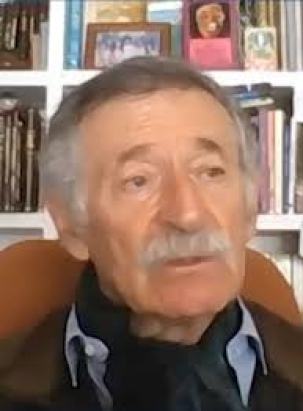
SATZ, MARIO (1944–), poeta, autor y ensayista argentino y español. Nació en Coronel Pringles, Argentina. Sus extensos viajes tuvieron una influencia significativa en su escritura. Vivió en Israel durante tres años y desde 1978 vive en Barcelona, ​​España. Satz es un prolífico autor de poesía y obras de narrativa y no ficción que incluyen libros sobre la Cabalá y la historia judía. Su primera poesía está íntimamente relacionada con el mundo natural. Examina la belleza y el poder de la naturaleza en prácticamente todas sus manifestaciones terrenales. Las obras de no ficción del autor revelan su interés por la historia y el misticismo judíos y son evidencia de su capacidad para un pensamiento teológico profundo. Entre los textos representativos en esta línea se encuentran Poética de la Kábala (1985), Judaísmo: 4.000 años de cultura (1982) y El dador alegre: ensayos de Kábala (1997), además de autor de una vasta serie novelística titulada Planetario, que consta de cinco novelas que componen un sistema solar textual. Las novelas Sol (1976), Luna (1977) y Tierra (1978) forman una trilogía en la que el autor utiliza las ciudades de Jerusalén y Cuzco, Perú, como lugares para examinar la historia y la cultura latinoamericanas junto con la tradición judía. Las novelas posteriores, Marte (1980) y Mercurio (1990), no continúan la historia de la trilogía aunque forman parte del proyecto Planetario. Su libro Tres cuentos españoles (1988) adquiere una perspectiva mucho más centrada con el retrato de la España multicultural del siglo XIII en la que las culturas cristiana, musulmana y judía existieron y prosperaron una al lado de la otra. La novela Azahar (1996) continúa con la misma se centra en Iberia, esta vez con un enfoque en las tradiciones religioso-místicas desde la Cabalá hasta El Libro de los Muertos de Tibet.

Adaptado de Jewish Virtual Learning.

___________________________

SATZ, MARIO (1944– ), Argentine-Spanish poet, author, and essayist. He was born in Coronel Pringles, Argentina. His extensive travels had significant influence on his writing. He lived in Israel for three years and from 1978 he lived in Barcelona, Spain. Satz is a prolific author of poetry, and narrative and nonfiction works that include books about Kabbalah and Jewish history. His early poetry is intimately connected to the natural world. He examines the beauty and power of nature in practically all its earthly manifestations. The author’s nonfiction works reveal his interest in Jewish history and mysticism and are evidence of his capability for profound theological thinking. Representative texts in this vein include Poética de la Kábala (1985), Judaísmo: 4,000 años de cultura (1982), and El dador alegre: ensayos de Kábala (1997).He is also the author of a vast novelistic series titled Planetarium, which consists of five novels that comprise a textual solar system. The novels Sol (1976), Luna (1977), and Tierra (1978) form a trilogy in which the author utilizes the cities of Jerusalem and Cuzco, Peru, as sites for examining Latin American history and culture together with Jewish tradition. The subsequent novels, Marte (1980) and Mercurio (1990), do not continue the story of the trilogy though they are part of the Planetarium project. His book Tres cuentos españoles (1988) takes on a much more focused perspective with the portrayal of multicultural 13th century Spain in which Christian, Muslim, and Jewish cultures existed and thrived side by side.. The novel Azahar (1996) continues with the same focus on Iberia, this time with a focus on religious-mystical traditions from Kabbalah to The Book of the Dead from Tibet.

Adapted from Jewish Virtual Learning.

____________________________________________________

La flauta del perdón

–El perdón es una flauta de dos bocas—dijo el Rabí Lo Iadúa, el Desconocido, a su discípulo Daniel.

–¿Te refieres a la flauta doble de los griegos, al aulós o caramillo?—interrogó Daniel.

–Me refiero al perdón, tan difícil y tan necesario.            

Viajaban al Qumram para visitar las ruinas del antiguo monasterio de los esenios. En esa época crecían lirios en el desierto y los wadis murmuraban aguas humildes, ecos de las pasadas lluvias. En Jérico, el gran oasis extendía sus verdes redes de cultivos, sus altas palmas. Ligeramente triste, el Desconocido prosiguió:

           –Podemos perdonar si, a nuestra vez somos perdonados. Por eso el perdón es una flauta de dos bocas: no importa quien imprima el soplo de la música y quien la deje salir al aire del mundo. No importa quien haya herido primero ni tampoco la causa que motivó la agresión, el desprecio, la cruel ironía, la pequeña o gran traición. La música del perdón es un tiempo que fluye para curar las llagas de aquél que fuera detenido, falseado, deformado por nuestros actos.

          –De modo que no basta—terció Daniel, tratando de aclarar las oscuras enseñanzas del maestro—con que pidamos perdón, pues si el otro o la otra no nos responden, a su vez, con su pedido de perdón, el milagro de la reconciliación no se produce, ¿verdad?

          –Para las amarguras de la vida la flauta tiene ocho orificios, siete arriba y uno abajo. Los de arriba son nuestros sentidos-ojos, oídos, fosas nasales y boca–: el octavo hace vibrar el ombligo, sitio de transfiguración, huella de nuestra ligazón con el pasado de la especie, marca fraterna para todos. Perdonar es difícil porque quien expresa sus afectos, nunca sabe cuándo ni cómo serán recibidos y mal habituados, orgullosos, queremos una respuesta inmediata a nuestros actos, efectos visibles de nuestros actos invisibles. Quien pida perdón debe, antes, reconocer su error, lo equívoco de sus intenciones. Hay perdón auténtico cuando el fallo es reconocido y no se lo cubre con el polvo del engreimiento ni con la seda de omnipotencia. Ninguno de nosotros es tan perfecto—en relación al prójimo para pronunciar-esa horrible frase: es cosa suya.

          Frente al Mar Muerto, los ojos de los viajeros parpadearon deslumbrados por una luz mineral. Por fuera, se hallaban en el punto más bajo de la tierra. Por dentro, en cambio, Daniel y el Desconocido subían en melodías de flauta solar hacia las dos bocas del horizonte, el este y el oeste.

______________________________________________________

      The Flute of Pardon

      “Pardon is a flute with two mouths,” is a flute with two mouths,” said Rabbi Lo Yadua, the Unknown One to his disciple Daniel.

         “Are you referring the flute of the Greeks, the aulos, with its double reed or the pipes,” asked Daniel.

         “I am referring to pardon, so difficult and so necessary.

         They were traveling to Qumran to visit the ruins of the ancient monastery of the Essenes. At this time of year, lilies were growing in the desert, and the wadis humble waters murmured, echoes of past rains. In Jericho, the great oasis extended its green cultivated webs, its tall palm trees. A bit sad, the Unknown proceeded: “We can pardon, if  in turn, we are pardoned. For that reason, pardon is a flute with two mouths; it doesn’t matter who makes the sound of the music and who lets it go out to the world. It doesn’t matter who was hurt first nor even the cause that motivated the aggression, the slight, the cruel irony, the small or great betrayal. The music of pardon is a time that flows to cure the wounds of whom was detained, misled, deformed by our acts.”

         “So, then it is not enough,” Daniel commented, trying to interpret the obscure teachings of the master, “ that we ask for pardon, because if the other person doesn’t respond to us, in turn,with a request for pardon, the miracle of reconciliation doesn’t take place, right?”

         “For the bitter parts of life, the flute has eight orifices, seven above and one below. Those above are our senses-eyes, ears, nostrils and mouth-: the eighth causes the vibration of the naval; place of transfiguration the source of our link with the past of the species, fraternal marking for everyone. To pardon is difficult because whoever expresses his feelings, never knows when or how they will be received, and not in the habit, proud, we want an immediate response to our acts, invisible effects to our invisible acts. Whoever may ask for pardon should, before doing so, recognize his error, the mistake in his intentions. There is authentic pardon when the mistake is recognized and not covered by the dust of vanity or with the silk of omnipotence. None of us is so perfect to be able to pronounce-in relation to our neighbor-that horrible phrase: it’s your problem.

      Facing the Dead Sea, the travelers’ eyes blinked, dazzled by the mineral light. Outside, they found themselves in the lowest point on earth, Inside, in contrast, Daniel and the Unknown One rose with melodies of a solar flute toward the two mouths of the horizon, the east and the west.

Translation by Stephen A. Sadow

_________________________________________

Algunos de los libros sobre la Cábala de Mario Satz/Some of the books about the Kabbalah by Mario Satz

_______________________________________________________

Leonor Coifman — Artista visual judío-argentina/Jewish Argentine Visual Artist — “Arte espiritual judía”/ “Jewish Spiritual Art”

Leonor Coifman

_________________________________________________________

Leonor Coifman,  ha cursado estudios en las Escuelas Nacionales de Arte Manuel Belgrano y Prilidiano Pueyrredón, estudió Historia del Arte con Córdova Iturburu, Crítica Plástica con Moraña y perfeccionamiento plástico con Juan Muñeza, habiendo realizado labor docente en escuelas de la Municipalidad de la Ciudad de Buenos Aires y en su taller de Libre Expresión para niños.

Ha realizado numerosas exposiciones colectivas e individuales en conocidas instituciones tales como el Fondo Nacional de las Artes, el salón Isidoro Steimberg, Universidad de Belgrano, Ateneo Popular de la Boca, Sociedad de artistas Plásticos, Círculo Hebreo Argentino, Teatro Municipal General San Martín, Manzana de las Luces, Planetario Galileo Galilei, etc.Ha expuesto en las ciudades más importantes del Perú, en la Ciudad española de Vigo, en México (Primera Bienal Iberoamericana de Pintura).

_______________________________________________________________

Leonor Coifman, has studied at the Manuel Belgrano and Prilidiano Pueyrredón National Art Schools, studied Art History with Córdova Iturburu, Art Criticism with Moraña and advanced art with Juan Muñeza, having done teaching work in schools of the Municipality of the City of Buenos Aires and in its Free Expression workshop for children.

He has made numerous collective and individual exhibitions in well-known institutions such as the National Arts Fund, the Isidoro Steimberg room, the University of Belgrano, Ateneo Popular de la Boca, the Society of Plastic Artists, the Argentine Hebrew Circle, the General San Martín Municipal Theater, Manzana. de las Luces, Planetarium Galileo Galilei, etc. He has exhibited in the most important cities of Peru, in the Spanish City of Vigo, in Mexico (First Ibero-American Biennial of Painting.)

La obra entera de Leonor Coifman

______________________________________________________________

Pinturas, Grabados, Arte Digital/Paintings, Engravings and Digital Art

Grabados con la técnica de Coolagraf/Prints made with Coolagraph techniques

Jai (Vida)
Pintura con base serigráfica/Painting on Serigraph
La entrega de las diez mandamientos IThe giving of the ten commandments
Obra digital sobre originales/Digital works over originals
La zarza ardiente/The Burning Bush Obra digital sobre originales/Digital works over originals
Mandala Judía
Obra digital sobre originales/Digital works over originals
Creación
Obra digital sobre originales/Digital works over originals
Malkut (Princess)
Obra digital sobre originales/Digital works over originals
Al fin/At the end of times — Arte digital
Contacto
Grabado, monocopia intervenido/Print, a monocopy in which the artist employs several techniques
Banderas sobre diversidad/Flags over Diversidad

__________________________________________________________________________________

Libro Artista: Tema de Luz/ Artist’s Book: Theme of Light

The candle burns in my window/I, Leonor Coifman, about to turn/eighty-one follow it’s dance, hoping that it with/ it’s light dissipate my shadows and illuminate my world/ and the whole world. /And while the story comes to my memory of the Rabbi and his teaching in “While the Candle Burns” life/ there is still time to repair, to reinvent one’s self, to begin again, to return to make mistakes again and/ to get up again, despite the/shadows that accompany us,/While a candle burns in my window, the light shines, I have life. — Leonor Coifman
On Shabbat, Genie lights the additional/candles, in honor of the many grandmothers, that she found to be Jewish/but had never/been able to light the Sabbath candles./On lighting these candles/Genie imagines them/standing at her side/sharing that/sacred moment. — After centuries,/her Jewish condition. — Genie
What appears to be an act of faith/to light the candles to welcome Shabbat/ to thank life, is a gift to the soul./while two doves wait to take off,/ carrying a message of light. — Martha Wolff
What signs are there in the sky,/I can’t decipher from them/what mystery is hidden in my being/that I can’t decipher (find.) I walk in my soul/move blindly looking for signs./figuring out day by day/what I live (or what I dream)/Knowing that the first road/ is for the inside and that later/I will be able fly off through the world. — Leonor Coifman
A candle, lit, chalice of fire,/between the sky that says goodbye to the day,/its clarity dying in order to give itself/ to the penumbra of the night. small among the immensity that surrounds it/is for Shabbat, the little universe./that prays thanking the Divine Light. — Martha Wolff
Bits of Time Lived — Life is not delivered with/an expiration date, and when that date/approaches us, with serenity and fear,/ we look at ita course and like a puzzle, we begin to put together the times live/with pressure and with love. — Leonor Coifman
Questions and Answers — November 19, 2014,/at nightfall, whenever we have the courage/to ask our being what it needs,/dawn will break and on our pillow/will be the answer./Our life cannon be lived by others, life has to be lived with a passion/so intense, that it hurts./To know that it was fought for/cried over, laughed over and that/is the only way that I know about, to know/that I am here, doing it. Deserving of being Alive.
Two candles brighten, two doves/ pairing with the believer and with the Creator/ creating an invisible union of love/ and celebration. — Martha Wolff
Building Dreams — History speaks of our wisdom/ among the nations and it is necessary ro remind then/ again. Everyone of us, will be a/ bastion with a common front against/ discrimination, hatred and ignorance./ Let us be the dignified transmitters of our legacy/ for future generations, so the Miracle of Light is not lost. – Leonor Coifman
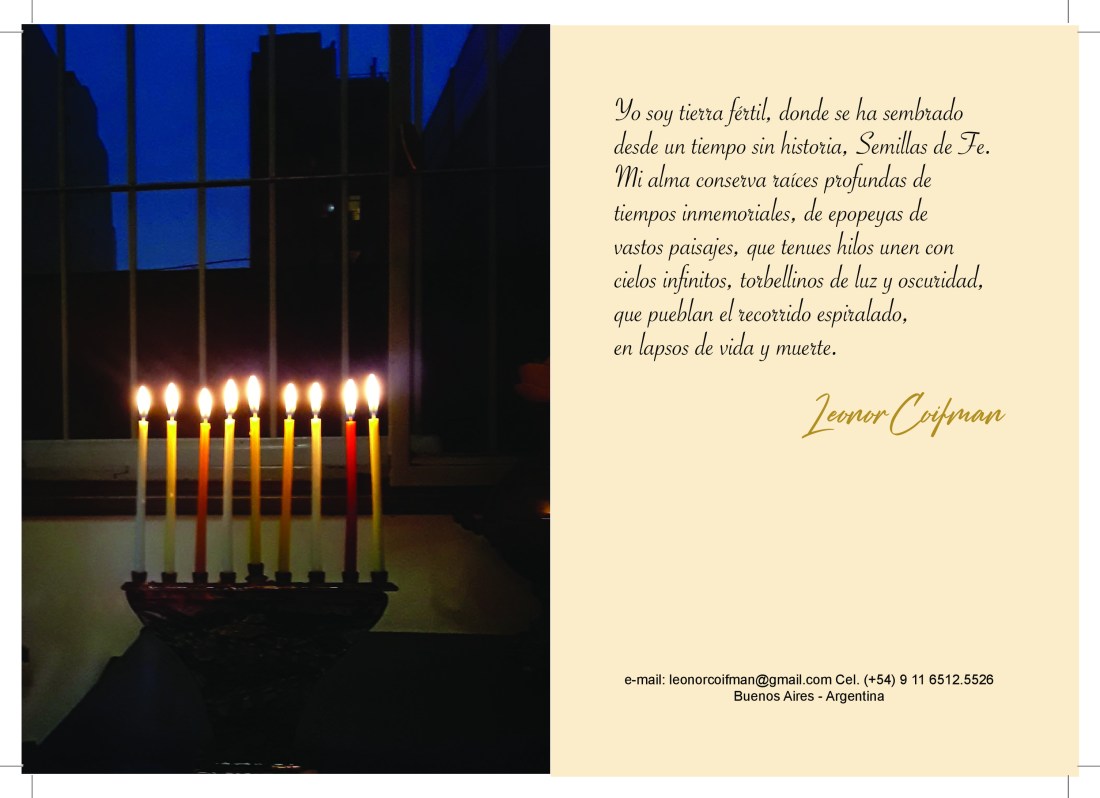
I am fertile earth, which has been seeded/ since a time without history, Seeds of Faith./ My soul conserves deep roots from/ immemorial time, of epopeyas/of vast passages which tenuous threads unite/ with infinite skies, whirlwinds of light and darkness,/that populate the spiralled trip/ in lapsus of life and death. — Leonor Coifman

________________________________________________________

Esculturas/Sculptures

_____________________________________________________________

Leonor Scliar-Cabral — Linguista e poeta brasileira judaica/ Brazilian Jewish Linguist and Poet — Poemas de Espanha velha (Sefarad) y de hoje/Poems from Olden Spain (Sefarad) and Today

Leonor Scliar-Cabral

Leonor Scliar-Cabral é doutora em Linguística pela Universidade de São Paulo e pós-doutorada pela Universidade de Montreal Professor Emérita da UFSC. Em 1991, ela se tornou presidente da Sociedade Internacional de Psicolinguística Aplicada e atualmente é membro honorário. Foi presidente da União Brasileira de Escritores (1995-1997) e presidiu a ABRALIN, durante o biênio 1997-1999. Pertence ao Conselho Editorial: Revista Internacional de Psicolinguística, Cadernos de Estudos Linguísticos, Letras de Hoje (fundadora), Revista ABRALIN entre outros. Pesquisadora do CNPq desde a década de 1970, coordena o Grupo de Pesquisa em Produtividade Linguística Emergente, alimentando a base de dados mundial CHILDES e os projetos “Ler & Ser: Combatendo o Analfabetismo Funcional” e Cátedra UNESCO MECEAL da UFSC. Junto com dezenas de artigos publicados no Brasil e no exterior estão seus livros: Introdução à Lingüística; Introdução à Psicolinguística (1990); Romances e canções sefarditas – séculos XV a XX (1990); Memórias de Sefarad (1994); Do senectute erotica (1998); Poesia Espanhola da Idade de Ouro (1998); “O outro, o mesmo” (In JL Borges, Obras completas, (1999); Cruz e Sousa, o Poeta do Exílio, versão poética para os franceses com M.-H. Torres das Lendas do Filme de Sylvio Back (2000); Princípios do sistema do alfabeto português e Guia Prático de Alfabetização (2003), The Sun Fell in Guaíba (2006); com CR Caldas-Coulthard; Unraveling Psycholinguistics: Basic Concepts (2008); Sagração da Alfabeto (2009); Psycholinguistics: Desafios Científicos e Tecnológicos (2010). Foi indicada como finalista do Prêmio Jabuti 2010, na Categoria Poesia, pela obra Consagrando o Alfabeto.

____________________________________________________

Leonor Scliar-Cabral holds a PhD in Linguistics from University of São Paulo and a postdoctoral degree from the University of Montréal Professor Emeritus, UFSC. In 1991, she became President of the International Society of Applied Psycholinguistics and is currently an Honorary Member. She was president of the Brazilian Union of Writers (1995-1997) and presided over ABRALIN, during the biennium 1997-1999. She belongs to the Editorial Board: International Journal of Psycholinguistics, Cadernos de Estudos Linguísticos, Letras de Hoje (founder), ABRALIN Magazine among others. Researcher at CNPq since the 1970s, she coordinates the Emerging Linguistic Productivity Research Group, feeding the world database CHILDES and the projects “Ler & Ser: Combating Functional Illiteracy” and UNESCO MECEAL Chair at UFSC. Along with dozens of papers published in Brazil and abroad are her books: Introduction to Linguistics; Introduction to Psycholinguistics (1990); Sephardic Romances and Songs – XV to XX Century (1990); Memories of Sefarad (1994); Of senectute erotica (1998); Spanish Poetry of the Golden Age (1998); “The other, the same” (In J.L. Borges, Complete Works, (1999); Cruz e Sousa, the Poet of Exile, poetic version for the French with M.-H. Torres of the Legends of the Film of Sylvio Back (2000); Principles of the Portuguese Alphabet system and Practical Guide to Literacy (2003), O sol caía in Guaíba (2006); with C. R. Caldas-Coulthard; Unraveling Psycholinguistics: Basic Concepts (2008); Sagração da Alfabeto (2009); Psycholinguistics Scientific and Technological Challenges (2010). She was nominated as a finalist for the 2010 Jabuti Prize, in the Poetry Category, for the work Consagrando o Alfabeto.

____________________________________________________

Poemas da Leonor Scliar-Cabral/

Poems by Leonor Scliar-Cabral

________________________________________________

Toledo

Toledo, Ciudad de Consuelo

Debrum nas janelas cegas e paredes de ladrilhos:

uma profusão de lírios orna estrelas de Davi,

nos idos de ha-Levi.

Os pedreiros muçulmanos te ergueram, Alamliquim,

as trinta e duas pilastras da toledana magia.

Estes trinta e seis degraus, rezando a cabala do Rabi,

salmodiavam até os banhos, nos idos de ha-Levi.

Os passos na pobre Aljama, paradas na Alcana rica,

separadas pelos muros e seus cerrados postigos.

Os segredos de tuas casas, se abriam para os jardins

internos com suas fontes cercados por alecrins,

nos idos de ha-Levi.

______________________________________________

Toledo, City of Consolation

Surrounding blind windows and tiled walls:

a profusion of lilies decorates stars of David,

ha-Levi long gone.

Muslim masons raised you up, Alamliquim,

the thirty-two pillars of the Toledano magic.

These thirty-six steps, saying the Rabbi’s cabal,

even melted in the baths, ha-Levi long gone.

The steps in poor Aljama, steps in rich Alcana

separated by the walls and their closed shutters.

The secrets of your houses, opened to the gardens

internal with its fountains surrounded by rosemary,

 ha-Levi long gone.

Translated by Stephen A. Sadow

___________________________________________________

Girona

Girona

Harab bem Ishaq e as consagradas lâmpadas;

palavras escuras sempre iluminadas.

Vozes de Provença, presságios nas calls

vinte-e-duas letras, vinte-e-dois degraus.

Intrincado Dédalo, de arcos e arcanos

e a estrela amarela e os vermelhos panos.

___________________________________________

Girona

Harab bem Ishaq and the consecrated lights:

obscure words always illuminated.

Voices of Provence, presentiments of the calls,

twenty-two letters, twenty-two steps

Intricate Daedalus, of arches and arcane things

and the yellow star and the red clothes

Translated by Stephen A. Sadow

______________________________________________

Granada

Shavout em Granada

Seus pezinhos sobem em alamedas

pelos jardins da Alhambra e suas roseiras

antes da lua cheia.

Romãs maduras penduradas em sua cesta

e dos vinhedos, cachos de uvas frescas,

antes da lua cheia.

Com a fragrante flor de laranjeira

você vai enfeitar as estrelas

antes da lua cheia

e os sinos tocam suas bênçãos

e o Rabino Yosef já começou a ler

antes da lua cheia.

Antes da tinta no sangue a lua cheia

estanque esta fonte para sempre

de uma fortaleza inacabada e eterna.

_____________________________

Shavout em Granada

Your small feet climb avenues

through the gardens of the Alhambra and its rose bushes

awaiting the full moon comes.

Ripe pomegranates hang from your basket

and from the vineyards, bunches of fresh grapes,

awaiting of the full moon.

With the fragrant orange blossom

you will garland the stars

awaiting the full moon

and the bells sound their blessings

and Rabbi Yosef already starts reading

awaiting the full moon.

Earlier than the color of blood in the full moon

this fountain impervious forever

to an unfinished and eternal fortress.

Translated by Stephen A. Sadow

__________________________________________________

Falso Discurso

“E tão bem estar só

              vagar a esmo pela minha casa

que fala das lembranças

              sem possíveis partilhas. . .”

Em solilóquio eu mesma me convenço.

“Como e bom estar só!

              Pinçar aquela foto esmaecida

do baralho escondido

captura do que fomos.”

Em solilóquio eu mesma me convenço.

              “Mais que nunca estar só!

              Ir ao jardim, colher fruto maduro

no almoço improvisado

a mesa, sem convivas.”

Em solilóquio eu mesma me convenço.

“Para sempre, estar só.

              Rolar na cama grande desgrenhada,

              e como um animal

sem máscara dormindo.”

Eternamente só

              Nos parques onde os pares se entrelaçam,

a falsa persuasão

inútil se recolhe

              e o solilóquio aos prantos se soterra.

____________________________________________

Deceiving Words

“It feels so good to be by myself.

              to wander through my house

that speaks of memories

              exempt of memories

in a soliloquy I convince myself of that.

“How good it is to be by myself!

       To fetch that faded out picture

in a hidden deck of cards,

a glimpse of what we were.”

In a soliloquy I convince myself of that.

              “More than ever, to be by myself!

              To go to the orchard, to grab a ripe fruit

in the improvised lunch

a table without guests.”

In a soliloquy I convince myself of that.

“Forever, to be by myself.

              To roll over on the big bed disheveled,

              and like an animal

sleeping with no mask.”

In a soliloquy I convince myself of that.

By myself for eternity.

       In parks where couples embrace,

the false perception

useless curls itself in

              and the soliloquy is flooded by tears.

Translated by Regina Igel

_________________________________________

Fogo e cinzas

Amarotei as cartas uma a uma

              E dos sonhos desfeitos fiz o fogo

              que Lilith me ensinou no paraíso

chama roubada

              Mas o musgo reveste por inteiro

              o irregular das pedras de meu muro,

              em flor o resedá e o laranjal,

              com seu perfume.

              É setembro dos ventos e do pólen,   

Das derradeiras cinzas de lareira,

              sopradas vida e morte nos caminhos

              inominados.

_____________________________________________

Fire and Embers

One by one I crushed the letters

       and of the end of my dreams I lit the fire

       taught to me by Lilith in paradise

stolen flame.

       But moss covers all

       the stones’ unevenness on my wall,

              the resedá and the orange tree are blossoming

with their perfume.

       It is March of winds and pollen,

of the last embers in the fireplace,

              life and death wafted along roads

              unnamed.

Translated by Regina Igel

________________________________

Sephirot

              Numa esfera perdida un paraíso

              Está a minha esfera não sei quando

E eu vou galgando em círculos os ramos

              secos de pomas.         

Os meus cabelos brancos se emaranham

              disfarce dos espinhos ressequidos,

onde eu busquei romãs, maças y figos

              do paraíso.

       Perdida estou, jamais, porém, meu sonho

e a rasgada pele em gretas geme

              as derradeiras gotas que alimentam

              o que está morto.

_________________________________________

Sephirot

       In a lost sphere a paradise

       waits for me I don’t know when

and I go on climbing in circles the branches

       dry of fruits.

       My gray hair is disheveled

       a mask for dried out thorns,

where I searched for pomegranates, apples and figs

              from paradise.

       I’m lost, but never my dream

and my torn cracked skin moans

       for the last drops that feeds

       what is dead.

Translated by Regina Igel

___________________________________________________________________________

Saúl Yurkievich (1931-2005) — Escritor y poeta judío-argentino-francés/Argentine French Jewish Writer and Poet — “Insania”/”Insanity” — cuento sobre un rabino indagador/short-story about a investigating rabbi

Saúl Yurkievich

Saúl Yurkievich fue un poeta y crítico literario argentino. Nació en 1931 de una familia de inmigrantes judíos en La Plata, donde se educó y comenzó su carrera académica. En la década de 1950 se unió al movimiento de vanguardia en Buenos Aires. La carrera de Yurkievich comenzó como erudito y crítico de la literatura latinoamericana. Su primer trabajo publicado, Valoración de Vallejo (1958), lo convirtió en uno de los eruditos más rigurosos de la poesía de Vallejo y de la literatura latinoamericana en general. Tres años después, Yurkievich publicó su primera colección de poesía Volanda Linde Lumbre (1961). La mayor parte del trabajo de Yurkievich fue escrito en Francia, donde vivió desde 1968 trabajando como profesor de literatura latinoamericana en la Universidad de París VIII (Vincennes). En París mantuvo una fuerte amistad y vínculos literarios con escritores como Julio Cortázar, quien más tarde lo nombró su ejecutor literario. Yurkievich impartió cursos y seminarios sobre literatura latinoamericana en varias universidades estadounidenses, incluidas Harvard, Chicago, Columbia, Johns Hopkins, UCLA, Maryland y Pittsburgh.  Autor de una notable producción poética basada en el experimentalismo de la década de 1960, Yurkievich es conocido sobre todo por su vasta, lúcida y esclarecedora obra crítica, que lo convirtió en uno de los críticos literarios más conocidos del mundo de habla hispana.

Adaptado de: http://dla.library.upenn.edu/

____________________________________________

Poemas de Saúl Yurkievich: https://wordpress.com/post/jewishlatinamerica.wordpress.com/6748

_____________________________________________

Saúl Yurkievich was an Argentine poet and literary critic. He was born in 1931 in a Jewish immigrant family in La Plata, where he was educated and began his academic career. In the 1950s he joined the avant-garde movement in Buenos Aires. Yurkievich career started as a scholar and critic of Latin American literature. His first published work, Valoración de Vallejo (1958), made him one of the most rigorous scholars of Vallejo’s poetry, and of Latin American literature in general. Three years later, Yurkievich published his first poetry collection Volanda Linde Lumbre (1961). Most of Yurkievich’s work was written in France, where he lived since 1968 working as professor of Latin American literature at the Université de Paris VIII (Vincennes). In Paris he maintained strong friendship and literary ties with writers such as Julio Cortázar, who later named him his literary executor. Yurkievich taught courses and seminars on Latin American literature in several American universities including Harvard, Chicago, Columbia, Johns Hopkins, UCLA, Maryland, and Pittsburgh. Author of a remarkable poetic production rooted in the experimentalism of the 1960s, Yurkievich is mostly renowned for his vast, lucid, and elucidating critical oeuvre, which turned him in one of the best known literary critics in the Spanish-speaking world.

Adapted from: http://dla.library.upenn.edu/

______________________________________________________________

“Insania”

De inquirir con ahínco por la primera causa, otros pueblos hubieron concebido de un dios único, un supremo hacedor omnipresente y omnipotente. Pero el deseo de personificarlo y venerarlo por imagen primó en su ánimo. Algunos reivindicaron un principio primordial, como el fuego de los mazdeístas que es el agni de los arios, y coaligaron esta energía originaria con deidades corpóreas. Aunque capaces de variadas metamorfosis, ellos adaptaron aspectos identificables y las adoraron en efigie. Adoraron una diversidad encarados y en cada uno reconocieron poderes particulares.

       Sólo esa grey que vivió la expulsión y el éxodo, esa desterrada estirpe que conoció la desnuda aridez del desierto, que holló la innumerable y movediza arena, descreyó de los dioses inferiores reverenciados por los reinos vecinos. Consagró la majestad de un solo Dios verdadero, causante absoluto de cuanto hubo, existe y será.

       El Plasmador, ese omnipresente, omnímodo, engendra con su verbo el mundo y sobre él y por siempre se enseñorea. Por obra de su palabra, a partir del tenebroso, del ominoso desorden, separa el día de la noche, aparta de las tierras mojadas las secas, hace aparecer y proliferar las plantas y los animales y, conformándolo a su semejanza, genera al hombre. Bien sabe el versado reb Schapse de dónde es oriunda y cómo se origina la humana progenie y cuál es el pacto que la liga al Adonai, a los dichos de su boca, a su doctrina que como lluvia gotea, al rocío de su razonamiento.

       Inaccesible, innominable, incognoscible, este Altísimo rebasa toda humana capacidad. Su ilimitada perfección, su inabarcable dominio no son figurables, exceden cualquier forma de representación. Vedada toda idolatría, tanta potestad desprovista de imagen requiere de sus fieles una ardua comprensión. (También esto lo sabe reb Schapse). Su simultánea infinitud escapa al limitativo y sucesivo lenguaje. Su intrínseca y transcendental entidad sobrepasa a todo lo que El causa, a cuanto de El se desprende. Pero a la par el Eterno es el Verbo revelado a los hombres por medio del Libro, fuente y modelo de todo discurso. Puesto que el Dios que se manifiesta es el Dios que se expresa—Aquel que al pronunciar evidencia–, dado que su palabra está trasladada a la Sagrada Escritura, transpuesta en símbolos, ella equivale a su Creación y en ella su saber se cifra. Transmitido por un arco de letras a sus elegidos, es menester que éstos interroguen y interpreten con constancia el Libro a fin de penetrar en sus más arcanos sentidos. Deben internarse por uno de sus innúmeros pasajes e ir –como va ahora reb Schapse –adentrándose, por progresiva dilucidación de sus claves, en ese saber que tanto escatima su anhelada claridad.

       De tal modo reflexiona nuestro inquieto, nuestro reverente reb Schapse. Tales preceptos, tales prevenciones repite, se repite este insatisfecho, este estremecido indagador mientras lee a la oscilante de un pabilo. Balanceándose al ritmo de su quejumbroso canturreo, a la par que masculla, que masca las sílabas, lee y medita sobre esos versículos de Ezequiel en que Dios le da su palabra por la boca, le ordena abrir la boca y comerla, deposita sobre su mano un rollo de endechas y le hace comer aquel rollo, henchir con él su vientre y digerirlo. Se hamaca musitado reb Schapse en la inconmensurabilidad de la noche, en ese su sucucho, sentado ante el ilimitado, el incesante, el permutable  

Libro de los libros, y rodeado de su descendencia, de comentarios que intentan desentrañarlo y los tratados que recapacitan acerca de sus mandamientos. El Ínclito, el Incognoscible—colige reb Schapse—incita a sus elegidos a la interrogación de los textos, a escrutarlos, a clarificarlos, a la especulativa justificación de la ley. Ellos buscan su salud en la exégesis, tanto que tienen ineludible carácter de predestinación. Por eso, concorde con su piadosa conciencia, se considera autorizado y hasta compulsado a indagar en los textos todo lo cuestionable, a extremar su demanda de dilucidación, ¿Qué límite impone a su saber un libro infinito, inagotable, en cuyo entendimiento reside la salvaguarda de sus lectores?

       Así cavilando, amparado por la escritura donde su mente mora más que su cuerpo sobre la tierra, durante esa larga noche en vela, cuando el velorio se entenebrece y calla con el mundo, reb Schapse osa formular las preguntas, vuelve a plantearse los enigmas. Su inherente supremacía—se dice–, su condición de ser casual sobrepasa todo lo que El se desprende. Si el verbo y el mundo son una obra, no son Dios sino sus emanaciones, recipientes o instrumentos de su voluntad. Mundo y palabra, por su imperfección, solo en parte pueden ser Dios, la palabra que precede al mundo. Es más Dios que éste, o el mundo que la involucra es más Dios que ella. O palabra o mundo extremando el argumento, resultan opósitos de Dios. Por lo menos, parcialmente. La palabra de Dios gesta al mundo, pero el hombre, dotado por Dios de palabra, sólo alcanza con ella a remedar el mundo. ¿O consigue el hombre, por intermedio de la palabra dotar a la suya de facultad genésica?     

Acuciado reb Schapse por su sed de saber, no puede dejar de plantearse el arduo dilema de la similitud con Dios. ¿Cómo Dios, que no es susceptible de representación—demanda reb Schapse–, pudo configurar el hombre a su imagen? La humana apariencia sólo resulta concebible en tanto reflejo de alguno de los atributos divinos. No todos poseen igual importancia. Por eso se impulso el establecimiento una jerarquía entre las propiedades o poderes de Jehová. Así fue estatuido el orden de sus diez resplandores, diez nombres que aluden a lo indecible, diez coronas o espejos de Dios. Reb Schapse sabe que, ascendiendo por sus excelencias, su majestad es menos que capacidad, su capacidad es menos que su inteligencia, su inteligencia es menos que su sabiduría, su sabiduría es menos que su supremacía. Desleída copia, el hombre guarda pizcas, migajas virtuales de algunos de esos atributos que en escasa medida le fueron conferidos, los conserva como simiente sujeta tanto al germinación como a la corrupción.  

Con desosiego, temeroso de toda transgresión, reb Schapse desemboca ineludiblemente en el insoluble problema del mal. ¿Cómo no procurar que se transparente lo velado, que se disipen las incógnitas relativas a la impureza o deficiencia del hombre y  la imperfección o inconclusión del mundo? ¿Por qué se retira Dios de su eternidad para crear algo separado de su plenitud? Porque no soporta—arriesga reb Schapse—su henchimiento y necesita, por su propia salud, desprenderse de una no equiparable hechura, o porque no le basta su inmanencia y su ser en sí requiere trascender por intermedio de una defectuosa creación. ¿Representa la Creación una ruptura catastrófica de la unidad? No puede reb Schapse—so pena de irreverencia o de extralimitación—pensar en la incapacidad aunque parciales o involuntarias de Dios. Presumirlo constituiría un pecado contra la infalibilidad divina. No puede argüirque Dios crea milagrosamente el mundo pero no lo domina, que esa génisis no coincide completamente con su designio. No puede considerar que hay aspectos o advenimientos que Dios no alcanza a comprender cabalmente. No puede juzgar que se producen resultados imprevistos, azares no vislumbrados, efectos monstruosos. Si su grandeza iguala su rigor, no puede reb Schapse aventurar que sus manifestaciones no resultan siempre benéficas, que algunos dimanan de su benevolencia y otras de su cólera. Aunque el peligro de desafío o desacato lo aterre, debe reb Schapse tener en cuenta la interpretación de otros exégetas. Una de ellas conjetura que es tanta la indulgencia de Dios como su fastidio; otra, que su responsabilidad puede considerarse limitada, generando un mundo. Su destino queda librado a su propio encaminamiento. Lo discordante con respecto a la dignidad de Dios, obraría fuera del mandato divino. Así el hombre, abandonado a su índole, se convierte en lo que le dicta su ser. Desde que expulsado de edén, actúa según sus dispares tendencias, procede confusamente, coartado por el deforme mundo terrenal. Por el cuerpo y alma se ligan desproporcionadamente, están a la defensa temiendo que cualquiera de ambos consuma el otro.

       Sin quererlo, reb Schapse se interna en el dédalo de las dilucidaciones que divergen, se interceptan e intrincan. Presas de una pujanza próxima a la ebriedad, ellas proliferan por propia impulsión. Obsesivamente, el tan piadoso como ansioso reb avecinarse el extravío, aunque descarte la tentación de gematría. No admite el principio de la exégesis libre. No se permite abusar para que condescienda por los propensiones personales del intérprete, no se autoriza a endilgarle su delirio íntimo. Pero cómo escapar de un dualismo de un Dios que se contraría, un Dios en discordia, enfrentado al mundo maligno, confrontando a su engendramiento. No quiere reb Schapse poner barreras al esclarecimiento de la escritura, protegerse bajo una timorata ignorancia para no desviarse de la prescripta doctrina. Si se dice que la mente vuela en su virtuoso ascenso hacia el claror, ¿cómo coartarle el remonte?, en aras de cuál oscura redención? ¿Por qué–alega reb Schapse—parapetarla, a la defensiva, en una doctrina confinada como recinto fortificado? La fuente surge y no surge en medio del aura la letra emite, el Dios que se oculta instiga a su búsqueda. Aunque tan sutil sea, aunque tan delicada como compleja la relación entre creer, inquirir y durar, ¿cuál humana inteligencia puede impedir a su semejante el mejor entendimiento de los arcanos? Reb Schapse no tolera que se circunscriba, tal como el consistorio lo dictamina, la libertad de interpretación únicamente a las versiones que persigan el conocimiento de la condición humana a partir de la caída. Esos probos tienen por saludable sólo la sapiencia que conduzca al reintegro redentor. Proscriben toda especulación acerca de lo que se sitúa por encima o por debajo del alcance divino. Nadie, según estos guías, debe especular sobre lo que estuviera antes o después de todos los tiempos. Pero no ceja reb Schapse en su búsqueda, en el recogimiento de la inconmensurable noche, cuando titilan los astros para que presintamos, para que atisbemos la magnitud que separa lo íntimo de lo infinito, aunque la distancia lo amilane, no cede al antema de los ortodoxos, aunque lo acusen por descarrío, o lo que es peor, como acostumbran ahora. Lo tildan de alucinado y lo excluyan, cual pestífero, por insania.

De: A imagen y semejanza

_________________________________________________________________

“Insanity”

To inquire with dedication for the first cause, other peoples may have conceived of a unique god, a supreme creator, omnipresent and omnipotent. Be the desire to personify it or venerate it took first place in their spirit. Some vindicated a primordial principal, such as the fire of the mazdeists, that is the fire god of the Arians, and unite this original energy with corporal deities. Although capable of wide-ranging metamorphosis, they adopted identifiable aspects and adored them in effigy. They adored an attractive diversity and in each one the recognized particular powers.

       Only that flock that lived through expulsion and exodus, that exiled stock that knew the naked aridness of the desert, that left tracks in the innumerable and moving sand, didn’t believe in the inferior gods revered by neighboring kingdoms. It consecrated the majesty of a single true god, absolute cause of everything there was, exists and will be.

The Creator, that omnipresent, omni mode, engendered with his word the world and over it and forever dominates. The work of his word, starting from the darkness, from the ominous disorder, separates the from the night, divides the wet lands from the dry, makes plants and animals appear and proliferate and forming him in his image, he creates man. The well-versed Reb Schapse knows well few where he comes from and the origin of the human progeny and what is the pact that ties it to Adonai, to the sayings of his mouth, to his doctrine as to how the rain falls, to the dew of his reasoning.

       Inaccessible, unnamable, unknowable, this Most High overruns all human capacity. His unlimited perfection, his interminable dominion is not describable, they exceed any form of representation. Forbidden all idolatry, such a power devoid of imagery requires of his of his faithful an arduous understanding (Reb Schapse all knew that.) His simultaneous infinity escapes the limiting and successive language. His intrinsic and transcendental being goes beyond all that he causes, how much of Him is emitted that makes clear that God is expressing himself–The One that on pronouncing evidence–, given that his word is transferred to the Sacred Writings, transposed in symbols, that it is equivalent to his Creation and in it his wisdom is hidden. Transmitted by a rainbow of letters to his chosen ones, it is required that they question and interpret the Book with determination with the intention of penetrating its most arcane meanings. They should get into it through one of its innumerable passages and go—as Reb Schapse goes now—putting himself deeper into it, through progressive elucidation of its keys, into that knowledge that so sparing in its yearned for clarity.

In such a way reflects our inquisitive, our reverent Reb Schapse. Such precepts, such precautions, this unsatisfied one repeats, repeats to himself, this agitated investigator, while he reads by the oscillating of a wick. Rocking to the rhythm of his plaintive soft singing, at the same time that he mumbles, that he mutters the syllables, reads and meditates over those verses from Ezequiel in which God his him his word by mouth, he orders him to open his mouth and it, he deposits onto his hand a roll of dirges, to swell his abdomen with it and digest it. Book of Books, and surrounded by its progeny, of commentaries that intend to unravel it and the treatises the reconsider its commandments. The illustrious, the unknowable—Reb Schapse concludes—incites he chosen ones to the interrogation of the texts, to scrutinize them, to clarify them, to the explicative justification of the law. They seek their health in exegesis, as they have the inevitable aspect of predestination. For that reason, he that reason, in concordance with his pious conscience, he considered himself authorized and even compelled to inquire into everything questionable, to maximize his demand for elucidation, what limit to imposing his knowledge on an infinite book, inexhaustible, in whose understanding resides the safeguard of its readers?

Meditating in this way, sheltered by the writings where is mind dwells more than his body over the Earth, during that large sleepless night, when the vigil darkens and quiets the world, Reb Schapse dares to formulate his questions, once again contemplate the enigmas. His inherent supremacy– as it is called—his condition of being easily surpasses everything that He exudes. If the word and the world are one and the same work, they are not God but his emanations, his containers or instruments of his will. World and word, for their imperfection, could only in part be God. The word that precedes the world. God is more than this, or the world that involves them is more God that it. Word or world, taking the argument to its extreme, turn out to be opposites of God. At least, partially. The word of God conceived the world, but man, given the word by God, only achieves imitating the world with it. Or does man obtain, by means of the word, the ability to give to himself the power of creation?

Driven by his thirst for knowledge, Reb Schapse can’t stop contemplating the arduous dilemma of the resemblance with God. How could God, who not capable of representation—Reb Schapse demands–, configure man In His own image? Human appearance only can be conceived as a reflection of one of the divine attributes. All of them do not possess equal importance. For that reason, the establishment of a hierarchy among the properties pr powers of Jehovah was inspired. And so, the order of His ten radiances, ten names that allude to the unsayable, ten crowns or mirrors of God was established. Reb Schapse knows that, ascending through His excellences, His majesty is less than his capacity, His intelligence is less than his wisdom, His wisdom is less than his supremacy. A diluted copy., man saves bits, virtual crumbs of some of those attributes that in a small measure were conferred on him, he conserves as seed subject as much by germination as by corruption.

  With discomfort, fearful of any transgression, Reb Schapse flowed inevitably into the unsolvable problem of evil. How not it possible that the hidden become transparent, that the unknown relative to man’s impurity or deficiency and the imperfection or incompleteness of the world go away? Why did God leave his eternity to create something separated from his plenitude? Why doesn’t he promote His extension and need for His own health, and get rid of one incomparable bit of workmanship, or why isn’t His own eminence enough for him, and does His being itself require the transcendence by intervention of a defective creation? Does the Creation represent a catastrophic rupture of the unity. Reb Schapse cannot—under penalty of irreverence or abuse—think about the incapacity even partial or involuntary of God? To presume that would constitute a sin against divine infallibility. He can’t argue that God creates the world miraculously but doesn’t dominate it, that that genesis doesn’t completely coincide with his design. He can’t consider that there are aspects of advents that God doesn’t come to fully understand. He can’t conclude that unexpected results occur, chances unforeseen, monstruous effects. If His greatness equals his rigor, Reb Schapse can’t venture that His manifestations always are beneficent, that some emanate from his benevolence and others from his anger Although the danger of challenging or disrespecting terrifies him, Reb Schapse ought to take into account the interpretation of other exegetes, One of them conjectures that as much the indulgence of God as his disgust; another that His responsibility could be considered to be limited, generating a world, its destiny then freed from its projected route. Incongruous with respect to the dignity of God, it would work outside of the divine mandate.  So, man, abandoned to his nature, would become in whatever his being tells him to be. Since he was expelled from Eden, he acts accordant to disparate tendencies, he proceeds in a confused manner, controlled by the deformed Earthly world. Because the body and soul are connected disproportionately, they are on the defensive, fearing that one of the two will consume the other.

Without wishing to do so, Reb Schapse got into the tangle of elucidations that diverge, intercept each other and confound. Prisoners of a force close to intoxication, they proliferated by their own impulsion. Obsessively, the equally pious and anxious Reb approached the misconduct, although he rejected the temptation of Gematria. He doesn’t admit free exegesis. He doesn’t permit himself an abuse that allows for personal propensions by the interpreter, he doesn’t authorize the wrongful addition of his intimate delirium. But how to escape a dualism in which a God contradicts himself, a God in a state of discord, confronting a malignant world, confronting its engendering. Reb Schapse Doesn’t want to put up barriers to the clarification of the writing, protecting It under a timorous ignorance to so as not to diverge from the prescriptive doctrine. If it’s said that the mind flies in virtuous ascent toward clarity, how to limit his climb, for the sake of which obscure redemption? Why—alleges Reb Schapse—hide it, defensively in a doctrine confined like a fortified enclosure? The source surges, and it doesn’t surge in the middle of the aura the letter emits, the God who hides himself, instigates the search for him. Although as subtle as it may be, although as delicate as complex the relationship among believing, enquiring and existing, what human intelligence can impede his fellow man the best understanding of the mysteries? Reb Schapse doesn’t tolerate que one circumscribes, as the accepted belief dictates, the freedom of interpretation only to those versions that pursue the knowledge of the human condition, starting from the fall. From these investigations, the only findings that are beneficial are those that lead to the redemptive reintegration. They prohibit all speculation about what is situated above or below the divine reach, Nobody, according to these guides, ought to speculate what there was before  or after all time. But Reb Schapse doesn’t stop in his search, in the retreat of the incommensurable night, when the stars flicker so that we sense, that we observe, the magnitude that separates the intimate from the infinite, although the distance frightens, it doesn’t cede against the anathema of the orthodox, although they accuse him of having lost his way, or what is worse, as they as accustomed to do now. The label him as delusional, and they exclude him, as pestilential, for insanity.

From: Saúl Yurkeivich. A imagen y semejanza

Translated by Stephen A. Sadow

_______________________________________________________________
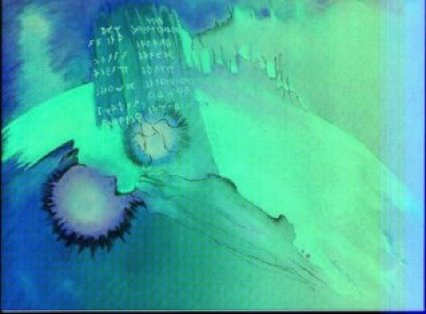
Bibliografía de Saúl Yurkievich

  • El perfil de la magnolia (2003)
  • El huésped perplejo (2001)
  • El sentimiento del sentido (2000)
  • Vaivén (1996)
  • La movediza modernidad (1996)
  • Julio Cortázar: mundos y modos (1994)
  • El Trasver (1988)
  • A través de la trama. Sobre vanguardias literarias y otras concomitancias (1988)
  • Identidad cultural de Iberoamérica en su literatura (1987)
  • Julio Cortázar: Al calor de tu sombra(1986)
  • Acaso acoso (1982)
  • Envers (1980)
  • Riobomba (1978)
  • Trampantojos (1978)
  • La confabulación con la palabra (1978)
  • Celebración del modernismo (1976)
  • Poesía hispanoamericana 1960-1970 (1976)
  • Detener sin retener (1973)
  • Fundadores de la nueva poesía latinoamericana (1971)
  • Fricciones (1969)
  • Modernidad de Apollinaire (1968)
  • Berenjenal y merodeo(1966)
  • Ciruela la loculita (1965)
  • Cuerpos (1965)
  • Volanda Linde Lumbre (1961)
  • Valoración de Vallejo (1958)

___________________________________________________________

“Reading the Infinite”/”Leer el Infinito” — Un libro nuevo de poemas místicos de Jenny Asse Chayo, poeta judío-mexicana/ A New Book of Mystical Poems by Jenny Asse Chayo, Mexican Jewish Poet — Traducido al inglés por Stephen A. Sadow y J. Kates/Translated into English by Stephen A. Sadow and J. Kates

Jenny Asse Chayo — Early Poems
Jenny Asse Chayo – Poems

_____________________________________________________________

Asse Chayo, Jenny. Reading the Infinite: Jewish Poetry from Mexico. Translated by Stephen A. Sadow and J. Kates. Westborough, Massachusetts: Pendulum Press, 2020. 150 pp.

Available por Amazon. Disponible por Amazon.  Reading the Infinite

____________________________________________________________________________________________

Cover1

____________________________________________________________________________________________

The book can only be written around the book.

Everything was created from time out of memory,

We have inherited the responsibility to give names.

“I prefer to keep quiet.”

“If you keep quiet, things stay in their savage state,

there will be nothing to hold them in.

The Adamic word contained the essence of things>’

“Adam, by naming, found imperfection.

The imperfection of sharing the named,

scarcity if the other,

the gap is always love.


“God is Hospitable.”

He weaves an invisible thread into our names.

He narrates the story having lost his voice.

He hides behind His Book, throbbing.


To read is to be broken into pieces.

To interpret the meaning of the Infinite.

____________________________________________________________________________________________

Cover2

____________________________________________________________________________________________

El libro sólo puede escribirse alrededor del Libro.

Todo ha sido creado desde un tiempo inmemorial,

hemos heredado la responsabilidad de dar el nombre. –

-Prefiero callar.

–Si callas, las cosas permanecerán en su estado salvaje,

no habrá nada que las contenga.

La palabra adánica contenía la esencia de las cosas.

–Adán, al nombrar, encontró la falta.

La falta para compartir lo nombrado,

carencia del otro,

el hueco siempre es el amor.


–Dios es solidario.

Se teje en nuestros nombres como hilo invisible.

Narra la historia desde su afonía.

Se esconde detrás de Su Libro, palpita


Leer a Dios es fragmentarse.

Interpretar el sentido del Infinito.

________________________________________

The book can only be written around the book.

Everything was created from time out of memory,

We have inherited the responsibility to give names.

“I prefer to keep quiet.”

“If you keep quiet, things stay in their savage state,

there will be nothing to hold them in.

The Adamic word contained the essence of things>’

“Adam, by naming, found imperfection.


The imperfection of sharing the named,

scarcity if the other,

the gap is always love.


“God is Hospitable.”

He weaves an invisible thread into our names.

He narrates the story having lost his voice.

He hides behind His Book, throbbing.


To read is to be broken into pieces.

To interpret the meaning of the Infinite.

____________________________________________________________

Patricia Krasbuch (1956-2018) — Un Homenaje/An Homage — Artista visual y arteterapeuta judío-argentina/Argentine Jewish Artist and Art Therapist — “Visiones azules,espirituales y cabalistas” “Blue, Spiritual and Kabbalistic Visions”

11042969_1386079521707802_3914048148164566698_n
Patricia Krasbuch

_______________________________
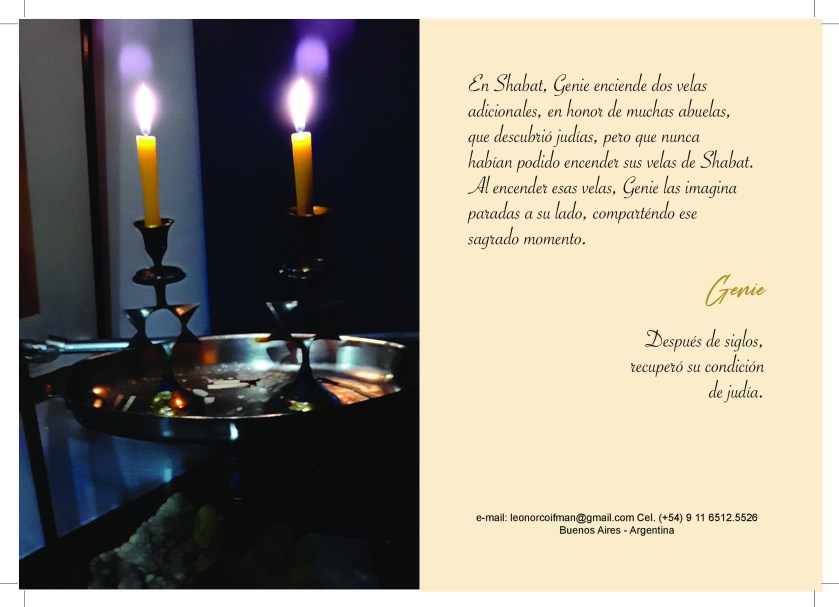
Patricia (Patty) Krasbuch nació en Buenos Aires, Argentina, en 1956, y ha estudiado pintura desde que tenía seis años. De 1975 a 1989, Patricia vivió en Israel, donde estudió pintura en Beer Sheva y Haifa. Al regresar a Argentina en 1989, Krasbuch estudió decoración de interiores en Montevideo, diseño gráfico en Buenos Artes y continuó perfeccionando su técnica trabajando en los estudios de arte de varios pintores argentinos líderes. Patricia Krasbuch también estudió con los líderes de grupos junguianos en la Fundación Vínculos en Buenos Aires; con el Dr. Carlos Menegazzo, estudió el psicodrama de los sueños, mitos y símbolos. De su propio trabajo, Krasbuch explica: “Mi trabajo vincula los dos mundos, el de arriba con el de abajo, el cielo y earth, tierra, masculino y femenino, espíritu y materia. El mundo material está en los espacios de silencio, el blanco, el Braille, los símbolos, la luz. Cada color es un viaje meditativo; en él, las cosas dejan de parecer formas concretas y se transforman en metáforas para expresar el verdadero sentido de su existencia a través de su alma. Lo visible es el conocimiento, lo invisible es la sabiduría. En casi todo mi trabajo, uso textos en Braille, un tipo de metáfora. Además, he incorporado elementos de la Cabalá y textos sagrados en mi búsqueda creativa “.                                                                                                APRENDER A VER LO QUE NO SE VE,                                                                                  CERRAR TUS OJOS A QUÉ DISTRACTO.                                                                                     PARA ACEPTAR NUESTRA CEGUERA.                                                                                      PARA INTENTAR DESCUBRIR UNA VISIÓN DE ARRIBA .

_______________________

Nota de Steve Sadow: Conocí a Patty Krasbuch, mientras compilaba un sitio web de artistas judío-latinoamericanos. Más tarde, con Cristina Braidotti Z”L Irene Jaievsky y José Rosenberg, estudiamos al efecto de la Liberación de los Campos de Concentración por los Aliados sobre sobrevivientes en la Argentina. La última vez que la vi fue en 2014: una persona muy amable, simpática con una intuición espiritual especial.

__________________________________________________________________

_________________________________________________________________

Patricia (Patty) Krasbuch was born in Buenos Aires, Argentina, in 1956, and has studied painting since she was age six years old. From 1975 to 1989 Patricia lived in Israel where she studied painting in Beer Sheva and Haifa. Upon returning to Argentina in 1989, Krasbuch studied interior decorating in Montevideo, graphic design in Buenos Artes and continued to perfect her technique by working in the art studios of several leading Argentine painters. Patricia Krasbuch has also studied  with the leading of Jungian groups at the Vinculos Foundation in Buenos Aires; with Dr. Carlos Menegazzo, she studied the psychodrama of dreams, myths and symbols. Of her own work, Krasbuch explains: “My work links the two worlds, the one above with the one below, heaven and earth, masculine and feminine, spirit and matter. The Material world is in the spaces of silence, the white, the Braille, the symbols, the light. Every color is a meditative voyage; in it things cease to seem to be concrete forms and are transformed into metaphors in order to express the true sense of their existence through their soul.
The visible is the knowledge, the invisible is the wisdom. In almost all my work, I use texts in Braille,a type of metaphor. Also, I have incorporated elements of the Kabbalah and sacred texts into my creative search.”
TO LEARN TO SEE THAT WHICH IS UNSEEN,
TO CLOSE YOUR EYES TO WHAT DISTRACT,
TO ACCEPT OUR BLINDNESS,
TO TRY TO REDISCOVER A VISION FROM ABOVE.”

________________________

Steve Sadow: I met Patty Krasbuch while compiling a website of Jewish-Latin American Art. Later, with Cristina Braidotti Z “L Irene Jaievsky and José Rosenberg, we studied the effect of the Liberation of the Concentration Camps by the Allies on survivors in Argentina. The last time I saw her was in 2014: a very kind, sympathetic person with a lot of spiritual intuition.

________________________________________________________

“Visiones azules” “Blue Visiones”

________________________________________________________

phpThumb_generated_thumbnailjpg
Creación
2005
técnica mixta con acrílico sobre tela

phpThumb_generated_thumbnailjpg-1
La primacía del ser/The Primacy of Being
2003
acrílico sobre tela

phpThumb_generated_thumbnailjpg-3
Justicia divina
2003
acrílico y braille sobre tela

phpThumb_generated_thumbnailjpg-11
La prueba/The Test
2003
acrílico sobre madera

phpThumb_generated_thumbnailjpg-4
Alma gemela/Twin Soul
2005
acrílico y braille sobre tela

phpThumb_generated_thumbnailjpg-5
Prueba y milagro/Test and Miracle
2005
acrílico sobre tela

phpThumb_generated_thumbnailjpg-9
La visión
2003
acrílico sobre madera

phpThumb_generated_thumbnailjpg-8
El peregrino/The Pilgrim
2003
acrílico sobre madera

phpThumb_generated_thumbnailjpg-2
Los 72 nombres de Dios y los maestros/The 72 Names of God and the Masters
2005
acrílico y braille sobre tela

phpThumb_generated_thumbnailjpg-6
La silla vacía (Homenaje a rabí Nachman).       The Empty Chair (Homage to Rabbi Nachman.)
2005
acrílico sobre tela