Naum Knop es un artista argentino de raíces judío-ucranianas, nacido en 1917 en l Buenos Aires. Desde temprana edad estuvo en contacto con la disciplina de la talla de madera, ya que su padre era carpintero y al terminar la escuela primaria estudió con Luis Fernández, llegando a tener su propio taller. En 1935, asistió a la Escuela de Bellas Artes Manuel Belgrano, donde obtuvo el título de Profesor de Dibujo. Posteriormente, tomó un curso para egresados dictado por Alfredo Bigatti y Alberto Lagos y asistió a la Escuela Superior Ernesto Cárcova, donde se formó en la talla de piedra y mármol, introducido por José Fioravanti, Soto Avedaño y Carlos de la Cárcova. Durante su carrera artística obtuvo numerosas distinciones, entre las que se encuentra el Gran Premio de Honor de la Academia Nacional de Artes Plásticas en 1946. A partir de 1947, comenzó una serie de viajes que lo pusieron en contacto con la obra de grandes escultores europeos como Jacques Lipchitz, Umberto Boccioni, Constantin Brancusi, Henrry Moore y Jean Arp, cuyas influencias fueron muy importantes para el desarrollo artístico personal. Durante su estadía en Estados Unidos, asistió al Art Institute of California. En 1949 el artista regresó a la Argentina y centró su producción en la talla ornamental. El año 1970 abre una nueva etapa de florecimiento en su carrera, esta coincide con la inauguración de su taller en el barrio de Parque Patricios, espacio en el que hoy funciona la Fundación Naum Knop. En esta época continúa tratando temas característicos en su producción y otros novedosos como Figura Americana de 1972. Durante toda la década prima el trabajo sobre madera, especialmente los ensamblados de pequeñas piezas muy pulidas y suaves que configuran relieves o figuras de grandes y sinuosos volúmenes. Hacia 1988 el artista abre en los Salones de la empresa Serra Lima el Museo Naum Knop. El artista falleció en 1993. Su producción artística fue muy prolífica, trabajando con materiales variados como el metal, la madera y el mármol y diversas técnicas entre las que se incluyeron la fundición a la cera perdida, el tallado, el pulido y la adición.
___________________________
En sus obras, los vacíos y los llenos permiten modular las luces y sombras, acompañando la simplificación de las formas. El espacio aparece como modelador de la figura, sin respetar ningún modelo figurativo de la naturaleza, respondiendo, exclusivamente, a una búsqueda plástica del artista.
_______________________________________
Naum Knop was an Argentine artist of Jewish-Ukrainian descent, born in Buenos Aires in 1917. He was exposed to the craft of woodcarving from an early age, as his father was a carpenter; after finishing primary school, he studied under Luis Fernández and eventually established his own workshop. In 1935, he attended the Manuel Belgrano School of Fine Arts, where he qualified as a drawing teacher. Later, he took a postgraduate course taught by Alfredo Bigatti and Alberto Lagos and attended the Ernesto Cárcova Higher School of Fine Arts, where he trained in stone and marble carving under the guidance of José Fioravanti, Soto Avendaño, and Carlos de la Cárcova. Throughout his artistic career, he received numerous honors, including the Grand Prize of Honor from the National Academy of Visual Arts in 1946. Beginning in 1947, he embarked on a series of trips that brought him into contact with the work of major European sculptors such as Jacques Lipchitz, Umberto Boccioni, Constantin Brancusi, Henry Moore, and Jean Arp—artists whose influence played a crucial role in his personal artistic development. During his time in the United States, he attended the Art Institute of California. The artist returned to Argentina in 1949 and focused his creative output on ornamental carving. The year 1970 marked a new, flourishing phase in his career, coinciding with the opening of his workshop in the Parque Patricios neighborhood—a space that now houses the Naum Knop Foundation. During this period, he continued to explore themes characteristic of his work while also introducing new subjects, such as Figura Americana (1972). Throughout the decade, wood remained his primary medium, particularly in the form of assemblages made from small, highly polished, smooth pieces that created reliefs or figures featuring large, sinuous volumes. Around 1988, the artist opened the Naum Knop Museum within the Serra Lima company’s exhibition halls. The artist passed away in 1993. His artistic output was highly prolific; he worked with a variety of materials—such as metal, wood, and marble—and employed diverse techniques, including lost-wax casting, carving, polishing, and additive processes.
In his works, voids and solids allow for the modulation of light and shadow, complementing the simplification of forms. Space acts to shape the figure—without adhering to any figurative model from nature—responding exclusively to the artist’s aesthetic quest.
Horacio Vodovotz nació en 1942. Estudió dibujo y pintura con Manuel Eichelbaum y Demetrio Urruchua. Se graduó como Arquitecto Universidad de Buenos Aires en 1967. Con sus óleos y monocopias concurre a salones Nacionales, Provinciales y Municipales desde 1955. Habiendo sido seleccionado en más de cien oportunidades y obteniendo numerosos premios. Han destacado también sus trabajos por Radio Barcelona y en Israel los periódicos “Aurora” y “Maariv”. Entre sus murales se destacan “Lago Kineret” (1966) de cien metros cuadrados y ubicado en Buenos Aires, y otros como el realizado en Barrington Shores, EEUU (1988), en B’nai B’rith (1990) y Hospital Israelita (1998). Poseen obras suyas los Museos de Campana, del Grabado, Colecciones Privadas e Instituciones la Argentina y Brasil, Paraguay, Uruguay, Costa Rica, Francia, Inglaterra, Israel, los Estados Unidos, y la ex-Unión Soviética. Escribe y da clases y conferencias sobre temas de su especialidad en diversos ámbitos tales como Comunidad Emanu-El, B’nai B’rith, Facultad de Odontología, Colegio de Farmacéuticos y Bioquímicos y las Escuelas ORT.
_________________________________________
Horacio Vodovotz was born in 1942. He studied painting and drawing with Manuel Eichelbaum and Demetrio Urruchua. He graduated in 1967, obtaining his degree in Architecture from the Universidad de Buenos Aires. Since 1955, he has shown his oil paintings and monotypes in national, provincial and municipal exhibitions. Having been a finalist in more than 100 events, he has won many prizes. Also, his works have been praised by Radio Barcelona and by the newspapers “Aurora” and “Maariv” in Israel. His most important murals are “Lake Kineret” (1966), one hundred square meters in size and located in Buenos Aires, and others in Barrington Shores, U.S.A. (1988), at B’nai B’rith Argentina (1990), and at the Hospital Israelita of Buenos Aires (1998). His works are owned by the Campana and Prints Museums in Buenos Aires and in institutional and private collections in Argentina, Brazil, Paraguay, Uruguay, Costa Rica, France, England, Israel, the United States, and the former Soviet Union. Horacio Vodovotz writes, gives classes, and lectures about topics in which he specializes in varied locales such as the Emmanuel Synagogue, B’nai B’rith, the College of Dentistry, the School of Pharmacy and the College of Pharmacists and Biochemists, and the ORT school system.
_________________________________________
De/From: Horacio Vodovotz. Manchas. Buenos Aires: Milá,
Es un concepto muy difundido el de” viejo testamento” y nuevo testamento.
En realidad, nuestro conjunto de libros más sagrados es el Pentateuco, compendio de gran sabiduría, ética y tradiciones, de ninguna manera es viejo, ni cede sus derechos ante un nuevo testamento que durante más de dos mil años ha sido fuen-e de inspiración para artistas que casi nunca fueron judíos.
La mitología nórdica quedó representada principalmente en el costado de los barcos vikingos.
Homero y las tragedias griegas fueron ilustradas en vasos y frescos.
La epopeya de Mahabarata y Ramayana convocó a multitud de artistas que reprodujeron hasta el cansancio imágenes y temas de gran monotonía.
En cambio, las sagradas escrituras están vinculadas a extraordinarias y renovadas creaciones pictóricas.
Desde el arte de las catacumbas y las iglesias paleocristianas, pasando por las iluminaciones medievales y el arte gótico, la minuciosidad bizantina y la explosión creativa del Renacimiento, la magia del primer surrealismo (Hieronymus Bosch) y la magia flamenca, el expresionismo y el arte moderno en general, hasta el arte abstracto, todos buscaron inspiración en La Biblia.
El mundo occidental está impregnado de este material, por me-dio de las reproducciones, de las obras de arte que atesoran palacios, iglesias, museos y galerías.
En algunos casos, como el Génesis desarrollado en el cielorraso de la Capilla Sixtina a lo largo de seiscientos metros cuadra-dos, se convierten de la mano de Miguel Ángel en un pináculo del arte universal.
Lo cierto es que en la inmensa mayoría de estas obras hay un desarrollo de una iconografía exclusivamente cristiana, y nos falta una mirada judía sobre toda la temática bíblica, motivada en sus orígenes por la prohibición de reproducir imágenes.
Como ejemplo tomaremos la figura del rey David y algunas interpretaciones de su mítica imagen realizada por artistas gentiles y judíos.
Indiscutible desde un punto de vista plástico, el David de bronce de Donatello aparece con un aire nada viril. El gran maestro Donatello privilegia en este caso una graciosa ambigüedad plas-nada en un sombrerito con flores y un cuerpo llamativamente feminoide.
Algunas de las preguntas que me formulo son obviamente si es ta imagen representa la dura vida de nuestros líderes pastores, su humildad, la energía y determinación del hombre que unificó a Israel.
Tampoco parece posible que “este” David pudiera llevar la tremenda espada que según la Torá le arrebató a Goliath.
¿Cómo no mencionar al más famoso David de todos los tiempos?
Admiración de entendidos y legos, motivo de peregrinación de turistas, modelo inspirador de estudiantes de arte, infinitamente festejado y reproducido.
Un volcado original recala en nuestras tierras hacia 1910 y se encuentra en dependencias del Instituto Superior Ernesto de la Cárcova.
Ahora bien ¿qué representa el David de Miguel Ángel? Un impecable efebo griego, con músculos de gimnasio, peinado con rizos y demás características que responden al canon de belleza griego rescatado por el renacimiento.
Considero una simple anécdota la circuncisión, que en el caso de este mármol (maravilloso en otros sentidos) pertenece a una serie de hechos visibles.
Siendo nosotros, los judíos particularmente sensibles a lo “in-tangible”(un Poder Superior al que no podemos nombrar ni ver) estamos en deuda y nos toca rescatar la espiritualidad del rey David, sus luchas interiores, las huellas que en su rostro dejaron sin duda las tormentas que pasaron por su alma.
Paradigma de los artistas judíos, Chagall imagina un Rey pura poesía y alegría.
Predomina el rojo. El David de Chagall tiene un arpa en lama-no es un Rey poeta y no un Rey guerrero. Como en casi todas las grandes obras de arte Chagall pinta a Chagall a través de la imagen de David.
Abordé repetidas veces el tema en mis propias pinturas.
Un rey David pastor de grandes dimensiones fue distinguido con un premio en una iglesia.
Creo que casi siempre me preocupó representar un David sacudido por sus tormentas interiores.
Quien sabe el que más me representa es un rey anciano, las ma-nos abiertas en forma de súplica. Están vacías de riquezas y atributos de poder.
Es el instante en que el rey David, próximo a morir, habla con su Rey.
Me pregunto ¿qué maravillosos testimonios nos hubiera dejado los escribas de la Torá si hubieran realizado pinturas o croquis, ilustrando, iluminando los personajes de nuestra historia desde un ángulo judaico?
El Rey David por Horacio Vodovotz/King David by Horacio Vodovotz
______________________________________
The Unillustrated Bible – King David
The concepts of the “Old Testament” and “New Testament” are universally known.
In reality, our most sacred body of work is the Pentateuch—a compendium of profound wisdom, ethics, and traditions. It is by no means “old,” nor does it yield its standing to a New Testament that, for over two thousand years, has served as a source of inspiration for artists who were almost never Jewish.
Norse mythology was primarily depicted on the sides of Viking ships.
Homer and the Greek tragedies were illustrated on vases and frescoes.
The epics of the Mahabharata and Ramayana drew a multitude of artists who endlessly reproduced images and themes that often bordered on the monotonous.
In contrast, the Sacred Scriptures are linked to extraordinary and ever-evolving artistic creations.
From the art of the catacombs and Early Christian churches—through medieval illuminations, Gothic art, Byzantine intricacy, the creative explosion of the Renaissance, the magic of early Surrealism (Hieronymus Bosch) and the Flemish masters, Expressionism, and modern art in general, all the way to abstract art—artists have sought inspiration in the Bible.
The Western world is steeped in this material, encountered through reproductions and the artworks treasured in palaces, churches, museums, and galleries.
In some instances—such as the depiction of Genesis across the six hundred square meters of the Sistine Chapel ceiling—these themes, in the hands of Michelangelo, become a pinnacle of universal art.
The fact remains, however, that the vast majority of these works feature an exclusively Christian iconography; we lack a Jewish perspective on these biblical themes—a void stemming from the original prohibition against creating graven images.
As a case study, we will examine the figure of King David and various interpretations of his legendary image by both Gentile and Jewish artists. From a purely aesthetic standpoint, Donatello’s bronze David presents an air that is anything but virile. Here, the great master Donatello favors a charming ambiguity, embodied in a small, flower-adorned hat and a strikingly feminine physique.
One naturally wonders whether this image truly represents the harsh life of our shepherd-leaders, their humility, or the energy and determination of the man who unified Israel.
Nor does it seem plausible that this David could wield the massive sword that, according to the Torah, he wrested from Goliath.
How could one fail to mention the most famous David of all time?
Admired by experts and laypeople alike, a magnet for tourists, an inspiration to art students, and endlessly celebrated and reproduced.
An original cast arrived in our region around 1910 and is housed at the Ernesto de la Cárcova Higher Institute.
But what does Michelangelo’s David represent? An impeccable Greek ephebe—a youth with gym-honed muscles, curly hair, and other features adhering to the Greek canon of beauty revived during the Renaissance.
I view the matter of circumcision—which, in the case of this marble figure (marvelous in other respects), is simply one visible detail among many—as a mere footnote.
As Jews, we are particularly attuned to the “intangible”—a Higher Power that can be neither named nor seen—and thus it falls to us to reclaim the spirituality of King David: his inner struggles and the traces left upon his face by the storms that surely raged within his soul.
A paragon for Jewish artists, Chagall envisions a King who embodies pure poetry and joy.
Red dominates the composition. Chagall’s David holds a harp; he is a poet-king, not a warrior-king. As in so many great works of art, Chagall paints himself through the image of David.
I, too, have repeatedly explored this theme in my own paintings. A monumental statue of King David as a shepherd was honored with an award at a church.
I think I was almost always concerned with portraying a David shaken by his inner storms.
Perhaps the one that best represents me is an aged king, his hands open in supplication—empty of riches and the trappings of power.
It captures the moment when King David, nearing death, speaks with his King.
I wonder: what marvelous testimonies might the scribes of the Torah have left us had they created paintings or sketches illustrating and illuminating the figures of our history from a Jewish perspective?
___________________________________________
Moshé
A los pocos días de mi trajinar por la RovaYehudí (el cuarto judío de Jerusalem antigua) con mis pasteles a cuestas ya me había hecho de algunos conocidos.
Por ejemplo, estaba el hombre del bar, campechano al estilo israelí, que me preguntaba: ¡cómo? ¡solamente hiciste dos cuadros hoy?
Y también tenía un seguidor. Cuando menos lo esperabas. a tus espaldas aparecía Moshé.
Moshé era un muchacho de unos diecisiete años, ortodoxo, (quién no en la Rova) con sus vestiduras negras, peies, kipá (rulos, solideo) y unos grandes ojos oscuros llenos de asombro.
Aparte de estar muy atento a lo que yo hacía (lo cual revela una profunda inteligencia) Moshé dejaba translucir una pequeña inferioridad mental.
Hablaba únicamente hebreo (rak ivrit). Es posible que eso nos haya unido un poco, porque mi hebreo era positivamente el de un deficiente mental también.
Lo cierto es que a pesar de las notorias dificultades en nuestra comunicación varias cosas quedaron claras:
En primer lugar, Moshé no estudiaba Torá, como sí lo hacían la abrumadora mayoría de los jóvenes en la Roba. Ya sea por elección o imposibilidad, Moshé estudiaba carpintería, además de seguirme por las callejuelas de piedra, lo cual lo constituía en mi casi exclusivo público. Moshé era reservado, respetuoso y gentil.
En uno de los tantos paseos que Lidia y yo hacíamos hasta el Kotel nos topamos abruptamente con Moshé.
Lo llamé cordialmente, con ansias de presentarle a Lidia a mi único admirador.
Había algo raro en Moshé. La expresión de sus ojos excedía el asombro habitual. Tenían un destello de pena, un brillo de pánico.
Por un momento pensé que lo cohibía (como a todo religioso la proximidad de una mujer.
Simplemente me dijo: mataron a mi joven camarada, compañero) Más tarde nos enteramos, que durante la madrugada, en una zona que recorríamos habitualmente con Lidia, unos terroristas habían emboscado y asesinado al joven javer de Moshé, cuyo pecado había sido regresar de madrugada de una fiesta.
Ya de vuelta en Buenos Aires, me preguntaba por qué no había tomado algún boceto de Moshé.
¡Cuánto me había costado que algún religioso se dejara retratar!
Con alguna triquiñuela y mucha diplomacia logré dos bocetos, una noche afortunada en Mea Sharim.
Entiendo que dada nuestra amistad, Moshé me hubiera permitido dibujarlo.
Había yo traído más de sesenta obras de Israel.
Quien sabe se me había generado cierto cansancio. Tal vez por eso me encontré retocando un pequeño paisaje con cúpulas de Moscú.
En forma totalmente inadvertida, sobre las cúpulas surgió como un fantasma el retrato de Moshé. Con los grandes ojos llenos de miedo, tal como seme apareciera cerca del Kotel.
No sé qué me llevó a conservarlo. Ya que no era un trabajo decididamente “para dejar”. (Debo hacer notar que tapo con otro cuadro aquellos que no me convencen decididamente, lo cual convierte a casi todas mis obras en verdaderos palimpsestos).
Llegó el momento de enmarcar las obras de Israel para un par de exposiciones pendientes.
Confieso que me dio lástima, entre más de sesenta obras dejar sin marco al pobre Moshé. Pero no lo expuse.
Varios meses después vino a verme Jaime K. Horacio, me dijo emocionado, está Melwyn Weiss en Argentina Como sabrás, es muy amigo de Clinton y gran coleccionista de cuadros. Le encantó tu Judas Macabeo. ¿Qué te parece si se lo regalamos? El macabeo es una donación, hecha con la condición de que esté en determinado lugar de la Institución, con la chapa donde figuran los donantes bien a la vista. Eso no se regala.
Entonces voy a tratar de llevar a Melwyn a tu atelier.
¿Te imaginás cuando estés al lado de un Picasso?
Lo cierto es que los esfuerzos de Jaime K. fueron infructuosos. M. Wandaba siempre ocupado en alguna banalidad, como reunirse con el presidente Menem o con algún ministro. Vaya a saber qué pavada estarían tratando en vez de venir de una buena vez a buscar mi cuadro.
Jaime K. no se rendía. Tomó un álbum con fotos de mis cuadros y se fue al hotel de Melwyn. Que cuidadosamente seleccionó entre más de doscientas fotografías…el retrato de Moshé.
¿Cómo te sentís ahora que estás al lado de Picasso? Preguntó Jaime K.
Catorce. Catorce Picassos exclamó entusiasta Aída K.
Muy contento. Muy contento. Y desde el fondo de todas mis frustraciones y de mi refinado resentimiento, agregué: ahora Picasso se va empezar a valorizar.
Pensé que esta historia se terminaba aquí. Pero me encuentro con la noticia de que los Picasso de Melwyn Weiss (no catorce sino unos ciento setenta) se están exponiendo en este abril del 2001 en La Plata. Me pregunto si Melwyn Weiss sabrá quién es este Moshé que lo mira con grandes ojos de asombro desde el fondo de algún pasillo lleno de tesoros donde sólo puede destacarse por la humildad de su tamaño.
Me pregunto si alguna vez volveré a pintar en La Roba, donde dejé la mitad de mi alma, y cuando menos lo espere, allí estará Moshé haciéndome un millar de preguntas mudas, que yo no tendré palabras para responder.
Sucedió en Jerusalem/It Happened in Jerusalem por Horacio Vodovotz
__________________________________
Moshé
Within a few days of making my rounds in the Rova Yehudi (the Jewish Quarter of the Old City of Jerusalem) with my pastels in tow, I had already made a few acquaintances.
For instance, there was the man at the bar—affable in that typical Israeli way—who would ask me, “What? You only did two paintings today?”
And then there was a follower. Just when you least expected it, Moshé would appear right behind you.
Moshé was a boy of about seventeen—an Orthodox Jew (as was everyone in the Rova), dressed in black, with peyot (sidelocks) and a kippah (skullcap), and possessing large, dark eyes filled with wonder.
Aside from being keenly attentive to what I was doing—which revealed a deep intelligence—Moshé also displayed signs of a mild intellectual disability.
He spoke only Hebrew (rak ivrit). That might have been what bonded us a little, since my Hebrew was, frankly, on the level of someone with a mental disability as well.
The fact is, despite the obvious communication barriers, a few things became clear:
First, Moshé did not study Torah, unlike the overwhelming majority of young men in the Rova. Whether by choice or necessity, Moshé was studying carpentry—in addition to following me through the stone alleyways, a habit that made him my almost exclusive audience. Moshé was reserved, respectful, and gentle.
On one of the many walks Lidia and I took to the Kotel (Western Wall), we ran right into Moshé.
I called out to him warmly, eager to introduce Lidia to my one and only admirer.
There was something odd about Moshé. The look in his eyes went beyond his usual sense of wonder. There was a glint of sorrow in them, a flash of panic. For a moment, I thought I was making him self-conscious (as the proximity of a woman does to any religious man).
He simply told me: “They killed my young comrade—my friend.” Later, we learned that during the early hours of the morning—in an area Lidia and I frequented—terrorists had ambushed and murdered Moshe’s young friend, whose only sin had been returning late from a party.
Back in Buenos Aires, I wondered why I hadn’t made a sketch of Moshe.
It had been such a struggle to get any religious man to agree to be portrayed!
Through a bit of trickery and a great deal of diplomacy, I had managed to secure two sketches one lucky night in Mea Shearim.
I realize that, given our friendship, Moshe would have allowed me to draw him.
I had brought back more than sixty works from Israel.
Perhaps a certain weariness had set in. That might explain why I found myself touching up a small landscape featuring the domes of Moscow.
Quite unexpectedly, the portrait of Moshe emerged over the domes like a ghost—his large eyes filled with fear, just as he had appeared to me near the Western Wall.
I don’t know what prompted me to keep it, as it wasn’t a piece I was fully satisfied with. (I should note that I paint over works that don’t quite convince me, turning almost all my pieces into veritable palimpsests.)
The time came to frame the works from Israel for a couple of upcoming exhibitions.
I admit I felt a pang of regret leaving poor Moshe unframed among more than sixty other pieces. But I didn’t exhibit it.
Several months later, Jaime K. came to see me. “Horacio,” he said excitedly, “Melwyn Weiss is in Argentina. As you know, he’s a close friend of Clinton’s and a major art collector. He absolutely loved your Judas Maccabeus. What do you think about giving it to him as a gift?” The Macabeo is a donation made on the condition that it be displayed in a specific part of the institution, with the plaque bearing the donors’ names clearly visible. That isn’t something one simply gives away.
So, I’m going to try to take Melwyn to your studio.
Can you imagine standing next to a Picasso?
The truth is, Jaime K.’s efforts were fruitless. M. Wandaba was always busy with some triviality—meeting with President Menem or some minister. Who knows what nonsense they were discussing instead of finally coming to pick up my painting.
Jaime K. didn’t give up. He took an album of photos of my paintings and went to Melwyn’s hotel. He carefully selected—from among more than two hundred photographs—the portrait of Moshé.
“How does it feel to be standing next to a Picasso?” Jaime K. asked.
“Fourteen. Fourteen Picassos,” Aída K. exclaimed enthusiastically.
“Very happy. Very happy.” And from the depths of all my frustrations and my refined resentment, I added: “Now Picasso is going to start increasing in value.”
I thought the story ended there. But then I came across the news that Melwyn Weiss’s Picassos—not fourteen, but some one hundred and seventy of them—were being exhibited in La Plata in April 2001. I wonder if Melwyn Weiss knows who this Moshé is—the one gazing at him with wide, astonished eyes from the back of a corridor filled with treasures, where he stands out only for his humble size.
I wonder if I will ever paint again at La Roba, where I left half my soul, and if—when I least expect it—Moshé will be there, asking me a thousand silent questions that I will have no words to answer.
_______________________________________________
Manchas en las paredes de las Cavernas
Hace unos 20.000 años, en varios sitios de Europa en forma simulatea, ignotos artistas esculpieron las llamadas Venus Esteatopigias. Con grandes senos y caderas, la cabeza generalmente oculta. Eran una invocación a la fertilidad.
Algunas de ellas son muy famosas, como la Venus de Willendorf. Pero el artista que la esculpió no podía imaginar cómo se iba a llamar su creación. Sencillamente porque en ese momento no existía el lenguaje.
Así sucede con los contemporáneos toros de Lascaux o los bisontes de Altamira (Capilla Sixtina de la antigüedad)
Si existieran dudas sobre la existencia del lenguaje hace 20.000 años, podemos afirmar rotundamente que no se conocía entre los fabulosos artistas de la recientemente descubierta cueva de Chauvet (37.000 a.e.e.)
Curiosamente, PUEDO SENTIR las emociones que me transmiten las pinturas…
Puedo admirar la belleza y la gracia de animales extinguidos, conmoverme ante la coquetería de un peinado “a la nubia” femenino…
Participar de la alegría de la caza y el hambre satisfecho… Entristecerme por la muerte de un compañero atacado por una fiera…
Emocionarme ante el cortejo del león a su hembra…
Escuchar el estruendo, estremecerme ante la furia de dos rinocerontes enfrentados en feroz combate…
También me llega la ternura de una mirada compasiva sobre los pequeños ciervos, la paz de los bisontes en descanso y el humor de una vaca que salta sobre un grupo de caballos…
Hasta los osos que habitaban Chauvet se impresionaron, dejando estampadas sus garras sobre las pinturas de caballos al trote.
Entre las imágenes existen las que nos hablan de un MISTERIO. Como la figura mitad brujo mitad bisonte de Chauvet, sosteniendo un enigmático par de piernas femeninas. Eterno misterio del arte. Misterio que permite comunicarme con otros seres humanos a través del tiempo y del espacio, que habla de los temores y emociones de seres que no sabían hablar.
Lidia enciende las velas de un viernes a la noche.
Una emoción profunda e indefinible nos invade, algo como sentirnos especiales, un eslabón en esa continuidad milenaria, tan sólo un eslabón, pero imprescindible para no romper la cadena. En Sudáfrica, más precisamente en Biombos, una cuasi persona, hace 80.000 años, hacía sus primeras manchas sobre una piedra pulida.
He recibido tu mensaje y nos hemos comunicado a través de unos pocos trazos, a pesar de tu aspecto más simiesco que humano
Se iniciaba así una de las aventuras más grandes del espíritu humano.
Pintura y judaísmo. Dos tradiciones. Dos formas de vivir. Dos formas de darle significado al mundo.
Cada artista es único y aporta su grande o pequeño granito de arena a la historia del arte.
Cada ser humano es único, irrepetible, importante a los ojos de D’s, tal como una estrella o una brizna de hierba.
Me siento leal a cada una de estas dos cadenas. La lealtad a una no va en desmedro de la otra.
Ambas me comunican el mandato irrenunciable de completar la obra que D’s creó Lahazot (“para hacerla”).
Gracias por señalarme un camino, hermano Abraham, hermano Moisés, hermano salvaje de la cueva de Biombos.
Around 20,000 years ago, at various sites across Europe, unknown artists simultaneously sculpted the so-called steatopygous Venuses—figures with large breasts and hips, and heads that were generally concealed. They were an invocation of fertility.
Some of them are very famous, such as the Venus of Willendorf. Yet the artist who carved her could not have imagined what his creation would be named—simply because language did not exist at that time.
The same applies to the contemporaneous bulls of Lascaux or the bison of Altamira (the “Sistine Chapel of antiquity”).
If there were any doubts about the existence of language 20,000 years ago, we can state categorically that it was unknown to the extraordinary artists of the recently discovered Chauvet Cave (dating back to 37,000 BCE).
Curiously, I CAN FEEL the emotions conveyed by the paintings…
I can admire the beauty and grace of extinct animals, and be moved by the coquetry of a woman’s “Nubian-style” hairstyle…
Share in the joy of the hunt and the satisfaction of hunger… feel sorrow at the death of a companion attacked by a wild beast…
Be stirred by a lion courting his mate…
Hear the thunderous noise and shudder at the fury of two rhinoceroses locked in fierce combat…
I am also touched by the tenderness of a compassionate gaze cast upon young deer, the peace of resting bison, and the humor of a cow leaping over a group of horses…
Even the bears that inhabited Chauvet were impressed, leaving their claw marks stamped over the paintings of trotting horses.
Among the images, there are those that speak to us of a MYSTERY—such as the figure at Chauvet that is half-shaman, half-bison, holding an enigmatic pair of female legs. An eternal mystery of art. A mystery that allows me to communicate with other human beings across time and space, speaking of the fears and emotions of beings who did not yet know how to speak.
Lidia lights the candles on a Friday night.
A profound and indefinable emotion washes over us—a sense of being special, a link in that ancient continuity; merely a link, yet essential to keeping the chain unbroken. In South Africa—specifically at Blombos—a proto-human, 80,000 years ago, made their first marks upon a polished stone.
I have received your message, and we have communicated through a few simple strokes, despite your appearance being more simian than human.
Thus began one of the greatest adventures of the human spirit.
Painting and Judaism. Two traditions. Two ways of living. Two ways of giving meaning to the world.
Every artist is unique, contributing their own part—great or small—to the history of art.
Every human being is unique, unrepeatable, and important in the eyes of God—just like a star or a blade of grass.
I feel loyal to both of these chains. Loyalty to one does not come at the expense of the other.
Both convey to me the unrenounceable mandate to complete the work God created—Lahazot (“to do it”).
Thank you for showing me the way, Brother Abraham, Brother Moses, wild brother from the cave at Blombos.
Desde su primera exposición individual en Buenos Aires, a sus 17 años, Martha Zuik realizó más de 60 exhibiciones personales en galerías y museos. Su carrera internacional comenzó en 1959. Luego de su primera muestra individual en Paris, se unió al grupo de artistas internacionales «Fantasmagie», fundado por Aubin Pasque e integrado por renombrados artistas como Magritte y Picasso. Ese mismo año expuso junto a ellos en Bruselas. Con ese grupo continuó presentando sus trabajos durante más de 20 años, en Francia, Holanda, Alemania, Bélgica y otros países europeos. Durante décadas, su trabajo ha sido objeto de especial atención como un emblema del arte argentino y ha sido exhibido en Argentina, EE.UU., Alemania y Hong Kong. Ha participado en numerosas bienales internacionales de pintura y obra gráfica.
__________________________
Since her first solo exhibition in Buenos Aires at the age of 17, Martha Zuik held over 60 solo exhibitions in galleries and museums. Her international career began in 1959; following her first solo show in Paris, she joined the international artist group “Fantasmagie”—founded by Aubin Pasque and comprising renowned artists such as Magritte and Picasso—and exhibited alongside them in Brussels that same year. She continued to present her work with the group for more than two decades across France, the Netherlands, Germany, Belgium, and other European countries. For decades, her work has garnered significant attention as an emblem of Argentine art and has been exhibited in Argentina, the United States, Germany, and Hong Kong. She has participated in numerous international biennials dedicated to painting and graphic art.
________________________
Al comienzo de su labor artística, se ocupó de motivos fantásticos, postura con la cual reflejaba consecuentemente el camino, a uno de cuyos lados está, la idea de un motivo que determine la orientación creadora y en el otro predomina el desarrollo y la invención de formas, precisamente para ese tema concreto. Por aquel entonces en las obras de Martha Zuik se observan, ante todo, coincidencias de tradiciones formales y la superación de estos conceptos fantásticos realistas… (Otfried Schütz).
________________________
At the outset of her artistic career, she focused on fantastic motifs—an approach that consistently reflected a path defined at one end by the concept of a motif shaping her creative direction, and at the other by the development and invention of forms specific to that particular theme. During that period, Martha Zuik’s work revealed, above all, a convergence of formal traditions and a move beyond those fantastic-realist concepts. .. (Otfried Schütz).
Mirta Narosky es.Profesora y licenciada en Artes Plásticas (orientación pintura), recibida en la Universidad Nacional de La Plata.Desde pequeña, recibe premios en poesía y pintura nacionales e internacionales. En pintura se destacan: 1967- Manchas pavimentales (3º premio, no alcanzando la edad mínima), 1968-1º premio Pintura rupestre. Córdoba, 1971-3º premio internacional de pintura y grabado. Bruselas. Bélgica. 1º premio concurso nacional de manchas. Salta.
Mirta Narosky is a Professor and holds a Licentiate in Visual Arts (specializing in painting) from the National University of La Plata. Since childhood, she has received national and international awards in both poetry and painting. Her notable achievements in painting include: 1967—Manchas pavimentales (3rd Prize; awarded despite not meeting the minimum age requirement); 1968—1st Prize for Pintura rupestre (Rock Painting) in Córdoba; and 1971—3rd International Prize for Painting and Engraving in Brussels, Belgium, as well as 1st Prize in the National Manchas (Inkblot) Competition in Salta.
_______________________________________
Actividades seleccionadas de Mirta Norowsky/Selected Activities of Mirta Narosky
Exposiciones individuales/Individual Expositions
1987.- “Acuarelas”, Dirección de Cultura de Lomas de Zamora. 1988.– “Acuarelas”, Escuela de Bellas Artes de Lanús. 1990.- “De la tierra y otros planetas”, Sheraton hotel, BsA. 1997.-“Espacios virtuales”, Centro Cultural Gral. San Martín Bs. As. 1999.- “Cajas virtuales – contenidos reales”, Galería Espacio Buenos Aires.Museo de Bellas Artes de Chivilcoy, pcia. Buenos Aires. “ 2000.- “Retratos y rostros” Gal. Adriana Budich. Buenos Aires, Argentina. 2001.- “Entre materia y espíritus” en Gal. Alejo Carpentier, Camaguey (Cuba).“Raíces y tango” (inaugura espacio de Arte y Tango), Hotel Continental. Bs.As. 2000.- Bs. As. 2004.-“Instantáneas de vida” Galería Braque. (Bs.As.) Realiza dos murales. 2006.- “Estados del alma” Centro Cultural Borges. 2007.- “Imágenes de la Rivera”. Conventillo Verde de La Boca (pinta en la vía Pública). 2008.- Mis mujeres” (Inaugura Gal. La Imprenta con conferencia y pintura en vivo). 2009.- “Vórtices” Centro Cultural Borges. 2010.- “Vórtices” Museo Municipal. de Bellas Artes E. Pettoruti. La Plata. 2011.- “Desde el Vórtice” Galería Nes.Bs. As. Pintura de murales, (Coordinando a alumnado) Universidad Jaureche. 2014.- Pinta en vivo en Congreso de Medicina.” Medicina… del Humanismo a la Ciencia y el Arte” (Integra una mesa redonda: habla del Arte como sanador del individual Dos + Una (Invitada especial por Buenos Aires) Casa de Córdoba en Bs. As. “Conjugación: Formas y Líneas”en Distal Arte. Recoleta. 2015.-“Percepciones del Futuro 0.5”, Abstracciones figurativas-figuraciones abstractas. Gal. Raíces Americanas. 2016.- “Vórtices y Percepciones del Futuro 0.5” (dibujos y pinturas) INNOVA, Espacio de Arte. Punta del Este. Uruguay. 2018.- “Fragmentaciones” dibujos. Galería Liliana Rodríguez. “Mirta Narosky –Maestra-Artista Contemporánea invitada especial de Brea Studio. 2019.- “SACH” Estudios abiertos de Chacarita.“Interpelando lo Ilusorio” Invitada exposición individual Gal. PalermoH. 2020- Objetos y tramas tejidas en el espacio Performance, Bs. As. 2022- “Confluencia”. Serie Fragmentaciones. Museo del ojo. Cerro de las Rosas. Córdoba. “Micro Vórtices” pinturas e instalación Areatec. Edificio Cassará. Avellaneda. “Fragmentaciones e improntas de la pandemia” Pcia de Bs A2023- Semana del Arte en CABA. “Barbaro bar. Mirta Narosky dibujos y pinturas” 2024– “Vórtices” Pje de la Luna (inaugura Centro Cutural). “Mis Mujeres” Galería Palermo H. Dibujos en el Bárbaro. 2024/25- “Espacios virtuales” (serie de los 90s) en Galería Roseum Contemporánea. 2025-“Fragmentaciones y Microvórtices” Museo Provincial Emilio Caraffa. Córdoba.
Inherente a su hacer artístico/Related to her artistic work:
1983/2000 Es profesora de tesis en la Escuela de Bellas Artes de Lanús. Diseña y realiza numerosas escenografías para teatro y tv. 1986/1987.- Viaja un año por Europa donde dicta cursos (Inglaterra e Italia) y a Marruecos, Egipto, Israel, India y Nepal, oportunidad en que se nutre del Arte Oriental. 1986/A la fecha. –Participa como jurado, dicta conferencias y forma parte de mesas redondas. Le realizan numerosas notas en diarios, revistas, radio y tv de todo el país en el exterior. IIlustra libros y sus obras se encuentran en numerosos libros de Arte.Colabora con artículos de Arte. Escribe “Duendes por la dignidad” libro para niños sobre la Historia del Bauen como Fábrica recuperada1996/1997.- Es invitada especial a los encuentros nacionales de artistas plásticos (Catamarca, Sgo. del Estero y Córdoba). 1999.- Dos documentales de su obra realizados por el cineasta Jorge Coscia. 2005.- Invitada como jurado Académico para concurso de puesto docente de Dibujo en la Universidad de la Plata. 2012.- Es convocada por la Secretaría de la Industria para asesorar de Arte Plástica de Negocios. 2013.- Jurado en el 1º Salón Nacional de pintura, Municipalidad de Florencio Varela. Entrega de un gruya intervenida por Mirta Narosky al Embajador de Japón. 2016.- Recibe la distinción “La Orden del Buzón”, como personalidad de La Cultura. 2018.-Artista invitada como artista referente en el Encuentro de Pintores y Escultores por Dirección de Juventud de Dolores. Chivilcoy. 2021- Diálogo entre artistas (zoom en vivo con Mónica Goldstein.Proyecto de AAVRA). 2023.- Exposición de sus alumnos de taller y clínica en Facultad de Derecho. UBA. 2024- Clínicas grupales para artistas. 2025- Pinta en vivo sobre el escenario en recital de Rock de grupo Fierr
Yishai Jusidman es un pintor contemporáneo y crítico de arte ocasional. Nació en la Ciudad de México, reside en Los Ángeles y pronto emigrará al moshav Tal Shachar. Su obra se ha exhibido en prestigiosas exposiciones internacionales en todo el mundo. Una serie reciente, “Azul de Prusia”, aborda los desafíos estéticos de la conmemoración del Holocausto a través del arte y se exhibe en el Museo Memorial de Auschwitz-Birkenau hasta octubre de 2026. Sus escritos se han publicado en Artforum, Art Issues, Los Angeles Times, Cleveland Review of Books y más.
____________________________
Yishai Jusidman is a contemporary painter and occasional art critic, born in Mexico City, based in Los Angeles and soon migrating to moshav Tal Shachar. His artwork has been shown worldwide in prestigious international exhibitions. A recent series, “Prussian Blue”, deals with the aesthetic challenges of Holocaust remembrance through art, and it is on view at the Auschwitz-Birkenau Memorial Museum through October 2026. His writing has been published in Artforum, Art Issues, Los Angeles Times, Cleveland Review of Books, and more.
En mi serie Azul de Prusia, abordo el Holocausto en la pintura buscando generar la impresión pictórica de un silencio tan solemne y directo como elocuente, ofreciendo así una alternativa a las restricciones fatalistas que han frenado la producción de obras que abordan este tema.
Pintura azul de Prusia: El producto Zyklon B, utilizado como agente letal entre 1940 y 1945, solía producir manchas azules en las paredes de las cámaras de gas debido a una reacción química con el ladrillo y el mortero. Dichas manchas aún son muy visibles en las estructuras de Majdanek. El compuesto de cianuro y hierro de estas manchas es químicamente idéntico al pigmento del pintor, conocido como Azul de Prusia. — Yisgai Jusidman
_________________________________
In my Prussian Blue series, I address the Holocaust in painting by seeking to generate the pictorial impression of a silence as solemn and forthright as it is eloquent, thus furnishing an alternative to the fatalistic strictures that have stifled the production of works dealing with this subject.
Prussian blue paint: The Zyklon B product that was used as a killing agent from 1940 through 1945 often produced blue stains on the walls of the gas chambers by way of a chemical reaction with the brick and mortar. Such stains are still very much apparent in the structures at Majdanek. The cyanide-iron compound of these stains is chemically identical to the painter’s pigment known as Prussian Blue.
Mutatis Mutandi
He manipulado elementos basados en objetos y tecnología para llamar la atención sobre el efecto pictórico, colocando lo táctil contra lo óptico, lo literal contra lo metafórico, los fenómenos contra el discurso. – Yisgai Jusidman
______________________________________
I have manipulated object-based and technology-based elements so as to call attention to the painterly effect, by placing the tactile against the optical, the literal against the metaphorical, phenomena against discourse. — Yisgai Jusidman
Olga Fisch (1901-1990) fue una artista, marchante de arte y promotora cultural extraordinaria. Nacida en Hungría, viajó por el mundo explorando las selvas de Sudamérica y viviendo en Marruecos, donde reunió su primera colección de artesanías. En 1932, se casó con su segundo esposo, Bela Fisch. La pareja emigró de Europa debido a las tensiones políticas en la Alemania nazi, particularmente peligrosas por su origen judío. En Ecuador, Fisch comenzó a enseñar en la Escuela de Bellas Artes y se involucró profundamente en el arte popular ecuatoriano. Para 1943, su colección de artefactos y obras de arte atrajo la atención internacional. Lincoln Kirstein, director del Museo de Arte Moderno de Nueva York (MoMA), visitó Ecuador para ver la colección. Este encuentro la catapultó a la fama y la llevó a tener a la ONU y al MoMA como sus primeros clientes. Durante la década de 1950, Fisch diseñó varias líneas de alfombras de gran éxito. En la década de 1960, su exclusivo negocio de alfombras, dirigido por mujeres y basado en encargos, era un éxito rotundo. También fundó un museo sin fines de lucro dedicado a la cultura ecuatoriana y una tienda de artesanías llamada “Folklore”, que aún hoy es un referente cultural en Quito. Incluso en sus últimos años, Fisch conservó un agudo sentido del estilo, combinando con maestría la inspiración arqueológica y los motivos precolombinos con influencias clásicas coloniales.
Olga Fisch (1901-1990) was an extraordinary artist, art dealer and cultural advocate. Born in Hungary, Olga Fisch traveled the world exploring the jungles of South America and living in Morocco where she assembled her first collection of cultural handicrafts. In 1932, Olga married her second husband Bela Fisch. The couple emigrated from Europe due to political tensions in Nazi Germany, particularly dangerous due to their Jewish heritage. In Ecuador, Fisch began teaching at the School of Fine Arts. Fisch became deeply involved in Ecuadorian folk art. By 1943, Fisch’s collection of cultural artifacts and art attracted international attention. Lincoln Kirstein, the director of New York’s Museum of Modern Art, visited Ecuador to view the collection. This meeting catapulted Fisch into the spotlight and resulted in the U.N. and MoMA becoming her first clients. During the 1950s, Fisch designed several successful area carpet lines. By the 1960’s, Fisch’s exclusive women-run commission-based carpet business was a resounding success. She also started a non-profit museum dedicated to Ecuadorian cultural and a handicraft shop called “Folklore” that is still a cultural landmark in Quito. Even in her older years, Fisch retained a keen sense of style that artfully combined archaeological inspiration and Pre-Colombian motifs with classical colonial influences.
_______________________________________
__________________________________________
De la serie “Caverna”:/From the “Caverna” series
Diseños especiales/Special Designs
Gente del Ecuador, en la colonia y en la actualidad de la artista/Ecuadorian people in the Colonial period and time of the artist
Nascida na Argentina, filha de imigrantes judeus poloneses, em 1933, Anna Bella Geiger vive e trabalha no Rio de Janeiro. De 1950 a 1953, Geiger frequentou aulas gratuitas de desenho, pintura e gravura no Instituto Fayga Ostrower, onde seu trabalho tendeu à abstração. Viajou para Nova York para estudar história da arte e sociologia na Universidade de Nova York e no Metropolitan Museum of Art; Geiger retornou ao Rio de Janeiro em 1954. Ao longo da década de 1960, continuou a receber prêmios em exposições nacionais. Em 1964, Geiger se desencantou com a abstração informal. Seu trabalho começou a refletir as formas orgânicas do corpo. No final da década de 1960, sentiu a necessidade de responder ao clima sociopolítico de seu país. Participou de um boicote à 10ª Bienal de São Paulo (1969) e empregou colagem e assemblage para explorar a identidade brasileira e as noções de periferia. Cartografia e topografia logo se tornaram motivos importantes em sua obra. Na década de 1980, seu interesse pela pintura foi renovado, enquanto na década de 1990 ela retornou à escultura multimídia com formas cartográficas. Em 1987, em parceria com o artista, crítico e professor Fernando Cocchiarale, foi coautora de Abstração Geométrica e Informal: A Vanguarda Brasileira nos Anos 50. Geiger participou de bienais internacionais realizadas em São Paulo, Veneza (1980), Havana (1997) e Porto Alegre, Brasil (1997). Recebeu uma bolsa da Fundação Memorial John Simon Guggenheim (1982) e foi premiada diversas vezes, incluindo a Bolsa da Fundação Vitae, o Prêmio SESC Rio de Fomento à Cultura (2010) e o Prêmio Ibram de Arte Contemporânea (2011). — Courtney Smith
_________________________________________________
Born in Argentina to Polish Jewish immigrant parents in 1933, Anna Bella Geiger lives and works in Rio de Janeiro. From 1950 to 1953 Geiger attended free classes in drawing, painting, and engraving at Instituto Fayga Ostrower, where her work tended toward abstraction. She traveled to New York to study art history and sociology at New York University and the Metropolitan Museum of Art; Geiger returned to Rio de Janeiro in 1954, Through the 1960s she continued to receive awards at national exhibitions. By 1964 Geiger became disenchanted with informal abstraction. Her work began to reflect the body’s organic forms. By the late 1960s she felt the need to respond to the sociopolitical climate of her country. She participated in a boycott of the 10th Bienal de São Paulo (1969) and employed collage and assemblage to explore Brazilian identity and notions of the periphery. Cartography and topography soon became important motifs in her work. The 1980s saw her renewed interest in painting, while in the 1990s she returned to multimedia sculpture of cartographic forms. In 1987, with the artist, critic, and professor Fernando Cocchiarale, she coauthored Geometric and Informal Abstractionism: The Brazilian Avant-garde in the Fifties. Geiger participated in international biennials held in São Paulo Venice (1980), Havana (1997), and Porto Alegre, Brazil (1997). She received a John Simon Guggenheim Memorial Foundation Fellowship (1982) and won several awards, including the Bolsa da Fundação Vitae, Prêmio SESC Rio de Fomento à Cultura (2010), and Prêmio Ibram de Arte Contemporânea (2011). — Courtney Smith
Nacida como Olga Kostakowsky en Leipzig, Alemania, en 1913, Olga Costa llegó a México en 1925, cuando tenía apenas doce años. Su familia, de origen judío-ruso, buscaba un lugar para rehacer sus vidas. Fue en México donde realmente alcanzó la mayoría de edad, cambiando finalmente su nombre. Tomó clases de grabado con Emilio Amero, donde conoció a su futuro compañero de vida y artístico, José Chávez Morado. Se casaron en 1935, formando una unión que no solo fue emotiva sino también profundamente creativa. Olga Costa se dedicó a construir un cuerpo de trabajo marcado por una profunda originalidad. Sus pinturas son notables por su exaltación del color, síntesis formal y una mirada amorosa hacia la vida popular mexicana. Su universo eran flores, frutas, mujeres anónimas y altares domésticos. Su pintura más celebrada es La vendedora de frutas (1951), considerada un ícono del arte moderno mexicano. El máximo reconocimiento a su carrera llegó en 1990 cuando le fue otorgado el Premio Nacional de Artes y Ciencias en la categoría de Bellas Artes, uno de los máximos honores culturales de México. Falleció en Guanajuato en 1993.
____________________________
Born as Olga Kostakowsky in Leipzig, Germany, 1913, Olga Costa arrived in Mexico in 1925, when she was just twelve years old. Her family, of Jewish-Russian origin, was seeking a place to rebuild their lives, It was in Mexico where she truly came of age, eventually changing her name to She took printmaking classes with Emilio Amero, where she met her future life and artistic partner, José Chávez Morado. They married in 1935, forming a union that was not only emotional but also deeply creative. Olga Costa dedicated herself to building a body of work marked by profound originality. Her paintings are notable for their exaltation of color, formal synthesis, and a loving gaze toward Mexican popular life. Her universe was flowers, fruits, anonymous women, and domestic altars. Her most celebrated painting is La vendedora de frutas(1951), considered an icon of modern Mexican art, The highest recognition of her career came in 1990 when she was awarded the National Prize for Arts and Sciences in the Fine Arts category, one of Mexico’s highest cultural honors. She died in Guanajuato in 1993
_________________________________________________
FRUTAS
MUJERES Y MUCHACHAS MEXICANAS/MEXICAN WOMAN AND GIRLS
Mauricio Lasansky in his studio, Iowa City, IA ca. 1965
Biografía
Nacido en Buenos Aires, in 1914, Mauricio Lasansky es uno de los pocos artistas modernos que han limitado su obra casi exclusivamente a los medios gráficos. Gracias a sus tempranas contribuciones al desarrollo de las técnicas gráficas y a su dedicación al grabado, Lasansky es considerado un precursor en la evolución de las artes gráficas como forma de arte crítico y ha sido reconocido como uno de los “Padres del Grabado Americano del Siglo XX”.
En 1936, a los veintidós años, ya era director de la Escuela Libre de Bellas Artes de Villa María, Córdoba, Argentina. En 1943, Lasansky recibió la prestigiosa Beca Guggenheim, con la que viajó a Estados Unidos y estudió la colección de grabados del Museo Metropolitano de Arte. Esta oportunidad no solo le proporcionó un vasto conocimiento sobre grabados y grabadores, sino que también le brindó la oportunidad de conocer y trabajar con varios maestros europeos que habían huido a Estados Unidos durante la guerra. Para 1952, no solo había recibido numerosos reconocimientos, premios y galardones, y contaba con una impresionante colección de exposiciones, sino que también se había consolidado como ciudadano estadounidense.
Durante la década de 1940, el interés por el grabado como arte se revitalizó gracias a los talleres de artes gráficas de la Administración de Progreso de Obras (WPA), y muchos artistas continuaron explorando el método tras la suspensión de los proyectos de la WPA. El más importante de estos estudios fue el Atelier 17 de Nueva York, fundado por Stanley William Hayter. El suyo fue el primer taller estadounidense independiente creado para la experimentación exclusiva con el proceso de grabado calcográfico. Gracias a la labor de Hayter, el estudio captó la atención de artistas de todo el país. Muchos de estos artistas se conocen actualmente como la Escuela de Nueva York. Estos artistas adoptaron el expresionismo abstracto como medio de expresión estilística y su obra transformó radicalmente el curso del grabado calcográfico en Estados Unidos.
Muchos artistas, incluyendo a Lasansky, trabajaron extensamente en el Atelier 17 formulando nuevos métodos y creando nuevas técnicas tanto para sus temas como para sus grabados. Posteriormente, varios fueron invitados a establecer talleres de grabado en departamentos de arte universitarios de todo el país. Uno de los primeros artistas en aceptar este reto fue Mauricio Lasansky, quien fundó el importante taller de grabado en la Universidad de Iowa. Hasta el día de hoy, sirve de modelo para numerosos departamentos universitarios de grabado, dirigidos por muchos de sus antiguos alumnos.
La transmisión de técnicas e ideologías consolidadas sobre técnicas innovadoras de grabado, a través de generaciones de profesores y alumnos, marca el legado del Atelier 17. Y es Lasansky, una de las primeras generaciones de estos grabadores, quien ha influido en el desarrollo del grabado en Estados Unidos.
Conocido sobre todo por sus grabados a gran escala, en los que utiliza múltiples planchas y gamas cromáticas completas, Lasansky combina una amplia gama de técnicas gráficas, incluyendo el aguafuerte, la punta seca, el aguatinta y el grabado. A lo largo de su evolución estilística, ha creado elocuentes evocaciones figurativas, coloridas, frescas y espontáneas. Sus obras tempranas y tardías demuestran que su imaginería ha abordado constantemente elementos que han experimentado cambios y expansiones a lo largo de su creación. Por lo tanto, el tema de su arte es tan importante como el aspecto técnico de sus grabados.
Los retratos de Lasansky se presentan como ideales humanísticos en comparación con las figuras deshumanizadas que aparecen en sus otros grabados. Muchos de sus retratos comienzan en un formato individual, pero en muchas ocasiones la figura idealizada se degenera y se presenta en un espacio gráfico en lugar de pictórico. Tiene una especial consideración por el espectador, ya que retrata la imagen dentro de su espacio.
Lasansky se ha dedicado a explorar las posibilidades expresivas de las artes gráficas. Ha acumulado un conjunto de grabados considerados entre los más impactantes e impactantes del arte contemporáneo. Ha contribuido significativamente a consolidar el grabado como una forma de arte significativa y crucial del siglo XX. Y, como resultado, se ha convertido en uno de los primeros de una generación de importantes grabadores en enseñar a decenas de estudiantes, quienes a su vez enseñan a decenas de generaciones futuras en este país. Por todas estas razones, se le considera uno de los “Padres del Grabado Americano del Siglo XX”.
Lasansky ha recibido cinco Becas Guggenheim, seis Doctorados Honoris Causa en Artes y numerosos premios y distinciones especiales. Su obra está representada en más de cien colecciones públicas, incluyendo prácticamente todos los principales museos de Estados Unidos. Reconocido internacionalmente, ha expuesto en América del Norte y del Sur, Europa y Rusia. Ya jubilado de la Universidad de Iowa, sigue siendo una inspiración para los artistas por sus contribuciones, la riqueza e intensidad de sus superficies impresas y su estilo profundamente personal.
__________________________________ Biography
Born in Buenos Aires, in 1914, Mauricio Lasansky is one of the few modern artists who have limited their works almost exclusively to the graphic media. Due to his early contributions in the development of graphic techniques and his dedication to printmaking, Lasansky is considered to be a forerunner in the evolution of the graphic arts as a critical art form and has become recognized as one of the “Fathers of 20th Century American Printmaking.”
In 1936, at the age of twenty-two, he had already become the director of the Free Fine Arts School, in Villa Maria, Cordoba, Argentina. In 1943, Lasansky was offered the prestigious Guggenheim Fellowship in which he came to the United States and studied the print collection at the Metropolitan Museum of Art. This opportunity not only afforded him a wealth of knowledge about prints and printmakers but created an opportunity for him to be exposed to and work with a number of European masters who had fled to the United States during wartimes. By 1952, he had not only received a great deal of recognition, prizes and awards, and had an impressive line of exhibitions, but also had established himself as an American citizen.
During the 1940’s, the interest in printmaking as a fine art was revitalized by the Works Progress Administration graphic arts workshops and many artists continued to explore the method after the WPA projects were discontinued. The most important of these studios was the New York Atelier 17 established by Stanley William Hayter. His was the first independent American workshop developed for exclusive experimentation of the intaglio process of printmaking. Through Hayter’s efforts, the studio gained the attention of artists from around the country. Many of these artists are now referred to as the New York School. These artists adopted Abstract Expressionism as a means of stylistic expression and their work radically altered the course of intaglio printmaking in America.
Many artists, including Lasansky, worked extensively at the Atelier 17 formulating new methods and creating new techniques for their subjects as well as their prints. Several were later invited to develop print-shops in university art departments around the country. One of the first artists to accept this challenge was Mauricio Lasansky. He established the vital printmaking workshop at the University of Iowa. To this day, it serves as a model for numerous other university printmaking departments led by many of Lasansky’s former students.
It is the passing down of established techniques and ideologies about innovative printmaking techniques from generations of these teachers and students that marks the legacy of Atelier 17. And, it is Lasansky, one of the first generations of these printmakers, who has influenced the course of printmaking in the United States.
Best known for large scale prints in which he uses multiple plates and full ranges of color, Lasansky combines a spectrum of graphic techniques including etching, drypoint, aquatint and engraving. Throughout his stylistic evolution, he has created eloquent figural statements that are colorful, fresh and spontaneous. His early and late works show that his imagery has consistently dealt with elements which have undergone change and expansion as the work was created. Therefore, the subject of his art is as important as the technical aspect of his printmaking.
Lasansky’s portraits appear as humanistic ideals when compared to the dehumanized figures that appear in his other prints. Many of his portraits begin in an individual format, but many times the idealized figure degenerates and is presented in graphic rather than pictorial space. He has a special regard for the spectator, as he portrays the image within the viewer’s space.
Lasansky has devoted himself to exploring the expressive possibilities of graphic arts. He has amassed a body of prints considered to be some of the most powerful and impressive in contemporary art. He has contributed significantly in establishing printmaking as a meaningful and critical art form of the 20th century. And, as a result, he has become one of the first in a generation of important printmakers to teach scores of students, who in turn are teaching scores of future generations in this country. For all these reasons, he is considered to be one of the “Fathers of 20th Century American Printmaking.”
Lasansky has been the recipient of a total of five Guggenheim Fellowships, six honorary Doctorate of Arts degrees and numerous prizes and special honors. His work is represented in more than one hundred public collections including virtually every major museum in the United States. Internationally recognized, he has been exhibited throughout North and South America, Europe and Russia. Now retired from the University of Iowa, he continues to be an inspiration to artists for his contributions, his richly and intensely printed surfaces, and his highly personal style.
Yaco Nowens nació en Buenos Aires en 1938. Estudió en la Escuela Nacional de Bellas Artes Manuel Belgrano y en los talleres de José Maltz y Méndez Terrero hasta 1965. Trabajó como dibujante en Clarín. Teórico de arte y coeditor de la revista de artes plásticas Óleo y Mármol junto con Teresa Pociello. Sus primeras muestras fueron como dibujante, junto a Quino, Garaycochea y Landrú. En 1964 o 1965 lo empiezan a invitar y René Morón, su maestro y guía, lo obligó a exponer y así comenzó. Dictó conferencias nacionales e internacionales. Miembro de Société des Auteurs dans les Arts Graphiques et Plastiques de París. En 1972 invitado por la OEA viajó a Estados Unidos. Expuso en la Argentina, Estados Unidos, Israel, Corea, Venezuela, España, Ecuador, Francia y Cuba. “Su obra de los años 1960 era netamente confesional, desde el expresionismo, Más adelante, impresionado por los informalistas del Grupo del Paso de España, Pollock y Kooning, su obra se mantiene dentro de una abstracción lírica que nos permite adivinar el gesto de la pincelada manteniendo el todo dentro de composiciones de gran equilibrio geométrico y afín a las primeras etapas del cubismo. De colores restallantes, y de líneas que se entrecruzan a veces, para aludir a una marcada y cierta figuración paisajística”, (Rafael Squirru). También bajo la dirección del artista plástico Yaco Nowens, el periódico judío y militante Nueva Presencia se seguiría editando desde 1987 hasta 1993, año en que Di Presse quebró definitivamente.
____________________________________________
Yaco Nowens was born in Buenos Aires in 1938. He studied at the Manuel Belgrano National School of Fine Arts and in the workshops of José Maltz and Méndez Terrero until 1965. He worked as a draftsman for Clarín. He was an art theorist and co-editor of the visual arts magazine Óleo y Mármol together with Teresa Pociello. His first exhibitions were as a draftsman, alongside Quino, Garaycochea and Landrú. In 1964 or 1965 he began to receive invitations and René Morón, his teacher and guide, forced him to exhibit and that’s how he began. He gave national and international lectures. He is a member of the Société des Auteurs dans les Arts Graphiques et Plastiques in Paris. In 1972, invited by the OAS, he traveled to the United States. He exhibited in Argentina, the United States, Israel, Korea, Venezuela, Spain, Ecuador, France and Cuba. “His work from the 1960s was clearly confessional, from an expressionist perspective. Later, impressed by the informalists of the Grupo del Paso in Spain, Pollock and Kooning, his work remained within a lyrical abstraction that allows us to guess the gesture of the brushstroke, keeping the whole within compositions of great geometric balance and akin to the early stages of cubism. With bright colours and lines that sometimes intersect, to allude to a marked and certain landscape figuration”, (Rafael Squirru). Also, under the direction of the visual artist Yaco Nowens, the Jewish and militant newspaper Nueva Presencia continued to be published from 1987 to 1993, the year in which Di Presse went bankrupt definitively.
Retrato de Yaco Nowens por el gran artista judío-argentino Gyula Kosice/A Portrait of Yako Nowens by the great Argentine Jewish artist Gyula Kosice
Carlos Poveda nació en San José, Costa Rica, en 1940. Su obra artística comenzó a exponerse a principios de la década del 60 en el continente americano. En 1965 obtuvo la Mención Honorífica para Dibujo de la VIII Bienal de Arte de Sao Paulo, Brasil, y el Premio Nacional de Pintura de Costa Rica. En el 2004 recibe el Premio Nacional de Escultura de Costa Rica, y en el 2005 el Premio Unico Francisco Narváez de la VIII Bienal de Escultura Francisco Narváez en Venezuela. Luego de haber vivido 30 años en Venezuela, actualmente reside en Paris.
___________________________________________
Carlos Poveda was born in San José, Costa Rica, in 1940. His artistic work began to be exhibited in the early 1960s in the American continent. In 1965 he received the Honorable Mention for Drawing at the VIII Sao Paulo Art Biennial, Brazil, and the National Painting Award of Costa Rica. In 2004 he received the National Sculpture Award of Costa Rica, and in 2005 the Francisco Narváez Unique Award of the VIII Francisco Narváez Sculpture Biennial in Venezuela. After having lived in Venezuela for 30 years, he currently resides in Paris.
___________________________
Dibujos y otras técnicas /Drawings and other Techniques
Nessim Bassan nació en la ciudad de Panamá en 1950. Bassan comenzó a exponer desde muy temprano, en 1968, donde obtuvo un gran éxito. Su arte fue admirado y valorado por reconocidos críticos de arte y curadores como Thomas Messer del Museo Solomon R. Guggenheim de Nueva York y Lester Cooke de la Galería Nacional de Arte de Washington DC. En 1970, José Gómez-Sicre, lo invitó a exponer en la Organización de Estados Americanos en Washington DC, lo que posteriormente propició su participación en la Bienal de Sao Paulo de 1981. Después de este sorprendente comienzo en su carrera artística, se tomó un descanso del mundo del arte, dedicó su tiempo a su familia y comenzó a pintar por sí mismo. A finales de la década de 1990, comenzó a pintar todos los días y dedicó plenamente su tiempo a su arte. . Comenzó a explorar más a fondo el arte cinético, incorporando madera y pintura. Su visión de la cinética tiene una fuerte estética abstracta geométrica moderna, que da como resultado cientos de capas de pintura y texturas entrelazadas, que evocan fantasías conceptuales. Esta técnica refleja además una perfecta armonía entre mediciones matemáticas controladas, oscilando entre la gravedad y las ilusiones ópticas que son aparentemente simples pero intrincadas. El atractivo de las infinitas composiciones de Bassan es que son delicadas y elegantes ilusiones ópticas, con un impecable equilibrio y precisión visual. Nessim Bassan tuvo una importante exposición que inició en noviembre de 2022, en el Museo de Arte Contemporáneo de Panamá, y viajó al Museo Nacional de Identidad de Honduras, el Museo de Arte de El Salvador finalizó en el Museo de Arte Moderno Carlos Mérida en Guatemala. . El artista vive y trabaja en Panamá.
___________________________
Nessim Bassan was born in Panamá City in 1950. Bassan started exhibiting very early on, in 1968, where he found great success. His art was admired and valued by renowned art critics and curators such as Thomas Messer from the Solomon R. Guggenheim Museum in New York and Lester Cooke from the National Gallery of Art in Washington DC. In 1970, José Gómez-Sicre, invited him to exhibit at the Organization of American States in Washington DC, which later lead to his participation in the 1981 Sao Paulo Biennial. After this astonishing start to his artistic career, he took a break from the art world and dedicated his time to his family, and began painting for himself.During the late 1990s, he started painting every day, and fully dedicated his time to his art. He started to further explore kinetic art, incorporating wood and paint. His take on kinetics has a strong modern geometric abstract aesthetic, resulting in hundreds of layers of paint and interwoven textures, evoking conceptualfantasies. This technique further reflects a perfect harmony between controlled mathematical measurements, oscillating between gravity and optical illusions that are seemingly simple yet intricate. The allurement in Bassan’s infinite compositions is that they are delicate and elegant optical illusions, with an impeccable balance and visual precision. Nessim Bassan had a significant exhibition that began in November of 2022, at the Contemporary Art Museum in Panamá, and traveled\ to the National Identity Museum of Honduras, The Museum of Art of El Salvador ended at the Museum of Modern Art Carlos Mérida in Guatemala. The artist lives and works in Panamá.
Nací en Argentina en 1952 y emigré a Israel en 1972. Graduada en Literatura Española por la Universidad Hebrea de Jerusalén. Postgrado en Ciencias de la Información de la Universidad de Haifa. M.Ed. en Educación linguística en sociedades multiculturales, del Instituto Levinsky del Profesorado. Mi proyecto de investigacion trata sobre las relaciones entre el ejercito y la sociedad civil en Israel, desde el ciberdiscursoHe iniciado un camino espiritual a traves de una reflexion sobre el proceso creativo y recientemente he iniciado estudios formales de Budismo en el marco de un curso para formacion de maestros de Meditacion budista. Ejerzo como profesora de Lengua y Literatura Española, escritura creativa y arte.Poeta en español y hebreo y traductora. Artista plástica e ilustradora.Publicada, premiada, antologada y traducida al inglés, hebreo, francés, portugués, italiano, alemán , mixteca y sueco. Autora de catorce poemarios que publico en internet, para el acceso de todos los lectores en español: Anfibia, Cuerpo mediterráneo, Monólogo en la arena, Libro de las horas lejanas, Body Art, Revisión de los amores, El abrazo de la diosa , Rios y penumbras, Homenaje a la caligrafia efimera, Zona, Movilizacion, Secuencias, Pausa y Paradero. Asimismo soy autora de dos poemarios en hebreo, inéditos: Orillas y Antes del viaje.En mi escritura reflejo las voces de un mandala interior en busca de armonía y equilibrio como única supervivencia posible en este Medio Oriente excesivo, encandilante y luctuoso.Estudié Arte en la Academia de Bellas Artes de Florencia, Italia y en talleres de notables maestros en Israel como Iosef Hirsh, Dan Kriger y Aharon April. Ahora estoy aprendiendo caligrafia japonesa con el master zen japonés Ishii Katsuo.
_____________________________________________
I was born in Argentina in 1952 and emigrated to Israel in 1972. Graduated in Spanish Literature from the Hebrew University of Jerusalem. Postgraduate in Information Sciences from the University of Haifa. M.Ed. in Language Education in Multicultural Societies, from the Levinsky Teachers Institute. My research project is about the relations between the army and civil society in Israel, from cyberdiscourse. I have begun a spiritual path through a reflection on the creative process and I have recently begun formal studies of Buddhism within the framework of a training course. of Buddhist Meditation teachers. I work as a teacher of Spanish Language and Literature, creative writing and art. Poet in Spanish and Hebrew and translator. Visual artist and illustrator. Published, awarded, anthologized and translated into English, Hebrew, French, Portuguese, Italian, German, Mixtec and Swedish. Author of fourteen collections of poems that I publish on the internet, for access to all readers in Spanish: Anfibia, Cuerpo mediterráneo, Monólogo en la arena, Libro de las horas lejanas, Body Art, Revisión de loamores, El abrazo de la diosa , Rios y penumbras, Homenaje a la caligrafia efimera, Zona, Movilizacion, Secuencias, Pausa y Paradero. I am also the author of two unpublished collections of poems in Hebrew: Shores and Before the Journey. In my writing I reflect the voices of an inner mandala in search of harmony and balance as the only possible survival in this excessive, dazzling and mournful Middle East. I studied Art in the Academy of Fine Arts in Florence, Italy and in workshops of notable masters in Israel such as Iosef Hirsh, Dan Kriger and Aharon April. Now I am learning Japanese calligraphy with the Japanese Zen master Ishii Katsuo.
Aída Socolovsky nació en Montevideo. Estudió en la Escuela de Bellas Artes y le Taller Torres García. Se perfeccionó con Guillermo Fernández y Nelson Ramos. Realizó más de un centenar de exposiciones individuales y colectivas en su país y EE.UU. Obtuvo innumerables premios. Poseen su obra colecciones de los EE.UU., El Salvador y Río de Janeiro. Su obra integra los libros Al sur del sur de Susana Negri y 12 pintores uruguayos de Ernesto Heine.
_______________________________________________
Aída Socolovsky was born in Montevideo. She studied in the School of Fine Arts and the Torres García Studio. She completed her studies with Guillermo Fernández and Nelson Ramos. She has had more than a hundred individual and group exhibitions in Uruguay and the United States. She won innumerable prizes. Collections in the United States, El Salvador and Rio de Janeiro own her works. She is Included in the books Al sur del sur [To the South of the South] by Susana Negri and 12 pintores uruguayos [12 Uruguayan Painters] by Ernesto Heine.
Susana Beibe, artista argentina, realizó su formación en pintura y escultura. Trabaja escultura en cemento, piedra, cerámica, metal y elementos no convencionales. Además realiza relieves con técnicas mixtas utilizando todos los derivados del papel.Estudió en la Escuela Nacional de Cerámica y su formación en escultura y dibujo la realizo con los maestros: Leo Tavella, Aurelio Macchi y Leo Vinci. Algunos de sus esculturas monumentales están emplazadas en el Centro Cultural San Martín, Plaza Seca, Buenos Aires, Parque Lenín, La Habana, Cuba. Museo Metropolitano, Buenos Aires. Invitada a dar seminarios sobre creatividad en España y Canada. Realizó el proyecto “Jugando en la Vereda” para la lX Bienal de La Habana, muestra colateral. Ganadora del proyecto del Monumento a la Humanidad por la Argentina a realizar por la Humanitad Foundation, United Kingdom. Susana Beibe integró numerosas exposiciones colectivas en salones nacionales y municipales y realizó muestras individuales en espacios públicos y privados, a nivel nacional e internacional. Sus obras se encuentran en colecciones institucionales y privadas de Argentina y el exterior.
___________________________________________
Serie Cabezas
____________________________________________
Susana Beibe, Argentine artist, completed her training in painting and sculpture. He works sculpture in cement, stone, ceramics, metal and unconventional elements. He also makes reliefs with mixed techniques using all derivatives of paper. He studied at the National School of Ceramics and his training in sculpture and drawing was done with the masters: Leo Tavella, Aurelio Macchi and Leo Vinci. Some of his monumental sculptures are located in the San Martín Cultural Center, Plaza Seca, Buenos Aires, Parque Lenín, Havana, Cuba. Metropolitan Museum, Buenos Aires. Invited to give seminars on creativity in Spain and Canada. He carried out the project “Jugando en la Vereda” for the 10th Havana Biennial, collateral exhibition. Winner of the Monument to Humanity for Argentina project to be carried out by the Humanitad Foundation, United Kingdom. Susana Beibe participated in numerous group exhibitions in national and municipal exhibitions and held individual exhibitions in public and private spaces, nationally and internationally. His works are found in institutional and private collections in Argentina and abroad.
___________________________________
Durante sus vasta trayectoria como artista plástica y pintora, el arte de Susana habla por su colorido y su aproximación al mercado, siendo a la vez conmovedor y aplicable a todo tipo de espacios.
__________________________________
Throughout her vast career as a visual artist and painter, Susana’s art speaks for its color and its approach to the market, being both moving and applicable to all types of spaces.
Mónica Goldstein nació en 1953, Trabaja en Buenos Aires. Desde 1976 participa en muestras individuales y colectivas en Argentina y en el extranjero.
“De adolescente me conmovían las pinturas prehistóricas. Pensé que lo que llamamos arte debe ser esencial al ser humano, y decidí dedicarme a él. Me formé en el taller de Eva García. Por aquella época Max Ernst y Paul Klee eran los artistas que más admiraba. Investigué técnicas y materiales. Fuí encontrando aquellos con los que estaba en consonancia. Paralelamente estudié el pensamiento de India en la Universidad del Salvador. A mediados de los 80 comencé a practicar meditación budista y yoga; más adelante me formé como instructora. Me acerqué a los teóricos, artistas y filósofos del arte contemporáneo. Todo esto modificó tanto mi forma de producción como la obra. El uso de técnicas automáticas y la influencia del surrealismo fueron cediendo su lugar, surgió otra actitud. En mi taller entro en íntima relación conmigo misma, en un espacio silencioso, de tiempos pausados. Me interesan la posibilidad de evolución del ser humano, el Tiempo, la Libertad. Mi obra recorre distintas disciplinas: pintura, dibujo, monocopia, relieves, objetos, alguna instalación. Hacia finales de los 80 comencé a producir libros de artista. La mayoría de ellos son ejemplares únicos, si bien he hecho también pequeñas ediciones. Trabajé en diversos formatos: libro-objeto, rollos, libros intervenidos, entre otros”.
_________________________________
Mónica Goldstein was born 1953 and works in Buenos Aires. Since 1976, she has taken part in numerous solo and group exhibitions, both in Argentina and in the rest of the world.
“As a teenager I was touched by prehistoric paintings. I thought that which we call art had to be essential to humans, and so I decided to dedicate myself to it. I studied with the artist and art teacher Eva García. By that time, Max Ernst and Paul Klee were the artists I admired the most. I researched techniques and materials. I found those I was in tune with. At the same time, I studied Indian thought at Universidad del Salvador. In the mid-eighties, I started practicing Buddhist meditation and yoga, and later I trained as an instructor.I became closer to the theorists, artists and philosophers of contemporary art. All this changed both my way of production and the work itself. The use of automatic techniques and the influence of surrealism gradually lost ground and a different attitude emerged. In my atelier, I establish an intimate relationship with myself, in a quiet space with slower times. I am interested in the potential for evolution of the human being, Time, Freedom. My production runs across different disciplines: painting, drawing, monoprint, reliefs, objects, some installations. Towards the end of the 1980s, I also began to produce artists’ books. Most of my books are unique, but I have also published small editions. I have worked in a variety of formats —book art objects, scrolls, intervention in books, among others.”
________________________
El arte de Mónica Goldstein/Mónica Goldstein’s Art
___________________________________
Obras de varias técnicas: /Works in various techniques:
Pintura, óleo, fotografía, lápiz graso, monocopia sobre fiselina. Lápiz graso sobre acrílico, dibujo, tinta china/ Painting, oil, photography, grease pencil, monocopy on fiseline. Oily pencil on acrylic, drawing, Chinese ink
____________________________
Sonidos de Taa-Ga. 2003. Pintura, óleo y fotografía sobre MDF.1.50 m x 0.90 m.
____________________________
El Salar del Silencio, díptico. 2011. Oleo y lápiz graso sobre MDF. 200 cm x 100 cm.
_________________________
En medio del camino. Díptico. 2016. Pintura. Acrílico sobre MDF. 164 cm x 42 cm
___________________________
En el Salar. 2015. Dibujo. Lápiz graso sobre plancha de acrílico. 45 cm x 160,5 cm x 7 cm.
_____________________________________
Tiempo de quietud. 2013. Monocopia sobre fiselina. Lápiz graso sobre acrílico. 44 cm x 200 cm.
_____________________________
Como un Eco, díptico. 2018. Dibujo, acrílico y Dibujo.sobre MDF. 200 cm x 100 cm
_________________________________
Cordillera. 2018. Monocopia. 95 cm x 31 cm.
________________________________
Imperturbables II, díptico. 2019. Pintura, acrílico sobre MDF. 85 cm x 82 cm
_____________________________
Imperturbables III. Monocopia. Oleo y lápiz litográfico sobre papel. 118 x 48 cm.
___________________________
El Vigía. 2019. Dibujo. Tinta china, lápices y acrílico sobre MDF.
______________________________
Una vez un Lugar. 2022. Pintura, óleo sobre MDF.184 x 70 cm
________________________________
Marin County. 2022. Monocopia, óleo sobre papel 190 grs. 112 x 40 cm.
_________________________________
Libros de artista
“La dificultad de definir qué es un libro de artista me interesa. Cada vez que encuentro una definición al mismo tiempo surge una obra que la desborda. Hay una frase de un gran maestro de Budismo Tibetano, Lama Anagarika Govinda, que dice “La libertad no es indocilidad ni desenfreno, sino la expresión de la ley interior de uno’. Creo que cada libro de artista logrado tiene un orden, una ley interior que lo sostiene.”
Mónica Goldstein, 2014.
_________________________________
Artist’s Books
“The difficulty of defining what an artist’s book is interests me. Every time I find a definition, at the same time a work emerges that surpasses it. There is a phrase from a great teacher of Tibetan Buddhism, Lama Anagarika Govinda, who says ‘Freedom is not indocility or debauchery, but the expression of one’s inner law.’ I believe that every accomplished artist’s book has an order, an inner law that sustains it.
Mónica Goldstein, 2014.
________________________________
Shambala. 2008. Unico ejemplar. Libro modificado, técnica mixta, piedras, impresiones digitales, pintura. 27 cm x 33 cm x 9 cm/ Unique artist’s book. Modified book, mixed technique, stones, digital prints, painting. 27cm x 33cm x 9cm.
______________________________________
REINOS MITICOS. 2009. Único ejemplar. 7 páginas rígidas sobre una base de madera en la que se encastran en un eje central. Cada hoja está pintada de ambos lados y tiene un dibujo lineal que se continúa al desplegar las 7 páginas en orden para conformar un paisaje total en una cara y con 7 imágenes diferentes en la otra. 58 cm x 14 cm x 10 cm/
2009. Unique artist’s book. 7 rigid pages on a wooden base which they fit into a central axis. Each sheet is painted on both sides and has a linear drawing that continues when unfolding the 7 pages in order to form a total landscape on one side and with 7 different images on the other. 58cm x 14cm x 10cm/
______________________
Mi Principio mi Fin. Único ejemplar. Tinta en papel japonés Macau, Golden Panda, encuadernado en tela. 17,5 cm x 51,5 cm x 1 cm./ Unique artist’s book. Ink on Macau Japanese paper, Golden Panda, cloth bound. 17.5cm x 51.5cm x 1cm.
___________________________________
SERIE SENDEROS, obras números 3, 5 y 6
Técnicas: Dibujo e Ink jet print en papel ilustración mate 140 grs. Pastel tiza, lápices diversos, grafito, óleo pastel/ Drawing and ink jet print on 140 gr matte illustration paper. pastel chalk, various pencils, grafiti, pastel oil.
__________________________________
obra n°3. 2021. Dibujo e Ink jet print en papel ilustración mate 140 grs. Pastel tiza, lápices diversos, grafito, óleo pastel. 49,5 x 130 cm
obra n° 5. 2022. Dibujo e Ink jet print en papel ilustración mate 140 grs. Pastel tiza, lápices grasos. 49,5 x 130 cm
Gustavo Grisoski nació en Buenos Aires en 1963. Se graduó como Arquitecto de la Universidad de Buenos Aires. Realizó exposiciones en el Centro Cultural Recoleta y otras gallerias en Buenos Aires y el exterior. Fue seccionado para el Premio del Salón Nacional de Artes Visuales 2000 (Palais de Glace, Bs. As.)
_______________________________
Gustavo Grisoski was born in Buenos Aires in 1963. He is an Architect, having graduated from the University of Buenos Aires. He has had shows in the Recoleta Cultural Center and in other galleries and museums in Buenos Aires. Grisoski was awarded by the National Salon Prize for Visual Arts at the ‘Palais de Glace’ in Buenos Aires.
________________________________________
Gustavo Grisoski les pinta, con afección y algo de surrealismo, a los judíos devotos/ Gustavo Grisoski paints, with affection an a bit of surrealism, the devote Jews.
______________________________________________
Sin título/No title
Más allá de sí mismos/Beyond themselves
Más allá de sí mismos-2/Beyond themselves-2
Notas místicas/Mystical Notes
Se abre el camino/Opening the Way
Dónde estoy?/Where Am I?
No temas/Don’t fear
Duelo/Grief
Expansiones/Espansions
Between Heaven and Earth/Entre el cielo y la tierra
Carlos Kravetz (1953-) vivió en Israel y Alemania. Se formó en Avni Institute of Fine Arts, Tel Aviv, en talleres con Emilio Renart y M. Stempelsztejn, y en estudios con diversos teóricos del arte. También estudió Arquitectura en la FADU (UBA) y en el Technion, Haifa. Expone en Argentina desde 1979 y fuera del país desde 1991.
__________________________________
Carlos Kravetz (1953-) lived in Israel and Germany. He trained at Avni Institute of Fine Arts, Tel Aviv, in workshops with Emilio Renart and M. Stempelsztejn, and in studies with various art theorists. He also studied Architecture at FADU (UBA) and at the Technion, Haifa. He has exhibited in Argentina since 1979 and outside the country since 1991.
___________________________________
Carlos Kravetz comenta sobre su arte:
Me preocupa mostrar, aunque sea parcialmente, la realidad que me circunda, las cosas que me pasan a mí y a otros… Buenos Aires es un marco de fondo, pero que condiciona: la gente expresa de alguna manera la presión a que la somete la vida en nuestra ciudad. Eso se percibe en cada gesto si observamos con atención. Me preocupa también el paso del tiempo, modificándonos. У exagerando nuestros valores o defectos. Y me preocupan la locura y ese espacio sutil entre ella y aquello considerado normal. Quiero mostrar eso sin ‘lavar’ mi obra, expresando plásticamente toda la belleza contenida en la fealdad, la vejez o la locura, que no es justamente la belleza clásica. Me interesa mostrar una parte de la realidad: dar mi aporte para que el arte esté menos separado de la vida: no me interesa para nada un arte de especulación metafísica, sino de una reflexión sobre lo cotidiano que permita que nos reconozcamos en él; un arte que no se disocie devolviendo imágenes que no nos pertenecen. . .
____________________________________
Carlos Kravetz comments on his art:
I am concerned about showing, even partially, the reality that surrounds me, the things that happen to me and others… Buenos Aires is a background setting, but one that conditions: people express in some way the pressure to which they are subjected by life in our city. This can be perceived in each gesture if we look carefully. I am also concerned about the passage of time, changing us, exaggerating our values or defects. And I am concerned about madness and that subtle space between it and what is considered normal. I want to show that without ‘washing’ my work, plastically expressing all the beauty contained in ugliness, old age or madness, which is not exactly classical beauty. I am interested in showing a part of reality: giving my contribution so that art is less separated from life: I am not at all interested in an art of metaphysical speculation, but rather a reflection on the everyday that allows us to recognize ourselves in it; an art that does not dissociate itself by returning images that do not belong to us. . .
La defensa del medio ambiente sustenta el tema pictórico de Orestes Larios Zaak, (1953-) quien por la obra de la vida recibió en esta ciudad el premio “Fidelio Ponce de León”, principal lauro que concede el Consejo Provincial de las Artes Plásticas. Ese autor con 37 años de labor profesional acumula, además, entre otros galardones, el de tres concursos internacionales, incluido uno auspiciado por el Programa Mundial de Alimentos, de la Organización de las Naciones Unidas para la Agricultura y la Alimentación. Plantas y animales son los protagonistas de sus cuadros, con los cuales es el creador camagüeyano en la esfera de las artes con la más voluminosa y sistemática dedicación a defender la naturaleza. Fue el mayor promotor de la existencia de la Galería-Taller Larios, de la que es el director-fundador. Situada en una casona colonial en el sector de esta ciudad declarado Patrimonio Cultural de la Humanidad, la institución desempeña acciones de impacto comunitario, y constituye un foco cultural en vertientes como la plástica y las actuaciones musicales. Larios Zaak ha participado en más de 60 exposiciones, incluidas 15 personales, en Cuba, Italia, Estados Unidos de América y España, entre otros países. (AIN)
____________________________________________
The defense of the environment is the motivating force for Orestes Larios Zaak, (1953-) who for his life’s work received in this city the “Fidelio Ponce de León” prize, the main award awarded by the Provincial Council of the Plastic Arts. This author, with 37 years of professional work, also has other awards international competitions, including one sponsored by the World Food Program of the Food and Agriculture Organization of the United Nations. Plants and animals are the protagonists of his paintings. He is the Camagüey, Cuba-based artist who has the most voluminous and systematic dedication to defending nature. He is the founding director of the Larios Gallery-Workshop, which is located in a colonial mansion in the sector of the city that was declared a part of the Cultural Heritage of Humanity. The institution has community impact and constitutes a cultural focus for art and musical performances. Larios Zaak has participated in more than 60 exhibitions, including 15 personal ones, in Cuba, Italy, the United States of America and Spain, among other countries.(AIN)
_________________________________________________
Pinturas inspiradas por la naturaleza/Paintings inspired by nature
Para Alicia Segal, La fotografía ha sido uno de sus intereses fundamentales. La cámera ha sido su compañera permanente. Fue miembro de foto-clubes. Su necesidad de aprender la acercó a Horacio Coppola y Grete Stern, de quien fue discípula, asistente y curadora. Trabajó por medios de Argentina y del exterior y para instituciones comunitarias. Ha ejercido la docencia de fotografía. Realizó muchas exhibiciones en Buenos Aires, Jerusalén, Nueva York, Boston y París.
For Alicia Segal, photography has been one of her fundamental interests. The camera has been her permanent companion. She was a member of photo-clubs. Her need to learn brought her closer to Horacio Coppola and Grete Stern, of whom she was a disciple, assistant, and curator. He worked for media in Argentina and abroad and for community institutions.She taught. She has had many exhibitions in Buenos Aires, Jerusalem, New York, Boston, and Paris.
Saúl Kaminer nace en la Ciudad de México en 1952. Entre 1970-75 estudia en la Escuela Nacional de Arquitectura de la UNAM. Obtiene su titulo de Arquitecto con una tesis sobre la fundación de las ciudades prehispánicas Teotihuacán, Tula y Tenochtitlán. En 1976 se instala en Paris, donde permanece durante 22 años guardando un fuerte contacto con México. Realiza estudios de doctorado en el Instituto de Urbanismo de Paris. Actualmente comparte su tiempo entre Francia y México.Ubicado en Paris, en 1982 se hizo miembro fundador del grupo MAGIA-IMAGEN integrado por ocho artistas latinoamericanos, el cual fue disuelto en 1992, este grupo tuvo una intensa relación con el pintor Roberto Matta. Desde 1973 ha realizado 70 exposiciones individuales desde 1978 al 2020, ha participado en más de 170 exposiciones colectivas en galerías y museos de México y Paises como Francia, E. U., Nicaragua, Italia, España, Inglaterra, Argentina, Chile, Alemania, República Dominicana, Suiza, Perú, Puerto Rico y Cuba.
_____________________________________
Saúl Kaminer was born in Mexico City in 1952. Between 1970-75 he studied at the National School of Architecture at UNAM. He obtained his title of Architect with a thesis on the foundation of the pre-Hispanic cities Teotihuacán, Tula and Tenochtitlán. In 1976 he settled in Paris, where he stayed for 22 years keeping a strong contact with Mexico. He is doing doctoral studies at the Institute of Urbanism in Paris. He currently shares his time between France and Mexico. Located in Paris, in 1982 he became a founding member of the MAGIA-IMAGEN group made up of eight Latin American artists, which was dissolved in 1992. This group had an intense relationship with the painter Roberto Matta. Since 1973 he has had 70 individual exhibitions; From 1978 to 2020, he has participated in more than 170 collective exhibitions in galleries and museums in Mexico and countries such as France, the United States, Nicaragua, Italy, Spain, England, Argentina, Chile, Germany, the Dominican Republic, Switzerland, Peru, Puerto Rico and Cuba.
___________________________________________
Variaciones en el arte de Saúl Kaminer/Variations in the Art of Saúl Kaminer
Ein Sof 1963 imprint on styrene on stone and wood baseSize:62.5 x 26 x 23 cm. (24.6 x 10.2 x 9.1 in.)
Lugar del desierto
Amor lejano, Signed and dated París 94, Lithograph 37/ 150, 63 x 47 cm / 24.8 x 18.5 inches.
Las voces del cielo (The Voices in the Sky), 2018. Oil on canvas. 47 1⁄4 in. (120 cm) diameter.
The Mountain and the Seed, 2015. Glass, Wood and steel. 22 x 15 x 2 in. (56 x 38 x 5 cm.).
The Photographer
Portrait de l’Oiseau-Qui-N’Existe-Pas, 2005. Mixed media on paper laid down on canvas, 38 x 28 cm.
Le Souffle de la Terre, Oil on canvas, diameter 120 cm. 2015
La Peluquera (The Hairdresser), Oil on Canvas 65 × 45 1/2 in | 165.1 × 115.6 cm 2019
Ancêtre, Oil on canvas, 15 2/5 × 11 2/5 in | 39 × 29 cm, 2019
Tour, Metal and ceramic 10 × 9 1/10 × 7 9/10 in | 25.5 × 23 × 20 cm, 2020
Coeur du Nord, Oil on canvas, 17 7/10 × 13 4/5 in | 45 × 35 cm, 2021
Géo-écriture, Oil on wood16 1/10 × 10 3/5 in | 41 × 27 cm, 2019
“Oestrus”, óleo sobre tela, 195 x 260 cm, 2016
La boda. Engraving 30 x 27 cm 2004
Verticalité, commencement et semence, Arches cardboard 640 gr on paper, 13 1/5 × 9 3/10 in | 33.5 × 23.5 cm, 2021
Patricia Israel (1939-2011) nació en Temuco, Chile, y realizó sus primeros estudios en la Academia de Escultura de Tótila Albert para luego cursar pintura y grabado en la Escuela de Bellas Artes de la Universidad de Chile. Vivió en Argentina y Venezuela. fue pintora y grabadora de origen judío adscrita a la corriente del Neo-expresionismo. Entre los ejes temáticos de su trabajo están las diversas situaciones que simbolizan la relación del humano con el mundo, desarrollando temas específicos, como el del holocausto judío, pero que traspasado al ámbito del arte, representa dolores y horrores universales. Esa unión se presenta siempre bajo un pulcro tratamiento formal que permite vislumbrar al dibujo como soporte de su imaginario, utilizando tanto el color como la tela misma, como soporte de la composición. Ese modus operandi, que ha sido la punta de lanza de su producción desde el inicio, le permitió en sus trabajos más recientes abordar con más fuerza temas americanistas. Partiendo su investigación en textos literarios, rescataba imágenes iconográficas como el conquistador y los dominados, representando la aún utópica liberación sudamericana.Israel fue la primera mujer en ganar la Bienal Internacional de Arte de Valparaíso (1991) algo muy significativo para ella, ya que desde muy el comienzo de su carrera asumió y defendió su postura como mujer, chilena y latina en defensa de la injusticia de género como analogía del sufrimiento de los oprimidos. De ahí que su pintura “Mujer” del mismo año sea un homenaje a esta lucha.Su obra ha sido exhibida internacionalmente destacando su participación en la Bienal de Venecia en 1974 y el Premio Altazor a las Artes Nacionales recibido el año después de su muerte, en 2012.
_____________________________________
Patricia Israel (1939-2011) was born in Temuco, Chile and studied at the Tótila Albert Sculpture Academy, before studying at the School of Fine Arts of the University of Chile. She lived in Argentina and Venezuela. She was a painter and engraver of Jewish origin attached to Neo-expressionism. Among the thematic axes of her work are the various situations that symbolize the human relationship with the world, developing specific themes, such as the Jewish Holocaust, but which, transferred to the field of art, represents universal pain and horror. This union is always presented under a neat formal treatment that allows us to glimpse the drawing as a support for his imaginary, using both color and the fabric itself, as a support for the composition.That modus operandi, which has been the spearhead of his production from the beginning, allowed her to address Americanist themes more forcefully in his most recent works. Starting her research in literary texts, she rescued iconographic images such as the conqueror and the dominated, representing the still utopian South American liberation. Israel was the first woman to win the Valparaíso International Art Biennial (1991), something very significant for her, since from the very beginning of her career she assumed and defended her position as a woman, Chilean and Latina in defense of gender injustice, as an analogy for the suffering of the oppressed. Hence, his painting “Woman” from the same year is a tribute to this fight. Her work has been exhibited internationally, highlighting his participation in the Venice Biennale in 1974 and the Altazor Award for National Arts received the year after her death in 2012.
Lihie Talmor nació en 1944 en Tel-Aviv, Israel. Recibe un B.Sc. en Arquitectura y Planificación Urbana de Technion, Haifa, Israel. Completa su B.A. en Poética y Literatura Comparada en la Universidad de Tel-Aviv en 1971 donde enseña hasta 1974. Estudió pintura en el estudio de Pinchas Abramovitz en Tel-Aviv. En 1980 se traslada a Caracas, Venezuela, y allí ingresa al Centro de Estudios de Artes Gráficas (CEGRA) de 1981 a 1983, y estudia pintura en el estudio de Walter Margulis. Desde 1984 ha trabajado en proyectos de arte, impartido y participado en cursos en centros culturales y talleres en Italia, Bélgica, Estados Unidos, Israel, Colombia y Venezuela. Trabaja en los campos del grabado, la escultura y la instalación. Talmor vive y trabaja en Israel y Venezuela.
____________________________________________
Lihie Talmor was born in 1944 in Tel-Aviv, Israel. Receives a B.Sc .in Architecture and Urban Planning from the Technion, Haifa, Israel. She completed her B.A. in Poetics and Comparative Literature at the University of Tel-Aviv in 1971 where she taught until 1974. Studied painting at Pinchas Abramovitz’ studio in Tel-Aviv. In 1980, moves to Caracas, Venezuela, and there enrolled at the Center of Studies for the Graphic Arts (CEGRA) from 1981 to 1983, and studied painting at Walter Margulis’ studio. Since 1984 she has worked on art projects, taught and participated in courses in cultural centers and workshops in Italy, Belgium, the United States, Israel, Colombia and Venezuela. Works in the fields of printmaking, sculptures and installations. Talmor ives and works in Israel and Venezuela.
_______________________________________
Lihie Talmor:
“”Mi intención no es una aproximación histórica ni periodística, ni un testimonio ni una ilustración de los conflictos. Por el contrario, los espacios que (re)creo en mi obra son más simbólicos que geográficos. En un camino serpenteante entre la fotografía, el grabado, la pintura y otras técnicas, creo ficción”.
“My intention is neither a historical nor a journalistic approach, neither testimony nor illustration of conflicts. On the contrary, the spaces I (re)create in my work are symbolic rather than geographical. On a meandering path between photography, etching, painting, and other techniques, I create fiction.”
Silvio Fischbein, 1949, artista visual y director de cine, vive y trabaja en Buenos Aires. Recibió los títulos de Arquitecto, año 1974 y Urbanista, año 1980, de la Universidad de Buenos Aires. Es Profesor Consultor de la Universidad de Buenos Aires. Participó en la creación y dirigió las Escuelas Audiovisuales de ORT, Facultad de Arquitectura, Diseño y Urbanismo de la Universidad de Buenos Aires, Facultad de Arte de la Universidad Nacional del Centro. Como guionista y director, realizó 30 cortometrajes, 5 largometrajes y 2 videoarte. Obtuvo el Premio George Meliès del Gobierno de Francia en 1984. Desde 1965, en las artes visuales, ha realizado 40 exposiciones individuales en el país y en el exterior, y ha participado en salones y exposiciones colectivas. Fue becado en varias ocasiones por los Gobiernos de Canadá y Francia. Entre otras distinciones, obtuvo la Beca Pollock – Krasner Foundation, 2015 y 2018. En 2021 obtuvo el 1er. Premio en la 26 Bienal de Arte Textil, Argentina. Presidió en repetidas ocasiones la Asociación Iberoamericana de Escuelas Audiovisuales y perteneció al comité ejecutivo de la Asociación Internacional de Escuelas de Cine y TV, CILECT. Actualmente preside AAVRA, Asociación de Artistas Visuales de la República Argentina.
Silvio Fischbein, 1949, visual artist and film director, lives and works in Buenos Aires. He received the titles of Architect, year 1974 and Urban Planner, year 1980, from the University of Buenos Aires. He is Consulting Professor at the University of Buenos Aires. He participated in the creation and directed the Audiovisual Schools of ORT, Faculty of Architecture, Design and Urbanism of the University of Buenos Aires, Faculty of Art of the National University of the Center. As a screenwriter and director, he made 30 short films, 5 feature films and 2 video art. He obtained the George Meliès Prize from the Government of France in 1984. Since 1965, in the visual arts, he has held 40 individual exhibitions in the country and abroad, and has participated in salons and collective exhibitions. He was awarded scholarships on several occasions by the Governments of Canada and France. Among other distinctions, he obtained the Pollock – Krasner Foundation Scholarship, 2015 and 2018. In 2021 he obtained the 1st. Award at the 26th Biennial of Textile Art, Argentina. He repeatedly presided over the Ibero-American Association of Audiovisual Schools and belonged to the executive committee of the International Association of Film and TV Schools, CILECT. He currently chairs AAVRA, Association of Visual Artists of the Argentine Republic.
Andrés Waissman nace e Buenos Aires en 1955 de padres judíos. Comenzó a exponer muy tempranamente a mediados de los 70. En 1974, trabajó con Augusto Torres en Barcelona y en 1978 y con Antonio Seguí en París. En 1984, se radica en San Francisco, donde trabajó en el Consulado Argentino, organizando eventos culturales en representación de Argentina y desde donde desarrolla una carrera internacional exponiendo en diferentes galerías y museos de Los Ángeles, San Francisco, Nueva York. Regresó a Buenos Aires y dirigía el programa de TV Styles, dedicado a rescatar los valores culturales. En 2005 se publicó el libro WAISSMAN. En 2010, se presenta en MALBA, el documental Waissman, PBS de EEUU. Desde 2012, participa e integra el equipo docente en un Programa Anual de Encuentros de Análisis, Crítica y Producción de Arte. Su arte muestra indirectamente la temática judía.
__________________________________________
Andrés Waissman was born in Buenos Aires in 1955 of Jewish parents. He began to exhibit very early in the mid-1970s. In 1974, he worked with Augusto Torres in Barcelona and in 1978 and with Antonio Seguí in Paris. In 1984, he settled in San Francisco, where he worked at the Argentine Consulate, organizing cultural events on behalf of Argentina and from where he developed an international career exhibiting in different galleries and museums in Los Angeles, San Francisco, New York. He returned to Buenos Aires and directed the TV program Styles, dedicated to rescuing cultural values. In 2005 the book WAISSMAN was published. In 2010, it is presented in MALBA, the documentary Waissman, PBS of the USA. Since 2012, he participates and integrates the teaching team in an Annual Program of Art Analysis, Criticism and Production Encounters. His work often hints at Jewish themes.
_______________________________________________
“Andrés Waissman es un artista que conoce también de geología; de la mutación de las capas sucesivas de memoria en arte ético. Sabe que sólo puede haber sociedad si las llagas de la historia esculpen la retina y se dejan pintar, así: simples, potentes y bellísimas, como pliegues de porvenir, explosiones iniciales, movimiento, oleaje, estremecimiento, Big Bang. Terrible e irresistible vicio el de Andrés Waissman, de situar en la pequeña puerta de lo instantáneo esos no-lugares en los que, justamente, hacer pensable el advenir y la apertura de “otros mundos posibles”.
Espronceda Centro de Arte — Barcelona
_____________________________________________
“Andrés Waissman is an artist who also knows geology; of the mutation of the successive layers of memory in ethical art. He knows that there can only be society if the wounds of history sculpt the retina and allow themselves to be painted, like this: simple, powerful and beautiful, like folds of the future, initial explosions, movement, waves, shudder, Big Bang. Terrible and irresistible vice that of Andrés Waissman, of placing in the small door of the instantaneous those non-places in which, precisely, to make the future thinkable and the opening of “other possible worlds”.
Baruj Salinas (La Habana, 1935) pintor, escultor, grabador y ceramistacubano de origen judío, nació en La Habana, Cuba en 1935. La carrera de Salinas se inició en el campo de la arquitectura. Se graduó de la Universidad de Ohio con un título de arquitecto y emigró de Cuba a Miamia, Fla. de forma permanente en 1959. Salinas estableció en Miami y más tarde se trasladó a Barcelona, donde estudió junto a artistas Joan Miró y Antoni Tàpies. Aunque la arquitectura informó a sus primeros trabajos, poco a poco se trasladó hacia una expresión puramente abstracta. Su obra se asemeja a cuadros de espacio, donde el color es más importante que la forma y la misma se convierte en un tema principal. Hay rastros, también, de las tradiciones judías, pero haber nacido en Cuba ha hecho su impacto. Para él, Cuba es el trópico y la caña de azúcar, también es el sol y la luz. Él nunca dejará de ser cubano. Las pinturas de Salina se puede ver en las colecciones importantes de todo el mundo, como la Fundación Joan Miró, de Barcelona, el Museo Nacional de Catalunya, Barcelona, el Instituto Nacional de Bellas Artes, México DF, el Uri Museo Beit, Israel, el Museo de Fort Lauderdale de las Artes, Florida, el Museo de Bellas Artes, Budapest, el Instituto de Arte de Chicago y el Museo de Arte de Phoenix, Arizona.
Baruj Salinas (Havana, 1935) Cuban painter, sculptor, engraver and ceramicist of Jewish origin, was born in Havana, Cuba in 1935. Salinas’s career began in the field of architecture. He graduated from Ohio University with an architecture degree and immigrated from Cuba to Miami, Fla. permanently in 1959. Salinas settled in Miami and later moved to Barcelona, where he studied alongside artists Joan Miró and Antoni Tàpies. Although architecture informed his early work, he gradually moved towards a purely abstract expression. His work resembles paintings of space, where color is more important than form and form becomes a main theme. There are traces, too, of Jewish traditions, but being born in Cuba has made its impact. For him, Cuba is the tropics and the sugar cane, it is also the sun and the light. He will never stop being Cuban. Salina’s paintings can be seen in important collections around the world, such as the Joan Miró Foundation, Barcelona, the National Museum of Catalonia, Barcelona, the National Institute of Fine Arts, Mexico City, the Uri Beit Museum, Israel, the Fort Lauderdale Museum of the Arts, Florida, the Museum of Fine Arts, Budapest, the Art Institute of Chicago, and the Phoenix Art Museum, Arizona.
____________________________
El proyecto de la Torah/The Torah Project
El Proyecto Torá Humash contiene los cinco libros de Moisés en hebreo, which is the original language. The Hebrew text is accompanied by commentaries, from recognized personalities in the arts and biblical studies, written in four languages. English, Spanish, Italian and German.There are 27 unique paintings from the Jewish Cuban artist – Master Baruj Salinas, which were beautifully reproduced in the technique of litho-seriagraphy from the original paintings by the printing house Santa Chiara in the City of Urbino, Italy. This special Torah Project Humash has been printed on 100% cotton paper in 160 gr. which was supplied by the Magnani House, an Italian paper mill in Pescia, Italy. There are 126 editions of the Torah Project Humash and each one has a wooden cover (called the Jerusalem Book Cover), made by La Casa Gentili, in the small town of Fossombrone, Italy. All the books are numbered from 1 to 126 and signed by the artist Baruj Salinas and the publishing house ACC Arte Scritta, this aims to identify each book as authentic
____________________________________________
The Torah Project Humash has 372 pages and it contains all of the five books of Moses in Hebrew, which is the original language.The Hebrew text is accompanied by commentaries, from recognized personalities in the arts and biblical studies, written in four languages. English, Spanish, Italian and German.There are 27 unique paintings from the Jewish Cuban artist – Master Baruj Salinas, which were beautifully reproduced in the technique of litho-seriagraphy from the original paintings by the printing house Santa Chiara in the City of Urbino, Italy. This special Torah Project Humash has been printed on 100% cotton paper in 160 gr. which was supplied by the Magnani House, an Italian paper mill in Pescia, Italy.There are 126 editions of the Torah Project Humash and each one has a wooden cover (called the Jerusalem Book Cover), made by La Casa Gentili, in the small town of Fossombrone, Italy.All the books are numbered from 1 to 126 and signed by the artist Baruj Salinas and the publishing house ACC Arte Scritta, this aims to identify each book as authentic.
Roberto Burle Marx fue paisagista, arquiteto, desenhista, pintor, gravador, litógrafo, escultor,tapeceiro, ceramista, designer de jóias, decorador. Durante a infância vive no Rio de Janeiro. Vai com a família para a Alemanha, em 1928. Em Berlim, estuda canto e se integra à vida cultural da cidade, freqüenta teatros, óperas, museus e galerias de arte. Entra em contato com as obras de Vincent van Gogh (1853-1890), Pablo Picasso (1881-1973) e Paul Klee (1879-1940). Em 1929, freqüenta o ateliê de pintura de Degner Klemn. Nos jardins e museus botânicos de Dahlen, em Berlim, entusiasma-se ao encontrar exemplares da flora brasileira. De volta ao Brasil, faz curso de pintura e arquitetura na Escola Nacional de Belas Artes de Rio de Janeiro, entre 1930 e 1934.onde é aluno. Em 1932, realiza seu primeiro projeto de jardim para a residência da família Schwartz, no Rio de Janeiro. Entre 1934 e 1937, ocupa o cargo de diretor de parques e jardins do Recife, Pernambuco, onde passa a residir. Nesse período, vai com freqüência ao Rio de Janeiro e tem aulas com Candido Portinari (1903-1962) e com o escritor Mário de Andrade (1893-1945), no Instituto de Arte da Universidade do Distrito Federal. Em 1937, retorna ao Rio de Janeiro. O final da década de 1930 arca a integração de sua obra paisagística à arquitetura moderna, época em que o artista experimenta formas orgânicas e sinuosas na elaboração de seus projetos. Sua paixão por plantas remonta à juventude, quando se interessa por botânica e jardinagem, mas é em 1949 que Roberto Burle Marx organiza uma grande coleção, quando adquire um sítio de 800.000 m², em Campo Grande, Rio de Janeiro. Em companhia de botânicos, realiza inúmeras viagens por diversas regiões do país, para coletar e catalogar exemplares de plantas, reproduzindo em sua obra a diversidade fitogeográfica brasileira. Adaptado de https://www.guiadasartes.com.br/roberto-burle-marx/biografia
_____________________________________________
Roberto Burle Marx was a Landscaper, architect, draughtsman, painter, engraver, lithographer, sculptor, upholsterer, potter, jewelry designer, decorator. During his childhood he lived in Rio de Janeiro. He went with his family to Germany in 1928. In Berlin, he studied singing and became part of the city’s cultural life, frequenting theaters, operas, museums and art galleries. He came into contact with the works of Vincent van Gogh (1853-1890), Pablo Picasso (1881-1973) and Paul Klee (1879-1940). In 1929, he attended the painting studio of Degner Klemn. In the gardens and botanical museums of Dahlen, in Berlin, he is excited to find specimens of Brazilian flora. Back in Brazil, he studied painting and architecture at the Escola Nacional de Belas Artes (Enba), Rio de Janeiro, between 1930 and 1934. In 1932, he carried out his first garden project for the Schwartz family’s residence in Rio de Janeiro. Between 1934 and 1937, he held the position of director of parks and gardens in Recife, Pernambuco, where he took up residence. During this period, he went frequently to Rio de Janeiro and took classes with Candido Portinari (1903-1962) and with the writer Mário de Andrade (1893-1945), at the Art Institute of the University of the Federal District. In 1937, he returned to Rio de Janeiro. The end of the 1930s saw the integration of his landscape work into modern architecture, a time when the artist experimented with organic and sinuous forms in the elaboration of his projects. His passion for plants dates back to his youth, when he became interested in botany and gardening, but it was in 1949 that Roberto Burle Marx organized a large collection, when he acquired an 800,000 m² site in Campo Grande, Rio de Janeiro. In the company of botanists, he made numerous trips to different regions of the country to collect and catalog plant specimens, reproducing the Brazilian phytogeographic diversity in his work. Adapted from: https://www.guiadasartes.com.br/roberto-burle-marx/biografia
Marta Riskin nació en Rosario, Argentina. Es antropóloga y escritora. Ha participado en multitudes de proyectos privados y estatales de tecnología de la información y la influencia política de las formas mediáticas. Ha publicado una novel Y serás como un árbol. Ha realizado estudios sobre las religiones del extremo oriente y acerca de temas vinculados con la Cábala.
Marta Riskin was born in Rosario, Argentina. She is an anthropologist and writer. He has participated in multitudes of private and government projects on information technology and the political influence of media forms. He has published a novel And you will be like a tree. He has conducted studies on the religions of the Far East and on issues related to the Kabbalah.
Cuento de:/Story from: fragmento de/excerpt from: “Y serás como un árbol.” Ricardo Feierstein y Stephen A. Sadow. Eds. Recreando la cultura argentina 1894-2001: En el umbral del segundo siglo. Buenos Aires” Editorial Milá, 2002, pp. 392-394.
Es una historia antigua que está en el presente y camina hacia tu futuro.
Lo conocen los grillos y la contemplan emocionadas en sus viajes las estrellas fijas.
Dan fe de ella, los manuscritos con que los hombres han perpetuado antiguos mensajes.
Ahora, es necesario que tú la recuerdes.
También he dudado. . . ¿Qué tenemos en común yo, Árbol y tú, Humano?
¿Cuál lengua comparten una estrella y un grillo?
¿Qué podría saber nuestro sol de otros soles?
Individualizamos por el lenguaje, serados por nuestras fronteras, aprendiendo a través de distintos órganos de percepción. . .
¿Qué nos acercará?
¿Cómo darte algo más que mis frutos?
¿Cómo recibir algo distinto a tus cuidados y tu sierra?
De todos modos lo intentaré. Cumple Esperanza no olvido.
Los antiguos dicen. . .En el comienzo, el Creador único y solitario en su bondad decidió decir y dijo.
Dijo Luz y v la luz se hizo. Y la separó de las sombras
Dijo cielos, tierra y mares. Y vio que era bueno.
Dijo plantas y árboles y nos creó.
Dijo animales y fueron vivos. Más el hombre lo formó a su imagen y semejanza para que lo nombrara, cuidara y reservara sus creaturas. Y entonces descansó y celebró lo creado.
Enamorado de su obra, el Creador esperaba el hombre también esperaba el hombre también la amara sintiendo la alegría y la belleza de cada ser.
Para que pudiera compartir tanto amor, del propio costado del hombre, de sus huesos y su sangre, el Señor modeló la mujer.
Era la edad de la inocencia.
Sólo deben elegir la única ley que el Hacedor les había impuesto: No comer del árbol del conocimiento del bien y del mal. Como Padre y Maestro había explicado el motivo de la prohibición: no debían elementarse del conocimiento para aprender vivisecciona, desintegra, divide. Mata.
El hombre y la mujer decidieron desobedecer porque deseaban poder. Poder sin responsabilidad.
Ni siquiera reconocieron haber elegido comer el fruto prohibido, culpándose el uno al otro. Separándose.
No sabían amar a las otras criaturas, sin adueñarse y demostrarse cuanto dominio ejercían sobre ellos.
Ni siquiera advirtieron que al manipularse, renunciaban a parte de sí mismos: sutiles notas musicales que iluminaban de alegría su mundo.
Olvidaron nutrirse del árbol de la vida que también en el centro, del dulce fruto del conocimiento integrado a lo vida. Del saber que se comprende reuniendo, abrazando y reverenciando cada una de las obras del Creador.
Dicen los antiguos que por extraños motivos, el hombre no supo agradecer y apreciar aquello que le fuera dado sin esfuerzo propio.
Tendría que aprender la diferencia entre el bien y el mal para reencontrar el árbol de la vida
¡Qué largo para el hombre construir su camino al retorno!
Resultaba difícil ayudarlo. Sus vibraciones se habían alejado demasiado de la nuestra, los árboles.
Nos extrañaba, sin reconocer nuestro parentesco.
En sus mejores momentos, suspiraría reflejando la hermosura en nosotros o se conmovería por nuestro esfuerza de alturas, que era también el suyo y en otros suspendería nos aterraría proyectando sin versos nuevos objetos.
Con la paciencia que el Señor nos enseñara, le enviábamos señales, opacado el verde de nuestras hojas debilitando nuestros troncos. Era doloroso acompañar la pena human con la nuestra.
Pretendía curarnos (para el hombre y para mí, la vida seguiría el centro más preciado, aunque él no pudiera aún reconocerlo), con polvos, brebajes y extraños aparatos de su invención.
Dicen los antiguos que un día el hombre apoyará sus manos en mi cuerpo, verá hasta mi alma y recordará nuestra común historia. Sabrá es mi guardián y mi amigo. No el Creador ni el Depredador.
Entonces alcanzaremos universos fantásticos.
Armaré el prójimo como a sí mismo.
Dejará de matarse y matarme.
Será la justicia su vestimenta y la fe su armadura.
Transformará las espadas en arados y sus lanzas en tijeras y dejará de estudiar el arte de la guerra.
Se regocijará la tierra, se alegrarán las multitudes de las islas.
Desde algún lugar el árbol de la vida y desde aquí los árboles de formas múltiples, seguimos creciendo en el corazón del hombre.
Cumple Esperanza esta tarea de volver a ser Uno, dicen los antiguos.
It is an ancient story that exists in the present and moves toward the future.
The crickets know it and contemplate the fixed stars excited by their voyages.
They put their faith in it, the manuscripts with with which men have perpetuated ancient messages.
Now, it is necessary that you remember it.
I have doubted it too. . .What do we have in common, I, Tree, and you, Human?
What language do a star and a cricket share?
What could our sum know of other suns?
We individualize by language, XXX by our borders, learning through distinct organs of perception.
What will come near us?
How can I give your more than my fruits?
How to receive something different from your affection and your saw?
In any case, I will try it. “He fulfills Hopes” doesn’t forget;
He said Light and there was light. And he separated it from the shadows.
He said plants and animals and created us.
He said animals and they were alive. But Man, he formed in his image and likeness so he that could name, care for and set aside his creatures. And then he rested and celebrated the creation.
In love with his work, the Creator hoped that man that man also hoped; he hoped the man also love, feeling the joy and beauty of every being.
In order that he could share so much love, from nan’s own side, of his bones and his blood, the Lord modeled woman.
It was the age of innocence;
They only have to choose the only lay that the Maker had imposed on them: Do not eat from the tree of knowledge to learn
do vivisection, disintegrate, divide. Kill.
The man and the woman decided to disobey because they wanted power. Power without responsibility. They didn’t even acknowledge having eaten the prohibited fruit, each blaming each other.
They separated.
They didn’t know how to love the other creatures, without taking power over them and demonstrating how much control they exercised over them.
They didn’t even acknowledge that by changing a part of themselves: subtle musical notes that illuminate the joy of their world.
They forgot how to take nutrition from the tree of life, that in the center, from the sweet fruit of knowledge to integrate life. From the knowing that comes from reuniting, giving hugs and revering ever one of the works of the Creator.
The ancients say that for strange motives, man didn’t know how thank and appreciate that which was given to him without his own doing.
He would have to learn the difference between good and evil to find the tree of life again.
How long it would be for man to construct his way of return!
It was difficult to help him. His vibrations had gone so far from ours, the trees.
He missed us, without recognizing our relationship.
During his best moments, he would sigh, reflecting the beauty in us or would feel for our strength in the heights, that were also his, and during other moments, he would lay off XXXX projecting new objects without verses.
With the patience that the Lord taught us, we sent signals, covering the green of our leaves, weakening our trunks. It was painful to accompany the human pain with ours.
He intended to cure us (for man, for me, life would continue being the most valued center, although man still couldn’t recognize it,) with powders, potions and strange apparatus of his invention.
The ancient say that one day, man will help lean his hands on my body, will see as far as my soul and will remember our common history. He will know that he is my guardian and my friend. Not the Creator or the Predator.
Then we will reach fantastic universes.
I will make the neighbor into himself.
He will stop killing himself and killing me.
Justice will be his clothing and faith his armor.
He will transform swords into plowshares and his lances into scissors and will cease studying the art of war.
The world will rejoice , the multitudes of the islands will be glad.
From somewhere, the tree of life and from here the trees of multiple forms. We will continue growing in man’s heart.
“Hope Serves” this task of returning to be One,. The ancients say.
Costa Rica es el hogar de aproximadamente 4000 judíos, la mayoría de ellos descendientes de los más de 300 inmigrantes de Zelechow, Polonia, que llegaron a principios de la década de 1930 en busca de oportunidades económicas y huyendo de las primeras señales de advertencia del gobierno nazi. El Museo de la Comunidad Judía de Costa Rica de San José presenta la historia de esa inmigración, así como los primeros años de los hombres como vendedores de puerta en puerta, cuando se ganaron el apodo yiddish de “clappers” por el sonido que hacían tocando puertas—se desarrolla a través de una serie de fotografías de archivo, paneles informativos y artefactos rituales. Valiosos shofars, tallits e instrumentos de brit milah atestiguan la adhesión de los primeros pobladores a la vida religiosa. El museo es parte del Centro Israelita Sionista de Costa Rica, un extenso campus inaugurado en 2004. Con 2.500 miembros, esta es la dirección principal ortodoxo para gran parte de lo judío en el país: servicios de adoración diarios, certificación de kashrut, mikvehs, educación escolar diurna, programas para personas mayores y sociedad funeraria. Hay una sinagoga reformista. Los judíos ocupan un lugar elevado y enrarecido en la sociedad costarricense. Operadores turísticos usan misma palabra: “elegante”, utilizada con reverencia en lugar de como un insulto—cuando lucha en inglés para describir a los judíos locales, muchos de los cuales son dueños de importantes concesionarios de automóviles, franquicias de comida rápida y otros negocios exitosos.
_______________________________________
Costa Rica is home to approximately 4,000 Jews, most of them descendants of the 300-plus immigrants from Zelechow, Poland, who arrived in the early 1930s looking for economic opportunity and fleeing the early warning signs of Nazi rule. In San José’s Museo de la Comunidad Judía de Costa Rica, the story of that immigration as well as the men’s early years as door-to-door salesmen—when they earned the Yiddish sobriquet “klappers” for the sound they made knocking on doors—unfolds through a series of archival photographs, informational panels and ritual artifacts. Treasured shofars, tallits and brit milah instruments testify to the earliest settlers’ adherence to religious life. The museum is housed in the Centro Israelita Sionista de Costa Rica, a sprawling multi-acre campus opened in 2004. With 2,500 members, this is the main address for most things Jewish in the country—daily Orthodox worship services, kashrut certification, mikvehs, day school education, senior programs and burial society. There is one Reform congregation. Jews inhabit a lofty, rarified place in Costa Rican society. Tour leaders use the word “fancy,” with reverence rather than as a slur—when struggling in English to describe local Jews, many of whom own prominent car dealerships, fast-food franchises and other successful businesses.
“Paz y amor” celebra no solamente la sobrevivencia de Sarita y su familia, sino la recepción que recibieron de los judío costarricenses y la solidaridad de esa comunidad. Trata de la adaptación de Sarita a su vida nueva en Costa Rica. También, es una historia de amor entre Samuel Rovinski que llegará a ser un escritor importante y su querida Sarita.
___________________________________________
“The Mountain of Saw Dust”
“Peace and Love’”celebrates not only the survival of Sarita and her family, but also the reception they received by the Costa Rican Jews and the solidarity of that community. It deals with Sarita’s adaptation to her new life en Costa Rica. Also, it is adolescent love story between Samuel Rovinski, who would become an important writer, and his beloved Sarita.
Parque de la Vida – en honor de los 190 sobrevivientes del Holocausto que hicieron sus vida en Costa Rica/ Life Park – in honor of the 190 Holocaust survivors who made their lives in Costa Rica — Velma Faingerziedt, directora
Noé Katz nació en la Ciudad de México en 1953 de padres judíos. Se inició como diseñador gráfico luego de estudiar en la escuela del INBA, en la Ciudadela, y continuó su formación en la academia de Bellas Artes de Florencia, con una beca de la embajada de Italia en México y de la Secretaría de Relaciones Exteriores.Ha incursionado en el dibujo, la pintura, la escultura y la obra mural, además de dedicarse al diseño editorial. Su obra forma parte de las colecciones del museo de arte moderno de México y otros museos del extranjero.Entre sus premios se puede mencionar el premio en el Museo Carillo Gil con el tema “Sobre el humor”. El premio de la Cámara Nacional de las Artes Gráficas en México, el premio de la revista Escala de Aeroméxico a la mejor portada con motivo del Mundial Francia ’98, el premio de la Cámara de Artes Gráficas de Brasil por su obra “El Ángel”, y quizá uno de los más representativos: El premio por su timbre postal conmemorativo a los 100 años de presencia judía en México. Adaptado de Enlace Judío de México
_________________________________________
Noé Katz was born in Mexico City in 1953 to Jewish parents. He began as a graphic designer after studying at the INBA school, in the Ciudadela, and continued his training at the Academy of Fine Arts in Florence, with a scholarship from the Italian embassy. in Mexico and the Ministry of Foreign Affairs. He has ventured into drawing, painting, sculpture and mural work, in addition to dedicating himself to editorial design. His work is part of the collections of the Museum of Modern Art in Mexico and other museums abroad. Among his awards we can mention the award at the Carillo Gil Museum with the theme “On humor”. The award from the National Chamber of Graphic Arts in Mexico, the award from Aeroméxico’s Escala magazine for the best cover on the occasion of the France ’98 World Cup, the award from the Brazilian Chamber of Graphic Arts for his work “El Ángel” , and perhaps one of the most representative: The award for its commemorative postage stamp for 100 years of Jewish presence in Mexico. Adapted from Enlace Judío de México
“My imagination leads me to design three-dimensional ideas. Sometimes I create on a smaller scale, imagining them being built in a much larger scale such as public spaces. Besides sculpture, I’m a full time painter who loves to let my imagination flow and I take pride in my technique as well. I enjoy the use of colors and smooth surfaces. I think that a person who wants to feel alive has to read, travel, love, and let himself be loved.” Noé Katz
_______________________
“Mi imaginación me lleva a diseñar ideas tridimensionales. A veces creo en una escala más pequeña, imaginando que se construyen en una escala mucho mayor, como los espacios públicos. Además de la escultura, soy un pintor a tiempo completo al que le encanta dejar fluir mi imaginación y también me enorgullezco de mi técnica. Disfruto el uso de colores y superficies lisas. Creo que una persona que quiere sentirse viva tiene que leer, viajar, amar y dejarse amar”. Noé Katz
____________________________________
El premio por su timbre postal conmemorativo a los cien años de presencia judía en México/The prize for its commemorative postage stamp for one hundred years of Jewish presence in México
Su obra ha sido un intento por encontrar su lugar en el mundo. Si bien Esther Vainstein nació en Lima en 1947, sus orígenes están en Polonia y Rumania, de donde vinieron sus padres antes de estallar la Segunda Guerra Mundial. Eso los salvó del exterminio nazi. Sin embargo, la mayoría de su familia judía en Europa pereció en loscampos de concentración. Actualmente, ella tiene una hermana y dos hijas que viven desde hace buen tiempo en Estados Unidos. Por eso, dice: “Soy la primera y la última generación de mi familia en el Perú”.Esto la llevó a buscar sus raíces a través de sus proyectos artísticos, y decidió adoptar el desierto costeño como su patria. “Yo no conozco Polonia ni Rumania y tampoco tengo ganas de ir porque no quiero visitar los campos de concentración. Esto es como una búsqueda de raíces en un país que no es el mío, como tampoco lo son Polonia ni Rumania. Yo estudié cine y trabajé nueve años en la BBC de Londres haciendo documentales sobre el Perú, viajé mucho y descubrí el desierto que para mí resulta fantástico. Es un tema recurrente en mi obra desde hace 40 años”, dice.Y el desierto costeño está conectado con lo precolombino, con culturas como Chancay, Paracas y Nazca, temas que Esther Vainstein ha desarrollado en pinturas e instalaciones como la realizada en 2007, en el ICPNA, titulada Ofrendas de Barro y Viento / Cadencia y variaciones, una exposición antológica de su obra, donde construyó una huaca enorme en la sala miraflorina. “Ese año ocurrió el terremoto en Pisco —cuenta— y se derrumbó una casa hecha de adobes en Chorrillos. Uno de los obreros que estaba trabajando conmigo me avisó del hecho y esa noche mandamos un camión a recoger esos adobes y con ellos construí la instalación de la huaca. La hice con arena negra como símbolo de la muerte causada por el terremoto. . . Fue toda una experiencia”.Lo que a ella le interesa contar es eso que se esconde y revela en la aparente inercia del desierto. “El desierto está vivo —dice— las arenas se mueven constantemente, tapan y destapan las cosas. En Paracas, en Nazca, en Palpa, por ejemplo, los vientos cambian mucho, y existen cosas que recién se han ido descubriendo, como las líneas Paracas, porque antes estaban ocultas”. Se queda en silencio y segundos después, agrega: “Hace más de 40 años, vivo frente al mar y creo que este es equivalente al desierto. Las mareas cambian, nunca nada es igual, todos los días el mar es distinto, lo mismo sucede con el desierto, por eso cada persona tiene una visión distinta de él”.
El Comercio, Lima
.__________________________________________
His work has been an attempt to find his place in the world. Although Esther Vainstein was born in Lima in 1947, her origins are in Poland and Romania, where her parents came from before the outbreak of World War II. That saved them from Nazi extermination. However, most of his Jewish family in Europe perished in the concentration camps. Currently, she has a sister and two daughters who have long lived in the United States. For this reason, she says: “I am the first and the last generation of my family in Peru.” This led her to seek her roots through her artistic projects, and she decided to adopt the coastal desert as her homeland. “I don’t know Poland or Romania and I don’t feel like going because I don’t want to visit the concentration camps. This is like a search for roots in a country that is not mine, and neither are Poland or Romania. I studied film and worked for the BBC in London for nine years making documentaries about Peru, I traveled a lot and discovered the desert, which for me is fantastic. It has been a recurring theme in my work for 40 years ”, he says. And the coastal desert is connected with the pre-Columbian, with cultures such as Chancay, Paracas and Nazca, themes that Esther Vainstein has developed in paintings and installations such as the one carried out in 2007, at the ICPNA, entitled Offerings of Clay and Wind / Cadence and Variations, an anthological exhibition of her work, where she built a Huge huaca in the Miraflorina room. “That year the earthquake occurred in Pisco,” he says, “and a house made of adobes collapsed in Chorrillos. One of the workers who was working with me told me of the fact and that night we sent a truck to collect those adobes and with them I built the installation of the huaca. I made it with black sand as a symbol of death caused by the earthquake. . . It was quite an experience. ”What she is interested in telling is what is hidden and revealed in the apparent inertia of the desert. “The desert is alive,” he says, “the sands are constantly moving, covering and uncovering things. In Paracas, in Nazca, in Palpa, for example, the winds change a lot, and there are things that have only recently been discovered, such as the Paracas lines, because before they were hidden ”. He remains silent and seconds later, he adds: “For more than 40 years, I have lived in front of the sea and I think it is equivalent to the desert. The tides change, nothing is ever the same, every day the sea is different, the same happens with the desert, that is why each person has a different vision of it ”.
GRACIELA SHVARTZMAN (TOVA) es Licenciada en Sociología por la Universidad de Buenos Aires y Licenciada en Historia Judía por el Instituto de Ciencias Judías de Buenos Aires. Ha sido profesora universitaria en Psicoanálisis en la Universidad de Buenos Aires, y otras Universidades, Ha ocupado cargos de dirección en la comunidad judía en Argentina, así como en programas nacionales y de Naciones Unidas (PNUD). Ha colaborado activamente en el tratamiento de las víctimas del atentado a la Embajada de Israel en Argentina, y de las víctimas del atentado de Amia en Buenos Aires y ha formado parte de la Comisión de Investigación de la DAIA sobre los judíos desaparecidos durante la dictadura. Ha impartido conferencias en Madrid, Jerusalén, Tel Aviv, etc. y ha escrito artículos sobre cultura y mitos judíos. Ha publicado “De Grietas y Entretantos” (libro de poesía). Ha realizado libros de artista (“En cualquier aquí”, “Evanescencia”) y aún investiga este campo. Ha sido parte de LABA BA desde el principio, enseñando fuentes judías.
GRACIELA SHVARTZMAN (TOVA) has a degree in Sociology from the University of Buenos Aires, and a degree in Jewish History from the Institute of Jewish Sciences of Buenos Aires. She has been a university teacher in Psychoanalysis in the University of Buenos Aires, and others Universities, She has held positions of direction in the Jewish community in Argentina, as well as in national programs and the United Nations (UNDP). She has actively collaborated in the treatment of the victims of the attack on the Israeli Embassy in Argentina, and of the victims of the Amia attack in Buenos Aires and has been part of the DAIA Commission of Investigation on the disappeared Jews during the dictatorship. She has given conferences in Madrid, Jerusalem, Tel Aviv, etc. and has written articles on Jewish culture and myths. She has published “De Grietas y Entretantos” (poetry book). She has made artist´s books (“En cualquier aquí”, “Evanescencia”) and still investigates this field. She has been part of LABA BA from the beginning, teaching Jewish sources.
Patricia Indij nació en Buenos Aires, Argentina en 1961. Arquitecta, Universidad de Buenos Aires. Su formación artística fue adquirida en talleres de pintura de los maestros Heriberto Zorrilla, Helena Distéfano y clínica de obra con Marino Santamaría.
Estudió teoría del arte, materias de posgrado de Especialización en curaduría en arte. Trabaja en sus producciones de curaduría, realiza curadurías de arte en instituciones y dicta clases de pintura en su taller en Buenos Aires.
Muestras individuales en Argentina: Colegio Pestalozzi 2019; Universidad UNLam, 2018, Teatro Nacional Cervantes 2016, Multiespacio de arte, Gral Pico, La Pampa 2015, Bolsa de Comercio de Bs As, 2015; Museo del Holocausto 2014, Consejo profesional de Ciencias Económicas 2014, Centro Cultural Borges 2012, Honorable Senado de la Nación 2009, Museo de la mujer 2009, Museo Manzana de las Luces “La noche de los Museos“2009, Museo Municipal de Bellas Artes de Luján 2008, Galería Bonenkamp Revale 2008, Espacio arte Aeropuertos internacional Jorge Newbery, Buenos Aires, Mendoza, Jujuy y Resistencia
Muestras colectivas: Museo Marítimo de Ushuaia 2012, Museo Metropolitano 2010, Bolsa de comercio de Buenos aires 2015, Crucero MS Bs. As, Punta del Este, Río de Janeiro 2009/2010.Galerías de Arte en Buenos Aires, y Uruguay, ferias de arte Eggo 2015, Expotrastiendas 2006/2007/2010.
En el exterior, Muestras individuales: La Maison de l`Amerique Latine 2013, Embajada Argentina en Berlín 2012, Casa Argentina en París Ciudad Internacional Universitaria.
Patricia Indij was born in Buenos Aires, Argentina in 1961. Architect, Universidad de Buenos Aires. Her artistic training was acquired in the painting workshops of the masters Heriberto Zorrilla, Helena Distéfano and work clinic with Marino Santamaría.
She studied art theory, postgraduate courses of Specialization in curatorship in art. She works on her curaturial productions, conducts art curatorships in institutions and teaches painting classes in her workshop in Buenos Aires.
Individual Exhibitions in Argentina : Colegio Pestalozzi 2019; UNLam University, 2018, National Cervantes Theater 2016, Multiespacio de arte, Gral Pico, La Pampa 2015, Buenos Aires Stock Exchange, 2015; Holocaust Museum 2014, Professional Council of Economic Sciences 2014, Borges Cultural Center 2012, Honorable Senate of the Nation 2009, Museum of Women 2009, Manzana de las Luces Museum “The Night of Museums” 2009, Municipal Museum of Fine Arts of Luján 2008, Bonenkamp Revale Gallery 2008, Jorge Newbery International Airports Art Space, Buenos Aires, Mendoza, Jujuy and Resistencia
Collective exhibitions : Maritime Museum of Ushuaia 2012, Metropolitan Museum 2010, Buenos Aires Stock Exchange 2015, Cruise ship MS Bs. As, Punta del Este, Rio de Janeiro 2009/2010. Galleries of Art in Buenos Aires, and Uruguay, Eggo art fairs 2015, Expotrastiendas 2006/2007/2010.
Abroad, individual exhibitions : La Maison de l`Amerique Latine 2013, Argentine Embassy in Berlin 2012, Argentine House in Paris International University City.
Una experiencia desbordante/An Exuberant Experience
______________________________________
Obras de tinta sobre papel/Works of Ink on paper
Tinta 01/Tinta 01
Tinta 09/Ink 09
Tinta 05/Ink 05
_______________________________________________
“INOCENCIA EN FUGA…BERLIN Y SUS FANTASMAS” (selecciones de una exhibición sobre Berlín y el Holocausto)
“una sucesión de imágenes que en cámara lenta hablan de destrucción, de guerra, de una ciudad inmersa en el humo y los escombros, en donde se vislumbran siluetas solitarias, oscuras, quemadas, perdidas, caminando bajo el ensordecedor ruido de aviones rasantes o el crujir de estructuras de rascacielos a punto de caer”.
Irene Jaievsky. ex-curadora Museo del Holocausto.
_____________________
“INNOCENCE ON THE RUN … BERLIN AND ITS GHOSTS” (selections from an exhibition on Berlin and the Holocaust)
“A succession of images that in slow motion speak of destruction, of war, of a city immersed in smoke and debris, where lonely, dark, burned, lost silhouettes are glimpsed, walking under the deafening noise of low planes or the creak of skyscraper structures about to fall ”.
Irene Jaievsky, Former Curator of the Holocaust Museum, Buenos Aires
Prófugos de la esperanza/ Fugitives of Hope
El aliento de los inocentes/The Breath of the Innocents
Identidad y diversidad: Libro de Artista , cada uno de los catorce artistas visuales judíos latinoamericanos reacciona a través del arte a un poema de cada uno de los catorce poemas de un poeta judío latinoamericano. Ninguno de los artistas simplemente ilustró el poema, sino que utilizó pintura, dibujo, grabado y fotografía para expresar su comprensión de la poesía. Por lo tanto, la poesía y el arte, conectados, crean una sinergia que expande enormemente el poder de ambos. Luego se agregaron las traducciones de los poemas al inglés para que una audiencia más amplia pudiera apreciar el efecto acumulativo de la interacción de la poesía y el arte. Como la de los poetas, la obra de los artistas incorpora los valores judíos con la cultura de su país de nacimiento de adopción: Argentina, Uruguay, México, Brasil, Costa Rica, Cuba, Perú, Bolivia y Venezuela: dos de Argentina se habían asentado en Israel. Los catorce poemas tratan temas centrales de la experiencia judía latinoamericana: la identidad judía, el Holocausto, el sentido de ser o no ser igual a otros ciudadanos en una República latinoamericana, el bombardeo del centro comunitario AMIA en Buenos. Aires en 1994, Israel, Sefarad (España medieval antes de la Expulsión), la Biblia y la Cabalá.
Al crear cada uno de los libros de artista separados, de 17 ”de alto por 11” de ancho, el poema, el arte original y el poema en inglés y las biografías breves de los poetas y las artes se encuadernaron en un gran trozo de cartón pesado doblado; cada combinación, entonces, se convirtió en un libro de artista individual. Los catorce llevan el mismo diseño de portada que unifica al grupo. Este artículo de “América Latina judía” y el que le sigue son entradas del catálogo de una exposición que se exhibió en el Museo Judío de Buenos Aires, la Librería El Péndulo-Polanco de la Ciudad de México y, en Estados Unidos, en el Consulado Argentino en Nueva York, Northeastern University, University of Texas-Austin, University of Denver, Arizona State University, University of Wisconsin-Milwaukee y Emmanuel College en Boston. Permanecen en exhibición permanente en el Centro Schusterman de Estudios Judíos de la Universidad de Texas-Austin.
Los creadores del proyectos son Perla Bajder, Irene Jaievsky y Stephen A. Sadow
In this collection Identity and Diversity: Artist Book, each of fourteen Latin American Jewish visual artists react through art to one poem by each of fourteen poems by a Latin American Jewish poet. None of the artists simply illustrated the poem, but rather uses painting, drawing, engraving and photography to express their understanding of the poetry. Hence, poetry and art, connected, create a synergy that greatly expands the power of both. The translations of the poems into English were then added so that a broader audience could appreciate the cumulative effect of the interaction of poetry and art. Like that of the poets, the work of the artists incorporates Jewish values with the culture of their country of birth of adoption: Argentina, Uruguay, Mexico, Brazil, Costa Rica, Cuba, Peru, Bolivia and Venezuela: two from Argentina had settled in Israel. The fourteen poems deal with central issues of the Latin American Jewish experience: Jewish identity, The Holocaust, the sense of being or not being an equal to other citizens in a Latin American Republic , the bombing of the AMIA community center in Buenos Aires in 1994, Israel, Sepharad (medieval Spain before the Expulsion,) the Bible and Kabbalah.
In creating each of the separate artist books, 17” high by 11” wide, the poem, the original art and the poem in English and short biographies of the poets and arts were bound into a large folded piece of heavy cardboard; each combination, then, became an individual artist’s book. All fourteen bear the same cover design which unifies the group. This post in “Jewish Latin America” and the one that follows it entries from the catalogue of an exhibit that was shown in the Jewish Museum of Buenos Aires, the El Péndulo-Polanco Bookstore in Mexico City, and, in the United States, at the Argentine Consulate in New York, Northeastern University, the University of Texas-Austin, The University of Denver, Arizona State University, the University of Wisconsin-Milwaukee and Emmanuel College in Boston. They remain on permanent exhibition at the Schusterman Center for Jewish Studies at the University of Texas-Austin.
The projects creators are Perla Bajder, Irene Jaievsky y Stephen A. Sadow
Eva Olivetti nace en Berlín, Alemania en 1924, hija de Karl Brager y Kähte Jacobsohn. Pintora. En 1939, a los quince años se radicó en Uruguay con su familia judía como parte de la oleada inmigratoria que escapó al nazismo. En 1948 se casó con Mario Olivetti. Entre 1949 y 1956 cursó la Licenciatura en Letras en la Facultad de Humanidades y Ciencias de la Universidad de la República. Entre 1956 y 1959 integró el taller del ceramista catalán Josep Collell. Entre 1959 y 1963 se incorporó al Taller Torres García siendo alumna de José Gurvich. Su obra gira en torno al paisaje, en obras de mediano y pequeño formato.Se caracteriza por lograr una atmósfera íntima, su sensibilidad se volcó en una pincelada leve, un trazo lineal casi ingrávido, una escala tonal de dorados y marrones apaciguados, donde lo material parece volatilizarse. Expuso individualmente en Uruguay desde 1960. El listado de muestras personales y participaciones colectivas es muy numeroso, habiendo realizado más de ochenta exposiciones.En 2003 le fue otorgado el Premio a la Trayectoria en el 38º Salón Municipal de Montevideo. Sus trabajos forman parte de colecciones particulares de América y Europa. Sus pinturas integran los acervos de museos de arte en Milán, París, Londres, Frankfurt, Viena, San Pablo, Buenos Aires y en el Museo Nacional de Artes Visuales en Montevideo, Uruguay. Fallece en Montevideo en 2013.
Eva Olivetti was born in Berlin, Germany in 1924, daughter of Karl Brager and Kähte Jacobsohn. Painter. In 1939, at the age of fifteen, he settled in Uruguay with his family as part of the wave of immigration that escaped Nazism. In 1948, she married Mario Olivetti. Between 1949 and 1956, she completed a Bachelor of Arts at the Faculty of Humanities and Sciences of the University of the Republic. Between 1956 and 1959 she joined the workshop of the Catalan ceramist Josep Collell. Between 1959 and 1963 she joined the Torres García Workshop as a student of José Gurvich. Her work revolves around the landscape, in works of medium and small format. It is characterized by achieving an intimate atmosphere, his sensitivity is overturned in a slight brushstroke, an almost weightless linear stroke, a tone scale of calmed golds and browns, where he material appears to volatilize. She exhibited individually in Uruguay since 1960. The list of personal exhibitions and collective participations is very numerous, including more than eighty exhibitions. In 2003, she was awarded the Lifetime Achievement Award at the 38th Montevideo Municipal Hall. Her works are part of private collections in America and Europe. Her paintings are part of the collections of art museums in Milan, Paris, London, Frankfurt, Vienna, São Paulo, Buenos Aires and in the National Museum of Visual Arts in Montevideo, Uruguay. She died in Montevideo in 2013.
Pinturas de Eva Olivetti/ Paintings by Eva Olivetti
Esquina con árbol. óleo sobre cartón, 1970
Fachada de ciudad vieja, óleo sobre cartón, 1969
La nuez y el ángelPaisaje, óleo sobre cartón, 1966Día de pesca, óleo sobre cartón, 1978
Jarrón de flores, óleo sobre cartón, 1967
Pintura, óleo sobre madera, 1990Texturas de una noche: Vista de Tacuarembó
De un catálogo de una exhibición en Chile
Figuras, óleo sobre cartón, s. f.
Naturalezas muertas, óleo sobre madera, s. f.
Escena de ciudad, óleo sobre madera, 1965Árbol, óleo sobre papel pegado en fibra, s. f.,Ciudad, óleo sobre madera, s. f.Obra ampliada sin títuloOtra mirada de Montevideo, óleo sobre cartón, 1965
Gunther Gerzso nació en la ciudad de México en 1915. A los doce años se traslada a Suiza en donde realiza parte de sus estudios. En 1931 regresa a México. Tres años después conoce a Fernando Wagner, actor, productor y director de teatro, quien utiliza los diseños de Gerzso en el montaje de obras de Moliere, Shakespeare y Lope de Vega. De 1935 a 1940 reside en Estados Unidos. Estudió en el Cleveland Playhouse en donde, gracias a la ayuda de Sol Cornberg, director técnico, se convierte en poco tiempo en el escenógrafo de teatro. A partir de 1940 comienza su trayectoria como pintor autodidacta. Su primera obra, “Dos Mujeres”, tiene una marcada influencia del pintor mexicano Carlos Orozco Romero. Durante los siguientes veinte años, Gerzso diseña la escenografía de aproximadamente 250 películas. Trabaja con muchos directores, entre ellos Luis Buñuel, John Ford e Yves Allegret. Sus constantes viajes por la República Mexicana, debidos a su trabajo en el rodaje de las películas, despiertan en él un gran interés por el arte precolombino. En 1994 conoce al grupo de surrealistas refugiados en México: Benjamín Péret, Leonora Carrington, Remedios Varo y Wolfgang Paalen. Debido a la influencia de este grupo de artistas, su pintura se vuelve más surrealista. En 1950 realiza su primera exposición individual en la Galería de Arte Mexicano. Durante las siguientes cinco décadas, Gerzso presenta alrededor de 30 exposiciones individuales y participa en más de cien muestras colectivas en México, Estados Unidos, Colombia, Brasil, Argentina, Venezuela, Puerto Rico, Francia, Italia, Inglaterra, España, Alemania, Japón e Israel. De las exposiciones individuales organizadas por museos destacan la retrospectiva en el Museo Nacional de Arte Moderno de la Ciudad de México (1963); Twenty years of Gunther Gerzso, Phoenix Art Museum, Arizona (1970); Museo de Arte Moderno de la Ciudad de México (1970 y 1977); An evening with Gunther Gerszo, Mexican Museum of San Francisco (1988). Gunther Gerzso falleció en 2000.
Gunther Gerzso was born in Mexico City in 1915. At the age of twelve he moved to Switzerland where he carried out part of his studies. In 1931 he returned to Mexico. Three years later he met Fernando Wagner, actor, producer and theater director, who used Gerzso’s designs in the montage of works by Moliere, Shakespeare and Lope de Vega. From 1935 to 1940 he lived in the United States. He studied at the Cleveland Playhouse where, thanks to the help of Sol Cornberg, technical director, he quickly became the theater set designer. From 1940 he began his career as a self-taught painter. His first work, “Dos Mujeres”, is strongly influenced by the Mexican painter Carlos Orozco Romero. Over the next twenty years, Gerzso designed the scenery for approximately 250 films. He works with many directors, including Luis Buñuel, John Ford, and Yves Allegret. His constant travels through the Mexican Republic, due to his work in the filming of films, aroused in him a great interest in pre-Columbian art. In 1994 he met the group of surrealist refugees in Mexico: Benjamín Péret, Leonora Carrington, Remedios Varo and Wolfgang Paalen. Due to the influence of this group of artists, his painting becomes more surreal. In 1950 he held his first solo exhibition at the Galería de Arte Mexicano. Over the next five decades, Gerzso presented around 30 individual exhibitions and participated in more than one hundred group shows in Mexico, the United States, Colombia, Brazil, Argentina, Venezuela, Puerto Rico, France, Italy, England, Spain, Germany, Japan and Israel. Of the individual exhibitions organized by museums, the retrospective at the National Museum of Modern Art in Mexico City (1963) stands out; Twenty years of Gunther Gerzso, Phoenix Art Museum, Arizona (1970); Museum of Modern Art of Mexico City (1970 and 1977); An evening with Gunther Gerzso, Mexican Museum of San Francisco (1988). Gunther Gerzso passed away in 2000.
Pinturas de Gunther Gerzso/Paintings by Gunther Gerzso
Personaje en Rojo y Azul, 1964, oil on canvas
VERDE – AZUL – GERZSO – III – 78″ on the reverse oil on masonite, 1978 1Amarillo-Verde-Rojo-Azul, 1975 oil on masoniteTres Formas: Ancient Forms,, oil on Masonite, 1984
Estela Blanca, 1950
La Ciudad Perdida (The Lost City), Oil on hardboard, 1948
Ángel “Tuyo” Contín Cresto, artista nacido en 1951 en la ciudad de Coro. Desde finales del siglo pasado, lo suyo es una sola obsesión. Una tragedia universal, un genocidio sistemático. Para Contín es irrelevante que este episodio histórico cuya brutalidad lo impulsó, tras una larga meditación personal, a emprender una cruda interpretación a través de su arte, ocurriera mucho tiempo atrás, entre 1939 y 1945, en la etapa apocalíptica del llamado Tercer Reich. “Siempre pensé que no podía terminar el siglo XX sin que le rindiera un homenaje a estos seres humanos que vivieron el horror de un extermino sin precedentes en la historia”, confiesa el artista. Las primeras historias del Holocausto causaron una impresión indeleble en Contín en primer lugar de una forma visual, a través de desgarradoras imágenes recopiladas en varias publicaciones, un elemento que está claramente incorporado en varias piezas de esta colección. “Me impactaron mucho las fotografías reales del Holocausto, donde se puede observar las condiciones infrahumanas que sufrieron estas personas, un trato repugnante al ser humano”, explica. Una preocupación en particular lo impulsó para contribuir a mantener viva la memoria del exterminio judío: los llamados negadores del Holocausto,”la mayor y más persistente mentira de la historia”, subrayó Contín también quedó cautivado por las historias de artistas que se convirtieron en prisioneros del horror de la campaña de extermino nazi, a quienes particularmente dirige su homenaje. Por ejemplo, la historia del polaco Simon Pullmann, un extraordinario conductor de orquestas que quedó atrapado cuando visitaba el Gueto de Varsovia momentos antes que los alemanes invadieran Polonia, a fines de 1939. Se convirtió en el director de la Orquesta Sinfónica del Gueto hasta que murió, junto a todos sus compañeros músicos, entre ellos el joven violinista Ludwik Holcman, en el campo de concentración de Treblinka en 1944. También le impactaron las historias de Marysia Afzensztat, conocida como el “Ruiseñor del Gueto”, hija del director de la coral de la Sinagoga de Varsovia, asesinada durante el extermino nazi; la del director de Coro Infantil Israel Fajwiszys, ejecutado en el campo de concentración de Poniatowa, en Polonia; y la del artista plástico Félix Frydman, ejecutado en Treblinka, también Contín dedicó una de las obras más simbólicas a otra notable víctima judía del Holocausto: La diarista alemana Ana Frank. “Ana Frank nos enriquece, nos enseña, nos lleva a la purificación del alma. Contín registra el testimonio de Helga Deen, una diarista alemana como Ana Frank que murió en el campo de concentración de Sobibor, Polonia. Deen dejó estas palabras: “Me siento tan única. Cada día vemos la libertad detrás de los alambres de espinos. Es demasiado. No puedo más y mañana, de nuevo. Pero quiero poder, quiero, porque si mi voluntad muere, muero también”.
Ángel Contín Cresto, artist born in 1951 in the city of Coro. Since the end of the last century, hers has been a single obsession. A universal tragedy, a systematic genocide. For Contín, it is irrelevant that this historical episode whose brutality prompted him, after a long personal meditation, to undertake a crude interpretation through his art, occurred a long time ago, between 1939 and 1945, in the apocalyptic stage of the so-called Third Reich. “I always thought that the 20th century could not end without paying homage to these human beings who lived through the horror of an extermination without precedent in history”, confesses the artist. The early Holocaust stories made an indelible impression on Contín in the first place in a visual way, through harrowing images collected in various publications, an element that is clearly incorporated in several pieces of this collection, through heartbreaking images collected in various publications, an element that is clearly incorporated in several pieces of this collection. ZZZZZ subhuman conditions that these people suffered, a disgusting treatment of human beings, ”he explains. One concern in particular prompted him to help keep the memory of Jewish extermination alive: the so-called Holocaust deniers, “the biggest and most persistent lie in history,” Contín stressed. He was also captivated by the stories of artists who became prisoners. of the horror of the Nazi extermination campaign, to whom he particularly addresses his tribute. For example, the story of the Polish conductor Simon Pullmann, an extraordinary conductor of orchestras who was trapped when visiting the Warsaw Ghetto just before the Germans invaded Poland in late 1939. He became the conductor of the Ghetto Symphony Orchestra until He died, along with all his fellow musicians, including the young violinist Ludwik Holcman, in the Treblinka concentration camp in 1944. He was also struck by the stories of Marysia Afzensztat, known as the “Nightingale of the Ghetto”, daughter of the director of the Warsaw Synagogue choir, murdered during the Nazi extermination; that of the director of the Israel Fajwiszys Children’s Choir, executed in the Poniatowa concentration camp, in Poland; and that of the plastic artist Félix Frydman, executed in Treblinka, Contín also dedicated one of the most symbolic works to another notable Jewish victim of the Holocaust: the German diarist Anne Frank. “Anne Frank enriches us, teaches us, leads us to purification of the soul. Contín records the testimony of Helga Deen, a German diarist like Anne Frank who died in the Sobibor concentration camp, Poland. Deen left these words: “I feel so unique. Every day we see freedom behind barbed wire. It’s too much. I can’t take it anymore and tomorrow again. But I want power, I want to, because if my will dies, I die too ”.
_____________________________________________
“Homenaje a los víctimas del Holocausto”/ “Homage to the Victims of the Holocaust”
Las obras de arte estãn en Miami y están disponible para exhibir. Contacte a este blog./The artworks are in Miami and are available to be exhibited. Contact this blog.
Entre los pintores latinoamericanos más exitosos, la forma de Sandra Beraha se compara con impresionistas anteriores, pero su uso de medios creativos, que incluyen tinta, pastel, acrílicos, lana, harina, madera, vidrio y especias la distingue. Sandra, quien comenzó su carrera como artista a los cuatro años, es una poeta publicada y líder en el campo de las artes visuales. Un punto culminante de su carrera, “Maravilloso Ecuador” (Ecuador maravilloso), una colección de más de 700 pinturas, muestra la belleza natural de su hogar durante tiempos de incertidumbre política. Los críticos han señalado: “Desde su regreso a Quito inició uno de los viajes más difíciles, el de elegir entre una de las múltiples fases de su personalidad creativa…” Sus colecciones más recientes combinan su pasión por la pintura con la fotografía digital. Las obras de Sandra se han presentado en América del Norte y del Sur.
Among the most successful Latin American painters, Sandra Beraha’s form draws comparison to earlier impressionists, but her use of creative media, including ink, pastel, acrylics, wool, flour, wood, glass and spices sets her apart . Sandra, who began her career as an artist at age four, is a published poet and leader in the field of visual arts. A highlight of her career, “Marvilloso Ecuador” (Marvelous Ecuador) a collection of over 700 paintings, showcases the natural beauty of her home during politically uncertain times. Critics have noted, “Since her return to Quito she started one of the most difficult journeys –that of choosing among one of the multiple phases of her creative personality…” Her most recent collections combine her passion for painting with digital photography. Sandra’s works has been featured in both North and South America.
El arte de Sandra Beraja/ The Art of Sandra Beraja
_______________________________________________
Autorretrato
La poesía de Sandra Beraja/ The Poetry of Sandra Beraja
EL OLVIDO

Olvidé leer,
Olvido de olvidar,
Aquel olvido, así como nunca estar
Olvidaré.

FORGETTING

I forgot to read,
I forgot to forget.
That forgetting, thus like never being.
I will forget.

EL PASADO

¿Qué decir ya del pasado?
Lo que es.
Parte del tiempo que parte, parte.

THE PAST

Why still speak of the past?
What is.
A part of time that departs, departs.

LA DISCULPA

La disculpa es la culpa de ser,
Se mantiene en culpa por la disculpa.

THE EXCUSE

The excuse is the fault of being
One affirms guilt by the excuse.

________________________________________________

THE BATTLE

I have fought battles to reach your heart,
With mine naked to the storms.

Defeated I am by your thoughts.
So strong they are,
They buried my heart under the stones
That I placed in your yard.

There is where I lay,
Under the leaves that feel,
Under the snow that came.

Si tu amor fuera para siempre,
Viviría eternamente
En el aliento que respiras.

Es allí donde yo siento
Respirando tu aliento.

Es el amor
Donde te encuentro,
Como si sudara a borbotones
Las insensatez de la exageración,


Una producción al por mayor de ilusiones y desilusión
Correteando el cansancio
Me arrastro hacia la luz de mis errores.

Dispuesta a vivir a pesar de mí misma,
Dispuesta a descansar en los brazos del riesgo de ser/ imperfecta,
Me preparo a dormir en mi propia soledad.

Una vez más desnuda
Ante la falta de razón
Sudando a borbotones
Las ganas de compresión.

Nada tengo ya que decir
Y quisiera saber si lo que he dicho de algo ha servido.

¿Será que llegaré a silencio,
O que el silencio ha llegado a mí?
What am I thinking about.

Recuerdo más que pienso,
Porque no sé si recordar
Es pensar.

Los extremos desbordados
                       deformados
                            exagerados

huyen los sensatos

___________________________________

THE BATTLE

I have fought battles to reach your heart,
With mine naked to the storms.

Defeated I am by your thoughts.
So strong they are,
They buried my heart under the stones
That I placed in your yard.

There is where I lay,
Under the leaves that feel,
Under the snow that came.

If your love was forever
I would live eternally
In the breath your breath,

It is there where I feel
Breathing your breath.
The craziness of exaggeration.

It is love
Where I meet you,
As if I was sweating at the boiling point.

A wholesale production of illusions and disillusion
Chasing weariness
I drag myself toward the light of my errors.

Ready to live in spite of myself,
Ready to rest in the arms of the risk of being imperfect.
I prepare to live in my own solitude.

Once more naked
Before the lack of reason
Sweating at a boil
The desire for understanding.

And I would like to know if what I have said has had/an effect.
Will it be that I arrive at silence
Or that the silence has arrived to me.

I recognized them, didn’t I without knowing who they are
I don’t have anything left to say,
What am I thinking about.

I remember more than I think,
Because I don’t know it remembering
Is thinking.

I always return home.
I always take off my clothes

I have wanted to live with you more
I have wanted to love you.

He querido.

I rarely go anywhere
And much further.

I would like to know what I feel.
Perhaps that may be because I feel nothing that I don’t/ know that I feel.

I wish to believe what I tell myself
And I tell myself things not to believe in.
The story continues without knowing what I feel.

I have spent so much time with me and with my stories,
That now what do I tell myself?

The extremes exceeded
                            deformed
                                 exaggerated

flee the sensible.

_________________________________________________________
Osvaldo Romberg, hijo de inmigrantes judíos, estudió arquitectura en la Universidad de Buenos Aires. Enseñó arte en las Universidades de Buenos Aires, Córdoba, Puerto Rico y Tucumán hasta 1973, cuando emigró a Israel, enseñando en la Academia de Artes Bezalel y Diseño por 20 años. Más tarde, enseñó en la Academia de Bellas Artes de Pensilvania en Filadelfia. Durante las últimas cinco décadas y en los cinco continentes, Romberg ha producido trabajos que abordan cuestiones de análisis del color, interpretación y representación del arte y la historia del arte, y las de pinturas históricas famosas para investigar las convenciones políticas y sociales de mirar y ver. Romberg se desempeñó como profesor en la Universidad Ben-Gurion, Israel, donde fundó un centro para cine experimental, video y arte mediático. Ha exhibido ampliamente como artista en instituciones como el Kunsthistorisches Museum, Viena; Kunstmuseum, Bonn; Museo Ludwig, Colonia; Museo del Sudo, Tokio; El museo de Israel, Jerusalén; El museo judío, Nueva York; la XLI Bienal de Venecia, Pabellón de Israel; El museo de arte de Filadelfia; Museo de Arte Moderno, Buenos Aires; y el Van Abbemuseum, Eindhoven.
Osvaldo Romberg, the son of Jewish immigrants, studied architecture at the University of Buenos Aires He taught art at the Universities of Buenos Aires, Côrdoba, Puerto Rico and Tucumán until 1973, when he emigrated to Israel, teaching at the Bezalel Academy of Arts and Design for 20 years. Later, he taught at the Pennsylvania Academy of the Fine Arts in Philadelphia. Over the past five decades and on five continents, Romberg has produced work that tackles questions of analysis of color, interpretation and representation of art and art history, and those of famous historical paintings to investigate the political and social conventions of looking and seeing. Romberg served as a professor at the Ben-Gurion University, Israel, where he a founded a center for experimental cinema, video and media art. He has exhibited widely as an artist at institutions including the Kunsthistorisches Museum, Vienna; Kunstmuseum, Bonn; Ludwig Museum, Cologne; Sudo Museum, Tokyo; The Israel Museum, Jerusalem; The Jewish Museum, New York; the XLI Venice Biennial, Israel Pavilion; The Philadelphia Museum of Art; the Museum of Modern Art, Buenos Aires; and the Van Abbemuseum, Eindhoven.
Descendiente de inmigrantes judíos y criado durante el brutal período de la dictadura militar conocida como la “Revolución Argentina” (1966-1973), Guillermo Kuitca produce poderosas pinturas, esculturas, dibujos e instalaciones que resuenan con temas de aislamiento, dislocación y soledad. Aunque casi siempre está desprovisto de humanos, sus obras tienen un fuerte sentido de presencia humana, con motivos como carruseles de equipaje del aeropuerto, mapas, planos de apartamentos y gráficos de asientos de teatros que se ejecutan en sus muchas creaciones. Como él explica, sus obras sostienen “la verdad, la historia, el pasado, la experiencia.
______________________________________________
Descended from Jewish immigrants and raised during the brutal period of military dictatorship known as the “Argentine Revolution” (1966–73), Guillermo Kuitca produces powerful paintings, sculptures, drawings, and installations resonant with themes of isolation, dislocation, and loneliness. Though almost always devoid of humans, his works have a strong sense of human presence, with motifs like airport baggage carousels, maps, apartment floor plans, and theater seating charts running throughout his many creations. As he explains, his works hold “the truth, the story, the past, the experience.
Víctor Chab nació en la ciudad de Buenos Aires, el 6 de septiembre de 1930, en el seno de una familia de inmigrantes judíos. Nacidos en Damasco, luego de un breve paso por Cuba, sus padres se instalaron en la Argentina donde se dedicaron al comercio. A los trece años, apenas salido de la escuela primaria, Chab ya había definido su vocación por la pintura. Autodidacta, asistió a diversos talleres -brevemente al de Cecilia Marcovich y Demetrio Urruchúa- hasta que conoce el taller libre MEEBA (Mutual de Estudiantes y Egresados de Bellas Artes) donde ejercita el oficio. En 1947 obtiene el Segundo Premio del XXVI Salón Anual de MEEBA, por la obra “Manzana sobre mesa”. En 1952 realiza la primera exposición individual en la galería Plástica de la ciudad de Buenos Aires, comenzando así una larga trayectoria, exponiendo tanto en Argentina como en el exterior. En 2001, exhibe pinturas en la galería Rubbers. Estas obras altamente figurativas ponen en escena varios de los temas que Chab ha tratado en su larga carrera: automatismo versus imagen, representación versus delirio.
Victor Chab was born in the city of Buenos Aires, on September 6, 1930, in a family of Jewish immigrants. Born in Damascus, after a brief step through Cuba, his parents settled in Argentina where they worked in commerce. At thirteen, just after leaving elementary school, Chab had already defined his vocation for painting. Self-taught, he attended several workshops – especially that of Cecilia Marcovich and Demetrio Urruchúa – until he meets the free workshop MEEBA (Mutual of Students and Graduates of Fine Arts) where he exercises the trade. In 1947 he obtained the Second Prize of the XXVI Annual MEEBA Salon, for the work “Apple on table”. In 1952 he made the first individual exhibition in the Plastic Gallery of the city of Buenos Aires, thus beginning a long career, exhibiting both in Argentina and abroad. In 2001, he exhibits paintings in the Rubbers gallery. These highly figurative works put on stage several of the topics that Chab has dealt with in his long career: automatism versus image, representation versus delirium.
Patricia (Patty) Krasbuch nació en Buenos Aires, Argentina, en 1956, y ha estudiado pintura desde que tenía seis años. De 1975 a 1989, Patricia vivió en Israel, donde estudió pintura en Beer Sheva y Haifa. Al regresar a Argentina en 1989, Krasbuch estudió decoración de interiores en Montevideo, diseño gráfico en Buenos Artes y continuó perfeccionando su técnica trabajando en los estudios de arte de varios pintores argentinos líderes. Patricia Krasbuch también estudió con los líderes de grupos junguianos en la Fundación Vínculos en Buenos Aires; con el Dr. Carlos Menegazzo, estudió el psicodrama de los sueños, mitos y símbolos. De su propio trabajo, Krasbuch explica: “Mi trabajo vincula los dos mundos, el de arriba con el de abajo, el cielo y earth, tierra, masculino y femenino, espíritu y materia. El mundo material está en los espacios de silencio, el blanco, el Braille, los símbolos, la luz. Cada color es un viaje meditativo; en él, las cosas dejan de parecer formas concretas y se transforman en metáforas para expresar el verdadero sentido de su existencia a través de su alma. Lo visible es el conocimiento, lo invisible es la sabiduría. En casi todo mi trabajo, uso textos en Braille, un tipo de metáfora. Además, he incorporado elementos de la Cabalá y textos sagrados en mi búsqueda creativa “. APRENDER A VER LO QUE NO SE VE, CERRAR TUS OJOS A QUÉ DISTRACTO. PARA ACEPTAR NUESTRA CEGUERA. PARA INTENTAR DESCUBRIR UNA VISIÓN DE ARRIBA .
_______________________
Nota de Steve Sadow: Conocí a Patty Krasbuch, mientras compilaba un sitio web de artistas judío-latinoamericanos. Más tarde, con Cristina Braidotti Z”L Irene Jaievsky y José Rosenberg, estudiamos al efecto de la Liberación de los Campos de Concentración por los Aliados sobre sobrevivientes en la Argentina. La última vez que la vi fue en 2014: una persona muy amable, simpática con una intuición espiritual especial.
Patricia (Patty) Krasbuch was born in Buenos Aires, Argentina, in 1956, and has studied painting since she was age six years old. From 1975 to 1989 Patricia lived in Israel where she studied painting in Beer Sheva and Haifa. Upon returning to Argentina in 1989, Krasbuch studied interior decorating in Montevideo, graphic design in Buenos Artes and continued to perfect her technique by working in the art studios of several leading Argentine painters. Patricia Krasbuch has also studied with the leading of Jungian groups at the Vinculos Foundation in Buenos Aires; with Dr. Carlos Menegazzo, she studied the psychodrama of dreams, myths and symbols. Of her own work, Krasbuch explains: “My work links the two worlds, the one above with the one below, heaven and earth, masculine and feminine, spirit and matter. The Material world is in the spaces of silence, the white, the Braille, the symbols, the light. Every color is a meditative voyage; in it things cease to seem to be concrete forms and are transformed into metaphors in order to express the true sense of their existence through their soul.
The visible is the knowledge, the invisible is the wisdom. In almost all my work, I use texts in Braille,a type of metaphor. Also, I have incorporated elements of the Kabbalah and sacred texts into my creative search.”
TO LEARN TO SEE THAT WHICH IS UNSEEN,
TO CLOSE YOUR EYES TO WHAT DISTRACT,
TO ACCEPT OUR BLINDNESS,
TO TRY TO REDISCOVER A VISION FROM ABOVE.”
________________________
Steve Sadow: I met Patty Krasbuch while compiling a website of Jewish-Latin American Art. Later, with Cristina Braidotti Z “L Irene Jaievsky and José Rosenberg, we studied the effect of the Liberation of the Concentration Camps by the Allies on survivors in Argentina. The last time I saw her was in 2014: a very kind, sympathetic person with a lot of spiritual intuition.
Me gustaría contarles cómo llegué hasta esta apasionante profesión. Comencé un camino de búsqueda a través del arte. Durante varios años estudié con diferentes profesores que me enseñaron variadas técnicas de la escultura hasta llegar a estudiar Escenografía en el Instituto de Superior de Arte del teatro Colón (el más importante teatro de óperas y conciertos de Argentina y prestigioso a nivel internacional.
No existiendo todavía un estudio formal en Curaduría. Me formé con Seminarios y Becas tanto nacionales como en el exterior y mi primera oportunidad llegó!!
Realizar la primera muestra permanente para el Museo del Holocausto de Buenos Aires…Una Gran Responsabilidad!! Y que luego de 20 años está en vías de ser renovada así como el edificio…
Lo que sigue es la propia evolución y crecimiento:
Curadora Museo del Holocausto de Buenos Aires-2001 al 2005
Curadora Museo de Arquitectura y Diseño de Buenos Aires-2003 al 2007
Curadora Galería Arte y Parte-Buenos Aires-2008 al 2010
Curadora Museo de la Mujer-Buenos Aires-2010 al 2017
Curadora – Museo de la Legislatura de la Cdad. de Buenos Aires-2015 al 2017
Al mismo tiempo se presentaban situaciones que amplificaron mis horizontes como trabajar con artistas en otros espacios privados, charlas, conferencias, Congresos, Becas y Seminarios Nacionales e Internacionales, escritura de Catálogos, artículos e Investigaciones.
Becas:
Becaria Fundación Antorchas, Nahum Goldman Fellowship, Getty Foundation, Smithsonian Institute, Jewish Theological Seminary- NYC y Task Force.
Conferencias dictadas en Congresos Internacionales:
Internacional Consejo de Museos en Viena y en México DF., en Jewish Theological Seminary NYC, en Northeastern University en Boston, en Florida International University, Universidad de Brasilia y en National Building Museum de Washington DCentre otros.
________________________________
Ahora después de 17 años de ejercicio de la profesión la idea es escribir un cuaderno práctico con algunas experiencias personales que puedan servir para la gran cantidad de alumnos y nuevos egresados dado que se han creado en estos últimos años muchos espacios para estudiar Curaduría.
________________________________
Autobiography:
I would like to tell you how I arrived at this enthralling profession. I began my search through art. For years, I studied with different professors who taught me varied techniques of sculpture, and then set design at the Superior Art Institute of the Colón Theater (the most important theater for opera and concerts in Argentina and internationally prestigious.)
At that time, a formal program of study in curating did not exist in Argentina. I learned by means of Seminars and fellowships in Argentina a well as in other countries, and my first opportunity arrived.
It was to develop the first permanent show for the Holocaust Museum in Buenos Aires. A Great Responsibility!! And 20 years later it, as well as its building is being renovated.
The positions that followed fostered my own evolution and growth
Curator – Museum of the Holocaust of Buenos Aires
2001-2005
Curator of the Museum of Architecture and Design of Buenos Aires – 2003-2007
Curator Galería Arte + Parte, Buenos Aires, 2008-2010
Curator Museum of the Woman, Buenos Aires, 2010-2017
Curator: Museum of the Legislature of the City of Buenos Aires, 2015-2017
_________________________
During those years, situations that amplified my horizons presented themselves, such as work with artist in private spaces, talks, lectures, conferences, fellowships on the national and international level, the writing of catalogues, articles and research.
Fellowships:
Fundación Antorchas, Nahum Goldman Fellowship, Getty Foundation, Smithsonian Institute, Jewish Theological Seminary- NYC y Task Force.
Lectures given at International Conferences:
International Council of Museum Vienna and Mexico DF, Jewish Theological Seminary NYC Northeastern University-Boston, Florida International University, University of Brasilia and the National Building Museum de Washington DC.
________________________________________
Now, after 17 years of professional work, my idea is to write a practical workbook with personal experiences that would help the great number of students and new graduates in the last few years many ways of studying Curatorship.
___________________________
La Curaduría
La curaduría es una manera de conectar fluidamente dos ámbitos que parecen ajenos entre si: la labor de los artistas visuales y las instituciones o espacios en donde se muestran sus obras y se contactan con su público. Es un medio que facilita y reinterpreta ambas necesidades.
Como curadora de arte especializada en museos mi misión siempre fue la de darle visibilidad a las obras de artistas visuales (no importando su técnica) que pudiesen expresar con imágenes profundos pensamientos o sentimientos superando el límite de la palabra Y es con la gestión que se llevan a cabo las exhibiciones tanto nacionales como internacionales: con la búsqueda del artista/de los artistas y sus obras, la elección del espacio, el diseño de montaje, color y luces, los textos que acompañan la muestra, el diseño del catálogo, el flyer de difusión, entre otras cosas…y todo esto con el sostén que la producción del espacio/institución provee para tal fin.
Quisiera rescatar mi última investigación sobre la cual me he expresado en el congreso de la Asociación de Estudios Judío-Latinoamericanos (LAJSA) in Miami (2015) Trató de los trabajos y conceptos que los artistas visuales contemporáneos judeo-argentinos han trabajado. He tenido el privilegio de haber trabajado con la mayoría.
_____________________________________
Curatorship
Curatorship is a way to connect fluidly two fields that seem to be very different: the work of visual artists and the institutions or spaces in which they show their works and make contact with their public,
It is a medium that facilitates and reinterprets both necessities.
As a curator of specialized art in museums, mi mission was to give visibility to the artists, no matter their techniques, that could express with profound images, thoughts of feelings, that go beyond the limit of the word. And it is the process that puts together exhibitions, be they local or international: with the search of the artist(s) and their work, the choice of the space, the design of the set-up, color and lights, the texts that accompany the exhibition the flyer for diffusion, among other things. . . and all this with the support the space or institution provides toward that end.
I’d like to point out my most recent research paper presented at the Conference of the Latin American Jewish Studies Organization (LAJSA) in Miami in 2015. The paper dealt with the works and concepts that contemporary Argentine-Jewish artists have produced. I have had the privilege to have worked with the majority of them.
_________________________________________
Unos ejemplos de la curaduría de Irene Jaievsky/ Some examples of the curatorship of Irene Jaievsky
______________________________________________
Como coradura del Museo de la Mujer /As curator of the Museum of the Woman
_____________________________
Como Curadora Independiente. Exhibición basada en la investigación realizada por un equipo interdisciplinario especialmente organizado por las autoridades del Museo Judío sobre la Historia de los judíos en Argentina-Museo Judío de Buenos Aires -2013-
_______________________
As Independent Curator. Exhibition based on research carried out by and interdisciplinary team, specially organized by the directors of the Jewish Museum that dealt with the history of the Jews in Argentina. Jewish Museum, Buenos Aires, 2015.
_______________________________
Creación y Organización del nuevo Museo de la Legislatura de la Ciudad de Buenos Aires- Vista parcial del área histórico-arquitectónico, 2015-
______________________
As Curator of Creation and Organization of the new Museum of the Legislature of the city of Buenos Aires. Partial view of the historical-architectural area, 2015-
_______________________________
Como ex-curadora del Museo del Holocausto de Buenos Aires y Curadora del Museo de la Mujer de Argentina fui convocada por la embajada de Canadá para organizar una muestra colectiva dedicada a la mujer judía-Tiferet- Artistas invitadas Susana Beibe, Jazmine Bakalarz, Hilda Catz entre otras- Museo del Holocausto de Buenos Aires -2013-
________________________
As curator of the Museum of the Holocaust of Buenos Aires and as Curator of the Museum of the Woman of Argentina, I was invited by the Embassy of Canada to organize a group show dedicated to the Jewish Woman-Tiferet. -Tiferet- Invited artists included Susana Beibe, Jazmine Bakalarz, Hilda Catz and others. – Museum of the Holocaust, de Buenos Aires, 2013.
______________________
Sinagoga de Chemnitz.-Alemania-Como Curadora del Museo de Arquitectura y Diseño se presentó la muestra de Alfred Jacoby: Espacios Sacros. Nuevas sinagogas alemanas-Este arquitecto judío construyó: 15 sinagogas en los lugares en donde fueron destruidas por los nazis las anteriores existentes. Luego se la presentó en el Seminario Rabínico de Buenos Aires-2006.
______________________________
Synagogue of Chemnitz, Germany, As Curator of the Museum of Architecture and Design, I directed an exhibition of the work of Alfred Jacobu: Sacred Spaces: New German Synagogues.by this Jewish architect who built 15 synagogues, in the original places. that were destroyed by the Nazis. The exhibit was also shown at the Rabbinical Seminary of Buenos Aires, 2006
Instalación del Totem canadiense en la Plaza Canadá de la ciudad de Buenos Aires-zona Retiro- 2012- Durante dos años fui la curadora de este proyecto que realizó el artista Kwawitl Stan Hunt en la zona de Vancouver junto con la embajada argentina de Canadá y el Gobierno de la Ciudad de Buenos Aires.
___________________________________________
Installation of the Canadian Totem in the Canada Plaza of the Retiro area of Buenos Aires, 2012. For two years, I was the curator of this project created by the artist Kwawitl Stan Hunt of Vancouver. The project was sponsored jointly by the Canadian Embassy in Argentina and the Government of the City of Buenos Aires.
Martin Blaszko (Martin Blaszkowski) nació en Berlín en 1920. Como su familia era judía, se trasladaron a Polonia en 1933 y luego a Francia en 1938, donde conoció a Marc Chagall. En 1939 emigró con su familia a Buenos Aires.
Comenzó su formación académica en Europa con Jankel Adler y Enrique Barczinski. “En 1945, conocí a Carmelo Arden Quin, el fundador del grupo MADI. La claridad, la frialdad y la estricta ejecución de su obra me impresionaron profundamente”, declaró A partir de entonces él también sería miembro del movimiento MADI.
En 1952 fue galardonado por el Instituto de Arte Contemporáneo de Londres por su proyecto “Monumento al Prisionero Político Desconocido” expuesto en la Tate Gallery de Londres. En 1958, recibió la medalla de bronce en la Feria Internacional de Bruselas. Se lo reconoció internacionalmente como uno de los escultores más interesantes y originales de Argentina.
En 1990 formó parte de la exposición Artistas latinoamericanos del siglo XX, organizada por el Museo de Arte Moderno (MOMA) de Nueva York. In 2001, realizó una exposición individual en el Museo de Arte Moderno de Buenos Aires (MAMbA).
La obra de Blaszko refleja la lucha de dos fuerzas antagónicas en las formas geométricas puras de sus esculturas. De alguna manera a través de la tensión y la polaridad es capaz de lograr el equilibrio.
Blaszko es conocido por su trabajo como autor y como artista. Era bastante articulado en sus escritos y capaz de lograr una conciencia no sólo para su propio arte, sino también para el movimiento MADI. Falleció en Buenos Aires en 2011.
Martin Blaszko (Martin Blazkowski) was born in Berlin in 1920. As his family was Jewish, they moved to Poland and then to France where he meet Marc Chagall. In 1939, he immigrated with his family to Buenos Aires.
He began his academic formation in Europe with Jankel Adler and Enrique Barczinski. In 1945, he met Carmelo Arden Quin, founder of the MADI group. “The clarity, the coldness and the strict execution of his work impressed me profoundly,” he declared. From then on, he would also be a member of the MADI movement.
In 1952, Blaszko was given an award by the Institute of Contemporary Art in London For his project “Monument to the Unknown Political Prisoner.” In 1958, he received the bronze medal from the International Fair in Brussels. He was recognized internationally as one of the most interesting and original sculptors of Argentina.
Blaszko is known for his work as a writer as well as an artist. He was very clear in his writing and capable of reaching an awareness not only for his own art, but also for the MADI movement. He died in Buenos Aires in 2011.
El arte se caracteriza por suprimir toda referencia a la realidad visible del mundo y eliminar todas las semejanzas con las formas naturales. Permite al hombre inventar objetos para luchar por una sociedad que libera la energía a domina el espacio y el tiempo en todos los sentidos.
__________________________
The MADI Movement in Art
Art is characterized by suppressing all reference to the visible reality of the world and eliminating similarities with natural forms. It allows man to invent objects that fight for a society that liberates the energy that dominates space and time in all its meanings.
_____________________________
Obras/Works
Pintura Madi, Ritmos dinámicos, 1947 Óleo Altura 50 cm.
Plano Azul, 1951 Óleo sobre tela 50×80 cm.
Armonía en Verdes, 1947 Óleo sobre tela 55 x 90 cm.
Pared Madi, 1990 Bronce 60 x 49 x 13 cm.
Proyecto para el Monumento al Prisionero Político Desconocido” 1952, Aluminio, 110 x 66 x 48 cm
Contrincantes en eterna lucha, 2005 Madera pintada 49 x 27 x 26 cm.
Homenaje al Día Internacional de la Paz, 1986. Parque Centenario de Bs As Aluminio Pintado Altura 200 cm.
“Constelación cósmica, 1993 Aluminio pintado 70 x 34 cm.
La Fuerza, 1955 Madera 26 x 43 x 10 cm.
La Protesta, 1966 Bronce 20 x 23 x 24,5
Bipolaridades en el contexto urbano, 2005 Aluminio pintado 75 x 41,5 x 35 cm.
Nostalgia Madí, 2004 Óleo sobre hardboard 49 x 34,5 cm.
Roberto Aizenberg nació en Federal, Entre Ríos, Argentina en 1928, hijo de inmigrantes judíos. A la edad de ocho años, la familia de Aizenberg se mudó a La Paternal, barrio de Buenos Aires. Roberto Aizenberg recibió su educación secundaria en el Colegio Nacional de Buenos Aires. Más tarde, Aizenberg estudió pintura bajo la dirección de Antonio Berni. Entre 1950 y 1953 fue alumno del surrealista Juan Batlle Planas, un pintor argentino que destacó la importancia del surrealismo y el psicoanálisis. En 1958, la primera exposición individual de Aizenberg tuvo lugar en la Galería Galatea. Uma retrospectiva principal de su obra tuvo lugar en el Instituto Torcuato di Tella en 1969. Esta exposición consistió en esculturas, collages, 50 pinturas y 200 dibujos. Además, sus obras se incluyeron en varias exposiciones colectivas, como la Bienal de São Paulo en 1963. La primera exposición europea de Roberto Aizenberg se organizó en la Galería Hanover de Londres en 1972. En 1973 presentó sus obras de arte en Gimpel y en la Galería Hanover en Zúrich, Suiza. . La pasión de Aizenberg por la arquitectura del Renacimiento influyó vívidamente en sus obras. Muy a menudo representaba torres aisladas, ciudades vacías y edificios misteriosos.
Debido a la dictadura en Argentina, Aizenberg emigró a París en 1977, y en 1981 se mudó a Tarquinia, Italia. En 1982 participó en la exposición celebrada en la Galería Naviglio de Milán. El artista regresó a la Argentina en 1985. Además de su carrera artística, trabajó como profesor. Desde 1985 y 1986 y nuevamente en 1993, Roberto Aizenberg enseñó pintura en la Universidad Nacional de las Artes. En 1986 comenzó a realizar un seminario para la comunidad judía. Roberto Aizenberg murió inesperadamente en Buenos Aires en 1996, mientras preparaba una retrospectiva de su trabajo en el Museo Nacional de Bellas Artes. Aizenberg se casó con Matilde Herrera, periodista y escritora del semanario Primera Plana. Ella tuvo tres hijos de un matrimonio anterior, Valeria, José y Martín Beláustegui. Después del golpe militar, en 1976 y 1977, los tres hijos y sus esposas fueron desaparecidos.
R0berto Aizenberg was born in Federal, Entre Rios province in 1928. At the age of eight, Aizenberg’s family moved to La Paternal, a Buenos Aires neighborhood. Roberto Aizenberg received his secondary education at the Colegio Nacional de Buenos Aires. Later Aizenberg studied painting under the guidance of Antonio Berni. Between 1950 and 1953 he was a student of the surrealist Juan Batlle Planas, an Argentine painter who underlined the importance of surrealism and psychoanalysis.
In 1958 Aizenberg’s first solo exhibition took place at the Galería Galatea. The Torcuato di Tella Institute presented a major retrospective in 1969. This exhibition consisted of sculptures, collages, 50 paintings, and 200 drawings. In addition, his works were included in various group exhibitions, such as the São Paulo Bienal in 1963. Roberto Aizenberg’s first European exposure was organized at London’s Hanover Gallery in 1972. In 1973, he had exhibitions at Gimpel and Hanover Gallery in Zürich, Switzerland. Aizenberg’s passion for the architecture of the Renaissance vividly influenced his works. Quite often he depicted isolated towers, empty towns, and mysterious buildings.
Due to the dictatorship in Argentina, Aizenberg migrated to Paris in 1977, and in 1981 moved to Tarquinia, Italy. In 1982 he participated in the exhibition held at Milan’s Naviglio Gallery. The artist moved back to Argentina in 1985. Besides his artistic career, he worked as a professor. From 1985 and 1986 and again in 1993, Roberto Aizenberg taught painting at the Universidad Nacional de las Artes. In 1986, he started to hold seminars for the Jewish Community. Roberto Aizenberg unexpectedly died in Buenos Aires in 1996, while preparing a retrospective of his work at the National Museum of Fine Arts. Aizenberg married Matilde Herrera, a journalist and writer of the weekly Primera Plana. She had three children from a prior marriage, Valeria, José and Martín Beláustegui. After the military coup that occurred in 1976 and 1977, the three children and their spouses were disappeared.
_________________________________________
El surrealismo o superrealismo es un concepto que proviene del francés surréalisme. Se trata de un movimiento literario y artístico que busca trascender lo real a partir del impulso psíquico de lo imaginario y lo irracional.
________________________________
Surrealism or super-realism is a concept that comes from the French surréalisme. It is a literary and artistic movement that seeks to transcend the real from the psychic impulse of the imaginary and the irrational.
______________________________________
Roberto Aizenberg — Obras surrealistas/Surrealist Works
______________________________________________
Esculturas en El Parque Memorial, Buenos Aires/ Sculptures in the Memorial Park, Buenos Aires
“El arte está firmemente arraigado en los valores espirituales. El creador está involucrado en un proceso continuo de descubrimiento, no de sí mismo, sino de las raíces del universo que ha podido descubrir dentro de sí mismo”. – Gego
__________________________
GEGO (Gertrude Luise Goldschmidt) nació en Hamburgo, Alemania, en 1912 y murió en Caracas in 1994. Como jovencita, Gego trabajó como dibujante en varias empresas de arquitectura, talleres de pintura y carpintería en su natal Alemania, mientras completaba una licenciatura. en arquitectura de la Universidad de Stuttgart en 1938. Para escapar del creciente antisemitismo en su país de origen, emigró a Venezuela en 1939, donde trabajó como arquitecta independiente y diseñadora industrial. En 1953, se mudó a la ciudad costera de Tarma y comenzó su trabajo artístico, produciendo dibujos, acuarelas, monotipos y xilografías; La mayoría de estas primeras obras fueron figurativas y expresionistas. Regresó a Caracas en 1956 y allí, utilizando la abstracción pura como punto de partida, comenzó a abordar los problemas del espacio escultórico en su trabajo; En 1957, junto a los artistas Carlos Cruz-Diez, Alejandro Otero y Jesús-Rafael Soto, Gego participó en la exposición Arte abstracto en Venezuela. En 1959, el Museo de Arte Moderno de Nueva York había comenzado a adquirir su obra; se mudó a Nueva York en 1960 y permaneció en los Estados Unidos hasta 1967. Gego enseñó en la escuela de arquitectura de la Universidad Central de Venezuela y en la Escuela de Artes Plásticas Cristóbal Rojas. Su primera exposición individual se llevó a cabo en el Museo de Bellas Artes de Caracas en 1961; En 1962, instaló una escultura en la sede del Banco Industrial de Venezuela. Ayudó a fundar el Instituto de Diseño Neumann en Caracas, donde enseñó desde 1964 hasta 1977. Desde la década de 1970 hasta la década de 1980 completó una importante escultura arquitectónica integrada para edificios públicos, residencias y centros comerciales. En 1972, por ejemplo, construyó Cuerdas (cuerdas), una instalación de esculturas que consiste en tiras de nylon y acero inoxidable suspendidas, para el complejo arquitectónico Parque Central en Caracas. Gego finalmente comenzó a utilizar procedimientos aleatorios y materiales “pobres”, como desechos industriales y metales.
Su serie de esculturas suspendida Dibujos sin papel y su serie Bichos (Criaturas) también datan de la década de 1980, al igual que su Reticulárea ambiental.
__________________________________
“Art is firmly rooted in spiritual values. The creator is involved in a continuous process of discovery—not of himself, but of the roots of the universe which he has been able to discover within himself.” – Gego
______________________
GEGO (Gertrude Luise Goldschmidt) was born in Hamburg, Germany in 1912 and died in Caracas in 1994, As a young woman, Gego worked as a draftsman in several architecture firms, painting workshops, and carpentry shops in her native Germany while completing a degree in architecture from the University of Stuttgart in 1938. To escape the increasing anti-Semitism in her home country, she emigrated to Venezuela in 1939, where she worked as a freelance architect and industrial designer. In 1953, she moved to the coastal town of Tarma and began her artistic work, producing drawings, watercolors, monotypes and xylographs; the majority of these early works were figurative and expressionist. She returned to Caracas in 1956, and there, using pure abstraction as her starting point, she began to address problems of sculptural space in her work; in 1957, along with artists Carlos Cruz-Diez, Alejandro Otero, and Jesús-Rafael Soto, Gego participated in the exhibition Arte abstracto en Venezuela. By 1959, the Museum of Modern Art in New York had begun to acquire her work; she moved to New York in 1960 and remained in the United States until 1967. Gego taught at the school of architecture of the Universidad Central de Venezuela and at the Escuela de Artes Plásticas Cristóbal Rojas. Her first individual show was held at the Museo de Bellas Artes in Caracas in 1961; in 1962, she installed a sculpture at the headquarters of the Banco Industrial de Venezuela. She helped found the Instituto de Diseño Neumann in Caracas where she taught from 1964 to 1977. From the 1970s to the 1980s she completed important, architecturally integrated sculpture for public buildings, residences, and shopping malls. In 1972, for example, she constructed Cuerdas (Cords), a sculpture installation consisting of suspended nylon and stainless steel strips, for the Parque Central architectonic complex in Caracas. Gego eventually began to use random procedures and “poor” materials such as industrial scraps and metals. Her series of suspended sculptures Dibujos sin papel (Drawings without Paper) and her series Bichos (Creatures) also date from the 1980s, as does her Reticulárea ambiental. ________________________________________________________________Obras de Gego/Works by Gego
Las obras de Gego se encuentran en colecciones importantes, incluida la Colección Cisneros, Caracas, Venezuela; Colección Daros Latinamerica, Zúrich; Museo de Arte Contemporáneo de Caracas, Museo de Arte Contemporáneo Francisco Narváez, Porlamar, Venezuela; Museo de Arte Moderno Jesús Soto, Ciudad Bolívar; Museo de Bellas Artes, Caracas; Biblioteca Pública de Nueva York, Nueva York; Pratt Graphic Art Center, Nueva York; Museo de Bellas Artes, Houston (MFAH), el Museo de Arte Moderno (MoMA), Nueva York y la Universidad de Texas en Austin.Caracas en 1994.
________________________________________________
Gego’s works are found in major collections including Cisneros Collection, Caracas, Venezuela; Daros Latinamerica Collection, Zürich; Museo de Arte Contemporáneo de Caracas, Museo de Arte Contemporáneo Francisco Narváez, Porlamar, Venezuela; Museo de Arte Moderno Jesús Soto, Ciudad Bolívar; Museo de Bellas Artes, Caracas; New York Public Library, New York; Pratt Graphic Art Center, New York; The Museum of Fine Arts, Houston (MFAH); The Museum of Modern Art (MoMA), New York, and The University of Texas at Austin.
Frans Krajcberg (Kozienice, Polônia, 1921 – Rio de Janeiro, 2017). Escultor, pintor, gravador e fotógrafo. Autor de obras que têm como principal característica a exploração de elementos da natureza, destaca-se por seu ativismo ecológico, que associa arte e defesa do meio ambiente. Nascido na Polônia, Krajcberg forma-se em engenharia e artes pela Universidade de Leningrado. Mais tarde, ao mudar-se para a Alemanha, ingressa na Academia de Belas Artes de Stuttgart, onde se torna aluno do pintor alemão Willi Baumeister (1889-1955). Sua carreira artística se inicia no Brasil, para onde migra em 1948, procurando reconstruir sua vida depois de perder toda a família em um campo de concentração durante a Segunda Guerra Mundial. Reside um curto período no Paraná (isolando-se na floresta para pintar). Muda-se para o Rio de Janeiro em 1956 e naturaliza-se brasileiro no ano seguinte. Ele retorna a Paris em 1958, onde permanece até 1964. De volta ao Brasil, em 1964, instala um ateliê em Cata Branca, Minas Gerais. A partir desse momento ocorre em sua obra a explosão no uso da cor e do próprio espaço. Começa a criar as “sombras recortadas”, nas quais associa cipós e raízes a madeiras recortadas. Em 1972, passa a residir em Nova Viçosa, no litoral sul da Bahia. Amplia o trabalho com escultura, iniciado em Minas Gerais. Intervém em troncos e raízes, entendendo-os como desenhos no espaço. Essas esculturas fixam-se firmemente no solo ou buscam libertar-se, direcionando-se para o alto. A partir de 1978, atua como ecologista, luta que assume caráter de denúncia em seus trabalhos: “Com minha obra, exprimo a consciência revoltada do planeta”. Krajcberg viaja constantemente para a Amazônia e Mato Grosso, e registra por meio da fotografia os desmatamentos e queimadas em imagens dramáticas. Dessas viagens, retorna com troncos e raízes calcinados, que utiliza em suas esculturas. Na década de 1980 realiza a série Africana, utilizando raízes, cipós e caules de palmeiras associados a pigmentos minerais.
Frans Krajcberg (Kozienice, Poland, 1921 – Rio de Janeiro, 2017). Sculptor, painter, engraver and photographer. The main characteristic of his work is the exploration of of nature. He is known for his ecological activism, that associates art and defense of the environment. Born in Poland, Krajcberg graduated in engineering and arts from the University of Leningrad. Later, when moving to Germany, he entered the Academy of Fine Arts in Stuttgart, where he became pupil of the German painter Willi Baumeister (1889-1955). His artistic career began in Brazil, where he moved in 1948, seeking to rebuild his life after losing the entire family in a concentration camp during World War II. He lived for a short period in Paraná (isolating in the forest to paint). He moved to Rio de Janeiro in 1956 and became a Brazilian citizen the following year. He returned to Paris in 1958, where he remained until 1964. Back in Brazil, in 1964, he set up an atelier in Cata Branca, Minas Gerais. From that moment on, his work explores the use of color and space itself. He begins to create the “cut up shadows,” in which he associates vines and roots with cut wood. In 1972, he moved to Nova Viçosa, on the southern coast of Bahia. He expands his sculptural work, begun in Minas Gerais, with trunks and roots, understanding them as drawings in space. These sculptures hold firmly to the ground or seek to liberate themselves, heading upwards. From 1978 on, he acts as an ecologist, a struggle that he denounces: “With my work, I express the revolted conscience of the planet.” Krajcberg traveled constantly to the Amazon and Mato Grosso, and recorded photographically dramatic images of deforestation by burning. From these trips, he returned with trunks and calcined roots, which he used in his sculptures. In the 1980s, he created the Africana series, using roots, lianas and stalks of palm trees associated with mineral pigment.
Ana Wien nació en Costa Rica. Estudió pintura y grabado en la Universidad de Costa Rica, Facultad de Bellas Artes. Comenzó su carrera artística en el año 1970 definiendo su estilo a través de los años, en los talleres de los afamados maestros de la plástica costarricense Manuel de la Cruz González Luján, Francisco Amighetti y Rafa Fernández. Ha realizado más de 70 exposiciones individuales y colectivas en Costa Rica, Estados Unidos y Europa; entre ellos, París, Barcelona y Copenhagen. Como integrante de la asociación de artistas franceses, “Artists and Life”, ha participado en tres muestras grupales con fines benéficos en Toit de l’Arche de la Défense y Espace Art et Liberté en Paris. Ha sido elegida para participar, en sus dos últimas versiones consecutivas, en la Bienal “Latin Views” que se lleva a cabo en la Galería Alexey von Schlippe de la Universidad de Connecticut, Estados Unidos. Sus obras se encuentran en diversas colecciones privadas en América y Europa.
_______________________________________________
Ana Wien was born in Costa Rica. She studied painting and engraving at the University of Costa Rica, Faculty of Fine Arts. She began her artistic career in 1970 defining her style over the years, in the workshops of the famous masters of Costa Rican plastic arts Manuel de la Cruz González Luján, Francisco Amighetti and Rafa Fernández. She has made more than 70 solo and group exhibitions in Costa Rica, the United States and Europe; among them, in Paris, Barcelona and Copenhagen. As a member of the association of French artists, “Artists and Life”, she has participated in three group shows for charity in Toit de l’Arche de la Défense and Espace Art et Liberté in Paris. She has been chosen to participate, in its last two consecutive events, in the Biennial “Latin Views” that takes place in the Alexey von Schlippe Gallery of the University of Connecticut, Her works are in various private collections in America and Europe.
Ana Wien es creadora de figuras llenas de vibrantes colores y texturas innovadoras en las cuales lo fantástico y lo realista son combinados en su propio mundo imaginativo. Sus elementos dinámicos y sus formas libres son mezclados en una danza mágica de luz, color, intenso movimiento y energía positiva.
____________________________________
Ana Wien is the creator of figures full of vibrant colors and innovative textures in which the fantastic and the realistic are combined in their own imaginative world. Her dynamic elements and free forms are mixed in a magical dance of light, color, intense movement and positive energy.
190 sobrevivientes de la Shoá encontraron un hogar nuevo en Costa Rica. En “Renacer”. Ana Wien les rinde homenaje: “En honor a todos ellos que en este país bendito encontramos refugio y la oportunidad de formar nuestras familias en un ambiente de paz y de libertad”.
____________________________
190 Holocaust survivors found a new home in Costa Rica. In “To Be Born Once More,” Ana Wien pays them homage: “In honor of all those who in this blessed country, we found refuge and the opportunity to form our families in an atmosphere of peace and liberty.”
Exhibición de “Renacer” en Sinagoga Shaarei Tzion, San José, Costa Rica/Exhibition of “To be Born Once More” at Shaharei Zion Synagogue, San José, Costa Rica
_________________________________________
“Renacer — Los padres de la artista”/”To be Born Once More – The Parents of the Artist”
“Tesoros vivientes”/”Living Treasures”
“Luz de libertad”/”Light of Libertad”
_______________________________________________
CURRICULUM — ANA WIEN
EXHIBICIONES INDIVIDUALES
2017 Paradiso, Haussmark & Blow Art Gallery, Escazú, San José, Costa Rica.
2017 Sala VIP, Aeropuerto Internacional Juan Santamaría, Alajuela, Costa Rica.
2016 “Paradiso”, Corte Suprema de Justicia, San José, Costa Rica.
2015 “Colores por Siempre”, Plaza Tempo, San José, Costa Rica.
2015 “Renacer”, Una Nueva Vida que Floreció en una Tierra de Esperanza; Galería Nacional, San José, Costa Rica.
2014 Premios Alborada 2014, Cámara de Comercio de Costa Rica, Hotel Corobicí, San José, Costa Rica.
2014 “Renacer”, Una Nueva Vida que Floreció en una Tierra de Esperanza, Centro Israelita, San José, Costa Rica
2013 Restaurante Nuevo Latino, Los Sueños Marriott Ocean & Golf Resort, Herradura, Puntarenas, Costa Rica.
2012 Restaurante Nuevo Latino, Los Sueños Marriott Ocean & Golf Resort, Herradura, Puntarenas, Costa Rica
2011 Los Sueños Marriott Ocean & Golf Resort, Herradura, Puntarenas, Costa Rica.
2011 Restaurante Nuevo Latino, Los Sueños Marriott Ocean & Golf Resort, Herradura, Puntarenas, Costa Rica.
2010 Los Sueños Marriott Ocean & Golf Resort, Herradura, Puntarenas, Costa Rica.
2010 Restaurante Nuevo Latino, Los Sueños Marriott Ocean & Golf Resort, Herradura, Puntarenas, Costa Rica.
2009 VIP Lounge, Aeropuerto Internacional Juan Santamaría, Alajuela, Costa Rica.
2009 Restaurante Nuevo Latino, Los Sueños Marriott Ocean & Golf Resort, Herradura, Puntarenas, Costa Rica.
2008 Restaurante Nuevo Latino, Los Sueños Marriott Ocean & Golf Resort, Herradura, Puntarenas, Costa Rica.
2008 Galería DeJair, San José, Costa Rica.
2007 Restaurante Nuevo Latino, Los Sueños Marriott Ocean & Golf Resort, Herradura, Puntarenas, Costa Rica.
2007 Los Sueños Marriott Ocean & Golf Resort, Herradura, Puntarenas, Costa Rica.
2007 Restaurante Sebastián, Escazú, Costa Rica..
2006 Bacchus, Santa Ana, Costa Rica.
2006 Los Sueños Marriott Ocean & Golf Resort, Herradura, Puntarenas, Costa Rica.
2006 Festival de Arte Urbano, Plaza de las Artes, San José, Costa Rica.
2006 Expoarte 2006, San José, Costa Rica.
2006 Festival Internacional de las Artes, FIA 2006, San José, Costa Rica.
2006 VIP Lounge, Aeropuerto Internacional Juan Santamaría, Alajuela, Costa Rica.
2005 Costa Rica Country Club, San José, Costa Rica.
2005 Hotel Docelunas, Jacó, Costa Rica.
2003 Galería Artmax, San José, Costa Rica.
2001 Galería Artmax, San José, Costa Rica.
1986 Alianza Francesa, San José, Costa Rica
1982 Alianza Francesa, San José, Costa Rica.
1980 Museo Nacional, San José, Costa Rica.
1979 Museo Nacional, San José, Costa Rica.
EXPOSICIONES COLECTIVAS
2018 World Art en Academia “4Art Lille”, Grand Palace Lille, Francia.
2018 “Exposición Derechos Humanos”, ACAV, Galería Talentum, San José, Costa Rica.
2018 “Amazonas Luchando por la Vida”, Subasta Naranja a Beneficio de Proyecto Daniel, Galería Nacional, San José, Costa Rica.
2018 “Sumatorio”, IV Salón Anual de ACAV, Museo Histórico Juan Santamaría, Alajuela, Costa Rica.
2017 “Tocando Corazones”, Fundación Funicor, exposición itinerante, San José, Costa Rica.
2017 Tercer Salón Anual ACAV, Museo Municipal de Cartago, Cartago, Costa Rica.
2016 “Vaivén Arte Convergente”, Galería del Colegio Dominicano de Artistas Plásticos, Santo Domingo, República Dominicana.
2016 “Arte en Mayo”, Fundación Rozas Boltrán, Guatemala, Guatemala.
2015 “Cada Cabeza es un Mundo”, Galería Nacional, Museo de los Niños, San José, Costa Rica.
2015 “Percepción y/o Realidad”, II Salón Anual de Artes Visuales, ACAV, Galería Nacional, San José, Costa Rica.
2015 “Wonder Woman Art Bra, Tradition & Innovation”, Riga 2015, 5th Riga International Testile and Fibre Art Triennial, Riga, Letonia.
2015 “Derechos Humanos”, ACAV, Corte Suprema de Justicia, San José, Costa Rica.
2015 “Día Mundial del Arte”, Plaza Tempo, San José, Costa Rica.
2014 “Latin Network for the Visual Arts”, Latin Views 2014,Biennial Exhibit, Alexey von Schlippe Gallery of Art, University of Connecticut at Avery Point, CT, Estados Unidos.
2014 “Derechos Humanos”, ACAV/Instituto Interamericano de Derechos Humanos, Tribunal Supremo de Elecciones, San José, Costa Rica.
2014 “Costa Rica-Puente Verde”, Galería Nacional, Sala VII, San José, Costa Rica.
2014 “LibroArte”, Feria del Libro 2014, San José, Costa Rica.
2014 Salón Anual, ACAV, Casa del Cuño, San José, Costa Rica.
2014 “La palabra integrada al libro Arte”, ACAV, Sala Paraninfo-UNED, San José, Costa Rica.
2014 Conservatorio Libro-Arte, Biblioteca Mark Twain, Centro Cultural Costarricense Norteamericano, San José, Costa Rica.
2014 “Rizomas”, Exposición en pequeño formato, ACAV, Casa del Artista, San José, Costa Rica.
2013 “Costa Rica, Pont Vert”, ACAV, Pavillon Charles X, Saint-Cyr-sur-Loire, Francia.
2013 Memoria Pertinente, Embajada de Costa Rica, Managua, Nicaragua.
2013 Vida en el Arrecife, Banco de Costa Rica, Puntarenas, Costa Rica.
2013 Nostalgias y Vivencias, Galería Talentum, San José, Costa Rica.
2013 Nostalgias y Vivencias, Casa Cultural Barrio Amon, San José, Costa Rica.
2013 Rizonas, Casa del Artista, San José, Costa Rica.
2013 Encuentro Acav Fia, Casa del Cuño, San José, Costa Rica
2013 Derechos Humanos, ACAV, Tribunal Supremo de Elecciones, San José, Costa Rica.
2013 Colección Grano de Oro de Sintercafé, Centro Cultural e Histórico José Figueres Ferrer, San Ramón, Costa Rica.
2012 Latin Network for the Visual Arts, Latin Views 2012 Biennial Exhibit, Alexey von Schlippe Gallery of Art, University of Connecticut, Avery Point, CT, Estados Unidos.
2012 Un Sostén para la Vida, AG Textil Lucha Contra el Cáncer de Mama, San José, Costa Rica.
2012 Sintercafé XXVI, Grano de Oro, Hotel Real Intercontinental, San José, Costa Rica.
2012 Colectivo Abierto de Pintura, Casa del Cuño, Antigua Aduana, San José, Costa Rica.
2012 El Jardín de los Refranes, Esculturas Rodantes, Museo de San Ramón, Alajuela, Costa Rica.
2012 El Arte de la Paz, Galería Nacional, San José, Costa Rica.
2012 El Jardín de los Refranes, Esculturas Rodantes, Museo Juan Santamaría, Alajuela, Costa Rica.
2012 Redes, Primer Encuentro Internacional ACAV FIA, San José 2012, Casa del Cuño,Antigua Aduana, San José, Costa Rica.
2012 El Jardín de los Refranes, Esculturas Rodantes, Festival Internacional de Arte, San José, Costa Rica.
2011 Barrio Amón, Nostalgias y Vivencias, Instituto Tecnológico de Costa Rica, San José, Costa Rica.
2011 BCR-ARTE, Galería Siegried Schosinsky, Banco de Costa Rica, San José, Costa Rica.
2011 Lajas por Lajas, Asociación Costarricense de Artistas Visuales, Costa Rica Country Club, San José, Costa Rica.
2010 Arte en Piel en Mov imiento, Colección Diario Vivir, Diseño 10, Antigua Aduana, San José, Costa Rica.
2010 Latin Network for the Visual Arts, Latin Views 2010 Biennial Exhibit, Alexey von Schlippe Gallery of Art, University of Connecticut, Avery Point, CT, Estados Unidos.
2010 Cruces de Vías, Artista invitada, Casa de la Cultura, Puntarenas, Costa Rica.
2010 Concasida VI, San José, Costa Rica.
2009 Tributo a Osa, Galería Nacional, San José, Costa Rica
2009 Rupestre 2009, Instituto de México, San José, Costa Rica.
2009 Rupestre 2009, Hotel Corteza Amarilla, San José, Costa Rica.
2009 Viva el Arte, Plaza del Sol, San José, Costa Rica.
2009 Crisis, Arte, Inversión”, Galería Carlow & Co, San José, Costa Rica
2008 Artists and Life, Espace Art et Liberté, Paris, Francia.
2008 Cow Parade, San José, Costa Rica.
2008 Sintercafé XXII, Grano de Oro, Hotel Real Intercontinental, San José, Costa Rica.
2008 200 años de Café de Costa Rica, Museo Nacional, San José, Costa Rica.
2008 El Jardín de las Delicias, Universidad Nacional, Heredia, Costa Rica.
2008 Miradas Sutiles, Arte en Tercera Dimensión, Centro Cultural Costarricense Norteamericano, San José, Costa Rica.
2008 Festival Artístico, Casa de la Cultura, San Antonio de Belén, Costa Rica.
2008 “Arcoiris”, Galería Carlow & Co, San José, Costa Rica.
2008 El Jardín de las Delicias, Centro Cultural Casa Azul, Heredia, Costa Rica.
2008 Festival de Arte “Identidad”, Galería Carlow & Co, Reserva Conchal, Guanacaste, Costa Rica. 2008 XIII Festival de Arte, San José, Costa Rica.
2008 El Jardín de la Delicias, Festival Internacional de las Artes, San José, Costa Rica.
2008 Expresión Humana del Desnudo, Casa de la Cultura, Heredia, Costa Rica.
2008 Arte por Amor, Galería Carlow & Co, San José, Costa Rica.
2007 “Navidad”, Arte y Trío de Flautas Mágicas de la Sinfónica, Galería Carlow & Co, San José, Costa Rica
2007 Sintercafé XXI, Grano de Oro, Hotel Real Intercontinental, San José, Costa Rica.
2007 El Jardín de las Delicias, Galería Gráfica Génesis, San José, Costa Rica.
2007 Siéntase Bien…Ayude a un Niño, Galería Klaus Steinmetz, Escazú, Costa Rica.
2007 Pintura en Vivo en la Montaña 2007, Fraijanes, Alajuela, Costa Rica.
2007 II Encuentro de Pintores, Plaza del Sol, San José, Costa Rica.
2007 Galería Internacional El Refugio de los Artistas, Alajuela, Costa Rica.
2007 XII Festival de Arte, San José, Costa Rica
2006 III Trienal Internacional del Tile Cerámico, Museo de Arte Moderno, Santo Domingo, República Dominicana.
2006 Artists & Life, Toit de l’Arche de la Défense, Paris, Francia.
2006 Artists & Life, Galerie Figure, Paris, Francia.
2006 California International Art Show, Latino Art Museum, Pomona, California, E.E.U.U.
2006 International Summer Exhibition, Museum of the Americas, Doral, Florida, E.E.U.U.
2006 XI Festival de Arte, San José, Costa Rica
2006 Sintercafé XX, Grano de Oro, Hotel Real Intercontinental, San José, Costa Rica.
2005 Décimo Festival de Arte, San José, Costa Rica.
2005 Latinoamérica Contemporánea 2005, Hotel Marriott, San José, Costa Rica.
2005 Sintercafé XIX, Grano de Oro, Hotel Herradura, San José, Costa Rica.
2005 Barcelona ‘05, Crisolart Galleries, Barcelona, España.
2005 Semillas de Esperanza, Hotel Barceló San José Palacio, San José, Costa Rica.
2005 International Artists in Copenhagen, Crisolart Galleries, Copenhagen, Dinamarca.
2005 Women in the Arts 2005, Museum of the Americas, Miami, E.E.U.U.
2005 New York International Art Festival, NewYork, E.E.U.U.
2005 III Edición Parque de la Expresión, Museo de Arte Costarricense, San José, Costa Rica.
2005 Galería Internacional El Refugio de los Artistas, Alajuela, Costa Rica.2005 Club Punta Leona, Puntarenas, Costa Rica.
2005 Club Punta Leona, Puntarenas, Costa Rica
2004 Hotel Costa Rica Marriott pro Beneficencia Hospital San Juan de Dios.
2003 Sintercafé XVII, Grano de Oro, Hotel Herradura, San José, Costa Rica.
2003 Sétimo Festival de Arte, San José, Costa Rica.
2002 Sexto Festival de Arte, San José, Costa Rica.
2002 Sintercafé XVI, Grano de Oro, Hotel Herradura, San José, Costa Rica.
2002 Quinto Festival de Arte, San José, Costa Rica.
2001 Sintercafé XV, Grano de Oro, Hotel Herradura, San José, Costa Rica.
2001 Cuarto Festival de Arte, San José, Costa Rica.
2000 Exposición de Pintura y Escultura, Asociación ACAP, Hotel San José Palacio.
2000 Tercer Festival de Arte, San José, Costa Rica.
2000 Sintercafé XIV, Grano de Oro, Hotel Herradura, San José, Costa Rica.
1999 Segundo Festival de Arte, San José, Costa Rica.
1999 Sintercafé XIII, Grano de Oro, Hotel Herradura, San José, Costa Rica.
1999 Primer Festival de Arte, San José, Costa Rica.
1998 Casa Cultura Popular José Figueres Ferrer, Banco Popular, San José,Costa Rica.
1998 Festival de Arte, Galería Ulises, San José, Costa Rica.
1998 Sintercafé XII, Grano de Oro, Hotel Herradura, San José Costa Rica.
1998 Certamen Israel 50, Galería Nacional, Museo de Ciencia y Cultura, San José, Costa Rica.
1998 Exposición de Pintura y Escultura, Asociación ACAP, Hotel San José Palacio, San José, Costa Rica.
1997 Sintercafé XI, Grano de Oro, Hotel Herradura, San José Costa Rica.
1996 Sintercafé X, Grano de Oro, Hotel Herradura, San José, Costa Rica.
1995 III Bienal Centro Israelita Sionista Costarricense, San José, Costa Rica.
1993 II Bienal Centro Israelita Sionista Costarricense, San José, Costa Rica.
1993 Subasta de Arte, Pro Beneficencia Unidad de Quemados, Hospital Nacional de Niños, San José, Costa Rica.
1991 I Bienal Centro Israelita Sionista Costarricense, San José, Costa Rica.
1984 La Petite Galerie, Burdines, Miami, Florida, E.E.U.U.
1983 Centro Cultural Costarricense Norteamericano, San José, Costa Rica.
1982 Instituto Costarricense de Electricidad, San José, Costa Rica.
1982 Octubre Cultural, Galería Omni, San José, Costa Rica.
1981 Sala Expo 5, San José, Costa Rica.
1981 Colegio de Periodistas, San José, Costa Rica.
1980 The Meeting Point Gallery, Miami, Florida, E.E.U.U.
1980 Galería Contemporánea, San José, Costa Rica.
1980 Galería Forma y Color, San José, Costa Rica.
1973 IV Salón Anual, Museo Nacional, San José, Costa Rica.
1970 Subasta de Arte Pro Beneficencia Unidad de Quemados, Hospital Nacional de Niños, San José, Costa Rica.
PREMIOS
2013 Primera Mención Honorífica, Certamen de Arte Grano de Oro, Sintercafé XXV, San José, Costa Rica.
2005 Mención de Honor, Women in the Arts 2005, Museum of the Americas, Miami, Florida, E.E.U.U.
2005 Second Runner-up, New York International Art Festival, New York, E.E.U.U
1999 Mención de Honor, Certamen de Arte Grano de Oro, Sintercafé XIII, San José, Costa Rica.
1997 Primer Lugar, Certamen de Arte Grano de Oro, Sintercafé XI, San José, Costa Rica.
Nora Seilicovich es artista visual, arquitecta y diseñadora. Nacida en la Ciudad de Buenos Aires, Argentina, ha realizado estudios de Arquitectura en la Universidad de Buenos Aires. Graduada en dibujo, pintura y grabado en los estudios de Aída Carballo; así como en la Escuela Superior de Bellas Artes “Prilidiano Pueyrredón”. Desde 1980 realiza numerosas exposiciones y muestras, tanto individuales como colectivas, en la Argentina como en el exterior. Varias de sus obras están en manos de coleccionistas privados (Brasil, Uruguay, Chile, España). Desde el año 2015, ha incursionado en el Arte digital, desarrollando imágenes en estampas y de tipo animación, como cortos y en videoarte. Así como como la realización de los primeros cortos de animación que van adquiriendo notoriedad en Festivales Internacionales y están nominados en varios de ellos.
________________________________________
Nora Seilicovich is a visual artist, architect and graphic designer. Born in Buenos Aires, she has completed her studies in Architecture at the University of Buenos Aires. She is a graduate in drawing, painting and printing from the Studio of Aída Caballo, as well as the Escuela Superior de Bellas Artes “Prilidiano Pueyrredón.” Since 1980, she has held numerous individual and group shows in Argentina and in other countries. Some of her work works belong to private collectors (Brazil, Uruguay, Chile, Spain.) Since 2015, she has entered the field of digital art, developing images in print and in animations, short features and video-art. Her first animated short features and gaining renown in International Festivals and have been nominated for prizes in several of them.
Algunas de las exposiciones individuales y colectivas
Muestras individuales en Argentina y en el exterior
S2019 ( Abril) Muestra individual en Espacio Lezama Arte- CABA
• 2018: (Abril) “Acuarelas. Nora Seilicovich” .Taller Galería Nora Seilicovich
• 2017: (Diciembre) “Trabajos de Nora Seilicovich”. Taller Galería. Circuito de las Artes. Distrito abierto- La Boca, Buenos Aires.
• 2017: (Abril) “Textured”. Consulado de Argentina de Nueva York, EEUU
(Marzo) “Contextos”. OEI Espacio cultural. Buenos Aires, Argentina..
• 2016. Exposición Museo Judío de Buenos Aires
• 2015: Muestra “ 5 DIBUJANTES en Galería privada La Boca
• 2014: “Dibujos”. Galería Espinosa La Boca
“Acrílicos sobre tela”. Galería Arte y Parte – San Telmo
• 2011 Muestra individual Northestern University- Boston EEUU.
• 2009: “Painting”. Consulado argentino en Nueva York.
• 2008: Participación en las Feria de arte : Feria Arte Clásica
• 2005: “Acuarelas y Acrílicos”. Sociedad Central de arquitectos de Buenos Aires
• 2004: “Tramas y urdiembres de la Memoria”. Museo E. Sivori. Buenos Aires.
Muestras colectivas en Argentina y en el exterior
• 2019-Muestra de artistas argentinos en New York Art Book Fair MoMA PS!
• 2018 Muestra de artistas argentinos en New York Art Book Fair MoMA PS!
• 2017: (Noviembre) Festival “El Arte en la Boca de todos”. Usina del Arte.
(Julio) Artistas argentinos en New York Art Book Fair. MoMA PS!
2016 / 2015 / 2014 Art Book Fair PS1 Mohma New York EEUU
• 2015: (Octubre) “Contextos”. Galería Servando Cabrera, La Habana – Cuba
• 2015: Muestra de artistas argentinos en New York Art Book Fair
• 2014:Participación en la muestra de artistas argentinos en New York Art Book Fair
• 2011 Muestra con Stephen Sadow. Gallery Boston EEUU.
• 2011 Muestra individual North Estern University- Boston EEUU.
Cortos de animación – Videoarte
“Paraiba” – work in progress
Baracoa” – Work in progress
“Flor de Amancaes” (Videoarte) – 2017
Tríptico. Arte y conexión” – CC. Paco Urondo. Abril 2017
“Tokusai y caminante” – 2019 Nominado en el The 12th Month Film Festival 2019
Tres amigas en Istanbul” – 2017
Nominado en: The 12th Month Film Festival. Corto de Animaciónde Junio 2018
The Americas Film Festival New YorK. NY Taffny 2019
The WORLD CINEMA MILAN November . December 2019
Además de las enumeradas anteriomente realiza múltiples exposiciones desde 1980.
Muchas de su obras forman parte de colecciones privadas en Argentina y en el exterior.
Nací en Buenos Aires en 1950. Dibujo, pinto, hago grabados y objetos.
Estudié en atelieres dibujo y pintura desde niño y más tarde en la escuela nocturna nocturna. Paralelamente me recibí de maestro de educación elemental e ingresé a la Universidad de Buenos Aires para estudiar Medicina y Psiquiatría en la Universidad de Buenos Aires. Me especialicé en Psicoanálisis. Incursioné en la fotografía y a partir de 1988 retomé el oficio de pintor lejos de lo “académico” en los talleres de Silvia Brewda , Carlos Gorriarena, Jorge Meijide y Roberto Páez a lo largo de doce años. Gorriarena como pintor y Páez como dibujante con sus enseñanzas y críticas me impulsaron a un cambio de paradigma. Paralelamente aprendí grabado con Mirta Kupferminc y Andrea Juan. Participé en los seminarios de crítica de Luis Felipe Noé entre 2004 y 2009.
He tenido exhibiciones en galerías y museos en Buenos Aires, Chicago, San Francisco, Montreal, Cusco, Montevideo, Paris, Luxembourg, Puerto Rico, and México D.F. Coleccionistas de arte de Argentina, Estados Unidos, Canadá, Francia, Italia y Luxemburgo. _
_____________________________________
Hugo Goldgel was born in Buenos Aires, Argentina, in 1950. He showed an early interest in drawing and painting, spending time in artists’ studios up until his adolescence. After a break devoted to the study and practice of psychiatry and psychoanalysis at the University of Buenos Aires, and in which he also developed a passion for photography, in the late 1980s he returned to painting. Distancing himself from academic approaches, he solidified his skills in drawing and painting with Silvia Brewda and Jorge Meijide. He studied engraving with Mirta Kupferminc, continuing his studies with Andrea Juan. He credits Carlos Gorriarena and Roberto Páez for contributing to the dramatic weight he had been seeking for his work. In this way, he became committed to art as a philosophy and life practice. Through his critical workshops, Luis Felipe Noé helped him to consolidate his accomplishments.
He has had exhibitions in art galleries and museums in Buenos Aires, Chicago, San Francisco, Montreal, Cusco, Montevideo, Paris, Luxembourg, Puerto Rico, and México DF. Art collectors from Argentina, the United States, Canadá, France, Italy and Luxembourg own his works.
Las imágenes me rondan y si puedo las capturo . Soy un cazador atento a su presa, ladrón de imágenes tanto internas como de las provenientes del mundo exterior. Esa captura incluye gestos como el de quedarme con jirones de un cartel callejero, recortar un fragmento interesante con el objetivo de mi cámara o simplemente guardarlas en mi memoria aprovechando luego la distorsión inexorable del recuerdo. Así es como afronto el proceso creativo dando pasos sucesivos que abren los imprevistos caminos, no excentos de accidentes, que dan lugar una metamorfosis con la intervención de las técnicas que hagan falta, digitales y manuales : lápiz, carbonilla, acrílico , óleo, pastel. Sentimiento y razón en busca de un equilibrio justo antes de caer en el exceso o el abismo.
Opto por alejarme del ideal de perfección que conduce a lo siniestro. Apelo a la expresión desenfadada para zafar de la opresión cotidiana. Apuesto a la sinergia del encuentro, a la multiplicación de imaginarios junto al expectador….
Hugo Goldgel
ALL MY ROADS LEAD TO ROME
The images pursue me, and if I can, I capture them. I am a hunter attentive to his prey, thief of images as much internal as those coming from the external world. That capturing includes bits of a street poster that stay with me, catching an interesting fragment with the objectivity of my camera or simply keeping them in my head, then taking advantage of the inexorable distortion of memory. That is how I confront the creative process, taking successive steps that open unexpected paths, not exempt from accidents that give room for a metamorphosis, with the intervention of the techniques that are needed, be they digital or manualL pencil, charcoal, acrylics, oils, pastels. Feeling and reason in search of a just equilibrium before falling into excess or the abysm.
I opt to distance myself from from the ideal of perfection that leads to disaster. I appeal to the Uninhibited expression to escape from everyday life. I bet on the synergy of the meeting, the multiplication of imaginaries together with the viewer.
1998“El cielo alambrado” Casa de la Cultura del Gobierno de la Ciudad de Buenos AiresandSt. Marys Hospital, Chicago, USA.
2004 “Industria Argentina” Galería Karina Paradiso, Buenos Aires.
“Made in Argentine”Art People Gallery , San Francisco, USA including images of the American way of life.
2007“Identidad–Identity”exhibition, Jewish Museum of Buenos Aires, drawings, paintings an engravings.
2009 “L’Un et l’Autre” in GallerieCanal Pictures & Art, Paris France.With the active approvaland encouragement of the Argentine Ministry of Culture and Foreign Office.
2012“Macrópolis”Espacio de Arte Mussetta,Buenos Aire
Collective Exhibitions
1989 Pérez Quesada Gallery
2001Centro Cultural Recoleta , Buenos Aires
2003Universidad de Belgrano, Alianza Francesa, Espacio 10 ArtGallery, Buenos Aires
2005 Centro Cultural Borgesy Casal de Catalunya, Buenos Aires
Engraving Exhibition , Canadá , Montreal, Galeria D’Art Diagonale, Centre des Arts et des Fibres du Quebec. 2007
Galería Forma de Buenos Aires
Museo de Arte Contemporáneo, Cuzco, Perú.
2008Exhibition “Terre A Tierra: Estampes/Grabado” through Espacio de Arte 17 Argentina , Bruxelles, Montreal, México DF.
2010As a a representative of the Museo Nacional del Grabado of Argentine: Feria del Libro, Buenos Aires, Sala Borges and Galería Original Múltiple. Then in Europe by thesupport of theArgentine Government, Foreign Office, Metz Market of Art,France and RED 03 Art GalleryofBarcelona .
2011Golf Chateaux de Preisch, Francia
Galería Rubbers InternacionalBuenos Aires.
2012Bienal de Montevideo, Galería Zona 598
Expo Luxembourg Gallerie BeimEngel del Ministry of Culture of Luxembourg.
# 2014 “Bruxelles-Buenos Aires-Louxembourg, LÁutorrute du Sud” , 5 artistes argentines dans l´année de Cortázar. Louxembourg.
#2015 “Amor a la Patria Grande”, Salón Libertador Palacio San Martín, Ministerio de Relaciones Exteriores y Culto de Argentina, Buenos Aires.
#2016 Museo de la Mujer: Exhibition and presentation of the book with the drawings “Gabriela Laperriere de Coni, de Burdeos a Buenos Aires.
“Speed and other works”, Galerìa La Argentina, Buenos Aires
2010 “Identity and Diversity Artist’s Book”: “Mothers”, Teodoro Ducach poet- Hugo Goldgel painter.The book has been exhibited since 2011 atThe Jewish Museum of Buenos Airesand atuniversities in the United States, MéxicoD.F. and at the Argentine Consulate inNew York. It is now part of the collection of the University of Texas-Austin.
2013 Twenty original works for the book “Los Infernautas” by Gustavo Abrevaya. Works of Hugo Goldgel exhibited atCentro Cultural Haroldo Conti, Ministry of Human Rights, Buenos Aires
2014“Angeles y demoniosen elAbasto” Teatro La Carpintería de Buenos Aires.
2015 “Diálogo” Sala Teatro La Carpintería de Buenos Aires.
2017 “Pasen y Vean”, Cultura Municipio de La Paz, Córdoba, Argentina
“Jirones del Abasto”- “Shreds of Memory”, Centro Cultural de la Cooperación, Sala Vigo. Buenos Aires.


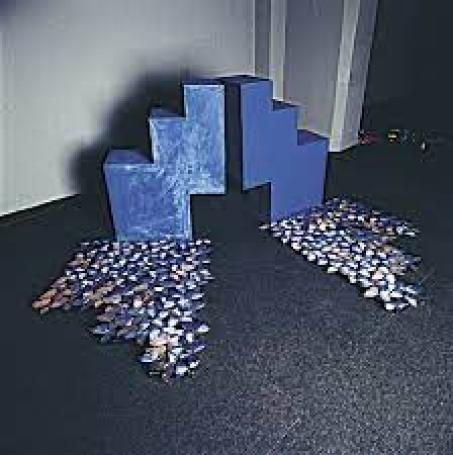




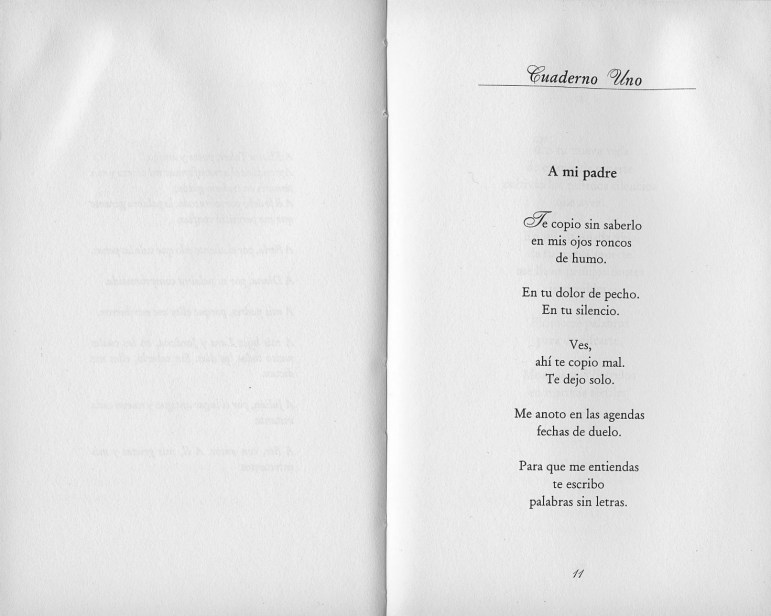


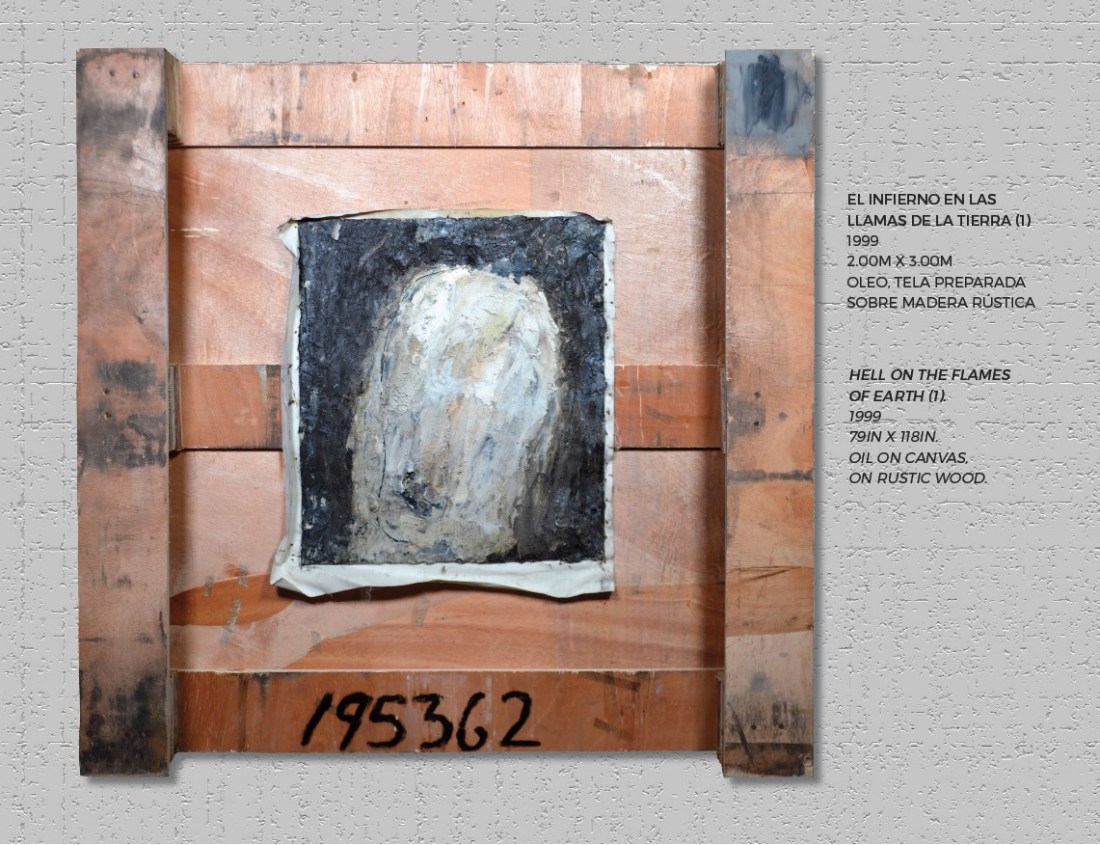


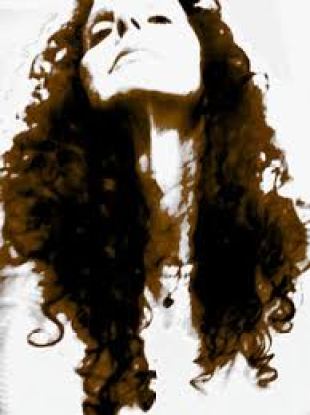




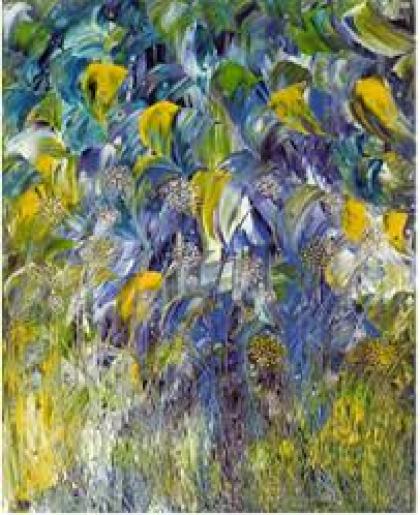


 Caracas in 1994, As a young woman, Gego worked as a draftsman in several architecture firms, painting workshops, and carpentry shops in her native Germany while completing a degree in architecture from the University of Stuttgart in 1938. To escape the increasing anti-Semitism in her home country, she emigrated to Venezuela in 1939, where she worked as a freelance architect and industrial designer. In 1953, she moved to the coastal town of Tarma and began her artistic work, producing drawings, watercolors, monotypes and xylographs; the majority of these early works were figurative and expressionist. She returned to Caracas in 1956, and there, using pure abstraction as her starting point, she began to address problems of sculptural space in her work; in 1957, along with artists Carlos Cruz-Diez, Alejandro Otero, and Jesús-Rafael Soto, Gego participated in the exhibition Arte abstracto en Venezuela. By 1959, the Museum of Modern Art in New York had begun to acquire her work; she moved to New York in 1960 and remained in the United States until 1967. Gego taught at the school of architecture of the Universidad Central de Venezuela and at the Escuela de Artes Plásticas Cristóbal Rojas. Her first individual show was held at the Museo de Bellas Artes in Caracas in 1961; in 1962, she installed a sculpture at the headquarters of the Banco Industrial de Venezuela. She helped found the Instituto de Diseño Neumann in Caracas where she taught from 1964 to 1977. From the 1970s to the 1980s she completed important, architecturally integrated sculpture for public buildings, residences, and shopping malls. In 1972, for example, she constructed Cuerdas (Cords), a sculpture installation consisting of suspended nylon and stainless steel strips, for the Parque Central architectonic complex in Caracas. Gego eventually began to use random procedures and “poor” materials such as industrial scraps and metals. Her series of suspended sculptures Dibujos sin papel (Drawings without Paper) and her series Bichos (Creatures) also date from the 1980s, as does her Reticulárea ambiental. ________________________________________________________________