Sara Levi Calderón no es su verdadero nombre, pues ella viene de una familia ashkenazí muy reconocida en México. Es su nombre de pluma con el cual publicó hace 30 años, su libro, una relato que incluye poesía erótica y describe un amor prohibido entre dos mujeres, siendo una de ellas parte de la Comunidad judía de México. Debido a este amor, “Sara” es desterrada de su casa por sus propios hijos; desheredada por sus padres; y expulsada de su comunidad por sus amigos y parientes. La aparición del libro y la condición de lesbiana de una “hija de familia” fue un shock para la comunidad judía de la época. “La homofobia era terrible. No supe cómo defenderme, no supe cómo explicárselo a mis hijos. Estaba aterrada por el escándalo, me sentí señalada- y dejé el país. // Se casó a los 18 años con un hombre, quien fue excelente marido y buen padre . La mujer, que tiene otras expectativas, vive insatisfecha y termina divorciándose. Un buen día, se enamora por primera vez en la vida “algo de lo cual no me creía capaz”. El objeto de su amor es una mujer que todo el mundo a su alrededor ama… hasta que se descubre el lazo que las une. “La Comunidad no me perdona que haya yo herido a mis padres y a mis hijos “ y lo lamenta. Sin embargo, tenía que elegir entre perder el amor y morir; o aceptarlo y seguir con vida”. “Desde hace 35 años que vivo con esta persona, la amo con todo mi ser”, concluye la novelista. vuelve a tomar la pluma con la obra “Vida y peripecies de una buena hija de familia”. Adaptado de Enlace Judío
_________________________
Sara Levi Calderón is not her real name, as she comes from a well-known Ashkenazi family in Mexico. It is the pen name she used to publish her book 30 years ago, a story that includes erotic poetry and describes a forbidden love between two women, one of whom is part of the Jewish community in Mexico. Because of this love, “Sara” is banished from her home by her own children, disinherited by her parents, and expelled from her community by her friends and relatives. The publication of the book and the lesbian identity of a “daughter of a family” shocked the Jewish community at the time. “The homophobia was terrible. I didn’t know how to defend myself, I didn’t know how to explain it to my children. I was terrified of the scandal, I felt singled out—and I left the country. // She married at 18 to a man who was an excellent husband and a good father. The woman, who had different expectations, lived unsatisfied and ended up divorcing. One day, she fell in love for the first time in her life, “something I didn’t think I was capable of.” The object of her love was a woman whom everyone around her loved… until the bond between them was discovered. “The community doesn’t forgive me for having hurt my parents and my children,” and she regrets it. However, she had to choose between losing love and dying; or accepting it and continuing to live.” “I have lived with this person for 35 years, I love her with all my being,” the novelist concludes. She returns to writing with the work “Life and Adventures of a Good Daughter of a Family.” Adapted from Enlace Judío
_____________________________________________
___________________________________
Dos mujeres/Two mujeres
Una menta?
Genovesa me ofreció una menta. Sin recato la tomé con mi boca. Sentí el contacto desconocido de sus dedos en mi lengua: un rayo luminoso se abrió camino por mi cerebro. Ella me miró atónita sin quitar la mano. Hice un avance hacia su boca entreabierta por la sorpresa. Temblé, temblamos, con el corazón enloquecido metí mi lengua en su boca, circundé sus dientes: sabía a flor nueva. Nuestras miradas se desprendieron como dos pájaros en fuga. Nos perdimos en el espejo frente a la cama. Alrededor de nosotras miles de ojos rellenos de azul y mar, gusanos y despojos. En medio dos mujeres, una hincada frente a la otra; alrededor de ellas un panteón de ojos. Caíamos en un silencio inhóspito. Gulp, vi mis profundos interiores. Negras entrañas enrojecían, pequeñas estrías se marcaron en mis ojos. Genovesa seguía clavada en el espejo. Su vista se había poblado de nardos.
Todo duró un instante que a mí me pareció una eternidad. Ella salió lentamente del entramado de refracciones.
Parecía una doliente milenaria. Me reconocí en ella como aquella joven mujer que había sido hacía no mucho tiempo. Tomé su mano que reposaba sobre el edredón beige. Las dos veníamos de dos experiencias tan diferentes, pero en algo nos parecíamos.
—No es fácil hacer añicos a los fantasmas genitores —le dije—. Lo nuestro significa romper con los símbolos más antiguos: símbolos aprendidos desde antes de nacer. —Bajó la cabeza y acomodó el edredón sobre sus piernas.
—Sí —dijo suavemente—, tiene que ver con algo muy antiguo. —Al verme retraída me pasó la mano por la mejilla. Me preguntó si a mí también me preocupaba.
—Sí —le dije. Mi afirmación pareció tranquilizarla. Poco a poco nuestras formaciones graníticas se fueron disolviendo y el deseo volvió a ser transparente.
Pronto supe que la entrega de su cuerpo era lenta. Había que acariciarla con la mirada, eliminar la tristeza que encubría su voluptuosidad. Tal quehacer se asemejaba a la delicada factura de una acuarela japonesa. Lamí su cuello, su boca…
Afuera, una lluvia fina golpeaba las ventanas. La música de Alain Barrière nos acompañaba en la entrada de un territorio nuevo.
«Dos mujeres», pensé con todo mi deseo a flor de cada poro. Mi boca se detuvo en su cuello. Bajé por su vientre, retuve sus caderas. Ella acercó sus senos a mis senos, a mi cara, a mi boca; lamió con su lengua mi cuello. Volvimos a las bocas reconociendo nuestras lenguas. Las palpitaciones de mis sienes se transportaban a mi sexo. Los caballos, oh Dios, galopan a la velocidad del viento, de sus hocicos brotan llamaradas al rojo vivo. Nuestros cuerpos danzan.
—Qué fuerte siento contigo —susurró.
—Deseo hacerte mía: volverme tuya —musité a su oído.
Mi lengua perturbada recorre sus senos, sus pezones inflamados, su vientre liso, se interna en su vulva: está hecha de musgo fresco. Destellos plateados caen sobre un mar plumbago. Me siento fuerte, ilimitada.
—Le temo al vértigo —dijo.
La tierra se vuelve líquida. Nos detenemos la una de la otra. Reconoce su sabor a través de mi boca… Los leños regurgitan secamente mientras nuestras voces se dicen coplas. Una voz urbana clama: te amo. Esa voz es mía y de nadie más.
Para quien quiera un poco de vida…
Cuando desperté la vi acostada a mi lado. Era muy bella. Me gustaba que solo tuviera veinticinco años y que estuviera allí, en mi cama, tranquilamente dormida. Movió la boca como si fuera a decir algo, pero solo era un movimiento del sueño. Deseé que nunca terminara el puente de Muertos. «Es ella a quien he estado esperando toda mi vida», pensé. Pero que fuera una mujer no era cualquier cosa. Recordé a Morena que nunca quería hablar conmigo de su querida prima, pero que finalmente me la presentó y luego le dejó una nota diciéndole que me llamara cuando ella partiera. Qué diferentes eran la una de la otra. Con Morena yo tenía el papel de protectora. Genovesa, a pesar de sus catorce años menos que yo, podía mostrarme caminos que yo anhelaba recorrer.
Abrió los ojos. Noté que algo la afligía. Ya habían pasado tres días y no quería que terminaran las vacaciones. ¿Qué va a pasar después? No había que preocuparse antes de tiempo…
—Me gustas —le dije.
Me pasó la mano por la nuca y el hombro. Qué delicia de manos. Se las miró detenidamente como si no fueran suyas.
—Parecen de pintora.
— ¿Y cómo son las manos de pintora?
—No lo sé, pero las tuyas son muy sensibles.
Me pidió que le mostrara las mías. Me dijo que no sabía de qué podían ser, pero que definitivamente no eran de socióloga. Me preguntó qué me gustaría ser.
—Escritora.
— ¿De veras? Qué guardado te lo tenías.
—Te lo juro, toda mi vida lo he deseado. Me he metido a estudiar teatro, creación dramática, sociología, etcétera. Todo, para un día poder escribir. Pero ya se me pasó el tiempo.
—Decídete: deja de hacer otras cosas y ponte a escribir —me urgió.
—Voy a escribir una historia de amor.
— ¿Sí? ¿Alguna muy importante en tu vida?
La besé y le dije que la nuestra era la historia de amor más importante de mi vida. Me preguntó que cómo podía saberlo si apenas la conocía. Así es el amor, pega como un destello de luz y sabes que esa persona es la esperada. Es la ventaja de tener más años.
—A mí me falta vivir, conocer —dijo. No sabía qué quería en su vida. Le preocupaba terriblemente que su gran historia de amor fuera con una mujer—. No es lo más común —sonrió. Además, yo era madre de dos hijos e hija de padres muy conocidos.
— ¿Debo negarme a vivir lo que tanto he anhelado? Seguro terminaré siendo una vieja amargada. Mis hijos pronto se van a casar, ¿y yo qué? ¿Voy a casarme con alguien a quien no quiero? Qué injusto para mí.
—Para mí también sería injusto no vivir lo que estoy viviendo —dijo.
Pasó su mano sobre mis senos. Era la primera vez que se atrevía. Su boca se abrió levemente y pude ver su lengua húmeda. Saqué mi lengua pidiendo la suya. El gesto la enloqueció y me agarró de la cintura, me hizo subir sobre ella. Nos besamos hasta agotar la respiración.
El brinco del siniestro
Los espejos devolvían nuestras imágenes desnudas. Un rayo de sol, como lengua de gato, entraba por la rendija de la ventana. Genovesa parecía animal joven que ha desechado la tensión mediante juegos amorosos. Abrió un ojo, luego el otro. Se sobresaltó al verme mirándola. Para que recordara quién era yo la besé suavemente. Se agarró de mí como una gata mimosa. Nos dimos el primer beso de la mañana. Abrazadas giramos de un lado al otro de la cama. Pronto, nos encontramos sobre el tapete africano. Frente a la chimenea nos detuvimos a ver los leños carbonizados de la noche anterior. Nos hicimos el amor sin ninguna otra finalidad que dejarnos sentir. Rotos los límites sugerí que saliéramos a la terraza. Aceptó diciendo que el jardín era bello.
Saqué de la covacha un par de colchones amarillo chillante y los puse sobre el piso de ladrillo. Ella volvió a entretenerse con las flores.
—Están más abiertas, están más felices —dijo. Jugamos con las palabras: más abiertas, más felices. Las pusimos, las antepusimos, las propusimos: las tornamos y las alternamos.
—Las posibilidades son muchas —dijo plácidamente recostada sobre el colchón. Cerró los ojos. El sol daba directo en su cara.
Se sentó a verme. Pasó un dedo sobre mi boca, la delineó. Con la punta de mi lengua toqué su dedo. ¡Ay! Mi boca se hizo una cueva, su dedo necesitaba conocer sus escondites: entrar y descubrir y salir y volver… La volteé boca abajo. Lamí su espalda, acaricié su cintura pronunciada, sus nalgas.
—Tus manos parecen palomas —dijo.
Un viento recio hizo que los sauces llorones se cimbraran. Volteó desesperada a buscar mi boca. Nos besamos. Acarició la curvatura de mi espalda, sentí duros sus pezones bajo mi boca que hacía una débil presión sobre ellos. Sus caderas subían y bajaban, abrí con mi rodilla sus piernas, acoplamos ritmos, pasó su mano por mis senos, su mano volvió a mi cintura, me hizo girar para montarse sobre mí, su mata de pelo cubría mi cara, a través de ese enjambre dorado veía las nubes aborregadas viajar veloces. Puse mis dedos en su clítoris, con mi muslo ayudé a mi mano. Ella acariciaba mi brazo y susurraba: más, más, más: el susurro acabó en gemido: en un grito, en una risa. Se abrió un placer indescriptible.
El sol se escondió bajo una nube. Ansiosa, ella buscó mi vagina. El sol no tardó en salir para que no sintiéramos frío. Una luz iridiscente me traspasó. Ella entraba y salía de mí rítmicamente. El mundo de todos los principios… En medio de toda esta euforia escuché un ruido extraño. Vi miles de conchas marinas romperse. Corrí a asomarme a la calle. Alejandro se estaba brincando la reja. Desesperada corrí a avisarle a Genovesa… No entendía nada. La tomé de la mano y tal como estaba la escondí en la covacha. Me puse la bata que había dejado sobre la cama. Alejandro ya estaba tocando furioso la puerta de mi recámara que por suerte tenía echado el cerrojo. Ay, el corazón. Le abrí con la resolución de…
Como amo por su casa entró mirándome de soslayo. « ¿Cómo se atreve?», pensé. Abrió la puerta del baño y se asomó al vestidor. Volvió a la recámara. Giró la llave del ropero antiguo, percibió los siete jarrones de rosas. Me volteó a ver. Deseé tener las agallas para sacarlo a patadas. En medio de ese odio trastabilló y sin querer oprimió el mecanismo de carrusel. Se escuchó un alarde de cornetas y trombones. Gritó como rata atrapada.
—¿Qué es esto? ¿Una casa de locos?
Me atraganté de terror al verlo salir a la terraza.
—¿Conque sí, eh? —dijo mirando el colchón amarillo—: aquí hay gato encerrado — agregó.
Un destello surgió de sus lentes negros. Determinado se dirigió a la covacha. Tomó la perilla de la puerta. No quise decirle: «Adentro hay alimañas». Uf, soltó la perilla.
—Ahorita mismo te me vassss —silbé aplomada.
Entré a mi recámara por un par de piedras milenarias y llevándolas a lo alto de mi cabeza lo amenacé con romperle la crisma. Maldiciendo se dio la media vuelta. Bajé tras él para abrirle el candado. Le pedí las llaves de mi casa y di tal portazo que lo supuse clavado en la banqueta. Subí corriendo a sacar a Genovesa de la covacha. Estaba encorvada y lívida.
— ¿Ya se fue? —preguntó seca.
Algo se había roto en ella. No entendió qué tipo de mujer era yo. Cómo era posible que ese hombre tuviera las llaves de mi casa y no hubiera tomado ninguna medida. Traté de explicarle que él, ese hombre, se había brincado la reja, que lo del candado y la cadena eran la medida. No le interesaban mis explicaciones. Preguntó cuándo regresaban los demás miembros de mi familia.
—Posiblemente hoy en la noche —le dije.
—Pues es tiempo de que me vaya.
El mundo se me vino abajo. Me pidió que la acompañara al vestidor. Sentada en la alfombra vi cómo guardaba su ropa en el maletín café. Parecía una niña enfurruñada.
—Debe haber algo que te convenza de quedarte: no puedes irte así. No sería justo para la historia —le dije.
— ¿Para la historia?
Le aseguré que su huida era un pretexto para no enfrentar lo que había sucedido entre nosotras. Dejó la maleta y vino a sentarse a mi lado. Me miró y supe que iba por buen camino…
— ¿Tú crees que de eso se trata? Metí mi mano por su camisa blanca. Me detuvo la mano…
Genovesa offered me a mint. Without hesitation, I took it in my mouth. I felt the unfamiliar touch of her fingers on my tongue: a luminous ray shot through my brain. She stared at me, astonished, without removing her hand. I moved closer to her mouth, slightly open in surprise. I trembled, we both trembled, my heart racing, I thrust my tongue into her mouth, circling her teeth: she tasted of a new flower. Our gazes separated like two birds in flight. We lost ourselves in the mirror opposite the bed. Around us, thousands of eyes filled with blue and sea, worms and remains. In the middle, two women, one kneeling before the other; around them, a pantheon of eyes. We fell into an inhospitable silence. Gulp, I saw my deepest recesses. Black entrails reddened, small striae appeared in my eyes. Genovesa remained fixed on the mirror. Her gaze had filled with tuberoses. It all lasted an instant that felt like an eternity to me. She slowly emerged from the labyrinth of refractions.
She looked like an ancient mourner. I recognized myself in her as that young woman I had been not so long ago. I took her hand, which rested on the beige comforter. We both came from such different experiences, yet we were alike in some way.
“It’s not easy to shatter the ghosts of our ancestors,” I told her. “What we’re doing means breaking with the most ancient symbols: symbols learned even before birth.” She lowered her head and adjusted the comforter on her legs.
“Yes,” she said softly, “it has to do with something very old.” Seeing me withdrawn, she ran her hand along my cheek. She asked if I was worried about it too.
“Yes,” I said. My affirmation seemed to reassure her. Little by little, our granite-like formations dissolved, and desire became transparent once more.
I soon knew that the surrender of her body was slow. I had to caress her with my gaze, dispel the sadness that concealed her voluptuousness. Such a task resembled the delicate execution of a Japanese watercolor. I licked her neck, her mouth…
Outside, a fine rain tapped against the windows. The music of Alain Barrière accompanied us as we entered a new territory.
“Two women,” I thought, all my desire surfacing from every pore. My mouth lingered on her neck. I moved down her belly, held her hips. She brought her breasts to mine, to my face, to my mouth; she licked my neck with her tongue. We returned to our mouths, recognizing each other’s tongues. The throbbing in my temples traveled to my sex. The horses, oh God, gallop at the speed of the wind, red-hot flames erupting from their muzzles. Our bodies dance.
“How strong I feel with you,” she whispered.
“I want to make you mine: to become yours,” I murmured in her ear.
My troubled tongue explores her breasts, her swollen nipples, her smooth belly, delves into her vulva: it is made of fresh moss. Silver flashes fall upon a plumbago sea. I feel strong, boundless.
“I’m afraid of vertigo,” she said.
The earth turns liquid. We stop, each of us. She recognizes her taste through my mouth… The logs regurgitate dryly as our voices sing verses to each other. An urban voice cries out: I love you. That voice is mine and no one else’s.
For those who crave a little life…
When I woke up, I saw her lying beside me. She was very beautiful. I liked that she was only twenty-five and that she was there, in my bed, peacefully asleep. Her mouth moved as if she were going to say something, but it was just a movement of sleep. I wished the Day of the Dead would never end. “She’s the one I’ve been waiting for all my life,” I thought. But the fact that she was a woman wasn’t just any old thing. I remembered Morena, who never wanted to talk to me about her beloved cousin, but who finally introduced us and then left her a note telling her to call me when she left. How different they were from each other. With Morena, I played the role of protector. Genovesa, despite being fourteen years younger than me, could show me paths I longed to explore.
She opened her eyes. I noticed that something was troubling her. Three days had already passed, and she didn’t want the vacation to end. What would happen next? There was no need to worry prematurely…
“I like you,” I told her.
She ran her hand over the back of my neck and shoulder. What delightful hands. She examined them closely, as if they weren’t her own.
“They look like a painter’s.”
“And what are a painter’s hands like?”
“I don’t know, but yours are very sensitive.”
She asked me to show her mine. She said she didn’t know what they could be from, but they definitely weren’t a sociologist. She asked me what I’d like to be.
“A writer.”
“Really? You’ve kept that a secret.”
“I swear, I’ve wanted it my whole life. I’ve studied theater, playwriting, sociology, and so on. Everything, so that one day I could write. But my time has passed.”
“Make up your mind: stop doing other things and start writing,” she urged.
“I’m going to write a love story.”
“Really?” “Someone very important in your life?”
I kissed her and told her that ours was the most important love story of my life. She asked me how I could know that when I barely knew her. That’s how love is; it hits like a flash of light, and you know that person is the one you’ve been waiting for. That’s the advantage of being older.
“I still have to live, to get to know,” she said. She didn’t know what she wanted in her life. She was terribly worried that her great love story was with a woman. “It’s not the most common thing,” she smiled. Besides, I was a mother of two and the daughter of very well-known parents.
“Should I deny myself the life I’ve longed for so much? I’m sure I’ll end up a bitter old woman. My children will soon be married, and what about me? Am I going to marry someone I don’t love? How unfair to me.”
“It would be unfair to me too not to live what I’m living,” she said.
She ran her hand over my breasts. It was the first time she had dared. Her mouth opened slightly, and I could see her moist tongue. I stuck out my tongue, begging for hers. The gesture drove her wild, and she grabbed my waist, pulling me on top of her. We kissed until we were breathless.
The leap of the sinister
The mirrors reflected our naked images. A ray of sunlight, like a cat’s tongue, entered through the crack in the window. Genovesa looked like a young animal that had released its tension through amorous games. She opened one eye, then the other. She startled when she saw me looking at her. To remind her who I was, I kissed her gently. She clung to me like a cuddly cat. We shared our first kiss of the morning. Embraced, we turned from one side of the bed to the other. Soon, we found ourselves on the African rug. In front of the fireplace, we paused to look at the charred logs from the night before. We made love with no other purpose than to let ourselves feel. Having broken all boundaries, I suggested we go out onto the terrace. She agreed, saying the garden was beautiful.
I took a couple of bright yellow mattresses from the shed and laid them on the brick floor. She went back to playing with the flowers.
“They’re more open, they’re happier,” she said. We played with words: more open, happier. We placed them, we put them before, we proposed them: we turned them and alternated them.
“The possibilities are many,” she said peacefully, reclining on the mattress. She closed her eyes. The sun shone directly on her face.
She sat down to watch me. She ran a finger over my mouth, traced its outline. With the tip of my tongue, I touched her finger. Oh! My mouth became a cave, her finger needed to know its hiding places: to enter and discover and leave and return… I turned her face down. I licked her back, caressed her pronounced waist, her buttocks.
“Your hands are like doves,” she said.
A strong wind made the weeping willows sway. She turned desperately to find my mouth. We kissed. She caressed the curve of my back, I felt her nipples harden beneath my mouth, which applied gentle pressure to them. Her hips rose and fell, I parted her legs with my knee, we synchronized our rhythms, she ran her hand over my breasts, then back to my waist, turning me around.
The sun hid behind a cloud. Eagerly, she sought my vagina. The sun soon reappeared so we wouldn’t feel the cold. An iridescent light pierced me. She entered and withdrew from me rhythmically. The world of all beginnings… In the midst of all this euphoria, I heard a strange noise. I saw thousands of seashells shatter. I ran to look out into the street. Alejandro was jumping over the fence. Desperate, I ran to warn Genovesa… I didn’t understand anything. I took her hand and, just as she was, hid her in the shed. I put on the robe I had left on the bed. Alejandro was already furiously banging on my bedroom door, which luckily was locked. Oh, my heart. I opened it with the resolve of…
As if he owned the place, he entered, glancing at me sideways. “How dare he?” I thought. He opened the bathroom door and peeked into the dressing room. He went back to the bedroom. He turned the key to the antique wardrobe, noticed the seven vases of roses. He turned to look at me. I wished I had the guts to kick him out in the midst of that hatred, he stumbled and accidentally pressed the carousel mechanism. A cacophony of trumpets and trombones was heard. He screamed like a trapped rat.
“What is this? A madhouse?”
I choked with terror when I saw him go out onto the terrace.
“So, huh?” he said, looking at the yellow mattress. “There’s something fishy going on here,” he added.
A glint appeared in his dark glasses. Determined, he went to the storage room. He grabbed the doorknob. I didn’t want to tell him, “There are vermin in there.” Ugh, he let go of the knob.
“You’re getting out of here right now,” I whistled steadily. I went into my room to grab a couple of ancient stones and, holding them high on my head, threatened to crack his skull. Cursing, he turned away. I went downstairs after him to unlock the door. I demanded the keys to my house and slammed the door so hard I thought he was pinned to the sidewalk. I ran upstairs to get Genovesa out of the shed. She was hunched over and pale.
“Is he gone already?” she asked curtly. Something had broken inside her. She didn’t understand what kind of woman I was. How was it possible that this man had the keys to my house and hadn’t taken any precautions? I tried to explain that he, this man, had jumped the fence, that the padlock and chain were the only measure. She wasn’t interested in my explanations. She asked when the rest of my family would be back.
“Possibly tonight,” I told her.
“Well, it’s time for me to go.” My world collapsed. She asked me to accompany her to the dressing room. Sitting on the rug, I watched her pack her clothes into her brown suitcase. She looked like a sulking child.
“There must be something that convinces you to stay: you can’t just leave like this. It wouldn’t be fair to history,” I told her.
“To history?” I assured her that her running away was just an excuse to avoid facing what had happened between us. She put down her suitcase and came to sit beside me. She looked at me, and I knew I was on the right track…
“Do you think that’s what it’s about?” I reached inside her white shirt. She stopped my hand…
Autora brasileña de origen judío-ucraniano, Clarice Lispector (1920-1977) llegó con su familia a Brasil cuando apenas contaba con dos años de edad. Estudió Derecho en la Facultad Nacional y trabajó, aunque de manera un tanto esporádica, como periodista para varios medios. Aunque ya había publicado varios cuentos y relatos con anterioridad, Lispector comenzó su carrera literaria a los 21 años con Cerca del corazón salvaje, obra que recibió el Premio Graça Aranha. A partir de ese momento, continuó escribiendo y colaborando con varios medios, pese a que sus constantes viajes —su marido era diplomático— le hicieron desarrollar su obra de manera inconstante. Tras separarse de su marido en 1950, Lispector volvió al ámbito periodístico y comenzó a destacar gracias a sus libros de relatos. En 1963 publicó La pasión según G.H., su novela más aclamada. Después de sobrevivir a un incendio en su casa que le produjo graves secuelas físicas, Lispector sufrió de depresión y su estado dio paso a una nueva etapa con obras como Un aprendizaje, Agua viva o La hora de la estrella, novela que fue llevada al cine en 1985. También comenzó a escribir relatos infantiles y siguió con su pasión por los cuentos cortos. Clarice Lispector murió de cáncer em 1977.
___________________________________________
Brazilian author of Jewish-Ukrainian origin, Clarice Lispector (1920-1977) left with her family in Brazil when she was only two years old. He studied Derecho at the National Faculty and worked, although somewhat sporadically, as a journalist for various media. Though she had published several stories and reports in the earlier, Lispector began her literary career at 21 years old with Cerca del Corazón Salvaje, a work that received the Graça Aranha Prize. From that moment on, she continued writing and collaborating with various media, despite her constant travels — her husband was a diplomat — which allowed her to develop her work in an inconsistent manner. After separating from her husband in 1950, Lispector returned to the journalistic sphere and began to stand out thanks to her books of reports. In 1963 She published La Pasión según G.H., her most acclaimed novel. After surviving a fire in her house that produced serious physical consequences, Lispector suffered from depression and his condition took him to a new stage with works such as An Apprenticeship, Agua Viva and The Hour of the Star, a novel that was shown in the cinema in 1985. She also began to write children’s stories and continued with his passion for the short accounts. Clarice Lispector died of cancer in 1977.
_______________________________________
“Amor”
Um pouco cansada, com as compras deformando o novo saco de tricô, Ana subiu no bonde. Depositou o volume no colo e o bonde começou a andar. Recostou-se então no banco procurando conforto, num suspiro de meia satisfação.
Os filhos de Ana eram bons, uma coisa verdadeira e sumarenta. Cresciam, tomavam banho, exigiam para si, malcriados, instantes cada vez mais completos. A cozinha era enfim espaçosa, o fogão enguiçado dava estouros. O calor era forte no apartamento que estavam aos poucos pagando. Mas o vento batendo nas cortinas que ela mesma cortara lembrava-lhe que se quisesse podia parar e enxugar a testa, olhando o calmo horizonte. Como um lavrador. Ela plantara as sementes que tinha na mão, não outras, mas essas apenas. E cresciam árvores. Crescia sua rápida conversa com o cobrador de luz, crescia a água enchendo o tanque, cresciam seus filhos, crescia a mesa com comidas, o marido chegando com os jornais e sorrindo de fome, o canto importuno das empregadas do edifício. Ana dava a tudo, tranquilamente, sua mão pequena e forte, sua corrente de vida.
Certa hora da tarde era mais perigosa. Certa hora da tarde as árvores que plantara riam dela. Quando nada mais precisava de sua força, inquietava-se. No entanto sentia-se mais sólida do que nunca, seu corpo engrossara um pouco e era de se ver o modo como cortava blusas para os meninos, a grande tesoura dando estalidos na fazenda. Todo o seu desejo vagamente artístico encaminhara-se há muito no sentido de tornar os dias realizados e belos; com o tempo, seu gosto pelo decorativo se desenvolvera e suplantara a íntima desordem. Parecia ter descoberto que tudo era passível de aperfeiçoamento, a cada coisa se emprestaria uma aparência harmoniosa; a vida podia ser feita pela mão do homem.
No fundo, Ana sempre tivera necessidade de sentir a raiz firme das coisas. E isso um lar perplexamente lhe dera. Por caminhos tortos, viera a cair num destino de mulher, com a surpresa de nele caber como se o tivesse inventado. O homem com quem casara era um homem verdadeiro, os filhos que tivera eram filhos verdadeiros. Sua juventude anterior parecia-lhe estranha como uma doença de vida. Dela havia aos poucos emergido para descobrir que também sem a felicidade se vivia: abolindo-a, encontrara uma legião de pessoas, antes invisíveis, que viviam como quem trabalha — com persistência, continuidade, alegria. que sucedera a Ana antes de ter o lar estava para sempre fora de seu alcance: uma exaltação perturbada que tantas vezes se confundira com felicidade insuportável. Criara em troca algo enfim compreensível, uma vida de adulto. Assim ela o quisera e o escolhera.
Sua precaução reduzia-se a tomar cuidado na hora perigosa da tarde, quando a casa estava vazia sem precisar mais dela, o sol alto, cada membro da família distribuído nas suas funções. Olhando os móveis limpos, seu coração se apertava um pouco em espanto. Mas na sua vida não havia lugar para que sentisse ternura pelo seu espanto – ela o abafava com a mesma habilidade que as lides em casa lhe haviam transmitido. Saía então para fazer compras ou levar objetos para consertar, cuidando do lar e da família à revelia deles. Quando voltasse era o fim da tarde e as crianças vindas do colégio exigiam-na. Assim chegaria a noite, com sua tranquila vibração.
De manhã acordaria aureolada pelos calmos deveres. Encontrava os móveis de novo empoeirados e sujos, como se voltassem arrependidos. Quanto a ela mesma, fazia obscuramente parte das raízes negras e suaves do mundo. E alimentava anonimamente a vida. Estava bom assim. Assim ela o quisera e escolhera.
O bonde vacilava nos trilhos, entrava em ruas largas. Logo um vento mais úmido soprava anunciando, mais que o fim da tarde, o fim do vento mais úmido soprava anunciando, mais que o fim da tarde, o fim da hora instável. Ana respirou profundamente e uma grande aceitação deu a seu rosto um ar de mulher.
O bonde se arrastava, em seguida estacava. Até Humaitá tinha tempo de descansar. Foi então que olhou para o homem parado no ponto.
A diferença entre ele e os outros é que ele estava realmente parado. De pé, suas mãos se mantinham avançadas. Era um cego.
O que havia mais que fizesse Ana se aprumar em desconfiança? Alguma coisa intranqüila estava sucedendo. Então ela viu: o cego mascava chicles… Um homem cego mascava chicles. Ana ainda teve tempo de pensar por um segundo que os irmãos viriam jantar — o coração batia-lhe violento, espaçado. Inclinada, olhava o cego profundamente, como se olha o que não nos vê. Ele mascava goma na escuridão. Sem sofrimento, com os olhos abertos. O movimento da mastigação fazia-o parecer sorrir e de repente deixar de sorrir, sorrir e deixar de sorrir — como se ele a tivesse insultado, Ana olhava-o. E quem a visse teria a impressão de uma mulher com ódio. Mas continuava a olhá-lo, cada vez mais inclinada — o bonde deu uma arrancada súbita jogando-a desprevenida para trás, o pesado saco de tricô despencou-se do colo, ruiu no chão — Ana deu um grito, o condutor deu ordem de parada antes de saber do que se tratava — o bonde estacou, os passageiros olharam assustados. Incapaz de se mover para apanhar suas compras, Ana se aprumava pálida. Uma expressão de rosto, há muito não usada, ressurgia-lhe com dificuldade, ainda incerta, incompreensível. O moleque dos jornais ria entregando-lhe o volume. Mas os ovos se haviam quebrado no embrulho de jornal. Gemas amarelas e viscosas pingavam entre os fios da rede. O cego interrompera a mastigação e avançava as mãos inseguras, tentando inutilmente pegar o que acontecia. O embrulho dos ovos foi jogado fora da rede e, entre os sorrisos dos passageiros e o sinal do XXX
Poucos instantes depois já não a olhavam mais.
O bonde se sacudia nos trilhos e o cego mascando goma ficara atrás para sempre. Mas o mal estava feito. A rede de tricô era áspera entre os dedos, não íntima como quando a tricotara. A rede perdera o sentido e estar num bonde era um fio partido; não sabia o que fazer com as compras no colo. E como uma estranha música, o mundo recomeçava ao redor. O mal estava feito. Por quê? Teria esquecido de que havia cegos? A piedade a sufocava Ana respirava pesadamente. Mesmo as coisas que existiam antes do acontecimento estavam agora de sobreaviso, tinham um ar mais hostil, perecível… O mundo se tornara de novo um mal-estar. Vários anos ruíam, as gemas amarelas escorriam. Expulsa de seus próprios dias, parecia-lhe que as pessoas da rua eram periclitantes, que se mantinham por um mínimo equilíbrio à tona da escuridão — e por um momento a falta de sentido deixava-as tão livres que elas não sabiam para onde ir. Perceber uma ausência de lei foi tão súbito que Ana se agarrou ao banco da frente, como se pudesse cair do bonde, como se as coisas pudessem ser revertidas com a mesma calma com que não o eram.
O que chamava de crise viera afinal. E sua marca era o prazer intenso com que olhava agora as coisas, sofrendo espantada. O calor se tornara mais abafado, tudo tinha ganho uma força e vozes mais altas. Na Rua Voluntários da Pátria parecia prestes a rebentar uma revolução, as grades dos esgotos estavam secas, o ar empoeirado. Um cego mascando chicles mergulhara o mundo em escura sofreguidão. Em cada pessoa forte havia a ausência de piedade pelo cego e as pessoas assustavam-na com o vigor que possuíam. Junto dela havia uma senhora de azul, com um rosto. Desviou o olhar, depressa. Na calçada, uma mulher deu um empurrão no filho! Dois namorados entrelaçavam os dedos sorrindo… E o cego? Ana caíra numa bondade extremamente dolorosa. Ela apaziguara tão bem a vida, cuidara tanto para que esta não explodisse. Mantinha tudo em serena compreensão, separava uma pessoa das outras, as roupas eram claramente feitas para serem usadas e podia-se escolher pelo jornal o filme da noite – tudo feito de modo a que um dia se seguisse ao outro. E um cego mascando goma despedaçava tudo isso. E através da piedade aparecia a Ana uma vida cheia de náusea doce, até a boca. Só então percebeu que há muito passara do seu ponto de descida. Na fraqueza em que estava, tudo a atingia com um susto; desceu do bonde com pernas débeis, olhou em torno de si, segurando a rede suja de ovo.
Por um momento não conseguia orientar-se. Parecia ter saltado no meio da noite. Era uma rua comprida, com muros altos, amarelos. Seu coração batia de medo, ela procurava inutilmente reconhecer os arredores, enquanto a vida que descobrira continuava a pulsar e um vento mais morno e mais misterioso rodeava-lhe o rosto. Ficou parada olhando о muro. Enfim pôde localizar-se. Andando um pouco mais ao longo de uma sebe, atravessou os portões do Jardim Botânico. Andava pesadamente pela alameda central, entre os coqueiros. Não havia ninguém no Jardim. Depositou os embrulhos na terra, sentou-se no banco de um atalho e ali ficou muito tempo. A vastidão parecia acalmá-la, o silêncio regulava sua respiração. Ela adormecia dentro de si. De longe via a aléia onde a tarde era clara e redonda. Mas a penumbra dos ramos cobria o atalho.
Ao seu redor havia ruídos serenos, cheiro de árvores, pequenas surpresas entre os cipós. Todo o Jardim triturado pelos instantes já mais apressados da tarde. De onde vinha o meio sonho pelo qual estava rodeada? Como por um zunido de abelhas e aves. Tudo era estranho, suave demais, grande demais. Um movimento leve e íntimo a sobressaltou — voltou-se rápida. Nada parecia se ter movido. Mas na aléia central estava imóvel um poderoso gato. Seus pêlos eram macios. Em novo andar silencioso, desapareceu. Inquieta, olhou em torno. Os ramos se balançavam, as sombras vacilavam no chão. Um pardal ciscava na terra. E de repente, com malestar, pareceu-lhe ter caído numa emboscada. Fazia-se no Jardim um trabalho secreto do qual ela começava a se aperceber. Nas árvores as frutas eram pretas, doces como mel. Havia no chão caroços secos cheios de circunvoluções, como pequenos cérebros apodrecidos. O banco estava manchado de sucos roxos. Com suavidade intensa rumorejavam as águas. No tronco da árvore pregavam-se as luxuosas patas de uma aranha. A crueza do mundo era tranqüila. O assassinato era profundo. E a morte não era o que pensávamos. Ao mesmo tempo que imaginário — era um mundo de se comer com os dentes, um mundo de volumosas dálias e tulipas. Os troncos estar, pareceu-lhe ter caído numa emboscada. Fazia-se no Jardim um trabalho secreto do qual ela começava a se aperceber.
Nas árvores as frutas eram pretas, doces como mel. Havia no chão caroços secos cheios de circunvoluções, como pequenos cérebros apodrecidos. O banco estava manchado de sucos roxos. Com suavidade intensa rumorejavam as águas. No tronco da árvore pregavam-se as luxuosas patas de uma aranha. A crueza do mundo era tranqüila. O assassinato era profundo. E a morte não era o que pensávamos.
Ao mesmo tempo que imaginário — era um mundo de se comer com os dentes, um mundo de volumosas dálias e tulipas. Os troncos eram percorridos por parasitas folhudas, o abraço era macio, colado. Como a repulsa que precedesse uma entrega — era fascinante, a mulher tinha nojo, e era fascinante.
As árvores estavam carregadas, o mundo era tão rico que apodrecia. Quando Ana pensou que havia crianças e homens grandes com fome, a náusea subiu-lhe à garganta, como se ela estivesse grávida e abandonada. A moral do Jardim era outra. Agora que o cego a guiara até ele, estremecia nos primeiros passos de um mundo faiscante, sombrio, onde vitórias-régias boiavam monstruosas. As pequenas flores espalhadas na relva não lhe pareciam amarelas ou rosadas, mas cor de mau ouro e escarlates. A decomposição era profunda, perfumada…
Mas todas as pesadas coisas, ela via com a cabeça rodeada por um enxame de insetos enviados pela vida mais fina do mundo. A brisa se insinuava entre as flores. Ana mais adivinhava que sentia o seu cheiro adocicado… O Jardim era tão bonito que ela teve medo do Inferno. Era quase noite agora e tudo parecia cheio, pesado, um esquilo voou na sombra. Sob os pés a terra estava fofa, Ana aspirava-a com delícia. Era fascinante, e ela sentia nojo.
Mas quando se lembrou das crianças, diante das quais se tornara culpada, ergueu-se com uma exclamação de dor. Agarrou o embrulho, avançou pelo atalho obscuro, atingiu a alameda. Quase corria – e via о Jardim em torno de si, com sua impersonalidade soberba. Sacudiu os portões fechados, sacudia-os segurando a madeira áspera. O vigia apareceu espantado de não a ter visto.
Enquanto não chegou à porta do edifício, parecia à beira de um desastre. Correu com a rede até o elevador, sua alma batia-lhe no peito – o que sucedia? A piedade pelo cego era tão violenta como uma ânsia, mas o mundo lhe parecia seu, sujo, perecível, seu. Abriu a porta de casa. A sala era grande, quadrada, as maçanetas brilhavam limpas, os vidros da janela brilhavam, a lâmpada brilhava — que nova terra era essa? E por um instante a vida sadia que levara até agora pareceu-lhe um modo moralmente louco de viver. O menino que se aproximou correndo era um ser de pernas compridas e rosto igual ao seu, que corria e a abraçava. Apertou-o com força, com espanto. Protegia-se tremula. Porque a vida era periclitante. Ela amava o mundo, amava o que fora criado — amava com noção. Do mesmo modo como sempre fora fascinada pelas ostras, com aquele vago sentimento de asco que a aproximação da verdade Ihe provocava, avisando-a. Abraçou o filho, quase a ponto de machucá-lo. Como se soubesse de um mal — o cego ou o belo Jardim Botânicо? – agarrava-se a ele, a quem queria acima de tudo. Fora atingida pelo demônio da fé. A vida é horrível, disse-lhe baixo, faminta. O que faria se seguisse o chamado do cego? Iria sozinha… Havia lugares pobres e ricos que precisavam dela. Ela precisava deles..
Tenho medo, disse. Sentia as costelas delicadas da criança entre os braços, ouviu o seu choro assustado. Mamãe, chamou o menino. Afastou-o, olhou aquele rosto, seu coração crispou-se. Não deixe mamãe te esquecer, disse-lhe. A criança mal sentiu o abraço se afrouxar, escapou e correu até a porta do quarto, de onde olhou-a mais segura. Era o pior olhar que jamais recebera. O sangue subiu-lhe ao rosto, esquentando-o.
Deixou-se cair numa cadeira com os dedos ainda presos na rede. De que tinha vergonha? Não havia como fugir. Os dias que ela forjara haviam-se rompido na crosta e a água escapava.
Estava diante da ostra. E não havia como não olhá-la. De que tinha vergonha? E que já não era mais piedade, não era só piedade: seu coração se enchera com a pior vontade de viver. Já não sabia se estava do lado do cego ou das espessas plantas. O homem pouco a pouco se distanciara e em tortura ela parecia ter passado para o lados que lhe haviam ferido os olhos.
O Jardim Botânico, tranquilo e alto, Ihe revelava. Com horror descobria que pertencia à parte forte do mundo — e que nome se deveria dar a sua misericórdia violenta? Seria obrigada a beijar um leproso, pois nunca seria apenas sua irmã. Um cego me levou ao pior de mim mesma, pensou espantada. Sentia-se banida porque nenhum pobre beberia água nas suas mãos ardentes. Ah! era mais fácil ser um santo que uma pessoa! Por Deus, pois não fora verdadeira apieda este sentimento que se iria a uma igreja. Estou com medo, disse sozinha na sala. Levantou-se e foi para a cozinha ajudar a empregada a preparar o jantar.
Mas a vida arrepiava-a, como um frio. Ouvia o sino da escola, longe e constante. O pequeno horror da poeira ligando em fios a parte inferior do fogão, onde descobriu a pequena aranha. Carregando a jarra para mudar a água – havia o horror da flor se entregando lânguida e asquerosa às suas mãos. O mesmo trabalho secreto se fazia ali na cozinha. Perto da lata de lixo, esmagou com o pé a formiga. O pequeno assassinato da formiga. O mínimo corpo tremia. As gotas d’água caíam na água parada do tanque. Os besouros de verão.
O horror dos besouros inexpressivos. Ao redor havia uma vida silenciosa, lenta, insistente. Horror, horror. Andava de um lado para outro na cozinha, cortando os bifes, mexendo o creme. Em torno da cabeça, em ronda, em torno da luz, os mosquitos de uma noite cálida. Uma noite em que a piedade era tão crua como o amor ruim. Entre os dois seios escorria o suor. A fé ade que sondara no seu coração as águas mais profundas? Mas era uma piedade de leão.
Humilhada, sabia que o cego preferiria um amor mais pobre. Е, estremecendo, também sabia por quê. A vida do Jardim Botânico chamava-a como um lobisomem é chamado pelo luar. Oh! mas ela amava o cego! pensou com os olhos molhados. No entanto não era com quebrantava, o calor do forno ardia nos seus olhos.
Depois o marido veio, vieram os irmãos e suas mulheres, vieram os filhos dos irmãos.
Jantaram com as janelas todas abertas, no nono andar. Um avião estremecia, ameaçando no calor do céu. Apesar de ter usado poucos ovos, o jantar estava bom. Também suas crianças ficaram acordadas, brincando no tapete com as outras. Era verão, seria inútil obrigá-las a dormir. Ana estava um pouco pálida e ria suavemente com os outros.
Depois do jantar, enfim, a primeira brisa mais fresca entrou pelas janelas. Eles rodeavam a mesa, a família. Cansados do dia, felizes em não discordar, tão dispostos a não ver defeitos. Riam-se de tudo, com o coração bom e humano. As crianças cresciam admiravelmente em torno deles. E como a uma borboleta, Ana prendeu o instante entre os dedos antes que ele nunca mais fosse seu.
Depois, quando todos foram embora e as crianças já estavam deitadas, ela era uma mulher bruta que olhava pela janela. A cidade estava adormecida e quente. O que o cego desencadeara caberia nos seus dias? Quantos anos levaria até envelhecer de novo?
Qualquer movimento seu e pisaria numa das crianças. Mas com uma maldade de
Depois, quando todos foram embora e as crianças já estavam deitadas, ela era uma mulher bruta que olhava pela janela. A cidade estava adormecida e quente. O que o cego desencadeara caberia nos seus dias? Quantos anos levaria até envelhecer de novo?
Qualquer movimento seu e pisaria numa das crianças. Mas com uma maldade de amante, parecia aceitar que da flor saísse o mosquito, que as vitóriasrégias boiassem no escuro do lago. O cego pendia entre os frutos do Jardim Botânico.
Se fora um estouro do fogão, o fogo já teria pegado em toda a casa! pensou correndo para a cozinha e deparando com o seu marido diante do café derramado.
– O que foi?! gritou vibrando toda.
Ele se assustou com o medo da mulher. E de repente riu entendendo: – Não foi nada, disse, sou um desajeitado. Ele parecia cansado, com olheiras. Mas diante do estranho rosto de Ana, espiou-a com maior atenção.
Depois, quando todos foram embora e as crianças já estavam deitadas, ela era uma mulher bruta que olhava pela janela. A cidade estava adormecida e quente. O que o cego desencadeara caberia nos seus dias? Quantos anos levaria até envelhecer de novo? Qualquer movimento seu e pisaria numa das crianças. Mas com uma maldade de amante, parecia aceitar que da flor saísse o mosquito, que as vitórias-régias boiassem no escuro do lago. O cego pendia entre os frutos do Jardim Botânico.
Se fora um estouro do fogão, o fogo já teria pegado em toda a casa! pensou correndo para a cozinha e deparando com o seu marido diante do café derramado.
– O que foi?! gritou vibrando toda.
Ele se assustou com o medo da mulher. E de repente riu entendendo:
– Não foi nada, disse, sou um desajeitado. Ele parecia cansado, com olheiras.
Mas diante do estranho rosto de Ana, espiou-a com maior atenção. Depois atraiu-a a si, em rápido afago.
– Não quero que lhe aconteça nada, nunca! disse ela.
– Deixe que pelo menos me aconteça o fogão dar um estouro, respondeu ele sorrindo.
Ela continuou sem força nos seus braços. Hoje de tarde alguma coisa tranqüila se rebentara, e na casa toda havia um tom humorístico, triste. É hora de dormir, disse ele, é tarde. Num gesto que não era seu, mas que pareceu natural, segurou a mão da mulher, levando-a consigo sem olhar para trás, afastando-a do perigo de viver.
Acabara-se a vertigem de bondade.
E, se atravessara o amor e o seu inferno, penteava-se agora diante do espelho, por um instante sem nenhum mundo no coração. Antes de se deitar, como se apagasse uma vela, soprou a pequena flama do dia.
A little tired, the groceries stretching out her new knit sack, Ana boarded the tram.
She placed the bundle in her lap and the tram began to move. She then settled back in her seat trying to get comfortable, with a half-contented sigh.
Ana’s children were good, something true and succulent. They were growing up, taking their baths, demanding for themselves, misbehaved, ever more complete moments. The kitchen was after all spacious, the faulty stove gave off small explosions. The heat was stifling in the apartment they were paying off bit by bit. But the wind whipping the curtains she herself had cut to measure reminded her that if she wanted she could stop and wipe her brow, gazing at the calm horizon. Like a farmhand. She had sown the seeds she had in her hand, no others, but these alone. And trees were growing. Her brief conversation with the electric bill collector was growing, the water in the laundry sink was growing, her children were growing, the table with food was growing, her husband coming home with the newspapers and smiling with hunger, the tiresome singing of the maids in the building. Ana gave to everything, tranquilly, her small, strong hand, her stream of life.
A certain hour of the afternoon was more dangerous. A certain hour of the afternoon the trees she had planted would laugh at her. When nothing else needed her strength, she got worried. Yet she felt more solid than ever, her body had filled out a bit and it was a sight to see her cut the fabric for the boys’ shirts, the large scissors snapping on the cloth. All her vaguely artistic desire had long since been directed toward making the days fulfilled and beautiful; over time, her taste for the decorative had developed and supplanted her inner disorder. She seemed to have discovered that everything could be perfected, to each thing she could lend a harmonious appearance; life could be wrought by the hand of man.
Deep down, Ana had always needed to feel the firm root of things. And this is what a home bewilderingly had given her. Through winding paths, she had fallen into a woman’s fate, with the surprise of fitting into it as if she had invented it. The man she’d married was a real man, the children she’d had were real children. Her former youth seemed as strange to her as one of life’s illnesses. She had gradually emerged from it to discover that one could also live without happiness: abolishing it, she had found a legion of people, previously invisible, who lived the way a person works – with persistence, continuity, joy. What had happened to Ana before she had a home was forever out of reach: a restless exaltation so often mistaken for unbearable happiness. In exchange she had created something at last comprehensible, an adult life. That was what she had wanted and chosen.
The only thing she worried about was being careful during that dangerous hour of the afternoon, when the house was empty and needed nothing more from her, the sun high, the family members scattered to their duties. As she looked at the clean furniture, her heart would contract slightly in astonishment. But there was no room in her life for feeling tender toward her astonishment – she’d smother it with the same skill the household chores had given her. Then she’d go do the shopping or get something repaired, caring for her home and family in their absence. When she returned it would be the end of the afternoon and the children home from school needed her. In this way night would fall, with its peaceful vibration. In the morning she’d awake haloed by her calm duties. She’d find the furniture dusty and dirty again, as if repentantly come home. As for herself, she obscurely participated in the gentle black roots of the world. And nourished life anonymously. That was what she had wanted and chosen.
The tram went swaying along the tracks, heading down broad avenues. Soon a more humid breeze blew announcing, more than the end of the afternoon, the end of the unstable hour. Ana breathed deeply and a great acceptance gave her face a womanly air.
The tram would slow, then come to a halt. There was time to relax before Humaita. That was when she looked at the man standing at the tram stop.
The difference between him and the others was that he really was stopped. Standing there, his hands reaching in front of him. He was blind.
What else could have made Ana sit up warily? Something uneasy was happening. Then she saw: the blind man was chewing gum . . . A blind man was chewing gum.
Ana still had a second to think about how her brothers were coming for dinner – her heart beat violently, at intervals. Leaning forward, she stared intently at the blind man, the way we stare at things that don’t see us. He was chewing gum in the dark. Without suffering, eyes open. The chewing motion made it look like he was smiling and then suddenly not smiling, smiling and not smiling – as if he had insulted her, Ana stared at him. And whoever saw her would have the impression of a woman filled with hatred. But she kept staring at him, leaning further and further forward – the tram suddenly lurched throwing her unexpectedly backward, the heavy knit sack tumbled from her lap, crashed to the floor – Ana screamed, the conductor gave the order to stop before he knew what was happening – the tram ground to a halt, the passengers looked around frightened.
Unable to move to pick up her groceries, Ana sat up, pale. A facial expression, long unused, had reemerged with difficulty, still tentative, incomprehensible. The paperboy laughed while returning her bundle. But the eggs had broken inside their newspaper wrapping. Viscous, yellow yolks dripped through the mesh. The blind man had interrupted his chewing and was reaching out his uncertain hands, trying in vain to grasp what was happening. The package of eggs had been thrown from the bag and, amid the passengers’ smiles and the conductor’s signal, the tram lurched back into motion.
A few seconds later nobody was looking at her. The tram rumbled along the tracks and the blind man chewing gum stayed behind forever. But the damage was done.
The knit mesh was rough between her fingers, not intimate as when she had knit it. The mesh had lost its meaning and being on a tram was a snapped thread; she didn’t know what to do with the groceries on her lap. And like a strange song, the world started up again all around. The damage was done. Why? could she have forgotten there were blind people? Compassion was suffocating her, Ana breathed heavily. Even the things that existed before this event were now wary, had a more hostile, perishable aspect . . . The world had become once again a distress. Several years were crashing down, the yellow yolks were running. Expelled from her own days, it seemed to her that the people on the street were in peril, kept afloat on the surface of the darkness by a minimal balance – and for a moment the lack of meaning left them so free they didn’t know where to go. The perception of an absence of law happened so suddenly that Ana clutched the seat in front of her, as if she might fall off the tram, as if things could be reverted with the same calm they no longer held.
What she called a crisis had finally come. And its sign was the intense pleasure with which she now looked at things, suffering in alarm. The heat had become more stifling, everything had gained strength and louder voices. On the Rua Voluntarios da Patria a revolution seemed about to break out, the sewer grates were dry, the air dusty. A blind man chewing gum had plunged the world into dark voraciousness. In every strong person there was an absence of compassion for the blind man and people frightened her with the vigor they possessed. Next to her was a lady in blue, with a face. She averted her gaze, quickly. On the sidewalk, a woman shoved her son! Two lovers interlaced their fingers smiling . . . And the blind man? Ana had fallen into an excruciating benevolence.
She had pacified life so well, taken such care for it not to explode. She had kept it all in serene comprehension, separated each person from the rest, clothes were clearly made to be worn and you could choose the evening movie from the newspaper – everything wrought in such a way that one day followed another. And a blind man chewing gum was shattering it all to pieces. And through this compassion there appeared to Ana a life full of sweet nausea, rising to her mouth.
Only then did she realize she was long past her stop. In her weak state everything was hitting her with a jolt; she left the tram weak in the knees, looked around, clutching the eggstained mesh. For a moment she couldn’t get her bearings. She seemed to have stepped off into the middle of the night.
It was a long street, with high, yellow walls. Her heart pounding with fear, she sought in vain to recognize her surroundings, while the life she had discovered kept pulsating and a warmer, more mysterious wind whirled round her face. She stood there looking at the wall. At last she figured out where she was. Walking a little further along a hedge, she passed through the gates of the Botanical Garden.
She trudged down the central promenade, between the coconut palms. There was no one in the Garden. She put her packages on the ground, sat on a bench along a path and stayed there a long while.
The vastness seemed to calm her, the silence regulated her breathing. She was falling asleep inside herself.
From a distance she saw the avenue of palms where the afternoon was bright and full.
But the shade of the branches covered the path.
All around were serene noises, scent of trees, little surprises among the vines. The whole Garden crushed by the ever faster instants of the afternoon. From where did that half-dream come that encircled her? Like a droning of bees and birds. Everything was strange, too gentle, too big.
A light, intimate movement startled her – she spun around. Nothing seemed to have moved. But motionless in the central avenue stood a powerful cat. Its fur was soft. Resuming its silent walk, it disappeared.
Worried, she looked around. The branches were swaying, the shadows wavering on the ground. A sparrow was pecking at the dirt. And suddenly, in distress, she seemed to have fallen into an ambush. There was a secret labor underway in the Garden that she was starting to perceive.
In the trees the fruits were black, sweet like honey. On the ground were dried pits full of circumvolutions, like little rotting brains. The bench was stained with purple juices. With intense gentleness the waters murmured. Clinging to the tree trunk were the luxuriant limbs of a spider. The cruelty of the world was tranquil. The murder was deep. And death was not what we thought.
While imaginary – it was a world to sink one’s teeth into, a world of voluminous dahlias and tulips. The trunks were crisscrossed by leafy parasites, their embrace was soft, sticky. Like the revulsion that precedes a surrender – it was fascinating, the woman was nauseated, and it was fascinating.
The trees were laden, the world was so rich it was rotting. When Ana thought how there were children and grown men going hungry, the nausea rose to her throat, as if she were pregnant and abandoned. The moral of the Garden was something else. Now that the blind man had led her to it, she trembled upon the first steps of a sparkling, shadowy world, where giant water lilies floated monstrous. The little flowers scattered through the grass didn’t look yellow or rosy to her, but the color of bad gold and scarlet. The decomposition was deep, perfumed . . . But all the heavy things, she saw with her head encircled by a swarm of insects, sent by the most exquisite life in the world. The breeze insinuated itself among the flowers. Ana sensed rather than smelled its sweetish scent . . . The Garden was so pretty that she was afraid of Hell.
It was nearly evening now and everything seemed full, heavy, a squirrel leaped in the shadows. Beneath her feet the earth was soft, Ana inhaled it with delight. It was fascinating, and she felt nauseated.
But when she remembered the children, toward whom she was now guilty, she stood with a cry of pain. She grabbed her bag, went down the dark path, reached the promenade. She was nearly running – and she saw the Garden all around, with its haughty impersonality. She rattled the locked gates, rattled them gripping the rough wood. The guard appeared, shocked not to have seen her.
Until she reached the door of her building, she seemed on the verge of a disaster. She ran to the elevator clutching the mesh sack, her soul pounding in her chest – what was happening? Her compassion for the blind man was as violent as an agony, but the world seemed to be hers, dirty, perishable, hers. She opened her front door. The living room was large, square, the doorknobs were gleaming spotlessly, the windowpanes gleaming, the lamp gleaming – what new land was this? And for an instant the wholesome life she had led up till now seemed like a morally insane way to live. The boy who ran to her was a being with long legs and a face just like hers, who ran up and hugged her. She clutched him tightly, in alarm. She protected herself trembling. Because life was in peril. She loved the world, loved what had been created – she loved with nausea. The same way she’d always been fascinated by oysters, with that vaguely sick feeling she always got when nearing the truth, warning her. She embraced her son, nearly to the point of hurting him. As if she had learned of an evil – the blind man or the lovely Botanical Garden? – she clung to him, whom she loved more than anything. She had been touched by the demon of faith. Life is horrible, she said to him softly, ravenous. What would she do if she heeded the call of the blind man? She would go alone . . . There were places poor and rich that needed her. She needed them . . . I’m scared, she said. She felt the child’s delicate ribs between her arms, heard his frightened sobbing. Mama, the boy called. She held him away from her, looked at that face, her heart cringed. Don’t let Mama forget you, she told him. As soon as the child felt her embrace loosen, he broke free and fled to the bedroom door, looking at her from greater safety. It was the worst look she had ever received. The blood rushed to her face, warming it.
She let herself fall into a chair, her fingers still gripping the mesh sack. What was she ashamed of?
There was no escape. The days she had forged had ruptured the crust and the water was pouring out. She was facing the oyster. And there was no way not to look at it. What was she ashamed of? That it was no longer compassion, it wasn’t just compassion: her heart had filled with the worst desire to live.
She no longer knew whether she was on the side of the blind man or the dense plants. The man had gradually receded into the distance and in torture she seemed to have gone over to the side of whoever had wounded his eyes. The Botanical Garden, tranquil and tall, was revealing this to her. In horror she was discovering that she belonged to the strong part of the world – and what name should she give her violent mercy? She would have to kiss the leper, since she would never be just his sister. A blind man led me to the worst in myself, she thought in alarm. She felt banished because no pauper would drink water from her ardent hands. Ah! it was easier to be a saint than a person! By God, hadn’t it been real, the compassion that had fathomed the deepest waters of her heart? But it was the compassion of a lion.
Humiliated, she knew the blind man would prefer a poorer love. And, trembling, she also knew why. The life of the Botanical Garden was calling her as a werewolf is called by the moonlight. Oh! but she loved the blind man! she thought with moist eyes. Yet this wasn’t the feeling you’d go to church with. I’m scared, she said alone in the living room. She got up and went to the kitchen to help the maid with dinner.
But life made her shiver, like a chill. She heard the school bell, distant and constant. The little horror of the dust threading together the underside of the oven, where she discovered the little spider. Carrying the vase to change its water – there was the horror of the flower surrendering languid and sickening to her hands. The same secret labor was underway there in the kitchen. Near the trash can, she crushed the ant with her foot. The little murder of the ant. The tiny body trembled. The water droplets were dripping into the stagnant water in the laundry sink. The summer beetles. The horror of the inexpressive beetles. All around was a silent, slow, persistent life. Horror, horror. She paced back and forth across the kitchen, slicing the steaks, stirring the sauce. Round her head, circling, round the light, the mosquitoes of a sweltering night. A night on which compassion was raw as bad love. Between her two breasts sweat slid down. Faith was breaking her, the heat of the stove stung her eyes.
Then her husband arrived, her brothers and their wives arrived, her brothers’ children arrived.
They ate dinner with all the windows open, on the ninth floor. An airplane went shuddering past, threatening in the heat of the sky. Though made with few eggs, the dinner was good. Her children stayed up too, playing on the rug with the others. It was summer, it would be pointless to send them to bed. Ana was a little pale and laughed softly with the others.
After dinner, at last, the first cooler breeze came in through the windows. They sat around the table, the family. Worn out from the day, glad not to disagree, so ready not to find fault. They laughed at everything, with kind and human hearts. The children were growing up admirably around them. And as if it were a butterfly, Ana caught the instant between her fingers before it was never hers again.
Later, when everyone had gone and the children were already in bed, she was a brute woman looking out the window. The city was asleep and hot. Would whatever the blind man had unleashed fit into her days? How many years would it take for her to grow old again? The slightest movement and she’d trample one of the children. But with a lover’s mischief, she seemed to accept that out of the flower emerged the mosquito, that the giant water lilies floated on the darkness of the lake. The blind man dangled among the fruits of the Botanical Garden.
If that was the oven exploding, the whole house would already be on fire! she thought rushing into the kitchen and finding her husband in front of the spilled coffee.
“What happened?!” she screamed vibrating all over.
He jumped at his wife’s fright. And suddenly laughed in comprehension:
“It was nothing,” he said, “I’m just clumsy.” He looked tired, bags under his eyes.
But encountering Ana’s strange face, he peered at her with greater attention. Then he drew her close, in a swift caress.
“I don’t want anything to happen to you, ever!” she said.
“At least let the oven explode at me,” he answered smiling.
She stayed limp in his arms. This afternoon something tranquil had burst, and a humorous, sad tone was hanging over the house. “Time for bed,” he said, “it’s late.” In a gesture that wasn’t his, but that seemed natural, he held his wife’s hand, taking her along without looking back, removing her from the danger of living.
The dizziness of benevolence was over.
And, if she had passed through love and its hell, she was now combing her hair before the mirror, for an instant with no world at all in her heart. Before going to bed, as if putting out a candle, she blew out the little flame of the day.
Eliah Germani es un escritor judío-chileno cuyos relatos exploran la identidad judía, la espiritualidad y las experiencias de los judíos en Latinoamérica. Su obra retrata personajes complejos y sus inesperadas revelaciones vitales, enmarcadas en el contexto de la historia y la cultura judías. En sus colecciones Volver a Berlín (2010) y Objetos personales (2015), Germani presenta relatos que contienen misticismo judío y referencias al Talmud y a la cultura yidish. También explora temas como el exilio, la identidad y la memoria, reflexionando sobre el impacto del Holocausto y la dictadura de Pinochet en Chile. Volver a Berlín ganó el Premio del Consejo Nacional del Libro de Chile en la categoría de relatos inéditos. Sus cuentos han sido incluidos en la antología Puro Cuento (París: Marco Antonio de la Parra, 2004,) en Enclave: Revista de la creación literaria en español (CUNY, 2012), y en la revista literaria Hispamérica (Estados Unidos, 2013), en Brevilla: Revista de minificción (2017) y en Los huesos y otros cuentos, la antología del Cuento “Paula”. Concurso (Alfaguara, 2018). Es pediatra del Centro Médico de la Universidad de Concepción.
_______________________________________________
Eliah Germani is a Chilean-Jewish writer whose short-stories explore Jewish identity, spirituality and the experiences of Jews in Latin America. His work depicts complex characters and their unexpected life revelations, set against the background of Jewish history and culture. In his collections Volver a Berlín (2010) and Objetos personales (2015), Germani presents stories containing Jewish mysticism and references to the Talmud and Yiddish culture. He also explores themes like exile, identity and memory, often reflecting on the impact of the Holocaust and the Pinochet dictatorship in Chile. Volver a Berlín won the National Book Council of Chile Prize in the category of unpublished stories. His short-stories have been included in the anthology Puro Cuento (Paris: Marco Antonio de la Parra, 2004,) in Enclave: Revista de la creación literaria en español (CUNY, 2012), and in the literary journal Hispamérica (U.S.A, 2013), in Brevilla: Revista de minificción (2017) and in Los huesos y otros cuentos, the anthology of the “Paula” Short-Story Contest (Alfaguara, 2018.). He is a pediatrician at the University of Concepción Medical Center.
El rabino estuvo de acuerdo en cambiar la mezuzá. Goldberg se había decidido a vivir con Daniela, en el departamento de ella, el mismo que ocupaba con su exmarido, y si bien no se trataba exactamente de una mudanza, la necesaria renovación de la vivienda tenía que incluir la mezuzá. Para Goldberg no podía ser kosher la mezuzá de su predecesor, así que cambiarla era un ineludible acto de purificación. Deseando marcar la diferencia, adquirió una más ornamentada, que se notara más, y quiso fijarla a la manera sefaradí, en posición vertical, y no inclinada hacia adentro como la anterior. Durante la ceremonia familiar de instalación, se reunieron en el pasillo no muy amplio del cuarto piso, Daniela, Goldberg y sus cuatro hijos, encabezados por el rabino, los hombres provistos de kipá, en una ceremonia inequívocamente judía. En el preciso momento en que el rabino explicaba la mezuzá, como escudo espiritual de la casa y de sus moradores, apareció el vecino de enfrente, desde el ascensor contiguo, Fady Samur, un árabe joven, de origen palestino. Les saludó de lejos, entre sorprendido y curioso, con un ademán no desprovisto de amabilidad. Dirigió una sonrisa cómplice a Daniela y continuó el breve trayecto hasta su puerta, sin poner atención a las palabras del rabino.
Antes de vivir con Daniela, Goldberg ya cumplía un par de años como soltero de segunda mano. Su matrimonio había sido complicado, pero le parecía aún más tóxica la experiencia conyugal de Daniela. Su primera mujer era decoradora de interiores y debido a su trabajo, tenía un buen conocimiento del Feng Shui, cuyos preceptos practicaba antes que nada en casa, y de manera bastante ortodoxa, lo cual a Goldberg no pocas veces fastidiaba. Pero ahora, con el tiempo y la distancia, se daba cuenta de cómo lo había permeado esa filosofía, al punto de encontrarla bastante razonable, escuchando incluso la voz de su exesposa cada vez que visitaba una nueva casa. Desde el primer día sintió que el departamento de Daniela era un terreno contaminado, invadido por una mala vibra que era necesario expurgar. Cuando por fin decidieron mudarse juntos, ambos estuvieron de acuerdo en llevar a cabo una renovación radical.
Un encuentro casual con Fady Samur en el ascensor, permitió a Daniela presentar a los dos hombres. Así que eres palestino, dijo Goldberg. No sé si Dios o el diablo nos junta: yo soy judío. Bueno, por suerte somos humanos, ironizó Samur, además de chilenos, pero lo que más importa, somos vecinos, lo digo porque no hubo buena onda con el fulano anterior. ¿Y por qué crees que estamos saneando el departamento?, dijo Goldberg. Hacemos una limpieza energética. Energías limpias, como diría un ingeniero. Ya pintamos las paredes y renovamos los muebles. Entre paréntesis, nos disculpas por el ruido. No hay problema, dijo Samur, Daniela ya me lo había advertido, y también me habló de ti, creo que eres una buena elección para ella, de seguro mejor que el otro tipo, intuyo que seremos buenos vecinos.
Cuando Goldberg llegaba a casa, tocaba la mezuzá y se besaba la mano susurrando: “Dios me acompaña en mi entrada y en mi salida”. Pasado el umbral, lo acogía el recibidor, luminosa antesala del living, donde la suave curva de los muebles lo invitaba al descanso y a la meditación. Las paredes, vestidas de colores claros, tamizaban armoniosas la luz de los ventanales, como un manto protector contra el ruido y la disarmonía exterior. El verde ficus del rincón, que habían plantado con Daniela, replicaba vigoroso la sana energía que ambos cultivaban. Juntos barrieron el jametz de la vida pasada, eliminaron las alfombras y rasparon las malas huellas del piso, pintaron de nuevo cada habitación, adquirieron muebles de madera clara y dieron otra luz a la cocina. Daniela renovó todas sus cosas, desde la ropa íntima hasta el colchón matrimonial, cambió la cama, las toallas y las cortinas. Goldberg, en la pared donde antes colgaba la Ketubá, dispuso un cuadrito prolijamente decorado, con la palabra hebrea “Anajnu”, que significa “Nosotros”, obra de su propia mano.
Un día por la tarde, al regresar, Goldberg pisó algo raro al salir del ascensor. Se detuvo para ver de qué se trataba y descubrió los restos pisoteados de la mezuzá. Supo enseguida que había sido vandalizada. El marco donde estaba atornillada se veía roto y astillado, delatando la violencia de la profanación. Un escalofrío de mil años lo estremeció, la persecución ancestral golpeaba en su remota puerta chilena. Pero ¿quién más sabía de la mezuzá? En un impulso visceral, se pegó al timbre del palestino. Samur apareció extrañado, portaba unos audífonos. A sus espaldas, una muda pantalla exhibía una orquesta sinfónica. Goldberg agarró por el brazo a Samur y lo llevó hasta su puerta violentada, mostrándole acusador el caos de la mezuzá. Samur, incrédulo, se quitó los audífonos. ¡Es horrible!, dijo. Goldberg le espetó que un ataque de ese tipo no era otra cosa que antisemitismo. ¿No pensarás que tengo algo que ver en esto?, protestó Samur. ¿Por qué habría de romper tu símbolo judío? Debes saber que soy astrónomo y como tal, incluso bromeaba con tu puerta, imaginaba que habías puesto un timbre al cielo.
Confundido, intentando disculparse, Goldberg ofreció un café a Samur, quien accedió aliviado. Comentó que nunca había ocurrido algo así en el edificio, incluso en tiempos del escandaloso vecino anterior, que tenía puros enemigos. A Goldberg le agradó el comentario sobre su antecesor, sintió que le daba un respiro. Samur observó a su alrededor complacido, han hecho una buena renovación, dijo, se ve muy acogedor, se respira un aire diferente. Goldberg ignoraba que Samur conociera de antes el departamento y se sintió como un advenedizo. Este atentado es puro antisemitismo, dijo Samur, quien hace algo así, no lo hace por amor a los palestinos, lo hace por odio a Israel, por odio a los judíos, aquí en Chile, a 13.000 kilómetros de distancia, es una pura estupidez, algo que no ayuda a nadie, que solo extiende el conflicto. Como astrónomo, toda la vida me ha conmovido la infinitud del Universo y, sencillamente, no puedo entender que en este planeta mínimo nos malgastemos la vida destruyéndonos. ¿Sabes qué es lo opuesto del odio? Es precisamente aquella dimensión donde tendríamos que movernos. No apagaremos el fuego con más fuego, no tendremos resultados distintos si repetimos siempre lo mismo.
A la llegada de Daniela, Samur ya se había ido. Durante la cena, más que la conmoción de Goldberg, la abrumó el malentendido con el vecino. La avergonzaba la hostilidad de su exmarido contra “el turco”, y ahora Goldberg, con su metida de pata, repetía de nuevo la injusticia. Quiso hacerle saber cosas que él ignoraba: Fady Samur fue su ángel guardián en los malos tiempos, él llamó a los carabineros cuando su marido la golpeaba, él le dio refugio en ese período crítico, él le dio fuerzas para salir adelante. ¿Y entonces, por qué no siguieron juntos?, inquirió celoso Goldberg. Cómo se te ocurre, dijo Daniela, yo no podía más, solo quería desaparecer, estaba fundida. Pero en circunstancias normales, insistió Goldberg, ¿no habría sido distinto? Te equivocas, ¿no sabes acaso que Fady es gay? No se le nota, dijo Goldberg. Incluso lo encuentro parecido a tu hermano. Sí, en verdad se parecen, dijo Daniela. Es el parentesco semita, ironizó Goldberg, se nota que somos primos. ¿Y si no fuese gay te hubieses enamorado de él? Daniela respondió con un gesto de impaciencia. Pero Goldberg no se rindió. ¿Te resultaba complicado que él no fuese judío? Nunca lo pensé y jamás me importaría, respondió desafiante Daniela. Y por mi parte, deberías entender que no te da ventaja ser judío si te comportas como un niño.
Después de un largo baño caliente, Daniela se durmió rendida, de espaldas a Goldberg. A él le costó conciliar el sueño. Con la luz apagada, se quedó leyendo en su celular: Rabbi Kliger menciona tres categorías generales: tesis, antítesis y síntesis. Las dos primeras son limitadas por definición, ya que los opuestos se niegan mutuamente, pero el tercer camino, el intermedio, es infinito, pues incluye ambos opuestos y no está limitado por ninguno de ellos.
Cuando por fin se quedó dormido, Goldberg soñó con Fady Samur. Soñó que viajaban juntos por el mundo, dos emisarios, un palestino y un judío, ambos profetas de las energías limpias. Ellos sí hacían las cosas de manera diferente. Eran los magos de la buena vibra.
The rabbi agreed to replace the mezuzah. Goldberg had decided to live with Daniela in her apartment, the same one she lived in with her ex-husband. While it wasn’t exactly a move, the necessary renovation of the home had to include the mezuzah. For Goldberg, his predecessor’s mezuzah couldn’t be kosher, so replacing it was an unavoidable act of purification. Wanting to emphasize the difference, he acquired a more ornate, more noticeable one and wanted to affix it in the Sephardic manner, upright, rather than tilted inward like the previous one. During the family installation ceremony, Daniela, Goldberg and his children gathered in the narrow hallway on the fourth floor, led by the rabbi, the men wearing yarmulkes, in an unmistakably Jewish ceremony. At the very moment the rabbi was explaining the mezuzah, as a spiritual shield for the house and its inhabitants, the neighbor from across the hall, Fady Samur, a young Arab of Palestinian origin, appeared from the adjacent elevator. He greeted them from a distance, somewhere between surprised and curious, with a gesture not lacking in friendliness. He gave Daniela a knowing smile and continued the short walk to his door, not paying attention to the rabbi’s words.
Before living with Daniela, Goldberg had already been a second-hand bachelor for a couple of years. His marriage had been complicated, but he found Daniela’s marital experience even more toxic. His first wife was an interior decorator, and due to her job, she had a good understanding of Feng Shui, whose precepts she practiced first and foremost at home, and in a fairly orthodox manner, which often annoyed Goldberg. But now, with time and distance, he realized how that philosophy had permeated him, to the point of finding it quite reasonable, even hearing his ex-wife’s voice every time he visited a new house. From day one, he felt that Daniela’s apartment was a contaminated land, invaded by a bad vibe that needed to be expelled. When they finally decided to move in together, they both agreed to undertake a radical renovation.
A chance encounter with Fady Samur in the elevator allowed Daniela to introduce the two men. “So you’re Palestinian,” Goldberg said. “I don’t know if God or the devil brings us together: I’m Jewish. Well, luckily we’re human,” Samur joked, “as well as Chilean, but what matters most is, we’re neighbors. I say this because there weren’t any good vibes with the previous guy.” “And why do you think we’re cleaning up the apartment?” Goldberg said. “We’re doing an energetic cleansing. Clean energies, as an engineer would say. We’ve already painted the walls and refurbished the furniture. By the way, excuse us for the noise.” ‘No problem,” said Samur, “Daniela had already warned me, and she also told me about you. I think you’re a good choice for her, certainly better than the other guy. I have a feeling we’ll be good neighbors.”
When Goldberg would arrive home, he would touch the mezuzah and would kiss his hand, whispering, “God accompanies me as I enter and as I leave.” Crossing the threshold, he was welcomed by the foyer, a bright anteroom to the living room, where the soft curves of the furniture invited him to rest and meditate. The walls, dressed in light colors, harmoniously filtered the light from the windows, like a protective blanket against the noise and disharmony outside. The green ficus tree in the corner, which Daniela and he had planted, vigorously replicated the healthy energy they both cultivated. Together they swept away the chametz of their past lives, removed the rugs and scraped the bad traces from the floor, repainted each room, bought light-colored furniture, and brightened the kitchen. Daniela renewed all her belongings, from her underwear to her double mattress, and changed the bed, towels, and curtains. Goldberg placed a carefully decorated painting on the wall where the ketubah used to hang, featuring the Hebrew word “Anachnu,” meaning “We,” his own work.
One afternoon, on returning home, Goldberg stepped on something strange as he exited the elevator. He stopped to see what it was and discovered the trampled remains of the mezuzah. He knew immediately it had been vandalized. The frame where it was screwed was broken and splintered, betraying the violence of the desecration. A thousand-year-old chill shook him; ancestral persecution was pounding at his remote Chilean door. But who else knew about the mezuzah? On a visceral impulse, he pressed the Palestinian doorbell. Samur appeared, puzzled, wearing headphones. Behind him, a silent screen played a symphony orchestra. Goldberg grabbed Samur by the arm and led him to his broken door, accusingly showing him the mess of the mezuzah. Samur, incredulous, took off his headphones. “It’s horrible!” he said. Goldberg told him that an attack of that kind was nothing more than anti-Semitism. “You don’t think I have something to do with this?” Samur protested. “Why would I break your Jewish symbol? You should know that I’m an astronomer, and as such, I even joked about your door, imagining you’d put a doorbell on heaven.”
Confused, trying to apologize, Goldberg offered Samur a coffee, who agreed with relief. He commented that nothing like this had ever happened in the building, even during the time of the scandalous previous neighbor, who had nothing but enemies. Goldberg liked the comment about his predecessor; he felt it gave him a break. Samur looked around with satisfaction. “They’ve done a good renovation,” he said, “it looks very cozy, it has a different air.” Goldberg didn’t know that Samur had known the apartment before, and he felt like an outsider. This attack is pure anti-Semitism, said Samur. Whoever does something like this doesn’t do it out of love for the Palestinians, they do it out of hatred for Israel, hatred for the Jews. Here in Chile, 13,000 kilometers away, it’s pure stupidity, something that helps no one, that only exacerbates the conflict. As an astronomer, I’ve always been moved by the infinity of the Universe, and I simply can’t understand why on this tiny planet we waste our lives destroying each other. Do you know what the opposite of hatred is? It’s precisely that dimension we should be moving towards. We won’t put out the fire with more fire; we won’t get any different results if we always repeat the same thing.”
By the time Daniela arrived, Samur had already left. During dinner, more than the shock of Goldberg, she was quite disturbed by the misunderstanding with the neighbor. She was ashamed of her ex-husband’s hostility toward “the Turk,” and now Goldberg, with his blunder, was repeating the injustice again. She wanted to let him know things he didn’t know: Fady Samur was her guardian angel in bad times, he called the police when her husband beat her, he gave her shelter during that critical period, he gave her the strength to get through it. “So why didn’t you stay together? Goldberg jealously inquired. “How could you think it,” Daniela said, “I couldn’t take it anymore, I just wanted to disappear, I was exhausted.” “But under normal circumstances,” Goldberg insisted, “wouldn’t it have been different?” “You’re wrong, don’t you know that Fady is gay?” “You can’t tell,” Goldberg said. “I even find him similar to your brother.” “Yes, they really do look alike,” Daniela said. “It’s the Semitic relationship,” Goldberg joked, “it’s obvious we’re cousins. And if he wasn’t gay, would you have fallen in love with him?” Daniela responded with an impatient gesture. But Goldberg didn’t give up. “Was it difficult for you that he wasn’t Jewish?” “I never thought about it, and I never would have cared,” Daniela responded defiantly. “And for my part, you should understand that being Jewish gives you no advantage if you behave like a child.”
After a long, hot bath, Daniela fell asleep soundly, her back to Goldberg. He struggled to sleep. With the light off, he stayed up reading on his cell phone: Rabbi Kliger mentions three general categories: thesis, antithesis, and synthesis. The first two are limited by definition, since opposites negate each other, but the third path, the middle one, is infinite, as it includes both opposites and is not limited by either of them.
When he finally fell asleep, Goldberg dreamed of Fady Samur. He dreamt that they were traveling the world together, two emissaries, a Palestinian and a Jew, both prophets of clean energy. They did things differently. They were the magicians of good vibes.
Como tantos otros que la conocieron, yo quería mucho a Marjorie. Solo nos veíamos de vez en cuando, en sus lecturas en Cambridge y Maine, y en mis visitas a su casa en Wellesley. Pero siempre que la veía, nuestra conversación parecía retomar el hilo donde la habíamos dejado. Marjorie me decía que sentía a sus familiares fallecidos caminar con ella; podía acudir a ellos en busca de consuelo y consejo. Echaré de menos su consuelo y sus consejos.
Por Steve Sadow, Director del Blog
____________________________
Like so many others who knew her, I loved Marjorie. We only saw each other from time to time, at her readings in Cambridge and Maine and my visits to her home in Wellesley. But whenever I would see her, our conversation would seem to begin where we had just left off. Marjorie told me she could feel her deceased relatives walk along with her; she could turn to them for comfort and advice. I will miss her comfort and advice.
_______________________________
Por Ruth Behar, Profesor de Antropología. University of Michigan
Un tributo a Marjorie Agosín
Escribo esta esquela con el corazón roto para recordar y rendir homenaje a mi amiga, la renombrada poeta y escritora Marjorie Agosín. Hace apenas unos meses hablábamos por teléfono sobre la idea de esperar hasta los 70 años para dejar la vida laboral, y ella me dijo que después ya no quería viajar, solo quería quedarse en casa y escribir.
Marjorie falleció el 10 de marzo de 2025, a los 69 años, solo tres meses antes de su setenta cumpleaños, en su hogar en Wellesley, MA. Luchó contra el cáncer durante casi un año, eligiendo con coraje mantener secreta su enfermedad, compartiéndola solo con su esposo. Escribió hasta el último día de su vida.
Cualquiera que esté familiarizado con la inmensa obra de Marjorie estará de acuerdo en que hemos perdido a una gigante de la literatura en el ámbito de los estudios Judeo-Latinoamericanos. Sin duda, se destacó como la poeta y escritora Judeo-Latinoamericana más elocuente, erudita, profunda y prolífica que residía en los Estados Unidos.
Su voz fue esencial en la redefinición de la frontera entre America y América, desafiando todas las suposiciones establecidas con anterioridad.
Fue una figura clave en la fundación del campo de la escritura judía latina y la escritura judía latinoamericana, tejiendo originales conexiones entre patrias y diásporas. Mucho antes de que se volviera un tema más frecuente, puso de relieve la singular hibridez de la identidad Jewtina y construyó una comunidad literaria para escritoras que compartían este legado mixto.
En sus múltiples e impresionantes facetas como poeta, narradora, editora, académica, educadora y activista en el ámbito de los derechos humanos y los derechos de las mujeres, Marjorie sobresalió como escritora creativa, pensadora valiente y mujer de integridad, pasión, generosidad y brillantez.
Fue una fuente de inspiración y fortaleza, un modelo a seguir para las latinas en el mundo académico que, como ella, sentían orgullo de su herencia judía. Creía en el poder de la escritura como un medio para buscar justicia y fue reconocida por su labor con un premio excepcional y prestigioso de las Naciones Unidas, que le otorgó el Leadership Award in Human Rights.
Nacida en Bethesda, Maryland, en 1955, Marjorie Agosín creció en Chile, adonde regresó con apenas tres meses de edad junto a sus padres, Moisés Agosín y Frida Halpern, una familia judía chilena.
Se establecieron en Santiago, rodeados de su familia extendida, y vacacionaban en El Quisco, un pueblo cercano a Isla Negra, donde alguna vez residió Pablo Neruda. Junto a su hermana Cynthia (n. 1952) y su hermano menor Mario (n. 1963), Marjorie pasó su infancia y primera adolescencia en Chile durante la década de 1960, estudiando en el Instituto Hebreo de Santiago de Chile.
En 1971, a los dieciséis años, Marjorie se trasladó con su familia a Athens, Georgia.Su padre, médico y bioquímico, aceptó un puesto como profesor de química en la universidad, sin imaginar cuánto tiempo permanecerían allí. Sin embargo, tras el golpe militar de Augusto Pinochet y el derrocamiento del gobierno democrático de Salvador Allende, la familia comprendió que no podría regresar a Chile.
Marjorie, se sentía fuera de lugar en Estados Unidos, donde constantemente tenía que explicar su identidad a personas que no entendían cómo podía ser rubia, hablar español sin parecer latina y, además, ser judía.
Escribía cartas a sus amigas en Chile, evocando flores, fragancias y todo lo que había perdido. Con el tiempo, al asumir la escritura como su vocación, comprendió que era una escritora en el exilio, para quien “la memoria se convierte en su aliada más preciada, así como en su obsesión más perturbadora”, como expresó en su libro de ensayos Ashes of Revolt (1996).
Obtuvo su licenciatura en Filosofía y Literatura Española en la Universidad de Georgia en 1976. Posteriormente, en 1982, completó su maestría y doctorado en Literatura Latinoamericana en la Universidad de Indiana.
Ese mismo año, comenzó a enseñar en el Departamento de Español del Wellesley College, donde ofreció cursos sobre escritoras judías, América Latina y escritura creativa. Con el tiempo, fue distinguida con el título de Andrew Mellon Professor in the Humanities.
Disfrutaba impartiendo seminarios pequeños en Wellesley y estableciendo vínculos cercanos con sus estudiantes. Sin embargo, nunca dejó de regresar a su amado Chile, que la honró con el Premio Gabriela Mistral a la Trayectoria Distinguida.
Marjorie escribía en español.Siempre en busca de un hogar, un tema que impregnó toda su obra, encontraba en su lengua materna el refugio más auténtico, aunque en su infancia escuchó hablar en yidis, dominaba el hebreo y hablaba el inglés con un acento musical. Eligió que sus textos fueran traducidos al inglés para sus lectores en Norteamérica. Quería ser reconocida a través de la traducción, ser una mujer traducida. Como expresó en El alfabeto en mis manos: una vida de escritura (1999): “Soy una escritora judía que escribe en español y vive en América”.
Exploró múltiples géneros, desde la poesía hasta la memoria, el ensayo, la narrativa y la literatura infantil. Su voz era lírica en cualquier forma de escritura, y la poesía era indispensable en su vida. En sus versos abordó los temas de la memoria, la historia, la pérdida y el exilio, centrándose a menudo en los deseos y sueños de las mujeres.
No evitó los temas difíciles: escribió sobre el horror de las torturas, las desapariciones y los desmembramientos ocurridos en Chile, así como sobre su propia conciencia de la culpa del sobreviviente. En Las zonas del dolor (1989), dio voz a una desaparecida, una mujer que decía de sí misma:
“No tuve testigos / de mi muerte, / nadie realizó rituales, escribió epitafios… / y cuando llamen mi nombre / apareceré / porque nunca fui a mi / propio funeral.”
Marjorie veía una conexión entre el genocidio perpetrado por las dictaduras latinoamericanas en los años 70 y las víctimas judías del genocidio nazi.
Este tema aparece en sus escritos sobre Ana Frank. Creció contemplando una pequeña fotografía de Ana, que le había entregado su abuelo José, un judío vienés que vivía en Santiago de Chile. Al escribir los poemas de su libro Querida Ana Frank (1994), se convirtió en la niña a la que había mirado durante tanto tiempo: “Soy Ana Frank, / tengo trece años / pero también miles de años. / Huelo a humo y vejez / cubriendo los rostros del miedo.”
Sintiendo un vínculo espiritual con el exilio de los sefardíes, escribió una serie de poemas oníricos en Las islas blancas (The White Islands, 2016), en los que lamenta la expulsión de los judíos de España y al mismo tiempo que celebra las memorias imborrables que dejaron.
Se inspiró en conversaciones con descendientes que encontraron un hogar en Salónica y en las islas griegas de Rodas y Creta, así como en los Balcanes, lugares a los que viajó para conocer las historias de muchos que perecieron en el Holocausto.
“Solo quise escribir sobre ellos,/narrar su feroz audacia,/sus travesías por los corredores del Mediterráneo.”Marjorie amaba los mares del mundo y era consciente de las penas que guardaban. Escribió:“Se llevaron a todos los judíos de Rodas/en un día soleado,como todos los días apacibles del mar Egeo.”Y se preguntó:“¿Qué hay más allá de las palabras?/¿Qué miras más allá del horizonte,/donde el mar se funde con el cielo?”
Luego, durante la pandemia de Covid-19 cuando viajar no era posible, encontró la lucidez para escribir Más allá del tiempo de las palabras (Beyond the Time of Words, 2022), con el propósito de brindar consuelo a los lectores y ofrecer un santuario de poemas. Capturó la desesperación de aquel tiempo en estos versos conmovedores: “Solo la ausencia habita en mí,/ todo lo que fue y lo que no será,/ cosas arrebatadas y olvidadas./ Poseo el alma de un náufrago/ que todo lo anhela.”
Las voces y las historias de sus ancestros siempre estuvieron cerca de su corazón, entre ellas las de sus bisabuelas, quienes escaparon de Viena y Odesa para encontrar un nuevo hogar en Chile.
Lamentablemente, el antisemitismo del que huyeron las siguió al otro lado del mar, avivado por los colonos alemanes que se establecieron en el sur de Chile y por los criminales de guerra nazis que llegaron después de la Segunda Guerra Mundial.
Marjorie también escribió sobre muchos otros miembros de su familia: sus abuelos, sus tíos y tías, cuyas historias quedaron grabadas en su memoria. Sus memorias, Una cruz y una estrella: recuerdos de una niña judía en Chile (1997; 2022) y Siempre de otra parte: mi padre judío (1998), son relatos conmovedores de la vida de su madre y su padre.
En estas obras, buscó expresar la importancia fundamental de dar testimonio tanto del trauma como de la resiliencia judía. En Una cruz y una estrella, narrada en fragmentos que reflejan el vaivén de la memoria, dio voz al peso del miedo intergeneracional que cargaban su madre y otros miembros de su familia:
“En las pesadillas, los judíos sueñan con estaciones de tren flotando entre la niebla y con puertas que se cierran contra las cenizas.”
Entre las exigencias de la docencia y su propia escritura, Marjorie mantuvo un firme compromiso con la difusión de la obra de escritoras judías latinoamericanas, acercándolas a lectores de Estados Unidos y del mundo.
Las numerosas antologías que editó son testimonio de su esfuerzo por construir comunidades de escritoras y explorar las diversas formas en que la identidad judía se narra en distintos contextos latinoamericanos. La casa de la memoria: relatos de escritoras judías de América Latina (publicada originalmente en 1999 y reeditada en 2022) fue la primera antología de su tipo en inglés. En ella reunió treinta relatos de escritoras judías de diversas nacionalidades, entre ellas México, Argentina, Chile, Brasil y Cuba. Posteriormente, publicó un volumen dedicado a la poesía, Las hijas de Miriam: poetas judías latinoamericanas (2001), que permitió a los lectores descubrir una asombrosa diversidad de voces poéticas.
Su curiosidad por las historias de vida de otras escritoras judías la llevó a realizar entrevistas para su libro Viajeras inciertas: conversaciones con mujeres judías inmigrantes en América (1999). Tuve el honor de ser entrevistada por Marjorie y de convertirme en el sujeto de su mirada antropológica, una experiencia que atesoro profundamente.
En años recientes, buscó crear antologías que cruzaran fronteras y dieran voz a inmigrantes y exiliados desde una área geográfica más amplia.
En el volumen Hogar: un paisaje imaginado (2016), reunió a escritores de diversos lugares, incluyendo Grecia, Hungría, Jamaica y Egipto, cada uno narrando el viaje único que los llevó a construir un nuevo hogar en Estados Unidos. Siempre consciente de que los hogares son tanto reales como imaginados, escribió: “El hogar es un barco que viaja incesantemente, que arriba, pero zarpa en los puertos de nuestra imaginación.”
En la última etapa de su carrera, Marjorie se adentró en la literatura para preadolescentes creando la hermosa novela Viví en el Cerro Mariposa (2012), por la cual la Asociación de Bibliotecas de América (ALA) le otorgó la Medalla Pura Belpré, un reconocimiento a obras que celebran la identidad latina. Más tarde, publicó una impresionante secuela, Los mapas de la memoria: regreso al Cerro Mariposa (2020), donde abordó el complejo tema del trauma político y su impacto en jóvenes que intentan comprender el pasado y el presente en Chile. Poco antes de su fallecimiento, finalizó el manuscrito de la tercera novela de la serie Cerro Mariposa.
Marjorie tenía una profunda espiritualidad en su forma de vivir. Aunque no era religiosa en el sentido tradicional, su identidad judía era inquebrantable, al mismo tiempo que mantenía una apertura hacia la interconexión y la fluidez entre las diferentes creencias. Como recordó en El alfabeto en mis manos (1999), la celebración de Pésaj en Chile formaba parte de la mezcla de culturas judía y católica con la que creció: “Todo en Pésaj tenía el aroma de violetas, y luego llegaba la Semana Santa, y comíamos pescado del Pacífico que, como el pan ácimo, habían descendido del cielo.”
Marjorie Agosín deja su legado en su esposo, John Wiggins, a quien conoció en la Biblioteca de la Universidad de Georgia en la primavera de 1973; su hijo, Joseph Wiggins Agosín; su hija, Sonia Wiggins Agosín; su hermano, Mario Agosín; su hermana, Cynthia Agosín, y su familia extendida en Chile. También deja una inmensa red de amigas y amigos, colegas, estudiantes y lectores que aman su obra y agradecen el mundo que creó con su imaginación y sus palabras.Hace años, Marjorie escribió un poema, “Más que la paz”, en Las zonas del dolor, que quizás refleja lo que ella deseaba una vez que partiera.Que todos los que la extrañamos profundamente podamos desearle la paz que ella describió con tanta claridad.
[Traducido al español por Vivianne Schnitzer]
__________________________
“Más que la paz”
No quiero nombres
ni tumbas
para mis muertos
ni compartir cementarios
con huesos extraviada
sólo denme
mi colchón de hojas
sólo déjenme
regresar a mis bosque
___________________________
By Ruth Behar, Professor of Anthropology, University of Michigan
A Tribute to Marjorie Agosín
It is with a broken heart that I sit down to write this obituary to remember and praise my friend, the renowned poet and writer Marjorie Agosín. Just a few months ago we were speaking on the phone about waiting to retire until turning 70, and she said that afterward she didn’t want to travel, she just wanted to stay home and write.
Marjorie died on March 10, 2025 at the age of 69, just three months shy of her 70th birthday, at her home in Wellesley, MA. She suffered from cancer for close to a year, courageously choosing to keep her illness a secret that she shared only with her husband. She kept writing until the end of her days.
Anyone familiar with the vast corpus of Marjorie’s work will agree that we have lost a literary giant in the field of Latin American Jewish Studies. Without a doubt, she stood out as the most eloquent, knowledgeable, profound, and prolific Latin American Jewish woman poet and writer residing in the United States.
Hers was an essential voice in redefining the border between America and América in ways that challenged all presuppositions.
She was a key founder of the field of Jewish Latina writing and escritura judía latinoamericana, connecting homelands and diasporas in original ways. Long before it became commonplace, she called attention to the unique hybridity of “Jewtina” identity and built a literary community for women writers who shared this mixed heritage.
In her many impressive roles as a poet, storyteller, editor, scholar, educator, and activist in the field of human rights and women’s rights, Marjorie shone as a creative writer and brave thinker and a woman of integrity, passion, generosity, and brilliance.
She offered inspiration, strength, and a model of how to be a Latina in the academy who took pride in her Jewish heritage. She believed in the power of writing as a means of seeking justice and was recognized for her work in a rare and prestigious award from the United Nations, which presented her with a Leadership Award in Human Rights.
Born in Bethesda, Maryland, in 1955, Marjorie Agosín grew up in Chile, where she returned at the age of three months with her Jewish Chilean parents, Moisés Agosín and Frida Halpern, to live amid their extended Jewish family in Santiago and vacationing in el Quisco, a village near Isla Negra, where Pablo Neruda once resided. Marjorie, together with her sister, Cynthia (b. 1952) and younger brother, Mario (b. 1963), spent her childhood and early adolescence in Chile in the 1960s, studying at the Hebrew Institute of Santiago de Chile.
In 1971, when she was sixteen, Marjorie moved with her family to Athens, Georgia. Her father, a doctor and a biochemist, took a job as a professor of chemistry at the university, not realizing how long they would be staying. After Augusto Pinochet staged a military coup, overthrowing the democratic government of Salvador Allende, the family knew they could not return to Chile.
Marjorie felt out of place in the United States, where she had to continually explain her identity to people who could not understand how she could be blonde, speak Spanish without looking Latina, and also be Jewish.
She wrote letters to her girlfriends in Chile, reminiscing about flowers, fragrances, all she had lost, and realized when she took up writing as her vocation that she was an exiled writer, for whom “memory becomes her most precious ally, as well as her most disturbing obsession,” as she put it in her book of essays, Ashes of Revolt (1996).
She received her B.A. in Philosophy and Spanish Literature from the University of Georgia in 1976. She then obtained her M.A. and PhD in Latin American Literature from Indiana University in 1982.
She began teaching in the Spanish Department at Wellesley College in 1982, offering courses on Jewish women writers and on Latin America, as well as creative writing, eventually being named an Andrew Mellon Professor in the Humanities.
She enjoyed teaching small seminars at Wellesley and getting to know her students. Yet she never stopped returning to her beloved Chile, which awarded her the Gabriela Mistral Lifetime Achievement Award.
Marjorie wrote in Spanish. Always in search of home, a topic that informed all of her writing, it was in her native language that she felt most truly at home, though she heard Yiddish growing up and was fluent in Hebrew and spoke a musically accented English. She chose for her work to be translated into English for her North American readers. She wanted to be known in translation, to be a translated woman. As she put it in The Alphabet in My Hands: A Writing Life (1999), “I am a Jewish writer who writes in Spanish and lives in America.”
She wrote in many genres, from poetry to memoir to essays to fiction to children’s literature. Her voice was lyrical in whatever genre she wrote in and so poetry was indispensable. In her poetry she explored the themes of memory, history, loss, and exile. She frequently focused on the desires and dreams of women.
She didn’t shy away from hard topics, such as the horror of tortures, disappearances, dismemberments that took place in Chile and the awareness of her own survivor’s guilt. In Zones of Pain/Las zonas del dolor (1989), she wrote about a desaparecida, a disappeared woman, who said of herself: “I had no witnesses/to my death,/Nobody carried out rituals, wrote epitaphs…/and when they call my name/I will appear/because I never went to my/own funeral.”
Marjorie saw a connection between the genocide committed by Latin America’s dictatorships in the ‘70s and the Jewish victims of Nazi genocide.
This theme comes up in her writing about Anne Frank. She grew up gazing at a little photograph of Anne Frank passed on to her by her grandfather José, a Viennese Jew living in Santiago de Chile. When she wrote the poems in the volume, Dear Anne Frank (1994), she became the girl she’d spent so much time gazing at: “I am Anne Frank/I am thirteen years old/but I am also thousands of years old./I smell of smoke and old age/covering the faces of fear.”
Feeling a spiritual bond with the exile of the Sephardim, she wrote a series of dreamlike poems in The White Islands/Las islas blancas (2016) that lament the expulsion of the Jews from Spain while also celebrating the remembrances that remain.
She drew on conversations with descendants who found a home in Salonika and the Greek Islands, Rhodes, Crete, as well as the Balkans, places to which she traveled, learning the stories of many who perished during the Holocaust.
“I only wanted to write about them,/Narrate their fierce audacity,/Their voyages through the channels of the Mediterranean.” Marjorie loved the seas of the world and was aware of the sorrows they held. She wrote, “They took all the Jews of Rhodes/On a sunny day like all of the gentle days of the Aegean Sea.” And she asked herself, “What is there beyond the words?/What are you gazing at beyond the horizon/Where the sea meets the sky?”
Then, when it wasn’t possible to travel during the Covid 19 pandemic, she found the presence of mind to write Beyond the Time of Words/Más allá del tiempo de las palabras (2022), to give solace to readers and offer a sanctuary of poems. She captured the desperation of that time in these haunting lines: “Only absence dwells in me,/Everything that was and that will not be,/Things snatched away and forgotten./I possess the soul of a castaway/Who longs for everything.”
Close to her heart always were the voices and stories of her ancestors, among them her great-grandmothers who had escaped Vienna and Odessa, and found a new home inChile.
Sadly, the antisemitism they fled followed them across the sea, spurred by German colonists who settled in southern Chile, as well as Nazi war criminals who arrived after World War II.
Marjorie also wrote about many other family members, her grandparents, her aunts and uncles, whose stories were etched in her memory. Her memoirs, A Cross and a Star: Memoirs of a Jewish Girl in Chile (1997; 2022) and Always from Somewhere Else: My Jewish Father (1998), are moving accounts of the life stories of her mother and father.
In these works, she sought to express the crucial importance of bearing witness to Jewish trauma as well as Jewish resilience. In A Cross and a Star, told in fragments that mirror the ebb and flow of remembrances, she gave voice to the weight of inter-generational fear carried by her mother and other family: “In nightmares, Jews dream about train stations floating in the mist and about doors shutting against the ashes.”
Amid the demands of teaching and her own writing, she was committed to bringing a wide range of Latin American Jewish women’s writing to the attention of U.S. and international readers.
The many anthologies she edited are a testament to her efforts to build communities of writers and understand the stories of Jewishness told in different Latin American settings. The House of Memory: Stories by Jewish Women Writers of Latin America (orig. 1999; 2022) was the first anthology of its kind to be published in English, and brought together thirty stories from Jewish writers of many nationalities, including Mexico, Argentina, Chile, Brazil, and Cuba. A volume focusing on poetry, Miriam’s Daughters: Jewish Latin American Women Poets (2001) followed, introducing readers to a stunning variety of poetic voices.
She was curious about the life stories of fellow Jewish women writers and carried out interviews for her book, Uncertain Travelers: Conversations with Jewish Women Immigrants to America (1999). I had the honor of being interviewed by Marjorie and enjoyed becoming the subject of her anthropological gaze.
More recently, she sought to create anthologies that crisscrossed borders and addressed immigrant and exile voices from a wider geographical area. In the volume, Home: An Imagined Landscape (2016), she brought together writers from a range of places, including Greece, Hungary, Jamaica, and Egypt, each addressing the unique journey that led them to build a new home in the United States. Ever aware of how homes are both real and imagined, she noted, “Home is an ever-traveling ship that arrives yet also takes sail in the harbors of our imagination.”
In the last phase of her career, Marjorie dove into young adult literature, producing the beautiful novel, I Lived on Butterfly Hill (2012), for which the American Library Association awarded her the Pura Belpré Medal for a work that celebrates Latina/Latino identity. She later brought out a stunning sequel to this novel, The Maps of Memory: Return to Butterfly Hill (2020), that takes on the complex subject of political trauma as it affects a range of young people trying to make sense of the past and the present in Chile. Just before her death, she completed the manuscript of the third novel in the Butterfly Hill series.
Marjorie was immensely spiritual in her approach to life. Though not religious in the traditional sense, she was unwaveringly Jewish while being open to the interconnectedness and fluidity of faiths. As she noted in The Alphabet in my Hands (1999), she remembered Passover in Chile being part of the mix of Jewish and Catholic cultures with which she grew up: “Everything about Passover had the fragrance of violets and then Easter week would arrive and we would eat fish from the Pacific that, like unleavened bread, had come from the heavens.”
Marjorie Agosín is survived by her husband, John Wiggins, whom she met at the University of Georgia Library in the spring of 1973, her son Joseph Wiggins Agosín, her daughter Sonia Wiggins Agosín, her brother Mario Agosín, and sister Cynthia Agosín, and her extended family in Chile. She is also survived by a vast network of friends, colleagues, students, and readers who love her writing and are grateful for the world she brought into being with her imagination and her words.
Years ago, Marjorie wrote a poem, “Más que la paz” (More than peace), in Zones of Pain that suggests what she perhaps wished for once she passed. May all of us who miss her deeply be able to wish her the peace she described with such clarity: ___________________
“More than Peace”
I want neither names
nor tombs
for my deaths
nor to share cemeteries
with bones
gone astray
just give me
my pillow
of leaves
just let me
go back to my
forests.
Translation by Ruth Behar
_______________________________ Estas elegías fueron publicado en inglés recientemente por LAJSA/These elegies were recently published in English by LAJSA ___________________________________
Adelina, un cuento
Emma Weiss jamás había visto el mar aunque se lo imaginaba cobrizo como los caballos indomables de sus antepasados vieneses y de su madre, Frida Weiss, quien lo llevaba recogidos en un lazo azul como si en guardaba los secretos anudados de sus de sus travesía y rivales. Siempre el mar aparecía como un horizonte insondable o como sueños y con música de fondo de agua que Emma Weiss inventaba cada anochecer en los remotos paisajes Osorno, Chile, donde el silencio y la oscuridad de las planicies pululaban y el silencio, y el silbado de animales presagiaba el cambio y los nacimientos de niños y árboles.
Su padre había escapado mucho antes de los tatuajes se la guerra; dicen que lo había hecho por un acto de amor y fe. Enamorado de una exquisita y valiente cantante de cabaret en los trasnochados barrios de la ciudad. Había decidido a dar fin a ese ilícito amor, y en el mes de junio, cuando era posible pasearse al aire libre y el olor incompresible de las flores silvestres, redundaba la redondez del aire, José Weiss decidió emigrar al último rincón del mundo. Fue a Valparaíso, ciudad de puertos y colinas iluminadas. Entonces se despidió temeroso de Adelina, de sus piernas fugaces y su traje de brillo, ya que presagiaba por su uso enloquecido, sus arrugas insinuantes y vencidas, los comienzos del estropicio, los bombardeos sin sentido y el fracaso indiscutible de toda amenaza y guerra. Se despidieron en la plaza con esa certeza de los que permanecen queriéndose, cercanos a la tierra y a la curvatura de los besos. Eligieron aún la festividad del lugar, donde familias enteras gozaban como si fueran inmortales porque había sol y niños en las bancas de antiguas maderas.
Emma Weiss se preparaba para viajar a Valparaíso por primera vez, acercarse a oler el mar, verlo alzando y misterioso en todo su esplendor y delirio. También Emma conocería a su abuela Helena, quien había permanecido encerrada en el sótano de la casa de casa de Adelina porque era la madre de José Weiss, porque era judía. Había que cuidar la ciudad, rondar las calles antes de dirigirse al sótano, fijarse muy amanecida que nadie los acechaba y Adelina solía entrar como a hurtadillas para brindar la paz y su sonrisa como alimento que entregaba en las delgadas de Helena.
Juntas recordaban a José Weiss y cerraban postigos para encender una vela. Iluminar las almas muertas y recordar aquel navegante judío quien llegó como un alma en pena, descendiendo desde lo más hondo de su ahuecado destino a las extrañas faldas de Valparaíso con una hija de meses en los brazos.
La noche del viaje en tren, desde Osorno hasta Valparaíso, Emma Weiss planchó su vestido de lino color violeta, cepilló una y otra vez su espeso y sombrío cabello par soñar nada más que con su abuela Elena y con el mar. Imaginaba al mar, con la inocencia de las primeras cosas, como cuando se miró desnuda bajo los postigos de su cuarto y se puso bella en una redondez que amanecía. Imaginaba bañada el él, dejando que el agua la llenara de vida y la poblaba de algas, y durmió como si el mar hubiera entrado en sus ojos, como si las historias de terror de los niños enviados en los trenes de la demencia se hubieran hundido en la corteza misma del sargazo.
En el tren, recorrieron enormes pastizales, animales humildes y derrotados y el olor a humo que impregnaba el paisaje. Ya nadie les recordaba a la Europa partida en dos porque supieron salvarse a tiempo y gracias al amor de Adelina que permitió que José Weiss llegara a las costas chilenas antes de recibir la orden de arresto.
A Emma le transpiraba la mano. Muy rara vez miraba a su padre, que aún llevaba su sombrero de Vienna y la mirada de Adelina en sus ojos de un verde espeso.
El puerto de Valparaíso parecía desordenado, como si Dios o los constantes terremotos se hubieran olvidado a propósito de armarlo, y la ciudad parecía más bien un cordel de melenas despeinadas y los cerros eran de tamaño de las personas. Tal vez por eso no le extrañó a Emma ver un ataúd bajando del cerro o una novia corriendo por los pedregales.
El día era azul intenso y el cielo se confundían. José ya había divisado el barco su madre Elena a quien no había visto desde hace trece años. No pudo dejar de recordar cuando fue ella misma, quien tenía la intuición de una clarividente, le inició a partir y besándole el cuello en silencio, le brindó la bendición del viajero. Pero José Weiss pensaba en Adelina en su blusa brillosa que solía ponerse en noches, antes de los espectros de la muerte y de bombas que parecían palomas negras envestidas de mala fortuna.
Las manos de Emma Weiss sudaban: ella se desató el lazo violeta y su cabello se asemejaba cada vez m s a las algas cobrizas. Alguien le tiró unas serpentinas y ella tímida las tiró al mar, pensado que tal vez caerían en el cabello de su abuela. Y ahí estaba el mar piadoso, recibiendo a los emigrantes, sujetando las naves y los candados del alma, y ella ya le permanecía porque había soñado que su cuerpo era una cuna de peces en el regazo. Entonces, de pronto, José divisó a Emma Weiss: venía con el mismo sombrero de tul, más pequeña y más delgada su cara, y su pelo, cargaba el recuerdo de muchos muertos. Pero comprendía que se había decidido por la vida y que vería a José con su sonrisa también de verano y sus ojos parecidos a los bosques.
Ansiosos los familiares tiraban serpentinas. Otros tocaban pequeñas cornetas de papel añejo que resonaban en el esplendor de los cerros. Era extraño y alado Valparaíso, loco en su cordura y al que llegaban los marineros, los que se despedían de los amores y los abatidos cuerpos después de las iras de la guerra.
Entonces, Elena, digna, erguida, descendió de la cubierta y distinguió los ojos de su hijo, distinguió a su nieta Emma que la miraba con todo el delirio y la ilusión de sus trece años. Los besó tranquila porque sabía que había llegado a tierra segura, les pidió un sorbo de agua, y le entregó a José un pequeño sobre doblado.
Emma Weiss se sintió feliz de poder de tener a su abuela, de haber abrazado y visto a su padre que le obsequiaba una blusa dorada que tenía la extraña mezcla de esplendor y pobreza como sus lazos de familia.
_____________________________________
Adelina, a short-story
Emma Weiss had never seen the sea, although she imagined it coppery like the untamed horses of her Viennese ancestors and her mother, Frida Weiss, who wore them tied up in a blue ribbon as if guarding the knotted secrets of her journeys and rivals. The sea always appeared like an unfathomable horizon or like dreams, with the background music of water that Emma Weiss invented every evening in the remote landscapes of Osorno, Chile, where the silence and darkness of the plains swarmed, and the silence and the whistling of animals foreshadowed change and the births of children and trees. Her father had escaped the war long before the tattoos; they say he had done it as an act of love and faith. He had fallen in love with an exquisite and brave cabaret singer in the city’s nightlife neighborhoods. He had decided to end that illicit love, and in the month of June, when it was possible to walk in the fresh air and the incomprehensible scent of wildflowers filled the air, José Weiss decided to emigrate to the farthest corner of the world. He went to Valparaíso, a city of ports and illuminated hills. Then he fearfully said goodbye to Adelina, to her fleeting legs and her shiny dress, for it foreshadowed, through its frantic use, its suggestive and defeated wrinkles, the beginnings of destruction, the senseless bombings, and the undeniable failure of all threats and wars. They said goodbye in the plaza with the certainty of those who remain in love, close to the earth and the curve of kisses. They also chose the festivities of the place, where entire families rejoiced as if they were immortals because there was sunshine and children on the ancient wooden benches. Emma Weiss was preparing to travel to Valparaíso for the first time, to come and smell the sea, to see it rising and mysterious in all its splendor and delirium. Emma would also meet her grandmother Helena, who had remained locked in the basement of Adelina’s house because she was José Weiss’s mother, because she was Jewish. They had to take care of the city, patrol the streets before heading to the basement, making sure very early in the morning that no one was watching them, and Adelina would sneak in to offer peace and her smile like nourishment, which she delivered to Helena’s delicate lips. Together they remembered José Weiss and closed the shutters to light a candle. To illuminate the dead souls and remember that Jewish navigator who arrived like a lost soul, descending from the depths of his hollow destiny to the strange slopes of Valparaíso with a months-old daughter in his arms. The night of the train ride from Osorno to Valparaíso, Emma Weiss ironed her violet linen dress, brushed her thick, dark hair over and over, dreaming of nothing but her grandmother Elena and the sea. She imagined the sea, with the innocence of the first things, like when she had looked at herself naked under the shutters of her room and become beautiful in a dawning roundness. She imagined herself bathed in it, letting the water fill her with life and populate her with seaweed, and she slept as if the sea had entered her eyes, as if the horror stories of children sent on the trains of dementia had sunk into the very crust of the sargassum. On the train, they traveled through vast pastures, humble and defeated animals, and the smell of smoke that permeated the landscape. No one reminded them of the Europe split in two because they knew how to save themselves in time, thanks to Adelina’s love, which allowed José Weiss to reach the Chilean shores before receiving the arrest warrant. Emma’s hand was sweating. She rarely looked at her father, who still wore his Vienna hat and Adelina’s gaze in his thick green eyes. The port of Valparaíso seemed in disarray, as if God or the constant earthquakes had deliberately forgotten to put it together, and the city looked more like a string of disheveled hair, and the hills were the size of people. Perhaps that’s why Emma wasn’t surprised to see a coffin being lowered from the hill or a bride running through the scree. The day was intensely blue, and the sky was a blur. José had already spotted the ship, his mother Elena, whom he hadn’t seen for thirteen years. She couldn’t help but remember when it was she herself, with the intuition of a clairvoyant, who had initiated him to leave and, silently kissing his neck, offered him the traveler’s blessing. But José Weiss was thinking of Adelina in her shiny blouse that she used to wear at night, before the specters of death and bombs that looked like black doves bearing ill fortune. Emma Weiss’s hands were sweating; she untied her violet ribbon, and her hair was becoming more and more like coppery seaweed. Someone threw some streamers to her, and she timidly threw them into the sea, thinking that perhaps they would fall into her grandmother’s hair. And there was the merciful sea, welcoming the emigrants, holding the ships and the locks of the soul, and she now remained with him because she had dreamed that her body was a cradle of fish in her lap. Then, suddenly, José saw Emma Weiss: she was wearing the same tulle hat, her face smaller and thinner, and her hair carried the memory of many dead people. But he understood that she had decided for life and that she would see José with his summer smile and his eyes like forests. Anxious family members threw streamers. Others blew small horns made of old paper that resonated in the splendor of the hills. Valparaíso was strange and winged, mad in its sanity, where sailors arrived, those who said goodbye to their loves and their battered bodies after the wrath of war. Then, Elena, dignified and upright, descended from the deck and saw her son’s eyes, saw her granddaughter Emma looking at her with all the delirium and excitement of her thirteen years. She kissed them calmly because she knew she had reached safe land, asked them for a sip of water, and handed José a small folded envelope. Emma Weiss felt happy to have her grandmother with her, to have hugged and seen her father giving her a golden blouse that had the strange mixture of splendor and poverty like their family ties.
Translation by Steve Sadow
____________________________
Algunos libros de Marjorie Agosín/Some of Marjorie Agosín’s Books
Selected Works of Marjorie Agosín
Novels
Las arpilleras: Una historia con hilo y aguja. Santiago, Chile: Editorial Mis Raices, 2021.
The Flowering Tree. Illustrated by Francisca Yanez, translated by Alison Ridley. Santiago, Chile: Editorial Mis Raices, 2018.
El arbol florido. Santiago, Chile: Editorial Mis Raices, 2018.
Ana Reimaginando:El Diario De Ana Frank. Santiago, Chile: Das Kapital Ediciones, 2015.
Young Adult Novels
The Maps of Memories: Returning to Butterfly Hill. New York: Simson & Schuster, 2020.
I Lived on Butterfly Hill. New York: Simon & Schuster, 2012.
Memoirs
Austin, TX: University of Texas Press, 2000. With Emma Sepúlveda.
The Alphabet in My Hands: A Writing Life. New Brunswick, NJ: Rutgers University Press, 2000.
Always from Somewhere Else: My Jewish Father. New York: Feminist Press, 1998.
A Cross and a Star: Memoirs of a Jewish Girl in Chile. New York: The Feminist Press, 1997; United Kingdom: Garnet Publishing, 1997; Albuquerque, NM: University of New Mexico Press, paperback edition, 2022 (with a foreword by Ruth Behar).
The Guardian of Memory: Aldo Izzo and the Ancient Jewish Cemetery of Venice. Dorset, England: Solis Press, 2023.
Books of Poetry
Mollica, Richard, and Marjorie Agosín. A Manifesto: Healing a Violent World. Tunbridge Wells, UK: Solis Press, 2019.
The White Islands / Las Islas Blancas. Translated by Jacqueline C. Nanfito. Chicago: Swan Isle Press, 2016.
Harbors of Light / Puertos De Luz. Translated by E. O. O’Connor. Buffalo, NY: White Pine, 2016.
The light of desire. Chicago: Swan Isle Press, 2009.
At the Threshold of Memory: New and Selected Poems. Buffalo, NY: White Pine Press, 2003.
Noche estrellada. Santiago, Chile: Lom Ediciones, 1996; Miami, FL: University of Miami North South Center, 1996.
Dear Anne Frank. Washington, DC: Azul Edition, 1994.
Circles of Madness. Fredonia, NY: White Pine Press, 1992.
Zones of Pain. Fredonia, NY: White Pine Press, 1989.
Brujas y Hogueras: Mexico: Antología Poética, La Máquina Eléctrica, 1988.
Anthologies Edited
A Sea of Voices: Women Poets of Israel, an International Anthology. Santa Fe, NM: Sherman Asher, 2009.
From Chile to the World: 70 Years of Gabriela Mistral’s Nobel Prize: De Chile Al Mundo: 70 Años Del Premio Nobel De Gabriela Mistral. Edited by Marjorie Agosín, Gloria Garafulich Grabois. New York: Gabriela Mistral Foundation, 2015.
Home: An Imagined Landscape. Tunbridge Wells, UK: Solis Press, Kent, 2016.
Writing towards Hope: Human Rights in Latin America. New Haven: Yale University Press 2006.
Memory and Oblivion: The Modern Jewish Culture in Latin America Today. Austin, TX: University of Texas Press, 2004.
Miriam’s Daughters: Jewish Latin American Women Poets. Santa Fe, NM: Sherman Asher Publishing, 2000.
Uncertain Travelers: Jewish Women Emigrants to the Americas. Hanover, NH: University Press of New England, 1999.
The House of Memory: Jewish Stories from Jewish Women of Latin America. New York: The Feminist Press, 1999.
A Map of Hope: Women Writers and Human Rights. New Brunswick, NJ: Rutgers University Press, 1999.
A Map of Hope: Women Writers and Human Rights. London: Penguin Books, 1999.
These Are Not the Sweet Girls: 20th Century Latin American Women Poets. Fredonia, NY: White Pine Press, 1993.
A Gabriela Mistral Reader. Fredonia, NY: White Pine Press, 1993.
Surviving Beyond Fear: Women, Children and Human Rights in Latin America. Fredonia, NY: White Pine Press, 1993.
Landscapes of a New Land: Short Stories by Latin American Women Writers. Fredonia, NY: White Pine Press, 1989. Second edition, February 1993.
Nascida em 1958 na Porto Alegre, no Brasil, Cíntia Moscovich é escritora, jornalista e mestre em Teoria Literária, tendo exercido atividades de professora, tradutora, consultora literária, revisora e assessora de imprensa. Dentre vários prêmios literários conquistados, destaca-se o primeiro lugar no Concurso de Contos Guimarães Rosa, instituído em Paris. Em 1996, publicou sua primeira obra individual, “O reino das cebolas”. Um dos contos que integram a coletânea foi traduzido para o inglês e faz parte de uma antologia que reúne escritores judeus de língua portuguesa. Em 1998, ela lançou a novela “Duas iguais – Manual de amores e equívocos assemelhados”, que recebeu o Prêmio Açorianos de Literatura em 1999. Em 2000, também pela lançou o livro de contos “Anotações durante o incêndio, que reúne onze textos de temáticas diversas, com destaque ao judaísmo e à condição feminina, merecendo outra vez o Prêmio Açorianos de Literatura. Em 2004, publicou a coletânea de contos “Arquitetura do arco-íris”, livro que lhe valeu o terceiro lugar em contos no prêmio Jabuti. Em 2006, lançou o romance “Por que sou gorda, mamãe?”,. Em 2007, lançou seu sexto livro individual, o romance infanto-juvenil “Mais ou menos normal”. Em 1998, lançou a novela “Duas iguais – Manual de amores e equívocos assemelhados”, que recebeu o Prêmio Açorianos de Literatura. Em 2000, também lançou o livro de contos “Anotações durante o incêndio”, que reúne textos de temáticas diversas, com destaque ao judaísmo e à condição feminina. Em 2013, “Essa coisa brilhante que é a chuva” foi a vencedora do Prêmo Clarice Lispector, concedido pela Fundação Bilbioteca Nacional. ___________________________
Born in 1958 in Porto Alegre, Brazil, Cíntia Moscovich is a writer, journalist, and holds a master’s degree in Literary Theory. She has worked as a teacher, translator, literary consultant, proofreader, and press officer. Among her numerous literary awards, she won first place in the Guimarães Rosa Short Story Competition, held in Paris. In 1996, she published her first solo work, “The Kingdom of Onions.” One of the short stories in the collection was translated into English and is part of an anthology featuring Portuguese-speaking Jewish writers. In 1998, she published the novel “Duas iguales – Manual de amores e equívocos similares,” which received the Açorianos Literature Prize. in 1999. In 2000, she also released the short story collection “Notes During the Fire,” which brings together eleven texts on diverse themes, highlighting Judaism and the female condition, and which again earned her the Açorianos Literature Prize. In 2004, she published the short story collection “Architecture of the Rainbow,”. which earned her third place in the Jabuti Prize for short stories. In 2006, she released the novel “Why Am I Fat, Mom?”. In 2007, she released her sixth solo book, the children’s novel “More or Less Normal.” In 1998, she published the novel “Duas iguales – Manual de amores e equívocos similares,” which received the Açorianos Literature Prize. In 2000, she also released the short story collection “Notes During the Fire,” which brings together texts on diverse themes, highlighting Judaism and the female condition. In 2004, she published the short story collection “Architecture of the Rainbow.” In 2006, she released the novel “Why Am I Fat, Mommy?” In 2013, “This Bright Thing That Is the Rain” won the Clarice Lispector Prize, awarded by the National Library Foundation.
_________________________________
Um gênio.
Aos dez anos de idade, única filha de um casal descendente de imigrantes judeus, nascida depois de muitas e várias tentativas — portanto cheia de mimos, denguices, babados e brinquedos e tudo quanto me desse na telha —, logo de mim, a unigênita, o pai queria que eu fosse nada mais nada menos do que isso — uma criança genial.
Assim: tinha de saber de cor as estrofes iniciais d’Os Lusíadas (“Cesse tudo o que a Musa antiga canta,/ Que outro valor mais alto se alevanta”), ouvir calada e atenta — e ainda por cima gostar — a todas as árias de todas as óperas que tínhamos em casa — principalmente Una furtiva lacrima, no vozeirão de Enrico Caruso, e a Casta Diva, gravada por Maria Callas —, espremer os pés em sapatilhas nas classes de balé, assistir às terríveis aulas de piano e de inglês de dona Vivi, além das lições de francês com madame Vichy.
***
—Shein vi di levone.
Bomita como lua, título de uma antiga canção que imigrara junto com a família de Bessarábia. Música que, segundo ele, fora composto para mim, filha linda. E mesmo os anos passando, nunca esqueci daqueles abraços que tinham o perfume almiscarado úmido da espuma de barba.
Coisa boa da vida.
**********
De tudo que eu cumpria como rutina diária, o que me propiciava mais divertimento, além de brincar, eram coisas de fazer de conta: na escola, tinha adoração pelas aulas de português e pelas peças de teatro, e, em casa passava horas deitada de barriga para baixo, as pernas dobradas, os pés se balançando, queixo apoiado nas mãos. Eu adorava ler. Piano, balé, inglês, francês—coisas porque pai dizia, a gente tinha de ser cultivada—tudo isso eram pedágios caríssimos para aquelas horas em a vida, pero, preto no branco, era puro desfrute. Meus país nunca fixarem nenhum esforção, nenhuma ameaça, nada: eu era naturalmente l, fato que, imagino, também me dava munição suficiente para engendrar situações para as aulas de teatro.
Passei a nutrir dois secretos desejos: eu queria escrever e trabalhar como atriz—Quimeras que a ninguém revelei talvez porque, no fundo, achava que que aquilo ainda ia acabar mal.
O erro máximo se deu quando um dia, na mesa do almoço, se conversava sobre escolher ima profissão—num futuro remoto, portanto. Se eu me tivesse calado, teriam me incluído no rol dos sábios. Mas eu falei:
– -Quando eu crescer, quero ser escritora e atriz.
O rosto do pai ficou vermelho—depois quase verde. A mãe acho melhor tirar os pratos da mesa, quase se esquecia do cafezinho, tinha deixado para coar: saiu de fininho tilintando louças e talheres.
O patriarca rimbombou:
–Atriz? Escritora? Tanto dinheiro em estudos e livros para ser atriz e escritora?
Tentei dizer a ele que eu gostava de teatro e gostava de contar histórias: queria a carreira de uma grande atriz dramática e escrever como Monteiro Lobato.
—Atriz dramática? Escritora? –o pai ia ter um troço. Encheu um copo com água e tomou dois pequemos goles: acalmava-se o algo parecido.
A mãe, agora trazendo o bule de café e as xícaras para a mesa, ousou intrometer-se:
–Mas não é você quer que ela recite poemas de cor e que goste de ópera? Porque ela não pode ser artista.
Bingo, mãe. O pai fez um movimento afirmativa, que tanto podia significar que ele aceitava o cafezinho recém passado quanto a culpa no cartório que realmente tinha. Deu sequência a conversa, num tom até ameno:
–Entendo que você goste de teatro é de literatura, todos nós gostamos. Mas como é que você pretende sobrevivir com teatro ou literatura?
É, eu sabia que queria um futuro para mim bom—que incluía não ter de passar forme como elas tinham passado quando eles tinham passado quando as famílias chegaram ao Brasil. Tentei amenizar era tão bonito ser uma personagem, que nem aquelas que nem aquelas que ele e a mãe viam no Teatro São Pedro; além do mais eu achava que tinha nascida para ser escritora e não me importava em não ser rica. Ele fez “ach” de desprezo com a mãe. Eu desafiei: e quem sabe eu fosse que nem Scholem Aleichem, de quem ele gostava tanto? Como Erico Verisssimo? E eu se fosse uma Bibi Ferreira ou uma Julie Andrews?
–Tudo muito bonito, mas não crio filha para ser atriz, dessas que bebem e fumam outras coisas que nem é bom falar. –O caldo m tinha engrossado. –Além do mais, você não nasceu para ser escritora, ao menos até que prove o contrário. —E lembrou que ele não era nenhum Procópio Ferreira para ter filha atriz.
—Você vai ter um dê e um erre antes do nome “doutora”. Depois do diploma na minha mão, decide-se o resto—decretou, cravando-me uma um olhar impositivo. E sem medir a raiva, já siando da mesa: —Se você está pensando em ser isso ai –e havia uma intenção satânica no isso ai—então tenho que vai a vai viver de nariz quebrado (um perdedor) …
Passai a considerar a possibilidade de ser médica. Além de, claro, seguir as carreiras de atriz é escritora.
********
Nossa família tinha uns pequenos de roupas para senhoras e gestantes. Nada demais, nenhum empregado, apenas um negócio que nos mantinha num bom patamar de vida, fato que possibilitava o monte de aulas para sem ser uma pessoa cultivada.
********
MUITO DESPOIS, EM A ESCOLA
Perto das dez da manhã, o exiliar de disciplina bateu na nossa sala de aula, chamavam-me na direção. Engoli em seco e, bravamente, trilhe se o caminho pelo corredor silencioso.
Os dois já se reuniam lá com dona Malvina. O pai de terno gravata, e a mãe tinha feito um coque no cabelo, vestido um tailleur é o color de pérolas com fecho de brilhantes; senti que ela havia colocado Cabochard, preciosa reservada para os dias de festa. A cerimónia do momento era tão grande eu a loja estava fechada—que, então estaria atendendo? E a loja só era ocasiões muitíssimo especais.
Foi a diretora a iniciar a conversa:
–Chamei-os aqui porque tenho algo importante a dizer.
O pai mexeu-se cadeira, odiava obviedades. A diretora continuou:
A filha de vocês es mui criativa.
O pai adorava que me elogiassem. Dona Malvina prosseguiu:
–Tenho aqui comigo uma redação feita por ela sobre a amizade. Desculpem-me, mas tenho de saber se algum de vocês ajudou a escrevê-la.
O pai e a mãe se entreolharam. Responderam que não: quando ela precisava de ajuda, era em matemática, nunca para escrever. A diretora ficou feliz com a reposta:
–Foi o que imagine—abriu uma pasta e, de dentro de ela retirou minha relação—É impressionante.
O pai deu um salto, arrancando o papel da diretora; a mãe se pendurou para lero que estava escrito. Dona Malvina foi didática:
Faz menções a O Pequeno Principe de Saint Exupéry, mas também demonstra que aluna tem ideias próprias. Muito singulares e profundas.
A mãe es distraiu por um momento:
–Já sei por sumiu um pacote de açúcar da dispensa—logo depois se corrigiu:–Ah, mas não tem importância.
O peito do pai se encheu, estufado. A diretora lançou a minha sorte:
–Talvez seja precipitado—refletiu. E daí salvou a pátria:–Pelo que ela tem ela tem demonstrado nos trabalhos anteriores e principalmente nesse, acho que tem vocação para ser escritora.
Ima chuva de estrelas dentro de mim. Dona Malvina arrematou:
–At onde eu soube, ela quer se formar em medicina. E também atriz e escritora Parabéns. O futuro depende de incentivo. Parabéns.
O pai não sabia mais o que fazer. E ali, na sala da diretora, em meio á cerimonia do momento, ele me abraçou muito forte, tão forte que me levantou do chão. E ouvi ele sendo a pai mais feliz do mundo:
Shein a di levone
A bonito-do pai tinha uma futura pela frente.
Saímos os três abraçados.
Naquela noite, o pai abriu um vinho português que estava guardado fazia tempo. Serviu-me num cálice um tantinho com água e açúcar.
—Lechaim—levantou em saudação a taça no ar.
Foi a primeira que pude fazer um brinde com os adultos. Eu era feliz ali mesmo, nem precisava de um futuro….
_____________________________
A genius
At ten years old, the only child of a couple descended from Jewish immigrants, born after many, many attempts—and therefore showered with pampering, indulgences, frills, toys, and everything else I could imagine—my father, an only child, wanted me to be nothing more, nothing less than that—a genius.
Therefore: I had to know by heart the first stanzas of The Lusiadas (“Cease all that the ancient Muse sings, / For another, higher value, arises”), listen silently and attentively—and even appreciate—every aria from every opera we had at home—especially “Una furtiva Lacrima” sung by Enrico Caruso, and La Casta Diva, recorded by Maria Callas—put my feet in ballet slippers, attend Dona Vivi’s terrible piano and English lessons, and take French lessons from Madame Vichy.
**********
—Shein saw di levone.
“Beautiful as the moon,” the title of an old song he had immigrated with his family from Bessarabia. A song he said he had composed for me, his beautiful daughter. And even as the years passed, I never forgot those hugs that carried the moist, musky scent of shaving foam. A good thing in life. . .
Of all the daily routines I performed, what gave me the most fun, besides playing, were intended activities: at school, I adored Portuguese lessons and plays, and at home, I spent hours lying on my stomach, legs bent, feet dangling, chin resting on my hands. I loved reading. Piano, ballet, English, French—things because my father said we had to be cultivated—all of these were very expensive tolls for those hours in life, but, in black and white, it was pure enjoyment. My parents never made any effort, any threat, nothing: I was naturally like that, a fact that, I imagine, also gave me enough ammunition to concoct situations for drama classes.
I began to harbor two secret desires: I wanted to write and work as an actress—fantasies that I revealed to no one perhaps because, deep down, I thought it would still end badly. The biggest mistake came when one day, at the lunch table, we were talking about choosing a profession—in the distant future, that is. If I had kept quiet, they would have included me among the wise. But I said: “When I grow up, I want to be a writer and an actress.” The father’s face turned red—then almost green. The mother, I think I’d better clear the dishes from the table; she’d almost forgotten the coffee, she’d left it brewing. She quietly left, clinking dishes and cutlery. The patriarch boomed out: “Actress? Writer? So much money for studies and books to be an actress and a writer?” I tried to tell him that I liked theater and storytelling: I wanted a career as a great dramatic actress and to write like Monteiro Lobato. The dramatic actress? A writer?” Her father was going to have a fit. He filled a glass with water and took two small sips: something like that calmed him down. Her mother, now bringing the coffee pot and cups to the table, dared to interject: “But don’t you want her to recite poems by heart and like opera? Because she can’t be an artist.” Bingo, Mom. The father nodded, which could have meant either accepting the freshly brewed coffee or the guilt he truly felt. He continued the conversation, in a mild tone: –“I understand that you like theater and literature, we all do. But how do you intend to survive with theater or literature?” Yes, I knew I wanted a good future for myself—one that included not having to go hungry like they had, when their families arrived in Brazil. I tried to soften the blow: it was so beautiful to be a character, like the ones he and his mother saw at the São Pedro Theater; Besides, I thought I was born to be a writer and didn’t care about not being rich. He made a dismissive “ah” at his mother. I challenged: what if I were like Scholem Aleichem, whom he liked so much? Like Erico Verisssimo? What if I were a Bibi Ferreira or a Julie Andrews? “It’s all very nice, but I’m not raising a daughter to be an actress, the kind who drinks and smokes other things that aren’t even worth talking about.” The situation had become more difficult. “Besides, you weren’t born to be a writer, at least not until you prove otherwise.” And he remembered her that he wasn’t Procópio Ferreira to have an actress daughter.
“You’ll have a d and an r before the name ‘doctor.’ After the diploma is in my hand, the rest will be decided,” he decreed, fixing me with an authoritative look. And without measuring his anger, he already left the table: “If you’re thinking of being that—and there was a satanic intention in that—then I’ll have to go and live with a broken nose (a loser)… Start considering the possibility of being a doctor. Besides, of course, pursuing careers as an actress and a writer.”
****************
Our family had a few small women’s and maternity clothing stores. Nothing special, no employees, just a business that kept us at a good level A fact that made it possible to take a lot of classes without being a cultured person.
****************
MUCH LATER ON AT SCHOOL
Around ten in the morning, the disciplinary officer knocked on our classroom; they called me to the principal. I swallowed hard and bravely made my way down the silent hallway. The two of them were already there with Dona Malvina. The father wore a suit and tie, and the mother had tied her hair in a bun, wearing a pearl-colored suit with a diamond clasp; I sensed she had put on Cabochard, a precious jewel reserved for special occasions. The ceremony of the moment was so grand that the store was closed—so who would be open? And the store only closed for very special occasions. It was the principal who initiated the conversation: “I called you here because I have something important to say: The father shifted in his chair; he hated to be obvious. The principal continued: “Your daughter is very creative.” My father loved to be praised. Dona Malvina continued: “I have here with me an essay she wrote about friendship. Excuse me, but I need to know if any of you helped her write it.” Her father and mother looked at each other. They answered no: when she needed help, it was with math, never with writing. The principal was pleased with the answer.That’s what I imagined,” she opened a folder and took out my report. “It’s impressive.” The father jumped, snatching the paper from the principal; the mother clung to it to read what was written. Dona Malvina was didactic: “It mentions Saint-Exupéry’s The Little Prince, but it also shows that the student has her own ideas. Very unique and profound.” The mother was distracted for a moment: “I already know why a packet of sugar is missing from the pantry,” she corrected herself immediately. “Ah, but it doesn’t matter.” The father’s chest swelled, puffed out. The principal cast my lot: “Maybe I’m being hasty,” she reflected. And then she saved the day: “From what she’s demonstrated in her previous works, and especially in this one, I think she has a vocation to be a writer.” “A shower of stars inside me.” Dona Malvina concluded: –As far as I know, she wants to graduate in medicine. And also as an actress and writer. Congratulations. The future depends on encouragement. Congratulations. My father didn’t know what else to do. And there, in the principal’s office, in the midst of the ceremony, he hugged me tightly, so tightly that he lifted me off the floor. And I heard him being the happiest father in the world: Shein a di levone My father’s beautiful daughter had a future ahead of her. The three of us left, arms around each other. That night, my father opened a bottle of Portuguese wine that had been stored for a long time. He poured me a small amount of water and sugar in a glass. —Lechaim—he raised the glass in the air in greeting. It was the first time I was able to make a toast with the adults. I was happy right there, I didn’t even need a future…
Liliana Heker nació en Buenos Aires, en 1943. Es Cuentista, novelista y ensayista. Fundó y fue responsable, con Abelardo Castillo, de dos de las revistas de literatura de mayor repercusión en la letras argentinas y latinoamericanas: El Escarabajo de Oro (1961-1974), yEl Ornitorrinco (1977-1986), donde publicó ensayos y sostuvo polémicas que trascendieron la circunstancia que las motivó. Sus cuatro primeros libros de cuentos se reúnen en el volumen Cuentos (editorial Punto de lectura). Publicó las novelas Zona de clivaje y El fin de la historia, y los libros de no ficción Las hermanas de Shakespeare y Diálogos sobre la vida y la muerte. Su último libro de cuentos es La muerte de Dios. Obtuvo, entre otras distinciones, la Mención Única del Concurso de Casa de las Américas, el Primer Premio Municipal de Novela, el Premio Konex de Platino, el Premio a la Trayectoria Letras de Oro de la Fundación Honorarte, el Premio Esteban Echeverría a la trayectoria, otorgado por Gente de Letras. Entre 2005 y 2011 se desempeñó como directora del Fondo Nacional de las Artes. Desde 1978 coordina talleres de narrativa en los que se han formado varios de los mejores nuevos narradores de la literatura argentina.
_________________
Liliana Heker was born in Buenos Aires in 1943, he is a short story writer, novelist, and essayist. He founded and edited, with Abelardo Castillo, two of the most influential literary magazines in Argentine and Latin American literature: El Escarabajo de Oro (1961–1974) and El Ornitorrinco (1977–1986), where he published essays and engaged in controversies that transcended the circumstances that motivated them. His first four collections of short stories are collected in the volume Cuentos (Punto de lectura). She published the novels Zona de Clivaje and El fin de la historia (The End of History), and the nonfiction books Las hermana de Shakespeare (Shakespeare’s Sisters) and Diálogos sobre la vida y la muerte (Dialogues on Life and Death). Her latest collection of short stories is La muerte de Dios (The Death of God).Among other awards, she has received the Sole Mention in the Casa de las Américas Competition, the First Municipal Novel Prize, the Platinum Konex Award, the Letras de Oro Lifetime Achievement Award from the Honorarte Foundation, and the Esteban Echeverría Lifetime Achievement Award from Gente de Letras. From 2005 to 2011, she served as director of the National Arts Fund. Since 1978, she has coordinated narrative workshops that have trained several of the best new storytellers in Argentine literature.
______________________________________________
_________________________________
“UNA MUCHACHA Y SU DIOS”
Ser judía —irá aprendiendo— es muchas cosas a la vez, todas ilógicas. La prohibición de usar la medalla del hombrecito es sólo una. Poco después de ese episodio se entera de que tampoco podrá ir al colegio al que una vez se escapó sólo por averiguar a dónde iban las niñas del sombrerito azul que tanto anhelaba, y en el que vio unas maestras como novias negras que la estremecieron de pavor y de deseo. Otra catástrofe ocurre en su quinto día de clase. Marianita entró directo a primero superior porque sabe todo, le cuenta su mamá a cualquiera que se le cruza. Pero es mentira, no sabe todo: ignora las claves de un mundo en que los demás parecen manejarse como peces en el agua. Sólo ella boquea. Literalmente boquea: ha vomitado todas las mañanas en el momento de salir para el colegio. En su quinto día de clase, la maestra formula una orden que la deja helada: Pónganse de pie los niños que no son católicos. ¿Hay un aura de desconcierto a su alrededor? ¿O es sólo ella la que siente que, por primera vez, va a tener que hacer pública una situación que no termina de entender? A su derecha, se ha puesto de pie una chica muy gorda y de apellido impronunciable a quien ella considera una perfecta tarada. Eso empeora las cosas: no quiere ser parte de un clan despreciable. Con disimulo echa una mirada hacia atrás. Ve de pie junto a su banco a la chica que más le gusta: es flaca, tiene pecas en la nariz y conoce los doce trabajos de Hércules. También ve de pie a un chico que se llama Fernández. ¿Puede un judío llamarse Fernández? Empieza a sospechar que ser judío debe ser aun más complicado de lo que ella creía. Va a tener que pensar en eso. Ahora no tiene tiempo: la maestra está terminando de hacer un anuncio importante: los martes y viernes en la tercera hora los niños católicos se quedarán en el aula para la clase de Religión. Los niños no católicos se trasladarán al aula de primero inferior B para la clase de Moral. El martes siguiente, a la tercera hora, empieza para ella un nuevo calvario.
Lo que más la inquieta es la indefinición, esa zona amorfa y gelatinosa a la que son arrojados los niños que no estudian Religión. La religión es algo. Mariana no conoce del todo sus reglas pero confía en su perfecta definición. En ella entran Dios, los santos, la Virgen María y el Niño Jesús. No está segura de si Dios y el Niño Jesús son la misma persona y tampoco puede establecer una relación muy clara entre el Niño Jesús (también llamado Niño Dios para complicar las cosas), que suele estar en un pesebre, sobre un jergón —cómo le gusta la palabra “jergón”; Heidi también, en la cabaña de su abuelo, duerme en un jergón—, rodeado de cabritas y de burros, y el hombre de pelo largo, siempre muy serio y a veces en la cruz de recuerdo tan doloroso para ella. Los niños que van a Religión deben aprender todas esas cosas y también la vida de los santos —nada le resulta tan tentador como las historias y la expresión “vida de santos” promete historias innumerables— y el misterioso catecismo, que estudian (fuera del colegio) los niños de siete años que van a tomar la comunión. ¡La comunión! ¡He aquí un escamoteo realmente cruel! ¿Puede existir algo más encantador que ese traje de novia con el que las niñas católicas se pasean por las calles el 8 de diciembre? Y acá se presenta otro de los enigmas que Mariana no está en condiciones de resolver: ¿es lo mismo ser católico que ser cristiano? ¿Y es lo mismo “Padre” que “Dios”? Es un hecho que el Padre Nuestro que estás en los cielos es Dios pero ¿qué tiene en común con el cura de la parroquia que, cada tanto, viene al aula a hablarles? Los niños católicos lo llaman “Padre”, ella no. ¿Y cómo debería llamarlo?: ¿Señor? De cualquier manera, el cura de la parroquia parece ignorarla. Da por hecho que en el mundo no hay otra cosa que niños católicos y los invita a la fiesta de la parroquia y les dice cómo deben comportarse para ser buenos cristianos y ganarse el cielo. Eso no la tienta de ninguna manera, le parece que el cura está diciendo una perfecta mentira: nadie es bueno del modo en que él dice que hay que serlo, ni siquiera él mismo. No le gustan los curas, parecen fallutos. A su mamá sí le gustan: dice que hablan lindo y que saben muchas cosas. Su mamá es bastante difícil de entender. Por una parte dice que es judía y por otra parte dice que le gusta cómo hablan los curas y que, cuando era soltera, para Semana Santa, se iba a escondidas al cine a ver la Pasión y muerte de Nuestro Señor Jesucristo. Es una historia tan terrible, le dice. A su mamá le gustan todas las historias terribles, por eso canta las cosas que canta. Pero a mis hermanas no les contaba que iba a ver la Pasión y muerte (le dice): iban a pensar que soy una renegada. Aunque también le dice que ser un renegado es lo peor que una persona puede ser. No es fácil, con una persona como su mamá, saber qué es ser judío. Y con su papá menos. Nunca le explican nada. Dicen que son judíos, y que ella tiene que ir a Moral, y listo. Y ése es su calvario: la moral no es nada. Al menos, nadie sabe qué es; ni siquiera la maestra de Moral que les tocó, que en realidad no esmaestra de Moral sino de primero inferior B. Desde el primer día Mariana pensó que a esa maestra la habían puesto ahí porque a alguien tenían que poner, si no, ¿qué iban a hacer con los niños judíos y con el niño que no tiene apellido judío pero igual va a Moral? —un chico le dijo en secreto que los padres son comunistas, ella no sabe si ser comunista es bueno o malo, lo que le gusta es que el chico sea tan dulce y que conozca el cuento del Príncipe Feliz—. A las clases de Moral van niños de todos los grados y se ve bien claro que la maestra no sabe qué hacer con esa mezcolanza. A veces les lee cuentos, que son lo mejor de la moral. El sastrecillo valiente, les lee un día, y a ella le da en el centro mismo del corazón el modo en que el sastrecillo, que es pequeño y debilucho, pudo vencer al gigante nada más que con inteligencia y picardía. Pero no siempre pasan cosas tan agradables en las clases de Moral. Una vez les hacen hacer una composición sobre el ahorro. Y ella, que ama hacer composiciones casi más que cualquier otra cosa en el mundo, acerca del ahorro sólo puede mentir, de la primera a la última palabra. Y mentir de manera fea, diciendo cosas en las que otros creen pero ella no, que es la peor manera de mentir. Sobre todo cuando se hacen composiciones. No sabe por qué, pero le parece que en una composición una tiene que descubrir la verdad. Si le piden que escriba sobre la primavera, ella se pone a pensar y pensar qué es eso de la primavera, no pura florcita y puro trino, como dicen los libros de lectura: tiene que descubrir la primavera, para eso están las cosas escritas. Pero ¿qué descubrimiento se puede hacer sobre el ahorro? Por cuestiones como ésa siente que mandarla a Moral es lo mismo que tirarla a la basura. La religión es algo, pero la moral no es nada. Y a ella, las cosas que no son nada le dan asco.
Con el tiempo aprenderá a reírse. Sentada en el banco junto a la pecosa que le gusta tanto —las dos son buenas en matemáticas, las dos hacen composiciones hermosas, las dos leen a Salgari— aprenderá que la moral es buena para reírse de los otros y no hacer nada. Nadie la calificará, nadie le exigirá ninguna cosa. Llegará a entender sin dramatismo que las clases de Moral son un mero pretexto para mantener alejados a los niños judíos de las clases de Religión. ¿Es que los judíos carecen de religión? Sus conocimientos al respecto son un poco confusos. Algunos de sus compañeros de Moral parecen saber mucho sobre el tema y es como si formaran parte de una secta, pero a ella no le gustan las sectas así que no habla con ellos del tema, y la pecosa sabe tan poco como ella acerca de la cuestión judía. ¿Qué sabe ella? Que una vez al año toda la familia se reúne a cenar en la casa de sus abuelos y festejan el Pesaj. Eso es divertido y la comida es riquísima; el único inconveniente es que, para empezar a comer, tienen que esperar a que su abuelo y el más chico de sus primos varones digan un montón de cosas que nadie entiende. Pero después comen y se ríen mucho y eso le encanta. Otra fiesta que le gusta es el Iom Kipur. Ese día, todas las hermanas de su mamá ayunan para que les perdonen sus pecados y se pasan el día entero sentadas en el shil, pero su mamá no ayuna: dice que, a ella, estar todo el día con el estómago vacío le da languidez y que si no toma unos mates a la mañana se siente mal. Lo que sí, almuerzo liviano, dice su mamá. Y en lugar de pasarse todo el día en el shil, a la tarde se pone lindísima y a ella también la pone lindísima, y entonces sí se van al shil para que todos las vean. Lucía no quiere ir así que siempre, antes de salir, se descompone y vomita. Su papá, en el Iom Kipur, come y vive como si tal cosa. Del Dios de los judíos nadie le habló nunca así que ella da por hecho que es un tema de la religión, y la religión es para los católicos. En un tiempo, cuando se enteró de que la tierra era redonda e imaginó al cielo como la parte superior de la esfera (que ella sólo podía ver desde abajo) veía a Dios vestido de amarillo y con un poncho de gaucho, sentado con las piernas cruzadas sobre la superficie de la esfera, pero no pensó demasiado en él ni le atribuyó más poder que el de mantenerse sentado sin caerse en un lugar tan incómodo. Su mamá siempre dice que hay un Dios, y ahí se le termina el comentario. Su papá, de Dios no habla nunca. Lucía le leyó unos poemas muy hermosos de un poeta que se llama León Felipe. A ella le gustaron mucho, sobre todo uno que dice ¡Qué lástima que yo no pueda cantar a la usanza de este tiempo lo mismo que los poetas de hoy cantan! Lucía le dijo que León Felipe es panteísta. Qué es ser panteísta, le preguntó ella. Es creer que Dios es todas las cosas, le dijo Lucía. Ella desde entonces trata de imaginar que Dios es las plantas, y los gatos, y las nubes en el cielo. Es lindo eso, le da como alegría, pero no lo entiende del todo. ¡Dios está azul!, dice otro poema lindísimo. Le encanta decir “Dios está azul”, pero nada más que eso. Ahora ya no vomita cuando va al colegio, y aprendió cómo ser buena alumna sin tomarse demasiado trabajo. No piensa en Dios. Si lo encuentra en los libros acepta con naturalidad que sus personajes amados crean en él, del mismo modo que acepta que viajen en diligencia o se lancen al abordaje con el kriss entre los dientes. Nada más que eso. Un ser impreciso y ajeno.
Being Jewish—she will gradually learn—is many things at once, all illogical. The prohibition against wearing the little man medal is just one. Shortly after that episode, she learns that she will no longer be able to go to the school. She once ran away from just to find out where the little girls with the little blue hats she so longed for went, and where she saw teachers who were like black brides who thrilled her with fear and desire. Another catastrophe occurs on her fifth day of school. Marianita went straight to the first grade because she knows everything, her mother tells anyone she meets. But it’s a lie; she doesn’t know everything: she ignores the keys to a world in which others seem to navigate like fish in water. Only she gasps. Literally gasps. She has vomited every morning before leaving for school. On her fifth day of school, the teacher gives her an order that leaves her frozen: Children who aren’t Catholic, stand up.
Is there an aura of bewilderment around her? Or is it just her who feels that, for the first time, she’s going to have to go public with a situation she doesn’t fully understand? To her right, a very fat girl with an unpronounceable last name, whom she considers a complete idiot, has stood up. That makes things worse: she doesn’t want to be part of a despicable clan. She surreptitiously glances behind her. She sees the girl she likes most standing next to her desk: she’s skinny, has freckles on her nose, and knows the twelve labors of Hercules. She also sees a boy named Fernández standing there. Can a Jew be named Fernández? She’s beginning to suspect that being Jewish must be even more complicated than she thought. She’s going to have to think about that. She doesn’t have time now: the teacher is finishing up an important announcement: on Tuesdays and Fridays, during third period, the Catholic children will stay in their classroom for Religion class. The non-Catholic children will be moved to the lower B classroom for Morals class. The following Tuesday, at the third hour, a new ordeal begins for her.
What worries her most is the lack of definition, that amorphous, gelatinous zone into which students who don’t study religion are thrown. Religion is something. Mariana doesn’t fully understand its rules, but she trusts its perfect definition. It includes God, the saints, the Virgin Mary, and the Baby Jesus. She’s not sure if God and the Baby Jesus are the same person, and she can’t establish a very clear relationship between the Baby Jesus (also called the Baby Jesus to complicate things), who is usually in a manger, on a mattress—how she loves the word “mattress”; Heidi, too, in her grandfather’s cabin, sleeps on a mattress—surrounded by goats and donkeys, and the long-haired man, always very serious and sometimes on the cross, a memory so painful for her. Children who go to Religion must learn all these things, as well as the lives of the saints—nothing is as tempting to her as stories, and the expression “lives of saints” promises countless stories—and the mysterious catechism, which seven-year-olds who are about to take Communion study (outside of school). Communion! Here’s a truly cruel trick! Could anything be more charming than that wedding dress Catholic girls wear when parading through the streets on December 8th? And here arises another of the enigmas Mariana is in no position to solve: is being Catholic the same as being Christian? And is “Father” the same as “God”? It’s a fact that Our Father who art in heaven is God, but what does he have in common with the parish priest who, from time to time, comes to the classroom to speak to them? The Catholic children call him “Father,” she doesn’t. And what should she call him? Lord? In any case, the parish priest seems to ignore her. He assumes there is nothing in the world but Catholic children and invites them to the parish festival and tells them how they should behave to be good Christians and earn heaven. This doesn’t tempt her in the least; it seems to her that the priest is telling a perfect lie: no one is good the way he says they should be, not even himself. She doesn’t like priests; they seem like fools. Her mother does like them: she says they speak beautifully and know a lot of things. Her mother is quite difficult to understand. On the one hand, she says she is Jewish, and on the other hand, she says she likes the way priests talk and that, when she was single, during Holy Week, she would secretly go to the movies to see The Passion and Death of Our Lord Jesus Christ. It’s such a terrible story, she tells him. Her mom likes all terrible stories, that’s why she sings the things she sings. But I didn’t tell my sisters I was going to see The Passion and Death (she tells her): they would think I was a renegade. Her mother he also tells him that being a renegade is the worst thing a person can be. It’s not easy, with a person like her mom, to know what it means to be Jewish. And even less so with her dad. They never explain anything to her. They say they’re Jewish, and that she has to go to Moral, and that’s it. And that’s her ordeal: Moral is nothing. At least, nobody knows what it is; Not even the Moral Studies teacher they were assigned, who in fact isn’t a Moral Studies teacher but rather a Lower B teacher. From the first day, Mariana thought that that teacher had been put there because they had to put someone there; otherwise, what would they do with the Jewish children and with the boy who doesn’t have a Jewish last name but still goes to Moral Studies? A boy secretly told her that his parents are communists; she doesn’t know if being a communist is good or bad; what she likes is that the boy is so sweet and that he knows the story of the Happy Prince. Children from all grades attend Moral Studies classes, and it’s clear to see that the teacher doesn’t know what to do with that mishmash. Sometimes she reads them stories, which are the best of Moral Studies. She reads “The Brave Little Tailor” to them one day, and it hits her right in the center of her heart how the little tailor, who is small and weak, was able to defeat the giant with nothing more than intelligence and cunning. But such pleasant things don’t always happen in Moral Studies classes. Once they were asked to write a composition about thrift. And she, who loves writing compositions almost more than anything else in the world, can only lie about thrift, from the first word to the last. And she can lie badly, saying things that others believe but she doesn’t, which is the worst kind of lying. Especially when writing compositions. She doesn’t know why, but it seems to her that in a composition one has to discover the truth. If they ask her to write about spring, she starts to think and think about what spring is, not just a little flower and a little song, as the reading books say: she has to discover spring, that’s what written things are for. But what discovery can be made about thrift? For reasons like that, she feels that sending it to Moral is the same as throwing it away. Religion is something, but morality is nothing. And things that are nothing disgust her.
In time, she’ll learn to laugh. Sitting on the bench next to the freckled girl she likes so much—they’re both good at math, they both write beautiful compositions, they both read Salgari—she’ll learn that morality is good for laughing at others and doing nothing. No one will grade her, no one will demand anything of her. She’ll come to understand, without any drama, that Moral Studies classes are a mere pretext to keep Jewish children away from Religion classes. Do Jews lack religion? Her knowledge on the subject is a bit confusing. Some of her classmates in Moral Studies seem to know a lot about the subject, and it’s as if they were part of a cult, but she doesn’t like cults, so she doesn’t talk to them about it, and the freckled girl knows as little as she does about the Jewish question. What does she know? That once a year the whole family gets together for dinner at her grandparents’ house and celebrates Passover. It’s fun, and the food is delicious. The only drawback is that, to start eating, they have to wait for their grandfather and the youngest of their male cousins to say a bunch of things that no one understands. But afterward, they eat and laugh a lot, and she loves it. Another holiday she likes is Yom Kippur. On that day, all of her mother’s sisters fast to be forgiven for their sins and spend the entire day sitting in the shil, but her mother doesn’t fast: she says that being on an empty stomach all day makes her feel languid, and if she doesn’t have some mate in the morning, she feels sick. What she does have is a light lunch, says her mother. And instead of spending the entire day in the shil, in the afternoon she looks gorgeous, and he makes her gorgeous too, and then they go to the shil so everyone can see them. Lucía doesn’t want to go, so she always gets sick and vomits before leaving. Her father, on Yom Kippur, eats and lives as if nothing had happened.
No one ever spoke to her about the God of the Jews, so she assumes it’s a religious topic, and religion is for Catholics. Once upon a time, when she learned the Earth was round and imagined the sky as the top of the sphere (which she could only see from below), she saw God dressed in yellow and wearing a gaucho poncho, sitting cross-legged on the surface of the sphere, but she didn’t think much about him or attribute to him any power other than that of staying seated without falling over in such an uncomfortable spot. Her mother always says there is a God, and that’s the end of her commentary. Her father never speaks about God. Lucía read her some very beautiful poems by a poet named León Felipe. She liked them a lot, especially one that says, “What a pity I can’t sing in the style of our time, the same things that today’s poets sing!” Lucía told her that León Felipe is a pantheist. “What does it mean to be a pantheist?” she asked. It’s believing that God is all things, Lucía told her. Since then, she’s tried to imagine that God is the plants, the cats, and the clouds in the sky. That’s beautiful, it gives her a kind of joy, but she doesn’t fully understand it. “God is blue!” says another beautiful poem. She loves to say, “God is blue,” but nothing more than that. Now she doesn’t vomit when she goes to school, and she’s learned how to be a good student without going to too much trouble. She doesn’t think about God. If she finds him in books, she naturally accepts that her beloved characters believe in him, just as she accepts that they travel by stagecoach or jump into the sea with the Kriss between their teeth. Nothing more than that. An imprecise and alien being.
Being Jewish—she will gradually learn—is many things at once, all illogical. The prohibition against wearing the little man medal is just one. Shortly after that episode, she learns that she will no longer be able to go to the school she once ran away from just to find out where the little girls with the little blue hats she so longed for went, and where she saw teachers who were like black brides who thrilled her with fear and desire. Another catastrophe occurs on her fifth day of school. Marianita goes straight to the first grade because she knows everything, her mother tells anyone she meets. But it’s a lie; she doesn’t know everything: she ignores the keys to a world in which others seem to navigate like fish in water. Only she gasps. Literally gasps. She has vomited every morning before leaving for school. On her fifth day of school, the teacher gives her an order that leaves her frozen: Children who aren’t Catholic, stand up.
Is there an aura of bewilderment around her? Or is it just her who feels that, for the first time, she’s going to have to go public with a situation she doesn’t fully understand? To her right, a very fat girl with an unpronounceable last name, whom she considers a complete idiot, has stood up. That makes things worse: she doesn’t want to be part of a despicable clan. She surreptitiously glances behind her. She sees the girl she likes most standing next to her desk: she’s skinny, has freckles on her nose, and knows the twelve labors of Hercules. She also sees a boy named Fernandez standing there. Can a Jew be named Fernandez? She’s beginning to suspect that being Jewish must be even more complicated than she thought. She’s going to have to think about that. She doesn’t have time now: the teacher is finishing up an important announcement: on Tuesdays and Fridays, during third period, the Catholic children will stay in their classroom for Religion class. The non-Catholic children will be moved to the lower B classroom for Morals class. The following Tuesday, at the third hour, a new ordeal begins for her.
What worries her most is the lack of definition, that amorphous, gelatinous zone into
which children who don’t study religion are thrown. Religion is something. Mariana doesn’t fully understand its rules, but she trusts its perfect definition. It includes God, the saints, the Virgin Mary, and the Baby Jesus. She’s not sure if God and the Baby Jesus are the same person, and she can’t establish a very clear relationship between the Baby Jesus (also called the Baby Jesus to complicate things), who is usually in a manger, on a mattress—how she loves the word “mattress”; Heidi, too, in her grandfather’s cabin, sleeps on a mattress—surrounded by goats and donkeys, and the long-haired man, always very serious and sometimes on the cross, a memory so painful for her. Children who go to Religion must learn all these things, as well as the lives of the saints—nothing is as tempting to her as stories, and the expression “lives of saints” promises countless stories—and the mysterious catechism, which seven-year-olds who are about to take Communion study (outside of school). Communion! Here’s a truly cruel trick! Could anything be more charming than that wedding dress Catholic girls wear when parading through the streets on December 8th? And here arises another of the enigmas Mariana is in no position to solve: is being Catholic the same as being Christian? And is “Father” the same as “God”? It’s a fact that Our Father who art in heaven is God, but what does he have in common with the parish priest who, from time to time, comes to the classroom to speak to them? The Catholic children call him “Father,” she doesn’t. And what should she call him? Lord? In any case, the parish priest seems to ignore her. She assumes there is nothing in the world but Catholic children and invites them to the parish festival and tells them how they should behave to be good Christians and earn heaven. This doesn’t tempt her in the least; it seems to her that the priest is telling a perfect lie: no one is good the way he says they should be, not even himself. She doesn’t like priests; they seem like fools. Her mother does like them: she says they speak beautifully and know a lot of things. Her mother is quite difficult to understand. On the one hand, she says she is Jewish, and on the other hand, she says she likes the way priests talk and that, when she was single, during Holy Week, she would secretly go to the movies to see The Passion and Death of Our Lord Jesus Christ. It’s such a terrible story, she tells him. Her mom likes all terrible stories, that’s why she sings the things she sings. But I didn’t tell my sisters I was going to see The Passion and Death (she tells him): they would think I was a renegade. Although she also tells him that being a renegade is the worst thing a person can be. It’s not easy, with a person like her mom, to know what it means to be Jewish. And even less so with her dad. They never explain anything to her. They say they’re Jewish, and that she has to go to Moral, and that’s it. And that’s her ordeal: Moral is nothing. At least, nobody knows what it is; Not even the Moral Studies teacher they were assigned, who in fact isn’t a Moral Studies teacher but rather a Lower B teacher. From the first day, Mariana thought that that teacher had been put there because they had to put someone there; otherwise, what would they do with the Jewish children and with the boy who doesn’t have a Jewish last name but still goes to Moral Studies? A boy secretly told her that his parents are communists; she doesn’t know if being a communist is good or bad; what she likes is that the boy is so sweet and that he knows the story of the Happy Prince. Children from all grades attend Moral Studies classes, and it’s clear to see that the teacher doesn’t know what to do with that mishmash. Sometimes she reads them stories, which are the best of Moral Studies. The Brave Little Tailor reads to them one day, and it hits her right in the center of her heart how the little tailor, who is small and weak, was able to defeat the giant with nothing more than intelligence and cunning. But such pleasant things don’t always happen in Moral Studies classes. Once they were asked to write a composition about thrift. And she, who loves writing compositions almost more than anything else in the world, can only lie about thrift, from the first word to the last. And she can lie badly, saying things that others believe but she doesn’t, which is the worst kind of lying. Especially when writing compositions. She doesn’t know why, but it seems to her that in a composition one has to discover the truth. If they ask her to write about spring, she starts to think and think about what spring is, not just a little flower and a little song, as the reading books say: she has to discover spring, that’s what written things are for. But what discovery can be made about thrift? For reasons like that, she feels that sending it to Moral is the same as throwing it away. Religion is something, but morality is nothing. And things that are nothing disgust her.
In time, she’ll learn to laugh. Sitting on the bench next to the freckled girl she likes so much—they’re both good at math, they both write beautiful compositions, they both read Salgari—she’ll learn that morality is good for laughing at others and doing nothing. No one will grade her, no one will demand anything of her. She’ll come to understand, without any drama, that Moral Studies classes are a mere pretext to keep Jewish children away from Religion classes. Do Jews lack religion? Her knowledge on the subject is a bit confusing. Some of her classmates in Moral Studies seem to know a lot about the subject, and it’s as if they were part of a cult, but she doesn’t like cults, so she doesn’t talk to them about it, and the freckled girl knows as little as she does about the Jewish question. What does she know? That once a year the whole family gets together for dinner at her grandparents’ house and celebrates Passover. It’s fun, and the food is delicious. The only drawback is that, to start eating, they have to wait for their grandfather and the youngest of their male cousins to say a bunch of things that no one understands. But afterward, they eat and laugh a lot, and she loves it. Another holiday she likes is Yom Kippur. On that day, all of her mother’s sisters fast to be forgiven for their sins and spend the entire day sitting in the shil, but her mother doesn’t fast: she says that being on an empty stomach all day makes her feel languid, and if she doesn’t have some mate in the morning, she feels sick. What she does have is a light lunch, says her mother. And instead of spending the entire day in the shil, in the afternoon she looks gorgeous, and he makes her gorgeous too, and then they go to the shil so everyone can see them. Lucía doesn’t want to go, so she always gets sick and vomits before leaving. Her father, on Yom Kippur, eats and lives as if nothing had happened.
No one ever spoke to her about the God of the Jews, so she assumes it’s a religious topic, and religion is for Catholics. Once upon a time, when she learned the Earth was round and imagined the sky as the top of the sphere (which she could only see from below), she saw God dressed in yellow and wearing a gaucho poncho, sitting cross-legged on the surface of the sphere, but she didn’t think much about him or attribute to him any power other than that of staying seated without falling over in such an uncomfortable spot. Her mother always says there is a God, and that’s the end of her commentary. Her father never speaks about God. Lucía read her some very beautiful poems by a poet named León Felipe. She liked them a lot, especially one that says, “What a pity I can’t sing in the style of our time, the same things that today’s poets sing!” Lucía told her that León Felipe is a pantheist. “What does it mean to be a pantheist?” she asked. It’s believing that God is all things, Lucía told her. Since then, she’s tried to imagine that God is the plants, the cats, and the clouds in the sky. That’s beautiful, it gives her a kind of joy, but she doesn’t fully understand it. “God is blue!” says another beautiful poem. She loves to say, “God is blue,” but nothing more than that. Now she doesn’t vomit when she goes to school, and she’s learned how to be a good student without going to too much trouble. She doesn’t think about God. If she finds him in books, she naturally accepts that her beloved characters believe in him, just as she accepts that they travel by stagecoach or jump into the sea with the Kriss between their teeth. Nothing more than that. An imprecise and alien being.
Margo Glantz (Ciudad de México, 1930) Escritor, conferenciante y periodista. Después de graduarse de la UNAM, Glantz continuó su educación en París, donde recibió su doctorado en la Sorbona. En 1958 inició su carrera académica dando clases en la UNAM. Fundó y editó la revista Punto de Partida de la UNAM en 1966. En el campo de la difusión cultural ocupó diversos cargos: Directora del Instituto Cultural Mexicano-Israelí (1966-1970), del Centro de Lenguas de la UNAM. Extranjeras (1970-1971) y el puesto de Literatura en el Instituto Nacional de Bellas Artes (1983-1986), entre otros. De 1986 a 1988 fue agregada cultural de la Embajada de México en Londres. Desde 1995 es miembro activo de la Academia Mexicana de la Lengua. Es profesora emérita de la UNAM, columnista del diario mexicano La Jornada y novelista. Margo Glantz ha ganado numerosos premios y distinciones literarias durante su carrera como escritora, entre ellos el Premio Sor Juana de la Cruz por su novela El rastro (2004), el Premio Javier Villaurrutia por su novela Síndrome de naufragios (1984), el Premio Magda Donato de El árbol genealógico (1982) y el Premio Universidad Nacional (1991). Ganó el Premio Nacional de Artes y Ciencias en el campo de Lingüística y Literatura en 2004, el premio de la Feria Internacional del Libro de Guadalajara en 2010 y el Premio de Ficción Manuel Rojas (2015). Sus últimos libros son Coronada de moscas (2012), Yo también me acuerdo (2014), La cabellera andante (2015) y Por breve herida (2016).
Adaptado de Encyclopedia.com
___________________________________
Margo Glantz (Mexico City, 1930) Writer, lecturer and journalist. After graduating from UNAM, Glantz continued her education in Paris, where she received her doctorate from the Sorbonne. In 1958 she began her academic career, lecturing at UNAM. She founded and edited the UNAM magazine, Punto de Partida, in 1966. In the field of cultural dissemination, she held a number of positions: Director of the Instituto Cultural Mexicano-Israelí (1966-1970), of UNAM’s Centro de Lenguas Extranjeras (1970-1971) and the Literature post at the Instituto Nacional de Bellas Artes (1983-1986), among others. From 1986 to 1988 she was the cultural attaché at the Mexican Embassy in London. Since 1995 she has been an active member of the Academia Mexicana de la Lengua. She is an emeritus professor at UNAM, columnist for the Mexican newspaper La Jornada and a novelist. Margo Glantz has won many literary prizes and distinctions during her writing career, including the Sor Juana de la Cruz Prize for her novel El rastro (2004), the Javier Villaurrutia Prize for her novel Síndrome de naufragios (1984), the Magda Donato Prize for The Family Tree (1982) and the Universidad Nacional Prize (1991). She won the National Arts and Sciences Award in the field of Linguistics and Literature in 2004, the Guadalajara International Book Fair award in 2010, and the Manuel Rojas Fiction Prize (2015). Her latest books are Coronada de moscas (2012), Yo también me acuerdo (2014), La cabellera andante (2015) and Por breve herida (2016).
Adapted from Encyclopedia.com
___________________________________
Algunos dicen que la serpiente de Edén era Satán disfrazado; o sea el Arcángel Samael.
Otros dicen que cuando los ángeles (todos) se habían puesto obedientemente a los pies de Adán, Samael le dijo a Dios: “Señor del Universo, Tú nos creaste con el esplendor de Tu gloria. ¿Debemos adorar a un ser formado con polvo?” Dios replicó: “Sin embargo, esta criatura, aunque fue formada con polvo, te supera en sabiduría e inteligencia”. Samael le dijo: “¡Ponnos a prueba!” Dios dijo: “He creado a los animales y a los reptiles. Desciende y ponlos en fila, y si puedes, dale los nombres que yo les habría dado, Adán rendirá homenaje a tu sabiduría. Pero si no puedes hacerlo y él sí, tendrás que rendirle homenaje”.
En Edén, Adán rindió homenaje a Samael, a quien tomó equivocadamente por Dios. Pero Dios le hizo levantarse y preguntó a Samael: “¿Serás tú el primero que dé nombres a esos animales o será Adán?” Samael contestó: “Seré yo pues soy el mayor y el más sabio”. Inmediatamente Dios puso bueyes ante él y le preguntó: “¿Cómo se llaman?” Cuando Samael guardó silencio Dios alejó a los bueyes. Luego le presentó un camello y después un asno, pero Samael no pudo dar nombre a ninguno de ellos.
Luego Dios puso comprensión en el corazón de Adán y le habló de manera que la primera letra de cada pregunta indicara el nombre del animal. Así tomó unos bueyes y dijo: “Bueno, abre tus labios, Adán, y dime su nombre”. Adán contestó: “Bueyes”. A continuación, le presentó un venado y le dijo: “Ven, dime el nombre de éste”. Adán contesto: “Venado”, Por fin Dios le mostró un asno: “¿Aspiras a nombrar a éste?” Adán contestó: “Es un asno”.
Cuando Samael vio que Dios había instruido a Adán gritó indignado. “¿Gritas…?”, le preguntó Dios. “¿Cómo no he de gritar —replicó Samael— si Tú me creaste con Tu gloria y luego has dado inteligencia a una criatura hecha con polvo?”
Dios dijo: “¡Oh malvado Samael! ¿Te asombra la sabiduría de Adán? ¡Sin embargo, él ahora preveerá el nacimiento de sus descendientes y dará a cada uno su nombre hasta el Día del Juicio!” Dicho esto arrojó a Samael del cielo y a sus ángeles ayudantes. Samael se asió a las alas de Miguel y lo habría arrastrado a él también hasta el abismo si Dios no hubiera intervenido.
Samael quiere decir quizá “veneno de Dios”, aunque probablemente su nombre sea una deformación de Shemal, divinidad siria. Adán inventó el vino y no tuvo tiempo de ponerle nombre porque se embriagó de tal forma que perdió el aliento. Las peleas y rencillas del Paraíso se diferencian de las de la Tierra en que las letras se inscriben con Mayúsculas y en que Dios tiene más poder para castigar a los hombres. Con todo, en los episodios de Abel y Caín y en las maldiciones de Noé, es fácil advertir que la cólera divina y la cólera terrestre vuelven a diferir solamente por las Capitulares.
____________________________________________
AdánAdán, Eva, El serpiente, SamaelSamael, el ángel caído/the fallen angel
Some say that the serpent in Eden was Satan disguised, or rather the Archangel Samael with his angels and helpers.
Others say that when the angels (all of them) had obediently set themselves at Adam’s feet, Samael said to God: Master of the Universe> “You created for us with the splendor of your glory. Should we adore a being formed of dust?” God replied” Nevertheless, , this creature, although made of dust, is superior to you in wisdom and intelligence.” Samael said to Him, “Test us:” God said to him, “I have created the animals and the reptiles. Come down and put his in a line, if you can, give them the names that I would have given them</ Adam will give homage to your wisdom. But if you can’t do it and he can, you will have to give homage to him.”
Then God put understanding into Adam’s heart and spoke to him in a way the first letter of each would indicate the name of an animal. And so, he took some antelope, and he said: “Good open your lips and tell me their name.” Adam answered, “Antelope.” Then he showed him a bear and said to him. “Look, tell me the name of this one,” Adam answered “Bear”. Finally, God showed him and ass: “Are you ready to name this one?” Adam replied, This iis an ass.”
Adam made homage to Samael, for whom he mistakenly took for God. But God made him arise and he He asked Samael; “Will you be the first to give the animals names or will 1t be Adam?” Samael answered, “It will be me since I am the oldest and the wisest.” Immediately, God put oxen before hem and asked him, “What are they called?” When Samael remained silent, God took away the oxen. Then he showed him a camel and later an ass; but Samael could not put a name on any of them.
When Samuel saw that God had ta Adam, he shouted indignantly. “You shout?” God asked him. Why shouldn’t I shout,” replied Samuel, “if You made me with your Glory and then you have given intelligence to a creature made of dust,”
God said, “Oh, cursed Samael! Does Adam’s wisdom amaze you? Even so, he now he will foresee the birth of you descendants, and he will give each a name, he will give a name to each of them until the Day of Judgment.” Having said that, he threw Samael from the heavens. Samual grabbed onto the wings of the Archangel Michael, and he would have pulled him too down to the abysm, if God had not intervened.
Samael means, perhaps, “God’s poison,” although his name was a deformation of Shamal, a Syrian divinity. Adam invented wine, and he didn’t have time to give him a name as he got drunk to such an extent that he lost consciousness. The quarrels and arguments in Paradise are different from those of the Earth in that letters in that the letters are written in Upper Case and where God has more power to punish humans. In everything, in the episodes of Cain and Abel and in the curses of Noah, it is easy to note that the divine anger and terrestrial anger became together again only for the the Priests to figure out.
Desde muy joven escribí poesía, a menudo con desesperación. Poner en palabras el dolor fue, durante mucho tiempo, una forma sutil de autosanación. Algunos de esos poemas dieron forma a los seis libros que figuran más abajo. En años recientes, me he volcado al relato. Diario de un cuéntenik se basa tanto en personajes reales —personas que conocí trabajando— como en mi imaginación.
He vivido, con suerte diversa, del comercio. Hoy me dedico al tratamiento de rezagos electrónicos y al comercio electrónico. Me gusta pensar que soy un cuéntenik tecnológico, pero cuéntenik al fin.
Se ha publicado recientemente Vulnerables, 2024, un libro que explora, entre otras cosas, la presencia de seres visibles e invisibles que habitan mi barrio: San Telmo, donde vivo desde hace años, en la ciudad de Buenos Aires. Ese libro y El después es ahora, 2021, fueron publicado por A Capella.
Actualmente estoy desarrollando Un judío amateur, un libro que combina ensayo, memoria personal y reflexión sobre la identidad judía.
Nací en Bahía Blanca en 1957. Estudié Matemática en la Universidad de Buenos Aires y fui presidente, durante ocho años, de la Asociación Argentina del Juego de Go.
_______________________________
Jorge Santkovsky:
I wrote more poetry than anything else, often out of desperation. To express pain in words resulted in a subtle form of self-cleansing. A number of those poems were embodied in the five books of poetry that I mention below. A while ago, I made an incursion into the short-story, Diario de un cuéntenik is based as much on people I met while working as in my imagination. Many other stories, on varied themes, still remain unpublished. They are waiting, patiently, to see the light.
It is from commerce that I have lived my entire life, with varied luck, I should say. Right now, I’m comfortable dedicating myself to the handling of remaindered electronic devices and to internet sales. I like to think that I am a technological cuentenik, but a proud cuentenik in the end.
These days I find myself writing about the magic of visible and invisible beings that inhabit the neighborhood of San Telmo, old neighborhood where I live in Buenos Aires. Vulnerables, a book that explores, among other things, the presence of visible and invisible beings that inhabit my neighborhood: San Telmo, where I have lived for years, in the city of Buenos Aires, has recently been published. That book and The After is Now 2021 were published by A Capella.
I was born in Bahía Blanca in 1957 and moved to Buenos Aires in 1976.
I took courses in mathematics at the University of Buenos Aires.
For eight years, I was president of the Argentine Association for the Game of Go.
_________________________________________
Saludos para todos
Hasta ahora los parientes fallecidos de mi familia materna son menos que los miembros vivos que habitan en mi ciudad natal. La misma ciudad donde mis abuelos formaron la familia a la que, con orgullo, pertenezco. Hubo quien observó que no hay que descuidarse y si los jóvenes siguen emigrando podría afectar la sagrada ecuación. Sería una desagradable sorpresa ser menos los vivos que los que descansan en el cementerio. Como no está permitida la cremación dentro del judaísmo la cuenta es sencilla de hacer. Entregarse a la tierra, es el modo de purificar el alma. Dice la tradición de que no es prudente desafiar al destino.
No hay modo de retener a los jóvenes que piensan buscar nuevos horizontes. Somos descendientes de los más audaces, de aquellos que sobrevivieron a las persecuciones gracias a su temeridad de emigrar a estas nobles tierras. No entendían el idioma local, pero en donde se decía que se tiraba una semilla y se cosechaba dinero. Es cierto que no tenían mucho que perder en sus países de origen, quedarse era soportar hambre y violencia. El espíritu intrépido se mantiene en la sangre, aunque cambie el escenario y lo que está ocurriendo era lo esperable. Lamento decirlo, pero en algún momento los temores se cumplirán y serán menos los vivos que moran en la sureña ciudad que los que descansan en el camposanto.
Mareado por estas reflexiones voy a visitar las tumbas de mis familiares fallecidos. Mi primo se ofreció para acompañarme, él se autodefine como un visitador serial de cementerios. Me cuenta que la traducción al hebreo es beit jaim, la casa de la vida. Para él siempre es un buen momento visitarlos. Es de aquellos parientes que hay en toda familia que se dedica a homenajear la memoria de los ancestros.
Mi prima, cuando se enteró, con total naturalidad, me envío saludos para todos. Yo no dije nada para no ofenderla.
Los cementerios judíos son bien mantenidos mientras quedan deudos en la ciudad que se ocupan de ellos. En aquellos pueblos donde casi no habitan miembros de la comunidad, los pocos que quedan tienen las llaves por si algún pariente lejano siente necesidad de bucear en su pasado. O para recibir algún curioso amante del necro turismo.
La tierra escasea y las ciudades crecen para donde encuentran espacio. Lo peor para un cementerio es quedar en medio de un poblado porque aumentan los riesgos de los saqueadores que nunca faltan. O de los emprendedores que necesitan terrenos para sus inversiones.
Este cementerio ha quedado alejado de las rutas de acceso a la ciudad, nada pasa cerca de ese camino de tierra. Sus vecinos son hornos de ladrillos seguramente sin habilitación legal. Y un nutrido basural clandestino sin control municipal. Con bolsas de plástico que arrastradas por el viento que terminan atrapadas en los cercos de los campos vecinos. Este penoso paisaje me recordó que en varios pasajes de la biblia se habla de un basurero publico ubicado en el sur de Jerusalén. En este lugar, no solo se arrojaban los cadáveres de los criminales y animales sacrificados, sino también los desechos de la ciudad.
La asociación entre Gehena, que era el nombre del basurero, y la condenación eterna se debía principalmente a las llamas que ardían constantemente para consumir los desechos. Una imagen de destrucción y muerte. Además, el hedor y la putrefacción que emanaban de este lugar añadían una sensación de horror y desolación que se llegó a asociar con un tormento eterno. De ahí surgió la idea del infierno para los pecadores.
Un basural cerca del cementerio, es como convocar a un infierno cercano. Algo debería hacer la comunidad al respecto porque es un espectáculo decepcionante. Pero, a la vez, nada mal para un cementerio al que le conviene pasar desapercibido.
Cuando llegamos vimos que en el antiguo portón había un cartel de cerrado. Nos sorprendió porque en el calendario hebreo no había ninguna conmemoración religiosa.
Debía ser necesariamente algo temporal.
No tenía yo otra fecha para visitarlo y estaba de paso en la ciudad, así que esperamos pacientemente la vuelta el encargado. Cuando llegó ni siquiera intentó una disculpa por nuestro tiempo perdido. Con soltura nos informó que necesitaba salir para aprovechar una oferta. Quedo claro que se manejaba a su antojo. La familiaridad con nuestros familiares fallecidos le daba ciertos permisos. Manejarse sin disimular su poca empatía era uno de ellos.
Acto seguido nos alertó que al vernos adentro otros se animarían a entrar. No vimos ningún auto por kilómetros, nos pareció raro el comentario, pero al rato se confirmó que tenía razón. El hombre, nos guste o no, conocía los gajes de su oficio.
Momentos después otros deudos estaban recorriendo el sector nuevo del cementerio. Todo esto sin hacer contacto visual con nosotros. En el cementerio rige un principio de privacidad del dolor.
El terreno no es muy grande y muchos de mis antepasados están en el lado más antiguo. Todas las tumbas miran a Jerusalén, la ciudad sagrada. Esto se debe a la creencia de que, en el momento adecuado, los muertos no dudaran hacia dónde dirigirse para su resurrección.
Me propuse tomar en serio el pedido de saludar y decidí pasar por donde están los restos de cada uno de mis parientes y observarlos con nuevos ojos ahora que yo también tengo la edad en que la muerte es una posibilidad cierta. Frente a ellos, es natural que surja un dialogo íntimo y silencioso.
Casi todos fallecieron antes de la era de la fotografía digital, así que imagino la dificultad de buscar entre álbumes de fotos una que pudiera ser apta para el recuerdo. Para perpetuar el rostro por generaciones. Algunas de esas fotografías, lamento, no han hecho honor a los rostros de mis seres queridos. Con ayuda de mi memoria fui sacando conclusiones de cómo vivieron, de que legado dejaron en el espíritu de sus parientes.
Mientras recorríamos las tumbas fui reviviendo emociones y preguntas de diferentes etapas de mi vida. En especial frente a la tumba de mi mama, donde siempre vuelvo a sentirme ese niño vulnerable de 10 años que tuvo que decir unas palabras, en su carácter de primogénito, en la ceremonia del entierro. Es inexplicable desde la razón, pero comprensible desde las emociones: el tiempo parece no haber pasado en ciertos instantes.
Pensé en mandar a hacer una placa con alguno de los tantos poemas que hice sobre ella. Falleció muy joven y esos versos me permiten tenerla presente a falta de otros recuerdos de momentos felices. Pero luego pensé que nadie hacia nada parecido y no quiero llamar la atención.
Acompañado por mi primo, sentía que nada malo podía pasarme. Cuando éramos chicos me llevó a descubrir lugares alejados de la severa mirada adulta, mucho más pudorosa que la nuestra.
Fue en la infancia que nos dijeron que las tumbas mirando al paredón entrando por la derecha habían hecho cosas malas. Nos prohibieron andar curioseando por ahí, no vaya a ser cosa que nos contagiemos.
Decían que eran mujeres de mala vida, usureros o ladrones. Incluso de suicidas, porque parece ser que a ningún ser humano le está permitido ser artífice de su propia muerte.
Sorprende que los marginados de la sociedad aceptaran estar de espaldas mirando a la pared. ¿Si vivieron al margen de la ley, porque no buscar otro lugar donde dejar sus restos? Es evidente que temían más a la otra vida que a los castigos en esta. O, bien, que sabían cómo lidiar con las cosas terrenas, pero ignoraban como manejarse en otros mundos. Estar de espaldas contra el muro es lo que les ocurre a los delincuentes cuando son capturados. Solo son liberados si tienen buenos abogados, no importa su culpabilidad. ¿Habrá abogados en lo que nos espera luego de la muerte física?
La verdad es que, aunque ocultos tras el muro, miran en la misma dirección que las otras tumbas, por lo tanto, una vez que llegue el Mesías y comience la resurrección, tal vez después de todo el resto, podrán llegar a Jerusalén. Eso no ocurriría enterrados en el cementerio de los gentiles. Querían asegurarse, por lo que descuento, pagarían bien caro ese curioso privilegio.
Nos animamos a ver cómo eran las tumbas de aquellos repudiados por la sociedad. Siempre me intrigaron y teníamos tiempo disponible. No hay nada tan seductor como ver algo prohibido. Las otras oportunidades en que visite el cementerio, aunque ya adulto, las había visto desde prudente distancia.
Ahora que nuestros mayores descansan del lado “bueno” del cementerio, no creo que se molestaran por nuestra ocurrencia. Ya no tenemos de quien ocultarnos. La “prohibición” era una de los tantos rituales que se generan en cualquier sacrosanto. Como salir por un sendero diferente del que se entró, o la prohibición de visitar a otros familiares fallecidos cuando se asiste a un entierro. Todas supersticiones que no están en la Tora ni el Talmud pero que la gente cree a pie juntillas que en algún lado está escrito y eso lo convierte en palabra santa.
Me anime a fotografiar las tumbas de los impuros. Las placas que dejaron sus deudos son tan amorosas o falsas como las que deja cualquiera de nosotros. Son tumbas indistinguibles de los miembros más probos de la comunidad.
¿Velaran sus parientes por ellos? Imagino que algunos de sus descendientes aun hoy usufructúan sus mal habidos bienes. Da para pensar, que posiblemente, se cambiaron el apellido para no dejar nada librado a las asociaciones obvias.
Pero, lo más importante, ¿dónde se entierran hoy los corruptos, los estafadores, los ladrones de guante blanco?
Registro que la última placa es de los años 70, son muchos años sin ninguna oveja negra a la que hay que enterrar de espalda. Algo debe de haber pasado para que la sensatez termine esta vergonzante tradición.
Veamos cada caso. Los usureros, a menudo, son ahora respetables banqueros. La mirada sobre los suicidas ha cambiado mucho. La condena ha dejado su lugar a la compasión. De las mujeres de mala vida no habría mucho para decir en los tiempos de la cancelación y del empoderamiento femenino. La costumbre, bastante absurda, por cierto, desapareció por el propio paso del tiempo.
A la vuelta nos esperaba mi prima. Ella es de aquellas personas que no le gusta hablar de la muerte ni de los muertos. En su fuero íntimo cree que nunca va a morir. Sueña con vivir eternamente. No es que no lo sepa simplemente no está dispuesta a aceptarlo. No quiere pensar que tendrá algún día que abandonar este mundo. Se aferra a sus pequeños hábitos, a sus cuidados, a su esperanza. Pero las palabras se escapan a veces de su celda y pregunta cosas como esta: “¿cómo estaban todos?”. Fuera de ese contexto estas palabras no se comprenden. Ante eso, como corresponde hacer con las personas que uno ama solo hay que hacer silencio. Tengo la certeza de que a la muerte no le importa lo que pensemos. La muerte es invicta. Habla cuando tiene que hablar y nada la puede hacer callar.
No hay duda que todos tenemos un cementerio flotando a nuestro alrededor, consientes o no, vivimos pensando en nuestros muertos. Nadie es del todo ajeno a estos pensamientos.
Pero, algo es seguro, mal o bien, en el cementerio estaban todos. Nadie se va de allí por sus propios medios.
_____________________________________________
____________________________________________
Greetings to All
So far, the deceased relatives of my maternal family are fewer than the living members who live in my hometown. The same city where my grandparents formed the family to which I proudly belong. There were those who observed that we must not be careless, and if young people continue to emigrate, it could affect the sacred equation. It would be an unpleasant surprise to have fewer living relatives than those resting in the cemetery. Since cremation is not permitted within Judaism, the calculation is simple. Surrendering oneself to the land is the way to purify the soul. Tradition says that it is unwise to defy fate.
There is no way to retain young people who think of seeking new horizons. We are descendants of the boldest, those who survived persecution thanks to their temerity in emigrating to these noble lands. They did not understand the local language, but where it was said that if you sow a seed, you will reap money. It’s true that they didn’t have much to lose in their countries of origin; staying meant enduring hunger and violence. The intrepid spirit remains in their blood, even when the landscape changes, and what’s happening was only to be expected. I’m sorry to say, but at some point these fears will come true, and fewer of the living will dwell in the southern city than those who rest in the cemetery.
Dizzy with these thoughts, I go to visit the graves of my deceased relatives. My cousin offered to accompany me; she describes herself as a serial cemetery visitor. She tells me that the Hebrew translation is beit chaim, the house of life. For her, it’s always a good time to visit them. She’s one of those relatives in every family who dedicates himself to honoring the memory of their ancestors.
When my cousin found out, she naturally sent me her greetings to everyone. I didn’t say anything so as not to offend her.
Jewish cemeteries are well maintained as long as there are mourners in the city who care for them. In those villages where almost no community members live, the few who remain hold the keys in case a distant relative feels the need to delve into their past. Or to welcome a curious lover of necrotourism.
Land is scarce, and cities grow wherever they can find space. The worst thing for a cemetery is to be in the middle of a town because it increases the risk of looters, who are always present. Or of entrepreneurs who need land for their investments.
This cemetery has been left far from the access routes to the city; nothing happens near that dirt road. Its neighbors are brick kilns, probably without legal authorization. And a large clandestine garbage dump without municipal control. Plastic bags, blown by the wind, end up caught in the fences of neighboring fields. This sad landscape reminded me that several passages in the Bible speak of a public garbage dump located south of Jerusalem. In this place, not only the corpses of criminals and sacrificed animals were dumped, but also the city’s waste.
The association between Gehenna, the name of the garbage dump, and eternal damnation was primarily due to the flames that constantly burned to consume the waste. An image of destruction and death. Furthermore, the stench and putrefaction emanating from this place added a sense of horror and desolation that came to be associated with eternal torment. From this arose the idea of hell for sinners.
A garbage dump near the cemetery is like summoning a nearby hell. The community should do something about it because it’s a disappointing sight. But, at the same time, not bad for a cemetery that wants to go unnoticed.
When we arrived, we saw that there was a closed sign on the old gate. We were surprised because the Hebrew calendar didn’t include any religious commemoration.
It must necessarily be temporary.
I didn’t have another time to visit and was passing through the city, so we waited patiently for the caretaker to return. When he arrived, he didn’t even attempt to apologize for our lost time. He casually informed us that he needed to leave to take advantage of an offer. It was clear he had his way. His familiarity with our deceased relatives gave him certain permissions. Being able to do so without hiding his lack of empathy was one of them.
He then warned us that seeing us inside would encourage others to enter. We didn’t see any cars for miles; we thought the comment was odd, but it soon became clear that he was right. The man, like it or not, knew the ins and outs of his job.
Moments later, other mourners were touring the new section of the cemetery. All of this without making eye contact with us. The cemetery is governed by a principle of privacy in grief.
The plot isn’t very large, and many of my ancestors are on the older side. All the graves face Jerusalem, the holy city.
Feminine practice. The custom, quite absurd, by the way, disappeared with the passage of time.
My cousin was waiting for us on our return. She’s one of those people who doesn’t like to talk about death or the dead. Deep down, she believes she’ll never die. She dreams of living forever. It’s not that she doesn’t know it, she’s just not willing to accept it. She doesn’t want to think that one day she’ll have to leave this world. She clings to her little habits, her cares, her hope. But sometimes the words escape from her cell, and she asks things like this: “How was everyone?” Outside of that context, these words are incomprehensible. Faced with this, as is appropriate with the people one loves, one must simply remain silent. I am certain that death doesn’t care what we think. Death is undefeated. It speaks when it must speak, and nothing can silence it.
There’s no doubt that we all have a cemetery floating around us, whether we realize it or not, we live thinking about our dead. No one is completely immune to these thoughts.
But one thing is certain, whether good or bad, everyone was in the cemetery. No one leaves on their own.
_____________________________
Libros de Jorge Santovsky/Books by Jorge Santovsky
“Revelaciones“ por la Editorial Huesos de Jibia 2010- Ciudad de Buenos Aires
“Revelaciones acerca de otras criaturas” por la Editorial Huesos de Jibia 2011
“Breves “por la editorial Colectivo Semilla 2013 de la ciudad de Bahía Blanca
“El sonido de la atención” Editorial Huesos de Jibia 2014 Ciudad de Buenos Aires
“La incomodidad” Editorial Huesos de Jibia 2015 Ciudad de Buenos Aires
Narrative: “Diario de un cuentenik” de la editorial Leviatán 2020
Memo Ánjel (José Guillermo Ángel) nació en Medellín, Colombia, como hijo de inmigrantes argelinos sefardíes en 1954. Además de su oeuvre literario, Ánjel ha trabajado por muchos años como professor of de Comunicación Social en la Universidad Pontificia Bolivariana en Medellín.
Algunos de sus libros: La luna verde de Atocha (novela); La casa de las cebollas (novela), Todos los sitios son Berlín (novela), Libreta de apuntes de Yehuda Malaji, relojero sefardí (Ejercicios de imaginación sobre la conformación de los pecados), Zurich es una letra alef (novela), Tanta gente (novela), El tercer huevo de la gallina (novela) y Calor intenso (cuentos).
Considera la escritura como una actividad existencial, algo que le ayuda a analizarse a sí mismo y a reconocer la naturaleza de los demás. Profundamente en el sentido de la tolerancia y la vida misma. Según Anjel, solo el conocimiento necesario de lo que nos rodea nos permite sobrevivir y dar a nuestra existencia la suficiente transparencia.
Ánjel es uno de un grupo de autores colombianos modernos que ya no piensan y escriben de una manera específicamente colombiana, sino universal. “En todo el mundo, las personas tienen experiencias similares, ya sea que vivan en Colombia o en Alemania: tienen familia, trabajan, sufren y experimentan las mismas tragedias, la guerra y la emigración”.
Ánjel ha realizado un intenso estudio de los clásicos judíos, y en muchas de sus obras examina su propia historia sefardí y la cuestión de lo que significa ser un judío sefardí en la cultura de asimilación actual. Ha escrito varios ensayos sobre la contribución de la cultura árabe al desarrollo de la civilización occidental y el papel de la cultura y la historia judías en las ideas literarias y filosóficas contemporáneas.
Memo Anjel (José Guillermo Ángel) was born in Medellín, Columbia, as the child of Sephardic Algerian immigrants in 1954. Besides his literary oeuvre, Anjel has worked for many years as a professor of social communication at the Universidad Pontificia Bolivariana in Medellín.
Some of his books: La luna verde de Atocha (novel) La casa de cebollas (novel), Todos los sitios son Berlín (novel), Libreta de apuntes de Yehuda Malaji, relojero sefardí (Ejercicios de imaginación sobre la conformación de los pecados), Zurich es una letra alef (novel), Tanta gente (novel), El tercer huevo de la gallina (novel) and Calor intenso (stories).
He regards writing as an existential activity, something that helps him to analyse himself and to recognise the nature of others, in order to look deeply at the meaning of tolerance and life itself. According to Anjel, only the necessary knowledge of what surrounds us enables us to survive at all and to give our existence sufficient transparency.
Ánjel is one of a group of modern Colombian authors who no longer think and write in a specifically Columbian, but rather universal way. “All over the world, people have similar experiences ? whether they live in Columbia or Germany: they have a family, work, suffer, and experience the same tragedies, war and emigration.”
Anjel has made an intense study of Jewish classics, and in many of his works he examines his own Sephardic history and the question of what it means to be a Sephardic Jew in today’s culture of assimilation. He has written several essays on the contribution of Arabic culture to the development of occidental civilisation and the role of Jewish culture and history in contemporary literary and philosophical ideas.
Adapted from Berliner Künstlerprogramm des Daad
_________________________________________________
Un hombre de suerte
El doctor Isaac Siegelboim se presentaba siempre como un maestro y un amante del fracaso. Iniciaba sus conferencias diciendo estoy aquí para decirles cómo deben y necesitan fracasar hombres y mujeres. Y ante el silencio de los asistentes, primero definía lo que era el fracaso y luego enumeraba las diferentes formas de fracasar, imperativas, según el doctor, para sentir la vida a plenitud y dejar de lado toda esperanza, esto que tanto dolor genera porque esperar es asumir una frustración cercana en tanto que desesperar es negarse a sufrir por un imaginario. Al final del desespero, uno se siente libre. Y si bien las tesis que exponía no eran originales, pues ya otros las habían teorizado y él lo único que hacía era ampliarlas y conectarlas para que no hubiera incoherencias, sí lo era la dulzura con la que hablaba de esa necesidad imperiosa de asumir los momentos de fracaso y caos y vivir recordándolos cada tanto para sentir que la vida no había pasado en vano, que todo lo destruido o dejado de hacer era parte de haber vivido, pues sin la confusión y el desengaño no existía un concepto claro sobre el hombre, etcétera. Hablaba como si diera consejos a un amigo, como si pintara un mapa y dijera dónde estaban las ciudades necesarias y los tiempos propicios para hacer un viaje. Y mientras hablaba, movía las manos y parecía que corriera los velos que cubren a esa diosa de la verdad de la que hablaba Parménides. La gente se emocionaba con este acto. Isaac Siegelboim tenía cincuenta años y tres matrimonios que, con la habilidad de un cirujano, se había encargado de destruir o de no asumir, es decir, había fracasado vívidamente en ellos, según él, siguiendo su teoría. Y esto no lo entendía yo muy bien, porque un hombre como el doctor parecía capaz de todo menos de dañar a nadie o de acabar con lo que había construido. Pero lo había hecho y cuando contaba sobre estas destrucciones hablaba como si se estuviera refiriendo a una cría de palomas o a un viaje en barco donde lo había pasado muy bien. Sus alumnos dijimos que debía ser un masoquista o un sádico, un buscador de dolor. Pero no era así. Las tres mujeres con las que había vivido encontraron en la destrucción de la relación algo bueno y apetitoso, algo así como un acto de ciencia y la satisfacción a una necesidad básica. Y no lo odiaban ni querían, sino que lo admitían en sus vidas igual que se admite la existencia de un reloj o una película que se recuerda por sus escenas de y por la música. Ellas hablaban de sus fracasos matrimoniales con cierta alegría.
La primera mujer de Siegelboim, una polaca de cuerpo menudo y ojos negros coquetas, había durado un año con él. Y en ese tiempo, que no fue el mejor porque el doctor había abandonado su trabajo como analista de procesos de calidad y se había sentado frente a una mirada a mirar a la calle por días, para ver com D’s fracasaba con él. pasaron juntos muchas necesidades. Rivka, así se llamaba la mujer, trabajó en oficios, ya como secretaria, ya como empleada del vagón del tren que hacía el recorrido entre Frankfort y Milán. Y agotó todas las maneras de amarlo. Cuando lo dejó, después de un divorcio rápido, quedó en visitarlo un día cada mes. Él dijo que estaba bien, pero si lo quería, podría visitarlo en las mañanas. Rivka sonría contando esta historia de un año perdido en su vida y no realmente perdido sino vivido en aras de la teoría del fracaso. Era una mujer muy bella y de dedos muy delgados. Y muy difícil de definir porque se movía todo el tiempo.
El doctor Siegelboim se había especializado en procesos de producción y hacía proyectos para fábricas diversas. Proyectos que incrementaban la productividad. Y esto era una contradicción, pensábamos nosotros, pero no lo era. Siegelboim decía, mejoro un fracaso, lo hago más interesante, le agrego codicia. Y mis asesorados entran de cabezas en el proyecto, siguiendo mis instrucciones, y hacen realidad lo que les propongo, basado en un cambio de dirección a eso en lo que han fallado. Esto dura varios meses. ¿Cómo se explican ustedes que se persista en lo mismo, que se empeñen en mejorar eso que hacen sabiendo (en este caso negándose) de antemano que todo, productos y administración, tiende a destruirse? Siegelboim nos miraba rascarnos la cabeza y admitir con desgano lo que no entendíamos bien, pero que sus mujeres sí habían entendido. Quizás debiéramos vivir más tiempo con el doctor, estar en la misma casa que él, acompañarlo cuando salía al cine o a mirar los barcos que iban por el río. Pero a Siegelboim no le gustaba que sus alumnos le hiciéramos la corte y por eso nos citaba y nos incumplía. En ocasiones aparecía en el salón de clases y nos decía vengo en un momento y no regresaba. Muchos de sus alumnos no resistieron y lo denunciaron a la decanatura, pero echar a Siegelboim de la universidad hubiera sido admitir su teoría del fracaso y esto no lo iban a aceptar los directores. Así que quedamos unos pocos que asistíamos a sus clases y a los vacíos que él dejaba en ellas. A mí especialmente me gustaba que él nos hiciera fallar, que nos creara el caos y la confusión no acertando. Llegaría un día, pensaba, en que sabría lo que él y le diría, profesor Siegelboim, quiero ser su asistente. La teoría que más trabajaba era la de dejarse vencer por las cosas simples que podemos hacer. Según el profesor, admitir que lo que está a nuestro alcance es superior a nosotros, que eso que solo necesita de un poco de paciencia y orden nos desborda, es el fracaso que más conmueve. La inutilidad nuestra frente a la simpleza, esto de no ser capaces delante de un acontecimiento elemental, nos lleva a crear nuestra propia vida, esa que no es la que la realidad nos evidencia, sino la que inventamos descaradamente y con la que siempre incumplimos porque hay otros pequeños fracasos que nos llaman para que trabajemos en ellos, pero no para resolverlos, sino buscando estar más confusos. El fracaso continuado, ese que nos admitimos porque imaginamos asumir un fracaso mayor, es el que nos lleva a reconocer lo caótico y nuestra participación (activa, le gustaba esta palabra) en él. Y en el caos, estamos en continuo proceso de creación, revisándonos, sabiendo qué somos y no somos. Nos emocionábamos con estas palabras y dejábamos de escribir para solo escucharlo y al final salir confundidos con lo que decía.
La segunda mujer de Siegelboim, Marta Klezmer, era dos años mayor que él y manejaba un pequeño almacén de lencería en cercanías del mercado de las especias. Y era muy distinta a Rivka, más alta y robusta. Cuando la conocí (fui a pedido de Siegelboim) le habían tapado un ojo para corregirle un defecto de visión. El ojo que se le veía era redondo y azul. Se notaba que había sido muy bella y todavía tenía unos dientes bonitos y unos labios atrayentes. Y no se veía que hubiera fracasado con Siegelboim porque todavía estaba enamorada de él, como me dijo, a pesar de que ya se había casado con otro y tenía tres hijos. Me mostró las fotos en las que aparecía su nuevo marido, un hombre con dientes de conejo y pelo abundante. Al lado de él se veían tres y ojos muy parecidos a los de la madre. Son muy bellos los niños, dije. Ya no lo son, han crecido, dijo Marta. Movía las manos con nerviosismo, como si de repente la palabra bellos le hubiera entrado en la sangre poniendo en movimiento recuerdos o momentos, no lo supe bien. Según Siegelboim, un recuerdo se diferenciaba de un momento. En el primero se podía inventar o al menos adornar con imaginaciones lo recordado, en tanto que el segundo necesariamente había que vivirlo, incluso negándolo. Entonces, ¿estaba Marta Klezmer recordando algo o estaba sintiendo? Para que sus manos dejaran de moverse puse las mías en las de ella y me miró agradecida con el ojo que le quedaba libre. Me sonrió y puso cara de niña. Apreté sus manos y quise besarla, pero me levanté aterrado por lo que había acabado de hacer o por haber sentido el momento o el recuerdo de Marta, no lo tengo claro, y salí a la calle. La teoría sobre el fracaso, que ya casi memorizaba y me hacía un incondicional de Siegelboim, estuvo presente toda la noche. Hasta que el sueño me venció y no supe si había acertado en lo que realmente había sucedido entre la mujer de la lencería y el profesor. Dormí mal la noche que conocí a Marta Klezmer y me levanté de mal humor. Pero no dejé de visitarla los días siguientes para mirarla y ver si movía esas manos que necesitaba tener de nuevo entre las mías. Estuve yendo donde ella un mes entero, pero ella, que me recibía sonriendo, no dejó que pasara nada. O sí, me aprendí la cara del marido de memoria mientras ella me contaba cómo se había hundido su primer matrimonio. Siegelboim la invitaba a ciertos lugares decadentes y allí la dejaba sola. También pasaba que dejaba de hablarle por días y en ese tiempo se disfrazaba para asustarla o acusarla de adulterio. Las crisis fueron abundantes. Al momento del divorcio, el profesor disertó sobre el fracaso poniendo como ejemplo la última flor en el yugo de una novia. El juez quedó impresionado. Y Marta, como me dijo, se sintió agradecida. Mire que hacer parte de una teoría exitosa…
Isaac Siegelboim tenía las cejas desordenadas y fumaba mucho. Este aspecto, que había pasado por alto, es muy importante para definir bien al profesor. O al menos así me parece, porque de esta manera entiendo que el profesor era un hombre que estaba saliendo del infierno o de algo parecido, pero con diablos. diablos. él de esto porque era un hombre con el que no se debía hablar de algo que no estuviera comprobado. Existe la historia del deseo de conocer a D’s, pero esa historia no es D’s, había dicho en una conferencia. Y en esa historia está presente el deseo de que existan cielos e infiernos, ángeles y demonios, salvados y condenados. Pero realmente no hay nada de esto sino el fracaso, la imposibilidad, las palabras que no definen, sino que solo terminan creando ídolos. La teología es una de las formas que tiene la literatura de ficción. Y hay quienes, sabiendo que van a fracasar, se enfrascan en ella. Pero es un fracaso sin sentido porque se sabe ya que el intento es enorme, que aun pereciendo en él se sale vencedor si se usa la filosofía que dice que, si existe una palabra, ya existe la cosa que nombra. Propongo entonces, para que el fracaso tenga sentido, que nosotros seamos dioses y demonios, ángeles y dibbuks, así tendremos a mano lo que buscamos por fuera de nosotros, destruyéndolo. Los directores, que estaban presentes en la conferencia, fueron los primeros en aplaudir. Siegelboim los miró con cara radiante. Después de la conferencia estuvimos bebiendo cerveza y oyendo valses. Y en ese bar le noté las cejas, las distintas direcciones de los pelos, la manera como fumaba un cigarrillo tras de otro, botando el humo de distintas maneras. Salía de una situación infernal o de algo que tenía diablos, volví a pensar, pero no tuve el valor de decirle nada. Solo murmuré que había conocido a Marta Klezmer. Y al oírme, rio mucho. Y cantó, cosa que nunca le habíamos visto hacer. El piso donde vivía Isaac Siegelboim era pequeño pero muy ordenado. Cada cosa estaba en su lugar y olía a óleo todo el tiempo. Extraño, porque él no pintaba ni vivía ya con su tercera mujer, que sí pintaba. Podría decir entonces que era el olor de ella que se mantenía ahí, entre los muebles y los libros del profesor. Pero no era así, la vida de Siegelboim con Irene Moscatel había sido en Estambul y no aquí. Y de ella no había ningún rastro en el piso del profesor, como sí lo había de Rivka y Marta. De las dos primeras mujeres, Siegelboim tenía fotografías y prendas. En este mueble tengo ropa de Rivka y en este otro de Marta. Nunca quisieron llevársela, aunque quedamos en que, una vez divorciados, cada uno se llevaría sus propias cosas. Hablaba con tono divertido acerca de lo que tenía de sus dos primeras mujeres (que miraba cada tanto) y especialmente de los dos muebles con prendas de ellas, que estaban ubicados el uno frente al otro y en medio de ellos un sillón en el que se sentaba Siegelboim. Me gusta verme entre lo que queda de Rivka y Marta, dijo. Cuando hablaba de Irene, abría la ventana. Está en algún lugar del aire, decía.
En ese piso, al que dos o tres veces cada semestre nos invitaba a mirar sus libros para que no solo supiéramos qué había leído sino para que leyéramos sus acotaciones a un lado de las páginas, en una letra pequeña y redonda, nunca habló de sus teorías. Charló sobre quesos italianos y vinos franceses, panes y embutidos de Alemania, arte persa y física aplicada en la construcción o a la velocidad de los trenes, pero nunca del fracaso. Íbamos allí solo a leer sus acotaciones y a escuchar su música. Y a verlo dormir en un sillón forrado en una tela de flores grandes, herencia de su abuela que había vivido en Marsella, donde quedó viuda. ¿Hacía un ensayo con nosotros? ¿Estaba probando algo? Dormido, se le ampliaban las cejas.
A Irene la encontré unos años después, cuando yo ya no era alumno de Siegelboim y había fracasado en ser su asistente. O sea que la encontré cuando ya no era necesaria para lo que quería probar: que el fracaso mayor era no poder fracasar. Irene era una mujer de estatura media, pelo rizado y boca fina. Y aunque era delgada, tenía las caderas anchas y unas piernas fuertes. Parecía más un ama de casa que una pintora. Se notaba en el orden exagerado que había en su piso y un aseo tal que obligaba a moverse con cuidado. Mientras hablé con ella, me cuidé de no ir a tocar nada. Pero me había hecho una mala idea de la mujer. Si bien le gustaba que todo reluciera y que nada estorbara el paso, también aceptaba que las cosas se tenían que ensuciar y envejecer y que vivía momentos de desorden (necesarios, los llamó) para no momificarse. En este último punto estaba de acuerdo con Siegelboim, o al menos sufría cierta influencia de él. Igual que yo, que estaba en Estambul de paseo con mi mujer y en un momento determinado sentí la necesidad apremiante de dar con Irene Moscatel. Así que salí y dejé a Inga en el hotel, sin explicarle para dónde iba ni cuándo vendría. Salí corriendo y, al llegar a la calle, lo primero que hice fue tomar un directorio telefónico que colgaba de una cadena en una caseta de teléfonos y buscar el nombre de ella. No figuraba en el listín. Busqué entonces algo que tuviera que ver con judíos y después de llamar a cuatro partes y hacerme entender en un mal turco, alguien me dijo que sí, que conocía a Irene. Luego me dijo algo que no entendí. En esa situación pude haber desistido y fracasar, lo habría hecho en honor a Siegelboim, pero lo defraudé y decidí ir a la dirección a donde había llamado. Me atendió un hombre viejo que, con más señas que palabras, me indicó el piso de Irene. Y llegué allí, alegre de no haber fracasado. Este acontecimiento habría desencantado a Siegelboim, pero yo no era él ni era ya su alumno. En este punto me contradigo porque ser un fracaso para él era lo correcto, lo que buscaba de nosotros, que no pudiera acertar y entonces nos viera y fuera el caos.
Irene vivía sola y seguía pensando en que algún día Siegelboim bajaría del tranvía y, cargando una maleta y una bolsa de papel (esa era la imagen que la mujer tenía del profesor), subiría las escaleras. Ella lo estaría esperando en la puerta. Es que los matrimonios judíos no se borran, lo que me extrañó porque creía que ella y el profesor (él nos lo dijo) se habían casado por lo civil, lo que me hizo pensar que la mujer me estaba mintiendo o que quizás no fuera la verdadera Irene sino otra. No había visto ningún cuadro en la pared y menos la señal de que ella pintara o de que allí tuviera un estudio. Pero fue solo una confusión momentánea, porque me invitó a unas galletas con té y mientras ponía la mesa me pasó un álbum donde había recortes de periódicos que hablaban de ella y de sus exposiciones. Abundaban las fotografías de su cara y me pareció que tenía una nariz muy recta para ser judía.
Regresé al hotel casi a la media noche, después de caminar por las calles y pensar que todo lo que teóricamente relacionaba a Irene con Siegelboim era una farsa y que me había metido en ella cuando ya no podía hacerle ningún reclamo al profesor, que en realidad sí se había casado por lo judío como vi en una fotografía y que ella conservaba todavía el contrato de matrimonio, sin acotaciones posteriores de ningún rabino. Y si con Irene había descubierto a un Siegelboim que mentía, que no se había separado de ella, sino que seguía unido a la mujer y casado legalmente, ese descubrimiento me llevó a pensar que había perdido todo el tiempo empleado en ir a sus clases. Pagar por escuchar a un mentiroso, me dije con rabia. Pero con el frío de la noche, el calor que hacía bullir mis ideas comenzó a descender hasta convertirlas en una nada en la que yo flotaba como un globo de helio soltado por un niño. Inga, cuando le conté la historia, dijo que no entendía que la hubiera dejado sola. Me dio miedo oírle decir estas palabras.
Con los días volví a recuperar mi confianza en Siegelboim. Mentir era una forma de asumir el fracaso, de llegar hasta una certidumbre y negarla. Si decía la verdad, si acertaba con algo, su teoría se venía al suelo. Acepté de nuevo que el profesor era consecuente con lo que enseñaba y que no haber llegado a ser su asistente era una muestra de que yo no tenía la preparación suficiente para entender la necesidad de un caos permanente. En efecto no había nacido para caminar por encima de una cuerda floja. Yo necesitaba el dominio sobre algo, el acierto, no los riesgos y la incertidumbre. Y menos el fracaso, porque yo era un hombre exitoso. Todos hablaban bien de mí, en especial mi madre que contaba a sus amigas cómo me habían ascendido a jefe de sección sin tener la edad, y cómo había embarazado a Inga cuando estuvimos en Estambul. Pero pensar en esto me pone mal. No tengo la suerte de Siegelboim, esa seguridad de que él fracasa permanentemente y por eso está vivo, cuando abrazo a Inga me da miedo de que yo sea un ciudadano peligroso. Pero este miedo me da confianza y entonces la amo. Y todo se ordena.
_____________________________
________________________________________
A Lucky Man
Dr. Isaac Siegelboim always presented himself as a master and a lover of failure. He began his lectures by saying, “I am here to tell you how men and women should and need to fail.” And before the silence of the audience, he first defined failure and then enumerated the different forms of failure, imperative, according to the doctor, to experience life to the fullest and to let go of all hope, which causes so much pain because to hope is to accept an imminent frustration, while to despair is to refuse to suffer for an imaginary one. At the end of despair, one feels free. And while the theses he expounded weren’t original, as others had already theorized them and all he did was expand on them and connect them so there were no inconsistencies, what was striking was the sweetness with which he spoke of that imperative need to accept moments of failure and chaos and live by remembering them from time to time to feel that life hadn’t passed in vain, that everything destroyed or left undone was part of having lived, because without confusion and disillusionment, there was no clear concept of man, and so on. He spoke as if giving advice to a friend, as if painting a map and indicating where the necessary cities were and the propitious times for a journey. And as he spoke, he moved his hands, seeming to draw back the veils that cover that goddess of truth of whom Parmenides spoke. People were moved by this act. Isaac Siegelboim was fifty years old and had three marriages, which, with the skill of a surgeon, he had undertaken to destroy or not accept—that is, he had vividly failed at them, according to his theory. And I didn’t quite understand this, because a man like the doctor seemed capable of everything except harming anyone or destroying what he had built. But he had done it, and when he talked about these destructions, he spoke as if he were referring to a brood of pigeons or a boat trip where he had had a wonderful time. His students said he must be a masochist or a sadist, a pain-seeker. But that wasn’t the case. The three women he had lived with found in the destruction of the relationship something good and appetizing, something like an act of science and the satisfaction of a basic need. And they didn’t hate it or want it, but rather admitted it into their lives just as one admits the existence of a watch or a film remembered for its scenes and music. They talked about their marital failures with a certain joy. Siegelboim’s first wife, a Polish woman with a petite body and flirtatious black eyes, had been with him for a year. And during that time, which wasn’t the best because the doctor had abandoned his job as a quality process analyst and had sat across the street for days, watching God fail him, they endured many hardships together. Rivka, that was his name, worked in trades, sometimes as a secretary, sometimes as a train car employee that ran between Frankfurt and Milan. And she exhausted every way to love him. When she left him, after a quick divorce, she agreed to visit him one day a month. He said it was fine, but if she wanted, she could visit him in the mornings. Rivka smiled as she told this story of a lost year in her life—not really lost, but lived for the sake of the theory of failure. She was a very beautiful woman with very slender fingers. And very difficult to define because it was constantly moving. Dr. Siegelboim had specialized in production processes and designed projects for various factories. Projects that increased productivity. And this was a contradiction, we thought, but it wasn’t. Siegelboim said, “I’ll improve on a failure, I’ll make it more interesting, I’ll add greed.” And my advisors dive headfirst into the project, following my instructions, and make what I propose a reality, based on a change of direction in what they’ve failed at. This lasts for several months. How do you explain that they persist in the same thing, that they insist on improving what they do, knowing (in this case, refusing) in advance that everything, products and management, tends to be destroyed? Siegelboim watched us scratch our heads and reluctantly admit what we didn’t quite understand, but that his wives had. Perhaps we should have lived with the doctor longer, been in the same house as him, accompanied him when he went to the movies or to watch the boats sailing on the river. But Siegelboim didn’t like his students courting him, and that’s why he would make appointments and break them. Occasionally, he would appear in the classroom and say, “I’ll be right back,” and then never return. Many of his students couldn’t resist and reported him to the dean’s office, but expelling Siegelboim from the university would have been to admit his theory of failure, and the directors weren’t going to accept that. So a few of us remained, attending his classes and the gaps he left in the classroom. and the gaps he left in them. I especially liked that he made us fail, that he created chaos and confusion by failing to get it right. One day, I thought, I would find out what he meant and say, Professor Siegelboim, I want to be your assistant. The theory I worked on most was that of letting ourselves be overcome by the simple things we can do. According to the professor, admitting that what is within our reach is beyond us, that what only requires a little patience and order overwhelms us, is the failure that moves us the most. Our uselessness in the face of simplicity, this inability to face an elementary event, leads us to create our own life, one that is not the one reality shows us, but the one we shamelessly invent and with which we always fail because there are other small failures that call us to work on them, not to resolve them, but rather to seek to be more confused. Continued failure, the kind we admit to ourselves because we imagine assuming a greater failure, is what leads us to recognize chaos and our (active, he liked this word) participation in it. And in chaos, we are in a continuous process of creation, revising ourselves, knowing what we are and are not. We were moved by these words and stopped writing to just listen to him, ultimately leaving confused by what he was saying. Siegelboim’s second wife, Marta Klezmer, was two years older than him and ran a small lingerie store near the spice market. And she was very different from Rivka, taller and more robust. When I met her (at Siegelboim’s request), one of her eyes had been covered to correct a vision defect. The eye that was visible was round and blue. It was clear that she had been very beautiful and still had nice teeth and attractive lips. And it didn’t seem like she had failed with Siegelboim because she was still in love with him, as she told me, even though she had already married someone else and had three children. She showed me the photos of her new husband, a man with buck teeth and thick hair. Next to him were three children with eyes very similar to their mother’s. “Children are very beautiful,” I said. “They aren’t anymore, they’ve grown up,” Marta said. She moved her hands nervously, as if the word “beautiful” had suddenly entered her bloodstream, setting memories or moments in motion; I couldn’t quite put my finger on it. According to Siegelboim, a memory was different from a moment. In the former, one could invent or at least embellish what was remembered with imagination, while in the latter, one necessarily had to live it, even deny it. So, was Marta Klezmer remembering something or was she feeling something? To stop her hands from moving, I placed mine in hers, and she looked at me gratefully with her free eye. She smiled at me and put on a child’s face. I squeezed her hands and wanted to kiss her, but I got up, terrified by what I had just done, or by having felt the moment, or by the memory of Marta—I’m not sure—and went out into the street. The theory about failure, which I had almost memorized and had become a Siegelboim fanatic, was present all night. Until sleep overcame me and I didn’t know if I had guessed correctly what had really happened between the lingerie woman and the professor. I slept poorly the night I met Marta Klezmer and woke up in a bad mood. But I didn’t stop visiting her the following days to look at her and see if she would move those hands I needed to have in mine again. I went to her for a whole month, but she, who greeted me with a smile, didn’t let anything happen. Or maybe I did, I learned her husband’s face by heart while she told me how her first marriage had fallen apart. Siegelboim would invite her to certain decadent places and leave her alone there. He also happened to stop speaking to her for days, during which time he would dress up to scare her or accuse her of adultery. The crises were numerous. At the time of the divorce, the professor lectured on failure, using the last flower on a bride’s yoke as an example. The judge was impressed. And Marta, as she told me, was grateful. Look, being part of a successful theory… Isaac Siegelboim had untidy eyebrows and smoked a lot. This aspect, which I had overlooked, is very important to properly define the professor. Or at least that’s how it seems to me, because this way I understand that the professor was a man who was coming out of hell or something similar, but with devils. devils. He was a man with whom one shouldn’t talk about anything that wasn’t proven. There’s the story of the desire to know God, but that story isn’t God, he had said in a lecture. And in that story, there’s the desire for heaven and hell, angels and demons, the saved and the damned. But there’s really none of this, only failure, impossibility, words that don’t define, but only end up creating idols. Theology is one of the forms of fictional literature. And there are those who, knowing they will fail, immerse themselves in it. But it is a pointless failure because it is already known that the attempt is enormous, that even if it perishes in it, one emerges victorious if one uses the philosophy that says that, if a word exists, the thing it names already exists. I propose then, so that failure has meaning, that we be gods and demons, angels and dybbuks, so that we will have at hand what we seek outside ourselves, by destroying it. The conductors, who were present at the conference, were the first to applaud. Siegelboim looked at them with a radiant face. After the conference, we drank beer and listened to waltzes. And in that bar, I noticed his eyebrows, the different directions of his hair, the way he chain-smoked one cigarette after another, blowing the smoke out in different ways. I was getting out of a hellish situation or something that had me in my head, I thought again, but I didn’t have the courage to say anything. I just murmured that I had met Marta Klezmer. And when he heard me, he laughed a lot. And he sang, something we’d never seen him do before. The apartment where Isaac Siegelboim lived was small but very tidy. Everything was in its place and it smelled of oil paint all the time. Strange, because he didn’t paint and he no longer lived with his third wife, who did paint. I could say then that it was her scent that lingered there, among the furniture and the professor’s books. But it wasn’t like that; Siegelboim’s life with Irene Moscatel had been in Istanbul, not here. And there was no trace of her in the professor’s apartment, as there was of Rivka and Marta. Siegelboim had photographs and clothes of the first two women. In this piece of furniture I have clothes of Rivka’s and in this other one of Marta’s. They never wanted to take her, although we agreed that, once divorced, we would each take our own things. He spoke playfully about what he had from his first two wives (which he looked at every now and then) and especially about the two pieces of furniture containing their clothes, placed opposite each other, with an armchair in between where Siegelboim sat. “I like to see myself among what’s left of Rivka and Marta,” he said. When he talked about Irene, he opened the window. “She’s somewhere in the air,” he said.
In that apartment, where he invited us two or three times a semester to look at his books so that we would not only know what he had read but also read his notes on the side of the pages, in small, rounded print, he never spoke of his theories. He chatted about Italian cheeses and French wines, German breads and cured meats, Persian art, and applied physics in construction or the speed of trains, but never about failure. We went there just tos, where she was widowed. Was he rehearsing with us? Was he trying something out? As he slept, his eyebrows widened.
I found Irene a few years later, when I was no longer Siegelboim’s student and had failed as his assistant. In other words, I found her when she was no longer necessary for what I wanted to prove: that the greatest failure was not being able to fail. Irene was a woman of medium height, with curly hair and a thin mouth. And although she was slim, she had wide hips and strong legs. She looked more like a housewife than a painter. It was evident in the exaggerated order of her apartment and the cleanliness that required one to move carefully. While I spoke with her, I was careful not to touch anything. But I had gotten the wrong idea about the woman. While he liked everything to shine and nothing to get in the way, he also accepted that things had to get dirty and age, and that he lived through periods of disorder (necessary, he called them) to avoid becoming mummified. On this last point, he agreed with Siegelboim, or at least was somewhat influenced by him. Like me, I was in Istanbul on a trip with my wife and at a certain moment felt the urgent need to find Irene Moscatel. So I left and left Inga at the hotel, without telling her where I was going or when I would be back. I ran out, and when I got to the street, the first thing I did was grab a phone book hanging from a chain in a phone booth and look for her name. She wasn’t listed. I then looked for something related to Jews, and after calling four different places and making myself understood in broken Turkish, someone told me yes, they knew Irene. Then they said something I didn’t understand. In that situation, I could have given up and failed. I would have done it in honor of Siegelboim, but I let him down and decided to go to the address he had called. An old man answered me and, with more signs than words, directed me to Irene’s apartment. And I arrived there, glad that I hadn’t failed. This event would have disenchanted Siegelboim, but I was not him, nor was I his student anymore. On this point, I contradicted myself.
Irene lived alone and kept thinking that one day Siegelboim would get off the tram and, carrying a suitcase and a paper bag (that was the woman’s image of the professor), walk up the stairs. She would be waiting for him at the door. Jewish marriages aren’t erased, which surprised me because I thought she and the professor (he told us) had had a civil marriage, which made me think the woman was lying to me or that perhaps it wasn’t the real Irene but someone else. I hadn’t seen any paintings on the wall, much less any sign that she painted or that she had a studio there. But it was only a momentary confusion, because she invited me to have some biscuits and tea, and while she was setting the table, she handed me an album containing newspaper clippings about her and her exhibitions. There were many photographs of her face, and it seemed to me that she had a very straight nose for a Jew.
I returned to the hotel almost at midnight, after walking the streets and thinking that everything that theoretically linked Irene to Siegelboim was a farce, and that I had gotten myself into it when I could no longer complain to the professor, who had in fact gotten married Jewishly, as I saw in a photograph, and that she still had the marriage contract, without any subsequent comment from any rabbi. And if with Irene I had discovered a Siegelboim who was lying, who hadn’t separated from her, but was still united to the woman and legally married, that discovery made me think I had wasted all the time I’d spent attending his classes. Paying to listen to a liar, I told myself angrily. But with the night’s chill, the heat that had been boiling over my thoughts began to sink, turning them into nothingness in which I floated like a helium balloon released by a child. When I told Inga the story, she said she couldn’t understand why I had left her alone. I was frightened to hear her say those words.
As the days went by, I regained my trust in Siegelboim. Lying was a way of accepting failure, of reaching a certainty and then denying it. If I told the truth, if I was right about something, his theory collapsed. I accepted again that the professor was consistent with what he taught and that not having become his assistant was proof that I wasn’t sufficiently prepared to understand the need for permanent chaos. Indeed, I hadn’t been born to walk a tightrope. I needed mastery over something, success, not risks and uncertainty. And even less so failure, because I was a successful man. Everyone spoke well of me, especially my mother, who told her friends how I’d been promoted to section head before I was old enough, and how I’d gotten Inga pregnant when we were in Istanbul. But thinking about this makes me sick. I don’t have Siegelboim’s luck, that certainty that he’s constantly failing and that’s why he’s alive. When I hug Inga, I’m afraid I’m a dangerous citizen. But this fear gives me confidence, and then I love her. And everything falls into place.
_____________________________ Libros de Memo Ánjel/Books by Memo Ánjel
Isaac Markus, nacido en Uruguay, es Contador Público y Master en Administración de Empresas. Paralelamente a su actividad profesional se ha sentido atraído por la escritura de ficción, habiendo publicado con el seudónimo Iche Marx los libros de cuentos Camino al Cementerio (Editorial Rumbo) en el año 2012, Mirada de Outsider (Editorial Apeirón, como finalista del concurso Gregorio Samsa) en el año 2020, e Historias Ambiguas (Editorial Pampia) en el año 2025.
______________________________
Isaac Markus, born in Uruguay, is a Certified Public Accountant and holds a Master’s degree in Business Administration. In parallel to his professional activity, he has been drawn to writing fiction, having published under the pseudonym Iche Marx the short story books Camino al Cementerio (Rumbo Publishing House) in 2012, Mirada de Outsider (Apeirón Publishing House, as a finalist in the Gregorio Samsa competition) in 2020, and Historias Ambiguas (Pampia Publishing House) in 2025.
El doctor Fernández atendía ese día a sus pacientes ginecológicas, quienes aguardaban turno en la sala de espera y enfrentaban el aburrimiento mirando sus celulares o ensayando una mirada híbrida que simulaba otear el horizonte donde solo había paredes o cuadros, o echando un vistazo a las otras pacientes cuando creían que su examen no sería percibido.
Emanuela Colucci, una de ellas, no dejaba de observar con interés a la paciente de la silla de enfrente. Era una mujer de edad mediana, esa edad en la que las mujeres se plantean el eventual conflicto entre la sexualidad y la maternidad, entre la productividad y el placer válido por sí mismo, entre la juventud y la vejez, entre las energías desplegadas sin límites y la necesidad de racionalizarlas o limitarlas, entre la vida como objetivo hedonista o ético.
Pero más allá de las fuerzas que nos llevan a escudriñar a otras personas y preguntarnos por qué son como son, algo atribuible a la simple curiosidad o a la búsqueda de chimentos o quizás de un modelo comparativo que permita evaluarnos a nosotros mismos, el interés de Emanuela por la paciente de la silla de enfrente adolecía de cierta falta de inocencia.
Es que ella la había visto en el centro comercial de la zona en compañía del doctor Fernández, y ver a su ginecólogo en compañía de una fémina es algo que una mujer no deja pasar por alto, quedando su rostro grabado en la memoria. En aquella ocasión hizo una rápida evaluación de sus características, si era bonita, si era delgada, si estaba bien vestida y todos los aspectos que consideró relevantes y que el tiempo disponible permitía.
Y ahora estaba allí, en la silla de enfrente, tal como la recordaba, apenas con algunos pequeños cambios de vestimenta y maquillaje. Pero lo importante era saber qué era lo que estaba haciendo allí. ¿Sería acaso la esposa del doctor esperando ser atendida por alguna cuestión doméstica, o tal vez su amante transfigurada en simple paciente, o, más audaz aún, dispuesta a una sesión amorosa en pleno consultorio simulando ser atendida como paciente?
La curiosidad era excesiva como para que Emanuela no intentara hacer algo que le permitiera obtener respuestas, por lo que lanzó:
—Se hace larga la espera, ¿no?
La paciente de la silla de enfrente la observó durante algunos segundos y, sin que su mirada lograra ocultar un dejo de ironía, respondió:
—Sí. ¡Aunque este doctor vale la pena! —¡Por supuesto!
–¿Y hace mucho que se atiende con él?
—Menos de un año… ¡es excelente! Emanuela pensó que de ser la esposa del doctor habría hecho alguna referencia, aunque debía corroborarlo. Sigilosamente buscó en las redes sociales en su celular algún rastro de la vida privada del doctor y encontró fotos recientes en las que se encontraba rodeado de niños, probablemente sus hijos, y con una mujer, probablemente su esposa, quien no era la mujer de la silla de enfrente. La posibilidad de que fuera su amante adquiría mayor fuerza. ¡Ah, la muy zorra! ¡Ya vería que podría sonsacarle! Pero la mujer de la silla de enfrente, en lugar de mantener ese tipo de silencios prudentes que suelen acompañar las culpabilidades, arremetió con un comentario inesperado:
—Nos conocemos de algún lado, ¿verdad?
Emanuela pensó: ¿De qué diablos estaría hablando? ¿Habría captado mi mirada insistente el día en que la descubrí con el doctor en el centro comercial y también habría grabado mi rostro en su memoria?
—Pues en verdad no recuerdo. ¿De dónde nos conocemos?
—¿Tú eres la esposa del abogado Márquez?
Emanuela se inquietó: ¿De dónde conocería esta harpía a mi marido? ¿No le era suficiente con ponerle cuernos a la mujer del doctor? De pronto comenzó a sentir en su propia frente el surgimiento de una cierta excrecencia.
—Sí, pero… ¿de dónde lo conoces?
—Ah… es una larga historia… Otro día te la contaré, el doctor Fernández ya me está llamando para ingresar a la consulta…
_____________________________
The woman in the opposite chair
That day, Dr. Fernández was attending to his gynecological patients, who were waiting their turn in the waiting room and coping with boredom by looking at their cell phones or practicing a hybrid look that simulated scanning the horizon where there were only walls or pictures, or glancing at the other patients when they thought their exam would not be noticed.
Enanuela Colucci, one of them, could not stop observing with interest the patient in the chair in front of her. She was a middle-aged woman, that age in which women consider the eventual conflict between sexuality and motherhood, between productivity and pleasure valid in itself, between youth and old age, between energies deployed without limits and the need to rationalize or limit them, between life as a hedonistic or ethical objective.
But beyond the forces that lead us to scrutinize other people and ask ourselves why they are the way they are, something attributable to simple curiosity or the search for gossip or perhaps a comparative model that allows us to evaluate ourselves, Emanuela’s interest in the patient in the chair opposite her suffered from a certain lack of innocence.
She had seen her in the local shopping center in the company of Dr. Fernández, and seeing her gynecologist in the company of a woman is something that a woman does not let go by, leaving her face engraved in her memory. On that occasion she made a quick evaluation of her characteristics, if she was pretty, if she was thin, if she was well dressed and all the aspects that she considered relevant and that the available time allowed.
And now she was there, in the chair opposite, just as she remembered her, with only a few small changes of clothing and makeup. But the important thing was to know what she was doing there. Was she perhaps the doctor’s wife waiting to be seen for some domestic matter, or perhaps his lover transfigured into a simple patient, or, even more daring, willing to have a love session in the middle of the office pretending to be seen as a patient?
Emanuela was too curious not to try to do something that would allow her to get answers, so she said:
—It’s been a long wait, isn’t it?
The patient in the chair opposite looked at her for a few seconds and, without managing to hide a hint of irony, answered:
—Yes. Although this doctor is worth it! —Of course!
And have you been seeing him for a long time?
—Less than a year… he’s excellent! Emanuela thought that if she were the doctor’s wife she would have made some reference, although she had to confirm it. She stealthily searched social media on her cell phone for a trace of the doctor’s private life and found recent photos in which he was surrounded by children, probably his children, and with a woman, probably his wife, who was not the woman in the chair in front of her. The possibility that she was his lover gained strength. Ah, the bitch! She would see what she could get out of him! But the woman in the chair in front of her, instead of maintaining that kind of prudent silence that usually accompanies guilt, lashed out with an unexpected comment:
—We know each other from somewhere, right?
Emanuela thought: What the hell was she talking about? Had she caught my insistent glance the day I discovered her with the doctor in the shopping center and also recorded my face in her memory?
—Well, I really don’t remember. Where do we know each other from?
—Are you the wife of the lawyer Márquez?
Emanuela worried: Where did this harpy know my husband from? Wasn’t it enough for her to cuckold the doctor’s wife? Suddenly he began to feel the emergence of a certain growth on his own forehead. Emanuela worried: Where did this harpy know my husband from? Wasn’t it enough for her to cuckold the doctor’s wife? Suddenly he began to feel the emergence of a certain growth on her own forehead.
–Yes, but… where do you know him from?
–Ah… It’s a long story… I’ll tell you about it another day. Dr. Fernandez is calling me to come in for a consultation..
____________________________
Sombras en Venecia
La dulce borrachera del champagne nos hizo unir a la pareja de turistas argentinos que cohabitaban en la góndola, y acompañamos a grito pelado los cánticos napolitanos de los gondolieri. El eco de nuestras voces rebotando en los muros de esa ciudad irreal nos hacía sentir más cercanos a ella, como si el desafinado intercambio sonoro creara una especie de intimidad compartida.
Descendimos de la góndola y caminamos por las estrechas callejuelas bajo el guiño cómplice de las máscaras que desde los escaparates parecían invitar a un sensual baile de disfraces. La felicidad acechaba como algo fácil de acceder, pero el silencio entre nosotros nos hacía evocar las sombras del viaje.
“Los puentes, plazas y palacios se sucedían unos a otros sin dar indicio alguno…”. sin dar indicio alguno del camino de retorno al hotel. A punto de de desfallecer de cansancio divisamos una confitería ubicada en la intersección de dos canales. Un mozo de frac y moñita nos dio la bienvenida y nos condujo a una mesa desde la que se desplegaba una vista maravillosa. El día era hermoso, sin las nubes y lluvias que oscurecen el alma de la ciudad. Los barcos navegaban por los canales asemejando una marina en el centro de un paisaje urbano, y las palomas se posaban a un costado de nuestra mesa transmitiendo un mensaje de paz. Entonces la miré y volví a ser consciente de lo bella que era. Quise besarla, pero me rechazó diciendo:
—¿Crees que Venecia puede hacer que todo desaparezca?
Se levantó y se fue. Pensé que amar era transitar una infinidad de silencios e interpretaciones incorrectas. Solo en una ciudad que ahondaba mi melancolía, dejé que mis pasos me condujeran hacia cualquier lugar. Una casa lucía en su fachada la palabra nefesh, la que según la cábala era la dimensión del hombre centrada en la satisfacción de los instintos. Quise alejarme de la tristeza y entré a la casa. Descendí por una escalera de caracol hasta una sala en la que una tenue luz azulada iluminaba bellamente los cuerpos de hombres y mujeres desnudos penetrándose interminablemente…
Salí de la casa y continué caminado sin rumbo. Un cartel me hizo saber que había llegado al ghetto donde habría vivido Shylock en caso de haber existido. Pregunté sobre él a un rabino que pasaba a mi lado y me pidió que lo acompañara. Tras un extenuante ascenso por las escaleras de un vetusto edificio llegamos a la sinagoga. Al encenderse las luces recordé los tiempos en que visitaba a mi padre el «día del perdón» y escuchábamos el lamento del shofar que nos hacía pensar en nuestros errores. ¿También ahora estaría cometiendo un error? ¿Las barreras que me separaban de ella habrían sido creadas para que encontrara la forma de derribarlas? El rabino comenzó a leer viejos decretos que solo permitían a los judíos ejercer el oficio de prestamista al mismo tiempo se los condenaba por ello. Pero ya no estaba allí. Cuando retorné a la plaza central del ghetto, ella estaba observándome llegar como si siempre hubiera estado esperando. Una sonrisa se dibujó en sus labios; amor y odio podían coexistir bajo el manto de una fidelidad incorruptible. Venecia continuó hundiéndose en las tinieblas.
_______________________
Shadows in Venice
The sweet intoxication of champagne made us join the couple of Argentine tourists who were cohabiting in the gondola, and we accompanied the Neapolitan chants of the gondoliers at the top of our lungs. The echo of our voices bouncing off the walls of that unreal city made us feel closer to it, as if the out-of-tune sound exchange created a kind of shared intimacy.
—Yes, but… where do you know him from? —Ah… it’s a long story… Another day I’ll tell you about it, Dr. Fernandez is already calling me to come in for a consultation…
We got off the gondola and walked through the narrow streets under the knowing wink of the masks that seemed to invite us to a sensual costume ball from the shop windows. Happiness lurked as something easy to access, but the silence between us made us evoke the shadows of the trip.
without giving any indication of the way back to the hotel. About to faint from exhaustion we saw a confectionery located at the intersection of two canals. A waiter in a tuxedo and bow tie welcomed us and led us to a table with a wonderful view. The day was beautiful, without the clouds and rain that darken the soul of the city. The boats sailed through the canals, resembling a marina in the center of an urban landscape, and the pigeons perched on one side of our table, transmitting a message of peace. Then I looked at her and became aware of how beautiful she was. I wanted to kiss her, but she rejected me, saying:
—Do you think Venice can make everything disappear?
She got up and left. I thought that loving was going through an infinity of silences and incorrect interpretations. Alone in a city that deepened my melancholy, I let my steps lead me to any place. A house displayed on its facade the word nefesh, which according to the Kabbalah was the dimension of man centered on the satisfaction of instincts. I wanted toe escape sadness and entered the house. I went down a spiral staircase into a room where a soft blue light beautifully illuminated the bodies of naked men and women penetrating each other endlessly…
I left the house and continued walking aimlessly. A sign told me that I had arrived at the ghetto where Shylock would have lived if he had existed. I asked a rabbi who was passing by me about him and he asked me to accompany him. After an exhausting climb up the stairs of an old building we arrived at the synagogue. When the lights came on I remembered the times when I visited my father on the “day of forgiveness” and we listened to the wailing of the shofar that made us think of our mistakes. Was I making a mistake now too? Had the barriers that separated me from her been created so that I could find a way to break them down? The rabbi began to read old decrees that only allowed Jews to work as moneylenders while condemning them for it. But my mind was no longer there. When I returned to the central square of the ghetto, she was watching me arrive as if she had always been waiting. A smile appeared on her lips; love and hate could coexist under the cloak of an incorruptible fidelity. Venice continued to sink into darkness.
_________________________________
Camino al cementerio
Hay quienes se refugian en la fantasía de una vida después de la muerte, pero, en mi caso, intento soportar la conciencia de tan amargo destino simulando su inexistencia. Procuraba mantenerme alejado de los cementerios, pero mi cercanía con el muerto de turno no me dejó más alternativa que concurrir a su entierro.
Transitaba por una ruta que ya conocía desde que el paso del tiempo comenzó a cobrar sus víctimas entre amigos y parientes. Conducía absorto en mis pensamientos, cuando un suceso imprevisto me obligó a de tenerme. Los vehículos formaban delante del mío una larga cadena inmovilizada sin que nadie supiera qué sucedía.
La necesidad de llegar a tiempo hizo que intentara salvar el obstáculo tomando un ca mino lateral; confiaba que en algún momento se habilitaría una vía que permitiría retornar a la ruta. Pero el camino se esforzaba en mostrar su terquedad y parecía extenderse sin límite alguno.
Cuando ya conservaba pocas esperanzas de retornar a la ruta, arribé a una explanada que rodeaba una antigua casa de corte seño rial. La solemnidad del edificio tenía algún parentesco con la que suele rodear la idea de la muerte, y esto me hizo pensar que me hallaría frente al atrio de acceso al cementerio.
Entré a la vieja casona, donde una multitud de seres se ocupaban de menesteres indefinidos. Al acercarse un sujeto elegantemente vestido y dotado de expresión afable, le pregunté por el camino que me conduciría a las tumbas. El hombre permaneció en silencio varios minutos y luego se limitó a preguntar:
—¿Gusta tomar un cafecito
Acepté, advirtiéndole que disponía de poco tiempo. Mientras bebía el café, el hombre me continuó observando en silencio. Había algo irritante en su actitud, pero mi urgencia por llegar al entierro me hizo volver a preguntarle cómo acceder a las tumbas. Ante mi insistencia, la expresión del hombre se transformó brutalmente, y su voz, engrosada por la ira, se disparó como un latigazo:
—¡Tengo varios amigos castrados! ¿Por qué no les pregunta a ellos?
Aunque no comprendía su significado, la respuesta no auguraba momentos felices. Escapé de allí con el corazón golpeando con fuerza, atravesando cuanto espacio vacío se abría a mi paso. Sin certeza del lugar hacia el que me dirigía corrí hasta quedar exhausto y caer sobre una tierra recientemente removida. Ese húmedo contacto encendió una leve luz en mi mente. Creí intuir lo que sucedía, pero las pesadas paladas de tierra que de inmediato cayeron sobre mí me hundieron en la oscuridad más absoluta.
________________________________
On the way to the cemetery
There are those who take refuge in the fantasy of a life after death, but, in my case, I try to bear the awareness of such a bitter fate by pretending its nonexistence. I tried to stay away from cemeteries, but my proximity to the deceased on duty left me no alternative but to attend his burial.
I was traveling along a route that I already knew since the passage of time began to claim its victims among friends and relatives. I was driving absorbed in my thoughts, when an unexpected event forced me to stop. The vehicles in front of mine formed a long chain immobilized without anyone knowing what was happening.
The need to arrive on time made me try to overcome the obstacle by taking a side road; I hoped that at some point a path would open up that would allow me to return to the route. But the road tried to show its stubbornness and seemed to extend without any limit.
When I had little hope of returning to the route, I arrived at an esplanade that surrounded an old stately house. The solemnity of the building had some kinship with that which usually surrounds the idea of death, and this made me think that I would find myself in front of the entrance hall to the cemetery.
I entered the old house, where a multitude of beings were busy with undefined tasks. When an elegantly dressed man with a friendly expression approached, I asked him for the path that would lead me to the tombs. The man remained silent for several minutes and then simply asked:
–“Would you like to have a coffee?”
I accepted, warning him that I had little time. As I drank my coffee, the man continued to watch me in silence. There was something irritating about his attitude, but my urgency to get to the burial made me ask him again how to access the graves.
I agreed, warning him that I had little time. As I drank my coffee, the man continued to watch me in silence. There was something irritating about his attitude, but my urgency to get to the burial made me ask him again how to access the graves.
At my insistence, the man’s expression changed brutally, and his voice, thick with anger, shot out like a whip:
–“I have several castrated friends! Why don’t you ask them?”
Although I didn’t understand his meaning, the answer did not bode well for happy times. I escaped from there with my heart pounding, crossing every empty space that opened up before me. Unsure of where I was going, I ran until I was exhausted and fell on recently turned earth. That wet contact lit a faint light in my mind. I thought I sensed what was happening, but the heavy shovelfuls of earth that immediately fell on me plunged me into absolute darkness.
_______________________________
Metamorfosis
La foto de perfil de Internet de uno de los porteros del edificio donde vivo era la de un lobo feroz. El portero en cuestión (a quien desde que descubrí la foto comencé a denominar “el Lobo”) era básicamente muy afable, por lo que atribuí el hecho a un posible caso de doble personalidad o de personalidad encubierta.
Los otros porteros del edificio trataban de huir del lugar de vigilancia que se les había asignado, pero “el Lobo” nunca levantaba su trasero del asiento. En ese sentido era muy eficiente, salvo cuando se le pedía una tarea que implicara moverse del lugar. En esas ocasiones, dejaba pasar el tiempo para que el portero subsiguiente se hiciera cargo, o para que el condómino terminara olvidando su petición. Sería injusto, sin embargo, no reconocer que “el Lobo” estaba siempre con una sonrisa a flor de labios, pero supuse que lo haría para poder atraparme y comerme crudo cuando me tuviera entre sus garras. Aquella foto del perfil de Internet no podía ser inocente; reflejaba probablemente lo que sucede cuando se oculta el lado profundo del ser humano; las fuerzas del odio, del resentimiento, en principio ocultas, van adquiriendo fuerza hasta explotar un día en un ejercicio supremo de maldad.
No tenía pruebas que avalaran mis especulaciones. El Creador había vedado al ser humano cualquier comprobación fehaciente, ineluctable, de sus pensamientos. Ser es ser percibido decían algunos, pero nadie aseguraba que la percepción no fuera más que el engaño de un genio maligno.
Lo cierto es que a veces uno se harta de sus propias cavilaciones, y tantas dudas, tantos divagues, tanto escepticismo, tanto liberalismo, terminaron socavando mi posición primaria, y, en lugar de continuar con mi actitud preventiva, comencé a apreciar su sonrisa como algo merecedor de simpatía, de afecto, de solidaridad humana.
Comencé, a partir de ese momento, a hablar con él sin límite alguno, confiándole mis secretos más íntimos, tal como si fuera un amigo o un hermano. Ya estaba completamente entregado cuando llegué un día al edificio y me topé con un lobo de verdad sentado en la silla del portero, con sus fauces abiertas, sus colmillos blancos centelleantes entre tanta negrura y sus ojos inyectados de un odio profundo que no le perdonaban a la naturaleza el juego del que lo había hecho parte. Y así fue como me desvanecí a la primera mordida, perdiéndome el espectáculo de un ser humano exponiendo sus tripas y su sangre jugosa, algo que podría haber hecho las delicias de cualquier asador de animales.
_______________________________
Metamorphosis
The Internet profile picture of one of the doormen in the building where I live was that of a ferocious wolf. The doorman in question (whom I began to call “the Wolf” since I discovered the photo) was basically very affable, so I attributed the fact to a possible case of double personality or undercover personality.
The other doormen in the building tried to escape from the surveillance spot that had been assigned to them, but “the Wolf” never lifted his butt from his seat. He was very efficient in that sense, except when he was asked to do a task that involved moving from the spot. On those occasions, he would let time pass so that the next doorman could take over, or so that the condominium owner would end up forgetting his request. It would be unfair, however, not to acknowledge that “the Wolf” always had a smile on his lips, but I assumed he would do it so he could catch me and eat me raw when he had me in his claws. That Internet profile picture couldn’t be innocent; It probably reflected what happens when the deep side of a human being is hidden; the forces of hatred and resentment, hidden at first, gradually gain strength until one day they explode in a supreme act of evil.
I had no proof to support my speculations. The Creator had forbidden human beings any reliable, inescapable verification of their thoughts. To be is to be perceived, some said, but no one claimed that perception was nothing more than the deception of an evil genius.
The truth is that sometimes one gets fed up with one’s own musings, and so many doubts, so many ramblings, so much skepticism, so much liberalism, ended up undermining my primary position, and, instead of continuing with my preventive attitude, I began to appreciate his smile as something worthy of sympathy, affection, human solidarity.
From that moment on, I began to talk to him without any limits, confiding my most intimate secrets to him, as if he were a friend or a brother. I was already completely devoted when I arrived at the building one day and came across a real wolf sitting on the doorman’s chair, with its jaws open, its white fangs flashing in the darkness and its eyes filled with a deep hatred that did not forgive nature for the game it had made it a part of. And that was how I fainted after the first bite, missing the spectacle of a human being exposing its guts and juicy blood, something that could have delighted anyone who roasts animals.
Liliana Heker, nacida en Buenos Aires en 1943, es cuentista, novelista y ensayista. Estudió Física en la Universidad de Buenos Aires, pero, desde muy temprana edad, eligió la literatura. A los 16 años se identificó con las actitudes literarias y la posición ideológica de la revista literaria El Grillo de Papel. En El Grillo de Papel publicó sus primeros cuentos. En 1961, luego de que la revista fuera prohibida por un decreto estatal junto con otras publicaciones de izquierda, fundó con Abelardo Castillo, la revista literaria El Escarabajo de Oro (1961 – 1974). En 1977, con Abelardo Castillo y Sylvia Iparraguirre, fundó la revista El Ornitorrinco (1977 – 1986), que codirigió. En estas revistas publicó artículos, ensayos, reseñas y polémicas contra la Dictadura. Su primer libro de cuentos Los que vio la zarza obtuvo la Primera Mención en el Concurso Hispanoamericano de Literatura en 1966. Posteriormente publicó Acuario (cuentos, 1972), Un brillo que se apagó en el mundo (tríptico de cuentos, 1977), Las peras del mal (cuentos, 1982), Zona de Clivaje (novela, 1987 – Primer Premio Municipal de Novela), Los fronteras de lo real (1991, que reúne sus tres primeros libros de cuentos, y obtuvo el Segundo Premio Municipal de Cuento, El fin de la historia (novela, 1996) y La muerte de Dios (cuentos, 2001). En 2016 se publicó Cuentos Reunidos, que combina sus cuentos publicados y algunos inéditos. Las traducciones de sus cuentos al inglés, alemán, francés, ruso, turco, serbio, holandés y farsi están incluidas en varias antologías. Su novela El fin de la historia fue traducida al inglés por Andrea Labinger y publicado por Editorial Biblioasis (Canadá, 2012). La Universidad de Yale publicó una amplia selección de sus cuentos, traducidos al inglés por Alberto Manguel y Miranda France: Please Talk to Me (Yale University Press, 2015). En 2008, una selección de sus cuentos traducidos al hebreo se publicó en Israel.
___________________________________
Liliana Heker, born in Buenos Aires in 1943, is a short story writer, novelist and essayist. She studied Physics at the University of Buenos Aires, but from a very early age she chose literature. At the age of 16 she identified with the literary attitudes and ideological position of the literary magazine El Grillo de Papel. In El Grillo de Papel she published her first stories. In 1961, after the magazine was banned by a state decree along with other leftist publications, she founded with Abelardo Castillo the literary magazine El Escarabajo de Oro (1961 – 1974). In 1977, with Abelardo Castillo and Sylvia Iparraguirre, she founded the magazine El Ornitorrinco (1977 – 1986), which she co-directed. In these magazines she published articles, essays, reviews and polemics against the Dictatorship. Her first book of short stories, Los que vio la zarza, was awarded First Mention in the Hispano-American Literature Competition in 1966. She later published Acuario (short stories, 1972), Un brillo que se apagó en el mundo (triptych of short stories, 1977), Las peras del mal (short stories, 1982), Zona de Clivaje (novel, 1987 – First Municipal Novel Prize), Los fronteras de lo real (1991, which brings together her first three books of short stories, and won the Second Municipal Novel Prize), El fin de la historia (novel, 1996) and La muerte de Dios (short stories, 2001). In 2016, Cuentos Reunidos was published, which combines his published stories and some unpublished ones. The translations of his stories into English, German, French, Russian, Turkish, Serbian, Dutch and Farsi are included in several anthologies. Her novel El fin de la historia was translated into English by Andrea Labinger and published by Biblioasis Publishing (Canada, 2012). A large selection of her stories, translated into English by Alberto Manguel and Miranda France, was published by Yale University: Please Talk to Me (Yale University Press, 2015). In 2008, a selection of her stories translated into Hebrew was published in Israel.
___________________________________
___________________________________
History of God I I
Vivir con Dios es otra cosa. Sigue sin dormir pensando que Lucía se vuelve loca y la mata con un cuchillo, que su papá y su mamá se mueren en un accidente, que un león la está esperando detrás de la mesa del comedor. Y en las madrugadas todavía se despierta ahogada de terror por las cosas que tendría que haber hecho y no hizo, pero cuando de verdad desea algo que de no ocurrir la haría desdichada se lo pide a Dios y sabe que, de una manera o de otra, él se las va a arreglar para que ella lo consiga. Todas las noches le reza. Desde su cama, en la oscuridad, cuando todos en la casa están acostados, sin emitir el menor sonido para que Lucía no la descubra, junta palma contra palma sobre el pecho y comienza una oración que siempre empieza: Diosecito de mi vida. Los pedidos son de índole diversa y, en general, de resolución factible y cumplimiento no inmediato; no le gustaría ponerlo a Dios en apuros. Poco a poco, la oración va adquiriendo una forma: una especie de molde que admite múltiples variables. Hay pedidos que se emiten por única vez; otros, de largo alcance, se repiten muchas noches seguidas; también hay parlamentos puramente conversacionales (va comprobando que Dios la entiende mejor que nadie, que aun ciertas debilidades y contradicciones suyas que le resultaría difícil explicar a otros, son rápidamente aceptadas por Dios: él conoce las motivaciones de todo, razón por la cual suele no coincidir con lo que dice la gente acerca de lo que está bien y lo que está mal: para Mariana, que siempre está a contramano de lo que recomiendan las maestras y los libros de lectura, es un verdadero desahogo hablar con él). Para el final de la oración, igual que para el comienzo, hay una fórmula única: un beso en la punta de los dedos que luego es enviado hacia el cielo. No es que lo ubique a Dios allí o en lugar alguno. Las alusiones al Paraíso, por ejemplo, le resultan tan poco creíbles como los cuentos de hadas. Pero la altura le parece un buen ámbito de observación para alguien capaz de saber qué le está pasando a la gente. No cree que él sepa ni le interese saber en todo momento lo que le sucede a toda la gente. Atiende en cada circunstancia lo que debe ser atendido. A ella la atiende siempre: le gusta su manera de ser: que le hable a él de vos y que no crea que hay que comportarse como las niñas juiciosas de los libros de lectura. Por todos estos motivos su vínculo con Dios es secreto e incomunicable. ¿Cómo podría explicarles a sus compañeras que se santiguan ante cada situación de peligro y rezan el Padre nuestro y van a confesarse cuando creen que obraron mal de palabra o de hecho, que a Dios lo aburren muchísimo los formulismos y que jamás les prestó atención a las estupideces que ellas llaman pecados? Con ella sí se divierte: le gusta su manera de ser. El diálogo entre los dos es frecuente y sabroso. Ella le sigue pidiendo cosas y él, a su manera, le cumple en todo. Poco a poco va introduciéndose en el vínculo la posibilidad de los castigos y el sistema se hace cada vez más complejo. Para entenderlo de algún modo hay que diferenciar los desafíos de las promesas. Los desafíos no requieren la intervención directa de Dios; está implícito que él algo debe controlar —si no, ¿quién?— pero ella no le pide nada a cambio; el cumplimiento en sí mismo de la prueba y el haberse librado así del castigo son el premio. Por ejemplo: ella dice que tiene que pisar nada más que baldosas coloradas en una calle en que casi todas las baldosas son azules y hay sólo un camino en zigzag, con interrupciones, de coloradas. Si pisa una baldosa que no sea colorada, le van a ocurrir tres desgracias antes de fin de mes. Ella camina con el corazón pendiendo de un hilo hasta que, por fin, llega a una vereda de baldosas amarillas y queda a salvo. O se acerca a un perro que le da miedo y le acaricia la cabeza. O cuenta hasta treinta con la cabeza adentro del agua. La amenaza de algo terrible se cierne siempre sobre el incumplimiento. Se trata entonces, en cierta manera, de cumplir o morir. Hay un desafío muy especial cuando ella tiene doce años. Lo que tiene de especial es que lo ha podido anunciar con bombos y platillos sin que su padre o su madre se lo pudieran impedir. Lo que ella se ha propuesto y les ha dicho que va a hacer es ayunar el Día del Perdón. ¿Quién le puede prohibir algo así? Sus tías ayunan, su abuelo también, y su abuela ayunaba antes de morir. En su casa no ayuna nadie pero su mamá misma ha dicho que los que ayunan son muy judíos. ¿Alguien se animaría a pedirle a ella que no sea muy judía? En realidad, ser muy judía o poco judía le da exactamente lo mismo. Todo precepto religioso le parece una perfecta idiotez —ha crecido— y lo único que quiere es demostrarse a sí misma que es capaz de no probar siquiera una gota de agua durante veinticuatro horas. Resulta una experiencia fuerte: el ayuno debe ser absoluto, como su mamá le ha dicho que ayunan los muy judíos, así que debe tener mucho cuidado incluso cuando se lava los dientes para no tragar siquiera una milésima de gotita de agua. ¿Y ese gusto que siente en la boca? ¿No será que involuntariamente ha tragado un micrón de gotita? Claro que no, qué estúpida, si las papilas gustativas están en la lengua. Pero, entonces, ¿por qué después de un rato el sabor desaparece? ¿Será una propiedad de lo saboreable desaparecer después de un rato o es que ella ha tragado algo de dentífrico y el sabor se le fue por la garganta? ¿Y la saliva? ¿Está permitido tragarse la saliva? Sí, mientras uno no realice el acto voluntario de tragar. Pero apenas llega a esta conclusión le vienen esas ganas insoportables de tragar que la vuelven loca: trata de pensar en otra cosa pero no puede. Contra el desaliento, irrumpe la idea de que la dificultad y esta lucha consigo misma son parte de su hazaña. Cuando aparece la primera estrella el triunfo es total. Las promesas, en cambio, son hechas directamente a Dios y siempre están asociadas a un objetivo concreto, en general al pedido de algo cuyo cumplimiento resulta imperioso —los pedidos corrientes se realizan de manera directa, provocan un alivio inmediato con sólo haber sido formulados, y no requieren promesa alguna—. Ella trata de que la tarea o hazaña a cumplir tenga consecuencias beneficiosas; es habitual que lo prometido consista en algo que ella tendría que hacer pero que su naturaleza perezosa o su perversidad le impide llevar a cabo. La promesa tiene fuerza suficiente como para atravesar estas barreras; es así que, además de garantizar la concesión del pedido, trae el beneficio del cumplimiento mismo —el silicio no se hizo para ella—. En los últimos tiempos, varias promesas de orden alimenticio le han permitido llegar a ser tan delgada como siempre quiso. Hace poco se ha mirado en el espejo y, por primera vez, se ha gustado: otra cosa que le debe agradecer a Dios. A veces —muy pocas veces— hace una promesa que no puede cumplir. Entonces, antes de que llegue el castigo de Dios, se castiga ella misma. Como una ofrenda, le promete a Dios algo todavía más difícil que lo descartado o más largo de cumplir. Y él lo acepta. Las relaciones entre los dos son de total armonía. Ella ahora agradece el no haber recibido el menor atisbo de una educación religiosa. Esto le ha permitido conocer a Dios en su esencia, sin ataduras ni mandatos. Él siempre está cuando lo necesita. La escucha, la entiende y la cuida. Por difícil que sea a veces la vida, ella sabe que, bajo su manto protector, nada malo puede pasarle.
_______________________________
____________________________
God’s Story II
Living with God is something else. She still can’t sleep thinking that Lucia will go crazy and kill her with a knife, that her father and mother will die in an accident, that a lion is waiting for her behind the dining room table. And in the early mornings she still wakes up drowning in terror because of the things she should have done and didn’t do, but when she really wants something that would make her unhappy if it didn’t happen, she asks God for it and knows that, one way or another, he will manage to make it happen for her. Every night she prays to him. From her bed, in the dark, when everyone in the house is in bed, without making the slightest sound so that Lucia does not discover her, she puts her palms together on her chest and begins a prayer that always begins: Little God of my life. The requests are of various kinds and, in general, of feasible resolution and not immediate fulfillment; she would not like to put God in a difficult situation. Little by little, the prayer takes on a form: a kind of mold that admits multiple variables. There are requests that are issued only once; others, of far-reaching scope, are repeated many nights in a row; There are also purely conversational lines (she finds that God understands her better than anyone else, that even certain weaknesses and contradictions of hers that she would find difficult to explain to others are quickly accepted by God: he knows the motivations for everything, which is why he usually does not agree with what people say about what is right and what is wrong: for Mariana, who is always against what teachers and reading books recommend, it is a real relief to talk to him). For the end of the prayer, as for the beginning, there is a unique formula: a kiss on the tip of the fingers that is then sent up to heaven. It is not that she places God there or in any place. Allusions to Paradise, for example, seem as little credible to her as fairy tales. But she finds height a good observation area for someone capable of knowing what is happening to people. She does not believe that he knows or is interested in knowing at all times what is happening to all people. In every circumstance, he pays attention to what needs to be paid to. He always pays attention to her: he likes her way of being: that she speaks to him about you and that she doesn’t think that one has to behave like the sensible girls in the reading books. For all these reasons, her bond with God is secret and incommunicable. How could she explain to her companions that they cross themselves in every dangerous situation and pray the Our Father and go to confession when they think they have done wrong in word or deed, that God is bored to death by formalities and that he never paid attention to the stupid things they call sins? He does have fun with her: he likes her way of being. The dialogue between them is frequent and enjoyable. She keeps asking him for things and he, in his own way, fulfills everything. Little by little, the possibility of punishments is introduced into the relationship and the system becomes more and more complex. To understand it in some way, we must differentiate challenges from promises. Challenges do not require God’s direct intervention; it is implied that he must control something – if not, who? – but she does not ask him for anything in return; the fulfillment of the test itself and having thus escaped punishment are the reward. For example: she says that she has to step on nothing but red tiles on a street where almost all the tiles are blue and there is only one zigzag path, with interruptions, of red ones. If she steps on a tile that is not red, three misfortunes will happen to her before the end of the month. She walks with her heart hanging by a thread until, finally, she reaches a sidewalk of yellow tiles and is safe. Or she approaches a dog that frightens her and strokes its head. Or she counts to thirty with her head under water. The threat of something terrible always looms over failure. So it is, in a way, a question of doing or dying. There is a very special challenge when she is twelve years old. What is special about her is that she has been able to announce it with great fanfare without her father or mother being able to stop her. What she has decided and told them she is going to do is fast on the Day of Atonement. Who can forbid her to do that? Her aunts fast, her grandfather too, and her grandmother fasted before she died. No one in her house fasts, but her mother herself has said that those who fast are very Jewish. Would anyone dare ask her not to be very Jewish? In reality, being very Jewish or not very Jewish is exactly the same to her. Every religious precept seems to her to be completely idiotic—she has grown up—and all she wants is to prove to herself that she is capable of not touching even a drop of water for twenty-four hours. It is a powerful experience: the fast must be absolute, as her mother has told her that the Jews fast, so she must be very careful even when brushing her teeth not to swallow even a thousandth of a drop of water. And that taste she feels in her mouth? Could it be that she has involuntarily swallowed a micron of a drop? Of course not, how stupid, if the taste buds are on the tongue. But then, why does the taste disappear after a while? Is it a property of the taste to disappear after a while or has she swallowed some toothpaste and the taste went down her throat? And the saliva? Is it permissible to swallow saliva? Yes, as long as one does not perform the voluntary act of swallowing. But as soon as she reaches this conclusion she is hit by this unbearable desire to swallow that drives her crazy: she tries to think of something else but cannot. Against the discouragement, the idea breaks in that the difficulty and this struggle with herself are part of her feat. When the first star appears, the triumph is total. Promises, on the other hand, are made directly to God and are always associated with a specific objective, generally with a request for something whose fulfillment is imperative – ordinary requests are made directly, they cause immediate relief just by being formulated, and they do not require any promise. She tries to make the task or feat to be accomplished have beneficial consequences; it is usual for the promise to consist of something that she should do but that her lazy nature or her perversity prevents her from carrying out. The promise is strong enough to cross these barriers; thus, in addition to guaranteeing the granting of the request, it brings the benefit of the fulfillment itself – the silicone was not made for her. In recent times, various promises of food have allowed her to become as thin as she always wanted. She recently looked in the mirror and, for the first time, she liked herself: another thing she has to thank God for. Sometimes – very rarely – she makes a promise that she cannot keep. Then, before God’s punishment comes, she punishes herself. As an offering, she promises God something even more difficult than what she had discarded or that would take longer to fulfill. And he accepts it. The relationship between the two is completely harmonious. She is now grateful for not having received the slightest hint of a religious education. This has allowed her to know God in his essence, without ties or mandates. He is always there when she needs him. He listens to her, understands her and takes care of her. However difficult life may be at times, she knows that, under his protective mantle, nothing bad can happen to her.
Robert Schopflocher nació en una familia judía alemana asimilada. Después de que los nazis tomaron el poder, fue excluido de asistir a la escuela primaria humanística en Fürth y en su lugar asistió a un internado judío. En abril de 1937, su familia huyó a Argentina. Allí, Schopflocher asistió a la Escuela Pestalozzi fundada por August Siemsen. He publicado varios artículos en la revista del exilio La Otra Alemania editada por Siemsen. Sin embargo, por motivos económicos no pudo iniciar una carrera como periodista o autor. Después de completar sus estudios de agronomía, Schopflocher trabajó como administrador agrícola y comerciante de importaciones. Escribió varios libros de texto y obras especializadas sobre temas agrícolas. A partir de la década de 1980 también comenzó a escribir literatura: ensayos, críticas, cuentos y poemas, todos escritos inicialmente en español. El autor tenía más de setenta años cuando empezó a escribir en alemán. El impulso para esto provino de sus experiencias al traducir sus propios escritos al alemán. Al hacerlo, Schopflocher tuvo la impresión de que estaba eliminando un “Schicht” (“capa”) y revelando el “in der Muttersprache abgelagerte[n] Urtext” (“texto original depositado en mi lengua materna”, ed. trad, cita basado en Dirk Niefanger/Gunnar Och, Robert Schopflocher, der Erzähler [El narrador], 2018) A partir de ese momento, escribió sus historias y novelas en alemán. En ensayos y conferencias, se comprometió con su bilingüismo como escritor. Roberto Schopflocher fue miembro honorario del Centro PEN de Escritores de Habla Alemana en el Extranjero. En 2008 la ciudad de Fürth le otorgó el premio Jakob Wassermann.
_____________________________
Robert Schopflocher was born into an assimilated German-Jewish family. After the Nazis seized power, he was excluded from attending the humanistic grammar school in Fürth and instead attended a Jewish boarding school. In April 1937, his family fled to Argentina. There, Schopflocher attended the Pestalozzi School founded by August Siemsen. He published several articles in the exile magazine La otra Alemania edited by Siemsen. Yet, due to economic reasons, he was unable to begin a career as a journalist or author.
After completing his studies in Agronomy, Schopflocher worked as an agricultural administrator and import merchant. He wrote several textbooks and specialist works on agricultural topics. From the 1980s onwards, he also began to write literature – essays, criticism, stories and poems, all initially written in Spanish. The author was into his seventies before he began to write in German. The impetus for this came from his experiences of translating his own writings into German. By doing so, Schopflocher had the impression that he was removing a “Schicht” (“layer”) and revealing the „in der Muttersprache abgelagerte[n] Urtext“ (“original text deposited in my mother tongue”, ed. trans, Quotation based on Dirk Niefanger/Gunnar Och, Robert Schopflocher, der Erzähler [The Story-Teller], 2018) From that point on, he wrote his stories and novels in German. In essays and lectures, he engaged with his bilingualism as a writer.
Roberto Schopflocher was an honorary member of the PEN Centre of German-Speaking Writers Abroad. In 2008, the city of Fürth awarded him the Jakob Wassermann Prize.
Reencuentros La historia de un perdedor
Lo reconocí de inmediato, por más que alcancé a verlo tan sólo de espaldas. Y eso que habían pasado varios años sin que nuestros caminos se cruzaran: prácticamente, desde que fracaso nuestro negocio, el único que habíamos emprendido juntos. Quizá por lo nerviosas brusquedad de sus movimientos o por esas orejas salientes, motivos de tantas burlas de escuela, el hecho fue que lo supe de inmediato: no podía otro que Marcos Silberman, Marquitos para sus allegados. La cola de sol resignados ciudadanos avanzaba lentamente.
*
Más de una vez mamá me lo había advertido: el chico aquél es un tiro al aire y, acórdate de mis palabras, va a terminar mal. Nunca me enteré en qué fundaba sus presagios, acompañado por una mirada lanzada al cielo y un suspiro, de ésos que sólo ella sabía emitir.
Marquitos ero un hijo de nuestros vecinos, el más grande de los tres. Un chico lleno de ideas fascinantes. Sentía una profunda admiración por quien era para mí como ese hermano mayor, que yo no tenía. Debo aclarar que ser vecino significaba mucho en nuestra colonia, casi tanto como ser pariente. A veces, más.
A primera vista, nuestras casas se parecían. Las mismas galerías. Imp de sus costados cerrado por enredaderas de flores olorosas: olorosas: madreselvas, jazmines, glicinas. Las mismas cocinas con dos hornallas, alimentadas a marlos y carbón de leña. Idénticas casillas de retrete, a treinta pasos detrás, el fondo del patio, en cuyo entro algunos paraísos, aplacaban con su sombra el fuego de las siestas estivales; de noche, nuestras gallinas dormían en sus ramas. Cortinas de crochet delante de las pequeñas ventanas; en la pared, las fotos de viejos barbudos de bajo del vidrio bombé en marco ovalado. Con el correr de los años descubrí las diferencias. En la casa de los Silberman había más libros que en la nuestra. Hileras de libros. En cambio, nosotros algunos adornos adicionales; un centro de mesa de vidrio prensado en forma de cisne; dos óleos; paisajes suizos con montañas nevadas, alegres cabañas y algunos cervatillos. Desde luego, cada familia poseía su propia historia, su propio lenguaje secreto y hasta sus propios chistes. Ahí se notaban las mayores diferencias entre los Silberman y nosotros, los Burdanek.
*
Poco antes de tocarle el turno, Marcos se dio vuelta y me descubrió: ¡Qué casualidad! Lo era de verdad, pues tragarme colas no formaba parte de mis costumbres. Mi tiempo vale oro. Me abrazó. Efusivamente, diría yo. Qué es tu vida, quise saber. Y entonces, en lugar de conformarme con cualquier contestación anodina, puso cara de misterio. Más tarde te cuento, me prometió. Lo miré con mayor detención. Registré el paño lustroso de su traje, la camisa de cuello gastado, el portfolio raído y deformado. A qué tanto misterio, me dije algo fastidiado. Seguramente correteaba los artículos plásticos que—recordé—fabricaba su suegro, un engreído emigrante alemán, que tenía bien corto de riendas a ese yerno bohemio en sus severos ojos. De algo hay que vivir, solía vivir decir mi finado padre, de algo decente en lo posible. La última vez que tropecé con mi amigo fue en un negocio de muebles de jardín sobre la Panamericana, al cual; mi mujer me había arrastrado para conseguir un juego de sillones de hierro, que consideraba de imperiosa necesidad para nuestra quita el club del campo. Fue varios años después de haber perdido nuestre asesoría; yo estaba organizando mi shopping-center. Recurro a las etapas de mis negocios para medir el tiempo. Así como otros emplean el crecimiento de sus hijos a modo de cronómetro. Cada uno tiene su método.
Entonces fui testigo de la derrota de mi amigo como vendedor de enanos de terracota, aquellos hombrecillos de gorro rojo que sonreían bondadosos detrás de barbas blancas y que en otros tiempos vigilaban los helechos en los patios y jugaban a las escondidas en la sombra de los jardines de la gente de “clase Media, más bien baja”, como suele expresarse Yolanda, mi mujer.
La escena que me tocó presenciar en aquella
oportunidad fue bastante bochornosa. Doy gracias a Dios de que el anonadado Marquitos no se percatara de mi presencia. Lo vi inquieto en un rincón, sus catálogos y listas de precios en el regazo. El dueño del negocio lo había plantado para atender a un caballero, quien con culto susurro manifestaba su interés por uno de esos curiosos enanos, figurillas divertidos, expresión de arte popular, que estaban llegando del Lejano Oriente. El comerciante simulaba no entender; uno nunca sabe si no está tratando con algún inspector disfrazado, a la pesca de una coima. Por ese señor de compartimento educado, casi se diría tímido, más bien se parecía al gerente de una antigua casa exportadora de cereales. Hasta podría ser inglés. O catedrático. No se inmutó ante el trato elusivo recibido. Ponderó el ingenio oriental y el humor popular de un tal Rabelais, quien según se explicaba, no sabía de falsos pudores. Citó la mitología de Los Antiguos y el Kamasutra, para terminar con las pinturas eróticas en los muros de las villas de Pompeya.
El comerciante, convencido por fin de la legitimidad del cliente, lo condujo al rincón más apartado del salón de ventas, pasando por los toboganes y hamacas, sombrillas y colchonetas inflables, hasta llegar a unos enanos de aspecto inocente. De lejos reconocí el estilo: engendros de plástico reforzado, que portaban delantales de vinílica imitación cuero. El vendedor alzó el delantal de uno ellos con gesto dramático, dejando al descubierto un falo obscenamente gigante.
El respetable caballero parecía satisfecho; elogió la excelente muestra del arte oriental, como si fuese experto en la materia. Y ordenó que cargasen la figura en el coche, cuidando de que no se le quebrara nada. Sin chistar pagó el precio exigido.
¿Se dio cuenta? –se dirigió el comerciante a Marcos, una vez que el cliente dejó el local. –¿Por qué no se les ocurren ideas nuevas a los industriales nacionales?
La verdad, somos unos atrasados – admitió Marquitos con aparente contrición — ¡Lo que son los orientales!
Alcancé a observar la cara burlona de mi amigo.
–Viera el éxito que tienen esos enanitos pornográficos. Hay clientes que se los llevan de a dos o de a tres. Y parece mentira la clase de gente que viene. Algunos se las dan de sabios, se interesan por los aspectos antropológicos del asunto; me dan cátedra sobre mitología, hablan con tono doctoral de Creta, de la Mesopotamia, de los dioses la fertilidad. Se dan aire de profesores para justificar la compra de esa basura. Y me piden que tenga cuidado para a no se les quiebre nada. Créame: yo los fajo que es un gusto; cobro mi impuesto a la lujuria.
El hombre paró de hablar. Con una sonrisa de simpatía miraba ese infeliz corredor de enanos pasados de moda. Rictus que, en realidad, no era más que un tic nervioso; tal vez la consecuencia del trato demasiado íntimo con tantos gnomos.
Y entonces sucedió algo que no olvidaré por el resto de mi vida. El semblante de Marcos parecía iluminarse por dentro; era como si de repente se volviese transparente, dejando al descubierto su verdadera personalidad, oculta detrás de la máscara de humilde viajante:
–Lo que es importante es satisfacer los deseos de los seres humanos, para que vivan más felices y reine la paz sobre la Tierra – dijo como pensando en voz alta. Era patente que no se refería esos vulgares adefesios.
El comerciante no respondió; se limitó a seguir mirándolo con se engañosa pseudosonrisa.
Evoqué la ceremonia nupcial en el shil, la pequeña sinagoga de nuestra colonia. Con asombrosa nitidez me llegaron esos detalles minúsculos, que, analizados en la retrospectiva, parecían presagiar los futuros acontecimientos. El leve tufo a sótano sin ventilar y la lumbre amarillenta que irradiaban los cirios, bajo el palio, se confundían en la luz ácida de los Sol de Noche. Un clima irreal que me sacudió. Cuando observé a Anita, que tomaba del brazo de su padre que se dirigía al palio, acudió a mi memoria una frase de Rabí Moshe Lieb: <<Nuestro camino en este mundo es como el filo de una navaja: de un lado está el mundo ilusorio y de aquel, el otro mundo. El camino de la vita está entre los dos>>. No se crea que yo soy un conocedor de la Cábala. Nada de eso: había escuchado la cita años atrás de boca del abuelo de Marquitos. Fue en una de las tertulias que durante las noches de invierno se celebran en la casa de los Silberman. Mi piadoso abuelo Leiva, enemigo de todo lo que olía de misticismo, había reprochado a su compañero. ¡Citar semejantes herejías en presencia de los niños! Hay que saberse, que mi abuela se aferraba al Shuljan Aruj, compendio que regula la vida de los judíos conforme con la Ley de Moisés, tal como fue codificada por los talmudistas. Como era lógico, contaba con el apoyo incondicional de nuestro shoijet, mientras que el gerente de la cooperativa integraba un dúo apóstata con el maestro de hebreo. Ninguno de los dos pertenecía al círculo íntimo de los viejos, y eso sólo por ser de otra generación. El maestro detestaba la rigidez de las leyes rabínicas que, según él, estaban asfixiando las fuerzas vitales de los judíos, a los que únicamente el retorno a las fuentes vivas en la vieja-nueva patria podrían redimir. Y según el gerente, todas las religiones no eran más que opio para los pueblos. Recuerdo como los dos instaron a mi abuelo para que diera cumplimento a las leyes de la Torá, lapidando sin más trámite a todas las adúlteras que conocía. El abuelo de Marcos se abstenía de intervenir en semejantes disputas. Según supe años más tarde, prefería enfrascarse en el estudio del Hemet yamin e ilustrarse así sobre c cómo segur una vida conforme con la Cábala. A decir la verdad: nunca llegué a comprender los argumentos esgrimidos por los bebedores de té. Pero recuerdo la música de sus voces: la estridencia belicosa de mi irritable abuelo y el profundo cántico tranquilizador de Reb Abraham.
*
El servicio en el temple estaba a cargo de Reb Duvid, nuestro shoijet, cuyo fantasma se empeñó en saludarme mientras yo manejaba el coche. Un hombrecillo enjuto, el rostro pálido enmarcado por una barba rala, de nariz larga y filosa, que transmitía una impresión de frágil espiritualidad. En mis recuerdos sigue canturreando las siete bendiciones de práctica. La novia da sus siete vueltas en turno al grupo reunido bajo el palio. Rodeos como lo exige la costumbre. Como siete son los días de la semana y siete vueltas ce la correa alrededor del antebrazo para fijar la cápsula de las filacterias. Siete, nos explicaba el abuelo de Marquitos, pese a las protestas de su propia mujer: el valor de letra zeta, zaín, que conduce a z’man, el tiempo, con cuyas fibras está tejida nuestra identidad. El maestro de hebreo, ese truculente burlador, tenía preparada una explicación irreverente para las siete vueltas de la novia. :as da, pontificaba, para que la concurrencia se convenza de que la niña no está embarazada. La entrega del anillo, luego, y la antiquísima fórmula consagratoria, pronunciada por el novio. Creo que fui uno de los pocos que advirtieron el pequeño incidente que se produjo cuando Anita procuró levantar el velo para llevar el cáliz a sus labios. El tul, préstamo de la madre de Marcos, se enredó, y cuando Werner ayudó a subirlo se rasgó.
____________________________________
Reunions The story of a loser
I recognized him immediately, even though I only managed to see him from behind. And that was after several years without our paths crossing: practically, since our business failed, the only one we had undertaken together. Perhaps because of the nervous abruptness of his movements or because of those protruding ears, the reason for so many school jokes, the fact was that I knew immediately: it could be none other than Marcos Silberman, Marquitos to his friends. The queue of resigned citizens moved slowly.
*
More than once my mother had warned me: that boy is a shot in the air and, remember my words, he is going to end badly. I never found out what she based her predictions on, accompanied by a look thrown to the sky and a sigh, one of those that only she knew how to emit. Marquitos was a son of our neighbors, the oldest of the three. A boy full of fascinating ideas. I felt a deep admiration for someone who was like that older brother to me, the one I didn’t have. I must clarify that being a neighbor meant a lot in our neighborhood, almost as much as being a relative. Sometimes, more. At first glance, our houses looked alike. The same verandas. The sides of the houses were closed by climbing plants of fragrant flowers: fragrant: honeysuckle, jasmine, wisteria. The same kitchens with two burners, fed by cornflowers and charcoal. Identical toilet stalls, thirty steps behind, the back of the patio, in whose interior some paradise trees soothed with their shade the fire of summer siestas; at night, our chickens slept in their branches. Crochet curtains in front of the small windows; on the wall, photos of bearded old men under the domed glass in an oval frame. As the years went by, I discovered the differences. In the Silberman house there were more books than in ours. Rows of books. On the other hand, we had some additional decorations; a pressed glass centrepiece in the shape of a swan; two oil paintings; Swiss landscapes with snow-capped mountains, cheerful cottages and a few fawns. Of course, each family had its own story, its own secret language and even its own jokes. That was where the biggest differences between the Silbermans and us, the Burdaneks, were evident.
* Shortly before it was his turn, Marcos turned around and discovered me: What a coincidence! It really was, because swallowing colas was not part of my customs. My time is money. He hugged me. Effusively, I would say. What is your life like, I wanted to know. And then, instead of settling for any bland answer, he put on a mysterious face. I’ll tell you later, he promised. I looked at him more closely. I checked the shiny cloth of his suit, the shirt with the worn collar, the worn and deformed briefcase. Why so much mystery, I said to myself, somewhat annoyed. Surely he was running around the plastic articles that—I remembered—his father-in-law made, a conceited German immigrant, who kept that bohemian son-in-law on a tight leash in his severe eyes. You have to live off something, my late father used to say, something decent if possible. The last time I ran into my friend was in a garden furniture store on the Panamericana, where my wife had dragged me to get a set of iron chairs, which she considered imperative for our country club sale. It was several years after we lost our consultancy; I was organizing my shopping center. I use the stages of my businesses to measure time, just as others use the growth of their children as a stopwatch. Each one has his own method. Then I witnessed the defeat of my friend as a seller of terracotta dwarfs, those little men with red hats who smiled kindly behind white beards and who in other times watched over the ferns in the patios and played hide-and-seek in the shade of the gardens of people from the “middle class, rather lower class,” as Yolanda, my wife, often says. The scene I witnessed on that occasion was quite embarrassing. I thank God that the stunned Marquitos did not notice my presence. I saw him fidgeting in a corner, his catalogues and price lists on his lap. The owner of the shop had left him to attend to a gentleman who, in a cultured whisper, expressed his interest in one of those curious dwarfs, funny little figures, an expression of popular art, that were arriving from the Far East. The merchant pretended not to understand; one never knows if one is not dealing with some disguised inspector, fishing for a bribe. From this gentleman with a polite manner, one could almost say shy, he looked more like the manager of an old grain exporting house. He could even be English. Or a professor. He did not flinch at the evasive treatment he received. He pondered the oriental wit and popular humour of a certain Rabelais, who, as he explained, knew nothing of false modesty. He quoted the mythology of the Ancients and the Kama Sutra, ending with the erotic paintings on the walls of the villas of Pompeii. The merchant, finally convinced of the legitimacy of the client, led him to the most remote corner of the sales room, past the slides and hammocks, umbrellas and inflatable mattresses, until he reached some innocent-looking dwarves. From a distance I recognized their style: reinforced plastic creatures, wearing imitation leather vinyl aprons.
The seller lifted the apron of one of them with a dramatic gesture, revealing an obscenely gigantic phallus. The respectable gentleman seemed satisfied; he praised the excellent example of oriental art, as if he were an expert in the matter. And he ordered the figure to be loaded onto the cart, taking care not to break anything. Without a murmur he paid the price demanded. Did you notice? – the merchant addressed Marcos, once the client left the shop. –Why don’t the national industrialists come up with new ideas? The truth is, we are backward – admitted Marquitos with apparent contrition – What the orientals are! I managed to observe my friend’s mocking face. –Look at the success those pornographic dwarves have. There are clients who take them in twos or threes. And it seems incredible the kind of people who come. Some of them think of themselves as wise, they are interested in the anthropological aspects of the matter; They lecture me on mythology, they talk in a doctoral tone about Crete, Mesopotamia, the gods of fertility. They give themselves the air of professors to justify the purchase of this rubbish. And they ask me to be careful not to break anything. Believe me: I’ll beat them up for pleasure; I collect my tax on lust. The man stopped talking. With a sympathetic smile he looked at this unhappy corridor of old-fashioned dwarves. A grimace that, in reality, was nothing more than a nervous tic; perhaps the consequence of dealing too intimately with so many gnomes. And then something happened that I will not forget for the rest of my life. Marcos’s face seemed to light up from within; it was as if he suddenly became transparent, revealing his true personality, hidden behind the mask of a humble traveller: –What is important is to satisfy the desires of human beings, so that they live happier and peace reigns on Earth – he said as if thinking out loud. It was obvious that he was not referring to these vulgar monstrosities. The merchant did not reply, but simply continued to look at him with his deceptive pseudo-smile.
I recalled the wedding ceremony in the shil, the small synagogue in our colony. These tiny details came to me with astonishing clarity, and, in retrospect, seemed to foreshadow future events. The faint smell of an unventilated cellar and the yellowish light radiating from the candles under the canopy blended in with the acid light of the Sol de Noche. An unreal atmosphere that shook me. When I watched Anita, who took her father’s arm as he walked towards the canopy, a phrase from Rabbi Moshe Lieb came to mind: <>. Don’t think that I am a connoisseur of the Kabbalah. Not at all: I had heard the quote years ago from Marquitos’ grandfather. It was at one of the winter evening gatherings held at the Silbermans’ house. My pious grandfather Leiva, an enemy of everything that smacked of mysticism, had reproached his companion. Quoting such heresies in the presence of children! You have to know that my grandmother clung to the Shuljan Aruj, a compendium that regulates the life of the Jews in accordance with the Law of Moses, as it was codified by the Talmudists. Naturally, she had the unconditional support of our shoijet, while the manager of the cooperative was part of an apostate duo with the Hebrew teacher. Neither of them belonged to the inner circle of the old people, and that was only because they were from another generation. The teacher detested the rigidity of the rabbinical laws which, according to him, were suffocating the vital forces of the Jews, , who could only be redeemed by a return to the living sources in the old-new homeland. And according to the manager, all religions were nothing more than opium for the people. I remember how the two urged my grandfather to comply with the laws of the Torah, stoning without further ado all the adulteresses he met. Mark’s grandfather abstained from intervening in such disputes. As I learned years later, he preferred to immerse himself in the study of Hemet Yamin and thereby educate himself on how to lead a life in accordance with Kabbalah. To tell the truth, I never understood the arguments put forward by the tea drinkers. But I remember the music of their voices: the bellicose stridence of my irritable grandfather and the deep, soothing chant of Reb Abraham.
* The service at the temple was conducted by Reb Duvid, our shoichet, whose ghost insisted on greeting me as I drove the car. A thin little man, his pale face framed by a sparse beard, with a long, sharp nose, who conveyed an impression of fragile spirituality. In my memories he continues to hum the seven blessings of practice. The bride takes seven turns in the group gathered under the canopy. Turns as custom demands. As there are seven days in the week and seven turns of the strap around the forearm to secure the capsule of the phylacteries. Seven, Marquitos’ grandfather explained to us, despite the protests of his own wife: the value of the letter zeta, zain, which leads to z’man, time, with whose fibers our identity is woven. The Hebrew teacher, that truculent mocker, had prepared an irreverent explanation for the seven turns of the bride. :as da, he pontificated, so that the audience would be convinced that the girl was not pregnant. Then the delivery of the ring, and the ancient consecratory formula, pronounced by the groom. I think I was one of the few who noticed the little incident that occurred when Anita tried to lift the veil to bring the chalice to her lips. The tulle, borrowed from Marcos’ mother, got tangled, and when Werner helped her to raise it, it tore.
Andrea Jetanovic es narradora, ensayista y docente judío-chilena. De primera formación socióloga y luego Doctora en Literatura Hispanoamericana (Universidad de California en Berkeley). Es autora de siete libros. Entre los títulos de ficción están Escenario de guerra, Geografía de la lengua, No aceptes caramelos de extraños y Destinos errantes. En el campo del ensayo, publicó Conversaciones con Isidora Aguirre, Hablan los hijos y Escribir desde el trapecio. La mayoría de ellos cuentan con ediciones en diversos países de habla hispana y han sido traducida al danés, inglés, portugués, serbio; entre otros. Su obra ha recibido diversos reconocimientos, entre los que destacan Pen Translates Awards (Reino Unido), Círculo de Críticos de Arte de Chile, Consejo Nacional del Libro/Ministerio de las Culturas Chile, Premio Municipal, Juegos Literarios Gabriela Mistral. Además, ha sido invitada a residencias fuera de Chile por la DAAD, AECI- Española, Fundación Ford y por universidades en Estados Unidos y Europa. Como investigadora ha trabajado en la línea de la memoria y las pos-memorias en autores de Europa y el Cono Sur. También, ha explorado en dramaturgia latinoamericana. En su afán de rescate de autoras y creadoras, ha fungido de antologadora del trabajo de Pía Barros (Una antología Insumisa), de la brasilera Clarice Lispector y una extensa colaboración con la fotógrafa chilena Julia Toro. Combina su labor literaria con su rol docente en la Facultad de Humanidades de la Universidad de Santiago de Chile.
De su Website
___________________________________________
Andrea Jeftanovic is Chilean Jewish writer, author of the novels Escenario de Guerra , (published in UK by Charco Press) and Geografía de la lengua (Love in a Foreign Language), and of two volumes of short stories: No aceptes caramelos de extraños (Don’t Take Candy from Strangers) and Destinos errantes (Roving Destinations). In addition, has published the essays Conversaciones con Isidora Aguirre (Dialogues with Isidora Aguirre), Hablan los hijos (Children Speak), y Escribir desde el trapecio (Write from the Trapezoid.) Her work has received several prizes, including the Chilean Art Critics Circle Award and the National Book and Reading Council Award, Pen Translates Awards. Her books has been translated into several languages and it appears in international as well as local anthologies. As a researcher, she has worked in the field of memory and post-memories in authors from Europe and the Southern Cone. She has also explored Latin American dramaturgy. In her quest to rescue female authors and creators, she has compiled anthologies of the work of Pía Barros (Una antología insumisa) and the Brazilian Clarice Lispector, and has collaborated extensively with the Chilean photographer Julia Toro. She studied sociology at the Catholic University in Santiago de Chile and afterwards she did a PhD in Latin American Literature at the University of California, Berkeley. Jeftanovic is a theater critic, combines her literary work with academics at Universidad de Santiago de Chile. From her Website
Médico chileno con su paciente
_________________________________________________
“Hasta se apaguen las estrellas”
Mi padre, un enfermo orientado en el tiempo y en el espacio, memoria de largo plazo impecable, confusos los últimos diez años, contacto visual, personalidad retraída, dificultad para expresarse oralmente, disfonía por rigidez en las cueras vocales. cuerdas vocales. Un tedioso gesto que perdía bajo los efectos de la marihuana, es más, su habla se volvía nítida, modulada.
Después de unas degluciones pensativas, esa forma que tienen los viejos de razonar con la boca.
Apuntaba con el dedo trémulo y giraba el cuello como un muñeco a cuerda por la falta de dopamina. Sacábamos la cabeza por un extremo de la ventana, contábamos astros, adivinábamos galaxias, trazábamos la elipse de los planetas. Fantaseábamos con una visión de telescopio. El cielo, un tejado para nuestras minúsculas existencias. Mi padre con su conocimiento enciclopédico me corregía, yo siempre confundía los planetas con las estrellas, erraba la ubicación de las constelaciones, no distinguía la luz de los satélites del parpadeo de los aviones. Dejábamos derivar cuando teníamos la punta de la z demasiado helada.
Cuando fumábamos, mi padre tenía un tos fijo, se reía del calendario de la d, se quedaba quieto en el cinco de t o en el veintitrés de octubre o el ocho de enero. Un anuario regalado el departamento de adulto mayor de la municipalidad, junto con la caja de víveres fin de año. Sus labios balbuceando algo.
Mi padre hecho de cosas por decir.
….
—¿Cómo se llama el caballero? Tu nombre, probablemente no completé tu nombre.
—¿Usted es su hija, no? El señor está grave. ¿Qué opina de la ventilación mecánica? Yo, impávida, esperando que adivinara la respuesta que no me atrevía a emitir:
—Firme aquí, por favor.
—Si fuera mi padre, yo no firmaría así.
La mano no me tembló frente al formulario, es tan difícil despedir a alguien durante tantos años, verlo consumirse, deteriorarse, dejar de ser la persona original, sentir lástima, ver su sufrimiento, el dolor encubierto, los días largos y tediosos, perder a los amigos, perderse a sí mismo, ¿Qué día es hoy? ¿Quién es el presidente de Chile?
—Presidenta, Presidenta, papá.
—No importa, porque nosotros en Chacabuco…
—Y tú dale con Chacabuco.
En cierto momento vi los ojos húmedos de mi padre, yo desnuda en mi frialdad, por suerte un pañuelo en mi bolso para sorber tristezas. Conté uno, dos, tres, cuatro, cinco. No podía ser yo su madre si era su hija; no lo cogía en brazos porque no tenía la fuerza física necesaria; si lo acurrucaba, sentiría temor a que ordenasen que nos separáramos de manos, de abrazos. Mis piernas acalambradas, mareada por el olor a medicinas, el doctor en el umbral de la puerta con una crucecita en la mitad del pecho.
—No quiero molestar, pero debo examinarlo, señor.
Mi padre contemplaba con fervor casi religioso a ese muñeco con bata y estetoscopio que empujaba con el dedo, balanceaba la barriga en un vaivén nervioso, una corriente de aire estimulaba sus opiniones.
—Escucho una arritmia por ahí, los pulmones están algo obstruidos, la orina demasiado oscura. ¿Ha podido evacuar? Mi padre asintiendo, el análisis de azúcar a la espera, el médico con el índice en el resultado; «setenta y ocho años no son setenta y ocho meses, amigo, tenga paciencia, para esto estamos nosotros, usted tranquilo y esto es un disgusto, no es más, un problema de la edad, cosas del paso del tiempo, resignarse».
—¿Señor, ha perdido el apetito?
Mi padre negando, mi padre sabiendo y no sabiendo su estado de gravedad, observando al médico antes de observarme a mí, admitiendo que era un conjunto de palitos de huesos, unas vísceras flácidas, el paciente de la cama de al lado vino a despedirse de nosotros. Esa noche la enfermera se quedó más tiempo en la sala de pacientes críticos, el kinesiólogo vino sin interesarse en nada: «¿Para qué me llaman si este señor ya no…?» Le dirigí una mirada de odio, porque mi padre estaba vivo y requería ayuda para salir del anquilosamiento corporal tras tantos días recostado. Le pregunté con sorna si había kinesiólogos forenses y me fui.
—Doctor, ¿no podría pasar dos veces al día?
—Esto es algo entre un hospital y una clínica privada, tengo otros pacientes a la espera.
Sonrisa correcta, olor a jaboncillo, una mano que se extiende en un «buenas noches» bajito. Le doy el alta mañana bajo su responsabilidad. Firme aquí, su pulgar, tendrá que traerme una declaración notarial. Yo apoyaba la cabeza en el ventanal de esta clínica-hospital y echaba un vistazo a los adornos navideños en los árboles, el río Mapocho un delgado hilo zigzagueante, de reojo contemplaba la silla de la habitación con los exámenes finales de mis alumnos aún sin corregir. Tenía avidez de la ciudad afuera, contaba cinco estrellas, un reno, un viejo pascuero, dos pesebres. Calculaba los beneficios del plan del seguro, si son tres días y el ochenta por ciento del día cama, pero el cien por ciento de las medicinas, el setenta y cinco de los exámenes radiológicos.
¿Cuánto daba? ¿Cuánto ya debíamos al establecimiento? ¿Y si lo traslado a otro centro médico con mejor cobertura? Despertó abruptamente y me abordó:
—¿En qué piensas?
Mi padre girando el cuello con la rigidez del Parkinson.
Mi padre con el leve temblor de manos del Parkinson.
Mi padre caminando con los pasos arrastrados del Parkinson. Mi padre garabateando algo en la servilleta con la letra diminuta del Parkinson.
Mi padre hablando con las masticaciones del Parkinson.
En el Hogar la enfermera con labial color carmín se confesaba con cada pariente, se quejaba, «yo que no le he hecho mal a nadie para soportar el relato de estas vidas minúsculas». Reanudaba la marcha obligando al hombre de la bolsa de orina a alcanzarla cuando estaba a punto de rebalsarse, palabras que luchaban unas con otras en las cartas inventando promesas. El hervidor se encendería en un chasquido, un fulgor y nada, las enfermeras del turno de noche esperando las burbujas para un té deslavado, se notaba cómo engordaba por su cuello de iguana, una chispa; ellas conversando entre sí, qué bien las entendía a pesar de su mudez. De vez en cuando, la enfermera depositaba un sobre en mi bolsillo. ¿La mensualidad? ¿El testamento de mi padre? ¿La cuenta de los insumos médicos de la última neumonía? No me atrevía a abrir el sobre hasta llegar a casa. Los días lunes era el control médico en el Hogar, una doctora tan anciana como ellos los examinaba uno a uno, balanzas de pesar esqueletos, porque no existían músculos ni tendones, huesos sí, el cuerpo transformándose en otra cosa, las enfermeras les cogían las manos, los alineaban en la camilla exhibiendo evidencias de un sospechoso lunar en el hombro, otra verruga pequeña, varices inflamadas. Todos salían con recetas de medicamentos y los familiares abordaban las farmacias de noche con frascos y cajas de laboratorios extranjeros.
—Le gustan mis dedos de pianista, ¿no se nota? Las enfermeras buscaban los cierres de vestidos, de faldas, de los pantalones de caballero para permitir la revisión de los abdómenes, de la piel, el control de la escara sacra en la zona alta de los glúteos.
—Ayúdenos con los botones, ande, no sea malito. —A su papá le faltan pañales, ya no alcanza con los tres diarios. La enfermera me lo dice en voz demasiado alta, mi padre siente vergüenza y mira por la ventana.
—Mañana.
Mascullo en voz baja: «Sabe, hace unos años, unas dos décadas atrás, este hombre que se orina en los pantalones se la habría cogido, me escucha, porque era varonil, seductor, no, no era este viejito enclenque, medía más de un metro ochenta porque caminaba erguido, su musculatura era fuerte porque practicaba deporte, tenis, atletismo, equitación, lo que le pidieran. No, no dependía de otros para bañarse ni para comer. Sí, la hubiese seducido y usted le habría devuelto risas coquetas. En la escuela era campeón de cien metros planos, con o sin obstáculos, volaba por los aires con sus zapatillas de clavo que rozaban las vallas. Uno, dos, tres, el disparo de la carrera que se redondeaba en doce segundos, un récord entre los colegios ingleses, vamos corre a la velocidad del rayo y cruza la meta rompiendo la tensa y delgada cuerda que se corta con el impulso del torso.»
Mi padre, una noche, extraño, saltándose la rutina de la lectura de los diarios, el semblante más definido tras varios redondeos:
—Me da vergüenza decirlo, promete que no te enojarás conmigo. Hablaba con una revista delante de la cara: —No me mires que si no, no me atrevo… Estoy enamorado.
—¿De quién?
—De la Olguita, la de la habitación 314.
—¿Y desde cuándo?
—Fue en el paseo a la playa.
—¿Y es mutuo?
—No te rías, no sé.
—No, pero estoy sorprendida, y ¿qué vas a hacer?
Se encogió de hombros. Hacia el fin de año organizaban un paseo a la costa, un bus municipal los llevaba por el día, en la mañana había trajín, los ancianos con sombreros de ala ancha, protector solar, algo de espíritu de paseo de curso, de niños preparándose para la aventura, vigilados por las enfermeras que no vestían delantales, sino pantalones de licra que dejaban al descubierto abdómenes abultados. La dueña escoltándolos en una camioneta. Loncheras, medicamentos en cajitas, tanques de oxígeno, sillas de ruedas. Mi padre y su novia juntos sin importar lo que pudiesen decir, dos viejoscomo en las bodas verdaderas, caminando sendero arriba en medio de un torbellino de hortensias. Se protegían, se escondían de los demás, siempre tomados de la mano en el comedor, frente al televisor, en los talleres de memoria, de manualidades, de cine. Mi padre la observaba con ternura desde su corazón amorfo, su diabetes controlada, sus arterias del cerebro amenazadas por el colesterol, sus manos temblorosas, su cuello rígido por el Parkinson.
Visitaba a la Olguita en su habitación después de varios cuidados: peinarse, el perfume, el pañuelito. Los observo con una pizca de celos. Su novia tiene ochenta años, la pobre, casi ochenta y es una niña, separa del sofá apoyándose en los codos y se detiene a mitad de camino oyendo no sé qué, asegura que es el teléfono y el teléfono nada; la semana pasada juraba que era la máquina de coser y ahora que es el motor del auto de su hija que no ha venido nunca a visitarla. Comparten la afición por las fotografías. Se sientan en el sofá de dos cuerpos frente a un álbum que aprecian con lentitud, se detienen en algunas imágenes en una especie de sonrisa dirigida a la infancia. Pero, de pronto, alguna página se cierra de golpe y ella hunde la cabeza en el pecho de mi padre. Solloza, hipea, no la voz de mujer, sino la voz de una niña acobardada. Mi padre acomodándose los lentes y haciéndonos señas, el pulgar hacia la derecha y hacia la izquierda, un rumor en tus ojos que no quise percibir y la garganta tragando de nuevo, creí que mi nombre, ¿fue en el almuerzo con los compañeros, señora?, ¿qué compañeros? Al despedirnos, al momento en que creí oírte decir mi nombre, yo hice una pregunta que no entró a tu campo auditivo.
Mi padre hecho de cosas por decir.
Susurrándome «soy el que tiene la pierna rota, un relámpago en la mano». Me recuerdo paralizada, incapaz de fabular, hasta que observaba que la enfermera jefe, imperfecta en su carmín en los labios, era un perro de rebaño conduciendo a aquellas ovejas a lo largo de los pocos días que les quedaban. Un hombre sin nombre sustituyó al señor de la cama próxima.
En las salas los muebles escasos amplificaban los ecos. Miré hacia la puerta, la enfermera jefe hizo el ademán de levantarse, pero siguió sentada con la cabeza entre las manos. La enfermera y el carmín, el maquillaje disimula, la blusa nueva disimula, al cambiar de ropa el cuerpo cambia igualmente aunque esté deprimida, pide un vaso de agua, aprovecha el descanso y hojea una revista, una segunda revista, se aburre de las revistas, pone música, la música la entristece, le caen unas lágrimas por las mejillas mofletudas. «No me río de nada.»
Me recuerda a no sé qué persona de hace varios lustros, de la época en que yo aún era una niña. Tambalea, le sugiero que vuelva a sentarse, perovella en medio del cuarto, lista para quejarse, despertando una ojeada inquisitiva.
—Estos viejos lo ensucian todo.
—Tenga paciencia, es un mal día.
—¿Hace cuánto tiempo que nadie se acerca a mí?
—¿Por qué hay tanto humo acá?
—¿Fuman? ¿Qué fuman?
Mi padre no dejando de aspirar y exhalar, respirando la nube de humo y sonriendo, parlanchín, divagando para sí. Algunas disgregaciones con la quijada algo trabada.
—Váyase, señorita o señora, o llamamos a la Jefa.
La enfermera pone los brazos en la cintura y me mira ofuscada.
—Esto es inconcebible, váyase a su casa.
Mi padre comenzó a hablar de cólicos, cerraba los ojos y le daba una punzada, en la oscuridad buscando con la palma sosegar su abdomen. ¿Otra punzada? Más malestar que náusea, un sabor ácido, una languidez que desaparecía antes de los resultados. Dolores que estremecen, atento al cuarto del fondo, atravesando el pasillo, observando la puerta, demorándose, con las manos en los bolsillos, llaman a la enfermera del carmín, siguió llamando durante hora, minutos, siglos, sigue llamando a las enfermeras y ellas asombradas conmigo. Después del incidente, de haber sido citada por la dueña del Hogar, comencé a traer bizcochos rellenos de hierba. La marihuana mezclada con la harina y el huevo daba una contextura áspera, pero igual de eficaz.
—¿Papá, has escuchado del Valle del Elqui?
—Sí, claro, hippies y la Madre Cecilia; todos unos embusteros.
—Ya se fueron, quiero llevarte allá.
—¿Y qué hay allá?
—Muchas estrellas, el mejor cielo del planeta, las estrellas fugaces más nítidas. También hay laderas de viñas, olivos, ríos, valles, caminos de tierra; te va a gustar.
—¿Y cuándo?
—El viernes, en dos días más.
Lo escuchaba en el cuarto de baño entre grifos rabiosos; yo, nerviosa por miedo que lo viesen salir con un pequeño bolso sin permisos ni excusas. Yo, sentada en el banquito en el que deja ella en medio del cuarto, lista para quejarse, despertando una ojeada inquisitiva.
llevarte allá.
—¿Y qué hay allá?
—Muchas estrellas, el mejor cielo del planeta, las estrellas fugaces más nítidas. También hay laderas de viñas, olivos, ríos, valles, caminos de tierra; te va a gustar.
—¿Y cuándo?
—El viernes, en dos días más.
Lo escuchaba en el cuarto de baño entre grifos rabiosos; yo, nerviosa por miedo a que lo viesen salir con un pequeño bolso sin permisos ni excusas. Yo, sentada en el banquito en el que deja ropa. Salió a medio vestir, agitado. Llamé a la enfermera para impedir que se pusiese los zapatos sin calcetines, los tobillos demasiado pálidos pidiendo ayuda, yo con un hilito de voz. La enfermera observando displicente.
—Mi padre no anda descalzo, ¿ha oído? La enfermera atando cordones y maniobrando calzadores, ya sin prestar atención:
—No me toque, qué cosa, déjeme el cuello en paz.
—Señor, no lo he rozado siquiera.
—Me ha rasgado el pantalón, me ha hecho daño. Al final los calcetines en el bolsillo de la chaqueta, un retoque a las solapas, la corbata perfecta, el exceso de chaqueta en su cuerpo encogido. Escribe en una libreta una frase que no entiendo, articula palabras como si los diptongos fuesen bisagras.
—Despídete de la Olguita.
Miró no con los ojos lánguidos, con las cuencas vacías.
—Son unas vacaciones, no dramatices. No vale la pena que te aflijas.
Expresé un atisbo dubitativo.
—¿De todas maneras seguimos el plan?
—Sí, claro. Lo dijo frunciendo las mejillas y los ojos grises también pasmados, sin valor de pedir que lo terminaran de vestir. Regresó varios minutos después con los ojos acuosos, pero decidido. Las ambulancias en el garaje sin conectar las sirenas de pánico, la enferma despidiéndose en la puerta y la convicción de no más hospitales con hortensias, caminando con cautela debido al corazón, la diabetes, a una vena en el cerebro que al secarse podría llevarse dos tercios de los recuerdos consigo. Creí que iba a llorar, pero no, comprobaba el pañuelo en el bolsillo de la chaqueta gastada.
En el asiento del copiloto una caja de perfume llena de hierba. Mi padre la tomó, la abrió, olió con una profunda aspiración y sonrío.
—Escóndela debajo del asiento, nos pueden parar los pacos. Mi padre y yo en el auto rumbeando hacia el norte, en el primer peaje preguntó.
—¿Por cuánto tiempo nos vamos de viaje?
—¿Quieres una medida de tiempo precisa? Encogió los hombres, levantó una ceja y contempló el trébol de autopistas.
—Hasta que se apaguen las estrellas.
Mi padre con su conocimiento enciclopédico me corregía, yo
siempre confundía los planetas con las estrellas, erraba la
ubicación de las constelaciones, no distinguía la luz de los
satélites del parpadeo de los aviones. Un mecanismo de
corazón precario que se atrasaba constantemente uno o dos
pasos en relación con la vida.
________________________________________
La Vía Láctea sobre el desierto de Atacama en Chile/The Milky Way over the Atacama Desert in Chile
___________________________________
Andrea Jeftanovic. No aceptes caramelos de extraños. Editorial Comba. Barcelona. Kindle Edition
“Until the Stars Go Dark”
My father, a patient oriented in time and space, impeccable long-term memory, confusing the last ten years, eye contact, withdrawn personality, difficulty expressing himself orally, dysphonia due to rigidity in the vocal cords. vocal cords. A tedious gesture that he lost under the effects of marijuana, in fact, his speech became clear, modulated.
After some thoughtful swallows, that way old people have of reasoning with their mouths. He pointed with a trembling finger and turned his neck like a wind-up doll due to the lack of dopamine. We stuck our heads out of the window, counted stars, guessed galaxies, and traced the ellipse of the planets. We fantasized about a telescope vision. The sky, a roof for our tiny existences. My father, with his encyclopedic knowledge, corrected me, I always confused the planets with the stars, I misplaced the constellations, I did not distinguish the light of satellites from the flickering of airplanes. We let it drift when the tip of the z was too frozen. When we smoked, my father had a constant cough, he laughed at the D calendar, he would sit still on the fifth day or the twenty-third of October or January eighth. A yearbook was given to the municipality’s senior department, along with the end-of-year grocery box. His lips babbling something.
My father made of things to say.
….
—What is the gentleman’s name? Your name, I probably didn’t fill in your name.
—You are his daughter, aren’t you? The gentleman is in a serious condition. What do you think about mechanical ventilation? I’m impassive, waiting for him to guess the answer that I didn’t dare to give:
—Please sign here.
—If he were my father, I wouldn’t sign.
My hand didn’t shake in front of the form, it’s so difficult to say goodbye to someone for so many years, to see them waste away, deteriorate, stop being the original person, feel pity, see their suffering, the hidden pain, the long and tedious days, lose friends, lose yourself, what day is it today? Who is the Mr. President of Chile?
—Madam President. Madam President, Dad.
—It doesn’t matter, because we in Chacabuco…
—Come on! Chacabuco!
At one point I saw my father’s wet eyes, I was naked in my coldness, luckily, I had a handkerchief in my bag to soothe my sadness. I counted one, two, three, four, five. I couldn’t be his mother, if I was his daughter; I didn’t hold him in my arms because I didn’t have the physical strength; if I hugged him, I would be afraid they would order us to separate–from holding hands, from hugging. My legs were cramped, I was dizzy from the smell of medicine, the doctor was standing in the doorway with a little cross in the middle of his chest.
—I don’t want to bother you, but I must examine you, sir.
My father looked with almost religious fervor at that doll with a lab coat and stethoscope that pushed with his finger, his belly swayed nervously, a current of air stimulated the doctor’s conclusions.
—I hear an arrhythmia there, his lungs are somewhat obstructed, his urine too dark. Have you been able to evacuate? My father nodding, waiting for the sugar test, the doctor with his index finger on the result; “seventy-eight years are not seventy-eight months, my friend, be patient, we are here for this, you can be calm, and this is a disappointment, it is nothing more, a problem of age, things that come with the passage of time, accept it.
—Sir, have you lost your appetite?
My father denying it, my father knowing and not knowing about his serious condition, looking at the doctor before looking at me, admitting that he was a set of bone sticks, flaccid viscera, the patient in the next bed came to say goodbye to us. That night the nurse stayed longer in the critical patient room, the kinesiologist came without being interested in anything: “Why are you calling me if this man is no longer…?” I gave him a look of hatred, because my father was alive and needed help to get out of the bodily stiffness after so many days lying down. I asked him sarcastically if there were forensic kinesiologists and I left him
—Doctor, couldn’t you come by twice a day?
—This is something between a hospital and a private clinic, I have other patients waiting.
Correct smile, smell of soap, a hand that extends a soft “good night.” I’m discharging him tomorrow; you will be responsible for him. Sign here, your thumb, you’ll have to bring me a notarized statement. I leaned my head against the window of this clinic-hospital and glanced at the Christmas decorations on the trees, the Mapocho River, a thin zigzag thread, out of the corner of my eye, I looked at the chair in the room with my students’ final exams still uncorrected. I was eager for the city outside, I counted five stars, a reindeer, a Santa Claus, two Nativity scenes. I calculated the benefits of the insurance plan, if it’s three days and eighty percent of the bed day, but one hundred percent of the medicines, seventy-five percent of the x-ray tests. How much would they give? How much did we already owe the establishment? What if I transfer him to another medical center with better coverage? He woke up abruptly and approached me:
—What are you thinking about?
My father turning his neck with the stiffness of Parkinson’s.
My father with the slight trembling of Parkinson’s hands.
My father walking with the shuffling steps of Parkinson’s. My father scribbling something on the napkin in the tiny handwriting of Parkinson’s.
My father speaking with the chewing of Parkinson’s.
At the Home, the nurse with the carmine-colored lipstick confessed to each relative, complained, “I who have done no harm to anyone have to bear the story of these tiny lives.” She would resume her march, forcing the man with the urine bag to catch up with her when it was about to overflow, words that fought each other in the letters inventing promises. The kettle would turn on with a click, a flash and nothing, the nurses on the night shift waiting for the bubbles for a watered-down tea, you could see how she was getting fatter on her iguana neck, a spark; They were talking to each other, I understood them so well despite their muteness. From time to time, the nurse would put an envelope in my pocket. The monthly payment? My father’s will? The bill for the medical supplies from the last pneumonia? I didn’t dare open the envelope until I got home. Mondays were the medical check-ups at the Home, a doctor as old as they were examined them one by one, scales weighing skeletons, because there were no muscles or tendons, bones yes, the body transforming into something else, the nurses took their hands, lined them up on the examination table displaying evidence of a suspicious mole on the shoulder, another small wart, swollen varicose veins. They all left with prescriptions for medicine, and the relatives approached the pharmacies at night with bottles and boxes from foreign laboratories.
—You like my pianist fingers, didn’t you notice? The nurses looked for the zippers on dresses, skirts, or the men’s trousers to allow the examination of the abdomen, the skin, the control of the sacral scar in the upper part of the buttocks.
—Help us with the buttons, come on, don’t be difficult. —Your father is out of diapers, the three a day are not enough. The nurse tells me in a very loud voice, my father feels ashamed and looks out the window.
—Tomorrow.
I mutter in a low voice: «You know, a few years ago, about two decades ago, this man who wets his pants would have fucked you, listen to me, because he was manly, seductive, no, he wasn’t this weak old man, he was more than six feet tall as he walked upright, his muscles were strong because he played sports, tennis, athletics, horseback riding, whatever they asked of him. No, he didn’t depend on others to bathe or eat. Yes, he would have seduced you, and you would have returned flirtatious laughter. At school he was a champion in the hundred-meter dash, with or without obstacles, he flew through the air with his spiked shoes that brushed the hurdles. One, two, three, the time of the race that was rounded off in twelve seconds, a record among English schools, come on, he runs at lightning speed and crosses the finish line breaking the tense, thin rope cut by the momentum of his torso. »
My father, one night, a stranger, skipping the routine of reading the newspapers, his face more defined after several rounds:
—I’m ashamed to say it, promise you won’t get angry with me. He spoke with a magazine in front of his face: —Don’t look at me, otherwise I wouldn’t dare… I’m in love.
—With whom?
—With Olguita, from room 314.
—And since when?
—It was on the walk to the beach.
—And is it mutual?
—Don’t laugh, I don’t know.
—No, but I’m surprised, and what are you going to do?
He shrugged. Towards the end of the year they organised a trip to the coast, a municipal bus took them for the day, in the morning there was hustle and bustle, the old people in wide-brimmed hats, sunscreen, a bit of a school trip spirit, children preparing for the adventure, watched over by nurses who didn’t wear aprons but Lycra trousers that left bulging abdomens exposed. The owner escorting them in a van. Lunch boxes, medicines in boxes, oxygen tanks, wheelchairs. My father and his fiancée together, no matter what they might say, two old folks like at a real wedding, walking up the path in the middle of a whirlwind of hydrangeas. They protected each other, they hid from the others, always holding hands in the dining room, in front of the television, in the memory workshops, in crafts, in film. My father watched her tenderly from his amorphous heart, his controlled diabetes, his brain arteries threatened by cholesterol, his trembling hands, his neck stiff from Parkinson’s.
He visited Olguita in her room, after taking various preparations: combing his hair, perfume, handkerchief. I watch them with a hint of jealousy. His girlfriend is eighty years old, poor thing, almost eighty and she is a child, she moves away from the sofa leaning on her elbows and stops halfway listening to I don’t know what, she assures me it is the telephone and then not the telephone; last week she swore it was the sewing machine and now it is the engine of the car of daughter who has never come to visit her. They share the love of photography. They sit on the two-seater sofa in front of an album that they look at slowly, they stop at some images with a kind of smile directed at childhood. But suddenly, some page closes suddenly and she buries her head in my father’s chest. She sobs, hiccups, not a woman’s voice, but the voice
of a frightened child. My father adjusting his glasses and making signs to us, thumbs to the right and thumbs to the left,
a murmur in your eyes that I did not want to perceive and my throat swallowing again, I thought it was my name, was it at lunch with the colleagues, madam?, what colleagues? When we said goodbye, at the moment when I thought I heard my name, I asked a question that did not enter your hearing field.
My father full of things to say.
Whispering to me “I am the one with the broken leg, a lightning bolt in his hand.” I remember being paralyzed, unable to fabulate, until I observed that the head nurse, imperfect in her lipstick, was a flock dog leading those sheep throughout the few days they had left. A man without a name replaced the man in the next bed.
In the wards the sparse furniture amplified the echoes. I looked towards the door, the head nurse made the gesture of beginning to get up but remained seated with her head in her hands. The nurse and the lipstick, the makeup conceals, the new blouse conceals, when she changes clothes the body changes just the same even though she is depressed, she asks for a glass of water, takes advantage of the break and looks through a magazine, a second magazine, she gets bored of the magazines, she puts on music, the music saddens her, a few tears fall down her chubby cheeks. “I don’t laugh at anything.”
She reminds me of someone from several decades ago, from the time when I was still a child. She staggers, I suggest she sit down again, but she stands in the middle of the room, ready to complain, awakening an inquisitive glance.
—These old men dirty everything.
—Be patient, it’s a bad day.
—How long has it been since anyone came near me?
—Why is there so much smoke here?
—Do they smoke? What do they smoke?
My father, breathing in and out, smiling, chattering, rambling to himself. Some ramblings are with his jaw slightly locked.
—Go away, Miss or Madam, or we’ll call the Chief.
The nurse puts her arms on her waist and looks at me angrily.
—This is inconceivable, go home.
My father began to talk about colic, he closed his eyes and felt a pang, in the darkness trying to calm his abdomen with his palm. Another pang? More discomfort than nausea, a sour taste, a languor that disappeared before the results. Pains that shake, attentive to the back room, crossing the corridor, watching the door, lingering, with hands in pockets, they call the nurse in lipstick, he continued calling for hours, minutes, centuries, he continues calling the nurses and they were amazed at me. After the incident, after having been summoned by the owner of the Home, I began to bring biscuits filled with pot. The marijuana mixed with flour and egg gave a rough texture, but it was just as effective.
—Dad, have you heard of the Elqui Valley?
—Yes, of course, hippies and Mother Cecilia; all liars.
—They’ve already left, I want to take you there.
—And what’s there?
—Lots of stars, the best sky on the planet, the clearest shooting stars. There are also slopes of vineyards, olive trees, rivers, valleys, dirt roads; you’ll like it.
—And when?
—On Friday, in two days.
I listened to him in the bathroom between raging faucets; me, nervous for fear that they would see him leave with a small bag without permission or excuses. Me, sitting on the stool, she leaves in the middle of the room, ready to complain, awakening an inquisitive glance.
take you there.
—And what’s there?
—Lots of stars, the best sky on the planet, the clearest shooting stars. There are also vineyard slopes, olive trees, rivers, valleys, dirt roads; you’ll like it.
—And when?
—On Friday, in two days.
I listened to him in the bathroom between raging taps; me, nervous for fear of being seen leaving with a small bag without permission or excuses. Me, sitting on the stool where he leaves clothes. He came out half-dressed, agitated. I called the nurse to stop him from putting on his shoes without socks, his ankles too pale asking for help, me with a thread of voice. The nurse watching indifferently.
—My father doesn’t walk barefoot, did you hear? The nurse tying laces and maneuvering shoehorns, no longer paying attention:
—Don’t touch me, what a thing, leave my neck alone.
—Sir, I haven’t even touched it.
—He ripped my pants, he hurt me. In the end, the socks were in the pocket of the jacket, a touch-up to the lapels, the perfect tie, the excess of jacket on his shrunken body. He writes in a notebook a sentence that I don’t understand, he articulates words as if the diphthongs were hinges.
—Say goodbye to Olguita.
He looked at me not with languid eyes, but with empty sockets.
—It’s a vacation, don’t be dramatic. It’s not worth it for you to grieve.
I expressed a doubtful look.
—Are we going to continue with the plan anyway?
—Yes, of course. He said it with his cheeks furrowed and his grey eyes also stunned, without the courage to ask to finish dressing him. He returned several minutes later with watery eyes but determined. The ambulances in the garage not turning on the panic sirens, the sick woman saying goodbye at the door and the conviction of no more hospitals with hydrangeas, walking cautiously because of the heart, diabetes, a vein in the worn-out brain that, when it dried out, could take two-thirds of the memories with it. I thought he was going to cry, but no, he was checking the handkerchief in the pocket of his worn jacket.
On the passenger seat was a perfume box full of pot. My father took it, opened it, sniffed deeply, and smiled.
—Hide it under the seat, the cops might stop us. My father and I were in the car heading north, at the first toll booth. he asked.
—How long are we going on the trip?
—Do you want a precise measure of time? He shrugged, raised an eyebrow, and looked at the cloverleaf of highways.
–Until the stars go out.
My father, with his encyclopedic knowledge, corrected me. I
Mario Szichman nació en Buenos Aires en 1945, llegó a Caracas en 1967. Regresó a su ciudad natal en 1971 y, en 1975, volvió a Venezuela para quedarse por cinco años más. Se enamoró de Venezuela y su compromiso con el país estuvo vivo su muerte. En 1980, tras ganar el Premio de Literatura Ediciones del Norte de New Hampshire, Estados Unidos, por su novela A las 20:25 la señora entró en la inmortalidad, viajó a Estados Unidos, junto con su esposa Laura Corbalán. Se residenciaron en Nueva York, allí trabajó para la Associated Press y como corresponsal del periódico Tal Cual. Su obra: sus novelas históricas, seis de ellas reunidas en dos series: “La trilogía del mar dulce” formada por La verdadera crónica falsa, Los judíos del Mar Dulce y A las 20:25 la señora entró en la inmortalidad, novelas querelatan las peripecias de una familia judía que trata de reinventarse a fin de ser aceptada en la sociedad argentina y “La trilogía de la patria boba”, conformada por Los Papeles de Miranda, Las dos muertes del general Simón Bolívar y Los años de la guerra a muerte, novelas que narran las peripecias de los próceres de la independencia venezolana. Luego escribió La región vacía, sobre los atentados a las torres gemelas, cuya trama tiene como soporte una serie de crónicas que estuvo escribiendo a partir de los acontecimientos ocurridos el 9 de septiembre de 2001.
___________________________________
Mario Szichman was born in Buenos Aires in 1945, arrived in Caracas in 1967. He returned to his hometown in 1971 and, in 1975, returned to Venezuela to stay for five more years. He fell in love with Venezuela and his commitment to the country was alive his death. In 1980, after winning the Northern New Hampshire Editions Literature Prize, United States, for her novel At 20:25 the lady entered immortality, traveled to the United States, along with his wife Laura Corbalán. They resided in New York, where he worked for the Associated Press and as a correspondent for the newspaper Tal Cual. Her work: her historical novels, six of them brought together in two series: “The Sweet Sea Trilogy” formed by The True False Chronicle, The Jews of the Sweet Sea and At 20:25 the lady entered into immortality, novels that relate the vicissitudes of a Jewish family that tries to reinvent itself in order to be accepted in Argentine society and “The trilogy of the silly homeland”, made up of Los Papeles de Miranda, The two deaths of General Simón Bolívar and The years of the war a death, novels that narrate the adventures of the heroes of Venezuelan independence. Then he wrote The Empty Region, about the attacks on the Twin Towers, whose plot is supported by a series of chronicles that he was writing based on the events of September 9, 2001.
_____________________________________________
Inmigrantes llegando a Buenos Aires/Immigrants arriving at Buenos Aires
A LAS 20:25 LA SEÑORA ENTRÓ EN LA INMORTALIDAD
El trabajo de Jaime era agotador. Para hacer confluir a los Gutiérrez Anselmi en los Pechoff y borrara la parentela del mapa antes del desembarco en Buenos Aires, debía imitar a las arañas, rehacer incesantemente la historia familiar del principio al fin, e impedir que otras propuestas se filtraran por los resquicios.
A diferencia de los goim, que podían darse el lujo de parcelar los recuerdos y olvidar varios parientes sin abandonar su identidad, los Pechoff estaban abrumados e parientes útiles solamente para armar una réplica y que después perduraban sin motivo, y de antecesores que, en vez de relevarse en la cadena de las generaciones, eran nivelados por un pogrom en la misma fosa común.
Para Jaime, todo vino mal barajado desde el principio.
Los archivos de su ciudad habían sido quemados de la gente de Pilsudky. En vez de cédulas de identidad, los habitantes de Volinin recibieron el pasaporte Nansen, un caprichoso documento del cual, dos testigos mediante, se escamoteaban los datos que cada persona necesita ocultar.
En el caso de los Pechoff, además de los desertores convertidos en sostén único de madre viuda, hubo cambios de edades y deformación de apellidos.
En la memoria de Dora, Jaime figuraba como el “benjamín”. Pero el pasaporte Nansen atributa ese rol a Itzik. Para evitar celos, acordaron tratar a Jaime y a Itzik como mellizos, cuando trastornos, ya que el petiso recibió una paliza de un vecino, harto de la insistencia en copiar las modales ampulosos de Jaime con sólo la mitad de su estatura.
Por otra parte, cada Pechoff escribía el apellido a su manera. Salmen firmaba Petjof, Dora Petkoff y Natalio, Jaime e Itzik: Pechof, Entre el apellido de Salmen y el de Dora transcurrieron veinticuatro horas y un incidente político. Salmen fue atendido por un nacionalista que polaquizaba los apellidos guiándose por la fonética. El funcionario fue cambiado esa misma noche por un barón borracho que obsequió a Dora una efe de más para hacerse inolvidable. Los pasaportes de Natalio, Jaime e Itzik se sellaron a la semana siguiente. En el interín, la ciudad fue tomada por los bolcheviques y el nacionalista volvió a su puesto y rusificó a los tres hermanos encubriendo así sus arrebatos patrióticos.
Pero el problema más grave era que los Pechof tenían sus recuerdos sin terminar.
La culpa era de la época indecisa que les tocó vivir. Caudillos menores circulaban por el Este de Europa ganando batallas que nunca se insertaron en los libros.
Durante una de esas escaramuzas, los soldados de Kolchak cayeron sobre la aldea donde vivían los Pechof. Sus habitantes ignoraban que la marcha triunfal de Kolchak era en realidad una fuga luego de una serie de descalabros causados por el jefe guerrillero Chapaiev. Kolchak prolongó el engaño usando modales de vencedor. Mandó arriar la bandera roja que tenía pintados la hoz y el martillo en pinceladas chorreantes de cal, y ordenó izar en su lugar al comisario político. Después, se inició la cacería de bolcheviques y judíos.
Los Pechoff, que tenían la experiencia de de otros pogromos, aguadaron a que los soldados mataron a treinta ídn, violaron a la idiota del pueblo, y pusieron al rabino a bailar un cosachok entre los escombros del shil, antes de asomar la nariz.
Pero, estos antisemitas eran a la moderna. Habían sido formados en academias militares del imperio austrohúngaro y, después de quemar con ladrillos al rojo vivo el sexo de todo poblador con patillas enruladas, encerraron a los sobrevivientes en los sótanos y clausuraron las trampas de acceso para que murieran de hambre.
Los Pechof metieron en un carro de baúles y cinco hijos huyeron hacia Gdinia. Allí subieron el paquebote Titania y llegaron a Buenos Aires después de hacer escala en Liverpool and Río de Janeiro.
El Titania recalcó frente al Hotel de Inmigrantes, balanceando en horizonte de edificios frises, barcos de cascos oxidados, grúas y árboles.
El zaide Pechof se inquietó porque el puerto plagiaba la rada de Gdinia. Le habían hablado tanto de Buenos Aires, que esperaba algo meno plausible.
Las sopechas crecieron cuando el changador les habló en placo y en el hotel fueron saludados por idn.
El zaide informó sus mujer con amargura:
–Un mes para esto. Noj a mul en Polonia.
—Hasta cuándo con tus manías? —lo interrogó la bobe.
–-Pero si seguimos en Polonia todos hablan igual. ¿No es que en otro país se habla distinto?
–Él que nos selló los pápeles, hablaba distinto—recordó la bobe.
–Porque era de la aduana. También él que nos selló en Gdinia hablaba distinto. Es lo mismo en todas las aduanas.
–Yo de aquí no me muevo. Que sea lo que Dios quiera—anunció la bobe.
—No falta que hace. Ellos te van a mover.
–Que prueben. Al que me toque, le voy a dar un setz.
Al otro día, empezó la Semana Trágica y dispararon sin dudas.
Mientras la policía ametrallaba a los obreros de Vasena, los guardias blancos rodearon el Hotel de Inmigrantes. Legaron los faetones Daimler y en tranvías acorazados con puertas corcel. Bajaron un cañón Madsen y lo apuntaron hacia la fachada. Los comendaba un hombre flaquito, con sombrero rancho y un tic nervioso que dinamizaba el cuerpo.
Cerco del mediodía, llegó un carro atmosférico y obstruyó la entrada del hotel. Conectaron una manguera y escribieron en letra marrón: Judíos a Rusia. El hombre flaquito hizo sonar un silbato y se levantó el asedio en esfera de refuerzos.
Los Pechof volvieron a cargar en el carro con dos baúles y los hijos y enfilaron hacia el interior por caminos bamboleantes.
El zeide quería retornar al pueblo siguiendo en reverso las huellas de la destrucción. Bastaba encontrar el primer muerto para orientarse. No importaba la forma del cadáver, El pogrom se irradiaba por simpatía y dejaba su marca hasta en los muertos naturales. A veces era una cicatriz recuperando el color y la costra de sangre en una cara, o el gesto con que un cuerpo se arrinconaba en el ataúd.
Tres días después, surgió un paisaje no presentido; tierras pantanosas, casa de forma rara recostadas contra árboles muy altos, ropillas de caballos grises contorneando al jefe como el agua en un sumidero, y, por fin, animales que coincidan en el perfil con las de monedas recibidas a cambio de los zlotys y sólo imaginables en las pampas argentinas
El zaide se bajó del carro y apartando una vaca, besó la tierra.
Inmigrantes llegando a Buenos Aires/Immigrants arriving at Buenos Aires
________________________________________________
“At 8:25 pm the Lady enters Immortality”
Jaime’s job was exhausting. To make the Gutiérrez Anselmi family merge with the Pechoffs and wipe the family off the map before landing in Buenos Aires, he had to imitate the spiders, redoing the family history from beginning to end incessantly, and preventing other proposals from filtering through the cracks.
Unlike the goyim, who could afford to divide up memories and forget various relatives without abandoning their identity, the Pechofs were overwhelmed by relatives who were useful only to put together a replica and who then persisted without reason, and by ancestors who, instead of being replaced in the chain of generations, were leveled by a pogrom in the same common grave.
For Jaime, everything was wrong from the beginning.
The archives of his city had been burned by Pilsudky’s people. Instead of identity cards, the inhabitants of Volinin received the Nansen passport, a whimsical document from which, through two witnesses, the data that each person needs to hide were hidden.
In the case of the Pechoffs, in addition to the deserters becoming the sole support of their widowed mother, there were changes in age and deformation of surnames.
In Dora’s memory, Jaime was listed as the “youngest.” But the Nansen passport attributes that role to Itzik. To avoid jealousy, they agreed to treat Jaime and Itzik as twins, when trouble broke out, since the short boy was beaten by a neighbor, fed up with the insistence on copying Jaime’s pompous manners at only half his height.
On the other hand, each Pechoff wrote his surname in his own way. Salmen signed Petjof, Dora Petkoff and Natalio, Jaime and Itzik: Pechof. Between Salmen’s surname and Dora’s twenty-four hours and a political incident passed. Salmen was assisted by a nationalist who Polishized surnames based on phonetics. The official was replaced that same night by a drunken baron who gave Dora an extra F to make himself unforgettable. The passports of Natalio, Jaime and Itzik were stamped the following week. In the meantime, the city was taken by the Bolsheviks and the nationalist returned to his post and Russified the three brothers, thus covering up his patriotic outbursts.
But the most serious problem was that the Pechofs had their memories mixed up.
The fault lay with the indecisive times they lived in. Minor warlords roamed around Eastern Europe, winning battles that were never recorded in the books.
During one such skirmish, Kolchak’s soldiers fell upon the village where the Pechofs lived. The inhabitants were unaware that Kolchak’s triumphal march was actually a breakout after a series of setbacks caused by the partisan leader Chapaiev. Kolchak continued the deception by using the manners of a victor. He had the red flag, which had the hammer and sickle painted on it in dripping whitewash, lowered and ordered the political commissar to be raised in its place. Then the hunt for Bolsheviks and Jews began.
The Pechofs, who had experience of other pogroms, waited until the soldiers had killed thirty idn, raped the village idiot, and made the rabbi dance a Cosachok among the rubble of the shil, before sticking their noses out.
But these anti-Semites were modern. They had been trained in military academies of the Austro-Hungarian Empire and, after burning the genitals of every inhabitant with curly sideburns with red-hot bricks, they locked the survivors in the cellars and closed the access traps so that they would die of hunger.
The Pechofs packed a trunk and five children fled to Gdinia. There they boarded the Titania and reached Buenos Aires after stopping in Liverpool and Rio de Janeiro.
The Titania anchored in front of the Immigrants’ Hotel, swinging against the horizon of Frisian buildings, rusty-hulled ships, cranes and trees.
Zaide Pechof was worried because the port copied the Gdinia harbor. He had heard so much about Buenos Aires that he expected something less plausible.
The suspicions grew when the porter spoke to them in Placo and at the hotel they were greeted by IDN.
Zaide informed his wife bitterly:
–One month for this. Noj a mul in Poland.
–How long with your manias? —the fool asked him.
–But if we stay in Poland everyone speaks the same. Isn’t it that in another country they speak differently?
–The one who stamped our papers spoke differently—the fool recalled.
–Because he was from customs. He who stamped us in Gdinia also spoke differently. It’s the same in all customs.
–I’m not moving from here. Let God’s will be done- announced the fool.
–There’s no need. They’re going to move you.
–Let them try. Whoever I get, I’ll give them a setz.
The next day, the Tragic Week began and they shot without hesitation.
While the police machine-gunned the Vasena workers, the white guards surrounded the Immigrant Hotel. Daimler phaetons and armored trams with steed doors arrived. They lowered a Madsen cannon and aimed it at the facade. They were led by a skinny man, with a ranch hat and a nervous tic that energized his body.
Around noon, an atmospheric car arrived and blocked the entrance to the hotel. They connected a hose and wrote in brown letters: Jews to Russia. The skinny man blew a whistle and the siege was lifted by reinforcements.
The Pechofs loaded the cart again with two trunks and their children and headed inland along unsteady roads.The zeide wanted to return to the town, following in reverse the traces of destruction. It was enough to find the first dead person to get oriented. The shape of the corpse did not matter, The pogrom radiated out of sympathy and left its mark even on the natural dead. Sometimes it was a scar regaining color and a crust of blood on a face, or the gesture with which a body was cornered in the coffin.
Three days later, an unforeseen landscape emerged; swampy lands, strangely shaped houses leaning against very tall trees, coats of gray horses contouring around the leader like water in a sinkhole, and, finally, animals that match in profile with those of coins received in exchange for zlotys and only imaginable in the Argentine pampas The zaide got out of the car and, pushing aside a cow, kissed the ground.
Eliezer Levin é autor de livros de contos, crônicas e romances. O seu primeiro romance. Bom Retiro, publicado em 1972, constituiu-se por assim dizer, em sua temática regionalista, um marco solitário no panorama de nossa um livro sobre o bairro judaico de São Paulo. Até então nenhum romance se ocupara especificamente do assunto. Conforme crítica da época, o autor estreava em plano alto, o nível de realização literária que sugeria maturidade. Dono de estilo simples, claro, fluente, havia escrito “um livro envolvente, de evocativa beleza, digno dos escritores de raça”
___________________________
Eliezer Levin es autor de libros de cuentos, crónicas y novelas. Tu primera novela. Bom Retiro, publicado en 1972, constituyó, por así decirlo, en su temática regionalista, un hito solitario en el panorama de nuestro libro sobre el barrio judío de São Paulo. Hasta entonces, ninguna novela había tratado específicamente el tema. Según la crítica de la época, el autor debutó en un nivel alto, el nivel de realización literaria que sugería madurez. Dueño de un estilo sencillo, claro y fluido, había escrito “un libro cautivador, de belleza evocadora, digno de escritores de raza”.
____________________________
Eliezer Levin is the author of books of short stories, chronicles and novels. Your first novel. Bom Retiro, published in 1972, constituted, so to speak, in its regionalist theme, a solitary landmark in the panorama of our book on the Jewish neighborhood of São Paulo. Until then, no novel had specifically dealt with the subject. According to the critics of the time, the author debuted at a high level, the level of literary achievement that suggested maturity. Owner of a simple, clear and fluid style, he had written “a captivating book, of evocative beauty, worthy of writers of his ethnicity.”
O retrato ficava bern no meio da parede da nossa sala de jantar, en frente da mesa. Tratava-se de um desenho anti go, feito a lápis-crayon, corn urna armação de vidro e urna grande moldura dourada de estilo. Nele, o meu avo aparecia exibindo a sua longa barba preta e um par de óculos sem aro; os olhos, grandes e luminosos, dominavam o rosto. Algumas rugas na testa emprestavam-lhe um ar mais sério, em contras te com a expressão da boca, que continha um meio-sorriso.
Desde que me conhecia por gente, o retrato esteve sempre lá. Tão acostumados estávamos com ele, que passava des percebido, corno qualquer outra coisa comum da sala. Mas, no meu caso, nao era bem assim.
A grande mesa da sala era normalmente a mesa em que costumava fazer as Iições. Diariamente, punha os livros e cadernos sobre ela, ficando ali debruçado por várias horas, até a conclusão do trabalho. Por vezes, meio distraído, olhava para o retrato, dando, então, com seus grandes olhos, que me fitavam seriamente atrás das lentes. Tinha a impressão de que es tavam interessados em tudo o que eu fizesse; nao me deixavam por um instante. Como eu tivesse o hábito de repetir os Ao observar os pontos andando de um lado para o outro da sala, eu conseguia até sentir como eles me seguiam; não apenas os olhos, mas o rosto inteiro. Eles se viravam em minha direção e praticamente me seguiam. Eu sentia tanto a presença do meu avô que, com o tempo, comecei a ter, por assim dizer, um diálogo silencioso com ele. Eu lhe contava minhas dúvidas, sugeria meus problemas, confiava meus planos e aventuras. Às vezes, na véspera de provas, eu ficava acordado estudando até tarde da noite. A casa ficava muito silenciosa. Todos dormiam. Sozinho com meus livros, eu tentava rever os últimos pontos. Quando, exausto e cochilando, eu parava por um breve momento, pegava aqueles grandes olhos fixos em mim, como se me olhassem com curiosidade. Acho que poucas pessoas na casa se importavam com o retrato. De minha parte, eu o conhecia tão bem que conseguia reproduzi-lo nos mínimos detalhes. Eu podia dizer de cor o número de rugas em sua testa, o corte de seu cabelo e barba, o estilo de seus óculos, a luz em seus olhos, o formato de suas orelhas e nariz. No entanto, de vez em quando eu podia jurar que ele havia passado por algumas mudanças. As rugas às vezes pareciam mais profundas, às vezes menos; o meio sorriso nos cantos de seus lábios foi substituído por uma expressão diferente, quase triste; os óculos montados em seu nariz tinham mudado ligeiramente de posição. Mas essas eram diferenças tão insignificantes que fiquei em dúvida. De uma coisa, no entanto, eu tinha certeza absoluta: sua barba. Eu sempre pensei que fosse preta; a barba preta de um profeta. Eu não tinha dúvidas sobre isso. E foi um verdadeiro choque para mim quando, uma noite, enquanto olhava para o retrato, particularmente para a barba, descobri alguns reflexos. Fui até lá e examinei seu rosto. Com certeza, havia alguns cabelos grisalhos. Eu não os tinha notado antes?
–Você não percebeu nada no retrato?
–Que retrato?
–Do vovô.
–O que eu temo retrato?
–Você não acha que a barba está um pouco diferente?
–Diferente? Como?!
Ela levantou a cabeça, olhou para mim e depois olhou para o retrato.
–O que você vê de diferente?
–Você não acha que estão aparecendo alguns cabelos grisalhos?
–Ah, isso! Esses fios sempre foram brancos.
–Mas, mãe, a barba do vovô era preta. Mamãe riu alto; Eu não insisti mais. Outra noite, abordei meu pai. No momento em que ele largou o jornal, entrei na conversa. Inicialmente perguntei quem havia desenhado o retrato e quando o trouxeram. Quando pensei que papai estava suficientemente preparado, fui direto ao assunto:
–Você não percebe nenhuma diferença nele?
–Assim?
–A barba possui fios brancos; não existia antes.
–Você deve estar maluco, sempre haverá cabelos grisalhos. Dizendo isso, deu uma rápida olhada no retrato e pegou novamente o jornal. Suas palavras foram incisivas, não deixando margem para dúvidas. Mas não desisti das investigações. Eu fui em frente. Eu tinha acabado de desistir do meu pai. E então passei para outro membro da família.
É verdade que, com este, não tive nada a temer; Por outro lado, não parecia que eu iria conseguir muito. Meu irmão Srulic.
–Srulic – disse a ele, quando estávamos sozinhos -, preste atenção no que vou dizer. Dê uma boa olhada no retrato do vovô e me diga qual era a cor da barba dele.
Os olhos de Srulic brilharam, ele ficou orgulhoso por eu estar me dirigindo a ele de forma tão educada.
–A cor?!
–Sim, a cor.
–Cor?!
–Então você não sabe qual é a cor? Branco, preto, azul, vermelho, roxo. Você entende? Imediatamente vi que não, desisti dele.
Continuei minha investigação com as outras pessoas que costumavam entrar na casa. Falei com todos, sem exceção, e todos, além de mostrarem uma expressão de surpresa, estranhando a pergunta, foram unânimes em dizer que eu estava enganado. É claro que, a essa altura, minhas convicções já davam sinais de abalar e comecei a aceitar a ideia de que estava enganado. E o pior de tudo é que o fato passou a ser de domínio público, obrigando-me a aceitar ironias de ambos os lados.
–Descobriu mais algum cabelo grisalho? – perguntou meu pai. Decidi esquecer o assunto.
Quando passei no vestibular para o Ginásio Estadual, esse fato despertou muita alegria em casa; Naquela época não era fácil conseguir uma vaga no ensino médio. Portanto, minha conquista teve sabor de vitória e me proporcionou uma verdadeira consagração da minha família. A notícia se espalhou rapidamente.
Dai a pouco, nossa casa ficou completamente cheia. Os vizinhos estavam chegando, cumprimentando meu pai, que estava um eufórico. Mamãe preparou os copos, estendeu a toalha branca na estava na mesa e não parava de trazer cupcakes da cozinha. Bu, que era o herói, naturalmente se divertiu com tudo. Mas no local, entre o grupo que me cercava, olhei casualmente para o retrato. Os olhos me olharam felizes. Você tive e novamente aquela estranha impressão de que a barba parecia mais grisalha. Um bom número de cabelos grisalhos se somaria aos que eu já pensava conhecer. Eu cheguei mais perto.
–Parabéns – meu avô sussurrou para mim.
Alguns meses se passaram. Fizemos uma pequena reforma, trocamos alguns móveis, mamãe pintou a sala e trocou as cortinas. Durante a pintura, o vidro do retrato quebrou. Papai teve que levá-lo ao vidraceiro; Enquanto isso, mamãe guardou no armário. Depois, passou um bom tempo sem que tivéssemos notícias dele. Só fui vê-lo novamente depois de vários meses, casualmente. Um dia (isso foi por volta dos meses finais da guerra), ao vasculhar o pequeno depósito, encontrei-o encostado num canto, um pouco empoeirado, junto com algumas bugigangas. Limpei o vidro, que ainda estava quebrado, com um pano e aproximei-o da janela para ver melhor à luz. Lá estava meu avô: os óculos sem aro, as rugas na testa, o meio sorriso no canto dos lábios. Os olhos me olharam com curiosidade. A barba estava completamente branca.
____________________________________
El retrato
El retrato estaba ubicado en medio de la pared de nuestro comedor, frente a la mesa. Era un dibujo antiguo, hecho con crayones, con un marco de cristal y un marco dorado grande y elegante. En él aparecía mi abuelo luciendo su larga barba negra y unas gafas sin montura; los ojos, grandes y luminosos, dominaban el rostro. Algunas arrugas en su frente le daban un aspecto más serio, en contraste con la expresión de su boca, que contenía una media sonrisa.
Desde que tengo uso de razón, el retrato siempre ha estado ahí. Estábamos tan acostumbrados que pasó desapercibido, como cualquier otra cosa común en la habitación. Pero en mi caso no fue así.
La mesa grande de la sala era normalmente la mesa donde solía dar mis lecciones. Todos los días colocaba allí sus libros y cuadernos, permaneciendo allí durante varias horas, hasta completar el trabajo. A veces, un poco distraído, miraba el retrato y luego, con sus grandes ojos, me miraba seriamente detrás del objetivo. Tuve la impresión de que les interesaba todo lo que hacía; No me dejarían ni por un momento. Como tenía la costumbre de repetir los puntos al observar los puntos moviéndose de un lado a otro de la habitación, incluso podía sentir como me seguían; no sólo los ojos, sino todo el rostro. Se volvieron hacia mí y prácticamente me siguieron. Sentí tanto la presencia de mi abuelo que, con el tiempo, comencé a tener, por así decirlo, un diálogo silencioso con él. Le conté mis dudas, le sugerí mis problemas, me confié mis planes y aventuras. A veces, el día antes de los exámenes, me quedaba estudiando hasta altas horas de la noche. La casa estaba muy silenciosa. Todos durmieron. A solas con mis libros, intenté repasar los últimos puntos. Cuando, exhausto y adormecido, me detuve por un breve momento, vi esos grandes ojos mirándome fijamente, como si me miraran con curiosidad. Creo que a pocas personas en la casa les importaba el retrato. Por mi parte, lo conocía tan bien que podía reproducirlo hasta el más mínimo detalle. Podía saber de memoria el número de arrugas de su frente, el corte de su cabello y barba, el estilo de sus gafas, la luz de sus ojos, la forma de sus orejas y nariz. Sin embargo, de vez en cuando podría jurar que había pasado por algunos cambios. Las arrugas a veces parecían más profundas, a veces menos; la media sonrisa en las comisuras de sus labios fue reemplazada por una expresión diferente, casi triste; Las gafas montadas en su nariz habían cambiado ligeramente de posición. Pero eran diferencias tan insignificantes que tenía dudas. Sin embargo, de una cosa estaba absolutamente seguro: de su barba. Siempre pensé que era negro; la barba negra de un profeta. No tenía dudas sobre eso. Y fue un verdadero shock para mí cuando, una noche, mirando el retrato, especialmente la barba, descubrí algunos reflejos. Fui allí y examiné su rostro. Efectivamente, había algunas canas. ¿No los había notado antes?
–¿No notaste nada en el retrato?
–¿Qué retrato?
–Del abuelo.
–¿A qué le temo al retrato?
–¿No crees que la barba se ve un poco diferente?
–¿Diferente? ¡¿Como?!
Levantó la cabeza, me miró y luego miró el retrato.
–¿Qué ves diferente?
–¿No crees que te están saliendo algunas canas?
–¡Ah, eso! Estos cables siempre han sido blancos.
–Pero mamá, la barba del abuelo era negra. Mamá se rió a carcajadas; No insistí más. La otra noche me acerqué a mi padre. En el momento en que dejó el periódico, me uní a la conversación. Al principio pregunté quién había dibujado el retrato y cuándo lo habían traído. Cuando pensé que papá estaba lo suficientemente preparado, fui directo al grano:
–¿No notas ninguna diferencia en él?
–¿Como esto?
–La barba tiene hilos blancos; antes no existía.
–Debes estar loco, siempre habrá canas. Dicho esto, echó un rápido vistazo al retrato y volvió a coger el periódico. Sus palabras fueron incisivas y no dejaron lugar a dudas. Pero no abandoné las investigaciones. Seguí adelante. Acababa de renunciar a mi padre. Y luego se lo pasé a otro miembro de la familia.
Es cierto que con éste no tenía nada que temer; Por otro lado, no parecía que fuera a conseguir mucho. Mi hermano Srulic.
–Srulic – le dije, cuando estábamos solos –, presta atención a lo que voy a decir. Mira bien el retrato del abuelo y dime de qué color era su barba.
Los ojos de Srulic se iluminaron, estaba orgulloso de que me dirigiera a él con tanta educación.
–¡¿El color?!
–Sí, el color.
–¡¿Color?!
–¿Entonces no sabes de qué color es? Blanco, negro, azul, rojo, morado. ¿Lo entiendes? Inmediatamente vi que no, lo abandoné.
Continué mi investigación con las otras personas que solían entrar a la casa. Hablé con todos, sin excepción, y todos, además de mostrar una expresión de sorpresa, encontrando extraña la pregunta, fueron unánimes en decir que me había equivocado. Por supuesto, en este punto, mis convicciones
Ya daban señales de temblar y comencé a aceptar la idea de que estaba equivocado. Y lo peor de todo es que el hecho pasó a ser de dominio público, obligándome a aceptar la ironía de ambas partes.
–¿Descubriste más canas? – preguntó mi padre. Decidí olvidarme del asunto. Cuando aprobé el examen de ingreso al Gimnasio del Estado, este hecho provocó mucha alegría en casa; En aquella época no era fácil conseguir una plaza en el bachillerato. Por eso, mi logro tuvo sabor a victoria y me dio una verdadera consagración de mi familia. La noticia se difundió rápidamente.
Pronto nuestra casa estuvo completamente llena. Los vecinos iban llegando, saludando a mi padre, quien estaba eufórico. Mamá preparó los vasos, extendió el mantel blanco sobre la mesa y siguió trayendo pastelitos de la cocina. A Bu, que era el héroe, naturalmente le divertía todo. Pero allí, entre el grupo que me rodeaba, miré casualmente el retrato. Los ojos me miraron felices. Una vez más tuviste esa extraña impresión de que tu barba parecía más gris. Un buen número de canas se sumarían a las que ya creía conocer. Me acerqué.
–Felicidades – me susurró mi abuelo.
Pasaron unos meses. Hicimos una pequeña renovación, cambiamos algunos muebles, mamá pintó la sala y cambió las cortinas. Durante la pintura, el cristal del retrato se rompió. Papá tuvo que llevarlo al vidriero; Mientras tanto, mamá lo guardó en el armario. Después pasó mucho tiempo sin que supiéramos nada de él. Sólo volví a verlo después de varios meses, de manera casual. Un día (esto fue en los últimos meses de la guerra), mientras buscaba en el pequeño almacén, lo encontré recostado en un rincón, un poco polvoriento, junto con algunas chucherías. Limpié el cristal, que aún estaba roto, con un paño y lo acerqué a la ventana para ver mejor con la luz. Allí estaba mi abuelo: las gafas sin montura, las arrugas en la frente, la media sonrisa en las comisuras de los labios. Los ojos me miraron con curiosidad. La barba estaba completamente blanca.
____________________________________
The Portrait
The portrait was located in the middle of the wall in our dining room, opposite the table. It was an old drawing, made in crayon, with a glass structure and a large, stylish gold frame. In it, my grandfather appeared sporting his long black beard and a pair of rimless glasses; The eyes, large and luminous, dominated the face. Some wrinkles on his forehead gave him a more serious appearance, in contrast to the expression on his mouth, which contained a half smile. Ever since I met, the portrait has always been there. We were so used to it that it went unnoticed, like everything else in the room. But in my case, it wasn’t quite like that. The large table in the room was usually the table where I did the exercises. Every day, he placed the books and notebooks in it, remaining there for several hours, until the work was completed. Sometimes, a little distracted, he would look at the portrait, then, with his big eyes, he would look at me seriously through the lens. I had the impression that they were interested in everything I did; don’t let me go for a moment. As I watched the dots walking from one side of the room to the other, I could even feel how they were following me; not only their eyes, but their entire faces. They turned in my direction and virtually followed me. I felt my grandfather’s presence so much that, over time, I began to have, so to speak, a silent dialogue with him. I would tell him my doubts, suggest my problems to him, confide in him my plans and adventures. Sometimes, on the eve of exams, I would stay up studying until late at night. The house would be very quiet. Everyone was asleep. Alone with my books, I would try to review the last points. When, exhausted and nodding off from sleep, I would pause for a brief moment, I would catch those big eyes fixed on me, as if looking at me curiously. I think that few people in the house cared about the portrait. For my part, I knew him so well that I could reproduce him in the smallest detail. I could tell by heart the number of wrinkles on his forehead, the cut of his hair and beard, the style of his glasses, the light in his eyes, the shape of his ears and nose. However, from time to time I could swear that he had undergone some changes. The wrinkles sometimes seemed deeper, sometimes less so; the half-smile at the corners of his lips was replaced by a different, almost sad expression; the spectacles mounted on his nose had changed slightly in position. But these were such insignificant differences that I was left in doubt. Of one thing, however, I felt absolutely certain: his beard. I had always thought it was black; the black beard of a prophet. I had no doubt about that. And it was a real shock for me when, one evening, as I looked at the portrait, particularly at the beard, I discovered some reflections. I went over and examined her face. Sure enough, there were some gray hairs. Hadn’t I noticed them before?
–Didn’t you notice anything in the portrait?
–What portrait?
–Grandpa’s.
–What do I fear portrait?
–Don’t you think the beard looks a little different?
–Different? As?! She raised her head, looked at me, and then looked at the portrait.
–What do you see different?
–Don’t you think some gray hairs are appearing?
–Oh, that! These wires have always been white.
–But, mom, grandpa’s beard was black. Mom laughed loudly; I didn’t insist anymore. The other night, I approached my father. The moment he put down the newspaper, I joined the conversation. Initially I asked who had drawn the portrait and when they brought it. When I thought Dad was sufficiently prepared, I got straight to the point:
–You don’t notice any difference in him?
–Like this?
–The beard has white strands; it didn’t exist before. You must be crazy, there will always be gray hair. Saying this, she took a quick look at the portrait and picked up the newspaper again. Her words were incisive, leaving no room for doubt. But I didn’t give up on the investigations. I went ahead. I had just given up on my father. And then I passed it on to another family member.
It’s true that, with this one, I had nothing to fear; On the other hand, it didn’t seem like I was going to achieve much. My brother Srulic.
It’s true that, with this one, I had nothing to fear; On the other hand, it didn’t seem like I was going to achieve much. My brother Srulic.
–Srulic – I said to him, when we were alone -, pay attention to what I’m going to say. Take a good look at Grandpa’s portrait and tell me what the color of his beard was. Srulic’s eyes shone, he felt proud that I was addressing him so politely.
–The color?!
–Yes, the color.
–Color?!
–So, you don’t know what color is? White, black, blue, red, purple. Do you understand?
I immediately saw that no, I gave up on him. I continued my investigation with the other people who usually entered the house. I spoke to them all, without any exception, and all of them, in addition to showing a look of surprise, finding the question strange, were unanimous in saying that I was mistaken. Of course, by this time my convictions were already showing signs of shaking and I began to come to terms with the idea that I was mistaken. And the worst of all is that the fact had become public domain, forcing me to accept irony from both sides.
–Did you discover any more gray hairs? – asked my father. I decided to forget the matter. When I passed the entrance exams to the State Gymnasium, that aroused great joy at home; it wasn’t easy in those times to get a place in high school. Therefore, my achievement had the flavor of a victory and gave me true consecration from my family. The news spread quickly.
Bit by bit, our house became completely full. The neighbors were arriving, greeting my father, who was euphoric. Mom prepared the glasses, laid out the white tablecloth on the table and didn’t stop bringing cupcakes from the kitchen. But, he who was the hero, naturally reveled in everything. But at the scene, among the group that surrounded me, I looked casually at the portrait. The eyes looked at me happily. I once again had that strange impression that the beard appeared grayer. A good number of gray hairs would be added to those I already thought I knew. I got closer.
–Congratulations – my grandfather whispered to me. A few months passed. We had a small renovation, moved some furniture, mom painted the living room and changed the curtains.
During the painting, the glass of the portrait broke. Dad had to take him to the glazier; Meanwhile, Mom put it in the closet. Afterwards, a good period of time passed without us hearing from him. I only went to see it again after several months, casually. One day (this was around the final months of the war), when rummaging through the little storage room, I found it leaning in a corner, a bit dusty, along with some trinkets. I wiped the glass, which was still broken, with a cloth and brought it closer to the window to see it better in the light. There was my grandfather: the rimless glasses, the wrinkles on his forehead, the half-smile at the corner of his lips. The eyes looked at me curiously. The beard was completely white.
– O nosso hornero está no ponto? – perguntou ma mãe a meu pai, que estava lendo o jornal.
Lá do meu canto, levantei as orelhas, porque era de mim que se falava. Faltava pouco para o dia do meu Bar-Mitzva e eu me encontrava preocupado, tanto quanto ela.
Afinal de contas, quem iría fazer no templo as brachot da Torá e o longo discurso com citações do Talmud era eu. Também me pesava a idéia de que, com treze anos, conforme me tinham dito, eu completava a maioridade, me tornava um “hornero” e assumia urna carga de responsabilidades, para o que, em sa consciencia, nao me sentia com nenhum preparo.
Dava tratos a bola: como é que um “homem” como eu podía, por exemplo, ganhar a vida e sustentar-se, se fosse o ca so? Deus me livre se tivesse de ocupar a cadeira do chefe da família, tomar as rédeas da casa e de tudo o mais.
Ter de enfrentar, nesse sábado, os vizinhos, o rabino, os chachomim do Bom Retiro, que viriam em peso ao templo só para assistir ao meu Bar-Mitzva, isso me deixava bem desassossegado. Nao ligar para a piscada de olhos dos garotos, que tudo fariam para rir de rnim, eis outro pesadelo, nada fá cil de engolir.
Quanto ao meu irmão, felizmente com esse nao tive problemas, pois, antes que ele começasse com as suas, eu já lhe lera a entender que queria o máximo respeito, nao deixaria passar em nuvens brancas nenhuma brincadeira de mau gos to. Mas, como controlar meus amigos? Como resistir aos seus olhares, cheios de ironia e degozação?
Papai abaixou o jornal, tirou os óculos e olhou para mim.
–O nosso homem está muito bem.
Mamãe deu um suspiro e voltou para a cozinha, onde andava preparando, com a ajuda de Dona Paulina, os pratos especiais da festa, essa parte a que ela proclamava como “a minha parte”.
Ao que me pareceu, o único que nao demonstrava nenhuma preocupação com a tempestade que vinha aí era o meu pai. Ele andava sorridente, cantarolava a meia voz, esfregava satisfeito as mãos, e os seus ares eram de um hornero feliz que encara o amanha como urna benc,:ao dos céus e se sente bem neste mundo de Deus. la de um quarto para outro, a procura nao sei bem do que; metia-se na cozinha para dar alguns pal pites, o que, aliás, nao era do seu feitio. Voltava ao seu jornal, interrompia a leitura e gritava para a cozinha:
–Estou as ordens. Nao vo precisar de alguma coisa?
O pessoal da cozinha queria paz e sossego, nada mais do que isso, e tempo para trabalhar.–Que cada um cuide da sua parte – era o que mamãe vivia dizendo. – Eu sei qual é a minha parte, meu Deus.
Com todo esse movimento, imagina-se o meu estado de espírito. Duma hora para outra, eu virava o centro da casa, chamavam-me de “o nosso homem”, me davarn urna aten c,:ao que nunca tive, nem sonhei ter. Queriarn saber se eu esta va passando bern e corno ia a rninha voz. Mamae me trazia oe-dac;:os de pifo com gordura de galinha. Papai puxava prosa co migo num tom diferente, cheio de brandura, cheio de respeito.
–Ei, o senhor aí! Que tal uma “liçãozinha”? – perguntava-me, cantarolando.
E, pela milésima vez, eu repetia as brachot da Torá, usando a melodia que ele me ensinara. Depois, repetia o dis curso com todas aquelas citac;:oes do Talmud. Pelos seus olhos, que nao escondiam nada, eu sabia que estava indo bem.
—Koi ornar Adoshem.
–Ó-ti-mo de no-vo – repetia meu pai, no mesmo diapasão, e lá ia eu, outra vez.
Na manha do sábado, a sinagoga estava cheia. O talis de seda, que papai me comprara, cobria-me os ombros e me rocava as faces afogueadas. Fizeram-me sentar ao lado dora bino, esse mesmo que permutava jornais idish com meu pai. Do lado do balção, as mulheres nao tiravam os olhos de mim, lá estavam como seus vestidos de Shabat, as cabeças cobertas por xales brancos. Dava para ver mãmae e Dona Paulina rezando pelo mesmo livro.
O hazan Avrum, em frente do Aron-Acodesch, entoa va, com sua voz de “baixo”, as dezoito orações.
Tendo chegado a minha vez, encaminhei-me junto com meu pai em direcção da grande mesa onde estavam abertos os rolos da Torá. E, no devido tempo, em meio ao silencio que se fizera na pequena sinagoga, comecei a cantar:
—Koi omar Adoshem.
Coma voz ecoando por todo o salao, ainda que meio embargada, e com o corac;:ao palpitante, eu sentia que estava encerrando nesse momento um ciclo de minha vida.
Ao me virar para o público, que esperava o tradicional discurso, olhei para o meu pai, a poucos passos de mim, e pro curei mã
mae, no alto do balçao. Depois, abrindo os brãços, comecei:
Meu povo…
_____________________________________
El Bar Mitzvá
–¿Está nuestro homem en punto? – preguntó mi madre a mi padre, que estaba leyendo el periódico.
Desde mi esquina levanté el oído, porque era de mí de quien se hablaba. No pasó mucho tiempo antes de que mi Bar Mitzva y yo estuviéramos preocupados, tanto como ella.
Después de todo, yo era quien iba a dar las berajot de la Torá y el largo discurso con citas del Talmud en el templo. También me pesaba la idea de que, a los trece años, como me habían dicho, alcanzaría la mayoría de edad, me convertiría en hornero y asumiría un montón de responsabilidades, para las cuales, en conciencia, me No me sentí preparado de ninguna manera.
Era un gran problema: ¿cómo podría un “hombre” como yo, por ejemplo, ganarse la vida y mantenerse, si ese fuera el caso? Dios no lo quiera si tuviera que ocupar el puesto de cabeza de familia, encargarme de la casa y de todo lo demás.
Tener que enfrentarme ese sábado a los vecinos, al rabino y a los jajomim de Bom Retiro, que vendrían en masa al templo sólo para asistir a mi Bar-Mitzvá, me inquietó mucho. No prestar atención a los ojos guiñantes de los chicos, que harían cualquier cosa por reírse de ti, es otra pesadilla, no fácil de tragar.
En cuanto a mi hermano, afortunadamente no tuve ningún problema con él, porque antes de que empezara con el suyo ya lo había leído para entender que quería el máximo respeto, no dejaría pasar ninguna broma de mal gusto en nubes blancas. ¿Pero cómo controlo a mis amigos? ¿Cómo resistirme a sus miradas, llenas de ironía y burla?
Papá dejó el periódico, se quitó las gafas y me miró.
–Nuestro hombre está muy bien.
Mamá suspiró y regresó a la cocina, donde estaba preparando, con ayuda de doña Paulina, los platos especiales para la fiesta, esa parte de la que proclamó como “mi parte”.
Me pareció que el único que no mostró ninguna preocupación por la tormenta que se avecinaba era mi padre. Caminaba sonriendo, tarareando en voz baja, frotándose las manos con satisfacción, y su aire era el de un hombre feliz que ve el mañana como una bendición del cielo y se siente a gusto en el mundo de Dios. De una habitación a otra, busco, no sé exactamente qué; Fue a la cocina para hacer algunas conjeturas, lo cual, por cierto, no era propio de él. Volvió al periódico, dejó de leer y gritó en la cocina:
–Estoy bajo órdenes. ¿No necesitas nada?
El personal de la cocina quería paz y tranquilidad, nada más que eso, y tiempo para trabajar. -Que cada uno haga su parte -eso decía mamá. – Sé cuál es mi parte, Dios mío.
Con todo este movimiento, os podéis imaginar mi estado de ánimo. De un momento a otro me convertí en el centro de la casa, me llamaban “nuestro hombre”, me brindaban una atención que nunca tuve, ni soñé tener. Quería saber si estaba bien y cómo estaba la vocecita. Mamá solía traerme oe-dac;:os hechos con grasa de pollo. Papá me habló en un tono diferente, lleno de dulzura, lleno de respeto.
–¡Oye, estás ahí! ¿Qué tal una “pequeña lección”? – me preguntó tarareando.
Y, por milésima vez, repetí las berajot de la Torá, usando la melodía que él me había enseñado. Luego repitió el discurso con todas esas citas del Talmud. Por sus ojos, que no ocultaban nada, supe que estaba bien.
–Los koi adornan a Adoshem.
–O-tú otra vez – repitió mi padre, en el mismo tono, y ahí fui, otra vez.
El sábado por la mañana la sinagoga estaba llena. Los tallis de seda que me había comprado mi padre cubrían mis hombros y tocaban mis mejillas sonrojadas. Me hicieron sentar al lado de Bino, la misma persona que intercambiaba periódicos en yiddish con mi padre. Al lado del mostrador, las mujeres no me quitaban los ojos de encima, estaban allí con sus vestidos de Shabat y sus cabezas cubiertas con chales blancos. Se podía ver a mamá y a doña Paulina orando por el mismo libro.
Hazan Avrum, delante del Aron-Acodesch, cantó, con su voz de “bajo”, las dieciocho oraciones.
Cuando llegó mi turno, caminé con mi padre hacia la gran mesa donde estaban abiertos los rollos de la Torá. Y, a su debido tiempo, en medio del silencio que reinó en la pequeña sinagoga, comencé a cantar:
–Koi omar Adoshem.
Con mi voz resonando por toda la habitación, aunque un poco entrecortada, y con el corazón latiendo con fuerza, sentí que estaba cerrando un ciclo de mi vida en ese momento.
Mientras me volvía hacia el público que esperaba el tradicional discurso, miré a mi padre, a unos pasos de mí, y busqué a mi madre.
madre, en lo alto del balcón. Entonces, abriendo los brazos, comencé:
Mi gente…
_______________________________________
El Bar Mitzvah –
–Are is our man ready? – my mother asked my father , who was reading the newspaper.
From my corner I raised my ear, because it was my place to speak. There was a lot of time before my Bar Mitzva and we were worried, just as much as she was.
After all, I was able to give the speeches of the Torah and the long speech with quotes from the Talmud in the temple. I was also weighed down by the idea that, in the last three years, as I said, I would reach the majority of the age, I would become a man and take on a lot of responsibilities, for which, in conscience, I didn’t feel prepared in any way .
It was a big problem: how could a “man” like you, for example, gain life and maintain it, if that were the case? God didn’t want to if he had to occupy the family head post, take charge of the house and everything else.
Having to face myself this Saturday at the vecinos, the rabbi and the jajomim from Bom Retiro, who came to the temple alone to attend my Bar Mitzvah, made me very worried. Don’t pay attention to the guiñante eyes of children, who will do anything to get rid of you, it’s another nightmare, not easy to swallow.
As for my brother, luckily I didn’t have any problems with him, because before I started with him I had read him to understand that he wanted maximum respect, I wouldn’t have to pass anyone a bad taste in white clouds. But how do I control my friends? How can I resist his looks, full of irony and mockery?
Dad left the newspaper, he left the glasses and looked at me.
–Our man is very good.
Mom sighed and returned to the kitchen, where she was preparing, with the help of Doña Paulina, the special dishes for the fiesta, that part of which she proclaimed as “my part”.
It seemed to me that the only one who showed no concern about the storm that arose was my father. He walked smiling, chatting in a low voice, frotting his hands with satisfaction, and his air was that of a happy man who sees the morning as a blessing of the sky and feels like it in the world of God. From one room to another, I look for exactly what; I went to the kitchen to make some conjectures, which, of course, was not appropriate for him. He turned to the newspaper, stopped reading and shouted in the kitchen: –I’m under orders. Don’t you need anything?
The kitchen staff wanted peace and tranquility, nothing more than that, and time to work.
–That each one has their own part of it -that’s what Mom says. – – I know my part, dear Lord,
With all this movement, you can imagine my state of mind. From one moment to another I became the center of the house, they called me “our man”, they gave me attention that I never had, never had. I wanted to know if he was okay and how he was with you. Mama solía traerme oe-dac;:os hechos con grasa de pollo. Daddy spoke to me in a different tone, full of sweetness, full of respect.
–¡Oye, you’re there! How about a “small lesson”? – he asked me, gossiping.
And, for the thousandth time, I repeated the words of the Torah, using the melody that was taught to me. Then he repeated the speech with all these quotes from the Talmud. By his eyes, which didn’t hide anything, she assumes he’s fine.
—Koi adorn Adoshem.
–O-you again – my to my father repeated in the same tone, and then I went once more.
On Saturday morning the synagogue was full. The silk tallis that my father had bought me covered my shoulders and wore my dreamy bags. It made me sit next to the rabbi, the same person who exchanged periodicals in Yiddish with my father. From the balcony, the women didn’t leave their eyes from me, they were there with their Shabbat dresses and their heads covered with white shawls. You could see mom and doña Paulina praying for the same book.
Hazan Avrum, before Aron-Acodesch, sang, with his “low” voice, the prayers.
When I left my turn, I walked with my father to the big table where the Torah scrolls were open. And, at the right time, in the midst of the silence that reigned in the small synagogue, he began to sing: —Koi omar Adoshem.
With my voice resonating throughout the room, even a little choppy, and with my heart barking with strength, I felt like I was closing a cycle of my life at that moment.
As I turned towards the public that was waiting for the traditional speech, I went to my father, a few steps away from me, and looked for my mother on top of the balcony. Then, opening my arms, I begin:
Paula Varsavsky es escritora de ficción, docente y periodista argentina. Vive en Buenos Aires. Sus obras de ficción son las novelas Nadie alzaba la voz (Emecé, 1994), publicada también en en Estados Unidos en traducción al inglés por Anne McLean No One Said a Word (edición de tapa dura Ontario Review Press, 2000; edición rústica y electrónica Wings Press, 2012), El resto de su vida (Mondadori, 2007) y la colección de cuentos La libertad de los huérfanos (La mariposa y la iguana, 2022 y Lastarria y de Mora, 2023). En cuanto a no-ficción publicó Las mil caras del autor (EDUVIM, 2015, RIL Editores Chile 2016, RIL Editores España, 2018 y L´HARMATTAN, 2023 traducida al francés por Luis Dapelo Les Mille visages de l´auteur) que es una compilación de conversaciones con británicos y estadounidenses. Ha entrevistado a a Joyce Carol Oates, Richard Ford, David Lodge, Hanif Kureishi, Edmund White, David Leavitt, Siri Hustvedt, Ali Smith, Esther Freud, William Boyd, Meir Shalev, Aharon Appelfeld, Nicole Brossard, Margaret Atwood, Graham Swift y E.L. Doctorow, entre muchos otros.
_________________________________________
Paula Varsavsky is an Argentine fiction writer, teacher and journalist. She lives in Buenos Aires. Her works are the novels Nadie alzaba la voz (Emecé, 1994), also published in the United States in English translation by Anne McLean No One Said a Word (Ontario Review Press, hardcover edition of 2000 and Wings Press, 2013 paperback and e-book edition). El resto de su vida (Mondadori, 2007) and the collection of stories La libertad de los huérfanos (La mariposa y la iguana, Argentina, 2022 and Lastarria y de Mora Spain, 2023). Her non-fiction work Las mil caras del autor (EDUVIM, 2015, RIL Editores Chile 2016, RIL Editores España, 2018 y L´HARMATTAN, 2023 translated into French by Luis Dapelo Les Mille visages de l´auteur) is a collection of conversations with British and American writers. She has interviewed a Joyce Carol Oates, Richard Ford, David Lodge, Hanif Kureishi, Edmund White, David Leavitt, Siri Hustvedt, Ali Smith, Esther Freud, William Boyd, Meir Shalev, Aharon Appelfeld, Nicole Brossard, Margaret Atwood, Graham Swift y E.L. Doctorow, among many others.
_____________________________________________
“La libertad de los huérfanos“
Hay un sueño que tuve una gran cantidad de veces. Mi padre estaba vivo. Yo lo encontraba después de pasar dieciocho años sin verlo. Papá no se sorprendía ni se alegraba. Diría que hasta me evitaba. El hecho de encontrarse conmigo parecía un problema para él, no le generaba felicidad. Le reprochaba que no me hubiera buscado, que no se hubiera contactado conmigo durante tantos años. Papá apenas me escuchaba. Estaba con su mujer, ella me miraba esquiva. Yola odiaba más que nunca. Papá estaba delicado de salud. Ella lo había cuidado.
Pero a papá lo habían enterrado, yo lo había visto, argumentaba en mi sueño. Había observado cómo descendía el ataúd, lo habíamos cubierto con tierra. Ahí había quedado solamente unos días, me contestaban personas que, en el sueño, no lograba reconocer.
Una variante del sueño era que yo viajaba a Roma, donde mi padre había vivido los últimos nueve años de su vida y, de alguna forma extraña, mientras caminaba por la Piazza Navona, daba con su casa. Se trataba de un apartamento distinto del que él había tenido. El de mi sueño tenía los techos más bajos, se asemejaba a uno de Buenos Aires. Yo estaba furiosa porque no me habían invitado a hospedarme allí. ¡Cómo podía ser que estuviera en la misma ciudad y que a él no le importara!
Otra vez soñé que lo encontraba después de veinte años. Veinte años sin verlo. Lo había llamado por teléfono decenas de veces, no me atendía. Creía que quizás a través del e-mail hubiese podido ubicarlo. Sin tener en cuenta que, obviamente, en esos años pasados no existía el mail «Claro, si supiera su e-mail, si supiera su e-mail», pensaba en el sueño. Me despertaba agotada por los esfuerzos denodados que había hecho por encontrar a mi padre. Estaba cerca, varias veces había estado cerca, pero no lograba dar con él. Aquella vez, al levantarme, advertí que faltaban dos días para que se cumplieran veinte años de su muerte. Sentía la presión de mantener vivo su recuerdo. Sin embargo, me costaba más. Cada año se alejaba más.
Algunas veces, en mis sueños, aparecía mi hermana y me pasaba algún dato acerca de él. Ella sí había logrado contactarlo. Yo me enfurecía porque no me había pasado su teléfono con suficiente rapidez. Las respuestas de papá, si lograba que me contestara algo, eran vagas, confusas, se le notaba abatido, sin interés por verme.
En todos estos sueños, papá estaba mal de salud. Pero nunca me quedaba claro qué tenía. Era inasible.
Papá murió cuando yo tenía doce años. Luego de que pasaron más de veinte, ya no llevé la cuenta.
Hoy es el Día del Padre. De pronto advierto que hace mucho que no sueño con él, ni vivo ni muerto. Ya no me siento presionada por buscar un padre sustituto, ni lamento no poder festejarle. Probablemente descanse en paz mientras yo disfruto de la libertad de los huérfanos.
____________________________________
____________________________________
“An Orphan’s Freedom”
There’s a dream I used to have again and again. My father was alive. We hadn’t seen each other in eighteen years, and I’d found him. Dad wasn’t surprised. Nor was he glad to see me. It felt like he’d been avoiding me. The fact that we were together again seemed problematic to him—he wasn’t happy about it. I reproached him for not having looked for me, for not having contacted me all those years. Dad hardly listened to me. He was with his wife, who looked at me coldly. I hated her more than ever. Dad wasn’t in good health, and she’d been taking care of him.
But my father had been buried, I’d seen it with my own eyes. I’d watched the coffin lowered before we covered it with earth. He’d only been down there for a few days, they told me.
In another version of the dream I travelled to Rome, where my father had lived for the last nine years of his life. Strangely, as I walked around the Piazza Navona, I came upon his home, an apartment in Rome that was different from the one he’d actually lived in. The apartment in my dream had lower ceilings and looked like one you’d see in Buenos Aires. I was furious because they hadn’t asked me to stay with them. How could he not care I was in Rome?
In all these dreams Dad wasn’t doing well. But I never really understood what was wrong with him. It was hard to grasp.
Another time I dreamed I’d found him after twenty years. Twenty years and I hadn’t seen him. I’d called him dozens of times but he’d never answered. I wished email had existed back then. I figured it might have been a way to find him. “If only I had his email, if only I had his email,” I thought in the dream.
I’d wake exhausted after tirelessly searching for my father in my dreams. I was close, several times I was close, but I never got to him. In two days, twenty years would have passed since his death. I felt I had to keep his memory alive, but it was getting harder and harder. Each year he slipped further away.
Some nights when I had the dream my sister shared information about my father with me. She’d been able to reach him. I’d be furious with her because she hadn’t given me his phone number earlier. Dad’s replies, if I was able to get him to say anything, were vague, confusing. He seemed despondent, as though he wasn’t interested in seeing me.
Dad died when I was twelve years old. After more than twenty years had gone by I stopped keeping track. It’s been a while since I’ve dreamed of him, dead or alive.
Today is Father’s Day. I don’t feel compelled to look for a surrogate father anymore, nor do I wish I could be with him today. He’s probably resting in peace, while I enjoy an orphan’s freedom.
Anahí estaba segura de que no le convenía volver a salir con Damián. Pero a pesar de habérselo dejado bien claro, él no hacía más que mandarle e-mails contándole lo desesperado que estaba por ella. Una madrugada, luego de una noche de tormenta en la que apenas logró conciliar el sueño, ella le respondió. A los quince minutos, Damián la llamó por teléfono; enseguida combinaron para salir esa noche. La separación que había impuesto Anahí un mes atrás había terminado en forma abrupta: a partir de entonces volvieron a verse en esa rutina de espacios de tiempo indefinidos en los que él lograba escaparse de su mujer.
Hacía tres años, el marido de Anahí había muerto en un accidente de auto. Ella vivía sola con sus hijas, así como Damián convivía con su mujer y su hijo. Anahí trataba de quitarle peso al matrimonio de él: «No está casado legalmente», pensaba intentado consolarse. Pero sabía que, en una pareja, los papeles no tenían ninguna importancia; él era un padre de familia.
A ella le desesperaba corroborar que su cuerpo y su mente iban por carriles paralelos que le parecían imposibles de compatibilizar. Por un lado, no quería seguir con él, sabía que la situación era peligrosa, como le había dicho una amiga: «¿Qué sabés cómo puede reaccionar la mujer? Vos sos la única responsable de tus hijas, te ponés en riesgo». Por otro lado, sentía una atracción tremenda por él; lo que más le gustaba de la relación era el sexo.
En un intento renovado de comprender ese vínculo que la hacía sentir siempre desdichada, salvo en los momentos en que hacían el amor, creyó que compartir sus dilemas con más amigos la ayudaría.
Un mediodía de enero, mientras sus hijas estaban en el club, se encontró en un café cercano a su trabajo con su amigo Gastón, un hábil periodista político que sabía definir con rapidez el perfil de una persona.
-Es raro eso de que salgan también los sábados -comentó con una leve sonrisa después de escucharla con atención. Ante el silencio de Anahí, continuó–. Evidentemente, él te ve a vos como una pareja. Pero no lo sos, porque está con la mina. El hecho de engancharse con una mina más chica, como hizo Damián con su mujer, tiene su atractivo. Durante un tiempo sos Dios. Ella te idealiza, es gratificante. El tema es que después se vuelve aburrido. En su momento le debe haber gustado sexualmente. Supongo que se fija mucho en la estética. En vos debe haber encontrado alguien que está a la par, con quien puede compartir otros temas, inclusive con quien salir. Pero es probable que, si hoy en día le decís que elija entre estar con vos o con ella, se quede con ella.
Gastón hizo una pausa.
-O sea, a ver si lo puedo explicar mejor: si le hacés el planteo de que terminen la relación, va a actuar haciéndose el que aquí no pasa nada, que está todo igual.
Anahí le comentó que eso era exactamente lo que le había sucedido. Sonó el celular de ella y atendió. Sonrió. Gastón le guiñó un ojo para darle a entender que sabía de quién se trataba.
Gastón le advirtió.
-Volvé a planteárselo, pero con firmeza. –No transés nada intermedio. Que no te venga con promesas.
Y después: -Buscáte un tipo que no esté casado -esto fue lo último que le dijo.
El domingo siguiente, almorzó con una amiga en una cantina de Almagro:
-Sos su sostén, él puede conservar la relación con su mujer gracias a que vos estás ahí. Si no estuvieras, le sería mucho más difícil. Te lo digo porque lo viví de los dos lados. A veces, después de encamarme fantástico con un amante, volvía a mi casa y pensaba que, en realidad, estaba muy bien con mi marido. Al final, él me dejó por una mina fea y aburrida, no sé qué le vio.
Anahí alternaba momentos en que lo amaba con otros en que lo detestaba.
«Él vuelve a un drama», le aseguró otra amiga, casada y con cuatro hijos, alguien que sabía de qué podía tratarse un mal matrimonio. Anahí recordó el tiempo en que su marido y ella discutían por cualquier tema, pero su pareja nunca había llegado a convertirse en una pesadilla. Ya pasaron más de tres años de su muerte, ¡qué lejano parece!, pensó.
-Vos no, vos estás bien en tu casa con tus hijas. Tenés una vida bastante placentera.
¿Creés que soy una estúpida? ¿Qué no me doy cuenta de que me cogés cuando querés? Ensayó las dos frases antes de encontrarse a cenar con Damián unos días más tarde. No le había dicho de ir a tomar un café para disimular que se trataba de una nueva ruptura.
Pero aquella cena fue patética, comenzó con el planteo de ella, de que esta vez sí deberían poner fin a la relación.
Entonces él le pidió explicaciones. Ella había pinchado un ravioli de verdura, que voló por el aire.
-Una impresentable, eso es lo que soy para vos -le contestó a Damián mientras el raviol cayó sobre el mantel junto con la salsa blanca que tenía encima.
A Damián empezó a sangrarle la nariz, la moza le alcanzó hielo. Tomó un cubito y lo sostuvo en una mano; con la otra, desplegó una servilleta blanca de algodón tipo sábana. Ella no atinó a ayudarlo, se mantuvo en silencio.
Sabía que él jugaba con sus sentimientos. ¿Se hará otra vez el sorprendido?, se preguntó Anahí. La nariz había dejado de sangrarle cuando él intentó convencerle de que la quería. Que pensara lo que le estaba diciendo: así no podían seguir, le retrucó ella.
Volvió a sangrarle la nariz. Y fue entonces que él se puso a hablarle de su propio proceso. A Anahí le disgustó doblemente: por lo que había sucedido en el país y por el que él trataba de inventarle. Me pide que permanezca cerca de él en una situación que no tiene reglas, concluyó, pero prefirió no decírselo. Según Damián, eso que ella le proponía se contradecía con su proceso interno.
De pronto ella vio que corría una lágrima por su mejilla. Se posó sobre la sangre que todavía le quedaba alrededor de la nariz, llegó al mentón color rosa. Al fin cayó sobre el mantel. Ya hablamos de que no podemos seguir siendo una pareja -dijo entonces Damián.
Ella dedujo que se refería a él y a su mujer. La servilleta manchada seguía sobre la mesa hecha un bollo. ¡Qué roja es la sangre!, pensó Anahí.
-¡Y nuestro hijo en el medio!-agregó.
Las lágrimas que le cayeron lograron conmoverla. Le tomó una mano, le acarició lentamente una de sus mejillas húmedas.
Él le preguntó cuándo se volverían a ver. Anahí dudó un instante y siguió uno de los tantos consejos que le habían dado sus amigos.
-Si en marzo te separás, avísame.
A principios de abril, cuando hacía un mes que sus hijas estaban encaminadas en primero y tercer grado y ella estaba finalizando los detalles de una nueva producción que lanzarían por televisión, al mirar su celular, vio una llamada perdida: era de Damián. No quiso prestarle atención ni desconcentrarse. Cuando estaba por salir de la oficina, él volvió a llamar.
-Me separé -fue loque dijo.
Conmovida, atinó a preguntarle dónde estaba viviendo, él contestó que en su estudio de grabación. La invitó a cenar allí mismo disculpándose por no tener todavía una casa armada:
-Duermo en un colchón en el piso.
Anahí repasó mentalmente las personas que podrían cuidar a sus hijas esa misma noche cuando fuera a verlo.
El lunes siguiente, Anahí le comentó a una compañera de trabajo, que conocía su relación con Damián, el último giro que había dado su vínculo, lo bien que lo habían pasado juntos ese fin de semana.
-Bueno, se podría decir que ustedes la hicieron como corresponde. Es cierto que antes eras su refugio secreto, pero ahora te usa para separarse. Además, no se sabe cuánto puede durar eso, digo, muchas vuelven, viene la gran reconciliación y otro hijo. Eso es un embole (1) ,yo lo pasé, no te lo recomiendo -le dijo, dio media vuelta y empezó a caminar hacia el pasillo.
Anahí supuso que aquellas no eran más que pavadas, prefirió olvidar la advertencia. Solamente recordó el chicle que tenía su compañera en la boca mientras le habló.
Anahí was sure that it wasn’t a good idea to go out again with Damián. But despite her having made that very clear, he persisted in sending her emails telling her how desperately he needed her. One morning at dawn, after a night of torment in which she could barely get to sleep, she responded to his emails. Fifteen minutes later, Damián called her; immediately they made plans to go out that night. The separation that Anahi had imposed a month earlier had ended abruptly: from then on, they once again saw each other in a routine of indefinite time between when he was able to get away from his wife.
Three years earlier, Anahí’s husband had died in an automobile accident. She lived alone with her daughters. Just to downplay his marriage: “He isn’t legally married,” she thought, trying to console herself. But she knew that, for a couple, the papers didn’t matter at all; he was the father of a family.
She tried desperately to make sure that her body and her mind were on parallel tracks which seemed impossible to reconcile. On the one hand, she didn’t want to go on with him; she knew that the situation was dangerous, as a friend had told her: “How do you know how the woman will react? You are the only one responsible for your daughters, you are putting yourself at risk.” On the other hand, she felt a tremendous attraction for him; what she most liked in the relationship was the sex.
In a renewed attempt to understand that connection that always made her feel wretched, except in the moments when they made love, she believed that sharing her dilemma with more friends would help her.
On a January noontime, while her daughters were at the club, she found herself in a café near her work with her friend Gastón, a shrewd journalist who knew how to rapidly define someone’s profile.
“It’s odd that you also go out on Saturdays,” he commented with a slight smile after listening to her attentively. With Anahí’s silence, he continued. “Evidently, he sees the two of you as a couple.“But you aren’t, because he is with her”. The fact of hooking up with this younger gal, as Damián did with his wife, has its attraction. For a time, you are God. She idealizes you, it’s gratifying. What happens is that later, you get bored. At the time, he must have liked the sex. I suppose he pays a lot of attention to aesthetics. In you, Anahí, he ought to have found someone who is on par with him, with whom he can share other topics, including who to go out with. But it is probablethat, if these days you tell him to choose between being with you or her, he will stay with her.”
Gastón paused.
“Well, let’s see if I can explain it better: if you propose to him that you both end the relationship, he will act as if nothing had happened to him, that everything is just the same.”
Anahí commented that that was exactly what had happened to her. The cell phone rang, and she answered it Gastón winked an eye to let her understand that he knew who the subject was.
Gastón warned her:
“Propose it to him again, but firmly. Don’t compromise to anything in between. Be sure that he doesn’t come to you with promises.”
And then:
“Look for a guy who isn’t married”—that was the last thing he said to her.
The following Sunday, she had lunch with a friend in a cantina in Almagro:
“You are his support; he can keep the relationship with his wife, thanks to the fact that you are there. If you weren’t in the picture, it would be much more difficult for him. I’m telling you this because I have lived both sides. At times, after having had fantastic sex with a lover, I returned home and I thought that, really, I was doing very well with my husband. Finally, he left me for an ugly and boring gal. I don’t know what he saw in her.”
Anahí went back and forth between moments in which she loved him with others in which she detested him.
“He returns to a drama,” a friend assured, who was married and had four children, someone who knew what a bad marriage could be like. Anahí remembered the time when she and her husband argued about anything, but her relationship never became a nightmare. It had already been three years since his death, how far away it seemed, she thought.
“You are not, you are doing well in your home with your daughters. You have a rather pleasant life.”
Do you think I’m stupid?” That I don’t understand you fuck me when you want to? She tried out the two phrases before meeting Damián for supper a few days later. She hadn’t suggested they have coffeeto hide that the topic was a new breakup.
But that dinner was pathetic. It began with her proposal, that this time, yes, they ought to put an end to the relationship. Then he asked her for explanations. She had poked a piece of vegetable ravioli that flew through the air.
“A liability, that is what I am for you.” She answered to Damián, while the ravioli fell onto the tablecloth together with the white sauce on it.
Damián’s nose began to bleed and the waitress brought him some ice. He took a small cube and held it in one hand; with the other, he unfolded a white napkin made of bedsheet cotton. She managed not to help him; she kept silent.
She knew that he was playing with her feelings. “Will he once again act as if he were surprised.” Anahí wondered. His nose had stopped bleeding, when he tried to convince her that he loved her.
What did he think he was telling her; they can’t go on like this, she retorted. His nose began to bleed again. And it was then that he began to speak to her about his own proceso, his inner struggle.Anahí was doubly irritated by him: for what had happened in the country and for what he was trying to concoct for her. He asks me to stay close to him in a situation that doesn’t have rules, she concluded, but she preferred not to tell him that. According to Damián, what she proposed contradicted his own internal struggle. All of a sudden, she saw a tear on his cheek. It settled on the blood that still remained around his nose; it reached his chin in rose color. Finally, it fell on the tablecloth.
“We’ve already talked about how we can’t continue being a couple,” Damián then said.
She deduced that he was referring to him and his wife. The stained napkin, made into a ball, remained on the table. How red blood is! Anahí thought.
“And our son in the middle of it!” he added.
The tears that fell from him succeeded in moving her. She took his hand; she caressed slowly one of his damp cheeks.
He asked when they would see each other again. Anahí was doubtful for an instant and continued with one of so many pieces of advice that her friends had given her.
“In March, if you separate, let me know.”
At the beginning of April, when her daughters were a month into their first and third grades, and she was finalizing a new project that they would launch on television, looking at her cell phone, she saw a missed call: it was from Damián. She didn’t want to pay attention or lose her concentration. When she was about to leave the office, he called again.
“I have separated,” is what he said.
Moved, she decided to ask him where he was living. He answered that he was in his recording studio. He invited her to have supper right there, apologizing for not yet having a full-fledged home:
“I sleep on a mattress on the floor.”
Anahí thought over the people who could take care of her daughters that night, when she went to see him.
The following Monday, Anahí commented to a coworker, who knew about her relationship with Damián, the latest turn that her linkup had taken, how well they had spent that weekend together.
“Well, you could say that you two did what was called for. It’s certain that beforehand you were his secret refuge, but now he’s using you in his separation. Also, you don’t know how long that can last, I mean, many return, the great reconciliation comes and another child. That is a bummer. I went through it, I don’t recommend it to you,” she said, made a half turn and began to walk toward the hallway.
Anahí supposed that those were nothing more than bits of nonsense. She preferred to forget the warning. She only remembered the chewing gum that her coworker had in her mouth while she was talking to her.
Translated by Stephen A. Sadow, with the help of the author
La historia de los judíos en Venezuela es de larga data: comenzó muy probablemente a mediados del siglo xvi, cuando habrían llegado varios grupos de judeoconversos en la expedición del conquistador Pedro Malaver de Silva. Algunos creen que la primera sinagoga fue fundada en 1710 y, desde el siglo XIX, el país posee el cementerio judío más antiguo de América. El músico Reynaldo Hahn, la periodista y promotora del arte Sofía Ímber, el escritor Moisés Naím, la cineasta Margot Benacerraf, el dramaturgo Isaac Chocrón, la escritora Elisa Lerner o el médico Baruj Benacerraf, entre tantos otros, han contribuido a la fundamental presencia de la cultura judía en la sociedad venezolana, de la cual forma parte VascoSzinetar (Caracas, 1948), ampliamente conocido por sus ya célebres series fotográficas, CheektoCheek y Frente al espejo, en las que, desde los años ochenta del siglo pasado, se ha fotografiado a sí mismo con personajes de la talla de Jorge Luis Borges, Gabriel García Márquez and Mario Vargas Llosa ejecutando, sotto voce, uno de los pilares de su obra: reconstruir su vida y el mundo con imágenes significativas.
Adaptado de: Centro Sefarad Israel 2023
Esta tradición sigue hasta el presente por la obra de los escritores y artistas venezolanos judíos citados abajo. También, las sinagogas forman parte de la cultura del país. Para ver la obra de ellos, haz clic a sus entradas.
_______________________________
The history of the Jews in Venezuela is long-standing: it most likely began in the mid-16th century, when several groups of Jewish converts arrived on the expedition of the conquistador Pedro Malaver de Silva. Some believe that the first synagogue was founded in 1710 and, since the 19th century, the country has had the oldest Jewish cemetery in America.The musician Reynaldo Hahn, the journalist and art promoter Sofía Ímber, the writer Moisés Naím, the filmmaker Margot Benacerraf, the playwright Isaac Chocrón, the writer Elisa Lerner or the doctor Baruj Benacerraf, among many others, have contributed to the fundamental presence of Jewish culture in Venezuelan society, of which Vasco Szinetar (Caracas, 1948) is a part, widely known for his now famous photographic series, CheektoCheek and In Frente al espejo, in which, since the eighties of the last century, he has photographed himself with people of the stature of Jorge Luis Borges, Gabriel García Márquez and Mario Vargas Llosa, executing, sottovoce, one of the pillars of his work: reconstructing his life and the world with meaningful images.
Adapted from: Sefarad Israel Center 2023
This tradition continues to the present through the work of the Venezuelan Jewish writers and artists cited below. Also, synagogues are part of the country’s culture. Please click to their blog posts.
Iair Rubin nació en Buenos Aires en 1941. En la Argentina fue miembro del movimiento juvenil sionista “Hashomer Hatzair”, en el que asumió diferentes cargos desde su adolescencia y en cuya dirección participó en los años 60. Se radicó en Israel en 1964 y se incorporó en el kibutz Harel, en las colinas próximas a Jerusalén y junto a la frontera jordana. Alternó el trabajo agrícola en el kibutz con tareas comunitarias y educativas. Ejerció funciones educativas en comunidades judías en Chile, Ia Argentina, Brasil y países latinoamericanos. Cursó estudios de ciencias sociales en la Universidad Hebrea de Jerusalén, en la que obtuvouna maestría en sociología de educación. Participó en proyectos educativos en la universidad, diversas municipalidades, ones del Ministerio de Educación, el Centro Social “Mishan” de la Histadrut, la Agencia Judía y la Organización Sionista Mundial. Reside en Jerusalén.
____________________________
Iair Rubin was born in Buenos Aires in 1941. In Argentina he was a member of the Zionist youth movement “Hashomer Hatzair”, in which he assumed different positions from his adolescence and in whose direction he participated in the 60s. He settled in Israel in 1964 and He incorporated Kibbutz Harel, in the hills near Jerusalem and next to the Jordanian border. He alternated agricultural work on the kibbutz with community and educational tasks. He carried out educational functions in Jewish communities in Chile, Argentina, Brazil and Latin American countries. He studied social sciences at the Hebrew University of Jerusalem, where he obtained a master’s degree in sociology of education. He participated in educational projects at the university, various municipalities, ones of the Ministry of Education, the “Mishan” Social Center of the Histadrut, the Jewish Agency and the World Zionist Organization. He resides in Jerusalem.
_________________________________________________
__________________________________________
Las colinas de Granada y los ríos de Amazonas
-iShalom! -oí a mis espaldas y me volví sorprendido, pues no esperaba escuchar el saludo familiar que solemos intercambiar con mis compatriotas precisamente en aquel lejano hotel del Amazonas, situado en la capital de! esta do brasileño norteño y tropical.
Me encontraba frente a la mesa de recepción de! suntuoso hotel; no conocía a nadie y, aparentemente, nadie me conocía. Unos días antes había llegado a aquella tierra húmeda y calurosa para cumplir funciones en el seno de la pequeña comunidad judía local; había terminado mi trabajo la noche anterior y me preparaba a cerrar cuentas y partir de regreso a San Pablo. No ocultaba mi presencia pero tampoco la ostentaba, así que me asombro que alguien me saludara con un “Shalom” pronunciado en voz alta y clara. No; no estaba soñando y lo oído no era producto de mi imaginación.
Los reflejos me hicieron volver velozmente para enfrentarme con el origen del saludo. Definitivamente, era un desconocido; se trataba de un hombre algunos años mas joven que yo, de estatura mediana y la tez oscura típica de los brasileños del norte. Me observaba con rostro risueño, afable y nada amenazante, pero no sabía quien era. Como no suelo hablar con desconocidos y menos aún en la selva brasileña, ni siquiera en el lobby de un respetable hotel, me atreví a vencer la resistencia inicial y le conteste educadamente con otro cordial “iShalom!”
Para su gran desilusión, me volví hacia el mostrador de recepción para terminar de pagar mi cuenta, despedirme gentilmente del conserje, repartir algunas propinas entre quienes me habían atendido solícitamente durante aquellos días, tomar el bolso y la carpeta de trabajo y dirigirme hacia un sillón mullido para esperar el taxi que me llevaría al aeropuerto. La sorpresa no había pasado y me sentí inquieto mientras me dedicaba a observar a quien hace tan sólo unos minutos me había saludado y dejado perplejo y preocupado. No, no había ningún motivo de preocupación: era un personaje característico de! norte brasileño, vestido con la ropa típica de! trópico, de buen porte, facciones agradables e inteligentes, simpático y amable. Al parecer, también el cerraba sus cuentas y se preparaba para partir. Un sujeto común y corriente que no implicaba ninguna amenaza ni motivo de preocupación. No parecía judío. Definitivamente, era brasileño: de pura cepa norteña, ta! vez con algo de portugués, pero de judío, nada.
Por lo visto, tampoco yo parezco judío y ya me confundieron con turco, griego o italiano. No exhibo ningún símbolo que me identifique oficialmente como ta!; no uso el solideo que distingue a los judíos religiosos, no llevo una cadena con la Estrella de David ni tampoco la chamsa de los judíos orientales que, al parecer, los protege de! ma! de ojo y les da buena suerte en los negocios. Nada. Ningún signo que me identifique como judío o israelí. Tampoco mi carpeta o mi bolso llevan inscripciones en hebreo que me señalen como ta!, ni tarjeta de identificación de viaje; nada. No es que oculte mi condición judía ni mi ciudadanía israelí; todo lo contrario, son motivo de profundo orgullo para mí, pero tampoco las luzco como bandera, sobre todo en mis viajes a lugares exóticos.
Hacía cinco o seis días que me encontraba en Manaos. Mas allá de mis funciones específicas en la pequeña comunidad judía, dediqué los momentos libres a conocer esa pintoresca ciudad y a recorrer sus largas calles y sus amplias avenidas, invadidas por los colores y aromas provenientes de las aguas profundas y de la selva. Noté el activo comercio de productos llegados de lejanas tierras orientales, europeas y americanas; visité la vieja sinagoga de clara influencia marroquí y las iglesias barrocas y coloniales. Por ultimo, recorrí los fantásticos y contradictorios restos arquitectónicos de un mundo opulento: la Ópera del Amazonas, emula de aquella otra que se levanta enMilan y que allí, en la proximidad de la jungla brasilera, hospedara con orgullo hada ya varias décadas las más famosas orquestas de! mundo y los más prestigiosos cantantes de ópera europeos, para deleite y ostentación de la aristocracia local, enriquecida entonces con la explotación del caucho, hoyextinguida.
Durante horas caminé por los mercados y las ferias, rodeado por la a!garabia de un pueblo alegre y a la vez resignado a una vida de esfuerzos y privaciones, sumergido en una variedad infinita de frutos tropicales desconocidos y de especias e hierbas que curan los males de! cuerpo y las penurias del alma. Ví los peces mas exóticos y los pájaros mas coloridos del mundo, y me invadió el aroma de las frituras espesas y las salsas excitantes. Desde la baranda ruinosa observé el rio ancho y turbio, que trae sus aguas correntosas, lIenos de barro y semillas, frutos y cortezas, grandes navíos y barcas endebles, desde el corazón del Nuevo Continente. Bajé al puerto, el famoso puerto flotante de Manaos con cientos de embarcaciones amarradas y otras que llegan y parten, creando por instantes el encuentro de las mercancías con los trabajadores portuarios y mercachifles, de pasajeros que arrastran sus modestos atados y su precaria existencia por esa vía de agua y lodo que los transporta desde las profundidades de esa América oscura y mestiza, con los sueños, esperanzas y alegrías.
Cientos de barcazas y navíos, miles de rostros curtidos por un sol implacable y lluvias prolongadas. Cada embarcación tiene un nombre de significado misterioso, que incita a descifrar los secretos del pasado y los enigmas de un futuro incierto. Cada navío tiene un destino diferente y propio, pero también la realidad de un mundo distante a conocer y descubrir. Cada rostro encierra una historia fascinante y una vida ruda e incierta, envuelta en ríos desbordados e islas anegadas, a la búsqueda permanente de y tierra firme donde plantar un árbol y construir una casa, que volverá a inundarse el próximo invierno. Manaos, tierra de aromas y colorido sin fin, de ruidos ensordecedores en las calles y de hondos silencios en sus ríos profundos.
El taxi habría de llevarme en poco tiempo al aeropuerto, arrancándome de ese mundo mágico y colorido para transportarme a una San Pablo cosmopolita y gris. Mientras tanto, sentado en el lobby de! hotel, contemplaba a quien -tal vez inocentemente- había conseguido inquietarme con el tan judío “Shalom”. Ambos permanecemos en nuestros sillones a la espera de algo: yo esperaba a mi taxi; ¿y el?
Volvi a mirarlo largamente; me devolvió una mirada franca, abierta y amistosa, por lo que decidi encararlo para satisfacer mi curiosidad y disipar de una vez por todas mis preocupaciones y sospechas.
-¿Por quX me saludó con un “Shalom”? -pregunté directamente.
-Porque entendí que el señor es judío. ¿Acaso no lo es? -respondió sonriendo, satisfecho de sí mismo.
–¿Y cómo sabe que soy judío, si se puede saber? -pregunté un poco inquieto.
-Por las letras impresas en las hojas de su carpeta -las señialó y agregó una nueva pregunta-:
-¿No es hebreo?
Observé la carpeta que llevaba bajo el brazo y comprobé que, por descuido, algunas hojas habían quedado al descubierto y mostraban unas lineas en hebreo.
-Pues, sí. Es una revista en hebreo -Esta vez fui yo quien agrego una pregunta-: ¿El señor entiende hebreo?
-No, no entiendo. Pero conozco las letras, y estaba seguro de que eran hebreas -contesto.
Se hizo un corto silencio, con la expectativa de que, una vez iniciado el dialogo, la conversación empezara a fluir. Al parecer, ambos habíamos terminado nuestras respectivas ocupaciones y no teníamos mayor prisa. Volví a observarlo detenidamente: era un hombre de unos cuarenta anos, de tez oscura, rostro agradable y ojos inteligentes que reflejaban la típica picardía brasilera. Por la calidad de su ropa podia entender que pertenecía a la clase media acomodada, tal vez un industrial o ejecutivo en viaje de negocios. También el llevaba un portafolio y una carpeta tan abultada como Ia mía con diarios y papeles, pero no en hebreo.
-Pues, sí. Es una revista en hebreo -Esta vez fui yo quien agrego una pregunta-: ¿El señor entiende hebreo?
-No, no entiendo. Pero conozco las letras, y estaba seguro de que eran hebreas -contestó.
Se hizo un corto silencio, con la expectativa de que, una vez iniciado el dialogo, la conversación empezara a fluir. Al parecer, ambos habíamos terminado nuestras respectivas ocupaciones y no teníamos mayor prisa. Volví a observarlo detenidamente: era un hombre de unos cuarenta anos, de tez oscura, rostro agradable y ojos inteligentes que reflejaban la típica picardía brasilera. Por la calidad de su ropa podia entender que pertenecía a la clase media acomodada, tal vez un industrial o ejecutivo en viaje de negocios. También el llevaba un portafolio y una carpeta tan abultada como Ia mía con diarios y papeles, pero no en hebreo.
-¿EI señor es judío? -pregunté sin mucho convencimiento y con bastan te curiosidad, tratando de reanudar la conversación interrumpida.
-No. No soy judío -respondió un poco indeciso-. No… en realidad bueno… es un poco complicado… Judío, judío en realidad no soy… Ahora no Io soy, pero un poco sí, ya que mi familia en un tiempo lo fue… Pero ahora…no -agregó titubeando.
Como no esperaba una respuesta tan confusa y no menos sorprendido que el primer “Shalom” oido, volví a preguntar con impaciencia:
-¿Cómoque es judío pero solo un poco, y ahora no y antes sí? -protesté-. 0 se es, o no se es. No se puede ser antes sí y ahora no; o solo un poco mucho. Las cosas no son así.
-Calma, calma -se disculpó con una sonrisa leve-. Al parecer, mi familia lo fue en el pasado lejano, hace muchísimos anos, siglos tal vez… Al parecer, provenimos de una antigua familia judía de mucha alcurnia, pero se interrumpió hace anos, y ahora ya no somos mas.
El relato imprevisto prometía ser interesante para una tarde de otoño: un hotel céntrico de Ia capital de la selva brasileña. Yo ya tenía mi historia; no estaba dispuesto a abandonarla fácilmente, así que seguí preguntando:
-¿Y cómo sabe todo eso? ¿Quién le contó que su familia es de procedencia judía? ¿Qué certeza tiene? -ataqué con impaciencia.
-Miabuelo Zacarías -explicó con mucha calma-. El viejo siempre me narraba historias del rey David y el rey Salomon. Ésos fueron Ios cuentos que oía de niño antes de dormir, historias de heroísmo y valentía, de moral justicia, que poblaron mi infancia; las recuerdo muy bien. Leyendas. El tenía gran poder de narración, una memoria fabulosa y descripciones de imaginación. Hablaba de las murallas de Jerusalén, de las colinas de la Galilea y del valle del Jordan. Cuando el hablaba, era como si viera esos paisajes con todo detalle. Mas tarde, cuando crecí y pude entender las cosas de otra manera, me explico el significado de mi nombre. Tengo un nombre hebreo, ¿sabe? Aaron. Aunque lo brasilericé y hoy lo escribo “Aron”, sin la hache intermedia. Dicen que fue el hermano del gran Moisés y que de el provienen vuestros sacerdotes. Un gran hombre, ¿no es verdad?
Así fue como de pronto yo, siempre tan cauto y discreto, por culpa de unas hojas descuidadas, me encontré en la tórrida capital del Amazonas con Aron, un brasileño orgulloso de su nombre y de su procedencia judía; más aún, de su presunta alcurnia que se remontaba hasta la estirpe de Moisés y su hermano Aaron. Por lo menos eso era lo que el aseguraba, basándose en los relatos del abuelo Zacarías. Pero yo no había llegado desde tan lejos para oír historias de judíos. Ocupado diariamente con la comunidad judeo-brasileña, había viajado a Manaos para realizar actividades con la antigua comunidad de! Amazonas, que prosperara junto al rio caudaloso a fines del siglo XIX. Me encontré con los lideres de la comunidad y escuche las historias del pasado y de! presente. Con los jóvenes hablamos sobre Israel y el Oriente Medio, sobre la condición judía y sus dilemas; les ayude a planificar actividades y proyectos educativos, y una vez terminadas mis funciones, dediqué algunos días libres a recorrer esa excitante región.
No. No buscaba las antiguas historias de mi pueblo, que conozco bien, sino lo nuevo y exótico del fascinante mundo tropical. Por eso descendí los ríos torrentosos en pos de la naturaleza y sus maravillosos secretos. Me encontré de pronto surcando aguas que conducen al corazón de mi continente americano, amanecí en el seno de ríos profundos que arrastran la simiente de una America virgen que huele a hierbas y frutos, contemple largos crepúsculos poblados de pájaros coloridos que cubren un cielo tórrido y cargado de lluvia, surque cauces que cortan las islas en un largo y penoso camino en busca del mar. Y hubo también algunos atardeceres frente a un río ancho, un cielo bajo y un silencio milenario poblado de selva, que invitaba ala paz y la relajación.
Era el corazón mismo de una America ancestral, con la fuerza de una naturaleza en lucha por su supervivencia, la quietud y el largo silencio, la contemplación de paisajes fluviales bordeados de selva, el aroma profundo de la tierra densa, del matorral salvaje y del barro, el fruto, la semilla y el árbol No. Definitivamente, no fui a buscar los relatos de mi pueblo, pero ellos me encontraron en medio de la selva y, al parecer, no estaban dispuestos a abandonarme tan fácilmente. Todo por unas pocas hojas descuidadas, que escaparon traviesamente de mi carpeta de trabajo.
Aron continuó su relato:
-El viejo Zacarías, mi abuelo, contaba que veníamos de Granada, la vieja capital mora, andaluza y judía. Hasta allí llega la memoria histórica de mi familia. Él solía hablar mucho de Granada y también de Jerusalén, la otra capital amurallada y situada en las colinas.
Cerré los ojos por un momento e imagine a Granada. La vi con la belleza del cielo invernal cargado de lluvia y también en los luminosos amaneceres del verano andaluz. La vi con las estrechas calles de Albaicin y la vieja judería, y también con los frescos patios con naranjales y las fuentes que regaban jardines moros y judXos. La vi por un instante en la plenitud de los minaretes y las altas murallas, soberbias y judías. Pero el continuó:
-Por supuesto que antes de Granada hubo otra historia, pero la memoria familiar llega tan sólo hasta allí. Como usted sabe, en esas colinas y entre esas murallas floreció una judería próspera, entre la que se contaban mis antepasados: poetas y médicos, hombres de negocios y científicos, artesanos y orfebres famosos; todos ellos judíos piadosos, estudiosos de las Sagradas Escrituras. Al parecer, durante generaciones vivieron en plena concordia, protegidos por los califas musulmanes. Esa fue nuestra familia. Como usted seguramente sabe, durante los siglos XII a XV, los reyes moros lucharon contra los españoles; mi familia luchó junto a los últimos califas, que finalmente fueron derrotados. Fueron expulsados de España y conducidos al destierro en las islas Azores, donde llevaron una vida de prisión y exilio. El viejo Zacarías contaba que uno de mis antepasados, un afamado rabino y científico de nombre Yehudá, consiguió que lo liberaran y durante años vivieron en esas islas portuguesas manteniendo su judaísmo en secreto, como tantos otros.
Otro antepasado mio, de nombre Eleazar, logró finalmente trasladar a nuestra familia al continente europeo. De allí emprendieron en el siglo XVI, junto con muchos otros, la travesía hacia el Brasil, con la esperanza de que en el Nuevo Mundo pudieran regresar finalmente al seno de su pueblo y vivir abiertamente como judíos. La historia, como usted bien sabe, nos demostró que esa ilusión no fue posible.
-Pero ustedes, ¿dXnde viven hoy día? ¿Donde esta hoy su familia? -pregunté, tratando de obtener mas evidencias de esa historia increíble.
-Nuestra familia es del nordeste, en donde vivimos desde el siglo XVI, en el estado de Paraiba, entre Campina Grande y Joao Pessoa. Durante siglos mantuvimos de alguna forma nuestra religión y nuestras costumbres: los nombres, el Shabbat, algunas festividades, la prohibición de comer puerco y de mezclar came con leche, las viejas leyendas transmitidas de padres a hijos y a nietos, los casamientos en el seno de algunas familias, la tradición… Lamentablemente, eso se perdió.
-¿Cuándo? -volví a preguntar con impaciencia.
-No sé precisamente; tal vez con la generación de mis abuelos… Mis padres ya no se consideran judíos. Tampoco son cristianos, pero dejaron de mantener las viejas tradiciones -dijo tristemente.
– ¿Y usted? ¿Usted no se considera judío? ¿No se siente judío? -insistí.
-Bueno, yo… ya le dije. Yo sí me siento judío, sé que eso está en mi sangre. Pero no sé; en verdad me encuentro confuso y ambivalente. Lo que es nuestra historia, lo que me contaba mi abuelo, lo que leo hoy día … todo eso me da mucha emoción y lo amo mucho. Pero usted sabe como es la vida: tiene su curso y uno fluye con ella. No es fácil regresar a las raíces. Se necesita mucha fuerza de voluntad y mucha valentía, y yo no sé si las tengo -respondió con un poco de timidez y vergüenza, pero sin perder la sonrisa.
Se hizo un corto silencio. Pensé un poco y tomé coraje para preguntar lo que ya flotaba en el ambiente:
-¿No le gustaría volver a ser judío, regresar al seno de su pueblo, recuperar la historia?
-No sé -respondió titubeando-. Hace falta mucho coraje para ello, mucha fuerza de voluntad. Tai vez algún día…
-Y además de las historias y leyendas de su abuelo, ¿hay algo más que les testimonie vuestro origen? -volví a preguntar inquisitorialmente.
-Hay un viejo baúl que conservé en el sótano. A veces lo abro y toco los objetos; no a todos los reconozco. Es el precioso tesoro de la familia que guardo con celo. No sé que hay de auténtico en esos viejos objetos, pero los conservo con cuidado. Son trozos de pergaminos antiguos con letras hebreas un poco borradas por el tiempo, algunas cajitas de cuero, viejos utensilios de bronce y plata cuyo significado ignoro. Mi abuelo Zacarías solía decir que son objetos sagrados y antiguos, que provienen de Granada, de Sevilla y otros lugares de España y Portugal. Fueron traídos por nuestros antepasados desde la vieja Europa y ocultados a los inquisidores, conservados en secreto y pasados de generación en generación como el gran tesoro de nuestra familia. A mí, el baúl me fue entregado el día que cumplí trece años, con la promesa de cuidarlo y pasarlo a mi vez a mis hijos o a mis nietos.
Cerré los ojos un instante e imaginó el viejo baúl. Toqué con cuidado los pergaminos y trate de descifrar las letras hebreas semi-borradas. Palpé emocionado el cuero mustio de las filacterias, el cobre oscuro y Ia plata ennegrecida de los antiguos candelabros y las mezuzot. Pero frente a mi surgió de pronto el conserje, que amablemente requería mi presencia.
-Señor Rubin, su taxi lo espera allí, bajo la lluvia. Si no se apura, llegará tarde al aeropuerto. Mire que a esta hora el transito es muy pesado, y con la lluvia el viaje se puede demorar.
Nos despedimos efusivamente. Aron no me ofreció su tarjeta con la dirección y el teléfono, como era de esperar, y tal vez por eso tampoco yo le di la mía. El “Shalom” pronunciado ahora en forma mas clara que al inicio de nuestro encuentro tenía un significado más fuerte que entonces.
Cómodamente sentado en el taxi, en camino al aeropuerto y en medio de una fuerte lluvia tropical, seguía viendo un viejo baúl lleno de tesoros de Granada.
-iShalom! -I heard behind me and I turned around surprised, because I did not expect to hear the familiar greeting that we usually exchange with my compatriots precisely in that distant hotel in the Amazon, located in the capital of! northern and tropical Brazilian state.
I was in front of the reception desk of a sumptuous hotel; I didn’t know anyone and, apparently, no one knew me. A few days before he had arrived in that humid and hot land to carry out duties within the small local Jewish community; I had finished my work the night before and was preparing to close accounts and leave back to San Pablo. I didn’t hide my presence but I didn’t flaunt it either, so I was surprised that someone greeted me with a loud and clear “Shalom.” No; I was not dreaming and what I heard was not a product of my imagination.
The reflections made me turn quickly to face the origin of the greeting. He was definitely an unknown; He was a man a few years younger than me, of medium height and the dark complexion typical of northern Brazilians. He looked at me with a smiling, affable and non-threatening face, but I didn’t know who he was. Since I don’t usually talk to strangers and even less so in the Brazilian jungle, not even in the lobby of a respectable hotel, I dared to overcome the initial resistance and politely answered him with another cordial “iShalom!”
To his great disappointment, I turned to the reception desk to finish paying my bill, say goodbye graciously to the concierge, distribute some tips among those who had solicitously assisted me during those days, take my bag and work folder and head towards an armchair. soft to wait for the taxi that would take me to the airport. The surprise had not passed and I felt restless as I dedicated myself to observing the person who only a few minutes ago had greeted me and left me perplexed and worried. No, there was no reason for concern: it was a characteristic character of! northern Brazilian, dressed in typical clothing! tropic, of good bearing, pleasant and intelligent features, friendly and kind. Apparently, he too was closing his accounts and preparing to leave. An ordinary guy who posed no threat or cause for concern. He didn’t look Jewish. He was definitely Brazilian: of pure northern stock, ta! maybe with some Portuguese, but nothing Jewish.
Apparently, I don’t look Jewish either and I’ve already been mistaken for Turkish, Greek or Italian. I do not display any symbol that officially identifies me as ta!; I do not wear the skullcap that distinguishes religious Jews, I do not wear a chain with the Star of David nor the chamsa of Eastern Jews which, apparently, protects them from! Ma! eye and gives them good luck in business. Nothing. No sign identifying me as Jewish or Israeli. Nor do my folder or my bag have inscriptions in Hebrew that mark me as ta!, nor a travel identification card; nothing. It’s not that I hide my Jewishness or my Israeli citizenship; On the contrary, they are a source of deep pride for me, but I don’t wear them as a flag either, especially on my trips to exotic places.
I had been in Manaus for five or six days. Beyond my specific duties in the small Jewish community, I dedicated my free moments to getting to know that picturesque city and exploring its long streets and wide avenues, invaded by the colors and aromas coming from the deep waters and the jungle. I noticed the active trade of products from distant eastern, European and American lands; I visited the old synagogue with clear Moroccan influence and the baroque and colonial churches. Finally, I toured the fantastic and contradictory architectural remains of an opulent world: the Amazon Opera, emulating the other one that was built in Milan and that there, in the proximity of the Brazilian jungle, had proudly hosted for several decades now the most famous orchestras of! world and the most prestigious European opera singers, to the delight and ostentation of the local aristocracy, then enriched by the exploitation of rubber, now extinct.
For hours I walked through the markets and fairs, surrounded by the excitement of a happy people and at the same time resigned to a life of effort and deprivation, immersed in an infinite variety of unknown tropical fruits and spices and herbs that cure ailments. of! body and the hardships of the soul. I saw the most exotic fish and the most colorful birds in the world, and the aroma of thick fried foods and exciting sauces invaded me. From the ruined railing I observed the wide and murky river, which brings its rushing waters, full of mud and seeds, fruits and bark, large ships and flimsy boats, from the heart of the New Continent. I went down to the port, the famous floating port of Manaus with hundreds of boats moored and others that arrive and depart, creating for moments the meeting of the goods with the port workers and peddlers, of passengers who drag their modest bundles and their precarious existence through that path of water and mud that transports them from the depths of that dark and mixed America, with dreams, hopes and joys.
Hundreds of barges and ships, thousands of faces weathered by a relentless sun and prolonged rains. Each boat has a name with a mysterious meaning, which encourages us to decipher the secrets of the past and the enigmas of an uncertain future. Each ship has its own different destination, but also the reality of a distant world to know and discover. Each face contains a fascinating story and a rough and uncertain life, wrapped in overflowing rivers and flooded islands, in the permanent search for land on which to plant a tree and build a house, which will flood again next winter. Manaus, land of endless aromas and colors, of deafening noises in the streets and of deep silences in its deep rivers.
The taxi would take me to the airport in a short time, taking me away from that magical and colorful world to transport me to a cosmopolitan and gray San Pablo. Meanwhile, sitting in the lobby of! hotel, I contemplated who – perhaps innocently – had managed to unsettle me with the very Jewish “Shalom”. We both remain in our chairs waiting for something: I was waiting for my taxi; and the?
I looked at him for a long time again; He gave me a frank, open and friendly look, so I decided to face him to satisfy my curiosity and dispel my worries and suspicions once and for all.
-Why did X greet me with “Shalom”? -I asked directly.
-Because I understood that the man is Jewish. Isn’t it? -He responded smiling, satisfied with himself.
-And how do you know that I am Jewish, if you can know? -I asked a little worried.
-Because of the letters printed on the pages of your folder -he pointed to them and added a new question-:
-Isn’t he Hebrew?
I looked at the folder he was carrying under his arm and realized that, due to carelessness, some pages had been left exposed and showed some lines in Hebrew.
-Well yes. It is a magazine in Hebrew -This time it was I who added a question-: Does the gentleman understand Hebrew?
-No I do not understand. “But I know the letters, and I was sure they were Hebrew,” He answered.
There was a short silence, with the expectation that, once the dialogue began, the conversation would begin to flow. Apparently, we had both finished our respective occupations and were in no further hurry. I looked at him carefully again: he was a man of about forty, with a dark complexion, a pleasant face and intelligent eyes that reflected the typical Brazilian mischief. From the quality of his clothes I could understand that he belonged to the wealthy middle class, perhaps an industrialist or executive on a business trip. He also carried a briefcase and a folder as thick as mine with diaries and papers, but not in Hebrew.
-Is the man Jewish? -I asked without much conviction and with enough curiosity, trying to resume the interrupted conversation.
-No. “I’m not Jewish,” he answered a little hesitantly. No… actually well… it’s a bit complicated… Jewish, I’m not really Jewish… Now I’m not, but I am a little bit, since my family once was… But “Now…no,” he added hesitantly.
Not expecting such a confusing answer and no less surprised than the first “Shalom” I heard, I asked again impatiently:
-So he’s Jewish but only a little, and now he’s not and before he was? -I protested-. Either it is, or it is not. You cannot be yes before and no now; or just a little bit a lot. Things are not like that.
“Calm down, calm down,” he apologized with a slight smile. Apparently, my family was in the distant past, many years ago, centuries perhaps… Apparently, we come from an ancient Jewish family of high rank, but it was interrupted years ago, and now we are no longer.
The unforeseen story promised to be interesting for an autumn afternoon: a central hotel in the capital of the Brazilian jungle. I already had my story; I wasn’t willing to give her up easily, so I kept asking:
-And how do you know all that? Who told you that your family is of Jewish origin? What certainty do you have? -I attacked impatiently.
“My grandfather Zacarías,” he explained very calmly. The old man always told me stories about King David and King Solomon. Those were the stories I heard as a child before going to sleep, stories of heroism and bravery, of moral justice, that populated my childhood; I remember them very well. Legends. He had great storytelling power, a fabulous memory and imaginative descriptions. He spoke of the walls of Jerusalem, the hills of Galilee and the Jordan Valley. When he spoke, it was as if he saw those landscapes in great detail. Later, when I grew up and could understand things
In another way, I explained the meaning of my name. I have a Hebrew name, you know? Aaron. Although I Brazilianized it and today I write it “Aron”, without the intermediate axe. They say that he was the brother of the great Moses and that your priests come from him. A great man, isn’t he?
That’s how I, always so cautious and discreet, because of some neglected leaves, suddenly found myself in the torrid capital of the Amazon with Aron, a Brazilian proud of his name and his Jewish origins; even more so, of his alleged lineage that went back to the lineage of Moses and his brother Aaron. At least that was what he claimed, based on Grandpa Zacarías’ stories. But I had not come that far to hear Jewish stories. Busy daily with the Jewish-Brazilian community, he had traveled to Manaus to carry out activities with the ancient community of! Amazon, which prospered next to the mighty river at the end of the 19th century. I met with community leaders and heard stories of the past and of! present. With the young people we talked about Israel and the Middle East, about the Jewish condition and its dilemmas; I helped them plan activities and educational projects, and once my duties were finished, I spent some free days touring that exciting region.
No. I was not looking for the old stories of my people, which I know well, but for the new and exotic of the fascinating tropical world. That’s why I descended the torrential rivers in pursuit of nature and its wonderful secrets. I suddenly found myself crossing waters that lead to the heart of my American continent, I woke up in the bosom of deep rivers that carry the seeds of a virgin America that smells of herbs and fruits, I contemplated long twilights populated by colorful birds that covered a torrid sky and loaded with rain, I cross channels that cut through the islands on a long and arduous path in search of the sea. And there were also some sunsets in front of a wide river, a low sky and an ancient silence filled with jungle, which invited peace and relaxation.
It was the very heart of an ancient America, with the force of a nature fighting for its survival, the stillness and long silence, the contemplation of river landscapes bordered by jungle, the deep aroma of the dense earth, the wild scrub and the mud, the fruit, the seed and the tree No. I definitely did not go looking for the stories of my people, but they found me in the middle of the jungle and, apparently, they were not willing to abandon me so easily. All because of a few careless pages, which mischievously escaped from my work folder.
Aron continued his story:
-Old Zacarías, my grandfather, said that we came from Granada, the old Moorish, Andalusian and Jewish capital. That’s as far as my family’s historical memory goes. He used to talk a lot about Granada and also about Jerusalem, the other walled capital located in the hills.
I closed my eyes for a moment and imagined Granada. I saw it with the beauty of the rain-laden winter sky and also in the bright dawns of the Andalusian summer. I saw it with the narrow streets of Albaicin and the old Jewish quarter, and also with the cool patios with orange groves and the fountains that watered Moorish and Jewish gardens. I saw it for a moment in the fullness of the minarets and the high walls, superb and Jewish.
But he continued:
-Of course there was another story before Granada, but the family memory only reaches there. As you know, on those hills and within those walls a prosperous Jewish community flourished, among which were my ancestors: poets and doctors, businessmen and scientists, famous artisans and goldsmiths; all of them pious Jews, students of the Holy Scriptures. Apparently, for generations they lived in complete harmony, protected by the Muslim caliphs. That was our family. As you surely know, during the 12th to 15th centuries, the Moorish kings fought against the Spanish; My family fought alongside the last caliphs, who were ultimately defeated. They were expelled from Spain and driven into exile on the Azores Islands, where they lived a life of prison and exile. Old Zechariah said that one of my ancestors, a famous rabbi and scientist named Yehudah, managed to get him released and for years they lived on those Portuguese islands keeping their Judaism a secret, like so many others.
Another ancestor of mine, named Eleazar, finally managed to move our family to the European continent. From there they undertook the journey to Brazil in the 16th century, along with many others, in the hope that in the New World they could finally return to the bosom of their people and live openly as Jews. History, as you well know, showed us that this illusion was not possible.
-But you, where do you live today? Where is your family today? -I asked, trying to obtain more evidence of that incredible story.
-Our family is from the northeast, where we have lived since the 16th century, in the state of Paraiba, between Campina Grande and Joao Pessoa. For centuries we maintained our religion and customs in some way: the names, the Shabbat, some festivities, the prohibition of eating pork and mixing meat with milk, the old legends transmitted from parents to children and grandchildren, marriages within some families, tradition… Unfortunately, that was lost.
-When? -I asked again impatiently.
-I don’t know precisely; maybe with my grandparents’ generation… My parents no longer consider themselves Jewish. “They are not Christians either, but they stopped maintaining the old traditions,” he said sadly.
-And you? You don’t consider yourself Jewish? Don’t you feel Jewish? -I insisted.
-Well, I… I already told you. I do feel Jewish, I know that is in my blood. But I do not know; I really find myself confused and ambivalent. What our history is, what my grandfather told me, what I read today… all of that gives me a lot of emotion and I love it very much. But you know how life is: it has its course and you flow with it. It is not easy to return to the roots. “It takes a lot of willpower and a lot of courage, and I don’t know if I have them,” he responded with a little shyness and embarrassment, but without losing his smile.
There was a short silence. I thought a little and took the courage to ask what was already floating in the air:
-Wouldn’t you like to be a Jew again, return to the bosom of your people, recover history?
“I don’t know,” he answered hesitantly. It takes a lot of courage, a lot of willpower. Maybe someday…
-And besides the stories and legends of your grandfather, is there anything else that testifies to your origin? -I asked again inquisitorially.
-But you, where do you live today? Where is your family today? -I asked, trying to obtain more evidence of that incredible story.
-Our family is from the northeast, where we have lived since the 16th century, in the state of Paraiba, between Campina Grande and Joao Pessoa. For centuries we maintained our religion and customs in some way: the names, the Shabbat, some festivities, the prohibition of eating pork and mixing meat with milk, the old legends transmitted from parents to children and grandchildren, marriages within some families, tradition… Unfortunately, that was lost.
-When? -I asked again impatiently.
-I don’t know precisely; maybe with my grandparents’ generation… My parents no longer consider themselves Jewish. “They are not Christians either, but they stopped maintaining the old traditions,” he said sadly.
And you? You don’t consider yourself Jewish? Don’t you feel Jewish? -I insisted.
-Well, I… I already told you. I do feel Jewish, I know that is in my blood. But I do not know; I really find myself confused and ambivalent. What our history is, what my grandfather told me, what I read today… all of that gives me a lot of emotion and I love it very much. But you know how life is: it has its course and you flow with it. It is not easy to return to the roots. “It takes a lot of willpower and a lot of courage, and I don’t know if I have them,” he responded with a little shyness and embarrassment, but without losing his smile.
There was a short silence. I thought a little and took the courage to ask what was already floating in the air:
-Wouldn’t you like to be a Jew again, return to the bosom of your people, recover history?
“I don’t know,” he answered hesitantly. It takes a lot of courage, a lot of willpower. Maybe someday…
-And besides the stories and legends of your grandfather, is there anything else that testifies to your origin? -I asked again inquisitorially.
-There is an old trunk that I kept in the basement. Sometimes I open it and touch the objects; I don’t recognize all of them. It is the precious treasure of the family that I guard jealously. I don’t know what’s authentic about those old objects, but I preserve them with care. They are pieces of ancient parchment with Hebrew letters a little erased by time, some leather boxes, old bronze and silver utensils whose meaning I do not know. My grandfather Zacarías used to say that they are sacred and ancient objects, that they come from Granada, Seville and other places in Spain and Portugal. They were brought by our ancestors from old Europe and hidden from the inquisitors, preserved in secret and passed down from generation to generation as the great treasure of our family. To me, the trunk was given to me on the day I turned thirteen, with the promise to take care of it and pass it on to my children or grandchildren.
I closed my eyes for a moment and imagined the old trunk. I carefully touched the parchments and tried to decipher the half-erased Hebrew letters. I excitedly touched the faded leather of the phylacteries, the dark copper and blackened silver of the ancient candelabras and mezuzot. But the janitor suddenly appeared in front of me, who kindly requested my presence.
-Mr. Rubin, your taxi is waiting for you there, in the rain. If you don’t hurry, you’ll be late for the airport. Please note that at this time the traffic is very heavy, and with the rain the trip may be delayed.
We said goodbye effusively. Aron did not offer me his card with the address and telephone number, as expected, and maybe that’s why I didn’t give him mine either. The “Shalom” pronounced now more clearly than at the beginning of our meeting had a stronger meaning than then.
Comfortably sitting in the taxi, on the way to the airport and in the middle of a heavy tropical rain, I kept seeing an old trunk full of treasures from Granada.
Carlos Szwarcer es historiador, periodista y cuentista judío-argentino. Es especialista en la historia de los sefardíes en la Argentina y ha coleccionado muchos testimonios orales de la gente vieja sefaradí de los barrios de Buenos Aires.
_______________________________
Carlos Szwarcer is an -Argentine Jewish historian, journalist and short-story writer. He is a specialist in the history of Sephardic Jews of Argentina, and he has collected many oral testimonies from older people in Sephardic neighborhoods of Buenos Aires.
_________________________________
Caminata otoñal -regreso a la inocencia-
Por Carlos Szwarcer
Cerró la puerta de la pensión en la que mal vivía y se echó a andar. Le habían dado un lugar para dormir gracias a la gestión de un influyente sefaradí que se apiadó de él. Estaba abatido. No podía creer que su malhadada existencia galopara desbocada por senderos tan antojadizos. “Una bien, otra mal, una bien, otra mal…”, pensaba. Arrastrando sus pies, cambió su habitual recorrido, sin motivo alguno. Esta vez encaró la calle Gurruchaga hacia la izquierda. Miró hacia la vereda de enfrente. Dos ángeles de estuco lo observaban con misericordia desde los altos muros de la Iglesia San Bernardo.
—¡Qué gameo! ¿Quién me habrá dicho que me meta en el negocio de las licitaciones? Yo sabía que me iba a pasar esto. Vender camisas, tocar el cielo, casa nueva, auto último modelo, guita[1]… Y después, como siempre, ¡perder todo!se decía, repasando sus últimos años, moviendo la cabeza hacia uno y otro lado y apretándose los labios entrecortando ese rezongo que le brotaba como quejosa plegaria.
Dos chicos que volvían a sus casas desde el Colegio Herrera lo observaron y se codearon. Su aspecto era lo suficientemente extraño como para llamar la atención. Había salido de esa pensión-geriátrico tan ensimismado como desalineado; ni se había peinado. Su cabello, otrora renegrido, encanecido demasiado rápidamente desde la muerte de su esposa, mostraba cientos de pelos parados como un cepillo viejo y escarchado. José percibió esas miradas raras, frunció el ceño y atinó a aplastarse con la mano derecha su abundante y desprolija pelambre, volviendo tan profundamente a sus embarullados pensamientos que no advirtió las risotadas juveniles a su espalda.
En la esquina de la calle Murillo se frenó instintivamente poco antes de llegar al cordón de la vereda. Vaya a saber por qué caprichos de su mente apareció la inesperada y brillante imagen de su abuela fumando aquellos cigarros negros que apestaban el aire del inquilinato. Linda, robusta, peleadora. Hasta había acuchillado a un turco allá en Esmirna. Tuvo que hacerse respetar e ingeniárselas para darle de comer a sus tres hijos. En Turquía, su marido, Jaim, cumplió cinco años de servicio militar y fue larga su ausencia durante la guerra. A José le contaron que sus familiares vinieron a Buenos Aires desde el sector más pobre del Karatash, el barrio judío de Esmirna, y que su abuelo demostró tempranamente quién era, como para que no quedaran dudas: perdió la pilcha[2] del casorio[3]jugándosela a los dados. José mostraba su pícara sonrisa cuando tenía la ocasión de explicar su teoría: la descendencia masculina heredaría de aquel patriarca familiar esa irresistible inclinación por el juego. En charla de amigos, además, reconocía con orgullo el carácter fuerte y pendenciero de su abuela, la que había dado tanto que hablar a medio barrio. Cómo se peleaba esa mujer con los vecinos, sentada en su destartalada silla de mimbre en la vereda, alardeando con su infaltable cigarro negro a un costado de la boca y señalando con el dedo índice. Nadie se le atrevía.
—¡Qué tiempos…! —murmuró José, emprendiendo absurdamente el cruce de Murillo a ciegas. Una bocina desesperada y el escandaloso ruido de los frenos de una camioneta Ford 400 lo ensordecieron hasta paralizarlo. El paragolpes metálico estaba a no más de un centímetro de su rodilla. Se quedó aturdido y temblando. “¡Qué torpeza la mía!”, rumió asustado.
—¡Imbécil! ¿Cómo te largás a cruzar de golpe? ¿Te querés matar? —lo increpó el conductor del vehículo.
José, casi sin entender qué le había sucedido, recorrió la otra mitad de la calle, pero ahora con sus ojos exageradamente abiertos y abotargados clavados en la figura del joven que aún le gritaba por la ventanilla de la Ford. Su corazón agitado le percutía en la garganta y se balanceó sobre el cordón de la vereda como si estuviera sobre una baldosa enjabonada. Se recompuso, sacudió la cabeza y tomó conciencia de que estuvo a punto de perder su frágil vida.
—¿Pero estoy charpeado, en dónde tengo el meoio? —exclamó apretándose las manos y mirando el cielo demasiado celeste.
Dio unos pasos y, tal vez porque instintivamente sabía que no había peligro inmediato en los próximos cien metros —hasta la próxima esquina—, volvió a meterse de lleno en el túnel de los recuerdos mientras caminaba. Que lo echaran de la casa de su hijo era lo último que hubiera esperado. “¿Por qué no habré sacado el carácter temerario de mi abuela y atreverme a ponerle un cuchillo en el cuello a mi nuera…, ¿cómo pudo tratarme como un perro?”, rezongó. “No… estas reacciones no son de gente como yo. ¿Qué me está pasando?”, se sorprendió de sus disparatados razonamientos. “¡En qué jal vinimos!”[4], solía decir su abuela para expresar los malos momentos, y a José le rondaron estas antiguas y lejanas palabras. Sentía amargamente que en el último tramo de su vida se encontraba en una humillante situación que no creía merecer. De chico había sido rebelde, buscavidas, peleador, pero los años lo amansaron; los infalibles porrazos en su camino y su mala estrea fueron domando, de a poco, su carácter díscolo, restos de una remota osadía. Estaba entregado. En los últimos tiempos se sentía como aquel barrilete de su niñez al que se le cortó el hilo y fue llevado por el viento… hacia ningún lugar.
Al llegar a la esquina de Padilla decidió abandonar por un momento sus pensamientos y miró la calle antes de cruzar. Dejó pasar un micro naranja con niños que iban o venían de algún colegio cercano, esta vez con los pies firmes apoyados en el cordón y, ya sin vehículos cercanos, apuró el paso y cruzó. Al llegar a la mitad de la cuadra escuchó la voz estridente de Roberto, su amigo de juergas, que le gritaba desde la entrada del mercadito de enfrente: “Eh, José, ¿vas al Café San Bernardo?”.
—No, no tengo un mango[5]para morfar[6]…no voy a ir al café a jugar a las cartas—le contestó, arreglándose otra vez la cabellera y levantando la mano para saludar a su amigo.
—¡No seas llorón! —le recriminó Roberto, que resignadamente encogió los hombros y mientras se alejaba le gritó su frase habitual—: ¡Chau!… Che…, ¡no te pierdas Josecito!
José continuó su periplo en ese día frío y esquivo, aunque el sol que le daba de frente acariciaba su rostro. Por un rato disfrutó de ese regalo de la naturaleza que le arrancó una media sonrisa de satisfacción. Pero enseguida volvió a sumergirse en sus largas cavilaciones: “¡Cuánta plata perdí en el juego, con la cuarta parte de lo que despilfarré podría vivir tranquilo y no de la compasión de los demás…!”.
Al llegar a la ochava de la calle Camargo miró a la izquierda, hacia la mitad de cuadra, no había nadie conocido en la puerta del Templo Sefaradí, excepto dos mastodontes del servicio de seguridad. Ese sitio ya no era el mismo desde los atentados a la Embajada de Israel y la AMIA: habían construido esos pilares para protección y tenía custodia permanente. Posó sus ojos marrones en la vereda de enfrente, en el nuevo negocio que por años fuera el almacén de “muñeco” Goldfarb. “¿Qué habrá sido de aquel flaco y pálido ashkenazí que rara vez su rostro veía la luz del sol? El pobre se pasaba día tras día parapetado detrás de su roja máquina de cortar fiambres”, recordó con nostalgia.
Dejó pasar un colectivo 65 y cruzó la calle. Los cien metros siguientes hasta la gran avenida Corrientes no fueron sencillos de recorrer. La enorme red de su memoria lo atraparía hasta casi inmovilizarlo. Intuía que los recuerdos le traerían imágenes inevitables. Se dejó llevar lentamente por sus flacas y huesudas piernas, atraído por los claroscuros de su pasado. De chico había vivido en un inquilinato de esa cuadra por casi veinte años, cuando todo era distinto. Buenos Aires, Villa Crespo, la calle Gurruchaga…, cómo habían cambiado, tanto como su propia vida.
Momentos de su infancia fueron pasando del sepia al color. Su padre —que había hecho de todo para sobrevivir— fue changarín[7]en el puerto, mozo de bodas y de café, vendedor ambulante y “¡qué gran bailarín!”: por el arte de su danza armoniosa manteniendo una botella sobre la cabeza sin que se le cayera, acompañándose con un par de cucharas marcando el ritmo oriental, tuvo cierta fama como para ganarse muchos aplausos, unos pocos pesos de propina y algunas copas sin cargo. Los últimos años se chupaba hasta una botella de whisky en el día. Fue tan bueno como tarambana, se gastaba todo con los amigos, en el café, en las carreras de caballos, jugando en el póquer… hasta lo que no tenía.
Ese trágico gen familiar los persiguió por generaciones. El abuelo de José vino a “la Amerika” con ese vicio del juego, y un tío abuelo fue célebre por sus juergas desmedidas, jugosas anécdotas que hasta se mencionan en algunos libros que cuentan la historia del barrio. Ni su padre fue ajeno a esta pasión lúdica y, para qué negarlo, José tampoco. ¡Ese maldito gen! Pobre su madre, tuvo que rebuscársela lavando ropa para los paisanos. Pero claro que era otra época. Si no había plata se las arreglaban. Ella, con un peso que le daba su esposo, hacía las cuatro comidas. “¡Era un milagro!”. Comían “queso rallado al tandur”[8].“¡Qué rico…, había alegría!”. Derretían el queso con pan y lo acompañaban con té y salmodiaban:“Hoy cumimos, a Dios bendicimos y mañana veremos”.
“Yo fui feliz”, se decía José y, atraído por una fuerza extraña que lo sacó abruptamente de sus elucubraciones, se detuvo frente al número 432. El local exhibía sus persianas marrón oscuro bajas y oxidadas. Era el Café Izmir, que había cerrado tiempo atrás. ¿Cuánto hacía que no pasaba por su frente? Los últimos años había cambiado mucho porque se fueron muriendo los viejos turcos sefaradíes como su padre. El local cerrado que tenía ante su vista había perdido sus características orientales y también la fama que supo tener en el barrio. Lo habían dejado deteriorarse, fue agonizando de a poco. Pero todavía estaba allí, resistiéndose a desaparecer del todo. José se quedó duro frente a la persiana central, la más angosta, la que ocultaba la doble puerta vaivén de madera noble por la que habían pasado cientos de veces su abuelo, sus tíos, su padre y tantos otros. Hubiera sido un pecado seguir de largo y no recordar que sus familiares contaron más las horas allí que en sus propias casas. “¿Qué encanto habrá tenido este sitio para atrapar tan fuertemente a los varones de mi familia?”, se preguntó. Él no podía explicarse con exactitud qué representó ese café para los sefaradíes, griegos, armenios, pero estaba seguro de que pasar, aunque sea un rato por allí, fue casi una obligación para todos ellos; era como ir a un templo o a una iglesia, encontraban algo de sus lejanas tierras. Se entretenían, jugaban a los naipes, escuchaban música, comían y bebían esos exquisitos manjares orientales, y las bailarinas… ¡Ah… las bailarinas!, cómo les gustaban a sus mayores. Tantas veces su madre lo mandó a buscar a su padre y cuántas veces él le contestó “¡Váte de aquí hiyico, no fastidies!”. Frecuentemente José observaba de reojo el interior tras esa neblina impregnada del espeso humo de tabaco fuerte y de las comidas turcas, aromas imprescindibles que llegaban hasta la calle. Sus tíos y su padre, eternos jugadores de cartas, cuando lo veían parado y desgarbado en el umbral de entrada mirando hacia adentro, empujaban el aire rítmicamente con las manos, desde el fondo del local, enviándole la señal cotidiana: “no molestes”. Tampoco conseguía que sus parientes le dieran los cinco centavos que valía la pelota para jugar con los pibes de la barrita de Camargo. Siempre ese ademán desde el fondo del café lo invitaba a irse. Era parte de los tantos ritos cotidianos. Su madre lo volvía a mandar una y otra vez: “¡Dile a tu padre ke ya me enfazió[9], que o viene ya o se queda sin cumida!”.
“Cuántas cosas, ¿no? ¿En qué lugar estará guardado todo lo que pasa en la vida, Dios mío?”, filosofaba abstraído ante los vestigios del bar cerrado. Su abuela siempre le decía: “¡Tú te akodrarás de tu chikez kuando peor estés!”.
Y parado como un soldado, frente al viejo y gastado umbral del Izmir, José sintió un escalofrío que le subió desde la espalda y por los brazos hasta el cuello. Se vio sesenta años atrás, frente a ese mismo umbral, un gélido día de otoño preñado de dignidad yhonor. Tenía ocho años. Salía del colegio camino al conventillo. En la vereda del café escuchó que un metro atrás Simón, un compañero ashkenazí, le gritaba: “¡Eh… sardina!”. La inversión de la tercera y cuarta letra de su apellido tenía el objetivo evidente de la burla, de dejarlo contrariado, le estaba diciendo “pescado”.
José se dio media vuelta, tiró su portafolio al piso y dio comienzo a una memorable batalla que le dejaría una huella imborrable en el corazón. Los imberbes parecían dos feroces combatientes a muerte. Los nudillos vírgenes de Josecito dieron de lleno en el ojo derecho del provocador. Rápidamente algunos vecinos y vendedores ambulantes los rodearon y uno de ellos intentó separarlos, pero fue imposible. Dentro del café estaban su abuelo, su padre y sus tíos sentados impasibles en dos mesas, escuchando un chiftetelli de un gastado disco de pasta. Ninguno atinó a moverse ni cuando el pequeño, la flor y nata de su linaje, recibió una patada en el estómago que lo obligó a doblarse por el dolor.
Frente a las persianas bajas y mortecinas recordó a su padre con los brazos cruzados sentado en el ventanal, con el cigarrillo en la boca y una copa de rakí a medio tomar sobre la mesa, sin hacer un mínimo gesto cuando delante de sus propios ojos su único hijo, enredado con el adversario se revolcaba por el piso. Incluso, después le contarían que su progenitor frenó a los gritos a un parroquiano que salía a parar la lucha: “¡Déjalo!”, había ordenado secamente, “¡qué se haga hombre!”.
Con un párpado hinchado y el labio inferior ensangrentado Simón salió corriendo para evitar otra dura mano del pequeño José, que con voz llorosa y entrecortada le gritaba: “¡Vení, cobarde, no te escapes! ¡Sardinas te voy a dar!”. Medio maltrecho se acomodó el guardapolvo, miró a su padre a los ojos a través del vidrio de la ventana guillotina, pero no obtuvo ni una ligera mueca de él. Levantó su portafolio del piso mientras algunos vecinos le palmeaban la espalda por su faena: “¡Bien José, bien… así se hace!”, le decían. Se sintió casi un hombre.
Había salvado el honor y la dignidad. Ese chiquito, que apenas empezaba a vivir, observó de soslayo a los parcos y circunspectos varones de su misma sangre reprimiendo exteriorizar el primitivo placer de la victoria de uno de su tribu. El grupo escondió su alegría detrás de extrañas señas y ademanes contenidos que José no lograba entender. Cuando apenas había hecho unos pasos hacia el conventillo, distante a pocos metros del café, recién ahí se escuchó un estallido de aplausos esmirlíes: era el jolgorio djidió[10]por su victoria. El tiempo le haría comprender la aparente indiferencia y apatía de su parentela durante aquel combate iniciático. Esa noche su padre extrañamente llegó temprano a cenar ante la sorpresa de la familia, y después de saludar con un grito a su esposa Rebeca, se acercó a Josecito y simplemente, sin decirle palabra, le manifestó su orgullo revolviéndole el pelo con sus enormes dedos índice y anular, apenas unos segundos, pero fue un gesto que su hijo jamás olvidaría.
“¡Qué maneras tenían antes para decir te quiero…!”,se lamentó José con la mirada colgada en el vacío del presente. De pronto, una hoja cayó del añoso fresno; apenas le rozó la mejilla, pero le dio la sensación de un cachetazo. Se vio nuevamente frente al añoso umbral del café y advirtió que dos lágrimas se le deslizaban, sin querer, zigzagueando entre los pelos de su breve barba de seis días. Quiso ignorar el llanto que se precipitaba, pero le fue imposible, no solamente porque enseguida le llegó un sabor salado a su boca, sino porque aquellos dos hilos salobres se encargaron de llamar a la mar. José comenzó a sollozar desconsoladamente frente al Café Izmir. Tocó unos instantes la persiana herrumbrosa y en un gesto de reverencia llevó los dedos a sus labios y los besó con ternura, cerró fuertemente los ojos y volvió a apoyar su mano en la cortina metálica, como si fuera un sector del Muro de los Lamentos. “¡Tú te akodrarás de tu chikez kuando peor estés!”,volvió a escuchar las palabras sabias y premonitorias de su admirada abuela. Hizo unos pasos, miró el lugar donde años atrás estuvo el conventillo en el que vivió hasta los veintitantos, y para no volverse a emocionar continuó su marcha hasta la avenida Corrientes.
Todavía aturdido, no alcanzó a recordar de qué se lamentaba al salir de la pensión, ni hacia dónde iba. Y con paso cansino, acompañado por un pertinaz séquito de ángeles y demonios que se resistían a dejarlo en paz, se perdió entre la gente, “como aquel barrilete a merced de los caprichos del viento… hacia ningún lugar”.
He closed the door of the boarding house where he lived poorly and began to walk. They had provided him with a place to sleep, thanks to the management of an influential Sephardic man who took pity on him. He was dejected. He couldn’t believe that his unfortunate existence was galloping along such capricious paths. “One good, one bad, one good, one bad…” he thought. Dragging his feet, for no reason, he changed his usual route, for no reason. This time he faced Gurruchaga Street on his left. He looked toward the sidewalk in front of him. Two stucco angels contemplated him with pity from the high walls of the Church of Saint Bernard.
What game! Who told me to get into the bidding at auction business? I knew this was going to happen to me. Sell t-shirts, touch the sky, new house, latest model car, guita… [1] And then, as always, lose it all!” he said to himself, reviewing his last years, moving his head from side to side, and pursing his lips between breaths. That grumble that came out of him like a pitiful prayer.
Two boys who were returning home from Colegio Herrera observed him and nudge each other. His appearance was strange enough to attract attention. He had left that pension-nursing home as absorbed as he was disheveled. He hadn’t even combed her hair. His hair, once black, graying too quickly since the death of his wife, showed hundreds of hairs standing up like an old, frosted brush. José noticed those strange looks, frowned, and managed to flatten his abundant and untidy hair with his right hand, so deeply in his confused thoughts, that he did not notice the youthful laughter behind him.
At the corner of Murillo Street, shortly before reaching the curb of the sidewalk he instinctively stopped. Who knows by what tricks of his mind the unexpected and brilliant image of his grandmother appeared– smoking those black cigarettes that reeked the air of the tenement. Pretty, robust, feisty. She had even stabbed a Turk there in Izmir. She had had to make himself respected and manage to feed her three children. In Turkey, her husband, Jaim, completed five years of military service and, during the war, was absent for a long time. They had told José that his relatives came to Buenos Aires from the poorest sector of Karatash, the Jewish neighborhood of Izmir, and that his grandfather showed early on who he was, so that there would be no doubt: he lost the pilcha [2] of the casario \[ 3] playing dice. José showed his mischievous smile when he had the opportunity to explain his theory: the male offspring would inherit from that family patriarch that irresistible inclination for gambling. In conversation with friends, he also proudly recognized the strong and quarrelsome character of his grandmother, who had given half the neighborhood so much to talk about. How that woman fought with the neighbors, sitting in her dilapidated wicker chair on the sidewalk, boasting with her inevitable black cigarette at the side of her mouth and pointing with her index finger. Nobody dared her.
“What times…! “José murmured, absurdly crossing Murillo crossing blindly. A desperate horn and the loud noise of the brakes of a Ford 400 truck deafened him to the point of paralysis. The metal bumper was no more than a centimeter from his knee. He was left stunned and shaking. “How clumsy I am!” he ruminated in fear.“Fool! How do cross suddenly? Do you want to kill yourself?” the driver of the vehicle rebuked him.
José, hardly understanding what had happened to him, walked the other half of the street, but now with his exaggeratedly open and bloated eyes fixed on the figure of the young man, still shouting at him through the Ford window. His heart pounded in his throat. and he tried to balance himself on the sidewalk, which felt like soapy tiles. He pulled himself together, shook his head, and realized that he had almost lost his fragile life.
“¿Pero estoy charpeado, en dónde tengo el meoio? But I’m confused, where am I?”he exclaimed, squeezing his hands, and looking at the sky, that seemed too blue.
He took a few steps and, perhaps because he instinctively knew that there was no immediate danger in the next hundred meters, to the next corner. He plunged into the tunnel of memories as he walked. Being kicked out of his son’s house was the last thing he would have expected. “Why couldn’t I have taken my grandmother’s reckless character and dared to put a knife to my daughter-in-law’s neck… how could she treat me like a dog?” he grumbled. “No… these reactions do not come from people like me. What is happening to me?” He was surprised by his crazy reasoning. “¡En qué jal vinimos!”[4] “ his grandmother used to say to express bad times, and José was haunted by these ancient and distant words. He bitterly felt that, in the last stretch of his life, he found himself in a humiliating situation that he did not believe he deserved. As a boy he had been a rebel, a hustler, a fighter, but the years tamed him. The unending blows in his path and his bad attitudes were taming, little by little, his wayward character, what was left of long-ago audacity. He was beaten. Recently, he felt like the kite from his childhood whose string was cut and was carried by the wind… to nowhere.
When he reached the corner of Padilla Street, he decided stop thinking for a moment and looked at the street before crossing. He let an orange bus pass by with children who were going or coming from a nearby school, this time with his feet firmly resting on the curb and, with no vehicles nearby, he quickened his pace and crossed. When he reached the middle of the block he heard the shrill voice of Roberto, his party friend, shouting to him from the entrance of the market opposite: “Hey, José, are you going to Café San Bernardo?”
No, I don’t have a mango[5]para morfar[6]“ I’m not going to go to the cafe to play cards,” he replied, fixing his hair again and raising his hand to greet his friend. ”Don’t be a crybaby!” Roberto reproached him. He resignedly shrugged his shoulders, and as he walked away, he shouted his usual phrase: “Bye!… Hey…, don’t get lost, Josecito!”
José continued his journey on that cold and scornful day, though the sun shining in front of him caressed his face. For a while he enjoyed that gift of nature that made him smile with a bit of satisfaction. But he immediately plunged back into his long musings: “How much money I lost in that game. With a quarter of what I wasted I could live in peace and not on the pity of others…!”
When he reached the corner of Camargo Street he looked to the left, toward the middle of the block. There was no one he knew at the door of the Sephardic Temple, except for two mastodons from the security service. That site was no longer the same since the attacks on the Israeli Embassy and the AMIA. They had built those pillars for protection and had taken permanent custody of the place. He placed his brown eyes on the opposite sidewalk, at the new business that for years had been so-called Goldfarb’s store. “What had become of that thin and pale Ashkenazi whose face rarely saw the light of the sun? The poor guy spent day after day sheltered behind his red cold cuts slicer,” he recalled wistfully.
He let a 65 bus pass and crossed the street. The next hundred meters to the large Corrientes Avenue were not easy to travel. The enormous net of his memory would trap him until he was almost immobilized. He sensed that memories would bring him inevitable images. He slowly let himself be carried along by his skinny, bony legs, attracted by the chiaroscuros of his past. Starting as a boy, he had lived in a tenement on that block for almost twenty years, when everything was different. Buenos Aires, Villa Crespo, Gurruchaga Street…, how they had changed, as much as his own life.
Moments of his childhood went from sepia to color. His father, who had done everything possible to survive, was a changarín[7] at the port, a waiter at weddings and cafes, a street vendor and “what a great dancer!”: for the art of his harmonious dance, holding a bottle on hith his head without falling. Accompanied by a couple of spoons marking the oriental rhythm, he had a certain reputation for earning a lot of applause, a few pesos as a tip and some free drinks. In recent years he drank a bottle of whiskey a day. He was as good as a taramban; he spent everything with his friends, on coffee, on horse races, playing poker… even what he didn’t have.
That tragic family gene followed them for generations. José’s grandfather came to “Amerika” with that gambling addiction, and a great uncle was famous for his excessive parties, juicy anecdotes even mentioned in some books tell the history of the neighborhood. Not even his father was a stranger to this playful passion and, why deny it, neither was José. That damn gene! Poor mother, she had to earn a living washing clothes for her countrymen. But of course, it was a different time. If there was no money they made do. She, with a peso that her husband gave her, made the four meals. “It was a miracle!” They ate “ “queso rallado al tandur”[8].“¡ “How delicious…, there was joy!” They melted the cheese with bread and accompanied it with tea and chanted: “Today we eat, we bless God and tomorrow we will see.”
“I was happy,” José said to himself and, attracted by a strange force that abruptly brought him out of his musings, he stopped in front of number 432. The establishment displayed its low, rusty dark brown blinds. It was Café Izmir, closed some time ago. How long had it been since you passed it forehead? In recent years it had changed a lot because the old Sephardic Turks, like his father were dying. The closed establishment in front of him had lost its oriental characteristics and the fame it once had in the neighborhood. They had let it deteriorate, it died little by little. But it was still there, refusing to disappear completely. José stood hard in front of the central blind, the narrowest one, the one that hid the double swinging hardwood door, through which his grandfather, his uncles, his father and so many others had passed hundreds of times. It would have been a sin to pass by and not remember that his relatives counted the hours there more than in their own homes. “What charm must this place have had to hold on to the men of my family so strongly?” he asked himself. He could not explain exactly what that cafe represented for the Sephardic, Greek, and Armenian people, but he was sure that spending even a little while there was almost an obligation for all of them; it was like going to a temple or a church. They found something from their distant lands. They entertained themselves, played cards, listened to music, ate and drank those exquisite oriental delicacies, and the dancers… Ah… the dancers! How their elders loved them. So many times, his mother sent José to look for his father and how many times he replied, “Get out of here hiyico, don’t bother us!” José frequently looked out of the corner of his eye behind that fog impregnated with the thick smoke of strong tobacco and Turkish foods, essential aromas that reached the street. His uncles and his father, eternal card players, when they saw him standing ungainly on the entrance threshold looking in, they rhythmically pushed the air with their hands, from the back of the room, sending him the daily signal: “do not disturb.” He also couldn’t get his relatives to give him the five cents the ball cost, required to be able to play with the group of kids from Camargo Street. Always, that gesture from the back of the café invited him to leave. It was part of the many daily rituals. His mother ordered him again and again: “Tell your father that he has already angered me: [9], that either he comes now. or he is left without food!”
“So many things, right? “Where is everything that happens in life stored, my God?” he philosophized, while distracted in front of the vestiges of the closed bar. His grandmother always told him: “You will yearn for your childhood warmlywhen you are worse off!”
And standing like a soldier, in front of the old and worn threshold of Izmir, Joseph felt a chill that rose from his back and up his arms to his neck. He saw himself sixty years ago, in front of that same threshold, on a cold autumn day, full of dignity and honor. He was eight years old. He was leaving school on his way to the tenement. On the sidewalk of the café, he heard Simón, an Ashkenazi fellow, shout from a meter behind him: “Hey… sardine!” The inversion of the third and fourth letters of his last name had the obvious objective of mocking him, of making him upset; he was calling him “fish.”
José turned around, threw his briefcase on the floor, and began a memorable battle that would leave an indelible mark on his heart. The two beardless ones looked like two fierce combatants to the death. Josecito’s virgin knuckles hit the provocateur’s right eye squarely. Quickly some neighbors and street vendors surrounded them, and one of them tried to separate them, but it was impossible. Inside the cafe were his grandfather, his father and his uncles sitting impassively at two tables, listening to a chiftetelli from a worn paste record. None of them managed to move, not even when the little boy, the cream of his lineage, received a kick in the stomach that forced him to double over in pain.
In front of the low and dim blinds he remembered his father with his arms crossed sitting at the window, with the cigarette in his mouth and a half-drunk glass of raki on the table, without making the slightest gesture when before his very eyes his only son, tangled with his adversary, was rolling on the floor. Later they would even tell him that his father shouted at a local man who was going out to stop the fight: “Leave him!” he had ordered dryly, “let him become a man!” With a swollen eyelid and a bloody lower lip, Simón ran to avoid another harsh hand from little José, who with a tearful and broken voice shouted at him: “Come, coward, don’t run away! I’m going to give you sardines!” Half battered, he adjusted his overalls, looked into his father’s eyes through the glass of the sash window, but did not get even the slightest grimace from him. He picked up his briefcase from the floor while some neighbors patted him on the back for his work: “Good José, good… that’s how it’s done!” they told him. He felt almost a man.
Still dazed, he couldn’t remember what he was complaining about when he left the boarding house, or where he was going. And with a weary step, accompanied by a persistent entourage of angels and demons who refused to leave him alone, he got lost among people, “like that kite at the mercy of the whims of the wind… towards nowhere at all.”
He had saved his honor and dignity. That little boy, who had just begun to live, looked askance at the restrained and circumspect men of his own blood, repressing the expression of primitive pleasure at the victory of one of his tribe. The group hid their joy behind strange signs and restrained gestures that José could not understand. When he had barely taken a few steps towards the house, a few meters from the café, he heard a burst of applause from Smirli: it was the djidió [10], rejoicing over his victory. Time would make him understand the apparent indifference and apathy of his relatives during that initiation combat. That night his father strangely arrived early for dinner, to the family’s surprise, and after greeting his wife Rebeca with a shout, he approached Josecito and simply, without saying a word, expressed his pride by ruffling his hair with his huge fingers. index and ring finger, just a few seconds, but it was a gesture that his son would never forget.
“What ways did they have before to say I love you…!” José lamented with his gaze hanging in the emptiness of the present. Suddenly, a leaf fell from the old ash tree; It barely touched his cheek, but it felt like a slap. He found himself again facing the aged threshold of the café and noticed that two tears were slipping, involuntarily, zigzagging between the hairs of his short six-day beard. He wanted to ignore the crying that was precipitating, but it was impossible, not only because a salty taste immediately came to his mouth, but because those two salty threads were in charge of calling to the sea. José began to sob uncontrollably in front of Café Izmir. He touched the rusty blind for a few moments and in a gesture of reverence he brought his fingers to his lips and kissed them tenderly, he closed his eyes tightly and rested his hand again on the metal curtain, as if it were a section of the Wailing Wall. “You will yearn for your childhood warmly when you are worse off!”, he once again heard the wise and premonitory words of his admired grandmother. He took a few steps, looked at the place where years ago the tenement where he lived until he was in his twenties was, and so as not to get emotional again, he continued his walk to Corrientes Avenue.
Still dazed, he couldn’t remember what he was complaining about when he left the boarding house, or where he was going. And with a weary step, accompanied by a persistent entourage of angels and demons who refused to leave him alone, he got lost among the people, “like that kite at the mercy of the whims of the wind… towards nowhere.”
Notes:
[1] Money (from lunfardo, a criole language, once spoken in Buenos Aires).
Virginia Feinmann es escritora y traductora. Publica cuentos en Verano/12, Revista Letras Libres, Diario La Gaceta, Revista El Coloquio de los Perros (España), Revista Socompa. En 2016 editó su primer libro de ficción, Toda clase de cosas posibles (Colección Mulita) y en 2018 su segundo libro, Personas que quizás conozcas (Emecé). En 2020 coordinó el sitio “Diarios de Cuarentena”, donde más de 3000 personas de distintos países le dieron forma literaria al encierro pandémico.Desde 2015 dicta el taller de escritura “Herramientas de la técnica narrativa: objetos, acciones y metáforas al servicio de una historia” en forma independiente y para instituciones (Foro Internacional de la Fundación Mempo Giardinelli, Centro Cultural de la Memoria Haroldo Conti –Ex Esma, Biblioteca de Microrrelatos Luisa Valenzuela). En 2021, a partir de su propia vivencia, le sumó el taller “Narrar lo imperdonable. Ocho cuentos sobre abuso sexual infantil” (Universidad Nacional de Rosario). Varios de sus microrrelatos, de fuerte circulación en las redes sociales, han sido adaptados para radio, teatro o espectáculos de narración oral.
_____________________________________________
Viginia Feinmann is a writer and translator. She published stories in Verano/12, Letras Libres Magazine, La Gaceta Newspaper, El Colloquio de los Perros Magazine (Spain), Socompa Magazine. In 2016 he published his first fiction book, Toda clase de cosas posibles(Mulita Collection) and in 2018 his second book, Personas que tal vez conozcas(Emecé).In 2020 he coordinated the site “Quarantine Diaries”, where more than 3,000 people from different countries gave literary form to the pandemic confinement. Since 2015, he has taught the writing workshop “Tools of narrative technique: objects, actions and metaphors at the service of a story” independently and for institutions (International Forum of the Mempo Giardinelli Foundation, Haroldo Conti Cultural Center of Memory – Ex Esma , Luisa Valenzuela Microstory Library). In 2021, based on her own experience, she added the workshop “Narrating the unforgivable. Eight stories about child sexual abuse” (National University of Rosario). Several of her short stories, widely circulated on social networks, have been adapted for radio, theater or oral storytelling shows.
3 cuentos de Virginia Feinmann/3 stories by Virginian Feinmann
___________________________________________
____________________________________________
PASO A COMPRAR ALGO PARA EL CUMPLEAÑOS de mi amiga. Es merienda, me digo, masas, sándwiches de miga de una confitería linda. O pepas en ese chino. Un paquete de pepas. Dos. Dos paquetes de pepas. Y un chocolate. Sí, va a estar bien,
Luego, saludo, voy a la cocina. Dejo las pepas sobre la mesada y el chocolate. No lo apoyo. Lo agarro. Lo apoyo. Lo agarro de nuevo. Me llaman. Lo guardo en la mochila.
Charlo con el marido de un amigo.
–… ¿Cómo va la Secretaria de?
–Renuncié.
Viene mi amiga y me frota el brazo rapidito. Le devuelvo el mimo, pero, pero…–¿Cómo que renunciaste?
–Sí, mi jefe era un foro.
Mi asiente que el jefe era un forro.
–Pero… ¿no puedo ir yo en tu lugar?
Se ríen. Yo no tanto. Un poco, pero de nervios.
¿Cuánto tardaría Vir en odiar a tu jefe? —dice mi amiga.
–No lo odiaría—le digo yo.
–Sí, lo odiarías
–Te juro que no lo odiaría.
–Bueno, te pondrías a llorar.
No me pondría a llorar, Cecilia, no me pondría a llorar. O me pondría a llorar, pero iría a trabajo igual. Trabajaría muy bien.
Ellos se van porque sonó el timbre. Yo, aunque soy vegetariana, me como seis salchichas de Viena.
Entra una chica bellísima. Asiática. De pómulos altos. Envuelta en un chal violeta. Quiero ser su amiga instantáneamente.
Me siento al lado.
Le pregunto cómo se llama, de dónde es. Thanda. De Birmania.
–¿Y por qué te viniste?
–Por el tango.
–Jajajj, what a goddess.
Nos reímos. Tiene unos dientes perfectos.
–Y acá qué hacés?
–Toco el violín, en un grupo de tango, y en la filarmónica del Colón.
–Ah…–dejo el maní sobre la mesa– ¿y en la filarmónica te pagan?
–Sí… tenemos sueldo.
–Y cuánto te pagan, digo, te alcanza para vivir. ¿Con la filarmónica vivís bien?
Ella se ve un poco para atrás. Se mensajea la yema del dedo meñique. Mira un costado.
Pasan todos los niños del cumpleaños corriendo.
Quedo sentada al lado de un señor. Me dice que tengo lindos rulos.
–Gracias. ¿Y usted qué hace?”
–Tengo reparto de pollos.”
–¿Y cómo es el reparto de pollos, se vive con eso? O sea, usted reparte el pollo y…
Apagan las luces. Viene la torta. Le cantamos el feliz cumpleaños a mi amiga.
Me ofrezco a cortar. Corto cuadraditos chiquititos y los voy poniendo en media servilleta cada uno. Mis amigos se ríen –¡Son muy chiquititos, Vir!
–Bueno, para que alcance para todos.
–Pero si hay dos tortas más –vienen atrás con las dos tortas.
–Bueno.
Se siguen riendo.
Me siento en un costado. Los niños pasan corriendo de nuevo. Me propongo no volver a un cumpleaños hasta que consiga trabajo.
_________________________________________
I’M GOING TO BUY SOMETHING FOR MY FOR FRIEND’S BIRTHDAY. It’s an afternoon party, I tell myself, pastries, crustless sandwiches from a café and pastry shop. Or seeds from that Chinese store. A packet of seeds. Two. Two packages of seeds. And a chocolate. Yes, it’s going to be fine,
Then, I say hello, I go to the kitchen. I leave the seeds on the counter and the chocolate. I don’t put it down. I grab it. I put it down. I grab it again. They call me. I keep it in my backpack.
I chat with a friend’s husband.
“…How is the Secretary of?”
“I quit.”
My friend comes and rubs my arm quickly. I return the touch, “but, but…” what do you mean you quit?”
“Yes, my boss was an idiot.”
Mi friend agrees that the boss was an idiot.
“But… can’t I go in your place?”
They laugh. Me, not so much. A little, but from nerves.
“How long would it take Vir to hate your boss?” says my friend.
“I wouldn’t hate him,” I tell her.
“Yes, you would hate him.”
“I swear I wouldn’t hate him.”
“Well, you would start crying.”
“I wouldn’t start crying, Cecilia, I wouldn’t start crying. Or I would start crying, but I would go to work anyway. I would work very hard.”
They leave because the doorbell rang. Although I am a vegetarian, I eat six Vienna sausages.
A very beautiful girl enters. Asian. High cheekbones. Wrapped in a violet shawl. Instantly I want to be her friend.
I sit next to her.
I ask her what her name is, where she is from. Thanda. From Burma.
“And why did you come here?”
“For the tango.”
“Ha, ha ha. What an goddess.”
We laugh. She has perfect teeth.
“And what are you doing here?”
“I play the violin, in a tango group, and in the Colón Philharmonic.”
“Ah…” I leave the peanuts on the table. “and do they pay you at the Philharmonic?”
“Yes… we have a salary.”
“And how much they pay you, I say, is enough for you to live on. Do you live well with the philharmonic?”
She moves backward a little. She rubs the tip of her little finger. She looks to the side.
All the birthday party children run by.
I am left sitting next to a man. He tells me I have nice curls.
“Thank you. And what do you do?”
“I have chicken distribution service.”
“And what is the distribution of chickens like, can you live from that? That is, you distribute the chicken and…”
They turn off the lights. The cake is coming. We sing happy birthday to my friend.
I offer to cut the cake. I cut small squares and put them on half a napkin each. My friends laugh. “They are very small, Vir!”
“Well, so that it is enough for everyone.”
“But if there are two more cakes.” They return with the two cakes.
“Well.”
They keep laughing.
I sit on the side. The children run by again. I make it a point not to return to a birthday party until I get a job.
___________________________________________
_______________________________
ENTRAMOS AL SANITORIO Y NOS RECIBE el cirujano que operar a papá.
Quiero hablar con alguien más de la familia, nos dice a mi hermana y a mí, para que entiendan el riesgo que significa esta operación.
Lo miramos y esperamos.
Abre un laptop y la apoya en medio de mármol pulido, el bronce lustrado, el florero con lirios de tela. Somos gente de negocios en un hotel de lujo si no fuera porque en la pantalla aparece la médula de papá.
Hace dos años que le vengo diciendo a Pablo, aprieta una tecla y la médula se agranda, es como un cable gris de que pronto he hace finito hasta casi cortarse, le vengo diciendo que en este punto, acá, pone un dedo sobre la pantalla, la médula está comprimida.
¿Dos años?
Hace dos años que le digo esto. A tu papá y a tu mamá.
No es nuestra mamá, pero está bien, sí, es la esposa de él.
Bueno, nos mira como con pena, a la esposa de él. Amor me dice entonces. ¿En qué pensó? Amores me dice, a mí y a mi hermana. Vengan siéntense. Si me apoyo la mano en la rodilla, salto hasta la araña de caireles, pero no. Dice solamente el riesgo es que al separar las vértebras y descomprimir la médula, puede dejar de funcionar.
¿Y eso qué significa?
Eso significa una tetraparesia, cuadriparesia, cuadriplejia…Las tres palabras así muy rápido. Entiendo enseguida. Hago la pregunta más estúpida del mundo. Pero… ¿lúcido? Sí, lúcido. El infierno, pienso. Hago la segunda pregunta más estúpida del mundo: doctor, ¿usted no sabía que él tenía dos hijas?
Esta mirada ya sí es de pena. No, amor. No sabía nada.
Fruncimos la boca a la vez, mi hermana y yo, que siempre hacemos los mismos gestos y pensamos en general lo mismo sólo que ahora no puedo descifrar si ella quiere matar primero a papá y después a Isabella o primero a Isabella y después a papá y es que yo tampoco lo tengo claro.
Lo podríamos haber pensado entre todos, me dice cuando el cirujano ya se fue con la laptop bajo el brazo.
Abajo del cartel Check in/Check out de excelente ánimo. Él está efervescente. Ella tenía Cirugía están papa e Isabella. Mostramos la cabeza metida en un formulario. ¡Hola! Hola preciosas, papá habla, y habla, y habla. Me acuerdo del día que lo operaron de vesícula en 2008, recién bañado con jabón pervinox y una batata de tela verdeagua, los braciotos blancos y gordos y su cabeza enorme y cuando ve lo que lo miro desde arriba, hundido en la camilla mientras ya vienen a buscarlo para el quirófano me dice” ¿Sabías que Marx juzgó a Bolívar desde una mirada tremendamente eurocéntrico, considerándolo un general festive, es un ser consciente? El hombre, en tanto sujeto me es un
báquico, desbordado?”.
Ahora habla del Sujeto. El hombre es un ser consciente. El hombre, en tanto Sujeto, sujeto moderno, y de pronto, ¿sabés?
No, ¿qué?
Me pregunté al cirujano, “cuando usted me operé: ¿yo voy a ser un sujeto o un objeto?” Y el tipo me dice, “yo no opero ni a un sujeto ni a un predicado”
Qué boludo, digo yo.
No te creas, dice papá. “Yo no opero ni a un
sujeto ni a un predicado, opero a un ser humano”.
Ahhhh. Contentas las dos, mi hermana y yo.
“A un paciente”, dice Isabella y nosotras levantamos la cabeza como dos galgos.
“A un ser humano”, dice papá.
“A un paciente, Pablo, lo escuché perfecto”.
“A un ser humano, queridas, a un ser humano”, papá junta mi mano con la de mi hermana y palmea suave, muy suave. Llaman para ingresarlo. Sólo hay que esperar cuatro horas.
__________________________________________
_________________________
SIN QUERER MI HERMANA Y YO evitábamos hablarnos. Nos adorábamos. Adorábamos a papá. Pero ya eran muchos días..
Primero estábamos llenas de ímpetu, de vamos para adelante y del amor todo lo puede. Salíamos del sanatorio y queríamos tomar un café, un submarino, comentar de tal o cual enfermera y si la sonda Koler sería mejor que la Silmag. Ocuparnos.
Cuando se complicó en serio ni pensamos. Fuimos, venimos y nos llamamos, mensajeamos diez millones de veces hasta que nos ardieron los dedos y las orejas y era mail y teléfono y era mail y teléfono y Facebook entre nosotras y con el cirujano, el psiquiatra y los amigos, todo al mismo tiempo.
A partir de ahí, aunque más tranquilas, ver el nombre de otra en el celular nos daba un golpecito en la panza. Era difícil recibir un wasap sin recordar que el que había traído las malas noticias.
Tampoco teníamos ya ganas de individualizar nombres de médicos o enfermeros ni encariñarnos particularmente con uno u otro.
Fueron cambiando, y eran todos más o menos iguales.
Ya habíamos regalado bombones, libros firmados. Ya habíamos emocionado de verdad, habíamos agradecido y habíamos jurado que salíamos delante de un modo que después quedó corto, no conformó a nadie.
No fuimos de dar una noticia rotunda a los que rezaron, mandaron energía, se concentraron tal día y a tal hora, y que merecían quizás un resultado menos tibio que el que teníamos para ofrecerles: rehabilitación.
¿Hay que seguir rezando? Y, sí…pero tampoco le quites el rezo a otro que esté más grave…
Creo que al final, mi hermana y yo estábamos tan cansadas que cuando terminábamos el turno nos pasábamos un informecito más o menos así: rehabilitó – durmió – no durmió – no rehabilitó – sonrió – no sonrió – te quiero – hasta mañana.
Creo que nos evitábamos para descansar realmente, Para no ver en la cara lo que había de papa.
Teníamos un emoticón para despedirnos. No era una carita sonriente ni una carita triste. Era una cara sonriente boca abajo, El que lo dice diseñó es alguien muy sabio. No estábamos tristes. La felicidad no era imposible, Estaba ahí. Podíamos verla. Solamente necesitábamos dar la vuelta.
________________________________________________
UNINTENTIONALLY, MY SISTER AND I avoided speaking to each other. We adored each other. We adored Dad.
At first we were full of energy, of let’s move forward and with love, anything is possible. We left the hospital and wanted to have a submarine, a coffee with hot milk with a chocolate bar dipped inside, comment on this or that nurse and whether the Koler probe would be better than the Silmag. To keep busy.
When things got complicated, we didn’t even think. We went out, we came back, and we called each other, we texted ten million times until our fingers and ears burned, and it was email and phone, and it was email and phone, and Facebook between us and with the surgeon, the psychiatrist, and our friends, all at the same time.
From then on, although calmer, seeing each other’s name on the cell phone gave us a little punch in the stomach. It was difficult to receive a WhatsApp without remembering the one that had brought us the bad news.
We also no longer wanted to identify names of doctors or nurses or become particularly attached to one or the other.
They changed, and they were all more or less the same.
We had already given away chocolates and signed books. We had already heard profound words, we had already been deeply moved, we had been grateful, and we had sworn that we would prevail in a way that later fell short, it did not satisfy anyone.
We were unable to give resounding news to those who prayed, sent energy, concentrated on that day and at that time, and who perhaps deserved a less lukewarm result than the one we had to offer them: rehabilitation.
Is it necessary to continue praying? And, yes…but don’t take away prayer from someone else who is sicker…
I think that in the end, my sister and I were so tired that when we finished the shift, we gave each other a little report that went something like this:he recovered a bit – he slept – he didn’t sleep – he didn’t recover- he smiled – he didn’t smile – I love you – see you tomorrow.
I think we avoided each other to really rest, so as not to see in his face what was wrong with dad.
I think we avoided each other to really rest, so as not to see dad’s face in our faces. We had an emoticon to say goodbye. It wasn’t a smiling face or a sad face. It was a smiling face upside down. Whoever designed it is someone very wise. We were not sad. Happiness was not impossible, it was there. We could see it. We just needed to turn it around.
________________________________________________
Libros de Virginia Feinmann/Books by Virginia Feinmann
Las novelas de Cecilia Absatz (Argentina, 1943), periodista, editora y escritora creativa, destacan por las voces sardónicas de sus heroínas y narradoras, su desenfadada franqueza sobre la sexualidad y el cuerpo, su mordaz sátira y su postura antiautoritaria y feminista. . Absatz vivió el represivo régimen militar argentino de 1976-83, y el valor de sus escritos radica en parte en las ideas que proporciona sobre ese período. En lugar de representar violaciones extremas de los derechos humanos, como desapariciones y torturas, su ficción comunica las contradicciones y ansiedades de la existencia cotidiana en una Argentina bajo un gobierno autoritario… Su novela breve Feiguele, publicada en 1976 junto con cuentos como Feiguele y otras. mujeres ‘Feiguele y otras mujeres’, cuya primera edición fue suprimida por el gobierno militar, (1) y dos novelas completas, Te con canela (1982) y Los años pares (1985). Años numerados.’ (2)
Naomi Lindstrom
_________________________________________________
The novels of Cecilia Absatz (Argentina, 1943), journalist, editor, and creative writer, stand out for the sardonic voices of their heroines and narrators, their casual frankness about sexuality and the body, their mordant satire, and their antiauthoritarian and feminist stance. Absatz lived through the repressive Argentine military regime of 1976-83, and the value of her writing lies partly in the insights it provides into that period. Rather than representing extreme violations of human rights, such as disappearances and torture, her fiction communicates the contradictions and anxieties of everyday existence in an Argentina under authoritarian rule…Her brief novel Feiguele, published in 1976 along with short stories as Feiguele y otras mujeres ‘Feiguele and other women,’ the first edition of which was suppressed by the military government, (1) and two full-length novels, the 1982 Te con canela ‘Tea with cinnamon’ and the 1985 Los anos pares ‘The Even-Numbered Years.’ (2)
Naomi Lindstrom
_____________________________________
“La siesta”
Hace calor. Qué calor que hace. Las baldosas del patio refrescan, pero por un rato nada más. Hay que echarse y al ratito correrse un poco para encontrar baldosas nuevas, fresquitas. No hay nadie. Todos duermen o no está. Yo no puedo dormir, tengo mucho calor y otras cosas que no puedo explicar. Estoy en bombacha y nada más. Aprovecho que no está mamá que dice que ya estoy grande para andar así, si viene alguien, que tu hermano, que tu padre. Estoy en bombachas y me miro al espejo. Vuelvo a acostarme sobre las baldosas sobre las baldosas y hago una especie de danza mirando al cielo blanco de la siesta. Fresquito en los talones, en las pantorrillas. En la parte de atrás de las rodillas no se puede. Los muslos, la cola (la cola todo el tiempo). La cintura y la cola, de un costado y del otro. Me siento rara. Al llegar a la espalda ya me aburrí. Hace demasiado calor para moverse.
Voy a ir a buscarlo a Luisito.
(Luisito comparte conmigo la cuadra desde que puedo recordar, También los juegos, las excursiones a la cocina para cocinar panqueques de dulce de leche con campeonatos de revoleo por el aire, y el cine Rivoli con tres películas y la pizza después). (A Luisito le dicen maricón porque está siempre conmigo y juega a disfrazarse y a bailar) (Pero no es maricón: un día me dio un beso todo pegajosa. Como no nos gustó ni a él ni a mí, no lo repetimos.)
Voy a ir a la casa de Luisito a ver qué hacemos.
La casa de Luisito es una zapatería con un vestíbulo. En los años que fuimos amigos casi nunca entré a la habitación de adentro, donde dormían los padres. La casa de Luisito era el vestíbulo, fresco y humilde con un sofá que a la noche se convertía en dos camas para él y su hermano Salo, y dos sillones de un cuerpo.
También había una escalera que no llevaba a ninguna parte. Era para “cuando construyamos”.
Me pongo algún vestido encima y camino los veinte metros que me separan de Luisito. La calle, el barrio, el mundo, todo había muerto de calor.
Abro sin llamar, como siempre -creo que no había timbre-y me encuentro con lo último que hubiera esperado: Luisito, el papá de Luisito. La mamá de Luisito, y el hermano de Luisito, muy correctos todos, conversando con un señor y una señora nuevos. Me queo inmóvil sin entender nada. á
Los tíos de Tucumán. Vinieron los tíos de Tucumán. Mirá que bien. Hago ademán de irme, pero la tía quiere conocer a la amiguita de Luisito y me invitan con un poco de Komari con soda. Es agrio, pero no lo digo porque todos estamos muy
Prolijito hablando de la escuela y todo eso. Salo se levanta del sillón y me lo ofrece y él se queda de pie -al lado, un poco más atrás con la mano apoyada en el borde superior del respaldo. En el vestíbulo está fresco.
Estoy sintiendo una cosa, pero no estoy segura.
Debe ser una impresión mía. El calor. O no, no sé. Por las dudas me quedo muy quieta. Alguien me está hablando y yo no escuché. ¿Cómo? Ah, sí. Vivo en la esquina. No esto no es una impresión mía. Está sucediendo: es una cosquilla, muy leve, muy leve, que me nace en la nuca, debajo del cabello. Un bichito chiquito que me hace una caricia, se me entra por la espalda, me recorre toda la espalda, me trae un calor, pero distinto, algo nuevo, terrible, no lo puedo resistir…
Es Salo que me está acariciando la nuca. No baja de ahí, pero baja. La piel me está gritando cosas de todos los colores, tengo hormigas que me caminan entre las piernas, tengo algodón en el fondo de la boca, ya no veo nada.
Ellos siguen conversando.
Siento que la cara me está ardiendo y que
Todos se van a dar cuenta de lo que me pasa. No me atrevo a girar la cabeza para mirarlo a Luisito. Tengo miedo de que se descubra la mano de Salo aclareciéndome. Empiezo a ver todo nublado y ya no escucho lo hablan. Tengo pájaros revoloteando dentro de mi vientre. Las hormigas ahora están en las axilas. Estoy absolutamente quieta, sorda y ciega. Por fuera.
Por dentro tengo un demonio, siete infiernos y mil tormentos. Tengo savia, torrentes y manantiales fluyendo entre las piernas.
La invasión de las hormigas es total. Me están devorando. Tengo las palmas de las manos mojadas, mojados los ojos, mojadas las piernas. Tengo un hombre acariciándome la nuca, y hace tanto calor.
Una ráfaga de aire frío interrumpe el íntimo incendio. Salo fue a servir más Komari, el ventilador me miró. Lentamente empiezo a recobrar el oído. Y la vista. Todo sigue igual. Se habla de Tucumán. Luisito no se dio cuenta de nada.
Me levanto como puedo y aunque me propongo exactamente lo contrario, entro al dormitorio, y aunque me da vergüenza enfrentarme a Salo, le acerco mi vaso, y aunque no los miro, él me levanta la cabeza con una mano y me pregunta:
–¿Nunca te besaron en la boca?
Tengo miedo de hablar porque sé que la voz no me va a salir bien y entonces niego con la cabeza.
–Claro, sos chica, reflexionó.
Y al rato: –Mañana se van todos a Morón y me quedo solo. Vení que te voy a besar en la boca.
Hago como no oigo o no entiendo, o en última estancia no me importa, y me vuelvo al vestíbulo con el vaso de Komari que ahora me satisface porque, aunque es agrio está frío. Saludo a todos y me voy.
Vuelvo a casa y no me atrevo a tirarme sobre las baldosas. Ahora ya hay más ruido en la casa y en resumen, tengo miedo de que se me vaya la sensación que tengo en todo el cuerpo. El resto del día no hago nada que acostumbrarme porque cada vez que recuerdo lo que pasó me aparece un apretón en el vientre que se diluye por los muslos. Y lo recuerdo otra vez y otra vez aparece el apretón y me gusta y así de algún modo voy a dormir la noche y duermo abrazada a la almohada que ahora se llama Salo y por suerte es bastante larga y puedo abrazarla con los brazos y con las piernas. Bien fuerte.
Toda la mañana me propongo no ir. No porque no quiera. Lo que no quiero es que él sepa que estoy así por él. Ya casi estoy convencida de no ir en el almuerzo, hasta que todos desaparecen a la siesta.
Otra vez hace calor. Qué calor que hace otra vez. Pero hoy tengo un apretón en el vientre y no me atrevo a tirarme sobre las baldosas,
Pienso, pienso un ratito y en seguida me doy cuenta de que Luisito tiene mi compás, y que si voy a buscar el compás a la mejor no nota tanto para qué voy.
Aunque si se nota. Pero no puedo ir, abrir la puerta y decirle: acá estoy, bésame en la boca. Voy a buscar el compás que es lo mejor. Voy y abro la puerta. Él está escuchando la novela por la radio, (a él no le dicen maricón, aunque escucha la novela por la radio, pero a él no le gusta bailar ni representar y tampoco se le falsea la voz como Luisito). Él es grande, ya tiene 16 años.
Como si nada hubiera pasado me pongo a mirar la repisa: “Luisito tiene un compás mío, ¿no lo viste? Lo necesito”. No miro nada, no busco nada, nada en el mundo, me importa menos que el compás. Trato de hablar fuerte para que él no escuche los ruidos que tengo por dentro: los del corazón, como en las novelas, pero otros que nunca están en las novelas, ruiditos de la panza, ruiditos de la garganta al tragar con tanta dificultad saliva y una repentina, terrible necesidad de ir al baño. Lo peor.
Todo se detiene cuando él por fin me agarra del brazo y me hace sentar al lado de él y me dice “después lo buscás”. Tengo vergüenza de mirarlo y él se está sonriendo. Lo mataría. O por lo menos me iría si pudiera. Si quisiera. Pero lo último que quiero en el mundo es irme.
–Así que nunca te besaron en la boca.
Boca me sonaba a mala palabra. Hubiera preferido que dijera “en los labios”. Pero dice boca como a propósito y me mira la boca y entonces me siento incómoda y me salen muecas porque él me mira en la boca.
Me toma el mentón y lentamente, lentamente me atrae la cara hacia la de él. Yo pienso a toda velocidad: abro los ojos o los cierro cómo era en las películas cierro la boca o la abro en las películas, pero cuando uno da un beso junta los labios y aprieta en las películas abrirán los labios porque los actores no se conocen o no sé por qué, pero tengo que decidirme ya mismo, él tiene los ojos cerrados yo los cierro qué hago con la boca yo la cierro siempre que di un beso lo di con la boca cerrada bueno ya me toca la cierro y listo.
Junta los labios a los míos y todo lo que siento es unos labios juntos a los míos. Por las dudas abro los ojos y veo una parte del techo, torcido por la inclinación de mi cabeza, después un pedazo de puerta con vidrio esmerilado y por último con los ojos cerrados y expresión absurda. Quien es este señor.
Se separa casi enojado y me dice: –¿Por qué no abrís los labios? Estúpida, estúpida, estúpida. Si en las películas abren los labios debe ser porque se besa con los labios abiertos. Me avergüenzo y no puedo justificarme. No es más que ignorancia y él se da cuenta.
–Vení -ahora me abraza—pero ahora abrí los labios.
Abro los labios tímidamente y mi boca hueca se encuentra con otra boca y no me resisto a abrir los ojos otra vez. Esto es algo horrible. Salo se aparta. Está enojado.
De pronto me agarra de un brazo, me aprieta fuerte y me besa ahora furiosa y me mete la lengua bien adentro de mi boca y empiezan a renacer los demonios y tiembla todo el cuerpo y me abandono y escucho sinfonías desafinadas y violentas y me vibra el vientre, ya no tengo ganas de ir al baño ni pienso en las futuras siestas de besos, de Luisito sospechando y espiando, de empezar a conocer el sentido del pecado, de sentir cada pedazo de cuerpo gritar desesperando, de Luisito peleándose a trompadas con Salo, de tener la certera percepción de cambio dentro de la piel y de saber que todo queda ahí y sólo se apaga en casa, de noche, con la complicidad de la almohada. Y después Salo se aparta.
Entonces me tengo que ir. Me olvidé del compás y casi no lo saludo porque me da vergüenza, y camino muy derecha hasta casa.
It’s hot. It’s really hot. The patio tiles are cooling, but for a while nothing more. You have to lie down and after a while move around a little to find new, fresh tiles. No one. Everyone is sleeping or he is not there. I can’t sleep, I’m very hot and other things that I can’t explain. I’m in panties and nothing else. I take advantage of the fact that my mother is not here, and she says that I’m too old to walk like this, if someone comes, your brother, your father. I’m in panties and I look in the mirror. I lie down again on the tiles on the tiles and do a kind of dance looking at the white sky of the nap. Cool on the heels, on the calves. You can’t do it on the back of your knees. The thighs, the tail (the tail all the time). The waist and the tail, on one side and the other. I feel weird. When I got to the back I was already bored. It’s too hot to move.
I’m going to go look for him in Luisito.
(Luisito has shared the block with me for as long as I can remember. Also the games, the trips to the kitchen to cook dulce de leche pancakes with fluttering championships in the air, and the Rivoli cinema with three movies and the pizza afterwards). (They call Luisito a faggot because he is always with me and plays dress-up and dances) (But he is not a faggot: one day he kissed me all sticky. Since neither he nor I liked it, we didn’t repeat it.)
I’m going to go to Luisito’s house to see what we do.
Luisito’s house is a shoe store with a hall. In the years we were friends I almost never went into the inside room, where the parents slept. Luisito’s house was the hall, cool and humble with a sofa that at night became two beds for him and his brother Salo, and two single armchairs.
There was also a staircase that led nowhere. It was for “when we build.”
I put on some dress over it and walk the twenty meters that separate me from Luisito. The street, the neighborhood, the world, everything had died from the heat.
I open without knocking, as always – I think there was no bell – and I find the last thing I would have expected: Luisito, Luisito’s father. Luisito’s mother and Luisito’s brother, all very correct, talking with a new man and woman. I remain motionless without understanding anything. to
The aunt and uncle from Tucumán. The uncles from Tucumán came. Look how good. I also leave, but the aunt wants to meet Luisito’s friend and they invite me with some Komari and soda. It’s sour, but I don’t say it because we are all very
Long-winded talking about school and all that. Salo gets up from the chair and offers it to me and he remains standing next to it, a little further back with his hand resting on the upper edge of the backrest. It’s cool in the lobby.
I’m feeling something, but I’m not sure.
It must be my impression. The heat. Oh no, I don’t know. Just in case I stay very still. Someone is talking to me and I didn’t listen. As? Oh Yes. I live on the corner. No, this is not my impression. It’s happening: it’s a tickle, very slight, very slight, that comes from the nape of my neck, under my hair. A tiny bug that caresses me, enters my back, runs all over my back, brings me warmth, but different, something new, terrible, I can’t resist it…
It’s Salo who is caressing the back of my neck. It doesn’t go down from there, but it goes down. My skin is screaming things of all colors at me, I have ants crawling between my legs, I have cotton in the back of my mouth, I can’t see anything anymore.
They continue talking.
I feel like my face is burning and
Everyone is going to realize what’s happening to me. I don’t dare turn my head to look at Luisito. I’m afraid that Salo’s hand will be revealed by clarifying me. I begin to see everything cloudy and I no longer hear what they are saying. I have birds fluttering inside my belly. The ants are now in the armpits. I am absolutely still, deaf and blind. Outside.
Inside I have a demon, seven hells and a thousand torments. I have sap, torrents and springs flowing between my legs.
The invasion of ants is total. They are devouring me. My palms are wet, my eyes are wet, my legs are wet. I have a man caressing the back of my neck, and it’s so hot.
A gust of cold air interrupts the intimate fire. Salo went to serve more Komari, the fan looked at me. Slowly I begin to regain my hearing. And the view. Everything remains the same. They talk about Tucumán. Luisito didn’t notice anything.
I get up as best I can and although I intend exactly the opposite, I enter the bedroom, and although I am embarrassed to face Salo, I bring my glass to him, and although I don’t look at them, he lifts my head with one hand and asks me:
–Have they never kissed you on the mouth?
I’m afraid to speak because I know my voice won’t come out well and so I shake my head.
–Of course, you’re a girl, he reflected.
And after a while: –Tomorrow everyone is going to Morón and I’ll be alone. Come, I’m going to kiss you on the mouth.
I act like I don’t hear or I don’t understand, or in the last moment I don’t care, and I return to the lobby with the glass of Komari that now satisfies me because, although it is sour, it is cold. I greet everyone and leave.
I come home and I don’t dare throw myself on the tiles. Now there is more noise in the house and in short, I am afraid that the feeling I have throughout my body will go away. The rest of the day I do nothing but get used to it because every time I remember what happened I get a tight feeling in my belly that dissipates through my thighs. And I remember it again and again the squeeze appears, and I like it and so somehow, I go to sleep at night and I sleep hugging the pillow that is now called Salo and luckily it is quite long and I can hug it with my arms and with my hands. legs. So strong.
All morning I resolve not to go. Not because I don’t want to. What I don’t want is for him to know that I’m like this for him. I’m almost convinced not to go at lunch, until everyone disappears for nap.
It’s hot again. How hot it is again. But today I have a tight feeling in my stomach and I don’t dare throw myself on the tiles,
I think, I think for a little while and immediately I realize that Luisito has my compass, and that if I go to look for the compass he might not notice so much what I’m going for.
Although it is noticeable. But I can’t go, open the door and say: here I am, kiss me on the mouth. I’m going to look for the beat that is best. I go and open the door. He is listening to the novel on the radio (they don’t call him a faggot, although he listens to the novel on the radio, but he doesn’t like to dance or perform and he doesn’t falsify his voice like Luisito). He is big, he is already 16 years old.
As if nothing had happened, I start looking at the shelf: “Luisito has a compass of mine, didn’t you see it? I need it”. I don’t look at anything, I don’t look for anything, nothing in the world, I care less than the beat. I try to speak loudly so that he doesn’t hear the noises I have inside: those of my heart, like in novels, but others that are never in novels, little noises from my belly, little noises from my throat when swallowing saliva with such difficulty and a sudden, terrible need to go to the bathroom. Worst.
Everything stops when he finally grabs my arm and makes me sit next to him and tells me “you’ll look for him later.” I’m embarrassed to look at him and he’s smiling. I would kill him. Or at least I would leave if I could. If I wanted. But the last thing in the world I want is to leave.
–So they never kissed you on the mouth.
Mouth sounded like a bad word to me. I would have preferred it to say “on the lips.” But he says mouth on purpose and looks at my mouth and then I feel uncomfortable, and I make faces because he looks at my mouth.
He grabs my chin and slowly, slowly pulls my face towards his. I think at full speed: I open my eyes or close them as it was in the movies, I close my mouth or open it in the movies, but when you give a kiss you put your lips together and press together, in the movies they will open their lips because the actors don’t know each other. Or I don’t know why, but I have to decide right now, he has his eyes closed, I close them, what do I do with my mouth? I close it whenever I gave a kiss, I did it with my mouth closed, well, it’s my turn to close it and that’s it.
He puts his lips to mine and all I feel is lips to mine. Just in case I open my eyes and see a part of the ceiling, twisted by the inclination of my head, then a piece of door with frosted glass and finally with my eyes closed and an absurd expression. Who is this gentleman?
He breaks away almost angrily and says to me: –Why don’t you open your lips? Stupid, stupid, stupid. If they open their lips in movies, it must be because they kiss with open lips. I am ashamed and I cannot justify myself. It’s nothing more than ignorance and he realizes it.
–Come – now he hugs me – but now I opened my lips.
I shyly open my lips and my hollow mouth meets another mouth and I can’t resist opening my eyes again. This is something horrible. Salo moves away. He’s angry.
Suddenly he grabs me by the arm, squeezes me hard and kisses me now furiously and he puts his tongue deep inside my mouth and the demons begin to be reborn and my whole-body trembles and I let myself go and I listen to out of tune and violent symphonies and my heart vibrates. belly, I no longer feel like going to the bathroom nor do I think about the future naps of kisses, of Luisito suspecting and spying, of beginning to know the meaning of sin, of feeling every bit of my body scream in despair, of Luisito fighting with Salo, of having the certain perception of change within the skin and of knowing that everything stays there and only goes off at home, at night, with the complicity of the pillow. And then Salo moves away.
Then I have to go. I forgot the compass and I almost don’t greet him because I’m embarrassed, and I walk very straight home.
Max Dickmann nació de padres judíos inmigrantes en 1902 en Buenos Aires, Fue escritor argentino, periodista, novelista. Premio literario municipal por Madre América, 1935; Gente,1936; Los Frutos amargos, novela, 1942; Esta generación perdida, novela, 1945; También traducciones de John dos Passos, William Faulkner, PC Wren, Elmer Rice y Robert Sherwood. Miembro: Sociedad Argentina de Escritores, PEN Club.
_______________________________________
Max Dickmann; was born of Jewish immigrant parents in Buenos Aires in. 1902. He was an Argentine writer, journalist, novelist. He won the Buenos Aires Municipal Literary Prize for Madre América, 1935; Gente, 1936; Los frutos amargos, novel, 1942; La generación perdida, novel, 1945; Also, he translated books by John dos Passos, William Faulkner, Elmer Rice and Robert Sherwood. He was a Member of Argentine Society of Writers and PEN Club.
A diferencia de la gran mayoría de los escritores judíos de la Argentina de las décadas de 1930 a 1940, Max Dickmann no escribió para un público judío. Sus novelas fueron éxitos de ventas en todo el país y fueron populares entre todo tipo de persona. Lo que no se sabe es dónde aprendió tanto sobre la gente del río.
Unlike most Jewish writers in Argentina in the ’30s to ’40s, Max Dickmann did not write for a Jewish audience. His novels were best sellers throughout the country, popular with all sorts of people. What is not known is where he learned so much about the people of the river.
De:/From: Max Dickmann. Madre América. Buenos Aires: Santiago Rueda Editores, 1935.
“La carta”
Gabriel hizo un esfuerzo y consiguió sacar una pierna del barro que la aprisionaba, mientras la otra se le hundía con burbujeó, hasta la rodilla. El agua borrosa recalentaba por el sol de mediodía. Un alto juncal cerraba el horizonte a los pocos metros. El Mabensí flotaba cerca con proa llena de roncos finos, largos, verdosos, con un trajo oblicuo de la hoz en el extremo.
Esa hoz de juncos con crostas de barro, había costado a Gabriel toda una mañana de penoso chapoteo, haciendo desesperados esfuerzos para no hundirse, tirando de sus piernas como si quisiera sacarlas de un cepo, mientras las burbujas de barro se adhirieron a su piel, como sanguijuelas. Temía la espalda ardiendo, después de tres horas de sol, de un sol que brillaba en el agua como en un espejo, en medio de un silencio hosco a todo ruido, como si las manos de silencio ahogaron las gargantas del sonido.
Chapoteó en el agua que se arremolinaba en torno a sus piernas y alcanzó la borda del Mabensí. Cayeron adentro con ruido sordo, la hoz y el ancho cinturón de cuero. Bajo el casco, el agua era fresca. Lentamente, como para no sorprender el lanchón semidormido. Gabriel fue izándose hasta quedar sentado en la borda. Ahora sus pies flotaban como dos informes trozos de barro desleído, que hubieron ido subiendo desde el lecho del río, tiñendo el agua de concéntricos círculos terrosos. Hubo un rápido sonido acuoso y en torno al Mebensí flotaron luminosas burbujas.
Adentro, las tablas estaban recalentadas y el hilo de agua que se colaba en el fondo se secaba con rapidez. Gabriel fue remando lentamente agua en contra, bordeando el juncal y los matorrales de la costa baja, sobre la que caía el follaje verdinegro de un arbolado. A lo lejos, entre cielo y hoja, había de tortora espadaña y paja colorada.
La proa levantaba del Mabensí resbala en el agua sin ruido. Atrás, el remo gorgoteaba y la onda se dilataba hasta meterse en los pajonales. Hubo un corto aleteo y el silencio se rasgó en trizas cuando cantó el mirlo negro. El eco tableteó a lo lejos. Después todo volvió a ser un solo y blando zumbido en el que se oía el roncar de las moscas bravas en el agua de las charcas.
El riacho fue ensanchándose entre barrancas, en las que los juncos habían sido cortados a ras del agua.
El verde jugoso de la cortadera con sus hojas aserradas brillaba como gotas de esmeralda.
Gabriel enfiló el Mabensí en dirección de una barrera de álamos entre los que florecían algunas viejas sauces. La barranca se abría en un angosto tajo en la desembocadura de un arroyo.
En el agua quieta los tallos tiernos del irupé rodeaban las inmensas bandejas vere amarillentas y su flor carmesí. La sombra del follaje caía entre lampos de sol sobre la cabeza y los brazos desnudos de Gabriel.
Sintió sobre la piel un leve frescor, un honda bienestar que penetraba todo el cuerpo, como si de la sombra fuera descolgándose un invisible chorro de agua fresca,
Mascó con avidez, tirando en el fondo del lanchón, las anchas rebanadas de pan y carne que le había preparadp Camelia muy de mañana, rezongando porque él le decía siempre que era poco y que ella quería matarlo de hambre. Cerró los ojos y esperó que la rama que tapaba a un rayo de sol volviera a echarle sombra en la cara,
Camelia rajaba el largo trozo de pan con un cuchillo sin filo. Las manotas afanadas y la ancha boca llena de palabrotas y de sarcásticos risitas. “Para llevarte todo esto más que volvás a comer…¿o es que creés que voy a estarme preparándote estas viandas?…¡No, señor”…, y se plantaba frente a él con las manos en las caderas y los ojos bizcos tratando de mirar en la misma dirección. Alrededor de ella, los perros olisqueaban batiendo la cola. Por la angosta puerta de la cocina entraba el fresco de la mañana con el piar de los pollos y el cloque de las gallinas. Gabriel agarraba a Camila por los brazos y le daba afectuosos estrujones, que ella recibía con íntima satisfacción, que se empeñaba en disimular con todo género de protestas. Entonces el pan volvía a dividirse en rebanadas y gruesas lonjas de carne fría de la noche anterior cubrían la miga de manchas sanguinolentas. “Tres, cuatro, cinco; ¿te alcanzará con esto? – preguntaba Camelia con voz amable—y si no te alcanza a aguantarte el hambre, vení a comer aquí en lugar de andar vagando por los arroyos como si buscara a alguien” …
La cara de Gabriel volvió a quedar en sombra. Arriba dos hojas tiernas brillaban como cristales verdosos sobre los que cayera el sol. El resto del follaje se inmovilizaba en una quietud paralitica bajo el cielo pálido. Los sauces pendían sobre el agua vigilados por los álamos erguidos. El Mabensí se contorneó pesadamente y el agua chapoteó entre su borda y la barranca. La marea socavaba la tierra desarraigando los juncos que no encontraban suficiente apoyo en el barro arenoso, e iban poco a poco acostándose como gajos sin fuerza.
Gabriel se sentó y afirmó el bichero en unas estacas que había entre los yuyos. Le pareció oír el chapoteo de un remo y el arrastre de una chalana en el agua quita de algún arroyo. Venía el sonido como dando tumbos en la maleza y caía como un eco ahogado y lejano. Por instantes el silencio lo cubría todo; un silencio de espera, que palpitaba como un inmenso cuerpo vivo agazapado entre los árboles o suspendido de los doseles de ramas que bajaban hasta el agua. De ese lado la sombra se algareaba hasta la mitad del riacho; del otro la barraca se resacaba el sol. Contra esa pared de tierra, ramas y follaje, rebotaba ahora un largo silbado el golpeteo rítmico de un remo. Entre los juncos asomó la proa de una chalana cargada de troncos y estacones. Gabriel la reconoció en seguida. Silbó con los dedos en la boca y gritó parándose en la popa del Mabensí.
–¡Nazareno!
–¿Quién va? – preguntó una voz muy carca.
La embarcación desembocó en el riacho a espaldas de Gabriel. En pocas remadas se colocó en el medio del cauce y fue arrimándose hasta el Mabensí.
Gabriel vio que Nazareno tenía el sombrero echado sobre los ojos.
–Buena sombra te buscas, para esconderte – dijo el otro cuando se acercó.
–Y vos qué haces al sol, ¿secarte más todavía? – sonrió Gabriel
–¿Cómo qué hago? Me lo preguntas todavía, no ves que llevo estos carajos…
–¿Adónde?
–Adonde iba a ser sino a lo de Basualdo.
Nazareno se sentó en el fondo de la chalana. Al quitarse el sombrero la frente apareció húmeda y negra de pelos, como pegados por el sudor. Se olisqueó las manos y encongiendo la nariz: –estos cercos de thuya dejan un olor a resina que voltea – dijo, al tiempo que des un repasador a cuadros y se ponía a comer unos tomates grandes como puños.
Gabriel lo vio tragar durante un rato. Después sacó una botella y limpiando el gollete con el puño de la camisa, bebió haciendo gorgoritos. La nuez subía bajaba por el por el cuello flaco a cada trago. Volvió a pasarle el brazo por la boca y alargando la botella a Gabriel, dijo:
–Tres tragos solamente; mira que todo lo que tengo para hoy.
Gabriel puso un dedo donde le señaló Nazareno. Tragó un vino agrio y tibio que le volvió hasta la garganta en largos eructos.
–Has cortado bastante—dijo Nazareno, apuntando a los juncos–, pero muy amarillos.
–Es lo mejor que había; pero con cuatro días de sol estarán como ls buenos. Para cortar negro y verde hay que meterse en el barro hasta la barriga.
–Che—-¿y te da algo el tío por los manojos?
–Si saca veinte centavos por cada uno…. Qué querés que me dé… –encogiéndose de hombros.
-Que te dure la vocación, entonces –sonrió el otro—Y ya que de juncos se trata, dime Gabrielito… –bajando la voz– ¿no te ha dado la bizca nada a mí, eh?’’’ –y guiñó un ojo.
Gabriel hizo como que buscaba algo en los bolsillos del pantalón, después en el fondo del Mabensí y hasta debajo del asiento. Nazareno lo miraba moverse, suspenso el aliento y los ojos fijos en los manos,
–Nada, che…; hoy no se acordaba de vos—respondió Gabriel con sorna.
–¡Puñetas! ¿Y para eso revisas todo y me tienes esperando? –protestó el otro, acostándose en el fondo de la canoa.
Gabriel largó una carcajada y le tiró un manotón. Nazareno se tapó los ojos con el chamburgo y fingió dormir. Después de un rato dijo:
–Crece con ganas hoy este puñetero ríó…, y yo debo ir aguas arriba.
–Trajiste hoy “Es mi ilusión”, porque esperabas carta de Camelia.
–Que me lleve el diablo si he penado de ella.que con ésta me parece que voy volando… y cargo menos, dos cosas dignas de tenerse en cuenta.
–Sí … es mejor que el Mabensí –reflexionó Gabriel.
****************
Nazareno agarró el remo y sentándose en la popa empujó la chalana río abajo. Gabriel lo siguió.
*******************
Camelia miraba comer a Gabriel, apoyando en un de los troncos de la enramada. Tenía la cabeza inclinaba sobre un hombro y decía en voz muy baja.
–Se te ha perdido en el fondo de un bolsillo o en el Mabensí, y vos decís no lo has visto.
Gabriel sacudió la cabeza a la izquierda a la derecha. Tenía la boca llena de unos fideos duros y fritos, que apenas podía tragar.
–No, no te creo. Ya me diste lo mismo muchas veces—protestó—ella.
Hubo una nueva negativa y el ruido de una cuchara que caía en el plato.
–¿Hay otra cosa mejor, para comer? –preguntó –con la boca llena…Estos fideos de ayer son incomibles.
–¿Y qué ha de haber? Lo de siempre y un poco menos—respondió Camelia sin moverse.
–Si querés yo te escribo una carta una carta en lugar de Nazareno, y le dejó un lugar abajo la firma para el beso.
Camelia pateó con fastidio.
–Si yo sé que lo tenés guardada.
–Ya no se acuerda más de vos, anda detrás de otra, así que para qué te va a escribir.
–¡Sos un cochino si decís eso de Nazareno!
Los ojos gris plomo de la muchacha se pusieron horriblemente bizcos.
–¿Querés que lo sigamos un día para saber adónde va?
–A él no le sigue nadie… Y además no sé con qué lo vas a seguir. Con el Mabensí, acaso –ríó ella, despectiva.
–Con la chalana “Es mi ilusión”. –Gabriel guiñó un ojo maliciosamente.
Gabriel struggled and managed to remove one leg from the mud that imprisoned it, while the other sank with bubbling, up to his knee. The muddy water was warmed by the midday sun. A tall reed bed closed off the horizon a few meters away. The Mabensí floated nearby with a prow full of thin, long, greenish logs, with an sharp growth of reeds around the end of the boat.
That growth of reeds with mud crusts had cost Gabriel a whole morning of painful splashing, making desperate efforts not to sink, pulling at his legs, as if he wanted to free them from a trap, while the mud bubbled up. They adhered to his skin, like leeches. He feared is back would be sun burnt, after three hours of sun, a sun that shone on the water as in a mirror, in the midst of a sullen quiet, as if the hands of silence drowned out the throats of sound.
He splashed through the water that swirled around his legs and reached the side of the boat called the Mabensí. The sickle and the wide leather belt fell inside with a thud. Under the hull, the water was cool. Slowly, so as not to surprise the half-asleep boat. Gabriel hoisted himself up until he was sitting on the rail. Now his feet floated like two shapeless pieces of melted mud that had risen from the river bed, coloring the water with concentric earthy circles. There was a quick watery sound and luminous bubbles floated around the Mebensi.
Inside, the boards were overheated and the trickle of water that seeped into the bottom dried quickly. Gabriel slowly rowed against the water, skirting the reeds and bushes of the low coast, on which the black-green foliage of a tree fell. In the distance, between sky and leaf, there were cattails and red straw.
The raised bow of the Mabensí slips in the water without sound. Behind, the oar gurgled and the wave expanded until it entered the grasslands. There was a short flutter of wings and the silence was torn to shreds as the blackbird sang. The echo clattered in the distance. Then everything returned to a single, soft hum in which you could hear the snoring of wild flies in the water of the ponds.
The stream widened to a ravine, in which the reeds had been cut flush to the water.
The juicy green of the Cortadera with its serrated leaves shone like emerald drops.
Gabriel headed the Mabensí in the direction of a barrier of poplars among which some old willows were flowering. The ravine opened into a narrow gap at the mouth of a stream.
In the still water the tender stems of the irupé surrounded the immense yellowish vere trays and their crimson flower. The shadow of the foliage fell between patches of sun on Gabriel’s head and bare arms.
He felt a slight freshness on his skin, a deep well-being that penetrated his entire body, as if an invisible stream of fresh water were coming down from the shadow.
He munched greedily, throwing into the bottom of the boat the wide slices of bread and meat that Camelia had prepared for him very early in the morning, grumbling because he always told her that it was not enough and that she wanted to starve him to death. He closed his eyes and waited for the branch that was blocking a ray of sunlight to cast shadows on his face again.
Camelia was slicing the long piece of bread with a dull knife. Her busy hands and the wide mouth full of dirty words and sarcastic giggles. “Taking all of this away, it would be better if you eat here….or do you think I’m going on preparing these meals for you?…No, sir”…, and she stood in front of him with her hands on her hips and her cross-eyed eyes trying to look in the same direction. Around her, the dogs sniffed, wagging their tails. The cool morning air came in through the narrow kitchen door with the chirping of the chickens and the cluck of the hens. Gabriel grabbed Camila by the arms and gave her affectionate squeezes, which she received with intimate satisfaction, which she insisted on hiding with all kinds of protests. Then the bread was divided into slices again, and thick slices of last night’s cold meat covered the crumbs with bloody stains. “Three four five; Will this be enough for you? – Camelia asked in a kind voice – and if you can’t hold back your hunger, come eat here instead of wandering through the streams as if you were looking for someone…”
Gabriel’s face fell into the shadows again. Above, two tender leaves shone like greenish crystals on which the sun had fallen. The rest of the foliage froze in paralytic stillness under the pale sky. The willows hung over the water, watched by the upright poplars. The Mabensí rolled heavily, and the water splashed between its gunwale and the gulley. The tide undermined the earth, uprooting the reeds that did not find sufficient support in the sandy mud, and little by little they lay down like weak branches.
Gabriel sat down and secured the boat hook to some stakes between the weeds. He thought he heard the splash of an oar and the dragging of a barge in the shallow water of some stream. The sound came as if stumbling through the undergrowth and fell like a muffled and distant echo. For moments silence covered everything; a silence of waiting, which palpitated like an immense living body crouched among the trees or suspended from the canopies of branches that descended to the water. On that side the shadow stretched to the middle of the stream; on the other, the hut basked in the sun. Against that wall of earth, branches and foliage, a long whistling sound now bounced, the rhythmic tapping of an oar. The bow of a barge loaded with logs and stakes appeared among the reeds. Gabriel recognized it immediately. He whistled with his fingers in his mouth and shouted, standing on the stern of the Mabensí.
–Nazareno!
–Who’s there? – asked a very deep voice.
The boat passed into the stream, behind Gabriel. In a few strokes, he placed himself in the middle of the channel and moved closer to the Mabensí.
Gabriel saw that Nazareno had his hat pulled over his eyes.
“You’re looking for a good shadow to hide yourself in,” he said as the a other fellow came near.
–And what are you doing in the sun, drying yourself even more? – smilingly Gabriel
–What am I doing? You’re asking me; don’t you see that I’m carrying this shit…
–Where to?
–Where, if not to Basualdo’s.
Nazareno sat at the bottom of the barge. When he took off his hat, his forehead appeared wet and with black hair, stuck together by sweat. He sniffed his hands and crunched up his nose: “These thuya hedges leave a smell of resin that is overwhelming,” he said, while he took out a checkered cloth and began to eat some tomatoes as big as fists.
Gabriel watched him swallow for a while. After taking out a bottle and wiping the neck with the cuff of his shirt, Nazareno drank, gurgling. His Adam’s apple went up and down his thin neck with each swallow. He put his arm over his mouth again and, handing the bottle to Gabriel, said:
–Three swigs only; Look at everything I have today.
Gabriel put a finger where Nazareno pointed. He swallowed the warm, sour wine that returned to his throat in long belches.
”You have cut enough,” said Nazareno, pointing to the reeds, “but very yellow.”
–It’s the best there was; but with four days of sun they will be just as good. To cut black and green you have to get up to your belly in the mud.
–Che–and does the old man give you something for the bunches? –
-If he gives me twenty cents for each one… –What do you want him to give me … –shrugging his shoulders.
–“May your efforts work out, then,” the other smiled. “And since it’s about reeds, tell me Gabrielito…” – lowering his voice – “hasn’t the cross-eyed given you something at all, eh?” – and he winked. eye.
Gabriel pretended to be looking for something in his pants pockets, then in the hull of the Mabensí and even under the seat. Nazareno watched him move, his breath suspended and his eyes fixed on his hands,
–Nothing, che…; “She didn’t remember you today,” Gabriel replied sarcastically.
–Damn! And that’s why you check everything and keep me waiting? –the other protested, lying down in the bottom of the boat.
Gabriel laughed sarcastically and shook his hand. Nazareno covered his eyes with his hat and pretended to sleep. After a while he said
–This bloody river is growing with spirit today…, and I have to go upstream.
–You brought “It’s My Dream” today because you were expecting a letter from Camelia.
–The devil take me if I have thought of her. With this one it seems like I’m flying… and it weighs less, two things worth taking into account.
–Yes… it is better than the Mabensí –Gabriel reflected.
****************
Nazareno grabbed the oar and, sitting on the stern, pushed the barge down the river. Gabriel followed him.
******************
Camelia watched Gabriel eat, leaning on one of the trunks of the bower. He had his head tilted on one shoulder and said in a very low voice.
–It was lost at the bottom of a pocket or in the Mabensí, and you say you haven’t seen it.
Gabriel shook his head left and right. My mouth was full of hard, fried noodles that I could barely swallow.
–No, I don’t believe you. “You already gave me the same bull many times,” she protested.
There was another rejection and the sound of a spoon falling onto the plate.
–Is there anything better to eat? –he asked –with his mouth full…These noodles from yesterday are inedible.
–What should there be? The usual and a little less—Camelia responded without moving.
–If you want, I’ll write you a letter, a letter in Nazarene’s place, and leave a place below for the signature for the kiss.
Camelia stamped her feet in annoyance.
–Yes, I know that you have it.
–He doesn’t remember you anymore, he’s after someone else, so why would he write to you.
–You’re a pig if you say that about the Nazarene!
The girl’s lead gray eyes went horribly cross-eyed.
–Do you want us to follow him one day to find out where he is going?
–With the barge “It’s My Dream.” –Gabriel winked maliciously.
–No one catches him… And besides, I don’t know what you’re going to catch him with. With the Mabensí, perhaps –-he laughed, contemptuously.
Víctor Perera, escritor guatemalteco. Nacido en Guatemala de padres judíos sefardíes que habían emigrado de Jerusalén, Perera emigró a los Estados Unidos a los doce años. Educado en Brooklyn College (B.A., 1956) y en la Universidad de Michigan (M.A., 1958), se convirtió en reportero, escritor y editor del New Yorker, New York Times Magazine, Atlantic, Harper’s y muchas otras revistas. Sus artículos, cuentos y ensayos, que a menudo tratan sobre América Latina y temas judíos, se destacan por su sensibilidad y perspicacia. A su primera novela, La conversión (1970), le siguieron obras de no ficción, entre ellas Los últimos señores de Palenque: los mayas lacandones de la selva tropical mexicana (con Robert D. Bruce, 1982), Ritos: una niñez guatemalteca (1986), y Promesas rotas: la tragedia guatemalteca (1991). Recibió la beca de escritura creativa NEA (1980), el premio de ficción sindicado PEN (1986) y el premio de escritura Lila Wallace-Reader’s Digest Fund (1992–94). Su último proyecto fue un libro sobre ballenas. Sufrió un derrame cerebral en 1998 y nunca se recuperó por completo.
__________________________
___________________________
Víctor Perera, Guatemalan writer. Born in Guatemala to Sephardic Jewish parents who had emigrated from Jerusalem, Perera immigrated to the United States at age twelve. Educated at Brooklyn College (B.A., 1956) and the University of Michigan (M.A., 1958), he became a reporter, writer, and editor for the New Yorker, New York Times Magazine, Atlantic, Harper’s, and many other magazines. His articles, stories and essays, which often deal with Latin America and Jewish themes, are noted for their sensitivity and insight. His first novel, The Conversion (1970), was followed by nonfiction works, including The Last Lords of Palenque: The Lacandon Maya of the Mexican Rainforest (with Robert D. Bruce, 1982), Rites: A Guatemalan Childhood (1986), and Broken Promises: The Guatemalan Tragedy (1991). He received the NEA Creative Writing Fellowship (1980), the PEN Syndicated Fiction Award (1986), and the Lila Wallace-Reader’s Digest Fund Writing Award (1992–94). His last project was a book about whales. He suffered a stroke in 1998 and never fully recovered.
__________________________________________
From: Rites: A Guatemalan Boyhood. San Francisco: Mercury House, 1996.
___________________
Mar Abramowitz
Poco después de mi decimo cumpleaños, el rabino Musan advirtió a papá que su descuido de mi formación religiosa amenazaba con convertirme en un hereje ateo. Alarmado, papá alzó la mirada de sus registros e inventarios y comprobó que el rabino tiene razón. Su primogénito y único hijo varón, a tres años de bar-mitzvah no sabía leer una sola palabra de Torah. Esto no era del todo culpa mía. Nuestro medio de comunicación hogareño era una olla podrida de vernáculo indígena y judeo-español: “Mangia tu okra, isto: escapa ya tus desmodres”, gritaba mamá”, siendo ésta una de sus idiosincrasias que me inculcaba con gestos amenazantes. (“La letra con sangre entra” reza uno de los dichos consagradas por nuestros ancestros.) En casa, el hebreo lo usaban mis Papás para chistes sucios y secretos entre ellos.
La alarma de Papá creció al enterarse que su único hijo heredero varón era un renuente que se colocaba clandestinamente en la catedral; cuyo mejor amigo era un goy mestizo de escasos méritos académicos—un heredero varón, para colmo. Que le miraba boquiabierto como un imbécil cuando le citaban el Talmud o le pedían que recitara los diez mandamientos.
La primera medida que tomó Papá fue de enseñarme una oración en hebreo que yo debía recitar cada noche antes de acostarme. La segunda medida fue más drástica. Tras años de identificarnos como “judíos de las tres fiestas” comenzamos a celebrar Shabbat. Los viernes en la tarde al ponerse el sol, Papá me llevaba a la sinagoga, donde pretendía enseñarme el aleph-bet. Pero él no derrochaba demasiada paciencia conmigo y su atención acababa por desviarse hacia asuntos de la tienda. Si yo no pronunciaba las sílabas extrañas con exactitud en mi segundo o tercero intento él me rozaba las narices con la punta de su talit o cerraba el libro violentamente, lo cual cerraba mi cerebro con cual violencia y me emplomaba la lengua. Después de cinco o seis sesiones logré memorizar el rezo al Torah que concluye: “Baruch attah Adonai noten hatorah” (Bendito seas Señor que nos das el Torah). El Shabbat siguiente el rabino Musan me llamó al bimah y recité la bendición antes y después de fingir leer un trozo del Torah, moviendo mis labios síncronamente con los del rabino como muñeco del ventrílocuo.
Las lecciones de Papá duraban solamente hasta Yom Kippur, cuando los inventarios prenavideños lo obligaron quedarse en la tienda los viernes y el día entero del sábado. Papá renunció a enseñarme personalmente y contrató para mi instrucción religiosa a un refugiado de guerra Mar Israel Abramowitz.
Mar Abramowitz no asistía a los servicios de nuestro templo. Él y una docena de correligionarios askenazíes de Europa Oriental rezaban en una pequeña galería citadina de la cual se rumoraba, por personas que nunca habían entrado en ella, que olía a mantequilla rancia y arenque curtido. Únicamente durante las fiestas importantes se permitía a los polacos y los litvaks acudir a nuestra sinagoga, además se les obligaba a sentarse detrás de las mujeres.
Aunque no aprendí hebreo hasta que pasaron otros ocho años, de muy niños fui instruido en el evangelio de la casta sefardí. Si todos los judíos eran electos, éramos la élite de los electos. Nosotros los sefardíes éramos herederos únicos de una lejana pero gloriosa Edad de Oro, de cuyo legado podíamos alimentarnos, sin mejor esfuerzo de nuestra parte, hasta el día del Juicio Fina. Al final de la Edad de Oro habíamos sufrido con insigne nobleza la Inquisición, que culminó con la Expulsión y nuestro consiguiente reasentamiento en un lugar llamado la Diáspora. En un día ya señalado habíamos de reunirnos todos en la tierra santa, Eretz Israel, donde emprenderíamos nuestra segunda y aún más gloriosa Edad de Oro, con la bendición de Dios.
La primera prueba primicia de nuestro legado se manifiesta durante Yom Kippur. En el momento álgido de la liturgia, poco antes de que sonaron el shofar o cuerno de carnero que indicaba la presencia de Dios entre nosotros, dos congregantes comparecían delante del Arca: el flaquísimo y sin-quijada Eliezar Cohen, y el gordo famosamente cornudo Shlomo Kahan, cuyos patronímicos los identificaron como miembros de la élite sacerdotal, empezaban rezando en voz delante del Arca. A la señal del rabino los dos hombres se cubrían los sombreros con sus talit o mantos de rezo y se enfrentaban a la congregación con rostros tapados. Al instante se transformaban en intermedios sacerdotales, encarnaciones vivientes del misterio de Dios; meciéndose al unísono con los brazos enarbolados, recitaban las palabras de Adonai en frases sonoras y altisonantes.
Por supuesto, jamás se me ocurrió que los Ashkenazim pudieran hacer gala de sus propios Cohens y Kahans para comunicar la bendición de Dios.
Mar Israel Abramowitz había sido un abogado exitoso en Varsovia antes de que fuera invadida por las Nazis. Papá dijo que había estado en un campo de concentración, pero Mar Abramowitz evitaba mencionar este tema y nunca se me ocurrió preguntarle. Yo no estaba del todo seguro de qué era un campo de concentración, y me flaqueaba la curiosidad de averiguarlo. Lo que sí sabía es que se trataba de un lugar donde los judíos sufrían.
El sufrimiento parecía ser la vocación primordial de Mar Abramowitz. Era un hombre grueso y cincuentón, con penachos blancos a ambos lados de su cabeza cuadrada y calva. Lentes gruesos de doble enfoque magnificaban sus ojos negros y brillantes de penitente angustiados. Su hálito era maloliente la mayoría de las veces, y su dentadura de apariencia negruzca y deforme. Además, Mar Abramowitz no cesaba de sobarse la uña de su pulgar derecho. Transcurrieron varias semanas antes de convencerme de que los gemidos y suspiros que marcaban sus lecciones no tenían nada que ver conmigo.
Mar Abramowitz logró aleccionarme en el Aleph-bet hasta que pude leer algo de Las Escrituras, pero su sufrimiento se apoderó de él antes de iniciarme en la comprensión. No tardé en aprender a tomar ventaja de sus vulnerabilidades. Si su hálito hedía más que de lo usual y se sobaba la uña del pulgar sin cesar, yo sabía que podía zafarme de los ejercicios y persuadirlo que en su lugar me contase historias de la Biblia. Me gustaban estos cuentos exóticos que Mar Abramowitz pronunciaba con su acento eslávico y su aspecto trágico y afligido. Según se adentraba en el tema, sin embargo, sus ojos amansaban y su voz crecía en elocuencia a pesar de su castellano escaso. Las historias del Antiguo Testamento evidentemente mitigaban su sufrimiento a la vez que alimentaban mi afán de delincuente al saberme absuelto de estudiar en serio.
Como joven sagaz que yo mismo me consideraba, reconocía que la Biblia trataba mayormente de fábulas. No le prestabas ni más ni menos credibilidad una serpiente que hable con la gente, o a un arbusto que arde espontáneamente o a un Mar Rojo cuyas aguas se dividen para dar paso a los israelitas, de la que prestaría al príncipe que se convirtió en sapo o a un Billy Batson capaz de transmutarse en el Capitán Maravilla con la simple mención del rubro mágico “Shazam”.
Las guerras y matanzas, por lo contrario, no necesitaban de racionalización alguna. David y Goliat, Holofernes y Judit, las canaanitas y los babilonios, todos ellos me resultaron perfectamente comprensibles. Las batallas encarnizadas entre las fuerzas del bien y del mal—esto era algo que sabía igual que lo sabían Tarzán y Kit Carson y Buck Rogers y lo reconocía nada menos que el Presidente Roosevelt—eran interminables, pues pertenecen al legado primordial de la raza humana.
Existía la costumbre de nuestro templo de hacer subasta de los honores rituales durante las fiestas altas. El rabino Musan o su asistente se pasaban por los pasillos, recitando las ofertas en hebreo—y llevando la cuenta con las hebras de su talit—de manera que a duras penas se diferenciaban de las sílabas litúrgicas: “Tengo treinta y cinco para abrir el Arca de nombre de Isaac Sultán en bendición del Señor…cuarenta…cuarenta y cinco de Lázaro Sabbaj en bendición del Señor. Shemuel Benchom ofrece cincuenta quezalim para abrir las puertas del Arca en bendición del Señor sea su Nombre…”
Para Simjat Torah, en recompensa por las escasas frases de hebreo que Mar Abramowitz logró implantarme en el cerebro sin pena ni sangre, Papá me compró el honor de transportar el Torah desde el Arca hasta la Bimah, o Altar. Me deslice por los pasillos del temple con el pergamino forrado de terciopelo rojo aplastado contra el pecho co un escudo acanalado, cadenas de plata y otros ornamentos pagados por miembros de la congregación. Mi temor atroz de dejar caer el Torah y profanar la Escritura Sagrada me hacían temblar los pies dentro de las botas ortopedas que usaba para corregir mis plantas planas.
Mi complemento de este honor ceremonial evidentemente calmó la conciencia de Papá, pues resultó el único que me compró.
La semana siguiente Mar Abramowitz faltó a nuestra lección porque—según me dijo Mamá—no se sentía bien. (Ella usó el modismo judeo-español “hazino” para dignificar su padecimiento.) Pero yo adiviné que de lo único que padecía era de sufrimiento. Lo imaginé acurrucado en un rincón de su habitación, exhalando su hálito maloliente y sobándose la uña del dedo pulgar. Los ojos angustiados hundidos en las cuencas. Mar Abramowitz tampoco se presentó la semana siguiente ni la que seguía. Cuando al fin compareció, apenas lo reconocí. Se había transformado fe hombre corpulento y maduro en un anciano encorvado. Los hombros caídos por debajo de su chaqueta mal tallada le deban el aspecto abandonado de un mendigo. El único rasgo de ser viviente estaba en el brillo de sus ojos negros y consumidos. Los lentes de doble enfoque exageraban lo que supe identificar aún entonces como la mirada fulgurante y fantasmal de un demente.
Mar Abramowitz había venido a excusarse por no poder continuar nuestras lecciones debido a su enfermedad. Sus excusas eran incoherentes y se prolongaban aún después de que Mamá le aseguraba que comprendía perfectamente y que lo había disculpado. De repente, Mar Abramowitz empezó a gemir y llorar en voz alta en medio de nuestra antesala, causando reverberaciones en toda la casa que me llenaron de congoja. Mamá buscó su cartera y puso en la mano húmeda y huesuda de Mar Abramowitz un billete plegado en cuatro. Restregándose los ojos se embolsó el billete, inclinándose para besar la mano de Mamá antes de dar la vuelta y salir a la calle con su paso lento y encorvado.
Tres años más tarde, al regresar de un viaje a los Estados Unidos, supimos que Mar Abramowitz se ha degollado.
Traducciónpor Stephen A. Sadow
________________________________________________
“Mar Abramowitz”
Soon after my tenth birthday, Rabbi Toledano warned Father that he had neglected my religious education and said that I was in danger of growing up a godless heathen. Alarmed, Father looked up from his ledgers and registers and say that Rabbi Toledano was right. His first-born and only son, three short years from Bar Mitzvah, could not read a word of Scripture. This was hardly my fault. Our lingual tender at home was a secular hash of native slang and Ladino Spanish: “Manga tu okra, ishto: ‘scapa ya tus desmodres” (Eat your okra, animal, enough of your foolishness). Hebrew was for off-color jokes and adult secrets.
Father’s alarm grew when he learned that his only male heir was a renegade who stole visits inside the cathedral, whose best friend was a mestizo goy of scant scholastic attainments—a male heir, furthermore, who gaped imbecility when you quoted Talmud at him or asked him to recite the Commandments.
Father’s first step was to teach me a Hebrew prayer that I was to repeat every night before retiring. The second was more drastic. After years of getting by as three-holiday Jews, we began to observing Sabbath. At dusk on Friday evenings, Father took me to the synagogue, where he tried to teach me my Aleph-Bet. But his patience was short, and his mind would drift continually to business matters. If I did not pronounce the strange syllables on my second or third attempt, he would snap his prayer shawl in my face or slam the book shut, which instantly slammed my mind shut and turned my tongue to lead. After a half-dozen lessons, I succeeded in memorizing the blessing to the Torah, which ends: “Baruch attah Adonai, noten hatorah” (Blessed art Thou, oh Lord, who giveth the Torah). On the following Sabbath Rabbi Toledano called me to the altar and I recited the blessing before and after, pretending to read a passage from the scroll, moving my lips to Rabbi Toledano’s words like a ventriloquist’s dummy.
Father’s lessons lasted only through Yom Kippur, after which the Christmas rush set in and he had to be in the store late on Friday evenings and all day on Saturdays. He gave up trying to teach me himself and engaged for my religious a Polish war refugee, Mar Israel Abramowitz.
Mar Abramowitz did not attend service in our temple. With a dozen or so Ashkenazi refugees from Eastern Europe, he worshiped in a tiny downtown loft that was said, by those who had never been inside it, to smell of rancid butter and pickled herring. Only on the High Holidays were the Poles and the Litvaks allowed to defile out synagogue, and they had to sit toward the rear, next to the women.
Although I did not learn Hebrew for another two years, I was very early inculcated with the gospel of the Sephardic caste. If all other Jews were Chosen, we were the Elect. We Sephardim were sole heirs to a remote but glorious Golden Age whose legacy we could batten on, without any effort on our part, until of the Day of Judgment. At the end of the Golden Age, we had nobly suffered the Inquisition, which resulted in the Expulsion from Spain and resettlement in a place called Diaspora. One day we would all reunite in the Promised Land, Eretz Israel, and begin an even more glorious second Golden Age, with God’s blessing.
My earliest remembered “proof” of our legacy cam at Yom Kippur. Toward the middle of the liturgy, before the blowing of the ram’s horn that signaled God’s presence among us. Two men were summoned to the Ark: chin-less, rail-thin Eliezar Cohen, a failure at business, and fat, famously hen-pecked Sholomo Kahan, whose names identified them as the priestly elite, first prayed in unison before the Ark. At a signal from Rabbi Toledano, they draped their prayer shawls over their homburgs and turned to the congregation faceless. They were instantly transformed into hieratic mummers, impersonators of God’s mystery, as they swayed from side to side with both arms raised, chanting His words in antiphonal responses.
Of course, it never occurred to me that Ashkenazim might have their own Cohens and Kahans to communicate God’s blessing.
Mar Israel Abramowitz had been a successful lawyer in Warsaw before the Nazis came. Father said that he had spent years in a concentration camp, but Mar Abramowitz did not talk of this, and I never thought to ask him. I was not at all certain what a concentration camp was, and I had no special curiosity to find out. I only knew that it was a place where Jews suffered.
Suffering seemed to be Mar Abramowitz’s chief occupation. He was a thick-set man in his middle fifties, with tufts of gray hair at either side of a squarish head. His bifocal glasses magnified a hollow look of grief in his eyes. His breath stank most of the time; nearly all his remaining teeth were black stumps. He had an ingrown right thumbnail, which he continually stroked. It was several sessions before I understood the sighs and moans punctuating our lessons had no connection to me.
Mar Abramowitz managed to teach me enough Aleph-Bet so I could read a little Hebrew, but his suffering got the better of him before we could start on comprehension. I soon learned to take advantage of his infirmity. If his breath smelled especially rank and he stroked his nail more than usual, I knew I could get out of doing the drills and coax him into telling Bible stories instead. I liked these exotic tales, which Mar Abramowitz delivered with a heavy Slavic accent and his usual grieved expression. As soon as he got into them, however, his eyes would soften and he would grow almost eloquent, despite his poor Spanish. The Old Testament stories seemed to ease his suffering as much as they enhanced my tonic sense of truancy from serious study.
I my youthful wisdom, I knew they were mostly fables. I lent no more credence to a talking snake, the burning bush, the parting of the Red Sea than I gave the prince who turned into a frog, or to Billy Batson’ instant metamorphosis into Captain Marvel with the magical word Shazam. The fighting and the killing, on the other hand, I understood perfectly: David and Goliath, Holofernes and Judith, the Canaanites, and the Babylonians, these made eminent sense. The battle between the forces of good and evil, as I realized and Kit Carson and Buck Rogers and President Roosevelt, I realized was unending—and part of man’s natural estate.
There was a custom on our temple of auctioning of ritual honors on the High Holidays. Rabbi Toledano or his sexton would pass up and down the aisles, chanting the bids aloud in Hebrew (while keeping the score on the fringes of his shawl) so they sounded to my ears indistinguishable from the liturgy: “I have thirty-five to open the Ark from Isaac Sultan in praise of the Lord…Forty…forth-five from Lázaro Sabbaj in praise of the Lord bids fifty qetezalim to open the Ark in praise of the Lord, blessed be his Name…”
On Simchat Torah, in reward for the scant Hebrew phrases Mar Abramowitz had dinned to my head, Father brought me the bearing of the Scroll from Ark to the Bimah. I crept along the aisle with the red velvet Torah—junior size—hugged to my chest as the worshipers crowed around to kiss it. The Scroll was weighed down with a chased shield, chains, silver horn, and other ornaments, each separately bid for by the congregation. My fear of dropping the Torah and profaning the Holy Scripture caused my feet to throb inside corrective boots I wore for fallen arches.
My performance of this ceremonial honor evidentlyassuaged Father’s conscious, for he never bought me another.
One week Mar Abramowitz if noy did not show up for our lesson, because Mother said he wasn’t feeling well. (She used the Ladino hazino to dignify his unwellness.) But I guessed ha was only suffering. I pictured him crouched in a corner of his room, breathing his foul breath, stroking his ingrown toe bail, the grief-stricken sunk deeper than ever in their sockets. He failed to come the following week and the week after that. When he finally arrived, I hardly recognized him. He had shrunk from a corpulent middle-aged man to a wizened gnome. The sag of his shoulders inside the loose-fitting jacket gave him the derelict look of a tramp. Only his sunken black eyes had life. The bifocals exaggerated what I recognized even though as the haunted, pinpoint gleam of madness.
Mar Abramowitz had come to excuse himself that he could no longer keep up my lessons because of his illness. His apology was rambling and disconnected and went on long after Mother assured him that she quite understood, and he was forgiven. Then, to my immense shame, Mar Abramowitz began to moan and cry aloud, right in our hallway, so that the sounds reverberated throughout the house. Mother fetched her handbag and placed int Mar Abramowitz’s bony hand a folded bill. Brushing his eyes, he executed a courtly bow, pocketed the bill, and kissed Mother’s hand before he shuffled out the door.
Three years later, on returning from the States, we learned that Mar Abramowitz had hanged himself.
Aclamado como um pioneiro da moderna literatura judaico-brasileira, Samuel Rawet escreveu contos e romances que exploraram temas de alienação e deslocamento. Nascido perto de Varsóvia, na Polónia, Rawet fez do Brasil, país católico romano, o seu lar adoptivo, mas a sua escrita revela um forte sentido de alteridade dentro desta sociedade mais ampla. Rawet mudou-se para o Brasil aos sete anos. Engenheiro formado, morou no Rio de Janeiro até 1957, quando se mudou para a nova capital nacional, Brasília, para ajudar a projetar e construir sua infraestrutura. Sua vida foi isolada; o escritor morava sozinho e raramente viajava. Sua primeira coletânea de contos, Contos do Imigrante, é considerada um marco. As histórias de Rawet não apenas introduzem temas da experiência judaica no Brasil, mas também usam esses temas para desafiar a ideia comum do Brasil, ou mesmo de toda a América Latina, como uma entidade cultural única. Como observou seu tradutor inglês Nelson H. Vieira, ” Rawet” questiona o comportamento demonstrado em relação a alguns ‘outros étnicos’, que não refletem a cultura predominantemente cristã do Brasil e seus costumes tradicionais. Em outras palavras, no nível estrutural profundo, as histórias de Rawet abordam as dificuldades de conciliar as crenças e a cultura judaicas com as normas nacionalistas e culturais brasileiras.”
_______________________________________
Hailed as a pioneer of modern Brazilian-Jewish literature, Samuel Rawet wrote short stories and novellas that explored themes of alienation and displacement. Born near Warsaw, Poland, Rawet made the Roman Catholic country of Brazil his adopted home, yet his writing reveals a strong sense of otherness within this larger society. Rawet moved to Brazil at age seven. Trained as an engineer, he lived in Rio de Janeiro until 1957, when he moved to the new national capital, Brasilia, to help design and build its infrastructure. His life was isolated; the writer lived alone and rarely traveled. His first collection of stories, Contos do imigrante, is considered a landmark. Rawet’s stories not only introduce themes of Jewish experience in Brazil, but also use those themes to challenge the common idea of Brazil, or even all of Latin America, as a single cultural entity.As his English translator Nelson H. Vieira noted” Rawet “questions the behavior shown toward some ‘ethnic others,’ who do not reflect Brazil’s predominantly Christian culture and its traditional mores. In other words, on the deep structural level, Rawet’s stories address the difficulties of reconciling Jewish beliefs and culture with Brazilian nationalist and cultural norms.”
__________________________
“O Profeta“
Toda as ilusões perdidas, só lhe restara mesmo aquele gesto. Suspenso já o passadiço, e tendo soado o último apito, o vapor levantaria a âncora. Olhou de novo os guindastes meneando fardos, os montes de minérios. Lá embaixo correrias e fugas estranhas. Pescoçoa estirados em gritos para os que o rodeavam no parapeito do convés. Lenços. De longe o buzinar de automóveis a denunciar a vida que continuava na cidade que estava agora abandonando. Pouco lhe importavam os olhares zombeteiros de alguns. Em outra ocasião sentir-se-ia magoa do. Compreendera que a barba branca e o capotáo além do joelho compunham urna figura estranha para eles. Acostumara-se. Agora mesmo ririam da magra figura toda negra, exceto o rosto, a barba e as mios mais brancas ainda. Ninguém ousava, entretanto, o desafio com os olhos que impunham respeito e confiavam um certo ar majestoso ao conjunto. Relutou com os punhos trançados na remora a fuga de seu interior da serenidade que até ali o trouxera. Ao apito surdo teve consciência plena da solidei-o em que mergulhava. O retomo, única saída que encontrara, afigurava-se lhe vazio e inconsequente. Pensou, no momento de hesitação, ter agido como criança. A ideia que se fora agigantando nos últimos tempos e que culminara com a sua presença no convés tinha receio de vela esboroada no instante de dúvida O medo da solidão aterrava-o mais pela experiencia a querida no contacto diário coma morte. Em tempo ainda de em o passadio, por favor, de em!…
A figura gorda da mulher a seu lado girou ao ouvi ou ao julgar ouvir, as palavras do velho.
-O senhor falou comigo?
Inútil. A barreira da língua, sabia-o, não ilhe permitiria mais nada. O rosto da mulher desfigurou-se com a negativa e os olhos de súplica do velho. Com exceção o recurso mesmo seria a mímica e isso! hei acentuar a inutilidade que o dominava. S6 então percebeu que murmurara a frase, e envergonhado fechou os olhos.
-Minha mulher, meus filhos, meu genro.
Aturdido mirava o grupo que ia abrasando e beijado, grupo estranho (mesmo o irmão e os primos, na fossem as fotografias remetidas antes ser-lhe-iam estranhos, também), e as lágrimas que então rolaram não e de ternura, mas gratidão. Os mais velhos conheceram-no. quando crianças. O próprio irmão havia trinta anos e pouco mais que um adolescente. Aqui se casara, tive filhos e filhas, e casara a filha também. Nem recolhido as molas macias do carro que o genro guiava cessaram de correr as lágrimas. As perguntas em assalto respondiam com gestos, meias-palavras, ou então com o silencio. O corpo magro, mas rijo, que apesar da idade produzira trabalho, e garantira sua vida, oscilava com as hei situações do tráfego, e a vista nenhuma vez procurou paisagem. Mas parecia concentrar-se como que respondendo a avalanche de ternura. O que! hei ia por dentro seria impossível transmitir no contacto superficial que iniciava agora. Deduziu que seus silêncios eram constrangedores. Os silêncios que se sucedi aquesto rio sobre si mesmo, sobre o que mais terrível experimentara. Esquecer o acontecido, nunca. Mas como amesquinhá-lo, tirar-lhe a essência do horror ante urna mesa bem-posta, ou um chá tomado entre finas almofadas e macias poltronas? Os olhos ávidos e inquiridores que O rodeavam não teriam ouvido e visto bastante para também se horrorizarem e com ele participar dos silêncios? Um mundo só. Supunha encontrar aquém-mar 0 conforto dos que como ele haviam sofrido, mas que0 acaso pusera, marginalmente, a salvo do pior. E conscientes disso partilhariam com ele em humildade o encontro. Vislumbrou, porém, um ligeiro engano-o apartamento ocupado pelo irmão ficava no último andar do prédio. A varanda aberta para o mar recebia a noite o choque das ondas com mais furor que de dia. Ali gostava de sentar-se (voltando da sinagoga após a prece noturna) com o sobrinho-neto no colo a balbuciarem ambas as coisas não sabidas. Os dedos da criança embarcavam-se na barba e as vezes tenteavam com forca urna ou outra mecha. Esfregava então seu nariz duro ao. arredondado e cartilaginoso e riam ambos um riso solto e sem intenções. Entretinham-se até a hora em que o irmão voltava e iam jantas.
Nas primeiras semanas houve alvoroce o e muitas casas a percorrer, muitas mesas em que comer, e em todas revoltava-o o apecto de coisa curiosa que assurgia. Com o tempo, arrefecidos os entusiasmos e a curiosidade, ficara só com o irmão. Falar mesmo só com este ou a mulher. Os outros quase não o entendiam, nem os sobrinhos, muito menos o genro, por quem principiava a não trair antipatia.
Aí vem o “Profeta”!
Mal abrira a porta, a frase e o riso debochado de genro surpreenderam-no. Fez como se não tivesse no do o constrangimento dos outros. Atrasara-se no caminho da sinagoga e eles já o esperavam a mesa. De ré! céu, percebeu o olhar de censura do irmão e o risco do de um dos pequenos. Só Paulo (assim batizaram neto, que em realidade se chamava Pinkos) agitou as más num blá-blá como a reclamar a brincadeira perdida. Mudo, depositou o chapéu no cabide, ficando só coma preta de seda. Da lingua nada havia ainda aprendido. Mas, observador, se bem que não arriscasse, consegue por associação gravar alguma coisa. E o “profeta” que o riso moleque lhe pespegara a entrada, ia-se tornando familiar. Seu significado não o atingia. Pouco improva, no entanto. A palavra nunca andava sem um o irónico, urna ruga de riso. No banheiro (lavava as mãos recordou as inúmeras vezes em que os mesmos sons foram pronunciados a sua frente. E Iigou cenas. Do fundo boiou a lembrança de coisa análoga no templo.
O engano esbozado no primeiro dia acentuava-se. A sensação de que o mundo deles era bem outro, de que não participaram em nada do que fora (para ele) a noite horrível, ia se transformando lentamente em objeto con. ciente. Eram-lhe enfadonhos os jantares reunidos no. quais ficava a margem. Quando as crianças dormiam outros casais vinham conversar, apalermava-se com a toda palestra, as piadas concupiscentes, as cifras sem jogadas, a propósito de tudo, e, a vezes, sem nenhum.
A guerra o despojara de todas as ilusãos anteriores e afirmara-lhe a precariedade do que antes era sólido. Só ficara intacta sua fé em Deus e na religião, tão arraiga da, que mesmo nos transes mais amargos conseguira expulsar. (Já o tentara, reconhecia, em vão.) Nem bem se passara um ano e tinha a sua frente numa monótona repetirão o que julgava terminado. A situação parasitária do genro despertou-lhe ódio, e, a muito custo, dormitou-o. Vira outras mãos em outros acenos. E as unhas não tratadas e os anéis, e o corpo roliço e o riso estúpido e a inutilidade concentravam a revolta que era geral. Quantas vezes (meia-noite ia longe) deixava-se esquecer na varanda com o cigarro aceso a ouvir numa fala bilíngue risadas canalhas (para ele) entre um cartear e outro.
– Então é isso?
Os outros julgariam caduquice. Ele bem sabia que não. Omonólogo fora-lhe útil quando pensava endoidar. Hoje era hábito. Quando só, descarregava a tensão urna que outra frase sem nexo senão para ele. Recordava-se que um dia (no início, logo) esborrara em meio a alguma conversa um tênue protesto, dera um sinal fraco de revolta, e talvez seu indicador cortasse o ar em acenos carregados de intenções. O mesmo na sinagoga quando a displicência da maioria tumultuara urna prece.
– Esses gordos senhores da vida e da fartura nada tem a fazer aqui – murmurara algum dia para si mesmo. Talvez daí profeta. (Descobrira, depois, o significado.)
Pensou em alterar um pouco aquela ordem e principiou a narrar o que havia negado antes. Mas agora não parecia interessar-lhes. Por condescendência (não compreendiam o que de sacrifício isso representava para ele ouviram-no de as primeiras veres e não faltaram lágrima nos olhos das mulheres. Depois, botou-lhes aborreci-me tão, enfado, pensou descobrir censuras em alguns olhar e adivinhou frases como estas: “Que quer com tudo só? Por que nos atormenta com coisas que não nos d’ rem respeito?” Havia rugas de remorso quando reco davam alguém que ilhes dizia respeito, sim. Mas era rápidas. Sumiam como um vinco em boneco de borracha. Não tardou que as manifestações se tornassem abetas, se bem que mascaradas.
-O senhor sofre com isso. Porque insiste tanto calou. E mais que isso, emudeceu. Pouca veres Ilhe ouviram a palavra, e não repararam que se ia colocam numa situação marginal. Só Pinkos (ele assim lo chamaba) continuava a transitar sua barba, esfregar o nariz, contar histórias intermináveis com seus olhos redondo. Inutilidade.
O mar trazia lembranças tristes e lançava incógnitas. Solidão sobre solidão. Interrogava-se as veres, sobre sua capacidade de resistir a um meio que não e mais o seu. Chiados de ondas. Um dedo pequeno me grulhado em sua boca e um riso ao choque. Riso sacudi do. Poderá condenar? Não, se fosse gozo após a tormenta. Não, não poderia nem condenar a si mesmo se por qualquer motivo aderisse, apesar da idade. Mas os ou três? Cegos e surdos na insensibilidade e autossuficiência! Erguia-se então. Caminhava pelos cómodos, perscrutando no conforto um contraste que sabia de antemão não existir. Aliciava argumentos contra si mesmo inutilmente. E do fundo um gosto amargo, decepcionante. Os dias se acumulavam na rotina ele há era penosa a estado os sábados na sinagoga. O livro de orações aberto (desnecessário, de cor murmurava todas as preces) fechava os olhos as intrigas e se punha de lado, sempre de lado. No caminho admirava as cores vistosa das vitrinas, os arranha-céus se perdendo na volta do pescar o .incessante arrastar de automóveis. E nisso tudo lhe pesava a solidão, o estado de espírito que não encontrara afinidade. Soube ser recente a fortuna do irmão.
Numa pausa contara-lhe os anos de! uta e subúrbio, e triunfante, em gestos largos, concluía pela segurança atual. Mais que alaotaras sensações essa ecoou fundo. Concluiu ser impossível a afinidade, pois as experiencias eram opostas. A sua, amarga. A outra, vitoriosa. E no mesmo intervalo de tempo!? Deus, meu Deus! As noites de insônia sucederam-se. Tentou concluir que um sentimento de veja carregava-lhe o ódio. Impossível. Honesto consigo mesmo entreviu sem forcas essa conclusão. E suportou o oposto, mais difícil. As formas na penumbra do quarto (dormia com o neto) compunham cenas que não esperava rever. Madrugadas horríveis e ossadas. Rostos.de angústia e preces evolando das cinzas humanas. As feições da mulher apertando o xale no último instante, onde os olhos, onde os olhos que mudos traíram o grito animal? Risada canalha. Carteado. Cifras. Olha o “profeta” aí! E caras de gozo gargalhando do capote suspenso na cadeira. Impossível.
Gritos amontoados deram-lhe a notícia da saída. Olhou o cais. Lentamente a faixa d’água aumentava aos acenos finais. Retesou todas as fibras do corpo. Quando voltassem da estação de águas encontrariam a esta sobre a mesa. E seriam inúteis os protestos, porque tardios. Aproveitara a duas semanas de ausência. O suporte de turista (depois pensavam em tomá-lo pernente) facilitara-lhe o plano. O dinheiro que possessgotou-se a compra da passagem. Regresso. A empegada estranhou um pouco ao vê-lo sair com a mala. juntou o fato afigura excêntrica que no início! Ihle dirá um pouco de medo. Planos? Não os tinha. La a nas em busca da companhia de semelhantes, semelhe-te, sim. Talvez do fim. As energias que o gesto e agiu esgotaram-no, e a fraqueza trouxera hesitações. E te o irremediável os olhos frustrados dilataram-se na sia de travar o pranto. Miúda, já, a figuras acenando. O fundo montanhoso, azulando num céu de meio dia. Blocos verdes de ilhotas e espumas nos sulcos dos lanchãoes. (Há sempre gaivota. Mas não conseguiu lá.) Novamente os punhos cerrando e trançando, as te porás apoiadas nos brazos, e a figura negra, em for de gancho, trepidando em lágrimas.
All illusions lost all, all he had left was that gesture. With the bridge already suspended, and the last whistle having sounded, the steamer would raise the anchor. He looked again at the cranes moving bales, the piles of ore. Down there, strange runs and escapes. His neck stretched out in yelling to those around him on the deck railing. Scarves. From afar, the honking of cars denouncing the life that continued in the city that he was now abandoning. He didn’t care much about the mocking looks of some people. Another time he would feel hurt. He understood that the white beard and the overcoat above the knee made for a strange figure for them. He got used to it. Right now, they would laugh at the thin figure, all black, except for the whiter face, beard and hands. However, no one dared the challenge the eyes that commanded respect and gave a certain majestic air to the whole. With his fists tightened and braided in remorse, he resisted escaping from his inner serenity, that had brought him there. At the dull whistle he was fully aware of the solidity he was diving into. The return, the only way out he had found, seemed empty and inconsequential. He thought, in the moment of hesitation, that he had acted like a child. The idea that had been growing in recent times and that had culminated in his presence on deck was a fear of a shattered sail in the moment of doubt. The fear of loneliness terrified him more because of his experience in daily contact with death. There’s still time to get to the walkway, please, get to it!… The fat figure of the woman at his side turned as she heard, or thought she heard, the old man’s words.
-Did you speak to me?
Useless. The language barrier, he knew, would not allow him anything else. The woman’s face was disfigured by the old man’s denial and pleading eyes. With the exception of the resource itself would be mime and that! I will accentuate the uselessness that dominated him. He then realized that he had mumbled the phrase, and in shame he closed his eyes.
-My wife, my children, my son-in-law.
In the first weeks there was excitement and many houses to visit, many tables to eat at, and in all of them he was revolted by the appearance of some curious thing that appeared. Over time, as his enthusiasm and curiosity cooled, he was left alone with his brother. Talk only to this person or the woman. The others hardly understood him, not even his nephews, much less his son-in-law, for whom he began to show no antipathy.
Here comes the “Prophet”!
As soon as he opened the door, his son-in-law’s mocking laugh and statement surprised him. He acted as if he didn’t care about other people’s embarrassment. He was late on the way to the synagogue and they were already waiting for him at the table. Back up! Heaven, he noticed his brother’s look of reproach and the risk of one of the little ones. Only Paulo (that’s how they named his grandson, who was actually called Pinkos) made a fuss about it, as if to complain about the lost joke.Mute, placed his hat on the hanger, keeping only the black the silk kippah. He had not yet learned anything about language. But, as an observer, although he didn’t take any risks, he manages, by association, to record something. And the “prophet” that the kid’s laughter had spit out at him at the entrance, was becoming familiar. The kid had caught him at the entrance; it was becoming familiar. Its meaning didn’t reach him. It was hardly surprising, however. The word was never without an ironic edge, a laugh line. In the bathroom (he was washing his hands) he remembered the countless times he the same sounds were uttered in front of him. And he saw scenes. From the background floated the memory of a similar thing in the temple.
The deception outlined on the first day became more accentuated. The feeling that their world was very different, that they had not participated in anything in what had been (for him) the horrible night, slowly transforming into a conscious object. aware. Diners at dinner were boring to him, the limit of what he could take. When the children were asleep, other couples came to talk, they were amazed by all the talk, the concupiscent jokes, the numbers without plays, about everything, and, sometimes, about none.
The war had stripped him of all previous illusions and confirmed the precariousness of what was once solid. Only his faith in God and religion remained intact, so deep-rooted that even in the most bitter moments he didn’t manage to expel it. (He had already tried, he admitted, in vain.) Barely a year had passed, and he had in front of him a monotonous repeat of what he thought was finished. His son-in-law’s parasitic situation aroused hatred in him and, at great cost, put him to sleep. Turn other hands in other waves. And the untreated nails and the rings, and the plump body and the stupid laughter and uselessness concentrated the general revolt. How many times (midnight was long gone) would he let himself forget on the balcony, with a lit cigarette listening to scoundrel laughter (for him) in bilingual speech between one card game and another.
– Then that’s it?
Others would judge it as obsolete. He knew better than that. The monologue had been useful when he was thinking about going crazy. Today it was habit. When alone, he released the tension with just another phrase, meaningless except for him. He remembered that one day (at the beginning, of course) he had blurted out a faint protest in the middle of some conversation, he had given a weak sign of revolt, and perhaps his index finger cut the air in waves full of intentions. The same in the synagogue, when the negligence of the majority had disrupted a prayer.
– These fat lords of life and plenty have nothing to do here – he had once muttered to himself. Maybe hence prophet. (I later discovered the meaning.)
He thought about changing that order a little and began to narrate what he had previously denied. But now it didn’t seem to interest them. Out of condescension (they didn’t understand what a sacrifice this represented for him), they heard it the first time they saw it and there was no shortage of tears in the women’s eyes. like these: “What do you want with everything alone? Why do you torment us with things that don’t give us any respect?” There were wrinkles of remorse when they recognized someone who concerned them, yes. But they were quick. They disappeared like a crease on a doll. It wasn’t long before the demonstrations became loud, albeit masked.
– You suffer from this. Why do you insist so much? And more than that, he was silent. Shortly after one am, they heard the word, and didn’t notice that they were putting themselves in a marginal situation. Only Pinkos (as he would call it) continued to groom his beard, rub his nose, tell endless stories with his round eyes. Uselessness.
The sea brought back sad memories and raised questions. Loneliness about loneliness. He often questioned himself about his ability to resist an environment that was no longer his own. Waves hiss. A small finger stuck in his mouth and a shocked laugh. Shaking laughter. Can you convict? No, if it was joy after the storm. No, he couldn’t even condemn himself, if for any reason he joined, despite his age. But the others? Blind and deaf in insensitivity and self-sufficiency! Then he stood up. I walked through the rooms, peering into the comfort of a contrast that I knew in advance didn’t exist. He vainly encouraged arguments against himself. And underneath, a bitter, disappointing taste. The days accumulated into a routine. and it was painful to spend Saturdays in the synagogue. The open prayer book (unnecessary, he mumbled all the prayers by heart) closed his eyes to the intrigues and set himself aside, always aside. On the way, I admired the eye-catching colors of the shop windows, the skyscrapers getting lost in the fishing lane and the incessant dragging of cars. And in all, this he was weighed down by loneliness, by a state of mind that he had not found affinity with. He learned that his brother’s fortune was recent.
During a pause, he told her the years in suburbia, and triumphantly, in broad gestures, concluded for current security. More than shouting sensations, this one echoed deep. He concluded that affinity was impossible, as the experiences were opposite. Yours, bitter. The other, victorious. And in the same time frame!? God my God! Sleepless nights followed one another. He tried to conclude that a feeling of seeing was carrying his hatred. Impossible. Being honest with himself, he saw this conclusion without force. And he endured the opposite, more difficult. The shapes in the dim light of the room (he slept with his grandson) composed scenes that he did not expect to see again. Horrible, bony mornings. Faces of anguish and prayers rising from the human ashes. The woman’s features tightening her shawl at the last moment, where the eyes, where the mute eyes betrayed the animal scream? Bastard laugh. Carded. Figures. Look at the “prophet” there! And happy faces laughing from the coat suspended on the chair. Impossible.
Loud yelling gave him the news of his departure. He looked at the pier. Slowly the strip of water increased into the waves. It tensed every fiber in the body. When they returned from the water, they would find it on the table. And the protests would be useless, because they are too late. He had made the most of his two weeks away. The tourist support (later they thought about making it permanent) made his plan easier. The money he had was used up to buy the ticket. Return. The waitress was a little surprised when she saw him leave with the suitcase. put together. The fact appears eccentric than at the beginning! I say a I’m little scared. Plans? I didn’t have them. There you go in search of the company of others, similar to you, yes. Maybe from the end. The energies that the gesture and action had exhausted him, and the weakness had brought hesitations. And the hopelessly frustrated eyes widened in an effort to stop crying. Girl, the shapes lighting up.The mountainous background, blue in a midday sky. Green blocks of islets and foam in the wakes of the boats. (There is always a seagull. But he didn’t make it there.) Once again, his fists clenched and braided, he placed them on his arms, and the black figure, like a hook, trembled in tears.)
Nací en la Ciudad de México en 1954. El arte me ha acompañado a lo largo de mi vida: la palabra escrita, la fotografía, la pintura—y el tango. Mi pasión es la narrativa.
Fundé con Gumercinda Camino, La Gramática de la Fantasía (1984), el primer taller en México de cuento infantil, dirigido por Guillermo Samperio.
Un Asalto Mayúsculo (VN 1985), cuento para niños, obtuvo el Premio Ezra Jack Keats (Nueva York, 1986). Se encuentra en la biblioteca de la ONU.
Publiqué “Antianuncios y Recetario para ser feliz” (revista Comercio) y cuento corto (revistas El Cuento y Cronopio).
Participé en los talleres de los escritores Agustín Monsreal, Ricardo Diazmuñoz, Elena Poniatowska, Ricardo Garibay y recientemente José Kozer.
Vida Propia (novela, Miguel Ángel Porrúa, 2000) fue finalista en el V Premio Nacional de Novela. La escritora Esther Seligson comentó: “Novela obligada en la mesa de noche de cualquier persona que se considere feminista.”
Quién es otro (cuento, El Búho, 2002) obtuvo el primer lugar del Premio Nacional de Literatura y Artes.
Publiqué Lilith, la Otra Carta de Dios (narrativa poética, Miguel Ángel Porrúa, 2002).
Desde 2010 publico y participo en la edición del San Diego Poetry Annual.
Escribí las letras de las canciones infantiles de Las Nubes Panzonas (CD grabado en 2012). La canción “A ti mi lingua florida” (en ladino) fue catalogada en la colección de música sefaradí de la Biblioteca Nacional en Jerusalén.
Improbables (Editorial Acapulco, 2017, cuento corto), fue co-autorado con pinturas de Marianela de la Hoz.
En este blog, desde 2018, hago entregas mensuales de Harinas de Otro Costal, (minificciones al grano, ediciones En El Horno).
Aquí también entrego selecciones de Otros Peligros Circulares (poesía, 2021, por publicar), y antiguos y nuevos textos.
__________________________________
I am Vicky Nizri.
I was born in Mexico City in 1954. Art has accompanied me throughout my life: the written word, photography, painting — and tango. My passion is narrative.
With Gumercinda Camino, I founded La Gramatica de la Fantasía (1984), the first children’s story workshop in Mexico, directed by Guillermo Samperio.
Un Asalto Mayúsculo (VN 1985), a children’s story, won the Ezra Jack Keats Award (New York, 1986). It is in the UN library.
I published Antianuncios y Recetario para ser Feliz (Comercio magazine) and short story (El Cuento and Cronopio magazines).
I participated in the workshops of the writers Agustín Monsreal, Ricardo Diazmuñoz, Elena Poniatowska, Ricardo Garibay and recently José Kozer.
Vida Propia (novel, Miguel Ángel Porrúa, 2000) was a finalist in the V National Novel Prize. Writer Esther Seligson commented: “A must-have novel on the nightstand of anyone who considers himself a feminist.”
Quién es otro (short story, El Búho, 2002) won first place in the Premio Nacional de Literatura y Artes.
I published Lilith, la Otra Carta de Dios (poetic narrative, Miguel Ángel Porrúa, 2002).
Since 2010 I have published and participated in the edition of the San Diego Poetry Annual.
I wrote the lyrics for the children’s songs of Las Nubes Panzonas (CD recorded in 2012). The song “A ti mi lingua florida” (in Ladino) was cataloged in the Sephardic music collection of the National Library in Jerusalem.
Improbables (Editorial Acapulco, 2017, short story), was co-authored with paintings by Marianela de la Hoz. In this blog, since 2018, I make monthly deliveries of Harinas de Otro Costal, (mini-fictions to the grain, En El Horno editions).
Here I also deliver selections from Otros Peligros Circulares (poetry, 2021, to be published), and old and new texts.
____________________________________
______________________________
“Vida propia:
Basada en la vida de Esther Shoenfeld”
por Vicky Nizri
De:/From: Vicky Nizri. Vida propia: Basada en the vida de Esther Shoenfeld. CDMX: Miguel Ángel Porrúa, 2000. Kindle.
_________________________________________
-Ben, kerida, kero charlar con vos.
Enreda sus brazos por mis hombros, me acerca, me toma la mano, suspira, acaricia mi pelo como cuando niña, mis mejillas, suspira. Sin darse cuenta tararea, calladito, por adentro. Me acaricia, suspira:
–Esterika –dice, por fin, luego de una pausa-, el Sr. Komenfeld me demandó la tu mano.
El tono me deja fosil.
–No te uvligo, ¡has be jalila! Yo pensó ke es mazal bono para ti, ma tú dirásh.
Con voz fragmentada, desarticulada toda:
-Pero Papá qué me está usted diciendo.
-Max es hombre trabajador y mucho, muy honrado, ¿acaso no buscas un joven que no demandara dote? Aíde, aí lo tenésh.
-No, papá, por favor, no me haga usted eso. Quiero regresar a casa. No me deje aquí sola, papá, ¿y mis hermanos, mis estudios? ¿y lo que hablamos en el barco?, yo creſ que lo considera.
-Allí, te dio kon esto de studiar, ya me perforaste el meoyo; aranka tiralanyas de quekavesa i pone las patchás en la tierra. Ya tengo culpa por prestar oſdos a tanta bobada.
Se me demora el aliento. Por fracción de segundos qued desfallecida. Quiero recurrir a la memoria, esta seca, deshabitada. Mi vida, mi pasado, han desaparecido, no me pertenecen. En ese cascarón hueco no hay nada, no solo retazo pensamiento, ni una palabra brújula. Cuando todo se calla, el silencio vocifera zumbidos perpetuos, ensordece. Estoy ensordecida. La garganta \, calzada de fluidos amargos, asesina las palabras. Quedo muda. Temblando por el miedo de faltarle respeto, logro concentrar un pensamiento, atemorizada lo transmito:
-Mentira, papá, a usted nunca le ha interesado mis cosas. Jamás me ha escuchado, no conoce la más menuda de mis emociones. Usted se conforma con que yo sea igualita a las de mi pueblo. Con eso tiene de sobra.
Guardo silencio.
Vengo de una raza de mujeres condenadas a movimientos circulares donde no hay lugar para las alas, para el vuelo hacia otros universos. Prohibido avanzar o retroceder la línea marcada. Mujeres dóciles, quietas, obedientes, pero sobre todo inconclusas, dadas a perderse en ellos, a reflejar a la luz de ellas, astros relucientes; mujeres incapaces de apropiarse de nada, ni siquiera de sus pensamientos. Incubradoras de un solo anhelo: ser poseídas, denotadas así, aún más, su condición de esclavas. Mujeres cuyo cometido es llenar y rellenarse las entrañas; hacedoras de hijos, transmisoras del germen.
-No, papá, no me obligue a seguir los pasos de mi madre, de la nona, de las guardianas. Sáleme de estar procesión de sonámbulas.
–Faz komo kerásh – y mi padre se pone serio, ya te lo dije: no te obligo a nada, pero llegando a casa olvídate de la escuela. Es ora de bushkar marido i bash a kontentarse con el mazal ke te tope.
-Papá, usted no comprende, si me deja aquí me muero.
–Pensás kel tu padre ba desharte onde vos akonteshka entuerto? No estás sola, el tío Beny va a ver por ti como si fuera su hija. Alma mía, comprende, yo sé lo que te digo, al lado de Max, nada te va a mankar, vas a tener vida buena y abundante. ¿A kuálo tornar a Temuko, kerida? Pero piénsalo inteligentemente, recuerda que tío Beny y tu padre sólo buscamos tu bien, de otro modo no teníamos por que haber venido hasta México.
Papá me abraza, me besa, cada quien a su cuarto. Arde la garganta de contener la ira. Este destino que me anuncia me naufraga. Quiero hablar con alguien, con mamá. Sentada sobre la cama revivo la mañana de nuestra despedida. La memoria regresa con sorprendentes brillos. Su llanto, su turbación, esa extraña manera en que fue cariñosa, el álbum de fotografías. Ella lo sabía todo, por eso nada me consola al señor Konenfeld como se salda una cabeza de ganado. ¡Qué engaño!, y ese tal señor Konenfeld con su cara de pollo desplumado, también es cómplice de este plan maldito. Pienso también en la conversación con émi padre en el barco: “Pide lo ke te kersh alma mía” y yo confiada que este viaje es un privilegio otorgado por primogenitura. Es una trampa, una astucia urdida por expertos mercaderes. Zurcido invisible. Golpeo y muerdo la almohada, mi piel escupe un sudor envenenado; mi cuerpo una secreción antigua, asiento de añosos caldos. Laten las sienes con fuerza inaudita, los ojos se nublan, quedo ciega. Todo es culpa de esa luna que sangra cada veintiocho días, que me pesa conciencia sierpe; luna hembra, estúpida luna, nos ha embaucado. Ha caído en una treta conocido a fuego manso. Una más de sus maniobras comerciales, timadores de ingenuos. Amabilidades y atenciones cargadas de propósito: una buena venta. Con razón el señor Max no se despega, él es el cliente interesado. Ese hombre recluido en su caparazón de lana gris, estrangulado por la negrura de su luto, al igual de los demás, forma parte del engaño. No puedo creer que algo así me suceda, no quiero; pero esta vaquilla no se va a dejar poner el cencerro así no más. Por qué me tenía que pasar esto, por qué yo. Es un castigo. Claro, no puede ser otra cosa. Así son los designios divinos, basta con desear algo con toda el alma para que suceda lo contrario, bien merecido lo tengo que desearlo tanto, universidad, amor, amigos; por renegar de los rezos y rechazar mi condición femenina, por cuestionarme y cuestionarlos. Sabía muy bien que Dios no pasaría por alto de lo espejo, ha lanzado contra mí su castigo: esa es mi suerte sierpe, no puedo escaparla; estoy vendida. Tal vez, si ofrezco un sacrificio, algo grande a cambio de mi libertad, quizá así, por obra de su merced, quede a salvo del destino. Guardo en el baúl la luz de tanto sueño inútil, hasta el último pespunte de anhelos malogrados. Esa luz conformada de recuerdos, de nostalgias, de ojos y bocas y manos y gargantas. Queda “El Porvenir” en el pasado, confitado “Porvenir” flotando en la periferia de mi pueblo, de mi casa de mi niñez clara.
Me paro frente a la ventana, miro hacia arriba, una extraña decanta:
-Eres Tú, Dios, el responsable de lo que me ha sucedido. Tú les enseñaste a vender mujeres, es Tu ley la que obedecen estos hombres disfrazados de justos, pueblo de elegidos, ¿elegidos?, si acaso ellos, lo dudo. ¡Tú me vendiste! Entonces ésta era la sorpresa que me aguardaba, para eso triné en las mañanas nuevos cantos, ¿En qué momento se nos escurren las cosas, leche tibia entre las manos?, adónde se van los sueños que se pierden?
¿Vas a castigarme por irreverente? ¿Qué vas a hacerme ahora?, ¿desmenuzar mi cuerpo con polilla?, ¿dejarme ciega, muda? Anda, ¡hazlo! Que de nada me han servido ni los ojos ni mi boca. No me importa. Me has expulsado ya tantas veces del paraíso: soy Eva, serpiente en quien recae el dolor de la raza humana, y Edith, la curiosa piedra salada. Jamás escuché que Adán haya recibido castigo alguno por méritos propios; o que a Lot le hayas hecho algo cuando ofreció a sus hijas vírgenes, inocentes. ¿Qué leyes rigen este pueblo de elegidos? ¿Qué va a pasarme da mí? Dios mío, por el amor de Dios no me hagas esto.
Dejo de temblar, me paro firme, el dolor se ha transformado en una extraña sensación de triunfo.
-Así que se trata de un negocio entre hombres y no tengo escapatoria; muy bien, no te olvides que yo también sé negociar, y voy a ver por mis conveniencias. Al buen sol hay que abrirle la puerta y el señor Konenfeld es una magnífica oportunidad. ¿No es cierto, Dios?
Los sentimientos dan cauce a las palabras y puedo continuar mi diálogo más diáfano.
-¿Tal vez has olvidad la clase de futuro que me espera en Temuco? ¿Ignoras que sin dote me casarán con el primero que se asome?, con un tonto que me llenará de hijos y me encarcelará en la pequeña existencia de mi pequeño pueblo. ¿Ignoras que a los diecinueve años ya no soy una moza y pronto me convertiré en vergüenza para mis padres, un peso? Yo también voy a sacar provecho de las oportunidades, Dios. Si no me subo en este tren, acabaré siendo una infeliz solterona dedicada a labores sin provecho y sin mañana.
Cierro los ojos con fuerza y deseo que la furia de Dios azote sobre mí y corte de golpe la pena.
Abro la ventana, un olor azul de diciembre me lastima, miro al cielo, hay tránsito de nubes, chocan unas contra otras:
– ¿Te olvida, Dios, ¿del trabajo que papá y mamá todavía tienen por delante con sus siete hijos?, siete escuelas, dotes, matrimonios que negociar. Después de todo, no amo tanto mi tierra no los bosques, ni también la escarcha no los volcanes ni el viento helado, ni tampoco me hace falta el silencio de praderas. Mejor si ya no me asoma a la nieve a mi ventana y mis hermanos no arrebatan mi pan y mamá no me obliga a las interminables faenas de la casa,
Con la tristeza vuelve el llanto. Trato de convencerme:
No es un castigo, no es un castigo. Quedo en México por mi propio bien, por mi propio bien. Soy malazuda, malazuda, malazuda. Lo repito tantas veces como las fuerzas la permiten. Sólo así logro aplacar la rabia. Comprendo que no hay otro camino, que se acabarán por siempre las carencias, que ahora estaré en posición de ayudar a mi familia. Sí, ésta es mi oportunidad. Casada con un hombre rico aseguraré beneficios incalculables; una entradita mensual, un negocio, dotes, buenos partidos para mis hermanas. Con el apoyo de tío Beny y de Max sacaré a papá de pobre. Casada con un hombre prominente y educado, me educaré, conoceré el mundo. Qué importa si el señor Konenfeld es callado, si viste de oscuro y nunca sonríe. Cambiará con los años, espero. A su lado habrá abundancia, nada nos faltará nada.
Anestesiada por la ilusión, atraída como insecto alrededor de un foco que deslumbra, me entristece reconocer que en mi boda no estarán mi familia ni amigos, la fiesta será linda, no lo dudo, pero sin los míos, los míos. Buenos, no se puede todo en esta vida, les mandaré por correo las fotos; ya me imagino la cara que pondrá Susana Alaballi cuando las vea; se dotará de envidia. En poco tiempo visitaré mi pueblo, convertida en Doña Esther Negrín de Konenfeld. Con ese pensamiento me introduzco en la cama. Caigo, caigo profunda en el encandilamiento del sueño.
Temuco, Chile en la época de la novela/Temuco, Chile at the time of the novel
Colonia Roma, Ciudad México, en la época de la novela/Colonia Roma, Mexico City, at the time of the novel
________________________________
“Vida propia: Basada en la vida de Esther Shoenfeld”
By
Vicky Nizri
X, I
-Ben, kerida, kero charlar con vos.
He puts his arms over my shoulder, approaches me, takes my hand, sighs, caresses my hair as when I was a little girl, my cheeks, he sighs. Without realizing it, he hums, very quietly, inside. He caresses me, sighs.
–Esterika, he says, finally, after a pause, “
el Sr. Komenfeld me demandó la tu mano.
His tone left me like a fossil.
-No te uvligo, ¡has be jalila! Yo pensó ke es mazal bono para ti, ma tú dirásh.
With a fragmented voice, everything in bits:
-But Papa, what are you saying to me?
-Max is a hard-working man and very, very honorable. ¿Were you looking for a man who wouldn’t ask for a dowry? Aíde, aí lo tenésh.
-No, papa, please don’t do that to me I want to go home. Don’t leave me here alone, And what about my brothers and sisters, my studies? And what we talked about in the ship? I believed that you were considering them?
-Allí, te dio kon esto de studiar, ya me perforaste el meoyo; aranka tiralanyas de quekavesa i pone las patchás en la tierra. It’s my fault for listening to such nonsense.
My breath slows, For a fraction of a second. I felt feel faint. My life, my past have disappeared. They don’t belong to me. In this empty shell, there is nothing, not even a bit of thought nor a guiding word. When everything quiets down, the silence shouts out unending buzzing; it is deafening. I am deaf. My throat, full of bitter fluid, murders the words. I remain mute. Trembling in fear of showing him a lack of respect, I succeed in composing a thought, terrified, I say it:
-That’s a lie, papa. You have never been interested in my things. You have never listened to me. You don’t know the smallest bit of my emotions. You think that I am the same as the others in my town. That’s more than enough for you.
I am silent.
I come from a race of women condemned to circular movements where there is no place for wings, for the flight toward other universes. Prohibited to advance or pull back from the marked line. Docile, quiet, obedient women, but above all incomplete, given to lose themselves, to reflect their light, shining stars: women uncapable of taking advantage of anything, not even their thought, incubators of only one wish: to be possessed, denoted so, even more, their condition as slaves. Women whose job it is to fill and refill the guts, maker of sons, transmitter of the seed.
–No, papa, don’t forcé me to follow in my mother’s footsteps, of nona, of the gaurdians. Let me out of this procession of sleepwalkers.
–Faz komo kerásh -and my father became serious. -I already told you that I don’t oblige you to do anything, but coming home, forget school.Es ora de bushkar marido i bash a kontentarse con el mazal ke te tope.
-Papa, you don’t understand, I’ll die, if you leave me here.
–Pensás kel tu padre ba desharte onde vos akonteshka entuerto? You aren’t alone. Uncle Beny will watch you as if you were his own daughter. My Soul, understand, I know what I’m saying to you, with Max, nada te va a mankar. You will have a good and abundant life. ¿A kuálo tornar a Temuko, kerida? But think about it intelligently, remember that Uncle Beny and your father are looking out for benefit. We didn’t have another reason to have come to Mexico.
My breasts beat with intense force, my eyes fog over, I am blind. It is all the fault of that moon that bleeds every twenty-eight days, that weighs on me as a serpent consciousness, female moon, stupid moon, has duped us. It has fallen into a trap, known for docile fire. One more of the commercial maneuvers, trickers of the ingenuous. I can’t believe that something like that is happening to me. Acts of kindness and affection effected for a reason: a good sale. With good reason, Mr. Max didn’t pull away; he is the interested client. That man, shut up in that shell of gray wool, strangle by the blackness of his grief, just like the rest of them, part of the trick. I can’t believe that something like this is happening to me, I don’t want it, but on this little cow will not put on the cowbell, just like that. Why does this have to happen to me. Why me? It’s a punishment. Of course, it can’t be anything else. It’s God’s will, enough about desiring something with all your soul so that the opposite happen, well-deserved, I want it all so much: university, love, amigos, to renege on the prayers and reject my feminine condition. I know very well that God would not ignore what happened with the mirror. He has thrown toward me his punishment. That is my severe punishment. I can’ escape it; I am sold. Perhaps, if I offer a sacrifice, something great in exchange for my freedom, perhaps then, through the work of your mercy, I will be safe from fate. I keep in the trunk the light of so much useless dream, until the last stitch of failed desires. That light made up of memories, nostalgia, eyes and mouths and hands and throats. “El Porvenir” remains in the past, a preserved “Future” floating on the periphery of my town, of my clear childhood home.
I stand in front of the window, look up, a strange decantation:
-You, God, are responsible for what has happened to me. You taught them to sell women, it is Your law that these men obey, disguised as just, a people of the chosen, chosen? If anything, I doubt it. You sold me! So this was the surprise that awaited me, for that I trilled new songs in the mornings, At what moment do things slip away from us, warm milk between our hands? Where do the dreams that are lost go? Are you going to punish me for being irreverent? What are you going to do to me now? Shred my body with moths? Leave me blind, mute? Come on, do it! That neither my eyes nor my mouth have been of any use to me. I don’t mind. You have already expelled me from paradise so many times: I am Eve, the serpent on whom the pain of the human race falls, and Edith, the curious salty stone. I have never heard that Adam received any punishment for his own merits; or that you did something to Lot when he offered his virgin, innocent daughters. What laws govern this chosen town? What is going to happen to me? Oh my God, for the love of God don’t do this to me.
I stop shaking, I stand firm, the pain has transformed into a strange sensation of triumph.
-So this is a business between men and I have no escape; very good, don’t forget that I also know how to negotiate, and I’m going to see what suits me best. You have to open the door to the good sun and Mr. Konenfeld is a magnificent opportunity. Isn’t that true, God? Feelings give channel to words and I can continue my clearest dialogue.
-Perhaps you have forgotten the kind of future that awaits me in Temuco? Do you not know that without a dowry they will marry me to the first person who appears? To a fool who will fill me with children and imprison me in the small existence of my small town. Do you not know that at nineteen I am no longer a girl and will soon become an embarrassment to my parents, a burden? I’m also going to take advantage of opportunities, God. If I don’t get on this train, I will end up being an unhappy spinster dedicated to work without profit and without tomorrow.
I close my eyes tightly and wish that the fury of God would strike me and cut off the pain.
I open the window, a blue smell of December hurts me, I look at the sky, there are clouds passing by, they collide against each other:
– Have you forgotten, God, the work that dad and mom still have ahead of them with their seven children? Seven schools, dowries, marriages to negotiate. After all, I don’t love my land so much, not the forests, nor the frost, the volcanoes, nor the icy wind, nor do I need the silence of the meadows. Better if the snow no longer looks out my window and my brothers don’t snatch my bread and mom doesn’t force me to do endless chores around the house.
With sadness the crying returns.
I try to convince myself:
It’s not a punishment, it’s not a punishment. I stay in Mexico for my own good, for my own good. I’m bad, bad, bad. I repeat it as many times as my strength allows. Only in this way can I calm my anger. I understand that there is no other way, that lack will forever end, that now I will be in a position to help my family. Yes, this is my chance. Married to a rich man I will ensure incalculable benefits; a monthly income, a business, dowries, good matches for my sisters. With the support of Uncle Beny and Max I will get dad out of poverty. Married to a prominent and educated man, I will educate myself, I will see the world. What does it matter if Mr. Konenfeld is quiet, if he dresses in dark clothes and never smiles. It will change over the years, I hope. At his side there will be abundance, we will lack nothing.
Anesthetized by the illusion, attracted like an insect around a dazzling spotlight, it saddens me to recognize that my family and friends will not be at my wedding, the party will be nice, I don’t doubt it, but without mine, mine. Well, you can’t do everything in this life, I’ll send you the photos by email; I can already imagine the face that Susana Alaballi will make when she sees them; will be endowed with envy. In a short time I will visit my town, becoming Doña Esther Negrín de Konenfeld. With that thought I get into bed. I fall, I fall deep into the daze of sleep
Nora Glickman es profesora emérita de Literatura Hispánica en Queens College y en el Graduate Center, CUNY. Su obra crítica incluye “Regeneración” de Leib Malach y la trata de blancas, The Jewish White Slave Trade: The Case of Raquel Liberman, El inglés en el teatro y el cine rioplatense, y los cuentos, Puerta entre abierta; Mujeres, memorias, malogros; Uno de sus Juanes; Hilván de instantes. Varias de sus obras están reunidas en el Teatro de Nora Glickman y en su antología bilingüe. De Suburban News recibió el Premio Jerome para jóvenes dramaturgos en 1990. Dos Charlottes aparece en Dramaturgas en la escena del mundo. Es co-editora de las Publicaciones de la Asociación de Estudios Judíos Latinoamericanos y de Enclave: Revista de Creación Literaria en Español. Entre 1998 y 2010 fue editora asociada de Modern Jewish Studies/Yiddish. Se desempeña como editora de reseñas de libros para la revista Latin American Jewish Studies.
______________________________________
Nora Glickman is a professor emerita of Hispanic Literature at Queens College and at the Graduate Center, CUNY. Her critical work includes “Regeneración” de Leib Malach y la trata de blancas, The Jewish White Slave Trade: The Case of Raquel Liberman, El inglés en el teatro y el cine rioplatense, and the short stories, Puerta entre abierta; Mujeres, memorias, malogros; Uno de sus Juanes; Hilván de instantes. Several of her plays are gathered in Teatro de Nora Glickman, and in her bilingual anthology. From Suburban News, she received the Jerome Award for young dramatists in 1990. Dos Charlottes appears in Dramaturgas en la escena del mundo. She is the co-editor of the Latin American Jewish Studies Association Publications, and of Enclave: Revista de Creación Literaria en Español. Between 1998 and 2010 she was Associate Editor of Modern Jewish Studies/Yiddish. She serves as Book Review Editor for the journal Latin American Jewish Studies.
________________________________
De:/From: Nora Glickman. Hilván de instantes. Santiago de Chile: RIL Editores, 2015.
Casi un Shiduj
DE HABERL0 SABIDO… hubiera sido el shiduj perfecto. Lo digo yo, que sé de shidujim. Veo un hombre solo, culto, refinado. Y enseguida pienso en alguna mujer sola, culta, refinada, con algún pequeño vicio que mantendrá, como él, discretamente guardado. Los conecto; juntos se encontrarán bien: armonizan en su estilo de vida, se mueven en un mismo ambiente. Dos almas en armonía.
Ellos podrán insistir, si quieren, que están perfectamente satisfechos de seguir solteros; pero yo no los creo. Somos animales sociales; macho y hembra necesitamos el calor de nuestro sexo y del opuesto; para mí, que unidos oficialmente como pareja casada, tendrán más oportunidades. Separados, digo, no saben lo que se pierden; la voz de ella desde el aeropuerto para tranquilizarlo, avisándole que ya está de vuelta a casa; un comentario gracioso de él, que ella le celebre, aunque lo haya oído antes más de una vez.
De todos modos, los junto sin que nadie los pida. Instinto de shadjente, digo yo, Manía de casamentera. A veces, claro, me equivoco, como con Ema y Julio, la pareja perfecta. El pelo caprichosamente rizado de ambos, el de Ema más clara y sedoso; la mirada pícara de Julio, que ella festeja a cada paso. Los dos aficionados de la música clásica, los dos locos por el cine y por hacer largas caminatas en la costanera. ¿Quién hubiera podido adivinar que eran, en efecto, hermanos sanguíneos, distanciados al nacer? Eso era digno de una telenovela. Cleopatra, o Calígula, de enterarse que tenían un hermano por esposo, me hubieran nombrado embajadora por haber urgido su matrimonio. Ema y Julio, en cambio, lejos de agradecerme, se sienten culpables haberse enamorados y me reprochan por haber propiciado un amor incestuoso.
Sin embargo, yo persevero aunque no doy siempre con la tecla. Aun al mejor cazador se le escapa el libre. ¡Qué fracaso, mi último intento! Cuando a Richler lo abandonó su esposa por otra mujer, convinimos que, en las primeras semanas, no lo agobiaríamos con llamadas, pero que Beatriz se ocuparía por él para aliviar su depresión, tal vez su vergüenza, porque Richler no podía comprender lo que le había pasado. Mientras tanto yo le iba preparando candidatas para cuando se sintiera repuesto. Luego de treinta y cinco años de casado, Richler no sabía arreglárselas solo. Ese primer año le costó mucha salud, física y mental: una pulmonía lo dejó postrado por semanas enteras. Su cuñada lo atendió en el hospital, y sus hijos, solteros que vivían cerca de su casa, lo visitaban seguido.
Nos alarmó verlo cuando al comenzar el semestre Richler llegó a la universidad desaliñado y más encorvado que nunca. Pobre Richler. Para reanimarlo, Beatriz y yo, y sus colegas, le planeamos una dieta macrobiótica y caminatas vigorosas en el parque. Lo invitamos a ver una obra de Calderón de la Barca que él había enseñado durante varios años. Aunque la representación era de aficionados, a él le pareció muy educativa. Luego de notar los olvidos y las pausas innecesarias de algunos actores, aprovechó la ocasión para opinar con elocuencia sobre la intención del dramaturgo y la interpretación desmesurada del director de la obra. Richler salió entusiasmado del espectáculo, así que cuando nos despedimos en la estación del subte, nos prometió que la próxima vez, él nos llevaría a ver <<Il Travatore>>. Aceptamos encantadas.
Aunque últimamente Beatriz estaba más y más ocupada con David, un novio antipático que la tenía dominada, y no tenía tiempo para Richler. Yo pasé un par de meses fuera de Nueva York, por lo que tuve que interrumpir la rutina de llamarlo cada semana. A mi regreso, me encontré con una invitación de Tita, para celebrar en su casa la jubilación de Richler, y también su compromiso, el martes 14 de octubre. Me quedé pasmada.
–¿Cómo tan pronto? ¿Cuándo decidió jubilarse? ¿Y con quién se compromete?
–Con una maestra dominicana de Arizona, amiga de su cuñada. En un mes se casan y se van a vivir a Phoenix—me explicó Beatriz.
Para un judío gringo—neoyorquino—de sesenta y cinco años, casarse con una latina de cuarenta y pico y mudarse a un estado tan remoto como Arizona debe ser una odisea. Llamo a Rita y ella me explica que el clima seco y templado de Arizona es ideal para aliviar el asma de Richler. Con Beatriz luego comentamos mientras nosotras todavía nos condolíamos el estado miserable de Richler, él había conseguido rehacer su vida. Solito, sin nuestra ayuda, había encontrado a su pareja: <<Entonces—nos dijimos,–misión cumplida>>.
Para la fiesta de Rita me toca llevar a varios colegas en el auto. Raquel viene también. Se sienta adelante conmigo, así podemos conversar. No nos vemos desde hace más de quince años cuando Raquel dejó de enseñar en la secundaria para hacerse cargo de una biblioteca en Bronxville. El cambio le favorece; Raquel había perdido peso y se ve más sofisticada. Sabía que Richler se jubilaba, pero solo ahora, camino a New Jersey, viene a enterarse de su compromiso.
–¿Qué estás diciendo? —me susurra, incrédula–. ¿Acaso Richler no está casado y tiene dos hijos?
–Estaba casado, pero hace meses que está solo. Su hijo menor vive en el dormitorio de la universidad, y el mayor consiguió empleo en Boston. ¿Pero cómo no enteraste, Raquel, que su mujer lo abandonó, y él se pescó una pulmonía, y que Beatriz y yo lo ayudamos a reponerse?
Raquel esconde la cara bajo la solapa de su saco para ocultar su reacción, Suspira como si le faltaba aire; le salió un hipo entrecortado. Sin duda quiere hacerme más preguntas y no sabe por dónde empezar. Menea lentamente la cabeza como si pasara lista de lo que ella había estado en el interín, mientras Richler se enamoraba de la dominicana y decidía dar el gran paso. Me duele ver a Raquel sufrir así, y también me fastidiaba. Pero, en fin, ya es demasiado tarde para cambiar las cosas.
–Simplemente, Raquel, se me pasó por alto. Mil perdones.
¡Qué imbécil fui! ¿Cómo pude olvidarme durante todo este tiempo del gran metejón que Raquel había sentido por Richler cuando las dos estudiábamos juntas en la universidad? Nos leíamos las cartas apasionadas que escribíamos a amantes ficticios y reales y nos reíamos para cubrir el rubor de comportarnos como colegiales pavotas.
Por lo visto, el amor de Raquel por Richler duró mucho más de la cuenta. En esos días fantaseaba con raptarlo; planeaba formas de alejarlo de su mujer, de seducirlo con su profundo conocimiento de Calderón, y con otras estratagemas para que me llegaron a parecer tediosas. Y Richler, naturalmente, inmerso en sus teorías y dedicado a su materia, nunca sospechó que Raquel planeara seducirlo ni que su mujer pensara abandonarlo.
La voz grave y sorda de Raquel revela todo su rencor:
–No te lo puedo perdonar, Tere. ¡¿Cómo no me avistaste al instante?!—y más bajita todavía agrega–: Lo siento como una traición.
–Te juro que con tanto trajín se me olvidó, Raquelita. Como Beatriz fue la primera en ayudarlo salir de su crisis, en parte me despreocupé del asunto, ¿comprendes? Claro, de haberme acordado te habría llamado, no me quepa la menor duda, pero no me acordé. Lo siento.
–¿Tuvo algo con Beatriz?
–Que yo sepa, nada. ¡No! ¡Qué ocurrencia la tuya, si Beatriz está loca por David, ese novio tan creído que la tiene atrapada!
–Contigo tampoco, supongo…
–¡Por Dios, Raquel! Lo quiero como a un tío.
El viaje a New Jersey se me hace interminable. De cuando en cuando los pasajeros de atrás nos interrumpen para darnos nuevas instrucciones para el camino, y enseguida resumen su charla animosa sobre las próximas elecciones.
–Por favor, Teresa, déjame bajar en la próxima salida. No quiero ir a la fiesta.
No te pongas melodramática, Raquel, y cálmate. En New Jersey no hay más que carreteras para autos y camiones. El servicio público no funciona por acá y estamos demasiado lejos de todo para que busques un taxi.
Le paso la botellita de colonia que guardo en la gaveta, con mi cosmética.
–Échate unas gotas encima. Es muy suave. Te sentirás mejor.
Por las dudas, aseguro las puertas y aminoro la marcha. Los de atrás viajan apretados, seguramente incómodos pero contentos de poder reponerse del largo intervalo sin haberse visto. Ahora discuten la huelga universitaria:
–La harán durante la primavera, como siempre, así vale la pena interrumpir las clases y echarse a dormir sobre el césped.
–Pero tú, Ricardo, serás el que toca la alarma, y todos saldremos echando la culpa a algún estudiante díscolo… jajajá…
Raquel se aguanta el resto del camino sin decir palabra. En cuanto llegamos a la casa de Rita, Raquel se baja del auto y se encierra en el baño. La sigo y al rato llamo a la puerta.
–Déjame en paz, Tere. No me siento bien.
Se demora más de media hora. Por fin sale con los ojos hinchados y demasiado maquillada. No entra el salón sino va directo al dormitorio, desde donde llama a un taxi. Se disculpa ante Rita, y le encarga que felicite a Richler y su novia cuando lleguen a su casa. Y a mí me previene:
Cuidadito, Tere, con abrir la boca.
Me siento culpable y traicionera, como ella quiere que me sienta,
–¿Me perdonas, Raquel? Quién sabe si Richler te habría atraído todavía, después de tanto tiempo. Se ve muy ajado, ¿sabes? Supongo que estos días estarás saliendo con gente mucho más joven que él.
Cuanto más hablo, más la empeoro. Mejor me callo. Raquel sabe y yo sé que hubiera sido el shiduj perfecto. Richler se hubiera quedado en Manhattan, su ciudad favorita. Al principio, al menos, Raquel le hubiera celebrado cada una de sus pedanterías, lo hubiera llamado desde el aeropuerto tan solo para oír su voz, de regreso de una conferencia… ¡De haberlo previsto!
A la vuelta de la fiesta llamo a Raquel varias veces. Su máquina contestadora repite siempre lo mismo: <<Disculpe, no puedo atenderle en este momento>>. Pero no dice lo que temo oír: <<Me estoy cortando las venas; esto metiendo la cabeza en el horno; me estoy tragando el frasco de somníferos>>. Cada vez le dejo el mismo mensaje: <<Por favor, Raquel, dame una llamadita para que me quede tranquila>>. La llamo desde Miami, demasiado lejos para ir a verla. Beatriz no está en Nueva York y no sé a quién más recurrir. Consigo el número del super de su edificio, pero este me dice que si no contesta es que no está en casa y se niega a forzar la puerta. Se me ocurre que debería avisar a la policía para cerciorarme de que todo está en orden.
A la mañana siguiente Raquel devuelve mis llamadas.
–Acabo de llegar a casa… Lamento que te hayas preocupado tanto por mí. Me fui a casa de Ben, mi novio, por unos días.
–Disculpa, Raquel…, como te había afectado tanto, temí que…
–¡Que me iba a suicidar por una infatuación tan antigua! ¡Que iba a hacer una escena de película! ¡Vamos, Tere! ¿No comentaste nada en la fiesta, verdad? Dime que no dijiste nada.
–Te lo juro. Nadie se enteró. Tuviste una simple jaqueca decimonónica. De haberte visto, Richler te hubiera comparado con una heroína de Echegaray. ¡Ah¡, casi me olvido. Me recordó que fuiste una de sus mejores estudiantes; te envía un gran abrazo y me pide que le escribas.
–Gracias, pero no, gracias… Y no se toque más el tema. ¿Estamos?
IF I HAD KNOWN …it would have been a perfect shiduch.
In my opinion, and I know about shiduchim. I see a man alone, cultured, refined. And immediately I think of a woman, alone, cultured, refined, with a small vice that she will keep just like he will, discretely hidden. I bring them together; together they converge, they harmonize in their lifestyle. They move in the same environment. Two souls in harmony.
They can insist, if they wish, that they are perfectly satisfied to remain unmarried; but I don’t believe them. We are social animals: male and female we need warmth of our sex and the opposite sex; for me, that officially united as a married couple, they will have more opportunities. Separate, I say, they don’t know what they are missing, her voice from the airport to calm him, letting him know that she is already on the way home; am amusing comment from him, that pleased her, although she had heard it more than once.
Of course, I bring them together without anyone asking them. The shadchente’s instinct, I say. A Matchmaker’s mania. Sometimes, or course, when I make a mistake, as with Emma and Julio, the perfect couple. The hair capriciously curly hair of both, Emma’s lighter and silkier; Julio’s mischievous look, that she celebrates at every chance. The two of them fans of classical music, the two are crazy about the movies and taking long walks along the seaside. Who could have guested that they were, in fact, twins separated at birth? That was worthy of a soap opera, Cleopatra, or Caligula. On learning that they had a brother for a husband, they might have named me ambassador for having urged on their marriage. Emma and Julio, on the other hand, feel guilty for having fallen in love, and they reproached me for having facilitated an incestuous love.
Nevertheless, I persevere, although I don’t always hit the mark. The rabbit escapes the best hunter. My last try was such a disaster! When Richler left his wife for another woman, we agreed that, during the first weeks, we would not wear ourselves out with phone calls, but Beatriz would take care of him to alleviate his depression, perhaps his shame, because Richler couldn’t comprehend what had happened to him. Meanwhile, I was preparing for him candidates, for the time when felt recovered. After thirty-five years of marriage, Richler didn’t know how to arrange for them alone. The first year cost him a great deal of physical and mental health: a case of pneumonia left him prostrate for entire weeks. His sister-in-law took care of him in the hospital, and his children, unmarried who lived close to his house, visited him often.
It alarmed us to see him when at the beginning of the next semester, Richler arrived, disheveled and more bent over than ever. Poor Richler. To get him going, Beatriz and I, and his colleagues, plan for him a macrobiotic diet and vigorous walks in the park. We invited him to see a work by Calderón de la Barca that he had taught for several years. Although the production was for amateurish, it seemed to him to be very educational. After noting what was left out and the unnecessary pauses by some actors, he took the occasion to eloquently give his opinions about the playwright’s intentions and the overblown interpretation of the work’s director. Richler left the show excited, so that when we said goodbye at the subway station, he promised to take us to see “Il Travatore.” Delighted, we agreed.
Although lately Beatriz was more and more occupied with David, a disagreeable boyfriend who dominated her. She didn’t have time for Richler. I spent a couple of months away from New York, so that I had to interrupt my routine of calling him every week. At my return, I found an invitation from Tita, to celebrate Richler’s retirement, and also, his engagement for Tuesday, October 14. I was shocked.
“Why so quickly? When did he decide to retire? And with whom is he engaged?”
“With a Dominican teacher from Arizona, a friend of his sister-in-law. They will get married in a month, and they will go to live in Phoenix,” Beatriz explained to me.
For a Jewish gringo—a New Yorker—sixty-five years old, to marry a Latina, a bit past forty and to move to a state as remote as Arizona had to be and Odyssey. I call Rita, and she explained to me that the dry and temperate climate is ideal for alleviating Richler’s asthma. The two of us and Beatriz commented on the fact, that while we still felt sorry for Richler’s miserable state, he had been able to remake his life. By himself. Without our help, he had found his mate. “Then,” we said to each other, “mission accomplished.”
For Rita’s party, I was my turn to be to drive several colleagues in my car. Raquel came too. She sat in the front with me, so that we could chat. We haven’t seen each other for more than fifteen years, when Raquel left high school teaching to take charge of a library in Bronxville. The change is good for her; Raquel has lost weight and appears more sophisticated. She knew that Richler was retiring, but only now, on route to New Jersey, she finds out about the engagement.
“What are you saying?” she whispers to me, incredulous.” “Isn’t Richler married with two children?”
“He was married, but for months, he has been alone. His younger son lives in the university dorms, and the older son got a job in Boston. But how is it you didn’t know, Raquel, that his wife left him, that he caught pneumonia, and that Beatriz and I helped him recover?”
Raquel hid her face under the lapel of her jacket to hide her reaction. She whispers as if she needed air. She let out a cutoff hiccup. Without a doubt, she wants to ask me more questions, and she doesn’t know where to start. She slowly shakes her head as if she were taking stock of what had happened to her in the interim, while Richler fell in love with the Dominican and decided to take the big step. It hurts me to see Raquel suffer so, and it also disgusts me, But, still, it is too late to change things.
“Simply put, Raquel, I didn’t think of it. I’m so sorry.”
What an idiot I was! How could I have forgotten the great love that Raquel had felt for Richler when the two of us studied together at the university? We read each other passionate letters that we write to made-up or real lovers, and we laughed to cover the blushing from acting like silly schoolgirls.
Apparently, Raquel’s love for Richler lasted far too long. In those days, she fantasized raping him; she planned ways to get him away from his wife, to seduce him with her profound knowledge of Calderón, and with other strategies that for me became tedious. And Richler, naturally, immersed in his theories and dedicated to his subject, never suspected that Raquel planned to seduce him or that his wife thought of leaving him.
Raquel’s deep and muffled voice reveals all her rancor:
“I can’t pardon you, Tere. How could you not have let me know the instant it happened?!” And lower yet, she added, “I feel it as a betrayal.”
“I swear to you with so much going on, I forgot, Raquelita. As Beatriz was the first to help him pass through his crisis. To a degree, I stopped worrying about the situation, do you understand? Of course, if I had remembered, I would have called you, I’m absolutely sure, but I didn’t remember. I’m sorry.”
“Did he have anything going with Beatriz?”
“As far as I know, nothing! What a notion you’ve come up with, if Beatriz is crazy about David, that boyfriend so conceited that he has her trapped.”
“With you either, I suppose…”
“For God’s sake, Raquel! I love him like an uncle.”
The trip to New Jersey is interminable for me. From time to time the passengers in the back interrupted us to give us new directions for the trip, and immediately resume their animated discussion of the coming elections.
“Please, Teresa, please let me get out at the next exit. I don’t want to go to the party.”
“Don’t be melodramatic, Raquel, and calm down. In New Jersey, there are only highways for cars and trucks. Rapid transit doesn’t function here, and we are too far from anything for you to try to get a taxi.”
I passed to her a little bottle of cologne that I keep in the drawer, with my cosmetics.
“Throw on a few drops. It’s very soft. You’ll feel better.”
Just in case, I lock the doors and slow down. Those in the back, travel cramped, surely uncomfortable, but content to catch up after the long interval without seeing each other. Now, they discuss the university strike.
“They will do it in Spring, as always, so it’s worth the trouble to interrupt classes and go to sleep on the grass.”
“But you, Ricardo, you will be the one to hit the alarm, and we will all go out and blame some unruly student…ha, ha, ha…
Raquel endured the rest of the trip without saying anything. As soon as we arrive at Rita’s house, Raquel gets out of the car and shuts herself into the bathroom. I follow her and after a while, knock on the door.
“Leave me in peace, Tere, I don’t feel well.”
She delays for more than a half hour. Finally, she leaves with her eyes swollen and too much makeup. She doesn’t enter the living room, but goes directly to the bedroom, from where, she calls a taxi. She apologizes to Rita, and charges her with congratulating Richler and his fiancée when they arrive at her house.
“Be careful, Tere, about opening your mouth.”
I feel guilty and treacherous, just as she wants me to feel.
“Do you pardon me, Raquel? Who knows if you would have found Richler attractive, still, after so much time. He looks very old. Who knows? I suppose that these days you’re going out with people much younger than he.”
The more I speak, the more I make things worse. It’s better if I keep quiet. Raquel knows and I know that it would have been a perfect shiduch. Richler would have remained in Manhattan, his favorite city. At first, at least, Raquel would have celebrated every one of his pedantries, she would have called him from the airport only to hear his voice, on the way back from a conference… To have foreseen it!
Returning from the party, I call Raquel several times.
Her answering machine always repeats the same thing” “I’m sorry, I can’t speak to you right now.” But it doesn’t say what I fear to hear: “I’m cutting my veins: I’m putting my head in the oven; I am swallowing a vial of sleeping pills.” Each time, I leave her the same message: “Please, Raquelita, give me a little call so that I won’t worry. I call her from Miami, too far away to go to see her. Beatriz is not in New York, and I don’t know who else to turn to. I obtain the number of the super of her building, but he tells me that if she doesn’t answer, it’s because she’s not home, and he refuses to force the door. I occurs to me that I should contact the police to assure myself that everything is in order.
The next morning, Raquel returned my calls.
“I just got home… I’m sorry that you have been so worried about me. I went to Ben, my boyfriend’s house for a few days,
“I apologize, Raquel…, since it had affected you so, I feared that…”
“That I was going to commit suicide for such an old infatuation. That I was going to create a scene from a movie! Come on, Tere! You didn’t say anything at the party, right? Tell me that you didn’t say anything.”
“I swear to you. Nobody found out. You had a simple old-fashioned migraine. If he had seen you, Richler would have compared you to a Echegaray heroine. Ah, I almost forgot. He reminded me that you were one of his best students; he sends you a big hug, and he asks me to have you write him.”
“Thanks, but no thanks… and let’s not mention this topic again. Agreed?”
Bernardo Jobson (Vera, provincia de Santa Fe, 1928-Buenos Aires, 1986) fue periodista en los diarios La Opinión y Tiempo Argentino entre otros, traductor y redactor publicitario. Escribió los libros Memorias de un soldado raso y Veinticinco watts, aunque los originales se extraviaron, por lo que estos se consideran irrecuperables; lo mismo sucedió con El carnet de Dios, el guión de una de sus obras de teatro inéditas, y la recopilación de notas humorísticas Diccionario enciclopédico argentino. Fue miembro de las revistas El Escarabajo de Oro y El Ornitorrinco. El fideo más largo del mundo (Buenos Aires, 1972) es su único libro publicado.
Bernardo Jobson (Vera, Santa Fe province, 1928-Buenos Aires, 1986) was a journalist for the newspapers La Opinión and Tiempo Argentino, among others, as well as a translator and advertising editor. He wrote the books Memoirs of a Private and Twenty-five Watts, although the originals were lost, so they are considered unrecoverable; The same happened with El carnet de Dios, the script for one of his unpublished plays, and the compilation of humorous notes Argentine Encyclopedic Dictionary. He was a member of the magazines El Escarabajo de Oro and El Ornitorrinco. El fideo más largo del mundo (Buenos Aires, 1972) is his only published book.
__________________________________________
From: El fideo más largo del mundo. Buenos Aires: Capital Intelectual, 2008
“Te recuerdo como eras en el último otoño”
El problema es que el jefe no me lo va a creer. Le he hecho tragar ya tantas milanesas, tantas albóndigas super-condimentadas, que esto no me lo va a creer. Pienso en alguna excusa potable, pero me da un poco de bronca: ¿una vez que tengo una razón valedera para ausentarme de la oficina, voy a tener que apelar a una mentira? ¿Tan mal anda el mundo? me pregunto. Pero toda esta filosofía de apuro no me absuelve del dolor que tengo desde que me levanté y amenaza con la posibilidad de que la gente me crea un deforme o algo así, al margen de unos chillidos austeros pero evidentes que me transformaron en la máxima atracción del día en el subte. En ese momento vuelvo a sentarme y siento como si una tachuela me hubiese penetrado hasta la garganta. Por supuesto, las tachuelas se supone que lo pinchan a uno en el culo y ésta es una tachuela de lo más ortodoxa. No me puedo sentar, no me puedo quedar parado, no puedo quedarme un minuto más en ninguna posición. Y te guste o no, jefecito, allá voy. Con la verdad no temo ni ofendo y me paro frente al escritorio del salmónido.
–Plata no hay –me ataja–. Y si necesitás plata porque se te murió algún pariente, antes me traés el certificado de defunción. Mira, ni siquiera con el certificado. Únicamente contra presentación del cadáver.
–Jefe, no quiero plata… –por ahora, porque en ese momento pienso que en una de ésas voy a tener que comprar un remedio y ante Duración 23’04’’ presentación de receta no me va a decir que no. Mirá vos, me digo, ¿cómo no se me ocurrió antes este yeite?
–Ni ahora ni nunca, ni siquiera a fin de mes. ¿Sabés que sos el único en la historia de esta empresa que cobra por adelantado? Ya tenés un mes de sueldo en vales.
–Jefe, perdóneme, pero no estoy de humor hoy. Todo lo que quiero es permiso para ir al hospital. Hay que ver el conflicto que esto le produce. ¿Quién será: un pariente, un amigo, algún amor lejano? Pero reacciona a tiempo.
–Sangre diste la semana pasada. Te fuiste a las 9 y no apareciste en todo el día.
–Jefe, usted se equivoca por el físico con que me ha dotado la naturaleza. Que yo mida 1,95 m y pese 102 kilos, no quiere decir que si me sacan medio litro del vital elemento, no quede medio dopado.
–Bueno, no sé, pero parientes vivos ya no te quedan, según me consta. ¿Quién es el moribundo hoy?
–Nadie. Soy yo el que quiere ir al hospital, ahora mismo.
–¿Qué te pasa? –pregunta enojándose consigo mismo porque ya está entrando por la variante. Conflictos internos. ¿Y el que yo tengo ahora? ¿Cómo le digo la verdad, la cruda verdad?
–Jefe, no me lo va a creer. No me lo va creer. No sé qué cara pongo, pero sí la que pone él. Se asusta. ¡Corazón, hígado, pulmón! Al mismo tiempo, busca el término ése, difícil, que cuanto mejor lo dice más gente piensa qué gran médico se perdió la sociedad.
–¿Algún trastorno cardiovascular?
Niego con la cabeza.
–¿Visceral? Tampoco. Como ya está a punto de agotar su diagnóstico precoz, apela a lo increíble, a lo que no puede ser, ¡en esta época!
–Me imagino que no tendrá nada que ver con el sistema génitourinario, ¿no?
–Y, más o menos –le contesto–. Tengo un grano en el culo. Diez minutos después estoy parado en el hall del hospital, mirando la guía de consultorios externos. Parezco un tailandés recién llegado, buscando la temperatura media de Jujuy en la guía de teléfonos. No sé quién me toca a mí: ¿enfermedades secretas, culología, anología? No figura ninguna, y a esa enfermera de la mesa de entradas no se lo pienso preguntar. Si fuera vieja y buena, todavía, pero no tiene más de 25 y hay que ver lo bien que está. El portero o algo así acude en mi ayuda. Y como todos los porteros tienen obligación de ser médicos frustrados, cancheros viejos, empíricos de la medicina que lo ven a uno y ya saben lo que uno tiene, me pregunta:
–¿Algún problema, señor? ¿Busca a alguien?
–Sí, la verdad que sí. Pero no sé exactamente a quién. Juro que mi respuesta es totalmente natural, pero él ya sospecha algo turbio.
–¿Alguno de los doctores?
–Sí, pero no sé cuál puede ser… Los puntos suspensivos son benévolamente acogidos por el portero y los estudia unos segundos.
–¿Algún problema…? –y la definición médica del problema la explica con la mano y apoyándose en una sonrisa comprensiva y paternal–.
–Me parece que usted busca dermatología. Primer piso, consultorio 23. Dígale al doctor que lo mando yo.
–¿Perdón, dermatología? Y… ¿qué atienden allí? Quiero decir, si uno tiene…
–Eh, por favor –me asegura canchero al extremo–. Yo también tuve que ir cuando era joven…–y luego de asegurarse de que nadie pueda verlo, agrega: – Tres veces. Claro, eran otros tiempos, ¿no?
–Y sí, no va a comparar –le ratifico, mientras pienso que dermatología no puede ser. Que la pared del culo me duele, no hay duda, pero no le veo relación. Encima, me duele cada vez más y antes de tener que relatar, por segunda vez, la cruda verdad, me tiro un lance y le digo:
–Creo que es ortopedia. Como a cualquier personaje orillero, lo tumba el asombro.
–¿Ortopedia? Pero si usted camina lo más bien. –No vaya a creer. Hay momentos en que no puedo. Está totalmente decepcionado. Todo un caso social que él creía tener como primicia absoluta se le va diluyendo.
–Ortopedia –le insisto–: ¿No quiere decir que a uno lo curan del…?
–Dígame, señor –me pregunta ya totalmente ofendido– ¿A usted qué le duele? –Bueno, para serle franco, me duele el culo, ¿qué quiere que le haga? No tiene ninguna anécdota al respecto y no sé si me la contaría aún en el caso contrario. Ya me odia, directamente.
–Vaya a la guardia. Ahí lo van a atender. Parece mentira. Cuando me dispongo a irme, la vocación lo traiciona y me dice: –Tómese un Geniol. O dos. Le agradezco la receta magistral y enfilo para la guardia. El continente americano se ha enfermado hoy y me pongo en la cola.
Delante mío hay un tipo justo para que lo atienda el portero. La dimensión de la fila me hace dudar sobre si llegaré vivo a que me atiendan, pero pienso que esto me da el tiempo suficiente para ver qué le digo a la mina que está sentada en un escritorio y distribuyendo el juego como un hábil mediocampista: usted allí, usted acá, hoy está prohibido enfermarse del hígado, el reumatólogo tiene hepatitis. Pienso en lo que voy a decirle: –Me duele el recto (y todo el mundo pensando qué lástima, un muchacho con ese físico y maricón).
–Quiero que me revisen el recto (y la misma conclusión, ahora ya sin ninguna duda sobre mi desviación sexual).
–Busco al rectólogo (y lo mismo, éste quiere disimular que es maricón, lo cual no deja de ser peor. Por lo menos, que afronte su desgracia con altivez, caramba). Cuando faltan dos tipos, no sé todavía qué voy a decirle, pero el punto que está delante mío me puede salvar. A ver cómo le explica él que tiene los bichitos juguetones y entonces yo aprovecho la bolada, el ambiente turbio ya que tiene antecedente y lo mío no trasciende. Cuando le llega el turno, la enfermera le pregunta nombre, apellido, edad, domicilio y por poco hincha de quién. Con soberbia cara de otario, me acerco para escuchar el crucial diálogo.
–¿Qué problema tiene? A punto de caérsele la cara de vergüenza por lo frágil ser humano que es, responde:
–Tengo una uña encarnada. Pienso en la famosa clínica del diagnóstico que podríamos fundar el portero y yo y luego de dar mi filiación, me mira y me pregunta con la mirada, qué problema tengo. Yo, mudo. Finalmente, accede al ritual.
–¿Qué problema tiene, señor?
–Bueno, tengo un dolor. Apoya la cabeza en la palma y me vuelve a mirar. Está esperando que yo le diga dónde.
–¿Sí? –me pregunta dejando en el aire: qué me dice.
–Sí –le contesto. El agitadísimo diálogo no deja de constituir una escena pintoresca que matiza la espera de todos los pacientes. Todos miran. Detrás mío, no hay nadie. Esto puede durar todo el día, pienso. Ayúdame, miss Nightingale. Vos sabés de estas cosas.
–¿Dolores durante la micción? –me pregunta sutilmente. Dolores durante la micción. Parece el nombre de una mina de la sociedad colombiana, pienso.
–No –le contesto. Y con un gesto le indico que siga intentando.
–¿Dolores génito-urinarios? –me pregunta un poco enojada, y antes de que se le ocurra la próxima posibilidad dolorosa, un sifilólogo frustrado opina en voz baja para que lo oigan todos: –Debe ser para dermatología, señorita.
–Señor, por favor, no podemos estar todo el día con esto. Si usted no me dice lo que le pasa…
–¿Problemas génito-urinarios? –insiste. –Señorita –le digo con tono lastimero–. No son génito-urinarios, pero… alguna relación tiene, no sé. El recto, ¿tiene algo que ver con el sistema? Claro, la palabra era un cheque al portador. La noticia recorre todo el hospital, pero el epicentro del fenómeno se centra en la guardia. El tipo de la uña encarnada me mira diciéndome con los ojos no te da vergüenza, si yo fuera tu padre, te volvía a romper el culo, pero a patadas, y una madre le dice a su hijo, vos vení para acá y lo protege instintivamente del deleznable sujeto. La enfermera, repuesta de la noticia, anota en la planilla y me dice que me siente. Pienso que si me siento, muero, ahí nomás, sumariamente. El médico pasa por allí en ese momento, y la enfermera lo detiene.
Noto que habla de mí, el tipo me mira, le dice que sí, enseguida vuelvo y sale. Como, pese a todo, ella me ama, me informa que enseguida me van a atender. La decisión provoca la tradicional reacción popular, hay murmullos contra la aborrecible enfermera, pero en medio de la indignación general, surge la voz de la madre del niño que dirigiéndose a nadie, es decir, a todos, dice:
–Claro, y encima los atienden primero.
La configuración edilicia de la guardia propiamente dicha es un monumento a la discreción. Con un grabador y una filmadora uno podría, en diez minutos, escribir los diez tomos del Testut. El médico me pregunta qué me pasa. Debe tener 22 años a lo sumo. ¿En qué año estarás? ¿Ya rendiste Culo vos?, me pregunto.
–Mire –le explico–. Desde ayer tengo un dolor bárbaro en el ano. Y ahora ya no puedo más. No puedo sentarme, no puedo estar parado, me duele si hablo.
–Bueno, vamos a ver. Venga por aquí. Y a medida que recorremos el pasillo, va descorriendo las cortinas de los boxes, no sin provocar frecuentes chillidos, indignados por favores y actitudes insensatas de quienes se ven sorprendidos con paños menores a media asta. Encontramos uno vacío y me ordena que me desnude mientras él enseguida vuelve. En el box de al lado, el de la uña encarnada pega un grito y se traga una puteada que hubiera involucrado hasta el más remoto antecesor de la enfermera. Pienso que la verdad esto es mejor tomárselo a joda y cagarse de risa. A la sola mención del verbo defectivo, reflejo condicionado diría Pavlov, me entran ganas de ir al baño, vía recto. Lo único que faltaba, me digo, que me agarren ganas de cagar. El grito del de la uña encarnada va a parecer un susurro de amor comparado con el mío. Frágil espiritual que es uno trato de engañarme y me digo que ya cagué. Mentira, me grita mi conciencia, mientras pienso que algún día debo escribir un ensayo sobre la vida y la caca: dos cosas difíciles de aguantar.
La temperatura ambiente no es la más propicia para quedarse totalmente en pelotas, y me dejo puesta la camisa y los zapatos. Me siento en la camilla y me observo el sistema génito-urinario que diría el portero. Da lástima: parece el experimento de un jíbaro que ha reducido un bandoneón. Cuando el de la uña encarnada opina que prefiere que le corten el pie antes de que se atrevan a tocarle la uña otra vez, entra el futuro médico, orgullo de la familia.
–Póngase en cuclillas –me ordena.
Me pongo en cuclillas y pienso que lo único que falta es que suene un disparo y salga a buscar la meta.
–Abra un poco más las nalgas. Las abro.
–Un poco más –insiste.
–Doctor, no crea que no quiero colaborar con la ciencia, pero mido 1,95. El tipo se ríe y me dice que está bien.
Para distraerme un poco, bajo la cabeza y miro hacia atrás. Me pregunto cómo no larga todo y se manda mudar. El espectáculo es deplorable, pero siento dos manos frías en ambos glúteos y dos pulgares acercándose sugestivamente por ambos flancos. Instintivamente, me hago el estrecho.
–No, por favor, quédese tranquilo. Así no puedo hacer nada.
Le pido perdón y rindo la ciudadela. Los pulgares se asumen y se acercan a las puertas de palacio ya. Vos tócame nomás, tócame apenas y que Dios te ampare, pienso. Ostensiblemente acuciadas por la posición decúbito panzal, las ganas de ir al baño se acentúan y ahora sí, me niego rotundamente.
El tipo se me enoja y como ya ha entrado en confianza –después de todo me ha tocado el culo– me dice che, déjese de embromar, parece mentira. De golpe sospecha algo y me pregunta:
–¿Qué le pasa? –Doctor, perdóneme, ¿pero usted quiere creer que justo ahora? Se agarra la cabeza y vuelve a reír.
–Está bien, pero aguántese. No hay otra solución. Yo necesito solo unos segundos para palparlo.
Tengo ganas de contestarle que yo también, pero para cagarme. No creo que el chiste le caiga bien.
Como soy un gil, me pregunta cosas a medida que empieza otra vez la invasión.
–¿Es la primera vez que le pasa?
–Y la última. Aunque tenga que cagar por la oreja el resto de mi vida. En ese momento, siento un alambre de púa recorriendo con libre albedrío las paredes iniciales del recto. Y pienso lo que debe estar gozando el de la uña encarnada. Pego un grito.
–Quédese como está –me ordena–. Relaje los músculos. Enseguida vuelvo. Escucho que en el pasillo le pregunta a la enfermera dónde hay vaselina. La mera mención del noble lubricante para usos o aberraciones varias me incita a salir corriendo despavorido, cuando escucho que la cortinita se corre y entra alguien, doctora ella, pasea la mirada por los hermosos y lascivos glúteos, luego va hacia el sistema génito urinario propiamente dicho, me mira inquisitivamente, se echa hacia atrás y vuelve a investigar la decoración en general, tuerce la cabeza convencida de que no hay nada que hacer, todo sería inútil, pide perdón y sale. En cualquier momento deciden dejarme acá toda la mañana y cobran entrada, pienso. Se vuelve a correr la cortinita y entra mi anólogo de cabecera con un frasco de vaselina como para revisar un mamut. Lo deja sobre una mesita y procede a colocarse unos guantes de goma.
–¿Es para evitar el embarazo? –le digo haciéndome el gracioso. No me contesta porque los guantes son más viejos que el tobillo y no sabe por dónde empezar. Cuando logra ponérselos, le asoman dos dedos, lánguidos y desnudos.
–Un momentito –me ruega.
–Doctor –lo paro– ¿tengo que quedarme así obligatoriamente? Me duelen los brazos, sin contar con que cualquiera puede entrar como recién. El show, francamente, es un asco.
–No, quédese así. Y abra las nalgas todo lo que pueda. Sale y enseguida vuelve, esta vez acompañado de un colega, futuro anólogo.
–¿Fístula? –No sé. Todavía no pude palpar.
–¿Dolor?
–Sí.
–No se ve inflamación –dice el recién llegado desde la frontera con Bolivia.
–¿Qué te parece?
–No sé. Palpá a ver qué pasa. Yo Ano cinco todavía no di.
El colega desaparece. De pronto, la situación se hace tensa. Me vuelve a abrir sin más trámite, se acerca todo lo que puede y, jugado, decide auscultar de zurda. Le miro el tamaño del dedo, manos de pianista más bien no tiene.
–Escúcheme bien. Ahora va en serio. O se deja palpar o se va a su médico.
–Me dejo palpar. Cuando las galaxias explotaron en el núcleo central del universo, todo fue, durante un instante, un rojo que nunca se volverá a repetir, una explosión desde el seno más íntimo de cada una de las estrellas que se expandieron junto con nuestro sol por el espacio buscando con sus puntas el borde pascaliano de la esfera cósmica, horadando el infinito como espadas de Dios, mientras el sol, vagabundo desde la eternidad, buscaba exactamente el centro de su pequeño sistema, calcinando todo lo que encontraba a su paso en una carrera devastadora que separó continentes, desequilibró el eje de rotación de los astros, emergieron volcanes que durante millones de siglos se aburrieron en las entrañas de la tierra y estallaron al fin como bestias, una estampida de búfalos inconmensurables vomitando el rojo inicial, hasta que Dios dijo basta, paremos aquí si lo que queremos es crear un planeta.
Salgo del quirófano ad hoc, horadado y profanado en lo más íntimo, con la orden de volver mañana para ser observado por el especialista en el asunto, sujeto que me aplicará un aparato que se llamará todo lo rectoscopio que quiera, pero que no deja de ser un fierro en el culo. En ese momento, el tipo de la uña encarnada, apoyándose lastimosamente en uno de los talones, va también hacia la salida. Todavía no he podido saber por qué, le sonrío diciéndole qué día, ¿no?, al tiempo que camino con un ritmo que ya lo quisiera María Félix yendo al encuentro de su amante para matarlo con premeditación y alevosía.
Sorpresivamente, siento una de las famosas puntadas y me agarro del desuñado para no caerme, gesto civil y sin implicancias que el tipo interpreta como amor a primera vista, se me vuelve a escapar otra sonrisa, actitud que no deja de empeorar las cosas y el tipo –mufa, impotencia, dolor y asco mediante– levanta instintivamente el pie desuñado y Bernabé Ferreyra en su tarde más gloriosa me encaja una patada en el centro mismo del culo. Por un instante nos miramos, sorprendidos.
Un segundo después, los dos, al unísono, pegamos el grito inicial, el llamado de amor indio, Tarzán navegando de liana en liana y convocando a todo el continente africano con voz tomada por un intempestivo resfrío e inmediatamente damos comienzo oficial al primer festival mundial de cante jondo, no sin matizarlo con pasos de baile calé, y danza rabiosamente moderna, todo por bulerías.
De: El fideo más largo del mundo, Capital Intelectual, 2008
The problem is that the boss is not going to believe me, I have already made him swallow so many schnitzels, so many super-spiced meat balls, that he is not going to believe this on. I think about an acceptable excuse, but it makes me a bit angry. For once, I have a worthwhile excuse for to be out of the office. Am I going to have to resort to a lie? Is the world in that bad shape? I wonder.
But all this hurried philosophy doesn’t absolve me from the pain that I have had since I woke up and the threat that people consider me deformed or something like that, on the edge of some austere but evident squeeling that transformed me into the greatest attraction on the subway. At that moment I sit down again, and I feel as if a tack had penetrated me as far as my throat. Of course, tacks suppose that they stab you in the ass, and this is a thumbtack of the most orthodox style. I can’t remain standing another minute in any position.
And like it or no, my dear boss, here I come. With the truth on my side, I don’t fear or offend, and I stop in front of the desk of the big fish.
“There’s no more money,” he stopped me. “And if you need money because some relative or another died, don’t even bring me the death certificate; only when I want to see the cadaver.
“Boss, I don’t need money… nor right now, because when the time comes, I will have to buy a remedy, and with the prescription for ‘Duration 23-4, you won’t be able to say no. Look, I say to myself, how come I didn’t think of that trick earlier.
“Not now, not ever, not even at the end of the month. Do you know that you are the only one in the history of this firm who gets his money in advance?”
“Boss, pardon me, but I’m not on a good mood today. All I want is permission to go to the hospital. You must understand what a problem this causes. Who might it be: a relative, a friend, a former lover? But ask fast.
“Last week, you gave blood. You left at 9, and you didn’t reappear for the rest of the day.”
“Boss, you are mistaken about the body that nature gave me. That I measure 1, 95
and weigh 102 kilos, doesn’t mean that if they tale half a liter of the element of life, I don’t come out half doped.”
“Okay, I don’t know but you no longer have any living relatives, as I understand. Who is the dying one today?”
“Nobody, I am the one who needs to go to the hospital, right now.” Internal conflicts. And what do I have now? How can I tell you the truth, the crude truth?
“Boss, you are not going to believe me. I don’t know which face to put on it, but I do I but I do know what it does. Shocking. Heart, liver, lung! At the same time, I’m looking for the right term, difficult, that the better it’s said, people think that the great doctor finished off society.
–Any cardiovascular disorder?
I shake my head.
-Visceral? Neither. As he is about to exhaust his early diagnosis, he appeals to the incredible, to what cannot be, at this time!
–I imagine it has nothing to do with the genitourinary system, right?
–And, more or less –I answer–. I have a pain in my ass. Ten minutes later I am standing in the hospital hall, looking at the outpatient clinic directory. I look like a recently arrived Thai, looking for the average temperature of Jujuy in the phone book. I do not know who touches me: me toca a mí: secret diseases, culology, anology? There isn’t one listed, and I’m not going to ask that nurse at the admissions desk. If she were old and good, still, but she is not more than 25 and you have to see how good she is. The doorman or something like that comes to my aid. And since all the doormen have to be frustrated doctors, old cancheros, medical experts who see you and already know what you have, he asks me:
–Any problem, sir? Look for someone?
-Yes, indeed. But I don’t know exactly who. I swear my answer is totally natural, but he already suspects something shady.
–Any of the doctors?
–Yes, but I don’t know what it could be… The ellipsis is benevolently welcomed by the doorman and he studies them for a few seconds.
-Any problem…? –and the medical definition of the problem is explained with his hand and supported by an understanding and paternal smile–.
–It seems to me that you are looking for dermatology. First floor, office 23. Tell the doctor I sent him.
–Excuse me, dermatology? And… what do they serve there? I mean, if one has…
“Hey, please,” Canchero assures me to the extreme. I also had to go when I was young… – and after making sure that no one can see it, he adds: – Three times. Of course, those were different times, right?
–And yes, it is not going to compare –I confirm, while I think that dermatology cannot be. That the wall of my ass hurts, there is no doubt, but I don’t see any connection. On top of that, it hurts me more and more and before I have to tell the harsh truth for the second time, I take a chance and tell him:
–I think it’s orthopedics. Like any coastal character, he is struck down by astonishment.
-Orthopedics? But if you walk the best. –Don’t believe it. There are times when I can’t. He is totally disappointed. An entire social case that he thought he had as an absolute first is being diluted.
–Orthopedics –I insist–: Doesn’t that mean that one is cured of…?
“Tell me, sir,” he asks me, now totally offended, “what hurts you?” –Well, to be honest, my ass hurts, what do you want me to do to it? He doesn’t have any anecdotes about it and I don’t know if he would tell me even if he didn’t. He already hates me, directly.
–Go to the guard. They will attend to him there. It seems like a lie. When I’m about to leave, his vocation betrays him and he tells me: -Take a Geniol. Or two. I thank you for the masterful recipe and I head for the guard. The American continent got sick today and I’m getting in line.
In front of me there is a guy just right for the doorman to attend to. The size of the line makes me doubt whether I will arrive alive to be treated, but I think this gives me time enough to see what I say to the girl who is sitting at a desk and distributing the game like a skilled midfielder: you there, you here, today it is forbidden to get liver disease, the rheumatologist has hepatitis. I think about what I’m going to say to him: –My rectum hurts (and everyone thinking what a shame, a boy with that physique and a faggot).
–I want them to check my rectum (and the same conclusion, now without any doubt about my sexual deviation).
–I’m looking for the rectologist (and the same thing, he wants to hide that he’s a faggot, which is worse. At least, let him face his misfortune with haughtiness, geez). When two guys are missing, I still don’t know what I’m going to say to him, but the point in front of me can save me. Let’s see how he explains that he has playful little bugs and then I take advantage of the nonsense, the murky atmosphere since it has a history and mine does not transcend. When her turn comes, the nurse asks her name, surname, age, address and almost who she is a fan of. With the proud face of an otario, I approach to listen to the crucial dialogue.
–What problem do you have? On the verge of losing his face with shame at what a fragile human being he is, he responds:
–I have an ingrown toenail. I think about the famous diagnostic clinic that the doorman and I could found and after giving my affiliation, he looks at me and asks me with his eyes, what problem I have. I, dumb. Finally, agree to the ritual.
–What problem do you have, sir?
–Well, I have a pain. He rests his head on his palm and looks at me again. He’s waiting for me to tell him where.
-Yeah? –he asks me, leaving it hanging in the air: what are you saying to me?
–Yes –I answer. The very hectic dialogue still constitutes a picturesque scene that qualifies the wait of all the patients. Everyone looks. Behind me, there is no one. This could last all day, I think. Help me, Miss Nightingale. You know about these things.
–Pain during urination? –I ask myself subtly. Pain during urination. It seems like the name of a mine in Colombian society, I think.
-I do not answer. And with a gesture he tells him to keep trying.
–Genito-urinary pain? –she asks me a little angrily, and before the next painful possibility occurs to her, a frustrated syphilologist gives his opinion in a low voice so that everyone can hear: –It must be for dermatology, miss.
–Sir, please, we can’t spend all day with this. If you don’t tell me what’s wrong…
–Genito-urinary problems? – she insists. “Miss,” I say in a pitiful tone. “They are not genito-urinary, but… there is some relationship, I don’t know. Does the rectum have anything to do with the system? Of course, the word was a bearer check. The news spread throughout the hospital, but the epicenter of the phenomenon is centered on the guard. The guy with the ingrown toenail looks at me telling me with his eyes, you’re not ashamed, if I were your father, I’d beat your ass back, but with kicks, and a mother tells her son, come here and protect him instinctively despicable subject. The nurse, informed of the news, makes a note on the form and tells me to sit down. I think that if I sit down, I die, right there, summarily. The doctor passes by at that moment, and the nurse stops him.
I notice that he is talking about me, the guy looks at me, says yes, I immediately come back, and he leaves. Since, despite everything, she loves me, she informs me that they will take care of me right away. The decision provokes the traditional popular reaction, there are murmurs against the hateful nurse, but in the midst of the general indignation, the voice of the child’s mother emerges and, addressing no one, that is, everyone, says:
–Of course, and on top of that they serve them first.
The building configuration of the guard itself is a monument to discretion. With a tape recorder and a video recorder one could, in ten minutes, write the ten volumes of the Testut. The doctor asks me what’s wrong. Must be 22 years old at most. What year will you be in? Have you already given up your ass? I wonder.
–Look –I explain–. Since yesterday I have had tremendous pain in my anus. And now I can’t take it anymore. I can’t sit, I can’t stand, it hurts if I talk.
-Well let’s see. Come here. And as we walk down the hallway, he draws back the curtains of the boxes, not without causing frequent squeals, outraged by the favors and senseless attitudes of those who are surprised with lower cloths at half-mast. We find an empty one and he orders me to undress while he immediately returns. In the next box, the one with the ingrown toenail screams and swallows a bullshit that would have involved even the nurse’s most remote ancestor. I think the truth is it’s better to take it lightly and laugh your ass off. At the mere mention of the defective verb, a conditioned reflex, Pavlov would say, I feel like going to the bathroom, straight ahead. The only thing missing, I tell myself, was to make me want to shit. The cry of the one with the ingrown toenail is going to seem like a whisper of love compared to mine. Fragile spiritual person that he is, I try to deceive myself and tell myself that I already screwed up. Lie, my conscience screams at me, as I think that one day I must write an essay about life and poop: two things that are difficult to endure.
The ambient temperature is not the most conducive to staying completely naked, and I leave my shirt and shoes on. I sit on the stretcher and observe the genito-urinary system as the porter would say. It’s a shame: it seems like the experiment of a jíbaro who has reduced a bandoneón. When the one with the ingrown toenail thinks that he prefers to have his foot cut off before anyone dares to touch his toenail again, the future doctor, the pride of the family, enters.
“Squat down,” he orders me.
I squat down and think that the only thing left is for a shot to ring out and go out to find the goal.
–Open your buttocks a little more. I open them.
–A little more –he insists.
–Doctor, don’t think that I don’t want to collaborate with science, but I’m 1.95 tall. The guy laughs and tells me it’s okay.
To distract myself a little, I lower my head and look back. I wonder how he doesn’t just leave everything and order a move. The spectacle is deplorable, but I feel two cold hands on both buttocks and two thumbs approaching suggestively from both sides. Instinctively, I play dumb.
–No, please, stay calm. So I can’t do anything.
I ask your forgiveness and surrender the citadel. The thumbs are assumed and they approach the palace doors now. Just touch me, just touch me and may God protect you, I think. Ostensibly urged by the prone position, the urge to go to the bathroom is accentuated and now, I flatly refuse.
The guy gets angry at me and since he has already gained confidence – after all he has touched my ass – he tells me hey, stop joking, it seems like a lie. Suddenly he suspects something and asks me:
-What happens? –Doctor, forgive me, but do you want to believe that right now? He grabs his head and laughs again.
–Listen to me well. Now it’s serious. Either let yourself be palpated or go to your doctor.
–I let myself be felt. When the galaxies exploded in the central core of the universe, everything was, for an instant, a red that will never be repeated, an explosion from the most intimate core of each of the stars that expanded together with our sun through space. searching with its points for the Pascalian edge of the cosmic sphere, piercing the infinity like swords of God, while the sun, wandering since eternity, sought exactly the center of its small system, burning everything in its path in a devastating race. that separated continents, unbalanced the axis of rotation of the stars, volcanoes emerged that for millions of centuries were bored in the bowels of the earth and finally exploded like beasts, a stampede of immeasurable buffaloes vomiting the initial red, until God said enough , let’s stop here if what we want is to create a planet.
I leave the ad hoc operating room, pierced and desecrated in my most intimate part, with the order to return tomorrow to be observed by the specialist in the matter, a subject who will apply a device to me that will be called whatever rectoscope you want, but which does not stop be an iron in the ass. At that moment, the guy with the ingrown toenail, resting pitifully on one of his heels, also goes towards the exit. I still haven’t been able to figure out why, I smile at him telling him what a day, right?, at the same time that I walk with a rhythm that María Félix would want, going to meet her lover to kill him with premeditation and treachery.
Surprisingly, I feel one of the famous stitches and I hold on to my nail to keep from falling, a civil gesture without implications that the guy interprets as love at first sight, another smile escapes me again, an attitude that keeps making things worse and the type – mufa, impotence, pain and disgust through – instinctively raises his bare foot and Bernabé Ferreyra in his most glorious afternoon kicks me in the very center of the ass. For a moment we looked at each other, surprised.
A second later, the two of us, in unison, gave the initial cry, the call of Indian love, Tarzan sailing from vine to vine and summoning the entire African continent with a voice taken by an untimely cold and immediately we officially began the first world festival of cante jondo, not without qualifying it with calé dance steps, and rabidly modern dance, all by bulerías.
Samuel, o Shmuel, Rollansky nació en 1902, en una familia Litvish (es decir, E. Litvak) que residía en Varsovia. Tuvo una educación judía tradicional, así como una educación secular en el gimnasio, algo un poco inusual para los inmigrantes en Argentina, donde llegó en 1922. De 1934 a 1973 escribió una columna diaria para Di Yidishe Tsaytung de Buenos Aires. Rollansky dirigió la rama argentina de la YIVO o IWO… Además, fue autor de sketches teatrales, cuentos, ensayos e historias de la literatura y la prensa yiddish en Argentina y otros lugares. Es mejor recordado como el editor de Musterverk fun der Yidisher literatura, una serie de 100 volúmenes de los clásicos de la literatura yiddish.
_____________________________________
Samuel, or Shmuel, Rollansky was born in 1902, into a Litvish (i. E. Litvak) family residing in Warsaw. He had a traditional Jewish as well as a secular gymnasium education, something slightly unusual for immigrants to Argentina, where he arrived in 1922. From 1934 to 1973 he wrote a daily column for Di Yidishe Tsaytung of Buenos Aires. Rollansky directed the Argentinean branch of the YIVO or IWO… In addition, he authored theater sketches, short stories, essays and histories of Yiddish literature and press in Argentina and elsewhere. He is best remembered as the editor of Musterverk fun der yidisher literatur, a 100-volume series of the classics of Yiddish literary classics.
Dos manos se apretaron cálidamente, entrelazados en el tradicional saludo de paz.
Los ojos opacos de Salomón de pronto se relucieron. En sus mejillas apareció, como surgido desde adentro, un tono rosado. Se sintieron reconfortado, como un errante en tierra lejana y reseca, que ha encontrado un manantial, y la sombra de una arboleda. Su corazón emitía música, latía impetuosamente, en la espera de algo.
–Una montaña no se encuentra a la otra…
–¿Pero un ser humano a su semejante?
— ¿Quién podría creerlo?
–Realmente, ¡Me alegra haberlo encontrado!
Salomón sonría que la expresión “me alegra verlo”. Pronunciada con sincera satisfacción, parecía besarlo. Comenzó a ingerir aquellas palabras y tuvo la impresión de que el hombre que lo había dominado, se estaba aquietando en sus adentros, y que su agotamiento se disolvía. Estaba cansado a causa del prolongado caminar por las calles. Le parecía, a veces, que ya no se dirigía a lugares que había anotado durante su lectura del diario, sino que se había extraviado y caminaba errando, puesto que esas andanzas terminaban en la nada, puesto que esas andanzas lo recibían con desconfianza y como si sospecharan de él, quizás porque allí la lengua que se le trababa, como si habíese soñando y dormido. No encontraba aquello que buscaba; mientras lo que lo que sí hallaba, no concordaba con con la finalidad de sus indagaciones. Lo que se proponía era introducirse en la rueda de trabajos y ocupaciones que le eran ajenos; no obstante, no había logrado formar parte de ella. Sus palabras solían enredarse y suscitaban desconfianza y sospechas.
Pese a todo, él, Salomón, no se rendía. Proseguía sus andanzas y búsquedas. Más bien caminaba errado.
–No siempre le va mal a uno –solía consolarse a sí mismo. Es verdad que hace ya ocho semanas que estoy sin trabajo, pero uno no debe perder el ánimo.
Su madre le había enseñado la sentencia: “La pérdida de dinero es tan sólo perdida a medias; la pérdida del ánimo es pérdida total y absoluta”.
Y con este ánimo, había golpeado en una puerta ajena. Golpeaba con poca esperanza. No obstante, llegó a golpear.
Le abrió la puerta una joven, aparentemente no judía, cuyo cabello formaba bucles negros y brillosos. Después de haber escuchado sus ruegos, dio la vuelta como si estuviera danzando, mostró la elasticidad de su cintura y desapareció de una puerta. Luego, le dijo que esperara y desapareció detrás de una puerta, a la que cerró con la traba.
Salomón quedó parado, como si fuese un mendigo. Se sentía contrariado a causa de esta larga espera frente a la puerta y ya estaba contemplando la posibilidad de alejarse sin decir nada a nadie. Pero con su mente cruzó la imagen de su esposa y de la criatura, que estaban esperando, confiando en que al y al cabo podría conseguir algún trabajo y trajera algo a la casa; de ahí que su paciencia se fortaleció y él se tornó más perseverante.
–¿Qué se puede hacer – se dijo a sí mismo—cuando el destino de uno depende de otros? Luego de una prolongada y paciente espera, la puerta se abrió. Para sorpresa de Salomón, la persona que había salido a su encuentro era un hombre, circunstancia que le causó mucha alegría desde el primer momento. De inmediato, dos manos se apretaron fuertemente, saludándose con el tradicional Sholem Aleíjem.
–¿A quién ven mis ojos? jSeñor Salomón!
–Señor Herman! Mendel…
–Manuel –corrigió el dueño de la casa—Manuel…
–Manuel… qué sorpresa…
–Es realmente una sorpresa. jEntre, entre por favor! Entre y siéntese… así… ahora, cuénteme qué es lo que lo que trae por aquí y cómo dio usted con mi dirección. Quiere bebe algo… –Gracias. Gracias –mientras hablaba, Salomón se sentía más animado y fuerte—, he aquí que usted mismo puede ver cómo la vida lleva encuentros inesperados. Una montaña no se encontrará con otra montaña, pero un ser humano sí se encontrará con otro.
–Pero ¿cómo encontró mi dirección? Seguramente por la guía telefónica…
–Eh, ¡el pan cotidiano es de uno es la mejor guía telefónica!
–¿Usted trabaja?
–Precisamente por este asunto vengo a visitarlo a su fábrica.
–¿Algún negocio?
Salomón sonrió. Hubo amargura en esta sonrisa.
–Sí… negocio… vengo a vender mis manos… ¿daría algo por ellas?
El industrial quiso manifestar que era una persona amable y de confianza y dijo: –Tonterías… comprar, no comprar… ¡Usted sigue siendo un poeta!
–Y ¡qué clase de poeta! –repuso Salomón, dirigiendo las palabras más a sí mismo que al dueño de la casa e inclinó la cabeza.
Esta sí que es una vida con poesía. Mi vida es pura poesía –dijo con amargura.
Manuel Herman, recién afeitado, llevaba un traje bien planchado y su cabeza brillaba, por el fijador con que el que había untado sus cabellos. Mantenía las manos en los bolsillos, mientras escuchaba a su visitante. Se mostró compasivo.
–Así es, así es… cuando llegamos en el mismo barco. Todos pensaban que usted se iba ganar todo el oro de esta América… Un hombre que sabe usar su pluma, cuya lengua es infatigable… ¿Quién soy yo en comparación con usted? Mendel el zapatero e hijo de zapateros…
Salomón sacó un pañuelito, se secó el rostro, como si hubiera cansado de tanto hablar. Hizo un intento de manifestar su bondad y finura:
–Yo no lo envidio y lo felicito de todo corazón, señor Herman. Si hablamos de envidia, los hay muchos más grande que usted, para mostrarle mi envidia, Como dice el refrán “Cuando uno se decide ya a comer porcino, la grasa debería llenarle la boca y gotear el mentón”. Por otra parte, la envidia es para mí lo mismo que para la carne porcina para un judío muy religioso. Yo me alegro por sus logros, de todo corazón. El que lo envidia a usted, ¡ojalá que no tenga nada! Lo que usted tiene, no me quitó a mí y ¡que lo aproveche!
–Gracias.
–Y bien, ¿es decir que su fábrica es grande?
El “compañero de viaje” llevó a Salomón más adentro del patio, bajo un techo de lata, numerosas máquinas, mesitas y estanterías sobre las paredes. Alrededor una multitud de hombres y mujeres, sumidos en su trabajo. Los estantes estaban abarrotados con grandes y pesados bultos, tan numerosos que cubrían el local a lo alto, a lo ancho y a lo largo.
–“ ¡Sin mal de ojo! –dijo Salomón, fascinado–.
Usted lo hizo todo a lo grande, con planes muy ambiciosos, como puede verse bien. Bien… yo… yo… ¿tal vez podría conseguir aquí pequeño puesto, algo para hacer? Soy del oficio. Ya había trabajado…
–Lamentablemente … como puede verlo… la fábrica es grande… pero, tal vez como ve, todos los puestos se encuentran ocupados.
–Sin embargo –comenzó o rogar Salomón–. ¿Qué importancia tiene, en una fábrica tan grande como ésta, una sola persona más? ¿Acaso significa algo?
–¡Entiéndame –dijo de pronto el fabricante de tono—en una fábrica grande como ésta, una persona significa poco o nada! Pero… ¿Cómo decírselo? ¿Usted comprende? Yo no podría soportar ser su patrón. Mi corazón no me permite ser su patrón. Es un juego muy claro y comprensible. Fuimos, en un tiempo, compañeros de viaje, lo que se dice schrif-brider o sea “hermanos de barco”. Usted –un descendiente de una familia de richachones—y yo, un zapatero. Y bien, mi corazón no me permite…
Eh, ¡Esto carece de importancia! –intentó Salomón minimizar el asunto– ¿Qué valor tiene hoy en día la alcurnia? ¿A quién le interesa actualmente la ascendencia de uno? ¿Acaso se puede con alcurnia obtener un crédito en algún banco? Los tiempos de ahora son otros. Es otra época. ¡Qué tiene que ver todo esto con el asunto yo vine a verlo? Soy un obrero que necesita trabajo; usted, un empresario que podría dármelo. Es muy simple. Nada más
–Ah, señor Salomón, trabajo es mucho más…
–Claro que es mucho más. Trabajo es pan. Y yo necesito pan. Mi mujer y mi niñ0 esperan que yo les lleve ese pedacito de pan.
El industrial, con las manos en los bolsillos, intentó estirar su cuerpo como se hubiese querido, poniéndose en punto de pies, aparecer mucho más alto de lo que en realidad era, como se pretendiera otorgar una dimensión a sus palabras, moviendo la cabeza, dijo en tono decisivo: –¡No puedo, querido amigo! Todo lo que quieras, pero esto no. Si pudiera, haría por ti cualquier cosa. Pero mi corazón no admite la posibilidad, de que yo me convierta en su patrón. Simplemente, no lo puedo hacer. Y, ¿qué más quiere que te diga?
Traducido del idish por Simja Sneh.
Del libro: Hungier tsu der Zet. “Hambre hasta saciarse”.
___________________________
_______________________
“Ship Brothers”
“Oh, who do I see?” Two hands were warmly squeezed, entwined in the traditional greeting of peace. Solomon’s opaque eyes suddenly glittered. A rosy hue appeared on her cheeks, as if from within. They felt comforted, like a wanderer in a distant and parched land, who has found a spring and the shade of a grove. His heart was making music, beating wildly, waiting for something.
“One mountain does not meet the other… –But a human being does?”
“Who could believe it?”
“Really, I’m glad I found you!”
Solomon smiles than the expression “I’m glad to see you”. pronounced with sincere satisfaction, it seemed to kiss him. He began to swallow those words and gave the impression of a man who had mastered himsel. He was quieting down inside, andhis exhaustion dissolved. He was tired from the long walk through the streets. It seemed to him, at times, that he was no longer going to places that he had written down while reading the diary, but that he had gotten lost and wandered, since these wanderings ended in nothing, since these wanderings received him with distrust and as if they suspected him, perhaps because his tongue was stuck there, as if he had been dreaming and asleep. He did not find what he was looking for; while what he did find did not agree with the purpose of his inquiries. What he proposed was to enter the wheel of jobs and occupations that were foreign to him; however, he had not managed to become part of it. His words used to get tangled up and aroused mistrust and suspicion. Despite everything, he, Solomon, did not give up. He continued his wanderings and searches. Rather he was walking in the wrong direction.
“It doesn’t always go badly for one,” he used to console himself. It is true that I have been without work for eight weeks now, but one must not lose heart. His mother had taught him the sentence: “The loss of money is only half lost; loss of spirit is total and utter loss.” And in this spirit, he had knocked on someone else’s door. He struck with little hope. However, he came to knock. The door was answered by a young woman, apparently not Jewish, whose hair was in shiny black ringlets. Having listened to his request, she turned around as if she were dancing, showed the elasticity of her waist, and disappeared from a door. Then, she told her to wait and disappeared behind a door, which she locked with the latch. Solomon was left standing, as if he were a beggar. He was annoyed by this long wait in front of the door and was already contemplating the possibility of walking away, without saying anything to anyone. But with his mind he crossed the image of his wife and the child, who were waiting, trusting that after all he could get a job and bring something home; hence his patience strengthened and he became more persevering. “What can be done,” he said to himself, “when one’s destiny depends on others?”
“Who do my eyes see? Mr. Solomon!” “Mr. Herman! Mendel…” “Manuel,” corrected the owner of the house, “Manuel…Manuel… what a surprise…” “It’s really a surprise. Come in, come in please! Come in and sit down… like this… now, tell me what you bring here and how you found my address. Want to drink something…” “Thank you. Thanks.” As he spoke, Solomon felt more animated and strong, behold, you can see for yourself how life brings unexpected encounters. A mountain will not meet another mountain, but a human being will meet another. “But how did you find my address?” Probably from the phone book… “Eh, the daily bread is one’s is the best telephone directory!” “You work?” “Precisely for this matter I come to visit you at your factory.” “Any business? Solomon smiled. There was bitterness in this smile.
“Yes… business… I come to sell my hands… would I give anything for them?” The industrialist wanted to show that he was a kind and trustworthy person and said: “Nonsense… buy, don’t buy… You’re still a poet!” “And what class of poet!” Solomon replied, directing the words more to himself than to the owner of the house and bowed his head. “This is indeed a life with poetry. My life is pure poetry,” he said bitterly. Manuel Herman, freshly shaved, was wearing a well-pressed suit and his head was shiny from the cream which he had put on his hair. He kept his hands in his pockets as he listened to his visitor. He was compassionate.
“That’s right, that’s right… when we arrived on the same boat. Everyone thought that you were going to win all the gold in this America… A man who knows how to use his pen, whose tongue is indefatigable… Who am I compared to you? Mendel the shoemaker and son of shoemakers…”
Solomon took out a handkerchief, wiped his face, as if he had gotten tired of talking so much. He made an attempt to manifest his kindness and finesse:
“I do not envy you, and I congratulate you with all my heart, Mr. Herman. If we talk about envy, there are many bigger than you, to show you my envy, As the saying goes “When one decides to eat pork, the fat should fill his mouth and drip down his chin.” On the other hand, envy is the same for me as it is for pork for a very religious Jew. I am glad for your achievements, with all my heart. He who envy you, I hope he has nothing! What you have, you did not take from me and make the most of it!”
“Thank you.”
“Well, do you mean that your factory is big?”
The ”ship bother” took Solomon further into the courtyard. Under a tin roof were numerous machines, small tables and shelves on the walls. Around them, a crowd of men and women, immersed in their work. The shelves were crammed with great, heavy bundles, so numerous that they covered the height, width, and length of the room.
“Keep away the evil eye!”
Solomon said, fascinated. You did everything in a big way, with very ambitious plans, as can be seen. Well… I… I… maybe I could get here a little place, something to do? I’m from the trade. I have already worked…”
“Unfortunately… as you can see… the factory is big… but, perhaps as you can see, all the positions are occupied.”
“However,” Solomon began to plead. “What is the importance, in a factory as big as this, of just one more person? Does it mean something?”
“Understand me,” his tone changed suddenly, “in a big factory like this, one person means little or nothing! But… How to tell him? You understand? I couldn’t bear to be your boss. My heart does not allow me to be your boss. It is a very clear and understandable game. We were, at one time, travel companions, what is called schrif-brider or “ship brothers”. You—a descendant of a wealthy family—and I, a shoemaker. Well, my heart does not allow me…”
“Hey, that is unimportant!” Solomon tried to minimize the matter. “What value does lineage have today? Who is currently interested in one’s ancestry? Is it possible with lineage to obtain a loan in any bank? The times of now are different. It is another era. What does all this have to do with the matter I came to see you? I am a worker who needs work; you, a businessman who could give it to me. It’s very simple. Nothing else “
“Ah, Mr. Salomon, work is much more… “
“Of course it is much more. Work is bread. And I need bread. My wife and my child are waiting for me to bring them that little piece of bread.”
The industrialist, with his hands in his pockets, tried to stretch his body as he wanted, standing on his feet, appearing much taller than he really was, as if to give dimension to his words, shaking his head, said decisively:
“I can’t, dear friend! Anything you want, but not this. If I could, I would do anything for you. But my heart does not admit the possibility that I become his employer. I just can’t do it. And what else do you want me to tell you?”
From book: Hungier tsu der Zet. Hunger, Until You’re Satisfied (Translation from Yiddish by Simja Sneh)
Porto-alegrense radicado em São Paulo há quase uma década, Leandro Sarmatz é jornalista e Mestre em Letras. Depois de já ter integrado antologias coletivas, seu primeiro livro de poesias, Logocausto, lançado em 2009, foi recebido pela crítica com elogios. Agora Leandro faz sua estréia na prosa com o livro de contos UMA FOME, uma obra madura e segura, que traz relatos em que o autor enfoca, entre outros temas, a vida de judeus durante a Segunda Guerra, assim como de seus descendentes.Neto de imigrantes judeus do leste europeu que se estabeleceram no Sul do Brasil no finalzinho da década de 20, o autor conta que a cultura judaica sempre foi uma presença importante em sua formação. A mesma cultura que impregnou autores tão diferentes entre si como Kafka e Bashevis Singer, Philip Roth e Aaron Appelfeld, que fazem parte de sua formação de leitor.Dono de “uma sabedoria artística raríssima entre escritores jovens” e de “estilo sóbrio, mas jamais de mera transparência”, como declara o escritor João Gilberto Noll no texto de orelha do livro, Leandro oscila entre o humor sutil, refinado, quase cerebral e uma indissolúvel melancolia.
____________________________________________
Born in Porto Alegre and living in São Paulo for almost a decade, Leandro Sarmatz is a journalist and Master in Letters. After having already integrated collective anthologies, his first poetry book, Logocausto, launched in 2009, was received by critics with praise. Now Leandro makes his debut in prose with the book of short stories UMA FOME, a mature and confident work, which brings stories in which the author focuses, among other themes, on the lives of Jews during the Second World War, as well as their descendants. Jewish immigrants from Eastern Europe who settled in southern Brazil at the end of the 1920s, the author says that Jewish culture has always been an important part of his upbringing. The same culture that permeated authors as different from each other as Kafka and Bashevis Singer, Philip Roth and Aaron Appelfeld, who form part of his reader training. of mere transparency”, as the writer João Gilberto Noll declares in the text of the ear of the book, Leandro oscillates between subtle, refined, almost cerebral humor and an indissoluble melancholy.
Então alguém disse, ao ver que tais livros constituíamA minha dieta, que eu poderia ser
tomado por uma espécie
de Dom Quixote do Holocausto
…..
Morreu Zamler, que ficou conhecido—não sem alguma ironia, é custoso observar—como o “Dom Quixote do Holocausto … Deixou-se morrer. . .
Zamler – nascido em Israel de pais brasileiros que militavam no movimento sionista – ganhou notoriedade ainda quanto era um estudante de pós-graduação nos Estados Unidos que mergulhara em toda uma bibliografia do Holocausto. Anne Frank, Primo Levi, Victor Klemperer, Aharon Appelfeld, a infinidade de diários, registros e cartas que testemunham a longa noite de vida da vida judaica na Europa de Hitler. Saiu-se com uma tese a um só tempo e enciclopédia, cobrindo um vasto escopo….
Foi então que tudo começou. O primeiro artigo apareceu nas páginas de um velo jornal iídish em Nova York (desde os anos 70 editado em língua inglesa) …Assinado apenas como “Ariel”, seu autor dizia, em suma, que um novo Holocausto judaica estava em curso naqueles dias, e que era preciso denunciá-lo, antes que os primeiros comboios partissem em direção os campos de concentração. Houve quem tomasse o texto como uma peça de humor negro, outros enxergaram apenas mau-gosto, mas também houve quem, alarmado por tais predições, levasse a conversa de Ariel a sério. Todo Quixote tem seu próprio Sancho, e Phil Glukman, recém-saído de uma adolescência problemática em Little Odessa, logo iria se aproximar do autor da denúncia. Havia agora duas vozes a alardear a grande tragédia à vista.
Porém o artigo, que poderia ter ficado restrito ao gueto intelectual judaico, ganhou ressonâncias quando o repórter de um grande jornal doa cidade o descobriu algumas semanas depois durante uma visita à casa de seus pais, num subúrbio elegante. Aquilo lhe pareceu um desses achados que fazem a sorte de um jornalista, catapultando-o para degraus mais altos na carreira. Quem quer que fosse, Ariel era um personagem singular.
Valia uma entrevista… Como entrevistado, Ariel foi entrevistado, Ariel foi eloquente, inflamado e- por mais estapafúrdia que se seja a hipótese – convincente. Ele parecia realmente acreditar no que dizia, anotou o repórter, e no domingo seguinte a matéria ganhou diversas páginas do jornal. Havia ali muito da habitual comédia jornalista, que suas simplificações e atribuições errôneas, porém alguém com pouco senso de humor junto às autoridades policiais começou a monitorar os passos de Ariel…
Não foi difícil encontrá-lo. Morava no pequeno apartamento alugado nos confins do Brooklyn….
Como entrevistado, Ariel foi eloquente, articulado, inflamado e—por mais estapafúrdia q seja hipótese—convincente. Ele parecia realmente acreditar no que dizia, anotou o repórter, e no domingo seguinte matéria ganhou diversas páginas do jornal. Havia ali muito da habitual comédia jornalística, com suas simplificações e atribuições errôneas, porém alguém com pouco senso de humor junto às autoridades policiais começou a monitorar os passos de Ariel.
Durante pelo menos dois anos, antes de ser emigrar para Brasil, Ariel, percorreu boa parte do território americano a denunciar o Holocausto que estava próximo. Deixou de ser uma figura algo folclórico da comunidade judaica e passou a dar palestras, oferecer palestras, oferecer testemunhos e encabeçar enormes eventos nos mais diversos lugares. Universidades do Meio-Oeste. A sede de uma milionária igreja coreana…Era imitado por atores em programas humorísticos. Convertera-se numa personalidade.
Até que foi preciso fugar. A polícia federal não o deixara em paz…
Doente, cansado de bradar pelo novo fim do povo judeu, com a moral combalida e acreditando realmente que o Brasil, que antes recebera Zweig e outros, realmente poderia ser um porto seguro, refugiu-se na casa de seus pais. Já era tarde, contudo. Tendo desistido de se cuidar, logo seu corpo iria se ressentir disso, e Ariel Zamler, “o Quixote de Holocausto”, mergulharia em um sono sem fin. Seu pesadelo havia acabado.
Then someone said, seeing that such books constituted my diet, that I could be taken
for a type of Don Quixote
of the Holocaust.
…..
Zamler died, he who had become known—not without some irony, it is difficult to observe—as the “Don Quixote of the Holocaust… He let himself die. . .
Zamler – born in Israel to Brazilian parents who were active in the Zionist movement – gained notoriety even as a graduate student in the United States who delved into an entire bibliography of the Holocaust. Anne Frank, Primo Levi, Victor Klemperer, Aharon Appelfeld, the multitude of diaries, records and letters that testify to the long night of Jewish life in Hitler’s Europe. He came out with both a thesis and an encyclopedia, covering a vast scope….
It was then that it all started. The first article appeared on the pages of a Yiddish newspaper in New York (published in English since the 1970s) … Signed only as “Ariel”, its author said, in short, that a new Jewish Holocaust was under way in those days. days, and that it was necessary to denounce it before the first convoys left for the concentration camps. There were those who took the text as a piece of black humor, others saw it as just bad taste, but there were also those who, alarmed by such predictions, took Ariel’s conversation seriously. Every Quixote has his own Sancho, and Phil Gluckman, fresh out of a troubled teen years in Little Odessa, would soon get close to the whistleblower. There were now two voices trumpeting the great tragedy in sight.
Worth an interview…
It wasn’t difficult to find him. He lived in the small, rented apartment in the wilds of Brooklyn….
But the article, which could have been confined to the Jewish intellectual ghetto, gained resonance when a reporter for a major city newspaper discovered it a few weeks later during a visit to his parents’ home in an upscale suburb. It struck him as one of those finds that make a journalist lucky, catapulting him to higher career ladders.
Whoever he was, Ariel was a singular character. As an interviewee, Ariel was eloquent, articulate, fiery, and—as far-fetched as it may be—convincing. He seemed to really believe what he was saying, noted the reporter, and the following Sunday, the article made several pages in the newspaper. There was much of the usual journalistic comedy there, with its simplifications and misattributions, but someone with little sense of humor among the police authorities began to monitor Ariel’s steps.
For at least two years, before emigrating to Brazil, Ariel traveled through much of the American territory to denounce the Holocaust that was at hand. He ceased to be something of a folk figure in the Jewish community and started to give lectures, offer lectures, offer testimonies, and head huge events in the most diverse places. Midwest Universities. The headquarters of a millionaire Korean church… He was imitated by actors in comedy programs. He had become a personality.
Until it was necessary to escape. The federal police would not leave him alone…
Sick, tired of crying about the new end of the Jewish people, with shaky morale and truly believing that Brazil, which had previously received Zweig and others, could really be a safe haven, he took refuge. if at your parents’ house. It was too late, however. Having given up on taking care of herself, soon his body would resent it, and Ariel Zamler, “the Quixote of Holocaust”, would sink into an endless sleep. Her nightmare was over.
Translation by Stephen A. Sadow
________________________________________
__________________________________
Livros de Leandro Sarmatz/Books by Leandro Sarmatz
De: Cyntha Rimsky. La Puerta en el muro. La novela: Santiago de Chile, Sangría, 2009.
Poco después de la dictadura en Chile, una chilena se encuentra en ex Yugoslavia:
La cara interior de la puerta está tapiada por una gran bandera de la ex Yugoslavia. En vez de medalla, el hombre pegó sobre la tela recortes de periódicos. Me dejó guiar por la fotografía de la reunión en que el traidor selló la paz, la del criminal de guerra con un grupo de soldados, la del bombardeo de Dubrovnik, la fotografía de la matanza de civiles en Mostar y la de él mismo, soldado entre los bárbaros. El hombre que se comprometió de palabra ante la bandera de Yugoslavia a dar la vida por su país, que creyó a su Presidente cuando anunció por cadena nacional que el país estaba en peligro, que luchó en el ejército serbio, que en medio de una guerra se dio cuenta de que su Presidente había mentido y, en vez de participar en una guerra, estaba participando en un genocidio; el hombre que desertó y abandonó a sus amigos, muchos de los que murieron en la línea de fuego, me narra los últimos años de su recortes de periódicos, la imagen enmarcada de su santo. Todos los días, entre la medianoche y las dos de la tarde, este hombre contempla al hombre que comete traición.
“Hasta la religión cree en el arrepentimiento”, pienso mirando al santo a los ojos.
El hombre que perdió el honor dos veces, al combatir y al desertar, me enseña las arrugadas palabras del dictamen legal que acusa su cobardía. La sentencia a pasar ocho años en una celda y el dictamen de la junta médica que atribuye su deserción a una locura temporal. No aparecen narradas las visitas que madre hace diariamente a la celda para abrir la cama donde no duerme la conciencia.
–Vuelve a trabajar como abogado.
–¿Y pido justicia con la mano que empuñé el fusil?
–Podríamos arrendar una casa deshabitada en Perast y ofrecer alojamiento a los turistas, o abrir un restaurante que sirva comida y bebida todo el año, no como hacen aquí. –Eres buena para esas cosas. Cuento el hombre que en este viaje aprendí a conocer el principio racional de las cosas, a conservar repollos en agua con sal, a ahorrar dinero para el combustible use usaremos en invierno, a abrir las ventanas y dejar escapar el humo, a regar un tostado con aceite de oliva, a cuidar de un perro, a armar un hogar con una cortina y un mantel, a conservar la comida en potes plásticos.
–Yo puedo hacer eso—replica sorprendido
—No es difícil—le digo.
–¿Estás seguro?
–Si es lo que es lo que quiero, podré hacerlo. ¡Y eso quiero! – exclama.
–Tendrás que llevar sólo lo necesario—le digo. El hombre contempla la bandera del país que ya no existe, los recortes de periódico con las fotografías de los asesinos, la imagen enmarcada del santo, los dibujos animados que emiten después de las noticias, la jarra con jugo en polvo, los libros de derecho, filosofía y ética que no volvió a leer desde la guerra. Le hablo de los libros del esposo de Moira, de las estanterías del Café Literario, del jugo de chirimoyas, del bar de abajo, de las peleas de mi vecina y su esposo, el río Mapocho, del parque Forestal, de mi amiga cuyo hijo se arrojó a la línea férrea después de pasar la tarde en una calle desconocida sin que nadie se acercara a escuchar sus dudas. Pero el hombre que pasa las noches en vela, contemplando el error del mundo no necesita palabras, sino los compasivos cuidados que proporciona una fe que ya no tengo.
Frontera Montenegro/Croacia….Dubrovnik. A la entrada de la ciudad un gran mapa da a conocer los lugares que resultaron destruidos durante el bombardeo a Croacia. Los achurados indican si la bomba cayó sobre un monumento histórico, una calle, una casa, un cuarto de la casa; si destruyó los cimentos, el techo, el techo y los muros o sólo los muros. Desde el cuarto del hombre que desertó la guerrano es posible ver los marcos rotos de las ventanas, los fragmentos de vidrio, la pata de la silla, el plato ennegrecido, la lana del colchón.
Split. Está lloviendo, no reconozco por qué calles ando. ¿Diez de Julio, Coquimbo, Maipú, San Diego? Al final de un pasaje penumbroso creo distinguir una tienda que vende pañuelos bordados, trozos de género, vestidos de terciopelo, un abrigo de astracán, colchones de cuna, almohadas ennegrecidas. En el mostrado distingo a un viejo solitario, me cruzo con una joven que camina con una novela en la mano. Una madre, su hija y su nieta salen de la pastelería. Aspiro el aroma de los bullicios de espinacas, papa y quesillo. Tengo la sensación de que desde mi llegada una mano me guía hacia lo que el viaje me tiene reservado.
Las doce.
Doblo el mapa y lo guardo, atravieso una plaza, me cruzo con un grupo de universitarios. Parecen aliviados de haber abandonado el estudio para salir al mundo, algunos desaparecen en un bar que vende cervezas del litro como en el barrio universitario de República, en Santiago. La mano invisible me conduce hasta un edificio neoclásico de impresionante fachada que confundo con un hospital, que confundo con una oficina pública. Las letras esculpidas me advierten que estoy ante la Facultad de Derecho de Split, donde estudió el hombre junto al que me senté en el bar de Kotor hasta que abandoné la ciudad por la puerta abierta en el muro. De la escala de mármol paso un espacioso vestíbulo. En las paredes hay anuncios que no comprendo. Las baldosas son blancas y negras como la terraza de la casa donde ya no viven Moira y su esposo. Me siento en los escalones que conducen al segundo piso y las salas de clases, contemplo el lugar al que el hombre que dejé en Kotor acudió diariamente antes que lo enviaran a cumplir con su palabra. La escalera que subió y bajó, la oscura pieza donde sacó fotocopias, los avisos que publican las notas que lo hicieron pasar de curso, la secretaria que no quiso ayudarle a retirar su diploma. Desde aquí no se alcanza a distinguir el cuarto donde el hombre y yo pasamos la noche en vela ante la palabra que hubimos de cumplir y no cumplimos.
From: Cyntha Rimsky. La puerta en el muro. Santiago de Chile, Sangría, 2009.
Shortly after the end of the Chilean dictatorship, a Chilean woman finds herself in the former Yugoslavia:
The interior face of the door is covered up by a large flag of the former Yugoslavia. Instead of a medal, the man pinned newspaper clippings on the fabric. I let myself be guided toward the photograph of the meeting in which the traitor sealed the peace, that of a war criminal with a group of soldiers, that of the bombarding of Dubrovnik, the photograph of the murder of civilians in Mostar and the one of himself, a soldier among the barbarians.
The man pledged his word before the flag of Yugoslavia to give his life for his country, who believed his President when he announced on a national channel that the country was in danger, that he fought on the Serbian army, that in the midst of the war he came to the conclusion that his President had lied and, instead of participating in a war, he was participating in a genocide: the man who deserted and abandoned his friends, many of whom died in the line of fire, narrated to me the last few years of his newspaper clippings, the framed of his saint. Every day, between midnight and two in the afternoon, this man contemplates the man who commits treason.
“Even religion believes in repentance,” I think, looking at the saint’s eyes.
The man who lost his honor twice, by fighting and by deserting, shows me the wrinkled words of the legal ruling that charges his cowardliness. The sentence to eight years in a cell and the statement of the medical group that attributes his desertion to a temporary madness. The visits that his mother make daily to the cell to open the bed where the conscience doesn’t sleep are not mentioned.
“Go back to work as a lawyer.”
“And I ask for justice with the hand that held the rifle?”
“We could rent an uninhabited house in Perast and offer accommodations for tourists or open a restaurant the serves foot and drink all year long, not like they do here.”
“You are good at such things. “ I
tell the man that during this trip I learned to know the rational principal, to conserve cabbage in water with salt, to save money for fuel we will use in winter, to open the windows and let the smoke escape, to dampen a piece of toast with olive oil, to take care of a dog, to make up a home with a curtain and a tablecloth, to conserve food in plastic pots.
“I can do that,” he replies, surprised. “It’s not difficult,” I tell him.
“Are you sure?”
“If that’s what I want, I will be able to do it. And I want that!” he exclaims.
“You will have to carry only what is necessary, “ I tell him.
The man contemplates the flag of the country that no longer exists, the newspaper clippings with the photographs, the framed image of the saint, the comics that are put out after the news, the jar of powdered juice, the books of law, philosophy, and ethics that he hasn’t read since the war began. I tell him about Moira’s husband’s books, of the shelves in the Literary Café, the custard apple juice, the bar downstairs, the arguments between my neighbor and her husband, the Mapocho River, the Forrestal Park, of my friend whose son threw himself against the iron wire, after spending the afternoon on an unknown street without anyone coming by to hear his doubts. But the man who spends his nights awake, contemplating the error of the world doesn’t need words, only the compassionate caring that provides a faith that I no longer have.
The Frontier: Montenegro/Croatia…
Dubrovnik. At the entrance of the city, a large map shows the places that were destroyed during the bombing of Croatia. The markers indicate if the bomb fell in a historical monument, a street, a room of a house, if it destroyed the foundation, the roof and the walls or only the walls, From the room of the man who deserted the war, it’s not possible to see the broken window frames, the shards of glass, the foot of the chair, the blackened plate, the wool of the mattress. Split. It’s raining, I don’t recognize the streets where I walk. Diez de Julio, Coquimbo, Maipú, San Diego? At the end of a shadowy, I think I distinguish a store that sells embroidered handkerchiefs, bits of woven cloths, velvet dresses, an astrakhan overcoat, baby mattresses, blackened pillows. At the counter, I distinguish an old lonely old man, I bump into a teenage girl who is walking with a novel in her hand. A mother, her daughter and her granddaughter leave the bakery. I breath in the aroma of those buns of spinach, potato, and flan. I have the sensation that since my arrival, a hand guides me toward what the trip has in store for me.
Twelve o’clock.
I fold the map and I put it away, I cross a plaza, pass a group of university students. They seem relieved to have abandoned studying to go out unto the world, some disappear into a bar that sells beer by the liter as in the República university neighborhood in Santiago. The invisible hand directs me to a neoclassical building with an impressive facade that I confuse with a hospital, that I confuse with a public office building. The sculpted letters let me know that I a m in front of the Law School of Split, where the man studied with whom I sat next to in the Kotor bar until I abandoned the city through the open door in the wall.
From the marble stairs, I passed a spacious vestibule. On the walls are announcements that I don’t understand. The tiles are black and white with the like the terrace of the house where Moira and her husband no longer live. I sit on the steps that lead to the second floor and the classrooms. I contemplate the place where the man I left in Kotor arrived daily before they sent him to keep his word. The stairs that he climbed and descended, the dark room where he made photocopies, the notices that publish the grades that let him pass the program, the secretary who didn’t want to help him pick up his diploma. From here, it’s not possible to make out the room where the man and I spent the night awake because of the word that had to reach but we didn’t reach it.
Pablo A. Freinkel (Bahía Blanca, Argentina, 1957). Licenciado en Bioquímica. Periodista y escritor. Sus artículos y notas se han dado a conocer en Buenos Aires, New York y Jerusalem; y en medios online nacionales y extranjeros. Es autor de cuatro libros: Diccionario Biográfico Bahiense, el ensayo Metafísica y Holocausto, y las novelas El día que Sigmund Freud asesinó a Moisés y Los destinos sagrados. Escribió el guión del documental Matthias Sindelar: un gol por la vida. Ha dictado conferencias sobre Spinoza, Maimónides y literatura judía argentina actual, en diferentes instituciones del país. Escribió las novelas El lector de Spinoza y La casa de Caín.
_______________________________
Pablo A. Freinkel (Bahía Blanca, Argentina,) who has a degree in biochemistry. He is a journalist and writer. His articles and notes have been published in Buenos Aires, New York and Jerusalem, in Argentine and international online media. Freinkel is the author of four books: Diccionario Biográfico Bahiense, Metafísica y Holocausto, and the novel El día que Sigmund Freud asesinó a Moisés and Los destinos sagrados. He wrote the script for Matthias Sindelar: un gol por la vida. He has lectured on Spinoza, Maimonides and on contemporary Argentine-Jewish literature throughout Argentina. His recent novels El lector de Spinoza is in press and La casa de Caín.
____________________________________
“Zinger“
Hallé en el apartado de avisos fúnebres del periódico en línea que leía la siguiente necrológica:
“Con la desaparición física de Marga Dalla Ponte, a causa de una cruel enfermedad, el arte nacional pierde a una de sus más señeras representantes. Como docente ofreció clases magistrales, condujo talleres, promovió a nuevos valores con generosidad y el interés puesto en revalidar títulos para nuestro país en el complejo mundo de las experiencias visuales. Retirada de las aulas y las exposiciones desde hacía años, fue escasa la cantidad de gente que se convocó a despedir sus restos. Descanse en paz, maestra y amiga”.
A continuación, se leía el siguiente texto:
“Zelda Inger participa el fallecimiento de su dilecta amiga, puntal indeclinable en épocas de triste memoria, y ruega una oración a su amada memoria”.
Tenía pendiente una visita a Eugenia de Pritzker para comunicarle, entre otros puntos, que me disponía a dar por concluida la tarea de ordenar los archivos de don David, ya que en las nuevas condiciones me resultaba poco menos que imposible atender esta contingencia. Asimismo, me proponía exponerle algunos asuntos que la involucraban de manera directa. … La encontré, como era habitual, sentada en la cocina, apenas distraída su concentración en el televisor encendido.
-Me alegra que el cuadro te haya sido útil y remunerativo- dijo con cierto toque rencoroso no bien me vio entrar.
-Se equivoca. La idea no fue venderlo, todo lo contrario. Nos pareció una manera de honrarlo a tantos años de su primera y única exhibición. Sin contar la carga trágica que transmite, es muy bello. Habla muy bien de su creador, de sus habilidades… Por otra parte, es suyo y puedo restituírselo cuando lo desee.
No contestó, se limitó a entregarme una larga mirada no exenta de atención.
-¿Me permite contarle una historia que no por breve no deja de ser dramática?- Hizo un ademán con la mano como si el asunto careciera de importancia-. Habla de una joven llamada Zelda que deseaba dedicar su vida al arte pero encontró la férrea oposición de su padre, quien tenía otros planes no sólo para ella sino también para el resto de sus hijos. Sin embargo, al principio toleró sus aspiraciones de convertirse en una artista, seguramente con el convencimiento de que cuando creciera abandonaría esos disparates y retornaría al buen camino. Fue todo en vano.
-Ignoro a quién te referís –esbozó como protesta-. Nunca conocí a esas personas.
Continué sin reparar en su interrupción:
-Esta diferencia alcanzó su desenlace cuando estalló la Guerra de los Seis Días entre el joven Estado de Israel contra poderosos ejércitos de los países vecinos. Las primeras jornadas estuvieron marcadas por la incertidumbre, la angustia… Revivieron los fantasmas que apenas treinta años antes condujeron a los campos de concentración, al exterminio de nuestros hermanos, a la horrible visión de contemplar a los judíos arrojados al mar, como azuzaban los enemigos. Seguramente en el alma sensible de Zelda se desató una tormenta de sentimientos. Desesperación, temor extremo, congoja… Entonces recurrió a la única herramienta de que disponía, que le permitía expresarse con entera libertad. Encerrada en su cuarto, en veinticuatro horas de trabajo intenso, febril, surgió la mujer del retrato, esa mujer que personificaba el horror vivido por nuestro pueblo a lo largo del siglo XX. Me imagino que el título emergió como una epifania y, es cierto, tuvo toda la intención de provocar, incitar una respuesta emocional: “Nuestra Señora de Auschwitz”.
El rostro de Eugenia se ensombrecía cada vez más. Ya no reflejaba ironía o desprecio, sino una combinación de ira y pesar.
-Fue entonces cuando Zelda dijo: “Media Humanidad se apiada por la crucifixión de un judío y muy pocos por la masacre de tantos millones”.
Sus ojos se abrieron desmesuradamente por la sorpresa. No obstante, se obstinaba en mantenerse callada. Empecé a dudar de la certeza de mis argumentos. Un punto de exasperación tiñó el rostro de la mujer; un instante después descargó su rencor.
-No entiendo por qué me contás esta fábula, me resulta por completo extraña –dijo con acritud e intentando minimizar su impacto.
-Por favor, Eugenia, déjeme terminar y después le explico. La respuesta fue un silencio beligerante que no significaba aceptación sino condescendencia.
-A pesar de la realización de la obra –proseguí-, el objetivo de manifestar su mensaje no se hubiese cumplido sin haber logrado exponerla al público. Es entonces cuando aparece Reina Benazar, la prima de la madre de Zelda, propietaria de una galería de arte. Sin consultar con nadie, tomó la decisión de llevarle una fotografía del retrato -imagen que pude contemplar- y esperar su juicio. Supongo que la pintura la conmovió y aceptó de inmediato ponerla a la consideración del público. Presentó una única objeción: el título. Probablemente evaluó que era mejor no provocar y si bien Israel había logrado imponerse en la guerra, subsistían sentimientos negativos. Reina fue quien propuso “La dama de la Shoá”. Para una artista novel que tenía ante sí la magnífica oportunidad de mostrar un trabajo de su autoría, tal sugerencia no generó ningún litigio. Estaba obnubilada con la posibilidad de efectuar su primera muestra, por lo tanto no deseaba arruinar la oferta. Estoy convencido de que ella hoy se plantaría y lucharía por imponer sus principios. Entonces, medio siglo atrás, joven e inexperta acató la determinación que le imponían con el fin de no perder una ocasión propicia.
-Al enterarse de la propuesta de Reina y, peor todavía, la respuesta positiva que recibió, la declaración de guerra quedó ratificada. El doctor Ingerbrock no aceptó ni una ni la otra y prohibió a su hija todo movimiento tendiente a ese fin. En pocas palabras, Zelda se sintió inflamada por el viento de la rebeldía y dejó atrás el hogar familiar. Se impuso un ostracismo feroz con el propósito de castigar la intransigencia de la que era víctima, aunque con este proceder castigaba con el mismo golpe a su madre y hermanos.
De esta manera, sola en el mundo, lejos de sus vínculos más cercanos, se hizo presente la imperiosa necesidad de un techo que la cobijara y, por qué no, de un cálido abrazo que la contuviera. La réplica a esta inquietud me la proporcionó la participación necrológica que Zelda Inger publicó con motivo del fallecimiento de Magda Dalla Ponte donde califica a su amiga de, trataré de mencionar la cita textual, “puntal indeclinable en épocas de triste memoria”. Me pregunté cuál podría ser esa desgraciada circunstancia y cuál el lazo que vinculara a dos mujeres tan diferentes que de hecho ni siquiera tenían contacto en la actualidad. La respuesta, entonces, debía estar en el pasado de ambas y en lo que una vez compartieron. La pintura, el arte, la insatisfacción por los códigos patriarcales… Marga entonces fue más que la maestra, la consejera. Fue quien la recibió cuando abandonó la casa paterna. ..
-Resta ahora considerar la llegada de un nuevo personaje: David Pritzker. –Eugenia me miró fijamente, anhelante por saber con qué testimonio avalaría mis deducciones-. David y Cecilia se conocieron por intermedio de los hermanos de ella. Aunque era mayor, David, estudiante de abogacía, sentía una afinidad ideológica con los otros dos debido al sionismo, el socialismo, el nuevo Estado judío. Eran comunes las discusiones pero al final la sangre no llegaba al río, como se dice. Ella se mantenía al margen de esas cuestiones terrenales imbuida en sus afanes artísticos. Sin embargo, entre ambos comenzó a crecer una afectividad que trascendía la política, el afán de arreglar el mundo.
“David se enteró de la novedad por Israel y Moisés, devastados por la ausencia de su hermana. Supongo que hasta se ofreció a mediar entre padre e hija para considerar su regreso. Sin embargo, ninguno de los dos estuvo dispuesto a resignar sus posiciones. No tengo dudas que el enamorado futuro abogado movió cielo y tierra hasta que finalmente obtuvo el dato, ignoro quién se lo proveyó si bien puedo suponer que el soplo vino de alguien muy próximo a ellos, que la dueña de sus suspiros se hospedaba en casa de Marga. A pesar de sus reiterados pedidos para que la jovencita desistiera de su actitud, no se rindió. Así, las visitas se hicieron habituales, siempre bajo la supervisión de la inquisitiva y desconfiada chaperona, y la exigencia de discreción absoluta si él deseaba continuar con ellas.
Por primera vez en mi ya extenso monólogo advertí una distensión en los apretados rasgos del rostro de la anciana. Había tocado una fibra muy íntima; supongo que los recuerdos habrán caído en cascada sobre su atribulado espíritu.
-Hay ocasiones en que actuamos de manera impulsiva y entonces resulta muy difícil volver atrás –dijo en voz baja, casi como un pensamiento hacia su interior. Era la resquebrajadura que esperaba en la coraza, una concesión que abría nuevos e inesperados caminos.
Aguardé a que ese nuevo estado se consolidara, una evolución que se desplegara en forma natural. La mujer me miró desde una nueva perspectiva, casi diría liberada de una prisión que ella misma había tejido alrededor suyo, representada por una nueva luz en sus ojos, más diáfana.
-¿Cómo supiste el gesto de Marga? –Toda traza de rencor había desaparecido; ahora había serenidad en su voz, como si se hubiese desprendido de un peso cargado desde siempre.
-Por el texto de la necrológica de su fallecimiento. Confió en que ocultando su verdadera identidad tras nombres que no son los usuales en usted esquivaría la atención de los indiscretos que nunca faltan. El tiempo oculta todo, pero los detalles siempre están allí y cuando menos se los espera, regresan.
-No tuve en cuenta la fina percepción de Marcos Opatoshu. –No hubo cinismo ni malicia en esas palabras, fue un aserto pronunciado al pasar.
-Por fin, David recibió su título y fue entonces cuando le propuso matrimonio. Frente a esta realidad se disipaba cualquier otra consideración. Si no aceptaba, su vida transcurriría siempre oculta y quizá sin ninguna otra posibilidad de constituir una familia; la otra, volver a casa y rogar el perdón del padre vaya a saber a qué precio. De esta manera, el pretendiente obtuvo el consentimiento con una condición de hierro. La ceremonia sería discreta, restringida a unos pocos invitados de su familia. Seguramente, el novio pensó que se presentaba una excelente ocasión para limar todas las asperezas e iniciar su vida en común sin deudas. A pesar de los requerimientos planteados, aceptó. Sin dudas, no era la boda que ninguno de los esperaban celebrar algún día, pero, como se dice, era lo que había.
Una breve pausa dio pábulo a que ella se hiciera cargo del curso del relato.
-Nos casamos en un shill pequeño de la periferia, con una jupá[1] encima nuestro y el número exacto de hombres para conformar un minián[2]. Estoy segura de que David aleccionó a su familia para que no pregunten nada acerca de la ausencia de la mía, cosa que siempre le agradecí si bien él jamás me hizo comentario alguno. Al terminar la ceremonia, nos dirigimos a una sala pequeña donde hicimos un lejaim[3]. “Un par de días antes nos casamos por civil y otra vez David se encargó de los detalles. Y ahí terminó todo.
-¿Cuándo decidió cambiarse el nombre Cecilia o Zelda por Eugenia?
-En el momento de redactar la ketubah[4]. Fue una especie de homenaje a una tía postiza que siempre apoyó mi vocación. Murió antes del comienzo de este desastre.
-En ese documento deben asentarse los nombres de los padres del novio y de la novia, así como los testigos.
-No sé. De los detalles se encargó David. Creo que habló con un rabino amigo. Por otra parte, mi padrino fue un gran amigo suyo. Segismundo, el librero.
-También es mi amigo.
–Ahora comprendí su reticencia a abundar en detalles sobre la cuestión.
-Lo sé. Siempre le agradecí su discreción. Es una buena persona.
Un descanso marcó el final de ese capítulo que debió haber sido muy amargo en su vida. Fue un silencio breve, cargado de emotividad, sin resentimientos. Se la veía agitada, intranquila, quizá ansiosa por llegar al final de estas memorias.
-¿Se siente bien, Cecilia? ¿Quiere que dejemos acá? –A propósito la llamé por su nombre real. Ella se dio cuenta y sentí que me lo agradecía con sus ojos húmedos por la emoción. Finalmente había marcado el límite con ese pasado inpiadoso.
-No, querido. Sigamos. Tal vez esta confesión ejerza un efecto sanador, después de todo. Por favor, alcanzame un vaso de agua. Realicé su pedido. Bebió a pequeños sorbos, como degustando la frescura y el sabor del líquido.
-¿Cómo siguieron adelante? –dije una vez que me aseguré de que había recuperado sus condiciones.
-Alquilamos un pequeño departamento alejado del centro. Yo permanecía encerrada la mayor parte del día por temor a que alguien me reconociera. David empezó a trabajar como apoderado de una cooperativa de créditos y también en La Voz Israelita en una vacante temporal, ad honorem. Era lo que más le gustaba. Tiempo después, la vacante se hizo permanente y reforzó nuestra economía. Pudimos mudarnos aquí con la esperanza de recibir a los hijos que vendrían en un lugar propio. Sin embargo, nunca llegaron. Luego de tantos años, sigo creyendo que fue el castigo a mi soberbia. Pero en ese momento estaba como ciega. Supe del fallecimiento de mi padre y le negué mi último homenaje; también partió mi mamá, a la que siempre reproché su pasividad, su desinterés en defender mi causa, insignificante causa egoísta.
-Creo que ya debe dejar de responsabilizarse por todo, perdonarse. –La interrumpí para evitar la cadena de pesados eslabones de la propia recriminación.
-Fue tan difícil, Marcos. Y el pobre David a mi lado, soportando los embates de mis enojos. No dudo que te habrá llamado la atención la dureza con que te conté pormenores de la relación de David con Zelda.
–Cierto, así fue-. Nunca existió nada de eso. Fue un recurso tonto para poner distancia una vez más entre ese diabólico personaje que una vez fui y yo como soy en la actualidad. Pero, como dicen, el personaje se comió a la persona. ..
-Voy a pensarlo –concluyó con una nota de duda en el tono. .. Finalmente había marcado el límite con ese pasado impiadoso.
_________________
[1]Hebreo: abarcante. Palio nupcial bajo el cual se colocan los novios y sus padrinos. Representa la divina presencia que está sobre ellos para convertirlos en uno. [2]Hebreo: cifra, número. Es un número mínimo de diez varones judíos mayores de 13 años, requerido para la realización de ciertos rituales, el cumplimiento de preceptos, o la lectura de oraciones. Representa el número de personas que Abraham quería salvar como última opción, cuando Dios le reveló que destruiría Sodoma y Gomorra.[3]Hebreo: por la vida. Nombre que se le da al brindis judío. [4]Hebreo: escrito. Es el acta o contrato matrimonial en el que se declara que el matrimonio se ha celebrado de común acuerdo y se detallan los derechos y obligaciones de la pareja. Figuran los nombres de los novios y de sus padres, en hebreo y en español, de los testigos de boda y la fecha de la ceremonia (en el calendario hebreo y, en algunos casos, en ambos calendarios).
I found in the funeral notices section of the online newspaper that it read the following obituary:
“With the physical disappearance of Marga Dalla Ponte, due to a cruel illness, national art loses one of its most distinguished representatives. As a teacher, he offered master classes, conducted workshops, and promoted new values with generosity and interest in revalidating titles for our country in the complex world of visual experiences. Withdrawn from classrooms and exhibitions for years, the number of people who were summoned to say goodbye to his remains was scarce. Rest in peace, teacher and friend.
The following text was then read: “Zelda Inger participates in the death of her dear friend, an indeclinable mainstay in times of sad memory, and asks a prayer to her beloved memory.” —-
I had a visit to Eugenia de Pritzker pending to inform her, among other things, that I was about to conclude the task of ordering Don David’s files, since in the new conditions it was almost impossible for me to deal with this contingency. Likewise, I proposed to present to her some issues that directly involved her. …
I found her, as usual, sitting in the kitchen, her concentration barely distracted by the television on. “I’m glad that the painting has been useful and remunerative for you,” he said with a certain spiteful touch as soon as he saw me enter.
-You are wrong. The idea was not to sell it, quite the opposite. We thought it was a way to honor him so many years after his first and only exhibition. Without counting the tragic charge that it transmits, it is very beautiful. It speaks highly of its creator, of his skills… On the other hand, it’s yours and I can return it to you whenever you want. She didn’t answer, shr just gave me a long look, not without attention.
-Allow me to tell you a story that, not because it is brief, is still dramatic?- She made a gesture with his hand as if the matter were unimportant-. It tells of a young woman named Zelda who wanted to dedicate her life to art but met with fierce opposition from her father, who had other plans not only for her but also for the rest of his children. However, at first he tolerated her aspirations to become an artist, surely in the belief that when she grew up she would abandon such nonsense and return to the right path. It was all in vain. “I don’t know who you’re referring to,” he outlined in protest. I never met those people. I continued without noticing his interruption:
-This difference reached its outcome when the Six Day War broke out between the young State of Israel against powerful armies from neighboring countries. The first days were marked by uncertainty, anguish… The ghosts that barely thirty years before had led to the concentration camps, to the extermination of our brothers, to the horrible vision of contemplating the Jews thrown into the sea, as the enemies urged on, revived. Surely in Zelda’s sensitive soul a storm of feelings was unleashed. Despair, extreme fear, anguish… Then he resorted to the only tool at his disposal, which allowed him to express himself with complete freedom. Locked in her room, in twenty-four hours of intense, feverish work, the woman in the portrait emerged, that woman who personified the horror experienced by our people throughout the 20th century. I imagine that the title emerged as an epiphany and, it is true, it was fully intended to provoke, to incite an emotional response: “Our Lady of Auschwitz”. Eugenia’s face darkened more and more. It no longer reflected irony or contempt, but a combination of anger and regret. -It was then that Zelda said: “Half Humanity takes pity for the crucifixion of a Jew and very few for the massacre of so many millions.” His eyes widened in surprise. However, she persisted in keeping quiet. I began to doubt the accuracy of my arguments.
A point of exasperation suffused the woman’s face; an instant later she vented her grudge. “I don’t understand why you are telling me this fable, it seems completely strange to me,” she said bitterly, trying to minimize its impact.
-Please, Eugenia, let me finish and I’ll explain later. The answer was a belligerent silence that did not signify acceptance but condescension. -Despite the realization of the work –I continued-, the objective of expressing its message would not have been fulfilled without having managed to expose it to the public. It is then that Reina Benazar, the cousin of Zelda’s mother, who owns an art gallery, appears. Without consulting anyone, she made the decision to take him a photograph of the portrait – an image that I was able to see – and await its trial. I guess the painting moved her and she immediately agreed to put it up for public consideration. She raised only one objection: the title. She probably assessed that it was better not to be provocative, and although Israel had managed to prevail in the war, negative sentiments persisted. Reina was the one who proposed “The Lady of the Shoah”. For a new artist, who had before her the magnificent opportunity to show a work of her own, such a suggestion did not generate any dispute. She was obsessed with the possibility of having her first showing, so she didn’t want to ruin the offer. I am convinced that she would stand up today and fight to impose her principles. Then, half a century ago, young and inexperienced, she complied with the restriction imposed on her in order to not to miss a propitious opportunity.
Upon learning of Reina’s proposal and, even worse, the positive response she received, the declaration of war was ratified. Dr. Ingerbrock did not accept either one or the other and forbade his daughter any movement towards that end. In short, Zelda felt inflamed by the winds of rebellion and left the family home behind. A fierce ostracism was imposed with the purpose of punishing her intransigence. She was a victim, but although with this action, she punished her mother and brothers with the same blow. In this way, alone in the world, far from her closest ties, the urgent need for a roof that sheltered her and, why not, a warm hug that contained her, became present. The reply to this concern was provided to me by the obituary article that Zelda Inger published on the occasion of the death of Magda Dalla Ponte where she described her friend as, I will try to mention the direct quote, “an indeclinable mainstay in times of sad memory.”
I wondered what this unfortunate circumstance could be and what was the bond that linked two women so different who, in fact, weren’t even have contact at that moment. The answer, then, must lie in their past and in what they once shared. Painting, art, dissatisfaction with patriarchal codes…
Marga then was more than the teacher, the counselor. She was the one who received her when she left the parental home. ..
-Now it remains to consider the arrival of a new character: David Pritzker. Eugenia looked at me fixedly, anxious to know what testimony she would use to support my deductions. David and Cecilia met through her brothers. Although he was older, David, a law student, felt an ideological affinity with the other two because of Zionism, socialism, the new Jewish state. Arguments were common but in the end the blood did not reach the river, as they say. She stayed away from those earthly issues, and was imbued with artistic pursuits.
However, between the two began to grow an affectivity that transcended politics, the desire to fix the world. “David learned of the news from Israel and Moses, devastated by the absence of their sister. I suppose he even offered to mediate between father and daughter to consider his return. However, neither of them was willing to resign their positions.
I have no doubt that the enamored future lawyer moved heaven and earth until he finally obtained the information, I do not know who provided it to him, although I can assume that the tip came from someone very close to them, that the owner of his sighs was staying at Marga’s house. Despite his repeated requests for the young woman to give up her attitude, she did not give up. Thus, the visits became habitual, always under the supervision of the inquisitive and distrustful chaperone, and the requirement of absolute discretion if he wished to continue with them. For the first time in my already lengthy monologue I noticed a relaxation in the tight features of the old woman’s face. It had struck a very intimate chord; I suppose the memories must have cascaded over his troubled spirit.the woman persisted in keeping unaffected.
Eugenia looked at me fixedly, anxious to know what testimony she would use to support my deductions. David and Cecilia met through her brothers. Although he was older, David, a law student, felt an ideological affinity with the other two because of Zionism, socialism, the new Jewish state. Arguments were common but in the end the blood did not reach the river, as they say. She stayed away from those earthly issues imbued with her artistic pursuits. However, between the two began to grow an affectivity that transcended politics, the desire to fix the world. David learned of the news from Israel and Moses, devastated by the absence of their sister. I suppose he even offered to mediate between father and daughter to consider his return. However, neither of them was willing to resign their positions. I have no doubt that the enamored future lawyer moved heaven and earth until he finally obtained the information, I do not know who provided it to him, although I can assume that the tip came from someone very close to them, that the owner of his sighs was staying at Marga’s house. Despite his repeated requests for the young woman to change her attitude, she did not give up. Thus, the visits became habitual, always under the supervision of the inquisitive and distrustful chaperone, and the requirement of absolute discretion if he wished to continue with them.
For the first time in my already lengthy monologue I noticed a relaxation in the tight features of the old woman’s face. It had struck a very intimate chord. I suppose that the memories had come down in a cascade over her troubled spirit.
-There are times when we act impulsively and then it’s very difficult to go back,” she said quietly, almost like an inward thought.
It was the crack tin the armor that I was waiting for, a concession that opened new and unexpected paths.
I waited for this new state to consolidate, an evolution that unfolded naturally. The woman looked at me from a new perspective, I would almost say released from a prison that she herself had woven around her, represented by a new, more diaphanous light in her eyes.
-How did you know about Marga’s gesture? –All trace of rancor had disappeared; now there was serenity in his voice, as if a weight that had always been loaded down had been shed.
-From the text of the obituary of her death. She trusted that by hiding your true identity behind names that are not your usual ones, you would avoid the attention of the indiscreet people who are never absent. Time hides everything, but the details are always there and when you least expect them, they come back.
-I did not take into account the fine perception of Marcos Opatoshu. –There was no cynicism or malice in those words, it was an assertion pronounced in passing
-Finally, David received his title and that’s when he proposed to her. Faced with this reality, any other consideration dissipated. If she did not accept, her life would always be spent in hiding and perhaps without any other possibility of starting a family; the other, to go home and beg the father’s forgiveness at who knows what price. In this way, the suitor obtained consent with an iron condition. The ceremony would be low-key, restricted to a few of her family guests. Surely, the groom thought that this was an excellent opportunity to iron out all the rough edges and start their life together debt-free. Despite the requirements raised, he accepted. Undoubtedly, it was not the wedding that any of them expected to celebrate one day, but, as they say, it was what it was.
A brief pause prompted her to take charge of the course of the story.
-We got married in a small shill on the outskirts, with a chuppah (1) above us and the exact number of men to make up a minyan (2). I am sure that David taught his family not to ask anything about my absence, which I always thanked him for, although he never made any comment to me. At the end of the ceremony, we went to a small room where we made a lechaim. (3)
-A couple of days before, we had gotten married civilly and once again David took care of the details. And there it all ended.
-When did you decide to change your name Cecilia or Zelda to Eugenia?
-At the time of writing the ketubah.(4) It was a kind of tribute to a false aunt who always supported my vocation. He died before the start of this disaster. -This document must include the names of the parents of the groom and the bride, as well as the witnesses. -I don’t know. David took care of the details. I think he spoke to a friendly rabbi. On the other hand, my godfather was a great friend of his, Segismundo, the bookseller.
-He is also my friend. I now understand your reluctance to go into detail on the matter.
-I know. I always appreciated his discretion. He is a good person.
This was a break marked the end of that chapter that must have been very bitter in her life. It was a brief silence, charged with emotion, without resentment. She looked agitated, restless, perhaps anxious to get to the end of these memories.
-Are you feeling well, Cecilia? Do you want us to stop here? I purposely called her by her real name. She noticed that, and I felt her thank me with her eyes moist with emotion. ..She had finally drawn the line with that unforgiving past. ..
_______________
[1]Hebrew: encompassing. Bridal canopy under which the bride and groom and their godparents are placed. It represents the divine presence that is over them to make them one. [2]Hebrew: figure, number. It is a minimum number of ten Jewish men over the age of 13, required for the performance of certain rituals, the fulfillment of precepts, or the reading of prayers. It represents the number of people that Abraham wanted to save as a last option, when God revealed to him that he would destroy Sodom and Gomorrah.[3]Hebrew: for life. Name given to the Jewish toast. [4]Hebrew: written. It is the marriage certificate or contract in which it is declared that the marriage has been celebrated by mutual agreement and the rights and obligations of the couple are detailed. The names of the bride and groom and their parents, in Hebrew and Spanish, of the wedding witnesses and the date of the ceremony (in the Hebrew calendar and, in some cases, in both calendars) appear.
Marcos Ribak, más conocido como Andrés Rivera fue un escritor y periodista argentino. Hijo de inmigrantes obreros, nació en el barrio porteño de Villa Crespo. Moisés Rybak, desde Polonia, donde era un comunista perseguido; en Buenos Aires llegó a ser dirigente del gremio del vestido. Rivera fue obrero textil antes de dedicarse al periodismo y la literatura. Participó en el movimiento obrero argentino y, como su padre, militó en el Partido Comunista (PC). Trabajó en la redacción de la revista Plática (1953-1957) y debutó en la ficción con la novela El precio (1956), muy cercana a la estética del realismo social, al igual que la siguiente, Los que no mueren, y tres libros de cuentos, Sol de sábado, Cita y El yugo y la marcha. En 1964 Rivera fue expulsado del PC y su visión del mundo experimentó una transformación, que se reflejó en su obra como su libro de relatos Ajuste de cuentas, aparecido en 1972, al que seguirá un silencio de 10 años: en 1982 publica el volumen de cuentos Una lectura de la historia y la novela Nada que perder. Dos años después aparece En esta dulce tierra, con la que obtendrá su primer premio, al que posteriormente le seguirán importantes distinciones entre las que cabe destacar el Nacional de Literatura y el Konex.
________________________________________
Marcos Ribak, better known as Andrés Rivera, was an Argentine writer and journalist. The son of worker immigrants, he was born in the Buenos Aires neighborhood of Villa Crespo. Moisés Rybak, from Poland, where he was a persecuted communist; in Buenos Aires he became a leader of the dress guild. Rivera was a textile worker before dedicating himself to journalism and literature. He participated in the Argentine labor movement and, like his father, was a member of the Communist Party (PC). He worked in the writing of the magazine Plática (1953-1957) and debuted in fiction with the novel El precio (1956), very close to the aesthetics of social realism, like the following, Those who do not die, and three books of stories, Sol de sábado, Cita and El yugo y la marcha. In 1964 Rivera was expelled from the PC and his vision of the world underwent a transformation, which was reflected in his work such as his book of short stories Ajuste de cuentos, published in 1972, which was followed by a silence of 10 years: in 1982 he published the volume of stories A reading of the story and the novel Nada que perder. Two years later En esta dulce tierra appears, with which he won his first prize, which was later followed by important distinctions, including the National Literature Award and the Konex Award.
_______________________________________________
_______________________________________
El corrector
Ella y yo trabajábamos en una editorial de capitales europeos, y que se preciaba de haber publicado la primera Biblia que usaron los jesuitas en tierras de México. A la hora del almuerzo, ella y yo nos quedábamos solos. Los otros correctores, la cartógrafa (¿era una sola?), las tipiadoras, las mujeres de dedos velocísimos de la oficina de cobranzas, las secretarias de los gerentes salían a ocupar sus mesas en los bodegones que abundaban por los alrededores de la empresa y, sentados, pedían ensaladas ligeras y Coca-Cola. Ella, a esa hora, extraía, de su bolso, revistas en las que aparecían figuras ululantes con nombres que, probablemente, castigaban algo más que mi ignorancia de hombre cercano a las edades de la vejez. Ella, a esa hora, escupía, en una caja de cartón depositada al pie de su escritorio, un chicle que masticó durante toda la mañana y suplantaba el chicle por un sándwich triple de miga, jamón cocido y queso. También cruzaba las piernas y un zapato se balanceaba en la punta del pie de la pierna cruzada sobre la otra. Ese viernes, ella llevaba puesto un walkman. Yo no miré su cara en el mediodía de ese viernes de un julio huérfano de alegría: miré un fino hilo de metal que brillaba un poco más arriba de la leve tapa de su cabeza, y después miré su cabeza, y miré su largo y lacio pelo rubio. Dejé de suprimir gerundios aborrecibles en el original de una novela que llevaba vendidos quince mil ejemplares de su primera edición, antes de que la novela y los gerundios que sobrevivirían a las infecundas expurgaciones de la corrección se publicaran, y cuyo autor, la cotización más alta de la narrativa nacional, es un hombre que ama el vino y el boxeo, y aprecia las bromas inteligentes, y caminé hasta el escritorio de ella. Y cuando llegué hasta el escritorio de ella, miré, por encima de la cabeza de ella, y de la corta antena de su walkman, el cielo de ese mediodía de viernes. Miré, por las anchas ventanas de la sala vacía y silenciosa, el cielo gris, y algún techo desolado, y unas sábanas puestas a secar que batían el aire frío y violento. Me agaché, y agachado, me arrastré debajo de su escritorio, y allí, en una tibieza polvorienta, hincado, le acaricié el empeine del pie, el talón y los dedos del pie, por encima de la seda negra de la media. Ese ablandamiento de una elasticidad tensa y fría duró lo que ella quiso que durase. La calcé y, después, me puse de pie, y frente a ella, le pregunté, en voz baja, si la había molestado. Ella me miró. Y sus labios, empastados con manteca y queso de máquina, me prometieron un invierno interminable. -Hacelo otra vez -dijo, y le brillaron los dientes empastados, ellos también, todavía, con miga, manteca y queso de máquina.
__________________________________________
The Corrector
She and I were working in a publishing house in one of the European capitals that prided itself fin publishing the first Bible that the Jesuits used in Mexican lands. At lunch time, she and I stayed by ourselves. The other copy editors, the map editor (was there only one?), the typists, the women with extremely fast fingers from the business office, the bosses’ secretaries left to occupy their tables in the nearby cheap restaurants that were in abundance around the business, and seated, ordered light salads and Coca-Cola. She, at that time, extracted, from her bag, ululating figures with names, that probably, suggested something beyond that my ignorance of a man approaching old age. She, at that hour, was spitting, into a cardboard box set at the foot of her desk, a piece of gum that she chewed all morning long and replaced the gum with a triple sandwich of cheap bread, cooked ham and machine-cut cheese. She also crossed her legs and a shoe on the point of the foot of the leg crossed over the other. That Friday, she had on a Walkman. I didn’t look at her face at noon of that Friday of July, an orphaned happiness: I looked at a fine wire if metal that shined a little bit above the light top of her head, and then I looked at her head, and I looked at her long and straight blond hair. I stopped excising abhorrent gerunds in the original of a novel that had sold fifteen thousand copies of its first edition, before the novel and the gerunds that survived the sterile expurgations of the correction were published, and whose author, the most highly rated of the national narrative, is a man who love wine and boxing and appreciated intelligent jokes, and I walked up to her desk. And when I arrived at her desk, I looked above her head and the short antenna of her Walkman, the sky of that Friday midday. I looked through the wide window of the empty and silent room, at the gray sky, and some desolate roof, and some sheets put out to dry that flapped in the cold and violent wind. I bent down, and bent down, I pulled myself below her desk. And there, in the dusty warmth, I caressed the instep of her foot, her heel and her toes, on the black silk of her stocking. That softening of a tight and cold elasticity lasted for as long as she wanted it to last. I put her shoe on and then, I stood up in front of her, I asked her, in a low voice, if I had bothered her. She looked at me. And her lips, covered with butter and cheap cheese, promised me an interminable winter. “Do it again,” she said, and her covered teeth shined, they too, still with bread, butter, and machine-cut cheese.
Translation by Stephen A. Sadow
_____________________________________
La mecedora
El neurólogo dice esto: dos años atrás, me leyó las conclusiones del informe añadido a una polisomnografía nocturna a la que, le consta, me sometí desdeñoso y resignado. El neurólogo que se parece, demasiado, a un caballero inglés -algo así como un jugador de polo vestido, de los hombros a los tobillos, con una bata blanca, y rubio, atildado, de estatura y edad medianas y ojos fríos y claros-, me pregunta, no muy ansioso, como fatigado, si recuerdo algo de aquella lectura. Me alzo de hombros y miro sus ojos claros y fríos, su cabello rubio y el nudo irreprochable de su corbata, y su devoción por el Martín Fierro, de la que me hizo partícipe, en una lejana tarde de verano, cuando se abandonó, displicente e inescrutable, a la celebración de los silencios de la pampa. El neurólogo dice -y el tono de su voz es algo más fuerte que un susurro- que el informe elaborado a partir de esa polisomnografía nocturna (a la que me entregué, repite, dócil y abstraído), corresponde a una persona normal, salvo por una observación que él, el neurólogo, omitió mencionar en mi última visita, por razones obvias. Yo miro el humo del cigarrillo que sube, leve y lento, y blanquísimo, hacia una ventana por la que entra la luz de la tarde. ¿Es una luz de otoño? ¿Mansa? ¿Dónde se refugió la luz del verano, mientras yo, por razones obvias, encendía un cigarrillo? El neurólogo dice, sin ningún énfasis, tal vez retraído: la observación que acompaña a la polisomnógrafía nocturna indica que yo, persona sana, vivo una tristeza profunda. ¿Entiendo esa observación, incluida en el informe que acompaña a la polisomnógrafía nocturna? ¿Es mansa la luz del otoño? ¿Hacia dónde huyó la luz del verano? ¿Le digo, al neurólogo, que lo que yo deba entender de la observación que aparece en el informe agregado a la polisomnografía nocturna ha dejado de importarme? ¿Le digo que alguien escribió: la vejez, única enfermedad que me conozco, será breve, será cruel, ¿será letal? ¿Y que escribió, también, que prefería olvidar las diez o doce imágenes que conservaba de su infancia? Enciendo otro cigarrillo. El neurólogo, las manos cruzadas sobre su escritorio, contempla el cenicero, y dice que no demore mi próxima visita, que vuelva cuando yo lo desee. Me pongo de pie, y le pregunto al neurólogo si hay alguna otra cosa que yo deba saber. El neurólogo que es, casi, un caballero inglés, sea lo que sea un caballero inglés, me abre la puerta de su consultorio. Cuando llego a casa, prendo la luz de una lámpara de pie, siento a Tristeza Profunda en la mecedora, y la mecedora se mueve de atrás para delante, lenta y en calma, y pasea a Tristeza Profunda por el silencio que ocupa la pieza de paredes pintadas a la cal.
_________________________________________________
_____________________________________________
In the Rocking Chair
The neurologist says this: two years ago, he read to me the conclusions of the report added to a nocturnal polysomnograph to which, told him, I reacted disdainful and resigned. The neurologist who looks, to much so, like a British gentleman-something like a polo player, dressed, from his shoulders to his heels, with a white lab coat, and blond, sharp, of middle stature and age and cold and clear eyes- asks me, not very anxious, but fatigued, if I remember something of that lecture. I shrug my shoulders, and I look at his clear and cold eyes, hi s blond hair and the irreproachable knot of his tie. And his devotion for Martin Fierro, of which he made me a participant, on a far-off winter afternoon, when he abandoned, peevish and inscrutable, the celebration of the silences of the pampas. The neurologist said – and his tone of voice was something stronger than a whisper- that the study made from that night-time polysomnography (the one he gave to me, he repeats, docile and distracted) corresponds to a normal person, except for an observation that he, the neurologist, omitted to mention during my last visit for obvious reasons. I look at the smoke from the cigarette that rises, light and slow, and very white, toward a window through which the afternoon light enters. Is it an autumn light? Gentle?,” Where did the summer light take refuge, while I, for obvious reasons, lit a cigarette? The neurologist says, without any emphasis, perhaps restrained: the observation that accompanies the nocturnal polysomnography indicates that I, a healthy person, live in a profound sadness. Do I understand that observation, included in the report that accompanies the nocturnal polysomnography? Is the autumn light gentle? Do I say to the neurologist that what I ought to understand from the observation that appears in the report added to the nocturnal polysomnography no longer is important to me? Do I say that someone wrote: old age, the only illness that I know, will be brief, will be cruel, will be lethal” Amd who also wrote, that he would prefer to forget the ten or twelve images that he has of his childhood? I light another cigarette. I stand up, and I ask the neurologist is if there is anything else I ought to know. The neurologist who is, almost, an English gentleman, whatever an English gentleman may be, opens the door of his office. When I arrive at home, I turn on the light of a standing lamp, I feel the Profound Sadness in the rocking chair, and the rocking chair moves from back to front, slowly and in calmness, andshows the Profound Sadness to the silence that occupies the room with the walls painted with lime.
ESPINOZA, ENRIQUE (seudónimo de Samuel Glusberg; 1898–1987), autor, editor y periodista argentino. Su seudónimo combina los nombres de Heinrich Heine y Baruch Spinoza. Nacido en Kishinev, Espinoza llegó a la Argentina a los siete años. Fundó y editó las revistas literarias Cuadernos Americanos (1919) y Babel (1921-1951), primero en Buenos Aires y luego en Santiago de Chile, donde se instaló en 1935 por motivos políticos y de salud, y también fundó la editorial Babel, que lanzó libros de nuevos escritores argentinos. En 1945 realizó un simposio sobre “La Cuestión Judía” entre destacados intelectuales latinoamericanos, publicado en Babel 26. Fue cofundador y primer secretario de la Asociación Argentina de Escritores, y miembro de los movimientos de vanguardia en la literatura y el letras. Sus cuentos y artículos tratan la identidad judía, la inmigración, el antisemitismo y el Holocausto, así como sobre cuestiones sociales éticas y universales. Sus contemporáneos lo vieron como la mezcla intelectual perfecto de cosmopolitismo y judaísmo. Sus cuentos más conocidos aparecieron en La levita gris: cuentos judíos de ambiente porteño (1924); y Rut y Noemí (1934). Sus ensayos se recopilaron en De un lado y del otro (1956), Heine, el ángel y el león (1953) y Spinoza, Ángel y paloma (1978).
_______________________________________
ESPINOZA, ENRIQUE (pseudonym of Samuel Glusberg ; 1898–1987), Argentine author, publisher, and, journalist. His pseudonym combines the names of Henrich Heine and Baruch Spinoza. Born in Kishinev, Espinoza arrived in Argentina at the age of seven. He founded and edited the literary reviews Cuadernos Americanos (1919) and Babel (1921–51), first in Buenos Aires and later in Santiago de Chile, where he settled in 1935 for health and political reasons, and also founded the Babel publishing house, which launched books by new Argentinian writers. In 1945 he conducted a symposium on “the Jewish Question” among prominent Latin American intellectuals, published in Babel 26. He was co-founder and first secretary of the Argentine Writers’ Association, and a member of avant-garde movements in literature and the arts. His short stories and articles deal with Jewish identity, immigration, antisemitism, and the Holocaust, as well as ethical and universal social issues. His contemporaries saw him as the perfect intellectual blend of cosmopolitanism and Jewishness. His best-known stories appeared in La levita gris: cuentos judíos de ambiente porteño (1924); and Ruth y Noemí (1934). His essays were collected in De un lado y otro (1956), Heine, el ángel y el león (1953), and Spinoza, ángel y paloma (1978).
De:/By: Enrique Espinosa. La levita gris: cuentos de ambiente porteño. Buenos Aires: BABEL, 1924.
El final de este cuento describe “La Semana Trágica”, el progrom contra los judío y otros obreros en 1919./The end of this story describes the “Tragic Week,” the pogrom against Jews and other workers in 1919.
_______________________________________________
“Mate amargo”
A Leopoldo Lugones
El asesinato de su primer varoncito en el pogrom de Kishinev, más el nacimiento anormal de la segunda criatura, a causa de los trastornos durante la matanza sufrió la madre, fueron causas harto suficientes para que Abraham Petacóvsky, dejando su oficio de melamed (preceptor de hebreo), se decidieron a emigrar de Rusia. Dirigiéndose en principio a los Estado Unidos (la América por excelencia de los judos de ayer y yanquis de hoy). Pero, ya en Hamburgo, vióse por razones diplomáticas—según bromeó después-a cambiar de rumbo. Y en los primeros días de noviembre del año 1905, con su mujer y las dos nenas, a Buenos Aires.
Abraham Petacóvsky era un judío pequeño, simpático, con el aire inteligente y dulce de las personas amables. Sus ojillos claros, amortiguaban hasta la palidez cadavérico, el rostro alargado por una barba irregular y negra. La nariz, de punto estilo hebraico, parecía caerse en la boca de gruesos labios irónicos. Aunque no contaba más de treinta años, su aspecto er el de un viejo. Por eso, tal vez, sus parientes de Buenos aires llamáronlo tío Petacovsky, contra la voluntad de Jane Guitel, su esposa, una mujer fidelísma, tan devota como fea, pero de mucho orgullo. De tanto, que no obstante haber pasado con el tío Patovsky años difíciles, lamentaba siempre el tiempo antiguo en nuestra Rusia.Y resignada en sus veintisiete años escasos, fincaba toda su esperanza en las dos criaturas que habían sobrevivido a los horrores del pogrom: Elisa, de siete años, y Beile, uno apenas.
No se arrepintió el tío Petacóvsky de su arribo a la Argentina. Buenos Aires, la ciudad acerca de la cual había tenido tan peregrinos en el buque, resultó muy agrado. Esperándolo en el viejo Hotel de Inmigrantes dos cercanos parientes de la mujer y algunos amigos. Gracias a ellos- a quienes ya debía parte del pasaje- logró instalarse en seguida bajo techo seguro. Fue una pieza sub-alquilada a cierta familia criolla en el antiguo barrio de Corrales. Para instalarse allá, tanto el tío Petacóvsky como su mujer tuvieron que dejar al lado escrúpulos religiosos: resolverse a vivir entre goim.
Jana Guitel, por cierto, resistióse un poco.
¡Dios mío!, – clamaba ¿Cómo voy a cocinar mi pescado relleno junto a la olla con puerco de una cristiana?
Pero cuando vio la cocina de tablas frente a la pieza clavada rente a pieza, como garita de centinela junta a una celda, no tardó en conformarse. Y la adaptación vino rápida, por cuanto la facilitaron los dueños de la casa en el respeto a los extraños costumbres de los judíos, y en el generoso interés por ellos.
La misma discreta curiosidad que los criollos mostraban por la forma rara que la rusa salaba la carne al sol, y el tío Petacóvsky guardaba el sábado, lo sentían los recién llegados por las manifestaciones de la vida argentina. De aquí que a los pocos días ya todos se entendieron por gestos, Jane Guitel fuera rebautizada con la traducción de Guillermina, por su segundo nombre y el apelativo doña en lugar del primero.
Por su parte, el tío Petacóvsky aprendía a tomar mate sin azúcar, con los hijos de la patrona: dos buenos y honrados muchachos argentinos. Y aunque como gringo legítimo, les daba las gracias después de cada mate, no suspendía hasta el séptimo, pues encontraba el mate sin azúcar las mismas virtudes estomacales que su mujer atribuía al té con limón.
Después del mate amargo, las alpargatas criollas constituyeron el descubrimiento más al gusto del tío Petacóvsky. Desde la primera mañana que salió a vender cuadros, las encontró insustituibles.
Sin ellas- juraba- jamás habría podido con esa endiablado oficio- tan judío errante, sin embargo- que le proporcionaron sus parientes.
Las alpargatas criollas y el mate amargo fueron los primeros síntomas de la adaptación del tío Petacovsky, pero la prueba definitiva la evidenció dos meses más tarde, concurriendo al entierro del general Mitre. Aquella imponente manifestación de duelo lo conmovió hasta las lágrimas, y durante muchos años la recordó como la expresión más alta de una multitud acongojada por la muerte de un patriarca.
A fuer de israelita piadoso, el tío Petacóvsky sabía de grandes hombres y de grandes duelos.
Ya dijimos que el buen hombre comenzó su vida de porteño ofreciendo cuadros por las calles de Buenos Aires. Pero no sabemos si el lector por haber visto alguna vez una figura de talmudista metido entre dos parejas de estampas evangélicas sospechó que nos referimos a cuadros religiosos. Sin embargo, la cosa, además de pintoresca, es importante y hasta tiene su historia.
Vender estampas de santos, era en 1906 un negocio recién iniciado por los judíos de Buenos Aires. Hasta entonces, los israelitas que no vinieron para trabajar en las colonias agrícolas de Entre Ríos o Santa Fe, se dedicaron a vender a plazos: muebles, joyas, trajes, pieles… Todo, menos cuadros. El tío Petacóvsky fue tal vez el número uno de los que salieron a vender estampas a plazos. Y es cierto que no resultó que el más afortunado (no hay ahora ninguna marca de cuadros Petacóvsky) fue en su tiempo más el más eficaz.
Dueño de un innato gusto eclesiástico, el tío Petacvsky sabía recomendar sus láminas. En su rara lengua judaica-criolla hallaba el modo de hacer en pocas palabras el elogio de cualquiera. Unas, por el tenue azul de sus ojos de una virgen; otras, por el gesto derrotado de un apóstol. A cada cual por lo más impresionante…
Nadie come el tío Petacoóvsky para explicar las virtudes de un San Juan Evangelista. Equivocaba, tal vez, desmemoriado, un San José con un san Antonio. Pero jamás olvidaba señalar un detalle del color, un rasgo patético capaz de entusiasmar a una María.
De lo que se lamentaba con frecuencia era de la escasez de su léxico. A cada instante veíase obligado a juegos de mímica moviendo manos, cara y hombros a un mismo tiempo… con todo, sus ventas nunca fracasaron porque no lo entendieran o porque él extendiera los recibos con nombres de Josefa o Magdalena, en caracteres hebraicos, sino por falta de religiosidad de las gentes.
Él, que era tan profundamente religioso hasta cumplir- no obstante, su oficio- con las oraciones cotidianas y el sábado sagrado, no se explicaba cómo habiendo tantas iglesias en Buenos Aires, eran tan pocos los creyentes. Por eso, cuando a fuerza de recorrer la ciudad, comprobó que en la Boca era donde se congregaba mayor número de fieles, trató de formar su clientela entre ellos. Y, en efecto, le fue mejor.
Después de trabajar un año junto al Riachuelo, saliendo a vender casi todos los días menos los sábados y los domingos- el tío Petacóvsky pudo crear su clientela y dedicarse solo a la cobranza y entrega de los cuadros que le encargaban directamente. Entonces saldó las deudas con sus parientes, obtuvo otra pieza en la misma casa de la calle Caseros, y planteó el negocio por realizar con los hijos de la patrona: negocio que consistía en asociarse a ellos para armar los marcos de las estampas y confeccionar los cuadros por cuenta propia.
Todo pudo realizarse al espíritu emprendedor del tío Petacóvsky. Los dos muchachos criollos, que no fueron desde niños otra cosa que jornaleros en una carpintería mecánica, viéronse convertidos en pequeños industriales. Entretanto, el tío Petacóvsky dejó de ser vendedor ambulante, para dirigir el taller.
A su nombre, o más bien a nombre de la fábrica de cuadros Petacóvsky-Bermúdez, trabajaban varios corredores judíos. Además, muchos otros, colegas del devoto oficio, compraban allí sus cuadras para difundir por toda la República.
Cerca de tres años trabajaron los hermanos Bermúdez en sociedad con el tío Petacóvsky. Como fuera bien desde un principio, lo hacían con gusto y sin honorario determinado. A las seis de la mañana ya estaban los tres en el taller, y se desayunan con amargos y galleta. Luego, mientras los mozos preparaban las estampas encargadas, el tío Petacóvsky, que ya borroneaba en castellano, hacía las facturas y tomaba nota de las láminas que era necesario llevar al centro.
A la venta de estampas evangélicas los fabricantes habían agregado, siempre por la iniciativa del tío Petacóvsky, marinas, paisajes, frutas… y, en gran cantidad escenas del teatro shakesperiano: Otelo, Hamlet, Romeo y Julieta… A las ocho, cuando doña Guillermina, o Jane Guitel, despachaba a Elisa para la escuela, el tío Petacóvsky íbase de compras en el centro. A pesar de que lo hacía casi todas las mañanas, los hermanos Bermúdez nunca dejaban de bromear en las despedidas.
-Tío Petaca- le gritaban, no olvide de traerme una paisanita, y prefiero rubia, ¿eh?… Tío Petaca…
Pero el aludido no se enojaba. Con una comisura de ironía y superioridad en los labios, contestaba: -Está boino, pero no olviden los noive San Antonios para San Pedro.
Y salía riéndose, mientras los mozos, remedándole, gritaban:
Cabayo bien, Tío Petarca…
A Jane Guitel, desde luego, no le agradaban estas bromas. Cada mañana las oía y cada noche se las reprochaba al marido, rogándole que se mudaran antes de evitar “tanta confianza”.
-Una cosa- protestaba la mujer- es el comercio y otra la amistad. No me gusta que tengas tanta confianza con ellos. ¿Acaso han fumado ustedes en la misma pipa?…
En realidad, lo que Jane Guitel concluía preguntando a su marido no era precisamente si había fumado en la misma pipa con sus socios, sino muy otra cosa. Pero, a qué repetirlo… Lo que molestaba a la mujer, sobre todo, era que los Bermúdez llamaron Tío Petaca a su marido. Desde que Elisa iba al colegio, doña Guillermina averiguaba por ella el significado de cualquier palabra. Y aunque la chiquilla solo cursaba el tercer grado, sabía ya expresarse correctamente en castellano, hasta el punto de no querer hablar el idish no con su propia madre.
Pasaron, no obstante, dos años más. Por fin, a principios de 1910, Jane Guitel pudo realizar su propuesto de abandonar la calle Caseros. Una vez en claro el balance definitivo, la sociedad Petacóvsky-Bermúdez quedó disuelta, sin que por ello los socios quebraban su amistad. Después de tres años, cada uno se retiraba con cerca de diez mil pesos. Los hermanos, con sus partes, decidieron reconstruir la vieja casa familiar y establecer en ella una carpintería mecánica. Mientras el típ Petacóvsky, qua a cambio de su parte de la maquinaria conservaba un resto de la antigua clientela boquense, instalábase en una cómoda casa de la calle Almirante Brown.
Sabido es: de cien judíos que llegan a juntar algunos miles de pesos, noventa y nueve gustan instalarse como verdaderos ricos. De ahí que el tío Petacóvsky, que no era la excepción, comprara piano a la pequeña Elisa, y con motivo del nacimiento de un hijo argentino, celebrara la circuncisión en una digna fiesta a la manera clásica. Era justo. Desde el asesinato de primogénito, en Rusia, el tío Petacóvsky esperaba tamaño acontecimiento.
Igual que Jane Guitle, él había soñado siempre un hijo varón que a su muerte dijera el Kádish de recuerdo, esa noble oración del huérfano judío, que el mismo Enrique Heine recordaba en su tumba de lana.
Nadie ha de cantarme musa
Nadie “kádish” me dirá
Sin cantos y sin plegarias
Mi aniversario fatal…
Pero dejemos la poesía y los poetas. No por tener kádish, [1]el tío Petacóvsky
echóse muerto. Al contrario, el feliz avenimiento en vísperas del centenario de 1819, le sugirió un negocio patriótico. Y con la misma fe y el mismo entusiasmo que el anterior, el tío Petacóvsky lo llevó a término. Tratábase en realidad del mismo negocio, Sólo que ahora en vea de estampas de santos, serían relatos de héroes, y en lugar de escenas shakesperianas, alegorías patrióticas.
Los hermanos Bermúdez, que seguián siendo sus amigos, lo informaron acerca de la historia patria, pero con un criterio de federales que el tío sospechó lleno de parcialidad. No era que él estuviese en contra de nadie, sino que le faltaban pruebas de la gloria de Rosas…
Como bien andariego, el tío Petacóvsky había aprendido su historia nacional en las calles de Buenos Aires. Así juzgaba como héroes de primera fila a todos que daban nombres a todos aquellos que daban nombres a las calles y las plazas principales. Y si bien este curioso entendimiento de aprender había sido ya metodizado por los pedagogistas, él, que allá en Rusia, fuera pedagogo en el original sentido de la palabra, lo ignoraba sabiamente. No por ignorar su denominación científica: visoaudmotor, (perdón), el metido dióle mejor resultado. Respeto de Sarmiento- verbigratia domine– que entonces prestaba su nombre glorioso a una humilde callejuela de la Boca, el tío Petacóvsky habíase formado un concepto pobrísimo. Y no de ser escritor -¿Qué judío no admira a un hombre que escribió libros?- había privado su colección de una figura tribunicia.
Por suerte, esta falla inefable método lo salvó de la corriente pedagógica. Al no dar tampoco, en lugar visible, en el monumento a Rivadavia, resolvió no guiarse por el sentido didáctico… y comprar ejemplos ilustrados de todos los patriotas. Aquellos que conocía y aquellos que no conocía. Y todo quedó resuelto.
[1] Por extension, los judíos llaman así a sus hijos varones.
Antes del primero de mayo- día señalado para inaugura su nuevo comercio, el tío Petacóvsky descargaba en su casa cerca de un millón de láminas entre estampas para cuadros, retratos, alegorías patrióticas, copias de monumentos y tarjetas postales. Varios viajantes se encargaron de las provincias y el tío Petacóvsky de la capital. Durante seis meses las cosas anduvieron a todo trapo. Mas, no obstante, esa actividad y las proporciones que alcanzaban las fiestas de centenario en toda la República, el negocio fracasó.
Cuando a fines de 1910- hechas las liquidaciones en el interior del país- realizó el recuento de la mercadería sobrante, aprendieron más de seiscientas mil cartulinas. En resumen: había perdido en una aventura de seis meses sus ganancias de cinco años.
Naturalmente, este primer fracaso enturbió el humor del tío Petacóvsky . Como en verdad no tenía pasta de comerciante, se sintió derrotado. Y si bien a los pocos meses ya soñaba otro negocio a propósito del Carnaval, sus parientes, entre burlas, negándole crédito para realizarse. ¿Quién no desconfía del hombre que fracasó una vez?
En esa desconfianza, más que en la pérdida de su dinero, sintió el tío Petacóvsky su desgracia. Para ayudarse, sin recurrir a nadie, mudóse a una casa más económica, vendió el piano y aplazó el ingreso de su hija en la Escuela Normal. Pero nada de esto fue remedio. Sólo una nueva desgracio- ¿vendrán por eso seguidas” – le cur del anterior. Fue nada menos que la muerte de Beile, la menor de las hijitas.
Este lamentable suceso hizo también olvidar a sus relaciones el fracaso del centenario. Por una parte, de sus parientes, y por otra los amigos, con esa solidaridad en el dolor tan característicos de los judíos, compitieron en ayudar al infeliz. Y otra vez gracias a ellos el tío Petacóvsky pudo volver a su oficio de corredor. Ahora ya no solo de cuadros, sino también de muebles, telas, joyas, pieles…
Durante cinco nuevos años, el tío Petacóvsky trabajó para rehacer su clientela. Canas costábale ya el maldito oficio, venido a menos por la competencia de las grandes tiendas y alza enorme los precios con motivo de la guerra.
Pero hasta mediar el año 1916 no pudo abandonarlo. Sólo entonces, una circunstancia lo sacó de él. El caso puede resumirse de esta manera:
El menor de los hermanos Bermúdez, Carlos, lo recomendó al gerente de una fábrica de cigarrillos, y éste adquiróle, como objetos de propaganda para el centenario para el centenario de la Independencia, el sobrante de estampas patrióticas.
Mil quinientos pesos recibió el tío Petacóvsky por sus láminas. Con ese dinero en el bolsillo sintióse optimista. En seguida liquidó su clientela- ya padecía el reumatismo- y se puso a la tarea de buscar un negocio en el centro. El quid era un comercio con puerta a la calle. Que los clientes lo fueron a buscar a él. No al revés, como hasta entonces. Ya le asqueaba hacer el marchante.
De nuevo burlándose los parientes de sus proyectos. Mientras uno, aludiendo a su afición por el mate, lo aconsejaban una plantación de yerba en Misiones, otros le sugerían una fábrica de mates…
Mas el tío Petachóvsky, contra el parecer de todos en general, y de Jane Guitel en particular, compró una pequeña librería cerca de Mercado de Abasto.
Con el nuevo negocio, la vida del tío Petacóvsky se transformó por completo. Ya no recorría la ciudad. Vestido a gusto, con amplio guardapolvo de brin, y tocado con oscuro solideo, pasábase las mañanas leyendo y mateando junto al mostrador, a espera de clientes. Elisa, su hija, que ya estaba hecha una simpática criollita de dieciocho años, le cebaba el amargo por intermedio de Daniel; mientras arreglaba la casa antes de que Jane Guitel volviera del mercado.
Después del almuerzo, el tío Petacóvsky hacía su siesta. A las cuatro ya estaba otra vez en su puesto y Elisa volvía a cebarle mate hasta la noche.
Ahora bien: de rendir la venta diaria un poco más dinero que el indispensable para el pan y la yerba, es posible que todos vivieran tranquilos. Pero como después de un año ilusiones, se vio que esto no acaecía, las disputas renovaron.
-De no querer tú – increpábale Jan Guitle- reformar el mundo y hacer que tantos israelitas hacen en Buenos Aires, estaríamos bien.
A lo que el hombre contestaba:
-Es que cuando a uno no le va, todo es inútil.
Y si Jane Guitel lo instaba a vender del tenducho, el reargüía con agrio humor:
-Seguro estoy que de meterme a fabricar mortajas, la gente dejaría de morirse. ¡Es lo mismo!
Tales discusiones reproduciéndose en el mismo tono, casi todos los días. Desde la muerte de su hijita, Jane Guitel estaba enferma y frecuentes crises de nervios le debilitaban. El tío Petacóvsky, al tanto de ella, trataba siempre de calmarla con alguna ocurrencia. Y si doña Guillermina, como la llamaba por broma en esas ocasiones, se resistía, él invocaba los aforismos de Scholem Aleijem, su escritor predilecto: “Reír es saludable, los médicos aconsejan reírse, o “Cuando tengas la olla vacía, llénala de risa”.
Pero lo cierto es que a pesar de Scholem Aleijem, el tío Petacóvsky se había contagiado de la tristeza de su mujer. Ya no era el alegre tío Petaca de la fábrica de cuadros. Nada le quedaba del entusiasmo y del humor de aquella época. Si aún reía, era para esconder sus lágrimas… Porque como él mismo decía: “Cuando los negocios van mal, se puede ser humorista, pero nunca profeta”. Y él ya no trataba en serio de nada.
Había ensayado, al reabrirse las escuelas, la compra y venta de libros viejos, con algún resultado. Pero al llegar las vacaciones- ya conocido como cambalachero- nadie entraba sino para vender libros usados.
En tanto los días pasaban monótonos, aburridos, iguales. El hombre, siembre con su amargo y los libros, y la mujer con su eterna loa del tiempo antiguo y su constante protesta contra el actual.
¡Dios mío! – se quejaba al marido- ¡lo que has llegado a ser en América: un cambalachero! – Y lloraba.
En vano, el tío Petacóvsky intentaba defender la condición intelectual de su oficio y fingir grandes esperanzas para la temporada próxima.
-Y verás- le decía- cuando empiezan las clases, cómo van a salir todos estos grandes sabios y poetas. Entonces hasta es probable que encuentre un comprador de todo el negocio, y me quedo solo con los textos de medicina para que más trade Daniel estudie de doctor.
La mujer no dejaba de mortificarlo. Menos soñadora que él, calculaba el porvenir de su hija. Y en momentos de amargura, los insultos estallaban en su boca: ¡Cambalachero!… ¡Cambalachero!… ¡Dios mío!, quién se casará con la hija de un cambalachero!…
Primero, un chisme en la familia la enteró de que Elisa era festejada por Carlos Bermúdez. No quiso creerlo. Luego, alguien que los vio juntos, le confirmó el chisme. Y vinieron las primeras sospechas. Por último, la misma chica instada por la sinceridad del padre, confesó sus relaciones con el ex-socio… Y aquí fue la ruina de Jerusalem… Jane Guitel puso el grito en el cielo. ¿Cómo una hija suya iba a casarse con un goi? ¿Podría olvidar, acaso, la ingrata, que un bisabuelo de ellos (Dios lo tenga en la gloria) fue gran rabino en Kishinev, y que todos sus parientes fueron santos y puros judíos? ¿Dónde había dejado la vergüenza esa muchacha?…
Y, en su desesperación, acusaba de todo, por milésima vez, a su marido y sus negocios.
Ahí tienes a tus grandes amigos de mate (¡Dios quiera envenenarlos!) Ahí están las consecuencias de tus negocios con ellos (¡Un rayo los fulmine!) Todo por culpa tuya…
Y, vencido por los nervios, se echaba a llorar como en Iom Kipur- el día del perdón.
A todo esto, el tío Petacóvsky, que a pesar del mate no había dejado de ser un buen judío, la calmaba, asegurándole que Dios mediante, el casamiento no llegaría realizarse.
Aunque por otras razones, él también era contrario al matrimonio de Elisa con Bermúdez. Sostenía al respeto a la antigua fórmula de nacionalistas: “No podemos dejar de ser judíos mientras los otros no dejen de ser cristianos…” y como en verdad ni él se creía un hombre libre, ni tenía por tal a Bermúdez, hacía lo posible por inculcar a Elisa su filosofía
Mira – le decía una tarde mientras la muchacha le cebaba mate – Si te
prohíbo el casamiento con Carlos, no es por capricho. Tú sabes cuánto lo aprecio. Pero ustedes son distintos: han nacidos en países opuestos, han recibido diversa educación, han rezado a distintos dioses, tienen desiguales recuerdos. En resumen: ni él ha dejado de ser cristiano, ni tu judía.
Otra vez agregaba:
-Es imposible. No se van a entender. En la primera pelea- y son
inevitables las primeras peleas- te juro que tú le gritarás cabeza de goi, y él, a manera de insulto, te llamará judía… Y puede que hasta se burle de cómo tu padre dice “noive”.
Mas, tan inútiles fueron las sinceras razones del tío Petacóvsky como los desmayos frecuentes de Jane Guitel. La muchacha, ganada por amor, huyó a los pocos meses con su novio a Rosario.
La fuga de Elisa acabó por romper los nervios de la madre. Dos semanas se pasó llorando, casi sin probar alimento. Nada ni nadie pudo tranquilizarla. Al fin, por consejo médico, tuvieron que internarla en el San Roque donde al poco tiempo moría, acrecentando el escándalo que la escapada produjo en la colectividad.
Con la muerte de Jane Guitel, la muchacha volvió al hogar. Y tras de ella vino Bermúdez. Como si los dos fueran los causantes directos de esa muerte, lloraron lágrimas amargas sobre la tumba de la pobre mujer
El mismo Bermúdez, antes tan inflexible, renunciaba a Elisa y consentía que ella se quedara del hermanito. Pero el tío Petacóvsky tuvo la honradez de perdonarlos y autorizar el casamiento a condición de que vivieran felices y para siempre en Rosario.
Después de hacerles notar a qué precio habían conseguido la unión, el tío Petacóvsky, contra el parecer de todos, resolvió seguir en su cambalache solo con su Daniel.
-Yo mismo – dijo, me encargaré de hacerlo hombre. Pierdan cuidado, no nos moriremos de hambre.
Y no hubo manera de disuadirlo.
Abandonado durante tantos meses, el negocio se había convertido del todo en un boliche de viejo, sin otra mercadería que libros y folletos españoles que se ven en todos los cambalaches. Pero Jane Guitel ya no podía manifestar escrúpulos, y Elisa estaba casada y lejos, el tío Petacóvsky se dedicó de lleno a sus librotes, dispuesto a ganarse el pan para su hijo. Ya no vivía sino por él y para él. Todas las mañanas se levantaba temprano y después de preparar el mate, despertaba a Daniel. Ambos desayunábanse y en seguida iban a la sinagoga, donde el chico decía kádish en memoria de la madre. A las ocho, ya estaban las dos en la acera de la escuela, mientras Daniel entraba a su clase, el tío Petacóvsky se volvió a abrir el boliche, que ya no cerraba hasta la noche. Y así lograron mantenerse durante seis largos meses.
Cuando las vacaciones escolares el mismo tenducho dejó de producir para las reducidas necesidades de la casa, el tío Petacvsky reunió uno cuantos muchachos judíos para enseñarles el hebreo. De esa manera, con la vuelta a su primitivo oficio, afrontó la penosa situación. Y a cualquier otro sacrificio estaba dispuesto, con tal de ver algún día hecho hombre a su Daniel.
Corrían los primeros días del año 1919. Una gran huelga de metalúrgicos habíase generalizado en Buenos Aires y las noticias más inverosímiles acerca de una revolución maximalista, propagándose de un extremo a otro de la ciudad. De la ciudad. La tarde del 10 se enero, el tío Petacóvsky estaba como siempre, sentado junto a sus libros, tomando mate. Había despachado a los chicos temprano, por se víspera de sábado, y porque en el barrio reinaba cierta intranquilidad.
La calle Corrientes, tan concurrida siempre, ofrecía un aspecto extraño, debido a la interrupción del tráfico y a la presencia de gendarmes armados a máuser.
A eso de las ocho y media, un grupo de jóvenes bien vestidos hizo interrupción en la acera del boliche, vitoreando a la patria. Atraído por los gritos, el tío Petacóvsky, que seguía tomando mate, asomó la cara detrás de la vidriera, todo temeroso, porque, hacia un momento, Daniel había salido a decir su kádish.
Uno del grupo, que divisó el rostro amedrentado del tío Petacóvsky , llamó la atención de todos sobre el boliche, los mozos detuvironse frente a; escaparate.
-¡Libros maximalistas! – señaló a gritos el más próximo. ¡Libros maximalistas!
Ahí está el ruso detrás – objetó otro.
-¡Qué hipocrata, con mate, para despistar!…
Y un tercero:
-Pero le vamos a dar libros de “chivos”…
Y, adelantándose, disparó su revolver contra las barbas de un Tolstoi que aparecía en la cubierta de un volumen rojo. Los acompañantes, espoleados por el ejemplo, lo imitaron. En un momento cayeron, todos los libros de autores barbudos que había en el escaparate. Y en verdad, la puntera de los jóvenes habría sido cómico, de no faltar una vez y costarle con eso la vida del tío Petacóvsky.
Ahora el buen hombre debe hallarse en el cielo, junto a los santos, héroes y artistas que por su industria hicieron soñar a tanta gente en Buenos Aires. Y es cierto que la divina justicia es menos lenta y más segura que la humana, ella de concederle, como a los elegidos, una gracia a su elección. Entonces. Buen seguro, como aquel Bonchi calla de I. L, Peretz (poetizado en el idioma de Maupassant en Bonchi el silencieux– que en circunstancias idénticas pidiera a los ángeles pan con manteca- el tío Petacóvsky les ha de pedirles mate amargo para la eternidad.
Reina Roffe es narradora y ensayista argentina nacida en Buenos Aires de padres sefardíes. Ha sido distinguida con la beca Fulbright y con la Antorchas de Literatura. Recibió el primer galardón en el concurso Pondal Ríos por su primera obra, y el Premio Internacional de Novela Corta otorgado por la Municipalidad de San Francisco, Argentina. En Italia, han aparecido los libros L’onda che si infrange y Uccelli rari ed esotici, Cinque racconti di donne straordinarie y en Estados Unidos el volumen que agrupa The Reef y Exotic Birds. Numerosas antologías europeas y estadounidenses albergan cuentos suyos. Su obra incluye las novelas Llamado al Puf, Monte de Venus, La rompiente, El cielo dividido, El otro amor de Federico. Lorca en Buenos Aires y el libro de relatos Aves exóticas. Cinco cuentos con mujeres raras.Entre otros ensayos, ha publicado Juan Rulfo: Autobiografía armada (Corregidor, 1973; Montesinos, 1992) y el libro de entrevistas Conversaciones americanas. Es autora de la biografía Juan Rulfo. Las mañas del zorro (Espasa, 2003) y de Juan Rulfo: Biografía no autorizada(Fórcola, 2012), con prólogo de Blas Matamoro.
DE: Omnibus, no. 48
Reina Roffe is an Argentinian narrator and essayist born in Buenos Aires to Sephardic parents. She has been honored by a Fulbright scholarship and with the Antorchas de Literatura. She received first prize in the Pondal Ríos contest for his first work, and the International Short Novel Award granted by the Municipality of San Francisco, Argentina. In Italy, the books L’onda che si infrange and Uccelli rare ed esotici, Cinque racconti di donne straordinarie have appeared, and in the United States the volume that groups The Reef and Exotic Birds. Numerous European and American anthologies contain his short stories. His work includes the novels Llamado al Puf, Monte de Venus, La rompiente, El cielo dividido, El otro amor de Federico. Lorca in Buenos Aires and the book of stories Aves exóticas, that include five stories with rare women. Among other essays, he has published Juan Rulfo: Armed Autobiography (Corregidor, 1973; Montesinos, 1992) and the interview book American Conversations. She is the author of the biography Juan Rulfo. The Tricks of the Fox (Espasa, 2003) and Juan Rulfo: Unauthorized biography (Fórcola, 2012), with a prologue by Blas Matamoro.
En el viento, al pasar, la caricia que vaga sin destino ni objeto,
la caricia perdida ¿quién la recogerá?
La caricia perdida.
Alfonsina Storni.
Tres veces al día, y no dos, me ocupo de aliviar mi enfermedad. El oftalmólogo me había dicho: “Por la mañana y por la noche límpiese los ojos, párpado superior e inferior”. Antes de irme, le pregunté: ¿De dónde es usted?, ya que él no me preguntaba de dónde era yo; “De Siria”, respondió con su acento árabe en la España ya babélica en la que vivimos extranjeros de 2 diferentes procedencias. Y me diagnosticó conjuntivitis crónica. Todo lo que ahora tengo es crónico: gastritis crónica, conjuntivitis crónica… soy una clónica del dolor y la enfermedad. “La higiene ocular es muy importante. Cada día se limpia usted los párpados y pestañas para quitar cualquier resto de legañas con toallitas especiales. Aquí le pongo el nombre”, y anotó. “O bien”, dijo, “puede usar un gel que también es para lo mismo. Pongo todo en la receta. Hasta aquí instrucciones sobre la higiene ocular externa. Para la interna, se echa en cada ojo solución fisiológica. Esto que le digo, siempre. Y para evitar orzuelos se aplica, durante una semana, esta pomada que le indico aquí“. Él aprendió a decir “legaña”, le fue más fácil que a mí, precisamente porque su lengua nativa no es el castellano; yo no me acostumbro. Espontáneamente me sale lagaña, como lo he dicho toda mi vida en la Argentina de mi infancia. Eso había dicho el oculista, con sus tropiezos y su acento voluptuoso como salido de las Mil y una noches de amor: Para siempre, todos los días, varias veces al día, cuidar mucho la higiene de los ojos. Palabras como maceradas en una bola de hierbas aromáticas, sonaban envolventes, arrulladoras. Pero, inmediatamente, volvió a mis oídos esa fea palabra, crónica, que no se refería a un relato de sucesos ni de testimonios, sino a lo que me he ido convirtiendo: una mujer que padece enfermedades de larga duración y las arrastra de década en década, un lastre crónico. Ayer tenía arena en los ojos, muy rojo por dentro, una gran molestia y leía cualquier cosa. Cualquier cosa leo desde que tengo presbicia; “Para que entienda”, me había dicho otro oculista como si yo no fuera capaz de entender, “lo que usted tiene es vista cansada”. Y problemas de visión: de cerca, de media, de larga distancia. Ahora ya de todas las distancias. Al pasar por el quiosco de periódicos, leí un titular: “Temporada de insectos aplastados en el paraíso”. Quedé perpleja. Volví sobre mis pasos. Decía: “Témpora de insectos aplastados en el parabrisas”. Me reí como una loca. Mamá también se reía sola, a veces. Tendría mi edad, quizás incluso algunos años menos que yo ahora, cuando empezó a tener estas irregularidades o faltas. En nosotras, todo se transforma en irregular y deriva en faltas o fallos. No le alcanzaban los brazos para alejar la revista y siempre recurría a quien tuviera más a mano, con la finalidad de que le prestara el servicio de sus ojos y le leyera la letra pequeña, fuese en los envases de productos alimenticios o en prospectos, esas cosas aberrantes para la vista cansada. A mí me fastidiaba verla abrir los ojos, como si por abrirlos, pudiera ampliar su visión. Tantas cosas que critiqué en ella. Casi las mismas criticables en mí ahora. No escupas al cielo, te caerá en la cara. Tres veces, no dos, me limpio los ojos. Ya no siento la arena del desierto en ellos, y parece que, por esta vez, el orzuelo no brotará. Y la caricia perdida, rodará… rodará… Pues mañana, señor oculista sirio, esto habrá pasado un poco, nunca del todo porque es crónico, ya sabemos, y no tendré que volver a su consulta. La caricia sazonada con hierbas aromáticas de sus palabras, ¿quién la recoger?
In the wind, as it passes, the caress that wanders without destination or purpose,
the lost caress, who will pick it up?
The lost caress.
Alfonsina Storni.
Three times a day, and not twice, I take care of alleviating my illness. The ophthalmologist had told me: “In the morning and at night, wipe your eyes, upper and lower eyelids.” Before leaving, I asked him: Where are you from?, since he did not ask me where I was from; “From Syria”, he responded with his Arabic accent in the already Babbelic Spain in which foreigners from different origins live. And he diagnosed me with chronic conjunctivitis. Everything I now have is chronic: chronic gastritis, chronic conjunctivitis… I am a clone of pain and disease. “Eye hygiene is very important. Every day you clean your eyelids and eyelashes to remove any remaining rheum with special wipes. Here I put the name “, and scored. “Or,” he said, “you can use a gel that’s also for the same thing. I put everything in the recipe. So far instructions on external eye hygiene. For the internal one, physiological solution is poured into each eye. This I tell you, always. And to avoid styes, this ointment that I indicate here is applied for a week. He learned to say “legaña”, it was easier for him than for me, precisely because his native language is not Spanish; I don’t get used to it. Lagaña comes out spontaneously, as I have said all my life in the Argentina of my childhood. That’s what the eye doctor had said, with his stumbling blocks and his voluptuous accent as if he had come out of the Thousand and One Nights of Love: Forever, every day, several times a day, take great care of eye hygiene. Words like macerated in a ball of aromatic herbs, sounded enveloping, lulling. But, immediately, that ugly word, chronicle, returned to my ears, which did not refer to an account of events or testimonies, but to what I have gradually become: a woman who suffers from long-term illnesses and drags them from decade to decade. decade, a chronic burden. Yesterday he had sand in his eyes, very red inside, a great nuisance and he would read anything. Anything I read since I have presbyopia; “So that you understand,” another eye doctor had told me as if I were not capable of understanding, “what you have is tired eyesight”. And vision problems: close, medium, long distance. Now from all distances. Passing the newsstand, I read a headline: “Squashed Bug Season in Paradise.” I was perplexed. I retraced my steps. It read: “Squashed Insect Season On Windshield.” I laughed like crazy. Mom laughed to herself, too, sometimes. He would have been my age, perhaps even a few years younger than me now, when he began to have these irregularities or faults. In us, everything becomes irregular and leads to faults or failures. Her arms did not reach her to move the magazine away and she always resorted to whoever was closest to hand, in order to have them serve her eyes and read the fine print, whether it was on the packaging of food products or on brochures, those aberrant things for the tired eye. It annoyed me to see her open her eyes, as if by opening them, she could expand her vision. So many things that I criticized in it. Almost the same critics in me now. Don’t spit at the sky, it will fall on your face. Three times, not twice, I wipe my eyes. I no longer feel the desert sand on them, and it seems that this time the stye will not break out. And the lost caress, it will roll… it will roll… Well tomorrow, Mr. Syrian oculist, this will have passed a bit, never completely because it is chronic, we already know, and I won’t have to go back to your office. The caress seasoned with aromatic herbs of his words, who will pick it up?
Alicia Migdal es escritora, traductora, profesora de Literatura y crítica de cine. Trabajó en las editoriales Arca y Biblioteca Ayacucho y, como periodista cultural, en diferentes medios de Montevideo. Publicó el libro de prosa poética Mascarones en 1981 y el poemario Historias de cuerpos en 1986. A La casa de enfrente (1988) le siguieron Historia quieta (1993), que ganó el Premio Bartolomé Hidalgo y se tradujo al francés, y Muchachas de verano en días de marzo (1999). En 2010 recibió el Premio Nacional de Narrativa del Ministerio de Educación y Cultura por En un idioma extranjero (2008), que reunía sus últimas tres obras y una inédita, Abstracto.
_______________________________________________
Alicia Migdal is a writer, translator, professor of Literature and film critic. She worked at Arca and Biblioteca Ayacucho publishing houses and, as a cultural journalist, in different media outlets in Montevideo. She published the book of poetic prose Mascarones in 1981 and the collection of poems Historias de cuerpos in 1986. La casa de frente (1988) was followed by Historia quieta (1993), which won the Bartolomé Hidalgo Prize and was translated into French, and Muchachas de veranoen días de marzo (1999). In 2010 she received the National Narrative Award from the Ministry of Education and Culture for En un idioma extranjero (2008), which brought together her last three works and an unpublished one, Abstracto.
Migdal, Alicia. El mar desde la orilla, Montevideo: Criatura Editora, 2019, pp. 7 – 13.
“El mar desde la orilla”
El desconocido esperaba en el pasillo, arriba, donde termina la escalera. Estaba de pie en el umbral, como en los miedos. Me acerqué y me levantó en vilo con su cuchillo, en una intimidad inesperada. No podía ver su cara, pero seguía mirando su familiar silueta. Había quedado una copa en la mesa del jardín, y llovía sobre la copa. Y aquí estoy, ahora, como si pudiera hablar. Como si se pudiera hablar y ser comprendida, y no ser la apestada. El heautontimorumenos.
Yo, obligada a los espacios pequeños, desarrollé la habilidad, a veces la trampa, de mirar fijo hacia adentro, mirar fijo hacia donde no están las cosas. Hablar, quiero hacerlo con muy poca gente, pero no sé quiénes son. Yo miro todo lo que puedo; a veces no puedo sostener la mirada sobre los otros y me pierdo de mí al retirarla de ellos. Y tengo la voz enronquecida de tanto no hablar. Es entonces que acerco mi cara al celular y hablo. Pregunto allí cuál es la dosis cotidiana de palabras que hay que emitir para no perder la voz. Si hay una medida. Cuánto debería hablar una persona, por día, de manera concentrada, o no, para que la voz se sostenga. Sin embargo, hubo veces en que acerqué gozosamente mi boca al micrófono. Escuché el aire que se condensaba y envolvía mi cara. Había personas frente a mí, a veces en la oscuridad de una sala. Probaba el sonido; levantaba el papel escrito y leía hacia la oscuridad o hacia el inasible conjunto. Cada palabra, el ritmo de una a otra, su autonomía entre el micrófono y mi garganta, entre el micrófono y la penumbra, hacía entonces que el texto saliera de mi cuerpo.
Cuando la gente está sola y no espera, o cree que no espera, los sueños en la noche o cerca de la hora de despertar son sueños de sosiego equívoco, escenas que no pueden sumarse al día, pasajes por casas y calles que no se encuentran en ninguna parte, solo allí, en el sueño autor de representaciones, que en su teatro sobre el viento armado, sombras suele vestir de bulto bello. Pero como la costumbre de soñar de noche no depende de los soñantes, y las apariencias parecen completar, con su sustancia, algunas ausencias de lo diurno y de lo largo, esos sueños son sosiego y son equivocación y, como las hojas de los árboles, no pueden separarse sin destruir la noción de follaje.
Sola por Buenos Aires, a los catorce años, en una confitería de Corrientes y San Martín, por los mismos meses en que Eichmann era juzgado y estaba a punto de ser ahorcado en Jerusalén después de su existencia clandestina en el Sur de Borges y de Perón. (Faltaba mucho para que yo leyera lo siguiente: se sabe que a los judíos les estaba prohibido escrutar el futuro. La Torá y la plegaria los instruían, en cambio, en la rememoración. Esto los liberaba del encantamiento del futuro). Sentada en la confitería con un libro, como si yo fuera mi madre antes de mí, cuando ella paseaba por Buenos Aires con sus primos y después nos contaba, con esa habilidad que tenía, años después nos permitía imaginar ese relato mínimo, ella con sus trajecitos y su juventud con primos hermosos en esa ciudad clásica (en el recuerdo es clásica, el pasado siempre es clásico, persistente, entero, igual a sí mismo). Yo en esa confitería, entonces, el vertiginoso olor de la nafta de esa ciudad invadiendo mi vida, una chiquilina seria con un libro, observando a la gente en esa confitería clásica de Buenos Aires, como si ya fuera yo, una futura yo que se pensaba a sí misma en esa libertad suave y pequeña, estar sola unas horas en una ciudad demasiado grande y en un Centro demasiado lejano de mi casa, adonde había que llegar por tren, por subte, por colectivo, lo que volvía más lejano y libre mi futuro en la confitería, con un libro, observando la vida de los otros en la que yo no estaba incluida. (Uno de aquellos días me trastornó un caballo atropellado en plena calle en plena ciudad). Era joven y tenía esa sensación de pasado, de que había algo atrás, incrustado, para pensar en él. Me gustaba el pasado. Era algo que me rodeaba. No sabría describir su contenido, lo que yo creía entonces que era el pasado. Probablemente estuviera relacionado con la idea o la certidumbre de la dimensión del tiempo, del tiempo en realidad, sin más, eso del tiempo, lo que se vive y lo que se sabe sin necesidad de saberlo. Era esa asimetría tal vez la que creaba en mí la sensación de tener un pasado, de ser yo por eso. Muchos años después iba a decir que había tenido madre, esa madre, pero no iba a recordar cómo era la sensación de haber tenido madre, de manera natural e incuestionable. No iba a recordar muy bien cómo era eso. Iba a recordarme en la tierra donde ahorcaron a Eichmann (no tantos años antes, apenas veinticinco), pintándome los labios de rojo intenso y sintiendo vivamente mi cuerpo en el calor imposible que pujaba del desierto, con mi madre muerta a unas pocas cuadras, en el cementerio calcinante. Vivimos amodorrados unos años. Estábamos dormidos, pero no lo sabíamos. The very music of the name has gone.
Pero ahora pienso que debería echarme en el suelo, detrás del mostrador en el almacén de la esquina, mientras el dueño, su padre, el hijo, el mozo, trabajan, cocinan y venden los alimentos y las bebidas, y los hombres y mujeres del bar miran los partidos de fútbol. O pedirle al matrimonio de la casona de a la vuelta, los que abren el garaje todos los días para vender sus antigüedades, que me dejen pasar las tardes del fin de semana con ellos, solamente sentada en su living tomando un té. No sería necesario hablar ni contarnos nada para explicar mi presencia, las cosas existentes en el garaje serían la justificación de nuestra reunión de desconocidos, las cosas como el broche de esmeraldas falsas de la abuela de la mujer serían en sí mismas una razón para que yo me estuviera allí, con ellos y sin ellos, con ellos como presencia material que podría asegurarme, tal vez, la persistencia de mi presencia material en este mundo que se agranda a medida que lo pienso.
Porque además ella se parece a Sylvia Plath, si Sylvia hubiera doblado sus años de vida; es alegre y tiene la despreocupación natural, cuando acepta un precio o deja reservado algún objeto, de quien ha tenido todo desde siempre y no necesita asegurarse a cada paso la fidelidad del otro; es alegre y serena, no hay angustia en la manera que tiene de venderme el broche de su abuela ni de descolgar un bronce con tulipas. Ahí, en el garaje, creía que podía hablar, aceptando el silencio de mi visita. Creía que tenía tiempo. Vivía como si lo creyera y se trataba en verdad de la pérdida del tiempo, y yo sin saberlo. Me miro ahora desde afuera y no sé lo que veo, así, en ese garaje.
A lo mejor por eso me ponía escollos por delante, por ejemplo un sillón molestando el paso, para sentir el alivio de sacarlo del camino. Ensuciaba para poder limpiar. Trataba de acordarme de no llegar a mi casa. Le pedía a mi gata que me obligara a entrar al escritorio, a la mesa, la máquina, para acompañarme a mirar con ella por esa ventana desde la que acecha a los pichones. La mayoría de la gente no se cae cuando va caminando confiada por la calle, confiada de nada, solo de su verticalidad. La mayoría no es asesinada, no sale en los informativos, no es noticia pública alcanzada por una historia; la mayoría vive. Una cicatriz en la pierna anula a la anterior. Está, pero no se ve más. Una se olvida de cómo curar heridas, como si cada una fuera la primera. El hielo, el agua con jabón, la gasa sobre la raspadura que se parece al manotón sobre la magnolia. El orden de la cura. A cero con cada lastimadura. (Una mujer quería tanto a su gata que no la dejaba morir. La gata enflaqueció, se consumió y, no obstante tanto amor o a causa de tanto amor, ella no podía dejarla ir. Me lo contaba al sol en la azotea, como suave advertencia, creo, mientras acariciaba a la mía, que era de la misma raza que aquella gata).
Migdal, Alicia. El mar desde la orilla, Montevideo: Criatura Editora, 2019, pp. 7 – 13
_________________________________________________
__________________________________________
“The Sea from the Shore”
The unknown man was waiting in the hallway, above, where the staircase ends. He was standing in the threshold, as in the fears. He approached me, and he put me on tinder hooks with his knife, in an unexpected intimacy. I couldn’t see his face, but I continued watching his familiar silhouette. He had left a glass on the garden table. And here I am now, as if I could speak. As if I could speak and be understood, and not be the pariah.The heautontimorumenos.
I, obligated to the small spaces, developed the ability, at times the trap, to look fixedly toward the inside, to look fixedly toward where the things are not. Speaking, I want to do it with very few people, but I don’t know who they are. I look at everything I can; at times I can’t maintain my on other people, and I lose myself moving it away from them. And I have the hoarse from so much not speaking. It is then that I bring my face close to the phone and I speak, I ask there what daily dose of words is necessary to emit to not lose my voice. If there is a way. How much should a person speak, each day, in a concentrated manner, or not, so that the voice be sustained, Nevertheless, there were times in which I approached my mouth pleasurably to microphone. I heard the air that was condensing and surrounding my face. There were people in front of me, at times in the darkness of a room. I checked the sound, raised the written paper, and read toward the darkness or toward the indefinite group. Each word, the rhythm from one to the other, its autonomy between the microphone and my throat, between the microphone and the shadows, it then made the text leave my body.
When people are alone and don’t wait, or believe that they don’t wait, the dreams in the night or near the hour for awakening are dreams of equivocal calm, scenes that can’t become part of the day, trips through house and streets that are not found anywhere, only there, the dream author of representations, that in its theater over the armed wind, shadows continue to dress in beautiful packaging. But as the custom of sleeping at night doesn’t depend on the sleepers, and the appearances seem to complete, with their substance, somethings absent from the daytime, and at length, those dreams are calm, and they are mistaken and like the leaves on the trees, can’t be separated without destroying the notion of foliage.
Alone in Buenos Aires, at fourteen years old, in a cafeteria on Corrientes and San Martín, during the same months in which Eichmann was judged and was about to be hanged in Jerusalem, after his clandestine existence in the South of Borges and Perón. (It was a long time before I read the following: it’s known that for the Jews it’s prohibited to study the future, the Torah and the prayers instructed them, however, in the remembrance of the past. This frees the enchantment of the future). Seated in the cafeteria with a book, as if I were my mother before mi, when she walked with her cousins and later told us, with that ability that she had, years later, years later, it permitted us to imagine that minimal story, she with little suits and her youth with beautiful cousins in that classical city, the past is always classic, persistent, complete, equal to itself.) I, in that cafeteria, then, the vertiginous smell of gasoline invading my life, a serious little girl with a book, observing the people in that classic cafeteria in Buenos Aires, as if I were still me, a future me who thought of herself with a in that soft and small liberty, being alone for a few hours in a city that is too big and in a Center too far from her house, to which she had to arrive by train, by subway, that which my future return from further away, in the cafeteria, with a book, observing the life of the others in which I am not included. (One if those days I was upset by a horse knocked over in the middle of the street in the middle of the city.) I was young and had this feeling of the past, that there was something behind, embedded, to think about. I liked the past. It was something that surrounded me. I wouldn’t know how to describe its content, what I thought then was the past. Probably, it was related to the idea or the certainty of the dimension of time, of time, without anything else, that of time, that which one lives and what one knows without the necessity to know it. I t was that asymmetry perhaps that created in me the sensation of having a past, of being me because of it. Many years later, I used to say that I had had a mother, that mother, but I wasn’t going to remember how that was. I was going to remember myself in the land where the hanged Eichmann (not so many years before, hardly twenty-five,) painting my lips in an intense red and feeling intensely in my body in the impossible heat that pushed from the desert, with my mother dead a few blocks away, in the scorching hot cemetery. We lived drowsy for some years. We were asleep, but we didn’t know it. The very music of the name has gone.
But now I think that I ought to throw myself on the floor, behind the counter in the grocery store on the corner, while the owner, the son, work, cook, and sell the foodstuff and the drinks, and the men and women of the bar watch the football games. Or ask the married couple of the large house around the corner, those who open the garage every day to sell their antiques, who let spend the weekend afternoons with them, only sitting in their living room, having tea. It wouldn’t be necessary to speak or tell us anything to explain my presence, the things existent in the garage would be the justification for our meeting of people who didn’t know each other, the tings like the broach with false emeralds of the grandmother of the woman would be in themselves a reason for me to be there, with them or without them, with them like material presence that could assure me, perhaps, of my material persistence in this world that gets larger as I think of it.
Because she also looked like Sylvia Plath, if Sylvia had doubled her years of life; she is happy and has the natural insouciance, when she accepts a price or reserves some object, which she had always had doesn’t need to reassure herself at each step the honesty of the other; she is happy and serene, there is no anguish in the way that she has to sell me her grandmother’s broach or to take down a bronze with tulips. There, in the garage, I believed that I could speak, accepting the silence of my visit. I believed that I had time. She lived as if she believed it and it really dealt with the loss of time, and I without knowing it. She looks at me now from afar and I don’t know what I see, like this, in that garage.
Perhaps for that I put obstacles in front, for example an armchair inhibiting the way, to feel the relief of taking it out of the way. I dirtied to be able to clean up. I tried to remember to not arrive at my house. I asked my cat to oblige me to enter the study, at the table, the typewriter, in order to accompany me to watch with her through that window from which she checks out the pigeons. The majority of people don’t fall when the confidently go in the street, confident of nothing, only their verticality. The majority is not murdered, doesn’t appear in the news, is not a public notice caught up in a story, the majority lives. A scar on a leg nullifies an earlier one. It’s there but no longer seen. One forgets how to cure wounds, as if each one was the first. Ice, water with soap, the gauze over the scrape that seems like a slap on the magnolia. The order of the cure. To zero with every wound. (A woman loved her cat so much that she wouldn’t let it die. The cat got thin, exhausted and, nevertheless, so much love or because of so much love, she couldn’t let it go. I he told me in the sun on the rooftop terrace, with a mild warning, I believe, while I caressed mine, which was of the same breed as that cat.)
Carolina Esses nació en Buenos Aires en 1974. Poeta, novelista y Licenciada en Letras (UBA). Publicó las novelas La melancolía de los perros (Bajo la luna, 2020) y Un buen judío (Bajo la luna, 2017), los poemarios Versiones del paraíso (Del Dock, 2016) y Temporada de invierno (Bajo la luna, 2009, en versión en inglés de Allison De Freese Entre Ríos Books, Seattle). Sus poemas han sido traducidos al inglés y al francés en diferentes antologías. También es autora de literatura infantil. Durante varios años colaboró con la revista Ñ y ahora reseña libros en el suplemento “ideas” de La Nación. Desde 2007 trabaja para las Bibliotecas Municipales.
_______________________________________________
Carolina Esses was born in Buenos Aires in 1974. Poet, novelist and Bachelor of Letters (UBA). she published the novels La melancolía de los perros (Bajo la luna, 2020) Un buen judío (Bajo la luna, 2017), the poetry books Versiones del paraíso (Del Dock, 2016) and Temporada de invierno (Bajo la luna, 2009 , in English version by Allison De Freese Entre Ríos Books, Seattle,. Her poems have been translated into English and French in different anthologies. She is also the author of children’s literature. For several years she collaborated with the magazine Ñ and now reviews books in the “ideas” supplement of La Nación. Since 2007 she has been working for the City Libraries.
______________________________________________
De: Carolina Esses. Un buen judío. Buenos Aires: Bajo la luna, 1917. pp. 57-66.
Natalia ama a los Halim. Entre ellos no tiene que decir ninguna frase políticamente correcta, no tiene que hacer como fuese lo mismo respetar o no el Shabat. Porque si bien en el día a día se ocupa de mostrar su faceta más moderada dentro suyo, está convencida de que la única opción válida para la sobrevivencia del judaísmo es el respeto de los preceptos. En el templo se ocupa de que ningún judío se siente excluido. Por eso evita hablar de temas sensibles. No se refiere—al menos no en el primer acercamiento—a la importancia, para los varones, de usar tefilín todos los días, no habla de la falta de no comer kasher. Da clases de hebreo, coordina grupos de reflexión, distribuye las donaciones, hace de nexo entre la gente y el rabino, facilita los trámites para que las parejas puedan tener un buen casamiento judío.No espera que la gente golpee la puerta del templo, sale a recorrer Once, Villa Crespo, Palermo. Sabe que muchos de los religiosos con nueve o diez hijos a cuestas jamás admitirían la dificultad que implica vestir, alimentar la familia. Ella se ocupa de visitarlos y observar qué le falta al más chico, si es tiempo de comprar zapatos para los más grandes. Busca a los jóvenes. Los invita a descubrir sus raíces judías. Y una vez que se sienten parte de la comunidad, empieza el verdadero retorno, el camino de regreso, la teshuvá.
Los Halim, Emilia e Isaac tienen siete hijos en edades que van de los cuatro a los quince. De alguna manera, que todavía Natalia no puede explicar, Emilia logró lo que muy pocas judías ortodoxas: siguió estudiando, aún después de casado, hasta recibirse en antropología. Una vez que el título estuvo colgado en la pared del living la sucesión de niños parece no tener fin. Es el tiempo de los hijos, decía Emilia. O: puse mi profesión en pausa, ya la voy a retomar. Si en lugar de Emilia hubiese sido cualquier mujer quien le dijera así—alguna que recurriera en busca de consejo–, ella se hubiese sentido la obligación de reprenderla. Criar hijos judíos es una tarea ardua, le habría dicho, requiere de una cantidad de esfuerzo. Incluso se hubiese extendido en una cantidad de explicaciones, hubiese recurrido algún y la mujer se habría ido con algo de culpa, convencida de que sus aspiraciones personales no podrían jamás ocupar más que un segundo, tercer plano. Pero frente a Emilia jamás se sentiría autorizada a hablar de elecciones. Y no era que Emilia le fuese a recriminar nada. Jamás le habría dicho: vos ni siquiera terminaste la carrera. Jamás la obligaría a repasar sus faltas. Pero a veces, cuando en la conversación salía el tema de Rafael, el hermano de Isaac –cómo le estaba yendo a Nueva Orleans, cómo se habían adaptado los hijos, en qué templo trabajaba–, cuando Emilia le mostraba los artículos que publicaba en Israel Today, cuando le contaba el vacío que le hacían allá los religiosos—porque la transformación que Rafael quería infundirle al judaísmo tenía que ser el seno de las comunidades más ortodoxas, en el ojo de la tormenta—y la manera en que intentaba de resistir, Natalia volvía sobre cada uno de sus errores; los ponía uno sobre otro hasta formar la gran masa de lo irremediable.
Por más amigas que fueran, Emilia parecía no haberse dado cuenta. Insistía: podrías haber sido una buena esposa. Podría: tendría que haberlo conocido quince, veinte años atrás, respondía ella. ¿Podría haber sido una buena esposa? Quién sabe. Los planteos de Rafael Halim parecían disparatados. Si él había sido uno de los rabinos más importantes de la comunidad, si había sido quien le había explicado la importancia de ver más allá de las mizvot, de entenderlas, para poder practicarlas, la nuestra es una religión de la acción, le decía, del hacer, de la práctica. Porque Natalia no había nacido en una familia observante. Había estudiado en el colegio hebreo, había celebrado su Bat Mitzvá, a veces iba al templo en Iom Kippur o Pesaj. No mucho más. Después de conocer a Emilia, de asistir a las reuniones a las que la invitaba, no habría manera de detener su fervor religioso. Eran encuentros donde había música, algo para comer, donde escuchaban las palabras del rab: de Rafael.
¿Quién hubiese podido hacer oídos sordos? Emilia fue testigo: bastaron un par de semanas para que Natalia empezara a colaborar en las tareas del templo. Su energía era tal que pasó de asistir a logística de los grupos a dirigir los rezos de las mujeres y, después, a coordinar los grupos de madrijim. Era una hormiga laborosa, siempre dispuesta a un poco más. Con el correr de los meses, su manera de vestir, su forma de moverse empezaron a cambiar. Los jeans, los vestidos livianos fueron reemplazados por remeras de manga larga, polleras por debajo de la rodilla, medias de nylon, zapatos cerrados. También los libros que llevaba en el bolso. Ya casi no leía los apuntes que ella misma vendía en la facultad. Sus compañeros empezaron a preguntarle preguntas absurdas; le decían, ¿no tenés calor? o ¿es verdad que para tener relaciones los ortodoxos usan una sábana que tiene un agujero? Ella no se ruborizaba; les respondía con altura, les hablaba de Maimónides, segura de estar un paso por delante de ellos.
Dejó el trabajo en la facultad primero, los estudios después. El templo y Rafael—porque Rafael todavía era el templo, porque todavía no ha decidido tirarlo todo por la borda—ocupaban todos sus rezos, todos sus pensamientos…
_________________________
Era curioso: a pesar de ser casi hermanas, Emilia no se hubiese dado cuenta. Por eso Natalia empieza a hablar. Acepta, no sin culpa, el segundo vaso de vino que su amiga le ofrece—no le parece lo mejor, estar tomando vino mientras su padre se debate entre la vida y la muerte—y empieza a hablar. Lo hace como puede, como le va saliendo. Tantas veces ha revivido cada una de las escenas que va a contar que siente que no es ella la protagonista sino alguna otra, una mujer, mucho más decidida y mejor plantada en la vida.
Fueron cinco noches, dice, las que pasó con Rafael. Cinco noches en las que a pesar de no entenderlo, de no dar crédito a lo que confiaba, lo cobijó. lo amparó porque estaba perdido, porque tenía que ayudarlo a encontrar el camino de regreso, porque ya no había de evitar lo que hacía años se había empezado a gestar entre ellos. Dejó que la abrazara, que la besara, se dejó llevar a dónde Rafael la quisiera llevar. Por primera vez en mucho tiempo no pensó. Era Rafael Halim, el hermano de Isaac. Su maestro. A pesar de haberse afeitado, de estar quebrando los preceptos que él mismo la había impulsado a respetar. . .
Todo ha cambiado. Rafael no aparece por el templo. No llama, pasa un mes y Natalia se da cuenta de que estar con él ha sido un grave error. Lo peor. Se da cuenta cuando se viste, cuando se baña. Lo sabe y quiere que el tiempo retroceda. Recorre como nunca las calles, atiende a los viejos, habla con vehemencia en los grupos, logra que dos, tres jóvenes regresen al camino del Buen Judío. Pero está desesperada. No puede decirle a nadie lo que sospecha porque no sabe qué va a hacer después. Tiene otro semblante: la piel está luminosa, los ojos brillan. No tiene dudas. Lleva varias semanas de retraso. Sus pechos son mucho más firmes, si se los rozan, le duelan… A pesar del cansancio que la lleva a dormirse en los colectivos, en el subte, a meterse en la cama apenas llega del templo. Está convencida de que una vez hecho lo que va a hacer ya nunca se verá así. Pero no hay otra manera de saldar del error. Se ocupó de todo. Se reunió con el médico—un hombre amable, de barba y camisa blanca, que bien podría haber sido cualquier de los que se cruza a diario en el templo–: tómese unos días, piénselo bien, le había dicho y Natalia, que últimamente ha vuelto una persona obediente, respetuosa de los protocolos ajenos, se tomó unos días. A que Rafael la llamara.
Natalia habla y es como si retomara un relato iniciado mucho tiempo atrás. De a ratos sonríe, Busca la mirada de Emilia. Por momentos parece estar un poco más allá de la escena: del living salpicado de juguetes, de la mirada atenta de la otra. Le cuenta que esperó. Como pudo. Pero esperó…
La tarde en la que finalmente Rafael llamó, se cumplían dos semanas más: después había explicado el médico, todo se complicaba bastante. Le pareció que temblaba la voz: quería verla, dijo, tenían que hablar. Le dio la dirección de un bar. Las ramas de los paraísos se abrazaban sobre la calle, formaban un túnel de ramas y pequeños frutos contra el cielo blanco. Había elegido una de las mesas de atrás, lejos de la ventana. Parecía otro. Flaco. Desaliñado. Tenía un suéter azul, una bufanda enroscada alrededor del cuello. Natalia se alegró: un kipá le cubría la cabeza. Cuando abrió la puerta del bar, cuando se dejó ver, por un segundo, por una milésima de segundo, creyó que se había dado cuenta. Si era imposible disimularlo, si estaba escrito en todo su cuerpo. Los ojos, la piel, la manera de andar. Rafael sonrió. Pero no la abrazó. No caminó a su encuentro. Se levantó y después de darle un beso rápido en la mejilla, volvió a concentrarse en su café. Tenía mucho que decirle. Le estaban pasando tantas cosas. Le preguntó cómo estaba ella. Estaba bien. Le preguntó: cómo fueron esos días. Habían estado bien. ¿El templo? Bien, dijo Natalia y estaba dispuesto a no decirle mucho más, cuando se encontró contándole sobre el entusiasmo de los chicos que viajaban a Israel, la ayuda de Ethel Naim en los grupos de mujeres, sobre el nuevo rab, sobre las chicas en la clase de hebreo, se encontró riéndose con él. ¿Y vos?, se animó a preguntar. Rafael no respondió enseguida. Necesitaba estar solo, dijo finalmente. Y después: ya te debés de haber enterado: me voy con mi familia a Estados Unidos. Mientras lo escuchaba, Natalia lo vio transformarse nuevamente en el querido por todos, lo imaginó detrás de un estrado, gigante, enorme, inalcanzable. Se acomodó el pañuelo azul, siguió con el índice el dibujo de la tela sobre la frente, aunque no quedaba claro muy bien, si este hombre ya no respetaba los mismos preceptos que ella. Se alejó de la escena. Dejó de estar ahí. Tengo que reunirme con unas mujeres en Flores, dijo. Y él no preguntó mucho más. Si Rafael sabía o no lo que vivía dentro de ella, ya no tenía importancia. Perdón, mi amor, dijo, pero Natalia ya no lo escuchó o si lo escuchó simplemente vio las palabras desarticulándose, enredarse entre las ramas de los paraísos, perderse en el aire quieto de la tarde y desaparecer.
Lo que Natalia acaba de decir ocupaba tanto espacio que, por un rato, ninguna habla. Emilia lleva los vasos a la cocina, camina hasta la ventana y observa durante unos minutos lo que sucede afuera.
–Estaba tan linda, tendrías que haberme visto, estaba radiante.
–Estabas esperando un hijo –dice Emilia y sonríe.
Se acerca, la besa en la mejilla, la toma de la mano, cierra los ojos.
Las amigas se quedan un rato así, abrazadas, hasta que en un momento Emilia se desprende, pregunta:
From: Carolina Esses. Un buen judío. Buenos Aires: Bajo la luna, 1917. pp. 57-66.
“A Good Jew”
Natalia loves the Halims. Among them, she doesn’t have to say anything that is politically correct pretend that it was the same to respect the the Shabbat or not. Especially because, although day to day, she showed her more moderate side to herself, she was convinced that the only valid option for the survival of Judaism is the respect of the laws. In the temple, she takes the responsibility that no Jew feels excluded. For that reason, she avoids speaking about sensitive topics. She doesn’t refer to—at least at the first get-together—about the importance for the men to put on tefillin every day, she doesn’t speak of the offense of not eating Kosher food. She gives Hebrew classes, coordinates groups for reflection, distributes the donations, makes the connection between people and the rabbi, facilitates the formalities so that couples can have a good Jewish wedding.
She doesn’t wait for people to knock on the temple door, she went out to go around Once, Villa Crespo, Palermo. She knows que many of the religious people with nine or ten children in their homes would never admit the difficulties, implied by clothing and feeding the family. She takes the responsibility to visit them and observe what youngest needs, if its time to buy shoes for the older ones. She searched for the boys. She invited them to discover their Jewish roots. And once they feel part of the community, the true return begins, the tshuvah.
The Halims, Emilia and Isaac have seven children at ages that go from four to fifteen. In a way that Natalia can’t explain, Emilia achieved what few Orthodox Jewish did: she kept studying, even after her marriage, until she graduated with a degree in anthropology. Once the degree was hung on the wall in the living room, the succession of children seemed to be endless. It is the time of the children, Emily said. Or: I put my profession on hold, I will take it up again. If in place of Emilia, another woman had said that to her—someone who would resort to her for advice—she would have felt the obligation to reprimand her. To bring up children is an arduous task, she would have told her, it requires enormous effort. She even would have gone on with a great number of explanations, would have scolded her, and the woman would have left with some guilt, convinced that her personal aspiration would never be able to occupy more than a second or third position. But in front of Emilia, she felt authorized to speak of choices. And it wasn’t that Emilia would never criticize her. She would never have said to her: you never even finished your studies. She would never oblige her to re-examine her weaknesses. But at times, when in the conversation, they dealt with the theme of Rafael, Isaac’s brother—how he was going to New Orleans, how the children had adjusted, in which temple he was working–, when Emilia showed her the articles that he published in Israel Today, when she told her about the emptiness of the religious people there—because the transformation that Rafael wanted to infuse in Judaism had to be in the heart of the most orthodox communities, in the eye of the storm—and the manner in which he intended to resist, Natalia went over every one of her errors; she placed them one after another until forming the great mass of the irreparable.
Despite being as close as sisters, Emilia wouldn’t have understood. She insisted: you could have been a good wife. You could have, you must have known him fifteen, twenty years ago, she responded. Could I have been a good wife? Who knows? Rafael Halim’s plans seemed so ridiculous. If he had been one of the most important of the community rabbis, if he had been the one to explain to her the importance of seeing beyond the mitzvot, to understand them, to be able to practice them, ours is a religion of action, she was told, of doing, of practice. Because Natalia had not been born in an observant family. She had studied in a Hebrew high school, she had celebrated her Bat Mitzvah, once in a while, she went to temple for Yom Kippur or Passover. Not much more. After meeting Emilia, attending the meetings to which she invited her, there was no way to stop her religious fervor. There were meetings where there was music, something to eat, where she heard the words of the rab: of Rafael.
Who could have had deaf ears? Emilia was witness. Natalia began to collaborate in the temple chores. Her energy was such that the went from helping with the logistics of the groups to directing the women’s prayers and, later to coordinating groups of madrichim, teachers. She was a laborious ant; always ready for a little more. With the months passing, her manner of dress, her manner of moving began to change. The jeans, the light dresses were replaced with long sleeved tee-shirts, skirts below the knee, nylon stockings, closed shoes, Also, the books she carried in her bag, she hardly read any longer the notes that she herself sold at school. Her friends asked her absurd questions; they said to her, “aren’t you warm?” or is it true that to have relations, the Orthodox use a sheet that has a hole?” She didn’t blush; she responded to them with pride, she spoke to them of Maimonides, sure of being one step ahead of them.
She left her job at the university first, her studies later. The temple and Rafael—because Rafael was still the temple, as he had not yet decided to throw everything overboard—occupied all her prayers, all her thoughts…
It was curious: despite being almost sisters, Emilia had not understood. Por that reason, Natalia began to speak. She accepted, without guilt, the second glass of wine that her friend offered her—it didn’t seem to be best thing to do, to be drinking wine while her father was debating between life and death—and she began to speak. She did as well as she could, as if it were coming out of her. She had relived, so many times, every one of the scenes that she was going to relate that she feels that she is not the protagonist, but rather another woman, much more determined and better grounded in life. There were five nights, she said, that she spent with Rafael. Five nights in which despite not understanding it, to not give credit to what was confided, she protected him, she sheltered him because he was lost, because she had to help him find the path of return, because no longer had to avoid what years ago had begun to gestate between them. For the first time in a long time, she didn’t think. It was Rafael Halim, Isaac’s brother. Her teacher. Despite his having shaved, despite that he was breaking the laws that he himself had pushed her to respect. . .
Everything had changed. Rafael doesn’t appear in the temple. He doesn’t call. A month passes, and Natalia realizes that being with him was a grave error. The worst. She realizes it when she gets dressed, when she bathes. She knows it and wishes time to go backward. She covers the streets as never before, she attends to the old, she speaks vehemently in the groups, she accomplishes that two, three youths return to the path of the Good Jew. But she is desperate. She can’t tell anyone what she suspects because she doesn’t know what as her next step. She has a different look: her skin is luminous, her eyes shine. She has no doubt. She is several weeks late. Her breasts are much firmer, if she brushes against them, they hurt… Despite the exhaustion that causes her to fall asleep in the buses, in the subway, to go to bed when she has just returned from the temple. Se is convinced that once she’s done what she is going to do, she will never look like this again. But there is no other way to put an end to her mistake. She took care of everything. She met with a doctor—a kind man, with a white shirt and beard, who well could have been one of those who pass daily through the temple–: take a few days, think it over well, he had said to her, and Natalia, who lately had become an obedient person, respectful of the protocols of others, she took a few days. So that Rafael call her.
Natalia speaks and it is if sho took up a story begun a long time before. At times, she smiled. She looked for Emilia’s gaze. For some moments she seemed to by beyond the scene: the living room filled with toys, the attentive gaze of the other woman. She told her that she waited. As well as she could. But she waited.
The afternoon when Rafael finally called, it was two weeks later: after that the doctor had explained, everything becomes a lot more difficult. It seemed to her that his voice trembled: he wanted to see her, he said, they had to talk. He gave her the address of a bar. The branches of the paradise trees hug each other over the street, they form a tunnel of branches and small fruit against the white sky. He had chosen one of the tables in the back, away from the window. He seemed like a different person. Skinny. Disheveled. He wore a blue sweater, a rolled-up scarf around his neck. Natalia was pleased, a kippah covered his head. When he opened the door of the bar, when he showed himself, for a second, for a thousandth of a second, she believed that he had noticed. If it was impossible to hide it, if it was written all over her body. Her eyes, her skin, her way of walking. Rafael smiled. But he didn’t hug her. He didn’t walk over to meet her. He got up and after giving her a kiss on the cheek, returned to concentrate on his coffee. He had a lot to tell her. So much was happening to him. He asked how she was. She was fine. How were the recent days? They had been fine. The temple? Fine, Natalia said, and she didn’t intend to tell him much more, when she found herself telling him about the enthusiasm of the children who traveled to Israel, Ethel Naim’s help with the women’s groups, about the new rab, about the kids in the Hebrew class. She found herself laughing with him. And you? She brought herself to ask, Rafael didn’t respond immediately. He needed to be alone, he finally said. And then, you must have already heard : I’m going to the United States with my family. While she was listening to him, Natalia saw him transform himself once more in the one loved by all, she imagined him behind a podium, giant, enormous, out of reach. She adjusted the blue kerchief, with her finger, she traced with her index finger the pattern of the cloth above her forehead, although it wasn’t very clear why, if this man no longer followed the same precepts that she did. She distanced herself from the scene. She ceased being there. I must meet with some women in Flores, she said. And he didn’t ask her much more. If Rafael knew or didn’t know what was living inside of her, no longer had any importance. I’m sorry, my love, he said, but Natalia no longer heard him, or if she heard him, she simple saw the words breaking apart, tangling in the branches of the paradise trees, losing themselves in the afternoon quiet and disappearing.
What Natalia had just said took up so much space, that, for a while, neither speaks. Emilia takes the glasses to the kitchen, walks to the window, and observes for a few minutes what was going on outside.
“I was so pretty, you would have to had to have seen me, I was radiant.”
“You were expecting a child—Emilia says and smiles. She comes close and kisses her on the cheek, takes her hand, closes her eyes.
The friends stay this way for a while, hugging, until, in a moment, Emilia lets go, asks:
Harry Hochstaet nació en La Paz, Bolivia, hijo de sobrevivientes de la Shoah. Cruzó con su familia las fronteras por Villazón hacia Buenos Aires. Estudió el arte en la Universidad Nacional de Pueyrredón y psicología en la Universidad de Buenos Aires. Fue por muchos años, el director del Hogar Infantil, una institución de la comunidad judía de la Argentina, donde innovó prácticas para tratar y educar a huérfanos y niños pobres. Años más tarde, fundó el Jardín de Infantes y la Escuela de la Aldea, ambos distinguidos por sus técnicas creadoras de la educación.
_______________________________________
Harry Hochstaet was born in La Paz, Bolivia, the son of Shoah survivors. He crossed the borders with his family through Villazón towards Buenos Aires. He studied art at the National University of Pueyrredón and psychology at the University of Buenos Aires. For many years, he was the director of the Children’s Home, an institution of the Jewish Community in Argentina, where he innovated practices to treat and educate orphans and other poor children. Years later, he founded the Kindergarten and the Village School, both distinguished for their creative techniques of education.
______________________________________________
De:/From: Harry Hochstaet. Cuentos para un viernes a la noche. Buenos Aires: Editorial Vinciguerra, 1996.
Maxi estaba por iniciar los cursos preparatorios para ingresar al secundario. Siempre había sido buen alumno, pero nunca haba superar sus miedos a los exámenes.
Por aquel entonces, como mucho antes, la idea de la existencia de Dios lo inquietaba. Tenía distintas formas de imaginárselo. Recordaba que de chico había tomado de forma de un perrito chiquito y blanco, al que dormía aferrado en su misma almohada,,,
Después, ya en la escuela, fue la bandera a la que se” encomendaba” en esas mañanas frías, formado en fila, baldosa por medio en el patio de la escuela. Sobre todo, cuando lo esperaba una lección difícil. Y, además, bueno, en fin, un montón de cábalas de la niñez, como la de llevar pateando una piedra hasta la escuela sin que ésta cayera del cordón de la vereda… una manera de garantizar buena suerte.
Pero ésta no era una más de sus preocupaciones por la existencia de Dios. Apareció, justamente cuando debía rendir su ingreso a la secundaria.
Su papá estaba leyendo y fumando una pipa como era habitual, cuando él le preguntó a la boca de jarro:
–¿Papá, tú piensas que Dios existe?
El papá se restregó la barba como lo hacía habitualmente, cuando de improviso no sabía qué contestar.
Sin darle tiempo le dijo: –¡Si es así, me gustaría verlo!
El papá intentó sonreírse, pero adivinó en los ojos de Maxi que esto era muy serio; no era la primera vez que lo sorprendía con algo así. Decidió entonces charlar con él para saber a qué se debía este planteo repentino. Le propuso dar una vuelta. Era ya de noche cuando salieron, una cálida noche de diciembre.
Maxi se sentía muy orgulloso de que su padre pusiera tanto interés, e incluso hubiera interrumpido su lectura. Él tampoco sabía muy bien por qué había formulado esa pregunta justo en ese momento.
Caminaron varias cuadras sin hablar enfilando hacia el parque. La noche era estrellada y tranquila e invitaba a caminar. Los pasos de ambos resonaban claros en la vereda. Cuando el papá le dijo:
–Bueno, ahora cuéntame todo.
¡Todo! Maxi no sabía qué era todo. Ni siquiera recordaba bien cómo había llegado a esto. El papá se suponía que se trataba de un gran momento, así que se decepcionó cuando Maxi le planteó simplemente:
–Papá, quiero encontrarme con Dios.
–¿Qué quiere decir esto? ¿Quiere una prueba de su existencia?
Perdóname, papá, pero nunca me gustaron las cosas de “segunda mano”. Yo quiero ver a Dios personalmente.
Ahí fue cuando el padre creyó entender un poco lo que pasaba. Ahora estaba todo más claro y al mismo tiempo más oscuro que nunca. Tal vez en la mente de toda la humanidad y de cada uno de los hombres debe haber cruzado este deseo. pero ¿por qué justamente ahora?, y ¿por qué en Maxi?
El papá fue más lejos que esto y pensó que Maxi estaba a punto de dejar atrás la niñez, entrando en la adolescencia y éste era uno de los grandes temas que se le planteaban.
Maxi se animó a confesarle que le preocupaba el examen de ingreso. Una prueba de fuego. Era blanco o negro. Si lo aprobaba se podría sentir orgulloso de sí mismo, y así se sentirían su padre, su madre y el resto de la familia.
Pero si le iba mal, eso quería decir que hasta ahora todo había sido una gran farsa y que para su vergüenza y alivio ha terminado.
Siguieron caminando en silencio, uno al lado del otro, seguros de que éste era uno de los momentos más importantes de su vida.
Al rato el padre salió de del asombro y le dijo:
–De modo que quieres ver a Dios. ¿Ves las estrellas allí arriba?
–Sí, las veo.
–Hay millones. Se mueven en una orden determinada, sin alteraciones…
–Como un reloj—dijo.
–Piensa—dijo el papá—que si ni hubiera un sistema de tránsito en la ciudad que ordene la circulación, los autos chocarían entre sí a menudo, ¿no es así?
–Así es
–Pues hay un sistema de tránsito que hace que las estrellas puedan moverse del mismo modo: ¡Ése es Dios!
Se quedó pensativo y al rato dijo:
–Quizás no choquen entre sí porque están muy lejos una de la otra. O puede ser que antes hubiera más, no estaban suficientemente separadas y se destruyeron entre sí. Las que quedaron tendrían todo el espacio que necesitan. Tal vez por eso no chocan entre sí ahora…
–Puede que haya sido así—dijo el padre.
Esto siempre él admiro de él. Que pudiera respetar lo que él pensara, aunque no coincidieran.
A continuación, le contó una historia:
–Había un rey admirador de ídolos, bastante mala persona, que le dijo a un rabino que sí no mostraba a su Dios al día siguiente en la corte, haría rodar su cabeza por las calles. Entonces el rabino le contestó: –¡Cómo no, poderoso rey! Pero antes ven afuera, a la luz del sol. Quiero mostrarte algo”
El rey accedió y salió afuera con él.
“Observa ahora el sol, gran rey”, dijo el rabino.
El soberano quiso hacerlo, pero no pudo. Tratábase de una ciudad muy lejana donde el sol cae muy fuerte casi todo el año.
“No puedo mirar el sol. Me lastima los ojos”, acabó por admitir el rey.
“Pues bien—sentenció el rabino–. ¿cómo pretendes ver cara a cara a Dios si ni siquiera puedes mirar al sol, que no es más que una de tantas cosas que Él hizo?”
Maxi ni dio señales de estar conmovido por la narración.
–¿No sacas ninguna conclusión? –preguntó el padre.
–Sí, pero no me satisface.
–¿No te satisface, dices?
–No, papa.
–Bueno, ¿por qué?
–Porque… ¿No dice en algún lado de la Biblia que los antiguos profetas solían hablar con Dios cara a cara?
–Así lo dice.
–Entonces, ¿por qué no puedo yo también ver a Dios?
El padre lo tomó la mano, bajó mucho el tono de su voz y en secreto le dijo:
–Esto que te voy a decir queda entre nosotros y no debes comentarlo con nadie. ¡Pero con nadie! Si realmente quieres ver a Dios puedes hacerlo, pero debes estar absolutamente y decidido que así sea.
Maxi no podía creer lo que oía, le parecía estar tocando el cielo con las manos, y así se lo dijo. Le aseguró que no estaba bromeando y que debía intentarlo.
–Además—agregó—es importante que sepas que a veces Dios está muy ocupado para atender a la gente y envía un representante personal. ¿Entendido?
–Entendido—contestó resueltamente, esperando en su momento poder reconocer al representante.
El papá le dijo entonces como si adivinara su pensamiento:
–Quédate tranquilo que llegado el momento sabrás distinguirlo, pero recuerda, ni una palabra a nadie, ni siquiera mamá.
Maxi era el mejor alumno del curso, incluso creo, que de la escuela y siempre había sido. Tal vez eso lo movía a confundir cualquier error como un fracaso. Y todo fracaso con algo muy vergonzante que lo hacía perder rápidamente su autoestima, haciéndole creer que no servía para nada.
Era por eso que nunca le fue mal en una prueba ni en una lección. Evidentemente este examen de ingreso lo tenía a mal traer. Nunca había sido egoísta con sus conocimientos y aportaba generosamente al resto de sus compañeros lo que sabía.
Desde que su padre le dio esas recomendaciones comenzó a rezar silenciosa pero continua e intensivamente, pidiéndole a Dios que le ayudara y no le hiciera pasar una desgracia tan grande como reprobar ese examen.
Su mamá le decía tal vez era demasiada exigencia para él. Pero el sabía que podía rendirlo, sólo que estaba muy asustado.
Repetía una y otra vez a Dios que no le hiciera perder el tiempo, sin darle pruebas de su existencia.
Pero Dios no se aparecía.
Entonces llegó el momento en que Maxi pensó ser que Dios hubiese decidido que él no aprobaba sus exámenes y que no quisiera aparecerse por simple vergüenza de hacerlo. El temor lo impulsó entonces a estudiar con más entusiasmo.
Los primeros exámenes fueron brillantes. Maxi pensó
que Dios le hacía probar el dulce al principio, para someterlo luego a las pruebas más difíciles. Sus rezos, aunque improvisados, se hicieron más frecuentes y profundos.
Llegó a pensar que la maestra, la señora Marta, de mentón afilado y sus ojos amenazantes, podía usada para la conspiración que presentía, dado su carácter gruñón y desaprensivo.
Por fin terminaron los exámenes finales y una semana después debía pasar por los resultados.
Esa mañana se levantó muy temprano. Quería darle a Dios una última oportunidad.
Cuando dobló la esquina, sólo faltaban unas cuadras: comenzó a rezar fervorosamente…:
“¡Oh Dios, dentro de tres minutos doblaré la última esquina! Estos minutos son muy importantes para ti, porque si no te muestras, tendré que dudar de tu existencia… Pero entonces también deberé dejar de creer en mi padre, porque él me dijo que te vería si rezaba y lo hacía con suficiente intensidad. ¡Oh, Dios… Permítame que te vea! ¡Ahora mismo!
Maxi se paró temblando y algo transpirado… Si no veía a Dios estaba seguro de no haber aprobado los exámenes.
Pero si lo veía, ¿qué podría hacer o decirle? Después de todo nunca lo había visto antes.
O tal vez sí. Cuando dormía con su perrito blanco… O veía izar la bandera en el patio de la escuela… Incluso cuando se hacía la promesa de llegar a la escuela pateando una piedra sin que ésta cayera del cordón de la vereda…
No, pero esta vez era distinto.
Retoma marcha… ya estaba casi sobre la esquina, una vez que doblara, todo habría acabado…
–¡Oh Dios! —dijo entonces–. Quizá he estado pidiéndote demasiado. Tal vez te encuentres muy ocupado, como dijo mi padre. Si realmente lo estás, ¿por qué no me envías un representante?… ¡Cualquier representante, aunque sea viejo, bastará!
Llegó la temida esquina.
–¡Oh Dios—insistió por última vez–, ahora voy a doblar en la esquina. ¡Envíame tu representante! ¡Que se encuentre justamente aquí! Que lleva una barba larga y negra. ¡Por favor, Dios, ¡por favor!
Respiró hondamente, apretó sus puños y dobló la esquina.
Y había allí un hombre. Y tenía una barba larga y negra.
No sabía qué hacer. Lo observó desconcertado. Cuando notó su excitación, le sonrió y le preguntó:
–¿Qué hora es hijo?
–La nueve, mi señor –tartamudeó…Sabía por supuesto que él se cercioraba a la hora para poder informarle con precisión a Dios, acerca de la tarea cumplida.
Se acarició su larga barba negra, alzó sobre sus hombros un gran fardo que parecía contener algo así como carpetas, y se alejó.
Maxi no sabía qué hacer así que se limitó a inclinarse respetuosamente y contemplarlo hasta que dobló la esquina. Entonces entró en la escuela que estaba a unos pasos de allí.
Había aprobado el curso con las más
altas calificaciones, y hasta la señora Marta lo felicitó.
Esa noche cuando llegó a su casa, abrió como siempre la puerta, parecía no haber nadie, y todo estaba en su lugar como si no lo esperaran.
La verdad es que esto lo decepcionó porque tenía ganas de gritar y abrazar a todos, contándolos de su felicidad.
Fue justamente en ese momento que, como en un sueño, todas las luces encendieron y por todas partes aparecieron su papá, su mamá, sus primos y amigos, y por fin pudo compartir su alegría: ¡Su promoción al secundario!
Antes de sentarse a la mesa servida con un montón de cosas ricas, aprovechó un descuido para acercarse a su padre y decirle al oído: “Viste, papá, aprobé y también vi al…representante”.
____________________________________________
Isaac Luria, HaAri
Cabalista/Kabbalist
__________________________________________
“The Representatives of God Have Beards”
Maxi was about to begin the preparatory course for entering high school. He had always been a good student, but he had never been able to overcome his fear of exams,
One night, alone with his father, he took advantage of the chance to begin one of the long chats that they held “about life,” that they had from time to time. He loved these conversations almost as much as his father did. Their reflexive and tranquil rhythm, the possibility of listening, had always fascinated them.
At that time, as much earlier, the existence of God worried him. He had different ways of imagining him. He remembered that as a child, God had taken on the image of a little white dog, to which he held tight on his pillow, while he slept.
Later, already in school, it was the flag to which he “pledged himself” on those cold mornings, standing in line, placed in the middle of the school’s patio. Especially, when he expected a difficult lesson. And, so, in short, a bunch of childhood guesses, like that of kicking a rock all the way to school without letting it fall in on the breaks in the sidewalk… a way of guaranteeing good luck.
But this wasn’t just another of his worries about God’s existence. It happened, just when he was about to take the high school admissions test.
His papa was reading and smoking a pipe as usual, when Maxi asked him straight out: “Papa, do you think God exists?”
The father stroked his beard as he did habitually, when surprisingly he didn’t know what to answer.
Without giving time for an answer, Maxi said, “If that’s so, I’d like to see him.”
The papa started to smile, but he saw in Maxi’s eyes that this was very serious: it was not the first time he had surprised him with something like that. He then decided to chat with him to find out what caused this sudden proposition. He suggested they take hot December night.
Maxi felt very proud that his father was so interested, and he had even interrupted his reading. Neither did he know why he had formulated that question at that very moment.
They walked for several blocks without speaking, heading for the park. The night was starry and quiet, and it was inviting for a walk. The steps of both resonated clearly on the sidewalk. The papa said to him:
“Okay, tell me everything.” Everything! Maxi didn’t know what everything was. He didn’t even remember well how it had come to this. The father supposed that it had to do with a great moment, so he was disappointed when Maxi simply proposed:
“Papa, I want to meet God.”
“What does that mean? Do you want a proof of his existence?
“Forgive me, papa, but I never like “second hand” things. I want to see God personally.
It was at this point that the father believed he understood a bit of what was happening. Now, everything was clearer and at the same time more obscure than ever. Perhaps through the mind of all humanity and in every person must have crossed this wish, but, why right now? And why Maxi?
The father went further that this and thought that Maxi was about to leave childhood behind entering adolescence, and that was one of the great themes facing him.
Maxi brought himself to confess that he was worried about the entrance exam. A test of fir. It was black or white. If he passed it, he could feel proud of himself, and his mother and his family would feel so too.
But it if came out badly, that would mean that everything up until now had been a great farce and for his shame and relief hand ended.
They kept on walking in silence, one beside the other, sure that this was one of the most important of his life.
After a while, the father got over his amazement and said to him: “So, you want to see God. Do you see those stars there above?
“Yes, I see them.”
“There are millions of them. They move in a determined order, without alterations…”
“Like a clock,” he said.
“Think: sad the father “that if there were no transit system in the city that controlled the circulation, the cars would often hit each other, isn’t that so.
‘” It is.”
He remained thoughtful, and after a while, he said.
“Perhaps they don’t crash into each other because they weren’t far from each other, and they destroyed each other. Those that remained had all the space they needed. Maybe that’s the reason they don’t crash into each other now.”
“That could be so,” said the father.
This he always admired of him. That they could respect what the other thought, even if they didn’t agree.
Then, he told him a story:
“There was a king, an admirer if idols, a rather bad person, who told a rabbi that if he didn’t show his God the next day in the court, he would make his head roll down the streets. Then the rabbi answered him: “Of course, powerful king! But first look outside, in the sunlight. I want to show you something.”
The king agreed and went outside with him. “Now observe the sun, great king,” the rabbi said.
The sovereign tried to do so, but his couldn’t. They were in a city very far from here where the sun was very strong for almost all year. “I can’t look at the sun. It hurts my eyes,” the king admitted.
“Well,” declared the rabbi, “how can you pretend to see God face to face, if you can’t ever look at the son, which is nothing more than one of so many things that He made?”
Maxi showed signs of not being moved by the narrative.
“Didn’t you come to any conclusion?” the father asked.
“Yes, but it doesn’t satisfy me.”
“It doesn’t satisfy you; you say?”
“No, Papa.”
“Well, why not?”
“Because… Doesn’t it say someplace in the Bible that the ancient prophets used to talk to God face to face?”
“So it says.”
“Then why can’t I too see God?”
The father took him by the hand, lowered his voice a great deal and, in secret, he told him:
“I’m going to tell you something that must stay between us, and you must not repeat it to anyone! Anyone! If you want to see God you can do so, but you must be absolutely certain that that’s what you want to do.”
Maxi couldn’t believe what he heard. It seemed to him that he was touching the sky with his hands, and he said that to himself. He assured his father that he wasn’t kidding and that he was determined to do it.
“Also,” he added, “it’s important to know that sometimes God is too busy to deal with people, and he sends a personal representative. Understood?”
“Understood,” he said resolutely, hoping that at the right time he would recognize the representative.
The father then spoke as if he guessed his son’s thoughts: “Don’t worry, when the moment arrives, you will know how to recognize him. But remember, not one word to anyone, not even mama.
Maxi was the best student in the class,
Including, I believe, of the whole school, and he always had been. Perhaps that caused him to see any error as a failure, and every failure with something very shameful that made him quickly lose his self-confidence., making him believe that he was worthless.
For that reason, he never did poorly on a test or a lesson. Evidently, this entrance exam had made him irritable. He had never been selfish with his knowledge, and he generously helped his classmates with what he knew.
Since his father gave him those suggestions, he began to pray silently, but continuously and intensely, asking God to help him and not cause him to experience a disgrace as great as failing that exam.
His mother told him that perhaps it was too much for him. But he knew that he could pass, he was only very worried.
Once and again, he repeated to God not to make him waste his time, without giving him proof of his existence.
But God did not appear.
Then the moment arrived when Maxi thought that God must have decided that he would not pass his exams, and that he didn’t want to appear, being ashamed by doing so. The fear then impelled him to study even more enthusiastically.
The first exams went brilliantly. Maxi thought that God was making him taste the sweet, at the beginning, to later submit him to more difficult tests. His prayers, although improvised, became more frequent and deeper.
He came to think the teacher, Miss Marta, with her sharp chin and threatening eyes, could be used for the conspiracy that he felt, given her cranky and unscrupulous character.
Finally, he finished the final exams, and then a week had to pass to get the results.
Or perhaps he had. When he slept with his little white dog… Or seen the flag unfurled in the school patio… Even when he made the promise to arrive at school, kicking a stone without its falling from the edge of the sidewalk.
That morning, he got up very early. He wanted to give God one last chance.
When he turned the corner, only a few blocks were left; he began to pray fervently…: “Oh God, within three minutes, I will turn the last corner! These minutes are very important for me, because if you don’t show yourself, I will have to doubt your existence… But then I will also have to stop believing in my father, because he told me that I would see you, if I prayed and did so with enough intensity. Oh, God… Permit me to see you! Now!”
Maxi stopped, shaking and a bit sweaty… If he didn’t see God, he was sure he hadn’t passed his exams.
But if he him, what could he do or say to him? After all, he’d never seen him before.
He arrived at the feared corner.
“Oh God,” he insisted for the last time. “Now I am going to turn the corner. Send me your representative! Let him be right here! That he wears a long and black beard. Please God, please!”
He breathed deeply, tightened his fists, and turned the corner.
And there was a man. And he had a black beard.
He didn’t know what to do. Disconcerted, he watched him.
When he noted the boy’s excitement, he smiled at him and he asked: “What time is it, son?”
“Nine o’clock, my lord,” he stammered… He knew of course that he was sure of the hour so as to be able to inform God with precision, about the task completed.
He caressed his long black beard, place on his shoulders a large bundle that seemed to contain something like folders, and he moved away.
Maxi didn’t know what to do, so he limited himself to bowing respectfully and contemplating him until he turned the corner. Then he entered the school that was a few steps away.
He had passed the course with the highest grades, and even Miss Marta congratulated him.
That night when he arrived at home, he opened the door as always, it seemed that nobody was there, and everything was in place as if they were not expecting him.
The truth is that this disappointed him because he wanted to shout and hug everyone, telling them of his happiness.
It was just at that moment that, as in a dream, all the lights went on and from everywhere, his father his mother, his cousins and friends, and he finally could share his joy! His promotion to high school.
Before sitting at the table loaded with lots of tasty things, he took advantage of a distraction, to come near his father and to say into his ear” “Look, papa, I passed, and I also say the … representative.
Roberto Brodsky es un escritor y profesor universitario, vive en Washington, DC., que ha trabajado para las revistas Apsi, Hoy y Don Balón y Caras y para los diarios Fortín Mapocho y La Nación Domingo, donde se desempeñó como editor del suplemento cultural Diagonal. Fue cofundador y columnista de The Clinic y colaborador del suplemento Artes y Letras y de la Revista Power.
Sus novelas
Ha publicado las novelas Casa chilena (2015), Veneno (2012), Bosque quemado (2008) Premio España Jaén, Premio Municipal de Santiago y Premio Nuez Marín de la Facultad de Letras UC), El arte del silencio (2004), Últimos días de la historia (2001) y Lo peor de los héroes (1999). Co-escribió los guiones de las películas Machuca (2004) y Mi vida con Carlos (2009), entre otros trabajos audiovisuales.
Sus ensayos
También, Brodsky ha publicado ensayos y prólogos sobre la obra de Roberto Bolaño, Enrique Vila-Matas, Witold Gombrowicz y Roberto Arlt. En 2007 dejó su cargo de Director de la Oficina de la Unión Latina en Chile, que había ocupado durante diez años, para vivir con su familia en Estados Unidos.
___________________________________________
His Life
A writer and university professor, Roberto Brodsky lives in Washington, D.C., where he has worked as an adjunct professor and Visiting Researcher at the Center for Latin American Studies of Georgetown University since 2008. He has worked for the magazines Apsi, Hoy, Don Balón, and Caras and for the newspapers Fort Mapocho and La Nación Domingo, where he served as editor of the cultural supplement Diagonal. He was cofounder and a columnist of The Clinic and a collaborator in the supplements Artes y Letras and Revista Poder.
Sus novelas
He has published the novels Casa chilena (2015), Veneno (2012), Bosque quemado (2008, Premio Jaén España, Premio Municipal de Santiago, and Premio Nuez Marín de la Escuela de Letras de la UC), El arte de callar (2004), Últimos días de la historia ( 2001), and El peor de los héroes (1999).
Sus ensayos
Also, Brodsky co-wrote the screenplays of the films Machuca (2004) and Mi vida con Carlos (2009), among other audiovisual works. He has published essays and prologues over the work of Roberto Bolaño, Enrique Vila-Matas, Witold Gombrowicz, and Roberto Arlt. In 2007, he left his post as Director of the Office of the Unión Latina in Chile, which he had held for ten years, to live with his family in the United States.
Roberto Brodsky. Bosque quemado. Santiago de Chile: Mondatori, 2008; Digital Version: Santiago de Chile: Penguin Random House Grupo Editorial, S.A., 2002.
René me pregunta si acaso mi padre es judío. Entiendo su reacción: acabo de informarle que se llama Moisés y es médico al igual que él, pero como no lo conoce y además nunca ha logrado escribir ni pronunciar correctamente mi apellido—algo que lo envalentona o lo intimida, no lo sé muy bien–, se le ocurre salvar la dificultad con una explicación sumaria que distribuye la culpa por partes iguales: los judíos.
En cualquier caso, por una puerta u otra, siempre se llega a la tierra prometida. Es un clásico, lo mismo si me preguntara por mi pene. ¿Lo tiene usted recortado también?, parece decir. O se burlan de mí o no entienden nada de nada. Y eso hasta el día de hoy en que ambas alternativas convergen hacia una sola sospecha: tú parece que no fueras de aquí, me deslizan. No, claro que no. Y a la vez, por supuesto que sí: la ciudadanía es una cosa y el sombrero del pene otra distinta. Porque, además, ¿quién es de aquí? ¿Los primeros alacalufes o los últimos europeos? ¿Los habitantes originarios o aquellos que los exterminaron? ¿Los mapuches o los aymaras? ¿La rancia tradición vascocastellana o los italianos de La Serena” ¿Los alemanes de Osorno o los escoceses de Valparaíso? No, nadie es de ninguna parte si se las arregla contra viento y marea para llegar de este lado. Mi abuelo lo hizo hace cien años con una mano delante y la otra también, porque ésa en la única forma de sobrevivir. Como buena parte de los judíos askenazi escapando los pogromos de comienzos del siglo pasado, siendo todavía un adolescente, acompañó a sus hermanos y a su madre desde Odessa hace un esquivo punto en el mapa designado Buenos Aires, para luego, años después. Seguir sol hacia un valle escondido al otro lado de la cordillera llamado Santiago, donde no estaba obligado a ocupar ciertas zonas rurales a cambio del derecho a entrada. El campo es para las vacas, solía decir él, y aplicó este credo para instalarse con mujer e hijos en la calle Serrano, desarrollando su sentido de sobrevivencia con un negocio de colchones y somieres en el barrio Franklin, donde las tiendas de mobiliario todavía abren sus puertas en medio de una muchedumbre caótica, mezcla de sudores y tráfico que se cocinan a fuego lento en una cazuela cada vez más despreciada y aguachenta.
Mi padre se crió entre esos olores de tras tienda y manteca. Como las ventas del negocio no alcanzaban para alimentar siete bocas, el abuelo Bernardo, que enviudó una década después de haber cruzado a Chile, decidió que los hijos varones lo acompañarían en sus actividades comerciales y las hembras se prepararían para el matrimonio. En cuanto a mi padre, sería el encargado, de asegurar el prestigio social del apellido a través de estudios formales, hasta convertirse en el profesional de la familia. Incorporar a un médico siempre ha sido una obsesión entre los inmigrantes judíos, y a Moisés le corresponda ser el elegido. A partir de entonces a Moisés la medicina sería su única religión. Vivía para ella, obligado a cumplir el mandato familiar al mismo tiempo que maravillado y agradecido de su esclavitud. A los pies su diosa todos los prejuicios heredados y traficado en la calle Serrano, hasta mezclar su sangre con una muchacha goy diez años menor que él, hoja de una católica convencido y de un laico cartesiano que entonaba La Marsellesa cada domingo en la compañía francesa de bomberos. Entusiasmados uno con el otro, mis padres consagraron su matrimonio lejos de la sinagoga y la parroquia, muy a tono con la república docente de los años cincuenta que se afirmaba bajo una sucesión de gobiernos radicales. El ritmo de progreso marcaba la secuencia de embarazos, de acuerdo los hijos que llegamos al mundo sin Dios ni Rey, pero baja la sospecha judía, ya que según la ley del vientre no pertenecíamos a la tribu de Israel per cargábamos con las tablea en el nombre de mi padre. Nos iba bien: vivíamos en el barrio de los profesionales de la clase media, asistíamos a un colegio privado donde nos enseñaban lenguas extranjeras, mis padres estaban suscritos al Reader’s Digest y nuestra mascota era un boxer que imponía su presencia en toda la cuadra. Pero como; no teníamos un lugar estable en el más allá, mi padre se hizo comunista. Y comenzaron los problemas.
Lo compruebo y me han dado ganas de salir a buscarlo. ¡Cuántas batallas inútiles! ¡Cuántos molinos de viento se habría podido de no haber abrazado la dictadora del proletariado como destino científico! ¡Cuántas falsas expectativas! Ah, la sociedad sin clases, la justicia universal, ¡el pensamiento del partido! Es posible que nadie excepto un comunista chileno de los años setenta comprenda el enorme equívoco que reserva el enunciado anterior. Pero ni siquiera así: posiblemente sólo un hijo de un comunista chileno sea capaz de rendir cuenta detallada sobre esta catástrofe. ¿Le digo o no le digo? No, hoy ese lugar está vacío, así mejor no lo digo. A lo más, advierto su anacronismo y dejo suspendida la imagen de mi padre en esa rarísima mezcla de entendimiento y cerrazón, de autoritaria ingenuidad y bondadosa perversión que se agita en el alma a la vez incrédula mesiánica de un viejo comunista chileno. Pero además lleva por su nombre Moisés, es médico, judío no observante pero judío, al fin y al cabo, y es mi progenitor, entonces mi única revancha posible es correr a la casa de los felices y sacarlos de la cama para gritarles en la cara lo felices que son ser felices, y luego cerrarles la puerta e irme con paso firme y ademán acusativo: ¡chancos burgueses!, ¡hijos de puta! ¡asesinos!; con un dedo levantado no hacia la indiferencia, irme nada tan olímpicamente como ellos se quedan. Pero me arrepiento de inmediato. . .
René asked me if my father could be Jewish. I understand his reaction: I had just finished informing him that he was named Moses and a doctor just like he is, but as he doesn’t know my name well and has never been successful in writing nor pronouncing it properly—something that emboldens him or intimidates him, I don’t know which–, it occurred to him to avoid the problem with a brief explanation that spread the blame equally among all: the Jews and other immigrants.
In any case, through one door or another, you always arrive at the holy land. It’s classic, the same as if he had asked me about my penis. You have it cut short, too? he seemed to be saying. Or they make fun of me, or they don’t understand anything about anything. And that even these days in which each of these alternatives results in a single suspicion: you seem that you’re not from here, they slip by me. No, of course not. And at the same time, of course I am. Citizenship is one thing and the hat on my penis is something else. Because, exactly, who is from here? The first Alacalufes or the last Europeans? The original inhabitants or those who exterminated them? They Mapuche or the Aymara? The rancid tradition of the Vasco-Spanish or the Italians of La Serena? The Germans from Osorno or the Scotch of Valparaiso? No, anybody from anywhere, if they manage against all odds to arrive on this side. My grandfather did it a hundred years ago with one hand in front of him and the other one too, because that was the only way to survive. Like the better part of the Ashkenazi Jews escaping the pogroms at the beginning of the last century, still a teenager, he accompanied his brothers and his mother from Odessa to an elusive point on the map designated Buenos Aires, and then, years later, following the sun towards a hidden valley on the other side of the mountain range called Santiago, where he was not obliged to occupy certain rural areas in exchange for the right of entry. The fields are for the cows, he used to say, and he applied this creed to settle with his wife and children on Serrano Street, developing his sense of survival with a mattress and box spring business in the Franklin neighborhood, where furniture stores still open their doors in the middle of a chaotic crowd, a mixture of sweat and traffic that is simmering in a casserole that is increasingly despised and thin.
My father grew up among those smells of the back room and butter. Since the sales from the business were not enough to feed seven mouths, Grandfather Bernardo, who was widowed a decade after crossing into Chile, decided that the sons would accompany him in his business activities and the daughters would prepare for marriage. As for my father, he would oversee the ensuring of the social prestige of the surname through formal studies, until he became the family professional. Incorporating a doctor has always been an obsession among Jewish immigrants, and it fell to Moses to be the chosen one. From then on, medicine would be for Moses his only religion. He lived for it, forced to fulfill the family mandate while marveling and grateful for his slavery. At his feet, his goddess, all the prejudices inherited and trafficked on Serrano Street, until he mixed his blood with a goyish girl ten years his junior, the offspring of a convinced Catholic and a Cartesian layman who sang La Marseillaise every Sunday in the French firemen’s company. Enthusiastic about each other, my parents consecrated their marriage away from synagogue and parish, very much in tune with the 1950s teacher’s republic that was asserting itself under a succession of radical governments. The rate of progress marked the sequence of pregnancies, according to the children who came into the world without God or King, but a low suspicion of being Jewish, since according to the law of the womb we did not belong to the tribe of Israel, but we carried the tablets in my father’s name. We were doing well: we lived in the neighborhood of middle-class professionals, we attended a private school where we were taught foreign languages, my parents subscribed to Reader’s Digest, and our pet was a boxer that presence commanded the entire block. But as we had no stable place in the afterlife, my father became a communist. And the problems began. I checked communism, and it made me want to go out and look for it. How many useless battles! How many windmills could have been built if the dictator of the proletariat had not been embraced as a scientific destiny! How many false expectations! Ah, the classless society, universal justice, the thought of the party! It is possible that no one except a seventy-year-old Chilean communist understands the enormous misunderstanding that the previous statement deserves. But not even that: possibly only a son of a Chilean communist would be capable of rendering a detailed account of this catastrophe. Do I tell him, or don’t I tell him? No, today that place is empty, so I better not say it. At most, I notice his anachronism and leave the image of my father suspended in that very rare mixture of understanding and closure, of authoritative ingenuity and kindly perversion that stirs in the messianic incredulous soul of an old Chilean communist. But he also has his name Moses, he is a doctor, a non-observant Jew, but a Jew, after all, and he is my father, so my only possible revenge is to run to the house of the happy ones and get them out of bed to yell at them in their faces how happy they are to be happy, and then close the door on them and leave with a firm step and an accusatory gesture: bourgeois pigs!, sons of bitches! murderers!; with a raised finger not towards indifference, I want nothing as olympic as they do. But I immediately regret it…
Michel Laub nasceu em Porto Alegre, em 1973 de pais judeus. Escritor e jornalista, foi editor-chefe da revista Bravo, coordenador de publicações e internet do Instituto Moreira Salles e colunista da Folha de S.Paulo e do Globo. Hoje é colunista do Valor Econômico e colaborador de diversas editoras e veículos.Publicou oito romances, todos pela Companhia das Letras: Música Anterior (2001), Longe da água (2004), O segundo tempo (2006), O gato diz adeus (2009), Diário da queda (2011), A maçã envenenada (2013), O Tribunal da Quinta-Feira (2016) e Solução de dois Estados (2020). Seus livros saíram em 12 idiomas. Integrante da coletânea Os Melhores jovens escritores brasileiros, da revista inglesa Granta, entre outras no Brasil e no exterior, o autor recebeu as bolsas Vitae (2006), Funarte (2010) e Petrobras (2012) e os prêmios JQ – Wingate (Inglaterra, 2015), Transfuge (França, 2014), Jabuti (segundo lugar, 2014), Copa de Literatura Brasileira (2013), Bravo Prime (2011), Bienal de Brasília (2012) e Erico Verissimo/Revelação (2001). Além disso, foi finalista dos prêmios Dublin International Literary Award (Irlanda, 2016), Correntes de Escrita (Portugal, 2014), Jabuti (2007, 2017 e 2021), São Paulo de Literatura (2012, 2014, 2017 e 2021) e outros.
________________________________________________
Michel Laub was born in Porto Alegre, in 1973 in a Jewish family. Writer and journalist, he was editor-in-chief of Bravo magazine, coordinator of publications and internet of the Moreira Salles Institute and columnist of Folha de S.Paulo and Globo. Now he is a columnist for Valor Econômico and a contributor to various publications. Publicou oito romances, all pela Companhia das Letras: Música Anterior (2001), Longe da água (2004), O segundo tempo (2006), O gato diz adeus (2009), Diário da queda (2011), A maçã envenenada (2013) ), O Tribunal da Quinta-Feira (2016) and Solução de dos Estados (2020). His books are published in 12 languages.He is one the of Best Young Brazilian Writers, according to eht the English magazine Granta, among others not in Brazil and abroad, and author received the Vitae (2006), Funarte (2010) and Petrobras (2012) awards and the JQ – Wingate awards (England, 2015), Transfuge (France, 2014), Jabuti (second place, 2014), Brazilian Literature Cup (2013), He was a finalist for two Dublin International Literary Awards (Ireland, 2016), Correntes de Escrita (Portugal, 2014), Jabuti (2007, 2017 and 2021), São Paulo for Literature (2012, 2014, 2017 and 2021) among others.
_______________________________
Sources:/Fuentes:
Michel Laub. Diário da queda. São Paulo: Companhia de Letras, 2011.
Michel Laub. Diary of a Fall. Translated by Margaret Juli Costa. New York: Other Press, 2011.
__________________________________________
ALGUMAS COISAS QUE SEI SOBRE MIM
27.
Numa escola como a minha, os poucos alunos que não eram judeus tinham até privilégios. O de não assistir as aulas de hebraico, por exemplo. Ou as de cultura hebraica. Nas semanas que antecediam os feriados religiosos eles eram dispensados de aprender as canções típicas, e fazer as rezas, e dançar as coreografias e participar do Shabat, e visitar a sinagoga e o Lar dos Velhos, e enfeitar o berço de Moisés ao som do hino de Israel, isso sem falar nos acampamentos do chamado movimento juvenil.
28.
Nos acampamentos éramos divididos em grupos, cada um com um monitor mais velho, e parte do dia era ocupada por atividades normais num encontro assim, o almoço, o futebol, os abraços coletivos de união, as gincanas com talco e ovos. Nós levávamos barraca, repelente, marmita, cantil, e lembro ele esconder tudo o que pudesse ser roubado na minha ausência, urna barra de chocolate no fundo de um saco de roupa suja, um carregador de pilha em meio as urtigas.
29.
A noite éramos separados em dois grupos, um exercício que se chamava ataque a bandeira, um camuflado na vegetação e o outro que se encarregava da defesa, e durante a madrugada num descampado formávamos pelotões que reproduziam as estratégias de urna patrulha, com bússola e coluna, lanço e escalada. urna simulação do que tínhamos ouvido em palestras onde os monitores falavam sobre a Guerra de Seis Dias, a Guerra de Independência, a Guerra de Yom Kippur, Guerra de Líbano.
30.
Havia outros não judeus João na escola, mas nenhum como João. Uma vez um deles segurou um colega e o arrastou por quarenta metros e esticou seu braço direito e bateu com um portão de ferro várias vezes nos dedos, e quando o colega estava se contorcendo elepegou o braço esquerdo e fez a mesma coisa. Joao era diferente: o colega o mandava ficar de pé, e ele ficava. O colega jogava o sanduíche de Joao longe, e ele ia buscar. O colega segurava Joao e o forcava a comer o sanduíche, mordida por mordida, e no rosto deJoao não se via nada – nenhuma dor, nenhum apelo, nenhuma expressão.
31.
Quando o pai de Joao perguntou se eu não tinha vergonhado que aconteceu na festa, eu poderia ter descrito essa cena. Eu poderia ter dito algo mais do que ele esperava, o relato de como pedi desculpas a Joao quando ele retornou a escala. Em vez de contar como foi saber que João acabaria ficando bom, andando normalmente e tendo a mesma vida de antes, e como ficar sabendo disso tornou a nossa conversa mais fácil, como se o pedido de desculpas apagasse na hora o que ele passou depois da queda, ele estatelado diante dos parentes, com falta de ar porque havia bati do as costas, ele na ambulância e no pronto-socorro e no hospital sem receber uma visita dos colegas, e mais dois meses em casa sem receber nenhum de nós, e de volta a escala sem que nenhum de nós tivesse se aproximado dele até o dia em que criei coragem para tanto em vez de tudo isso eu poderia ter contado como era ver João comendo o sanduíche diante do agressor, terminando o último pedaço e senda novamente pego pelo agressor, atrás de urna árvore no canto do pátio, cercado por um pequeno grupo que cantava todos os dias a mesma música.
32
A música começava assim, come areia, come areia. Era como um ritual, o incentivo enquanto João virava o rosto e tentava es capar dos golpes até não resistir e abrir a boca, o gasto quente e áspero, sola de tênis na cara, e só aí o agressor cansava e os gritos diminuíam e Joao era deixado até se levantar já sozinho, ainda vermelho e ajeitando a roupa e pegando de novo a mochila e subindo de novo as escadas como admissão pública do quanto ele era sujo. e fraco. e desprezível.
33·
Nada disso impediu que ele aparecesse como convites para a festa. Nas cerimónias de Bar Mitzvah os convites eram impressos em gráfica, em papel-carteio dourado, com um laço e tipologia dourada. o nome dos pais do aniversariante, um telefone para confirmar a presença, o endereço para entrega ele presentes. Os de Joao eram caseiros, feitos com papel-ofício, dispostos num envelope de cartolina, escritos em caneta hidrocor. Ele os entregou em silencio. de mesa em mesa, com duas semanas de antecedência. a sétima série inteira convidada.
34.
Eu acordei cedo naquele sábado. Eu me vesti, fui até a geladeira e passei a manhã no quarto. Eu gostava de ver televisão as sim. a veneziana fechada, a cama ainda desfeita e as migalhas de pão sobre o lençol até que alguém batesse na porta porque já eram quinze para a uma, e o resto do dia foi: o almoço na casa da minha avó, a ida mom a minha mãe ao shopping. ela perguntando se o colega que fazia aniversario preferia um short ou uma mochila, uma carteira ou uma camiseta, se ele gostava de música e ficaria feliz com um vale-disco, e eu respondi e esperei que ela pagasse e que a balconista da loja fizesse o pacote e ainda fôssemos ao fliperama onde joguei corrida e sinuca eletrônica.
35-
Eu dei parabéns a João quando cheguei a festa. Eu entreguei o presente a ele. É possível que eu tenha cumprimentado o pai dele, algum parente que estivesse próximo, e é possível até que eu tivesse aproveitado a festa como todos os outros convidados, que eu tivesse até me divertido sem nem por um instante demonstrar nervosismo, os cinco colegas escalados para formar a rede de bombeiros, aqueles que eu também cumprimentei ao chegar, comquem também conversei normalmente, nós todos vestidos e ensaiados e unidos na espera pela hora do bolo e pelo parabéns.
36.
No sei se participei por causa desses outros colegas, e seria fácil a esta altura culpá-los por tudo, ou se em algum momento eu fui ativo na história: se nos dias anteriores tive alguma ideia, se diz alguma sugestão, se de alguma forma fui indispensável para que tudo saísse exatamente como planejado, nós em coro no verso final, muitos anos ele vida antes ele nos aproximarmos dele, em cada perna, um em cada braço, eu segurando o pescoço porque essa é a parte mais sensível do corpo.
37.
Não sei se fiz aquilo apenas porque me espelhava nos meus colegas, João senda jogado para cima urna vez, duas vezes, eu segurando até que na décima terceira vez e com ele ainda subindo eu recolhi os braços e dei um passo para trás e vi João parado no ar e iniciando a queda, ou se foi o contrário: se no fundo, por essa ideia dos dias anteriores, algo que eu tivesse dito ou uma atitude que tivesse tomado, uma vez que fosse, diante de uma pessoa que fosse, independentemente das circunstâncias e das desculpas, se no fundo eles também estavam se espelhando em mim.
38.
Porque é claro que eu usava aquelas palavras também, as mesmas que levaram ao momento em que ele bateu o pescoço no chão, e foi pouco tempo até eu perceber os colegas saindo rápido, dez passos até o corredor e a portaria e a rua e de repente você está virando a esquina em disparada sem olhar para trás e nem pensar que era só ter esticado o braço, só ter amortecido o impacto e João teria levantado, e eu nunca mais veria nele o desdobramento do que tinha feito por tanto tempo até acabar ali, a escala, o recreio, as escadas e o pátio e o muro onde Joao sentava para fazer o lanche, o sanduíche jogado longe e Joao enterrado e eu me deixando levar com os outros, repetindo os versos, a cadencia, todos juntos e ao mesmo tempo, a música que você canta porque é só o que pode e sabe fazer aos treze anos: come areia, come areia, come areia, gói filho de urna puta.
____________________________________
SOME MORE THINGS I KNOW ABOUT MYSELF
27.
In a school like mine, the few non-Jewish students even enjoyed certain privileges. For example, they didn’t have to attend Hebrew classes. Or the classes about Hebrew culture. In the weeks preceding religious holidays, they were excused from learning the traditional songs, saying the prayers, doing the dances, taking part in the Shabbat, visiting the synagogue and the Old People’s Home, and decorating Moses’s cradle to the sound of the Israeli national anthem, not to mention the so-called Youth Movement camps.
28.
At camp we were divided into groups, each with an older boy as a monitor, and part of the <lay was taken up with the usual activities one would expect at such a gathering: lunch, football, group hugs, treasure hunts and messy games involving talcum powder and eggs. We took a tent, insect repellent, a cooking pot and canteen, and I remember carefully hiding anything that might be stolen in my absence, stowing a bar of chocolate at the bottom of my dirty laundry bag, a battery charger in the middle of a clump of nettles.
29.
At night we were divided into two groups, in an exercise known as “camp attack,” with one group hidden in the vegetation and the other in charge of defend ing the camp. Then, in a clearing in the early hours, we would form into platoons that basically did what patrols are supposed to do, armed with compasses and in columns, crawling through undergrowth and scaling hills, an imitation of what we had heard about in talks the monitors gave about the Six-Day War, the War of Independence, the Yom Kippur War, the Lebanese War.
30.
There were other non-Jews at the school, but none like João. Once, one of them got hold of a Jewish classmate, dragged him along for about forty meters, pinned his victim’s right arm to the wall next to an iron door, and repeatedly slammed the door on the boy’s and when the boy was screaming and writhing in pain, he grabbed the boy’s left arm and did the same again. João was different: if a classmate ordered him to stand, he would stand. If a classmate flung Joao’s sandwich across the playground, Joao would go and fetch it. If the same classmate, then grabbed Joao and made him eat the sandwich, bite by bite, Joao’s face would remain utterly impassive-no pain, no plead ing, no expression at all.
31.
When João’s father asked me if I didn’t feel ashamed about what had happened at the party, I could have described that scene to him. I could have told him more than he was expecting to hear, rather than about how I had apologized to João when he returned to school. Instead of telling him how relieved I felt when I found out that João would make a full recovery, walking normally and leading a normal life, and how knowing this had made our conversation easier, as if my apology had instantly erased everything he had been through after the fall, João lying on the floor in front of his relatives, the breath knocked out of him, João in the ambulance and in the emergency room and in hospital, where not a single one of his classmates visited him, and then another two months spent at home, where, again, none of us went to see him, and then back at school where, again, none of us spoke to him until I plucked up enough courage to do so–instead of that I could have told him what it was like to see João eating that sandwich watched by his attacker. And how, when he had finished the last mouthful, his attacker had hit him again, hidden behind a tree in one corner of the playground, surrounded by a small group of boys who chanted the same refrain every day.
32.
The refrain went like this: eat sand, eat sand. It was a sort of ritual, intended to drive them on while João turned his head to try and avoid the blows, until he could resist no longer and opened his mouth, the hot, rough taste, the sole of someone’s sneaker in his face, only then did his attacker grow weary and the shouting diminish and then João would be left to get his own, red-faced and straightening his rumpled, clothes, picking up his backpack and going up the stairs like a public admission of how dirty and weak and despicable he was.
33.
None of this prevented him from coming to school with the invitations to his party. For bar mitzvah ceremonies, the invitations were always professionally printed on a folded piece of card, with a ribbon and gilt lettering, the name of the boy’s parents, a telephone number to confirm that you would be coming and an address where presents could be sent. João’s invitations were homemade on a sheet of foolscap paper placed in a cardboard envelope and written in felt-tip pen. Two weeks beforehand, he silently gave them out, going from desk to desk, inviting the whole year group.
34,
That Saturday I woke up early. I got dressed, went to the fridge and spent the morning in my room. I liked watching TV like that, with the blinds clown, the bed still unmade and breadcrumbs among the sheets, until someone knocked on the door to tell me it was a quarter to one, and the rest of the day was: lunch at my grandmother’s house, a visit to the shopping mall with my mother, her asking me if the classmate whose birthday it was would prefer a pair of shorts or a backpack, a wallet or a T-shirt, or if he liked music and would be happy with a record-voucher, and me answering and waiting for her to pay and for the assistant to wrap the present up and then still having time to visit the arcade where I played at circuit racing and electronic snooker.
35.
1 wished João a happy birthday when I arrived at the party. I gave him his present. I may have said helio to his father too, or to some relative of his standing nearby, and I may even have enjoyed the party along with ali the other guests, I may even have had a good time without for a moment appearing nervous, along with the four other classmates chosen to form the safety net, and who I had also greeted when I arrived, and with whom I chatted normally, all of us dressed and ready and united as we waited for the moment for the birthday cake to be cut and for everyone to sing “Happy Birthday.”
36.
I don’t know if I took part because of those other classmates, and it would be easy at this stage to blame them for everything, or if at some point I played an active role in the story: if during the previous days I had an idea, made a suggestion, and was in sorne way indispensable if everything was to work out as planned, with us singing the last line together, happy birthday to you, before we gathered round him, one at each leg, one at each arm, with me supporting his neck because that’s the most vulnerable part of the body.
37.
I don’t know if I did it simply because I was mirroring my classmates’ behavior, João being thrown into the air once, twice, with me supporting him right up until the thirteenth time and then, as he was going up, withdrawing my arms and taking a step back and seeing Joao hover in the air and then begin the fall, or was it the other way round: what if, deep down, because of that plot hatched in the previous days, because of something I might have said or an attitude.1 might have taken, even if only once and in the presence of only one other person, quite independently of the circumstances and any possible excuses, what if, deep clown, they were also mirroring my behavior?
38.
Because of course I used the same words, the words that led up to the moment when the back of his neck struck the floor, and it didn’t take long for me to notice my classmates beating a hasty retreat, just ten steps to the corridor and the porter’s lodge and the street and suddenly you’re tearing round the corner without a backward glance and not even thinking that if you had only reached out an arm to break the fall João would have got up, and 1 would never have had to see in him the consequence of everything I had done up until then, school, break-time, the stairs and the playground and the wall where João used to sit, the sandwich flung across the playground and João buried in sand and me, allowing myself to be carried along with the others, all panting the same words, the same rhythm, al of us together at the same time, the song you sing because that’s all you can do when you’re thirteen: eat sand, eatsand yousonofa-bitch goy.
_________________________________________________
MAIS ALGUMAS COISAS QUE SEI SOBRE O MEU AVÓ
4·
Eu comecei a beber aos catorzes anos, depois que mudei de escola junto com João. Embora já tivesse tomado um ou outro copo de cerveja com meu pai, e uma ou outra taça ele vinho em algum jantar ele adultos em casa, a primeira vez ele verdade foi numa festa logo no início das aulas. Eu não fui direto a festa, e sim a casa de um colega cujos pais não estavam, e quando saímos de lá alguns estavam cantando e falando alto e eu entrei no táxi com urna garrafa ele plástico cortada ao meio. Alguém tinha misturado cachaça com Coca-Cola, e era impossível tomar um gole sem prender a respiração, e ao descer do táxi eu senti as pernas meio ocas e nessa hora já estavam todos rindo e foi mais fácil entrar e passar o resto da noite encostado muna parede ao lado de uma caixa ele som: eu misturei a cachaça com vodca e um vinho com embalagem de papelão que deixava os dentes roxos e antes das onze já tinha me arrastado até o jardim e procurado um canto escuro e sentado com a pressão baixa e ninguém me acharia ali depois que eu me deixasse cair sem ajuda porque ainda nem conhecia direito os colegas.
5.
Demorou para os colegas perguntarem se eu era judeu, por que identificar sobrenomes é coisa de pessoas mais velhas e em geral também judias, e o meu não termina em man ou berg ou qualquer desses sufixos óbvios que dá as pistas a quem não sabia onde eu tinha estudado antes. Nas aulas da escola nova o Holocausto era apenas eventualmente citado entre os capítulos da Segunda Guerra, e Hitler era analisado pelo prisma histórico da República de Weimar, da crise econômica dos anos 30, da inflação que fazia as pessoas usarem carrinhos para levar o dinheiro da feira, e a história dos carrinhos despertava tanto interesse que se chegava ao vestibular sabendo mais sobre como alguém precisa, à ser rápido para que o preço do pão e do leite não subisse antes de passar no caixa do que sobre corno era feito o transporte de prisioneiros para os campos de concentração. Nenhum professor mencionou Auschwitz mais de urna vez. Nenhum jamais disse urna palavra sobre É isto um homem? Nenhum fez o cálculo óbvio de que eu com catorze anos naquela época, certamente tinha um pai ou avo ou bisavó meu ou de um primo ou de um amigo de um amigo de um amigo que escapou das câmaras de extermínio.
6.
Não sei se meu avo leu É isto um homem? ese ter vivido o que Primo Levi narra faz com que o livro soe diferente, e o que para um leitor comum é a descoberta dos detalhes da experiencia em Auschwitz para o meu avo era apenas reconhecimento, uma conferência para ver se o que era dito no texto correspondia ou à realidade, ou a realidade da memória do meu avo, e não sei. até que ponto essa leitura como pé atrás tira parte do impacto do relato.
7·
Eu não sei como meu avo reagia ao ouvir uma piada sobre judeus, se algum dia contaram essas piadas a ele ou se ele esteve na mesma sala onde alguém as contava, um coquetel ou jantar ou encontro de negócios em que ele estava distraído e por acaso ou um fiapo de voz ou de riso que remetia à palavra judeu, e como ele reagiria ao saber que foi isso que passei a ouvir aos catorze anos, o apelido que começou a ser usado na escola nova assim que João fez o primeiro comentário sobre a escola anterior, sobre a sinagoga pequena que havia no térreo e os al unos da sétima série que tinham estudado para fazer Bar Mitzvah, e que para mim o apelido teve um significado diferente, e em vez da raiva por urna ofensa que deveria ser enfrentada ou da indignação pelo estereótipo que ela envolvia, os velhos que apareciam em filmes e novelas ele TV usando roupa preta e falando com sotaque estrangeiro e dentes de vampiro, em vez disso eu preferi ficar inicialmente quieto.
______________________
SOME MORE THINGS THAT I KNOW ABOUT MY GRANDFATHER
4.
I started drinking when I was fourteen, after João and I changed schools. I’d had the occasional beer with my father and the occasional glass of wine at some grown up suppers at home, but the first time I got seriously drunk was at a party just after term started. 1 didn’t go straight to the party, but to the house of a classmate whose parents were out and, when we left there, some of the boys were singing and talking loudly. and I climbed into the taxi clutching a plastic bottle cut in half. Someone had mixed cachaça and Coca-Cola, and you had to hold your breath every time you took a swig of it, and when I got out of the taxi, my legs felt hollow and by then everyone was laughing and it was easy enough to spend the rest of the night leaning against a wall next to a speaker. I mixed cachaça with vodka and with some cheap wine that stained your teeth purple, and by eleven o’clock I’d crawled out into the garden and found a dark corner where I sat, feeling rather weak, and where no one would find me once I’d slid helplessly to the ground, because I still didn’t really know any of my classmates.
5.
It was a while befare my classmates asked if I was Jewish, because identifying surnames is something that only older people and Jews in general do, and my name doesn’t end in man or berg or any of those other telltale suffixes that would have given a clue to anyone who didn’t know where I’d studied before. In the lessons at the new school, the Holocaust was only mentioned in passing as an episode in the Second World War, and Hitler was analyzed through the historical lens of the Weimar Republic, the economic crisis of the 1930s, and the soaring inflation that obliged people to use wheelbarrows to carry their money back from the market, a story that aroused so much interest that you reached the final year of school knowing more about how quick shoppers had to be if they wanted to reach the cashier befare the price of bread or milk went up again than about how prisoners were transported to the concentration camps. Not one of the teachers gave more than a cursory nod to Auschwitz. Not one of them said a word about If This Is a Man. Not one of them made the obvious calculation that a fourteen-year-old like me must have had a father or a grandfather or a great-grandfather or a cousin or a friend of a friend of a friend who had escaped the gas chambers.
6.
I don’t know if my grandfather ever read If This Is a Man or if the fact of having actually lived through what Primo Levi wrote about would have made him read the book differently, whether what was a revelation to the ordinary reader, a detailed description of the whole Auschwitz experience, would have been merely a process of recognition for my grandfather, a matter of checking to see whether or not the book corresponded to reality or to the reality of his memory, and I don’t know to what extent that somewhat distanced reading would reduce the book’s impact.
7.
I don’t know how my grandfather used to react when he heard a joke about Jews, assuming anyone ever told such jokes to him, or if he, as the distracted guest at some cocktail party or supper or business meeting, was ever in a room where someone was telling them and where he might have heard a high-pitched giggle in response to the word Jew–or what his reaction would have been to knowing that this is what happened to me when I was fourteen, that this was the nickname that began to be used as soon as João mentioned our previous school with the little synagogue on the grounds and the seventh-grade students studying for their bar mitzvah, and that the nickname meant something different for me, that instead of feeling angry at an insult that ought to be confronted or indignant at the implied stereotype-the old men all in black and with vampire teeth who used to appear in films and TV soaps–I preferred not to say or do anything, at least initially.
Noemí Cohen es escritora argentina (Buenos Aires, 1956). Reside en Madrid. Es abogada y escritora. Exiliada en México durante la dictadura militar. Tras su retorno a Argentina, sus actividades profesionales la llevaron a vivir varios años en Washington. Asesoró en temas sociales a diversos gobiernos, fue funcionaria de la Organización de Estados Americanos (OEA( y consultora de la Organización Internacional del Trabajo (OIT), y del Banco Interamericano de Desarrollo (BID). Fue directora de Relaciones Internacionales de la Biblioteca Nacional de Argentina entre 2003 y 2006. Fue columnista del periódico Miradas al Sur. Noemí Cohen publicado las novelas Mientras la luz se va (2005), La esperanza que no alcanza (201) y Los celebrantes (2022).
____________________________________
Noemí Cohen is an Argentine writer (Buenos Aires, 1956). She lives in Madrid. She is a lawyer and writer. She was exiled in Mexico during the military dictatorship. After her return to Argentina, her professional activities led her to spend several years in Washington. She advised various governments on social issues, was an official of the Organization of American States (OAS) and a consultant to the International Labor Organization (ILO), and the Inter-American Development Bank (IDB). She was director of International Relations of the National Library of Argentina between 2003 and 2006. She was a columnist for the newspaper Miradas al Sur. Noemí Cohen has published the novels Mientras la luz se va (2005), La esperanza que no alcanza (2013) and Los celebrantes (2022)
De/From: Cuando la luz se va. Buenos Aires: Editorial Losada, 2005.
“La partida”
La tarde en que Sara le dijo que el día siguiente irían juntos a una tienda en el otro extremo de la Ciudad Vieja a comprar telas para bordar, supo que su madre había aceptado el pedido del primo Jaime; una vida cambiaría y nada podía decir. Desde pequeña, escuchó historias y pareceres sobre el primo que vivía solo desde hacía quince años en la Argentina, un lugar lejano cuyo nombre no podía pronunciar y en donde, se decía en la familia, nadie era pobre. También se decía que el primo era buen mozo, rubio y trabajador; pero era imposible que ella recordara algo, apenas tenía unos meses de haber nacido, cuando él que tenía veinte años, dejó la casa familiar y se fue primero a Francia y luego a Sudamérica.
Sara era viuda y tenía cinco hijos, tres de ellos mujeres, todos nacidos en Alepo. Ella era de Alejandría, había podido ir a la escuela, donde aprendió a leer y escribir y hasta algo de francés. En cambio, sus hijas, un poco por la costumbre del lugar y otro poco por la miseria, no sabían leer y sólo los varones fueron al colegio y hablaban francés. Las chicas se dedicaron a ayudarla en la casa y Elena además aprendió a tallar bronce; hacía armoniosos diseños que luego eran vendidas por el primo Faud en su bazar, al lado de la Sinagoga del shuk.
Cuando Elena comenzó a trabajar, cincelaba en bronce dibujos con símbolos judíos; tenía un gran sentido de la proporción de las formas, pero era analfabeta, y aún no se le había ocurrido que podía dejar de serlo. Años después, ese deseo se transformaría en una obsesión, pero eso es otra historia. En cambio, conoció muy pronto los símbolos de los otros porque los dueños de los bazares vecinos al de Faud pidieron piezas decoradas con diseños islámicos y las representaciones cristianas para vender a cualquier que pasara por las calles del shuk y no sólo a los judíos que salían de la sinagoga.
Al decorar las piezas de bronce con tan diferentes signos, aprendió el sentido de la armonía, supo el arte de combinar las formas, aprendizaje que le permitiría transitar la vida con la placidez de quien sabe que todo es mutable, aceptó algunas virtudes que hacen bueno a quien las tiene. Aunque también aprendió, viendo a su tío Faud negociar con los otros comerciantes, que no siempre eran virtuosas las relaciones con los extraños y menos aún en cuestiones de comercio.
Sara había criado a sus hijos en la tradición y la ética sefardíes; les enseñó a ser solidarios y honestos, a distinguir lo puro de lo impuro, lo limpio de lo no limpio y, por sobre todas las cosas, les habló de la recta razón que guía las acciones de una buena persona. Principios sencillos de aplicar, ayudan distinguir el bien del mal en las cosas concretas de la vida diaria y hacían previsibles las conductas. Transmitió esa herencia de verdades absolutas como si fuera parte de la naturaleza, como los hábitos de comida o higiene; no comer cerdo o no mezclar la carne y leche, descansar por el sábado, lavarse las manos antes de comer y, para las mujeres, ir todos los viernes al hamman; era el orden de su mundo y no se le ocurría que sus hijos lo pensaran distinto.
Al día siguiente de anuncio de la aceptación del pedido de mano, madre e hija comenzaron las caminatas por los barrios de la Ciudad Vieja donde vivían los judíos; en sus callecitas transitadas por camellos y mulas, pobladas por los gritos de los vendedores de habas, de aceitunas o de menta fresca, por las cinco llamados sonidos del almuecín que salían de los minaretes, únicas construcciones sobresalientes en esa laberíntica ciudadela. Subían y bajaban por esos paisajes angostos y polvorientos, debían conseguir todo lo necesario para prepara el ajuar y organizar la partida de Alepo. Elena no sabía que habría de viajar a un mundo tan distinto del suyo. “Alepo, La Blanche”, le decían los franceses a la ciudad, tal vez por sus casas blancas con balcones de piedras talladas en estilo andaluz, o tal vez por vestigios de un nombre que significaba de leche en arameo, herencia de una leyenda que señala a ese sitio como el lugar donde detuvo a ese sitio como el lugar donde se detuvo Abraham para alimentar a su rebaño o tal vez la otra, que cuenta sobre los antiguos de la
La primera salida fue para la casa de Marcos, el hermano mayor de Jaime, a buscar el giro postal enviado desde la Argentina. Les convidaron un té con hojas de menta, muy azucarada, propiciatorio de las dulzuras que le vendrían a la pequeña, según dijeron los parientes, quienes, a pesar de su pobreza, también habían preparado una bandeja de trufas, un manjar de lujo guardado en el sótano para una ocasión que mereciera celebrarse con tal exquisitez. Entre bendiciones y vaticinios de una prole numerosa de hijos varones, aconsejaron a su madre dónde comprar mejor las telas y objetos diversos que serían para el ajuar
Una mañana salieron temprano para ir hasta la avenida principal; en la tienda de un primo segundo compraron la seda blanca para hacer tres camisones y una bata, seda de color curdo para otro, una pieza de lino blanco para confeccionar seis juegos de sábanas y cuatro manteles, lino muy fino color salmón para dos camisones, muchos metros de puntilla blanca, y una pieza color natural de encaje de Bruselas. Otro día fueron hasta el shuk, para ir al negocio de otro primo, donde compraron tres alfombras. A Elena, la que más le gustó fue una que además del tradicional borde de diseños geométricos multicolores sobre un fondo marrón, tenía un centro de rombos recortados en azul y rojo oscuro. Era la más cara y también la que le parecía más linda; pensó en ponerla arriba de un diván de su futura casa. Con las otras dos, cubriría los colchones en los dormitorios; aún no sabía que en el otro lado del mundo las alfombras eran sólo usadas en el piso. Esa alfombra que tanto le gustó tendría el extraño destino trashumante de algunos objetos y sería llevada de ciudad en ciudad, con la impronta de algo portador de buena suerte.
La salida más importante fue ir a la joyería. Deslumbrada, encargó dos anillos de oro, uno con un rubí y el otro con una aguamarina y los aros haciendo juego. Eligió también una pulsera de oro con un ancho broche central en el que se unían cadenas muy finitas y donde se podían agregar otras más que quedaban sostenidas por ese centro. Esa pulsera sería su adorno permanente y fascinaría años después a sus nietas. La verían condimentar las comidas mientras ese oro en movimiento parecería un llamado a la gloria de los sabores inminentes. Como a toda mujer oriental, a Elena le gustaban los brillos y si eran joyas más aún, pero dada la pobreza en la que vivía, sólo le era posible mirarlas en las vitrinas de los negocios, donde quedaban petrificadas como un niño hambriento ante una vidriera de dulces. Con el transcurrir de la vida, su deseo se realizaba con frecuencia, pero las vitrinas de las joyerías le siguieron produciendo siempre ese mismo efecto de encantamiento. Ese día fue distinto, eligió a su gusto mientras sonreía pensado en el ruidito de sus pendientes y en el efecto del brillo en medio de su pelo rojo. Mientras, recordaba los dichos de las mujeres de su familia: si un hombre quiere a su mujer debe regalarle joyas, sobre todo oros, muchos oros, porque él es el protector contra los males. Le gustaba repetir para llamar a la buena suerte: Tocando oro y mirando la luna”.
En cuatro semanas, debía tomar el vapor hacia Marsella, desde donde embarcaría hacia la Argentina. Ese nombre era un sonido sin significado; en cambio, la intrigaba Jaime. Pensaba en él todo el tiempo mientras bordaba las prendas del ajuar disfrutando del rumor de la costura y del contacto del encaje y la seda en sus manos jóvenes estropeadas por el cincel, aún torpes para los trabajos más delicados.
Por la tarde, las mujeres de la familia y las vecinas sacaban sus sillas bajas al patio de la casa grande; repitiendo gestos y dichos que habían visto en sus madres y sus abuelas, se reunían alrededor de la novia para ayudarle en la costura del ajuar. Ella cosía, acompañada en silencio las risas y cuchicheos mientras trataba de encontrarle un rostro a su futuro marido de quien no tenía siquiera una foto. Sentía una mezcla de nostalgia anticipada y alivio; ya no iba a tener tardes de algarabía como ésas, pero se iba a casar con un hombre rico que la esperaba para cuidarla y darle todo lo necesario. El amor llegaba después, repetían desde siempre los dichos familiares, sentencia inapelable para consolar a las niñas ante las bodas arregladas con desconocidos y el miedo de la soledad prematura
No sabía nada de hombres, pero desde pequeña aprendió que el deber de la mujer era cuidar a su marido, cocinarle y darle hijos varones, también alguna mujer. Aunque hacía largo tiempo que Jaime vivía entre los otros, ella pensaba seguramente que era un buen hombre, como los de su familia, a pesar de algunos muy festejador de mujeres u otros entusiastas jugadores de cartas. Ayudaría a ese hombre si había desviado; le habían enseñado que sólo a través de la mujer bendiciones de Dios son concedidas a una casa, y el hogar es bendito cuando la mujer atiende a los destinos de la familia y que el hombre también será bendito y vivirá el doble de los años cuando ame y honre a su esposa.
A sur madres y a sus tías les gustaba repetir que los hombres no podían estar solos. ¿Cómo lavar, planchar o cocinar? Sólo aprendieron a ir al negocio, donde hablaban y, gracias a las palabras, cobraban dinero, Era necesario que tuvieran una mujer al lado para ser buenos, limpios y felices. Si ellas les decían a que ellos les gustaba, les hacían ricas comidas y algunas otras cosas, ellos después cumplían con la voluntad de sus mujeres. Había aprendido a hacer algunas comidas; conocía el placer del sabor al morder la masa crocante de un quipe, la textura aterciopelada del hummus o la dulzura húmeda y crujiente de una baclawa, pero no sabía cuáles serían esas cosas que provocaban risas y murmullos en las tías y en mamá mientras se juntaban en el patio de la casa grande, cuchicheando con complicidad mientras cocinaban para las fiestas, como luego también lo hicieron para preparar el ajuar.
Se iba sola y muy lejos a casarse con un desconocido. Nadie le preguntó si estaba de acuerdo; sólo tuvo permiso para elegir alguna joya, un adorno para su futura casa o una alfombra. Elena creyó que debía hacer algunas preguntas antes de partir, porque cuando estuviera lejos ninguna de las mujeres de la familia podría responderle y, entonces, se atrevió a susurrar que necesitaba sabe cómo era eso de cumplir con el marido para conseguir después todo lo deseado.
The afternoon in which Sara told her that the next day they would go together to a shop at the other end of the Old City to buy cloth to embroider, she knew that her mother had accepted the request from Cousin Jaime; her life would change, and she couldn’t say anything. From when she was little, she heard stories and opinions about the cousin who lived alone in Argentina for fifteen years, a faraway place whose name she couldn’t pronounce and where, within they family they said no one was poor. It was also said that the cousin was a good man, blond, a hard worker However, it was impossible that she remembers anything about him, she was barely a few months old, when he, at twenty, left the family home and went first to France and then to South America.
Sara was a widow with five children, three of them women, all of them born in Alepo. She was from Alexandria, had been able to go to school, where she learned to read and write and even some French. On the other hand, her daughters, in part because of the customs of the place and another part because of poverty, didn’t know how to read and only the boys went to school and spoke French. The girls dedicated themselves to help her at home, and Elena learned how to engrave bronze; harmonious designs that were then sold by Cousin Faud in his Bazar, at the side of the Synagogue of the shuk
When Elena began to work, she engraved bronze pictures with Jewish symbols; she had a fine sense of the proportion of the forms, but she was illiterate, and it had never occurred to her that she could begin to stop being so. Years later, this desire would be transformed into an obsession, but that’s another story. Instead, the quickly learned the symbols of the others, as the owners of the bazars neighboring Faud’s asked for pieces decorated with Islamic designs and Christian representations to sell to anyone who passed through the streets of the shuk and the not only to the Jews leaving the synagogue.
Decorating the pieces of bronze with such different signs, she learned a sense of harmony, she learned the art of combining forms, an apprenticeship that allow her to go through life with the calmness of somebody who knows that everything is mutable. She took on some virtues that do well for whoever has them. Although she also knew, watching her cousin Faud negotiate with the other merchants, who were not always virtuous in their dealings with strangers, even less when dealing with business.
Sara had raised her children in the Sephardic tradition and ethics; she taught them to be caring and honest, to distinguish the pure from the impure, and most of all, she spoke to them of the upright reason that guides the actions of a good person. Simple principles to apply, they help in distinguishing the good from the evil in the concrete things of daily life that guide the actions of a good person and made conduct to be expected. She transmitted that inheritance of absolute truths as if it was part of nature, like the habits of food and hygiene, to not eat pork or mix meat and milk, rest during the Sabbath, wash hands before eating, and for the women, to go every Friday to the hamman; it was the order of her world and it never occurred to her that her children might think differently.
The first outing was to Marcos’ house, Jaime’s older brother, to seek the postal order sent from Argentina. They invited them to have tea with mint leaves, heavily sugared, propitiatory to the sweets that would come to the little one, according to what her relatives said, who, despite their poverty, also had prepared a tray of truffles, a luxury food kept in the basement for an occasion that merited that was worthy of a celebration with such a delicacy. Between prayers and predictions from numerous offspring of boys, the advised her mother where to better buy the cloths and various objects that would be for the dowry.
One morning, they left early to go as far as the principal avenue; in the store of a second cousin, they bought the while silk to make three nightgowns and a bathroom, Kurdish-colored silk for another, a piece of white linen to sew into six pairs of sheets and four tablecloths, salmon-colored fine linen, and a piece of natural-colored Belgian lace. Another day, they went as far as the shuk, to negotiate with another cousin, where they bought three rugs. Elena liked best the one that went beyond the traditional borders of geometric design of multi-color geometrical designs on a maroon base, it had a center of uneven diamonds in blued and dark red. It was the most expensive and it also was the prettiest, she intended to put it above a couch in her future home. With the other two, she would cover the mattresses in the bedrooms; she did yet know that in the other side of the side of the world, rugs were used only on the floor. That rug that she liked so much, would have the strange human nomadic destiny that some objects do, and would be carried from city to city with the imprint of something that carries good luck.
The most important trip was to the jewelry store. Dazzled, she ordered two gold rings, one with a ruby and the other with an aquamarine and earrings to match, she also chose a gold bracelet with a wide central clasp in which brought together very fine chains and where she could add others that were held by the center. That bracelet with be her permanent adornment and years later would fascinate here granddaughters. They would see her season the dinners while that gold in movement seemed a call to the glory of the imminent flavors. Like all Eastern women, Elena loved sparkles, and if they were jewels, so much the better, but given the poverty in which she lived, it was only possible for her to look at them through store windows, where they remained petrified, like a hungry child before a store window of candy. With the passing of life, her desire was frequently fulfilled, but the jewelry store windows always produced in her the same feeling of enchantment. That day was different. She chose as she pleased, while she smiled thinking about the little sounds of her pendants and the effect of the shine in the middle of her red hair. Meanwhile, she remembered the sayings of the women of her family. If a man loves a woman, he ought to give her jewels, especially gold ones, lots of gold one, because he is the protector against evil. She liked to repeat to call for good luck: Touching gold and looking at the moon.
In four weeks, she had to take the steamship to Marseille, from which she would embark for Argentina. That name was a sound without meaning; in contrast, Jaime intrigued her. She thought about him all the time, while she sewed the clothing for the dowry, taking advantage of the sounds of the sewing and the contact with the lace in her young hands, damaged by the chisel, still awkward for contact of the lace, still clumsy for the most delicate jobs.
In the evening, the women of the family and neighbors, took out their low chairs to the patio of the great house; repitiendo gestures and saying that they had seen in their mothers and their grandmothers gather around bride to help her with the sewing of the dowry. She sewed, accompanied in silence the laugher, and whispering, while she tried to find the find a face for her of her future husband of whom she didn’t even have a photo. She felt a mixture anticipated nostalgia and relief; she still wasn’t ready. She still wasn’t ready to have an afternoon of rejoicing, like those, but she was going to marry a rich man who was waiting to take care of her and give her everything necessary. Love comes later, the family sayings repeated from time immemorial, a unappealable maxim to console the girls before arranged marriages with unknown men and the fear of premature solitude.
She knew nothing about men, but since she was a little girl, she learned that the responsibility of her husband, cook for him ad give him male children, also a girl. Although Jaime had lived a long time among others, she thought that surely, he was a good man, like those of her family, despite some who played around with women or others who played cards too much. She would help that man is he had strayed; they had taught her that only through the woman are God’s benedictions conceded to a home, and it is blessed when the woman attended to the future of the family and the man will also be blessed and will live twice the number of years when he loves and honors his wife.
Her mothers and her aunts liked to repeat that men can’t live alone. Wash, iron or cook? The only learned to go to business, where they talked. And thanks to their words, earned money. It was necessary that they had a woman at their side in order to be good, clean and happy. If they said to them what they wanted to hear, made them delicious dinners and some other things, they will then go along with the will of their wives. She had learned to make some meals; she knew the pleasure of taste, when biting into the crispy dough of a quipe, the velvety texture of hummus or the damp and crunchy sweetness of baklava, but she didn’t know what those things that provoked laughter and murmurs among the aunts and mama, could be, when they got together on the patio of the big house, gossiping with complicity while they were cooking for parties, and then they did so while preparing the dowry.
She was going alone and very far to marry and unknown man. No one asked her if she agreed; she only had permission to choose a jewel, an adornment for her future house or a rug. Elena believed that she should ask some questions before leaving, because when she was far away, none of the women of the family could answer her and then, she dared to sigh that she needed to know about how to fulfill her husband, so to obtain all that was later wished for.
Dramaturgo y cineasta chileno de origen judío sefardí. Sus abuelos emigraron de Izmir al remoto Chile a principios de siglo. Galemiri estudió en la Alianza Francesa, luego Licenciado en Filosofía en la Universidad de Chile, y cine en el Instituto Chileno Norteamericano de Cultura. En teatro ha escrito obras que le han dado prestigio internacional y obtenido diversos premios y becas como el Premio Pedro de la Barra, 1977 y 1993; Premio Mejor Texto Teatral del Festival Norteamericano, 1993; Premio Apes al mejor dramaturgo, 1993; Premio Municipal de Literatura, 1994; Beca Fundación Andes, 1994; Beca Fondart 1995 y 1997; Seleccionada en el Salón de Dramaturgia en 1995, 1996 y 1997; Premio del Consejo Nacional del Libro y la Lectura, 1996. Sus obras, llenas de humor, que exploran los temas de los límites del poder de la palabra, las contradicciones del hombre contemporáneo, la eterna lucha entre el hombre y la mujer, el erotismo y la religión, han sido traducidos a varios idiomas, y están siendo representados, leídos y estudiados en otros países del mundo. Entre ellos se encuentran: “Das Kapital”, “El Coordinador”, “El Solitario”, “Un dulce aire canalla”, “El Seductor”, “El falso cielo”, Jethro o el guía de los perplejos”, “El Tratado de los afectos” y “Amor intelectual”. En cine ha escrito guiones y realizado cortometrajes y mediometrajes como: «Un escritor en el andén», «La pareja», «Tráfico-Santiago», «Cautivos de la ciudad», «Los modos del conocimiento», recibiendo entre otras distinciones el Primer Premio Asociación de Productores de Mejor Guión y SECH 1988, Beca Fondart en 1993 y 1994; Premio Ayudas a la Creación Audiovisual Agencia Española de Cooperación 1993 y 1995; Selección Internacional Laboratorio de Guión Sundance Instituto de Cine 1996. Actualmente es profesor de guión en la Escuela de Cine de Chile y dramaturgia en la Maestría en Dirección Teatral de la Universidad de Chile.
Chilean playwright and filmmaker of Sephardic Jewish origin. His grandparents emigrated from Izmir to remote Chile at the turn of the century. Galemiri studied at the French Alliance, then a Bachelor of Philosophy at the University of Chile, and film at the Chilean North American Institute of Culture. In theater he has written works that have given him international prestige and obtained various awards and scholarships such as the Pedro de la Barra Award, 1977 and 1993; Best Theatrical Text Award from the North American Festival, 1993; Apes Best Playwright Award, 1993; Municipal Prize for Literature, 1994; Andes Foundation Scholarship, 1994; Fondart Scholarship 1995 and 1997; Selected in the Playwriting Show in 1995, 1996 and 1997; Prize from the National Book and Reading Council, 1996. His works, full of humor, which explore the issues of the limits of the power of the word, the contradictions of contemporary man, the eternal struggle between men and women, eroticism and religion, have been translated into several languages, and are being represented, read and studied in other countries of the world. Among them are: “Das Kapital”, “El Coordinador”, “El Solitario”, “Un dulce aire canalla”, “El Seductor”, “El falso cielo”, Jethro o el guía de los perplejos”, “El Tratado de los afectos” y “Amor intelectual”. In cinema, he has written scripts and made short and medium-length films such as: «A writer on the platform», receiving among others distinctions the First Prize Best Script Producers Association and SECH 1988, Fondart Scholarship in 1993 and 1994; Aid Award for Audiovisual Creation Spanish Agency for Cooperation 1993 and 1995; International Selection Script Laboratory Sundance Film Institute 1996. He is currently a screenplay professor at the Chilean Film School, and dramaturgy in the Master’s Program in Theater Directing at the University of Chile.
Galemiri y Zimmy: El escritor judío-chileno charla con el escritor norteamericano
Hace pocos días, estaba disfrutando de una residencia de autor en el atragantado París. Precisamente, estaba escribiendo en el café de los cafés de París -el Café de la Paix- cuando una alarma de redes sociales me comunica un hecho bíblico que venía esperando ansiosamente: El Nobel para Bob Dylan. Para mí, en términos patéticos, es como un Nobel para Galemiri. En mi mente, yo me he ganado todos los premios: el de Cannes, el de Leipzig, y ahora el Nobel. La inconmensurable y plena sensación interior que recibí con ese anuncio, que me pasa siempre con mis hiper-admirados padres espirituales -que para mí son amados padres antes que los biológicos, porque quienes me moldearon son mi ”familia cultural antes que la genital”- me llevó por un sendero incendiario interior, poderoso, como una descarga atómica. “You can call me Zimmy”, dice el gran profeta Dylan, en una de sus gigantescas canciones. Zimmy, un diminutivo de su verdadero apellido Zimmerman. Sí, “Zimmy, nos ganamos el Nobel”, dije patéticamente.
Bromista y juguetón, esta arrolladora noticia me llega en medio de un París inusualmente caluroso, hago algo que muy pronto se me hizo sistema. Respondí con más trabajo, como enseña Dylan, y como inexpugnable respuesta de “Zimmy” a este pluscuamperfecto premio: opté por el silencio. Se dice que él aún no se entera, o que no le interesa, o que simula su éxtasis. Se dicen siempre cosas geniales, chistes dylanescos. O que la Academia solo se ha comunicado con su agente y que Zimmy sigue con su gira eterna que inició en 1987 y que continúa cerca de los ochenta años sin parar. Mi mail comenzó a inundarse de correos de amigos que conocen mi pasión por el genial cisne de Norteamérica, porque así como Shakespeare, Zimmy es el cisne de Avon. Pero yo seguí con la estética espiritual de esta noticia, como “Boby”, en silencio.
Estaba, entonces, en medio del Café de la Paix, el epicentro de la intelectualidad francesa por años, mientras conversaba con una exnovia parisina, que había llegado corriendo guitarra en mano (era buena ella en eso de los covers). Y comencé a repasar con ella las puntas piramidales del enigmático Zimmy. Y el elegante Café la Paix respetó este instante de dedicación de Constance, aunque indudablemente estaba lleno de cuarentones, cincuentones y sesentones, y el ambiente se puso un poco post-hippie, lo que es un asco. Luego de esta noticia, mi obra parecía comandada por “Boby”, y de pronto Constance, me besa y yo también, un millar de lenguas en cada paladar, otro homenaje al sentido de abismo de la poesía/ musical de Dylan, el deseo, y naturalmente al final la meditación sobre la condición humana. Claro que la respuesta es el silencio. Y el honor no es para Zimmerman, sino para la Academia: hacía tiempo que ellos necesitaban un golpe “ultra sexy” a su poco desgastada institución.
Ya no nos quedan premios para el gigante magnético. ¿Presidente de los Estados Unidos?, ¿y para qué? En todo caso, Zimmy lo haría bien. Y, naturalmente, el camino de este artista, de esta especie de investigador físico, va a una velocidad crucero hacia otra dirección.
***
“Te ganaste el Nobel, Boby”. ¿Qué responderá este proto-hombre? Lo que sea lo denigra. El silencio es la gran respuesta. Ese gesto, frente a este premio de la sociedad mundial neocapitalista, no tiene el significado ni la forma de cómo él lo toma. “Dios es bueno”, como dice el socarrón, pero creyente cineasta judío norteamericano Mel Brooks. Claro que Zimmy es el más alto de todos, como dice el otro gran cantautor canadiense Leonard Cohen, y seguimos su inabarcable producción como se sigue a un gran predicador. La mañana parisina arrasaba con un “a plein soleil” (a pleno sol) y seguían los franceses elogiando a quienes ellos también aman. Cuántos significados tendrá este gesto, no el del Premio Nobel, sino la respuesta como silencio. Observo a Constance “demarrer” (arrancar) “Like a Rolling Stone”. Y esta mezcla de felicidad por el padre espiritual y la presencia de tan linda exnovia en medio del Café de la Paix, son el mejor regalo de mi residencia. A partir de ahora, nada de lo que haré tendrá comparación. Quizá si me esforzara un poquito más, podría ser Constance. Al final, las mujeres siempre terminan ganando.
Ya habrá tiempo de hacerle una y otra vez el amor a esa hermosura gala en la noche, en la continuación de las celebraciones. Por ahora me vuelvo a quedar solo, como es mi marca de fábrica, y mi escrito que estaba enrevesado se comienza a limpiar y recorro las carreteras de mi propia creatividad de “celebridad menor”, como me dijo una vez una de mis exnovias entre tierna y burlona.
***
Premio Nobel de Literatura para Bob Dylan y la respuesta que se da a esta disyuntiva shakesperiana, es el inconmensurable silencio.
Ahora que he vuelto a mis cafés santiaguinos (minis La Paix), mi respuesta al significado del silencio fue el sexo cabalístico con Constance. Al final, con ella averigüé que la respuesta era la pregunta ¿por qué el silencio? y penetrarla con su suave aullido de animalita: ¿Será ese el cabalístico sonido del acero del que hablaba Dylan y que todos buscamos desaforadamente?
Ahora callo. Prosigo mi vigorosa escritura en el mini café la Paix chileno -el atosigante Tavelli del ignoto Drugstore- luego de mi cómico/ existencial viaje a mi París, capital del amor y ahora de Dylan. Antes de iniciar mi vuelta, con Constance levantamos las copas y brindamos por Robert Allen Zimmermann.
Galemiri y Zimmy: The Chilean-Jewish writer chats with the American Writer
A few days ago, I was enjoying an author’s residency in choked up Paris. Precisely, I was writing in the café of the cafés in Paris -the Café de la Paix- when an alarm on social networks communicated to me a biblical fact that I had been anxiously waiting for: The Nobel for Bob Dylan. For me, in pathetic terms, it’s like a Nobel for Galemiri. In my mind, I have won all the prizes: the one in Cannes, the one in Leipzig, and now the Nobel. The immeasurable and full internal sensation that I received with that announcement, which always happens to me with my hyper-admired spiritual parents – who for me are beloved parents before my biological ones, because those who shaped me are my “cultural family before my genital one” – I led by an internal incendiary path, powerful, like an atomic discharge. “You can call me Zimmy”, says the great prophet Dylan, in one of his gigantic songs. Zimmy, a diminutive of his real last name Zimmerman. Yes, “Zimmy, we won the Nobel,” I said pathetically.
Joking and playful, this overwhelming news comes to me in the middle of an unusually hot Paris, I do something that very soon became systemic. I responded with more work, as Dylan teaches, and as “Zimmy’s” impregnable response to this pluperfect award: I opted for silence. It is said that he still does not find out, or that he is not interested, or that he simulates his ecstasy. Great things are always said, Dylanesque jokes. Or that the Academy has only communicated with his agent and that Zimmy continues with his eternal tour that began in 1987 and continues for almost eighty years without stopping. My email began to flood with emails from friends who know my passion for the great swan of North America, because just like Shakespeare, Zimmy is the swan of Avon. But I continued with the spiritual aesthetic of this news, like “Boby”, in silence.
* * * * *
I was, then, in the middle of the Café de la Paix, the epicenter of the French intelligentsia for years, while I was talking with an ex-girlfriend from Paris, who had come running guitar in hand (she was good at covers). And I began to review with her the pyramidal tips of the enigmatic Zimmy. And the elegant Café la Paix respected this moment of dedication from Constance, although it was undoubtedly full of forties, fifties and sixties, and the atmosphere got a little post-hippie, which sucks. After this news, my work seemed commanded by “Boby”, and suddenly Constance kisses me and so do I, a thousand tongues on each palate, another tribute to the sense of abyss in Dylan’s poetry/musical, desire, and naturally at the end the meditation on the human condition. Of course the answer is silence. And the honor goes not to Zimmerman, but to the Academy: They’ve long needed an “ultra-sexy” punch at their little-worn institution.
*****
We no longer have prizes left for the magnetic giant. President of the United States? And for what? In any case, Zimmy would do well. And, naturally, the path of this artist, of this kind of physical researcher, goes at a cruising speed in another direction.
“You won the Nobel, Boby.” What will this proto-man answer? Whatever denigrates it. Silence is the great answer. That gesture, in front of this prize of the neocapitalist world society, does not have the meaning or the way he takes it. “God is good”, as the sarcastic says, but the American Jewish filmmaker Mel Brooks. Of course, Zimmy is the tallest of all, as the other great Canadian singer-songwriter Leonard Cohen says, and he follows his endless production as one follows a great preacher. The Parisian morning swept away with an “a plein soleil” (full sun) and the French continued to praise those they also love. How many meanings will this gesture have, not that of the Nobel Prize, but the response as silence. Watch Constance “demarrer” (start) “Like a Rolling Stone”. And this mixture of happiness for the spiritual father and the presence of such a beautiful ex-girlfriend in the middle of the Café de la Paix, are the best gift of my residence. From now on, nothing will compare. Maybe if I tried a little harder, it could be Constance. At the end, the women always end up winning.
There was still time to make love again and again to this beautiful gala in the night, in the continuation of the celebrations. For now I go back to being alone, as is my fabric’s brand, and my writing that was convoluted begins to clean up and I go down the highways of my own creativity of “minor celebrity.” as one of my ex-girl-friends once said to me, half tender, half joking.
The Nobel Prize for Literature for Bob Dylan, and the answer given to this Shakesperean disjunctive, is the incommensurable silence.
Now that I have returned to my Santiago cafes (minus La Paix), my answer to the meaning of the silence was the Cabalistic sex with Constance. Finally, with her I came figured out that the answer was the question, “why the silence?” and to penetrate it with her soft wail of a little animal: Was that the Cabalistic sound of the steel that Dylan spoke and that we all sought excessively?
Now, I shut up. I pursue my vigorous writing in the Chilean mini-cafe La Paix–the pestering Tavelli of the little-known Drugstore–after my comic/existential trip to my Paris, capital of love and now of Dylan. Before initiating my return, with Constance we lift our cups and toast Robert Allen Zimmerman.
Translation by Stephen A. Sadow
_______________________________________________
Un libro de Benjamín Galemiri/A book by Benjamín Galemiri
Liliana Blum (Durango, Durango, México,1974) ha publicado las novelas El extraño caso de Lenny Goleman (Planeta Joven, 2022), Cara de liebre (Seix Barral, 2020), El monstruo pentápodo (Bordes, 2019; Tusquets, 2017), Pandora (Tusquets, 2015; MaxiTusquets 2020), Residuos de espanto (Ficticia Editorial, 2011) y los libros de cuentos Tristeza de los cítricos (Páginas de Espuma, 2019), Todas hemos perdido algo (Tusquets, 2020), No me pases de largo (Literal Publishing, 2013), Yo sé cuando expira la leche (IMAC Durango, 2011), The Curse of Eve and Other Stories (Host Publications, 2008), Vidas de catálogo (Fondo Editorial Tierra Adentro, 2007), ¿En qué se nos fue la mañana? (ITCA, 2007) y (Ediciones de Barlovento, 2002). Sus escritos son parte de las antologías El crimen como una de las bellas artes (2002), Atrapadas en la madre (Alfaguara, 2006), El espejo de Beatriz (Ficticia, 2009), Óyeme con los ojos: de Sor Juana al siglo XXI (UANL, 2010), Three Messages and a Warning: Contemporary Mexican Short Stories of the Fantastic (Small Beer Press, 2012), La renovada muerte : antología de noir mexicano (Grijalbo, 2019), entre otras. Su nueva colección de relatos, Un descuido cósmico, saldrá este 2023 bajo el sello de Tusquets. Liliana Blum estudió Literatura Comparada en The University of Kansas y tiene una maestría en educación con especialidad en humanidades por el ITESM.
Liliana Blum (Durango, Durango, Mexico, 1974) has published the novels: El extraño caso de Lenny Goleman (Planeta Joven, 2022), Cara de liebre (Seix Barral, 2020), El monstruo pentápodo (Bordes, 2019; Tusquets, 2017), Pandora (Tusquets, 2015; MaxiTusquets 2020), Residuos de espanto (Ficticia Editorial, 2011) and the books of short-stories: Tristeza de los cítricos (Páginas de Espuma, 2019), Todas hemos perdido algo (Tusquets, 2020), No me pases de largo (Literal Publishing, 2013), Yo sé cuando expira la leche (IMAC Durango, 2011), The Curse of Eve and Other Stories (Host Publications, 2008), Vidas de catálogo (Fondo Editorial Tierra Adentro, 2007), ¿En qué se nos fue la mañana? (ITCA, 2007) and (Ediciones de Barlovento, 2002). Her writing can be found in the anthologies: El crimen como una de las bellas artes (2002), Atrapadas en la madre (Alfaguara, 2006), El espejo de Beatriz (Ficticia, 2009), Óyeme con los ojos: de Sor Juana al siglo XXI (UANL, 2010), Three Messages and a Warning: Contemporary Mexican Short Stories of the Fantastic (Small Beer Press, 2012), La renovada muerte : antología de noir mexicano (Grijalbo, 2019), among others. Her new short-story collection: Un descuido cósmico, will be out later in 2023 (Tusquets). Liliana Blum studied Comparative Literature at The University of Kansas and has a master’s degree in education with a specialty in humanities from ITESM.
De://From: Liliana V. Blum. Vidas de catálogo. México, D. F.: Tierra Adentro, 2007, 71-76.
“Tocaré el piano vestida de novia”
A Paloma Bauer
Un año más, que sumado a los otro veintinueve, daba treinta. Pero yo me siento justamente igual que ayer y el día antes de ayer. Andrei se fue a pasar el verano con su futura esposa, mi último papanicolao mostró algunas células anormales y tengo que sacar una cita con el ginecólogo. Salí de la universidad antes de la cinco de la tarde. Pasé al pequeño mercado orgánico y compré algunas cosas. Me he propuesto cambiar de hábitos, ser más saludable. Desde mañana comenzar a nadar antes de la clase de sociología. Dejaré de fumar y habrá más frutos y verduras en mi dieta. Los árboles a lo largo de la calle están cambiando sus hojas de verde a amarillo a rojo, y algunas ya cubren el suelo. Unas cigarras fuera de temporada se escuchan allí y allá.
Me detengo porque los hombros me duelen por tantos libros que llevo. Desde que Andrei se fue, leo de tres o cuatro libros por semana y consumo paquetes enteros de galletas con chispas de chocolate sumergidas en café con leche. Suspiro y me obligo a seguir. He llegado a los treinta, estoy viva y camino por una hermosa calle de un pequeño pueblo universitario. Conservo aún la beca para mi maestría y muy pronto terminaré la tesis. De repente la bolsa se rompe y un par de latas de sopa de tomate ruedan por la acera. Otro eslabón de tristeza que se une con todo lo demás.
Sé que sí me agacho para recoger las dos latas voy a llorar y no podré detenerme. Miro a los dos lados: no hay nadie más en la calle, salvo un gato anaranjado afilándose las garras en un tronco. Cuatro dólares bien valen mis lágrimas, o al revés, así que mejor la sopa de tomate. En la banqueta veo dibujos hechos con gises de color. Flores, catarinas, unos cuadros con números para brincar. Hace muchos años me hacía feliz dibujar, jugar con el resorte, la cuerda, las muñecas. Ahora estudio porque supuestamente es lo que quiero y soy independiente, pero me pongo a llorar a mitad de la cuadra. Los cuarenta o cincuenta metros que faltan para mi departamento me parecen una distancia infinita. ¿Cómo voy a llegar yo sola con mis células anormales y mi posible cáncer cervical?
El cielo comienza a cerrarse, y sé que con latas de sopa de tomate o sin ellas debo llegar pronto a donde sea que voy. Vuelvo a cargar la bolsa y camino rápidamente, hasta que la tensión de los músculos de mis piernas me obliga a parar. Para entonces la lluvia ha comenzado; abrazo lo que resta de la bolsa y alcanzo el camino de piedras que lleva a lo que es mi departamento, en el segundo piso de una casa antigua que no se distinguiría de cualquier otra de la calle si no fuera por la casera, que vive en el primer nivel, ha llenado de gnomos y ranas todo el jardín. Corro entre los figurines con cuidado de no tocarlos, porque está estipulado en el contrato de alquiler que, si llegamos a romper alguno de los gnomos, ella puede pedirnos dejar el piso en cualquier momento. Cuando termine la maestría y consiga un buen trabajo, lo primero que haré es cambiarme de casa.
Debería de tomar el rastrillo de Andrei, todas sus cosas, y tirarlas en la basura. O cortarme las venas. Eventualmente él llegaría y me encontraría convertida en una forma de pasta sobre la alfombra e la salita de tele, putrefacta, y entonces vería que yo era una mujer, shiska o no, una mujer que se pudre si deja de vivir. Tomo el rastrillo y lo acerco mis ojos. Tiene algunas barbas de Andrei entre las hojas. No quiero llorar de nuevo así que los pongo en su lugar y salgo del baño. Tomo tres de las cervezas de Andrei, me siento frente al televisor y comienzo a beber.
Adentro todo está oscuro y se percibe un ligero olor a humedad. Me gusta la casa así. Con poca luz. Andrei bromea siempre con que en el fondo yo debo tener algo de judía, porque dice que soy una tacaña con la energía eléctrica. Entonces puedes quedarte conmigo, contesto yo a sabiendas que él mirará el piso, me tomará de los hombros y dirá: sabes que te amo, pero no puedo casarme con una shiksa. No nos casemos entonces, digo yo, como siguiendo mi parte en el guion. Lo que hago para mortificarlo, para hacerle saber que yo sufro. Me debo a mis padres, y les prometí casarme con una judía y darle nietos, no dejar que muera el apellido, me explica pacientemente una y otra vez lo mismo. Tal vez tiene la esperanza de que en una de tantas repeticiones yo termine por entender y lo deje ir. ¿Pero porque sigue durmiendo aquí en mi casa? Entonces no me digas que me amas, Andrei, porque está claro que no me amas. Luego me encierro en el cuarto con un portazo, o salgo a caminar. En la noche, cuando regreso, lo encuentro sumido en cierta depresión, frente a la tele, viendo las noticias con una cerveza en la mano, las luces apagadas en mi honor. Se levanta para recibirme, no dice nada y comienza a besarme; hacemos el amor allí mismo, en el futón, con un anchorman de CNN dando las últimas noticias de sobre los conflictos en el Medio Oriente. Al terminar, Andrei hace comentarios de cuando en vez sobre lo que ve en la tele, y yo acaricio los rizos, hasta que nos quedamos dormidos.
Pongo lo que queda de la bolsa y el mandado sobre la mesa de la cocina. Saco el paquete de jamón de pavo kosher y la pinta de leche descremada para acomodarlas en el refri. Entro el baño, orino y prendo la luz para verme de cerca en el espejo. Me parece que tengo más arrugas que la última vez. No me reconozco. Antes yo era otra, digo en voz alta, y pienso en Andrei con la novia judía que finalmente le pareció aceptable. ¿Estarán sentados en la sala, con los padres de allá interrogándolo para ver si es un buen prospectivo, o tal vez van juntos a la sinagoga, tomados de mano?
Los últimos meses han sido insoportables para mí. O bien soy indestructible, o no tengo dignidad. Supongo que lo segundo. Vivimos en el mismo lugar, él me prepara el desayuno, yo lavo los trastes, Y de repente, alguien, una judía contesta su anuncio en el sitio de Jewish Singles y se pone de acuerdo con ella para conocerse. Entonces me dice: me voy a Seattle o cualquier parte, para conocer a Sarah o a quien sea. Se me salen las lágrimas y él me repite que no puede casarse conmigo, aunque me ame. Luego viene mi escena con gritos, tal vez una taza de café rota, y al final hacemos el amor hasta casi morirnos. A la mañana siguiente, mientras yo duermo, él prepara su maleta, me besa y lo escucho entre sueños decirme que volverá en un par de días. Yo me vuelvo de espaldas. Cuando escucho la puerta cerrarse, aprieto mi cara contra la almohada de él y aspiro su aroma. Sigo miserable hasta medio día, y si no hubiera trabajo que hacer, me quedaría en la cama hasta que Andrei volviera a aparecer. Porque siempre, al fin de cuentas, termina por volver y explica que Rachel o Abby no es interesante, que físicamente no le atrae o que no comparten el mismo nivel de religiosidad. Cualquier cosa. Es mi turno de ser indignada y el de Andrei para mimarme y buscar mi perdón, hasta que la normalidad se vuelve a establecer en la casa, al menos por algún tiempo. Más tarde yo diré: tal vez yo también deba subir mi perfil a un sitio de solteros católicos. Andrei fingirá no escucharme mientras me besa y me quita la ropa. No quiero quedarme de solterona, sobre todo si tú te vas a casar un día de estos. Cuando terminemos, todavía ebria con los efectos del orgasmo, seguiré: Me vas a volverme loca, Andrei. Él sólo guardará silencio, con la cara entre mis pechos. Siempre me deja hablar sin interrumpirme: un cachorro que sabe que hizo mal al destrozar la pantufla. Y cuando esté loca, voy a tocar el piano vestida de novia. Él me besará otra vez: No te vas a volver loca, tú vas a encontrar a alguien que te quiera mucho.
Termino la última cerveza y cambio el canal. Veo un especial de Seinfeld y pienso cómo río con Andrei. ¿Voy a encontrar a alguien quién sentirme así? Porque cuando no está buscando esposa judía, es casi perfecto. Una vez, un poco ebrio, me dijo que, si se casaba pronto, a lo mejor podíamos seguir viéndonos. Eso no está bien, si te casas le va a ser fiel a tu mujer, le dije. Ser parte de un triángulo no entraba en mi plan de vida. Aunque tal vez ahora mismo haría lo que Andrei me dijera. Pero ¿cómo ser “la otra mujer’, si yo no tengo ningún aire de misterio, no uso negligés ni ligueros ni maquillaje? Pero en el fondo sé que ni siquiera tengo esa opción. Andrei estará el resto del verano con su novia, fijará una fecha para la boda y recibiré una postal del lugar a donde vayan de luna de miel. Luego se instalará en otra ciudad y nos escribiremos por correo electrónico, cada vez menos, hasta que finalmente termine por alejarse por completo de mi vida.
Camino un poco vacilante al cuarto. Tengo que dejar de pensar en él. Lo mejor será tomar, como dicen los libros de autoayuda, un día a la vez. Me prometo no beber más hasta que encuentre una pareja estable, o si no voy a terminar como una patética depresiva alcohólica, y luego nadie, y con razón, va a quererme. Lo primero que haré por la mañana es llamar al ginecólogo y hacer la cita. Me desvisto en la oscuridad y dejo la ropa en el suelo. Mañana, también, comenzaré a limpiar. Ningún traste sucio pasará más de un día en el fregadero. Voy a poner un florero en medio de la mesa y voy a sacudir los libros.
Me acuesto. Mis dedos tocan el cabello rizado de Andrei. Su cuerpo se mueve un poco, hasta que termina por despertar. Entré con mi llave, dice, abrazándome. Shhh, no quiero que me platiques de tu viaje. Vuelve a dormirse a los pocos minutos y escucho su respiración. Me quedo despierta con sus brazos rodeándome. Mientras no tenga vestido de novia, creo que no me volveré loca.
On year more, that added to the other twenty-nine, comes to thirty. But I feel exactly the same as I did yesterday and the day before yesterday. Andrei went to spend the summer with his future wife, my Pap test showed some abnormal cells, and I have to make an appointment with the gynecologist. I left the university before five in the afternoon. I passed the small market where I bought I a few things. I have made a plan to change my habits, to be healthier. From tomorrow on, to swim before sociology class. I will stop smoking, and there will be more fruits and vegetables in my diet. The trees along the street are changing their leaves from green to yellow to red, and some already cover the ground. Some cicadas out of season are heard here and there.
I stop as my shoulders hurt me because I carry so many books. Since Andrei left, I read three or four books a week, and I consume entire boxes of chocolate chip cookies dipped into coffee with milk. I take a breath and force myself to go on. I have made it to thirty, I am alive, and I walk on a beautiful street in a small university town. I still have the scholarship for my masters and very soon, I will complete my thesis. Suddenly, the bag breaks and two cans of tomato soup roll down the sidewalk. Another kind of sadness that joins all the rest.
I know that if I bend down to pick up the two cans, I’m going to cry, and I won’t be able to stop myself. I look both ways; there is nobody else on the street, except an orange cat sharpening its nails on a tree trunk. My tears are worth four dollars, or seen the other way around, it’s better that I pick up the tomato soup. On the pavement, I see pictures made with colored chalk. Flowers, ladybugs, some pictures with numbers to jump around. Many years ago, it made me happy to draw, to play with the elastic, the rope, the dolls. Now I study because supposedly that’s what I want and I am independent, but I begin to cry in the middle of the block. The forty or fifty meters left to my apartment seem to me to be an infinite distance. How will I arrive alone with my abnormal cells and a possible cervical cancer?
The sky begins to darken, and I know that with the cans of tomato soup or without them, I’d better quickly get wherever I’m going. I carry the bag again and walk rapidly, until the tension in the muscles in my legs makes me stop. By then the rain has begun, I hug what is left of the bag, and I reach the stone walk that leads to what is my apartment, on the second floor of an old house that would be indistinguishable from any other on the street, if it wasn’t for the fact that the landlady, who lives on the first floor, has filled the entire garden with gnomes and frogs. I run among the figurines, carefully not to touch them, because it is stipulated in the lease that, if we break one of the gnomes, she can ask us to leave the place at any time. When I complete the Masters and I get a good job, the first thing I will do is change my abode.
Inside, everything was dark, and a vague humid smell was perceivable. I like the house like that. With little light. Andrei always jokes that down deep I ought to have some Jewishness, because he says that I am a cheapskate with electricity. Then you can stay with me, I answer deliberately that he will look at the floor, take me by the shoulders and will say: you know that I love you, but I can’t marry a shiska. Then we won’t get married, I say, as is continuing my part in the script. I do that to mortify him, to make him know that I suffer. I owe it to my parents, and I promised to marry a Jew and give them grandchildren, not let our name die out, he patiently explains to me the same way, again and again. Perhaps he has the hope that from one of so many repetitions, I will finally understand and let him go. But why does he keep sleeping here in my home? Then don’t tell me that you love me, Andrei, because it’s clear that you don’t love me. Then with a door slam, I shut myself into my room, or I leave to take a walk. That night, when I return, I find him sunken into in a kind of depression, in front of the TV, watching the news with a beer in his hand, the lights turned off in my honor. He gets up to meet me, doesn’t say anything and begins to kiss me, we make love there right there, on the futon, with a CNN anchorman telling the latest news about the conflicts in the Middle East. When we’re done, Andrei sometimes makes comments about what he sees on TV, and I caress his curls, until we fall asleep.
I put what is left of the bag and the bill on the kitchen table. I take out the packet of Kosher turkey ham and the pint of skim milk to put them in the fridge. I enter the bathroom, I urinate, and I turn on the light in order to see myself up close to the mirror. It seems that I have more wrinkles than the last time. I don’t recognize myself. Before, I was different, I say out loud, and I think about Andrei with the Jewish girlfriend who finally seems acceptable. Will they be in the living room, with her parents, interrogating him to see if he is a good prospect, or perhaps they attend synagogue together, holding hands?
I ought to take Andrei’s razor, all his things, and throw them in the garbage. Or cut my wrists. Eventually, he would arrive and would find me converted into a form of pasta on the rug in the little TV room, purified, and then he would see that I was a woman, shiska or not, a woman who rots if she is allowed to live. I take the razor, and I bring it close to my eyes. It has a few of Andrei’s beard hairs among the blades. I don’t want to cry again, so I put it back in its place, and I leave the bathroom. I take out three of Andrei’s beers, I sit in front of the television and a begin to drink.
The last few months have been unbearable for me. Or I’m quite indestructible, or I have no dignity. I guess the second. We live in the same place, He makes breakfast for me, I wash the dishes. And suddenly, someone, a Jewish woman answers his ad in the Jewish Singles site, and he arranges for them to meet each other. Then he says to me: I’m going to Seattle or somewhere, to meet Sarah or whoever. I begin to cry, and he repeats to me that he can’t marry me, even though he loves me. Then comes the scene with shouting, perhaps a broken coffee cup, and finally we make love until we die. The next morning, while I sleep, he packs his suitcase, kisses me and half-asleep, I hear him tell me that he will be back in a couple of days. I turn onto my back. When I hear the door close, I press my face against his pillow, and I breath in his smell. I continue to be miserable until about noon, and if I didn’t have work to do, I would stay in bed until Andrei appears again. Because always, at the end of the day, he returns again, and explains that Rachel or Abby isn’t interesting, that she doesn’t attract him physically or they don’t share the same level of religiosity. Whatever. it is my turn to be indignant and Andrei’s to pamper me and ask my forgiveness, until normality is established at home again, at least for a time. Later on, I will say: perhaps I too ought to put my profile in a site for unmarried Catholics. Andrei will pretend not to hear me while he kisses me and takes off my clothes. I don’t want to stay unmarried, especially if one day you’re to marry one of them. When we finish, still drunk from the effects of the orgasm, I will continue: you are not going to make my crazy, Andrei. He will simply remain silent, with his face between my breasts. He always lets me speak without interrupting me, a puppy that knows that he was bad destroying the slipper. And when I’m crazy, I’m going to play the piano, dressed as a bride. He will kiss me again. You won’t go crazy; you will find someone who will love you a lot.
I finish the last beer, and I change the channel. I watch a Seinfeld special, and I think of how much I laugh with Andrei. Will I find someone who will feel for me so? Why, when he is not looking for a Jewish woman, it’s almost perfect. Once, a bit drunk, he said that if he gets married soon, at least we could continue seeing each other. That’s no good. if you marry, you will be faithful to your wife, I told him. But now perhaps right now I would do what Andrei said. Being part of a triangle is not in my life plan. But how can I be “the other woman”, if I don’t have any air of mystery, I don’t use negligees or garter belts or makeup? But down deep, I know that I don’t even have that option. Andrei will be with his girlfriend for the rest of the summer, they will set a date for the wedding, and I will receive a postcard from the place where they go for their honeymoon. Then he will settle in another city, and we will write each other by email, less and less, until finally he ends up completely out of my life.
I walk a bit shaky to the bedroom. I have to stop thinking about him. The best thing would be to take, like the self-help books say, one day at a time. I promise myself not to drink any more until I find a steady boyfriend, or, if I’m not going to end up like a pathetic depressive alcoholic, and then nobody, and with reason, will love me. The first thing I will do in the morning is call the gynecologist and make an appointment. I get undressed in the darkness, and I leave the clothes on the floor. Tomorrow, also, I will begin to clean up. No dirty dish will stay in the refrigerator for more than a day. I’m going to put a vase in the middle of the table, and I’m going to dust the books.
I go to bed. My fingers touch Andrei’s curly hair. His body moves a bit, until he wakes up. I got in with my key, he said, hugging me, Shhh, I don’t want you to talk to me about your trip. He fell asleep again in a few minutes and I hear his breathing. I remain awake with his arms surrounding me. While I don’t have a wedding dress, I won’t go crazy.
Jacobo Machover nació en La Habana en 1954. Salió de Cuba de niño, con sus padres judíos, quienes habían encontrado refugio en la isla a causa de la Segunda guerra mundial. Su itinerario fue más bien complicado: de Cárdenas hasta Rostock, en la ex – República Democrática Alemana, a bordo de un carguero llamado Karl Marx Stadt, y de allí a Francia, donde reside desde entonces, con estancias en otros países, particularmente España y México. En varias ocasiones, a finales de los años 70 y principios de los 80, regresó de visita a Cuba. Al darse cuenta de la realidad del terror impuesto por el régimen castrista, empezó a publicar entrevistas con algunos de los principales escritores e intelectuales del exilio (Guillermo Cabrera Infante, Severo Sarduy, Reinaldo Arenas, Heberto Padilla,…), para luego orientarse a recoger testimonios de los ex – presos político y, más tarde, de varios de los protagonistas de la disidencia, traduciendo al francés y publicando sus poemas, mientras estaban presos. También se dedicó a recopilar testimonios de balseros o de sobrevivientes de las tragedias de la historia reciente de Cuba, como los de los parientes de víctimas del remolcador 13 de marzo. Profesor universitario en Francia, es también periodista y crítico literario. Ha colaborado en la revista Magazine littéraire y en el diario Libération. Ha sido corresponsal en París de Diario 16 y de Cambio 16, trabajando también para Revista de libros y Revista hispano-cubana. Interviene regularmente en la radio y la televisión en Francia y en las distintas emisoras del exilio cubano. Ha escrito su obra tanto en francés como en español. Sus principales libros son: Memoria de siglos (1991), La memoria frente al poder. Escritores cubanos del exilio: Guillermo Cabrera Infante, Severo Sarduy, Reinaldo Arenas ((2001), La dinastía Castro (2007), La cara oculta del Che. Desmitificación de un héroe “romántico”(2008), El libro negro del castrismo (2010), El terror “humanista”. Tribunales revolucionarios y paredón (1959) (2011), El sueño de la razón. La complicidad de los intelectuales con la dictadura castrista (2011). En sus “memorias noveladas”, en curso de elaboración, cuenta la historia caótica de una iniciación entre La Habana y París y, por supuesto, el mundo del exilio.
_________________________________________________
Jacobo Machover was born in Havana in 1954. He left Cuba as a child, with his Jewish parents, who had found refuge on the island because of World War II. His itinerary was rather complicated: from Cárdenas to Rostock, in the former German Democratic Republic, aboard a freighter called the Karl Marx Stadt, and from there to France, where he has lived ever since, with stays in other countries, particularly Spain and Mexico. On several occasions, in the late 1970s and early 1980s, he returned to visit Cuba. Realizing the reality of the terror imposed by the Castro regime, he began to publish interviews with some of the main writers and intellectuals in exile (Guillermo Cabrera Infante, Severo Sarduy, Reinaldo Arenas, Heberto Padilla,…), to later focus on collecting testimonies of the former political prisoners and, later, of several of the protagonists of the dissidence, translating into French and publishing their poems while they were in prison. He also dedicated himself to compiling testimonies from rafters or survivors of the tragedies of recent Cuban history, such as those of the relatives of victims of the March 13 tugboat. University professor in France, he is also a journalist and literary critic. He has collaborated in the Magazine littéraire and in the newspaper Libération. He has been a correspondent in Paris for Diario 16 and Cambio 16, also working for Revista de Libros and Revista Hispano-Cubana. He intervenes regularly on radio and television in France and on the different Cuban exile stations. He has written his work in both French and Spanish. His main books are: Memory of centuries (1991), Memory against power. Cuban writers in exile: Guillermo Cabrera Infante, Severo Sarduy, Reinaldo Arenas ((2001), The Castro Dynasty (2007), The Hidden Face of Che. Demystification of a “Romantic” Hero (2008), The Black Book of Castroism (2010 ), “Humanist” terror. Revolutionary courts and paredón (1959) (2011), The Dream of Reason. The Complicity of Intellectuals with the Castro Dictatorship (2011). In his “novelized memoirs”, in the process of elaboration, tells the chaotic story of an initiation between Havana and Paris and, of course, the world of exile.
_______________________________________
Foto de una familia en un cabaret en La Habana, Cuba, 1940s/Photo of a family in a cabaret in Havana, Cuba in the 1940s
En la foto grisácea, corroída, oxidada por el tiempo, aparecen, alrededor de una mesa llena de botellas, cuatro hombres y tres mujeres, sobriamente, (al menos eso parece) sentados. Al fondo, mesas y más mesas, todas llenas de alcohol y sonrisas, indiferente, indiferentes en su mayoría, a la mirada indiscreta del fotógrafo que logró sorprender ese infamo instante de la eternidad. El escenario es el de un cabaret de La Habana, allá por los años cuarenta, insensible de las bombas y de la metralla que azotaban al viejo continente. Los hombres y las mujeres sonríen disciplinadamente, felices de estar vivos todavía.
Del lado derecho de la mesa, hay un hombre solo. Es el único en no estar acompañado de las mujeres, discretas, sonrientes, bellas, a la antigua. Su mujer, su esposa, no sale en la foto, se quedó sola, ella también, lejos de La Habana, en el continente sembrado por la guerra y la muerte, el centro desgraciado del mundo Ella también es discreta, bella, a la antigua, muy parecida a las mujeres que aparecen sentadas alrededor de las mesas del cabaret.
El hombre solo es mi padre. La mujer ausente, perdida por algún rincón del centro del mundo, evidentemente es mi madre. Ella está ausente de esta historia porque cada uno tiene que recorrer su propia vida y su propio camino, de un continente a otro continente, desde la cuna hasta el cementerio. Mi madre había elegido quedarse allá, por valor inconsciente o por las circunstancias. O tal vez aparezca en alguna de las miradas de las tres mujeres que permanecen sentadas alrededor de la mesa llena de botellas de vino y de Coca-Cola y, por
Mi padre sonríe, triste, forzado, pero sonríe, al fotógrafo invisible que ha logrado captar, mecánicamente, otro trazo mágico de la ciudad ya desaparecida, que no es más que un recuerdo y un nombre apenas pronunciable. Al lado de mi padre, a su derecha está Bigelman, un apellido que hasta hace poco sólo conllevaba reminiscencias personales sin mucha importancia. Le coge la mano a su esposo, discretamente, encima de la mesa, aunque no la mira, ni ella a él, ella mira hacia ninguna parte, perdida en sus deseos, en otra vida no vivida. Frente a la cámara, colocado justo delante del objetivo, separado de él por la mesa y el mantel de la mesa, se encuentra el hermano de Bigelman, también con su esposa. Pero coño, ¿cómo hacían las mujeres de esa época para lucir tan bellas? Y luego, algo más que oculto por el cabello de Loyna, aparece la cara extrañamente pícara de mi tío, el hermano mayor de mi padre, a quien muchos años después llamaríamos el Tío Rico Mac Pato, por haber hecho fortuna en algún lugar de unas islas así llamadas, pero nunca fueron vírgenes, en la misma época en que Loyna, que aparece a su lado sonriente, le pegó un tiro que le atravesó el pecho porque tenía celos de otra belleza sonriente nacida, seguramente, en la misma época.
Mi padre, su hermano, Bigelman, las tres mujeres y la mesa del cabaret llena de botellas de todos los colores son ahora la única imagen que conservo de La Habana de los años 40 y de mi padre, de su hermano y de los Bigelman en esos mismos años 40. Pero antes de poder contemplar la foto, me tropecé con las palabras. Y mira que las palabras dan vueltas, como la gente, como mi padre y mi madre y los Bigelman, y también sus hijos, y probablemente los nuestros, en un intento desesperado de llegar a la raíz, a la matriz primigenia, al centro real de nuestro ínfimo universo.
Fue una noche de verano, muy lejos de La Habana, en París. ¿Dónde más podía ser, si no? Durante el vernissage de una exhibición, cosa clásica de París, y en otros lugares también, pero sobre todo en París. Esa noche me encontré con otro Bigelman, el hijo de su padre, el que sale en la foto junto con el mío. Naturalmente, empezamos a hablar. De cualquier cosa, no de nuestros padres. Entonces, de golpe, David—el hijo—me soltó que su viejo había conocido a mi viejo en algún lugar, aún más lejano en la imaginación, otro lugar que no era ni La Habana ni París, sino Varsovia, donde habían nacido los dos. Resulta que nuestros respectivos viejos se conocían de allá desde cuando eran chiquititos y que jugaban juntos en el mismo patio y que se fueron para el mismo país. Cuba, uno antes y el otro después, antes de la guerra y después de la guerra, o durante la guerra, que no es lo mismo, pero casi. Uno se hizo rico—Bigelman—y el otro siguió siendo pobre—mi padre. Pero la cosa es que se encontraba y que era la primera en tantos años que yo también me encontraba con alguien que hubiera conocido a mi padre y que me hablara de él sin que le pareciera un desconocido, como a todos los demás. Me dieron ganas de llorar y de seguir hablando y de abrazar a David, aunque lo conociera apenas, aunque jamás hubiera oído hablar de él por mi familia de él que me sugiera contando, cualquier cosa, de su padre y del mío, para arrebatarle la memoria a la muerte y al exilio, a todos los años perdidos y a todas las ciudades vividas sin dejar otras huellas que un simple reencuentro o una fotografía perdida en el fondo de un álbum que nadie hojeaba a la vista de todos.
Por da la casualidad, o el destino, que ese día mi madre se había puesto a mirar, movido por un luminoso impulso. Y a la luz de su impulso encontró la imagen de los cuatro hombres y de las tres mujeres sentadas alrededor de una mesa en un cabaret en La Habana, sin ella, que llegaría mucho más tarde, sola para juntarse, poco, a las fiestas improvisadas en restaurantes o en salas de fiestas. Y mi madre pensó: “Bigelman”, y conservó y la retuvo en su memoria para decirme que “¡cómo no!”, ¡cómo no se iba a recordar ella de Bigelman!, y en su tienda compraba ella sus trusas, y, además, si era amigo íntimo de mi padre, desde la infancia, y mucho más allá de la infancia, hasta la muerte, y mucho más allá de la muerte, por encima de las distancias, de las ciudades que los separaron y de varias generaciones que ya, irremediablemente, se tenían circunstancias. Mi madre cree en los azares, sin explicaciones, como simples castillos que destruyen y se derrumban sin intervención de nadie. Pero ahora ella no está. Apenas su que haber olvidado.
Porque, no, nos olvidamos nada, no crean. O enseguida recordamos, inclusive, a veces, lugares y rostros desconocidos unos minutos antes y, que, de repente, empiezan a cabalgar en la memoria como se hubieran estado colocados allí, ocultos en el rincón más apartado, en un paisaje árido sin señas de identificación particulares, para cobrar vida al menor estímulo interno y echar a andar por su cuenta, mezclando lo ficticio y lo real en un mismo movimiento de la visión o de la escritura.
Las palabras de David Bigelman cumplieron a cabalidad con esa función, dando vuelo a la recreación de un tiempo inconcluso, lejano por los años, pero presente, siempre presente, por pedazos, algunas palabras o una fotografía gastada, demasiado vieja para quedar intacto, aunque conservado con amor a pesar de todas las pruebas y de todos los viajes, las huidas rápidas o preparadas de antemano, a pesar del tiempo. ¿A qué podían estar jugando mi padre y Bigelman en un patio de Varsovia cuando tenían diez, once, o doce años antes de que estallara la guerra que los hizo volver a encontrarse una vez más, la última, en un cabaret de La Habana, allá, por los años cuarenta, celebrando alguna ocasión desconocida o la simple constatación de encontrarse todos vivos, por suerte o por milagro, con una que otra ausencia, fundamental? ¿Qué fue el destino de todos y de cada uno de ellos, cómo murieron, ricos o pobres, felices o no, en quién pensaron en el momento de su muerte, dónde les tocó pronunciar sus últimas palabras? ¿Cuáles fueron? Misterios absolutos que ya nadie logrará descifrar, porque todo se ha vuelto polvo y recuerdos, nada concreto, vaya.
Lo que queda son fragmentos, sonrisas sorprendidas en un estante de vida que nadie creía destinado a pasar a un semblante de la posteridad. Lo que queda son huellas en el tiempo, jalones de aventuras fragmentadas, demasiado personales para resultar ejemplares, y sin embargo lo son, por que son sentimientos, de dolor y de tristeza, ocultas tras la máscara de alegría momentánea que se adopta frente a la cámara fotográfica, que no sorprende nada, nada secreto, tan sólo fija, algo, poca cosa, toda la vida, en el recuerdo más inesperado.
Pero la sensación de unidad que da foto no es más que un espejismo. Los destinos de cada uno de los cuatro hombres y las tres mujeres que allí aparecen han sido divergentes. Cada uno cogió un rumbo distinto, hacia una tierra desconocida o hacia una muerte personal. Unos se volvieron ricos, otros siguieron siendo pobres. Fue ésa la principal barrera que vino interponerse entre ellos y separar los dos lados de la mesa con una barrera invisible que jamás hubiera tenido que ser, desde aquellos tiempos inmemoriales en que mi padre y Bigelman jugaban juntos en un patio de Varsovia (sí, pero ¿cuál) antes de lanzarse al trópico en un intento casi desesperado de recrear, en tiempos de guerra, un poco de felicidad original.
Después el tiempo los fue separando. El tiempo y la revolución, inimaginable en aquel paraíso tropical hecho de música, de botellas vacías, de mujeres más o menos fieles y de cabarets que, seguramente, ya no existen más, sino en la memoria de algún que otro fotógrafo que ha sabido plagar esos instantes de eternidad.
Según parece, Bigelman era rico, muy rico, no en los tiempos de Varsovia, sino en los tiempos de La Habana, En Varsovia no era ni rico ni pobre, era niño. Fue más tarde cuando empezó a crecer su fortuna y entonces podía permitir llevar a sus amigos, fueran ricos o pobres, al cabaret. Su riqueza no fue línea divisoria entre él y mi padre. Durante años, en la tienda de la calle Muralla, mi padre trabajó para él. O, mejor dicho, se recorrió palmo a palmo todos los recodos de la isla para vender la ropa de Bigelman. Mi padre veía la miseria y la riqueza, y contaba una y otra cuando volvía de sus viajes, sin omitir detalles de las ciudades y del campo. Siempre decía que algo estaba ocurriendo, que algo tenía que ocurrir, lejos de La Habana, allá en las estribaciones del monte que repercutían el ruido de la metralla desde algún tiempo atrás. Hasta que llegó enero y las líneas divisorias tomaron otro matiz, un cariz más violento, acompañado del fuego de la intolerancia que duró años, y aún sigue ardiendo. Toda revolución acentúa las heridas secretas. Ahora, en la memoria transmitida de generación en generación, la línea divisoria no existe más. Los rostros se confunden uno con otros, hasta formar uno solo, el de una época ya desaparecida, y todas las riquezas y todas las miserias vuelven a ser lo que son, perecederas.
Lo que perdura es la memoria de la pobre gente, de la gente sin nombre, de los que carecen de imagen, siendo la fotografía su único recurso contra el olvido y el tiempo. Pero su imagen seguirá siendo borrosa, rescatada del polvo por unas cuantas palabras, las estrictamente necesarias. Palabras arrancadas del destino, palabras que dudan, que sólo pueden revelar lo que saben, lo que han oído al pasar, puros fragmentos de una vida que ya no es, de varias vidas que ya no son, pero que ahora se cruzan, imperfectas, truncas, a través de las generaciones, en un encuentro fortuito en el vernissage de una exposición del muerto en la galerie du Dragon en París, un día de julio de 1990, casi cincuenta años después de los hechos, es decir, de la foto tomada en un cabaret en La Habana, lejos de la guerra, pero con la guerra presente a lo lejos, en algún detalle imperceptible de las miradas. Medio siglo no es tan largo, los años no pasan, vuelan, de un padre a un hijo, de una ciudad a otra, de un continente a otro viejo o al revés. Pero siguen siendo los mismos hombres con la misma tragedia, y nosotros también, forjados a su imagen más allá de nuestra propia voluntad, a pesar de las resistencias que algún día tuvimos, no queriendo parecernos a nuestros padres, no queriendo ser otra cosa que nosotros mismos, sin saber que allí no hay quien que se escape, que de La Habana a Varsovia o de Varsovia a París, es un único viaje, siempre el mismo, y que el punto clave está situado en un lugar desconocido de alguna de esas tres ciudades, y que ya lo estoy viendo, ya sé dónde está el origen, que no es un sitio ni un momento delimitado, sino el día o la hora o la orden de mando que dio inicio a la persecución, a la huida constante, a ese deambular de una ciudad a otra, conservando en cada una fragmentos de la anterior, para que nosotros pudiéramos con mucha obstinación recomponer el puzzle que nos quisieron arrebatar, reconstruyendo, desde dentro de las ruinas, la imagen primordial. La que ninguna foto nos puede volver a dar, construir con lo que nos queda de imaginación los primeros pasos, las primeras risas y los posteriores llantos, dando origen a la peor, la más absurda, de las tragicomedias de la historia: el siglo XX.
In the grayish, eaten away, oxidized by time, appear, around a table full of bottles, four men and three women, somberly (at least so it seems) seated. At the back, tables, and more tables, all full of alcohol and smiles, indifferent, the majority indifferent, the indiscrete view of the photographer who achieved the surprising of that infamous instant of eternity. The background is that of a cabaret in Havana, there during the forties, insensitive to the bombs and shrapnel that lashed the old continent. The men and the women smile in a disciplined way, happy to be still alive
On the right side of the table, there is a man alone. He is the only one to be unaccompanied by the women, discrete, smiling, beautiful, in an old-fashioned way. His woman, his wife, is not in the photo; she remains alone, she too, far from Havana, in the continent sewn by war, the unfortunate center of the world. She also is discrete, beautiful, in an old-fashioned way, much like the women who appear seated around the tables of the cabaret.
My father smiles, sad, he forces it, but he smiles, to the invisible photographer who has been able to capture, mechanically, another magical trace of a city now disappeared, that is not and an almost unpronounceable name. Next to my father, at his right is Bigelman, a last name, that until recently only entailed personal reminiscences without much importance. He holds the hand of his wife, discretely, on the table, though he doesn’t look at her, nor she at him, she looks nowhere, lost in her wishes, in another life, not lived. In front of the camera, placed is found Bigelman’s brother, also with his wife. But shit, placed just before, how did the women of that epoch do to look so beautiful? And later, something more hidden by Loyna’s hair, appears the strangely roguish face of my uncle, my father’s older brother, who many years later, we would call Rich Uncle Mac Duck, for having made a fortune in some place in some islands so-called, but would never be called virgins. In the same period when Loyna, who appears to one side, smiling, shot him in a way that crossed his chest because she was jealous of another smiling beauty, surely in the same epoch.
The man alone is my father. The absent woman, lost in some corner of the center of the world, evidently, is my mother. She is absent from this story because everyone must turn to their own life and their own path, from one continent to another continent, from the cradle to the cemetery. My mother had chosen to stay there, for unconscious valor or for the circumstances. Or perhaps she appears in one of the gazes of the three women who remain seated around the table full of bottles of wine and of Coca-Cola and, surely, of rum.
My father, his brother, Bigelman, the three women and the cabaret table full of bottles in all colors are now the only image that I preserve of Havana of the 40s and of my father, of his brother, and of the Bigelmans in those same years of the 40s. However, before being able to contemplate the photo, I stumbled onto the words. And see how the words turn over, like people, like my father and my mother and the Bigelmans, and also, their children, and probably ours, in a desperate attempt to arrive at the root, the pregenital womb, the real center of our infamous universe.
It was a summer night, very far from Havana, in Paris. Where else could it be, if not Paris? During the opening of an exhibition, a classic thing in Paris, and in other places too, but above all in Paris. That night I met another Bigelman, the son of his father, who is seen in the photo, next to me. Naturally, we begin to speak. About whatever, not our fathers. Then, suddenly, David—the son—-lets fly to me that his old man had met my old man it some place, although much further in the imagination, another place that wasn’t Havana or Paris, but Warsaw, where the two of them had been born. It happens that our respective fathers had known each other there since they were very little and that they played together in the same patio, and they left for the same country, one before, the other after or during the war, which isn’t the same, but almost. One became rich—Bigelman—and the other continued being poor—my father. But the thing is that they met, and it was the first time in so many years that I too met someone who knew my father and who spoke to me, without seeming like a stranger, like all the others. It made me want to cry and to keep on speaking and to hug David, although I hardly knew him, although I never had heard him spoken about by my family, and of whom he continue speaking, anything, about his father and mine, to tear memory from death and exile, to all the lost years and all the cities lived in without leaving other traces than a simple reencounter or a photograph lost in the depths of an album that nobody would leaf through with everyone watching.
It by chance, by destiny, that that day my mother had set out to look, moved by a luminous impulse. And in the light of her impulse, she found the image of the four men and the three women seated around a table in cabaret in Havana, without her, that would happen very much later, only to join, barely, the improvised parties in restaurants or function rooms. And my mother thought: “Bigelman”, and she kept and brought back it in her memory to tell me: “Of course! How couldn’t she remember Bigelman, and in his store, she bought her underwear. And, moreover, if he was a close friend of my father, from childhood on, and far beyond childhood, until death, and far beyond death, over distances, from the cities that separated them and already for generations, irremediable, given the circumstance, that must be forgotten.
Because, no, we don’t forget anything, don’t think so. Or we immediately remember, including, at times, unknown places and faces a few minutes before and, that, suddenly, begin to go riding in the memory as if they had been placed there, hidden in the most remote corner, in arid landscape without particular identifying marks, to take life at the least internal stimulus and start going int its own way, mixing the fictional with the real in a same movement of vision or writing.
Bigelman’s words carried out this function perfectly, giving rise to the re-creation of an inconclusive time, far away in years, but present, always present, in pieces, a few words or a worn-out photograph, too old to remain intact, even though conserved with love despite all the tests and all the trips, the escapes rapid or prepared in advanced, despite the time. What could my father and Bigelman been playing in a patio in Warsaw when they were ten, eleven or twelve years old, before the war broke out that made them meet each other once more, the last, in a cabaret in Havana, there, during the forties, celebrating an unknown occasion or the simple validation of finding all of them, still alive, by luck or by miracle, with one or two absences, fundamental? What was the destiny of all and of each of them, how did they die, rich or poor, happy or not, who were they thinking about at the moment of their deaths, where were they when they pronounced their last words? What were they? Absolute mysteries that nobody no longer will anyone be able to decipher, because everything has become dust and memories, nothing concrete, damn it.
What remains are fragments, surprised smiles in a shelve of life that nobody believed destined to become a semblance of posterity. What remains are traces in time, milestones of fragmented adventures, too personal to become examples, and nevertheless, they are, because they are feelings, of pain and sadness, hidden behind the mask of momentary happiness that one adopts in front of a photo camera, that surprises nothing, nothing secret, only so fixed, something, nothing much, all of life, in the most unsuspected memory.
But the sensation of unity that the photo gives is not more than a mirage. The destinies of each one of the four brothers and the three women that appear have been poles apart. Each one took a different path, toward an unknown land or toward a personal death. Some became rich, others continued being poor. That was the principal barrier that come to interpose itself between them and separated the two my father and Bigelman played together in a patio in Warsaw (yes, but which?) before throwing themselves to the tropics in an almost desperate attempt to recreate, in wartime, a little of original happiness.
Later, time was separating them. Time and revolution, unimaginable in that tropical paradise made of music, of empty bottles, of more-or-less loyal women and of cabarets that, surely, don’t exist anymore, except in the memory of one or another photographer who has known how to plagiarize these moments of eternity.
It seems that, Bigelman was rich, very rich, not in the Warsaw days, but in those of Havana. In Warsaw, he wasn’t rich or poor, he was a child. It was later when he began to grow his fortune and then he was able to bring his friends, be they rich or poor, to the cabaret. His wealth wasn’t a dividing line between him and my father. For years, in the store on Muralla Street, my father worked for him. Or, better said, he went over inch-by-inch ala the corners of the island to sell Bigelman’s clothing. My father saw the misery and the wealth, and recounted everything when he returned from his trips, without omitting details of the cities and the countryside. He always said that something was happening, something that had to happen, far from Havana, there in the foothills of the mountain where the sound of shooting had reverberated for a long time. Until January arrived and the dividing line took another tone, a more violent look, accompanied by the fire of intolerance that lasted for years, and even now continues burning. Every revolution accentuates the hidden secrets. Now, in the memory transmitted from generation to generation, the dividing line no longer exists. The faces are confused with others, until forming one, that of an epoch already disappeared, and all the riches and all the miseries return to being what they are, perishable.
What endures is the memory of the poor people, of the nameless people, of those who lacked image, the photographer being the only recourse against oblivion and time. But its image will continue being blurred, rescued from the dust by a few words, those strictly necessary. Words, uprooted from destiny, words that doubt, that only can reveal what they know, that which they have heard by chance, pure fragments of a life that is no more, of several lives that are no more, but that now intersect, imperfect, truncated, across the generations, in a chance meeting in an opening of death in the Galerie du Dragon in Paris, one day in July,1990, almost fifty years after the facts, that is, the photo taken in a cabaret in Havana, far from the war, put with the war present in a distance, in some imperceptible detail on the faces. Half a century is not so long, the years don’t pass, they fly, from a father to a son, from a continent to another old one or in reverse. But they continue being the same men with the same tragedy, and we, also, forged to his image beyond our own will, despite the resistances that we once had, not wanting to be similar to our parents, not wanting to be anything else but ourselves, without knowing that from there no one escapes, that from Havana to Warsaw or from Warsaw to Paris, is the only voyage, always the same, that the key point is situated in an unknown place in one of these three cities, and since I am seeing it, I already know where the origin is, that is not a place nor a defined moment, but rather it is the day or hour or the command that initiates the persecution, the constant fleeing, this wandering from one city to another, conserving in each fragments of the previous one, so that we could with great obstinacy put the puzzle back together that wanted to carry us away, reconstructing, from within the ruins, the primordial image. That which no photo can give us again, to construct with what remains of our imagination the first steps, the first laughter and the subsequent crying, the origin of the worst, the most absurd, of the tragicomedies of history: the Twentieth Century.
Vilma Faingezecht nace en Costa Rica, hija de inmigrantes judíos oriundos de Polonia. Sus padres llegan a estas tierras en el año 1946, luego de sobrevivir a la Segunda Guerra Mundial.Cursa la escuela primaria en Alajuela, en la Escuela Bernardo Soto y en San José, en la Escuela Estados Unidos del Brasil. Posteriormente, en el Colegio Superior de Señoritas, realiza sus estudios de secundaria.Vive algunos años en Israel, México y Puerto Rico. Regresa a San José después de conocer y explorar muchos caminos.De nuevo en casa, continúa completando sus diferentes estudios :Historia, Diseño, Decoración y Artes Plásticas .Se dedica por muchos años a presentar exposiciones de pintura , tanto en el país como en el exterior. Es licenciada en filosofía por la Universidad Autónoma de Centroamérica. Es fundadora y directora del Museo de la Comunidad Judía de Costa Rica. La Revista Nacional de Cultura publica y premia uno de sus primeros cuentos en el año 1992.Entre sus publicaciones contamos con tres libros de cuentos :EN TIERRAS AJENAS….EN ESOS CAMINOS, CUENTOS DE LA NIÑA JUDIA.
Adaptado de: Asociación Costarricense de Escritoras
_____________________________________
Viilma Faingezicht was born in Costa Rica, the daughter of Jewish immigrants from Poland. His parents arrived in these lands in 1946, after surviving World War II. He attended primary school in Alajuela, at the Bernardo Soto School, and in San José, at the United States of Brazil School. Later, at the Colegio Superior de Señoritas, he completed his secondary studies. He lived for a few years in Israel, Mexico and Puerto Rico. He returns to San José after knowing and exploring many paths. Back home, he continues to complete his different studies: History, Design, Decoration and Plastic Arts. For many years he has dedicated himself to presenting painting exhibitions, both in the country and abroad. Exterior. She has a degree in philosophy from the Autonomous University of Central America. She is the founder and director of the Museum of the Jewish Community of Costa Rica. The National Magazine of Culture publishes and rewards one of her first stories in 1992. Among her publications we have three story books: EN TIERRAS AJENAS….EN ESOS CAMINOS, TALES OF THE JEWISH GIRL
Las chiquitas escogidas se vestían de jardineras, con delantales de organdí y canastas de flores. Todo era blanco y amarillo, colores sagrados en momentos sublimes.
Las alas de los angelitos sobresalían entre la multitud: angelitos blancos, angelitos bellos; yo también quería tener alas y volar, volar por los aires con mis alas blancas. ¡Ser un angelito! ¡Tener alas y flores!
Los chiquitos buenos eran los escogidos y se convertían en ángeles que irradiaban candor. Las chiquitas vestidas de jardineras iban colmadas de flores, como Diosas rumbo al altar.
Pero yo no podía ser nada.
Si por lo menos hubiera podido ir de jardinera. ¿Qué tenía de malo andar repleta de flores? Las flores son de todos, no sólo de los católicos. Algún día me iba a apoderar de todas esas flores, flores blancas y amarillas. ¡Quería tener mi cabeza cubierta de flores! Y quizá algunas alas también; ¿por qué no?
Los ángeles también son de todos.
¡Angelitos blancos, angelitos lindos! Yo quería ser un ángel.
Y las ollas rebosantes de uvas aguardaban su fermento… Se acercaba la Pascua y ese año el vino tendría que ser casero. Sin vino no hay Pascua.
“…y recordarás la salida de Egipto como si tú mismo hubieras sido esclavo en tierras del faraón…”
Ahora éramos libres; antes fuimos esclavos ¡Había que recordar y celebrar ese acontecimiento! Los niños judíos celebrábamos, estábamos en un mundo libre; pero asimismo católico.
Un mundo colmado de ángeles.
Eran dos pascuas diferentes; una con cuatro copas de vino y otra que se celebraba con ángeles… Pero yo no tomaba vino… Yo quería ser un ángel.
Mayo era el mes de las flores. En mayo brotaban los lirios. Flores para la Virgen pedían siempre en la escuela… Y la maestra quería tanto a las chiquitas que llevaban flores… Flores blancas para la Virgen, lirios blancos, mayo florido.
¡Mayo florido, mes de los lirios!
La tierra regada, olorosa y fresca.
Alegría de pájaros en las arboledas.
Mayo florido, mayo, mayo…
…y yo quería que la maestra me quisiera a mí mucho…
…las niñas judías no le llevan flores a la Virgen.
Las niñas judías hacen otras cosas; las niñas judías no se ponen medallas con santos en la camiseta, las niñas judías no se persignan cuando pasan por las iglesias.
Las niñas judías, las niñas judías…
Las niñas judías no van a la clase de religión, las niñas judías se quedan afuera… y la maestra las manda a limpiar la capilla.
Ahí, ahí es donde está la Virgen, con los lirios, los lirios blancos, los lirios de mayo. Las niñas judías no sabíamos a qué mundo pertenecíamos.
Mayo florido, mes de la Virgen, mayo florido; ¿por qué también viene el Diablo? Palmas benditas, Ave María Purísima, el Diablo los ase a todos. 3 de mayo, todos los años; 3 de mayo, el Diablo los agarra a todos. Las niñas judías necesitan agua bendita, las niñas judías de igual modo quieren sus palmas benditas.
Pero, ¿por qué el Diablo sí era para todos?
Si yo lo que anhelaba era ser un ángel con las alas blancas y flotar por las suaves nubes. Una jardinera con vestido de organdí y cubierto de flores. Un ángel como el de los cromos, con una sonrisa y mejillas rosa.
Las niñas judías queríamos ser todo, pero no éramos nada. Había que rezar en la noche, pero no entendíamos nada… “¡Shma Israel!” Pero por si acaso: “Padre nuestro, que estás en el cielo…”
El año nuevo se celebraba siempre en setiembre, era Rosh Hashana. Los judíos teníamos el año nuevo en setiembre, nadie entendía nada; además, había dos años nuevos. El de los judíos era maravilloso; teníamos siempre vestidos nuevos; nos vestíamos de seda de pies a cabeza, con lazos en el pelo y zapatos nuevos. El hecho de desfilar por las calles con la ropa nueva era casi como ser una de las jardineras. Mas la alegría duraba poco; el tiempo pasaba veloz y de pronto ya era diciembre. “…pastores venid, pastores llegad, a adorar al Niño, a adorar al Niño que ha nacido ya…”
Había nacido un niño y a todos los niños les traía juguetes. Las calles estaban repletas de juguetes y de manzanas rojas; todos los chiquitos estaban felices con ese niño que había nacido. A todos les traía juguetes…
Pero un día alguien me dijo:
—No seas tonta; ¿no ves que a los “polacos” ese niño no les trae nada?
Y entonces todo estaba dicho; los “polacos” no éramos católicos y los católicos no eran “polacos”. ¡Éramos diferentes!
The chosen little girls were dressed as gardeners with smocks of organdy and baskets of flowers. Everything was white and yellow, sacred colors in sublime moments.
The wings of the little angels stood out among the multitude: little white angels, beautiful little and angles: I too wanted to have wings and fly, fly though the air with my white wings. To be a little angel! To have wings and flowers!
The good little boys were the chosen ones, and they became angels that radiated purity. The little girls, dressed as gardeners were filled with flowers, like Goddesses at the altar.
But I couldn’t be anything.
If I could at least have been a gardener. What was wrong with going about full of flowers? The flowers belong to everyone, not only the Catholics. Someday I’m going to take over all those flowers, white and yellow flowers. I wanted to cover my head with flowers! And perhaps some wings too. Why not?
Angels belong to everyone,
Little white angels, pretty little angels! I wanted to be an angel!
And the brimming pots of grapes awaited fermentation… Easter was coming, and this year the wine would have to be homemade. Without wine, there was no Easter.
“…and you will remember the leaving of Egypt as if you had been a slave in Pharoah’s land…”
Now we were free before we were slaves. It was necessary to remember and celebrate this event! The Jewish children celebrated, we were in a free world, but at the same time Catholic.
A world filled with angels.
There were two different holidays, one with four cups of wine and the other celebrated with angels…But I didn’t drink wine… I wanted to be an angel!
May was the month of flowers. In May the lilies bloomed. Flowers for the Virgin were always requested for the school… And the teacher loved so much the little girls who carried flowers… White flowers for the Virgin, white lilies, May in flower.
Flowery May, month of lilies!
The earth irrigated, fragrant and fresh.
The joy of birds in the groves.
Flowery May, May, May…
…and I wanted the teacher to love me a lot…
…the Jewish children don’t bring flowers to the Virgin.
The Jewish girls do other things; the Jewish girls don’t put medal with saints on their undershirts; the Jewish girls don’t cross themselves when they pass by churches.
The Jewish girls, the Jewish girls…
The Jewish girls don’t go to religion class, the Jewish girls stay outside… and the teacher sends them to clean the chapel.
There, there is where the Virgin is, with the lilies, the white lilies, the lilies of May. We, the Jewish girls don’t know to which world we belong.
Flowery May, month of the Virgin, flowery May> Why does the Devil come too? Blessed palms fronds. Hail Mary, the Devil roasts everyone. May 3, every year, May 3, the Devil grabs everyone. The Jewish girls need holy water, the Jewish girls in the same way want their blessed palm fronds.
But, why is the Devil really for everyone!
If I what I wanted was to be an angel with white wings and to float through soft clouds. A gardener with a dress of organdy and covered with flowers. An angel, like the on the stickers, with a smile and red cheeks.
The Jewish girls we want to be everything, but we weren’t anything. It was necessary to pray at night, but we didn’t understand anything. “Shemá Israel! But perhaps: “Our Father who is in Heaven…”
The new year is always celebrated in September, it was Rosch HaShonah. We Jews have our new year in September, nobody understands anything, moreover, there are two new years. The Jewish one was marvelous, we always had new cloths, we dressed in silk from head to toe, with bows on our hair and new shoes. The act of parading on the streets with new cloths was almost like being one of the gardeners. But the joy was short-lived; time passed quickly and soon it was September already… “come shepherds, arrive shepherds, to adore the Child, to adore the Child, who has just been born…”
A child was born, and all the children brought him toys. The streets were full of toys and red apples; all the little kids were happy about this child that had been born. They all got toys…
But one day someone said to me:
“Don’t be silly: don’t you see that this child doesn’t bring anything to the “Polish?”
And then everything was said, we “Polish” weren’t Catholics, and the Catholics weren’t “Polish.” We were different!
El museo de la comunidad judía de Costa Rica– Vilma Faingezicht–Fundadora/ The Museum of the Jewish Community of Costa Rica — Vilma Faingezicht — Founder
Ben Ami Fihman, nacido en Caracas, en 1949, escritor, periodista y dinamizador cultural es recordado principalmente en Venezuela por su labor como director de la revista (de actualidad) Exceso que marcó pauta en el periodismo venezolano a partir de 1989. Exceso fue Premio Nacional de Periodismo en 1.999. Fihman ha publicado varios libros de cuentos y, con esta Segunda mano, varias novelas. Estudió literatura en La Sorbona, cine con Martín Scorsese y dirigió la revista trimestral de literatura fantástica L’Oeil du Golem. Se le considera una de las voces más influyentes del periodismo venezolano contemporáneo.
_______________________________________________
Ben Ami Fihman, born in Caracas in 1949, a writer, journalist and cultural promoter, is mainly remembered in Venezuela for his work as director of the (current) magazine Exceso, which set the standard in Venezuelan journalism starting in 1989. Excess was Awarded National Journalism in 1999. Fihman has published several books of short stories and, with this Second Hand, various novels. He studied literature at the Sorbonne, cinema with Martin Scorsese and directed the quarterly fantastic literature magazine L’Oeil du Golem. He is considered one of the most influential voices in contemporary Venezuelan journalism.
Soñé que la vida es imposible si la muerte no tiene salida. Reflexioné incansablemente durante bastante tiempo. Concluí que los hombres se habían equivocado. La muerte no es necesariamente fatal: ni la calle ciega, ni la puerta del paraíso y el infierno. Puse en práctica varios métodos, me transformé en conejillo de indias.
Partía de la premisa que las relaciones entre el sueño y la vigilia, el mito fecundo y mortal de esas relaciones. Es también un equívoco, un espejismo. La muerte. Así la contemplé, me pareció como el mito de una civilización extinguida. Dios de piedra; su serpiente, espiral alrededor del brazo, había cesado de atemorizar a los creyentes de rodillas frente al altar.
Primero me pregunté ¿y si la vigilia fuera el sueño del sueño? ¿Si el día tuviera por misión hacernos descansar de sus ambigüedades, de las metamorfosis nocturnas? ¿Sería la muerte real, digamos diurna, una ilusión creada por tranquilizarnos de los múltiples y variables muertes oníricas? En el sueño todo es instabilidad, superficie acuática, aéreo. ¿Hemos adoptado la realidad, la que se ve con los ojos abiertos, la que nos tropieza con su pato de palo, para gozar de una sola máscara y un solo destino? Ojos abiertos, ojos cerrados, he aquí toda la diferencia, el auténtico muro de la verdad. ¿Y si los párpados no fueran más que una tregua, hallazgo de los conformistas?
Hace años, identificándome con Moisés y Zaratustra en la montaña, me encerré para responder a estas preguntas con experiencia. Borré de mi vida la anécdota y el descanso. Mi cuerpo se volvió consciencia, mi respiración jadeo metafísico. Poco podría decirse de mi pasaje por el mundo de los hombres. Apenas que nací del vientre de una mujer y que desaparecí con sin dejar huellas. Mis amores están del otro lado. Los labios, los dientes de una mujer me han sonreído desde la infancia en el espejo de la noche. Quiero que se me llame el incoloro, el hombre que borró su aspecto.
Pasé el solipsismo, domestiqué el mundo transformándolo en espíritu encantado. Busqué el sueño anterior al sueño, en el que sueño el sueño. Raíces. Salía a las calles y no andaba en ellas, ellas me atravesaban, entraban en mí. Sus direcciones cambiaban y el Norte respiraba en el regazo del Sur. Los vagos, los carros, los novios comiendo helados penetraban en mi cuerpo bañados por las luces de neón, por el reflejo de las estrellas, por el estridular de los grillos. Los sordomudos se comunicaban en un espejismo de multitudes en las aceras, dormía hecho un gato, dormía con la máscara del insomnio. Recorría las calles como los sonámbulos sobre las cornisas, atado al peligro, suspendido en él. Había muertas y viejas cansadas en las cabinas telefónicas, en los edificios de los bancos las escaleras mecánicas trabajaban toda la noche humildemente. Contemplaba amanecer. De repente los habitantes de la noche habían desaparecido, las cataratas de automóviles inundaban las calles. Dormía. No volví a distinguir cuándo estaba en mí, cuándo en las calles compartidas de la ciudad. El sol tintineaba como una moneda de plata.
¿Hace cuánto tiempo? ¿Continúa el calendario contando para mí? He comenzado a partir de ejercicios muy sencillos de provocación, a burlar a la muerte vigilante, vigilante. Tomaré un atajo, le pasaré por detrás sin que se dé cuenta. Si hubiera saltado definitivamente anoche no podría estar escribiendo este testamento. Pero ¿lo estaré escribiendo a ciencia cierta? Ya no responde la realidad de nada; pensamiento, sueño, imaginación, hechos, no reconozco nada. Dentro de un rato nadie volverá a saber de este mano, de estos pies, de esta carne irreconocible. La policía si alguien le avisa, no me encontrará jamás. La muchacha del servicio del hotel podrá buscarme debajo de la cama como cuando había decidido trasladarme allí. Esta vez será inútil.
Mis primeros ensayos fueron infructuosos desde el punto de vista técnico. Retrospectivamente me parecen torpes, materialistas, adolescentes, Recuerdo con una sonrisa de condescendencia la solución rudimentaria que adopté en aquella época de iniciación. Traté con la ayuda de drogas y pastillas de ir aumentando el número de horas de sueño para darle vuelta a los relojes. Estaba perfeccionándome hasta dormir las veinticuatro del día. Me perseguía la imagen de un avión que toma impulso para elevarse cuando no despegar no volvería más tierra. Durante las horas de trabajo, dormitando y durmiendo, no lograba ver el principal defecto de este enfoque. Podría hablarse de un problema de combustible. Al establecer mi aeropuerto en territorio realista, en pleno ojo abierto de vigilia, no escaparía a su retórica, a los atentados de su muerte.
No sé cuánto tiempo habrá transcurrido aquí abajo yo me embarqué en la última experiencia. Es como si hubiera partido el globo y el globo continuara en vuelo rasante sin poder tocar tierra. Cuando era muchacho me fascinaba soltar una de esas bombitas rellenas con gas que me regalan en los cumpleaños y verla perderse sin remedio en el abismo del cielo. Así ocurriría conmigo. Escribo sin saber si las palabras y el papel existen fuera de mis entrañas, si se disuelven, se pulverizan y hace estornudar a un viejo en un parque, si alguien podrá algún día leerlas. He caminado desde el sueño y he abierto los ojos y continúo en el sueño. Me despido de los amigos de la infancia que alguna vez me recuerden por el paradero de quien compartió con ellos juegos y travesuras. He logrado evadirme de los rigores de la retórica realista de la vigilia. Quiero que exista la posibilidad de que alguien se entere que obtuve éxito y pueda intentarlo otra vez. No me había equivocado y soy un enigma. Mi nombre era Ben-Ami Fihman Zighelboim. Nacido en Caracas el cinco de abril de mil novecientos cuarenta y nueve. A partir de hoy tengo el derecho de no ser más quién era, seré lo que me dé la gana, quien me dicta la fantasía: Hitler, Petromiaro, el Vacantio, funámbulo sobre el Salto Ángel o silla. Estamos, parece, a veinticuatro de abril de mil novecientos ochenta y tres y sobre Sol se pinta la silueta de la Luna y pronto me disolveré en el sueño y habré probado que la muerte no es necesariamente fatal.
I dreamt that life is impossible if there isn’t a way out of death. I reflected tirelessly for quite a while. I concluded that mankind has made a mistake. Death is not necessarily fatal: not a blind alley, nor the door of paradise nor hell. I put various methods into practice. I transformed myself into guinea pig.
I started from the premise that the relationship between sleep and wakefulness, the fecund and mortal character of those relations. It is also a mistake, a mirage. Death. That’s how I contemplated it, it seemed to me the myth of an extinguished civilization. God of stone; his serpent, a spiraled around his ham, had ceased to frighten the believers before the altar.
First, I asked myself—and if wakefulness was the dream of the dream? If daytime had the mission to make us rest from its ambiguities, of the nocturnal metamorphosis? Would the real death, let’s say the daytime, be an illusion created to tranquilize us from the multiple and variable dream deaths? In sleep everything is instability, aquatic, aerial space. Have we adopted the reality, that that which you see with your eyes open, that which trips us with its peg leg, in to enjoy a single mask and a single destiny? Eyes wide-open, eyes closed, that’s the whole difference, the authentic wall of truth. And if the eyelids weren’t more than a truce, a discovery of the conformists.
Years ago, identifying myself with Moses and Zarathustra on the mountain, I enclosed myself to respond to these questions with experience. I erased from my life the anecdotal and rest. My body become consciousness, my breathing metaphysical gasping/panting. Little could be said for my passage through the world of men. I had hardly been born from a woman’s womb, and I disappear without a trace. My loves were on the other side. The lips, the teeth of a woman who had smiled at me since childhood in the mirror of the night, I want to be called colorless; the man who erased his appearance.
My first attempts were fruitless from the technical point of view. Retrospectively, they seem to me clumsy, materialist, adolescent. I remember with a condescending smile the rudimentary solution that I adopted during that initiation period. I tried, with the help of drugs and pills to go on increasing the hours of sleep to going around the clocks. I was improving myself until I could sleep twenty-four hours a day, I was pursued by the image of a plane that gathers momentum to ascend when by not landing, it would not return to earth. During work hours, dosing and sleeping, I didn’t see the principal defect of this approach. I mean the problem of fuel. On building my airport on realistic territory, with eyes full open in wakefulness, it wouldn’t escape its rhetoric, the attempts for its death.
I went through the solipsism, the radical subjectivism, I domesticated the world, transforming it in enchanted spired. I searched for the previous dream, in which I dream that I dream. Roots. I went on to the streets and I didn’t walk on them, they crossed over me, entered me. Their directions were changing, and the North breathed in the lap of the South. The idle, the cars, the sweethearts eating ice cream penetrated my body bathed by the neon lights, by the reflection of stars, by the screeching of the crickets. The deaf communicated in a mirage of multitudes on the sidewalk. I go down the streets like the sleepwalkers on the ledges, tied to danger, suspended in it. There were dead and tired old women in the telephone booths, in the back buildings, the escalators work humbly all night. I was contemplating dawn. Suddenly, the night inhabitants had disappeared, the cataract so automobiles inundated the streets. I was sleeping. I don’t again distinguish when I was in me, when in the shared streets if the city. The sun tinkled like a silver coin.
How long ago? Does the calendar continue counting for me? I have begun a pair of very simple exercises for provocation, to make fun of death, vigilant, vigilant. I will take a short cut. I will go behind without its realizing it. If I had definitively jumped, I wouldn’t be able to write this testimony. But will I be writing with certainty? I no longer relate to the reality of anything: thought, dream, imagination, I don’t recognize anything. In a while, nobody will know again about this hand, these feet, this unrecognizable flesh. The police, should anyone let them know, will never find me. The cleaning lady at the hotel will look for me under the bed, like when I had decided to move there. This time it will be useless.
I don’t know how much time will have passed down here. I embarked in the last/ultimate experience. It is as if I the balloon had gone off and continued in a skimming flight without being able to touch the Earth. When I was a boy, it fascinated me to let go of those balloons filled with gas, that they gave me for my birthday, and see it inevitably be lost in the abysm of the sky. That’s how it would happen with me. I write without knowing it the words and paper exist outside my guts, if they dissolve, become dust and make an old man in the park, if anyone will some day read them. I have walked from the dream, and I have opened my eyes and I continue in the dream. I say goodbye to my childhood friends who at times remember me at the place where we shared games and mischief. I have been able to the rigor of the realistic rhetoric about wakefulness. I wish that the possibility exists for someone to find out that I was successful and may try the experiment for himself. I hadn’t made a mistake, and I am an enigma. My name was Ben-Ami Fihman Zigelboin. Born in Caracas on the fifth of April, nineteen forty-nine. From now one I have the right to not be who I was. I will be whatever I want, whatever piques my fantasy: Hitlr, Petromiaro, Vancantio, tight-rope walker above Angel Falls or SILLA. We are, it seems, on the twenty-fourth of April, nineteen eighty-three and on the Sun is painted a silhouette of the Moon and soon I will dissolved into sleep, and I will have proved that death is not necessarily fatal.
Polifacético autor argentino, Marcelo Birmajer es novelista, escritor de cuentos, periodista cultural, ensayista, escritor de relatos, autor teatral, humorista, traductor… algunos de sus guiones cinematográficos han recibido premios com el Oso de Plata o el Premio Clarín. Como periodista, ha colaborado en numerosos periódicos y revistas de habla hispana.
En su vertiente como novelista, Birmajer se caracteriza por tratar frecuentemente temas y personajes judíos (ese era su origen), con finas descripciones y con gran sentido del humor. En la periodística, sus ensayos y artículos, están muy bien documentados y analizados con rigor.
Birmajer ha recibido varios premios, entre ellos el White Ravens, traduciéndose sus obras a varios idiomas.
_____________________________________________
Multifaceted Argentine author, Marcelo Birmajer is a novelist, short story writer, cultural journalist, essayist, short story writer, playwright, humorist, translator… some of his film scripts have received awards such as the Silver Bear or the Clarín Award. As a journalist, he has contributed to numerous Spanish-language newspapers and magazines.
In his novelist side, Birmajer is characterized by frequently dealing with Jewish themes and characters (that was his origin), with fine descriptions and with a great sense of humor. In journalism, his essays and articles are very well documented and rigorously analyzed.
Birmajer has received several awards, including the White Ravens, and his works have been translated into several languages.
De:/From: Marcelo Birmajer. El Club de las Necrológicas. Buenos Aires: Sudamericana, 2012, pp. 17-24.
UN HOMBRE RICO
Genaro se había hecho rico por su propia cuenta. Provenía de un sólido hogar de clase media, a su vez levantado de la nada por su padre. Pero él había llegado a ser un hombre rico, desahogado, con la capacidad de decidir qué día y en qué momento trabajar; su poder, sus contactos, eran logros exclusivamente personales. De hecho, representaban una ruptura con la vida esforzada y fatigosa de su padre y su madre.
El abuelo paterno, Jacinto Dabar, aunque recibía el mote de “turco” como cualquier sefaradí, provenía de Siria, específicamente de Damasco. Había dejado una esposa allá, y consiguió otras dos en la Argentina. A sus dos familias mantenía vendiendo exquisiteces orientales en un carrito ambulante—con la inscripción “Maijlef”–: lasamachín, kipe, murrak, bureka, kedaife. Cuando la esposa siria llegó a reclamar su parte, la sumó a pensionadas.
Como a la abuela de Gernaro, Raquel, y la otra esposa, Manuela—ambas judías sefardíes–, Jacinto las había conocido al mismo tiempo, no había prioridades ni bastardos; o todos eran legítimos o ninguno era. Pero mientras que los hijos de Manuela eran cinco, Lázaro era el único. Raquel dio ese único hijo sin dificultades; pero como si el vientre hubiera advertido antes que la propia mujer con quién ella se había casado, luego de Lázaro se tornó yermo.
De modo que Jacinto consideró que Manuela y su prole precisaban una casa; mientras que Raquel y su hijo, Lázaro, podrían vivir en un conventillo. Todos habitan en el barrio de Flores. Lo que inicialmente podría haber parecido una desventaja, en ningún caso un desprecio, para Raquel y Lázaro, acabó siendo un privilegio: porque cuando llegó la esposa siria, Menesa (al menos ese era su nombre en la Argentina), con sus dos hijos, Jacinto no tuvo más remedio que ubicarla en la misma casa que ocupaban—literalmente ocupaban, en el sentido de que no le pertenecía a Jacinto ni pagaba legalmente un alquiler–, Manuela y sus cinco hijos. Allí Jacinto dormía noche por medio, y hacía uso indiscriminado de sus dos esposas, confundiéndoles el nombre. Era bueno con los chicos.
Hasta Genaro recordaba con cariño a su abuelo, por los pocos años que lo tuvo cerca; el olor a almíbar en sus manos, los dedos parecían otra masita oriental. Sus abrazos delicados y sus palabras en ladino. Pero Lázaro lo odiaba. Le había dado una infancia horrible. Escapando a Siria cuando su nieto tenía cinco años, Jacinto abandonó en la Argentina a sus tres esposas y sus tantos hijos. Y el carrito.
En el 48, más corrido por las turbas de Damasco que por sus propias ganas, alcanzó fronteras con del recién nacido Israel, fue uno más de los 6.000 muertos, el uno por ciento de la población judía, caídos en la guerra de Independencia. Pero ni siquiera esta muerte permitió a Lázaro reconciliarse al menos con el recuerdo de su padre, su cerebro y corazón se dedicaron a una única aventura: conseguir una casa propia.
Aunque Lázaro nunca lo explicitó, el oficio que asumió—un verbo, para el caso, más adecuado que “eligió—era indudable una herencia paterna.
Trabajó de cadete de peleteros afortunados, de los textiles de las calles Nazca y Avellaneda, fue repartidor de diarios, y llegó a atender un negocio en el Once. En el Once conoció sus dos únicas certezas: el barrio en el que quería alzar su casa, y la mujer con la que deseaba pasar la vida.
Genoveva era blanca, tranquila, inteligente, pero no iluminista, con sentido común, de escondida sensualidad, nada ostentosa, ama de casa que no negaba su feminidad puertas adentro. Lázaro repitió durante medio siglo que Dios le había quitado como hijo se lo había dado como marido. Los padres de Genoveva efectivamente provenían de Smirna, Turquía, y eran más ilustrados que los de Lázaro. Pero el empuje, la fuerza, el tesón con que Lázaro persiguió sus obsesiones—su casa, su mujer, su barrio–, no podía ser opacado por libros ni jerarquías; ni siquiera por generaciones. Aunque le hubiera gustado llevar un destino profesional, arquitecto o ingeniero, una tarde de lluvia, todavía trabajando en el Once y viviendo en un departamento alquilado en Floresta, con Genoveva ya casados, ella cocinó lasmashín por primera vez como esposa, el aroma convocó a unos vecinos y nació lo que con el tiempo llegaría a llamarse El Imperio de Sefarad.
Por motivos no aclarados, Lázaro heredó el carrito de Jacinto. Pero no lo quiso conservar, y lo vendió a un botellero. En cambio, como ya se dijo, sin reconocerlo, se quedó con el oficio. Primero se encargó de comprar las materias primas para Genoveva y ella vendía, en casa, a los vecinos, que se acercaban a la ventana. Pero a Lázaro no le gustaba que su esposa entrara en contacto, a solas, con tantos extraños. La fama de los lasmashín crecía, y Genoveva no daba abasto. Lázaro consiguió trabajo en un puesto de diarios, casi por el mismo dinero que le pagaban en el negocio de tela, también en el Once, con la ventaja de atender el kiosko de tres de la mañana a doce del mediodía, y llegar a casa para trabajar codo a codo con Genoveva. Con este nuevo arreglo, el matrimonio apostó por más: kedaífes. A pedido del público, extendieron el repertorio a todo lo que había vendido Jacinto: kipe, murrak, bureka. Ya estaba todo inventado. No sin ávergüenza, Lázaro se vio obligado a comprar un carrito; con alegría contrató un cadete. Entonces abandonó el puesto de diarios, pero no su sueño de vivir en el Once.
Le pusieron El Imperio de Sefarad. Existe una pizzería, clásica de los judíos askenazíes de Villa Crespo, llamada Imperio también. Allí coinciden los judíos comunistas y los cuentapropistas, que inicialmente festejaron juntos la creación de Israel, y luego en 1956, cuando la URSS se puso hostil contra el estado judío, y mucho más de lo que ya era contra los judíos en general, se separaron. Pero el Imperio de Canning y Corrientes continuó como territorio neutral, alternándose los días de visitas los judíos pro-soviéticos y los judíos a secas.
Lázaro quiso abrir su propio Imperio, donde coincidirían todos los judíos sefaradíes, sin distinción de ideas ni orígenes, lo mismo los turcos, incluso libaneses, franceses e italianos. Lo consiguió por varios motivos: en primer lugar, que no hubo entre los judíos sefardíes ninguna zanja ideológica como la que, desde el Exilio hasta nuestros días, atenazaba a los judíos de la Europa fría, neuróticos y autodestructivos.
Cuando fue posible, frizó sus maravillosos productos, y los kipes viajaron a las provincias del Norte, en micros, igual que las telas y las ropas confeccionadas en los talleres de Flores, Floresta y el Once. Los vecinos de Flores y Floresta, y los del Once y Villa Crespo, sin distinción de orígenes, acudieron a la casa-despensa de Flores, que muy pronto dejó de ser casa y permaneció hasta el final como despensa y restaurante de parado, con dos empleados, más Genoveva y Lázaro: El Imperio de Sefarad.
Genero nació en el Once, en la calle Tucumán, entre Agüero y Anchorena, justo al frente al club Macabi—del que lo nombraron socio vitalicio y al que concurría hasta los 15 años–, el día que sus padres se mudaron. Lázaro nunca dejó de considerar un milagro el nacimiento de su primogénito el mismo día que concretaba su anhelo de casa propia en el Once. Genero, en la adultez, reacio a aceptar la mística de su nacimiento, afirmaba: “Un milagro es una casualidad vista por un creyente.”.
Genaro nació literalmente en casa, y Genoveva fue asistida por una de las señoras de la limpieza y un médico del club Macabi.
En ese momento, en Floresta, en El Imperio de Sefarad, los comerciantes comían de pie, acodados en unos pocos tablones de fórmica, durante la pausa del almuerzo.
Genero had become rich by his own means. He came from a solid middle-class home, in turn built from nothing by his father. But he had become a rich man, comfortable, with the ability to decide what day and at what moment to work; his power, his contacts, were exclusively personal achievements. In fact, they represented a rupture from the hardworking and exhausting life of his mother and father.
His paternal grandfather, Jacinto Dabar, even though he had the nickname, “Turk,” like any Sephardic Jew, he came from Syria, specifically Damascus. He had left behind a wife there, and he obtained two more in Argentina. He maintained his two families, selling oriental delicacies from a movable cart—with the inscription “Mailef”– lasmachín, kipe, murrak, bureka, kedaife. When the Syrian wife arrived to claim her art, he added her to his pensioners.
As for Genaro’s grandmother, Raquel, and the other wife, Manuela—both Sephardic Jews–, Jacinto had met them at the same time, there were no priorities or bastards; or they all were legitimate, or none was. But while Manuela had five children, Lázaro was an only child. Raquel gave birth to that only son without difficulties, but as if her womb had warned her before the woman herself with whom he had married, after Lázaro, he became impotent.
So that Jacinto considered that Manuela and her offspring required a house, while Raquel and her son Lázaro could live in a tenement house. They all lived in the Floresta neighborhood. What could initially could have appeared to be a disadvantage, though never a slight, ended up being a privilege: because when the Syrian wife Menesa (at least that was her name in Argentina) with her two kids, Jacinto had no choice than to put her in the same house that occupied—literally occupied, in the sense that it didn’t belong to Jacinto nor did he legally pay rent–. By Manuela and her five children. Jacinto slept there for half a night, and he made indiscriminate use of his two wives, confusing their names. He was good with the children.
Even Genaro remembered his grandfather with affection, for the few years that he had him nearby; the smell of syrup on his hands, the fingers that seemed to be another oriental pastry. His delicate arms and his words in Ladino. But Lázaro hated him. He had given him a horrible childhood. Escaping to Syria when his grandchild was five, Jacinto abandoned his three wives and their numerous children. And the cart.
In 1948, kicked out by the mobs of Damascus more than by his own wishes, he reached the borders of the recently born Israel, he was one of the 6,000 dead, one per cent of the Jewish population, fallen in the war of Independence. But not even that death allowed Lázaro to reconcile himself even with memory of his father, his brain and heart were dedicated to one adventure: getting his own house.
Although Lázaro never explicitly stated it, the trade that he assumed—a verb, for the case, more fitting that “chose”—was undoubtably a paternal inheritance.
He worked as an errand boy for fortunate furriers, of the textiles of Nazca and Avellaneda Streets, he was a newspaper deliverer and he ended up looking after a business in Once. In Once he encountered his two things, he was certain of: the neighborhood where he wanted to build his house and the woman with whom he desired to spend his life.
Genoveva was white, tranquil, intelligent, but not illuminist, with common sense, of hidden sexuality, not at all ostentatious, housewife who didn’t deny her femininity behind closed doors. Lázaro repeated for half a century that what God had taken away from his boyhood, He had given it back as a husband. Genoveva’s parents, indeed, came from Smyrna, Turkey, and were more cultured than Lázaro’s. But the spirit, the force, the determination with which Lázaro pursued his obsessions–his house, his wife, his neighborhood–, couldn’t be obscured by books or hierarchies, not even by generations. Although he would have liked to follow a professional destiny, architect, engineer, one rainy afternoon, still working in Once and living in an apartment in Floresta, already married to Genoveva; she cooked lasmashín for the first time as a wife, the aroma brought forth a few neighbors y was born the which with time would be called El Imperio de Sefarad. [The Empire of Sepharad.]
For reasons that were not clear, Lázaro inherited the food cart from Jacinto. But he didn’t want to keep it and he sold it to a junkman. On the other hand, as has already been said, without recognizing it, he already had with a trade. First, he took charge of buying the raw material for Genoveva, and she sold, at home, to the neighbors, who came up to the window. But Lázaro didn’t like the idea that his wife come in contact, alone, with so many strangers. The fame of the Lamashín grew, and Genoveva couldn’t keep up. Lazaro found a job at a newspaper stand tant paid him almost as much as the fabric store, also in Once, with the advantage of looking after the kiosk from three in the morning to twelve noon and arrive home to work along side Genoveva. With this new arrangement, the couple went further: kedaifes. On public demand, they extended their repertory to include everything that Jacinto had sold: kipe, murrak, bureka. Everything was in place. It was not without embarrassment that Lázaro saw himself obligated to buy a food cart; with joy, he hired an assistant. Then I left the news stand, but not his dream to live in Once.
They named it the Imperio de Sepharad. A pizzeria existed, typical of the Ashkenazi Jews of Villa Crespo, also called Imperio. There, the Communist Jews and those of the opposition, who initially celebrated the creation of Israel, and later in 1956, when the USSR became hostile to the Jewish State, and much more than it was already against towards Jews in general, they separated. But the Imperio of Canning and Corrientes continued as neutral territory, alternating the days open to the pro-Soviet Jews and the rest of the Jews.
Lázaro wanted to open his own Imperio, where all the Sephardic Jews would meet, without distinction of ideas or origin, the same for the Turks, including Lebanese, French and Italians. He achieved that for various reasons: in the first place because, among the Sephardic Jew, there was no ideological divide like that since the Exile to our times, tormented the Jews from the cold Europe, neurotic and self-destructive.
Whenever possible, they froze their marvelous products, and the kipes traveled in small buses, the same as the fabrics and clothing made in the workshops of Flores y Floresta, and those of Once and Villa Crespo. The neighbors of Flores and Floresta, and those of Once and Villa Crespo, of every background, came to the home-dispensary in Flores, so that soon it ceased to be a home and remained until the end as a dispensary and restaurant in which on stood, with two employees, plus Genoveva and Lázaro: El Imperio de Sefarad”.
Genero was born in Once, on Tucumán Street, between Agüero and Anchorena, right in front of the Macabí Club—to which they named him a life-time member and to which he went until he was 15–, the day that his parents moved. Lázaro never ceased to consider it a miracle the birth of his first-born son on the same day that he fulfilled his desire for his own home in Once. Genero, as an adult, unwilling to accept the mysticism of his birth: affirmed “a miracle is a coincidence viewed by a believer.”
Genero was literally born “at home.” And Genoveva was aided by a series of cleaning ladies and a doctor from the Macabí Club.
At that moment, in Floresta, in the Imperio de Sefarad, businessmen ate standing up, bent over a few thick planks of formica, during the lunch break.
Adriana Armony nasceu no Rio de Janeiro. É escritora, professora do Colégio Pedro II e doutora em Literatura Comparada pela UFRJ, com a tese “Nelson Rodrigues, leitor de Dostoiévski”. Publicou, pela Editora Record, os romances Estranhos no aquário (2012), Judite no país do futuro (2008) e A fome de Nelson (2005), e organizou, com Tatiana Salem Levy, a coletânea Primos (2010), da qual também participou com um conto. O romance Estranhos no aquário foi contemplado com a Bolsa de Criação Literária da Petrobras.
______________________________________
Adriana Armony was born in Rio de Janeiro City. She has three novels published by Editora Record: Strangers in the Aquarium (2012), Judith in the Future Land (2008), and Nelson’s Hunger (2005). In 2010, she received an award in Creative Writing by Petrobras, a Brazilian Company renowned for their support to the Brazilian arts and culture. Adriana also co-edited Cousins: stories of Jewish and Arab heritage (2010), a collection of fictional short stories by Brazilian writers about their Jewish and Arab background. Besides her life as a writer (and passionate reader), Adriana teaches Brazilian Literature at Colégio Pedro II, a prestigious State school in Rio de Janeiro. She has a PhD in Comparative Literature, and is a member of the Centre for Jewish Studies of Federal University of Rio de Janeiro (UFRJ)
Adriana Armony. Judite do país do futuro. Rio de Janeiro: Record, 2008, 195-200 or 2003.
Dois corpos enlaçados, pálios e rígidos. Ele compôs-se solenemente para a morte; calça marrom-escura, camisa marrom-clara, gravata preta. Deitada de lado, envolta num penhoar estampado com ramagens, ela encosta-se no seu ombro, segura carinhosamente as mãos entrelaçadas. Suicídio, não havia dúvida. Mas seria possível?
No caminho para a casa de Judite, João costumava comprar os jornais vespertinos, que lia enquanto esperava Salomão chegar. Ultimamente longos períodos de silêncio pesavam entre ele e Judite, e o jornal fornecia uma proteção íntima e reconfortante para os dois. João relé as manchetes daquela terça feira, 24 de fevereiro: dois navios nacionais foram bombardeados por submarinos alemães; Stefan Zweig, o escritor de Brasil, país de futuro, matou-se, com sua esposa Lotte, em Petrópolis, onde será sepultado. O nazi-fascismo estava fazendo suas primeiras vítimas no Brasil; mais cedo o mais tarde, a declaração de guerra seria inevitável.
Apesar de tudo, era difícil entender. Um escritor de sucesso, que conseguira escapar das garras do nazismo, tinha o direito de se matar? Por que ele se suicidara? Por que arrastara a mulher com ele? Era aquilo o verdadeiro amor? “Parece que ele morreu antes dela… foi necessário forçar aquele corpinho para coloca-lo no ataúde… O rosto da mulher estava deformado” –foram as palavras da poeta Gabriela Mistral, que um repórter registrara. E havia detalhes que impressionavam. A mobília era quase indigente: duas camas de solteiro, encostadas uma na outra; dois criados-mudos com abajures baratos, um pão mordiscado, uma caixa de fósforos vazia, uma garrafa de água mineral.
Uma vez ouvira que é bela a morte voluntária. Que a vida escolhe por nós, más a morte nós somos nós que escolhemos. Em Os irmãos Karamazov, Kirilov se mata para competir com Deus. Lembrou dos versos de Manuel Bandeira: “Muitas palmeiras se suicidaram porque não viviam num píncaro azulado.” João não queria morrer. Ah, se fosse um escritor famoso, si tivesse uma mulher que o amasse… ou se as mulheres o cercassem de mimos, disputassem o seu autógrafo (havia tantas mulheres bonitas), soltassem suas risadinhas excitadas, então seria feliz! Estava sendo fútil, pensou envergonhado, mas não podia evitar que o grito se erguesse dento de ele: estava vivo! E, para apaziguar sua excitação, forcou-se a pensar nos corpos amarelos e gelados.
Iria até Petrópolis. Quem sabe se voltaria? Prestaria a última homenagem a Zweig, y depois iria para o Rio. Estava perdendo tempo ali, na barra da saia de uma mulher casada. Coisas graves aconteciam, histórias de amor e morte. Era por acaso um adolescente? Apalpou o bolso, retirou uma folha amarrotada. Há dias levava aquele poema que escrevera pensando em Judite. Escrevera-o como que possuído, depois de ler o Cântico dos Cânticos, e não tinha sequer coragem de relê-lo, quanto mais de mostra-lo a Judite. Como ia partir, já podia fazê-lo. Mas era impossível que ela o lesse na sua presença, de modo que era preciso rabiscar algumas palavras com algumas instruções técnicos para ser cortejada sem se sujar”, pensou, como raiva. Mas também ele não era um cobarde? Temia ou admirava Salomão, o justo? Ou será que era ela dela que tinha.
Ali estava um restaurante que costumava frequentar. Certamente poderia sentar-se por alguns instantes e escrever, enquanto bebericava alguma coisa. Pegou um guardanapo. “Judite, deixo-te este poema como doce lembrança dos nossos dias.” Era ridículo aquele tom nostálgico. Riscou tudo, escreveu: “Por favor, leia, mas não ria de mim.” Aquela ambiguidade era servil demais. Seria melhor fingir um interesse puramente literário: “Espero que goste deste poema.” Numa súbita inspiração, acrescentou, ressentido: “Junto com Zweig, alguma coisa também morreu entre nós.” Meu Deus, nada tinha acontecido entre eles! Certamente, devia a ser tudo uma fantasia… Rabiscou a última frase e escreveu diretamente no verso do envelope onde enfiara o poema: “Sigo hoje para a casa de parentes em Petrópolis e deixo-lhe este poema como lembrança e tributo ao nosso amor pela Literatura.” Nenhuma acusação, uma ambiguidade viril: o tom estava correto. E, embora fosse improvável que Judite fosse procurá-lo, lá estava a indicação do local onde ele poderia ser encontrado. Si ela quisesse, não seria difícil descobrir onde ficava a casa a dos Ramalho, bastante conhecidos na cidade.
João bate na porta, ele atendo. Percebe imediatamente que houve algo extraordinário. Ele não deixa espaço para dúvidas.
— Stefan Zweig se matou!
–O que você está dizendo! –Judite, com a mão diante da boca.
–Ele e a mulher fizeram um pacto de morte. Ingeriam veneno e morrerem abraçados. Vão ser enterrados amanhã em Petrópolis.
–Mas por quê?
“Ele não tinha direito”, Judite está pensado. “Tantos queriam viver e morreram.” E depois: “Só os mortos não morrerão.”
–Ninguém sabe.
–Todos aqueles homes e mulheres torturados, veraneando solitários naqueles hotéis… Talvez ele fosse assim. Mesmo não sendo pego pelos nazis, mesmo morando aqui no Brasil, continuou sofrendo.
–Lá em Petrópolis ele podia continuar escrevendo, podia esperar a paz… Mas até aqui em Brasil!
— Todo aquele mundo abafado… Ele não podia suportar o calor. A gente vê isso nos livros dele.
–Esqueci de dizer: mais dois navios brasileiros foram torpedeados
–Ah, meu Deus, a guerra está chegando perto de nós! Será que agora finalmente vai ficar contra os alemães? Salomão precisa saber disso.
–Já deve saber, as notícias já devem ter chegado ao armazém. – Faz uma pausa, olha sério para Judite, — Escuta—ele nunca tinha falado nesse tom com ela–, você muitas vezes me criticou porque nunca mostrei nada que tinha escrito. Dessa vez eu trouxe um poema, mas, por favor, só você pode ler. –Ele Ile estende um envelope onde se pode ler algo escrito numa letra miúda e vai recuado até a porta. O seu rosto parece emitir uma luz estranha.
–Não vai esperar Salomão?
–Não, hoje não. Estou com pressa.
Quando a porta se fecha, Judite percorre com o olhar o dorso do envelope: “Sigo hoje a casa de parentes em Petrópolis e deixo-Ihe este poema como lembrança a e tributo ao nosso amor pela Literatura.” Rasga o envelope e lê, de pé, aproveitando que Salomão não chegou e as crianças estão com Dorinha. . .
Adriana Armony. Judite do país do futuro. [judite in the country of the future.] Rio de Janeiro: Record, 2008, 195-200 or 2003.
Two bodies fit together, pallid, and rigid. He was solemnly positioned for death; dark-brown pants, light-brown shirt, black tie. Lying beside him, wrapped in dressing gown printed with boughs and trees, she reclined on his shoulder, lovingly secure, the hands inter-laced. Suicide, the was no doubt. But could it be possible?
On the way toward Judite’s house, João customarily bought the evening’s newspapers, that he read as waited for Salomão to arrive. Lately, long periods of silence weighted on him and Judite, and the newspaper furnished a and intimate and comforting protection for the two of them. João reread the headlines of that Tuesday, February 24: two Brazilian ships were bombed by German submarines; Stefan Zweig, the author of Brazil, the Country of the Future, killed himself, with his wife Lotte, in Petrópolis, where they would be buried. The Nazi-fascism was taking its first victims in Brazil; but sooner or later, a declaration of war would be inevitable.
Despite everything, it was difficult to understand. A successful author, who had been able to escape the claws of Nazism, had the right to kill himself? Why did he commit suicide? Why did he drag his wife with him? Was that true love? “It appears that he died before she did… It was necessary to force that bodice to fit it into the casket… The face of the woman was deformed,”were the words of the poet Gabriela Mistral, that a reporter noted. And there were details that were touching. The furniture was almost indigent: two single beds, set one next to the other; two night tables with cheap lamps, bread that had been partially eaten, an empty box of matches, a bottle of mineral water.
Once, he had heard that a voluntary death is beautiful. That life chooses for us, but for our death we are the ones who choose. In The Brothers Karamazov, Kirlov kills himself to compete with God. He remembered the verses of Manuel Bandeira: “Many palm trees commit suicide because they don’t live on a sunny hill.” João didn’t want to die. Ah, he would become a famous writer, if he had a woman who loved him… or if the women would surround him with delight, fight over his autograph (there were so many pretty women), let out excited laughter, then he would be happy! He was being shallow, he thought, embarrassed, but he couldn’t keep back a shout that was rising inside of him: he was alive. And to quiet his excitement, he forced himself to think about yellow and frozen bodies.
All those tortured men and women spending the summer alone in those hotels… Perhaps he was like that. Just like not being caught by the Nazis, just like dying here in Brazil, he continued suffering.
“There in Petrópolis he could continue writing, he could wait for the peace… But until it is here in Brazil!
“All that sweltering world…He couldn’t tolerate the heat. People see this in his books.
“I forgot to say that two Brazilian ships were torpedoed.”
“Oh, my God, the war is coming close to us! Will it be that here finally they are going to concentrate on the Nazis? Salomao needed to know of this.
He would go to Petrópolis. Who knows if he would return? He would make his last respects to Zweig, and then her would go toward Rio. He was wasting time here, tied to the skirts of a married woman. Serious things happen, stories of life and death. Was he by any chance an adolescent. For days he had been perfecting that poem that he was writing for Judite. He wrote like someone possessed, after reading the Song of Songs, and he hadn’t had the courage to reread it, much less show it to Judite. As he was leaving, he could still do it.
t would be impossible to do so. But it was impossible that she read it in his presence, so that he must scribble some words with some technical instructions that would court her without embarrassing himself, he thought angrily. But wasn’t he a coward as well? Did he fear or admire Solomão, the just? Or would it be that she was the one who was afraid?
João knocked on the door, he waited. He
Immediately perceived that something extraordinary was going on. That was without a doubt.
“Stefan Zweig killed himself!”
“Oh, what are you saying?”, reacted Judite, with her hand in front of her mouth.
He and his wife made a death pact. They ingested poison, and they died, embracing each other. They will be buried tomorrow in Petrópolis.
“But, why?”
” He had no right to do it.” Judite was thinking. “So many want to live, and they die. And later: “Only the dead don’t die.”
“Nobody knows.”
-You should now, then news ought to have arrived in the mailbox. He pauses, he looked intensely for Judite, Listen. He had never spoken in that tone with hers. Many times, you have criticized me because I never showed anything I had written. This time I found a poem. But, please, only you can read it.” He reached out to her an envelope where someone could read something written in a child’s script, and he walked backwards toward the door. His face seemed to emit a strange light.
“No, not today. I’m in a hurry.”
When the door closed, Judite looked the back of the envelope: “I’m leaving today for my relatives house in Petrlis, and I leave you this poem as a memory and tribute to our love of literature.” She opened the letter and read, standing, taking advantage of the fact that Salomão hadn’t arrived, and the kids were with Dorina…
Paula Margules nació en Buenos Aires en 1959. Es licenciada en Relaciones Humanas y Públicas (Universidad de Morón).
Su trabajo:
Pasado. Material con el cual se construye el presente.
Ministerio de Educación de la Nación Plan de lectura: Asesor externo: Talleres de fomento de la lectura literaria dirigidos a docentes y alumnos de los niveles de primaria y secundaria. 2009 y 2010. Asesora externa, responsable de contenidos del Taller Literario a Distancia (Educ.ar). 2008.
Actividades de Paula Margules
Taller Literario del diario “La Razón” en la Feria Internacional del Libro de Buenos Aires Dirección, (2005 a 2007).
Fundación Avon Dirección del Taller Literario, 2004 y 2005.
“Cartas desde Buenos Aires”, revista literaria Miembro del Equipo Asesor y colaborador. De 2003 a 2008, año en que falleció la fundadora, Victoria Pueyrredon. Y con él, la publicación.
“revistas” Revista dominical, columnista, de 2002 a 2005, año en que cerró la publicación.
Actividades que construyen el día a día: Bravo.Continental El programa de Fernando Bravo, en esa emisora: am 590 http://www.continental.com.ar Desde enero de 2017 realizo el ‘Espacio Literario’, un segmento dedicado a incentivar la lectura. Hasta agosto de 2019, la periodicidad era quincenal. A partir de esa fecha es semanal.
“AMIJAI, La Revista de la Comunidad” Columnista, desde 2001.
Consejo Profesional de Ciencias Económicas de la Ciudad Autónoma de Buenos Aires Miembro del Jurado del Certamen Literario, desde 2007.
__________________________________________
A Portrait of Paula Margules
Paula Margules was born in Buenos Aires in 1959. She has a BA in Human and Public Relations (University of Morón/ en Relaciones Humanas y Públicas (Universidad de Morón).
Past, material with which the present was built: Ministry of Education of the Nation Reading Plan: External advisor: Workshops to encourage literary reading aimed at teachers and students at primary and secondary levels. 2009 and 2010. External advisor, responsible for contents of the Distance Literary Workshop (Educ.ar). 2008.
Literary Workshop of the newspaper “La Razón” at the International Book Fair of Buenos Aires Direction, (2005 to 2007).
Avon Foundation Direction of the Literary Workshop, 2004 and 2005.
“Letters from Buenos Aires”, literary magazine Member of the Advisory Team and collaborator. From 2003 to 2008, the year in which the founder, Victoria Pueyrredon, died. And with it, the publication.
“magazines” Sunday magazine, columnist, from 2002 to 2005, the year the publication closed.
Activities that build the day to day: Bravo.Continental Fernando Bravo’s program, on that station: am 590 http://www.continental.com.ar Since January 2017, I have been doing the ‘Literary Space’, a segment dedicated to encouraging reading. Until August 2019, the periodicity was fortnightly. From that date it is weekly. “AMIJAI, The Community Magazine” Columnist, since 2001.
Professional Council of Economic Sciences of the Autonomous City of Buenos Aires Member of the Jury of the Literary Contest, since 2007.
De; Paula Margoles, Brújula al Sur. Buenos Aires; Emecé, 2007.
“El discurso”
La multitud–Pese a todo: Buenos Días. Hoy se cumple un año de la instalación de esta Carpa, y se cumple un mes de la muerte de Walter Villegas, para algunos—entre los que me cuento, —accidentalmente dudosa. El Kadish, la oración que los judíos rezamos por los muertos, es una plegaria de vida, un ruego que pide paz. Por es estoy aquí, ante ustedes, quiero expresar mi rezo laico por la vida en paz, por una suerte mejor para nosotros, los docentes, por el recuerdo de Walter Villegas, un hombre siempre lo intentó.
La multitud lo aplaudió con fuerza, se escucharon cornetazos y algún biombo. David musitó “y tal vez se cansó. O no’” Levantó las manos pidiendo silencio y continuó:
–Soy hijo de la escuela pública como lo fueron mis padres. Y mi abuelo. Una escuela pública era un ejemplo y era orgullo, ejemplo de excelencia y de integración, porque salvo muy breves periodos, en la escuela pública convivíamos los Soifer con los Villegas y los Urdinarrain, los Fernández con los Rigolli. Hoy la situación es muy distinta. Hoy la escuela es marginalidad. Hoy, estamos desde el margen pidiendo por la educación. Hoy vivimos en el margen arañando los renglones para no caernos.
Hubo aplausos, un grito de “bravo” y un larguísimo cornetazo. David insistió con los gestos pidiendo silencio. Un nuevo acople al micrófono sacudió las piedras. Después, dijo:
–Una democracia es grande y suculenta cuando además de ejercer sus ventajas, también se hace cargo de los conflictos que genera su desarrollo. Cuando no se preocupa tanto por llegar, sino que se entretiene más en ir. Una sociedad se va haciendo más democrática en la medida en que cada uno de sus miembros—desde el primero al último, hasta completar la nación toda–. Se responzabiliza por sus acciones cívicas sin delegar esa función. Si la sociedad simula su realidad en lugar de asumirla, prevalece la cultura de encubrimiento; la verdad se transforma en una alusión. Y la alusión siempre tiene un sentido desfigurador, desnaturaliza la magnitud del conflicto. De eso, los argentinos sabemos demasiado.
La gente estalló en aplausos. Comenzaron a caer algunas gotas. David siguió:
Somos un pueblo condenado a la creatividad. Pero si reducimos el presupuesto de esta alternativa a la invención de escusas y de mentiras, nuestra capacidad de crecimiento, de desarrollo, de expansión, será otro renglón en la larga lista de sueños ahogados con la almohada, antes de acostarnos a dormir. Martín Buber, Maestro, uno de los grandes de pensadores de nuestro tiempo, filósofo siempre preocupado por la condición humana, creía que la nacionalidad no puede ser un fin en sí misma. En los primeros años de este siglo turbulento, Buber dijo: “la nacionalidad de un hombre es el único medio por la cual una persona o un pueblo, pueden ser creadores” …
–Cuando la confusión y la locura forman parte de lo cotidianeidad; cuando las pasiones, los intereses propios, se convierten en los únicos argumentos verdaderos; cuando se opta por ignorar la previsible y por desparramar culpas a diestra, siniestra, arriba y abajo, no sea cosa que alguna quede pegada y haya que responder para ella; cuando un complicado arte del esquive lleva a hacerle verónicas cualquier responsabilidad para cederle el paso a toda clase de teorías mefistofélicas; cuando se prejuzga por deporte y se habla por hablar; cuando se inflan virtudes hasta el límite máximo de su potencia, sólo para esconder defectos; cuando blanco significa negro y negro quiere decir colorado y nos perdemos en medio de un cromatismo patético que nos aleja millones de años luz de la armonía del arco iris…
–Cuando el dolor y la impotencia se agitan desde los noticieros, pero se quedan a vivir en la casa de los deudos; cuando se pierde el rumbo que nunca logramos conseguir y andamos por la vida guiados por una brújula del sur; cuando el envenenamiento cotidiano del espanto; la injusticia y la contaminación se aceptan como costumbre; cuando el determinismo se vende en el almacén de cada barrio y resulta difícil hasta lo quimérico defender el derecho a soñar porque la realidad impertinente rompe las ilusiones a hachazos: cuando en este primer mundo—más primitivo que óptimo–, en pleno auge de la libertad del mercado, y de elección, no se puede elegir el puesto al que comprarle la luz, no al feriante que venda más frescas los teléfonos; cuando me resisto a tirar mis horas y mi vida en el agujero de las colas
–Cuando la prepotencia y la soberbia reemplazan a la sencilla y humilde lógica; cuando lo grave no son los hechos, sino su difusión; cuando se alienta la impunidad con tolerancias injustificadas;
Cuando la muerte convierte en dioses a la gente, y una pátina de olvido transforma los errores en aciertos y los delitos en éxitos; cuando la vida deja para más tarde los reconocimientos merecidos;
cuando aparecen ilusiones auditivas, ¿será la realidad que grita y nadie escucha?
cuando se pretende que el opositor signifique enemigo;
cuando la historia se cuenta con mentiras; cuando las reglas están para “los tontos” porque los vivos” las usan para jugar al rango; cuando la gloria de ciertos eventos se confunde con la vanidad de quienes participan en ellos; cuando las antinomias crecen al ritmo acompasado de la estupidez; cuando la opinión vive devaluada y la desmesura de lo apetitos personales priva a todos de opiniones diferentes; cuando el sofismo se convierte en un estilo de vida, y los eufemismos en idioma; cuando se habla de “las últimas consecuencias” como de un epítome perentorio, y no es más que un artilugio indigno para dilaciones que conocen los abismos infinitos del olvido…
–Cuando se hace un culto de la hipocresía, del fanatismo y de la intolerancia, y parece que todo está perdonado, por lo que se infiere que todo está permitido; cuando la única rutina que supimos conseguir es la de perjudicar al próximo, por que el mejor éxito es el fracaso de los demás; cuando la ignorancia se pavonea insolente, las respuestas importan más que las preguntas, y el olvido se impone a la memoria; cuando se dice que todos somos culpables, perdiendo de vista que las generalizaciones disuelve la individualidad, y ya nadie es responsable de nada…
–Cuando la vida es una caminata nocturna en un desierto sin estrellas, entonces duele, duele, duele, hasta la desesperación ser argentino.
La multitud vibraba. El organizador lo abrazó efusivamente. Los altoparlantes repetían: “Gracias”, “Gracias”, Gracias”.
Entre saludos y palmadas, David vio los ojos llorosos de Marta. Entonces no supo que por última vez. En mucho tiempo. Mucho. Demasiado. La gente empezó a gritar, desde un escenario un grupo de docentes pudo ver claramente un remolino de personas que venía girando desde la calle Riobamba. La garúa suave que acompañó el discurso se hizo lluvia intensa. Por detrás del torbellino—cada vez más rápido, más grueso, más voraz–, que se acercaba hacia el escenario desde Congreso estallaron reflejos de una luz amarilla. Ruido intenso, lacerante, polvo, vidrios rotos y gritos. Una bomba.
La gente corrió hacia todos lados, sin dirección, sin orden, como pudo. A lo lejos comenzó a sonar el ulular de las sirenas, los movileros corrían detrás de la gente. Todo fue humo y confusión. En la corrida, se faltó quien aprovechara para apoderarse de alguna carrera. David quedó paralizado, de pie en medio del escenario. Pensó en Walter, en Marta, en Clara y El abuelo mirando todo por televisión. Los docentes lo tomaron de los hombros y lo empujaron para bajar del escenario. No se movió. Todos se fueron. David quedó solo sobre esa tarima dispuesta para el acto, dos palomas volaron cerca de él. Buscó a Marta con la mirada. No la encontró. En pocos minutos la plaza había quedado desierta. Solo palomas volando de un lado al otro, espantadas…
___________________________________
___________________________________
“The Speech”
The crowd—In spite of everything: Good Day. Today is the first anniversary of this Tent, and it is a month since the death of Walter Villegas, for some—and I am one of them—doubtfully accidental. The Kaddish, that we Jews pray for the dead, is a prayer for the living, a plea for peace. For that reason, I am here today, before you, I want to express my secular prayer for life in peace, for a better situation for all of us, the teachers, in the memory of Walter Villegas, a man that always wished for it.
The crowd applauded him strongly, Cornet blasts and a big drum were heard. David muttered “and perhaps he got tired, Or not.” He raised his hand, asking for silence, and he continued:
“I am the son of the public schools as were my parents. And my grandfather. A public school was an example and a cause for pride, example of excellence and of integration, because, except for very brief periods, in the public school get along together the Soifers, the Villegas, the Urdinarrains, the Fernándezes with the Rigolli. Today the situation is very different. The school has been marginalized. Today, we are at the margin, asking for education. Today we live at the margin, holding onto the lines so we don’t fall.
There was applause, a shout of “bravo” and a long cornet blast. With gestures, David insisted on asking for silence. A new round of feedback from the microphone shook the stones. After that, he said:
“A democracy is great and succulent when, beyond exercising its strengths, also pays attention of the conflicts that generate its development. When you don’t worry so much about arriving, but rather pay more attention to going. A society goes on becoming more democratic to the extent that each one of its members—from the first to the last, until it includes the entire country–. It takes responsibility for civic actions without delegating that function, If the society feigns its reality instead of taking it on, the culture of concealment the truth is transformed into allusion. And the allusion always shas a disfiguring meaning, it denaturalizes the magnitude of the conflict. Of that, the Argentines know too much.”
The people broke into applause. Raindrops began to fall. David continued:
“We are a people condemned to creativity. But if we reduce the budget for this alternative to the invention of excuses and of lies, our capacity for growth, for development, for expansion, will be another line in the long list of dreams suffocated by a pillow, before going to bed. Martín Buber, Maestro, one of the great thinkers of our time, philosopher always worried about the human condition, believed that nationality cannot be an end in itself. In the first years of a turbulent century, Buber said, “a man’s nationality is the only medium through which a person or a people, can be creators’…”
“When confusion and madness form part of everyday life, when passions, personal interests, are converted into the only true arguments, when the choice is to ignore the foreseeable and spread guilt to the right, left, up, down, so that nothing is stuck in place and has to be responded to; when a complicated art of the dodge becomes spinning veronicas, whatever responsibility to let by all sorts of diabolic theories, when one makes prejudgment into a sport and speaks just to speak; when virtues are inflated to the maximum of their possibility, only to hide defects, when whit means black and black means red and we lose ourselves in the middle of that pathetic mixture of colors that the takes us away from millions of years of light of the harmony of the rainbow…
“When the pain and impotence is agitated by the news, but they stay living in their relative’s house; when the direction is lost and we never can get it and we go through life guided by a compass of the south; when the daily poisoning of shock; the injustice and contamination are accepted by custom, when the determinism is sold in the warehouse of every neighborhood and it is difficult even chimerical to defend the right to dream because the impertinent reality breaks up illusions with hatchet blows; when in this first world–more primitive than optimal–, at the full height of the freedom of the market, and of choice, you can’t chose the job with which to buy light/electricity, not the fair-seller who sells telephones on the cheap, when I resist throwing away my hours and my life in the hole of the waiting lines…
“When a cult is made of hypocrisy, fanaticism and intolerance, and it seems like everything is pardoned, from which you infer that everything is permitted, when the only routine that we learned is the prejudice of toward the neighbor, that for which the greatest success is the failure of the others; when ignorance parades around insolently, the answers, the answers are more important than the solutions, and forgetting imposes on memory; when it’s said that we are all guilty, losing sight of the fact that generalizations dissolve individuality, an so nobody is responsible for anything….
“When life is a nighttime walk in a desert without stars, then it hurts, it hurts, it hurts, until desperation to be Argentinean.”
The crown vibrated. The organizer hugged him effusively. The loudspeakers repeated: “Thank you,” “Thank you,” “Thank you.” Among the cheers and applause, David say Marta’s crying eyes. Then he didn’t know that it was for the last time. In a great deal of time. Much time. Too much. The people began to shout, from a stage a group of teachers could clearly see the swirl of people turning toward Riobamba Street. The soft mist that accompanied the speech became a heavy downpour. Beyond the whirlwind—continually more rapid, more wide, more voracious–, that approached the stage from Congreso, exploded reflections of a yellow light. Intense noise, cutting, dull, broken windows and shouts. A bomb.
People ran everywhere, without direction, as they could. In the distance began to sound the wailing of sirens, reporters ran after the crowd. It was all smoke and confusion. In the running. There was no one who could take over any rush. David remained paralyzed, standing in the middle of the stage. He thought about Walter, Marta, Clara, and the grandfather watching on television. The teachers took him by his shoulders, and they pushed him to come down from the stage. He didn’t move. Everyone left. David stood alone on that platform set up for the event. Two doves flew near him. He looked for Marta with his gaze. He didn’t find her. In a few minutes the plaza had become deserted. Only doves flying one next to the other, stunned.
Translated by Stephen A. Sadow
From; Paula Margoles, Brújula al Sur. Buenos Aires; Emecé, 2007.
Nora Weinerth con Nestor . “La gente que tiene una enfermedad mental por ningún culpa suya, como Nestor, no son deshechos. Deben ser queridos”
Nora Weinerth crecía en Caracas, Venezuela, la hija de padres judíos. La familia se mudó a los Estados Unidos. Weinerth obtuvo su Ph.D. en Lenguas Romances de la Universidad de Harvard, con especialidad en literatura española medieval. Después de publicar y traducir una serie de trabajos académicos, cambió la dirección de su carrera. Su trabajo, sacar a los pacientes con enfermedades mentales de las instituciones y devolverlos a la comunidad, la convierte en el tema de un documental de Frontline/PBS/ProPublica. Ahora trabaja como escritora e investigadora independiente.
____________________________________________
Nora Weinerth grew up in Caracas, Venezuela, the child of Jewish parents. The family moved to the United States. Weinerth obtained he Ph.D. in Romance Languages from Harvard University, specializing in medieval Spanish literature. After publishing and translating a number of scholarly works, she changed her career direction. Her work, bringing mental ill patients out of institutions and back into the community make her the subject of a Frontline/PBS/Propublica documentary. She now works as an independent writer writer and researcher.
Rumania, Hungría, Checoslovaquia, Yugoslavia, todos de los que éramos de por allá recordamos nuestro lugar de nacimiento y se los describíamos al profesor Suárez con gran solemnidad. Estábamos en el primer grado.
Cuando me tocó mi turno, me puse de pie.
–Nora, ¿dónde naciste?
–En Rumania.
El Profesor Suárez era del llano. Un muchacho de huesos finos y mirada soñadora. Había recorrido el mundo en las láminas de nuestros libros de geografía y a través de ojos de los niños extranjeros. Nos hablaba de los españoles y de los indios, del heroico Cacique Gualcaipuro y nos contaba fábulas del llano, de tigritos y morrocoyes.
–Rumania, repitió, saboreando la palabra con una mirada de ensueño. ¿Tú te acuerdas de Rumania?
–Sí, contesté.
En casa existía en el lenguaje empapado de recuerdos de mi mamá y mi papá. Me sabía sus bosques y sus ríos como si los hubiera visto con mis propios ojos.
¿Cómo es Rumania? Debe ser un país muy bello.
Es el país más bello del mundo.
Esa mañana describí el país de mis padres con mucha convicción Y a medida que la describía, mi Rumania iba cobrando realidad. Con la mirada cargada en el árbol de mangos que se veía desde la ventana de nuestra clase, hablé de las frutas de mi país.
–Hay fresas y cerezas, y frambuesas…
Hice un desfile de sílabas preciosas, nombrando las frutas que añoraba mi mamá de las que me hablaba cuando recordaba mi niñez. Exaltada, seguí adelante.
–Y también hay mangos, mamones, cambures, guayabas, guanábanas, y nísperos y níspulas…
El Profesor Suárez me preguntó si recordaba Rumania de verdad, y le dije que sí.
Cuando terminamos las descripciones, el Profesor Suárez nos dijo que hiciéramos un dibujo del lugar donde habíamos nacido. Yo sabía dibujar muy bien, y la hora de dibujo era mi favorita. Hice un paisaje de Rumania con un sol sonriente en un cielo azul celeste, una casita de tejados rojos, y una palmera mecida por la brisa.
Algún día nos vamos de aquí, decía mi mamá, y entonces sabrás lo que es la nieve. Vas a tener unos patines de hielo y una caperuza con un borde blanco de piel de conejo como la que tenía yo cuando era niña.
–¿Igual que Caperucita Roja?
–Si, igual que Caperucita Roja.
Así que le puse nieve al paisaje y a última hora le puse una chimenea al tejado, con un nubarrón de humo gris. Me salió muy bien, con el humo subiendo hacia un lado y la palmera inclinada hacia el otro.
Con su mata de pelo negro y su piel moreno, su paso ligero y su mirada desafiante, mi mamá era una belleza extraordinaria. Se defendía contra el presente más allá de las rejas de nuestra casa con orgullo erguido sobre la soledad.
–Este es un país salvaje, decía en húngaro, cuando Venezuela se imponía con toda su exuberancia. A este país hasta Dios le ha vuelto la espalda.
Era joven, y parecía feliz cuando poníamos la mesita debajo de las acacias y sacábamos los lápices de color y acuarelas. Dibujábamos muñecas y las hacíamos trajes de moda que mi mamá me ayudaba a recortar con su tijerita de uñas. A veces me hablaba de su mamá y una tarde cuando le pregunté dónde estaba, me dijo que se murió durante la guerra.
“Guerra. Brumosa” palabra dicha en húngaro, la guerra marcaba a frontera entre el pasado y el presente, entre lo nuestro y Venezuela. En la casa, el pasado era lo verdadero, y con recuerdos mi mamá le hacía frente al presente que se llevaba a nuestro alrededor con toda su radiante realidad. Me imaginaba la guerra como un camino pedregoso en el lejano por allá, donde la gente hablaba húngaro por un lado y rumano por el otro, y nadie se comprendía.
Esa tarde cuando le enseñé el dibujo a mi mamá, lo miró con una expresión endurecida. El Profesor Suárez se lo había enseñado a toda la clase, así que de momento no comprendía por qué no le gustaba a mi mamá.
–Nori, me dijo, con el dibujo entre las manos.
Enseguida vi el error. El humo flotaba hacia la derecha y la palmera se inclinaba hacia la izquierda. Hacían un lindo arco, pero, ¿cómo iba a pegar la brisa contra sí misma? Era imposible.
–¿Qué busca aquí esta palmera?
No comprendía la pregunta.
–Entre nosotros no existen las palmeras.
–¡Mentira!
–Imbécil! ¿Cuántas veces te he dicho que Rumania no es un país salvaje?
No dije nada.
–¿Cómo se te ocurrió? ¿Por qué? Dime ¿por qué?
Porque tú me dijiste que Rumania es el país más bello del mundo.
________________________________________________
“The Most Beautiful Country in the World”
Romania, Hungary, Czechoslovakia, Yugoslavia, all of us who were from there remember our place of birth, and we were describing then to Professor Suárez with great solemnity. We were in the first grade.
When it was my turn, I stood up.
“Nora, where were you born?”
“In Romania.”
Professor Suárez was from the plains. A young fellow of fine bones and a dreamy look. He had traveled the world through the pictured in our geography books and through the eyes of the foreign children. He spoke to us of the Spanish and the indies, of the heroic Cacique Gualcaipuro, and he told us stories from the plains, of wild cats and turtles.
“Romania, he repeated, enjoying the word with a dreamy look. Do you remember Romania? It must be a very beautiful country.
“It is the most beautiful country in the world.”
That morning, I described the country of my parents with great conviction. And while I described it, my Romania was becoming real. With my gaze fixed on the mango tree that could be seen from our class’ window, I spoke about the fruits of my country.
“There are strawberries, cherries and raspberries…”
I made a parade of precise syllables, naming the fruits that my mother yearned for, of those that she told me about when she remembered my childhood. Exalted, I continued on.
“And there are also mangos, mamones, cambures, guayabas, guayabanas y nísperos y níspulas…”
Professor Suárez asked me if I truly remember Romania, and I said yes.
When we finished the descriptions, Professor Suárez told us to make a drawing of the place where we had been born. I knew how to draw well, and the drawing hour was my favorite. I did a landscape of Romania with a smiling sun in a celeste sky, a little house with red shingles, and a palm tree, swaying in the breeze.
“One day, we will leave here, my mother was saying, and then you will know what snow if. You will have ice skates and a hood with a white border of rabbit skin like that you had as a little girl.”
“Just like Little Red Riding Hood?”
“Yes, just like Little Red Riding Hood.”
So, I put snow on the landscape and at the last moment I put a chimney on the roof, with a large cloud of gray smoke, It came out very well, with the smoke rising toward one side and the palm tree leaning toward the other.
With her mop of black hair and her dark skin, her smooth walk, my mama was an extraordinary beauty. She protected herself against the present beyond the grates of our house with pride covering the solitude.
“This is a savage place,” she said in Hungarian, when Venezuela imposed itself with all its exuberance. “God has turned his back on this country.”
She was young and she seemed happy when we put the small table under the acacias, and we took out the colored pencils and the watercolors. We drew dolls and we, made stylish dresses that my mother helped me cut out with her fingernail scissors. At times, she spoke to me about her mama, and one afternoon, when I asked her where she was, she told me that she died during the war.
Foggy War it was called in Hungarian, the war marked the frontier between the past and the present, between ours and Venezuela. At home, the past was the truth, with her memories, mama faces the present that moved around us with all its radiant reality. I imagined the war as a rocky road in the distance over there, where the people spoke Hungarian on one side and Romanian on the other, and no one understood each other.
That afternoon when I showed the drawing to my mama, she looked it with a hardened expression on her face. Professor Suárez had shown to the whole class, so for a moment, I didn’t understand why my mama didn’t like it.
“Nori,” she said to me with the drawing in her hand.
I saw the error immediately. The smoke floated toward the right and the palm tree was leaning to the left. They made a pretty arch, but how was the breeze going to hit itself? It was impossible.
“What is this palm tree doing here?”
I didn’t understand the question.
“With us, palm trees don’t exist.”
“That’s a lie!”
“Imbecile! How many times have I told you that Romania is not a savage country?
I didn’t say anything.
“How did it occur to you? Why” Tell me why?”
“Because you told me that Romania was the most beautiful country in the world.”
Ethel Krauze es comunicadora, docente, poeta, ensayista y tallerista, con un doctorado en Literatura por la Universidad Nacional Autónoma de México. Conductora de televisión en Canal 11, o en programas como “Descarga Cultura UNAM”, ha dedicado su vida profesional a la difusión de la lectura y la escritura. Algunos de sus libros como Cómo acercase a la poesía (2018), son fundamentales en la enseñanza, así como su taller “Mujer: escribir cambia tu vida” que ha superado fronteras geográficas para difundir la escritura de mujeres. Su temática en narrativa y poesía cubre desde historia de México, la violencia de género, la violencia desatada por la “guerra contra el narcotráfico”, el erotismo, la sensualidad, el amor filial, la soledad, la frivolidad y el vacío proveniente del consumismo y el materialismo. Entre sus muchas obras son: Infinita ( 1992),El secreto de la infidelidad (1998),El instante supremo (2002), El diluvio de un beso (2004),Dulce cuchillo (2010), La otra Ilíada (2016), El país de las mandrágoras (2016), Lo que su cuerpo me provoca (2016) y Poemas para Adelina ( 2020).
Ethel Krauze is a communicator, teacher, poet, essayist and workshop facilitator, with a doctorate in Literature from the National Autonomous University of Mexico. Television host on Channel 11, or on programs such as “Descarga Cultura UNAM”, she has dedicated her professional life to the dissemination of reading and writing. Some of her books, such as How to approach poetry (2018), are fundamental in teaching, as well as her workshop “Woman: writing changes your life” that has crossed geographical borders to spread women’s writing. His themes in narrative and poetry cover from the history of Mexico, gender violence, the violence unleashed by the “war on drugs”, eroticism, sensuality, filial love, loneliness, frivolity and emptiness from consumerism. and materialism. Among his many works are: Infinita ( 1992),El secreto de la infidelidad (1998),El instante supremo (2002), El diluvio de un beso (2004),Dulce cuchillo (2010), La otra Ilíada (2016), El país de las mandrágoras (2016), Lo que su cuerpo me provoca (2016) y Poemas para Adelina ( 2020).
En la nevada Ucrania del zar Nicolai, Ralínkova era un punto en los mapas chicos rodeado de trigales. Los Kolteniuk tuvieron cinco hijos. Piotr siguió el oficio de su padre, que eran dos: rezar y vender telas. Aunque el segundo le dio de comer más mal que bien hasta su apacible muerte en la colonia Condesa de la ciudad de México, el primero lo dotaba de un olor de cera bendecida, a vino del profeta Elías en copa labrada, a cuerno que abre los oídos de Dios de día del perdón, a palio para las bodas del rey David. De estirpe cohen, principesca para judíos, podía hacer las veces del rabino, y en cualquier ceremonia imponía solemnidad y suspiros al cielo.
Lo veo enorme y rubio en la silla del desayunador, envuelto en el talit azul y blanco, murmurando sobre el Libro.
–Sshhh… –decía la abuela–. No hablas hija, zeide enoja.
Y no sabía por qué ese misterioso silencio, cuando los oía en el baño, ella enjabonándolo macizamente el cuerpo regañándole mientras él gemía con dulzura.
Piotr viajaba de pueblo en pueblo ofreciendo sus telas. Un día llegó a Shmérinka.
Se hizo amigo de los Talésnik, dueños de ferretería donde Ana la hija soñaba en las matemáticas. Sus padres le habían dispuesto al hijo del rabino Bogomolny por marido. Pero Ana amaba en secreto.
–Ay hija, si yo contarra… anduvíamos en carreta hasta bosque, scapábamos…Era tan gvapo… pero era casado hija, ni modo.
Los padres presionaron tanto, que por liberarse de aquel al que abominaba, se casó con Piotr.
–Muy decente, sí, pero pior que rabino de tan kosher!
¡Quién iba a decirle que cincuenta años después habrá de darle el sí al abominable Bogolmony, que convertido en millonario la llevó a pasear el mundo a los setenta años!
Piotr y Ana tuvieron dos hijos: Lázar y Mitya. Lázar se robaba el para dárselo a los pobres. El padre lo azotaba, Veinte años después Lázar sería el mejor guard entre los Pumas de la UNAM. Rompía quijadas a diestra y a siniestra, y se gana el temible apodo Ochichornia. Pero entonces, los golpes lo acicateaban para seguir robando una papa, una cebolla, un poroto.
Un día se perdió en los trigales, y ocultó entre las varas vio cómo llovían cabezas: la del herrero, la del sastre, la del vecino…cabezas de verdad, cortadas con la hoz de Pet Lúra, el cosaco que dirigía los pogroms en los poblados de Ucrania. Lázar se desmayó. Lo encontraron de milagro tres días después, y entró con fervor en las juventudes comunistas.
La revolución fue sangre y hambre, fríos de muerte sin carbón y madrugadas en la cola de racionamiento. Para conservar agua la gran casa, los Talésnik metieron en ella a todos los hijos, nueras, yernos y nietos que se apretaron hasta la asfixia. Salas, pasillo y comedores se improvisaron en recámaras, separadas por cortinas. Sólo un soldado se les coló vivir allí. Fueron gentiles con él, y él dio la firma que falta en los documentos que los sacarían de Rusia para siempre. Piotr se despidió de su mujer y sus hijos: iba a “hacer la América”, es decir, a hacer la fortuna en la tierra de la abundancia y oportunidades”, y luego mandaría por ellos para instalarse definitivamente en los Estados Unidos. Pero la frontera estadunidense se había cerrado a los inmigrantes. Así que Piotr llegó en un barco de tercera a Veracruz, y luego en tren con guajalotes y huacales a la ciudad de México. La fortuna no llegaba. Y sí la persecución a los que se habían quedado del otro lado del mar.
No hubo más remedio. Ana empacó su samovar con cubiertas de plata escondidas entre la ropa, y un hijo a cada mano, se lanzó. Llegaron a Vínnitza, donde el río Bug, Y ese acaso fue el primer lazo entre Lázar y Réizel, porque del otro del Bug, en el poblado de Vískof, en Polonia, Réizel oía a sus padres hablar en secreto; una palabra que no conocía se le quedó grabado: América. Pero ese encuentro no se daría sino años después, en un camión Roma-Mérida, hacia Chapultepec.
De Vínnitsa se fueron a Odesa. Ana coechaba con la plata a los aduaneros, se escondía en los baños de los andenes, de frontera a frontera. Sólo le quedó el samovar, y los hijos, cuando su hermano David la recibió en París. Era médico eminente, había salido tiempo antes de Rusia. La llevó al Moulin Rouge y le compró un sombrero. La mandó en primera clase a rumbo a Veracruz. Pero le pidió que le dejara a Lázar, porque él y su mujer no podían tener hijos. Ana lo consideró largamente.
–Pero hija, ¿ya vez? no pudía quitar hijo a tu zeide ¡y primer hijo! No, veis míer, hubiera matado a mí y tu hija, no hubieras nacido… O quién sabe, a lo mejor foiras hoy francesita.
Lázar vivía un gran acontecimiento: pelear con las pieles rojas le parecía lo más divertido del mundo, según había leído en Fenimore Cooper. En el barco, se hizo amigo del capitán, que le enseño maniobras navieras. Mitya lo seguía entusiasmada. Ana meditaba en su camarote: “indios con plumas en cabeza, Dios, Dios”. Y de pronto: ¡Nash parajod potonít!, ¡el barco empezó a naufragar! Entre gritos y marejadas Ana vio cómo a sus niños se los llevaba el bote salvavidas, y ella, aferrada a su samovar—todo el equipaje fue a dar a la caldera para tratar para tratar de sostener el barco–, maldecía a los tripulantes que querían quitárselo.
–Pesa mucho, deje eso señora, ¡no sea necia, parece loca! ¡Con una chingada, se va a hundir esta porquería!
–“Si va samovar, voy yo, si no aquí quedo”. … Ay hija, llegó verde de óxido de mar. Pero vino.
Cuando veinte años después se lo robaron en la colonia Álamos, lloró todo no había llorado por dejar su tierra para siempre.
Su madre Bela, fue enterrada viva en la fosa común de los nazis. Sus hermanos Rosa y Yosik desaparecieron en campos de concentración. Mark se hizo comunista del partido en Jarkov, se cambió su nombre y no quiso recibir cuarenta años después a una embajada—amistades de Piotr y Ana—que fue a buscar rastros de la familia a la Unión Soviética. Sólo murió Faña de vieja y en paz, a los 93 años, cuando iba a abandonar su querido México para hacerse ciudadana estadunidense en pos de su anciana hija en Boston. La víspera del viaje, con pasaporte y permisos especiales, en una suave tarde de septiembre, suavemente cerró los ojos y logró lo que quería: quedarse en este suelo.
Dos años después de haberse despedido de Rusia, Piotr y Ana se abrazaron en Veracruz. Fue el 13 de diciembre de 1930. Ana cumplía ese día 35 años. Lázar estaba vivamente decepcionado: no había pieles rojas ni plumas en la cabeza, sólo pantalones blancos y “sarapes” en un color endemoniado y verdísimo.
Llegando a las calles de El Salvador, en pleno centro merolico, la tierra dio un vuelco al revés. De pronto la gente se arrodillaba en la calle gritando hacia el cielo con las manos extendidas.
–¡Nie krichai! ¡Nie biegní! ¡Ani moshiet ubit nas! –mumuró casi a gritos el papá: “no griten, no se mueven, porque nos matan, nos matan”, y los detuvo jalándose a un rincón del modesto edificio.
Lázar sintió que se moría. Pero se quedó callado, porque lo matarían.
Y así recibió México a mi padre, con un Mercali 5.9. Cincuenta y cinco años después volvió a mirar las frondas de los abedules que hacían pared a los lados de Lenin-grado. Volvía a Rusia por primera vez, ahora con pasaporte mexicano. Llegaba de un recorrido en Europa, por Helsinki. Desde que vio los abedules se le aguaron los ojos. En la frontera el oficial soviético le pidió sus papeles. Y mi padre contestó con un titubeo: “Dóbroye utro, ya ruskii, ya radilsia vrasiye, ¡ya semú scazal shto ya ischóras ruskoi zimlet!”. ¡Ya estoy otra vez en en el suelo ruso! El oficial sonrió, y el resto de los viajeros mexicanos se le quedaron mirando con asombro y admiración; en esos cuatro días en la Unión Soviética mi padre habló ruso hasta por los codos, y probablemente dijo más palabras de las que había dicho hasta entonces, en setenta años de vida. Volvió a México, a la colonia Condesas y México lo recibió de nuevo como la primera vez: terremoto del 19 de septiembre de 1985. 8.1 grados Richter.
In the snow-covered Ukraine of Tzar Nickolas, Railincova was a spot on the small maps, surrounded by wheat fields. The Kolteniuk family had five children. Piotr followed in the trade of his father, that were two: to pray and to sell cloth. Although the second fed him more often poorly than wee until his peaseful death en the Colonia Condesa in Mexico City, the first gave an odor of blessed wax, of the wine of the prophet Elijah in an adorned metal cup, of the ram’s horn that opens God’s ears on Yom Kippur, to the canopy for the marriage of King David. Of Cohen lineage, a princess for the Jews, he could play the role of a rabbi, and in any ceremony, he brought on solemnity and sighs toward heaven.
I see him enormous and blond in the breakfast chair wrapped up in his blue tallit, murmuring over the Book.
“Shsss…” grandmother would say. Don’t speak daughter, zeide gets angry.
I didn’t know why this mysterious silence, when I heard the two in the bathroom, she soaping his body robustly, while he sighed sweetly.
Piotr traveled from town to town offering his cloths. One day, he arrived at Shmérinka.
He became friends with the Talésniks, owners of a dry goods store where their daughter Ana dreamt with precision. Here parents had promised her in marriage to the son of Rabbi Bogolmony. But Ana loved secretly.
Piotr and Ana had two children: Lazar and Mitya. Lazar stole potatoes to give them to the poor. His father whipped him. Twenty years later, Lazar would be the best guard for the Pumas of UNAM. He broke jays from left to right, he won the terrible nickname of Ochichornia. But back then, the blows spurred him on to continue stealing a potato, an onion, a bean.
One day, he got lost in the wheat fields, and hidden among the stalks, he saw how it was raining heads: that of the blacksmith, that of the tailor, that of the neighbor… real heads, cut down with the sickle of Pet Lúra, the Cossack who directed the pogroms in the towns of Ukraine. Lazar fainted. They miraculously found him three days later, and, with fervor, he joined the Communist Youth.
The revolution was blood and hunger, deadly cold with- out without coal and mornings in the rationing lines. To save water in the huge house, the Talesnik put into it all the children, daughters-in-law, sones-in-law and grandchildren that were squeezed to asphyxia. Living rooms, and dining rooms were cobbled together into bedrooms, separated by curtains. Only a soldier let them live there. There were gentiles with him, and he signed what was necessary in the documents that would them take them out of Russia forever. Piotr said goodbye to his wife and his children; he was going to “make it in America,” that is, to make a fortune in the land of abundance and opportunities,” and then would send for them to settle permanently in the United States. But the American border had been closed to immigrants. So, Piotr arrived in a third-class ship to the port of Veracruz and then in train with the turkeys and squashes to Mexico City. Good fortune didn’t come. But, persecution of those who had stayed at the other side of the ocean did.
There was no choice. Ana packed up he samovar with settings of silver hidden in the clothing, and a child in each hand, she set off. They arrived at Vínnitza, by the Bug River. And that might be the first encounter between Lazar and Reizel, because on the other side of the Bug, in the town of Viskif, in Poland, Reizel heard her parents talking in secret; a word she didn’t know was printed in her mind: America. But that meeting wouldn’t happen until years later, in a bus, Roma-Mérida, to Chapultepec.
From Vínnitza, they went to Odessa. Ana bribed customs officers with the silver; she hid in the bathrooms of the platforms, from border to border. Only her samovar and her children were left, when her brother David received her in Paris. He was an eminent physician he had left Russia some time before. He took her to the Moulin Rouge, and he bought her a hat, He sent her to Veracruz in first class. But he asked her to leave Lazar behind, because he and his wife could not have children. Ana considered it at length.
“ But, daughter, don’t you see? You couldn’t take a son from your zeide! And his only son! No veis mir, woman, he might have killed me and your daughter, you wouldn’t have been born… Or, who knows, you might have turned out a little French girl.”
Lazar had a great time: fighting with the red skins seemed to him to be the most enjoyable thing in the world, according to what he read in Fenimore Cooper. On the ship, he became friends with the captain, who taught him navalmaneuvers. Motya followed him, excited. Ana meditated in her stateroom: “Indians with feathers on their heads, God, God! And suddenly, Nash parajod potonít! The ship is starting to sink! Among shouts and heavy seas, Ana saw how her children were carried to the life boat, and she, holding tight to her samovar—all her luggage was thrown into the caldron to try to keep the ship afloat–. She swore at the crew members who tried to take it from her.
“It weighs a lot! Let that go, madam, don’t’ be stupid! Because of this piece of shit, that piece of junk, the ship will sink!
“If the samovar goes, I go, if not, if stay here…” Ay, daughter, it arrived rusted green from the sea. But it came.
When twenty years later it was stolen in the colonia Alamos, she cried all that she had not cried about leaving her homeland for good.
Her mother Bela was buried alive in a Nazi common grave. Her sister Rosa and her brother Yosik disappeared in concentration camps. Mark became a member of the communist party in Jarkov; he changed his name and forty years later, at an embassy, he didn’t want to restore friendships with Piotr and Ana, who were looking for what was left of the family in the Soviet Union. Only Faña died old and in peace at 93 years old, when s to become an American citizen, she was about to leave her beloved Mexico after her aged daughter in Boston. The evening before the trip, with passport and special permissions, in a soft September afternoon, softly closed her eyes and succeeded in what she wanted, to stay on this soil.
Two years after saying goodbye to Russia. Piotr and Ana hugged each other in Veracruz. It was December 13, 1930. An had her 35th birthday. Lazar was enormously disappointed; there were no red skins with feathers on their heads, only white pants and “serapes” in an hell of a color and very, very green.
Arriving at the streets of El Salvador, in in the center of street hawkers, the earth turned backward. Immediately, the people went down on their knees, shouting at the sky with their hands extended.
“¡Nie krichai! ¡Nie biegní! ¡Ani moshiet ubit nas!” Papa murmured almost out loud, “don’t yell, don’t move, because they are killing us, they are killing us.” And he stopped them, while rushing to a corner of a modest building.
Lazar felt that he would die. But he stayed quiet, because they would kill him.
And so, Mexico received my father with a Mercali 5.9. Fifty-five years later, he again looked at the birch trees that made walls in the sides of Leningrad. He was returning to Russia for the first time, now with a Mexican passport. He arrived as part of a tour of Europe, starting in Helsinki. From the time he saw the birches, his eyes watered. At the border, the Soviet official asked for his papers. And my father answered with a stammer, Dóbroye utro, ya ruskii, ya radilsia vrasiye, ¡ya semú scazal shto ya ischóras ruskoi zimlet!” “¡I’m once again on Russian soil! The official smiled, and the rest of the Mexican travelers, stayed looking at him with amazement and admiration; in those four days in the Soviet Union, my father spoke Russian incessantly; he probably said more words than he had spoken before, in seventy years of life. He her returned to Mexico, to the colonia Condesa, and Mexico received him again like the first time: the earthquake of September, 19, 1985. 8.1 points Richter.
Lilliana Torreh-Bayouth nació en Puerto Rico de padres judíos sefardíes. Recibió una Licenciatura en Artes de la Universidad McGill en 1980 y un Doctorado en Jurisprudencia de la Universidad de Texas en 1982. Desde 1987 hasta 1995, la jueza Torreh-Bayouth ejerció su práctica privada en Miami. Antes de esto, trabajó como abogada en las firmas de abogados Greenberg, Traurig, et al., y Finley, Kumble, Wagner, et al., también en Miami. El juez Torreh-Bayouth es miembro del Colegio de Abogados de Florida. Fue nombrada Juez de Inmigración en diciembre de 1995 y sirve en Miami.
_______________________________________________
Lilliana Torreh-Bayouth was born in Puerto Rico of Sephardic Jewish parents. She received a Bachelor of Arts degree from McGill University in 1980, and a Juris Doctorate from the University of Texas in 1982. From 1987 to 1995, Judge Torreh-Bayouth was in private practice in Miami. Prior to this, she worked as an attorney with the law firms of Greenberg, Traurig, et al., and Finley, Kumble, Wagner, et al., also in Miami. Judge Torreh-Bayouth is a member of the Florida Bar. She was appointed as an Immigration Judge in December 1995 and serves in Miami.
___________________________________________
“Nací en el ala sureste del Aeropuerto”
Nací en el ala sureste del Aeropuerto. El aeropuerto consiste en un número infinito de salidas. Cada ala tiene su propio estilo y diseño y sus propios reglamentos. Algunas alas tienen sofás en las salas de espera, otros bancos, otras sillas, otras hamacas, otras butacas o combinaciones de éstos. Las azafatas de cada salida tienen un uniforme distinto y en cada salida se habla un idioma diferente. Además, los reglamentos para anuncios de vuelo son específicos a cada salida; de modo que al anunciar los vuelos que llegan y salen de cada ala se forma una confusión irremediable.
He recorrido miles de salidas del ala sureste del aeropuerto y algunas del área sur. He aprendido los idiomas de casi todas esas salidas y he tratado de memorizar miles de reglamentos con fin de lograr salir en el vuelo que me lleve a El Destino.
Tras todos estos años, no he lograr a tiempo a ningún vuelo. En la confusión del ala, no puedo escuchar bien los anuncios del vuelo. Entender las instrucciones se complica porque cada idioma utiliza una expresión distinta para anunciar un mismo evento. Por ejemplo, “el avión va a despegar”, traducido al idioma de la salida 9999 de mi ala, significa, “el avión ya se despegó”. Por culpa de estas idiosincrasias lingüísticas, he perdido muchos vuelos.
Más complicados aún son los cambios de reglamentación. En una salida la fila para validar el boleto es la roja, pero en salida contigua, puede ser la fila azul. Ya son innumerables las veces que he pasado horas haciendo cola, para luego descubrir que estaba en la fila equivocada y ver partir el vuelo sin poder hacer nada.
Ha habido otras veces que he acertado en los reglamentos y he logrado montar el vuelo para luego percatarme que era el vuelo equivocado. Tantas veces rogué que detuvieran el avión y me dejaran bajar, pero siempre me hicieron caso omiso a mis súplicas.
Durante todos esos años, he visto rondar a varios portadores de profecías que deambulaban por las alas del aeropuerto anunciando vuelos que nunca llegaban, o que ya habían partido o señalando con el rumbo equivocado. Por culpa de ellos he perdido incontables días de filas tumultuosas, amotinadas por el afán de montar el vuelo pronosticado sin resultado alguno.
Sigo sin perder las esperanzas de alcanzar el vuelo. Tengo que alcanzarlo. Me espera mi propio ser.
“I Was Born in the Southeast Terminal of the Airport”
I was born in the southeast terminal of the Airport. The airport consists of an infinite number of gates. Each terminal has its own style and design and its own regulations. Some terminals have sofas in the waiting rooms, others benches, others chairs, others hammocks, others seats or combinations of all these. The staff at each gate have a different uniform and a different language is spoken at each gate. In addition, the regulations for flight announcements are specific to each departure; so that by announcing the flights arriving and departing from each terminal, hopeless confusion is formed.
I have walked thousands of departures from the southeast wing of the airport and a few from the south area. I have learned the languages of almost all those gates and I have tried to memorize thousands of regulations in order to get out on the flight that takes me to Destiny.
After all these years, I haven’t made it to any flight on time. In the confusion of the terminal, I can’t hear the flight announcements very well. Understanding the instructions is complicated, because each language uses a different expression to announce the same event. For example, “the plane is going to take off”, translated into the language of my terminal 9999, means, “the plane has already taken off”. Because of these linguistic idiosyncrasies, I have missed many flights. Even more complicated are the regulatory changes. At one exit, the line to validate the ticket is the red one, but at the next exit, it can be the blue line. There are countless times now that I have spent hours queuing, only to find out later that I was in the wrong line and watch the flight depart without being able to do anything.
There have been other times that I have been correct in the regulations and I have managed to mount the flight only to later realize that it was the wrong flight. So many times I begged them to stop the plane and let me off, but my pleas were always ignored. During all those years, I have seen several prophecy bearers wandering the wings of the airport announcing flights that never arrived, or had already departed, or pointed in the wrong direction. Because of them I have lost countless days of tumultuous ranks, mutinous by the desire to mount the predicted flight without any result.
I still do not lose hope of making the flight. I have to make it. My own being depends on it.
Jacques Fux é um autor brasileiro. Foi Visiting Scholar na Universidade de Harvard (2012–2014), realizou pós-doutorado na Universidade de Campinas, recebeu seu Ph.D. em literatura comparada pela UFMG e em língua, literatura e civilização francesas pela Universidade de Lille III. Possui mestrado em ciência da computação e bacharelado em matemática. Publicou quatro livros: Literatura e Matemática, premiado com o Prêmio Capes de Melhor Dissertação em Letras e Lingüística no Brasil; Antiterapias, sua primeira ficção, que recebeu o Prêmio São Paulo de Literatura; Brochadas; e Meshugá: um romance sobre a loucura.
Tradutora:
Hillary Auker se formou recentemente na Boston University com mestrado em Estudos Latino-Americanos com foco em tradução e escrita brasileira contemporânea. Ela também tem um B.A. em linguística com foco nas línguas espanhola e portuguesa, e atualmente trabalha no Departamento de Línguas Românicas da Universidade de Harvard.
_____________________________________
Jacques Fux is a Brazilian author. He was a visiting scholar at Harvard University (2012–2014), performed post-doctoral studies at the University of Campinas, received his Ph.D. in comparative literature from UFMG and in French language, literature, and civilization from the University of Lille III. He has a Master’s degree in computer science and a Bachelor’s degree in mathematics. He has published four books: Literatura e matemática, awarded the Capes Prize for the Best Dissertation in Letters and Linguistics in Brazil; Antiterapias, his first fiction, which received the São Paulo Prize for Literature; Brochadas; and Meshugá: um romance sobre a loucura.
Translator:
Hillary Auker recently graduated from Boston University with an M.A. in Latin American Studies with a focus in translation and contemporary Brazilian writing. She also has a B.A. in linguistics with a focus in Spanish and Portuguese languages, and is currently working in the Romance Languages Department at Harvard University.
Por: Jacques Fux and Raquel Matsushita. As coisas de que não me lembro, sou. Aletra Editora
Não me lembro do dia em que fui para escola pela primeira vez. Não me lembro de nenhuma mordida, nenhum soco, nenhuma briga que tive com algum colega. Nem me recordo de ter sido colega de ninguém no jardim de infância. Não me lembro das brincadeiras, dos sorrisos, das corridas e saltos mirabolantes. também não me lembro das lágrimas da minha mãe quando me deixou pela primeira vez nessa escola. Não me recordo do meu desespero, do meu pranto, dos soluços e da dor de barriga de tanto chorar. Não me lembro da professora, de sua tentativa em ludibriar, transformar e recriar um mundo fora do útero dos meus pais. também não me lembro do dia em que a escola passou a ser essencial e que os amigos se tornaram fundamentais. Não lembro da profunda atenção que meus pais davam ao meu irmão, da completa ausência de tios e avós na minha criação. Não me lembro (e gostaria muito de reviver) o carinho especial da minha bisavó. O amor que ela viveu com minha mãe e que revivia comigo. também não me lembro do seu desaparecimento. de ser capaz de ressignificar amor e ausência.
Não me lembro do primeiro grito de reprovação que recebi (nem do segundo, nem do terceiro). também não me lembro de ter aprendido algo com esse grito, com esse tapa, com o dedo em riste, com o olhar sério, com a voz grossa, com a necessidade de ser educado. Não me lembro dos professores da minha infância. devem ter sido sensíveis, carinhosos e tolos. Não me lembro de colorir, de encaixar brinquedos, de jogar objetos em rebeldia, mostrando que eu tinha vontade própria, de gritar, fazer pirraça e calar quando bem entendia. Não me lembro de começar a escrever, de repetir infindavelmente as letras do meu nome, de descobrir o som distinto e paradoxal da última letra do meu sobrenome. de entender a herança pesada da minha família e da minha cultura. Não lembro de descobrir o fabuloso mundo que se desvelava com a minha alfabetização. mundo imponderável para meus avós e bisavós. Não me recordo de trazer para aula o nome e a profissão dos meus pais, avós, tios. Não me lembro de construir a árvore genealógica de minha família, de escutar sobre a origem dos meus ancestrais e dos ancestrais de meus amigos. Não me lembro de me dar conta de que as professoras não eram judias, de que o mundo não era judeu, de que tatuagens com números estranhos nos braços dos avós não eram coisas normais, comuns e cotidianas. Não me lembro de estranhar o nome Auschwitz ou de compreender que genocídios não eram coisas cotidianas e banais. Não me lembro de associar as palavras barbárie, poesia e amor.
Não me lembro de ter aprendido o alfabeto. de repetir fastidiosamente o som das vogais e das consoantes. Não me recordo de ter aprendido o estranho som da letra h e nem de ter a percepção e consciência do w. Não me lembro de sentir nenhum desejo, cobiça e volúpia pelo outro. ele ainda fazia parte de mim. Não me lembro da disputa e da competição pelo olhar da professora. Por seu amor e admiração. Não me lembro das brigas, das desilusões, das primeiras angústias que só aconteciam na escola. Não me lembro quando diferenciei pela primeira vez meninos de meninas. Não me recordo do dia em que olhei para uma menina e algo diferente se passou em mim. talvez um brilho mais intenso no meu olhar. talvez uma quentura inaugural percorrendo meu corpo.
Não me lembro da primeira vez em que cheguei em casa desiludido. Não me lembro do dia em que descobri que todos os outros alunos da escola também eram especiais, e que uns eram muito mais especiais e queridos pelas professoras que os outros. e eu não era um dos queridinhos. Não me lembro do dia em que algum amigo preteriu outro a mim. também devo ter apagado completamente a lembrança do dia em que uma menina escolheu olhar para outro e fechar os olhos para minha perfeição. Não lembro de compreender que o mundo poderia ruir um dia. Que eu podia me abalar. Que eu poderia sofrer.
Também não lembro do dia em que descobri que meus pais não eram perfeitos. Que meu pai não era herói. Que minha mãe o havia escolhido antes de me gerar. e que eu era somente o segundo, ou o terceiro. Não me lembro do dia em que reparei algum defeito nos meus pais. Não me lembro do dia em que eu percebi o cheiro deles. um cheiro que já não era meu. Não me recordo do dia em que tive vergonha dos meus pais. em que concebi as terríveis diferenças e limitações do meu irmão. e também tive vergonha e me escondi. e passei a esconder as histórias da minha casa. também não me lembro do dia em que comecei a invejar as outras famílias, fantasiadas na minha mente como normais, e que desejei estar no corpo de outro. também não sei quanto tempo isso tudo durou. e quanto tempo depois descobri que nada disso tinha sentido. Que cada um tinha que viver com suas próprias dores. e com suas próprias invenções.
Não me recordo de aprender hebraico. Não me lembro de saber que hebraico não se falava correntemente no Brasil. também não me lembro do dia em que comecei a esquecer propositalmente essa língua. Nem de quando percebi que iídiche não se falava na rua. também não me lembro do dia em que entendi que as palavras em iídiche tinham uma conotação negativa. uma conotação de dor, de saudade da diáspora da minha família e de sentir no corpo e na fala o não pertencimento a lugar algum. uma tentativa inútil de preservação cultural. de recordar tempos e épocas em que meus antepassados tinham que fugir constantemente. também não me lembro quando entendi que falar essa língua era discriminar as pessoas e o país que acolheram minha família. também não sei se eles foram acolhidos, se foram felizes, se viveram em paz. Não me lembro de conversar com eles sobre isso. Nem sei como eles me passaram os valores culturais, históricos, familiares e dolorosos do judaísmo. também não lembro da primeira vez que comi guelfite fish.
Não me recordo da paixão pelas rezas matinais. Não me lembro o porquê cantava com tanto fervor e alegria versos em hebraico (que eu não entendia nada). Não me lembro da certeza que tinha em relação à existência de deus. do deus judeu. Não sei dizer quando eu rezava acreditando que deus me ouviria. e quando eu trapaceava, e era vil e mesquinho, almejando que deus me esquecesse naquele momento. Não me lembro do dia em que deus me abandonou e nem do dia em que eu o abandonei. eternamente. Não me lembro de tê-lo matado, e nem de quando ele matou meu tio. também não sei quem o fez. tampouco entendi a dor da minha família, da minha avó, dos meus primos. também não lembro do dia que compreendi que eu e meus pais éramos mortais.
________________
Não me lembro mais do dia em que passei a considerar o amor como sofrimento. Não me recordo o dia em que amei a primeira menina que não me queria. em que passei a me tornar melancólico. também não lembro da certeza que tinha que era o melhor e o mais inteligente de todos. Não me lembro de me tornar estúpido, arrogante e metido. de me retrair. de ficar na minha. de blasfemar. de achar que o mundo não era bom o suficiente para mim. também não me lembro do dia em que gostei de me ver inserido no mundo goy, e que passei a detestar e amar simultaneamente o judaísmo. A detestar fazer jejum e lembrar, constantemente, das infelicidades desse meu povo. A me encantar com a possibilidade de viver em um país forte, novo, briguento. também não me lembro do dia em que tive pela primeira vez ojeriza da sinagoga e de muitos de seus membros. Não lembro mais o motivo. Não me lembro mais da aversão que tive dos seus cheiros, roupas e mesquinharias.
Não lembro mais por que me achava diferente e melhor em meio ao mundo católico. também não me lembro da razão por me considerar um estranho e pior no mundo judeu. Não me lembro por que comecei a ler. Não me lembro mais do primeiro, do segundo e do terceiro livro que li. Não me lembro das sensações que senti. Não me lembro por que me achava especial por carregar um livro nas mãos. Não me lembro de gostar de ler nenhum livro para o colégio.
_______________________________________
By Lee Wan Xiang, Asymptote Magazine
________________________________________
I Am What I Can’t Remember
I can’t remember the very first day I went to school. I can’t remember biting, punching, or fighting with classmates. I can’t remember being anyone’s classmate at all. I can’t remember the games, the smiles, the running, the spectacular somersaults. Nor can I remember how hurt I was when my mother left me alone at school for the first time. I can’t remember my despair, my weeping, my hiccups, and my stomach aches from crying so much. I can’t remember the teacher thinking she could play the part of my parents. I also can’t remember the day school became essential and that the friends became fundamental as well. I can’t remember the considerable attention that my parents paid to my brother, or the complete absence of uncles and grandparents in my upbringing. I can’t remember (and I would like very much to relive it), my great-grandmother’s special affection. The love that she shared with my mother and that she continued with me. I also can’t remember her becoming unable to show love and affection.
I can’t remember the first time I was scolded (nor the second, nor the third). I also can’t remember having learned something from this scolding, slap, pointed finger, serious look, or stern voice about the need to behave myself. I can’t remember the teachers from my childhood, but I imagine they should have been sensitive, loving, and silly. I can’t remember coloring, playing with toys, or throwing things in protest to demonstrate that I had my own will, or shouting, or being stubborn, only quieting when I wanted to. I can’t remember beginning to write, infinitely repeating the letters of my name, discovering the distinct and paradoxical sound of the last letter of my last name. Or understanding the heavy past of my family and my culture. I can’t remember discovering the bright, new world that unfolded with literacy. An unimaginable world for my grandparents and great-grandparents. I can’t remember coming to class and sharing the names and professions of my parents, grandparents, and uncles. I can’t remember making a family tree or hearing the origin of my ancestors and my friend’s ancestors. I can’t remember realizing that my teachers weren’t Jewish, that the world wasn’t Jewish, and that tattoos with strange numbers on your grandparents’ arms weren’t a normal, common, everyday thing. I can’t remember ever finding the name “Auschwitz” peculiar, or understanding that genocides weren’t normal, common, everyday topics either. I can’t remember connecting the words savagery, poetry, and love.
I can’t remember having learned the alphabet. Or carefully repeating the sounds of the vowels and consonants. I can’t remember having learned the strange sound of the letter h or having discovered the sensation of the w. I don’t remember feeling any coveted or sensual desire for another. That wasn’t yet a part of me. I can’t remember competing for a teacher’s attention. For her love and admiration. I can’t remember the fights, disappointments, the frustrations that only happened in school. I can’t remember the first time I saw a difference between boys and girls. I can’t remember the day that I looked at a girl and noticed something change in me. Like a more intense sparkle in my eye. Like an initial heat moving through my body.
I can’t remember the first time that I came home disappointed. I can’t remember the day that I discovered that all the other students were also special, and that the professors loved some of these special students more than the others. And I wasn’t special. I can’t remember the day one friend chose someone else over me. I should have completely erased from my memory the day that a girl chose to look for someone else, ignoring my perfection. I can’t remember understanding that the world could collapse one day. That I could be upset. That I could suffer.
I also can’t remember the day I discovered my parents weren’t perfect. That my dad wasn’t a hero. That my mother had chosen my father before she chose to conceive me. That I was only her second choice, or maybe her third. I can’t remember the day that I noticed my parents’ flaws. I can’t remember the day I first perceived their scents. A scent that wasn’t quite mine. I can’t remember the day I felt ashamed of my parents. When I could conceive the terrible differences and limitation of my brother. I was ashamed of being ashamed, and hid myself. I started to hide the stories of my house. I can’t remember the day I started being jealous of other families I thought to be normal, or the day I started wanting to be someone else. I don’t know how much time it took to create these fantasies. And how much time after their inception I discovered that they were impossible, and made no sense. When I discovered that everyone had to live his own pain and his own stories.
I can’t remember learning Hebrew. I can’t remember learning that Hebrew wasn’t spoken correctly in Brazil. I also can’t remember the day that I started to forget this language deliberately. Or when I perceived that Yiddish wasn’t spoken out in the streets. I can’t remember the day that I understood Yiddish words to have a negative connotation. A connotation of pain, of longing, of the diaspora of my family and feeling like neither my language nor my body could belong to one place or another. A useless attempt at cultural preservation. Of remembering times and epochs when my ancestors had been constantly on the run. Also, I can’t remember when I understood that to speak this language was to discriminate against the people and the country that had welcomed my family. I also can’t know if they truly felt welcome, if they were happy, if they lived in peace. I can’t remember conversing with them about it. Nor do I know how they passed on to me culture, history, family values, and the pain of Judaism. I also can’t remember the first time I ate gefilte fish.
I can’t remember the passion I had for the morning prayers. I can’t remember the reason I sang the Hebrew verses (of which I understood nothing) with such fervor and happiness. I can’t remember the certainty I had regarding the existence of God. Of the Jewish God. I can’t say that when I prayed, I believed that my God could hear me. I also can’t say for certain when I deceived Him, and when I was vile and petty, longing for God to forget me in those moments. I can’t remember the day that God abandoned me nor the day that I abandoned Him. Forever. I can’t remember having killed Him, or when He killed my uncle. I don’t know who did it. I can’t remember my family’s pain—my grandparents’ or my cousins’. I can’t remember the day I understood that my parents and I were just human.
____________
I can’t remember most of the day that I began to consider love to mean suffering. I can’t remember the day I first loved the first girl that didn’t love me back. When I started to turn melancholy. I can’t remember feeling certain that I was the best and most intelligent of anyone. I don’t remember feeling stupid, arrogant, and brazen. Being a wallflower. Hiding within myself. Cursing others. Finding out that the world was not good or good enough for me. I also can’t remember the day that I liked being embedded in the goy world, and that I started hating and loving Judaism simultaneously. When I started detesting fasting and remembering, constantly, the unhappiness of my people. I was enchanted by the possibility of living in a strong, new, aggressive country. I can’t remember the day that I had, for the first time, a grudge against the synagogue and many of its members. I can’t remember why anymore. I can’t remember the aversion I had to their scents, clothes, and stinginess.
I can’t remember why I found the Catholic world to be different and better. I can’t remember the reason for considering the Jewish world strange and worse. I can’t remember why I started to read. I no longer remember the first, second, or third book that I read. I can’t remember how they made me feel. I can’t remember why I found carrying a book around in my hands so special. I can’t remember liking any of the books I read for high school.
Translation by Stephen A. Sadow _______________________________________________
Sabina Berman Goldberg es una escritora, periodista y dramaturga mexicana, nacida 1955, en la Ciudad de México. Sus padres, de origen judío-polaco, emigraron a México ella. con el estallido de la Segunda Guerra Mundial, él durante el gobierno de Lázaro Cárdenas del Río. Sabina creció en México, al lado de tres hermanosProfesionalmente, estudió psicología y letras mexicanas en la Universidad Iberoamericana. Debutó como guionista de cine con la cinta de horror La tía Alejandra (1979), para luego dedicarse por varios años al periodismo y la enseñanza. Volvería en la década de los años 90, con el guión para la cinta Entre Pancho Villa y una mujer desnuda (1996), para luego trabajar en las cintas El traspatio (2009), Gloria (2014) y Macho (2016). Sabina ha escrito tres novelas, La bobe, La mujer que buceó en el corazón del mundo y El Dios de Darwin, además de ser reconocida con el Premio Nacional de Periodismo y el Premio de la Feria Internacional de Frankfurt, en Alemania. Ahora es locutora de un programa de opinión en la televisión.
Sabina Berman Goldberg is a Mexican writer, journalist and playwright, born 1955, in Mexico City. His parents, of Polish-Jewish origin, emigrated to Mexico; él, during the government of Lázaro Cárdenas del Río y ella with the outbreak of World War II,. Sabi grew up in Mexico, next to three brothers.Professionally, he studied psychology and Mexican literature at the Universidad Iberoamericana. He made his debut as a film screenwriter with the horror film La tía Alejandra (1979), and then devoted himself to journalism and teaching for several years. He would return in the 90s, with the script for the film Between Pancho Villa and a naked woman (1996), to later work on the films El traspatio (2009), Gloria (2014) and Macho (2016). Sabina has written three novels, La bobe, La mujer que buceó en el corazón del mundo and El Dios de Darwin, in addition to being recognized with the National Prize for Journalism and the Prize of the Frankfurt International Fair in Germany. Now she leads a television program of opinion and discusion.
Sabina Berman, La bobe. México, D.F: Planeta., 1990.
Sabina Berman. La bobe/The Grandma
“Le platico a mi madre”
Le platico a mi madre de este señor llamado Moisés. Estamos en el comedor, mis hermanos se han ido a jugar al jardín. Le platico que Moisés, lleno de la fuera de Dios, abrió los brazos, y el Mar rojo se abrió y entonces Moisés, seguido por el pueblo judío, avanzó entre las paredes del mar alzado.
Mi madre atiende divertida, sus ojos verdes, casi grises, son verde- turquesa cuando es feliz. Terminado mi relato, se despeja la frente del mechón de cabello rubio y me explica:
El señor, ese Moisés era un astrónomo egipcio y conociendo los movimientos de las mareas llegó ante el Mar Rojo en el momento que sus aguas estaban bien bajas. Además el Mar Rojo no era un mar, era un mar, era un lago de aguas mansas. Además no era rojo. Así que fue así: Moisés llegó en el momento adecuado para cruzar sin problemas ese charco.
Al día siguiente, en la clase de la Biblia, pido la palabra. Digo: Moisés que era un egipcio que había estudiad astronomía. . .
La maestra me interrumpe para corregir: Moisés era un judío. . .
No, digo. Era un egipcio que le dijo a los judíos algunas mentiras, como ésa de ser judío. . .
Espérame en la dirección, dice la maestra.
Me enseñan en la escuela y en casa me desenseñan. Me enseñan en casa y en la escuela e en la escuela me expulsaron.
Me dice mi mamá.
Eso de que el pueblo judío es un pueblo elegido de Dios es lo que se llama un milagro de la imaginación. Fíjate los judíos somos el pueblo más maltratado de la historia: cada cincuenta o cien algún tirano trata de exterminarnos, cada que un país quiere echarle la culpa de sus desgracias a alguien se la echó a los judíos, así que los judíos, ¿qué hacemos los judíos? Inventamos entre nosotros que Dios, ese señor invisible, ese señor hipotético (después hablamos de lo que quiere decir hipotético), Dios, ése, sí nos adora. Cómo verás locura pura.
Al día siguiente vuelvo a casa con una nota de expulsión.
I I speak to my mother about this man called Moses. We’re in the dining room; my brothers have gone out into the garden to play. I tell her the Moses, infuse with God’s strength, opened his arms and the Red Sea parted, and then, followed by the Jewish people, he advanced between the walls of the risen sea.
My mother listens, amused, her green-gray eyes turning turquoise, as they do when she’s happy. When I finish my story, she brushes a blonde curl from her forehead and explains:
“This guy Moses was a n Egyptian astronomer who understood the tides and arrived at the Red Sea just when the water level was very low. Besides, the Red Sea wasn’t a sea at all, it was a lake with very calm waters. And it wasn’t really red. So it’s like this: Moses arrived at exactly the right moment when he could cross that pond without any problems.”
The next day in Bible class, I raise my hand. I say: “Moses was an Egyptian who studied astronomy. . .”
The teacher interrupts me and corrects me: “Moses was a Jew.”
“No,” I insist. “He was an Egyptian who told lies to the Jews; he told them he was Jewish.”
“Wait for me in the office,” the teacher says.
In school, they teach me things that I have to unlearn at home. They teach me things at home, and I’m expelled from school.
My mother explains: “The business about the Jews being God’s chosen people is what we call a miracle of the imagination. Look: we Jews are the most abused people in history. Every fifty or one hundred years some tyrant comes along and tries to exterminate us. Every time some country wants to blame someone for its problems, they blame the Jews, and we Jews, what do we do? We delude ourselves with the story that God, that invisible guy, that hypothetical guy gentleman, (later, we’ll discuss the meaning of hypothetical), really adores us. You see? Sheer craziness.”
The next day I come home from school with an expulsion notice.
Bendice las velas del Shabat: sus manos cortas, delgadas, sobrevuelan las flamas en círculos lentísimos, las seis flamas, las ocho flamas, la corona de luces del candelabro de plata de ocho brazos dispuestos en círculo. El velo de encaje blanco sobre la cabeza, sobre los ojos, los labios murmurando la oración que agradece y da la bienvenida al Shabat: la reina del día del descanso. La mesa está puesta para quince personas, platos blancos con borde de azul cobalto, cubiertas de plata, copas, vasos, jarras, el vaso de plata en la cabecera para el abuelo. En la cocina la comida está lista desde el atardecer. Ha trabajado desde la mañana del día anterior preparando el arenque marinado, la carpa, el pescado rebosado, el pescado relleno, el caldo, los fideos para el caldo, el pollo al horno, el lomo, las zanahorias con pasitas, la col rellena, la compota de fruta, el strudl, el pastel de manzana, el pan trenzado. Por fin, cuando en el ventanal de la sala el cielo estaba rojizo, se ha quitado en el baño la ropa olorosa de guisos y salmuera y se ha bañado en la tina. Se ha perfumado y peinado y vestido con minucia. Ante el espejo del dormitorio de ha pintado los labios de carmín subido. Se ha colocado el collar de perlas y se ha quedado mirando sus ojos negros en el espejo, los aretes de perla gris, su vestido azul marino de seda cruda. Preparar la comida y preparar su aspecto: lo ha hecho con igual religiosidad. Ha ido acumulando los detalles del ritual que cerca ese día, lo aparta de los otros, consagra sus horas, las disuelve en otro tiempo libre de urgencias mundanas, un tiempo imantado de lo eterno. Entre los haceres del ritual, le ha servido al abuelo un té, o dos, le ha servido la cena y más tarde el desayuno; asistió cuando escuchó sus gritos de náufrago para arrebatarle el periódico entre cuyas noticias atroces se hundía y le ha servido otro té, ahora de yerbabuena, con otros cuatro terrones de azúcar, mientras él abría la Guía de Maimónides, su tabla de salvación. En algún momento me ha recibido a mí, su nieta menor; la puerta del elevador se ha abierto, ha tomado de mis manos la maleta con ropa de fiesta, se ha inclinado para que la bese rodeándole el cuelo con los brazos, me ha sentado en el estudio, ante el escritorio, para que trabaje en mis cuadernos. Ha sacado los dos panes trenzados del horno. Le ha entregado al abuelo el estuche de terciopelo rojo tinto que guarda el libro de rezos y lo ha despedido en la puerta. Ha ido de cuarto en cuarto encendiendo las luces de techo y las lámparas, porque iniciado el Shabat están proscritos los trabajos, incluso el nimio de prender la luz. En el estudio descolgó el teléfono: si ni siquiera a las bestias les es permitido trabajar en Shabat, me explicó alguna vez, menos a los teléfonos. Se ha bañado y vestido acicalado. Entonces me ha llamados para revisar mi atuendo: el pelo a la príncipe valiente, el traje de falda y saco color crema con rebordes azules en el cuelo y las mangas, las calcetas blancas, bien dobladas al tobillo, visibles bajo mis primorosas botitas de plástico transparente. Se ha quedado absorta en las botitas, nunca había visto algo así, ha dicho. Son casi increíbles, ha dicho, azorada. Tienen en las punteras un rombo rosa fosforescente. Es lo moderno, le he dicho yo. Cuando en el ventanal, en el cielo aún diurno apareció el punto de luz de la primera estrella, hemos ido a la sala, se ha colocado sobre la cabeza y los ojos en velo de encajes, ha encendido las flamas de l candelabro y las ha bendecido.
Se quita el velo, sonriente. Me toma de ambas manos, meneando la cabeza. Menea la cabeza al lento ritmo de una música secreta, el mismo ritmo lo marca con los pies. La imito. Nos movemos así muy despacio por la estancia. Bailar a solas dos o una, bailar sin música y sin motivo, es como ofender flores a la alegría. Se inclina hacia mí para decirme muy quedo: Siente la Shabat, entrando. . .entrando. . . Coloca las yemas de dos dedos sobre mi corazón. Sí, ahí se siente, esa suavidad, entrando, entrando. . . ¿Es iz lijtik?, me pregunta en un sople de voz,¿Es luminoso? Pasa sus dedos sobre mis ojos para entrecerrarlos.
De pronto noto en la abuela un gesto de impaciencia, de urgencia, es como si quisiera verme por dentro, saber si me alcanza a tocar su voz, si comparto con ella esa luz. Sí, murmuro, la veo.
Seguimos moviéndonos despacio. Oib es iz lijtik, es shein, dice. Sí, es luminoso, es bello.
Oib es iz shein, susurra, sí es bello, es iz heilik, es sagrado. Me pregunta en un soplo de voz si entiendo. También a mí es difícil hablar, no rendirme completamente a ese encanto que sucede en silencio: le digo que sí, como en secreto, sí entiendo. Aún nos movemos, despacio. Ella dice que no, que todavía no entiendo, que me acuerde: es bello, es sagrado. Habla poco y cuando habla le faltan palabras para hacer largas explicaciones, entonces habla en aforismos. Vuelve a decir que no con la cabeza, sin dejar de bailar. No, ahora, no, no es posible que yo entienda ahora, pero debo aprenderlo de memoria. Bello: sagrado.
________________________________
“She Blesses the Shabbat Candles”
““She Blesses the Shabbat candles; her short, thin hands fly above the flames in very slow circles, six flames, eight flames, a crown of light circling the eight-branched silver candelabrum. A while lace veil on her head covers her eyes, as her lips murmur the prayer that welcomes and gives thanks for the Sabbath: the queen of the day of rest. The table is set for fifteen people: white plates with a cobalt blue border, cups, glasses, pitchers, my grandfather’s silver glass at the head of the table. In the kitchen the food has been ready since nightfall. She has worked since the morning of the previous day, preparing the pickled herring, the carp, gefilte fish, stuffed fish, soup, noodles for the soup, the roast chicken, the pot roast, carrots with raisins, stuffed cabbage, fruit compote, strudel, apple pie, challah. Finally, when the sky turns coppery outside the living room window, she goes into the bathroom and removes the clothes that are of seasonings and brine, and she bathes in the tub. She meticulously perfumes, combs, and dresses herself. She paints her lips bright red before the vanity mirror. She puts on her gray pearl necklace and contemplates her appearance in the mirror; her black eyes, her gray pearl earrings, her navy raw silk dress. Preparing the food and preparing herself; she has done both with equal devotion. She has been accumulating the rituals that surround this day, that separate it from the rest of the week.
She has consecrated its hours, dissolving them into another time that is free from worldly pressure, a time that is charged with eternity. Between performing the duties of the ritual, she has served my grandfather his cup of tow of tea; she has served dinner, and later, breakfast. She has come running when she heard his cries, like a mand drowning behind his newspaper, and has snatched it away from him because he has been sinking in the morass of bad news. She has served him yet another cup of tea, mint this time, with four additional lumps of sugar, while he opened his copy of Maimonides’s Guide, his tablet of salvation. At some point she opens the door for me, her youngest granddaughter; the elevator door opens up and she takes my little suitcase with my holiday clothes from my hand. She leans over to let me kiss her and throw my arms around her neck. She sits me down at the desk in the study so I can do my homework. She takes the two challahs from the oven. She hands my grandfather the wine-red velvet case that holds his prayer book, and she takes leave of him at the door. She goes from room to room, turning on the ceiling lights and the lamps, because once Shabbat begins, all work is forbidden, even the trivial task of turning on the lights. She disconnects the phone in the study; not even animals are allowed to work on Shabbat, so why should the telephone? She once explained to me, years before. She is bathed, dressed, and adorned. Then she calls me over to check my appearance: my Prince Valiant hairstyle, my cream-colored suit with a blue border on the collar and sleeves, my white socks neatly doubled over at the ankle showing through my dainty, transparent little plastic boots. She seems fascinated by my boots; she’s never seen anything like them before, she says. “They’re incredible,” she says with astonishment. On the toes they have an iridescent pink plastic rhombus. “They’re the latest thing,” I explain.
When the point of light of the first evening star appears in the still-daylit sky through the living room window, we go to the living room, where he places the lace veil over her head and shoulders, lights the flames of the candelabrum and blesses them.
Smiling, she removes the veil. She takes me by both hands, moving her head from side to side. She moves her head to the slow rhythm of a secret music, the same rhythm that she marks with her feet. I imitate her. We move very slowly like this across the room. For one person or two to dance like this, alone, with out music, is like offering flowers to happiness. She bends over to whisper to me: “Feel Shabbas coming in, coming in. . . “She places the pads of her fingers in my heart. “Yes, that’s where you feel it, that softness, coming in, coming in. . . Es is lichtik? Is it shining? She passes her fingers across my eyelids, closing them.
Suddenly I notice a gesture of impatience or urgency in my grandmother. It’s as though she wants to see inside me, to find out if her voice has reached me, if I share that light with her.
“Yes.” I whisper, “I feel it.”
We keep moving, slowly. Oyb es is lichtik, es is shayn,” she says. If it’s shining, it’s beautiful/ Oyb esis shayn es is haylik.” “If it’s beautiful,” she whispers, “it’s holy.” She asks me in a breath of a voice if I understand, I too, find it hard to speak, not to submit completely to that enchanted silence. I tell her yes, as if confiding a secret, yes, I understand. We’re still moving, slowly. She says no, I don’t understand yet. I should remember: it’s beautiful, it’s sacred. She hardly speaks, and when she does, she lacks the words for long explanations, so she uses aphorisms. Again she shakes her head, no without stopping the dance. No, not now: it’s not possible for me to understand it now, but I must learn it by rote: beautiful, sacred.
Sergio Chejfec nació en Buenos Aires en 1956, empezó a publicar en revistas literarias mientras trabajaba como librero, taxista u oficinista. En 1990, ya en Caracas, se integró a la redacción de la revista cultural y de ciencias sociales Nueva Sociedad. El autor recibió el premio Konex, fue becario de la Fundación Guggenheim y residente en Civitella Ranieri (Italia) y la Maison des Écrivains Étrangers et des Traducteurs (MEET) de Saint-Nazaire. Publicó las novelas Lenta biografía y Moral (1990). Le sucedieron títulos como El aire (1992), Cinco (1996), El llamado de la especie (1997), Los planetas (1999), Boca de lobo (2000), Los incompletos (2004), Baroni: un viaje(2007), Mis dos mundos(2008), La experiencia dramática (2012) y la colección de cuentos Modo linterna (2013). También publicó libros de poemas como Tres poemas y una merced (2002), Gallos y huesos (2003), y los ensayos El punto vacilante (2005) y Sobre Giannuzzi (2010). Sus últimos libros, característicos de la hibridez genérica y la renombrada incertidumbre referencial que definía su estilo, fueron Últimas noticias de la escritura (2016), El visitante (2017), Teoría del ascensor (2018), 5 (2019) y No hablen de mí: una vida y su museo (2021). Adaptado de Letralia.
___________________________________________
Sergio Chejfec was born in Buenos Aires in 1956. He began to publish in literary magazines while he worked as a bookseller, taxi driver or clerk. In 1990, already in Caracas, he joined the editorial staff of the cultural and social science magazine Nueva Sociedad. The author received the Konex award, was a fellow of the Guggenheim Foundation and a resident at Civitella Ranieri (Italy) and the Maison des Écrivains Étrangers et des Traducteurs (MEET) in Saint-Nazaire. He published the novels Lenta biografía and Moral (1990). Titles such as El aire (1992), Cinco (1996), The call of the species (1997), Los planetas (1999), Boca de lobo (2000), Los incompletos (2004), Baroni: un viaje (2007) followed. , Mis dos mundos (2008), La experiencia dramática (2012) and the collection of stories Modo Linterna (2013). He also published books of poems such as Tres poemas y una merced (2002), Gallos y huesos (2003), and the essays El punto vacilante (2005) and Sobre Giannuzzi (2010). His latest books, characteristic of the generic hybridity and the renowned referential uncertainty that defined his style, were Últimas Noticias de la Lectura (2016), El visitante (2017), Teoría del ascensor (2018), 5 (2019) and No hablen de mí: una vida y su museo (2021). Adapted from Letralia.
Esas preguntas eran, ahora pienso, una materia sutil de imaginar; yo imaginaba caras, gestos, ojos. También eran la forma de pensarla familia que mi padre no tenía. Suponía las caras de mis tíos como variaciones leves de la suya, a pesar de que sus voces les concedía mayor flexibilidad: podían ser más agudas o graves que la de él. Creo que si mi imaginación era más permisiva en relación con ellas que con las caras, lo que fue justamente porque con su voz mi padre se distanciaba—de un modo permanente—de lo que me rodea; él hablaba otros idiomas y hablaba—habla mal el mío. Ruso, idisch, polaco, salían de su boca graves con la naturalidad que ortagaba el uso y con el infinito matiz de entonaciones que concede la total identificación la total identificación con el universo de la lengua.
Supongamos que escapando, mi padre vino a Buenos Aires escapándole a la guerra ya terminada, o más bien, o más bien quizá a sus consecuencias y recuerdos. Espantado de hambre; también—supongo– con la intención de radicarse. De aquellos judíos, los que no huyeron espantados casi todos terminaron muriéndose asesinados; seis de ellos fueron mis tíos, dos de ellos mis abuelos, o sea sus padres. El siempre tuvo respuestas escuetas para referirse a su familia desaparecida: cuántos eran hombres, cuántos mujeres, qué lugar ocupaba él en la escala cronológica, la diferencia de edad entre sus padres, y cosas por el estilo. Ese recato no estaba dado a su parte por una abierta y explícita negación a profundizar en estas cuestiones (en realidad más bien siempre se cuida de sugiera una circunstancia en la que se pudiese preguntar por ellas), sino que nos contagiaba el tono de sus respuestas precisas y lánguidas, que se rezumaban y transmitían un despego profundo con su pasado. Sin embargo, si ese alejamiento existía realmente, de noche desaparecía: nosotros sabíamos que soñaba de manera cotidiana con sus hermanos y padres, y era esto lo que nos desconcertaba.
Es como si los muertos nos visitaran como vivos, pero ataviados por nosotros. Esas cosas no reflejaba yo cuando era chico; imaginaba difusas las caras que mis tíos tendrían. Años después me daría cuenta de que intentaba reconstruir y recordar un pasado que no me pertenecía directamente: esa pertenencia estaba dada por la persona de mi padre. También pienso ahora que si yo quería sospechar sus caras y sus voces no era, bien miradas las cosas, porque rechazara la idea de que no pudiera conocerlos, sino todo lo contrario: su condición de muertos, de inexistentes, de personas que ya nunca volverían, fue la manera natural que para mí siempre tuvieron, con cierta matiz diferente–o sea sus carácter de desaparecidos—en relación a mi padre. Ellos eran su sombra natural, el pasado y su espacio virtual desde donde él había venido. (Fisgoneaba, oteaba, prácticamente vigilaba su cara para suponer las posibles variaciones de las arrugas y los gestos en relación a aquel conjunto misterioso e inexistente que había sido su seno; y lo que atisbaba eran las tímidas sugerencias que me ofrecían sus rasgos.)
Hace cierto tiempo una tarde mi padre aumentó, sin saberlo, es espacio oscuro de donde provino y provenía cuando era niño: me dijo, con su voz lenta y grave, con distintas palabras, que el pueblo donde él nació y vivió quince años no existía, se había destruido en la guerra. Sin dejar rastros, pensé yo, como sus padres y hermanos, que sin embargo, tienen la cara de mi padre en mi recuerdo de infancia. Es que como si los muertos nos visitaran a los vivos, pero ataviados por nosotros. Un hermano, para él, era un hermano; para mí, un tío, casi era él. Mi padre era todo lo que él decía que había tenido; era, al mismo tiempo, testimonio y causa. El atavío, a estos muertos ignotos, era yes puesto por mí utilizando la figura de mi padre.
__________________________________
____________________________________
“Slow Biography”
These questions were, I now think, a subtle subject for imagination; I imagined faces, gestures, eyes. They were also the way of thinking about the family that my father didn’t have. I conceived the faces of my uncles and aunts to be slight variations of his, although I conceded more flexibility to their voices; they could be higher or lower than his. I believe that if my imagination was more permissive in relation to them than with the faces, that was justified because, with his voice, my father distanced himself—in a permanent way—from what surrounded me; he spoke other languages and he spoke mine poorly. Russian, Yiddish, Polish from his mouth came deep sounds and with the naturalness that use bestows and with the infinite shades of intonations that grants the total identification with the universe of the language.
Let’s suppose that escaping, my father came to Buenos Aires, ridding himself from the war that was already ended, or better said, perhaps its consequences and memories. Terrified by hunger also—I suppose—with the intention of settling there. Of those Jews, those who did not flee terrified, almost all ended up murdered; six of them were my uncles and aunts, two of them my grandparents, or his parents, and things like that. He always had terse answers when referring to his family, how many women, how many men, the place they occupied in the family chronology, the difference in age between his parents, and things like that. That restraint didn’t come from him through an open and explicit negation to go deeper into these questions (in reality more because he is careful not to hint at a circumstance that would lead to our asking about them), but what infected us was the tone of his precise and languid answers that summarized and transmitted a profound detachment from his past. Nevertheless, if that distancing really existed, at night it disappeared: we knew that he dreamed in an ordinary manner about his brothers and parents, and that is what disconcerted us.
It is as if the dead visited us as if they were alive, but dressed up by us. I didn’t think about such things when I was little; I imagined, in a diffuse way, the faces that my uncles and aunts would have. Years later, I came to the conclusion that I tried to reconstruct and remember a past that didn’t directly belong to me; that ownership was given by way of my father. I also now think that if I wanted to guess at at their faces and voices, it wasn’t because, seeing things clearly, I rejected the idea that I could never get to know them, but just the opposite: their condition of being dead, non-existent, of people who will never return, was the natural way for me that they always had, with a certain different tinge—or perhaps their state of being disappeared—in relation to my father. They were his natural shadow, the past and his virtual space from which he had come. (I snooped, examined, practically watched his face to guess the possible variations of his wrinkles and his gestures in relation to that mysterious and inexistent group that had been his refuge; and what it hinted at were the timid suggestions that didn’t provide me with their basic characteristics.)
Some time ago, one afternoon, my father increased, without knowing it, the dark space from which he comes or came when he was a boy: he told me, with his slow and deep voice, with precise words, that the town where he was born and lived for fifteen years didn’t exist, it had been destroyed in the war. Without leaving traces, I thought, like his parents and brothers, who, nevertheless, have my father’s face in my childhood memory. It is as if the dead visit the living, but dressed up by us. A brother, for him, was a brother; for me, an uncle, was almost him. My father was everything that he said he had had, he was, at the same time, proof and cause. The clothing, of these unknown dead, was and is created by me, using my father’s figure as a model.
Ana María Shua nació en Buenos Aires. Siendo hija de padre padres judíos, padre libanés y madre polaca, que emigraron en los años 20 a Argentina. A los 15 años publicó su primer libro de poesía, El sol y yo que fue un éxito. Recibió dos premios, el Premio estímulo del Fondo Nacional de las Artes y la Faja de Honor de la Sociedad Argentina de Escritores. Estudió literatura en la Universidad de Buenos Aires donde obtuvo un Máster en Art. En 1976, hubo un golpe de estado en Argentina Shua se dirigió voluntariamente al exilio en París y trabajó como editora para la revista española “Cambio 16”. Regresó al cabo de un año a su tierra natal y publicó su primera novela Soy Paciente en Buenos Aires en 1980, considerada por los críticos metáfora interpretada por el régimen dictatorial. Algunas de sus obras fueron traducidas a múltiples lenguas y dos de sus novelas fueron llevadas al cine: Soy Paciente (1986) y Los amores de Laurita (1986). Desde entonces ha publicado más de ochenta libros de muchos géneros, incluyendo: novelas, cuentos, micro-ficciones, poesía, teatro, literatura infantil, literatura cómica, la antología, ensayos y guiones cinematográficos y artículos periodísticos. Ha recibido numerosos premios nacionales e internacionales, incluyendo una beca otorgada por la John Simon Guggenheim Memorial Foundation. Es particularmente famosa en el mundo de habla hispana como la “Reina de la Microficción”.
Ana María Shua was born in Buenos Aires. Being the daughter of a Jewish father, a Lebanese father and a Polish mother, who emigrated to Argentina in the 1920s. At the age of 15, he published his first book of poetry, El sol y yo, which was a success. He received two awards, the Stimulus Award from the National Fund for the Arts and the Belt of Honor from the Argentine Society of Writers. She studied literature at the University of Buenos Aires where she obtained a Master’s in Art. In 1976, there was a coup in Argentina. Shua voluntarily went into exile in Paris and worked as an editor for the Spanish magazine “Cambio 16”. He returned to his homeland after a year and published his first novel Soy paciente in Buenos Aires in 1980, considered by critics to be a metaphor interpreted by the dictatorial regime. Some of his works were translated into multiple languages and two of his novels were made into movies: Soy paciente(1986) and Los amores de Laurita (1986). Since then he has published more than eighty books of many genres, including: novels, short stories, micro-fictions, poetry, theater, children’s literature, comic literature, the anthology, essays and film scripts and newspaper articles. He has received numerous national and international awards, including a fellowship from the John Simon Guggenheim Memorial Foundation. She is particularly famous in the Spanish-speaking world as the “Queen of Microfiction”.
Cuando el mayor de los hijos del abuelo Gedalia y la babuela, el que llegaría a ser, con el tiempo el tío Silvestre, empezó a ir a la escuela, todavía (como suele suceder con los hijos mayores en las familias de inmigrantes pobres) no dominaba el idioma del país.
Esa desventaja con respecto a los compañeros le produjo grandes sufrimientos morales. Tardó pocos meses en poseer un vocabulario tan amplio como cualquiera d e los demás chicos, modificó con gran rapidez sus errores sintácticos y gramaticales en castellano, pero le llevó años enteros llegar a pronunciar la terrible erre de la lengua española, la fricativa alveolar sonora: la punta de su lengua resistía a vibrar con ese sonido de motor que escuchaba y envidiaba en niños mucho más pequeños que él, vibración que era capaz de imitar con el labio superior, pero no con el maldito punta de su lengua. (Pinche, que aprendió a hablar imitándolo a Silvestre, como lo imitaba en todo lo demás, nunca pudo llegar a pronunciar la doble erre, que a Silvestre sólo se le entregó mucho después, ya en plena adolescencia).
Decí regalo, le decían los otros chicos. Decí erre con erre guitarra, le decían. Decí que rápido ruedan las ruedas, las ruedas del ferrocarril. Y cuando escribía, Silvestre confundió territorio con terítorrio y la maestra se sorprendía de esa dificultad en un alumno tan bueno, tan brillante, tan reiteradamente abanderado.
Entonces, un día, llegó Silvestre enojado y decidido a la Casa Vieja y declaró que en esa casa no se iba a hablar nunca más el Otro Idioma, el que sus padres habían traído con ellos del otro lado del mar. Ese idioma agonizante que tampoco en el país donde el abuelo Gedalia y la babuela habían vivido era la lengua de todos, la lengua de la mayoría, que ni siquiera era la lengua que los habían obligado a usar en la escuela pública, pero que sí había sido el idioma para ellos, el Idioma de sus padres y el de sus amigos y el de juegos infantiles y las canciones de cuna y las primeras palabras de amor los insultos y, par siempre, el Idioma de los números: el único Idioma en el que era posible hacer las cuentas . El Otro Idioma, el íntimo, el propio, el verdadero, el único, el Idioma de ningún país, el Idioma que tantos se burlaban, al que muchos llamaban jerga, el Idioma que nadie, salvo ellos y los que eran como ellos, respetaban y querían. El Idioma que estaba condenado a morir con su generación.
Y sin embargo cuando llegó Silvestre, llegó ese día en la escuela y sin sacarse el delantal declaró que la señorita había dado el orden que en su casa tenían que hablar solamente castellano, nadie se sorprendió.
Al abuelo Gedalia le gustó mucho la idea por dos razones: porque necesitaba, para su trabajo de kuentenik, es decir, vendedor, mejorar todo lo posible en su habilidad con la lengua del país en qué vivía, y también porque se le presentaba una oportunidad más de humillar a su mujer delante de sus hijos (esa actividad era una de sus diversiones preferidas).
A la babuela, que nunca había hablado de corrido la lengua de la mayoría, ni siquiera en su país de origen, el castellano le parecía un idioma brutal, inexpresivo, y sobre todo inaccesible, y hasta ese momento se las había rebuscado con gestos con gestos y sonrisas u algunas palabras para hacer las compras. En la época en la cual el carnicero regalaba el hígado para el gato de la casa. La babuela señalaba el trozo de hígado sangrante y sonreía muy avergonzada y el carnicero
Se lo envolvía en un pedazo grande de papel de diario.
Pero si así lo había dicho la señorita, así debía ser. La babuela le tenía miedo a la maestra, que era para ella casi un funcionario de control fronterizo, alguien destacado por las autoridades de inmigración para vigilar desde adentro a las familias inmigrantes y asegurarse de que se fundieran correctamente el crisol de razas.
Y asî fue como el idioma de las canciones de cuna y las palabras de amor y los insultos de lo que con el tiempo llegaron a ser los abuelos, desapareció, al menos en la superficie, de la casa de la familia Rimetka, quedó para siempre encerrado en el dormitorio grande y los hermanos menores apenas lo entendían.
Fuera del dormitorio, el abuelo Gedalia se complacía en no entenderse con su mujer en castellano de manera más completa y al mismo tiempo más sutil que la que usaban para no entenderse en la que era para ambos su Lengua natal. Es por eso que en el Libro de los Recuerdos son muy pocas o ninguna las palabras que no aparecen en castellano.
Ana María Shua. El libro de los recuerdos. Buenos Aires: Editorial Sudamericana, 1994, 21-23.
When the eldest of Grandfather Gedalia and Granny’s children began attending school, he still hadn’t mastered the language of the country (as was customary with the eldest in families of poor immigrants.)
This disadvantage, in terms of his relationship with other school mates, caused him great suffering. Yet it didn’t take him long to acquire an ample vocabulary equal to the other students, and he quickly learned how to mitigate his syntactical and grammatical errors in Spanish. Nevertheless, it took him several years to learn to roll that terrible Spanish double rr, that sonorous alveolar fricative in which the tip of his tongue refused to vibrate like the sound of a motor—you know—you know, vrrrrrrm—that he would hear children younger than him pronounce, making him envious, a sound that he could imitate with his upper lip but not with that damned tip of his tongue.
Pucho, the second in line, who learned to speak by imitating Silvester (he imitated Silvester did), never did learn how to pronounce that double rr either, the same one that Silvester only managed to acquire much later in life, when he was already a teenager,
“Say rrrregalo,” the other children would tell him. Or, they’d tell him to say “rr and rr, guitarra”” rápido ruedan las ruedas, laas recueros del ferrocarril.” And when he would write, Silvester always put teritorio for territorio, which surprised the teacher because Silvester was such a good student, so brilliant, a real standard bearer.
Then on day, Silvester, who had become visibly upset, arrived at the Old House, having made up his mind that never again in that house was anyone was going to speak the Other Language, the one his parents had brought over from the old country; the language that was dying and wasn’t even the main language spoken in his parent’s native land, or taught in the public schools they had attended. It had been the language commonly used by their parents among their friends, for children’s games and lullabies, for their first words of love, for insulting, and always, counting; the only language in which they could do their adding and subtracting. It was that Other Language, the intimate language, the one they could call their own, the true language, the only language, the language, the one language
that knew no national boundaries, the one language that people joked about, the one so many people called jargon, the language that no one, except for them and others like them, loved and respected. The language was condemned to die with them.
And yet no one was when Silvester came home from school that day and, even before taking off his school uniform, that the teacher had told them to speak only Spanish at home.
Grandfather Gedalia liked the idea for two reasons: it enhanced his work as a peddler, that is to say, salesman, because it was a good opportunity to improve his Spanish. And also, because it gave him the opportunity to humiliate his wife in front of his children (which gave much pleasure.)
For Granny, who didn’t even manage well in the majority of her country back home, Spanish seemed like a harsh, unexpressive language that was, above all, inaccessible. Up until that time, she had done her shopping mainly by gesturing and smiling. That was when the butcher at the meat market would give her liver for the cat. Granny would point at the bloody piece of meat and smile embarrassingly while the butcher wrapped it up in a large piece of newspaper.
But if that’s what the teacher had ordered. That’s the way it had to be. Granny was a little afraid of the teacher who seemed to her more like a member of the border patrol under orders from the immigration authorities keeping an eye on immigrants and making sure they conform, integrate, and become part of the melting pot.
And, hence, that’s how the grandparents became identified with the language of lullabies, love, and insults that in time began to disappear, at least on the surface of things, from the home of the Rimetka family. Once it became confined to the master bedroom, the two younger children, never did fully grasp the language.
Beyond the bedroom. Grandfather Gedalia was quite happy not understanding his wife in Spanish, just as they didn’t understand each other in their native language. For that reason, you will only find Spanish in the Book of Memories.
Ana María Shua. Albuquerque: The Book of Memories. The University of New Mexico Press, 1998. Trans. by Dick Gerdes. pp. 17-19
Teresa Porzecanski es escritora de ficción, Doctorada en Trabajo Social, Licenciada en Ciencias Antropológicas, Especialización en Etnología, Posgrado en Hermenéutica y Master en Tecnologías de la Información.Se ha desempeñado como docente titular de grado y posgrado de Antropología Cultural en la Universidad de la República de Uruguay, así como conferencista y consultora en la Universidad de California, Northwestern University, Universidad de Gotemburgo, Universidad de Santiago de Compostela y Universidad Hebrea de Jerusalem. En ensayo, ha publicado más de un centenar de artículos y varias obras de Ciencias Sociales y Trabajo Social. Entre otras, Mito y realidad en Ciencias Sociales (1973), Curanderos y caníbales. Ensayos antropológicos sobre guaraníes, charrúas, bororos, terenas y adivinos.(1989,1993), Historias de vida: negros en el Uruguay, (1994), Historias de vida de inmigrantes judíos al Uruguay, (1986, 1988),, Historias de Exclusión: afrodescendientes en el Uruguay (2006) y Mitologías del Cuerpo y la apariencia (2011). En ficción narrativa, ha publicado Construcciones (1979), Invención de los Soles (1982), Ciudad Impune (1986), Mesías en Montevideo (1989, 2005), Perfumes de Cartago (1994, 1995, 2003), La piel del alma (1996), Nupcias en familia y otros cuentos (1998), Una novela erótica (2000), Felicidades Fugaces (2002), Irse y andar (novela, 2011).Ha recibido reconocimientos del Ministerio Educación y Cultura del Uruguay y la Intendencia Municipal de Montevideo , Beca Guggenheim, Beca Residencia Bellagio de Fundación Rockefeller (2006). Textos suyos han sido traducidos al holandés, francés, inglés, alemán, portugués, italiano, rumano y húngaro.
______________________________________________
Teresa Porzecanski is a fiction writer, Doctorate in Social Work, Bachelor of Anthropological Sciences, Specialization in Ethnology, Postgraduate in Hermeneutics and Master in Information Technology. Republic of Uruguay, as well as a lecturer and consultant at the University of California, Northwestern University, University of Gothenburg, University of Santiago de Compostela and the Hebrew University of Jerusalem. In essay, he has published more than a hundred articles and several works on Social Sciences and Social Work. Among others, Myth and reality in Social Sciences (1973), Healers and cannibals. Anthropological essays on Guarani, Charrúas, Bororos, Terenas and fortune tellers. (1989,1993), Life stories: blacks in Uruguay, (1994), Life stories of Jewish immigrants to Uruguay, (1986, 1988), Life of guaraníes, charrúas, bororos, terenas and fortune tellers. (1989,1993), Life stories: blacks in Uruguay (1994), Life stories of Jewish immigrants in Uruguay, (1986, 1988), Life began here: Jewish immigrants in Uruguay (2005), Exclusion stories: Afro-descendants in Uruguay (2006) and Mythologies of the Body and Appearance (2011). In narrative fiction, he has published Construcciones (1979), sun Inventions (1982), Ciudad Impune (1986), Mesías en Montevideo (1989, 2005), Perfumes de Cartago (1994, 1995, 2003), La piel del alma (1996 ), Nupcias en Familia y otros cuentos (1998), An Erotic Novel (2000), Felicidades fugaces (2002) , Irse y andar (novel, 2011).She has received recognition from the Ministry of Education and Culture of Uruguay and the Municipality of Montevideo, Guggenheim Scholarship, Bellagio Residence Scholarship from the Rockefeller Foundation (2006). Her texts have been translated into Dutch, French, English, German, Portuguese, Italian, Romanian and Hungarian.
Así, pues, llevo todavía esa maldita carta en el bolsillo. Por momentos su existencia me produce un turbio deseo de manosear una vez más el sobre ya bastante desgatado. Introduzco, entonces, la mano, con temor, como en una trampa. Quisiera no encontrarlo y que el culposo vacío del bolsillo me arrinonara la mano.
Pero, cuando regreso a casa en el apretado tumulto de las siete, y un zumbido incomprensible zigaguea en mis oídos, y es inminente la sensación de que voy a caerme, de que me caeré seguro, voy directamente hace ese sobre, lo busco rápidamente en la campera, y palparlo me otorga una mansa paz, casi pletórica.
Repito mentalmente el nombre el Rojl Eipsis como si volviera a ser incorporada, aleteando, y lo re-leo una y otra vez en esa escritura hebrea hoy ya deslucida, tal como si su escribiente hubiese ido poco a poco olvidando los trazos del lejano alfabeto, y signos laberínticos escaparan de su pluma. El resto del sobre es todo huellas dactilares cuyos surcos se mezclan y entremezclan inextricablemente.
Porque llegué a Rojl Eisips por las señas ambiguas que me dio un zapatero lituano de parco hablar, que alcanzó a recordar que tuvo una vez una pariente lejana de ese nombre, paralítica o sorda o desahuciada, la madre probable de un sobrino lejano que apenas conoció, o hijo de una tía detestable que solía trabajar en un banco de nombre irrecordable, tercer piso, créditos. Y a ese viejo llegué, a su vez, por una modista solitaria, que fuera especialista de trajes de solapa, cuyas señas obtuve por parte de un ex-confeccionista de sombreros que recordó que tuvo alguna vez una vecina, en su casa de pensión en la calle Blandengues, de nombre Rojl Eisips, cocinera, que tal vez estuviera, vivita y coleando, todavía.
Y todo, para llegar finalmente a esta mujer enmohecida, de indefinible edad, quien, abriendo un solo ojo con marcada desconfianza, espetó al aire rancio del corredor: “¿Y para qué alguien querría verme? ¿A mí?
La enfermera no se molestó en dar respuesta. Buscó primero mi mirada con la suya, socarrona, cómplice, e hizo una mueca que se instaló en la comisura izquierda de su boca. Después, con gesto indiferente, me dejó allí, de pie, ante la silla de ruedas, mientras se alejaba intocada por el gélido corredor.
Así, quedamos solas, Rojl Eisips y yo, en la tendenciosa orfandad del Asilo de Ancianos. Fue en ese momento que la anciana me señaló una silla y se arrellanó en la suya, y supe que teníamos ambas, una eternidad por delante.
–En Jerusalén—musité—un viejo vendedor de alfombras, me entregó una carta a su nombre y sin señas. Y me dijo: “Es muy urgente, Debe llegar a manos de Rojl Esips lo más pronto posible.”
–¿Así de una ciudad de piedra, muy pero muy vieja, dice Ud.? –preguntó la anciana con un acento por varios orígenes transmutado. Y luego, de repente, como asaltada por una idea subversiva, pidió: “Vamos, dígame toda, toda la verdad.”
Tal vez su sordera, la forma somnolienta que tenía que
mirarme, me hicieron saber que ella nunca entendería
–Yo –insistí con firmeza—traigo una carta para Ud., una
carta que le envía un simple vendedor de alfombras de
Jerusalem.
Pero ella emitió de pronto, desde algún lugar inesperado de sí misma, una voz nueva, oscura y cavernosa, para repetir y repetir su propia pregunta, mientras desmenuzaba una trama indefinible tejida muy atrás en su memoria. Luego, como embargada por súbita y plausible verdad, Rojl Esips inventó la risa. Una risa que subía desde el fondo de su estómago como de repente algo en ella se abriera para parir un vórtice de luz y de armonía.
–Pero, claro que sí, que te conozco, Anele –dijo con su nuevo decir– ¿Acaso puedo olvidar a mi nieta mayor, la más delgada de todas las hijas de mi hija Frida, la que murió en Letonia? Sí, tenés la cara, la misma cara de tu madre. Y esos ojos. Los mismos ojos del tonto de tu padre. Que Dios lo tenga en su gloria. Amên.
–No –grité alarmada. No soy su nieta. Solamente vine a traer esta carta –. Y le extendí el sobre que entonces se me antojó ridículo y hasta inconexo en la sombría estancia.
— ¿Carta? –río ella, rechazando mi gesto– ¿Qué carta? –Ahora mostraba las encías casi vacías y húmedas como las de una recién nacida –No necesita ninguna carta para reconocerte. Yo bien que me acuerdo de ti, Anele. Tantas veces te alimenté y te conté historias, mientras tu madre regresó a Letonia a buscar al tonto de tu padre. Él no se iba a mover de allí hasta lo sacaran. Y lo sacaron, muerto. En el treinta y nuevo.
De pronto, la indefinible edad de la vieja había retrocedido. Todo su cuerpo ahora se había extendido y una incipiente juventud le llegaba de los ojos, pequeños pero licuados, y de la sonrisa que se le hacía más y más bucólica, al punto que las palabras todas se agolpaban ahora apenas entendibles: casi sin modular fluían por entre las encías de niña, blandas y espumosas. Los parientes, todos, dilapidadas hacia añares, volvían a través suyo un tropel hacia la vida, suspendidos de los ojos de Rojl Eisips, ya iridiscentes, ya derretidos, produciendo espectros de amor.
Yo todavía pude jadear: “Un viejo que encontré en una tienda de alfombras, al enterarse que yo regresaba a Montevideo, escribió esta carta apresuradamente y me pidió, me rogó más bien que la entregara a Rojl Esips, Es urgente me dijo, Rojl Eisips.”
Pero ya un grupo de cosacos habían invadido su casa natal prendiendo fuego a sus padres encerrados, saqueando lao objetos religiosos. Y ya su tía, vendedora de pasteles en un mercado de Vertisk, había criado solitariamente a la huérfana. Y ya Rojl Esips llegaba al puerto de Montevideo en enero de 1922, con un par de zapatos y un hatillo, lo suficiente para un cocinero de estancia de Colonia que luego se mudaría a la capital, calle Blandengues, pieza ocho, para parir cinco hijos sabios de un marido fantasmal, ya fallecido.
Caía la tarde, y Rojl Eisips seguía conversando. Una vaga letanía daba ritmo y entonación a sus palabras. Una y otra vez, los cosacos habían asesinado a sus padres y nuevamente la tía de Vitesk hacía pasteles para vender en el mercado. Entonces, un barco aparecía en el horizonte del puerto y una quinceañera de pañuelo encasquetado, descendía internándose en la muchedumbre de platos y enseres de cocina. Pero después embarazarse y parir cinco hijos sabios. Que había sido todo aquello que esa reseña una y otra vez más recombinada en la cadencia fabulesca de las tardes.
En esas ocasiones, Rojl Eisips era quien vendía los pasteles, pero no en el mercado de Vitesk sino el de Vilna, y los padres habían sido muertos por los guardias polacos, y no por un incendio provocado por los cosacos. Entonces, era su tía la que llegaba a América, con el hatillo de ropa y los zapatos, y eran los cinco hijos lo que daban a luz a Rojl Eisips.
No sé por que no huí pero tuve que quedarme. Allí permanecí hora tras hora tras hora hipnotizada, hasta que una noche total logró acallar a Rojl Esips. Dos enfermeras obesas y mecánicas trasladaron la silla que se deslizó sin un chirrido. Y ella iba por última vez, la cabeza ladeada, los ojos aún emanando. Y esas encías aniñadas que todavía expandían y narraban.
Por eso es que la carta permanece todavía en mi bolsillo. Por eso es que no he podido entregarla. No sé muy bien por qué todavía la conservo, allí donde la puse la primera vez manoseada. Tal vez tenga miedo de abrirla y comprobar que Rojl Eisips aún está aquí y me anida en sus entrañas. Y que ambas nos hundimos sin remedio en esta dulce sentencia prolongada.
______________________________________
Rojl Eisips
So, then, I still carry that damn letter with me in my purse. There are times when its existence produces in me a turbulent desire to fiddle one more time with the already worn-out envelope. I introduce, then, my hand, with fear, as if expecting a trap. I didn’t want to find it and the guilty emptiness of the empty purse forced my hand into a corner.
But, when I return home to the hurried tumult of seven o’clock, and an incomprehensible buzz zigzags in my ears, and the sensation that I am about to fall is imminent, that I will surely fall, I go directly to that envelope, I look for it rapidly in my windbreaker, and feeling it brings be a gentle peace, almost plethoric.
I mentally repeat the name of Rojl Eisips as if it were going to be embodied waving its arms, and I reread again and again in that Hebrew writing, today already so faded, as if its writer had gone on little by little forgetting the strokes of the faraway alphabet, and the labyrinthic signs were escaping from his pen. The rest of the envelope is full of fingerprints whose grooves mi and remix inextricably.
Because I arrived at Rojl Eisips by the ambiguous direction that a Lithuanian shoemaker of few words, was able to remember that he once had a distant relative by that name, paralyzed or deaf of hopeless, the probable mother of a distant cousin that he scarcely knew, of the son of a detestable who continued to work in a back of irretrievable name, third floor, credit. And I arrived at that old man, in turn, by means of a solitary dressmaker, who was a specialist in dresses with lapels, whose address I obtained by means of an ex-hatmaker who remembered the he once had a neighbor in his rooming house, named Rojl EIsips, cook, who still was, perhaps, alive and kicking.
And so, to finally arrive at this moldy woman, of undefinable age, who, opening a single eye with marked lack of control, pierced the rancid air of the corridor: And why does someone want to see me? Me?
The nurse didn’t trouble herself to give an answer. She first looked for my gaze with hers, sarcastic, conspiratorial, and made a grimace that settled into the corner of her mouth. Then, with an indifferent gesture, she left me there, standing, near the wheel chair, while she moved away through the untouched icy corridor.
So, we stayed alone, Rojl Eisips and I, in the tendentious orphanage of the Home for the Aged. It was at that moment that the old lady pointed out a chair to me and sank into hers, and I knew that the two of us had an eternity ahead of us.
“In Jerusalem,” I whispered, “an old rug merchant,
gave me a letter with your name and without an address. And he said, “It’s very urgent, it must reach the hands of Rojl Eisips as quickly as possible.”
“But, most certainly, I recognize you, Anele,” she said with her new voice. “How could I forget my oldest granddaughter, the slimmest of the daughters of my daughter Frida, the one who died in Latvia? Yes, you have the face, the same face as your mother. And those eyes, the same eyes of that fool your father. May God keep him in His glory. Amen.
“No,” I yelled, alarmed. “I am not your granddaughter. I only came to bring this letter. And I held out the envelope that then seemed to me to be ridiculous and even unconnected in the somber place.
“So, from a city of stone, but very old, you say?” She asked with an accent transmuted by several origins. And then, suddenly, as if struck by a subversive idea, “Go on, tell me all, all the truth.”
Perhaps it was her deafness, the sleepy way that she had for looking at me, made me know that that she would never understand.
“I.” I insisted firmly,” I am bringing a letter for you, a letter that a simple rug dealer in Jerusalem sends it to you.
But all of a sudden, she emitted, from some unexpected part of herself, a new, obscure and cavernous voice, to repeat and repeat her own question, while she analyzed thoroughly an indefinable storyline woven into the very back of her memory. Then as if seized by a sudden and plausible truth, Rojl Eisips concocted a laugh. A laugh that rose from the bottom of her stomach as if suddenly something in her opened to give birth to a vortex of light and harmony.
“Letter?” she laughs, rejecting my gesture. “What letter?” Now she showed her gums, almost empty and damp lime those a newborn. “I don’t need any letter to recognize you? I remember you well, Anele. So many times, I fed you and I told you stories, while your mother returned to Latvia to look for your fool of a father. She wasn’t going to move from there until they brought him out. And they brought him out, dead. In thirty-nine.
Suddenly, the undefinable age of the old woman had receded. All of her body now had lengthened and an incipient youth came into her eyes, small but liquified, and of the smile that made her more and more bucolic, at the same time that all her words struck into each other so that now they were barely understandable: Almost without modulation, they flowed between her childlike, soft, foaming gums. The relatives, all of them, wasted away years ago, returned through her as a horde toward life, suspended from the eyes of Rojl Eisips, already iridescent, already melted, producing specters of love.
I could still gasp: An old man who I met in a rug store, on finding out that I was returning to Montevideo, wrote this letter hurriedly and asked me, begged me rather that I deliver it to Rojl Eisips. It’s urgent, he told me, Rojl Eisips.”
But a group of Cossacks had already invaded her native home, setting fire to her parents who were locked inside, sacking the religious objects. And so, her aunt, a vender of cakes in a Vertisk market, had alone brought up the orphan. And so, Rojl Eisips arrived at the port of Montevideo in January of 1922, with a pair of shoes and a bundle of clothes, enough for a ranch cook in Colonia who later would move to the capital, Blandengues Street, room eight, to give birth to five wise sons from a phantom husband, now deceased.
Evening fell, and Rojl Eisips kept on conversing. A vague litany gave rhythm and intonation to her words. Time and again, the Cossacks had murdered her parents and again the aunt from Vitesk made cakes to sell in the market. Then, a ship appeared on the horizon and a fifteen-year-old girl with a kerchief pulled down tightly descended, confining herself to the multitude of kitchen utensils. But then getting pregnant and giving birth to five wise sons. That was all that summary that once and again recombined in the made-up cadence of the afternoons.
In those occasions, Rojl Eisios was the one who sold the cakes, but not in the Vitesk market, but rather in one in Vilna, and her parents had been killed by the Polish police and not in a fire caused by the Cossacks. Then, it was her aunt who arrived in America, with the bundle of clothing and the shoes, and it was the five sons that gave birth to Rjl; Eisips.
I don’t know why I didn’t free myself, but I had to stay. There I remained hour after hour hypnotized, until one night, the total quieting down of Rojl Eisips was achieved. Two obese and mechanical nurses moved the chair that slid without a squeak. And she went for the last time, her head at an angle, her eyes still giving off light. And those childlike gums that still expanded and narrated.
For that reason, the letter remains in my pocket. For that reason, I hadn’t been able to deliver it. I’m not sure why I keep it, where I put it for the first time, pawed over. Perhaps, I am afraid to open it and confirm that Rojl Eisips is still here and dwells in my guts. And both of us sink without remedy in this sweet extended sentence.
Marta Riskin nació en Rosario, Argentina. Es antropóloga y escritora. Ha participado en multitudes de proyectos privados y estatales de tecnología de la información y la influencia política de las formas mediáticas. Ha publicado una novel Y serás como un árbol. Ha realizado estudios sobre las religiones del extremo oriente y acerca de temas vinculados con la Cábala.
Marta Riskin was born in Rosario, Argentina. She is an anthropologist and writer. He has participated in multitudes of private and government projects on information technology and the political influence of media forms. He has published a novel And you will be like a tree. He has conducted studies on the religions of the Far East and on issues related to the Kabbalah.
Cuento de:/Story from: fragmento de/excerpt from: “Y serás como un árbol.” Ricardo Feierstein y Stephen A. Sadow. Eds. Recreando la cultura argentina 1894-2001: En el umbral del segundo siglo. Buenos Aires” Editorial Milá, 2002, pp. 392-394.
Es una historia antigua que está en el presente y camina hacia tu futuro.
Lo conocen los grillos y la contemplan emocionadas en sus viajes las estrellas fijas.
Dan fe de ella, los manuscritos con que los hombres han perpetuado antiguos mensajes.
Ahora, es necesario que tú la recuerdes.
También he dudado. . . ¿Qué tenemos en común yo, Árbol y tú, Humano?
¿Cuál lengua comparten una estrella y un grillo?
¿Qué podría saber nuestro sol de otros soles?
Individualizamos por el lenguaje, serados por nuestras fronteras, aprendiendo a través de distintos órganos de percepción. . .
¿Qué nos acercará?
¿Cómo darte algo más que mis frutos?
¿Cómo recibir algo distinto a tus cuidados y tu sierra?
De todos modos lo intentaré. Cumple Esperanza no olvido.
Los antiguos dicen. . .En el comienzo, el Creador único y solitario en su bondad decidió decir y dijo.
Dijo Luz y v la luz se hizo. Y la separó de las sombras
Dijo cielos, tierra y mares. Y vio que era bueno.
Dijo plantas y árboles y nos creó.
Dijo animales y fueron vivos. Más el hombre lo formó a su imagen y semejanza para que lo nombrara, cuidara y reservara sus creaturas. Y entonces descansó y celebró lo creado.
Enamorado de su obra, el Creador esperaba el hombre también esperaba el hombre también la amara sintiendo la alegría y la belleza de cada ser.
Para que pudiera compartir tanto amor, del propio costado del hombre, de sus huesos y su sangre, el Señor modeló la mujer.
Era la edad de la inocencia.
Sólo deben elegir la única ley que el Hacedor les había impuesto: No comer del árbol del conocimiento del bien y del mal. Como Padre y Maestro había explicado el motivo de la prohibición: no debían elementarse del conocimiento para aprender vivisecciona, desintegra, divide. Mata.
El hombre y la mujer decidieron desobedecer porque deseaban poder. Poder sin responsabilidad.
Ni siquiera reconocieron haber elegido comer el fruto prohibido, culpándose el uno al otro. Separándose.
No sabían amar a las otras criaturas, sin adueñarse y demostrarse cuanto dominio ejercían sobre ellos.
Ni siquiera advirtieron que al manipularse, renunciaban a parte de sí mismos: sutiles notas musicales que iluminaban de alegría su mundo.
Olvidaron nutrirse del árbol de la vida que también en el centro, del dulce fruto del conocimiento integrado a lo vida. Del saber que se comprende reuniendo, abrazando y reverenciando cada una de las obras del Creador.
Dicen los antiguos que por extraños motivos, el hombre no supo agradecer y apreciar aquello que le fuera dado sin esfuerzo propio.
Tendría que aprender la diferencia entre el bien y el mal para reencontrar el árbol de la vida
¡Qué largo para el hombre construir su camino al retorno!
Resultaba difícil ayudarlo. Sus vibraciones se habían alejado demasiado de la nuestra, los árboles.
Nos extrañaba, sin reconocer nuestro parentesco.
En sus mejores momentos, suspiraría reflejando la hermosura en nosotros o se conmovería por nuestro esfuerza de alturas, que era también el suyo y en otros suspendería nos aterraría proyectando sin versos nuevos objetos.
Con la paciencia que el Señor nos enseñara, le enviábamos señales, opacado el verde de nuestras hojas debilitando nuestros troncos. Era doloroso acompañar la pena human con la nuestra.
Pretendía curarnos (para el hombre y para mí, la vida seguiría el centro más preciado, aunque él no pudiera aún reconocerlo), con polvos, brebajes y extraños aparatos de su invención.
Dicen los antiguos que un día el hombre apoyará sus manos en mi cuerpo, verá hasta mi alma y recordará nuestra común historia. Sabrá es mi guardián y mi amigo. No el Creador ni el Depredador.
Entonces alcanzaremos universos fantásticos.
Armaré el prójimo como a sí mismo.
Dejará de matarse y matarme.
Será la justicia su vestimenta y la fe su armadura.
Transformará las espadas en arados y sus lanzas en tijeras y dejará de estudiar el arte de la guerra.
Se regocijará la tierra, se alegrarán las multitudes de las islas.
Desde algún lugar el árbol de la vida y desde aquí los árboles de formas múltiples, seguimos creciendo en el corazón del hombre.
Cumple Esperanza esta tarea de volver a ser Uno, dicen los antiguos.
It is an ancient story that exists in the present and moves toward the future.
The crickets know it and contemplate the fixed stars excited by their voyages.
They put their faith in it, the manuscripts with with which men have perpetuated ancient messages.
Now, it is necessary that you remember it.
I have doubted it too. . .What do we have in common, I, Tree, and you, Human?
What language do a star and a cricket share?
What could our sum know of other suns?
We individualize by language, XXX by our borders, learning through distinct organs of perception.
What will come near us?
How can I give your more than my fruits?
How to receive something different from your affection and your saw?
In any case, I will try it. “He fulfills Hopes” doesn’t forget;
He said Light and there was light. And he separated it from the shadows.
He said plants and animals and created us.
He said animals and they were alive. But Man, he formed in his image and likeness so he that could name, care for and set aside his creatures. And then he rested and celebrated the creation.
In love with his work, the Creator hoped that man that man also hoped; he hoped the man also love, feeling the joy and beauty of every being.
In order that he could share so much love, from nan’s own side, of his bones and his blood, the Lord modeled woman.
It was the age of innocence;
They only have to choose the only lay that the Maker had imposed on them: Do not eat from the tree of knowledge to learn
do vivisection, disintegrate, divide. Kill.
The man and the woman decided to disobey because they wanted power. Power without responsibility. They didn’t even acknowledge having eaten the prohibited fruit, each blaming each other.
They separated.
They didn’t know how to love the other creatures, without taking power over them and demonstrating how much control they exercised over them.
They didn’t even acknowledge that by changing a part of themselves: subtle musical notes that illuminate the joy of their world.
They forgot how to take nutrition from the tree of life, that in the center, from the sweet fruit of knowledge to integrate life. From the knowing that comes from reuniting, giving hugs and revering ever one of the works of the Creator.
The ancients say that for strange motives, man didn’t know how thank and appreciate that which was given to him without his own doing.
He would have to learn the difference between good and evil to find the tree of life again.
How long it would be for man to construct his way of return!
It was difficult to help him. His vibrations had gone so far from ours, the trees.
He missed us, without recognizing our relationship.
During his best moments, he would sigh, reflecting the beauty in us or would feel for our strength in the heights, that were also his, and during other moments, he would lay off XXXX projecting new objects without verses.
With the patience that the Lord taught us, we sent signals, covering the green of our leaves, weakening our trunks. It was painful to accompany the human pain with ours.
He intended to cure us (for man, for me, life would continue being the most valued center, although man still couldn’t recognize it,) with powders, potions and strange apparatus of his invention.
The ancient say that one day, man will help lean his hands on my body, will see as far as my soul and will remember our common history. He will know that he is my guardian and my friend. Not the Creator or the Predator.
Then we will reach fantastic universes.
I will make the neighbor into himself.
He will stop killing himself and killing me.
Justice will be his clothing and faith his armor.
He will transform swords into plowshares and his lances into scissors and will cease studying the art of war.
The world will rejoice , the multitudes of the islands will be glad.
From somewhere, the tree of life and from here the trees of multiple forms. We will continue growing in man’s heart.
“Hope Serves” this task of returning to be One,. The ancients say.
Costa Rica es el hogar de aproximadamente 4000 judíos, la mayoría de ellos descendientes de los más de 300 inmigrantes de Zelechow, Polonia, que llegaron a principios de la década de 1930 en busca de oportunidades económicas y huyendo de las primeras señales de advertencia del gobierno nazi. El Museo de la Comunidad Judía de Costa Rica de San José presenta la historia de esa inmigración, así como los primeros años de los hombres como vendedores de puerta en puerta, cuando se ganaron el apodo yiddish de “clappers” por el sonido que hacían tocando puertas—se desarrolla a través de una serie de fotografías de archivo, paneles informativos y artefactos rituales. Valiosos shofars, tallits e instrumentos de brit milah atestiguan la adhesión de los primeros pobladores a la vida religiosa. El museo es parte del Centro Israelita Sionista de Costa Rica, un extenso campus inaugurado en 2004. Con 2.500 miembros, esta es la dirección principal ortodoxo para gran parte de lo judío en el país: servicios de adoración diarios, certificación de kashrut, mikvehs, educación escolar diurna, programas para personas mayores y sociedad funeraria. Hay una sinagoga reformista. Los judíos ocupan un lugar elevado y enrarecido en la sociedad costarricense. Operadores turísticos usan misma palabra: “elegante”, utilizada con reverencia en lugar de como un insulto—cuando lucha en inglés para describir a los judíos locales, muchos de los cuales son dueños de importantes concesionarios de automóviles, franquicias de comida rápida y otros negocios exitosos.
_______________________________________
Costa Rica is home to approximately 4,000 Jews, most of them descendants of the 300-plus immigrants from Zelechow, Poland, who arrived in the early 1930s looking for economic opportunity and fleeing the early warning signs of Nazi rule. In San José’s Museo de la Comunidad Judía de Costa Rica, the story of that immigration as well as the men’s early years as door-to-door salesmen—when they earned the Yiddish sobriquet “klappers” for the sound they made knocking on doors—unfolds through a series of archival photographs, informational panels and ritual artifacts. Treasured shofars, tallits and brit milah instruments testify to the earliest settlers’ adherence to religious life. The museum is housed in the Centro Israelita Sionista de Costa Rica, a sprawling multi-acre campus opened in 2004. With 2,500 members, this is the main address for most things Jewish in the country—daily Orthodox worship services, kashrut certification, mikvehs, day school education, senior programs and burial society. There is one Reform congregation. Jews inhabit a lofty, rarified place in Costa Rican society. Tour leaders use the word “fancy,” with reverence rather than as a slur—when struggling in English to describe local Jews, many of whom own prominent car dealerships, fast-food franchises and other successful businesses.
“Paz y amor” celebra no solamente la sobrevivencia de Sarita y su familia, sino la recepción que recibieron de los judío costarricenses y la solidaridad de esa comunidad. Trata de la adaptación de Sarita a su vida nueva en Costa Rica. También, es una historia de amor entre Samuel Rovinski que llegará a ser un escritor importante y su querida Sarita.
___________________________________________
“The Mountain of Saw Dust”
“Peace and Love’”celebrates not only the survival of Sarita and her family, but also the reception they received by the Costa Rican Jews and the solidarity of that community. It deals with Sarita’s adaptation to her new life en Costa Rica. Also, it is adolescent love story between Samuel Rovinski, who would become an important writer, and his beloved Sarita.
Parque de la Vida – en honor de los 190 sobrevivientes del Holocausto que hicieron sus vida en Costa Rica/ Life Park – in honor of the 190 Holocaust survivors who made their lives in Costa Rica — Velma Faingerziedt, directora
Isidoro Blaisten (Ike). fue escritor y poeta argentino, nacido en Concordia (Entre Ríos), en 1933. Su primera obra fue el libro de poemas Sucedió en la lluvia (1965), sin embargo, nunca volvió a publicar poesía.Su primera colección de cuentos, La felicidad (1969), incluía el humor negro de “El tío Facundo” y el retrato social de “Los tarmas”, donde los miembros de una familia se alimentan de los canapés que sirven en fiestas donde no han sido invitados. Después llegaron La salvación (1972), El mago (1975) y uno de los libros más celebrados, Dublín al Sur (1980). Cerrado por melancolía (1981). Entre sus libros de cuentos fueron: Cuentos anteriores (1982), Carroza y reina (1986) y Al acecho (1995), En sus relatos, Blaisten presenta con gran humor las peculiaridades de la sociedad urbana actual, donde se funde con la ironía y lo crítico para describir las características lingüísticas de sus personajes. Poco antes de su muerte publicó su primera novela, Voces en la noche, Su protagonista es un vendedor de lencería que se convierte en el principal enemigo de una organización decidida a acabar con la literatura. En Anticonferencias (1983), consiguió unir el ensayo y la narrativa. Miembro de la Academia Argentina de Letras y miembro correspondiente de la Real Academia Española, Blaisten recibió, entre otras muchas distinciones, la Faja de Honor de la Sociedad Argentina de Escritores (SADE), el Premio Konex de Platino y el Premio Anual a la Trayectoria Artística del Fondo Nacional de las Artes. Falleció en 2004. Adaptado de Biografías.com
________________________________
Isidoro Blaisten (Ike)was an Argentine writer and poet, born in Concordia (Entre Ríos), in 1933. His first work was the book of poems It happened in the rain (1965), however, he never published poetry again. His first collection of short stories, Happiness (1969), included the black humor of “El uncle Facundo” and the social portrait of “Los tarmas”, where the members of a family eat the canapés that they serve at parties where they have not been invited. Then came Salvation (1972), The Wizard (1975) and one of the most celebrated books, Dublin to the South (1980). Closed for Melancholy (1981). Among his story books were: Cuentos anteriores (1982), Carroza y Reina (1986) and Lurking (1995), In his stories, Blaisten presents with great humor the peculiarities of today’s urban society, where he merges with irony and the critical CCC to describe the linguistic characteristics of their characters. Shortly before his death, he published his first novel, Voices in the Night. Its protagonist is a lingerie salesman who becomes the main enemy of an organization determined to put an end to literature. In Anticonferences (1983), he managed to unite the essay and the narrative. Member of the Argentine Academy of Letters and corresponding member of the Royal Spanish Academy, Blaisten received, among many other distinctions, the Honor Belt of the Argentine Society of Writers (SADE), the Platinum Konex Award and the Annual Lifetime Achievement Award. Artistic of the National Endowment for the Arts. He passed away in 2004. Adapted from Biografías.com
Imagino nuestro afecto mutuo nació porque éramos dos muchachos de barrio, con códigos similares. Una vez me contó que, cuando por alguna razón debía alejarse de sus calles amadas, al volver e ir recorriendo esas veredas conocidas los vecinos, a su paso, lo aplaudían. Ya entonces se distinguía su humor ácido e irónico, su caballerosidad pueblerina, su ternura de hermano menor criado por sus cinco hermanas, características que reflejaría la prosa atrayente y precisa de sus relatos y poesías. – Ricardo Feierstein, Novelista, poeta, escritor
______________________________________
I imagine that our mutual affection was born because we were two boys from the neighborhood, with similar values. Once he told me that, when, for some reason he had to get away from his beloved streets, when he returned and walked those familiar paths, the neighbors, as he passed, applauded him. Already then his acid and ironic humor was distinguished, his small-town chivalry, the tenderness of his younger brother raised by his five sisters, characteristics that would reflect the attractive and precise prose of his stories and poetry. Ricardo Feierstein, novelist, poet, writer
___________________________________________
___________________________________________
Cuentos raros/Unusual Short Short-Stories
El humor negro de Isidoro Blaisten/The Black Humor of Isidoro Blaisten
______________________________
ADONAI
Adonai iba por el mundo vendiendo las tablas de la
ley.
Las llevaba sobre el hombro y pregonaba:
–A dié la tabla de la ley, a dié
Nunca nadie le compró nada.
Pero cuando murió, un carpintero que también
era hebreo escribió su nombre como escriben los he-
breos, de derecha a izquierda. Nunca nadie alcanzó
a entender que quería decir esa palabra escrita sobre
la losa con el lápiz del carpintero: IANODA.
Pero eso si: nadie se animó a borrarla. Ni si-
quiera la lluvia.
_______________________________
ADONAI
Adonai went out in the world selling the tablets of the
Law.
He carried them on his shoulder and proclaimed:
–For sale, the tablet of the law, for sale.
Nobody ever bought anything from him;
But when he died, a carpenter who was also
A Hebrew wrote his name as the Hebrews wri-
te, from the right to the left. Nobody ever managed
to understand the meaning of that word written over
the slab with the carpenter’s pencil: IANODA.
But this much is true: nobody had the courage to
erase it. Not e-
ven the rain.
__________________
EL BRINDIS
–Señores, es realmente lindo. También sé que es emotivo. Sí, amigos,
quiero decirles que sí, que hoy yo puedo decirles a ustedes: sí, ami-
gos, he crecido. He crecido por qué. Porque me sie-
nto realizado, porque realmente he comenzado a latir
con mi propio pulso, o sea, que, es decir, he tomado
conciencia, esto es, he tomado conciencia, he concien-
tizado Me asumí. ¿Vieron? He concientizado las po-
tencias yoicas. Viste? Asumir la realidad, amigos.
Tal cual. Lo que corresponde. Se terminó para mí
el abismo generacional, la confusión, el estar mal ins-
talado en la vida. Por eso, amigos, mis queri-
dos amigos, levanto mi copa, al cumplir ochenta
y tres años.
____________________
THE TOAST
“Gentlemen, it’s really nice. I also know that it is moving. Yes, friends,
I want to tell say that yes, that today I can tell all of you: yes, frie-
nds, I have grown. I have grown, why? Because I fe-
el fulfilled, because really I have begun to beat with my own pulse,
or rather, that is, that, that is to say, I have become aware, that’s it, I ha-
ve raised awareness. I have come to terms with myself. Do you see? I
have become aware of the potential of the ego. Do you see.
To come to terms with reality, friends. As it is. What is fitting. The generat-
ional abysm, the confusion, the malaise installed in life has end-
ed for me. Por that reason, my dear friends,
I raise my cup on turning eighty-three.
____________________
EL MAGO
–Nada por aquí, nada por allá. . . ¡Pero quién fue
el degenerado que me lo cambió de lugar.
__________________
THE MAGICIAN
“Nothing here, nothing there. . .But who was
the degenerate who moved it on me!
__________________
El EQUILIBRISTA
Lo que nunca alcanzó oír el equilibrista, antes de
ponerse a caminar sobre la cuerda floja, fue que en
el poste de la otra punta un peón del circo le dijo
al payaso.
–Pa mí que esta soga ya no da más.
___________________
THE TIGHTROPE WALKER
What the tightrope walker was never able to hear, before
setting out to walk on the slack rope was that at
the post at the other end, a circus worker said to
the clown.
“In my opinion, that rope is worn out.”
_________________________
EL DESARROLLO Y LA FE
Sólo los chicos creen. Pero los chicos creen.
_____________________________
DEVELOPMENT AND FAITH
Only the children believe. But the children believe.
_____________________________
MAGNITUDES Y DISTANCIAS
El mundo es ancho y ajeno. La cama es angosta y
nuestra. La cama está aquí no más.
__________________________
MAGNITUDES AND DISTANCES
The world is wide and foreign. The bed is narrow and
ours. The bed is right here.
____________________________
LOS PIES EN LA TIERRA
Él: ¿Cómo está el día? ¿De maravillas, despunta brumoso, hay melancolía. Reverbera? ¿Cómo está el día, che?
Ella: Todavía no amaneció.
__________________________
FEET ON THE GROUND
He: “How’s the day? Is it of miracles, blunted by fog, is there melancholy, does it reverberate?”
She: It’s not dawn yet.
_________________________________
EL TIEMPO
El tiempo no tenía tiempo. Corria apuradí-
simo.
–¡Caramba! –meditaba–. Voy a llegar tarde a oficina
otra vez, ¿Qué va a ser de mí, qué va a
ser de la clepsidra, que va a ser de del nono Chrono, si
me echan? Así razonaba el tiempo colgado al colec-
tivo sesenta.
Pero he aquí que una diminuta anciana, con cara
de vieja marihuanera que asomaba su rostro mar-
chito por la ventanilla, díjole desde el primer asiento:
–Tiempo al tiempo, hijo mío. No por mucho ma-
drugar se amanece más temprano. Mírame a mí, pe-
queño. Cuando era una mozuela dicharachera y feliz,
en los años twenty, en México, cantaba las mañani-
tas y hoy sólo una pobre mendiga harapienta.
–¡Por favor, señora! –le dijo el tiempo–. Vie-
jos son los trapos. Usted habrá tenido sus buenos fa-
tos. Si se le nota en la cara de picarona.
–Bueno, modestías aparte, hubo un gondolero
veneciano que me quiso poner un bulín.
–¿El de la calle Ayacucho?
–¡Cállese, loco! – contestó la viejita sacando la
mano por la ventanilla y palmeándole el glúteo pos-
terior izquierdo.
El tiempo se asustó. Con la mente obnubilada cre-
yó que venía el peligro amarillo y se desprendió de
la manija. Lo juntaron con una cucharita. Una cuchari-
ta marca Gamuza que la pobre viejecilla llevaba en
el bolsón.
Se detuvieron todos los relojes. Varios refranes
dejaron de existir: “El tiempo es oro”. “Todo tiempo
pasado fue mejor”, El tiempo es como el viento,
apaga los fuegos débiles y aviva los fuertes.
De la Biblia se eliminó Eclesiastés, en la parte
que dice: “Hay un tiempo para todo”.
Clausuraron el diario El Tiempo.
Por eso no hay cosa mejor, en los días de estío,
cuando aprieta la canícula y sopla el siroco sobre las
altas torres, que matar a todas las viejitas marahua-
neras, haciéndoles tragar una cucharita marca Ga-
muza.
______________________________
TIME
Time didn’t have time. He was running hast-
ly.
“Caramba,” he thought. “I am going to arrive late
at the office again. What’s happen to me, what’s going to
be of the hourglass, what’s going to happen to the nerd Chrono, if
they fire me? So thought time, hanging on to the bus, nu-
mber 60.
But here is a diminutive old lady with the face of
an old marijuana smoker who showed her wizened face thr-
ough the little window. She said to him from the first seat:
“Take your time, my son. Getting up early doesn’t make
the dawn come sooner. Look at me, little one. When I was happy
and talkative girl, in the twenties. In Mexico, I sang in the morning,
and today I am a poor beggar in rags.
“Please, Señora!” time said to her. The rags are old. You must have
had your good times. It shows in your roguish face.”
“Well, without modesty, there was a Venetian gondolier who
wanted set me up in a place.”
“On Ayacucho Street?”
“Shut up, asshole!” answered the little old lady, pushing her hand out through the little window and patting him on his left, rear gl
-uteus.
Time was startled. With his mind confused, he believed
that the yellow peril was coming and he let go of the handle. They put him
together in a spoon. A Gamuza brand spoon that the poor little
old lady carried in her satchel.
All watches and clocks stopped. Several adages ceased to exist:
“Time is money.” “All times past were better,” “Time is like the wind,
it puts out weak fires and strengthens the strong ones.”
From the Bible, part of Ecclesiastes was eliminated, the part that says:
“There is a time for everything.”
The shut down the The Times newspaper.
For that reason, there is nothing better, in the summer days,
when the dog days are uncomfortable and the sirocco blows
over the high towers, than to kill all the little old marijuana smokers
making them swallow a Gamuza brand spoon.
______________________________________
EL ASCETA MENDICANTE
Ya soy asceta mendicante. Me dejé la barba y voy
por las casas solucionando problemas.
Toco los timbres, golpeo los nudillos, doy alda-
bonazos, y alguna que otra, según las puertas,
la infraestructura y la condición social. Mi tarifa es
dispar y depende de los problemas del epifenómeno.
Tengo un precio para todo. Pero decía Napo-
León, “todo hombre tiene su estipendio”. Yo tengo
el mío. O sea es, esto es:
Complejos de Edipo no clarificados: un sobre de
sopa Royco o una cajita de cuatro caldos en cubo,
amén de cinco patys (por consulta).
Tendencias homosexuales (para varones y mujer-
es): 2 pollos (muertos).
Complejo de abandónico: una caja de postre Exqui-
sita, amén de un paquete de yerba Taragüi (que
es la mejor), o en su defecto dos de Polenta Mágica.
Y así sucesivamente, timbrazo por aquí, aldabo-
nazo por allá, golpeteo por acullá, recorro com alto
espíritu las unidades de vivienda.
A veces, cuando en núcleo habitacional no hay
aldabones, ni timbres, ni superficie alguna sobre la
cual golpetear, pongo las manos al costado de mi bo-
ca a guisa de altoparlante, megafone, baffle o reper-
cutor y grito:
–¡Eeeech, de la casa!. . .
No sé qué ven en mi cara. Pero todas las señoras
me hacen pasar.
“Dites mois”, le digo en francés. o “Tell me”, en
inglés, “tu trauma, por favor”.
Barrunto que algo en mí, algo que tengo yo
las señoras también lo barruntan. Y si no lo ba-
rruntan, extiendo los dedos de sendas manos como
sarmientos secos o plegarias petrificadas. No en un
gesto de ruego o imploración, no. Sucede que me ven
como la conciencia de su propio mensaje de bruja,
su necio destino. La vida que se va y los complejos
que quedan. Entonces confían en mí.
Sé que pasarán mucho más de treinta años hasta que yo sea comprendido.
Pero las señoras saben. ¡Caray, si saben!
Y yo seguiré peregrinado. Pasaré junto a los
cercos y a los abetos, junto a las explanadas y gra-
derías, junto las setas y las empalizadas, pregun-
tando, inquiriendo junto a cada rostro socavado por
la desdicha: ¿se siente usted realizada?
Ahora, aquí, cabe el recuerdo para la primera se-
ñora que rescaté.
Fue en las postrimerías de un octubre somno-
liento. Por entonces los álamos eran jóvenes y las
torcazas iniciaban su vuelo equinoccial.
Preguntada si se sentía realizada, respondió que:
no. La paciente presentaba su cuadro maníaco-de-
presivo con síntomas de angustia.
Casada, dos hijos, 14 y 10, el nivel socioeconómico era de alta
clase media y su marido realizaba frecuentes viajes al interior.
Se comenzó la terapia un mes después, un desesperado
noviembre. Se fijaron los horarios en dos frascos de zapallos en almíbar.
De acuerdo, dijo ella, pase.
Hoy en día la señora (la denominaremos N.N.)
se siente realizada, ha suspendido las prácticas de la
masturbación y su ánimo, ayer contrito, ha movibili-
zado sus defensas y se nota mayor preocupación por
los problemas societarios.
Una luz nueva habita en su alma como una golon-
drina para siempre.
Y en mi alacena, de su duelo tal vez olvidada, se
divisan las torres de cristal de los altos frascos, de
los altos zapallos, de los altos almíbares.
_________________________________
THE ASCETIC MENDICANT
I am an ascetic mendicant. I let my beard grow and I go to house, solving problems.
I push door bells, I hit the small knobs, I make loud kno-
ks, and once in a while, according to the type of door, the infrastructure
and the social level. My fee is inconsistent and depends upon the problems of the epiphenomenon.
I have a price for everything. But said Napo-
leon said, “Every man has his price.” I have mine. Or in other words, this is it:
Unresolved Oedipus complex: a packet of Royco soup or a
small box of four dried soups in cubes, as well as five crackers (for each consultation).
Homosexual tendencies (for men and women): two chickens (dead).
Abandonment complex: a box of Exquista dess-
ert, and also a packet of Taragüi mate
(which is the best) or lacking that, two of Polenta Mágica.
And, so, successively, a loud doorbell here, hard knocking there, banging
over there, I go around in high spirits the units of the building. At times, when in
the habitational nucleus, there are no door-knockers or doorbells
or any outside area on which to pound, I put my hands around my mouth
as a sort of loudspeaker, megaphone or baffle or repeater and I shout:
“Eeech, you at home!. . .
I don’t know what they see in my face. But all the señoras let me in.
“Dites mois”, I say to her in French. o “Tell me.” in English,
Your trauma, please.”
I sense that something in me, something that I have, the señoras also sense.
And if they don’t sense it, I extend my fingers from straightened hands like
dry shoots or petrified prayers. Not in a gesture of begging or imploring, no.
It happens that the see me as the conscience of their own message
of witchcraft, their stupid destiny. Live goes on and the complexes stay,
Then, they trust me.
I know that many more than thirty years will pass until I am understood.
But the señoras know. My God, they know!
And I will continue proclaiming. I will pa-
ss near the fences and the fir trees, near the esplanades and stands and
fences, asking, inquiring near each face, digging for the misfortune: “do you feel yourself
to be fulfilled?
Now, here, brings back the memory of the first señora that I rescued.
It was in the last days of a sleepy October. In those days,
the poplars were young and large doves we-
re beginning their equinoctial flight.
Asked if she felt fulfilled, she responded: no. The patient presented
manic-depressive case with symptoms of anxiety.
Married, two children, 14 and 10, her socioeconomic level was upper
middle class and her husband made frequent trips to the interior of the country.
Her therapy began a month later, a desperate November.
We set the schedule in return for two jars of squash in syrup. Okay, she said, come in.
These days the señora (let’s call her N.N.) feels fulfilled. She has stopped her
practice of masturbation, and here spirit, before contrite, ha-
s mobilized her defenses and new she shows more interest in societal problems.
A new light inhabits her soul as if it were a perpet-
ual dove.
And in my cupboard, her grief perhaps forgotten, one sees the towers of crystal of the tall jars, of the tall squash, of the tall syrups.
Edna Aizenberg inició su carrera académica en la Universidad Central de Venezuela en Caracas y fue fundadora de la Escuela de Lenguas Modernas de la U.C.V. Comenzó a enseñar en Marymount Manhattan College a mediados de la década de 1970 hasta su retiro hace solo unos años. Un estudioso de Borges de renombre mundial, su libro The Aleph Weaver (1984), inició el estudio de la Shoah, la política y la “realidad” en la obra de Borges. La traducción al español del libro, El tejedor del Aleph: biblia, kábala y judaísmo en Borges (1986) ganó el Premio Fernando Jeno (México, 1997). Entre sus numerosas publicaciones y ensayos, la Dra. Aizenberg también fue miembro de los consejos editoriales de Variaciones Borges y EIAL, y se desempeñó como evaluador y consultor de Modern Language Association, MacArthur Foundation; Fondo Nacional de las Humanidades; la Fundación para la Cultura Judía y la Fundación de Ciencias de Israel.
Edna Aizenberg began her academic career at the Universidad Central de Venezuela in Caracas, and was a founder of the U.C.V’s School of Modern Languages. She began teaching at Marymount Manhattan College in the mid-1970s until her retirement only a few years ago. A world-renowned scholar of Borges, her book The Aleph Weaver (1984), initiated the study of the Shoah, politics and “reality” in Borges’s work. The book’s Spanish translation, El tejedor del Aleph: biblia, kábala y judaísmo en Borges(1986) won the Fernando Jeno Prize (Mexico, 1997). Among her numerous publications and essays, Dr. Aizenberg was also a member of the editorial boards of Variaciones Borges and EIAL, and served as an evaluator and consultant for the Modern Language Association, MacArthur Foundation; National Endowment for the Humanities; the Foundation for Jewish Culture, and the Israel Science Foundation.
________________________________________
Nota: Este ensayo fue escrito en inglés y es una versión anterior de un capítulo de Aizenberg’s Books and Bombs in Buenos Aires. Por eso el inglés aparece primero, en contraste con las otras entradas en el blog.
__________________________
Note: This essay first appeared in English and is an earlier version of a chapter in Aizenberg’s Books and Bombs in Argentina. For that reason, the English appears first, in contrast with the other posts in the blog.
I would like to look at Sephardim in Latin American Literature. I begin with Sephardic reality and Sephardic mythology. I use the phrase “Sephardic Reality to refer to the fact that since colonial times and down to our days there have been Sephardim in Latin America producing literature in Spanish. The earliest Jewish settlers and the earliest Jewish writers were Sephardim: in the period between discovery and independence, they were members of the Marrano Diaspora who emigrated to Spain’s New World dependencies; immediately after independence, they were there were Sephardim of Caribbean, usually Curaçaoan stock, who were among the founders of Latin American Jewry. Their numbers were small—and for reasons that newness in the environment to lack of talent, their production was not necessarily of the first order. But they were there, part of the literary fabric of Latin America.
In sixteenth-century Mexico we have the figure of Luis de Carvajal, a Spanish-born crypto-Jew, who was martyred by the Inquisition. Carvajal, the author of prayers, religious poetry, a memoir and other works, was probably the earliest of the Sephardic writers. He was followed, three centuries later when the independent South American republics abolished the Inquisition and made it possible for Jews to openly, by such authors of as Abraham Zacaria López-Penha (Colombia) and Elías David Curiel (Venezuela.) Both were poets of Sephardic Curaçaoan descent who were likely the first aboveboard Jews to make a contribution to Hispanic American literature (See Rotbaum, 174-5; Aizenberg, “Elías David Curiel”).
In their wake came other writers of Judeo-Hispanic literature, for example in the Dominican Republic, another López Penha, a novelist active in the 1930s and 1040s; and, again in Venezuela, SephardiIsaac Chocrón (see Younoszai and Irouquin-Johnson). Chocrón, a product of the newest wave of Sephardic immigration to Latin America—from North Africa and the Middle East—was a leading contemporary dramatist, having achieved stature both in his country and abroad. Talents such as Ricardo Halac and Marcos Ricardo Barnatán, Reina Roffé and Ana María Shua in Argentina, Teresa Porzecanski in Uruguay, Miriam Moscona and Rosa Nissán in Mexico, and again in Venezuela, Sonia Chocrón have added their names to the roster of Latin American Sephardic authors of Asian and African origin.
There are other contemporary names—the Argentine Humberto Costantini, from an Italian Sephardic family, and the Mexican Angelina Muñiz-Huberman–, whose return to their ancestral roots brings us back to the Iberian and Crypto-Jewish sources of Sephardim.
Like all realities, Sephardic literary reality in Latin America is multi-faceted and contradictory. It includes a Carvajal, who makes his beleaguered Jewish faith the very core of his writing and Curiel, whose poems in their then fashionable modernista style deal mainly with the pleasures of the flesh and the bottle as an escape from the angst of provincial life. It likewise includes a Haim Horacio López Penha, a free-thinking Mason, coming out of the small inter-married Dominican Sephardic community, who defends Jews and Judaism during the Nazi period in novel Senda de Revelación (1936); Path of Revelation, and an author with a much stronger Sephardic background, who paints a scathing portrait of Sephardic family life in his play Animales feroces (1963; Ferocious Animals). It embraces Rosa Nissán, whose autobiographical “bildungsroman” Novia que te vea (1992); May I See You a Bride), by a sequel “Hisho que te nasca (1996): May You Give Birth to a Son), so rings with the sounds of the spoken and sung Ladino, of the author’s childhood in Mexico City Sephardic immigrant committee that she provides a glossary, and Marcos Ricardo Barnatán, for whom the legacy of Sepharad is bookish and Borgesian in the epistolary novel, gesturing toward the intellectual, mystical traditions of Kabbalah and the midrash. (On Nissán, see Lockhart, “Growing Up”: I devote a chapter to Barnatán in Books and Bombs in Buenos Aires).
Writings by Latin American Sephardim are as varied as the authors’ divergent inclinations, life experiences and historical circumstances. There is even a variation within the same writer, with Chocrón, for instance, taking a more positive attitude toward his Sephardic inheritance in the epistolary novel Rómpese en caso de incendio (1976: Break in Case of Fire). The book chronicles the journey of self-discovery of a Venezuelan Sephardi named Daniel Benabel, a journey that takes him back to Sephardic sources—Spain and North Africa. In the work, Chocrón touches on a particularly significant aspect of Sephardic reality in Latin America: the phenomenon of resefardización, or the renewed integration of Sephardism into a wider Hispanic context (See León Pérez, Actas, 141-148).
We might expect Jews marked by Hispanic culture and character to find that their Jewish and general cultures complement each other, and even mesh, despite religious and other differences. This seems to be true in Chocrón’s case. Speaking through his protagonist, Benabel, Chocrón indicates that his Sephardic identity forms part of the same Spanish-Moorish complex in his Venezuelan identity. ”You’re forgetting that I’m a Sephardic Jew,” Benabel writes to an American friend, “So African, so Spanish, so Venezuelan that the Yiddish from Brooklyn would consider me a heretic.” “[Olvidas que soy judío sefaradita: tan africano, tan español y tan venezolano que los Yiddish de Brooklyn me considerarían un hereje.] (229-230)
Chacrón’s forerunners also found their at homeness in Latin America facilitated by the Sephadism. Abraham Z. López Penha was born in Curaçao and only settles in Barranquilla as an adult. Yet the fact that, like most of the Sephardim on the Dutch island, he was fluent in Spanish and familiar with the Hispanic ethos, undoubtedly smoothed the way for his smooth entry into the literary circles of fin de siècle South America. As for the Dominican Haim Horacio López Penha and the Venezuelan Curiel, they were members of communities where Sephardism had been such an effective took of assimilation that there very survival as Jews was threatened. López Penha’s Judaism, through a meritorious social ancestral heritage, blends easily with his Dominican identity. (His novel, set in Germany, where he studied, tells of a love between Gretchen, a German girl of Jewish descent, and Enrique, a Dominican student.) Curiel’s alienation is as much, if not more, than that of an artist from an uncomprehending milieu than rather than that of a Jew from his Hispano-Catholic surroundings—although that dimension is not absent.
So despite their diversity, Sephardic authors in Latin America share the benefits of a Hispanic patrimony on which to draw in the process of acculturation to Spanish-America.
BIBLIOGRAPHY
Aizenberg, Edna. Books and Bombs in Buenos Aires.
Hanover, NH: University Press of New England,
2002.
Aizenberg, Edna. “David Curiel: Influencias y temas.”
Revista Nacional de Cultura (Caracas) 32(1971):
94-103.
Lockhart, Darrell B. “Growing Up Jewish in Mexico:
Sabina Berman’s La bobe and Rosa Nissán’s Novia
que no te vea.” In The Other Mirror: Women’s Narrative
in Mexico. Ed. Kristine L. Ibsen. Westport, Conn.:
Greenwood, 159-74.
Lockhart, Darrell B. Ed. Jewish Writers of Latin America:
A Dictionary. New York: Garland, 1997.
Pérez, León. “El área de sefardización secundaria:
América Latina.” Actos del Primer Simposio de
Estudios Sefardíes. Madrid: Instituto Arías-Montano,
1970, 141-148.
Rotbaum, Itic Croitoru. De sefarad a neosefardismo.
Vol. I. Bogotá: Editorial Kelly, 1967.
Younoszai, Barbara and Rossi Irauquin-Johnson. Eds.
Three Plays by Isaac Chocrón. New York: Peter Lang,
1995.
______________________________________
Se encuentran estos autores y artistas sefardíes en este blog hasta ahora. Vea la Lista completa A-Z para ver su obra./Sephardic authors and artists found in this blog up to now: See the Complete List A-Z to see their works.
Livio Abramo, Jenny Asse Chayo, Isaac Chacrón, Sonia Chacrón, Humberto Costantini, Victoria Dana, Rafael Eli, José Luis Fariñas, Juana García Abás, Linda Kohen, Luis León, Angelina Muñiz-Huberman, Rosa Nissán, Ferruccio Polacco, Ivonne Saed, Fanny Sarfati, Carlos Szwarcer, Bella Clara Ventura
Me gustaría mirar a los sefardíes en la literatura latinoamericana. Comienzo con la realidad sefardí y la mitología sefardí. Utilizo la frase “Realidad Sefardí” para referirme al hecho de que desde la época colonial y hasta nuestros días ha habido sefardíes en América Latina produciendo literatura en español. Los primeros colonos judíos y los primeros escritores judíos fueron sefardíes: en el período entre el descubrimiento y la independencia, eran miembros de la diáspora marrana que emigraron a las dependencias españolas del Nuevo Mundo; Inmediatamente después de la independencia, había sefardíes del Caribe, generalmente de origen curazao, que se encontraban entre los fundadores de la judería latinoamericana. Su número era pequeño y por razones que iban desde la novedad en el ambiente hasta la falta de talento, su producción no era necesariamente de primer orden. Pero estaban allí, formaban parte del tejido literario de América Latina.
En el México del siglo XVI tenemos la figura de Luis de Carvajal, un criptojudío de origen español, que fue martirizado por la Inquisición. Carvajal, autor de oraciones, poesía religiosa, memorias y otras obras, fue probablemente el primero de los escritores sefardíes. Le siguieron, tres siglos después, cuando las repúblicas sudamericanas independientes abolieron la Inquisición e hicieron posible que los judíos hablaran abiertamente, de autores como Abraham Zacaria López-Penha (Colombia) y Elías David Curiel (Venezuela). Ambos fueron poetas de Descendientes sefardíes de Curazao que probablemente fueron los primeros judíos honestos en hacer una contribución a la literatura hispanoamericana (Ver Rotbaum, 174-5; Aizenberg, “Elías David Curiel”).
Tras ellos llegaron otros escritores de la literatura judeo-hispánica, por ejemplo en República Dominicana, otro López Penha, novelista activo en las décadas de 1930 y 1040; y, nuevamente en Venezuela, SephardiIsaac Chocrón (ver Younoszai e Irouquin-Johnson). Chocrón, producto de la nueva ola de inmigración sefardí a América Latina —desde el norte de África y el Medio Oriente— fue un destacado dramaturgo contemporáneo, habiendo alcanzado estatura tanto en su país como en el extranjero. Talentos como Ricardo Halac y Marcos Ricardo Barnatán, Reina Roffé y Ana María Shua en Argentina, Teresa Porzecanski en Uruguay, Miriam Moscona y Rosa Nissán en México, y nuevamente en Venezuela, Sonia Chocrón han sumado sus nombres a la nómina de sefardíes latinoamericanos. autores de origen asiático y africano.
Hay otros nombres contemporáneos —el argentino Humberto Costantini, de familia sefardí italiana, y la mexicana Angelina Muñiz-Huberman—, cuyo retorno a sus raíces ancestrales nos remite a las fuentes ibéricas y cripto-judías de los sefardíes.
Como todas las realidades, la realidad literaria sefardí en América Latina es multifacética y contradictoria. Incluye a un Carvajal, que hace de su fe judía asediada el núcleo mismo de su escritura y Curiel, cuyos poemas en su estilo modernista entonces de moda tratan principalmente de los placeres de la carne y la botella como un escape de la angustia de la vida provinciana. También incluye a Haim Horacio López Penha, un masón de pensamiento libre, proveniente de la pequeña comunidad sefardí dominicana de matrimonios mixtos, que defiende a los judíos y al judaísmo durante el período nazi en la novela Senda de Revelación (1936); Path of Revelation, y un autor con un trasfondo sefardí mucho más fuerte, que pinta un retrato mordaz de la vida familiar sefardí en su obra Animales feroces (1963; Ferocious Animals). Abarca a Rosa Nissán, cuya “bildungsroman” autobiográfica Novia que te vea (1992); May I See You a Bride), de una secuela “Hisho que te nasca (1996): Que des a luz a un hijo), así suena con los sones del ladino hablado y cantado, de la infancia del autor en la Ciudad de México inmigrante sefardí comité que proporciona un glosario, y Marcos Ricardo Barnatán, para quien el legado de Sefarad es libresco y borgiano en la novela epistolar, apuntando hacia las tradiciones intelectuales y místicas de la Cábala y el midrash. (Sobre Nissán, véase Lockhart, “Growing Up”: a Barnatán le dedico un capítulo en Books and Bombs in Buenos Aires).
Los escritos de los sefardíes latinoamericanos son tan variados como las inclinaciones divergentes, las experiencias de vida y las circunstancias históricas de los autores. Incluso hay una variación dentro del mismo escritor, con Chocrón, por ejemplo, adoptando una actitud más positiva hacia su herencia sefardí en la novela epistolar Rómpese en caso de incendio (1976: Break in Case of Fire). El libro narra el viaje de autodescubrimiento de un sefardí venezolano llamado Daniel Benabel, un viaje que lo lleva de vuelta a las fuentes sefardíes: España y el norte de África. En la obra, Chocrón toca un aspecto particularmente significativo de la realidad sefardí en América Latina: el fenómeno de la resefardización, o la renovada integración del sefardí en un contexto hispánico más amplio (Ver León Pérez, Actas, 141-148).
Podríamos esperar que los judíos marcados por la cultura y el carácter hispanos descubran que sus culturas judía y general se complementan entre sí, e incluso encajan, a pesar de las diferencias religiosas y de otro tipo. Esto parece ser cierto en el caso de Chocrón. Hablando a través de su protagonista, Benabel, Chocrón indica que su identidad sefardí forma parte del mismo complejo hispano-morisco de su identidad venezolana. “Estás olvidando que soy un judío sefardí”, escribe Benabel a un amigo estadounidense, “tan africano, tan español, tan venezolano que los yiddish de Brooklyn me considerarían un hereje”. “[Olvidas que soy judío sefaradita: tan africano, tan español y tan venezolano que los yiddish de Brooklyn me considerarían un hereje.] (229-230)
Los precursores de Chacrón también encontraron su hogar en América Latina facilitado por el sefadismo. Abraham Z. López Penha nació en Curaçao y solo se radica en Barranquilla de adulto. Sin embargo, el hecho de que, como la mayoría de los sefardíes en la isla holandesa, dominara el español y estuviera familiarizado con el ethos hispano, indudablemente allanó el camino para su fácil entrada en los círculos literarios de la América del Sur de fin de siglo. En cuanto al dominicano Haim Horacio López Penha y al venezolano Curiel, eran miembros de comunidades donde el sefardí había tenido un efecto de asimilación tan efectivo que su propia supervivencia como judíos estaba amenazada. El judaísmo de López Penha, a través de una meritoria herencia social ancestral, se confunde fácilmente con su identidad dominicana. (Su novela, ambientada en Alemania, donde estudió, habla del amor entre Gretchen, una chica alemana de ascendencia judía, y Enrique, un estudiante dominicano.) La alienación de Curiel es tanto, si no más, que la de un artista de un medio incomprensible que más que el de un judío de su entorno hispano-católico, aunque esa dimensión no está ausente.
Así, a pesar de su diversidad, los autores sefardíes de América Latina comparten los beneficios de un patrimonio hispánico al que acudir en el proceso de aculturación hacia Hispanoamérica.
Translation by Stephen A. Sadow
BIBLIOGRAFÍA
Aizenberg, Edna. Books and Bombs in Buenos Aires.
Hanover, NH: University Press of New England,
2002.
Aizenberg, Edna. “David Curiel: Influencias y temas.”
Revista Nacional de Cultura (Caracas) 32(1971):
94-103.
Lockhart, Darrell B. “Growing Up Jewish in Mexico:
Sabina Berman’s La bobe and Rosa Nissán’s Novia
que no te vea.” In The Other Mirror: Women’s Narrative
in Mexico. Ed. Kristine L. Ibsen. Westport, Conn.:
Greenwood, 159-74.
Lockhart, Darrell B. Ed. Jewish Writers of Latin America:
A Dictionary. New York: Garland, 1997.
Pérez, León. “El área de sefardización secundaria:
América Latina.” Actos del Primer Simposio de
Estudios Sefardíes. Madrid: Instituto Arías-Montano,
1970, 141-148.
Rotbaum, Itic Croitoru. De sefarad a neosefardismo.
Vol. I. Bogotá: Editorial Kelly, 1967.
Younoszai, Barbara and Rossi Irauquin-Johnson. Eds.
Three Plays by Isaac Chocrón. New York: Peter Lang,
Marcos Ricardo Barnatán es un escritor argentino nacido en Buenos Aires en 1946, en el seno de una familia sefardita de origen hispano-sirio. Realizó sus primeros estudios y cursó Filosofía y Letras en su ciudad natal. En 1965 fijó su residencia en Madrid, aunque realiza frecuentes viajes a Argentina, Francia e Israel. Colabora habitualmente, en calidad de crítico literario, en las principales revistas españolas e hispanoamericanas. En 1971 publicó su primera novela, El laberinto de Sion, a la que siguieron Gor (1973), Diano (1982), y Con la frente marchita (1989). Sus narraciones completas integran La República de Mónaco (Seix Barral, 2000).En 2005 publicó en Editorial Alhulia Dos mil y una noches a modo de diario. Su poesía, que comparte los planteamientos de los novísimos y en la que las referencias a la cábala y a la cultura judía son una constante, resulta un personal hallazgo donde se entrecruzan la tradición castellana y las literaturas europeas en sus tendencias más cosmopolitas. Su obra poética se halla reunida en El oráculo invocado (1984), El techo del templo (1999) y Consulado general (2000)Entre sus ensayos destacan La Kábala (1974) y Borges, biografía total (1996).
Marcos Ricardo Barnatán is an Argentine writer born in Buenos Aires in 1946, into a Sephardic family of Spanish-Syrian origin. He made his first studies and studied Philosophy and Letters in his hometown. In 1965 he settled in Madrid, although he made frequent trips to Argentina, France and Israel. He regularly collaborates, as a literary critic, in the main Spanish and Latin American magazines. In 1971 he published his first novel, El laberinto de Sion, which was followed by Gor (1973), Diano (1982), and With the Withered Forehead (1989). His complete narratives make up La República de Monaco (Seix Barral, 2000). In 2005 he published in Editorial Alhulia Two thousand and One Nights as a newspaper. His poetry, which shares the approaches of the newest and in which references to the Kabbalah and Jewish culture are a constant, is a personal find where the Castilian tradition and European literatures intersect in their most cosmopolitan tendencies. His poetic work is found together in The Invoked Oracle (1984), The temple Ceiling (1999) and General Consulate (2000). His essays include La Kábala (1974) and Borges, Biography Total (1996).
Me despertaba agitado, siempre envuelto en un pesadilla engorrosa donde todo era trágico. No era felicidad. La casa a oscuras y silenciosa parecía un gran ataúd con su víctima luchando, absurdamente, por vivir. Desde mi cama y sin levantar la cabeza podía ver la ventana entreabierta, escondida tras los visillos y protegida por la persiana gris que ahuyentaba mis recelos, nadie podía entrar. Si estiraba el brazo era posible palpar el cable de la luz y su perilla, sentir la seguridad de que estaba en mis manos encender el velador, destrozar a las fantasías de la ambigüedad. Más allá el vaso de agua que mamá dejaba siempre a mi alcance para aliviar cualquier imprevisto ataque de tos. El reloj con sus luminiscentes agujas brillando a la mesilla, y el libro de historia adivinado en la página de la última lección. Una cortina ocultando al asesinos de Julio César.
— Anoche, mientras comíamos, iba a contarlo cuando algo me detuvo, sentí de pronto vergüenza y callé
Para entrever la puerta era necesario volverme y incorporarme sobre la cama un poco, entonces debía concentrar mi vista sobre ella para lentamente se dibujase el marco y más tarde la sombra del picaporte. Muchas veces después de un corto desvelo volvía dormirme y no despertaba hasta que golpeaban anunciándome que era hora de ir al colegio, pero otras veces, permanecía despierto acostumbrándome a la luz, velador oscuridad y a aquel nuevo universo espectral con sus planetas, camas espectral con sus planetas, , vaso de cama, ventana, visillo, persiana, cable de luz, perilla, velador, vaso de agua, reloj, mesilla, libro de historia y puerta. ¡Cuánta valentía era necesario para vencer mi horror! Cuando la claridad se filtraba en la habitación comenzaba a vestirme y al sonar de las golpes para salir a llevarme.
–“¡Ustedes lo mataron! Yo lo sé, todos ustedes. . .”
Si la noche se alargaba demasiado y las visiones turbaban mi descanso, las mantas hacía de fiel coraza y escudo para mi temor, temblando y sudando trataba de ocultarme entre ellos, de desaparecer para siempre bajo aquel, mullido cobijo. Olvidaba entonces todo mi poder, atemorizado por mis ensueños no reparaba en el cable en el cable de la luz ni en la perilla, no atinaba a estirar a estirar el brazo y encender, por el contrario me alejaba de la mesilla, internándome hacia la pared, acurrando y sollozante como un náufrago que rema desesperadamente hacia alta mar en ingenua búsqueda de la salvación.
–“¡Ustedes lo mataron! Yo lo sé, todos ustedes. . .”
–Papá había comido sin hablarnos, inquieto repitió la bendición del pan tan maquinalmente que no me di cuenta de ella. Mamá me miraba con cierta extrañeza, como se hubiera descubierto en mí algo insospechado, una cosa que le preocupaba más que mi tos o mis multiplicaciones. Tenía deseos de hablar, de decirles todo, pero ese silencio y esa mirada me intimidaron, No, no lo diré, es mejor que no diga nada. No puede ser verdad. ¡No es verdad!
Mucho después cuando el abuelo me llevó por primera vez a casa de Rabbi Khaen, pude explicarme todo el temor, aquel enloquecido miedo nocturno que nadie conocía y que yo guardaba en el más impenetrable de los secretos. Fue entonces que comprendí el significado de aquellas visiones perturbadores. Rabbi Khaen me brindó con gran generosidad el arma más eficiente para combatirlas. Sólo sería necesario que mis labios infantiles pronunciaran el verbo primigenio, recitando la Shemá, una calma celestial me colmaba, la seguridad. Los malos espíritus abandonaron mi cuerpo, y otra vez la paz, la certidumbre del cable de la luz y el perilla, el velador, el vaso de agua simbolizando la custodia materna, el reloj con sus luminiscentes agujas brillando en la mesilla, y el libro de historia adivinado con la página de la última lección. Una cortina ocultando al asesino de Julio César. Sólo seis palabras repetidas con entusiasmo intenso hacían el milagro, seis palabras de fe, seis palabras de gloria, seis palabras también de propiedad, de exclusividad, de orgullo. Ya no necesitaba de la luz. Su presencia iluminaba la noche.
–Enrique me había visto llorar de rabia en un rincón de la clase, mientras los compañeros gritaban en el patio sus últimos minutos de recreo. Lo vi entrar exaltado y a la vez comprensivo, queriendo consolar con un gesto todo mi dolor. . .
—Déjalos, no saben lo que dicen. . .”
–No podía ser verdad, nosotros no habían matado a nadie, ni mi padre, ni mi madre, ni mis abuelos. Nunca había visto a nadie que hubiera matado. . .En el solitario delirio de mi dolor comencé a odiar a ese desconocido del que nunca había oído hablar. La causa de mi llanto.
–“Fueron los romanos—dijo mi primo–, te digo que fueron los romanos, me lo contó papá, los soldados de Roma lo crucificaron. . .”
Ya no necesitaba de la luz, la Shemá era suficiente para iluminar y sobrevivir en las tempestades. Aprendí también a besar el mesusá antes de salir de la casa, y mi abuelo me prometió llevarme al tiempo los días de fiesta grande, De la inseguridad desoladora de mi orfandad sólo quedaron restos, cortos escalofríos que no llegaban nunca a dañar los cimientos del mundo feliz que mi abuelo y el Rabbi Khaen me habían construido. Supe que era parte de un orden, de un Gran Orden que no había nacido conmigo, sino que existía desde siempre y que sería eterno. El caos y la anarquía se habían borrado de mi espíritu. Él y nosotros teníamos un pacto sellado en nuestra piel, una indestructible alianza a través de los tiempos. Éramos Su Pueblo, y no nos abandonaría jamás. “Nunca, nunca abandonaré al pueblo mío”. ¿Por qué temer entonces? ¿Qué mejor protección que la de Él? Era fundamental que venciese mi miedo.
La imagen de ese espeso cortinaje, extraído de algún grabado antiguo por el autor de mi libro de historia, siempre se me aparecía antes de dormirme. El asesino entre sus pliegues llevaba un puñal en la mano preparado para herir a Julio César que, coronado hacía unos instantes, se acercaba a él. Muchas veces creí adivinar su color granate, como el cortinado pesado que escoltaba el blanco encaje de Murano en la ventana del comedor, el puñal corto y brillante con mango de nácar, como un abrecartas que había en el despacho de papá. Una cortina ocultando al asesino de Julio César. Un perfume de rosas aterciopeladas en una habitación que abandoné para siempre. Sólo seis palabras hacían el milagro. Tía Luna me había mostrado aquel pesado libro que el abuelo guardaba con sumo cuidado en un armario del gran salón. Tenía cinco años, pero a pesar de los esfuerzos de mi padre aún, no concurría a un colegio. Todos temían por mi salud delicada y preferían enseñarme en casa las primeras letras.
Más tarde la opinión paterna prevaleció, pero entonces ya fue mucho más duro abandonar a los seres queridos. Luna siempre hablaba de París, de sus juegos infantiles y de la Plaza Lafayette, o de aquel delicioso helado de todas que las mañanas del domingo tomaban los hermanos en “La Boule de Neige”. Me resultaba difícil sostener el libro. Creo recordar sus gruesas pastas azules estampadas en oro. Tía Luna comprendía mi debilidad ayudándome sigilosamente para evitar en mí un vergonzoso sentimiento de impotencia. Era el gran libro del abuelo, en el que todos ponían los sumos cuidados, el libro que ocultaba ese secreto que daba luz al rostro de los que sufrían. Entonces era tan sólo un catálogo de letras desconocidas, páginas de extraños signos contorsionados y extremadamente negras. Los miraba uno a uno, maravillado en aquel laberinto indescifrable pero sin embargo profundamente amado. Era un deslumbrada]o colegial ante lustrosas figuras multicolores de desconocidos países, remotas latitudes de plenas de seguridad paradisíaca. Algo me decía ya que era el Gran Libro, el mítico receptáculo de todos los libros. Las grande capitulares estaban ornadas por complicadas filigranas, que yo seguía fiel en sus misteriosos caminos.
* * *
–“Bueno te pongo una siesta. Pero mañana tenés que leer mucho mejor para que mantenga la nota.“
Tía Luna decía que papá era muy exigente y exageraba demasiado cuando yo me equivocaba en una palabra.
–Estos no son métodos para enseñarle al pobre chico–exclamaba con cierta magnificencia, dándole la frase un tono de grandeza que hacía sonreír a mamá y enfurecía a papá. Yo rechazaba los libros de cuentos que casi siempre me regalaran mis tías. Me aburría mucho con aquellos cuadernos grandotes ilustrados con agresivos grabados que sólo decían tonterías. Prefería leer LA PRENSA o el VEA Y LEA, de mi abuela.
Más tarde, iba a devorar todas las novelas que llenan los estanterías de la habitación de Luna, y las que mamá resolvía comprarme después de secretas consultaciones con el abuelo. Tía Luna no me dejaba nunca con el libro cuando lo sacaba del armario, permanecía hasta que sea la hora de volverlo a su sitio. Era una parsimoniosa ceremonia, un rito semejante a su sobriedad en los momentos previos a la comida del domingo en casa del abuelo, en la que cada miembro de la familia buscaba su lugar, mirándose todos con prudencia, devolviendo luego acompasadamiento sus servilletas a la espera de la bendición patriarcal.
–Tia, quiero leer el libro.
Ella dejaba, por un momento, de saborear su chocolate y vainilla en la “Boule de Niege” y me ayudaba a sostenerlo con generosa paciencia. Interrumpía el breve paseo hacia el Bulevar Magenta y se acercaba al armario en búsqueda de aquel paraíso de papel y cartón donde comencé a temer y a amar a lo desconocido.
El abuelo en su sillón bebía a sorbos pequeños sorbos tu tasita de café. Muchas tardes, me pedía que le leyese un trozo de Spinoza o algún poema de su Solomón Ibn Gabirol. La última vez que le leía a Gabirol, me había pedido “La Canción del Agua”. Le gustaba contarme sus sueños o hablarme de su abuelo, hermano de un famoso rabino de Safed.
–Cuando mi abuelo me llevó a casa de su hermano, el rabbi, sentí miedo. Temía encontrarme allí con el olor asfixiante de las lámpara de aceite con aquel silencio tenebroso que yo adivinaba en la sinagoga.
Muchas noches, después de cenar, nos quedábamos horas junto al café y al agua de azahar.
–Las siete reglas de la interpretación que has aprendido son imprescindibles para comprender las sagradas y el espíritu de la Ley. Has obedecido las palabras de Hillel, el anciano. “No digas nunca estudiaré cuando tenga tiempo, pues nunca lo tendrás”.
A veces lo dejaba dormido en su sillón y abandonaba la casa pensando en la serenidad del sueño, visión en la que crecían de sombras de un estirpe docta y temeroso de Dios.
I woke up agitated, completely involved in an intricate dream where everything was tragic. It wasn’t happy. The dark and silent house seemed like a large coffin with its victim, fighting absurdly, to live. From my bed and without lifting my head I could see the half-opened window, hidden behind the lace curtains and protected by the gray Venetian blinds that drove away my fears, nobody could enter. If I stretched my arm it was possible to touch electric wire and its switch, feel the sureness that was in my hands to turn on the night light, destroy the fantasies of the ambiguity. Further away, the glass of water the mama always left at my reach to alleviate any unexpected coughing attack. The clock with its luminescent hands shined on the table, and the history book specifically on the page beginning the last lesson. A curtain hiding the assassins of Julius Cesar.
In order to take a glimpse though door, it was necessary for me to turn around and straighten up a little on the bed, then I had to concentrate my vision on it to slowly make out the frame and then the shadow of the door handle. Often after a short moment of sleeplessness I would fall asleep again and not wake up until they knocked, announcing the it was time to go to school, but on other occasions, I remained awake accustoming myself to the light, the lamp dark, and to a new spectral universe, spectral beds with their planets, glass of bed, window, lace curtains, Venetian blinds, electric wire, switch, glass of water, clock, bed table, history book and door. What courage was needed to overcome my horror! When the clarity filtered into the room, I began to get dressed and on hearing the knocks to get me up to leave.
You killed him! I know it, all of you. . .!”
If the night stretched out too long and the visions upset my rest, the covers made a faithful breastplate and shield for my fear, trembling and sweating. I tried to hide myself among them, to disappear forever under that fluffy shelter. I then forgot all my strength, terrorized by my dreams, didn’t make use of the electric cable or the switch, didn’t succeed in reaching out my arm and turning it on, on the contrary, I moved away from the night able, going in toward the wall, moaning and sobbing like a shipwrecked man who rows desperately toward the open sea in an ingenuous search for salvation.
You killed him! I know it, all of you!
Papa had eaten without speaking, uneasy, he repeated the blessing over the bread so mechanically that I didn’t notice it. Mama looked at my in a certain strange way, as if she had discovered in me something unexpected in me, something that worried her more than my cough or my multiplication tables. I really wanted to speak, to tell them something, but that silence and that look intimidated me. No, no I won’t tell them, it’s better that I don’t say anything. It can’t be true. It’s not true!!
Much latter when my grandfather took me for the first time to Rabbi Khaen’s house, I was able to explain all the terror, all that crazed nocturnal fear nobody knew and that I kept in the most impenetrable of silences. It was then that I understood the meaning of those perturbing visions.
Rabbi Khaen, with great generosity, offered me the most efficient armament for combatting them. It would only be necessary that my child’s lips pronounce the primal words, reciting the Schma: a celestial calm filled me with security. The evil spirits abandoned my body, and once again, peace, the certainty of the electric wire and switch, the lamp, the glass of water, symbolizing maternal protection, the clock with its luminescent hands, shining on the night table and the history book set with the page from the last lesson. A curtain hiding the assassin of Julius Cesar. Only six words repeated with intense enthusiasm made the miracle, six words of glory, six words also of property, of exclusivity, of pride. I no longer needed the light. Its presence illuminated the night.
Enrique had seen me cry with anger in a corner of the classroom, while, the other boys yelled in the patio during the last minutes of break. I saw him enter, exalted and at the same time understanding, wishing to console all my suffering with a gesture.
Let them go, they don’t know what they are saying. . .”
It can’t be true, we hadn’t killed anyone, not my father, not my mother, not my grandparents. I had never seen anyone who might have killed. . . In the solitary delirium of my pain, I began to hate this unknown ow whom I had never heard spoken. The cause of my crying.
”It was the Romans, my cousin said, I’m telling you that it was the Romans, Papa, the soldiers from Rome, crucified him . .”
I no longer needed the light. The Shema was sufficient to illuminate and to survive in the storms. I learned also to kiss the Mesusa before leaving the house, and my grandfather promised to take me at the time of great holiday.
From the bleak insecurity of my orphanhood only remains were left, short shivers that didn’t ever damage the foundation of the happy world that my grandfather and Rabbi Khaen had constructed for me. I knew that I was part of an order, of a Great Order that had not been born with me, but that always existed and would be eternal. The chaos and the anarchy had been erased from my spirit. He and we had a pact in our skin, an indestructible alliance through the ages. We were His People, and he would never abandon us. “Never, never will I abandon my people.” Why then fear? What better protection than His? It was certain that my fear would be defeated.
The image on that heavy cover, taken from some ancient print by the author of my history book, always appeared to me before I went to sleep. The assassin between the folds carried a dagger in his hand, preparing to wound Julius Cesar, who, crowned just a few instants before, approached him. Many times, I believed I could pick out his garnet color, like the heavy curtain that heard the white Murano lace in the dining room window, the short and brilliant dagger with a mother-of-pearl handle, like the letter opener that was in Papa’s office. A curtain hiding the assassin of Julius Cesar. A perfume of velveted roses in a room that I abandoned forever. Only six words made the miracle, Aunt Luna had shown me that heavy book that grandfather kept with great care in a living room closet. I was six-years-old, but even in spite of my efforts, I didn’t go to school. Everyone feared for my delicate health and preferred to teach me the first materials at home.
Later, my father’s opinion prevailed, put then it was far more difficult for me to leave my loved ones. Luna always spoke of Paris, of her childhood games and of the Plaza Lafayette. Or of that delicious ice cream every Sunday morning that all the children had at the “Snow Ball.” It was difficult for me to hold the book. I believe I remember its thick blue covers stamped with gold. Aunt Luna understood my weakness slyly helping me avoid a shameful feeling of impotence. It was grandfather’s huge book, into which everyone put their greatest cares, the book that hid this secret that gave birth to the face of those who suffered. The, it was only a catalogue of unknown letters, pages of strange signs, twisted and extremely black. They looked at each other, marveling in that indecipherable labyrinth, that nevertheless profoundly loved. It was a dazzling collection, with lustrous multi-color figures of unknown countries, remote latitudes full of paradisal security. Something told me then that it was the Great Book, the mythical receptacle of all books. The great capitulars were made ornate by complicated watermarks, that I followed loyal to its mysterious paths.
***
“Okay, I’ll give you a 7. But tomorrow you have to read a lot better so you can keep up your grades.”
Aunt Luna said that papa was very demanding and exaggerated when I made a mistake on a word. “These aren’t methods for teaching the poor boy,” he would exclaim with a certain magnificence, giving the phrase a tone of grandeur that made mama laugh and infuriated papa. I rejected the storybooks that my aunts almost always gave me. They bored me a lot, with those over-sized notebooks illustrated with aggressive prints that only said nonsense. I preferred to read my grandmother’s La Prensa or Vea y Lea.
Later on, I went on to devour all the novels that filled the shelves in Aunt Luna’s room, and those that mama decided to buy for me after secret consultations with my grandfather. Aunt Luna never let me keep the book when I took it out of the closet, it stayed only until it was time to return it to its place. It was a parsimonious ceremony, a rite similar to sobriety in the moments previous toe the Sunday meal in grandfather’s house, during which each member of the family sought his place, all looking at each other with prudence, later returning to adjusting their napkins, while waiting for the patriarchal.
“Aunt, I want to read the book.”
She stopped, for a moment to enjoy her chocolate and vanilla in the “Boule de Neige” and helped me hold it with generous patience. She interrupted the short walk toward the Magenta Boulevard and she went towards the closet in search of that paradise of paper and cardboard where I began to fear and love the unknown.
Grandfather in his large chair, drank in small sips from his small cup of coffee. Many afternoons, he asked me to read to him a piece of Spinoza or some poem by Solomon Ibn Gabirol. The last time that I read Gabirol to him, he had asked for the ”Song of the Water” He liked to tell me his dreams or to tell me about his grandfather, brother of a famous rabbi from Safed. “When my grandfather took me to the house or his brother, the rabbi, I was afraid. I feared finding myself there with the asphyxiating odor of the oil lamp with that gloomy silence that I perceived in the synagogue.”
Many nights, after dinner, we spent hours near the coffee and the orange water.
“The seven rules of interpretation that you have learned are indispensable for understanding the sacred things and the spirit of the Law. You have obeyed the words of Hillel, the ancient one
Never say that I will study when I have time, but cause then you will never have it.”
At time, I left him sleeping in his great chair, and I abandoned the house, thinking about the serenity of the dream, a vision from which grew from the shadows a wise and frightening way of God.
Armando Bublik fue oftalmólogo, escritor, ensayista y periodista radial. Autor de varias novelas, en 1993 ganó la Faja de Honor de la SADE por su novela Poncho y Talmud.
____________________
Armando Bublik was an opthamologist, writer, essayist and radio journalist. Author of various, he won the Sash of Honor of the SADE for his novel Poncho y Talmud.
Dormitaba como lagarto al sol, cuando me espabiló una mezcla de rezongos y silbidos; era un viejo Ford que venía desde la tranquera, avanzando entre los árboles.
“Alejo” Ferreya se dirigió a mí, mientras bajaba del coche.
–¿Tan temprano, doctor?—me preguntó sonriendo.
–Anoche tuve otro ataque de gota y se me la pasé en vela; preferí venir con la fresca –le respondí con una voz quebrada por cortos bostezos.
Tras él. Bajaron también los Kahn; era la primera vez que los veía lejos del pueblo; nuestros encuentros fueron siempre con el mostrador de por medio o en las visita periódicas al consultorio o en alguna que otra urgencia. Venían caminando despacio y los pude observar bien. Sara Kahn era una mujer elegante, rubia, alta, con el cabello recogido detrás de la nuca; su esposo era también alto, corpulento, de labios gruesos y bigote espeso; la nariz y la cara tenían unas manchas rojo-oscuras que delatan su antigua y sostenida relación con el alcohol.
Les invité a pasar y a conocer cómo era por dentro el casco de La Alborada, y les conté la historia tantas veces contada: “La estancia la construyó Braulio Ortiz, aquí puso toda su pasión de hombre aferrado a la tierra. La Alborada es mi vida, solía decir, y cuando se enteró por mi boca, que la vida se le iba entre las manos, decidió vendérmela. –Póngala precio, doctor, usted es mejor amigo y sabrá conservarla”.
Les mostré las galerías que deban al Sur, con los techos abovedados de ladrillo macizo, las salas de estar, los hogares de mármol blanco y hierro forjado, el comedor inglés, los sillones, los baños franceses.
Los tacos de la señora Kahn retumbaban en el silencio de los salones; los dos estaban alegres, comunicativos; no parecía la misma pareja que recalcó en el pueblo un año atrás. Imaginé entonces a María, espiándolos de la cocina, como siempre a la hora de los trenes.
“Deben ser visitas para La Alborada, Goya, fíjate qué bien vestidos están”.
Y el viejo jefe, dejar de hojeara :”El Gráfico’ y mirarla por encima de sus anteojos emparchados. “No, seguro que son gringos que compraron la tienda de Don Ramón”.
Recordé que hacia calor ese mediodía de
marzo, y la gente se amontonaba en las puertas para verlos pasar. La llegada de los Kahn era un motivo de distracción en los días iguales a las semanas, a los meses y a los años, que se habían detenido en Santa Eduviges, porque eso era Santa Eduviges, un lugar detenido en el espacio y en el tiempo.
Yo también los miré desde mi ventana y me pareció verme a mí mismo, veinte años atrás, cuando llegué al pueblo, con el diploma fresco y las ilusiones más frescos aún, dispuesto a llevarme el mundo por delante.
Santa Eduviges era un poco menos de lo que es ahora: un puntito en el mapa, veinte leguas al Oeste de Río Cuarto. Un puesto de avanzada para mantener a raya a lo Ranqueles y que quedó para siempre después de la Conquista.
Los veía caminar y me imaginé que ellos también, como yo entonces, pensaban en un corto tiempo para hacerse una posición, dinero y escapar cuanto antes de ese pueblo de mala muerte.
Los Kahn habían comprado la mercería de Don Ramón, un gallego solterón y huraño, más viejo que el mismo pueble, que vendió apurado por irse a morir a su terruño.
Tomaron como doméstica a Dominga Brites, viuda de un resero borrachín que murió en su ley; los ataques de reuma de Domina la arrastraban seguido a mi consultorio.
“¿Sabe, doctor, qué rara es esa gente? Todos los viernes, cuando anochece, la señora prende siete velas de una cosa asía de grande, todo de fierro plateado, se pone un pañuelo en la cabeza y estira las manos como tocando el fuego. ¡Pa’ mí que hace brujerías, qué quiere que le diga! ¿Y la música? ¿Usted nunca los escuchó? Ella se sienta al piano y él toca el violín parado. . . Y así están, dale que dale, horas y horas, tocando, sin mirarse ni hablarse, mire usté, ¿sabe loque’es ni una sola palabra? ¡Y qué música triste, vea, parece de velorio! La señora se para delante de una foto que está sobre el aparado y se pone meta yorar y yorar que parte el ama, le juro, hasta que viene don Alberto y se la lleva al negocio”.
Pude conocer la casa cuando el cólico renal de don Alberto. La foto que tanta me intriga estaba apoyada contra dos botellones de cristal tallado: eran ellos dos, más jóvenes, se veían felices, sentados sobre el césped, rodeando un mantel de a cuadros. Ella tiene un chico pelirrojo sobre su falda; al costado había un río, y al fondo del río, un castillo de torres agudas en la punta de un peñasco: “HEIDELBERG 1937.”
Los domingos salían temprano en bicicleta, con una canasta para el almuerzo; pasaban frente a la iglesia y se perdían por el camino.
“No sé por qué nunca vienen a misa”, me comentó un día Berosa, el panadero, mientras le sacaba el yeso. “Me enteré también que estuvieron presos en Alemania y a gatas se salvaron”. “Salinas anda diciendo por ahí”, Silvana lo deslizó con el primer mate de aquella mañana, “que si estuvieran presos por nada buenos será. Pa’mí que les tiene rabia porque nunca le compran un billete”.
Fue Alejando Ferreyra quien penetró en el misterio de los Kahn. Desde hace dos años era director de la Escuela Nacional. Lo habían trasladado a Santa Eduviges porque en el Consejo había gente a la que no le gustaban sus ideas políticas ni algunos artículos suyos publicado en diarios de avanzada. No obstante ser Licenciado en Letras, tenía que ganarse la vida como maestro. Era un hombre demasiado grande para ese pueblo. Se convirtió en poco tiempo en el único amigo de los Kahn. Lo invitaron a cenar, a charla, a escuchar música
“Si usted viera, doctor, qué gente maravillosa, qué cultura, que fibra ponen en todo lo que hacen, desde un ‘strudel’ hasta una Sonata de Brahms”.
“Qué lastima que no se acerquen a nosotros”,–comenté una vez–. “Alejo” me miró con aire tristón. “Es que tienen miedo, usted sabe. . .. Nos quedamos en silencio.
Y ahora estaban en mi estancia. “El maestro ciruela”, como yo le decía con efecto, los habían convencido para que vinieran a conocer cómo era un asado con yerra y doma.
Un rato después vino la avalancha de gente; se mezclaban los ruidos: sulkies, volantas, relinchos, autos, bocinas, gritos. Los círculos de mirones alrededor de los asadores, los consejos de siempre,
“Che, Moncho, no se irá a arrebatar, ¿no? Mirá que está muy cerca del suelo”.
Sobre el mediodía le hice una señal a Quiroga, el capataz, para que tocase la campana. Las mesas estaban dispuestas bajo los tupidos paraísos y frente a ellos, al sol, una hilera de rastras de arado, cubiertas de carne y acurras. Las gotas de grasa chirriaban al caer sobre las brazas; además había un par de chivitos estaqueados a los costados.
Me senté junto a ellos, junto a ellos en la primera fila; ayudé a Sara Kahn a sacarse su chaleco rojo y lo colgué sobre el respaldo de su asiento. Usaba una blusa de mangas largas, y, a pesar del calor, no se las arremangó.
–¿Usted no come achurras, Herr Dóktor?
–Comí demasiadas en mi vida, por eso, la gota. .
A las tres de la tarde presenté los jinetes y llevé a todos los invitados a conocer la caballada: después pedí a todo el mundo que volviese a sus asientos. El espectáculo iba a empezar.
De entrada trajeron una novillito pampa para mostrar cómo hacíamos la yerra (la marcada se hacía más lejos, en los corrales chicos).
Entonces apareció el chino Anacleta Sosa. Su cara untuosa, redonda, contenía uno ojos chiquitos; la nariz chata y los bigotes ralos le caían a los costados de la boca. Los peones manearon y tumbaron con rapidez al animal.
El chino sacó de las brasas de hierro-marca, dio media vuelta y lo descargó con fuerza sobre el lomo de la bestia.
Entonces se levantaron, de golpe, juntos; el humo, el olor a cuero quemados y los dos alaridos, confundidos:
–¡NAIN! ¡NO, NO, NAIN, NO! Y Sara Kahn corriendo hacia el chino, los pómulos encendidos, las venas del cuello como gruesos cordones azules. Y las uñas rojas, anclados en las manos de chino!
–Suéltame, doña, la voy a golpiar sin querer, por favor, suélteme!
Y Sara Kahn, agotada, vencida, cayendo con los brazos extendidos, los ojos sin brillo, los labios apretados y el chino, aturdido, queriendo ayudarla. . . y al detenerse. . . su palidez y su mirada fija en eso negro. . .brillando al sol, marcado a fuego sobre la muñeca descubierta de Sara Kahn:
“A. 247351. . .”.
____________________________
“The Branding”
“Civilization doesn’t suppress
barbarism, it perfects it.”
VOLTAIRE
I was sleeping like a lizard in the sun, when a mixture of moans and whistles; it was an old Ford that came from the cattle gate, advancing between the trees.
“Alejo” Ferreya turned toward mi, while he got down from the car:
“So early, doctor?” he asked me, smiling.
“Last night I had another attack of gout and I spent the night unable to sleep; I preferred to come out in the cool air,” I responded to him with a voice broken with short yawns.
After him. The Kahns, too; it was the first time that I saw them outside of the town; our meetings were simply with the shop counter between us an in the periodic visits to my medical office or something urgent. They came walking slowly and I could observe then well. Sara Kahn was an elegant, woman, tall, with her hair tied back at the nape of her neck; her husband was tall too, corpulent, with a thick mustache; his nose and face had some dark-red stains that betray his long and sustain relation con alcohol.
I invited them to come in and get to know how it was inside of the outside shell of The Alborada, and I told them the story so many times told before: “The estancia was constructed by Braulio Ortiz, here he put all his passion as a man tied to the land. ‘La Alborada is my life’, he used to say, and when he learned from my mouth , that he would die soon, he decided to sell it to me. “Offer a price, doctor, you are my best friend and you will know how to conserve it.
I showed them the galleries that faced the south, with the vaulted rooves of solid bricks, the sitting rooms, the hearths of white marble and wrought iron, the English dining room, the armchairs, the French baths.
Mrs. Kahn’s heels rumbled on the silence of the rooms: the two of them happy, communicative; they didn’t appear like the same couple who stood out in town, a year ago. Then I imagined Maria, spying on them, always at the hour that the trains go by.
“They must be visitors to La Alborada, Goya, look how well dressed they are.”
And the old boss man, stopping leafing through El Gráfico and looking at her from above his patched-up eyeglasses. “No, for sure they are gringos who bought Don Ramón’s store.”
I remembered that it was hot that midday in March, and the people piled up in the doorways to see them pass by. The arrival of the Kahns was a moment of distraction in the unchanging days of the weeks, months and years that had stopped in Santa Eduviges, because this was Santa Ediviges, a place stopped in time and in place.
I, too, looked at them from my window, and it seemed to me that I was seeing myself, twenty years ago, when I arrived in the town, with a fresh diploma and illusions, even more fresh, ready to win the world in front of me.
Santa Eduviges was little just a little less than it is now: a little dot on the map, twenty leagues east if Río Cuarto. An advance post for the maintenance of the road to the Ranqueles native lands and which remained forever after the Conquest.
They saw them walk and I imagined that they too, like me then, were thinking of a short time in which to make a start, money and escape as soon as possible this god-awful town.
The Kahn had bought the haberdashery from Don Ramón, an old and shy Galician bachelor, older than the town itself, who sold it quickly to go and die in his native land.
They took on as a domestic Dominga Brites, the widow of a drunken cowboy who died from his ways, attacks of rheumatism that often brought Domina to my office.
“Do you know, doctor, how strange these people are? Every Friday, when night falls, the lady lights seven candles on a thing this big, all silverplate, she puts a handkerchief on her head and stretches out her hands as if to touch the fire. For me , he is doing witchcraft, what can I say! And the music? You’ve never heard them? She sits at the piano, on and on, hours and hours, playing, without looking or speaking, you see, do you what it is like, not a single word? And what sad music, it seems, y’know, like a wake! The señora stops in front of a photo that is above the sideboard and she starts to cry and cry that breaks your heart, I swear, until Don Alberto comes in and takes her to the store.”
I was able to get to know the house because of Don Alberto’s renal cholic. The photo the intrigued me way leaning against two large bottles of cut crystal; there were the two of them, younger, they looked happy, sitting on the grass, surrounded by a checkered spread. She has a red-haired boy on her skirt, at the side there was a river and at the bottom of the river, a castle of sharp towers set at the end of a line of boulders: “HEIDELBERG 1937.”
On Sundays, they left early on bicycles, with a basket filled with lunch; they passed in front of the church, and they could no longer be be seen on the road.
“I don’t know why they never come to mass,” Berosa, the baker, commented to me one day, while I took off his cast. “I also found out that they were imprisoned in Germany, and barely saved themselves.” Salinas goes around saying it,” Silvina let it slip with the first mate of that morning,” that if they were arrested, for me it probably wasn’t for anything food. been for anything good. In my opinion, he’s angry at them because they never buy a lottery ticket from him.
It was Alejandro Ferreyra que penetrated the mystery of the Kahns. For many years, he was the director of the National School. They had transferred him to Santa Eduviges because in the Council there were people who didn’t like his political ideas nor some of his articles published in “advanced” newspapers. Despite his Bachelor in Letters, he had to earn a living as a teacher. I was a too great a man for this town. In little time, he became the only friend of the Kahns. They invited him for su[[er, to chat, to listen to music.
“If you saw, doctor, what marvelous people they are, what culture, what energy they put into everything they do, from a ‘strudel’ to a Brahms Sonata.”
“What a shame that they don’t approach us”, I once commented. “Alejo” looked in a very sad way. “It’s that they are afraid, you know. . .We stayed silently.
And now they are on my estancia. “The Plum Teacher,” as I affectionately called him, had convinced them to come to get to know what a branding and a horse-breaking were like.
A while later came an avalanche of people; the noises mixed: sulkies, steering wheels, neighing, autos, car horns, shouts. The circles of observers around the chefs, the usual advice.
“Che, Moncho, isn’t it going to slip away? ¿No? Look how close it is to the ground.”
About midday, I gave the signal to Quiroga, the foreman, to ring the bell. The tables were spread under the bushy paradise plants, and in front of them, in the sun; a line of strings of grates, covered with meat and offal. The drops of grease squeaked, falling on the hot coals; moreover, there were a pair of goats staked out on their sides, cooking.
I sat close to them, near those in the first row. I helped Sara Kahn remove her red vest, and I hung it onto the back of her seat, she wore a long-sleeve blouse, and, in spite of the heat, she didn’t roll them up.
“You don’t eat achurras, Herr Dóktor?”
“I ate too many in my life, for that, the gout. . .
At three in the afternoon, I presented the riders and brought all the invitees over to examine the horses: then I asked everyone to return to their seats. The spectacle was going to begin.
To start, they brought in a calf PAMPA to show how we used to do the branding (the marking was actually done far away in the small corrals.)
Then “The Chinese” Anacleta Sosa appeared. His oily.greasy, round face contained small eyes; the broad nose and the thin mustache that fell onto the sides of his mouth. The peons rapidly hobbled the beast and pushed it over.
“The Chinese” took the iron-marker from the hot coals, turned around and stamped forcefully on the back of the beast.
Then, they came up, suddenly, together: the smoke, the smell of burnt leather and of the two cries, confused.
“¡NEIN! ¡NO, NO, NEIN, NO! And Sara Kahn, running toward the man, her cheekbones burning, the veins of her neck like two large blue cords. And her red nails, anchored in the hands of the ranchhand!
“Let me go, doña, I’m going to hurt you without wanting to, please, let go of me!
And Sara Kahn, exhausted, defeated, falling with her arms extended, her eyes without shine, here lips held together and the “Chinese,” confused, wanting to help her. . .and upon stopping. . .he pallidness and he gaze fixed on that black. . .shining in the sun, marked by fire on the uncovered wrist of Sara Kahn.
Andrés Balla nació en 1926 en Budapest, Hungria. Sobrevivió los primeros años de la Shoá y en 1939 pudo llegar a la Argentina, donde se radicó. escritor, periodista, médico pediatra y dermatólogo, docente en la Facultad de Medicina, Universidad de Buenos Aires. Autor de una extensa y reconocido obra teatral y narrativa, obtuvo a lo largo de su carrera varios premios e importantes premios (Premio Municipal de la Novela, Premio Internacional Literoy de Madrid, Faja de Honor de la Sociedad Argentina de Escritores entre muchos otros. Entre sus principales títulos: “El marinero de la montaña”, “Sala de niños”, “El Inca Tupac Amaru” y “Viana”. Escribió asimismo, novelas, cuentos y poesía. Murió en 2000.
_______________________________________
Andrés Balla was born in 1926 in Budapest, Hungary. He survived the first years of the Shoah and in 1939 he was able to reach Argentina, where he settled. writer, journalist, pediatrician and dermatologist, professor at the Faculty of Medicine, University of Buenos Aires. Author of an extensive and recognized theatrical and narrative work, he won several awards and important awards throughout his career (Municipal Prize for Novel, Madrid International Literoy Award, Honor Belt of the Argentine Society of Writers, among many others. His main titles: “The mountain sailor”, “Children’s Room”, “The Inca Tupac Amaru” and “Viana.” He also wrote novels, short stories and poetry. He died in 2000.
Durante ciento cincuenta años, Argentina y Gran Bretaña habían disputado las Islas FalkIand en el Atlántico Sur. En 1982, la junta militar dirigida por el teniente general Leopoldo Galtieri atacó las Malvinas como un medio para promover el sentimiento patriótico y apuntalar su régimen. Las fuerzas anfibias argentinas rápidamente vencieron a la pequeña guarnición de marines británicos en la ciudad de Stanley, y la primera ministra Margaret Thatcher, indignada, envió un fuerza naval. Después de intensas batallas navales alrededor de las Malvinas, las tropas británicas desembarcaron en East Falkland. Después de varias semanas de lucha sangrienta , la guarnición argentina en Stanley se rindió, poniendo fin al conflicto. Del lado argentino, la mayoría de los soldados eran reclutas, mal entrenados y mal abastecidos. Los soldados judíos enfrentaron un severo antisemitismo por parte de sus oficiales.
For 150 years, Argentina and Great Britain had disputed the Falkland Islands in the South Atlantic. In 1982, the military junta led by Lieutenant General Leopoldo Galtieri attacked the Falklands as a means of promoting patriotic sentiment and propping up his regime. Argentine amphibious forces quickly defeated the small garrison of British marines in the city of Stanley. Britain was outraged and Prime Minister Margaret Thatcher sent a naval task force. After intense naval battles fought around the Falklands, British troops landed in East Falkland. After several weeks of brutal fighting, the great Argentine garrison at Stanley surrendered, ending the conflict. On the Argentine side, most of the soldiers were conscripts, poorly trained and poorly supplied. Jewish soldiers faced severe anti-Semitism from their officers.
De:/From: Ricardo Feierstein, eds..Isabel y Andrés Balla: Un recorrido humano y literario. Buenos Aires: Editorial Milá, 2005, 210-216. (fragmento de la novela Pradera de ganso, 1987; excerpt from the novel Goose’s Meadow, 1987.)
________________________________________
“Los Gurkhas”
Monte Kent, 12 de junio
En medio del martilleo de los nuevos Sea Harrier, que dominan el aire, presa de gran nerviosidad y tensión, aguardamos la ofensiva. A pesar de la superioridad del armamento de los ingleses, que nos consta, no queremos perder la esperanza de poder contenerlos, pero nadie pone en duda que la batalla sería sangrienta.
Un centinela avisó que venía alguien de la dirección de Puerto Darwin, haciendo señas desesperadamente para que no tiráramos. Un sargento mayor lo enfocó con los prismáticos. Era un soldado argentina, un muchacho joven, sin armas. Llegó sofocado, el rostro desencajado, con ojos de espanto.
–¿De dónde venís? ¿Qué te pasó—lo interrogamos, alarmados por su aspecto. Np pudo articular palabra. Le ofrecimos un cigarrillo encendido. Dio dos o tres chupadas, se ahogó con el humo, rompió a llorar. Después de un rato, sacudido por los sollozos, explotó:
–¡Los gurkhas degollaron a mis compañeros!
Nos miramos, lívidos de consternación.
–Sentáte –lo trató con tono de hermano mayor un soldado del batallón que ya estaba en el puesto cuando mi patrulla se le agregó.
Se sentó en el suelo. Formamos un círculo alrededor de él. El aire se encargaba de horror y cólera. Un presagio funesto nubló el día. Los puños crispados tocaban a rebato. El soldado invitó al muchacho a hablar, con un movimiento de la cabeza.
“Teníamos a nuestro cargo –arrancó con dificultad—un puesto de observación frente al sendero que va de Puerto Darwin a Puerto Argentino, ruta obligada de las columnas inglesas, que ya habían comenzado a desplazarse en dirección al Este. –Hizo una pausa para tomar aliento. Chupó el cigarrillo como si fuera un tónica. –Éramos diez hombres al mando de un cabo. ¡Ahora soy el único que queda con vida!
Ardían las llagas del silencio. El conscripto tiró el cigarrillo y siguió con voz temblorosa:
“Esta mañana divisamos una formación enemiga. Que se acercaba, desplegada entre las lomas. Podían ser veinticinco a treinta hombres. Abrimos fuego. Respondieron. Abatimos uno o dos, el resto seguía avanzando, sin dejar de disparar. Se armó un tiroteo infernal.
“Los atacantes eran delgados, de talla menor que la mediana, ágiles como bestias salvajes. Avanzaban indiferentes a la balacera. Algunos escuchaban música con auriculares. Reían como si estuvieron drogados. Los identificamos por sus rostros asiáticos: eran gurkhas. Rodearon el puesto. Era imposible defenderlos, nos triplicaron en número. El cabo se rindió; los muchachos, salvo yo, lo imitaron.
“El instinto me advirtió que antes de entregarme, me fijara cómo trataban a los prisioneros de guerra. Había oído historias escalofriantes sobre la ferocidad de los gurkhas. Me hice le muerto y observé con los ojos entornados qué pasaba después de la rendición”.
Se interrumpió, demudado. Por un instante miró fijamente el vacío, luego reanudo el relato con voz quebrada.
“Al cabo le degollaron en el acto. Los muchachos, aterrizados, rogaron a los gurkhas de rodillas que no los mataran. ¡Los degollaron a uno tras otro!”
La trincha se sublevó. El aire se estremecía de ira.
“Cerré los ojos, dominé de mis miembros y permanecí inmóvil como un cadáver. Los oí parlotear en su lengua y reír como alucinados. Exploraron el puesto. Pasaron por encima de mi cuerpo. Uno de ellos me pateó; no reaccioné. Finalmente se retiraron.
–“Cuando dejé de oír sus odiosas voces, me asomé cautelosamente al borde de la loma: volvieron por el mismo sendero por el que habían venido. Su misión era silenciar el puesto de observación. Cumplida la tarea a la manera tradicional ghurkha, regresaron a su base.
“El puesto era un matadero. Huí despavorido”. Quiso seguir hablando, pero las palabras se coagularon en la boca.
El horror era una presencia física. Un muchacho exploto:
–¿Para esto nos trajeron acá? ¿Para pelear con criminales, no con soldados? ¿Para que diez conscriptos y un cabo tengan que hacer frente a treinta asesinos asalariados?
–¡Cállese! ¡No sea maricón! –explotó a nuestros espaldas la voz de un oficial. Nos dimos vuelta. Rígido, severo, nos fulminó con la mirada. Sin embargo, habría notado en nuestra actitud que algo grave había ocurrido, porque bajó el tono –¿Qué pasó?
Intervine, rígido también, con voz de helado:
–¡Los gurkhas degollaron a sus compañeros, que se habían rendido, mi teniente!
El oficial arrugó el entrecejo y llamó aparte al sobreviviente de la masacre. Una lluvia fina comenzó o llorar sobre nuestro silencio petrificado.
Cerro Dos Hermanos, 13 de junio.
Los ingleses nos dejaron dormir algunas horas, luego nos sometieron a un recio bombardeo aéreo sincronizado con un cañoneo no menos intenso de su artillería. A media mañana atacaron. Comprobamos con cierto alivio que no eran gurkhas, sino soldados, infantes de marina y paracaidistas. El cabo observó observaba sus desplazamientos con los prismáticos. Venían hablando tranquilamente en voz alta, como si discutieron sobre un partido de criquet. En medio del tableteo de la metralla, los estampidos de los obuses, el estruendo de los cañonazos y las explosiones de las bombas, apareció a nuestra izquierda una formación de helicópteros artillados, con la evidente intención de realizar un desembarco a nuestras espaldas o en un flanco para encerrarnos entre dos fuegos.
En el pandemonio que se armó, perdí la noción de dónde estaban los ingleses y dónde los nuestros. Disparábamos nuestras armas maquinalmente, apuntando al aza. Era un misterio cómo los dos comandantes podían orientarse a aquella confusión y dirigir batalla.
La muerte zapateaba en el Cerro Dos Hermanos. Caían heridos, se apagaban gritos, se alistaban cadáveres en la nómina de los muertos por la patria. Oscuros samaritanos, quijotes anónimos, los camilleros corrían agachados entre las balas, transportando su carga de sangre y dolor rumbo a un puesto de socorro, exponiendo la vida propia para rescatar la ajena. Para mí eran los verdaderos héroes de la jornada.
Para curar y trasladar a los heridos de guerra, los ingleses emplean tecnología avanzada. Cuando ya declinaba la batalla y la columna británica se replegaba, presencié una escena de película de ciencia-ficción.
Aterrizó un helicóptero con el emblema de la Cruz Roja, descendieron varios ingleses, uno llevaba una caja. Fueron hasta un herido. Manipularon la caja y se abrió una especie de gran paraguas o mampara de plástico. Bajo la protección de aquel artefacto efectuaron la primera cura, luego transportaron al herido al helicóptero. Cerraron la mampara de plástico y subieron el aparato, que despegó y en minutos desapareció del lado del Monte Kent. Vinieron otros helicópteros con el emblema de la Cruz Roja y curaron y trasladaron de la misma manera a heridos, tanto ingleses como argentinos.
Paradoja británica comenté con los muchachos que estaban a mi lado en la trinchera—Curan a los enemigos heridos igual que a los suyos propios, pero mandan a la vanguardia de sus tropas a los inhumanos asesinos gurkhas.
Coletazo de la batalla, a última hora de la tarde, nos castigó otro bombardeo. Cuando se fueron los aviones y los ingleses no se veían más, los muchachos estallaron en exclamaciones de júbilo por “habernos rechazado” u ‘obligado a replegarse”. Lejos de compartir su optimismo, sospeché—con fundamentado motivo—que se trataba de una corta tregua táctica. Había sido testigo de la asombrosa movilidad de los paracaidista británicos y era sobreviviente del que nos había expulsado del Monte Kent. Sabía que los ingleses se estaban regrupando para desencadenar a la noche un ataque devastador.
–Tienen visores al infrarrojo—advertí a mi incrédulo auditorio. En base de mi propia experiencia reciente y corroborando la composición del lugar del cabo–. Ven en la oscuridad como si fuera de día a la luz del sol. Anoche nos cazaban como a conejos. Me salvé por casualidad.
Me instaron a contar mi historia. En la falsa calma del anochecer, que olía de pólvora, narré la crónica de una pesadilla.
“Dormíamos, confiados. Los centinela eran figuras decorativas desprovistas del sentido de la vista y del oído. Nadie pegó el grito de alerta. Me desperté cuando el puesto ya esta en llamas y teníamos los ingleses encima. Muchos compañero cuyas trincheras acaban de volar en pedazos, no se despertaron más. Al resplandor de las explosiones capté una visión alucinante, que los disparos de la artillería británica, efectuados instantes en la oscuridad, para nosotros invisible, desorganizaban con matemática precisión nuestra red de trincheras. Alcancé a ver también uno de nuestros puestos de artillería en el momento en que se convertía en charrara. Era indudable que los ingleses empleaban dispositivos que les permitían ver con claridad en la niche cerrada.
“Acto segundo atacó la infantería, disparando sus armas, que también causaron los estragos. Tiroteamos a ciegos a un enemigo invisible, que nos veía. Los que nos salvamos de las primeras andadas abandonamos el campo precipitadamente e intentamos agruparnos en una formación. No encontramos a ningún oficial ni suboficial. Era un caos. No sé a quiénes baleábamos en la confusión. El aire era un pentagrama diabólico cruzada por las balas trazadoras. No se podía ni pensar en resguardarse de los proyectiles, era cuestión de tener suerte o caer fulminando.
“La defensa era imposible. El Monte Kent hacía agua por los cuatro costados Escapamos a campo traviesa. Después de una azarosa huida bajo un cielo constelado de fantástica pirotecnia, amanecimos en el Cerro dos Hermanos”.
Se instaló un silencio de la cripta. Las miradas se evitaban. Cada cual permaneció absorto, sumido en sus cavilaciones.
Saqué la quena de la mochila. Improvisé reminiscencias de la infancia, ensoñaciones de Pradera del Ganso, veraneos en una laguna donde nadaban patos silvestres y planeaban aves de plumaje blanco, la mano de mi madre, los ojos de Cecilia. Las risas de mis amigos. Viajé por la Quebrada de Humahuaca, la Cordillera, la pampa países que no conozco más que por referencias, regiones imaginarias.
El atardecer trascurrió en silencio. Comimos en silencio, nos atrincheramos en silencio. Un cielo mudo y sin estrellas desplegó su velo de sombras sobre el silencio del Cerro Dos Hermanas.
13 de junio, de noche.
Mi letra debe ser caótica. Escribo en la oscuridad. Tengo necesidad de comunicarme con alguien, así sea mi propio diario. Mis compañeros duermen el sueno pesado de agotamiento. El recuerdo del aquelarre de anoche me tiene desvelado. Si vuelven a atacar, no quiero que me sorprenden dormido.
Reproduzco mentalmente mis últimas improvisaciones con la quena, evoco la voz de mi madre cuando se despide con su “Buenas noches, hijo” pleno de ternura.
Se quiebra el encantamiento. El silencio se hace añicos. La ladera a nuestros pies palpita a la sordina. Allá abajo bulle de botas militares. ¡Los ingleses!
Pego el grito de alarma, remplazado el centinela, que nos los ve. Yo, que conozco al ataque nocturno, los oigo.
In the midst of the hammering of the new Sea Harriers, that dominated the sky, despite great deal of nervousness and tension, we hold the offensive. In spite of the superiority of the English armament, that faces us, we don’t want to lose the hope of being able to contain them but no one doubted that the battle would be bloody.
A sentinel advised that someone was coming from the direction of Post Darwin, signally desperately that we don’t shoot. A sargent major focused on him through his binocular/ It was an Argentine soldier, a young boy, un armed. He arrived breathless, his face distorted, with shocked eyes,
“Where are you coming from? What happened to you?” we questioned him, alarmed by how he looked.
He couldn’t articulate a word. We offered him a lit cigarette. He took two or three drags, choked on the smoke, broke into tears. After a while, shaken by sobbing, he exploded:
The Gurkhas beheaded my companions!
We looked at each other, livid with consternation.
“Sit down,” a soldier from the battalion, who was already at the post when my patrol arrived, treated him as if he. was his older brother.
He sat on the ground. We formed a circle around him. The air was filled with horror and anger. An evil omen clouded the day. The shaking fists touched in response. The soldier invited the boy to speak, with a movement of his head.
“We had our job,’ he forced out with difficulty: “an observation post in front of the road that goes from Port Darwin to Port Argentina, a required route for the English columns, that had already begun to travel in the toward the East,” he paused to get breath. He took drags on the cigarette as if it were a tonic. “We were ten men under the command of a corporal. Now I am the only one left alive!”
The wounds of silence burned. The conscript threw away the cigarette and continued in a trembling voice:
“This morning we observed an enemy formation. It approached, spread out among the hills. They could have been twenty-five and thirty men. We opened fire. They responded. We brought down one or two. The rest continued advancing, without ceasing their shooting. An infernal fire fight took place.
The attackers were slim, shorter than average, agile as wild beasts. The advanced indifferent to the shooting. Some listened to music through earphones. They laughed as if they were drugged. We identified them by their Asian faces. They were Gurhkas. They surrounded us. It was impossible to defend against them. The corporal surrendered; the boys, except me, imitated him
“My instinct warned me that before giving myself up, I should watch how they treated prisoners of war. I had heard chilling stories about the ferocity of the Gurkhas. I acted as if I were dead and I watched with half-closed eyes what happened after the surrender.”
He interrupted himself, his face changed in color. For a moment, he starred into the emptiness, then he resumed the story, his voice broken:
“They immediately beheaded the corporal. The boys, terrified, on their knees, begged the Ghurkas for their lives. The beheaded them, one after the other!”
The men were beyond themselves. The air shook with anger.
“I closed my eyes, controlled my arms and legs, and remained as immobile as a cadaver. I heard them chat in their language and laugh like crazy men. They explored the post. They passed over my body. One of them kicked me; I didn’t react. Finally, they retired.
“When I no longer heard their odious voices, I carefully peeked out over the hill. They returned by the same trail on which they had come. Their mission was to silence the observation post. The job done in the traditional Gurkha manner, they returned to their base.”
“The post was a slaughterhouse. Terrified, I fled. He wanted to keep speaking, but the words coagulated in his mouth.
The horror was a physical presence. A fellow exploded:
“They brought us here for this? To fight with criminals, not with soldiers? So that ten draftees and a corporal have to face thirty mercenary assesins?
“Shut up! Don’t be a fag!,” exploded at our backs the voice of an officer. We turned around. Rigid, severe he burnt us with his gaze. Nonetheless, he would have noted in our attitude that something grave had occurred, because he lowered his tone. “What happened?”
I intervened, rigid too, with a voice of ice:
“The Gurkhas beheaded their companions, who had surrendered, liuitenant . The officer wrinkled his eyebrows and called aside the survivor of the massacre. A fine rain began to cry over our petrified silence.
Dos Hermanas Hill, June 13
The English let us sleep for a few hours, then they summited us to an intense aerial bombardment, synchronize with a no less intense from their artillery. In the mid-morning, they attacked. We established that they weren’t Gurhkas, but soldiers, marines and parachutists. The corporal observed their movements through his binoculars. They came speaking tranquilly in loud voices, as if they were discussing a game of croquet. In the midst of the rattle of the machine gun, the retorts of the howitzers and the din if the cannon blasts and the explosions of the bombs, appeared at our left a formation of armored helicopters, with the evident intention to undertake a landing at our backs or a flank to close us in between two fires.
In the pandemonium that took place, I lost the notion of where the English were and where ours were. We shot our arms mechanically, aiming wildly. I was a mystery how the two commanders could orient themselves through that confusion a direct the battle.
Death tap danced on Two Sister Hill. The wounded fell, the shouts stopped, cadavers were listed in the payroll of the dead for the homeland. Unknown Samaritans, anonymous, the stretcher carriers ran bent over among the bullets, transporting their weight of blood and pain toward a treatment post, exposing their own lives to rescue those of another. For me, they were the true heroes of the day.
To cure and move the war wounded, the English employed advanced technology. When the battle lessened and the British column pulled back, I witnessed a scene from a scene from a science fiction movie.
A helicopter showing the emblem of Red Cruz landed, several English descended, one carrying a box. They went over to a wounded man. They manipulated the box and a type of large umbrella or plastic screen. Under the protection of that artefact, they did first ais, they transported the wounded man to the helicopter. They closed the plastic screen and raised the apparatus, took off and in minutes disappeared at the other side of Mount Kent. Other helicopters with the Red Cross came and cured and transported the wounded in the same way, be they English or Argentine.
“A British paradox”, I commented to the boys who were at my side in the trench. They cure the enemy wounded just like their own, but they send to the vanguard of their troops the inhuman assassin gurkhas.
The battle fading out, at the last hour of the afternoon,
Another bombardment punished us. When the airplanes left and the English were no longer seen, they boys let our joyous exclamations for “our having beaten them back” o “forced them to retreat.” Far from haring their optimism, I suspected—with well-grounded reason—that that it was a shot tactical ceasefire. I had been a witness to the amazing mobility of the British parachutists, and I was a witness to what had expelled up from Mount Kent. I knew that the English were regrouping themselves to unleash a devasting attack at dawn. “They have infrared visors,” I warned my unbelieving audience. Based on my recent experience, what was corroborated by the composition of the outcropping. They come in darkness as if it were by day with sunlight. Last night, they chased us like rabbits. By chance, I survived.
I persisted in telling my story. In the false calm of nightfall, that smelled of gunpowder, I narrated the tale of a nightmare.
“We slept, confident. The sentinels were decorative figures, without the sense of sight and hearing. Nobody yelled the alarm. I wake up when the post was already in flames and the English were upon us. Many comrades whose trenches had just flown apart in pieces, never awoke again. At the brilliance of the explosions hallucinatory vision, that the shots of the British artillery, set up in instants in the darkness, invisible to us, broke with mathematical precision our web of trenches. I rose up to also see one of our artillery posts at the moment it was turned into twisted metal. It was undoubtable that the English were employing slides that allowed them to see clearly in the dark night.
“Second Act: the infantry attacked, shooting their arms, that also caused havoc. We shot blindly at an invisible enemy, who saw us. Those of us who survived the first round, abandoned the camp precipitously, and we intended to regroup in a unit. We couldn’t find and officer or a non-commissioned officer. I was chaos. I don’t know at whom we were shooting in the confusion. The air was a diabolical pentagram crossed by the tracing bullets. You couldn’t think about protecting yourself, it was a question of being lucky or falling, struck down.
Defense was impossible. Mount Kent was melting on all sides. We escaped across the field. After a perilous perilous flight under a sky constellated sky of fantastic pyrotechnics, by dawn we were at the Two Sisters Hill.”
The silence of a crypt settled in. Glances at each other were avoided. Each one remained absorbed, immersed in his own worries.
I took the quena from my mochila. I improvised memories of childhood, dreams of Pradera del Ganso, summer vacations spent in a lake where wild ducks and birds with white plumage glided, my mother’s hand, Cecilia’s eyes. The laughter of my friends. I traveled through the Quebrada de Humahuaca, la Cordillera, the pampa, countries that I only know by mention, imaginary regions.
The afternoon passed in silence. We ate in silence; we dug our ditches in silence. A mute sky and without stars spread its veil of shadows over the silence of Two Sisters Hill.
June 13, at night.
My writing must be chaotic. I write in the darkness. I have the need to communicate with someone, even if it is my own diary. My comrades sleep the heavy sleep of exhaustion. The memory of last night’s witch’s coven keeps me awake. I they are going to attack again I don’t want they surprise me while I sleep.
I mentally reproduce my last improvisations on the quena, I evoke the voice of my mother when she says goodbye, “Buenas noches, hijo,” full of tenderness.
The enchantment breaks. The silence is shattered. The hillside at our feet throbs quietly. There, below, the military boots moved. I push the alarm bell, in place of the sentinel, who sees us. I, who know of night-time attacks, hear them.
Adina Darvasi nació en Buenos Aires en 1927. A los dos años de edad la familia se trasladó a Santiago de Chile. Los primeros años de la escuela primaria los cursó en el colegio Manuel de Salas.A raíz del divorcio de sus padres, en 1937 viajó con su padre a Hotín, (entonces Rumania) poco antes del comienzo de la Segunda Guerra Mundial. Durante la guerra fue deportada junto con su padre y el resto de los habitantes judíos de Hotín, al gueto Moguilev, Transnistria-Ucrania, donde padeció horribles persecuciones raciales, por parte de soldados alemanes y rumanos. Adina permaneció en el gueto dos años y medio. Debido a intensas gestiones realizadas por su madre, quien residía en Santiago, un diplomático argentino logró rescatar a la niña del gueto, gracias a su nacionalidad argentina. Enseguida fue aceptada a un colegio de monjas francesas, Notre Dame de Zión en Bucarest, en cuyo internado permaneció hasta mediados del año 1944 – cuando partió a Palestina (bajo mandato británico) En Jerusalén ingresó al liceo ‘Haguimnasia Haivrit’ en el cual terminó sus estudios secundarios. En 1947 volvió a Santiago, reuniéndose con su madre. Realizó sus estudios universitarios en la Facultad de Arquitectura de la Universidad de Chile, recibiéndose de arquitecta en el año 1962. En 1972 se radicó en Israel, con su esposo y tres hijos, lugar de su residencia permanente. Junto con ejercer su profesión, Adina ha dedicó varios años al estudio de literatura iberoamericana en la Universidad Hebrea de Jerusalén.
Adina Darvasi was born in Buenos Aires in 1927. When she was two, the family moved to Santiago de Chile. Following the divorce of his parents, in 1937 she traveled with her father to Hotín, (then Romania) shortly before the start of the Second World War. During the war she was deported along with her father and the rest of the Jewish inhabitants of Hotín, to the Moguilev ghetto, Transnistria-Ukraine, where she suffered horrible racial persecution by German and Romanian soldiers. Adina remained in the ghetto for two and a half years. Due to intense efforts by her mother, who lived in Santiago, an Argentine diplomat managed to rescue the girl from the ghetto, thanks to her Argentine nationality. She was immediately accepted to a French nuns’ school, Notre Dame de Zión in Bucharest, in whose boarding school she remained until mid-1944 – when she left for Palestine (under British mandate). In Jerusalem, she studied at ‘Haguimnasia Haivrit’ where she completed her high school studies. In 1947 she returned to Santiago, meeting with her mother. She completed her university studies at the Faculty of Architecture of the University of Chile, graduating as an architect in 1962. In 1972, she settled in Israel, with her husband and three children, the place of her permanent residence. Along with practicing her profession, Adina devoted several years to the study of Ibero-American literature at the Hebrew University of Jerusalem. She died in 2014.
__________________________
“El viaje”
Primera parte:
Embarque, agosto 1937
¿Cómo así de repente, un viaje en barco? –se admiró Dana mientras probaba el vestido de seda celeste con aplicaciones blancas. Papá aceptaba comprarle lo que quería, pedir no más. ¡Qué buenos! Probar y probar. Porque de la casa partieron con un bolso de mano, sin más equipaje.
–Le queda linda—sonrió la vendedora—es el color de sus ojos. ¿Un abriguito tal vez? Azul con botones dorados.
–Sí, claro, las tardes son frescas y estaremos un mes en el mar [. . .]
El barco inglés le parecía enorme, con sus múltiples cubiertas a distintos niveles; todo flamante, por la pintura flamante. Oropresa, qué nombre raro. Dana imaginó lingotes y más lingotes de oro en sus profundas bodegas, alineadas e fila como los soldaditos de plomo del hermano de Chepa.
–Papá, déjame a mí en la cama de arriba, así, estaré justo frente a la ventana redonda mirando al mar. Mira, mira como los pájaros están rodando al barco. ¿Nos acompañarán todo el viaje?
–Todavía no sabe. [. . .]
Golda no tenía hijos; hace pocos meses Fani había muerto. Todo en la enorme casa-quinta de Hotin emanaba olor a mortajas; se podía decir, sin errar, que la muerte vivía en cada rincón, mueble y adorno. Se la mencionaba sin cesar, en las comidas, al levantarse; de noche, se escuchaban gritos de angustia: Fani, Fani.
Dana veía las fotografías de Fani dispersas por todos los cuartos, enmarcada y colgadas en los muros; sueltas, de diversos tamaños, sobre los muebles. La mirada penetrante de ultratumba la perseguía; trataba de cruzar las manos como la muerta, de sonreír con la comisura de los labios hacia abajo; no lo lograba; el peinado tampoco podía copiarlo. [. . .]
Fani, brillante, buena y hermosa, era inigualable e inalcanzable. Dana lo odiaba, un odio estéril; lo peor que se le puede es desear a un enemigo–la muerte—no venía al caso. . . por el contrario, sólo si resucitara, llegaría la salvación; pero Dana sabía que, aparte de Jesucristo, nadie había resucitado. Nunca, aun tratando mucho, podrá, ni siquiera remotamente, parecerse a la difunta. [. . ]
Por Golda quien propuso a Hanán venir de América a vivir con ellos, el tío opinó distinto: ¿Para qué liquidar todo? Que se divorcie allá y rehaga su vida en sin volver a Hotín. El tío no estaba demasiado dolorido, le molestaba el timbre de una voz infantil, el correr; no quería encariñarse con la policía de nuevo, no podía. [. . .]
¡Vienen los rusos! Ocuparon la zona, Hotín y Chernovitz también: Se repartieron con los alemanes hasta territorios polacos – exclamó el primo Aquiba, al escuchar el último noticiero radial. [. . .]
La inseguridad comenzó a reinar, las dudas, el susurro, que
no escuchen. . .: ! Hasta las paredes escuchan—[. . . ] ¿Estaremos en la lista negra?
No, no alcanzarían a deportarlos; en todo caso, no los rusos. [. . .]
Seconda parte
Tempesdad, June, 1941
Hija mía, me espantan las noticias de los diarios: la guerra aproximándose a vuestra zona; tu papá, ¿llevaría al frente? ¡Qué temor! Tú, por lo menos, te quedarás a salvo con los tíos [. . .]
El ensordecedor ruido de los motores despertaron a Dana; corrió a la ventana: –Me parecía distinguir a los pilotos con sus anteojos y gorros negros–. Escuchó estampidos, descargan las bombas [. . .] La guerra lejana, cosa de diarios y noticiarios radiales, había llegado, se escuchaba y se palpaba.[. . .]
Llegado el día señalado, acorralaron a los judíos de Hotín en la explanada frente al mercado, donde estacionaban los campesinos en días de feria, con sus ovejunos y vacunos. Había miles de deportados. mujeres, niños y hombres envueltos por un nube de misterio: –¿Por qué nos echan, cuál es nuestro pecado? ¿Esta noche, dónde dormiremos? ¿Saldremos vivos? ¿Se volvieron locos los soldados? –Confundieron delito con locura. [. . .]
Los deportados avanzaban lentamente, acongojados, escoltados por militares romanos armados, con plenos poderes de abusar, herir y matar.[. . .]
Los niños no cesaban su llanto desgarrador; el murmullo de los adultos perplejos seguía: ¿a dónde? ¿por qué? Polvo levantado por el viento, pegado a los narices, al pelo, a la ropa, al cuerpo sudorosa. Comenzó a oscurecer; la luna apareció, llena, desconcertada.
Primera noche de su vida en la inhóspita intemperie; la fatiga no permitía razonar, sólo imperaban las necesidades primarias, sensoriales: calor, frío, hambre, dolor. [. . .] Luego, muy luego, a Dana se le irían acabando las fuerzas.
Con el alba, los soldados renovaron la marcha forzada, arriando como a un ganado, gritando, a latigazos. –¡Ahora no puedo más! Tengo ampollas reventados en el otro pie, me duele tanto. [. . .]
Soldados del Ejército Rumano 1943
Se vio rodeada de extraños, oprimidos, amenazados; sintió escalofrío ante el desamparo y soledad infinita. Sobre el lecho de hojas y ramas secas, inició el juego: morirse como liberación de tormento.[. . .]
Ahora es noche allá, mientras estás durmiendo sobre su almohada, ¿te acordarás de mí en tus sueños? ¡Cuánto te quisiera! [. . .]
La primera víctima, una criatura de meses, murió asfixiada entre bártulos. La madre: –Quizá Dios me la quitó antes de sufriera más; en vez de llorar debería agradecer. [. . .]
–Algo me camina por la cabeza—se admiró Dana–¿serán hormigas?
Ojalá hubiesen sido hormiguitas: ¡eran piojos! Invasión de piojos, grandes amarillentos, asquerosos, con huevos adheridos porfiadamente a los pelos; no había manera de librarse de ellos. Asco de sí misma: arrancarse, huir, sin tener a dónde ni cómo. [. . .]
Divisaron el río Dniester; cerca del embarcadero se distinguía un puente destruido, dinamitado por los rusos al retirarse; faltarían meses, hasta que los alemanes comenzaron a construir uno nuevo con el trabajo forzado de los deportados. [. . .]
Llegó la hora de seguir hasta el otro lado del río Dniester, y no pasarían desaparecidos con el tumulto de antes. La balsa se deslizó lentamente, suavemente, hacia el nuevo desvío caótico de sus vidas. [. . .]
Hija mía, tu odio, lo palpo; traspasa continentes, mares y océanos, penetra en todos mis poros. [. . .]
Simultáneamente les dio tifus exantemático; padre e hija yacían en el cuarto grande. Katia atendiéndolos. Fiebre altísima. Dana sentía palpitaciones en la cabeza, perdido en los sentidos por el delirio. Compresas de agua fría, era lo único disponible. [. . .]
Comenzó una larga convalecencia. Hanán se recuperó pronto; Dana, de ojos hundidos y piel transparente, le costó volver a caminar.
–Conseguí miel. Pan negro con miel te dará vigor. Hay que raptarte la cabeza, todos lo hacen después del tifus; así crece el pelo más sano y tupido.
–¡No, no quiero! Papá, por favor, ¡no! – se defendió Dana.
El tacto espinoso del cráneo, le quedaría eternamente pegado a las yemas de los dedos; el pelo demoró siglos en crecer. El hecho de que muchos anduviesen rapados en el guetto de Moguilev, no aliviaba en absoluto la angustia ni la humillación. Era como estar marcada, fuera de la estrella amarilla obligatoria, los rapados, los salvados de tifus.
El minúsculo espejo de la dentista muerta mostraba una imagen fea; irremediablemente fea. [. . .]
Me gustaría tanto saber lo que pasa en tu pequeño cerebro. Qué de pensamientos, qué de reproches, qué de juzgar tan severo. Sí, tú eres mi tribunal implacable y más despiadado. Mi bella hija, para el deleite de otros ojos .[. . .]
Escapar: que termine; vislumbrar un fin tan utópico como desprenderse de la propia sombra. No, no había indicios, apoyos, signos, la nada absoluta invadía el horizonte. Muros insalvables de incertidumbre acorralado y oprimiendo, aumentando la angustia. En el impecable cielo azul. En cuyo espesor Dios se había desintegrado, quedaban estrellas y sueños bordados con hilos de polvo dorado.[. . .]
–Ha llegado a Moguilev el delegado de la Cruz Roja Internacional, el señor Charles Kolb—informó Hanan, entrando en la calle—pretende prestar ayuda a los deportados. Ofreció a quienes tienen parientes en las Américas, transmitir misivas muy cortas: cuatro, cinco palabras, no más.
NOUS MOURONS DE FAIM, DANA. La dirección (de su madre), la recordaba muy bien: Plaza Ñuñoa 19, Santiago de Chile. [. . .]
Hacia fines de 1943, los sobrevivientes de esta deplorable migración eran 78.000 de los 200.000 deportados a Ucrania en 1941. Conferencia XVII del Comité Internacional de la Cruz Roja. “Stockholm, agosto de 1948.
Tercera Parte
RETORNO octubre 1943
Una orden al comandante de la guarnición: Preparar las formalidades para el traslado de Dana I., ciudadana argentina, hacia Bucarest. El permiso de salida del guetto Moguilev, firmado por el mismo General Atonescu, había llegado anoche.[. . .]
Como un terremoto en día claro. Dana no pensó, invadida de emoción, todo se desplazó, se volcó, sí, alegría, futuro. . . Peligros, sí, salir, correr y obliterar el pasado; pronto, ahora, al instante. El horizonte por fin se deslumbró, desconocido, confuso, pero existente. [. . .]
De madrugada, en la calle desierta, quedó recortada y grabada la silueta de su padre, cuyos ojos brillosos rehusaban admitir la separación; acaso el último adiós, mientras el vehículo militar avanzaba pesadamente hacia el reconstruido puente sobre el río Dniester.[. . .]
Vértigos, superarlos y controlarlos; idiomas en desuso, rescatarlos, aplicarlos; códigos nuevos, adaptarlos, asumirlos. . . Dana terminaba el día agobiada, con migrena persistente.[. . .]
El Nuncio hizo las gestiones pertinentes: las monjas francesas de Notre Dame de Sion (en Bucarest) se harán cargo de su educación. Es un colegio particular de niñas, con muy buen internado. Allí permanecerá hasta nuevas instrucciones.[. . .]
¡La euforia me invade! ¡Vives! [. . .}
Noviembre 1947
Aeropuerto, Santiago de Chile, 1948
Distingo la silueta, ahí estás, lejos, con tu maleta en el suelo. Sí, eres tú, buscándome en la mirada, aún no me ves, a pesar de mis señas, porque todos hacen señas. Vinieron en busca de alguien, con rostros sonrientes. Yo, aquí parada, once años, con mejillas húmedas, aunque prometí no llorar; mi mente turbada. Se diluyen los recuerdos: estás tú y tu rostro, tu cuerpo del mío, tus lágrimas, se funden en las mías, empañan la vista, siento los latidos, el pestañear y los sollozos ahogados. . .El ayer sellado junto al hoy cambiante, mirándonos; buscaremos juntas, respuestas que no siempre hallaremos.
November 1947
Going down the steps from the plane, he didn’t hurry her pace; gain five minutes, eternity. . .not seeing her yet, the first word, perhaps the hug.
She made out her at customs, behind the glassed-in parameter, tall, grayed hair, smoked up eyeglasses, shaking her am toward the public. Then would come the tears, the furtive kisses. A tangle of emotions, mute, tactile; the two, perhaps, intertwined, dissipating accumulated rancor. [. . .]
How can it be that suddenly, a voyage in a ship? Dana was amazed while she tried on the silk dress, sky-blue with white appliqué. Papa agreed to buying her the dress, no more asking. Who nice! To try on and try on. For they left the house with a hand bang, without any luggage.
“It looks pretty on your,” smiled the saleslady, “It’s the color of your eyes. A small coat, perhaps, blue with golden buttons.
Yes, of course, the afternoons are cool and we will be at sea for a month.[…]
The English ship seemed enormous to her, with multiple decks at different levels, all brand new, brand new in the picture. Orapesa, what a strange name. Dana imagined lingotes and more lingotes of gold in it deepest holds, lined up like her brother Chepa’s little lead soldiers.
Papa, let me have the top bed, so, I will be just in front of the round window. Look, look how the birds are flying around the ship. Will they accompany us for the entire trip?”
“We don’t know yet. […]
–Ana ven, ha ocurrido algo terrible. Recibí un telegrama. Estánen un barco, fuera de las aguas territoriales. ¡Ana, se robó a la niña!
Lo recuerdo todo, porque el tiempo no borra, acaso ni mitiga ,ni eso. Quiero que tú sepas mi verdad, aunque no sé si algún día te mostraré porque el daño está hecho y vidas no se hacen como los tejidos a palillos. . .[. . .]
Traté explicarle: –No se me atreví a confesártelo por cobarde, por temores. . . procura comprenderme, no puedo mentirte más.
¿Tratar de comprenderte? ¿De qué está hablando? Me destrozas con un cuchillo filoso, hundido sin piedad en lo vivo. ¿Tania, por qué? ¡Cinco años compartidos!
Yo no abarcaba todavía la magnitud del desastre. Habló de dejar la casa. En ningún momento sospeché la venganza que preparaba[. . .]
–Jamás se debe reconocer infidelidades; un amante es pasajero por definición Se habría acabado en unos años más, sin ocurrencias, Tania, hay cosas, que un marido no tiene para qué saberlas [. . .]
Le engañé largo tiempo; fue inevitable, porque hubiese sido como querer detener una cascada: mi pasión era la vida misma, el fuego y el mar, ¿Cómo hubiese podido renunciar? Tania, ¡Una simple mortal![. . .]
I remember everything. Because time doesn’t erase, perhaps not even mitigate, not that. OI want you to know my truth, although I don’t know if some day I will show you because the damage is done and lives aren’t made like a weaving of toothpicks.[. . .]
“I tried to explain it to her. . .”I didn’t try everything to you, as a coward, for fears…try to understand me, I can’t lie to you anymore.“
“Try to understand you?” What are you talking about? You destroy me with a sharp knife, plunged, without remorse in the living. Tania, why” Five years shared.
“I can’t get my arms around the magnitude of the disaster. He spoke of leaving home. At no time did I suspect the vengeance that was prepared.”.[. . .]
“You should never pay attention to infidelities; a lover is a passerby by definition. It would have ended in a few more years, without trouble, Tania, there are some things, that a husband doesn’t need to know.[. . .]“
“I deceived him for a long time, it was inevitable, because it would have been like wanting to stop a waterfall: my passion was like itself, the fire and the sea, how could I have stopped? Tania, a simple mortal!”
Septiembre 1937
Golda didn’t have children; Fani had died a few months before. Everything in the entire house-estate gave off the odor of shrouds; it could be said, correctly, that death lived in every corner, piece of furniture and adornment. She was spoken of endlessly, at the meals, on awakening; at night shouts of anguish were heard: Fani, Fani.
Dana saw the photographs of Fani, spread around the all the rooms, framed and hung on the walls, separate, of different sizes, on the furniture. The penetrating face from beyond the grave pursued her, she tried to cross her hands like the dead woman, to smile with the ends of lips pointing down; she didn’t do it[ she couldn’t copy the hairstyle either. [. . .] on the contrary, only if she were brought back to life, would there be salvation; but Dana knew that, apart from Jesus Christ, nobody had come back
Fani, brilliant, good and beautiful was better than all and unreachable. Dania hated her, a sterile hate; the worst she could do is wish for an enemy—death—didn’t fit that description. . .on the contrary, only if she were to come back to like, could there be salvation, but Dana knew that, apart from Jesus Christ, no one had come back. Never, even trying hard, will she, not even remotely, look like the dead woman.[. . .]
For Golda, who proposed to Hanán the idea of going to America to live with them, the uncle disagreed. Why sell off everything? Get divorced here and remake your life without returning to Hotín. The uncle wasn’t in too much pain, the timbre of a child’s voice bothered him, the running, he didn’t want to be of interest to the police once more, he couldn’t [. . .]
Segunda parte
Storm June 1941
My daughter, the news in the papers shocks me: the wa ris coming close to your zone, your father, will they bring him to the front” What fear. You, at least, will stay safe with your aunts and uncles.
The deafening noise of the motors woke Dana; she ran to the window: “I could distinguish the pilots with their glasses and their black caps.” She heard shots and bombs drop[. . .]The distant war, thing of the newspapers and radio reports, had arrived, it was heard, touched.[. . .]
The appointed day having arrived, the rounded up the Jews of Hotín in the esplanade in front of the market, where the peasants parked on holidays, with their sheep and cattle. There were thousands of deportees, women, children, children, surrounded in a cloud of mystery: “Why are they throwing us out, what is our sin? Tonight, where will we sleep? Will we get out of this alive? Have the soldiers gone crazy.” They confused crime with madness.
The deportees were advancing slowly, distressed, listening for the armed Rumanian soldiers, with full powers to abuse, wound, kill. [. . .]
The first victim, a nine-month-old little girl, died, suffocated by the gear. The mother: “Perhaps God took her away from me before she suffered more; instead of crying, I should be thankful. [. . .]
“Something walked over my head,” Dana wondered. “Ants?”
If only they had been ants: they were lice. An invasion of lice, yellowed, disgusting, with eggs adhering perfidiously to the hairs; there was no way to get free from then. Disgust with herself: to pull herself out, to flee, without having a where or a how.[. . .]
They could spot the Dniester River; near to the pier, could be seen a destroyed bridge, dynamited by the Russians as they retreated; it would be months until the Germans began to construct a new one with the forced labor of the deportees.{. . .]
The hour came for continuing toward the other side of the Dienster River, and they would pass hidden by the earlier tumult. The raft slid slowly, softly, toward the new chaotic detour of their lives [. . .]
The children didn’t cease their heartrending crying, the murmuring of the perplexed adults followed: “to where? Why?” Dust, lifted by the wind, stuck to their noses, skin, clothing, sweating bodies.[. . .] It began to get dark, the moon appeared, distressed.
The first night of her life in the inhospitable outdoors; fatigue didn’t allow for reasoning, only the primary sensorial necessities were important: heat, cold, hunger, pain.[. . .] Later, much later, Dana’s strength was failing.
With the dawn, the soldiers renewed the forced march, led, like a herd of cattle, yelling, whiplashes. “I can’t go anymore! I have broken blisters on the other foot, it hurts so much.[. .. .]
Soldiers of the Romanian Army, 1944
Now it is night there, while you are sleeping on your pillow. Do you remember me in your dreams? How much I would love you![. . .]
My daughter, your hatred, I feel it; it crosses continents, seas and oceans, it penetrates in all my pores.[. . .]
Simultaneously, they caught tick-born typhus : father and daughter lay in the large room. Katia, taking care of them. Very high fever. Dana felt palpitations in her head, lost in the feelings of delirium. Compresses of cold water, it was the only thing available.[. . .]
The long convalescence began. Hanán quickly recovered; Dana, with sunken eyes and transparent skin, it was hard for her to walk again.
“I got hold of some honey. Black bread with honey will give you strength; it’s necessary to shave your head; so that the hair grows back health and thick.
“No, I don’t want to! Papa, no, please! ” Dana defended herself.
The spiny touch of the skull would be eternally be stuck to her finger tips; the hair took centuries to grow back. The fac that many walked with shaved heads in the Moquilev ghetto, didn’t alleviate in the slightest the anguish and the pain. I was like being marked, beyond the obligatory yellow star, the shaved ones, those saved from typhus.
The miniscule mirror from the dead dentist showed an ugly image, irremediably ugly. [. . . ]
“I would so much like to know what is happening in your little head. What thoughts, what reproaches, what of judging so severely. If you are my implacable and most dismissive tribunal. My beautiful daughter, for the delight of other eyes. [. . .]
To escape: let it end: to glimpse an end so utopic as detaching her won shadow. No, there were no signs, hints, supports, signs, the absolutely nothing on the horizon. insolvable walls of uncertainty, locked up and oppressed, augmenting the anguish. In the impeccable blue sky. In whose thickness, God had disintegrated; there were dreams embroidered with threads of golden dust.
“The delegate of the International Red cross, Mr. Charles Kolb has arrived at Moguilev,” Hanán imformed them, entering the street—He intends to give help to the deportees. He offered to those who have relatives in the Americas, to transmit very short missives: four, five words, no more.
NOUS MOURINS DE FAIM, DANA, the address of her mother, she remembered it quite well: Plaza Ñunu, Santiago de chile. [.. .]
Toward the ends of 1943, the survivors of this deplorable migration were 79,000 of the 200.000 deported to th Ukraine in 1941, Conference of XVII of the International Red Cross. Stockholm, August, 1948.
The “delegate of the International Red cross, Mr. Charles Kolb has arrived at Moguilev,” Hanán imformed them, entering the street—He intends to give help to the deportees. He offered to those who have relatives in the Americas, to transmit very short missives: four, five words, no more.
NOUS MOURINS DE FAIM, DANA, the address of her mother, she remembered it quite well: Plaza Ñunu, Santiago de chile. [.. .]
Toward the ends of 1943, the survivors of this deplorable migration were 79,000 of the 200.000 deported to the Ukraine in 1941, Conference of XVII of the International Red Cross. Stockholm, August, 1948.
Vertigos, overcome them and control them: languages in disuse, save them, apply them: new codes of behavior, adapt them, assume them. . .Dana ended the day exhausted, with a persistent migraine.{. . .]
The Nuncio took care of the necessary details: the French nuns of Notre Dame of Sion (Bucharest) will take charge of her education. It is a private school for girls, with a very good boarding school. She will stay there until new instructions.[. . .]
¡The euphoria invades me! ¡You are alive!
Airport of Santiago de Chile, 1948
Al bajar las escalinatas del avión, no apresuró el paso; ganara otros minutos, la eternidad. . .no verla todavía, la primera palabra, acaso el abrazo.
La divisó desde la aduana, detrás del parámetro vidriado; alta, canosa, anteojos ahumados, agitando un brazo entre el público. Luego vendrían las lágrimas, los besos furtivos. Una maraña de emociones, mudas, táctiles; las dos, tal vez, entrelazadas, disipando rencores acumulados.[. . .]
I distinguish the silouette, there you are, far away, with your suitcase on the floor. Yes, it is you, looking for my face, you still don’t see me, in spite of my signals. The come looking for someone. Wit smiling faces. I, standing here, eleven years, with damp cheeks, although I promised not to cry, my mind disturbed. The memories become diluted: you are here and your face, your body from mine, your tears, they merge into mine, mist up sight, I feel the heartbeats, the blinking and the stifled sighs. . .The yesterday closed together with the changing today, looking at each other, we sill search together, answers that we won’t always find.
Pedro Bloch foi um médico foniatra, jornalista, compositor, poeta, dramaturgo e autor de livros infanto-juvenis. Escreveu mais de cem livros. Era naturalizado brasileiro.Sua família judeu imigrou para o Brasil no início do século XX. Cursou a Faculdade Nacional de Medicina da Praia Vermelha atual Faculdade de Medicina da Universidade Federal do Rio de Janeiro. Chegou a lecionar na PUC do Rio de Janeiro.Dentre seus muitos livros estão Pai, me compra um amigo?, Nesta data querida e Chuta o Joãozinho para cá. Escreveu também as peças teatrais Dona Xepa e As Mãos de Eurídice. Mais de 50 do seus livros foram inspiradas quando ele atendia crianças, exercendo sua profissão de médico. A sua mais conhecida obra teatral, As mãos de Eurídice, estreou em 13 de maio de 1950 repetiu-se mais de 60 mil vezes, em mais de 45 países diferentes. Dois anos depois, escreveu outro sucesso teatral, Dona Xepa, que foi adaptada para o cinema e uma telenovela da Rede Globo. Como jornalista, trabalhou na revista Manchete e no jornal O Globo.
_________________________________________
Pedro Bloch was a phoniatrician, journalist, composer, poet, playwright and author of children’s books. Wrote over a hundred books. He was naturalized Brazilian. His Jewish family immigrated to Brazil in the beginning of the 20th century. He studied at the National Faculty of Medicine of Praia Vermelha, currently the Faculty of Medicine of the Federal University of Rio de Janeiro. He taught at PUC in Rio de Janeiro. Among his many books are Father, can you buy me a friend?, On this date dear and Chuta Joãozinho. He also wrote the plays Dona Xepa and As Mãos de Eurídice. More than 50 of his books were inspired when he attended children as a doctor. His best-known theatrical work, The Hands of Eurydice, premiered on May 13, 1950 and has been repeated more than 60,000 times, in over 45 different countries. Two years later, he wrote another theatrical success, Dona Xepa, which was adapted for cinema and a telenovela by Rede Globo. As a journalist, he worked for Manchete magazine and O Globo newspaper.
____________________________________________
Contribiçãos de Pedro Bloch/ Pedro Bloch’s Contributions
Humor infantil/Children’s Humor
Children’s Humor
________________________
Pedro Bloch passou toda a sua vida como médico e escritor coletando as maravilhas que saem da boca das crianças. São definições espontâneas, trechos poéticos, descobertas extremamente
_________________________
Pedro Bloch spent his entire life as a doctor and writer collecting the wonders that come out of children’s mouths. They are spontaneous definitions, poetic extracts, extremely funny findings:
_________________________
ALEGRIA – É um palhacinho no coração da gente.
JOY – It’s a clown in people’s hearts.
AMAR – É pensar no outro, mesmo quando a gente nem tá pensando.
LOVE – It’s thinking about the other, even when we’re not even thinking.
ADULTO – É uma pessoa que não entende de chuva, criança ou bala.
ADULT – It is a person who does not understand rain, children or bullets. BOCA – É a garagem da língua.
MOUTH- It’s the tongue’s garage.
BEBÊ – É uma coisa que ainda tem a cabeça verde. Não funciona como a
gente.
BABY – It’s something that still has a green head. It doesn’t work like us.
CABELO – É uma coisa que serve pra gente não ficar careca.
HAIR – It’s something that helps us not to go bald.
CALCANHAR – É o queixo do pé.
HEEL – It’s the chin of the foot.
COBRA – É um bicho que só tem rabo.
COBRA – It’s an animal that only has a tail.
CHOCOLATE – É uma coisa que a gente nunca oferece aos amigos porque eles aceitam.
CHOCOLATE – It’s something we never offer our friends because they accept it.
DIA – Hoje é amanhã de ontem
DAY – Today is yesterday’s tomorrow.
ESPERANÇA – É um pedaço da gente que sabe que vai dar certo.
HOPE – It’s a part of us that knows it’s going to work.
INFERNO – É um lugar onde a gente morre muito mais.
HELL – It’s a place where people die a lot more.
JUÍZO – É fazer tudo o que mamãe acha que tá certo, mesmo quando está errado.
JUDGMENT – It’s doing everything that Mom thinks is right, even when it’s wrong.
JARDIM ZOOLÓGICO – O bicho que eu mais gostei, no jardim zoológico, foi o vendedor de sorvete.
ZOO – The animal that I liked the most, at the zoo, was the ice cream seller.
MÃE – Quando você era menina, quem era minha mãe?
MOTHER – When you were a girl, who was my mother?
NOITE – É o dia com luz apagada.
NIGHT – It’s the day with the lights off.
NEVOEIRO – É poeira do frio.
FOG – It’s cold dust
PACIÊNCIA – É uma coisa que a mamãe perde sempre.
PATIENCE – It’s something Mom always misses.
REDE – É uma porção de buracos amarrados com barbante.
NET – It’s a bunch of holes tied with string
RELÂMPAGO – É um barulho rabiscando o céu.
LIGHTNING – It’s a noise scratching the sky.
TRISTEZA – É uma criança com gesso no pé, sem assinatura.
SADNESS – It’s a child with a plaster cast on his foot, without a signature.
XINGAR – Quando eu xingo a minha avó, só xingo a metade que é do meu irmã
CURSING – When I swear at my grandmother, I only swear at the half that belongs to my brother.
______________________________________________
Livros para crianças/Children’s Books
Bar Mitzvá
_________________________________________
Biografia e religião/Biography and Religion
_____________________________________________
Muitos tentaram explicar Deus.Einstein dizia que era o mistério insondável do universo. Os outros falaram em infinito, em Energia Universal, em mil coisas mais. Se descreveram o paraíso, purgatório e inferno. Se descreveram milgares, mil preces foram rezadas, mil formas Lhe foram atribuídas. Para meu pai Deus era tão obvio, estava tão ao seu lado em seu livro de orações e nos cânticos da sinagoga, que qualquer prova mais concreta de Sua existência lhe causaria a maior revolta. Deus para ele, era DEUS. Quem precisava de prova maior?
___________________________________________
Many tried to explain God. Einstein said it was the unfathomable mystery of the universe. The others spoke of infinity, Universal Energy, a thousand more things. Paradise, purgatory and hell were described. Thousands were described, a thousand prayers were said, a thousand forms were attributed to Him. To my father God was so obvious, was so close to him in his prayer book and in the chants of the synagogue, that any more concrete proof of His existence would have caused him the greatest revolt. God to him was GOD. Who needed greater proof?
_______________________________________
Drama e Cinema/Drama and Movies
A mãos de Eurîice — The Hands of Euriice
Gumercindo Tavares volta para casa oito anos depois de trocar a esposa Dulce pela amante. Sem dinheiro e sem o prazer que as delicadas mãos de Eurídice lhe proporcionaram, ele espera encontrar sua fiel esposa cuidando da família. A casa está vazia e a solidão traz-lhe memórias dos conflitos que o levaram a abandonar a família: A mulher que não parava em casa, os filhos que incomodavam a casa, a sogra tagarela, o sogro lunático direito. E Eurydice, jovem, alegre com suas mãos sempre amorosas, deslizando gentilmente no tapete, vencendo, perdendo, perdendo, vencendo … O fim do casamento, a aventura com o novo relacionamento e seu trágico fim. Gumercindo vasculha gavetas em busca de algo que comprove a desconfiança que sempre teve do interesse do professor de música por Dulce. Ele encontra coisas que traem o tempo: O filho teve complicações de saúde e não existe mais, a menina se casou. E Dulce?
__________________________
Sindo Filipe como Gumersindo/Sindo Filipe as Gumersido
______________________________________________
Gumercindo Tavares returns home eight years after exchanging his wife Dulce for his mistress. Without money and without the pleasure that Eurydice’s delicate hands gave him, he hopes to find his faithful wife taking care of the family. The house is empty and loneliness brings him memories of the conflicts that led him to leave his family: The woman who did not stop at home, the children who disturbed the house, the talkative mother-in-law, the lunatic father-in-law… And Eurydice, young, joyful with her ever loving hands, gentle sliding on the carpet, winning, losing, losing, winning… The end of marriage, the adventure with the new relationship and its tragic end. Gumercindo rummages through drawers looking for something to prove the suspicion he always had of the music teacher’s interest in Dulce. He finds things that betray time: The son had health complications and no longer exists, the girl got married. And Dulce?
Davld Keidar, alias “El indio”, nació como David Kaplan en Concordia, Entre Ríos, Argentina, en 1939. Pasó su infancia en la Colonia Vila hasta los 12 años de edad. Emigró a Israel en 1960, como integrante del movimiento juvenil Ijud Hanoar Hahaluzi. Desde entonces, vive en el kibutz Nir Am en el sur de Israel. Casado y con cuatro hijos, ha trabajado la mayor parte de su vida en el campo. Durante su juventud escribió en español cuentos y poemas. A los 48 años, después de estudiar Geografía e Historia en Israel, comenzó a escribir en hebreo y publicó dos libros en la editorial Sifriat Poalim, de Israel, señalado éxito de crítica. El primero de ellos, Colonia Vila, apareció en español en 1990. Entre otras distinciones, ganó Concurso Internacional de Cuentos, organizado por Casa Argentina en Israel–Tierra Santa con su relato “Tambores en el valle calchaqui.
_________________________________
Davld Keidar, alias “El Indio”, was born as David Kaplan in Concordia, Entre Ríos, Argentina, in 1939. He spent his childhood in Colonia Vila until he was 12 years old. He immigrated to Israel in 1960 as a member of the Ijud Hanoar Hahaluzi youth movement. Since then, he has lived in Kibbutz Nir Am in southern Israel. Married with four children, he has worked most of his life in the fields. During his youth he wrote stories and poems in Spanish. At the age of 48, after studying Geography and History in Israel, he began to write in Hebrew and published two books in Israel’s Sifriat Poalim publishing house, a noted critical success. The first of them, Colonia Vila, appeared in Spanish in 1990. Among other distinctions, it won the International Short Story Contest, organized by Casa Argentina in Israel – Tierra Santa with its story “Drums in the Calchaqui Valley.
De:/From: David Keidar. Relatos de Pago Chico. Buenos Aires: Acervo Cultural, 1999. pp. 65-70.
________________________________
“Hecha la ley, hecha la trampa”
Estamos sitiados por unas de esas tormentas de arena que construye médanos en los lentes. Los rosales, las claves y las enredaderas están uniformados por el desierto,” . . .ese fantasma que marchita de golpe cualquier cosa”.
Voy a lo de Árnon, alias “el Berenjena”. A propósito de apodo: en la época del Baño Colectivo—pues no había casa con baño en Pago Chico en los comienzos—le vieron unos testículos desmesurados de Arnón. . .
El Berenjena contesta a mi pregunta, de cómo pasaron todas esas horribles dificultades del principio, en Pago Chico. Cómo fue que llevaron a cabo cualquier tarea con tanta ilusión.
“Porque aprovechamos esa libertad de hacer de todo. Sin pedir indulgencia. Sí, superamos todo tabú porque mamá y papá no estaban; porque dejamos los mandamientos en la buhardilla. Y porque creamos nuevos valores. Nuestros valores”
Le dije, que a mi parecer, esos valores uno los adapta cuando es inmigrante, pero cuando ya se es ciudadano, como cualquier nativo, no los precisa.
“El error es pensar así—nosotros no venimos sólo a ser ciudadanos, sino a crear nuevos ciudadanos, para eso estábamos armados de ideología. Bueno, hoy la ideología pasa por una mala racha. . .
‘ “Tenés razón, pero a las ocasiones no hay que dejarlas pasar. A pesar que nos enfrentamos con los años difíciles de la guerra mundial, con la opresión británica y con el odio de los árabes, venimos decididos y armados de fe. . .(cosa que hoy hay sólo en las sinagogas). La fe laica es, a veces, más peligrosa que la religiosa”.
“Cierto por eso triunfamos”—me contesta El Berenjena.
“Los religiosos creen en la vida mágica del más allá, nosotros en la de aquí. . .¡y peleamos por ella!”
En la quebradiza primavera del ‘40 que nos tendió la trampa, Rebeca me miró con sus grandes ojos—me dice El Berenjena—y ni me vio. Pasó de largo, posada como un maniquí de vidriera, patinando sobre el lago helado de Odesa. La guerra ya se olía en cualquier parte, y advertíamos que iba s ser difícil zafarse.
“No hay nada que hacer: todos mis pensamientos eran un tormento que llevaba al infierno. Sí, sin Rebeca, todo era un infierno. . .”
El Berenjena calla, cabizbajo—yo trato de crear conversación—y le pregunto por Rebeca, por la guerra. El Berenjena sale de su ausencia, y dice:
“La gente joven, que se podía desprender de los prejuicios y de la familia, aprovechó cualquier oportunidad.
Nuestro Movimiento Juvenil recibió, por esos caminos llenos de vericuetos burocráticos (con su coima de rigor. . .) uno de esos codiciados permisos para emigra a Palestina (Certificado del Mandato Británico para controlar la inmigración). La autorización era personal o para una pareja. No lo vas a creer, pero la fe puse en el metejón con Rebeca, más la desesperación de ella de encontrar a su amado de su adolesencia, que estaba ya a salvo en Palestina, se fusionaron por orden del Movimiento en un Certificado. . .Para aumentar la cuota de inmigrantes, se organizaban casamientos ficticios. Hecha la ley, hecha la trampa.
Un rabino especial efectuaba allí el rito, y otro aquí, se legalizaba el divorcio. Ella se me esfumó entre los dedos y yo cerré la angustia en mi puño.
Fue una cruel bofetada, de esas que no dejan marca en la mejilla, pero deja una cicatriz en la memoria.
Las grandes ideas, las grandes decisiones nacen, por ahí en la época veinteañera, antes de la madurez, antes del miedo a la consecuencias. . .
Practicábamos el amor platónico, la limpieza moral y sexual y la austeridad. Vivíamos en puro contraste con la sociedad judía de los barrios residenciales, esos de avenidas y jardines, Corría la época de la inseguridad. Había tantas ideas en boga para salvar al mundo como para reventarlo, y todos solucionaban la humanidad con regularidad y certeza casi matemática.
Ahí fue que nació nuestra rebelión.
En medio de la selva, nadie cede, y opta por el todo o nada.
Ahí fue creamos un nuevo mundo de valores sensibles.
Bueno, el asunto no es sólo crearlo, sino vivirlo en actitudes diarias. . .
Nuestro mundo era válido sin ambiciones personales, era un mundo de sacrificio, estoico por propia decisión. Era, como el mundo de las Cruzados, para salvar la Tierra Santa de los Herejes. . .un mundo de todo o nada”.
El Berenjena—aún hoy—está asido a la creación del Nuevo Hombre, y no le molesta la falta maloliente de libre albedrío. Hasta hoy, pluraliza su “yo”. . .sólo el dolor lo singulariza, a veces.
“Todo descendiente de inmigrantes”—me dice El Berenjena–;lo primero que busca es mejorar su situación. . .como soldado de línea que busca la mejor trinchera frente al fuego enemigo”>
Escribí bien estas líneas: La nueva generación cortó su cordón umbilical—me dice El Berenjena–. Hay que evitar que esa gente nueva aniquile lo que hicimos. . .por que lo menos sobreviva en el papel.
Y yo pienso: estos viejos se nos rebelan, aferrados a sus ideas de antaño. . .creo que la idea los alejó de la vida, esa gran idea que los obligó a abdicar, a mezquinar y sufrir (aunque no saben que sufrieron. . .) porque así lo decidieron.
El Berenjena se me enfurece y dice: “ Nadie nos obligó a decidir, las experiencias fueron nuestras, y no fuimos las hojas muertas que contemplan la tormenta. Cierto, las dificultades estorban la vida, pero a su vez, son necesarias para vivir, en especial cuando la violencia y la ambición están ausentes”.
“Bueno, eso es como hacer un círculo en el aire con el dedo y decir “esto soy yo”, le digo. . .y se ofende, creo.
“Bueno, bueno, también con el dedo se hace un círculo para sacar la nata de la olla,” me dice burlándose.
Mientras estamos apoltronados frente a la televisión, con el aire acondicionado, suena el campanita de la microondas y las masitas están listas para el café.
“Para ustedes—me dice El Berenjena—todo esto tiene valor, para nosotros, apenas es corteza de algún valor. . .se puede comprar en cualquier parte. Nuestras igualdad y ayuda mutua, no”.
Se irrita y me dice: “ustedes han tirado todo al cesto de paja, como se tiran viejos utensilios domésticos. Sin los utensilios nuevos, ustedes apenas son una sequía, volverán a ser desarraigados. . .si les desenchufamos los artefactos eléctricas. . .¿qué será de ustedes?”
Se irrita y se sofoca.
Se irrita más cuando le insinuó la foto de su Rebeca. Esa es la zona más árida de la memoria que no quiere recordar. Su calor humano se ve esfumando, y entiendo que lo mejor es este momento, es beber el café que me ofrece. Estoy esperando que tome contacto y perspectiva con el pasado. Estoy esperando que se desprenda del sacrificio de los ídolos. Después de unos sorbos, se repliega, y veo en sus ojos como Rebeca se va despertando de un letargo: y El Berenjena la mira, como si saliese en este momento en traje de baño, y se la imagina, desperezándo delante de él.
La Rebeca está ahí, con un poco de sombra debajo de los ojos, decidida, agarrando con firmeza el marco de su foto, mirando lejos a la costa imaginaria, Se ve en la foto la cola negra de un nube de hollín, tan negra que parece una nube fangosa.
Ella insinúa una sonrisa: no era nada divertido navegar sin rumbo, pero era sí divertido aventurarse en yunta con El Berenjena.
Quiero preguntar, pero El Berenjena me hace callar con su voz remilgada, lucha con su memoria, y, como para satisfacer mi necesidad dice: “La amé más que nunca, como a nadie la amé, tres semanas. . . y llegamos a la culminación del amor. Cuando pisamos tierra firme lo supe: mi amor naufragó, se esfumó por orden a las reglas y los compromisos “patrióticos”.
“Nunca pude perdonar a esa patria. Yo creía en lo que estaba haciendo”.
“Espero que me entiendas”, dijo Rebeca. Él asintió con lágrimas.
“Esa es la maldita verdad”.
Hace una pausa y quiere mirar el cielorraso. “No era no soy testarudo, sé y sabía cuál era mi rol; esa es la desgracia, saber el papel”.
“Era la fachada patriótica que presentamos al mundo, y adentro el dolor nos devoraba las tripas. . Sí, la idea nos abrumó la cabeza.”
En el 48, en el 49, en el 56, después de las acciones bélicas leía ávido en los distintos idiomas de los distintos periódicos. . .albergando la negra esperanza de que la Rebeca enviudase.
Pero no, Rebeca nunca entró en ese castillo lúgubre que El Berenjena erigió. Noche a noche él recibía ese castigo de pesadillas noche a noche. Así fue que el destino le negó los deseos. . .y los fantasmas lo acechaban en los espejos deformados de sus anhelos.
Pero no hay nada que hacer, los que se sacrificaron por la patria, fueron “la patria”. y brillaron como astros; que se quemaron y reventaron como chispas alimentadas por las brasas.
Fue así que después de cuatro guerras y más de medio siglo, El Berenjena rodeado por las arenas del desierto, levantó su castillito de esperanza.
Así pasó medio siglo de altibajos, de aciertos y de fracasos. Correteando tras espejismos, atrapando efímeros momentos que llamó “felicidad”. A veces el cariño por la Rebeca caía en el letargo, a veces se hundía en la nostalgia melancólica. . .pero él sabía que en algún rincón estaba todo latente.
La cicatriz lo delataba, esa cicatriz que fue corriendo por la ondulada monotonía diaria,
Se despertó con la viudez. Se despertó como un manantial inagotable en el desierto, que un viento recio libera de la esclavitud de los arenales.
“Antaño, cuando era hombre maduro y fuerte, podía correr todos los riesgos”—me decía El Berenjena—“ahora apenas tengo fuerzas para rescatarme a mí mismo. . “.
Después de más de medio siglo, después de cuatro guerras, y antes que el Pago Chico se le borre, El Berenjena que ya es viudo, la encuentra a la Rebeca que también es viuda.
Ahora los veo.
El va tan agachado, detrás de la silla de ruedas de su Rebeca, como cuando quería corretear tras ella hace medio siglo atrás. . .en la quebrada primavera del ’40.
Hasta se pone contento como un niño que goza el premio pretendido hace tantos años.
______________________________________
David Keidar
_______________________________________
“Every Law has a Loophole”
We are being besieged by one of those sandstorms that build dunes on your glasses. The rose bushes, the carnations and the morning-glories are uniformed by the desert. . . “that ghost that suddenly dries up anything.”
I am going to see Arnón, alias The Eggplant.” The nickname: in the times of the Collective Bath—as there was no house with a bathroom in the early days—they saw Árnon’s enormous testicles. . .
The Eggplant answers my question, of how they got through the horrible difficulties at the beginning, in Pago Chico. How was it that they were able to accomplish whatever task with so much hope.
“Because we took advantage of that freedom to do everything. Without asking permission. Yes, we broke every taboo because mama and papa were not around; because we left the commandments in the in the closet. And because we created new values. Our values.”
I told him, that in my opinion, you adopt those values when you are an immigrant, but when you are a citizen, like any other native, you don’t need them. “The mistake is to think like that—we didn’t come to be citizens only, but to create new citizens, for that we were armed with ideology. Well, now the ideology is passing through a bad spell. . .”
“You are right, but there are times when you don’t have to let them PASAR. Even though we faced the difficult years of the World War, with the British oppression and the hatred of Arabs, we came determined and armed with faith. . .(something that today is only in the synagogue). The secular faith, is at times, more dangerous than the religious.”
“Surely for that reason, we triumphed,”The Eggplant answered me. The religious believe in the magical life in the nest world, we in that which is here. . .and we fought for it!
In the fragile Spring of 1940, that set the trap for us, Rebeca looked at me with her large eyes—The Eggplant told me—and didn’t even see me. She passed at some distance, posed like a glass manaquin, ice-skating on the frozen lake in Odessa. The war could already be smelled everywhere, and we feared it was going to be difficult to escape.
Nothing can be done: all my thoughts were like a storm that led to an inferno. Yes, without Rebeca, everything was an inferno. . .
The Eggplant became quiet, head down—I tried to make conversation—and I ask him about Rebeca, about the war. The Eggplant comes out of his distraction and says:
‘The young people, who could shed the prejudices and the family, took advantage of any opportunity.
Our Youth Movement received, through those paths full of bureaucratic twists and turns (with its required bribes. . ) one of those coveted permits for immigration to Palestine (Certificate of the British Mandate to control immigration.) The authorization was for one person or for a married couple. You won’t believe it, but the faith I put in the intense love for Rebeca, plus her desperation to a find her adolescent lover, who was already safe in Palestine, were fused by order of the Movement in one Certificate. . .To raise the quota of immigrants, they organized fictitious marriages. HECHA LA LEY, HECHA LA TRAMPA.
“A special rabbi carried out the rite, an another, here, legalized the divorce. She slipped through my fingers sand I clenched my anguish in my fist.”
“It was a cruel blow, of those that don’t leave a mark on the cheek, but leaves a scar in the memory.”
“The great ideas, the great decisions are born, in the twenties, before maturity, before the fear of the consequences.” .
“We practiced platonic love, moral and sexual cleanliness and austerity. We lived in complete contrast to the Jewish society of the residential neighborhoods, those of avenues and gardens. The period of insecurity was moving quickly. There were so many ideas in vogue to save the world in order to blow it up, and everyone solved humanity with the regularity and certainty almost mathematical.”
“There it was that our rebellion was born.
In the middle of the jungle, nobody gives in and opts for everything or nothing.
There it was that we created a new world of sensible values.
Well, the issue is not only to create it, but to live it with constant attitudes.”
Our world was valid without personal ambitions, it was a life of sacrifice, stoic by one’s on decision. It was, like the world of the Crusades, to save the Holy Land from the Heretics. . .a world of everything or nothing.”
The Eggplant—even now is attached to the idea of the creation of the New Man, and the ill-smelling lack of free will. Even now, he pluralizes the “I”. . . he only, speaks of pain in the singular, one in a while.
“Every descendent of immigrant”—The Eggplant tells me—”the first thing that he seeks is to improve his situation. . .like a frontline soldier who seeks the best trench against enemy fire.”
I write these lines down carefully: the new generation cut its umbilical cord—The Eggplant says to me–. “It is necessary to keep those new people from completely destroying what we did, at least that it remains on paper.”
And I think: these old folk rebel against us, clinging to their ideas from yesterday. . .I believe that the idea distances them from life, that great idea the obliged them to abdicate, to skimp and suffer (although they didn’t know they were suffering) because the decided to do so.
The Eggplant became furious with me and je said: no one obliged us to decide, the experiences were ours, and we weren’t dry leaves that that contemplate the storm. For sure, the difficulties hindered life, but at the same time, they are necessary for life, especially when violence and ambition are absent.
” Well, this is like making a circle in in the air with your finger and saying ‘I am this,'” I told him, and he was offended, I think.
“Sure, sure, with your finger you can make a circle to take the cream from the pot”—he said jokingly.
While we are lounging around in front of the television, with air conditioning, the little bell of the microwave and the pastries are ready for the coffee.
“For all of you”—The Eggplant says to me—”all this has value, for us, it is hardly the crust of some value, , ,you can buy anywhere. For us, equality and mutual aid.”
He is irritated and he says to me: “you have thrown away the entire straw basket, like you throw out old domestic utensils. Without the new utensils, you are hardly are a drought, you become disorganized. . .if we unplug the electric artefacts. . what will become of you.”
He is irritated and he annoyed.
He is more irritated when I mention to him the photograph of Rebeca. That is the most arid zone of his memory that he doesn’t want to remember. His human warmth faded from him, and I understand that this is the best thing to do in this moment is to drink the coffee that he offers me. I am waiting for him to make contact and give a perspective of the past. I am waiting for him to detach himself from the sacrifices of his idols. After a few sips, he becomes withdrawn, and I see in his eyes how Rebeca is awaking from a lethargy: and The Eggplant looks at her, as if, in this moment, she was wearing a bathing suit, stretching in front of him.
He is more irritated when I mention to him the photograph of Rebeca. That is the most arid zone of his memory that he doesn’t want to remember. His human warmth faded from him, and I understand that this is the best thing to do in this moment is to drink the coffee that he offers me. I am waiting for him to make contact and give a perspective of the past. I am waiting for him to detach himself from the sacrifices of his idols. After a few sips, he becomes withdrawn, and I see in his eyes how Rebeca is awaking from a lethargy: and The Eggplant looks at her, as if, in this moment, she was wearing a bathing suit, stretching in front of him.
The Rebeca is there, with a bit of shade below her eyes, determined, holding firmly to the frame if her photo looking far away at an imaginary coastline. You see in the photo the black tail of a cloud of soot, so black that it looks like a muddy cloud. She hints a smile: it wasn’t any fun at all to navigate without direction but is was fun to go forward yoked to The Eggplant.
I want to ask, but The Eggplant, with his finicky voice, made me keep quiet, he fights with his memory, and as if to satisfy my needs, he says: I loved more than ever, I loved her more than anyone, three weeks. . .and we reached the culmination of our love. When we stepped on tierra firma , I knew: my love was shipwrecked, it blew away because of the “patriotic” rules and agreements. I could never pardon that homeland. I believed in what I was doing.
“I hope you understand me,” said Rebeca. He agreed in tears.
“That is the damn truth.”
He pauses and then wants to look at the ceiling. “I wasn’t nor am I stubborn, I know and I knew what my role was; that is the misfortune, to know your role.”
“It was the patriotic façade that we presented to the word, and inside the pain devoured our guts. . .Yes, the idea overwhelmed our heads,”
In the ’48, in the ’49, in the ’56, after the wars, I avidly read, in the different languages in different newspapers. . . harboring the black hope that Rebeca had become a widow.
But no, Rebeca never entered that melancholy castle that The Eggplant erected. Night after night, he received that punishment night after night. There it was that destiny denied his desires. . .and the ghosts punished him with the deformed mirrors of his desires.
But there is nothing that can be done, those that sacrificed themselves for the homeland, were “the homeland” and shined like stars, and burnt themselves up and exploded like sparks fed by the coals.
It was so, that after four wars and more than half a century, The Eggplant, surrounded by the sands of the desert, built his little castle of hope.
And so passed half a century of ups and downs, of successes and failures. Courting mirages, trapping fleeting moments that he called “happiness.” At times his affection for The Rebeca fell into lethargy, at times it sunk into melancholy nostalgia. . .but he knew that in some corner everything was latent.
The scar betrayed him, that scar that was running through the undulating daily boredom.
He awoke as a widower. He woke up like an inexhaustible fountain, that a fierce wind free him from the slavery of the sands.
Much earlier, when he was a mature and strong man, he could take on all risks, The Eggplant told me—”now I scarcely have the strength to rescue myself. . .”
After half a century, after four wars, and before Pago Chico faded away from him, The Eggplant is already a widower; he finds Rebeca who also is a widow.
Now I see them.
He goes on so stooped, behind the wheelchair of his Rebeca, just like he wanted to court her a half a century ago. . .in the broken Spring of ’40.
He even became as happy as a child who enjoys the prize sought after so many years.
Diego Paszcowski (Buenos Aires, 1966)Ganador del Premio de Novela del diario La Nación por “Tesis sobre un homicidio”(Sudamericana, 1999; DeBolsillo 2007; Sudamericana 2013 y 2016), llevada al cine en 2013 por Hernán Goldfrid y protagonizada por Ricardo Darín; autor de “El otro Gómez”(Sudamericana, 2001), de “Alrededor de Lorena”(Mondadori, 2006) y de “Rosen – Una historia judía” (Sudamericana, 2013). Algunos de sus libros fueron traducidos al portugués, al italiano y al francés. Coordinador del Taller de Escritura para Jóvenes en el Centro Cultural Ricardo Rojas (UBA), y director de diversas colecciones de «Nuevas Narrativas» y de ciclos de lecturas a partir de los trabajos realizados en sus talleres literarios. En los últimos años presentó su performance “Notas de jazz” junto a destacados músicos, y es autor de la letra de «Estoy aquí», tema con música de Alejandro Devries interpretado por Sandra Mihanovich en su disco “Vuelvo a estar con vos”. En 2009, Alfaguara editó “El día en que los animales quisieron comer otra cosa”, su primer libro de cuentos para niños; en 2013, la misma editorial publicó su primera novela para niños, “Te espero en Sofía”, en 2016 su segunda novela infantil, “La puerta secreta y otras historias imposibles” y en 2019 la tercera, “Donovan, el mejor detective del mundo”.
_______________________________________
Diego Paszkowski(Buenos Aires, 1966) Ganador del Premio de Novela del diario La Nación por “Tesis sobre un homicidio”(Sudamericana, 1999; DeBolsillo 2007; Sudamericana 2013 y 2016), llevada al cine en 2013 por Hernán Goldfrid y protagonizada por Ricardo Darín; autor de “El otro Gómez”(Sudamericana, 2001), de “Alrededor de Lorena”(Mondadori, 2006) y de “Rosen – Una historia judía” (Sudamericana, 2013). Algunos de sus libros fueron traducidos al portugués, al italiano y al francés. Coordinador del Taller de Escritura para Jóvenes en el Centro Cultural Ricardo Rojas (UBA), y director de diversas colecciones de «Nuevas Narrativas» y de ciclos de lecturas a partir de los trabajos realizados en sus talleres literarios. En los últimos años presentó su performance “Notas de jazz”junto a destacados músicos, y es autor de la letra de «Estoy aquí», tema con música de Alejandro Devries interpretado por Sandra Mihanovich en su disco “Vuelvo a estar con vos”. En 2009, Alfaguara editó “El día en que los animales quisieron comer otra cosa”, su primer libro de cuentos para niños; en 2013, la misma editorial publicó su primera novela para niños, “Te espero en Sofía”, en 2016 su segunda novela infantil, “La puerta secreta y otras historias imposibles” y en 2019 la tercera, “Donovan, el mejor detective del mundo”.
______________________________________
______________________________________
Rosen-Una historia judía
No quiero a Max Rosen. Sé lo bastante de su vida, de sus correrías, de sus travesías y hasta sus delitos como para estar por completo de no debería quererlo. Y, sin embargo, De sus correrías, de sus travesías y hasta sus delitos, reales o inventados, más los reales que los inventados, no han dejado de atraerme, aun cuando se oponen a todos los principios que he defendido en la vida, aun cuando la vida me ha traído ya a los ochenta años, cuando el alma cuenta, según se sabe, con un vigor especial. En cualquier caso, y aunque hace tiempo escribo, fascinado, sobre él. Deseo dejar en claro en estas líneas que no quiero a Max Rosen.
…………………………………………………………………………………
ARGENTINA
Max se inició en el comercio a los cinco años de edad: ya entonces compraba y vendía joyas, no verdaderas, desde luego, sino sencillas piedras de la calle convertidas en joyas por la inagotable imaginación infantil. Su hermano Aarón, con nueve años cumplidos, lo iniciaba en los secretos del comercio, tal vez por haber notado que por las amigos de sus padres—Shíe y Ruju, por caso. Tenían una tienda de ropa en el pujante barrio de Caballito, y pensaban abrir pronto un sucursal—eran más prósperos de su propia familia, mantenida a duras penas por un simple obrero textil. Y también sabía Aarón, que los parientes que habían quedado en Montevideo, y se dedicaban a la curtiembre, eran más importantes y ricos que los Rosen, quienes habían hecho la mala elección de desembarcar en Buenos Aires.
Porque lamentaba el oficio de su padre, la comunidad de aquel viaje hasta Buenos Aires y el destino de pobreza que les esperaba, Aarón había decidido encargarse de la instrucción de su hermano Max. “¿Cuánto vale este zafiro?”, preguntaba, y le mostraba a su hermano una piedra pequeña y gris. “Dos pesos”, decía Max, que no tenía una verdadera idea del valor de las cosas y ni siquiera sabía qué era un zafiro o un diamante. “No, vale veinte mil”, decía el hermano mayor, el menor aceptaba: “Bien, veinte mil”, decía. “Pues te daré ocho mil”, decía Aarón, y si el joven Max y el menor aceptaba y por esa suma se la entrega era reprehendido, como también era reprehendido si insistía más de la cuenta en reclamar los veinte mil. Hasta que, muy pronto, el niño reclama más de la cuenta en reclamar los veinte mil. Hasta que muy pronto el niño inteligente aprendió lo que tenía que aprender: “Creo que quince mil es un precio justo por esta piedra”, decía”, y su hermano lo felicitaba, aunque luego decía: “esta no es una piedra, es un zafiro. . .y esta es un rubí, si no lo crees nunca podrás hacer que los demás lleguen a creerlo”.
* * *
Y así fue como Max, ya sin compañero, ya sin compañero de aventuras, se dedicó a visitar, en una soledad tranquilizadora, los luminosos sitios en que los dueños de aquellas máquinas se quedaban con el sueldo de los pobres trabajadores perdidos por la pasión del juego, por la ilusión por una fortuna siempre esquiva, y por sus propias miserias. Cada tanto echaban a Max, era cierto, pero también cada tanto él encontraba la máquina precisa, el golpe exacto en la parte exterior de la máquina que haría que expulsase una cantidad de fichas suficientes para vivir, incluso con algunas comodidades, todo un mes. Max cambiaba de ropa y de peinado, llevaba anteojos o no los llevaba, elegía los horarios de mayor concurrencia o de menor—y en ese caso ya había entablado amistosa relación con algunos de los encargados de impedirle la entrada—y de algún modo descubriría la de la máquina más débil, el golpe seco en la parte posterior, el tintineante sonido de monedas que caen, de luces que se encienden, de duraznos o cerezas o limones que de pronto deciden alinearse, . .
Pero la verdadera habilidad de Max no residía en saber jugar al póker—algo que desde luego hacía, tras una vida de haber visto a su padre, de haber encontrado el método para saber qué cartas quedarían en el mazo y deducir en consecuencia con cuáles podrían contar sus adversarios—sino en poder determinar, con sólo ver unas pocas manos del juego, qué hombres serían capaces de jugar para él, es decir para la casa. La exigencia era notable, ya que no sólo se buscaba a alguien que tuviese habilidad o suerte sino también resistencia; aquellas partidas se prolongaban desde las seis de la tarde de un día hasta de las ocho de la noche, y era muy mal visto abandonar la mesa antes del tiempo establecido, a menos que se hubiese perdido todo. Max no jugaba, pero organizar aquello era para él un verdadero juego de niños: apostadores compulsivos—no lo pobres diablos en las máquinas la mitad o todos el sueldo, y que ambicionaban sin suerte acceder a aquella sala donde, se suponía—debían llamar por teléfono para reservar un lugar exclusivo en que el dos, o en algunos casos tres jugadores profesionales contratados por Max, desde luego en combinación procederían a desplumarlos. . . .
* * *
Cada vez que las ganancias de sus actividades sobrepasaron lo esperado, elegía a una asociación de la comunidad para hacer beneficia; podía ser tanto el asilo de ancianos judíos ubicado en la lejana localidad de Burzaco, como el centro Simón Wiesenthal, recientemente creado en los Estados Unidos para para la persecución y castigo de los inmundos criminales nazis, como a familia de un pobre rabino ciego y olvidado por Dios. Las donaciones destinadas a hacer el bien, hacen el bien en sí mismas, más allá del origen o de lo procedencia del dinero, y era por eso que todos aceptan encantados lo que Max ofrecía; quién si no un verdadero ángel podría ser aquel que se presentaba en alguna asociación necesitada de ayuda sólo para darlo todo, sin pedir, como se dice, algo en cambio. Lo único que preocupaba a Max era que se recordara su nombre. Si hubiese sido un verdadero ángel, o sus acciones guiadas o simple bondad, tal vez hubiera deseado permanecer anónimo, como anónimos son las regalos de Purim para que ningún pobre se sienta avergonzado, pero no era éste el caso de Max: que se recordara su nombre era una forma de ganar amigos.
ESPAÑA
Los días se convirtieron en semanas, y las semanas en todo un mes, pero al cabo de aquel primer mes en España, Max tuvo una revelación que podría en resumirse en la frase “uno debe ser quien debe ser”. Era así simple, y eso cambiaba todas las cosas. Antes había pensado que, para ganarse la vida, debía emplearse como vendedor, o bien intentar dar clases en ajedrez, o de fútbol, o instalarse en Madrid varias máquinas “tragaperras”, o dedicarse a jugar al póker en forma profesional, pero ahora veía que todo más claro: uno debe ser quien debe ser, y no un fantasma de lo que pudo haber sido. Eran las diez de la mañana y aún no había desayunado. Se hallaba, como de costumbre, en el banco de su plaza favorita, pensando en las escasas posibilidades que le ofrecía el destino, y se levantó de pronto, caminó hasta la calle de Santa Engracia y miró en el reloj de vidriera de un negocio de ropa: nadie confiaría su dinero ni su trabajo que le daría trabajo a un hombre así, tan delgado que ni podía reconocerse con la barba crecida, el cabello largo y prolijo, la ropa sucia, alguien que le parecía un mendigo que a un hombre de bien. Aún quedaba dinero suficiente para vivir siete meses de la forma en que vivír, pero la forma en que vivía, no podía llamarse vivir. Debió hacer un cambio radical, y a partir de lo que había pensado en las cuentas resultaban sencillas podría conseguir un albergue siete veces mejor, tomar desayunos siete veces más sabroso, vestir como vestía de antes, es decir: cambiar siete meses de aquella vulgar de sobrevivida por un mes, tan sólo un mes, de su vida pasada.
De regreso a Madrid, y ahora con dinero suficiente, Max abandonó sus labores en la peluquería para multiplicar, en el comercio, su radio de acción. Era sencillo, y no tan distinto a lo que su hermano en la infancia, le había enseñado: comprar por menos, vender por más, y quedarse con la diferencia sin sentir ningún remordimiento alguno. Las comisiones existen desde que el mundo, pensaba Max, desde el primer mono consiguió dos bananas gracias a las indicaciones que el otro mono amigo se quedó con una.
En tanto el embarazo de su mujer progresaba de acuerdo con lo esperado y ella, que en su nuevo estado había cambiado de humor y ahora parecía enojada todo el tiempo, le exigía que cumpliese con una promesa que él le había hecho antes de viajar: a Guadalupe no le bastaba haberse casado con Max por las leyes civiles sino que esperaba que ambos, en la iglesia, formalizasen su matrimonio. Esto a Max le parecía ridículo, ya que ella ni siquiera planteaba una ceremonia mixta, que en aquel tiempo era novedad. Debía ser en la iglesia, y no en cualquiera sino en una que Lupe. Y si a Max se le ocurría ponerse alguna objeción o, de regreso en casa tras una semana entera de arduo trabajo, tenía el impulso de reírse de las locas pretensiones de Lupe, Lupe acudía a su más melodramático tono para decirle: “qué te importa, si según dices tú ni crees en Dios”, y también “hazlo aunque más no sea por la memoria de mi madre, que en paz descanse, no sabes lo mucho que a ella le hubiese gustado”.
Y después de todo ella tenía razón: qué importaba dejarse rociar con agua bendita, que importaba jurar por un dios, o por otros, o por ambos, o por tres, o por ninguno, si las cosas de cualquier modo jamás cambiaban. Si casaría, si eso era lo que la hacía. Se casaría bajo las condiciones que ella impusiese: si al cura no le importaba que él tuviese la circuncisión, a él tampoco le importaría. De modo que juntos concurrieron a la Parroquia de San Antonio, en el número ciento cincuenta de la calle Bravo Murillo, en el mismo barrio en el que vivían y donde también la madre de Lupe se había casado, e iniciaron allí los trámites que hicieron meses después Max Rosen, con veintiocho años cumplidos, en el caluroso agosto de mil novecientos sesenta y uno, tomara la Sagrada Comunión y obtuviera del obispo local. Mintió en cada pregunta que le hicieran, y dijo todo lo que todo sacerdote quería escuchar de su boca, mientras pensaba: por más se sumerja en una fuente repleta de agua bendita, un judío sigue siendo un judío por toda la eternidad.
ISRAEL
De los kibutzim que en la Oficina del Ministerio de Absorción e inmigración le propusieron para que se instalase, Max eligió precisamente el más alejado de las grandes ciudades, el más cercano a los peligrosos Altos de Golán, y al mismo—y por los mismos motivos–, el más confortable.
* * *
Entre las numerosas mujeres que conoció en Israel, solo una le interesaba. No era la más bonita de todas, ni la más dispuesta; tenía ya dos hijos y un marido muerto en la Guerra de los Seis Días, contra cuyo heroica memoria ni Max ni nadie hubiera podido competir. Jana Katz no quería saber nada con Max Rosen, y era casi la única de todas las solteras o viudas en el kibutz que no había caídas bajo sus encantos. “La gracia de la vida”, pensaba Max entonces, “radica en buscar lo imposible”.
* * *
Así como todos en el kibutz habían lamentado su partida hacia el ejército, todo el kibutz, ahora festejaba su regreso, incluida aquella mujer, quien de pronto se mostraba más receptiva a sus galanteos, más interesados en sus historias, más atenta a lo que él pudiera proponerle. . .
Dios cierra las puertas, pero siempre deja abierta una ventana. Y allí estaba Max, de regreso a los brazos de Jana y a un amor que, desde que viera a la mujer, no había dejado sentir que le pertenecía. Ahora ellos compartían una misma habitación, y en el kibutz se debatía sobre la conveniencia o no de los niños de todos de todas las familias aunque durmieron juntos.
Sin embargo, no le resultó tan sencillo convencerla: primero debió volver pruebas de sinceridad y rectitud, y lo que hizo para ganar al fin la confianza de Jana fue contarle todo lo que había hecho en su vida, desde los dieciséis años hasta aquellas últimas vacaciones en Tel Aviv, sin omitir detalle. Y aunque la tradición recomienda ser breve en el diálogo con las mujeres, todas las noches, después de la cena, Jana escuchaba fascinada el relato de la vida de Max, como si de novela se tratase, si bien aún lamentaba la pérdida del ser heroico amante vencido, podía ver en aquel hombre que le cortejaba desde hacía años a un verdadero sobreviviente. Así somos los judíos, sobrevivientes: a más que mil años de persecuciones, a la Shoá, a las mil penurias que Dios, en Su infinita sabiduría para algunos, en un mortal indiferencia para otros, ha sabido entregarnos para poner a prueba la sinceridad de nuestra fe.
_____________________________________________
Rosen-A Jewish Story
I don’t like Max Rosen. I know enough about his life, his escapades, his journeys and even his sins in order to be totally convinced that I shouldn’t like him. And, nevertheless, of his escapades, his journeys and even his sins, real or invented, more the real ones than the invented, haven’t ceased to attract me, even when they go against the principles that I have defended in my life, even the live that has brought me to eighty years old, when the soul does count, as we know, with a special vigor. In whatever case, and even though it was some time ago, I write, fascinated about him. I want to make it clear, in these lines, that I don’t like Max. Rosen.
…………………………………………………………………………………
ARGENTINA
Max was initiated into commerce at the age of five; even then he bought and sold jewels, not real ones of course, but simple stones converted in jewels by his unlimited childhood imagination. His brother Aaron, at nine years old, initiated him in the secrets of business, perhaps having learned from the friends of his parents–Shie and Rulu, for example. They had a clothing store in the thriving neighborhood of Caballito, and they thought about opening another branch—they were the most prosperous of his own family, which was barely sustained, by enormous effort by a simple textile worker. And Aaron also knew about that the relatives that had remained in Montevideo, dedicated themselves to the tannery, were the most important and rich of the Rosen, who had made the bad choice of disembarking in Buenos Aires.
Because he lamented his father’s trade, the community that made that trip to Buenos Aires and the fate of poverty that awaited them, Aaron had decided to take on the instruction of his brother Max, “How much is this sapphire worth?” he asked and showed his brother a small, gray stone. “Two pesos”, said Max, who didn’t have a true idea of the value of things, and he didn’t even what was a sapphire or diamond was. “No, it’s worth twenty thousand, the older brother said. They younger brother accepted. “Okay, I’ll give you twenty thousand, he said. Then, then I’ll give you eight thousand,” Aaron said, and if Max, the younger, accepted that amount, and delivered the stone, he was reprehended. As he was also reprehended, if he insisted on more than the sum in demanding the twenty thousand. Until he quickly the intelligent boy learned what he had to learn: “I think fifteen thousand is a fair price for this stone,” he said, and his brother congratulated him, though he said: “This is not a stone, it is a sapphire…and this is a ruby, if you don’t believe it, you will never get the others to believe it.”
* * *
And so it was that Max, now without a companion, now without a companion for adventure, dedicated himself to visit, in a tranquilizing solitude, the illuminated places in with the owners of those slot machines gathered up the salaries of the poor workers lost by a passion for gaming, by the illusion of an always elusive fortune, and by their own misfortunes. Every once in a while, they threw Max out, but also once in a while he found the exact machine, the exact blow in the back of the machine that would make it eject a sufficient quantity of tokens to allow him to live, even with a few luxuries, for an entire month. Max changed clothes and haircut, he wore eyeglasses, or he didn’t wear them, he chose the times of greatest traffic or of least—and in that case he had already a friendly relationship with some of those who were supposed to keep his out—and in one way or another, he would discover the spot on the weakest machine, the dry blow on the rear part, the quiet jingling of the falling coins, the lights that brighten, with peaches or cherries or lemons that quickly decide to line up. . .
* * *
However, Max’s true ability wasn’t in knowing how to play poker—something that of course he did, after a lifetime of having seen his father, of having found the method for knowing which cards remained in the deck and to deduce accurately what his adversaries could count on—but rather in being able to determine, after seeing only a few hands, which men would be capable of playing him, that’s to say for the house. The exigency was notable, since he not only looked for someone who had skill or luck, but also stamina; those games went on from six in the afternoon on one day until eight o’clock in the evening, and it was strongly looked down upon to abandon the table before the established time, unless you had lost everything. Max didn’t play, but he organized what was for him true child’s play, compulsive betters—not the poor devils of the machine with half or all of their pay, and who, wanted badly, but unsuccessfully to accede to that room where, it was thought—they ought to make a telephone call to reserve an exclusive place in which two or in some cases three professional card players, contracted by Max, who, of course in combination, proceeded fleece them. . .
* * *
Every time that the winnings from his activities went beyond what was hoped for, he chose a community association to give a charitable gift; it could be the home for aged Jews, located in the far away town of Burzaco, of The Simon Wiesenthal Center, recently created in the United Sates for the persecution and punishment of the filthy Nazi criminals, or the family of a poor rabbi, blind and forgotten by God. The donations, sent to do good, did good in themselves, beyond the origin and source of the money, and for that reason, everyone accepted with delight what Max offered; who if not a true angel could be the one who came to a needy organization only to give it all, without asking for, how do you say, anything in return. The only thing that worried Max was that his name be remembered. If he had been a true angel, or his actions guided by simple goodness, perhaps he would have desired to remain anonymous, as Purim gifts are anonymous so that no poor person is embarrassed, but that wasn’t Max’s case; his name being remembered was a way of gaining friends.
………………………………………………………………………………..
SPAIN
The days became weeks, and the weeks in a complete month, but at the end of that first month in Spain, Max had a revelation that could be summarized the phrase: “one should be what one should be.” It was that simple, and that changed everything. Before, he had thought that to earn a living, he ought to be employed as a salesman, or set out to give classes in chess, or football, or to install in Madrid several slot machines or to dedicate himself to playing poker as a profession, but now he saw everything more clearly, and not as a ghost of what he could have been. It was ten o’clock in the morning, and he hadn’t had breakfast yet. He found himself, customarily, on a bench in his favorite plaza, thinking about the scarce possibilities that his fate offered him, and he quickly stood up, walked toward Santa Engracia Street and looked at glass clock of clothing store: nobody would trust his money nor hisXXX to a person like that, so thin that he couldn’t even recognize himself with his beard grown out, and his hair long and thick, the dirty clothes. Someone who appeared to be a beggar rather than a man of means. He still had enough money to live for seven months in the way he had been living, but the way he was living couldn’t be called living. He had to make a radical change, and from what he thought, with what he had, he simply could find a place to live that was seven times better, have breakfasts seven times tastier, dress as he had dressed before, that is to say: exchange seven months of that vulgar life for a month, only a month of his past life.
* * *
ISRAEL
Of the kibbutzim the Office of the Ministry of Absorption and Immigration offered him to settle in, Max chose precisely the furthest from the big cities, the closest to the dangerous Golan Heights, and at the same time—for the same motives, the most comfortable.
Of the numerous women that Max met in Israel, only one interested him. She wasn’t the prettiest or the most available: she already had two children and a husband who died in the Six Day War, against whose heroic memory, neither Max nor anyone could compete. Jana Katz didn’t want to know anything of Max Rosen: and she was almost the only one of the unmarried women or widows on the kibbitz who hadn’t fallen under his charm.
“The fun of life,” thought Max then, “lies in seeking the impossible.”
* * *
Just as everyone in the kibbutz had regretted his leaving for the army, now they all celebrated his return, including that woman, who quickly showed herself to be more responsive to his courtship, more interested in his stories, more attentive to what he could suggest to her.. .
* * *
God shuts the doors, but always leaves a window open. And there was Max, on returning, in the arms of Jana and a love that, since he saw the woman, he had not ceased feeling that she belonged to him. they shared the same room, and in the kibbutz, they debated the advantage or not of having all the children from all the families even if they slept together.
Nevertheless, it wasn’t so easy to convince her; first he had to return proofs of sincerity and rectitude, and what he did to finally gain Jana’s confidence, was to tell her all that he had done in his life, from sixteen years old to those recent vacations in Tel Aviv, without omitting a detail. And even if the tradition recommends being brief in dialogues with women, every night, after supper, fascinated, Jana listened to the tale of Max’s life, as it were a novel, even if she still mourned the loss of her defeated heroic lover, she could see in that man who courted her for years a true survivor. We Jews are survivors: after more than a thousand years of persecutions, of thousand travails that God, in His infinite wisdom for some, in a mortal indifference for others, has known how to give us the chance to test the sincerity of our faith.
______________________________________________
Libros de Diego Paszkowski/Books by Diego Paszkowski
Pedro Orgambide nació en Buenos Aires en 1929. Orgambide publicó libros y ensayos en Argentina, así como mantuvo un compromiso con la cultura. Debió exiliarse en 1974 a México hasta 1983, cuando pudo regresar a la Argentina, durante el gobierno democrático de Raúl Alfonsín. De dilatada trayectoria creativa y compromiso social, Pedro Orgambide escribió más de 40 obras, entre novelas, teatro, cuentos, ensayos y libretos para la televisión. Por su pasión por la música. Orgambide escribió los textos y las letras de Eva, el gran musical argentino, Continuando su labor política iniciada en Argentina, Orgambide trabajó con la organización guerrillera de izquierda Montoneros. A causa de sus relaciones políticas, la Junta Militar argentina prohibió su difusión cultural durante la dictadura en una lista donde se encuentran Julio Cortázar, María Elena Walsh, David Viñas, Tomás Eloy Martínez, Mercedes Sosa, Atahualpa Yupanqui y Héctor Alterio, por sus “antecedentes ideológicos marxistas”. Durante su exilio mexicano (1974-1983), no cesó su actividad literaria, cultural y política. En 1975 fundó la revista Cambio, junto con Juan Rulfo, Julio Cortázar y José Revueltas, publicada por la Editorial Extemporáneos entre los años 1974 y 1976. En 1981, fundó la editorial Tierra del Fuego junto con otros escritores argentinos, David Viñas, Jorge Boccanera y Humberto Costantini. En 1976 obtuvo en La Habana el Premio Casa de las Américas por el libro de relatos y mini-ficciones Historias con tangos y corridos Al año siguiente (1977), recibe el Premio Nacional de Novela de México. También obtuvo el Premio Konex – Diploma al Mérito en 1994. En 2002 fue nombrado Ciudadano Ilustre de la Ciudad Autónoma de Buenos Aires.
_____________________________________
Pedro Orgambide
_____________________________________
Pedro Orgambide was born in Buenos Aires in 1929. Orgambide published books and essays in Argentina, as well as maintained a commitment to culture. He had to go into exile in Mexico in 1974 until 1983, when he was able to return to Argentina, during the democratic government of Raúl Alfonsín. With a long creative career and social commitment, Pedro Orgambide wrote more than 40 works, including novels, theater, short stories, essays and scripts for television. For his passion for music. Orgambide wrote the texts and lyrics for Eva, the great Argentine musical. Continuing his political work begun in Argentina, Orgambide worked with the left-wing guerrilla organization Montoneros. Because of its political relations, the Argentine Military Junta prohibited its cultural diffusion during the dictatorship in a list where Julio Cortázar, María Elena Walsh, David Viñas, Tomás Eloy Martínez, Mercedes Sosa, Atahualpa Yupanqui and Héctor Alterio are found, for their ” Marxist ideological antecedents “. During his Mexican exile (1974-1983), his literary, cultural and political activity did not cease. In 1975 he founded the magazine Cambio, together with Juan Rulfo, Julio Cortázar and José Revueltas, published by Editorial Extemporáneos between 1974 and 1976. In 1981, he founded the Tierra del Fuego publishing house together with other Argentine writers, David Viñas, Jorge Boccanera and Humberto Costantini. In 1976 he won the Casa de las Américas Prize in Havana for the book of short stories and mini-fictions Historias con tangos y corridos. The following year (1977), he received the National Novel Prize of Mexico. He also obtained the Konex Award – Diploma of Merit in 1994. In 2002 he was named Illustrious Citizen of the Autonomous City of Buenos Aires.
_______________________________________________
Tío Ezra y sus sobrina Orquídea
El tío Ezra no estaba en el mundo cuando la Inquisición se dio a la tarea, fanática e inútil, por seguir a los libreros. Pero el Tío Ezra había leído tanto sobre aquellos tiempos, que al fin, creía que haberlos vivido. Varios siglos después, en una vieja librería en el Barrio de Once, en Buenos Aires, el Tío Ezra puso en su catálogo un libro de Claude Fell titulado Mecánisme et activité de la censure inquisitorial de 1600 a 1640, publicado en París en 1960. Su sobrina Orquídea hizo la ficha. Después le sirvió té a su Tío Ezra, librero y especialista en temas de la Inquisición. El tiempo (una de las obsesiones de Ezra Midlin) anulaba esas ilusorias distancias a través de la literatura y el Tío Ezra creía ser (era por un instante) el librero Ignacio Laert, perseguido por los inquisidores. “Es el librero con quien conviene estar con mucho cuidado, pues a libros políticos y vedados les ha sentido mucha inclinación. . .” El Tío Ezra podría pensar que hablaban de él. Su afición a libros políticos, censurados, vedados, escarnecido por el poder de los hombres venía de muy lejos, de una adolescencia peregrina por Rusia y Polonia y Alemania y Europa Central, de infatigables y persistentes lecturas en trenes de carga, calabozos y tabernas de conspiradores. Es cierto que todo esto había quedado atrás, en el engañoso “antes” de Tío Ezra, un tiempo de zares, zarinas, archduques, valses vieneses, cartas de Rosa Luxemburg, viejas actas de la Inquisición, periódicos anarquistas, documentos y refutaciones teológicas de Savonarola, escritos humanistas de Miguel Servet, textos de enciclopedias, panfletos jacobinos, cartas de Robespierre y de Murat, manuscritos del joven Marx, en fin, todo este papeleo de la Historia, ese nudo del mundo que el Tío Ezra había transformado en pacífica y melancólica contemplación. Mientras tomaba el té que le servía su sobrina Orchid, el Tío Ezra contabilizaba el tiempo, lo apresaba en sus anaqueles, con esa ingenua avaricia de los eruditos y los filatelistas, conocedores de un error, una cita incorrecta, de las debilidades y desmesuras de la gente de acción. Algunos traductores de El Capital lo hacían reír, los omisiones por pereza o ignorancia de los editores lo indignaban. Salvo esas inocentes distracciones, el Tío Ezra no se permitía otro placer, salvo cuidar de su sobrina Orquidea. Como su querido Heine, él podía decir que llevaba el contrabando en la cabeza. Varias veces, en su dilatada vida de librero, había recibido la visita de la policía, pero a decir verdad, nunca lo habían molestado con prisiones. Sus clientes eran gente inofensiva, como él profesor de historia, simpatizantes del viejo Partido Socialista, decorosos ancianos profesores de historia que buscaban alguna fecha, algún dato de la historia olvidada. En la trastienda, junto al samovar humeante, ciertas noches de invierno, se reunían algunos de los periodistas israelitas, viejos amigos del Tîo Ezra. Solían citar a Scholem Asch, a Leo Peretz, a los escritores de la diáspora, que ya nadie leía, sobre todo los jóvenes, como decía el doctor Brustein. Hablaban en idish, el menospreciado idioma que Tío Ezra valoraba como el buen té, el pan negro , el pepino, el arenque ahumado, la amistad. También hablaba en idish con su sobrina Orquídea, la hija de Sara y Saúl, el viejo actor que había muerto en el asilo de Burzaco recordando la efímera gloria de llevar el gran arte a los colonos de Moisés Villa y de Rivera. En fin: ella es mi flor, mi vida, pensaba el Tío Ezra mientras veía crecer el fruto de ese apasionado amor senil de su hermano, el actor, y de la pobre Sara.
–Si viviera tu mamá—decía en idish el Tío Ezra—se moriría al verte tan delgadita. ¿Qué ganas de no comer?
–Estoy comiendo, tío.
–Como un pajarito. En mis tiempos las muchachas comían como leñadores.
–No quiero ser leñador, tío.
–¿Qué quieres ser, a ver? ¿Cantante de televisión? ¿Actriz como tu madre?
–Soy taquidactilógrafa—se reía Orquidea.
–Yo no me río. Yo no me río. No se puede trabajar, estudiar, salir a bailar, si no está bien comido. . .¡Claro! . . .a ella no le importan esas cosas! . . . ¡Ella tiene que conservar su silueta para la televisión!
–Pero tío . . .
–No me interrumpas, Orquídea, no me interrumpas. . . Le prometí al orgulloso de tu padre (que no quiso venir conmigo después de lo de Sara) que te iba a cuidar como a una hija. Y voy a cumplir.
–Mario no fue a trabajar. Lo llevaron preso.
–¿Mario? ¿Qué Mario?
–El chico con quien fui a bailar la semana pasada. El patrón dice que es terrorista.
–Beis, bies. . .
–Me gusta Mario, tío. Tengo miedo que le pase algo malo.
“Come, come. . . ¿O quieres matar al Tío Ezra de un disgusto?
–Tío, no tengo hambre.
–Come lo mismo. Uno nunca sabe cuando llegará otro tiempo de hambre para nosotros.
–Nunca más volveremos a pasar hambre.
–¿Quién te lo dijo, Orquídea? Oh, Dios ¿quién te lo dijo que el mundo era bueno?
–Me engordas como una vaca. Yo no soy una vaca, Tío Ezra.
–Tágule, paloma. ¿qué modales son esos? ¿Qué diría tu madre si volviera?
–Que soy una vaca.
–Tuve un amigo en Rusia, un pintor. Pintaba vacas que volaban, corderitos que volaban, muchachas vestidas de novia que volaban a la Luna.
–Yo no soy un vaca, Tío Ezra.
–No, no. Claro que no. Eres la más hermosa, la más dulce de las sobrinas.
–Porque no tienes otras.
–Te tengo a ti y me basta. Hazme un favor, Orquídea, come un poquito más, ¿sí?
–Pusieron una bomba en la sinagoga, ¿crees que nos perseguirán? ¿Qué le pasará a Mario?
–No lo sé. Orquidea, no lo sé. El mundo no es bueno para nosotros. En Rusia yo tenía un amigo que pintaba violinistas que volaban, novias y corderitos que volaban a la Luna.
–¿Dónde está tu amigo, tío Ezra?
–¿Quién puede saberlo?
–¿Sabes? Me gustaría volar hasta la Luna.
–Sigue comiendo, Orquidea.
Esta misma tarde de 1976, una vez que Orquídea termina de tomar el té y parte hacia la oficina, Ezra Midlin vuelve a leer el índice inquisitorial de 1613. “Son tantos los libros que con los herejes enemigos de nuestra Santa Fe procurado, procuran ofender la pureza de su doctrina, con el zelo que nos toca de conservarla obliga a tratar de con nuevo cuidado el remedio” . . . –¿Qué otro remedio inventarán, Dios Mío?—se pregunta Tío Ezra que vio quemar los libros en las calles de Berlín, cuarenta años atrás . . . ¿Qué otro remedio?, se dice y le parece ver a su amigo Itza, arrojándose a la ventana con un libro prohibido. Pobre Itza, era amigo de Thomas Mann, de Jacob Wassermann . . . hasta Stefan Zweig (recuerda Ezra) . . . y de los nuevos , los jóvenes, porque . . . “van saliendo cada día nuevos autores, que casi con mejor insolencia y furor que los pasados escriben, divulgando sus errores. . .” Fue un error. Mario, seguramente fue un error y esta noche estarás de regreso con papá y mamá, sheine ingul . . un error . . . Todo es un gran error –piensa Tío Ezra mientras camina entre los anaqueles repletos de libros. Un error, muchacho.
En la visión de Tío Ezra, la Humanidad es un sucesión de libros prohibidos que en su continua producción y destrucción crea un inmenso Libro de omisiones, donde los más arriesgados se atreven a leer, donde nuevos copistas reparan los párrafos quemados en un sótano de Salamanca (1622) o las calles de Berlín (1934) o en un cuartel de la ciudad de Córdoba (1976), un mismo libro condenado, inabarcable, invicto a las hogueras, que Ignacio Laert y Ezra Midlin y todos los libreros de la Tierra deben conservar. Es su único deber, al fin de cuentas, la condición misma de ese oficio que se ha transformado en su arte, su manía, su vicio; no espera ninguna recompensa por su adicción; por el contrario, sabe que, de algún modo, ella lo acerca a la triste suerte de los condenados. Por prudencia. por temor, intenta disimular los libros más peligrosos entre viejos mapas del Nuevo Mundo y algunos pájaros embalsamados. No obstante, la tarea de juzgar por sí mismo sobre la peligrosidad de los textos, le parece una tarea tediosa e inútil. Un librero le informa que han prohibido un libro de José Martí; otro, que han requisado el libro del general Bartolomé Mitre acerca de los guerrillas en tiempos de la Independencia. “Tonterías, tonterías” dice el Tío Ezra mientras acaricia un librito vedado del Siglo XVII que habla de la igualdad de todos los hombres ante Dios. Sin embargo, es difícil tranquilizarse. Esa tarde, Orquídea regresa llorando.
–Mataron a Mario. Dijeron que intentó fugarse. ¡Lo mataron, tío Ezra!. . .
–Beis, beis . . . ¿qué mundo es éste se preguntó el librero.Esa noche el Tío Ezra suena el mundo: es una vasta biblioteca de libros vedados, en la que extravían algunos jóvenes bellos e inmortales, que leen, sin prisa, la historia de los hombres. Un joven moreno, cubierto con una túnica, antiguo sacerdote de la India, recuerda que el primer hombre (la persona primordial, dice) fue el purusa desprendido del pensamiento (el aliento) de los dioses y cita el canto IV del ring Veda. Un joven chino, dirigente de la Revolución Cultural, comienza a pintar en grandes caracteres, un poema de Mao, refuta la tesis del sacerdote, abomina de Confucio, recuerda a los viejos príncipes (centros del mundo) a los mandarines que inmovilizaban la vieja poesía en los rituales, las ceremonias de la escritura. Otro, de modales ambiguas, recita en griego una canción de Safo, defiende la tesis de una erótica de la persona humana, menos ruidoso que la revolución chino, que el verso yámbico y el realismo de Homero. Árabes y persas aplauden al joven, pero el escriba egipcio, con modestia, recuerda las relaciones entre la producción agrícola y el poema, evoca las márgenes del Nilo y una frase de Marx. En tablillas de arcilla, en pergaminos, los copistas y escribas intentan fijar las palabras, otros mueven cilindros de oraciones; algunos esculpan piedra, otros escriben con navajas en hojas de bambú. Un joven pragmático de los Estados Unidos propone la utilización de microfilm y de las computadoras que pueden procesar la información que pueden—dice—ordenarlas con una memoria menos falible que la de los hombres, con lógica electrónica. El soviético se opone, aduce una maniobra del imperialismo cultural. Y los jóvenes del Tercer Mundo optan por la alfabetización masiva y la edición de libros populares. Un argentino que habla de la generación del ’40, prefiere la edición reducida, numerada y con firma del autor. Se ve el Tío Ezra, complaciendo a todos, ecuánime entre los épicas que registran batallas y las poetisas del Siglo XIX, entre los altivos renacentistas y los jóvenes aztecas de la Casa del Canto, entre los bulliciosos surrealistas que proponen transformar la biblioteca en un cabaret literario y los pálidos heresiarcas que no quieren hablar. Pregunta a los cabalistas pero ellos le responden, en hebreo, con palabras enigmáticas, con nombres (menos el Nombre) y una serie de números. Su sobrina Orquídea sirve el té y vuela, vestida de novia, entre los anaqueles, junto al samovar, un corderito, un violinista y una vaca de Rusia y el retrato de Mario. Es entonces cuando el joven rubio de camisa parda, el SS, confiesa a los demás que tienen los días, los siglos contados, que el incendio de la biblioteca de Alejandría fue sólo un señal, que ahora sí, la cosa va en serio, porque no queremos extranjeros que ensucien el ser nacional, abran la puerta, carajo.
El Tío Ezra abre la puerta y entran los hombres y preguntan por Orquídea y dicen que vieron su dirección en la libreta de Mario y el Tío Ezra quiere explicarles que ella es una muchacha que no se mete en líos, pero los hombres de anteojos oscuros y los otros uniformados apuntan al Tío Ezra y comienzan a requisar los libros, libros vedados y prohibidos a los que ha sentido mucha inclinación, no toquen a Orquidea, no la toquen, pero alguien lo golpea en la cabeza y el Tío Ezra despierta en una librería de Amsterdam de 1616 y sabe que la pesadilla continúa.
Uncle Ezra was not on this world when the Inquisition gave itself over the the task, fanatical and useless, of going after booksellers. But Uncle Ezra had read so much about those times, that, finally, he believed that he had lived them. Several centuries later, in an old bookstore en Barrio Once in Buenos Aires, Uncle Ezra put into his catalogue a book by Claude Fell, entitled Mecánisme et activite decensure inquisitorial de 1600 a 1640, published in Paris in 1960. His niece Orquídea made up the file card. Then she served tea to her Uncle Ezra, bookseller and specialist in topics dealing with the Inquisition. Time (one of Ezra Midlin’s obsessions) anuleed those illusory distance through literature and Uncle Ezra believed himself to be (for an instant) the bookseller Ignacio Laert, persecuted by the inquisitors. “It is the bookseller who must act with great care, political and banned books have been felt has made them feel a great deal of interest. . .” Uncle Ezra felt that they were speaking about him. His affection for political, censured, prohibited, scarred by men’s power came tor very far, from a peregrine adolescencia through Russia and Poland and Germany and Central Europe, from tireless and persistent reading in freight trains, jails and conspirator’s taverns. It is true that all of this had remained behind, in the tricky “before” of Uncle Ezra, a time of tzars, tzarinas, archdukes, Viennese Waltzes, letters from Rosa Luxemburg, old acts of the Inquisition, anarchist periodicals, documents and theological refutations of Savonarola, Humanist writings by Miguel Servet, texts of encyclopedias, Jacobin pamphlets, letters by Robespierre and Murat, manuscripts by the young Marx, in sum, all of this papaleo of History, that knit of the world that Uncle Ezra had transformed into pacific and melancholy contemplation. While he was drinking the tea that his niece Orquid served him, Uncle Ezra paid attention to the time, captured it in his shelves, with that ingenious avarice of the erudite and the stamp collectors, connoisseurs or an error, and incorrect citation, of the weaknesses and the excesses of men of action. Some of the translations of Das Kapital made him laugh, the omissions by laziness or ignorance of the editors made him indignant. Beyond those innocents distractions, Uncle Ezra did not permit himself any other pleasure, except taking care of his niece Orchid. Like his beloved Heine, he could say that he carried the contraband in his head. Several times, during his long life as a bookseller, he had received a visit by the police, but to tell the truth, they had never bothered him with imprisonment. His clients were inoffensive people, like him: history professors, sympathizers of the old Socialist Party, decorous old people who were looking for a certain date, a bit of information that the memory forgot. In the backroom, together with the smoky samovar, some Saturday nights, some of the Jewish journalists would meet, old friends of Ezra. They usually cited Sholem Asch, Leo Peretz, the writers of the Diaspora, who nobody read anymore, especially the young people, as Dr. Brustein said. They spoke in Yiddish, that disparaged language that Uncle Ezra valued as much as good tea, black bread, cucumbers, smoked herring, friendship. He also spoke Yiddish to his niece Orchid, the daughter of Sara and Saul, the former actor who had died in the Burzaco asylum, remembering the ephemeral glory of bringing great art to the colonists of Moisés Villa and Rivera. So, she is my flower, my life, Uncle Ezra thought, while he saw this fruit of that passionate senile love of his brother, the actor and the poor Sara.
“Mario didn’t go to work. They arrested him.”
“Mario? What Mario?”
The boy with whom I went dancing last week. The boss says he is a terrorist.”
“Beis.. .beis. . .
“I like Mario, uncle. I’m afraid that something bad is going to happen to him.”
“Eat, eat. . . or do you want to kill your Uncle Ezra with annoyance?””
“Uncle. . .I’m not hungry”.
“Just the same, eat. You never know when we’ll have another time of hunger.”
“We’ll never be hungry again.”
“Who told you, Orchid? Oh, God, who told you that the world was good?”
You are fattening me like a cow. I am not a cow, Uncle Ezra.”
“Taiguele, dove, watch your manners? What would your mother say if she were alive?”
“That I am a cow.”
“I had a friend in Russia, a painter. He painted cows that flew, little lambs that flew, girls dressed as brides that flew to the Moon.”
“I’m not a cow, Uncle Ezra.
“No, no, of course not. You are the most beautiful, the sweetest of the nieces.”
“Because you don’t have any others.”
“I have you, and that’s enough for me. Do me a favor, Orchid, eat a little bit more, yes?
“What were your friends talking about yesterday, Uncle Ezra?
“Beis. . beis. . .nothing important.”
” I am not a little girl, Uncle Ezra.”
“Troubles. . .what do you want to know? Strikes and things like that. . .”
“The placed a bomb in the synagogue. Do you think they are persecuting us? What will happen to Mario?”
“I don’t know, Orchid, I don’t know. The world is not good for us. In Russia I had a friend who painted violin players who flew, brides and little lambs that flew to the Moon.
“Where is your friend, Uncle Ezra?”
“Who could know?”
“You know? I want to fly to the Moon.
“Keep eating, Orchid.”
“I’m not a cow, Uncle Ezra.”
That same afternoon in 1976, once that Orchid finished her tea and left for the office, Ezra Midlin read the Inquisitorial Index of 1613. “There are so many books that the heretics, enemies or our faith are procuring, they succeed in offending the purity of our doctrine, that the zeal that makes us conserve it obliges us to insure the remedy with new caution.” “What other remedy will they invent, My God,” Uncle Ezra asked himself, he had seen the burning of books in the streets of Berlin, forty years ago. . .What other remedy,” he said to himself, and he seemed to see his friend Itza, throwing himself out a window with a prohibited book. Poor Itza, he was a friend of Thomas Mann, of Jacob Wasserman. . .even Stefan Zweig (Ezra remembers). . .and of the new ones, the your, because. . .”everyday are coming out new authors, who write with almost more insolence and furor than the past ones, divulging their errors. . .” It was a mistake. Mario, certainly was a mistake and tonight, you will be on the way home with papa and mama, sheine ingul . . .a mistake. . .Everything is a great mistake”, Uncle Ezra thinks while he walks among the shelves full of books. A mistake, my boy.
In Uncle Ezra’s view, Humanity is a succession of prohibited books that in their continuous production and destruction creates an immense Book of omissions , where the bravest dared to read, where new copyists repair the burnt paragraphs in a basement in Salamanca (1622) or the streets of Berlin (1934) or in a barracks in the city of Córdoba (1976), a same book, condemned, immeasurable, undefeated by the bonfires, that Ignacio Laert and Ezra Midlin and all the booksellers of the World should save. It is their only responsibility, at the end of the day, the same condition of this trade that has been transformed in its art, its mania, its vice; it doesn’t expect and recompense for its addiction; on the contrary, it knows, it brings closer the sad luck of the condemned. By prudence, by fear, it intents to hide the most dangerous books between old maps of the New World and some embalmed birds. However, the task of judging by itself the danger of the texts, seemed to him a tedious and useless task. A bookseller informed him that they have prohibited a book by José Martí: another, that the have requisitioned the General Bartolomé Mitre’s book about the guerillas in the times of the Independence. “Nonsense, nonsense,” Uncle Ezra says while he caresses a small prohibited book from the XIXth century that speaks about the equality of all men before God. Nevertheless, it is difficult for him to keep calm. That afternoon, Orchid returned crying.
“They killed Mario. They said he was trying to escape. They killed him, Uncle Ezra!”
“Beis, beis . . . what kind of world is this?, the bookseller asked himself.
That night, Uncle Ezra dreamed the world: it is a vast library of forbidden books in which some beautiful and immortal young people wandered, who read without hurrying, the history of men. A dark-skinned young man, covered with a tunic, ancient priest of India, remembers that the first man (the primodial person, he says) was the disinterested purusa of thought (the breath) of the gods, and he cites the Canto IV of the Ring Veda. A Chinese young man, director of the Cultural Revolution, begins to paint in large characters, a poem by Mao, refutes the thesis of the priest, abhors Confucius, remembers that the ancient princes (centers of the world) the Mandarins who immobilized the old poetry in the rituales, the ceremonies of writing. Another, of ambiguous manners, recites in Greek a song by Sappho, defends the thesis of an erotica of the human person, less noisy than the Chinese Revolution, the the iambic verse and the realism of Homer. Arabs and Persians applaud the young men, but the Egyptian scribe, with modesty, remembers the relationship between agricultural production and the poem, evokes the banks of the Nile and a phrase by Marx. On tablets or clay, on parchments, the coyists and scribes try to set the words others move cylinders of prayers, others sculpt stone, others write with razors on bamboo leaves. A pragmatic young man from the United State proposes the utilization of microfilm and the computers that can process information that can–he says–order it with a memory that is less failable that that of men, with electronic logic. The Soviet opposes, adduces a maneuver of cultural imperialism. And the young people of the Third World opt for massive alphabetization and the edition of popular books. An Argentine who speaks of the Generation of ’40, prefers the limited edition, numbered and with the author’s signature. Uncle Ezra is seen, pleasing all, unruffled by the epics that record battles and the female poets of the XIXth Century, between the haughty of the Renaissance and the young Aztecs from the House of Song, among the boisterous surrealists who propose transforming the library in a literary cabaret and the pallid heresiarchs who don’t want to speak. He asks the Kabbalists but they respond to him in Hebrew, with enigmatic words, with names (except the Name) and a series of numbers. His niece Orchid serves the tea and flies, dressed as a bride, among the shelves, near the samovar, a little lamb, a violin player and a cow from Russia and the portrait of Mario. It is then when the blond young man in a brown shirt, confesses to the others that they have their days, they centuries counted, that the burning of the Library of Alexandria was only a signal, that now, yes, things are serious, because we don’t want strangers who dirty the national being, open the door, shit.
Uncle Ezra opens the door, and the men enter and ask for Orchid and as they saw her address in Mario’s address book, and Uncle Ezra wants to explain to them that he is a girl that doesn’t get into trouble, but the men with the dark glasses and the others in uniform point at Uncle Ezra and begin to register the books, forbidden and prohibited books to those who have felt a great deal of inclination, don’t touch Orchid, don’t touch her, but someone hits him in the face, and Uncle Ezra awakens in a bookstore in Amsterdam in 1616, and he knows that the nightmare continues.
Paula Varsavsky es una escritora de ficción y periodista argentina. Vive en Buenos Aires. Sus publicaciones incluyen la novela Nadie alzaba la voz (Emecé, 1994), también publicada en los Estados Unidos en traducción al inglés por Anne McLean como No One Said a Word (Ontario Review Press, 2000, Wings Press, 2013), una segunda novela El resto de su vida (Mondadori, 2007), una colección de cuentos; La libertad de los huérfanos y otros cuentos y una colección de conversaciones con escritores británicos y estadounidenses que incluye a Joyce Carol Oates, Richard Ford, David Lodge, Hanif Kureishi, Edmund White, David Leavitt, Siri Hustvedt, Ali Smith, Esther Freud y William Boyd titulado Las mil caras del autor (EDUVIM, 2015; RIL Editores, Chile 2016 RIL Editores España 2018).
_____________________________
Paula Varsavsky is an Argentine fiction writer and journalist. She lives in Buenos Aires. Her publications include the novel Nadie alzaba la voz (Emecé, 1994), also published in the U.S. in English translation by Anne McLean as No One Said a Word (Ontario Review Press, 2000, Wings Press, 2013), a second novel El resto de su vida (Mondadori, 2007), a collection of short stories La libertad de los huérfanos y otros cuentos and a collection of conversations with British and American Writers that includes Joyce Carol Oates, Richard Ford, David Lodge, Hanif Kureishi, Edmund White, David Leavitt, Siri Hustvedt, Ali Smith, Esther Freud and William Boyd entitled Las mil caras del autor (EDUVIM, 2015; RIL Editores Chile 2016; RIL Editores Spain 2018).
_____________________________
Annette Prekker Levine es profesora asociada de literatura española y latinoamericana en Ithaca College. Ha escrito extensamente sobre literatura del período de la dictadura argentina, ha traducido para el archivo argentino de derechos humanos, Memoria Abierta, y también traduce ficción y poesía. Sus traducciones de cuentos de Paula Varsavsky y Aída Bortnik han aparecido en World Literature TodayLatin American Literature Today.
_______________________
Annette Prekker Levine is associate professor of Spanish and Latin American literature at Ithaca College. She has written extensively on literature of the Argentine dictatorship period, has translated for the Argentine human rights archive, Memoria Abierta, and also translates fiction and poetry. Her translations of short stories by Paula Varsavsky and Aída Bortnik have been featured in World Literature Today and Latin American Literature Today.
___________________________________________
El bautismo de los radiotelescopios
Por Paula Varsavsky
El 9 de agosto de 2019 recibí un email de un remitente desconocido, me llamaron la atención las palabras “invitación” y “bautismo” en el asunto. Volví a leer: Invitación a la ceremonia de bautismo de los radiotelescopios del IAR. Abrí el archivo adjunto: “El director del Instituto Argentino de Radioastronomía Prof. Dr. Gustavo E. Romero, tiene el honor de invitar a la Srta. Paula Varsavsky al acto de puesta en funcionamiento y bautismo de los radiotelescopios de la Institución. Se llevará a cabo el día 30 de septiembre de 2019 a las 11hs en el Instituto Argentino de Radioastronomía”. Tuve la imagen de un cura en este evento científico en una institución estatal, la deseché, no podía ser. ¿Entonces, de qué se trataba?, me pregunté.
Me invitaban por ser la hija del astrofísico Carlos M. Varsavsky, judío y argentino. Él murió en 1983, yo tenía diecinueve años. Treinta y seis años más tarde tenía la oportunidad de ejercer de hija por unas horas.
Una semana después de que me llegara esa invitación, cuando ya había contestado que asistiría recibí un email de mi hermano que vive en Madrid, donde me reenviaba su invitación. Decía que él no podía ir y me preguntaba si yo podría hacerlo. Pensé que quizá no imaginaba que, siendo hijos los dos, nos debían haber invitado a ambos. Respondí que ya había confirmado mi asistencia.
En 1962 por iniciativa del Dr. Bernardo Houssay, entonces Presidente del CONICET, junto con la UBA y la UNLP se creó el Instituto Argentino de Radioastronomía, al cual se le asignó un predio descampado dentro del Parque Pereyra Iraola y un director, el Dr. Carlos M. Varsavsky. Entiendo que se trató de un desafío ideal para mi padre: estaba todo por construir. Pronto armó un equipo de científicos, técnicos y cuidadores del instituto. Para mí, eran una gran familia y Clotilde, la cocinera, la madre de todos. Algunos de los recuerdos más felices de mi infancia sucedieron allí.
En aquella época, fines de la década del sesenta y principios de los setenta no existía la autopista, ir y volver desde la Capital todos los días se asemejaba a una aventura a la pampa húmeda donde parte del camino era de tierra.
Durante las vacaciones de verano, papá solía llevarnos a mi hermano y a mí a pasar el día allí, a veces invitaba a nuestro primo David. Había una pileta de lona, bicicletas y ese inmenso parque donde jugar. Guardo una hermosa foto en blanco y negro de mi primo, mi hermano y yo en la pileta de lona del IAR. Teníamos once, nueve y cinco años respectivamente. Todavía puedo oír la voz de papá que les decía: “Cuiden a Paulita”.
Nuestro primo desapareció en febrero de 1977, así está descripto por José Luis D´Andrea Mohr en un artículo publicado en el diario Página 12 el 26/06/2000: “David Horacio Varsavsky, técnico electrónico, tenía 19 años y preparaba el ingreso a la Facultad de Ingeniería. El 17 de febrero de 1977 debía presentarse en el Distrito Militar Buenos Aires para comenzar con el servicio militar. Vivía en la Capital Federal, dentro de la Zona 1, bajo la autoridad del general Carlos G. Suárez Mason y del general José Montes como comandante de Subzona. La noche anterior cuatro civiles armados y un uniformado como Policía Federal allanaron la casa familiar y se llevaron a David en presencia de su madre. Dijeron a la señora que era un procedimiento rutinario, que se quedara tranquila. Tras un calvario de siete años, el 8 de mayo de 1984, el Estado Mayor del Ejército respondió al Ministerio de Defensa que ´David Horacio Varsavsky, al no presentarse para su incorporación, fue acusado como infractor a la Ley de Servicio militar obligatorio el 18 de febrero de 1977. David continúa desaparecido junto a 128 soldados conscriptos de la época procesista”. Supe que, por ser judío, habría recibido torturas más intensas.
El radiotelescopio, una estructura de metal con forma de paraguas puesto hacia arriba que ocupaba alrededor de media manzana estaba situado cerca del edificio principal. En esa construcción de dos platas de ladrillo a la vista estaban las oficinas, el área de fotografía, las computadoras y unos muebles de madera con estantes de donde saqué sin permiso un cuaderno de tapas duras color gris para dibujar. Sin embargo, mientras iba a preescolar, lo que más deseaba era aprender a escribir.
El del 30 de septiembre, a las diez de la mañana me pasa a buscar un remis (incluido en la invitación). Mientras bajo lamento no haberle dicho a mi hijo que viniera y advierto que no hubiera sabido explicarle de qué se trataba, aún no tengo claro qué es eso del bautismo.
Ya en el auto veo que pasamos Plaza San Martín, giramos hacia la izquierda y tomamos la avenida Eduardo Madero. Recuerdo que el 29 de julio pasado, en el aniversario de la Noche de los bastones largos, alguien me envió un mensaje por facebook pidiéndome que escribiera algo al respecto. “Tu padre se lo merece”. Hija obediente, googleé aquel nefasto evento. Encontré, entre tantos otros, un artículo titulado Aquí termina una etapa del Dr. Rodolfo H. Busch publicado en la Biblioteca Virtual de la Facultad de Ciencias Exactas de la UBA en 2016, del cual cito un párrafo: “Carlos Varsavsky está delante de mío. La sangre le gotea por las orejas, forma un mapa sobre su espalda. Tiene el impermeable empapado en sangre y un paraguas en la mano. Parece que está mareado. Un estudiante se acerca al cordón de la vereda y vomita”. A raíz de la publicación que hice donde incluía esta información, mamá me contó, por primera vez, que ella también había estado en Exactas la noche del 29 de julio de 1966. Mis padres habían quedado en ir a cenar afuera después de que él terminara de dar clase. Por ese motivo ella estaba en la Facultad de Ciencias Exactas y Naturales de la Universidad de Buenos Aires cuando llegó la policía para intervenir, bajo órdenes del General Onganía. En cierto momento, papá le dijo que se fuera, que volviera a casa. “Cuando salí, la calle Perú estaba desierta. Un policía, rodeado de tantos otros, con un altoparlante en la mano, les decía a las autoridades, profesores y estudiantes de la facultad que era el último aviso, si no salían, ellos entraban”. A eso de las tres de la mañana, alguien la llamó para avisarle que papá estaba en el Hospital Militar, la policía lo había llevado, luego de golpearle fuertemente la cabeza y dejarlo horas sangrando. Mamá me contó que él volvió a casa a la madrugada con la cabeza completamente vendada.
Escucho que el Waze indica que debemos salir de la utopista, damos una vuelta y pasamos debajo del arco de entrada al Parque Pereyra Iraola, una construcción que se asemeja a la de un castillo de hadas con toques medievales. Ingresamos a la zona de mayor biodiversidad de la Provincia de Buenos Aires. Metros antes de un camino estrecho veo el primer cartel que indica la existencia del IAR, una señal modesta, quizá solo para entendidos. El paisaje luce igual al que recuerdo de mi infancia y de las pocas veces que fui desde entonces en las que me invitaron a otros homenajes.
Entramos a ese lugar bucólico en una mañana húmeda del inicio de la primavera con un cielo gris tormentoso. Estacionamos bajo unos árboles altos y añosos que deben haber pertenecido a aquella estancia de diez mil hectáreas convertida en el Parque Pereyra Iraola en el año 1948. En cuanto bajo del auto quedo envuelta en una brisa y en el sonido de los pájaros que parecen trinar más fuerte que de costumbre, como si anunciaran lluvias intensas.
Camino con rapidez, apenas miro de reojo el edificio principal donde estaba la oficina de papá. Llego a la zona donde se encuentran los dos imponentes radiotelescopios de unos treinta metros de altura cada uno. Voy ubicando algunas caras conocidas de científicos que conocí en otras oportunidades en que fui al IAR o entregué el Premio Carlos Varsavsky a la mejor tesis doctoral en Astronomía que se da cada dos años durante la reunión de la Asociación Argentina de Astronomía en distintos lugares del país. Estuve por ese motivo en Salta, Mar del Plata, Córdoba y San Juan.
Saludo al Dr. Gustavo Romero, actual director del Instituto Argentino de Radioastronomía. Me comenta que la ceremonia está por empezar, mientras señala unas sillas blancas acomodadas en filas. Como al pasar, agrega que los nombres de los radiotelescopios serán Carlos M. Varsavsky y Esteban Bajaja. Recién entonces me entero de cuáles serán los nombres de los radiotelescopios que serán bautizados. Me da pena que mi hermano se pierda este homenaje.
Encuentro una silla con un cartelito que dice mi nombre y, al lado, una con el nombre Amalia Bajaja, hija de Esteban Bajaja, el astrofísico que había sido alumno de papá, cuyo apellido oí de chica. Otras sillas tienen los nombres de Fernando Tauber (Presidente de la Universidad Nacional de La Plata), Raúl Kulichevsky (Director ejecutivo de la Comisión Nacional de actividades espaciales), Raúl Pardomo (Decano de la Facultad de Astronomía y Geofísica de la UNLP). Además, veo tres sillas destinadas a autoridades de la Comisión de Medioambiente, Ciencia y Tecnología de la Embajada de Estados Unidos en Argentina. Décadas atrás la Carnegie Institution dio una generosa ayuda económica para la construcción de la Antena Uno. En otras sillas están sentados astrónomos jóvenes: chicos y chicas recién recibidos. Le pido a una de ellas (que siguen siendo minoría respecto de los varones en este área) que me saque unas fotos con la gran antena.
La Antena Uno se inauguró en marzo de 1966. Yo tenía dos años y papá, entonces director del instituto, profesor titular de física en la Facultad de Ciencias Exactas y Naturales de la UBA y uno de los creadores de la licenciatura en Astronomía de la Universidad Nacional de La Plata, tenía treinta y dos. Me contaron que estuve en la inauguración y que, mientras daba el discurso de apertura del acto, en brazos de mi mamá yo gritaba “¡Ese es papá, ese es papá!”.
Recorro mentalmente proyectos que él realizó: IAR, Fate electrónica, la construcción y puesta en marcha de la fábrica de aluminio ALUAR. Voy hacia atrás en su vida, su secundario en el Nacional Buenos Aires, la beca que obtuvo para estudiar ingeniería física en University of Colorado, el doctorado en Astrofísica en la Universidad de Harvard, el post doctorado en California, el regreso a la Argentina después de residir nueve años en Estados Unidos. La estadía en Londres como investigador y docente en University of London, a donde fue con mamá y mi hermano. En Inglaterra mamá quedó embarazada de mí.
Sentada frente al radiotelescopio que desde hace cincuenta y tres años se llama Antena Uno y que en pocos minutos pasará a llamarse Carlos M. Varsavsky, escucho las palabras del Dr. Gustavo Romero que, en tono coloquial, narra brevemente la historia del instituto y llega al evento que nos convoca: “Luego de muchos años en los que nuestras antenas no han tenido nombre, hemos decidido bautizar a los primeros radiotelescopios latinoamericanos. Se trata de un gesto de reconocimiento a los hombres que con enorme perseverancia y realizando una tarea titánica lograron sacar adelante estos proyectos. Es por eso que hemos decidido bautizar al radiotelescopio uno con el nombre de Carlos Varsavsky, en honor al primer director del Instituto Argentino de Radioastronomía y al radiotelescopio dos con el nombre de Esteban Bajaja en honor al científico bajo cuya dirección se logró poner en funcionamiento el segundo radiotelescopio”
Luego de que terminan las palabras de las autoridades, nos llaman a Amalia Bajaja y a mí al escenario. Descubren las placas con los respectivos nombres de nuestros padres y nos dan, a cada una, un diploma y una réplica en 3D de los radiotelescopios elaborada por el personal técnico del instituto.
Me acerco al micrófono, contengo las lágrimas y agradezco, agradezco por papá, sé cuánto amó al IAR, a su gente, al universo que se dejó ver y estudiar desde el hemisferio sur. Las investigaciones que lograron realizar le dieron la posibilidad de escribir los libros Astronomía elemental y Vida en el universo que, además de sus especulaciones sobre la posibilidad de vida en otros planetas y galaxias, contiene una dedicatoria inolvidable: “A Martín y Paula, dos seres de otro mundo”.
La tormenta supo esperar a que terminara el acto, mientras caen gotas inmensas sobre nosotros, nos acercamos a una de las construcciones de una planta, ahora nos toca comer, brindar, conversar y distendernos.
Cuando deja de llover, camino hacia el auto que me está esperando para llevarme de vuelta a casa. Paso por el edificio principal, entro, ya no me parece gigantesco como cuando era chica. Recuerdo las palabras que papá me anotaba en el cuaderno gris de tapas duras para que copiara: TIERRA, LUNA, SOL, SATURNO, MARTE, JÚPITER, MERCURIO, PLUTÓN, NEPTUNO, URANO, VENUS, MAMÁ, PAPÁ, MARTÍN, PAULA. Sé que le debo al IAR el hecho de haber aprendido a escribir allí, siendo escritora y periodista, quedo eternamente agradecida.
On August 9th, 2019, I received an email from a name I didn’t recognize. The words “invitation” and “baptism” in the subject line caught my attention. I reread it: Invitation to the baptism of the IAR radio telescopes. I opened the attachment: “The director of The Argentine Radio Astronomy Institute, Professor Dr. Gustavo E. Romero, is honored to invite Ms. Paula Varsavsky to the inauguration and baptism of the institution’s radio telescopes. The event will take place on September 30th, 2019 at 11am at the Argentine Radio Astronomy Institute.” I imagined a priest participating in this scientific event being held at a government run institution. Rejecting the notion, I wondered what the baptism could mean.
They invited me for being the daughter of Astrophysicist Carlos M. Varsavsky who was Argentine and Jewish. He died in 1983, when I was nineteen years old. Some thirty-six years later, I was being given the opportunity to fulfill the role of daughter once again for a few hours.
About a week after having already replied that I would attend, my brother Martin emailed me from Madrid, forwarding me his invitation. He told me he couldn’t make it and asked if I could go in his stead. I guess he didn’t realize that they’d invite the two of us seeing as how we are both Carlos Varsavsky’s children. I wrote back letting him know that I had already confirmed my attendance.
In 1962, Dr. Bernardo Houssay, then president of the National Scientific and Technical Research Council, joined forces with the University of Buenos Aires and the National University of La Plata to create the Argentine Radio Astronomy Institute (IAR). A vacant parcel of land in Pereyra Iraola Park was allotted and Dr. Carlos M. Varsavsky was named director. I know it was the perfect challenge for my father – everything was yet to be built. He quickly gathered a team of scientists, engineers, and caretakers for the institute. To me, they seemed like one big family. And the cook, Clotilde, was like a mother to everyone. Some of my happiest childhood memories took place there.
At that time, the late sixties and early seventies, there wasn’t yet a highway, so going to and from Buenos Aires every day was like an adventure to the humid Pampas, complete with dirt roads.
In the summers, Dad would sometimes bring my brother and I along for the day, occasionally taking our cousin David too. We’d swim in the above ground pool, ride bicycles, and play in that enormous park. I have a precious black and white photo of David, Martin, and I at that pool. We were 11, 9, and 5 years old respectively. I can still hear my father calling out: “Take care of Paulita.”
Our cousin David disappeared in February, 1977. In an article published in the Argentine daily, Página 12,on June 26, 2000, José Luis D’Andrea Mohr writes: “David Horacio Varsavsky, aspiring electronics engineer, was 19 years old and preparing to study in the School of Engineering. On February 17, 1977, he was due at the Military District of Buenos Aires to begin his military service. He lived in the capital, in Zone 1, under the authority of General Carlos G. Suárez Mason and General José Montes, Sector Commander. On the eve of his scheduled enlistment, armed men in civilian clothes and one dressed in Federal Police uniform broke into the family’s home and abducted David in his mother’s presence. They told her it was a routine procedure, that she should remain calm and not worry. After a seven-year ordeal, on May 8, 1984, the Army Chief of Staff responded to the Ministry of Defense stating: ‘David Horacio Varsavsky, upon not arriving for his enlistment date, was accused of violating the Mandatory Military Service Law on February 18, 1977.’ David continues disappeared along with 128 conscripted soldiers from the years of the Argentine dictatorship.” I learned that he probably endured more intense torture for being Jewish.
The radio telescope, a metal structure shaped like an inverted umbrella occupying half a city block, was located near the main building. That two-story brick building housed the offices,the photography center, the computers, and some wooden furniture and shelves where I once found a hardcover grey sketchbook that I kept for myself without asking permission. Though I was only a preschooler, what I most desired was to learn to write.
As stated in the invitation, a driver picks me up at my home at 10 am on September 30th. I make my way to the car regretting not having invited my son, and then I realize that I wouldn’t even have known how to explain the purpose of the invitation to him. I still don’t know what this baptism is all about.
I study the route as we drive past Plaza San Martin and turn left onto Eduardo Madero Ave. I recall a Facebook message I received last July 29th, on the anniversary of The Night of the Billy Clubs, from someone urging me to write about the topic. Their words lingered: “Your father deserves it.” Being the obedient daughter I am, I googled the nefariousevent. Among the many articles, there was one entitled “The End of an Era” by Dr. Rodolfo H. Busch published in the virtual library of the School of Exact Sciences of the University of Buenos Aires in 2016. I posted the following excerpt from the article on Facebook: “Carlos Varsavsky is right in front of me. Blood is dripping from his ears, forming a map on his back. His coat is blood-soaked and he’s holding an umbrella. He seems faint. A student comes out to the curb and vomits.” Mom saw the post and, for the first time ever, she told me she had also been there the night of July 29th, 1966. My parents were planning to go out for dinner after my father was done teaching, which is why my mother was at the School of Exact and Natural Sciences when General Onganía ordered the police to intervene. At a certain point, Dad urged her to leave, that she should return home. Mom recounted “Peru Street was completely deserted when I left. An officer, among a sea of other policemen, spoke into a bullhorn and gave the university administrators, faculty, and students their final warning. They had to leave or the police would storm the building.” Around three in the morning, someone called to let her know Dad was at the Hospital Militar. The police had taken him there after beating him and leaving him to bleed for hours. Mom told me his head was completely wrapped in bandages when he came home just before daybreak.
I hear Waze instructing us to exit the highway. We turn and pass under the Pereyra Iraola Park arch, an entryway resembling a fairytale castle with a touch of the medieval. We enter the most biodiverse area in the Province of Buenos Aires. Several feet ahead of a narrow road, I see the first marker, a modest sign that’s easy to miss, announcing our arrival at the IAR. The landscape is just as I remember it from my childhood and the few times I have been invited to attend other commemorative events.
We arrive at that bucolic setting on a muggy morning at the beginning of spring under an ominous grey sky. We park beneath some large, age-old trees that were surely part of the original 25,000-acre ranch that became Pereyra Iraola Park in 1948. I step out of the car and find myself enveloped by a breeze and the sound of birds calling louder than usual, as if warning of heavy rain.
Walking briskly, I glance only briefly at the main building where my father’s office had been. I reach the area of the two towering radio telescopes, each standing about 100 feet tall. I recognize some scientists I’ve met on other occasions at the IAR or when presenting the biannual Carlos Varsavsky Prize for the best doctoral thesis in Astronomy, an award given at the Argentine Astronomy Association Meeting held around the country, bringing me to Salta, Mar del Plata, Córdoba, and San Juan.
I greet Dr. Gustavo Romero and he tells me the ceremony is about to start as he gestures to a few rows of white chairs. In passing, he mentions that the two radio telescopes will be named Carlos M. Varsavsky and Esteban Bajaja. The true significance of the baptism of the radio telescopes sinks in just then and I’m saddened that my brother is missing this tribute.
I find a seat with my name on a notecard and, beside it, one with the name of Amalia Bajaja, Esteban’s daughter. Esteban Bajaja was my father’s student. I heard his last name when I was a little girl. Other chairs are tagged with the names of Fernando Tauber (President of the National University of La Plata), Raúl Kulichevsky (Executive Director of the National Commission on Space Activities), Raúl Pardomo (Dean of the School of Astronomy and Geophysics of the National University of La Plata). I also see three chairs reserved for administrators of the United States Embassy’s Commission on the Environment, Science and Technology in Argentina. Decades ago, the Carnegie Institute gave generous financial assistance to build Antenna One. Other seats are occupied by young astronomers, recent graduates. I ask one of the women (who remain a minority among the men in this field) to take a few photos of me with the big antenna.
Antenna One was inaugurated in March, 1966. I was two years old at the time and Dad, then director of the institute, full professor of Physics in the School of Exact and Natural Sciences of the University of Buenos Aires and co-founder of the Astronomy program at the National University of La Plata, was thirty-two years old. I’ve been told that during my father’s keynote address at the opening ceremony, I could be heard shouting from my mother’s arms “That’s Daddy, that’s Daddy!”
His various endeavors fill my mind… IAR, Fate Electronics, the construction and operation of the aluminum factory ALUAR… I think back to earlier parts of his life, his high school years at the Nacional Buenos Aires, the scholarship he received to study Physical Engineering at the University of Colorado, his doctoral studies in Astrophysics at Harvard University, his postdoc in California, and his return to Argentina after living in the US for nine years… I recall his appointment as a researcher and instructor at the University of London, where he was with my mother and my brother. I was conceived in England.
Seated facing the radio telescope that has been dubbed “Antenna One” for fifty-three years and would soon be named Carlos M. Varsavsky, I hear Dr. Gustavo Romero’s words. He gives an informal overview of the institute’s history and contextualizes the event that has brought us together. “After many years during which our antennas haven’t had names, we’ve decided to baptize Latin America’s first radio telescopes. This is an act of recognition of the men who took on a titanic task and whose immense perseverance brought it to completion. We have decided to baptize radio telescope one with the name Carlos Varsavsky in honor of the first director of the Argentine Radio Astronomy Institute, and radio telescope two with the name Esteban Bajaja to honor the scientist responsible for getting the second telescope up and running.”
After the institute’s administrators wrap up their speeches, they call Amalia Bajaja and me up to the stage. They uncover the plaques with the respective names of our fathers and they hand each of us a certificate and a 3D replica of the radio telescopes made by the institute’s personal engineer.
I approach the microphone, holding back tears as I express my gratitude, gratitude on behalf of Dad. I know how much he loved IAR, it’s people, and the universe that could be seen and studied from the Southern Hemisphere. The research conducted made it possible for him to write the books Basics of Astronomy and Life in the Universe, which, in addition to his deliberations about the possibility of life on other planets and galaxies, has an unforgettable dedication: “To Martin and Paula, two beings of another world.”
The storm knew to hold off until the ceremony had concluded. We make our way to one of the cottages at the onset of the downpour. Time to eat, toast, talk, and relax. When the rain stops, I head toward the car awaiting to drive me home. I pass the main building and this time I decide to go inside. It’s not as huge as it seemed when I was a girl. I remember the words that Dad jotted down for me to copy into the grey sketchbook: EARTH, MOON, SUN, SATURN, MARS, JUPITER, MERCURY, PLUTO, NEPTUNE, MOM, DAD, MARTIN, PAULA. I know I owe the IAR a debt of gratitude for being the place where I learned to write. As an author and journalist, I am eternally grateful.
______________________________________
Libros de Paula Varsavsky/Books by Paula Varsavsky
ISAAC GOLDEMBERG nació en Chepén, Perú, en 1945 y reside en Nueva York desde 1964. Ha publicado cuatro novelas, dos libros de relatos, trece de poesía y tres obras de teatro. Sus publicaciones más recientes son Libro de reclamaciones (2018), Philosophy and Other Fables (2016), Diálogos conmigo y mis otros (2013), La vida breve (2012), Acuérdate del escorpión (2010), Monos azules en Times Square (2008) y Libro de las transformaciones (2007). Su obra ha sido sido traducida a varios idiomas e incluida en numerosas antologías de América Latina, Europa y los Estados Unidos. En 1995 su novela La vida a plazos de don Jacobo Lerner fue considerada en una encuesta de la revista Debate como una de las mejores novelas peruanas de todos los tiempos; y en el 2001 fue seleccionada por un Jurado Internacional de críticos literarios convocado por el Yiddish Book Center de Estados Unidos como una de las 100 obras más importantes de la literatura judía mundial de los últimos 150 años. Goldemberg fue catedrático de New York University (1973-1986) y Profesor Distinguido de The City University of New York (1992-2019), donde dirigió el Instituto de Escritores Latinoamericanos y la revista internacional de cultura Hostos Review. Es Miembro Numerario de la Academia Norteamericana de la Lengua. Es Miembro Numerario de la Academia Norteamericana de la Lengua Española y profesor honorario de la Universidad Ricardo Palma.
_________________________________________
ISAAC GOLDEMBERG was born in Chepén, Peru, in 1945 and has resided in New York since 1964. He has published four novels, two story books, thirteen poetry and three plays. His most recent publications are Libro de reclamaciones (2018), Philosophy and Other Fables (2016), Diálogos conmigo y mis otros (2013), La vida breve (2012), Acuérdate del escorpión (2010), Monos azules en Times Square (2008) and Libro de las transformaciones (2007). His work has been translated into several languages and included in numerous anthologies of Latin America, Europe and the United States. In 1995 his novel Libro de reclamaciones (2018), Philosophy and Other Fables (2016), Diálogos conmigo y mis otros (2013), La vida breve (2012), Acuérdate del escorpión (2010), Monos azules en Times Square (2008) y Libro de las transformaciones (2007). was considered in a survey by the Debate magazine as one of the best Peruvian novels of all time; and in 2001 it was selected by an International Jury of literary critics convened by the Yiddish Book Center of the United States as one of the 100 most important works of world Jewish literature of the last 150 years. Goldemberg was a professor at New York University (1973-1986) and Distinguished Professor at The City University of New York (1992-2019), where he directed the Institute of Latin American Writers and the international culture magazine Hostos Review. He is a Full Member of the North American Academy of Language. He is a Full Member of the American Academy of the Spanish Language and an honorary professor at the Ricardo Palma University.
_______________________________________________
Ángel y Adonái
Jamás sintió la muerte tan cerca como ese día que se cayó el ascensor. Desde antes de salir del departamento de su hermano tenía ya corazonada de que algo, tal vez una de esas fuerzas misteriosas que siempre rondaban a su mamá, lo colocaría al borde de una experiencia trascendental.
Cuando llegó el ascensor, ya estaba allí la vecina del departamento del frente, una viejita rusa que tenía a todas luces que era un sobreviviente del campo de concentración. Ángel la saludó muy cortésmente, cosa que no estilaba en Nueva York, por la cual la viejita, que nunca antes lo había visto en el edificio, se asustó. No le devolvió el saludo, ni siquiera lo miró y cuando llegó el ascensor, por nada del mundo quiso entrar primero, por más que Ángel le regalara su mejor sonrisa y le dijera no tenga miedo, señora, soy el hermano de Jacobo, su vecino, pase, La viejita ni lo miró. Se quedó allí algo tiesa. Ángel entró y fue a parapetarse contra el rincón derecho, al lado de los botones.
La viejita todavía dudó unos segundos antes de entrar e ir a colocarse en el rincón izquierdo. Ángel apretó el botón del vestíbulo, la puerta se cerró, el ascensor arrancó, y al segundo, se lanzó en una caída estrepitosa. Ángel sintió que sus huevos se le convertían en corbata, como se dice vulgarmente pero muy acertadamente. A la viejita se le desorbitaron los ojos. Quiso gritar, pero lo único que se le salió la garganta fue un vaho espeso, provocado por el terror. Y el ascenso seguía cayendo, cada vez más rápido, ganaba velocidad mientras más caía, y la caída había empezado en el décimo piso. A ninguno de los dos se le ocurrió apretar el botón de stop. Sabe Dios si estos mecanismos funcionaran o están ahí por puro gusto, cosa que a ninguno de los dos se le ocurrió pensar, porque cómo iban a pensar en eso teniendo ahí al enfrente a la muerte, mirándolos.
Ángel y la vieja sí pensaron en eso; que se habían subido al ascensor con la muerte. Y la muerte era la otra, el otro. Si no hubiese sido tan grande el terror tan grande que cada uno de ellos, por separado, le tenía a la muerte, seguro se hubieran despedazado a golpes, arañazos, mordiscos. El caso es que el ascensor seguía cayendo y lo único que les quedaba ahora -pensó cada uno, por separado- era encomendarse a Dios.
Entonces Ángel invocó la gracia divina: – Barúj atá Adonái, melej haolám. . . Barúj atá Adonái, melej haolám. . .Barúj atá Adonái, melej haolám. . .ahí no pasaba porque no conocía ninguna oración judía para evitar las caídas en ascensor. Barúj atá Adonái, melej haolám. . .y la vieja sí lo miraba estupefacta porque jamás se hubiese imaginado que ése que estaba ahí cayendo con ella quién sabe si al fondo del infierno era judío. Hubiese jurado que era indio, quizás apache, navajo, máximo mexicano, ¿pero judío?, ni en sueños. Tal era su ignorancia compartidos con millones de neoyorkinos judíos y no judíos, con respecto a la existencia a judíos que no fuese Isreil, Yurop y los Yunaited Esteits. Es decir, Israel, Europa y los Estados Unidos. Sin embargo, en esos ojos ignorantes, pero capaces de adivinar más de una verdad. Ángel encontró una extraña inspiración. Se encomendó a Jesucristo, pero para sus adentros, no fuese a ser la vieja entendiera español. Pero ni bien mencionó el nombre de Jesús, el ascensor se sacudió como si fuese a estallar en mil pedazos. Fue ahí cuando vio a Dios, reflejado en el espejito del lado superior izquierdo que servía para ver si alguien estaba escondido en el ascensor, un ladrón, un asesino, un violador. Esos Barújs atás Adonáis habían dado su fruto, ahí estaba nada menos que Adonái, igualito como siempre se lo imaginó desde el día que supo -mejor dicho- sintió que era judío.
Adonai le guiñó un ojo, luego le guiñó el otro, unos ojos que despedían llamaradas debajo de unas cejas de raíces enredadamente negras. Y no sólo le guiño el ojo sino le habló, no con palabras, más bien con un silbido, una especie de susurro de flauta que le impartía sosiego, esperanza. La muerte, que segundos antes le había tenido tan cerca, se desvaneció. Lo que ahora tenía enfrente de él ya no era la parca, sino la pobre vieja cagada de espanto, una pobre viejita que en ese momento ponía en duda la existencia misma de Dios, por más que fue Dios quien la salvó del campo de concentración, pero, ¿para qué?, para ponerla en brazos de la muerte en un ascensor de Nueva York? Eso pensaba la vieja. Eso pensaba porque la vieja, de espaldas al espejo, no podía ver a Dios. No, a Dios, no: A Adonái. A Adonái en el espejo, sonriéndole a Ángel, cómplice en su salvación. No la eterna, sino la de ahora.
Hasta Dios sintió el sacudón. El espejo se partió, cayeron al piso, en pedazos de vidrio, los ojos de Dios, su nariz, su boca, el mentón. Y encima de ellos, cayó de bruces Ángel, tasajeándose cara y brazos, pero los cortes no los sintió. La viejita, que se había sujetado a las barandillas del ascensor, no fue a dar contra el piso, pero el golpe la zarandeó de arriba abajo como a un acordeón. Ninguno de los dos sabría decir cuánto tiempo estuvieron en silencio mirando al vacío o mirando o sintiendo quién sabe que cosa, porque la viejita estaba segura de haber visto una sombra que salía de ascensor deslizándose por debajo de la ranura de la puerta, y Ángel estaba seguro de que algo abandonaba su cuerpo, una suerte de materia gaseosa como él imaginaba que debía ser su espíritu, pero consciente de que no era su espíritu sino el de Dios.
¡Apriete el botón de la alarma! -gritó la viejita en cuanto se dio cuenta que estaba con vida- ¡Aire, aire, me asfixio! -gritó palpándose la cara, la cabeza, el pecho.
Ángel pensó que a la vieja le iba a dar un infarto, apretó el botón de la alarma y, acto seguido, se le acercó haciendo de tripas corazón, pues sabía que en casos como ése lo más indicado era darle respiración boca a boca. La viejita parecía un perrita chamuscada y sus fauces, desdentadas y cavernosas despedían un aliento nauseabundo, pero así y todo se le acercó. La viejita, empero, lo rechazó. Había olvidado que Ángel era judío y ahora lo veía como lo vio al comienzo: un indio, tal vez mexicano, que para el caso era lo mismo.
-No se me acerque- le dijo, parapetándose contra la pared del ascensor-. Si me toca, lo reporto a inmigración. Se lo juró.
Sabía que ésa era la peor amenaza que se le podía hacer a un mexicano, en caso de que no fuera apache o navajo como supuso al principio.
-No se preocupen, ahora mismo los sacamos.
La voz provenía del primer piso. Era Vladislav, el super yugoslavo del edificio, con toda seguridad del hombre más ocioso que mujer de carne y hueso jamás hubiese parido. El asunto es que esta vez, el yugoslavo mandó todo su inercia a la mierda, en cuestión de minutos ya estaban Ángel y la vieja saliendo como ratones por la pequeña abertura que quedó entre piso y piso cuando se abrió la puerta del ascensor.
-¿Están bien, se han hecho algún daño?- les preguntó el super con una cara que en ese momento Ángel juró hacia lo imposible por no distorsionarse de la risa.
Ni la vieja ni Ángel contestaron su pregunta. La vieja quería regresarse inmediatamente a su departamento y así se lo dijo. Y como no tenía ninguna intención de volver a meterse al ascensor, iban a tener que llevarla en brazos. Esta vieja está cojuda, habrá pensado Vladislav en yugoslavo, pero el caso es que se le veía muy deseoso de aplacar a la vieja, así que le dijo que ahorita mismo llamaba a su hijo y que entre los dos la llevarían a su departamento. En brazos y hasta el décimo piso. Vladislav fue a llamar a su hijo, que salió en piyama y chancletas, revelando un gran parecido con su papá, no tanto en los rasgos físicos como en la forma somnolienta de desplazarse.
-¿Y usted como se siente? -le preguntó Vladislav a Ángel.
-Supongo que bien -contestó Ángel dirigiéndose a la puerta. Ni siquiera se esperó para ver cómo padre e hijo, uno más vago que el otro, levantaban a la vieja en vilo, una de los pies y el otro de los sobacos, y se la llevaban escaleras arriba a su departamento.
________________________________________
__________________________________________
Angel and Adonai
He never felt death so close as on that day when the elevator fell. From before leaving his brother’s apartment he had a feeling in his heart that something, perhaps one of those mysterious forces that always surrounded his mother, would place him on the edge or a transcendental.
When the elevator arrived, the neighbor from the front apartment was already there, a little Russian lady who gave the impression that she was a survivor of a concentration camp. Angel greeted her very courteously, something out of style in New York, to which, the little old lady, who had never seen him in the building before, was shocked. She didn’t return his greeting, not even looking at him, and when the elevator arrived, for nothing in this world did she want to enter first, no matter that Angel gave her his best smile and said don’t be frightened, mam. I am Jacob, your neighbor’s brother, come in. The little old lady didn’t even look at him. She stayed there somewhat tense. Angel entered and went to lean against the right corner, the side with the buttons.
The little old lady still doubted for several seconds before entering and going to place herself in the left corner. Angel pushed the button of the vestibule, the door closed, the elevator set off and in a second, set off in a thunderous fall.Angel felt his balls become his necktie, as they say it vulgarly, gaining speed the more it fell. The little old lady’s eyes bulged She wanted to shout, but the only thing that left her throat was heavy vapor, provoked by terror. And the fall had begun in the tenth floor. It didn’t occur to either of them to push the stop button. God knows if these mechanisms function or are there as a decoration, something that occurred to neither of hen to think, because how were they going to think that having death in front of them, looking at them.
Angel and the old lady definitely thought about that: that they had gone up into the elevator with death. And God was the other female, the other man. If the terror had not been so the terror, that each of them, separately, had toward death, surely they would be broken in pieces by blows, scratches and bites. The case is that the elevator continued falling and the only thing left to them now-each one thought alone- was to entrust themselves was to entrust themselves to God.
Then Angel invoked divine grace –Baruch Ata Adonai, melech HaOlom. . . Baruch Ata Adonai, melech HaOlom. . . Baruch Ata Adonai, Melech Ha.Olom. . .he didn’t go any further because he didn’t know any other Jewish pray for avoiding falls in elevators. Baruch Ata Adonai, Melech Ha.Olom. . .and the old woman looked at him, stupefied because she never would have imagined that he who was there who knows if to the bottom of hell was Jewish. She might have sworn that he was an Indian, perhaps apache or Navajo, but Jewish, not even in her dreams. Perhaps it was her ignorance, shared with millions of New Yorkers, Jewish or non-Jewish, with respect to the existence of Jews weren’t from Isreil, Yurop y los Yunaited Esteits. That is, Israel, Europe and the United States. Nevertheless, those ignorant eyes capable were capable of of guessing more than one truth. Angel experience a strange sensation. He entrusted his life to Jesus Christ, but for his insides, not because the old lady might understand Spanish. But he had not even mentioned the name of Jesus, when the elevator shook as if it were to explode into a thousand pieces. It was then when he saw God. Reflected in the small mirror on the upper left side that served to show if someone was hidden in the elevator, a thief, a murderer, a rapist. Those Baruchs atahs Adonais had given their fruit, here was nothing less than Adonai, exactly as he had always imagined him since the day that he knew—better said-felt that he felt Jewish.
Even God felt the great crash. The mirror broke, in bits of glass, God’s eyes, his nose, his mouth, his chin fell to the floor. And on top of them, Angel fell face down, cutting his face and arms, but he didn’t feel the cuts. The little old lady, who had been holding on to the railings of the elevator, didn’t hit the floor, but the blow shook her from top to bottom like an accorrdian. Neither of the two would guess how long they were in silence looking at the emptiness or feeling who knows what, because the little old lady was sure she saw a shadow that slipped below the groove of the elevator door, and Angel was sure that something had left his body, a mass of gaseous material as he imagined ought to be his spirit, but aware that it wasn’t his spirit but that of God
“Push the alarm button!” shouted the little old lady as soon as she realized that she was still alive. “Air, air, I can’t breathe!” she yelled, feeling her face, her head, her chest.
Angel thought that the old lady would have a heart attack. He pressed the alarm button, and next, he came close to her, got up his courage, since he knew that in cases like that one, the best action was to give her mouth-to-mouth respiration. The little old looked like a charred little dog and her jaws, toothless and cavernous gave off a nauseating breath, but even so, he approached her. The little old lady, however, rejected him. She had forgotten that Angel was Jewish, and now she was seeing him as she saw him at the beginning: an Indian, perhaps Mexican, but in this case it was the same.
“Don’t come near me.” she said, protecting herself against the elevator wall. “If you touch me, I will report you to Immigration. I swear it to you.”
She knew that that was the worst threat that one could make to a Mexican, just in case he wasn’t Apache or Navajo as she first supposed.
“Don’t worry, we’ll get you out now.”
The voice came from the first floor. It was Vladislav, the Yugoslav super of the building, with all the assurance of the laziest man to whom a woman of flesh and blood had ever given birth. The issue is that this time the Yugoslav threw all his inertia to hell, in a question of minutes Angel and the old lady leaving like rats through the small opening between floors, when the elevator door was opened.
“Are you alright, have you suffered any harm?”, the super said with a face that, at that moment, Angel did everything he could to not break into laughter.
Neither Anger nor the old lady answered the question. The old lady wanted to return immediately to her apartment, and she said so. An as she had no intention to go into the elevator again, they had to carry her in their arms. This old lady is stupid, Vladislav would have though in Yugoslav, but the fact was that he was very anxious to placate the old lady, so he said that right now he was calling for his son, and between the two of them would carry her to her apartment. In their arms and up to the tenth floor. Vladislav went to call his son who came out in pajamas and slippers, revealing a great resemblance to his father, not so much in physical traits as in the drowsy way of moving.
“And how do you feel?,” Vladislav asked Angel.
“I suppose I’m okay,” Angel answered, turning toward the door. He didn’t even wait to see how the father and son, each more lazy than the other, carried the old lady on tenterhooks, one by the feet and the other by the armpits, and they carried her upstairs to her apartment.
José Gordon es novelista, escritor de ensayos y traductor. Conduce y dirige La oveja eléctrica, programa de divulgación científica emitido por Canal 22 en México, que recibió el Premio Nacional de Periodismo por sus entrevistas a destacados investigadores internacionales y participación de premios Nobel. Es creador de las cápsulas de animación infantiles Imaginantes, premiadas en el New York Film Festival. Es autor, entre otros libros, del Inconcebible universo. Sueños de unidad, un ensayo sobre los vasos comunicantes entre ciencia y poesía. Actualmente, conduce La Hora Nacional junto con Marisol Gasé y escribe y dirige una serie de cápsulas televisivas denominadas Colisionador de Ideas sobre nuevos conceptos para transitar a una sociedad de imaginación y conocimiento. Su libro más reciente Gato encerrado. Fronteras del cerebro, ilustrado por Sebastián Ilabaca, es una audaz propuesta editorial en formato pop-up, que invita a despertar la creatividad del lector.
Adaptado del blog de El Instituto Galego de Física de Altas Enerxías (IGFAE)
________________________________________
José Gordon is a novelist, essay writer and translator. He conducts and directs The Electric Sheep, a scientific outreach program broadcast by Channel 22 in Mexico, which received the National Journalism Prize for its interviews with prominent international researchers and participation of Nobel laureates. He is the creator of the Imaginantes children’s animation capsules, awarded at the New York Film Festival. He is the author, among other books, of the Inconceivable Universe. Dreams of unity, an essay on the communicating vessels between science and poetry. Currently, he conducts La Hora Nacional together with Marisol Gasé and writes and directs a series of cápsulas televisivas denominadas Colisionador de Ideas sobre nuevos conceptos para transitar a una sociedad de imaginación y conocimiento. Su libro más reciente Gato encerrado. Fronteras del cerebro, ilustrado por Sebastián Ilabaca, es una audaz propuesta editorial en formato pop-up, que invita a despertar la creatividad del lector.
Adapted from the blog of The Galician Institute of High Energy Physics (IGFAE)
El día en que me di cuenta de que las palabras se podían ver y tocar como se tratara de granos de arroz fue el entierro de mi padre. En el panteón se congregaron parientes y amigos que ofrecían el consuelo de un abrazo y una mirada esquiva. Que no sepas más de penas. Mi hermano menor y yo entramos a un pequeño cuarto para observar por última vez el cuerpo que de ese momento se transformaba en forma definitiva, en una colección de memorias e imágenes. Eso pensaba entonces.
Mira qué sereno se ve, me comentó mi hermano. El rostro tenía un rostro de papel frágil descolorido donde se asomaba una tenue sonrisa, una leve ironía que conjugaba con su ceja izquierda. Afuera se oían sollozos apagados. Nunca vimos cómo se cerró el féretro. Pasamos al cuarto central, una escritura gris, desnuda con una cúpula que multiplicaba las resonancias del kadish, la plegaria de los muertos, por los que van al olám abá, el mundo del más allá. Los voces de los rabinos se repetían exactos, con la entonación monótona de un milenario ritual de despedida.
Los más jóvenes tomaron los extremos de las maderas que sostenían el ataúd, los rostros graves, el peso retumbando en las manos y salieron por las delgadas avenidas del panteón. El contraste de luz y sombras de las tres de la tarde trazaba tonos azules en los ocres y verdes oscuros de los pinos y en pequeñas bancas de concreto, descanso de los dolientes. En medio del murmullo un gran silencio. Viento leve. Las dos inmensas cuadras del cementerio judío enclavadas en la colonia Observatorio se iban cubriendo cada vez más pronto de lápidas, de inscripciones en letras hebreas y frases en español, trozos de memoria eterna, de fechas, de fotografías incrustadas en las piedras. La parte más vieja tenía tumbas más elaboradas: pequeños templos de roca gris y negra con techos de dos aguas, entre rejas metálicas, estrellas de David y leones de Judea. Espacios de mármol en extensiones matrimoniales y en extensiones infantiles. Breve la vida, el padre entierra al hijo. Nombres de pueblos rusos, polacos, lituanos, checos, alemanes, Casi no hay avenidas para pasar por estas tumbas, una al lado de la otra, una Praga entre árboles oscuros y tiempos que marcan la muerte en México en 1920, 1938, 1947, según dónde se fije la mirada.
En la parte nueva se observa una pequeña franja de espacios verdes que cada día se acorta más. Los mausoleos son menos barrocos. Las huellas de los visitantes son piedrecillas que se dejan al pie de la tumba, frágil memoria que toma cuerpo de roca. El pensamiento se puede tocar. Es una palabra dura, concreta, tiene forma y peso de piedra. La hilera de la procesión de la procesión desemboca en un semicírculo que se crea un torno de la fosa. Las afanadores hunden sus palas, se escuchan el sonido de metal en el montículo de tierra recién abierta. Veo las ropas negras, los vestidos simples que no quieren llamar la atención del ángel de la muerte, los rostros de familiares y amigos que se congregan como en cuadro como tendríamos que formar algún día. Entonces vi a Shusani. El mismo abrigo sucio de siempre, el pequeño sombrero sobre la enorme cabeza redonda, un golem del piel amarillenta, los lentes gruesos que nublan la mirada. Shusani nuevamente.
La última vez que lo había visto fue años atrás cuando murió mi hermano mayor. Tuve que volver de Israel sin asimilar la noticia imposible. Como fue si mi hermano recién había casado. Fui a su boda en México. Estuve sólo un par de días. No quería discutir con mis padres sobre los cambios que había tenido. ¿Para qué explicarles? ¿Cómo me iban a entender? Todavía percibo el sudor en el rostro de mi hermano, veo su camisa empapada, la corbata desajustada, mientras giramos con violenta felicidad, en el abrazo de una danza judía con aires rusos y esclavos. La boda. Estampas de Chagall en la memoria. Estoy de regreso en Israel. Soy el hombre de Lot. No pienso mirar atrás. Bien sé lo que pasa. No volveré jamás, pero no fue así.
Mi amigo Moisés llegó a visitarme al viejo departamento de Haifa que compartía con dos estudiantes, compañeros de la universidad, del Tejnión. Trataron de comunicarse desde México, me informó con una voz que parecía que hablaba a un sordo. Estoy aquí desde hace dos horas. Nadie contestó al teléfono. Estoy aquí, volvió a repetir. Su cuerpo no sabía decírmelo. Ariel, me dijo con gravedad, tienes que regresar. En verdad lo siento. Tu hermano Saúl murió.
Yo estaba sin dormir desde el avión. La densidad de la escena se me confundió con la de un sueño, a pesar de que estaba acostumbrado a descansar tan sólo unas cuantas horas. Me esforzaba por mantener la vigilia, por no perder un segundo de vida, de libros, de experiencias, desde los tiempos de las pláticas con Shusnani que me habló del Gaón de Vilna, el rabino del siglo XVIII que luchaba contra la tinieblas del sueño para seguir estudiando. Para vencer la batalla por el conocimiento a medianoche, cuando las letras hebreas se volvían difusas a la luz de una vela y del cansancio, sumergía sus pies desnudos en una tinaja de agua helada.
Yo no llegué a esos extremos, pero progresivamente fui durmiendo menos horas. Cada semana trataba de ganarle una hora de sueño. Me concentraba en la lectura, aprendía de memoria las estrategias de ajedrez de Capablanca, estudiaba las interpretaciones de las interpretaciones de la Biblia, rezaban por no desviarme del conocimiento pero no podía evitar la irrupción de las imágenes del Cantar de los cantares, en medio de los silencios nocturno del cuarto de mi adolescencia en las calles de la colonia Escardón. Por la ventana, se filtraba la luz de un poste y el sonido de camiones que parecían barcos que cruzaban solitarios la bahía del desvelo. No me quitaba por un segundo la kipá, el recordatorio de mis deberes con Dios, de la ortodoxia que seguía orgulloso, con todos sus rituales, pero la Shulamit de los cantares se asomaba con atuendos antiguos que delineaban el cuerpo sensual de Sofía Loren, la imagen de una película en blanco y negro entremezclada con la Biblia en clasificación B. Yo velaba mientras mi amor dormía. Entre las lecturas de los profetas, buscaba los pasajes eróticos de novelas que leía en inglés y en francés y sentía que la kipá se me ensuciaba. Estudiaba a Freud y a Sartre. Aprendí las letras griegas y el alfabeto cirílico, declinaciones latinas. Experimentaba cómo se enrarecía mi percepción. Llevaba mis sentidos a sus límites. De repente escuchaba el murmullo de pensamientos extraños, de voces sordas que vibraban en mi cabeza. Quería ir más allá de mi cuerpo, ver cómo reaccionaba sometido a tensiones extremas. Los ojos se me volvían piel, la garganta una mirada ronca, los imágenes eran granulares y porosas. En medio del tacto de la madera de la silla, de la sensación dura y fría de la pared, de la luz de foco desnudo, fluye mi conciencia adelgazada, un tejido tenue de identidad, en el borde del sueño y del insomnio. Estoy en Haifa con ese mismo desvelo y escucho a mi amigo Moisés que me dice que mi hermano ha muerto. Entre el amasijo de impresiones un profundo dolor se me hace cuerpo. ¿Qué le pasó a mi hermano? ¿Será un castigo porque dejé de ser religioso? Que absurdo pensamiento, pero está ahí. ¿Qué me podría decir Shusani? Pierdo de vista a Shushani en el entierro de mi padre. ¿Era Shushani?
The day that I understood that words can be seen and touched as it they were grains of rice was at the funeral of my father. In the cemetery. relatives and friends congregated to who offered their consolation with a hug or a sideward glance. That you don’t know more suffering. My younger brother and I entered a small room in order to observe for the last time, the body that in that moment was transformed, in a definite way, in a collection of memories and Images. That is what I thought then.
See how serene he looks, my brother commented to me. The face was a face of fragile discolored paper, showing a tenuous smile, a slight irony that combined with his left eyebrow. Outside were heard hushed sighs. We never saw how they closed the coffin. We moved to the central room, a gray structure, unadorned with a cupula that multiplied the resonances of the kaddish, the prayer for those who go to olam haba, the world beyond. The voices of the rabbis were repeating exactly, with the monotonous intonation of a millenary ritual of goodbye.
The youngest men, with serious faces, took up the ends of the pieces of wood that held up the casket, the weight rumbled in their hands, and they left through the narrow avenues of the cemetery, The contrast of light and shadows at three o’clock in the afternoon traced blue tones on the ochre and dark greens of the pines and on small concrete benches, rest for the mourners. In the middle of the murmuring a great silence. Light wind. The two immense blocks of the Jewish cemetery embedded in the Observatorio neighborhood were being covered more and more quickly with gravestones, of inscriptions in Hebrew letters and phrases in Spanish, bits of eternal memory, fates, with photographs incrusted into the stones. The oldest section had more elaborated tombs: little temples pf gray and black rock with sloping roofs, between metallic railing, stars of David and lions of Judah. Slabs of marble in matrimonial extensions and in children’s extensions. Brief life. The father buries the son. Names of Russian, Polish, Lithuanian, Czech, German towns. There are almost no avenues to pass between tombs, one beside the other, a Prague among dark trees and times that mark the death in Mexico in 1920, 1938, 1947, according to where you look.
In the new section can be observed a small trip of green spaces, that every day was shortened more. The mausoleums are less baroque. The tracks of the visitors are little rocks that are left at the foot of the tomb, a fragile memory that takes its body in rock. The thought can be touched. It is a hard, concrete word, that has the form and weight of rock. The thread of the procession flows into a semi-circle that is created around the grave. The workmen buried their shovels, you Heard the sound of mental in the small pile of dirt recently recently dug. I see the simple black clothing that didn’t want to draw the attention of the Angel of Death, the faces of the relatives and friends who congregate like a square like that we would all have to form someday, Then I saw Shushani, the same filthy coat as always, the small hat on his enormous round head, a golem with yellowed skin, the heavy eyeglasses that cloud the face. Shushani once again.
The last time that I had seen him was years ago when my older brother died. I had to return from Israel without assimilating the impossible news. How could this be if my brother was just married. I went to his wedding in Mexico. I was there only a couple of days. I didn’t want to discuss with my parents about the changes tha I had had. Why give explanations to them” How were they going to understand. I still perceive the sweat on my brother’s face, I see his soaken shirt, the tie out of place, while we spun around with violent happiness, the the hug of a Jewish dance with Russian and Slavic aires. The wedding. Imprints of Chagall in my memory. I am back in Israel. I am the man of Lot. I don’t think of looking back. I know well what happens. I will never go back, but it didn’t happen that way,
My friend Moisés arrived to visit me in the old apartment in Haifa that I shared with two students, companions at the university, at the Technion. They tried to connect from Mexico, he informed, in a voice that seemed that a deaf person was talking. I’ve been here for two hours. Nobody answered the telephone. His body didn’t know how to tell me. Ariel, he said to me gravely, you have to go back, I’m truly very sorry. Your brother Saúl died.
I was without sleep from the plane trip. I confused the density of the scene with that of a dream, despite the fact that I was accustomed to rest for only a few hours. I forced myself to stay awake, to not lose a second of life, with books, with experiences, since the time of my chats with Shushani who told me about the Vilna Gaon, the rabbi of the eighteenth century who fought against the the darkness of sleep to keep on studying. To win the battle for knowledge at midnight, when the Hebrew letters became difuse by the light of a candle and exhaustion, he merged his naked feet in a clay jar of frozen water.
I didn’t reach those extremes, but progressively, I was sleeping fewer hours. Each week I tried to avoid another hour of sleep. I concentrated on reading, I memorized the chess strategies of Capablanca, I studied the interpretations of the interpretations of the Bible, I prayed to not turn from knowledge, but I couldn’t avoid the interruption of the images from the Song of Songs, in the middle of the nocturnal silences of my adolescent room in the streets of the Escardón neighborhood. Through the window, filtered the light of a lamppost and the sound of trucks that seemed like ships the crossed alone the bay of sleeplessness. I never took off my kipa for a second, the reminder of my obligations to God, of the orthodoxy that I proudly followed, with all its rituals, but the Shulamit of the Songs appeared with its with ancient attire that delineated the the sesdual body of Sofia Loren,the image of a movie in black and white mixed together with the Bible in the R rating. I held vigil while my love slept. Between the passages of the prophets, I sought out the erotic passages in novels that I read in English and French and I felt that the kipa was getting dirty. I studied Freud and Sartre. I learned the Greek letters and the Cyrillic alphabet, Latin declensions. I experimented with how to rarefy my perception. I took my sense to their limits. Suddenly, I heard murmurs of strange thoughts, of deaf voices that vibrated in my head. I wanted to go beyond my body, to see how it reacted when submitted to extreme tensions. My eyes became skin, my mouth hoarse, the images were granular and porous. In the midst of the touch of the wood, of the chair, of the hard and cold sensation of the wall, of the light of naked focus, flew my thinned conscience, a tenuous thread of identity, at the edge between sleep and insomnia. I am in Haifa with this same inability to sleep, and I hear my friend Moisés who tells me that my brother has died. Among the jumble of impressions, a profound pain became physical. What happened to my brother? Can it be a punishment because I ceased being religious? What an absurd thought, but there it is. What would Shushani say to me. I lost sight of Shushani at my father’s burial. Was it Shushani?
SATZ, MARIO (1944–), poeta, autor y ensayista argentino y español. Nació en Coronel Pringles, Argentina. Sus extensos viajes tuvieron una influencia significativa en su escritura. Vivió en Israel durante tres años y desde 1978 vive en Barcelona, España. Satz es un prolífico autor de poesía y obras de narrativa y no ficción que incluyen libros sobre la Cabalá y la historia judía. Su primera poesía está íntimamente relacionada con el mundo natural. Examina la belleza y el poder de la naturaleza en prácticamente todas sus manifestaciones terrenales. Las obras de no ficción del autor revelan su interés por la historia y el misticismo judíos y son evidencia de su capacidad para un pensamiento teológico profundo. Entre los textos representativos en esta línea se encuentran Poética de la Kábala (1985), Judaísmo: 4.000 años de cultura (1982) y El dador alegre: ensayos de Kábala (1997), además de autor de una vasta serie novelística titulada Planetario, que consta de cinco novelas que componen un sistema solar textual. Las novelas Sol (1976), Luna (1977) y Tierra (1978) forman una trilogía en la que el autor utiliza las ciudades de Jerusalén y Cuzco, Perú, como lugares para examinar la historia y la cultura latinoamericanas junto con la tradición judía. Las novelas posteriores, Marte (1980) y Mercurio (1990), no continúan la historia de la trilogía aunque forman parte del proyecto Planetario. Su libro Tres cuentos españoles (1988) adquiere una perspectiva mucho más centrada con el retrato de la España multicultural del siglo XIII en la que las culturas cristiana, musulmana y judía existieron y prosperaron una al lado de la otra. La novela Azahar (1996) continúa con la misma se centra en Iberia, esta vez con un enfoque en las tradiciones religioso-místicas desde la Cabalá hasta El Libro de los Muertos de Tibet.
Adaptado de Jewish Virtual Learning.
___________________________
SATZ, MARIO (1944– ), Argentine-Spanish poet, author, and essayist. He was born in Coronel Pringles, Argentina. His extensive travels had significant influence on his writing. He lived in Israel for three years and from 1978 he lived in Barcelona, Spain. Satz is a prolific author of poetry, and narrative and nonfiction works that include books about Kabbalah and Jewish history. His early poetry is intimately connected to the natural world. He examines the beauty and power of nature in practically all its earthly manifestations. The author’s nonfiction works reveal his interest in Jewish history and mysticism and are evidence of his capability for profound theological thinking. Representative texts in this vein include Poética de la Kábala (1985), Judaísmo: 4,000 años de cultura (1982), and El dador alegre: ensayos de Kábala (1997).He is also the author of a vast novelistic series titled Planetarium, which consists of five novels that comprise a textual solar system. The novels Sol (1976), Luna (1977), and Tierra (1978) form a trilogy in which the author utilizes the cities of Jerusalem and Cuzco, Peru, as sites for examining Latin American history and culture together with Jewish tradition. The subsequent novels, Marte (1980) and Mercurio (1990), do not continue the story of the trilogy though they are part of the Planetarium project. His book Tres cuentos españoles (1988) takes on a much more focused perspective with the portrayal of multicultural 13th century Spain in which Christian, Muslim, and Jewish cultures existed and thrived side by side.. The novel Azahar (1996) continues with the same focus on Iberia, this time with a focus on religious-mystical traditions from Kabbalah to The Book of the Dead from Tibet.
–El perdón es una flauta de dos bocas—dijo el Rabí Lo Iadúa, el Desconocido, a su discípulo Daniel.
–¿Te refieres a la flauta doble de los griegos, al aulós o caramillo?—interrogó Daniel.
–Me refiero al perdón, tan difícil y tan necesario.
Viajaban al Qumram para visitar las ruinas del antiguo monasterio de los esenios. En esa época crecían lirios en el desierto y los wadis murmuraban aguas humildes, ecos de las pasadas lluvias. En Jérico, el gran oasis extendía sus verdes redes de cultivos, sus altas palmas. Ligeramente triste, el Desconocido prosiguió:
–Podemos perdonar si, a nuestra vez somos perdonados. Por eso el perdón es una flauta de dos bocas: no importa quien imprima el soplo de la música y quien la deje salir al aire del mundo. No importa quien haya herido primero ni tampoco la causa que motivó la agresión, el desprecio, la cruel ironía, la pequeña o gran traición. La música del perdón es un tiempo que fluye para curar las llagas de aquél que fuera detenido, falseado, deformado por nuestros actos.
–De modo que no basta—terció Daniel, tratando de aclarar las oscuras enseñanzas del maestro—con que pidamos perdón, pues si el otro o la otra no nos responden, a su vez, con su pedido de perdón, el milagro de la reconciliación no se produce, ¿verdad?
–Para las amarguras de la vida la flauta tiene ocho orificios, siete arriba y uno abajo. Los de arriba son nuestros sentidos-ojos, oídos, fosas nasales y boca–: el octavo hace vibrar el ombligo, sitio de transfiguración, huella de nuestra ligazón con el pasado de la especie, marca fraterna para todos. Perdonar es difícil porque quien expresa sus afectos, nunca sabe cuándo ni cómo serán recibidos y mal habituados, orgullosos, queremos una respuesta inmediata a nuestros actos, efectos visibles de nuestros actos invisibles. Quien pida perdón debe, antes, reconocer su error, lo equívoco de sus intenciones. Hay perdón auténtico cuando el fallo es reconocido y no se lo cubre con el polvo del engreimiento ni con la seda de omnipotencia. Ninguno de nosotros es tan perfecto—en relación al prójimo para pronunciar-esa horrible frase: es cosa suya.
Frente al Mar Muerto, los ojos de los viajeros parpadearon deslumbrados por una luz mineral. Por fuera, se hallaban en el punto más bajo de la tierra. Por dentro, en cambio, Daniel y el Desconocido subían en melodías de flauta solar hacia las dos bocas del horizonte, el este y el oeste.
“Pardon is a flute with two mouths,” is a flute with two mouths,” said Rabbi Lo Yadua, the Unknown One to his disciple Daniel.
“Are you referring the flute of the Greeks, the aulos, with its double reed or the pipes,” asked Daniel.
“I am referring to pardon, so difficult and so necessary.
They were traveling to Qumran to visit the ruins of the ancient monastery of the Essenes. At this time of year, lilies were growing in the desert, and the wadis humble waters murmured, echoes of past rains. In Jericho, the great oasis extended its green cultivated webs, its tall palm trees. A bit sad, the Unknown proceeded: “We can pardon, if in turn, we are pardoned. For that reason, pardon is a flute with two mouths; it doesn’t matter who makes the sound of the music and who lets it go out to the world. It doesn’t matter who was hurt first nor even the cause that motivated the aggression, the slight, the cruel irony, the small or great betrayal. The music of pardon is a time that flows to cure the wounds of whom was detained, misled, deformed by our acts.”
“So, then it is not enough,” Daniel commented, trying to interpret the obscure teachings of the master, “ that we ask for pardon, because if the other person doesn’t respond to us, in turn,with a request for pardon, the miracle of reconciliation doesn’t take place, right?”
“For the bitter parts of life, the flute has eight orifices, seven above and one below. Those above are our senses-eyes, ears, nostrils and mouth-: the eighth causes the vibration of the naval; place of transfiguration the source of our link with the past of the species, fraternal marking for everyone. To pardon is difficult because whoever expresses his feelings, never knows when or how they will be received, and not in the habit, proud, we want an immediate response to our acts, invisible effects to our invisible acts. Whoever may ask for pardon should, before doing so, recognize his error, the mistake in his intentions. There is authentic pardon when the mistake is recognized and not covered by the dust of vanity or with the silk of omnipotence. None of us is so perfect to be able to pronounce-in relation to our neighbor-that horrible phrase: it’s your problem.
Facing the Dead Sea, the travelers’ eyes blinked, dazzled by the mineral light. Outside, they found themselves in the lowest point on earth, Inside, in contrast, Daniel and the Unknown One rose with melodies of a solar flute toward the two mouths of the horizon, the east and the west.
Translation by Stephen A. Sadow
_________________________________________
Algunos de los libros sobre la Cábala de Mario Satz/Some of the books about the Kabbalah by Mario Satz
Roney Cytrynowicz é historiador e escritor, autor de A duna do tesouro, Quando vovó perdeu a memória e Guerra sem guerra: a mobilização e o cotidiano em São Paulo durante a Segunda Guerra Mundial. É diretor da Editora Narrativa Um – Projetos e Pesquisas de História e editor de uma coleção de guias de passeios a pé pela cidade de São Paulo, entre eles Dez roteiros históricos a pé em São Paulo e Dez roteiros a pé com crianças pela história de São Paulo. Sua coluna de PublishNews conta histórias em torno de livros, leituras, bibliotecas, editoras, gráficas e livrarias e narra episódios sobre como autores e leitores se relacionam com o mundo dos livros
_____________________________________________
Roney Cytrynowicz is a historian and writer, author of The Treasure Dune, When Grandma Lost Her Memory and War Without War: Mobilization and Daily Life in São Paulo during World War II. He is the director of Editora Narrativa Um – Projects and Research in History editor and editor of a collection of guides for walking tours in the city of São Paulo, including Ten Historical Walking Routes in São Paulo and Ten Walking Routes with Children through the History of São Paulo. His PublishNews column tells stories about books, readings, libraries, publishers, printers and bookstores and chronicles episodes about how authors and readers report to the world of books.
Há dois dias falei com meu tio avó por telefone. Eu não o conheço, Ele tem oitenta e quatro anos e faz vinte e cinco anos que não tem qualquer contato com a família. Combinamos uma visita. No Teatro de Câmara de Tel Aviv. Alguém me diz que meu tio é uma personagem conhecida. No seu 80º aniversario fizeram-lhe uma grande homenagem. Saiu até no jornal.
Na portaria digo o nome. A moça identifica-o pelo sobrenome. Ele me cumprimenta com algum afeto. Um neto do Brasil, curioso. “Você é o único da família conhecido pelo sobrenome. É uma responsabilidade”, brinco. Ele apenas sorri. Pregunto algo sobre o teatro. Leva-me para conhecer palco, camarins, platéia. Voltamos a sua sala, onde ele se senta e retoma o trabalho. Fico observando sem saber o que fazer.
Oferece-me um café. Aceito. Mesmo uma xicrinha de café pude ocupar-me por um tempo largo. Pode-se curtir cada gole, goles curtos, depositar a xícara no pratinho, mexer a colher, espalhar novamente o açúcar, assoprar o líquido para esfriá-lo, cheirar o café, cheirar o café, apenas assegurar a xícara como a esquentar um pouco a mão. Por fim, deixa-la na mão, mesmo vazia, por mais alguns segundos, como a saborear o último gole. Quando o último gole se for, acho que irei junto.
O que tem, no entanto, não é uma xícara, mas, um longo copo de café bem quente. Os pequenos ardis do tempo multiplicam-se. Calculo pelo menos vinte minutos. Esboço varias estratégias e me sinto mais confiante para investigar a sala. Encima de sua mesa, uma máquina de coser de pedal. Sala pequena, meio desarrumada. Num canto, manequins experimentando a roupa de nova montagem. Gorki. Ele mostra as roupas e fala os personagens.
Manequins. Bonecos. Que dignidade têm eles ali na oficina do teatro. Bonecos de plástico. Uma imagem forte ameaça a emergir. Imagem de criança: bonecas, uma fábrica brinquedos. Uma línea de montagem comprida, dezenas de mulheres enfileiradas, duas filas, esquerda e direita, nenhum dialogo, movimentos mecânicos, colocar pés, braços, cabeça, sapatos, vestido, pentear os cabelos e pintar os olhos. Uma esteira comanda o ritmo no começo é no fim da esteira enormes caixas, a primeira com os pedaços de bonecas, partes de corpo, parte do corpo, mãos, braços, pés, pernas, cabeças, troncos, óculos, cílios, fivelas, cintos, roupas, na última caixa, as bonecas inteiras. Figuren. Nos campos, era proibido falar cadáveres, mortos, pessoas. Apenas figuren. Figuras. Como bonecos despedaçados. Não homens. Jamais homens. Apenas bonecos. Será que aquelas mulheres da fábrica ainda conseguem brincar de boneca?
Imagem de criança. Sentado em sua escrivaninha, o dono observa o trabalho das operárias. Enquanto olha os pedaços de boneco sendo montados ele lembra do campo. Sonderkomando. A palavra que definia tudo. Ele trabalhara num sonderkomando. Retirava os mostos pelo gás. Já ne se lembrava quantas vezes escapara dela morte, quantas dezenas de milhares de cadáveres vira. As lembranças dessa fase não estão elaboradas. Não firam pensadas. São apenas registros. Imagens brutas, cenas sensaçãoes, pequenos terrores e angústias com a que memória bombardeia nossas ansiedades. Lembrava-se sempre as duas filas: esquerda e direita, pedaços de pessoas, pernas, braços, morte e linha de montagem. Agora, cada boneca montada era como um ser humano que renascia. Figuren que se tornavam novamente humanas. Linha de montagem invertida. Começava com as partes do corpo e montava uma figura viva. Homens e figuren jamais se confundíam.
Cada vez que suava a sirene do almoço ele lembrava do dia de libertação. Sirenes de ambulâncias, soldados com comida, alguns com flores: ele olhava com apatia e indiferença. Não tinha forças para sentir felicidade, para se pensar fora daquele mundo. Difícil entender: apenas um muro de tijolos, um dia começou, um dia acabou e apenas um muro de tijolos. Sonderkomando, esse nome parecia dar o limite máximo de vida possível. De fantasia e de futuro. Enquanto pudesse estar ali, tal vez pudesse viver. Agora o muro não existe mais. E ele não conseguia enxergar vida. As operárias estranhavam aquele patrão que passava horas observando sem nunca dirigir-Ihes palavra. Elas não entendiam por que ele acompanhava cada rolar de esteira, cada peça encaixada. Cada figuren recriada.
Poucas horas depois de libertação, no acampamento militar, veio uma criança. Não que língua ela falava, talvez alemão, talvez nenhuma. A criança trazia uma boneca, o viu prostrado, chegou perto, fez umas piruetas é a colocou em suo colo. Presente. Afastou-se. Ele sabia que sua vida recomeçara ali. Aquela boneca fui o primeiro ser humano que o tocou com ternura. Após anos de violência.
Tempos despois, já no Brasil, inaugurou a fábrica de brinquedos. Deu a boneca a uma menina de rua. Era hora de passá-la adiante. De salvar outras vidas. Encherei a mundo de bonecas novas, decidiu. E lançou-se com toda energia a fabricação de milhares de elas. Cada boneca que saía de sua fábrica, não que fossem iguaizinhas, tinha ima missão para a humanidade,
–Você olha as manequins como se conversasse com eles, diz meu tio avó.
— Gosta deles? Pregunta uma costureira na sala, cheia de curiosidade sobre quem eu era. Ela se volta para meu tio e indaga, “é suo amigo?”
Ele diz apenas: “um parente do Brasil”. Lembro de Singer, “Uma noite em Brasil”.
–Um dia tal vez os manequins mereçam que se escriva uma história sobre eles, comento.
–Todas as histórias são para elas.
–Mas são como os homens que manipulam as marionetes. Nunca aparecem.
–Pense de outra forma. Elas guardam a vida das personagens de teatro enquanto os autores não entram em cena, diz ela.
Preparando-me para esse encontro tive o impulso de levar um gravador. Registrar para sempre histórias de família; não sei se encontrarei de novo meu tio avô. Mas desisti. Acho que preferia falar de amenidades. Apenas rir um pouco. Talvez pedir uma história. Contar algo do Brasil. Do teatro. A guerra de Romeu e Julieta. Tenho que voltar, foi a primeira coisa que pensei. Um primeiro encontro, vinte e cinco anos, aquele número no me saía da cabeça.
Observo-o trabalhar. Enquanto ele cerze seus pontos, vou costurando minhas histórias. Ele é meu tio avô por parte de pai e mãe, irmão da minha avó materna e primo do meu avo paterno. Esteve toda a guerra com meu avo na União Soviética. Ele costurava a meu avô para fazia marcenaria para cenários de teatro. Os dois trabalhavam no Kíevski Ievieíski Teatr. A máquina de costura nunca parou. Mesmo durante a guerra. Imagino os sons, a costura e serrote recortando madeiras. Sons da Rússia. Sons de guerra. Minha avó materna também costurava. Eu tentei uma vez quando era criança. Lembro de umas férias em que uma babá me ensinou. Ela era funcionária de uma empresa têxtil. Eu gostei logo. Fiz uma boneca de retalhos de tecidos. Guardei-a durante muitos anos. Os remendos foram abrindo. Mesmo assim teimava em mantê-la. Há certas coisas de infância que já não cabem na adolescência e começam a estourar. Acho que algum cachorro acabou por destruir a boneca, Nunca mais eu quis costurar.
Eu sabia o que representavam aqueles poucos minutos em que estivemos juntos. Vinte e cinco anos. Quase a minha idade. Na despedida, poucas palavras. A curiosidade inicial agora afeto. Andamos pelo corredor rumo á porta. Ele não tem pressa. Olha-me como a sondar quando será o próximo encontro. Pede que eu escreva. Mesmo que apenas algumas linhas. Peço o endereço. Vou a escrever. Prometo. Algumas linhas. Com algumas poucas linhas, ele sobreviveu ao exílio e continua a criar mundos, roupas, épocas, personagens, histórias, encontros. Os manequins deixam de ser figuren. Viram coadjuvantes de criação. Preciso conectar estas linhas. Vinte e cinco. Talvez oitenta e quatro. Ainda não escrevi para ele. Gostaria de assistir à estréia de peça de Gorki. Ver a roupas em cena. Antes que os manequins guardem vida dos personagens por outros vinte e cinco anos. O talvez para sempre.
Two days ago, I spoke with my great uncle by telephone. He is eighty-four years old, and it’s been twenty-five years since he’s had any contact whatsoever with the family. We arranged for a visit. In the Camera Theater in Tel Aviv. Someone told me that my uncle was a well-known person. On his eightieth birthday, they had a large tribute for him. It was in the newspaper.
At the box office, I gave them my name. A girl identified him by his last name. He greeted me with some affection. A grandson from Brazil. Curious. “You are the only one in your family known by your last name. That is a responsibility.” I joke. He hardly smiles. I ask him something about the theater. He takes me to see the stage, dressing rooms, seats. We return to his office, where he sits down and goes back to work. I continue observing without knowing what to do.
He offers me a cup of coffee. I accept. Even a small cup of coffee could keep me busy for a long time. I can make each sip small, small sips, place the cup on the saucer, stir with a spoon, sprinkle the sugar in again, blow on the liquid to cool it, smell the coffee, barely hold on to the cup as if to warm my hand. Finally, I let go of my hand, for a few seconds more, so as to savor the last sip. When the last sip is done, I think that I will go over to him.
What I have, in the meantime, is not a small cup, but a large very hot, cup coffee. The little bits of time multiply. I calculate at least twenty minutes, I rough out several strategies, and I feel more confident about investigating the room. On a table, a pedal-driven sewing machine. Small room, somewhat cluttered. No corner, mannequins trying on clothing for a new Gorki production. He shows the clothing and talks about the characters.
Mannequins. Dolls. What dignity do they have here in a theater office. Plastic dolls. A strong image threatens to appear. Image of a girl; dolls, a toy factory. A lengthy assembly line, dozens of women in line, two rows, left and right, no dialog, mechanical movements, putting on feet, arms, head, shoes, dress, comb the hair and painting the eyes. A conveyer belt controls the movement, from the beginning to end. And along the belt, enormous boxes, first with the bits of dolls, body parts, hands, arms, feet, legs, heads, trunks, eyes, eyelashes, buckles, belts, in the last box, the completed dolls. Figuren. In the camps, it was forbidden to talk about cadavers, the dead, people. Even Figuren. No humans. Never humans. Even dolls. Could it be that those women in the factory even now are able to act as to dolls?
Image of a little girl. Sitting on a work table, the owner observes the work of the operators. While he sees the pieces of the dolls being assembled, he remembers the camps Sonderkomando. A word that defines everything. He worked as a sonderkomando. He retrieved the remains from the gas. He no longer remembers how many times he escaped death, how many dozens of thousands to roll over, They were not thought about, they were scarcely numbers. Brutal images, sensational scenes, small terrors and the anguishes with which memory bombardes our anxieties. He always remembered the two files: left and right, pieces of people, legs, arms, dead and in line of montage. Now, every assembled doll was like a human being who was reborn, Figuren that became humans who were reborn. The line of figures inverted, He started with the body parts and create a living being. Humans and figuren were never confused.
Every time that the lunch siren sounded, he remembered the day of liberation. Sirens and ambulances, soldier with food, some with flowers: He looked on with apathy and indifference. He didn’t have the energy to feel happiness, in order to beyond that world. Difficult to understand: just a wall of bricks. A day began, a day ended and just a wall of bricks. Sonderkomando, that name seemed to place an absolute limit on a possible life. Of phantasy and of future. As long as he could be there, perhaps he could live. Now the wall doesn’t exist. And he didn’t get to see life. The operators found it strange that the boss who spent hours watching without directing a word to them. They didn’t understand why he accompanied every turn of the belt, every boxed piece. Every figuren recreated.
A few hours after Liberation, in the military camp, he saw a little girl. He didn’t know what language she spoke, perhaps German, perhaps none. The little girl carried a doll, He saw it lying down, she got up and did some pirouettes and held it closely in her lap. Present. She turned away. He knew that her world would begin again there. That doll was the first the first human being that touched him with tenderness. After years of violence. Sometime later, new in Brazil, he opened a toy factory. He gave a doll to a girl in the street. It was the time to move forward. To save other lives. He will fill the world with new dolls, he decided. And he threw himself, with all his energy into the creation of thousands of them. Every doll that left his factory, none made the same as the others, had a mission for humanity
“You look the mannequins as if you can converse with them,” my great uncle said.
“Do you like them?” A seamstress from the room, full of curiosity over who I was. She turned to my uncle and questioned, “Is he your friend?”
He only said “a relative from Brazil.” I remembered Singer’s “A Night in Brazil.”
“The mannequins are worthy of having a story written about them Someday,” she commented.
“All stories are for them.”
“But it is as if human beings manipulate the marionettes. They never appear.”
“Look at in another way. They the continue lives of of the theater characters, while the authors don’t enter in the scene,” she said.
Preparing myself for this meeting, I had impulse to bring a recorder. To record family stories forever; I don’t know if I will meet my uncle again. But I held back; I guess I preferred to speak about amenities. Perhaps laugh a little. Perhaps ask for a story. To tell something about Brazil. Of the theater. The war of Romeo and Juliette. I have to come back. It was the first thing I thought of. A first encounter, twenty-five years, that number didn’t leave my mind.
I watch him work. While he sewed his stiches, he went on sewing my stories. He and my great uncle on the side of both my father and mother, brother of my maternal grandfather a cousin of my paternal grandfather For all of the war, he was with my grandfather in the Soviet Union. He clothed my grandfather, so he could do carpentry for the scenery in the Kíevski Ievieíski Teatr. The sewing machine never stopped. My paternal grandfather also sewed. The same during the war. I imagined the sounds of sewing and of saws cutting wood. Sounds of Russia. Sounds of war My maternal grandfather also sewed. And I tried it one when I was a little boy. I remember the days when my grandmother taught me. She was a functionary in a textile business. I liked it right away. I made a doll of pieces of fabric. I kept it for many years. The repairs were opening up. And so, I was also afraid of killing it. There are certain things from childhood that don’t fit in adolescence and begin to be lost. I guess that some puppy finished off the doll. I never sewed again.
I knew what the few minutes which we were together represented. Twenty-five years. Almost my age. At the good-byes, few words. The original curiosity now affection. We walked down the corridor in toward the door. He wasn’t in a hurry. He looked at me as if to calculate when our next meeting would be. He asked me to write. Even a few lines. I ask for the address. I will write. I promise. A few lines. He survived exile and continued to create worlds, clothing, epochs, people, stories, meetings. The mannequins were no longer figuren. They became assistants of creation. It’s necessary to connect these lines. Twenty-five. Perhaps eighty-four. Yet I never wrote to him. I would like to attend a performance of a piece by Gorki. To see costumes in the scene. Before the mannequins keep those people alive for another twenty-five years. Or perhaps for all times.
Ana Vásquez-Bronfman fue una socióloga y escritora judía chilena. Exiliada del país durante la dictadura de 1973, se trasladó a París, donde trabajó como profesora e investigadora en el Centro Nacional de Investigaciones Científicas. Gran parte de su obra literaria se centró en la herencia cultural de los judíos en la América Latina predominantemente católica, los efectos de la dictadura militar sobre los derechos humanos y los prejuicios raciales y el exilio. Su investigación evaluó la psicosociología de los niños y la sexualidad de las mujeres. Ganó un premio Nacional del Libro en Chile por su ficción y una medalla de bronce del Centro Nacional Francés de Investigaciones Científicas por su beca. Como escritora: ha publicado 6 novelas y varios cuentos, entre las cuales destacan: Abel Rodríguez y sus hermanos, 1981, Corazón Rebelde. 2002, 1985, en coautoría con su hijo Cacho Vásquez), Los búfalos, los jerarcas y la huesera. Mi amiga Chantal, 1991, Los mundos de Circe, 2000. Ganadora del premio del Consejo Nacional del Libro 1999; Las jaulas invisibles, 2002). Sus novelas y cuentos han sido traducidos y publicados en Francia, Alemania, Inglaterra y Holanda.
____________________________________
Ana Vásquez-Bronfman was a Chilean Jewish sociologist and writer. Exiled from the country during the 1973 dictatorship, she moved to Paris, where she worked as a professor and researcher at the National Center for Scientific Research. Much of her literary work focused on the cultural heritage of Jews in predominantly Catholic Latin America, the effects of the military dictatorship on human rights and racial prejudice, and exile. Her research evaluated the psychosociology of children and the sexuality of women. She won a National Book Award in Chile for his fiction and a bronze medal from the French National Center for Scientific Research for his scholarship. As a writer: she has published 6 novels and several short stories, among which the following stand out: Abel Rodríguez and his brothers, 1981, Corazón Rebelde. 2002, 1985, co-authored with his son Cacho Vásquez), Los bufalos, los jerarcas y la huesera, Mi amiga Chantal, 1991, Los mundos de Circe ( 2000. Winner of the 1999 National Book Council Award; Las jaulas invisibles, 2002). His novels and short stories have been translated and published in France, Germany, England and the Netherlands.
____________________________________________
Sobre el “ser” judío
“Ser judía” tiene un significado, no en ninguna definición emblemática de ese “ser”, ni a ninguna adhesión religiosa ni ideológica. Yo vivo el “ser judía como una pregunta, como una búsqueda yo se replantea constantemente en función de las nuevas realidades que surgen y que a su vez provocan nuevos cuestionamientos. Si miro hacia atrás en mi memoria, me encuentro entre una secuencia de compromisos y de rupturas ideológicas, que la mayor parte de veces he vivido en estado de desgarramiento y a la vez asombro. . . como si nunca estuviera suficientemente y al la vez de asumir lo que me está sucediendo. Y lo que interpreto en un comienzo como mis incoherencias, aparece más tarde como la revelación de compromisos latentes y profundos que han estado siempre en mí, tejiendo un esqueleto de mi misma que surge como un imagen desconocida y a la vez verdadera. Al mismo tiempo, siento que mi camino no es solamente mío. Creo que mis padres, a su manera y bajo otras formas de expresión, ya habían iniciado muchas de estas rupturas, tal vez, al tratar de asumir mi judaicidad en este marco, sólo estoy continuando y avanzado en un proceso en que ellos, y muchos otros, ya se habían adentrado.
La vida de mi familia estuvo marcada por las persecuciones y por el encierro material y psicológico que significaba el ghetto. La más remota imagen que mi padre evoca de su propia memoria era un pogrom. A él que sentía tan ruso, le costaba sobreponerse a esa impresión de profundo desconcierto que tuvo cuando se dio cuenta de que eran los mismos rusos los que perseguían en él al judío. Frente al odio irracional y violento de los pogroms, eligieron irse. Hoy en día, esa inmigración se hubiera llamado exilio.
Si mis abuelos y padres tuvieron el valor de abandonar por siempre a los que amaban y el lugar donde habían nacido, si perdieran lo poco que tenía (que para ellos, que para ellos representaba mucho), fue porque imaginaban que atravesando el océano empezarían una nueva vida. América significaba salir de ghetto, no en un sentido metafórico sino como un proceso real y definitivo.
Para mis padres, el encierro, con todos tus matices, representaba el pasado; en su propio proyecto de abrir puertas y entrar en este siglo con plenos derechos. Aún adolescentes, ya deseaban hacer suyas las grandes ideas que orientaban al mundo occidental de su época.
Así, crecieron y se hicieron adultos impulsados por la creencia de que el progreso era irreversible. Puesto que, gracias al conocimiento (especialmente científico), la sociedad evolucionaba, “la religión”—todas las religiones—aparecía ante sus ojos como la materialización del primitivismo y la negación del progreso.
Mis padres, sus amigos, la gente que conocían, el entorno social, todos ellos se desprendieron de la religión como quien se libera de un freno para avanzar y aprender. En esa perspectiva, conservar los viejos rituales traídos de Rusia equivalía a perpetuar lo más retrogrado de propia herencia, las remanentes de un mundo acabado.
De esa manera el “ser judío” es algo impreciso, donde el Shabat se mezcla con el motze y las costumbres del ghetto con la religión, yo crecí sin oír hablar en idish, sin conocer a un rabino, sin saber que el mundo se dividía en id y en goy, convencida de que las berenjenas y el borscht eran tan chilenos como el vino y el choclo. Yo crecí imbuida de la fe que tenían mis padres en el progreso y en una ciencia por encima de toda sospecha.
Sin embargo, los hermosos ideales no sirven de protección contra la estupidez y desde pequeña, como le sucede a cualquier judío, me discriminaron por serio. Con una ingenuidad positivista, recibía el rechazo avergonzándome casi por aquellos que me insultaban, compadeciéndolos por su ignorancia. No tenía un marco teórico ni ideológico ofenderme, no conocí la historia de los judíos, ni los mitos y prejuicios en lo que a los judíos se refiere. El insulto duele y no se olvida. ¿Cómo hacer, me decía, para que nunca más suceda? Buscaba caminos, y encontré aquellos que estaba para ver ya asumir.
Al terminar el liceo, ya me había integrado en ese gran movimiento que definíamos como revolucionario. En aquella época, en el extremo sur de América, el comunismo encarnaba para nosotros la imagen de un mundo nuevo donde aboliríamos todas las discriminaciones. . .
En esos años de los compromisos absolutos, el texto de Sartre sobre la cuestión judía nos hizo, a muchos, el efecto de una bomba. Sartre discutía la permanencia de la identidad judía cuando se estaba construyendo el estado judío, planteando que si bien ese poderoso sentimiento de identidad había sido un elemento constitutivo de la Diáspora, cada judío se encontraba ahora una elección esencial y definitiva. Para Sartre, desde el momento en que existía un estado, el contenido de la identidad judía se transformaba, y cada judío debía elegir entre el nuevo estado de Israel o la asimilación.
Disyuntiva imposible que él planteaba desde su racionalidad exterior, pero que recibíamos con un impacto de lo que Sartre significaba para nosotros, precipitándonos en una desgarradora coherencia-incoherente. Nadie podía olvidar ni ignorar de donde venía, menos aún cuando empezaban a publicarse testimonios sobre los campos de exterminio, cristalizando en cada uno de nosotros una toma de conciencia progresiva e ineludible. . .
He vivido un destierro colectivo, donde estábamos conscientes del alcance político, donde cada individuo podía explicar la relación entre su exilio y la política del tirano. Un destierro donde re-invocábamos nuestras raíces chilenos, imaginando que viviríamos en el extranjero como un espacio sin medida ni valor, un especie de paréntesis cuyo cierre estaría marcado por el retorno.
Pero en sobre-impresión sobre este exilio compartido, yo percibía en mí voces antiguas, viejos relatos de otros destierros que ni siquiera tuvieron consciencia de serlo. Lentamente recuperaba imágenes desconocidos, mi tío huyendo a Estambul para embarcarse hacia cualquier lugar en el mundo donde quisieran XXXX, la vieja bobe de Kishiniev, rogándole a ese muchachito que era mi padre cuando partió, que se llevara el samovar de la familia. Volví a escuchar esas recomendaciones con que me martillaban los oídos cuando era chica, esa insistencia para que aprendiera idiomas, esos tíos que daban consejos sin que sin que se los pidiera, repitiendo que más vale un diploma que una casa o un negocio, porque el diploma viaja con uno, y entendí esos mensajes que antes encontraba ridículos como la mejor herencia de los que han tenido huyendo.
Al mismo tiempo que iba descubriendo esa sabiduría de Diáspora, los mitos que estructuraban nuestro proyecto de sociedad terminaron por derrumbarse, arrastrando consigo los modelos, las utopías e incluso el sentido de retorno.. . .En esta encrucijada, mi trayectoria personal se deslinda buscando caminos propios. . .Escribir ha sido unos de ellos, un camino para entender y explicar(se). . .
En el ámbito social donde yo vivo, el definir como judío implica una definición frente al Estado de Israel. En Europa, ninguna persona que ha nacido y vive en un país se siente obligada a delimitarse frente a la política de su gobierno. Ser judío y vivir en cualquier lugar del mundo que no sea Israel, exige una definición constante de las propias opciones frente a ese estado. Existe una extraña alquimia que nos hace sentirnos responsables por cada niño palestino que muere en la intifada y avergonzarnos por los bravatas de un rabino racista. No sé si son muchos de los judíos de la Diáspora que se enreden en esta absurda gimnasia retórica, y sospecho cada vez más que hay una trampa en la naturaleza de este compromiso social que nos despoja de capacidad crítica. De todas maneras, desde aquí y en el ahora, para mí ser judía implica también esta mala conciencia que a veces se transforma su sufrimiento cuando son los nuestros los que protagonizan los crímenes racistas.
Por último, ser judío es saber que uno siempre será una víctima potencial del racismo. . .[A] comienzos de mayo, la televisión mostró las imágenes de un cementerio judío profanado. Era aquí, en el sur de Francia, en Carpentras. Entonces súbitamente nos dimos cuenta que la violencia solapada y anónima estaba también entre nosotros. Uno se siente poseído por un miedo insensato, quisiera huir inmediatamente, adonde sea. Pero no era sola yo, la extranjera, que creía atrapada en una pesadilla, mis amigos franceses sentían ese mismo reflejo de perseguidos.
No estábamos solos, sin embargo, y en algunas horas, la protesta surgió y creció en toda Francia como una marea. En París, una gigantesca manifestación, de la Plaza de la República a la Bastilla, llenó las calles con un silencio grave y decidido. Los miles y miles de personas, que afluían sin banderolas partidarias, marchaban la decisión de los franceses de impedir que desarrolle el anti-semitismo.
Y en ese preciso momento, en que la reacción espontánea nos sobrecogía y nos llenaba de orgullo, en distintas puntos de la gran Plaza, los grupos judíos más reaccionarias desplegaron las banderas de Israel y empezaron a distribuir sus símbolos, tratando de darle a esa manifestación multitudinaria un carácter exclusivo y militante que no tenía. Yo estaba con un grupo de amigos que no son judíos, que se habían movilizado porque sentían el antisemitismo de Carpentras como un afrenta a su propia integridad de personas. En la urgencia del momento y en la simultaneidad de los protagonistas, pude ver el desconcierto en sus rostros, ¿a quien estaban defendiendo y qué estaban justificando?
Y yo, que me sentía visceralmente comprometida, también me detuve a preguntarme qué luchas estaba asumiendo y qué políticas apoyaba en la espontaneidad de mi protesta.
¿Dónde se amarran mis identificaciones cuando, para mí, ser judía no se apoya en una religión en la que no creo, ni en la preservación de las tradiciones que no comparto? ¿Cómo se explica este sentimiento, que de todas maneras existe y me define?. . . Quizás esos interrogantes y esta búsqueda ansiosa e insistente constituyen la trama en que se teje mi manera personal de “ser judía”.
____________________________________________
Ana Luisa (Nicha) Bronfman-Weinstein(Ana Vásquez-Bronfman )
_______________________________________________
On “Being” Jewish
“Being” Jewish” has a meaning, not in any emblematic definition to that “being,” nor in any religious or ideological adhesion. I live “being Jewish” as a question, as a search that I constantly pose again in function of the near realities that come up and that in turn provoke new questioning. If I look backwards in my memory, I find myself among a new set of compromises and ideological ruptures, that most of the time I have lived in a state of upheaval and sometimes amazement, as if I was never capable and at the same time had to accept responsibility for what was happening to me. And what I interpret in a beginning as my own incoherencies, appears later as the revelation of the latent and profound compromises that have always been in me, weaving a skeleton of myself that appears like an unknown and at the same time true image. At the same time, I feel that my way is not only mine. I believe that my parents, in their own way and under other forms of expression, many of these ruptures had already initiated, perhaps, when trying to take on Jewishness in this form, I am only continuing and advancing in a process in which they, and many more had already entered.
My family’s life was marked by the persecutions and by the material and psychological enclosure that the ghetto signified. My father’s earliest image that my father evokes from his own memory was a pogrom. To him, who felt so Russian, it was hard for him to impose over that impression of profound bewilderedness that he had when he realized that it was the same Russians that persecuted him and the Jews. Facing the irrational and violent nature of the pogroms, the chose to leave. These days, that kind immigration would be called exile.
If my grandparents and parents had the courage to leave forever those they loved and the place where they had been born, if the lost the little they had (and for them it represented a great deal), it was because they imagined that crossing the ocean, they would begin a new life. America meant leaving the ghetto, not in a metaphoric sense, but in a real and definitive process. For my parents, the closing in, all the aspects, represented the past, in their own project to open doors and enter this century with full rights. Still adolescents, they had already decided to make theirs the great ideas that oriented the western world during their times.
So, they grew up and became adults impelled by the belief that progress was irreversible. Since, thanks to knowledge (especially scientific) the society was evolving, “the religion”–all the religions—seemed to be in their eyes the materialization of primitivism and the negation of progress.
My parents, their friends, the people they knew, their social circle, all of them untied themselves from religion like someone who frees himself from a brake to advancing and learning. In that perspective, to conserve the old rituals brought from Russia, equaled the perpetualizatión of the most retrograde of their own inheritance, the remnants of a world that was over.
Nevertheless, the beautiful ideals don’t serve as any protection against stupidity, and from the time I was little, as happens to any Jew, I was seriously discriminated against. With a positivist ingenuousness, I received the rejections by being almost ashamed for those who insulted me. I didn’t have any theoretic or ideological framework to orient me, I didn’t know the history of the Jews nor the myths and prejudices that referred to the Jews. The insult hurts and isn’t forgotten. “What can I do”, would say to myself, so that it would never happen again?” I searched for pathways, and I found those that were already available.
On finishing high school, I had already joined that great movement that we defined as revolutionary. In that period, in the extreme south of America, Communism embodied for us the image of a new world where we would abolish all types of discrimination. . .
In those years of absolute commitment, Sartre’s text about the Jewish question had for us, many of us, the effect of a bomb. Sartre discussed the permanence of Jewish identity when the Jewish state was being constructed, arguing that if that strong sense of identity had been a constitutive element in the Diaspora, every Jew now was finding himself the need for an essential and definitive choice.
For Sartre, since the moment in which a state existed, the content of Jewish identity was transformed, and every Jew ought to choose between the new state of Israel or assimilation, an impossible dilemma that he posed from his rationality outside of the situation, but that we received with an impact that Sartre signified for us, precipitating us int a heart-wrenching incoherent-coherence. Nobody could forget or not know from where he came, even less when they began to publish testimonies about the extermination camps, crystalizing in each a progressive and ineludible force.
I have lived through a collective exile, where we were conscious of its political significance, where each individual could explain the relationship between his exile and the politics of the tyrant. An exile where we re-vindicated our Chilean roots, imagining that we would live abroad as a space without measure or value, a type of parenthesis whose end would be marked by return.
But placed over this collective exile, I perceived in myself ancient voices, old stories of other exiles, that weren’t even seen as such. Slowly, I recuperated unknown images, my uncle fleeing to Istambul to embark on ship that would take him to any country that would accept him, the old grandmother from Kishniev, begging that boy who was my father to carry with him the family’s samovar. I heard once more those recommendations they hammered into my ear when I was a little girl, that insistence on learning languages, those uncles who gave advice without being asked, repeating that a diploma was more important than a house or a business, because the diploma travels with you, and I understood those messages that I had before found ridiculous as the greatest inheritance who have had to flee.
Finally, to be Jewish is to know that you will always be the potential victim of racism…In the beginning of May, the images of a profaned Jewish cemetery were shown on television. It happened here, the south of France, in Carpentras. Then, suddenly, we realized that the underhanded and anonymous violence was also among us. You felt possessed by a senseless fear, wishing to flee immediately, to wherever it might be. But it wasn’t only me, the foreigner, who felt trapped in a nightmare, my French friend felt that same reflex of being persecuted.
In the social sphere where I live, defining oneself as Jewish implies a definition in relation to the State of Israel. In Europe no person who was born and lives in a country feels the need to delimit himself by the politics of his government. To be Jewish in any place in this world other than Israel, requires a constant redefinition one’s own options relevant to that state. A strange alchemy exists that makes us feel responsible for each Palestinian child who dies in the Intifada and feel ashamed for the threats of a racist rabbi. I don’t know if there are many Jews in the Diaspora who get involved in that absurd rhetorical gymnastics and more and more I suspect that every time there is a trap in this social compromise that strips us of our critical capacity.
We weren’t alone, though, and in a few hours, the protest surged and grew on all of France like a tide. In Paris, a gigantic protest march, from the Place de la Republique to the Bastille, filled the streets with a grave and resolute silence. The thousands and thousands of people who crowded together without party banners, marched for the decision of the French to impede the rise of anti-Semitism.
And at that precise moment, when the spontaneous reaction startled and filled us with pride, in distinct parts if the great Plaza, the most reactionary Jewish groups unfurled Israeli flags and began to distribute its symbols, trying to give that multitudinous protest an exclusive and militant character that it didn’t have. I was with a group of friends who aren’t Jews, who had come out because the felt the anti-Semitism in Carpentras as an affront to their own integrity. In the urgency of the moment and the simultaneity of the protagonist, I could see the upset in their faces: who were they defending and what were they justifying?
And I, who felt myself viscerally committed, I also stopped to ask myself which fights I was taking on and which politics I was supported in the spontaneity of my protest.
Where do I tether my identifications when, for me, being Jewish doesn’t depend on a religion in which I don’t believe, or in the preservations of the traditions that I don’t share? How do I explain this feeling, that in all ways exists and defines me?. . .Perhaps those questions and this anxious and insistent search constitute the plot in which is woven my personal way of “being Jewish.”
____________________________________________
Libros de Ana Vásquez-Bronfman/Books by Ana Vásquez-Bronfman
Simja Sneh nació en 1908, en la pequeña ciudad de Pulawy, en la región de Lublin, en el seno de una familia tradicionalista. Su padre, Menajem (Mendel) era relojero y su madre, Taube, bordadora. Tenía dos hermanas mayores, Dora y Nina, y dos hermanos menores, Isroel y Mordje. De pequeño, cursó estudios judaicos con melamdim (maestros particulares) de diversos niveles y principalmente con su tío, Itzjok Weintraub, hombre muy versado en literatura tanto hebrea e ídish como clásica y universal. Hizo su bachillerato en el gimnazjum (colegio secundario) «Príncipe Czartoryski», donde regía el numerus clausus, cláusula que limitaba el número de judíos admitidos. Completó estudios de historia y filosofía en la Universidad Libre de Varsovia (Wschejnitsa), trabajando al mismo tiempo como representante de una fábrica de papel, mientras militaba en el Partido Obrero Polaco Socialista (PPS) y se dedicaba al periodismo, tanto en ídish como en polaco. Su primer artículo, «Sobre el Teatro Popular y Obrero», fue publicado en el órgano de la PPS, Robotnik (El Obrero) en 1936. Desarrolló actividades en grupos de teatro obrero, como «TES» y otros conjuntos similares, escribiendo reseñas para la prensa socialista polaca.
Al estallar la Segunda Guerra Mundial, Sneh retornó de Varsovia –donde residía en ese momento- a su pueblo natal, donde permaneció por poco tiempo. No logró convencer a sus familiares de que la única manera de salvar la vida era huir a la zona ocupada por los soviéticos. Finalmente, partieron sólo él y sus dos hermanos, ya que la familia suponía que los únicos que estaban en riesgo eran los hombres jóvenes, en edad militar. En la zona soviética, alentado por las autoridades –que prometían que quienes trabajaran en las minas de carbón podrían traer a sus familiares–, trabaja como minero en la cuenca del Don, en las minas Stalino y Novochaikino. En 1941, al estallar la guerra entre la Alemania nazi y la URSS, Sneh –quien había hecho su servicio militar en el ejército polaco de preguerra–, fue incorporado –como sargento-enfermero (combatientes que también colaboraban en la evacuación de los heridos)– al Ejército Rojo, con el que se adentró en la URSS. Combatió en el frente sur y fue herido en la región de Dniepropietrovsk. Una vez recuperado, fue incorporado, nuevamente, a las filas. Por entonces, Stalin ordenó dar de baja a todos los combatientes que, hasta el año 1939, no hubieran sido ciudadanos soviéticos. Desmovilizado en la región de Rostov, Sneh viajó a Tashkent (Uzbekistán) y trabajó por un tiempo en un koljoz, contador-ayudante. Luego viajó a la ciudad de Guzar, donde fue incorporado al Ejército Polaco comandado por el general Anders. Al cabo de un tiempo, dicho ejército abandonó la URSS y se trasladó a una base cercana a Teherán (Persia) y, posteriormente, a la base de Habanía, a unos veinte kilómetros al este de Bagdad. La formación fue más tarde trasladada a Eretz Israel, donde las organizaciones judías tomaron contacto con los soldados judíos, instándolos a quedarse en el país, a lo que la mayor parte respondió positivamente. Sneh trabajó durante un período en el kibutz Kfar Guiladi, pero su objetivo era ingresar como voluntario a la Brigada Judía (en hebreo «Jativá Yehudit Lojemet»–»Jai’l”) del Ejército Británico y volver al frente en Europa, cosa que logró. Para ello debió cambiar sus documentos, cambiando su antiguo nombre –Simja Itzjok Rozenblat– por Simja Sneh. Al cabo de un breve entrenamiento, la Brigada partió rumbo a Italia, donde tomó parte en acciones militares y, luego, sirvió en el Norte italiano, Holanda, Bélgica y Francia.A causa de una dolencia, Sneh es enviado a un hospital en Londres, donde fue operado. Mientras tanto, la Brigada fue reintegrada a Eretz Israel. Durante su convalecencia, Sneh fue enterándose, por cartas recibidas, de la aniquilación de toda su familia. Al mismo tiempo recibió una carta de un amigo de preguerra, residente en la Argentina, José Lenger z’l, quien lo invitaba a visitar este país.
En 1947, Sneh llegó a la Argentina luego de su desmovilización en Londres –donde, en 1946, publicó su primera novela, Oif fremde vegn (Por caminos extraños)– y trabajó en el diario ídish Di Presse. Al mismo tiempo, conservó la corresponsalía del diario ídish londinense Di Zait. En 1948, publicó en Buenos Aires Bleter oifn vint (Hojas al viento, poemas, ed. Ikuf); en 1957 Dos gueshrei in der Najt (El grito en la noche, obra teatral, ed. Undzervort) y en 1977, El pan y la sangre (cuentos, ed. Sudamericana, 2a. Ed. 1987) que recibió la Faja de Honor de la SADE y el premio Fernando Jeno, de México. Asimismo, publicó en la Biblioteca Popular Judía en castellano (Cuadernos del Congreso Judío Latinoamericano) ensayos como Shmuel Yosef Agnón (1967), Historia de un exterminio y Breve historia del ídish (1976).También realizó una vasta tarea de traducción, vertiendo al castellano obras del ruso y del ídish, como el Samizdat judio, (traducción, recopilación, selección y ensayo introductorio, Comité argentino para el estudio de la minoría judía en la U.R.S.S., Buenos Aires, 1977), La rapsodia de Lvov, Esto es un asesinato, de M. Frenkel (cuentos, Bs. As., Milá, 1987), Territorio sordo, de Josef Okrutny (novela, Bs. As., Milá, 1992) y Pájaros nocturnos, poemas de Itzik Manguer (traducción, selección y ensayo introductorio; prólogo de Ernesto Sábato, Bs. As., AMIA, 1975). En Israel, Sneh publicó varios de sus cuentos en hebreo en los periódicos Davar, Maariv, Al HaMishmar y otros órganos de prensa. Fue director de la revista ídish de la Agencia Judía, Folk un Tzion y colaboró con la revista literaria Ierushalaimer Almanaj. Su labor como periodista no fue menos profusa. En 1961, juntamente con Aharon Yurkevich z’l, fundó, en Buenos Aires, la primera revista judía literaria bilingüe (ídish-castellano), Alef, en la que colaboraban destacados escritores en ambos idiomas. En el otoño de 1968, creó y dirigió Raíces–La revista judía para el hombre de nuestro tiempo, que adquirió rápida notoriedad y gran difusión, con tiradas de hasta 20.000 ejemplares. Entre los colaboradores se contaban Ernesto Sábato, Marco Denevi, José Isaacson, Leopoldo Marechal, Bernardo Kordon, Germán García, Alicia Dujovne Ortíz y muchos otros. Sneh publicó ensayos y cuentos en La Nación, La Prensa y Clarín. Como funcionario de AMIA, fundó la revista Comunidad. Algunos de sus trabajos fueron traducidos al inglés, al portugués y al hebreo. Colaboró muchos años con el semanario Mundo Israelita, con su columna “A mi manera de ver”, para la que escribió más de 1.000 colaboraciones. Como docente ocupó la cátedra de literatura ídish en la Midrashá (Casa de altos estudios) y fue profesor de la misma materia en varias escuelas de la red escolar judía. Como conferencista se especializó en temática literaria judía y, principalmente, en literatura ídish en diversos países europeos y americanos. Otro tema de su preferencia era la influencia de la Cábala sobre las letras judías en varios idiomas.
Simja Sneh –que se retiró de la Embajada de Israel en Buenos Aires 20 minutos antes de que la volaran el 17 de marzo de 1992 y salió caminando del edificio derrumbado de AMIA el 18 de julio de 1994– gustaba decir que la muerte y él tenían un largo romance: “Viene… me toca el hombro… me quiere seducir, me amenaza…, pero siempre se va derrotada”. Sin embargo, llegó el día en que, en Buenos Aires, cansado quizás, pero no derrotado, Sneh se dejó seducir en 1999.
Adaptado de: Perla Sneh. Simja Sneh en Los crímenes de Moísesville, 30 de abril, 2016. Perla Sneh, filósofa e historiadora y escritora, es la hija de Simja Sneh.
Simja Sneh was born in 1908, in the small town of Pulawy, in the Lublin region, into a traditionalist family. His father, Menachem (Mendel) was a watchmaker and his mother, Taube, an embroiderer. He had two older sisters, Dora and Nina, and two younger brothers, Isroel and Mordje. As a child, he studied Judaic studies with melamdim (private teachers) of various levels and mainly with his uncle, Itzjok Weintraub, a man well versed in both Hebrew and Yiddish as well as classical and universal literature. He did his baccalaureate at the gimnazjum (secondary school) “Prince Czartoryski”, where the numerus clausus governed, a clause that limited the number of Jews admitted. He completed studies in history and philosophy at the Free University of Warsaw (Wschejnitsa), working at the same time as a representative of a paper factory, while he was a member of the Polish Socialist Workers’ Party (PPS) and engaged in journalism, both in Yiddish and in Yiddish. Polish. His first article, “On the Popular and Worker Theater”, was published in the PPS organ, Robotnik (The Worker) in 1936. He developed activities in workers’ theater groups, such as “TES” and other similar groups, writing reviews for the Polish socialist press.
At the outbreak of World War II, Sneh returned from Warsaw – where he was residing at that time – to his hometown, where he remained for a short time. He failed to convince his relatives that the only way to save his life was to flee to the Soviet-occupied area. Finally, only he and his two brothers left, since the family assumed that the only ones at risk were young men of military age. In the Soviet zone, encouraged by the authorities – who promised that those who worked in the coal mines could bring their relatives – he works as a miner in the Don basin, in the Stalino and Novochaikino mines. In 1941, at the outbreak of the war between Nazi Germany and the USSR, Sneh – who had done his military service in the prewar Polish army – was recruited – as a sergeant-nurse (combatants who also collaborated in the evacuation of the wounded) – to the Red Army, with which he entered the USSR. He fought on the southern front and was wounded in the Dnipropietrovsk region. Once recovered, he was incorporated, again, to the ranks. At that time, Stalin ordered the discharge of all combatants who, until 1939, had not been Soviet citizens. Demobilized in the Rostov region, Sneh traveled to Tashkent (Uzbekistan) and worked for a time in a kolkhoz, accountant-assistant. Then he traveled to the city of Guzar, where he was incorporated into the Polish Army commanded by General Anders. After a time, this army left the USSR and moved to a base near Tehran (Persia) and, later, to the base in Habania, some twenty kilometers east of Baghdad. The formation was later transferred to Eretz Israel, where Jewish organizations made contact with Jewish soldiers, urging them to stay in the country, to which most responded positively. Sneh worked for a period at the Kfar Guiladi kibbutz, but his goal was to volunteer for the British Army’s Jewish Brigade (in Hebrew “Khativá Yehudit Lochemet” – “Jai’l”) and return to the front line in Europe, which he achieved . To do this, he had to change his documents, changing his old name – Simja Itzjok Rozenblat – to Simja Sneh. After a brief training, the Brigade left for Italy, where it took part in military actions and, later, served in the Italian North, Holland, Belgium and France. Due to an ailment, Sneh is sent to a hospital in London, where he underwent surgery. Meanwhile, the Brigade was reinstated to Eretz Israel. During his convalescence, Sneh learned, through letters received, of the annihilation of his entire family. At the same time he received a letter from a prewar friend, living in Argentina, José Lenger z’l, who invited him to visit this country.
In 1947, Sneh arrived in Argentina after his demobilization in London – where, in 1946, he published his first novel, Oif fremde vegn (On Strange Roads) – and worked for the Yiddish newspaper Di Presse. At the same time, he kept the correspondent for the London Yiddish daily Di Zait. In 1948, published in Buenos Aires Bleter oifn vint (Leaves in the wind, poems, ed. Ikuf); in 1957 Two guesshrei in der Najt (The scream in the night, play, ed. Undzervort) and in 1977, The bread and blood (short stories, ed. Sudamericana, 2nd. Ed. 1987) who received the Belt of Honor from the SADE and the Fernando Jeno award, from Mexico. Likewise, he published essays such as Shmuel Yosef Agnón (1967), Historia de un exterminio and Breve historia del Ydish (1976) in the Jewish Popular Library in Spanish (Notebooks of the Latin American Jewish Congress). Russian and Yiddish works, such as the Jewish Samizdat, (translation, compilation, selection and introductory essay, Argentine Committee for the Study of the Jewish Minority in the USSR, Buenos Aires, 1977), The Lvov Rhapsody, This is a Murder , by M. Frenkel (short stories, Bs. As., Milá, 1987), Territorio sordo, by Josef Okrutny (novel, Bs. As., Milá, 1992) and Nocturnal birds, poems by Itzik Manguer (translation, selection and essay introductory; foreword by Ernesto Sábato, Bs. As., AMIA, 1975). In Israel, Sneh published several of his stories in Hebrew in the newspapers Davar, Maariv, Al HaMishmar and other press organs. He was editor of the Yiddish magazine of the Jewish Agency, Folk un Tzion and contributed to the literary magazine Ierushalaimer Almanaj. His work as a journalist was no less profuse. In 1961, together with Aharon Yurkevich z’l, in Buenos Aires, the first bilingual Jewish literary magazine (Yiddish-Spanish), Alef, in which prominent writers in both languages collaborated. In the fall of 1968, he created and directed Roots – The Jewish magazine for the man of our time, which gained rapid notoriety and wide circulation, with runs of up to 20,000 copies. Among the collaborators were Ernesto Sábato, Marco Denevi, José Isaacson, Leopoldo Marechal, Bernardo Kordon, Germán García, Alicia Dujovne Ortíz and many others. Sneh published essays and stories in La Nación, La Prensa and Clarín. As an AMIA official, he founded Comunidad magazine. Some of his works were translated into English, Portuguese and Hebrew. He collaborated for many years with the weekly Mundo Israelita, with his column “A mi modo de ver”, for which he wrote more than 1,000 collaborations. As a teacher he held the chair of Yiddish literature at the Midrashá (House of Higher Studies) and was a teacher of the same subject in several schools of the Jewish school network. As a lecturer he specialized in Jewish literary themes and, mainly, in Yiddish literature in various European and American countries. Another topic of his preference was the influence of the Kabbalah on Jewish letters in various languages
Simja Sneh – who left the Israeli Embassy in Buenos Aires 20 minutes before she was blown up on March 17, 1992 and walked out of the collapsed AMIA building on July 18, 1994 – liked to say that death and he had a long romance: “He comes … he touches my shoulder … he wants to seduce me, he threatens me … but he always leaves defeated”. However, the day came when, in Buenos Aires, tired perhaps, but not defeated, Sneh allowed himself to be seduced in 1999.
Adapted from: Perla Sneh, Simja Sneh. el blog Los crímenes de Moísesville, April 30, 2016. Perla Sneh, philosopher, historian and writer, is the daughter of Simja Sneh.
De:/From: Simja Sneh. El pan y la sangre. Buenos Aires, Sudamericana, 1977, 151-9.
Simja Sneh. El pan y la sangre. Buenos Aires: Sudamericana, segunda edición, 1986, 151-158.
“LA SEXTA PUNTA” – Fragmento de un cuento
Fue entonces cuando resonó el estampido de un tiro de cerca, muy cerca. Scharik apartó la cantimplora de su boca y nos miró con ojos ampliamente abiertos, llenos de asombro. No hubo miedo ni horror en esta mirada, asombro solamente. Esto duró solo un momento pero se prolongaba por eternidades. De pronto se le doblaron las rodillas; la cantimplora se deslizó de las manos y él mismo cayó cuan largo era, boca abajo, sin emitiré siquiera un grito. Nos incorporamos rápidamente. Scharik había volcado las ollas. Las papas redaban mezclándose con la arena. En el verde amarillento líquido de la sopa se enhebraron rojos hilitos de sangre, que brotaban de la nuca de Scharik.
Sentía que me estaba ahogando por el ataque de ira que invadía mi pecho. Subí sin siquiera esperar la orden de Spilnichenko, al camión y empuñé la ametralladora, que se tornó salvaje y comenzó a vomitar fuego contra las casuchas cercanas. El tableteo de la ametralladora enloquecida resonaba en medio de un silencio extraño y aterrador. Sólo de vez en cuando se oía el estallido de vidrios rotos. Lipkin bajó del camión con su mochila de vendas. Las campanas de la iglesia dejaron oír su doblar resonante y quejumbroso. Me di vuelta. Spilnechenko con Antón estaban teniendo a Scharik sobre una frazada, encima del camión, cerca del anciano judío, que no gemía más. El cuello de Schrik estaba envuelto en una venda gruesa, a través de la cual se extendían rápidamente, como flores, manchas de un color rojo claro
–No vive—dijo Lipkin–, está muerto.
–Lo sabía tan pronto cayó—le respondió Spilnichencko.
Antón levantó la tabla trasera del camión y metió las clavijas; se introdujo en la cabina y puso en marcha el motor. Spilnichenko sacó de su mochila una granada y puso en marcha y con sus manos y furiosos dientes mordió y escupió el alambre de seguro.
–¡Adelante! – le gritó a Antón–, volvemos por el mismo camino al bosque. Y tú, Zajarov—se dio vuelta hacia mí–¿qué estás haciendo al lado de la ametralladora como un estúpido? ¡Fuego contra todo y contra todos! ¡Mételes, en todas las casas, en todas las puertas, en todas las ventanas! ¡Lipkin, ayúdale, alcánzale los cartuchos.
La aldea seguía sumida en silencio. No pudimos saber de qué casucha salió la bala siniestra y traidor. Pero sabíamos que la muerte estaba al acecho detrás de cada portón. Spilnichenko de pronto lanzó la granada sobre un techo de paja. Saltaron chispas en medio de humo negro, pero pronto comenzaron a lamer el techo serpientes de llamas amarillento-rojizas. De nuevo se dejó oír al doblar quejumbroso de las campanas. Algunas puertas se abrieron y la gente salió a la calle, corría tras el camión; ninguno estaba armado, pero uno que otro empuñaba una guadaña o tridente. La furia me había abandonado y abrí fuego por encima de sus cabezas. Lipkin me arrimaba las cintas con los cartuchos, pero callaba empecinadamente. Lo miré de reojo y vi lágrimas en sus ojos.
El bosque nos recibió acogedor y nos acariciaba con su sombra. El camión tortajeaba pero todos nosotros estábamos sumidos en un silencio lleno de espanto. El fuerte aroma de los pinos penetraba en las narices. De pronto el camión se detuvo y oímos la voz de Spilinchenko:
–Aquí lo sepultaremos—dijo.
Cavábamos una fosa turnándonos porque teníamos solamente dos palas que encontramos en la caja de los herimientos. El suelo del bosque era blanda y arenoso. La fosa iba abriéndose silenciosa y acogedora, como una madre después de una larga espera. Pequeños gusanitos se estremecían bajo los tajos de las palas. Spilichenko nos apuraba; quería salir a la carretera lo más rápido posible. Pero cuando la fosa ya estaba lista, Lipkin, sin pronunciar una sola palabra, comenzó a cavar otra
–Y esto, ¿para qué es? – preguntó Spilichanko.
Yo sí sabía por qué. Ya antes había advertido que el anciano judío, al que llevábamos en el camión, estaba muerto. Tal vez estaba muerto ya entonces, cuando lo subimos al camión. ¿Quién sabe?
Al Spilinichenko le dije solamente “Déjalo” y empecé a ayudar a Lipkin. Después vino Antón a relevarme, pero Lipkin no quiso que nadie los relevara. Seguía cavando con una saña impetuosa, obstinadamente, con una fuerza que no se podía sospechar por su diminuta silueta. Cuando terminó de cavar me pidió la cantimplora. Sabía que estaba llena de agua. Yo pensé que quería beber, pero cuando bajamos del camión el cuerpo del anciano muerto, Lipkin comenzó a lavarle la cara.
–Para qué lo estás lavando? Si de cualquier manera está muerto—dijo Spilnichenko con una sonrisa venenosa.
–Es nuestra costumbre—dijo Lipkin, acentuando la palabra “nuestra”—lavar a un difunto antes de darle sepultura. Déjame por lo menos lavarle la cara. Le lavaré la cara también a Scharik.
Antón tuvo una ocurrencia medio rara. Juntó yuyos y hojas con los que cubrió el fondo de las fosas.
–Podrán descansar más cómodamente—dijo con toda seriedad. No pude aguantar la risa y lancé una carcajada; también Spilnichenko río. El eco de la risa rodó por el bosque como pequeñas piedritas que caen por la ladera de la montaña.
A Scharik lo bajamos primero. Yacía silenciosamente y tranquilo, en su uniforme del Ejército Rojo, manchado por el lodo y por la sopa. Parecía dormido, pero en derredor de las diminutas arruguitas de sus sienes y en las comisuras de los labios, se advertía aún la expresión de gran asombro, ese mismo asombro que notamos en su rostro cuando estaba cayendo ante nuestros ojos.
En cambio, la cara del judío parecía una máscara de dolor petrificado. La barba blanca se erguía hacia el cielo, amenazante; un trozo de odio e ira gélidos. Lipkin sacó del bolso del judío—un pequeño bolso de terciopelo—una suerte de sábana blanca con rayas azules con los bordes y los envolvió. Después le ajustó en la frente una especie de cubito de cuero.
–Y esto, ¿qué es? – preguntó Spilnichenko. Pero Lipkin no contestó. De pronto advertí en la frente del judío una gran mancha rojinegra.
–¿No dijiste acaso que le lavarías la cara? ¿Por qué no le limpiaste la frente? – pregunté.
–Esto no se puede limpiar—contestó Lipkin–; ellos le recortan en la frente un “Maguen-David”. . .
–¿Un qué? preguntó Spilnichenko.
–Una estrella de seis puntas, la estrella judía…–dijo Lipkin.
Llenamos apresuradamente las fosas. Con tierra, pero también con hojas, pedazos de corteza y otra piedra, que encontramos ahí cerca. Antón rompió una caja de madera vacía y sacó dos tablitas de su costado. Del bolsillo extrajo un lápiz de tinta y escribió:
Aleksi Ivanovich Lebiediev
Por encima del nombre, dibujó una estrella soviética, una estrella de cinco puntas, y debajo del número militar de Scharik, que Spilnichenko sacó de su libreta de soldado. Lipkin le acercó la segunda tabilla y con una voz temblorosa le dijo a Antón:
–Dibújame sólo una estrella de seis puntas. . . no sé su nombre, pero tenga por lo menos esta estrella. . .
–¿Par qué seis? Nosotros nos conformamos con cinco puntas ¿y a él le daremos seis? – se reía Spilnichenko, medio enojado.
–Déjale sargento – se entremetió Antón, los judíos tienen en sus tumbas una estrella de seis puntas. . . –y diriegiéndose a Lipkin dijo: No te preocupes, yo te daré una estrella de seis puntos. .
Spilnichenko murmuraba furioso: “Todo lo que deben tener distinto. . .no les alcanzan con las cinco puntas de nuestra estrella. . . necesitan una sexta. . . al diablo.”
Media hora más tarde nos había tragado la gran corriente de vehículos y tanques que fluían sobre la carretera. Al anochecer nos envolvió azulino y apacible. En la cabina del chofer seguía explicándole a Spilnichenko que para los judío la sexta punta es algo sacro. Lo miré a Lipkin. Tenía los ojos cerrados, pero yo sabía que fingía, que no estaba durmiendo. De pronto comenzó a hablar en su defectuoso ruso, plagada de expresiones polacas.
Precisamente, esta estrella, comprendes. . . érase una vez, hace miles de años, un rey judío, David. . .en algunos de los antiguos libros, no sé donde, está escrito que su escudo tenía la forma de una estrella de seis puntas. . .
–Tienes razón. . .contestó LIpkin—a vos no te importa nada. . .pero también quiero contarte que una vez leí en alguna parte. . .no, no lo leí. . .puede que alguien me lo haya contado. . .y quizás tampoco me lo contaron, sino que yo mismo llegué a pensarlo. . .a imaginarlo. . .me refiero a esta estrella. . .mirándolo bien, uno se da cuenta de que se compone de dos triángulos. . .uno se introduce en el otro. . se entrelazan los dos. . .¿comprendes?
–No, contesté—no comprendo nada. Y si hay dos triángulos, ¿qué hay con eso?
–Y esto—dijo— hay esto que en nuestros antiguos libros hay descripciones. . . existe un mundo del Bien, enteramente bueno en el que el Mal no existe. . .Y hay otro mundo siniestro, que se encuentra bajo el dominio del diablo. . “
-Estupideces. . .–dije yo—por mí, podrías hacerle al viejo una estrella de siete u ocho puntos. . . ¿a mí que me importa?
A pesar de la calurosa noche veraniega, un frío agudo penetró en mi cuerpo, y me hizo temblar. Recordé todos aquellos augurios siniestros, con los que había comenzado aquel día maldito. Lipkin seguía hablando con un suave monótono:
Una estrella de seis puntas no es más que dos triángulos, que se incrustan uno en el otro, que combaten uno al otro, sin poderse vencer el uno al otro. . .De la misma manera están trabados en un lucha incesante el Bien y el Mal. . .todo está confundido, entrelazado. . .por eso es, tal vez, tan difícil saber dónde comienza lo malo en el ser humano y dónde se apaga lo bueno. . .ahora bien, en aquellos libros está escrito que el mundo interior fue creado exactamente en la forma del mundo superior. . –Y tú crees en todas esas tonterías—pregunté.
–Yo. . . yo ya no sé .. .por ejemplo, ese viejo judío, al que hemos sepultado en el bosque. . . en su rostro vi como una maldición. . .y por otra parte, ese Scharik, por ejemplo. . .era un buen hombre. . .¿no es así?
–Claro que era un buen muchacho—asentí-; cómo se puede dudar? ¿Te hizo algo malo?
–A mí no. . .Todo lo contrario. . .lo digo así no más. . .pienso solamente que me es difícil comprender todo eso. . .toda esa guerra; que la gente se está matando.. . .que nos quieren aniquilar, a todos nosotros, a los judíos. . .precisamente a los judíos. . .nadie lo quiere comprender. . .
–Estás exagerando—le dije.
–No, Zajarov—me contestó–, no exagero. De toda una aldea mataron solamente a uno. . .la aldea quedó y cocinaban sus comidas, como si no hubiera pasado nada. . .pero a los judíos los mataron a todos. . . a todos, sin excepción. . .
–¿Tú qué hacías antes de que te alistaran en el ejército?, — pregunté para desviar la conversación a otro tema–, ¿eras un pope judío?
–Seguramente quisiste decir “rabino” –me contestó. Lo que los cristianos llaman pope, nosotros le decimos rabino. . .no, no era rabino, yo era un simple sastre. .
La carretera en torno nuestro era un hervidero, del que se elevaba al cielo el incesante rugir de los vehículos y los bramidos de órdenes y maldiciones. Desde lejos llevaba el eco sordo de los cañones. Me envolvió el sueño. Soñé que estaba nadando en un cielo lleno de estrellas puntiagudas, que punzaban mi cuerpo. Lipkin me estaba estrangulando. No pude gritar.
“
THE SIXTH POINT – except from a story
It was then that the close, very close retort of a shot resounded. Scharik pushed the canteen away from his mouth and looked at us with eyes totally open, filled with amazement. There was no fear or horror in this look, only amazement. This lasted for only a moment, but it prolonged itself for eternities. His knees buckled; the canteen slipped from his hands and he himself fell his entire height, face down, without even emitting a shout. We got up rapidly. Scharik had knocked over the dinner pots, The potatoes spilled out mixing with the sand. In the yellowish green liquid of the soup were woven little red threads of blood that spouted from the nape of Scharik’s neck.
I felt that I was drowning in the attack of anger that invaded my chest. Without even waiting for Sspilnichenko’s order, I went to the truck and gripped the machine gun, that became savage and began to vomit fir against the nearby hovels. The clattering of the maddened machine gun resounded through a strange and terrifying silence. Only once in a while were heard the explosion of broken windows. Lipkin got down from the truck with his backpack of bandages. The reverberating and plaintive ringing of the bells of the church stopped being heard. I turned around. Spilnichenko along with Antón were placing Scharik on a blanket, on top of the truck, dear the aged Jew, who no longer was moaning. Schrik’s neck was covered with a thick bandage, through which rapidly extended, like flowers, stains of light red.
“He’s not alive.” Liplin said. “He’s dead.”
I knew it as soon as he fell, Spilnichenko answered him.
Antón raised the backboard of the truck and put in the hooks; he got into the cabin and started the motor. Spilnichenko took a grenade out of his backpack and got it ready and with his hands and furious teeth bit off and spit out the safety wire.
“Let’s go!,” he yelled at Antón we will return by the same to the woods. “And you, Zajarov,” he turned around toward me, “what are you doing at the side of the machine gun like an idiot?” Fire against everything and everyone. Put them in their houses, everywhere, in all the windows! Lipkin, help him, pass him the cartridges.
The village remained immersed in silence. We couldn’t know from which hovel the evil and traitorous bullet came. But we knew that death was stalking behind every front door. Spilinchenko quickly threw the grenade over a straw roof.. Sparks jumped up in the middle of black smoke, but soon serpents of yellow-reddish flames licked the roof.. Once again, you couldn’t hear the plaintive ringing of the bells. Some doors opened and people came out onto the street, ran behind the truck; no one was armed, but here and there someone held a scythe or a trident. The fury had abandoned me and I opened fire above their heads. Lipkin brought over to me the belts with the cartridges, but was doggedly quiet. I saw him out of the side of my eye, and I saw tears in his eyes.
The woods received us welcomely and caressed us with its shadow. The truck stuttered, but all of us were immersed in silence, filled with shock. The strong aroma of the pines penetrated our noses. Soon, the truck stopped, and we heard Spinichenko’s voice:
“We’ll bury him here,” he said.
We dug a grave, taking turns, because we had only two shovels that we found in the tool box. The floor of the woods was soft and sandy. The grave was opening silently and warmly, like a mother after a long wait. Little worms shook under the edge of the blades. Spilnichenko hurried us; he wanted to leave for the highway as soon as possible. But when the grave was ready, Lipkin, without pronouncing a word, began to dig another one.
Above the name, he drew a Soviet star, a star with five points and below it Scharik’s military number which Spilnichenko had taken from his soldier’s booklet. Lipkin approached the second board and with a trembling voice said to Antón:
“Draw for me only a six-pointed star. . .I don’t know his name, but at least a six-pointed star, , ,
‘Why six? We are satisfied with five points. And to him we’ll give six?” Spilnichenko laughed, a bit angry.
‘’Let him be, Sergeant,” Antón interjected, :the Jews have on their tombs a star with six points. . .”
Furious, Spilnichenko murmured. “They have to have everything different, , they five points of our flag are not enough for them. . .they need as sixth. . .to hell with it”. . .
“And this one, what’s it for? Spilnichenko asked.
I did know why. Before, I had warned that the aged Jew, who we were carrying in the truck, was dead, Perhaps, he was even dead before that, who knows?
To Spilnichenko, I said only, “Leave him” and I began to help Lipkin. Next, Antón came over to relieve him, but Lipkin didn’t want anyone to relieve him. He continued digging with an impulsive, obstinate rage, with a force that wouldn’t be expective from his diminutive figure. When he finished digging, he asked me for the canteen. He knew it was filled with water. I thought that he wanted to drink, but when we brought the dead old man down from the truck, Lipkin began to wash his face.
“For what are you washing him? If he’s dead anyhow,” Spilnihenko said with a venomous smile.
It’s our custom,” Lipkin said, emphasizing the word ‘our’, “to wash to was a dead person before he is buried. Let me at least wash his face. I will wash Scharik’s face too.”
Antón did something very strange, He collected weeds and leaves with which he covered the bottom of the graves.
“They will be able to rest more comfortably,” he said with total seriousness. I couldn’t bear the laughter, and I let out a guffaw; Spilnichenko also laughed. The echo of the laughter rolled through the woods like little stone falling down the side of a mountain.
We lowered Scharik first. He lay silently and tranquilly, in his uniform of the Red Army, stained with lead and with soup. He seemed to be sleeping, but behind the little wrinkles in is temples and in the corners of his lips, could still be noticed the expression of great amazement. That same amazement that we noted in his face while he was falling before our eyes.
On the other hand, the Jew’s face seemed to be a mask of petrified pain. His white beard stood straight up towards the sky, threatening, a slice of frozen hatred and ire. Lipkin took out the Jew’s bag—a small bag of velvet—a piece of white sheet with blue stripes and he wrapped them up. Then he adjusted on forehead a sort of little cube made of leather.
“And this, what is it?, Spilnichenko asked. But Lipkin didn’t answer. Then I observed on the Jew’s forehead a large red-black stain.
“Didn’t you just now say that you would wash his face? Didn’t you wash his forehead?
“This can’t be cleaned off, “ Lipkin answered,: they cut out of his forehead a “Mogen David.”
“A what? asked Spilnichenko.
“A star with six points, the Jewish star. . .” Lipkin said.
We hurriedly filled the graves with earth, but also with leaves, pieces of bark, that we found close by Antón broke up an empty wood box and took away two pieces from its side. From his pocket, he took out a pen and he wrote:
Aleksi Ivanovich Lebiediev
A half an hour later we had been swallowed up by the great current of vehicles and tanks that were flowing on the highway. At nightfall, we were enveloped, bluish and pleasant. In the driver’s cabin, he kept on explaining to Spilnichenko that for the Jew, the sixth point is something sacred. I looked at Lipkin. He had his eyes closed, but I knew he was faking it, that he wasn’t sleeping. Suddenly, he began to speak with his defective Russian, filled with Polish expressions.
“Exactly, you understand. . . once upon a time, thousands of years ago, a Jewish king, David. . .in some of the ancient books, I don’t know where, that his shield had the form of a star with six points. . .”
In spite of the hot summer night, a sharp cold penetrated my body, and made me tremble. I remembered those sinister omens, with which we had begun that cursed day. Lipkin kept speaking in a soft monotone:
“A six-pointed star is no more than two triangles, that are incrusted one on the other, that combat each other, without being able to defeat each other. . .In the same manner, Good and Evil are engaged in an incessant fight. . .everything is confused, mixed-up. . .it is for that, perhaps, so difficult to know where the evil in human beings begins and where the good is extinguished. . . now, in those books it is written the interior world was created exactly in the form of the higher world. . .?
“You believe in all this foolishness,” I asked.
“I. . .I don’t yet know. . .for example, that old Jew, who we buried in the woods and besides, that Scharik, for example. . .was a good man. . .isn’t that right??
“Of course, he was a good fellow,” I agreed, “How can you doubt that? Did he do anything wrong to you?
To me, no, just the opposite. . .I only say it this way. . . I think that it is difficult to understand all of this. . .everything is war; people are killing. . .they want to annihilate us, all of us, all of the Jews. . precisely all of the Jews. . .nobody wants to understand. . .”
“You’re exaggerating,” I told him.
“No Zajarov,” he answered me. “I don’t exaggerate. Of an entire village, they killed only one. . .they village remained and cooked their meals as if nothing had happened. . .but they kill all the Jews. . .all, without exception.”
“You, what did you do before they drafted you into the army,” I asked to move the conversation to another subject, “were you a Jewish pope?”
“Surely, you meant to say ‘rabbi,’ he answered me. The one the Christians call ‘pope.’ We Jews call ‘rabbi’. . .no, I wasn’t a rabbi, I was a simple tailor.
The highway at our section was a hive from which the incessant roar of the vehicles and the bellow of orders and curses went up to the sky. From far away, arrived the deaf echo of the cannons. Sleep took me in. I dreamt that I was swimming in a sky filled with pointed stars that pricked my body. Lipkin was strangling me. I couldn’t shout out.
Entrevistando a Ben-Gurión/Interviewing Ben-Gurion —
Dando una ponencia (con María Kodama, Jorge Luis Borges, Ernesto Sábato)/Giving a speech in Buenos Aires (with María Kodama, Jorge Luis Borges, Ernesto Sábato)
Luisa Futoransky nació en Buenos Aires. En 1967 se recibe de abogada en la misma Universidad. Obtiene una beca de la Universidad de Iowa mediante la que realiza la residencia del Programa Internacional de Escritura, EE. UU.En Roma, Italia, estudia poesía contemporánea en la Universidad de Roma y en la Academia Chighiana, Siena. Tras residir en China, donde trabaja para Radio Pekín, y Japón, donde es periodista del servicio en español de la NHK y profesora de música en la Universidad de música de Mushasino (Tokio), en 1981 se radicó en Francia, trabajando en el Centro Georges Pompidou, y como redactora de la agencia de noticias France Presse.Ha colaborado en diversos medios literarios periodísticos: Ars, L’Ane, Página/30, Página/12, Clarín, El Correo de la Unesco, World Fiction, Hispamérica, Basel Zeitung. Asimismo, ha hecho trabajos para Radio France, el Ministerio de Cultura Francés y Radio Euskadi de España.Futoransky, que habla español, francés, inglés, hebreo e italiano, reúne en su obra un conjunto increíblemente rico de referencias culturales inspiradas en sus experiencias de vida en América Latina, Europa y el Lejano Oriente, que mezcla con imágenes distintivas de su hogar (Argentina). En 1997 fue miembro del International Writing Program de Iowa City, Iowa. Es invitada regularmente a dar conferencias en prestigiosas universidades de Francia, España, Argentina y Estados Unidos. Asimismo, con regularidad es autora invitada a festivales literarios internacionales. La obra de Futoransky se cita a menudo en los estudios sobre la escritura femenina contemporánea, así como en los que tratan temas como el exilio, la identidad transnacional, la lengua, la poesía latinoamericana contemporánea o los escritores argentinos en París.
Luisa Futoransky was born in Buenos Aires. In 1967 she received her law degree from the same University. He obtains a scholarship from the University of Iowa through which he does the International Writing Program residency, USA in Rome, Italy, studies contemporary poetry at the University of Rome and at the Chighiana Academy, Siena. After residing in China, where she works for Radio Peking, and Japan, where she is a journalist for the NHK Spanish service and a music professor at the Mushasino University of Music (Tokyo), in 1981 she settled in France, working at the Center Georges Pompidou, and as editor of the France Presse news agency, has collaborated in various literary and journalistic media: Ars, L’Ane, Página / 30, Página / 12, Clarín, El Correo de la Unesco, World Fiction, Hispamérica, Basel Zeitung. He has also done work for Radio France, the French Ministry of Culture and Radio Euskadi de España.Futoransky, who speaks Spanish, French, English, Hebrew and Italian, brings together in his work an incredibly rich set of cultural references inspired by his experiences of life in Latin America, Europe and the Far East, which he mixes with distinctive images of her home (Argentina). In 1997 she was a member of the International Writing Program of Iowa City, Iowa. She is regularly invited to give lectures at prestigious universities in France, Spain, Argentina and the United States. She is also a regular guest author at international literary festivals. Futoransky’s work is often cited in studies of contemporary female writing, as well as in those dealing with topics such as exile, transnational identity, language, contemporary Latin American poetry, or Argentine writers in Paris.
En el comienzo hay ruido a viento, está soleado y yo estoy adentro. No empleo el tiempo caminando por el sendero de tierra para el barrio de Jaitién, no por el de la derecha hacia la Cooperativa Popular. Se me cruzan varios lugares en los que puedo pensar para no estar donde estoy ahora, sugeridos por una foto y una tarjeta postal que coloqué bajo el vidrio del escritorio, son: un ramo de cerezas en flor de uno de los árboles de la casa donde viví cuatro años en Sakuradai, Tokio, y la Puerta de los Leones de Jerusalem.
Me soné los dedos, los de la mano izquierda, cada crujido equivale a una mentira: tengo más mentiras en la mano derecha que en la izquierda. Estoy de acuerdo: la izquierda es del corazón.
Oigo que por el pasillo que da a mi cuarto los tonjis, camaradas en chino, se están gritoneando, a lo mejor son simplemente como me suenan a mí los cuatro tonos de su idioma y en vez de putearse están hablando de sus temas preferidos: el tiempo o el precio, calidad y escasez de las verduras. Las ramas de los árboles ya están peladas.
Cancelo la nostalgia de un plumazo y no voy a hablar de cuando volví a ver la Cruz del Sur, pero en Bali. Entonces, ¿qué? Estoy mareada porque no sé lo que vale la pena decir y lo que tengo que seguir diciendo. Excusas, tentaciones que no me voy a conceder: irme un <<ratito>> a la cama para hacerme la paja, visitar a mi vecina para preguntarle cómo siguen los múltiples fracturas del marido después del accidente—último escandalete protagonizados por sudamericanos del Hotel de la Amistad, donde ocurrió que luego de hartas tramoyas para conseguirlo por vía diplomático, el único latino con auto propio de los que trabajamos contratados por China en Pekín, sale a estrenarlo con el amigo y el mismo día se hacen polvo en curda a las tres de la mañana tratando de levantar minas en el parque Beihai—o hablar con Ana para matar el tiempo, suponiendo que el tiempo se deje. Entonces accedo a tras trampas de las urgencias: mear y lavar los pañuelos—estoy tan resfriada–, por encima de la náusea que no quedan restos de moco y hacerlos secar en las azulejos del baño para que se planchen solos. También ahí, está claro, me doy una lectura, una guía, una señal.
No puedo comenzar esto diciendo: <<Nací 1632 en la ciudad de York>> como Robinson, porque nací en Buenos Aires el 5 de enero de 1939. Mis padres decían que en el nacimiento del cuello tengo dos venitas que formaban claramente una V, la V de Victoria, decían.
Casi ningún recuerdo de la guerra, aunque esforzándome puedo distinguir con vaguedad en la pieza que nos servía de comedor y dormitorio, de techo muy alto con ladrillos entre las vigas, pintados de cal blanca, una conversación entre papá y los tíos—apuesto que quieran ganar a los aliados–. Y otra más susurrada: –dicen que en Entre Ríos están preparando campos de concentración–. Y una tercera en la que mamá trata de aplacarlo y él da un puñetazo sordo en la mesa y se pone colorado de rabia, como cuando se enoja conmigo: — cuando ustedes decían que Londres no iba a aguantar el único que tenía razón como siempre era yo–, notar el como siempre. Pero, mucho más que eso, recuerdo celebrando parecido con Shirley Temple; por él una mujer una vez hasta me quiso regalar plata en el subte: –la nena es una belleza, Dios la guarde; toma linda, para que te compres algo que te guste–. Y papá, por supuesto impidiéndome recibirla con la mirada: –faltaba más, señora, pero decí gracias lo mismo–. Y ella: –pero señor….
Y el episodio me dejaba una sensación de culpa, de vergüenza, de miedo, porque estaba enojado y yo no sabía qué había hecho de malo; otra mujer con papá y yo en la plaza de Santos Lugares, papá nunca me deja esta vez me manda — ¡qué raro!—a jugar sola; por fin después me llaman y la mujer se ríe siempre me regalaba monedas uruguayas grandotas de cinco centésimos, muy pesadas. –Pichita, decí muchas gracias–, y digo pero de mentira si igual no son para mí, si el que junta monedas es papá. Desde ese día perdí el gusto por mi juego preferido, subirme a la cama grande y que papá y yo desparramáramos juntos su colección de monedas porque estaban <<esas>> de las que no podía hablar ni la señora tampoco. Recuerdo a mi abuela que me ordenaba contestar a todos que me dijeran que yo era linda, sana y gordita: –¿yo como tu pan?—y hacer simultáneamente sin que me vieran el signo de la figa así me alcanzaría el mal del ojo. Recuerdo el gallinero, los nísperos y el membrillo cerca de un lugar que no me dejan y llamaban pozo ciego, recuerdo a mi abuelo siempre con tos y cosiendo corbatas, la mano más linda de todas de llevar mi mano por la calle, la boca más verdad de todas de contarme cuentos de gitanos, recuerdo el polvillo que levantaba en la entretela cuando cosía y tosía porque yo siempre quería estar parada al lado de la máquina con él, a mi abuelo un día muerto y papá que me lleva para que lo vea en la pieza de al lado y aunque estaba muy raro y amarillo y medio blanco y medio verde tuve que darle un beso, pero yo no quería. Recuerdo la bomba de agua tan fría a la mañana tan lejos en el fondo de la casa, mejor morir como el abuelo y los canarios del abuelo y el perro del abuelo que tener que lavarse para ir al colegio; –de la Capital porque aunque sea un sacrificio para mi marido llevar y traer a la nena todos los días a la escuela, la enseñanza es mucho mejor que de la provincia–.
El colegio Delfín Gallo, Escuela número 1, Consejo escolar 17, de Villa Devoto. Por más que ahora me esfuerce, nunca sabré ya quién era ellfíngallo, ni cuál será el fin del gallo y como esa, muchísimas cosas más.
En el exilio no se velan las armas sino el cartero.
siempre, siempre, desde hace veinte años, la esperanza en el cartero o en el teléfono con el mensaje milagroso que cambiara el curso de la vida, o más modestamente una pequeña glorificación, al menos uno de los premios menores de la lotería
debido a mi precariedad todos mis cuartos han tenido y tienen todavía cosas en la pared clavadas con chinches, nada de marcos ni clavitos, nada de permanente ni de permanecer, al menos por ahora, la inseguridad de no tener derecho (real) de estar en el lugar donde estás, de paso marginal o casi fuera de la ley, un eterno rechazo (eso no se hace, nena, ¡qué vergüenza!) a firmar contratos y angustia a renovar el pasaporte, cambio, refocilarme en la lista de miedos de día, que los de noche todavía no se tocan, siempre existen varias manera para salir del callejón sin salida, volver sobre los pasos por ejemplo, aunque generalmente el camino de vuelta es más largo y pesado, o saltar la tapia—
posibilidad aún no contemplada. pausa. debajo del vidrio de mi escritorio—pesado resabio, como todos los todos los muebles del hotel, de la primavera del romance chino-soviético–, también tengo una foto del Buda de Kamakura; le miro larga, intensamente, cómo forma con las manos el mudra perfecto para integrarse con el cosmos, por si alguna vez aprendo. estoy sacando del cajón lo que tengo (¿todo?, existe acaso todo?), en este momento es lo mejor, lo único, una cosa que querría tener delante, mecerla contra el pecho, a tres metros del ojo, incrustada en mi pared: la chupa enlozada, con esfuerzo podría decir con mayúsculas azules y dibujo y texto en parte borrados para siempre que se encontraba en el muro de entrada del patio de mi escuela primaria: las mayúsculas grandes rezaban absolutos: SEA COMPASIVO CON LOS ANIMALES (Domingo Faustino Sarmiento).
la palabra compasión que volvió a aparecérseme hace un par de años, allá por los trainings de Life dynamics en Tokio, en los libros de budismo que leo ahora y que me sorprendió—pero, ¿de qué está hablando? – cuando al final de algunas de aquellas catárticas maratones emocionales, Paula, una muchacha integrante del grupo, le pidió a Satoko, la calígrafa japonesa, que le llevara la mano para escribirse esa palabra en los enigmáticos y sombríos caracteres chinos y poder tenerla así continuamente delante a mí se me confunde con la que a mi turno, yo le pedí: alegría y creación, o sea con-pasión, una sola patita de una consonante y es una puerta que no cruzo, al menos todavía, detengámonos en el dintel.
Recién estoy empezando a aceptar que en Baires no se acuerden de mí. Un segmento de recta largo que tracé relativamente a sabiendas y del cual soy responsable. Me liga un ajado pasaporte azul marino, el idioma que estoy viviendo como puedo, el paquete de fantasmas que me visitan cada vez por suerte de menos frecuencia, los cuatro o cinco amigos que cada tanto reencontramos por el mundo y pará de contar. Se acabaron los firuletes y el vendedor de barquillos con el eje de su ruleta pura trampa en el recuerdo. Nadie conserva los negativos del bebé desnudo en Santos Lugares ni las piedrecitas que se metía en mis primeros zapatos cuando caminaba orgullosa de la ma-no-de-pa-pá por el pedregullo de la plazoleta de la estación de ferrocarril. Allí quedaron también los huesos de las bobes y zeides que a veces pretendo que me visitan para protegerme cuando medito a modo nuestro en el zaipe número 4414 del pekinés Yoi-Bing-Wang, Hotel de la Amistad.
In the beginning there is noise of the wind, it is sunny and I am inside. I don’t use the time walking on the dirt path toward the Jaitien neighborhood, not to the right toward the Popular Cooperative. Several places pass me by of which I can think in order not to be where I am now, suggested by a photograph and a post card that I placed under the glass of the next, they are: a branch or cherries in flower of one to the house trees where I lived tor four years in Sakuradai, Tokyo and the Lion’s Gate in Jerusalem.
I cracked my fingers, the lefthanded ones, each crack equals a lie: I have more lies in the right hand than in the left. I agree: the left side is the heart.
Though the hallway that faces my room I hear the tonjis, comrades in Chinese, they are yelling, or perhaps it is simply how the four tones of their language sound to be, and instead of screwing around, they are speaking about their favorite topics: the weather or the price, quality and shortages of vegetables. The tree branches are already bare.
I cancel nostalgia with a stroke of my pen and I’m not going to speak about when I saw the Southern Cross again, though in Bali. Then, what? I am dazed because I don’t know what is worth saying and what I have to say continue saying. Excuses, temptations to which I am not going to concede: go to bed for “a little while” to masturbate, visit my neighbor to ask her how her husband’s multiple fractures are coming along after the accident—a small scandal starring South Americans from the Hotel of Friendship, where it happened that after full-fledged schemes to obtain it by diplomatic means, the only Latino with his own car from among those who worked under contract to China in Peking, goes out with a friend to show it off, and the same day they got wasted and totaled it at three o’clock in the morning, while chasing girls in Bahei Park. Or to speak with Ana to kill time, supposing that there was time left to kill. Then, I accede to those urgent requirements: to pee and to wash handkerchiefs—I have such a bad cold—above and beyond the nausea, that there are no bits of snot left and to let them dry on the bathroom tiles so that they iron themselves. Also, there, I give myself a lecture, a guide, a signal.
I can’t begin by saying: “I was born in the city of York” like Robinson, because I was born in Buenos Aires in the fifth o January of 1939. My parents use to say that since birth I have two little veins that clearly form a V, a V for Victoria, they said.
Almost no memory of the war, though forcing myself I can distinguish vaguely in the room that served us as bedroom and living room, with a very high roof with bricks between the rafters, painted with white lime, a conversation among papa and my uncles—I guess the wanted Allies to win–. And another more whispered: “They say that they are preparing concentration camps in Entre Ríos.” And a third in which my mother tried to calm him down, and he slammed the table with dull blow of his fist on the table and turned red with rage, like when he was mad at me: “When you folks said that London will not endure, I was the only one who was right, as I always was, with the emphasis as always. But much more that, I remember my celebrated resemblance to Shirley Temple. For that, once a woman wanted to give me money on the subway: “The little girl is a beauty, let God watch over her, take pretty one, so that you can buy something that you like.” And papa, of course keeping me with his glance from receiving it; “It’s not necessary, Madam, but tell the thank you anyway.” And she: “But, sir… And the episode left with a sensation of guilt, of shame, of fear, because he was angry, and I didn’t know what I had done wrong; another woman with papa in the Santos Lugares Plaza, papa who never left me, ordered me–how strange!—to play alone; finally, later they called me, and the woman laughed and gave me huge Uruguayan coins of five centesimos, very heavy ones. “PInchita, say thank you very much”, and I said it, but I was lying, for as it was, they weren’t for me, since the one who collects coins from all over the world is papa. From that day, I lost my appetite for my favorite game, to climb onto the big bed, and papa and I spilled together his collection because there were “those” which he couldn’t speak not even to mother. I remember my grandmother who ordered me to answer all those who told me I was pretty, healthy and chubby: “Do I eat your bread?” and simultaneously without their seeing it give them the finger, so as to avoid the evil eye. I remember the chicken coop, the medlars and the quince tree near a place where they didn’t let me go near and they called the blind well, I remember my grandfather who always had a cough and always sewing neckties, the nicest hand of all to take my hand on the street, the most true of all for telling me gypsy stories, I remember the dust that rose on the inner lining when he sewed and coughed because I always wanted to stand beside the machine with him, of my grandfather, dead one day, and papa who brought me so I could see him in the side room, and although he was very strange and yellow and half white and half green, I had to give him a kiss, but I didn’t want to. I remember the pump of cold water in the morning so far from the back of the house, better to die like my grandfather and my grandfather’s canaries than to have to wash yourself before going to school: “in the Capital because even if it was a sacrifice for my husband to take the girl to school and bring her home every day, the teaching is far better than in the province.”
The Delfín Gallo School, School number 1, School Council 17 of Villa Devoto. For as hard as I now try, I will never yet know who was ellfíngallo, or what will be the ‘fin (end) of the gallo (rooster)’ and like that, many other things.
In exile, you don’t watch over your weapons and armor, but rather the postman.
always, always, for twenty years, the hope in the postman or in the telephone with a miraculous message that will change the course of life, or more modestly, a small gratification, at least one of the smaller prizes of the lottery.
owing to my precariousness, my rooms have had and still have thing on the wall stuck in with little pins, nothing like frames or little nails, nothing permanent nor staying, at least for now, the insecurity of not having the right (for real) to be in the place where you are, marginally passing through or almost beyond the law, an eternal rejection (you don’t do that, little girl, how shameful!) to sign contracts and the anguish of renewing your passport, change, to take pleasure in the list of fears by day, that those by night don’t yet touch you, there always exist various ways to leave the dead end street, reverse your steps, for example, although generally the return trip is larger and harder, or jump over the wall—
a possibility not yet contemplated, pause, below the glass of my writing desk—awfully bad taste, like all the furniture of the hotel, from the spring of the Chino-Soviet romance–, also I have a photo of the Buddha of Kamakural; I look at him for a long time, intensely, how he forms the perfect mudra with his hands to integrate himself with the cosmos, as if I will learn sometime. I am taking what I have out of my big box (all? does all perhaps exist?), in this moment, it is the best; the only one, a thing that I would like to have in front of me, to rock it against my chest, at three meters from my eye, incrusted into my wall: the enameled piece of leather, with difficulty it could say with it had blue capital letters and drawing and text, in part erased, for all times that was found in the entrance wall of the patio of my elementary school: the capital letters prayed in absolute terms: BE COMPASSIONATE WITH ANIMALS (Domingo Faustino Sarmiento.)
the word compassion that appeared to me again a couple of years ago, there in the trainingsofLife dynamics in Tokyo, in the books of Buddhism that I read now and that surprised me—but, what are they talking about—when at the end of some cathartic emotional marathons, Paula, a girl member of the group, aske Satoko, the Japanese calligrapher, that he raise his hand to write that work in the enigmatic and somber Chinese characters and have it always in front of her, and I am confused when at my turn, I ask him for: joy and creation, o rather con-passion, a single little foot of a consonant and it is a door that I don’t cross, at least for now. let’s stop at the threshold.
Recently, I am beginning to accept that in Baires they don’t remember me. A segment of a long straight line that I trace relatively fully aware and of which I am responsible. I am tied by a worn sea blue passport, the language that I am living as I can, a package of phantasms that visit me luckily over time less frequency, the four of five friends that every once in a while we meet again in the world and–stop to retell. The knick-knacks have stopped and the seller of ice cream cones with the shaft of his roulette wheel only a trap in the memory, nobody keeps the negatives of the naked baby in Santos Lugares nor the little stones that were put in my first shoes when I proudly walked with pa-pa’s ha-nd through the little square of the railway station. There also remain the bones of the las bobes and zeides who at times I pretend visit me to protect me when I meditate in our way in the zaipe number 4424 of the Bejing Yoi-Bing-Wang, Hotel of Friendship.
Alicia Kozameh nació en 1953 en Rosario, Argentina. En 1973, esta joven cuya vida quedó marcada por la temprana muerte de su hermana mayor, comenzó a estudiar Filosofía y Letras en la Universidad Nacional de Rosario.El 24 de septiembre de 1975, fue detenida por su militancia política en un partido de izquierda, el Partido Revolucionario de los Trabajadores (PRT). Por ese entonces, pasó sus días presa en uno de los lugares de detención más peligroso del país conocido como “El sótano”, de la Alcaldía de Mujeres de la Jefatura de Policía de Rosario. Tiempo después, ya en la penitenciaría de Villa Devoto (en la ciudad de Buenos Aires), una amnistía de Navidad la dejó libre pero vigilada. Por supuesto, no fue fácil para esta mujer rehacer su vida. A la dificultad para encontrar trabajo se le había sumado las amenazas que continuaba recibiendo pese a que los seis meses de libertad vigilada ya habían quedado atrás. Las autoridades policiales como las militares le exigían que se fuera del país. Ante esa situación, apenas tuvo en su poder la documentación requerida, Alicia Kozameh decidió exiliarse y así fue como llegó a California y, tiempo después, a México. En ese periodo de destierro, la escritora se ganó la vida en una agencia de prensa, fue redactora en jefe de la publicación literaria “La brújula en el bolsillo”, se desempeñó como jefe de oficina y fue directora de la biblioteca de la agencia “Los Niños de las Américas”. El regreso de la autora a su tierra natal tuvo lugar en 1984. A partir de allí, trabajó para una agencia de marketing en Buenos Aires, fue empleada de la Escuela Freudiana y publicó varios cuentos y artículos en diversos medios argentinos. En 1987, con la aparición de su novela “Pasos bajo el agua”, las amenazas y presiones policiales que ya parecían haber quedado en el olvido vuelven a cobrar fuerza y, por esa razón, Kozameh regresa al año siguiente a California. Siempre ligada a las actividades literarias, , fundó un centro cultural latinoamericano en Los Ángeles, enseñó literatura y creó la revista literaria “Monóculo”.“El séptimo sueño”, “259 saltos, uno inmortal”, “Patas de avestruz” y “Ofrenda de propia piel” son otros de los libros publicados por esta argentina que ha sido reconocida con el Premio Crisis (Argentina) y compartió con otras autoras el Premio Memoria Histórica de las Mujeres en América Latina y el Caribe2000.
Alicia Kozameh was born in 1953 in Rosario, Argentina. In 1973, this young woman whose life was marked by the early death of her older sister, began to study Philosophy and Letters at the National University of Rosario. On September 24, 1975, she was arrested for her political activism in a left-wing party, the Revolutionary Workers Party (PRT). At that time, she spent her days imprisoned in one of the most dangerous places of detention in the country known as “El sótano”, of the Mayor’s Office for Women of the Rosario Police Headquarters. Some time later, already in the Villa Devoto penitentiary (in the city of Buenos Aires), a Christmas amnesty left her free but under surveillance. Of course, it was not easy for this woman to rebuild her life. The difficulty in finding work had been compounded by the threats that he continued to receive despite the fact that the six months of probation had already been left behind. Police authorities such as the military demanded that he leave the country. Faced with this situation, as soon as she had the required documentation in her possession, Alicia Kozameh decided to go into exile and that is how she arrived in California and, later, in Mexico. During that period of exile, the writer earned her living at a press agency, she was editor-in-chief of the literary publication “Los Niños de las Américas”. The author’s return to her homeland took place in 1984. From there, she worked for a marketing agency in Buenos Aires, was an employee of the Freudian School and published several stories and articles in various Argentine media. In 1987, with the appearance of his novel “Steps under the water”, the threats and police pressure that seemed to have been forgotten once again gained strength and, for that reason, Kozameh returned to California the following year. Always linked to literary activities, she founded a Latin American cultural center in Los Angeles, taught literature and created the literary magazine “Monóculo”. “El séptimo sueño”, “259 saltos, uno inmortal”, “Patas de avestruz” y “Ofrenda de propia piel” are other books published by this Argentine that has been recognized with the Crisis Award (Argentina) and shared with others authors of the Prize for the Historical Memory of Women in Latin America and the Caribbean 2000.
¡Qué efecto te causará ese tipo de sismos, o como quieras llamarles, tardíos! (¡Nunca es tan tarde, querida!); porque son como alfileres ubicados en puntos estratégicos del cerebro. Quiero decir, las catarsis nunca vienen solas: el Paraná baja desde el Matto Grosso y arrastra muy variados especímenes. Los camalotes, Juliana, y las pirañas. De los camalotes estoy muy segura. Y me pregunto por qué las pirañas no llegan hasta Rosario.
Estamos avanzando, raudas, por los primeros días del año 1984. Y también veloces. Otros son capaces de desligarse de la acumulación y de los años. A mí se me dio por incursionar en hechos siempre dispuestos a permanecer. No es casual. No creas en las casualidades. Estoy tratando de ubicarme en el punto de fuga de todas las visiones posibles, para arrancar con un cuento en el que el eje sea traslado al sótano de Rosario a Villa Devoto. A mí me de vuelta como un guante en el trance de vencerme a mí misma.
Entonces, vos entendés. Una vez te pedí que contestaras por carta mis preguntas sobre tu tortura. Las dos conocíamos hasta las inflexiones que le ponés la voz en esos casos. Pero yo me impulsé, por mi pedido y por tus respuestas, y seguí adelante con la novela que estaba escribiendo. Ahora, el mismo recurso.
Anoche no pude dormir: eso de que el chico nazca con alguna falla. Y esta mañana, al irme al trabajo, cuando ya habíamos salido de casa, me di cuenta de que todavía estaba adentro, buscando la puerta de la calle.
Santa Bárbara es salvaje y lo disfruta. Abre las piernas y se sacude de sol y abundancia. Aquí la gente no se muere nunca. En cambio el Paraná, vos viste: nos crispa los nervios. Las víboras, todo lo que nos deposita al final de su travesía. ¿Te suena lo que viene? El Paraná nace en Brasil de la confluencia de los ríos Paranaíba y Grande. Esta memoria que me gasto tiene que ser un producto de una endovenosa aplicada por la vieja de Geografía. De otro modo no se explica
Del sótano a Villa Devoto. Imposible recordar la totalidad. Sí ciertas angustias: Blanca siempre tuvo una sombra de bigotes más pronunciado de lo recomendable. Ese día se le había ennegrecido, le cortaba la cara en dos. Iba esposada a Tania. Tania tan alta y ella tan petisa, con sus bigotes y su muda en un bolso azul, hecho de un pantalón vaquero por un par de esas manos casi mágicas que ya empezamos a tener. Contáme algo de París, ¿no?, ¿o no vivís allí?, ¿o estás encerrada en el baño del departamento?, ¿o en la cocina? Ojalá se trate del dormitorio.
Tu calle debe ser como una de Posadas. Empedrada, entre piedra y piedra alguna planta asomándose, sobre alguna hoja una hormiga en plena cabalgata pro-víveres. Así se me ocurre una calle de Posadas; además de estar salpicada con golpes que el Paraná da cuando se enloquece. A las otras cuadras de París deben salpicarlas llantos de pájaros, cervezas rotas, lluvias incestuosas y enredadas. Y también un poco del Paraná, estoy segura. Colaborá conmigo y confirmáselo. Gracias.
¿Vos a quién ibas esposada? No recuerdo haber visto a nadie cerca tuya en ese momento. Pero lo que me olvido es que, llegadas a Devoto, Mercedes entró al pabellón que nos asignaron y vomitó hasta el corazón. Con eso mandó por las tuberías de las letrinas todo lo que se pareciera a un traslado de presas políticas y sus posibles implicancias. Admirable.
¡Pabellón 31! En serio. Admirable.
Dónde andará Flora; la que lavaba la ropa cuando le tocaba, a cualquiera menos a ella y ocupaba la única soga del baño como si nada. Qué será de esa cara apretada que tenía. Estará eligiendo apropiados jabones de polvo en barra en el Senegal y alrededores. Es posible que con tantos años de exilio ya había adquirido un lavarropas automático. Depende: no sé qué grado de especialización haya logrado.
Tu madre me escribió para mi cumpleaños. Se la siente como una flor a las nueve de la mañana de verano porteño. No quiero ponerme redundante, pero te envidio. ¡Una madre como Adelina!
Uno vive disculpándose. Temor de ser reiterativo. Y preguntarles a los milicos si les importó repetir métodos, plagiarlos, gastarlos. Es decir, no te molestes. No les preguntes nada.
Me siento como si estuviera muy concentrada en meter un dedo en algún agujero.
Aquella bandera, la que les dejamos colgada en el baño del sótano antes de que nos llevaran. No sé, nunca terminé de completar en mi cabeza un cuadro con las manos de las celadoras interrumpidas en alguna forma de asombro, suspendidas entre la bandera y sus panzas, sus tetas, sin poder decidirse a arrancarla. Tocarla: abrazar al demonio. No celeste, blanca y celeste, querida: sólo celeste y blanca. ¿Te las imaginás? Tan puras, ellas.
Abrazar el demonio. Las yemas de los dedos acercándose.
Debe estar caliente, por donde lo toques. Los ojos afiebrados, y esa barba en punta que debe dar muchas, pero muchas ganas de apoyarse, ¿no? Sin dudas: si se me aparece Mandinga, yo pruebo. ¡Gran siestita! Y nada de forget about it. Ahí debe haber mucho que aprender.
Meterme entre las sábanas. Las frazadas pesándome sobre el lado izquierdo. Sí. Me doy una ducha y sigo desde la cama.
Estaba pensando—el agua es un sacramento—que tomar una resolución, optar, es como perder un dedo de la mano en un acto voluntario y adquirir tres en la otra, así, de golpe. No te desesperes mucho. Ya sabés: precalentamiento. Acordáte el futuro cuento. Estoy abriendo el primer agujero. Aunque también podría estar trabajándome algo referido a dar un salto. No es nada novedoso, ya lo sé. Mis saltos te provocan ataques hepáticos, pero son previsibles. Es magnífico optar, elegir. ¿No es como cantar Yesterday modulando despacio, con tus propios labios, con tus propios labios, cada palabra, ir dándoles forma una a una, ocupando cada músculo, los dientes, la lengua, la boca entera, recostada en una hamaca tejida desde que la única visión sea una fuente transparente repleta de cerezas casi violetas y un avión blanco despegando? Antes de que la celadora me asegurara con las esposas creo que a Sonia y nos sentará de bruto empujón en el suelo, en la plataforma sin asientos dijo como otro golpe, un no pueden mirar. Levanté apenas la cabeza. Ya casi todas las compañeras estaban colocadas en hileras, sentadas a lo Buda en el suelo engrilladas al acero del piso, las cabezas bajas y el brazo libre pesando sobre la nuca. Te juro que le saqué una foto eterna, para la posteridad de este espectáculo.
Una formación, una escuadra paralizada en trance de retraer su miembros en un paso íntimo de baile, en un círculo completo, para después abrirse y alagarse para siempre. No me digas que la realidad del avión estaba muy lejos de parecerse a ninguna danza. Ya lo sé. Se trata más bien de un gran mareo histórico, de la náusea universal, que de todos modos dejó sentir la dirección por la que se decidía este gran aparato digestivo que habitamos.
Los grillos y las esposas eran galladura de huevo; eran una absoluto, una ficción. Una fiesta de potencias se movilizaba alrededor de cada ojo, de cada labio frenando el impulso de gestar sonidos.
Algunos pares de borceguíes también provocaban su propio accidente contra hombros, cabezas, entre las caras que intentaban reajustar su perspectiva captando un ángulo de totalidad y la solidez sonora de los tacos. Yo ya estaba en el avión militar, amordazada de pies y tuétanos. Bonavena despenado, imangínate.
El día fue largo. Estuve tratando de tomarme el trabajo con un poco de nuestra filosofía: “qué va a hacer”, pero no caben mis delirios por estas latitudes.
Encima de pronto fui a descubrir, y nada menos que por el zumbido a una mosca pedante como pocas, que se pasó quince minutos de su vida—de la mía-arremetiendo de cabeza contra el vidrio de la ventana. Y no me vengas con tu lógica; sí, era pedante. Y no le di antes la vía libre porque me quedé ahí siguiéndole el proceso de ablandamiento, de consagración a la causa. La hubieras visto retroceder y tomar impulso, y largarse contra la luz hasta rajar el vidrio de extremo a extremo. La casa se reserva el derecho de admisión. No se me mueve un pelo si me cuestionás la verosimilizad. ¿Suena parecido?
No salió sola, porque se ve que se mareó y no pudo completar la operación. Se apoyó en la orilla de la ventana, con cara de víctima: así que le abrí.
Juliana, decime, ¿te acordás de un vestido blanco de algodón, con flores negras que no nos quedaba tan bien a los dos, y que mi vieja me cosió poco después de la libertad? Anoche, caminando por State, vi uno muy parecido en la vidriera. Me produjo un solo efecto: ganas de azotar el aire con un par de gritos más o menos siniestros.
Y es tan sucio por épocas en la zona de Rosario, digo el rio—es tan limpio; la próxima tarea –, que tienta a sumergirse, a bucearse, porque ya sabemos todo lo que puede hacer enredado el plantario y el barro. ¿Vos qué te imagínas? Algunos son tesoros incanjeables: yo puesto por un humilde simple de Jimmy Hendrix, el Antidhuring y un buen diccionario de sinónimos. Buen, porque más bueno, más útil, más rápido. Más rápido te lo sacás de encima
Teníamos que estar listos en veinte minutos con muda de ropa. De dónde íbamos a sacar mesura para demorarnos una eternidad. En la mitad del tiempo ya esperábamos, unidas por una corriente eléctrica muy física que nos mantenía activos garganta y estómago. Pero lo que me angustia: ¿sabés lo que es?: la posibilidad de que ninguna entendiera en ese momento la esencia del problema. Pero no, tampoco estoy en lo cierto; porque entonces si no captábamos la cosa medular, decime que fue lo que nos hizo despedirnos como si fuésemos a morir. Nos clavábamos unas miradas blancas, tiza compacto, firme contra las frentes, nos estudiábamos la lividez, las arrugas, las canas recientes, nos corregíamos los defectos de peinado o nos arrancábamos unas o otras hilachas, pelosas.
Algunos recuerdos están amputados. Pero no me cuesta nada provocarme un efecto de neuronas. Reponer imágenes y las sensaciones vuelven intactas.
Recibí carta de Virginia. Todo el asunto se mueve alrededor de una moto que se compró su nuevo compañero; es increíble, pero no resulta tediosa. Por ahí se les ingenia para ponerlo en ridículo al tal Gustavo. Se ve que hay algo de él con el casco que se incompatible con ciertas ansiedades de ella. No hubo forma de desviarla del tema. Es notorio que a vez le subyuga y le repugna: la moto, el marido, no sé.
Estuve haciendo serios esfuerzos para recordar algunos ejercicios. No hubo caso. Es como si me instalara una sábana entre los ojos y el cerebro. La razón de la desmemoria está ahí: en los colores, las formas, la mayor yo menor nitidez, los ritmos. La capacidad letal de los acontecimientos.
Por ejemplo la bajada del avión. Sé que nos aterrizamos en Aeroparque porque alguien me lo dijo después, no sé cuando. Pero no puedo, no puedo conseguir esa parte de la película. Salto del pleno vuelo a los camiones que nos transportan a Villa Devoto. Se me borró el aterrizaje, se me borró lo que siguió hasta empezar a circular por el inconfundible vapor de Buenos Aires. Siento la asfixia todavía, los chorros que me brotaban de la espalda, siento la deshidratación como si ahora me estuvieran obligando a tragar una sandía entera. Con la intensidad. Veo gris y veo verde, tengo pegados el verde y el gris.
Pero hay fuertes huecos irrecuperables.
Che, es tarde. Voy a ver si me duermo. Me arden los ojos; se me rompió una patilla de los lentes. Causa, le regalé a David en México el único buen estuche que tenía. Annie me regaló uno mejor, pero el período intermedio fue fatal. Así que corto. Contestá enseguida. El tiempo pasa raudo. Y también veloz. (¿Ya te lo dije?)
El ser humano que gana espacio en mis interiores da gruesos saltos en su esfuerzo para ser amistoso. Paciencia: la lucha contra el cáncer, el desplazamiento de la historia respecto de la línea de los deseos, los desfiles militares, la sombra que proyecta el edificio de enfrente sobre tu casa, moderan el espíritu.
Chau. Besos a los conocidos o queridos en común. A vos mi amor, como siempre.
Sara.
P.D. Esa foto que me mandaste de tu hija con una gallina en brazos es tan estúpida que me resultó ineludible su inclusión entre las demás, tan
lindas todas. Besos.
_____________________________________
______________________________________________
LETTER TO AUBERVILLIERS, FRANCE
A Juliana, que es Estela
Santa Barbara, January 2, 1984
What an effect this type of earthquake, or as you may call them aftershocks! (It’s never too late my dear!); because they are like pins placed in strategic parts of the brain. I mean, the catharsis never come alone: the Paraná river descends from Matto Grosso and drags with it varied specimens. The water hyacinths, Juliana, and the piranha. Of the water hyacinth, I’m sure. And I wonder why the piranha don’t come as far as Rosario.
We are advancing, headlong, through the first days of 1984. And, also, quickly. Others are capable of separating themselves from the buildup and from those years. With me, I let myself enter into facts that are always likely to remain. It is not by chance. Don’t believe in coincidences. I’m trying to place myself at point of escape from all possible views, to drag out a story in which the axis will be placed at the time of the moving of prisoners from the basement in Rosario to Villa Devoto. I go round and round like a glove in a trance to defeat myself.
Then, you understand. Once I asked ty to answer in a letter my questions about your torture. We two know even the inflections that you use in you voice in those cases. But I forced myself, for my question and for my question and for your answers, and I went forward with the novel that I was writing. Now, the same recourse.
Last night I couldn’t sleep: that one about the kid who is born with a defect. And this morning, going to work, when we had already left the house, I realized that I was still inside, looking for the door.
Santa Barbara is wild and I take advantage of it. It opens its legs and shakes with sunlight and abundance. Here people never die. Whereas the Paraná, you saw, grates on your nerves. The snakes, all that it deposits for us at the end of its journey. Do you hear what’s coming? The Paraná is born in Brazil at the confluence of the Paranaiba and Grande. This memory that I wear out has to be a product of an intravenous injection applied by the old lady of Geography. There is no other way to explain it.
From the basement to Villa Devoto. It is impossible to remember the totality of it: Blanca always had the shadow of a mustache, more pronounced that is recommended. That day, they had turned black, they cut her face in half. She was handcuffed to Tania. Tania so tall and she so short, with her mustache and her clothing in a blue bag, made from a pair of jeans a pair of those hands, almost magical, that we all began to have. Tell me about Paris, no?, or you don’t live there, or are you shut up in the apartment’s bathroom? In the kitchen? I hope we’re dealing with the bedroom.
Your street must be like one in Posadas. Cobblestone, between each stone, some plant sticking out, on some leaf in full charge for foodstuff, In that way, a street in Posadas occurred to me, beyond being splashed by blows that the Paraná gives out when it goes crazy. On the other blocks of Paris, bird cries, broken beer bottle, incestuous and tangled rain out to splash them, I’m sure. Work with me and confirm it.
Who were you handcuffed to? I don’t remember having seen anyone near you at that moment. But what I forget is that, having arrived at Devoto, Mercedes entered the pavilion that they assigned to us and vomited almost to her heart. With that, she sent to the pipes of the latrines all that seemed a transfer of political prisoners and its possible implications. Remarkable.
Pavilion 31! Seriously. Remarkable.
Where would Flora be?; the one who washed the clothing when it was her turn, of everyone except hers and took care of the only rope in the bathroom as if it were nothing. How would be that tight face she had? She’s probably choosing appropriate bars of powdered soap in Senegal and its environs. It’s possible that in so many years of exile, she’s acquired an automatic washer. It depends: I don’t know what level of specialization she has acquired.
Your mother wrote me for my birthday. She feels like a flower at nine o’clock in the morning of a Buenos Aires summer. I don’t want to be redundant, but I am jealous of you. A mother like Adelina!
You live forgiving yourself. I fear being reiterative. And to ask the military bastards is they care about repeating methods, borrowing them, wasting them. That’s to say, don’t bother. Don’t ask them anything.
I feel as if I were very concentrated in put a finger in some hole.
That flag, that which we left hanging in the basement bathroom before they took us away. I don’t know, I never stopped completing in my head a picture with the hands of the security guards, interrupted in some form of amazement, suspended between the flag and their bellies. Their tits, without being able to decide whether to tear it down. To touch it: to embrace the devil. Not sky blue, white and sky blue, my dear: only sky blue and white. Can you imagine it? So pure, those colors.
Embrace the devil. The fingertips coming near you. He must be hot, wherever you touch him. The feverish eyes, and that pointed beard that most provoke much desire, but much desire to be supported,. No? No doubt: if Mandinga appears to me, I prove it. Great little siesta! And nothing of forget about it. There must be a lot to learn.
To get under the sheets. The blankets weighing on my left side. Yes. I take a shower and go on to bed.
I was thinking—water is a sacrament–to make a resolution, to choose, is like losing a finger from your hand in a voluntary act, and acquire three more on the other, just like that, suddenly. You don’t despair too much. You already know: warming-up. Remember the future story. I am opening the first hole. Although I may also be working myself up to something called taking a jump. It’s nothing new; I know. My jumps take the form of liver attacks, but they are foreseeable. It’s magnificent to opt for, to choose. Isn’t it like singing Yesterday, modulating slowly, with your own lips, with your own lips, each word, giving them form, one by one, using every muscle, the teeth, the whole mouth, lying on a hammock from which the only view is of a transparent fountain full of almost violet cherries and a white plane taking off? Before the security guard secured me with the handcuffs I think with Sonia, and he sat us down with a brutal push, onto the platform without seats, he said as another blow, a you can’t look. I hardly raised my head. By then, almost all the compañeras were placed in rows, seated in the Buddha position on the floor, shackled to the steel floor, the heads down and the free arm on the nape of the neck. I swear to you that I took an eternal photo of it, for the posterity of this spectacle.
The shackles and the handcuffs were the blood spot on the egg; they were an absolute, a fiction. A party of powers was mobilized around every eye, of every lip, halting the impulse to gestate sounds.
Some pairs of laced boots also provoked their own accident against shoulders, heads, among the faces that were trying to readjust their angle, by setting an angle of totality and the solidity of the heels. I was already in the military airplane, tied up through and through. Bonavena finished off, imagine it.
The day was long. I was trying to accept the situation with a bit of our philosophy “what are you going to do?,” but my delirium didn’t function at those latitudes.
Very soon I was to discover, and nothing less than the by buzzing of a bee, an unusual teacher, who spent fifteen minutes of its life—of mine—charging with his head against the window glass. And don’t try your logic on me, yes, he was a pedant. And didn’t I say to you earlier. And I didn’t give him free passage because I stayed there following him in his process of softening, his consecration to the cause. You would have seen her retreat and take strength and throw herself against the light until scratching the glass from one end to the other. The house reserves the right of admission. Don’t move a hair if you question my verisimilitude. Sounds familiar?
She didn’t get out alone, because you could see that she was stunned and couldn’t complete the operation. She leaned against the edge of the window, with a victim’s face; so, I opened it for her.
Juliana, tell me, do you remember that white cotton dress, with black flowers that didn’t fit either of us very well, and that my mother sewed soon after freedom? Last night, walking on State, I in the shop window one that was very similar. It produced in me a single effect: desire to whip the air with a pair of more or less evil shouts.
And it is so dirty for decades in the area of Rosario, I mean the river—it is so clean; the next task—that tempts you to submerge yourself, swim underwater, because we already know everything that can make the plants and the mud come together. Can you imagine? Some treasures are invaluable; I’d go for a humble single by Jimmy Hendrix, the Antidhuring and a good dictionary of synonyms. Well, the better, more useful, the quicker. The quicker you get if off of you.
We had to be ready in twenty minutes with a change of clothes. Where were we going to find the patience to delay ourselves for an eternity. In half the time, we were already waiting, united by a very physical electric current that kept out stomachs and throats active. But that which troubled me: you know what it is?: the possibility that nobody would understand at that moment the essence of the problem: because if we didn’t capture the core thing. But no, neither am I sure. Tell me what it was that made us say goodbye as if we were going to die. We put on white gazes, compact chalk, firm a against the foreheads. We study the paleness, the wrinkles, the recent white hairs, we correct the defects in our hair or we pull out some loose threads, fluff.
Some memories are amputated. But it doesn’t cost me anything to provoke in myself an effect of neurons. To put back images and the sensations return intact.
I received a letter from Virginia. The whole thing was about a motorcycle that her new boyfriend bought: it’s incredible, but it didn’t turn out to be boring. They worked it out there to make a certain Gustavo look ridiculous. It seems that there is something about him with his helmet that was incompatible with certain of her anxieties. There was no way of diverting her from the subject. It’s strange that at the same time it charms her and repulses her: the motorcycle, the husband, I don’t know.
I was trying very hard to remember some exercises. There was no way. It is as if I put a sheet between my eyes and my brain. The reason for the amnesia is there: in the colors, the greater or lesser definition, the rhythms. The lethal possibility of the events.
For example, leaving the plane. I know that we landed in Aeroparque because someone told me later, I don’t know when. But I can’t, I can’t obtain that part of the movie. A leap from the full plane to the trucks that transported us to Villa Devoto. The landing is erased, what happened after that is erased until beginning to circle through the unmistakable air of Buenos Aires. I still feel the asphyxia, the streams that that burst from my back, I feel the dehydration as if even now they were forcing me to swallow a whole watermelon. With the intensity. I see gray and I see green. I’m stuck on the green and the gray.
But there are strong memories that are not recuperable.
Che, it’s late. I’m going to see if I can sleep. My eyes are burning; one of the arms of my eyeglasses broke. The reason. In Mexico, I lent the only good case that I had. Annie gave me a better one, but the intervening period was fatal. So, now I’ll stop. Answer immediately. The time passes quickly. And, also, fast. (Did I say that to you already?)
The human being who wins space in my insides makes difficult jumps in its force to be friendly. Patience: the fight against cancer, the historical displacement with respect to the direction of desires, the military parades, the shadow that the building in front projects onto your house, moderate the spirit.
Chau. Kisses to the acquaintances or dear ones in common. My love to you, as always.
P.S. That photograph of your daughter with the hen in her arms is that you sent me is so stupid that that its inclusion is unavoidable with the others, the others so pretty. Kisses.
Pasos bajo el agua, Buenos Aires: Contrapunto 1987 Córdoba: Alción, reeditada en 2006, traducida al inglés como Steps Under Water y alalemán como Schritte unter Wasser.
259 saltos, uno inmortal, Córdoba: Narvaja 2001, traducida al inglés como 259 Leaps, the Last Immortal.
Patas de avestruz, Córdoba: Alción, traducida al alemán como Straussenbeine.
Margo Glantz (Ciudad de México, 1930) Escritor, conferenciante y periodista. Después de graduarse de la UNAM, Glantz continuó su educación en París, donde recibió su doctorado en la Sorbona. En 1958 inició su carrera académica dando clases en la UNAM. Fundó y editó la revista Punto de Partida de la UNAM en 1966. En el campo de la difusión cultural ocupó diversos cargos: Directora del Instituto Cultural Mexicano-Israelí (1966-1970), del Centro de Lenguas de la UNAM. Extranjeras (1970-1971) y el puesto de Literatura en el Instituto Nacional de Bellas Artes (1983-1986), entre otros. De 1986 a 1988 fue agregada cultural de la Embajada de México en Londres. Desde 1995 es miembro activo de la Academia Mexicana de la Lengua. Es profesora emérita de la UNAM, columnista del diario mexicano La Jornada y novelista. Margo Glantz ha ganado numerosos premios y distinciones literarias durante su carrera como escritora, entre ellos el Premio Sor Juana de la Cruz por su novela El rastro (2004), el Premio Javier Villaurrutia por su novela Síndrome de naufragios (1984), el Premio Magda Donato de El árbol genealógico (1982) y el Premio Universidad Nacional (1991). Ganó el Premio Nacional de Artes y Ciencias en el campo de Lingüística y Literatura en 2004, el premio de la Feria Internacional del Libro de Guadalajara en 2010 y el Premio de Ficción Manuel Rojas (2015). Sus últimos libros son Coronada de moscas (2012), Yo también me acuerdo (2014), La cabellera andante (2015) y Por breve herida (2016).
Adaptado de Encyclopedia.com
___________________________________
Margo Glantz (Mexico City, 1930) Writer, lecturer and journalist. After graduating from UNAM, Glantz continued her education in Paris, where she received her doctorate from the Sorbonne. In 1958 she began her academic career, lecturing at UNAM. She founded and edited the UNAM magazine, Punto de Partida, in 1966. In the field of cultural dissemination, she held a number of positions: Director of the Instituto Cultural Mexicano-Israelí (1966-1970), of UNAM’s Centro de Lenguas Extranjeras (1970-1971) and the Literature post at the Instituto Nacional de Bellas Artes (1983-1986), among others. From 1986 to 1988 she was the cultural attaché at the Mexican Embassy in London. Since 1995 she has been an active member of the Academia Mexicana de la Lengua. She is an emeritus professor at UNAM, columnist for the Mexican newspaper La Jornada and a novelist. Margo Glantz has won many literary prizes and distinctions during her writing career, including the Sor Juana de la Cruz Prize for her novel El rastro (2004), the Javier Villaurrutia Prize for her novel Síndrome de naufragios (1984), the Magda Donato Prize for The Family Tree (1982) and the Universidad Nacional Prize (1991). She won the National Arts and Sciences Award in the field of Linguistics and Literature in 2004, the Guadalajara International Book Fair award in 2010, and the Manuel Rojas Fiction Prize (2015). Her latest books are Coronada de moscas (2012), Yo también me acuerdo (2014), La cabellera andante (2015) and Por breve herida (2016).
Los proverbios no son eternos. Mi padre los condimenta. A ésa muy conocido que reza: “Al ojo del amo engorda el caballo”, mi padre lo agrega, “pero enflaca al amo”, clave útil por entender por qué nuestro signo comercial fue tan variado. Ya he dicho que mis padres transitaron por los oficios y que, en resumidas cuentas, se detuvieron sobre todo aquello que tiene que ver con la manducación y con el calzado. Las reiteradas ocasiones en que la comida tuvo que ver en mi casa terminaron, al principio, en fracaso: un cafecito en las calle Guatemala, a pesar de que mi padre era un asiduo frecuentador de cafés y restaurantes, cafés donde se reunía la tertulia literaria en ese México ya desaparecido.
El restaurante de Guatemala fue abandonado en un apagón, creo, porque mi padre prendió una lamparita de gasolina e incendió el local. Quizá exagero, pero entre las cosas quemadas está un monedero de piel que mi mamá recibió de sus hermanos cuando cumplió quince años, monedero que llevaba grabados en oro algunos de sus nombres y que ahora se insertan en un viejo álbum de fotografías con tapas de marfil que conserva mi hermana menor Shulamis. Todo queda en familia, menos el primer café que luego se vuelve, hacia 1954, el Genova Coffee Shop (¿por qué inglés, no lo sé, o más bien, sí, era un barrio turístico o empezaba a serlo): allí se inicia mi padre en los problemas de la galería artística y empieza a exponer obras de pinturas en ese entonces poco conocidos; primero, como es natural, a los muralistas, luego empiezan a pasar, ya por el Carmel, los nuevos, Manuel Felguérez, Lilia Carillo, Brian Nissen, Leonel Góngora, Pedro y Rafael Coronel, López Loza, Arnaldo Coen, etcétera. El pan comenzó a vender muy pronto y su persistencia en mantenernos duró varios años: en los intersticios, algunas corbatas, mucho papel, peines de acero (quizá para despiojarnos en esos tránsitos por las escuelas públicas) y el paso indeterminado por distintos domicilios y, por consiguiente, el cambio constante de escuelas, la sensación de exilio permanente, los sobre saltos, quizá ya en los juegos de Chapultepec adonde nos llevaba a montar a burro o a caballo . . .
El pan se mantenía caliente y también las muelas cuando se arrancaban de la boca. El Carmel se asocia con pasteles ya muy elaboradas, pasteles vieneses, o esos pasteles de manzana llamados strudl; mi madre solía hacerlos por domesticidad pura y sencilla y de pronto se transformaron en posibilidades de ganancia. Luego los cuernitos de nuez y al lado, Felguérez adornando con cuerdas marineras la incipiente galería donde se exhibirían algunas de sus primeras obras. Juan García Ponce solía aparecer y también Jaime García Terrés, el novio eterno de con Celia Chávez; Juan de la Cabada contaba cuentos en el restaurante y comía allí cuando no tenía dinero para ir a otra parte, Arreola organizaba sus talleres, cenaban y hacían poesía Gabriel Carbajal, Armando Zárate, Luis Mario Schneider. Mi padre iba de mesa en mesa respondiendo a las peticiones de esos gringos que venían a comer en México guisos estilo kosher—nunca ortodoxamente preparados—siempre reminiscencias de los pescados rellenos o del maná convertido en sopa que comíamos durante las fiestas religiosas celebradas en casas de mis tías pelirrojas que llegaron a México desde Constantinopla, trayendo en los cuellos esos largos collares de ámbar rojo que fueron las canicas de mi infancia. También había borsht (no sé si así se escribe) y golubzes, col rellena con carne.
_____________________________
L
Marc Chagall es nonagenario y como en sus pinturas, sigue volando por los techos. Algunas veces realizó uno de estos viajes con mis padres, pues el destino se prepara desde la más tierna infancia, y como ya lo he dicho varias veces, el pueblo de mi padre se llama Novo Vitebsk y se construyó con las sobras del pueblo donde nació Chagall, Vibebsk, pueblo de casas de madera con tzerbas (iglesias rusas) y con sinagogas de shtétl, pueblitos de judíos sin dinero y con barbas.
–Hay quienes consideran la vejez como naufragio—dice mi padre–, casi como estas aves que cruzan por los pantanos sin marcharse.
Y lo dice por Chagall, a quien conoció en México al principio de la década de los cuarenta, por intermedio de Diego Rivera, quien lo presenta así ante al maestro, en carta de agosto 13 de 1942 (la traduzco porque estaba en francés):
He aquí que sin todavía tener el placer de verlo le dirijo otra carta. Mi amigo , el escritor Yacob Glantz, redactor (poeta y crítico de arte) de la Gaceta Israelita de México, quiere entrevistarlo para su periódico. Por eso, me veo obligado molestarle de nuevo con mi correspondencia. Agradezco de antemano la atención que prestará usted a mi amigo Glantz.
¿Está usted bien aquí? Esperando tener el placer saludarlo, quedo de usted. Diego Rivera.
Y la repetición se instaura en la novedad. Y mi padre se instala en Bellas Artes y observa las idas y venidas del pintor. Rehace los trayectos antes hechos con Orozco, con Rivera, y con Fernando Leal. Ahora lo visita diariamente en el escenario de Bellas Artes. “donde trepaba escaleras para dibujar coreografía del ballet Aleka de Dugalieff, basado en el poema de Alejandro Pushkin, Tzigany (Gitanos)”.
También estaba Bella, “su inspiradora”. La que le sirvió de modelo por muchas de sus famosas pinturas: La novia vestida de blanco, La boda, El entierro, etcétera.
–La consultaba siempre.
Chagall era muy cordial—cuenta mamá—muy simpático. Y su primera mujer, Bela, con la que había vivido casi todo el tiempo, era amable, muy preparada. Se habían conocido donde muy chicos, y cuando él se fue a estudiar fuera de Virtebsk, ella se quedó en Rusia haciendo altos estudios.
Los Chagall permanecen en la Ciudad de México un breve tiempo, casi de incógnito, allá por los años 40, y van a visitar a mis padres, toman el té y blintzes con ellos. Bella lee sus poemas y sus cuentos, entre ellos uno que se llama pleonásticamente “Velas encendidas”, por los candeleros que se encienden los viernes por la noche.
–Hay que buscar el libro.
Y por un azar feliz y extraño lo encuentra, también otro, en yidish, que se llama “El primer encuentro”, y otro más, traducido al sueco: “Con amor”.
En Saint Paul de Vence también lo visita, en 1964.
–Llamé desde París y me dijo: “Toma un coche y ven a verme”. Le contesté: ¿Cómo puedo ir , si estoy en París?”. “Entonces toma un tren”, me dijo.
Al llegar a la estación lo esperaba un chofer, un ruso blanco, aristócrata.
–La casa tenía un hermoso parque y caballos. Tenía muchas cuadras que nunca quiso vender.
Y para confirmar la ley de las reiteraciones, mi padre entra de nuevo al tabernáculo.
Y observó al pintor dentro de su estudio.
–A nadie dejaba entrar en donde pintaba y yo sí entré. No entendía entonces la importancia de que me pintara.
Mi madre intercala:
–Siempre se entiende tarde.
Jacobo escribió en yidish un texto sobre Chagall y sus personajes, y al enseñárselo, le preguntó:
¿Por qué lo lee con tanto interés? ¿A poco no está cansado de leer lo que otros escriben sobre usted??”
¿Qué saben los demás de mí?—me contestó. Usted, sí, lo que usted dice, vale la pena”.
_______________________________________________
The Genealogies
(two excerpts)
XLVIII
The proverbs are not eternal. My father seasons them. To this very well-known one that claims: “The master’s eye makes the horse fat,” my father adds, “but makes the master skinny,” a useful key for understanding why our commercial trail was so varied. I have already said that my parents moved around in various trades, and to sum it up, they most often stopped on that which had to do with grub and shoes. The reiterated occasions with food had to be seen in my house, ended, at first, in disaster: a small café on Guatemala Street, in spite of the fact my father was an assiduous frequenter of cafés and restaurants, cafés where the literary gatherings met in that Mexico now disappeared.
The restaurant on Guatemala was abandoned during a blackout, I believe, because my father took a small gasoline lamp and burnt down the place. Perhaps, I exaggerate, but among the scorched articles was a change purse that my mama had received from her brothers and sisters on her fifteenth birthday that had some of their names engraved in gold and that now is inserted in an old photograph album with marble covers that my youngest sister Sholomis keeps aside. Everything stays in the family, except the first café, that later became, in 1954, the Genova Coffee Shop. (Why English? I don’t know, or more likely, yes, it was a tourist area or was beginning to be one): there my father was initiated in the problems of an art gallery and began to show paintings by, at that time, little-known artists; first, as was to be expected, the muralists, then began to pass by, still by the Carmel, the new ones: Manuel Felguérez, Lilia Carillo, Brian Nissen, Leonel Góngora, Pedro y Rafael Coronel, López Loza, Arnaldo Coen, etcetera. The bread began to sell very quickly, and its persistence in supporting us, lasted for several years. In the intervals, some neckties, a lot of paper, iron combs (perhaps to delouse us during those transits through the public schools) and the indeterminate movement through districts, and, as a result, the constant change of schools. The sensation of permanent exile, the summersaults, perhaps, already experienced in the Chepultepec playgrounds where we were carried by burros or horses. . .
The bread stayed hot and also your molars when you pulled them from your mouth. The Carmel neighborhood was associated with very elaborate pastries, Viennese pastries, or those apple pastries called strudel; my mother continued to make them for domesticity, pure and simple; they were suddenly were transformed in a means of earning money. Then, the little horns of walnuts, and all around Felguérez adorning with maritime ropes the incipient gallery where some of his early works would be exhibited. Juan García Ponce often came by and also Jaime García Terrés, the eternal boyfriend of Celia Chávez; Juan de la Cabada told stories in the restaurant and ate there when he didn’t have the money to go elsewhere, Arreola organized his workshops, Gabriel Carbajal, Armando Zárate, Luis Mario Schneider had supper and wrote poetry. My father went from table to table, responding to the requests of the gringos who came to eat in Mexico, kosher-style plates—never prepared in the orthodox manner—always reminiscent of the stuffed fish or the manna from heaven converted into soup that we ate during the religious festivals celebrated in the houses of my red-haired aunts who arrived to Mexico from Constantinople, carrying on their necks those large collars of red amber that were the marbles of my childhood. There was also borsht (I don’t know if it is spelled like that) and golubses, cabbagestuffed with meat.
___________________________________________
_________________________________________
L
Marc Chagall is a nonagenarian and as in his paintings, continues flying over the rooftops. Sometimes, he made one of those trips with my parents, since destiny prepared for it from the earliest infancy, and as I had said before several times, my father’s town is called Nove Vitebsk and it was built one what was left of the town where Chagall was born, a town of wooden houses with tzerbas (Russian churches) and with shtetl synagogues of Jews without money and with beards.
There are those who consider old age as a ship wreak—my father says–, almost like these birds that cross the swamps without leaving them.
And he said it about Chagall, whom he met in Mexico at the beginning of the forties, by the intervention of Diego Rivera, who presented him so to the maestro, in a letter on August 13, 1942 (I translate it as it was in French,)
As I have not yet had the pleasure of seeing you, I send you another letter. My friend, the writer, Yacob Glantz, editor (poet and art critic) for the Israelite Gazette of Mexico, would like to interview you for his paper. For that reason, I see myself obliged to bother you again with my correspondence. I thank you in advance for the attention that you lend to my friend Glantz.
Are you well here? Hoping to have the pleasure of greeting you, Yours, Diego Rivera.
And the repetition is found in the new. And my father set himself up in the Palace of Fine Arts and observed the comings and goings of the painter. He redid the trajectories already taken with Orozco, with Rivera, and with Fernando Leal. He visited him daily in the Fine Arts stage “where he climbed stairs to design the choreography for the ballet Aleka by Diaghilev based on a poem by Alexander Pushkin, Tzigany (Gypsies.)”
Bella was there too, “his inspiration.” The one who served as the model for many of his famous paintings, The Bride Dressed in White, The Wedding, The Burial, et cetera.
The Chagalls stayed in Mexico City for a short time, almost incognito, there during the forties, and they went to visit my parents, had tea and blintzes with them. Bella read his poems and his stories, among them one called pleonasticly “Lit Candles” for the candle sticks lit on Friday night
“We must look for the book.”
And by a happy and strange chance, he found it, and another one, in Yiddish, that is named The First Meeting, and yet another translated into Swedish: With Love.
He also visited him in Saint Paul de Vence in 1964.
“I called from Paris, and he told me: “Take a car and come to see me.” I answered him, “How can I come, I am in Paris?” “Then take a train,” he told me.
On arriving at the station, a driver was waiting, a White Russian, an aristocrat.
“The house had a pretty garden and horses. He had many paintings that he never wanted to sell.”
And to confirm the law of repetitions, my father once again entered the tabernacle. And he observed the maestro in his study.
“He didn’t allow anyone to enter where he painted, and I did enter. I didn’t understand then the importance of what he was painting for me.”
My mother interjected:
“You always understand too late.”
Jacob wrote in Yiddish a text about Chagall and his characters, and on showing it to him, he asked him?
“Why are you reading it with so much interest? Aren’t you a bit tired of reading what others write about you?”
“What do the others know about me?” he answered me. You, yes, what you say, is worth the trouble.”
Azriel Bibliowicz estudió sociología en la Universidad Nacional de Colombia. Ha sido profesor visitante y conferencista en sociología y literatura en universidades de Estados Unidos y Europa. Fue columnista del diario El Espectador. En 1981 recibió el premio Nacional de Periodismo Simón Bolívar. Desde 1983 ha estado vinculado a la Universidad Nacional de Colombia. En el 2004 le otorgaron la Medalla al Mérito Académico.Sus obras incluyen El rumor del astracán (1991), con cuatro ediciones; Sobre la faz del abismo (2002); Flaubert: historia de una cama (2004) y la compilación de los Seminarios y talleres con invitados internacionales de la Maestría en Escrituras Creativas de la Universidad de Colombia (2012). Algunos de sus cuentos han sido traducidos al inglés, alemán e italiano.
Azriel Bibliowicz studied sociology at the National University of Colombia. He has been a visiting professor and lecturer in sociology and literature at universities in the United States and Europe. He was a columnist for the newspaper El Espectador. In 1981 he received the Simón Bolívar National Prize for Journalism. Since 1983, he has taught at the National University of Colombia. In 2004 he was awarded the Medal of Academic Merit. His works include El rumor del astracán (1991), with four editions; Sobre la faz del abismo (2002); Flaubert: historia de una cama (2004) and the compilation of the Seminars and workshops with international guests of the Master in Creative Writing at the University of Colombia (2012). Some of his stories have been translated into English, German and Italian.
De:/From: Azriel Bibliowicz. El rumor del astracán. Bogotá: Planeta Colombiana Editorial, 1991.
“El arribo del barco”
La conmoción en el Caribia-Hamburg vaticinaba el arribo del barco a la tierra. Abraham les explicó que llegarían a Puerto Colombia. Sus pasaportes descollaban por apariencia extraña. En el mercado negro sus opciones no fueron los mejores, compraron lo que había. La cara de sospecha del oficial polaco en el puerto de Gdnia alcanzó a preocuparlos, pero, ¿quién iba a detener unos judíos por abandonar el país?
Abraham les aseguró que les esperarían. El barco de carga tiró una manila delgada. Los trabajadores del puerto la cobraron e hicieron llegar un cable grueso. Las pesas facilitaron el atraque. El muelle con tablones y pilotes de pino cresolado les dio la bienvenida. El mar era como un plato bordeado por piedras disformes. Cactus y trupillos acorralaban el paisaje.
El sol los obligó a quitarse los zapatos. Se aflojaron la corbata. Jacob desbotonó su chaleco. Le condujeron a un edificio alto de techos altos. Una negra con una batea en la cabeza ofrecía: alegrías; panelitas y cocadas.
Buscaron ansiosos a la persona que Abraham aseguró los ayudaría con papeles y diligencias.
–Nunca se me ocurrió. ¿Cómo se busca a un judío en un país extraño?
–¿Por la nariz?
–Tengo una idea. Todo judío reconoce las trencillas de su manto sagrado. Tú siempre vistes un pequeño taled debajo de la camisa. Saca las trencillas; deja que sus nudos cuelgan como banderas.
Jacob se siente incómodo.
–Eso, deja que las vean—insistió Saúl.
Se quedaron parados. Miraban pasar la gente de lado a lado. Sus facciones de extranjeros despertaron la atención de vendedores ambulantes en el muelle. Las trencillas del traje de Jacob ofrecían una escena poco común. Los pasajeros avanzaban por inmigración y la aduana.
“. . .¿Será que en América le cortaron las trencillas al taled; sólo conservan nudillos y rayas?. . .”
Si bien el poncho guardaba un curioso parecido al taled, no acababa de persuadirlo. Frente a la duda, se acercó al hombre. Lo saludó en yiddish.
–Shalom Aleijem.
–¿Cómo?
Saúl se levantó su sombrero, disculpándose, y regresó donde Jacob.
–¿No será todo cuento de Abraham? ¿Por qué confiamos en él?—Refunfuñó angustiado Jacob– ¿Ahora que vamos a hacer?
La fila a los oficiales era cada vez más corta. Sólo quedaban dos pasajeros por revisar. El oficial al verlos, les indicó que siguieran. Colocaron un billete de diez dólares entre sus pasaportes.
Seguían en la búsqueda de quien debía recibirlos.
–No dejaron ni que el maletero recogiera el equipaje, mi sargento—recalcó uno de los oficiales de la aduana.
El sargento revisó los pasaportes: descubrió los billetes que tomó con naturalidad.
–¿Cuánto tiempo piensan quedarse?
Jacob y Saúl se miraron sin comprender qué indagaban. Detallaban impacientes su alrededor.
–¿A quién buscarán con tantas ganas?—le preguntó el sargento a uno de los oficiales y dio la orden:—¡Revísenlos bien!
Los agentes escarbaron las maletas, mientras el sargento continuó atento a los documentos. Pasaba una y otra página para comentarle a uno de los compañeros:
–Estos gringos son de buenas, menos mal que sé leer estos garabatos, si no, se jodían.
El subalterno lo contempló.
–Usted si que sabe cosas, mi sargento.
–Estoy seguro que traen contrabando. ¡Inspeccionen bien estas maletas!
Los oficiales les formulaban preguntas que no hallaban respuestas. En los rincones de las valijas entraban las manos ansiosas a revolcar la ropa arrugada por la travesía.
Saúl le ofreció un cigarrillo al sargento con una sonrisa. Este lo aceptó, y el resto del paquete se repartió entre las guardias.
–Un cigarrillo americano curioso. Esta marca no la conocía—comentó el sargento mientras rastrilló una cerilla y le ofreció lumbre a Saúl.
–¿Qué encontraron?
–Nada, ropa sucia.
–¡Cómo que nada! ¡Debe haber algo ahí! ¡No ven que hasta los cigarrillos son de matute! ¡Córtenles lo que sea, pero encuentren qué llevan!
–Pero, sargento. . .
–Aprenda agente. Como dice mi Coronel: “Autoridad que no abusa, se desprestigia”.
Jacob miraba con insistencia a su alrededor, con la esperanza de que al última hora los salvaran. Al sacar los agentes unas navajas, los dos se asustaron.
–Ahora qué hacemos. .
–¿Tienes la tarjeta de Abraham?
Jacob sacó la tarjeta y se la entregó al sargento.
–Así que éste es el contacto.
Ya confiesan.
Jacob caminó de un lado al otro. El calor multiplicó el agobio. Al verlos rajar la maleta no resistió más. Rasgó la costura de su saco. Extrajo veinte dólares que había guardado para una eventualidad. Se los dio al sargento con los ojos enrojecidos. Este recibió el billete, para gritarles a los agentes:
–¡Amanecemos aquí si es necesario! ¡Coño, quiero saber qué traen!
Les quitaron los sacos, rompieron las costuras, requisaron y vaciaron pieza por pieza las maletas. Después de dos horas, el sargento se convenció que nada había.
–¡Gringos huevones! Nos pagaron y no traían ni mierda. ¡García, sélleles esos papeles. Déles pita para que amarren sus trapos y se larguen!
Fragmento de la novela El rumor de astracán (1991)
The commotion in the Caribia-Hamburg predicted the arrival of the ship to the shore. Abraham explained to them that they would arrive at Puerto Colombia. Their passports stood out for their strange appearance. In the black market, their options weren’t the best, they bought whatever there was. The Polish official’s suspicious face in the port of Gdynia was enough to worry them. But who was going to stop some Jews from leaving the country.
Abraham assured them that they would be waiting for them. The cargo ship threw a thin rope. The port workers grabbed it and made a thick cable reach the ship. The weights helped the mooring. The dock with thick planks and creosoted pilings welcomed them. The sea was like a plate bordered by deformed rocks, Cactus and mesquite hemmed in the countryside.
The sun forced them to take off their shoes. They loosened their ties. Jacob unbuttoned his vest. They were led to a tall building with high roofs. A black woman, with a tray on her head, offered local sweets: alegrías, panelitas and cocadas. Anxiously, they looked for the person that Abraham had assured would help them with papers and formalities.
“It never occurred to me. How do you find a Jew in a foreign country?
“By his nose?”
“I have an idea. Every Jew recognizes the fringes of a holy prayer shall. You always wear a small tallit underneath under your shirt. Take out the fringes; let the knots hang out like flags.
Jacob felt uncomfortable.
“That’s it, let them see them,” Saul insisted.”
They remained standing. They saw people passing by. Their foreign look awakened the attention of street vendors on the dock. The fringes of Jacob’s suit offered up a rare scene, the passengers advanced through immigration and customs.
“Could it be the in America they cut off the fringes of the tallit; they only keep the knots and stripes?”
If the poncho had a curious similarity to a tallit, it didn’t quite convince him. Thought in doubt, he approached the man. He greeted him in Yiddish.
“Shalom Aleichem.”
“What?”
Saul lifted his hat, apologizing, and returned to where Jacob was.
“Could it be that Abraham was a fake? Why did we trust him?,” Jacob grumbled anxiously. “What are we going to do now?”
The line leading to the officials became shorter and shorted. Only two passengers were left to check. On seeing them, the official, indicated to them that they follow. They placed a ten-dollar bill between their passports.
The continued in their search for someone who should greet them.
The sergeant looked over the passports; he discovered the bills and took them as if it were the most natural thing to do.
“How long do you intend to stay?”
Jacob and Saul looked at each other without understanding what was asked. They looked impatiently around them.
“Who are they looking for with such interest?” the sergeant asked one of the officials, then gave the order: “Inspect them well!”
The agents searched the suitcases, while the sergeant continued looking attentively at the documents.
He went over one page after another then commented to one of his buddies, “ These gringos are in a good mood. it’s lucky that I know how to read these scribbles. If not, they’d be screwed.
The subordinate looked at him intently.
“You certainly know a lot, my sergeant.
“I’m sure they are carrying contraband. Inspect those suitcases well.”
The officials formulated questions that didn’t find answers. In the corners of the suitcases entered anxious hands to go through clothing that was wrinkled by the crossing.
Saul offered a cigarette to the sergeant, with a smile. He accepted it, and divided the rest of the packet among the guards.
“A very curious American cigarette. I this know this brand,” commented the sergeant while he lit a match and offered a light to Saul.
“What did you find?”
“Nothing. Dirty clothes.”
“What do you mean nothing?” There has to be something here. Don’t you see that even the cigarettes are smuggled? Cut anything of theirs, but find what they’re carrying.”
“But sergeant…”
Agent, learn from me. As my Colonel says: “Authority that doesn’t abuse, loses prestige.
Jacob insistently looks around, with the hope that at the last moment they would be saved. When the agents took out their razors, the two were shocked.
“Now what do we do?”
“Do you have Abraham’s card?”
Jacob took out the card and handed it to the sergeant.
“So, this guy is the contact.”
They have confessed.
Jacob walked from one side to the other. The heat multiplied the stress. Seeing them slit the suitcase, he couldn’t take any more. He tore the seam of his jacket. He extracted twenty dollars that he had kept for an eventuality. He gave them to the sergeant with reddened eyes. The man received the bill, only to yell at the agents:
“We will spend the night here if necessary. Fuck, I want to know what they’re bringing in.”
They took the jackets off them, tore the seams, seized and emptied the suitcases, piece by piece. After two hours, the sergeant was convinced that there was nothing.
“Mother-fucking gringos! They pay us and they don’t bring shit. García, stamp those papers. Give them some twine to tie up their rags and then get out of here.”
Excerpt from the novel: El rumor de astracán (1991)
Antonio Elio Brailovsky, Autor y periodista argentino, estudió Economía Política y en la actualidad ejerce la docencia en universidades como las de Buenos Aires o Belgrano y como profesor visitante en universidades importantes fuera del paí.s. Es experto en la ecología, especialmente la de Argentina. Ha publicado libros de texto, libros populares y ensayos ligados a sobre ecología y economía. Como narrador, Brailovsky ha escrito tanto obras de teatro como novela y relato, siendo finalista de premios como La sonrisa vertical. Muchas de sus obras tratan temas judíos. Entre su obra habría que destacar títulos como Me gustan sus cuernos, una novela erótica ambientada durante el periodo más infame de la Inquisición Española.
Antonio Elio Brailovsky, Argentine author and journalist, studied Political Economy and currently teaches at universities such as Buenos Aires and Belgrano as well as being a visiting professor in many international universities. He is an expert in ecology, especially that of Argentina. He has published textbooks, popular books, and essays on ecology and economics. As a narrator, Brailovsky has written both plays and novels and short stories, being a finalist for awards such as The Vertical Smile. Many of his works deal with Jewish themes. His work includes titles such as I like their Horns, an erotic novel set during the most infamous period of the Spanish Inquisition.
Eraentonces toda tierra de una lenguay unas mismas palabras. Y aconteció que, se partieron de Oriente, hallaron una vega en la tierra de Shinar, y asentaron allí. Y dijeron los unos a los otros. Y dijeron los unos a los otros: Vaya, hagamos un ladrillo y cozámoslo con fuego y fueles el ladrillo en lugar de piedra y el betún en lugar de mezcla. Y dijeron: Vamos, edifiquémos una ciudad y una torre, cuya cúspide llegue al cielo, y hagámonos un nombre, por si fuéramos esparcido sobre la faz de la tierra. (Génesis: XI, 1-4)
______________________________
Al caer la tarde, Daniel caminó lentamente por la llanura verde, en cuya lejanía se adivinaban las ovejas y los las columnas de humo en las casa de los campesinos. Y entró en esta esplanada enorme, de arcilla cocido y estéril, donde no crecían plantas ni jugaban los niños, sino que se elevaba solitaria y oscura, amenazado nubes sin poder ser una de ellas. Habían empezado a construirla en una hondonada, para no contar con la ventaja desde el principio, para que fuera obra exclusivamente de ellos, para que no restar la posibilidad de un apoyo ni siquiera de las fuerzas del suelo.
A medida que la sombra caía sobre él, Daniel cruzaba por caminos y montañas de ladrillos crudos y ladrillos recién cocidos, y ladrillos rotos y pulverizados que formaban que formaban puentes por encima de lagos de betún pestilente, para no contar armazones de troncos pulidos y gastados por el tiempo que habían sido utilizados para subir ladrillos, con sol y con aguaceros en en época de siembra, de cosecha y granizo, cuando los hombres olvidaban todas sus ocupaciones y se treparon a ellos para ayudarse con subir ladrillos y acercarlos a la gran obra.
Y la obra misma, hecha para desafiar el cielo que casi se tocaba con las manos, pero que iban descubriendo se alejaba a medida que la torre iba creciendo, y la torre tenía que estar terminada para darle un nombre, para que el pueblo de Daniel pudiera salir del anonimato y ser nombrado, como lo serían los pueblos que vendrían después.
Daniel creyó oír todavía los ecos de voces agitadas en el campo, residuos sembrados por la discusión de la tarde. Los hombres se habían reunidos llevando sus cuernos de caza, para discutir acerca de aquel sentido de aquella obra que les habían llegado los padres de sus padres. Desde tiempos inmemoriales venían construyendo una ciudad en forma de una torre, sin vivir en ella, porque el oráculo decía que no podía ser habitada antes de estar concluida, Como si este cuerpo que habitamos–pensaba Daniel–estuviera realmente construido alguna vez.
Esta obra, dijeron los príncipes de los mercercaders, es muestra de nuestro poder y deberá ser terminada con cualquier esfuerzo, con cualquier sacrificio.
Pero esa torre oscura era una prisión a la que los hombres ofrendaban los mejores años de su vida, para hacer una escalera que no parecía llevar a ninguna parte. Los hombres miraban esas montañas de ladrillos nuevos y listos al tacto, que resonaban al ser golpeados ligeramente que reemplazarían los viejos y quebradizos que habían puestos sus abuelos. Pensaron en sus propias casas, de barro crudo y dudaron.
Las mujeres miraron las laderas resecas y antiguas de la torre, y los otros contrafuertes, nuevos y brillantes que los hombres acababan a construir, y volvieron a añorar la noche de tibias y silenciosas junto al lugar, donde hablaron del trabajo del día o de los hijos que iban creciendo, en vez de estas noches agitadas y ruidosas, en que las carretas pasaban continuamente, llevando ladrillos y herramientos y se oían los gritos de los capataces, mientras sus hombres estaban afuera, levando nuevas explanadas a la luz de las antorchas.
Hablaron los artesanos que dibujaron los nuevos planos sobre enormes canteros de arcilla. Explicaron que desde antes del tiempo habían comenzado a levantar una torre maciza, y ésta crecía cada vez con más lentitud, dado que tenían que ensanchar continuamente su base. Ese ensachamieto no era proporcional a la altura, y cada vez que lograban hacer crecer la torre el equivalente al alto de un hombre, debían construir nuevos terraplenes y murallas y contrafuertes, de manera que los que vivían cerca tenían que mudar sus casas periódicamente, a medida que el torre extendía hacia el campo abierto y tapaba trigales, bloqueaba arroyos y se apoyaba sobre las colinas que formaban el horizonte.
Hasta que los hombres llegaron a preguntarse si la tierra era suficiente grande para sustentar una torre de tamaño requerido, y decidieron medirla antes de proseguir la construcción, con gran enojo de los mercaderes y sus príncipes que, supieron en ese momento, tenían el acto de edificar como un fin en sí mismo, sin que les importara realmente la terminación de la torre,
Se separaron, así, se dirigieron a los cuatro confines del mundo, a pie o en carretas pesadas, de ruedas anchas, tiradas por bueyes de cuernos romos y cabeza gacha, que arrastraban un sinnúmero de pertenencias inútiles, por medio de las cuales los hombres querían llevar la ilusión de seguir estando allí. Otros iban en caballos ligeros, como escapando una pesadilla, sin volver la cabeza atrás. Daniel terminó su lento paseo, recogió un trocito de ladrillo para alimentar recuerdos y se dirigió al río, donde lo esperaba un barco de velas blancas y proa elevada, pintado de rojo oscuro. Se despidió de sus amigos, con la promesa de volver a reunirse y completar la obra.
Everyone on earth on earth had the same language and the same words. And as they migrated from the east, they came upon a valley in the land of Shinar and settled there. They said to one another, “Come let us make bricks and burn them hard.” –Brick served them as stone and bitumen as mortar–And they said, “Come let us build a city, and a tower with its top in the sky to make a name for ourselves, else we be scattered all over the world. (Genesis, XI, 1-4) — The Jewish Study Bible.
___________________________________
As the afternoon began, Daniel walked slowly through the green plains, in the distance, the sheep and the columns of smoke coming from the peasant’s houses. And he entered this enormous esplanade, of cooked clay and sterile, where plants didn’t grow and children didn’t play, but rose up solitary and dark, threatening the clouds without being able to be one of them. They had begun to build it in a hollow/ravine, so as not to count on an advantage from the start, so that the work be exclusively theirs, so that there be no possibility of help even from the forces of the ground.
As the shadow fell over him, Daniel crossed through paths and mountains of raw bricks, bricks recently baked, and broken bricks and pulverized that formed bridges above lakes of pestilential bitumen, to not mention frames made of tree trunks, polished and worn by time that had been us to bring up bricks, in the sun and during downpours in during the times of planting, harvest and hail, when the men forgot their jobs and climbed there to help raise bricks and bring them close to the great work.
And the work itself, made to challenge the sky that could be almost touched with their hands, but that they went on discovering that it became more distant as the tower kept on growing, and the tower hand to be finished in order to give it a name, so that Daniel’s town could leave anonymity and be named as would be the towns that would come later on.
Daniel believed he still heard echoes of the agitated voices in the land, residuals planted by the afternoon’s discussion. The men had met carry their hunting horns, to discuss that feeling of that work that the fathers of their fathers had bequeathed to them. Since time immemorial, they came building a city in the form of a tower, without living in it, because the oracle said that it could not be inhabited before being concluded. As is this body that we inhabit–Daniel thought– might really constructed once and for all.
This work, said the princes of the merchants, is an example of our power and should be completed with any effort, with any sacrifice.
But this dark tower was a prison to which the men offered by best year of their live, to build a staircase that didn’t seem to go anywhere. The men looked at those mountains of new bricks, ready for use, that rang on being lightly hit, that would replace the old and brittle ones that their grandfathers placed there. The thought of their own houses, of rough mud and they doubted.
The women looked at the tower’s dried out and ancient ladders, the buttresses, new and brilliant that the men had just built, and desired once again the warm and silent nest to the place, where they talked of the day’s work of the children growing, instead of these agitated and noisy nights, in which the carts passed continually, carrying bricks and tools and the shouts of the foremen were heard, while the men were outside, weighing new terraces by torchlight.
The artisans said that they drew the new plans based on enormous plots of clay. They explained that since olden times, they had begun to raise up a solid tower, and this grew, more and more slowly given that they continually had to expand the base. This expansion wasn’t proportional to the height, and every time they succeeded to making the tower grow the height of a man, they had to construct new embankments and walls and buttresses, so that those who lived close by had to periodically move their houses, so that the tower extended toward open land and covered up wheat fields, blocked arroyos and were supported by the hills that were formed the horizon.
Until the men came to asked themselves if the land were sufficiently large to support a tower of the required size, and they decided to measure it before continuing the construction, to the great anger of the merchants and their princes, they came to the conclusion that they were involved in building as an end in itself, without really caring about the completion of the tower.
They separated and so, they headed for the four ends of the earth, on foot or with heavy wagons, with wide wheels, pulled by oxen with blunted horns and lowered heads, who pulled innumerable useless belonging, with which the men wanted to maintain the illusion of continuing being there. Others went on light horses, as if escaping a nightmare, without looking back. Daniel finished his slow walk, took a little piece of brick to feed memories and turned toward the river, where a ship with white sails and a high prow, painted in a dark red, awaited him. He said goodbye to his friends, with the promise to meet again and finish the work.
Literatura por Antonio Brailovsky/Literature by Antonio Brailovsky
Identidad, novela, Editorial Sudamericana, Buenos Aires, 1980. Reeditado bajo el título: Isaac Halevy, rey de los judíos, Buenos Aires, editorial Tusquets, 1997.
Libro de las desmesuras, cuentos, Editorial Celtia, Buenos Aires, 1984.
El asalto al cielo, novela, Editorial Sudamericana-Planeta, Buenos Aires, 1985.
Tiempo de opresión, novela, Editorial de Belgrano, Buenos Aires, 1986.
Esta maldita lujuria, novela, Editorial Planeta, Buenos Aires, 1992 y Editorial Casa de las Américas, La Habana, 1992.
Me gustan sus cuernos, novela. Editorial Tusquets,Barcelona, 1995.
No abrirás esta puerta, novela. Editorial Atlántida, 1996.
Escribí más que nada poesía desde muy joven, a menudo con desesperación. Expresar en palabras el dolor resultó una forma sutil de autosanacion. Varios de esos poemas se plasmaron en los cinco libros que menciono más abajo. Desde hace un tiempo incursionó en el relato. Diario de un cuéntenik se basa tanto en personas que conocí trabajando como en mi imaginación. Muchos otros relatos, sobre temas variados, aún permanecen inéditos. Están esperando, pacientemente, la forma adecuada de salir a la luz.
Es del comercio de lo que viví toda mi vida, debo decir que con suerte diversa. Actualmente me siento cómodo dedicándome al tratamiento de rezagos electrónicos y a la venta por internet. Me gusta pensar que soy un cuentenik tecnológico, pero un orgulloso cuentenik al fin.
En estos tiempos me encuentro escribiendo sobre la magia de los seres visibles e invisibles que habitan el barrio de San Telmo. Que es el antiguo barrio donde vivo en la ciudad de Buenos Aires.
Nací en la ciudad de Bahía Blanca en el año 1957
Estudios cursados de Matemática en la Universidad de Buenos Aires
Presidente durante 8 años de la Asociación Argentina del juego de go.
_________________________________________
Jorge Santkovsky:
I wrote more poetry than anything else, often out of desperation. To express pain in words resulted in a subtle form of self-cleaning. A number of those poems were embodied in the five books of poetry that I mention below. A while ago, I made an incursion into the short-story, Diario de un cuéntenik is based as much on people I met while working as in my imagination. Many other stories, on varied themes, still remain unpublished. They are waiting, patiently, to see the light.
It is from commerce that I have lived my entire life, with varied luck, I should say. Right now, I’m comfortable dedicating myself to the handling of remaindered electronic devices and to internet sales. I like to think that I am a technological cuentenik, but a proud cuentenik in the end.
These days I find myself writing about the magic of visible and invisible beings that inhabit the neighborhood of San Telmo, old neighborhood where I live in Buenos Aires.
I was born in Bahía Blanca in 1957 and moved to Buenos Aires in 1976.
I took courses in mathematics at the University of Buenos Aires.
For eight years, I was president of the Argentine Association for the Game of Go.
_________________________________________
Libros de Jorge Santovsky/Books by Jorge Santovsky
“Revelaciones “por la Editorial Huesos de Jibia 2010- Ciudad de Buenos Aires
“Revelaciones acerca de otras criaturas” por la Editorial Huesos de Jibia 2011
“Breves “por la editorial Colectivo Semilla 2013 de la ciudad de Bahía Blanca
“El sonido de la atención” Editorial Huesos de Jibia 2014 Ciudad de Buenos Aires
“La incomodidad” Editorial Huesos de Jibia 2015 Ciudad de Buenos Aires
Narrative: “Diario de un cuentenik” de la editorial Leviatán 2020
Eso hace Santkovsky, perseguir la idea de Tolstoi, desde la profundidad de su barrio del Once, fragmento de una aldea posmoderna, una ciudad-monstruo llamada BuenosAires.Con personajes extraídos de la realidad, que componen una paleta multicolor de crónicasurbanas, aguafuertes de este tiempo, que asimila al mundo como una gran feria a cielo abierto.
________________________________
Painting the Village
That is what Santovsky does, pursue Tolstoy’s idea, from the depths of the Once neighborhood, fragment of a post-modern village, a city-monster called Buenos Aires. With characters taken from reality, who compose a multi-color pallet of urban stories, etchings of this time, that assimilate into the world like a great outdoor fair.
Andrés Bohoslavsky
___________________________________________
“Un maestro del Corán”
” Pintar la aldea”
La calle Ecuador está vinculada desde principios del siglo pasado con la comunidad judía. Hay escuelas religiosas, negocios kosher y otras entidades de la comunidad. En sus cuadras se localizaban los comedores comunitarios para los recién llegados de Europa y locales donde trabajar en los oficios que traían desde sus países como sastres, peleteros, joyeros y zapateros. Sorprende un poco, que un siglo después, se haya instalado en la misma calle, un oratorio –Musala– que si bien no tiene la categoría de mezquita cumple funciones similares para el Islam.
El propósito del lugar es nuclear la vida social y tener un espacio adecuado para la oración. Conocí el local cuando lo habitaba otro inquilino y recuerdo que no era muy grande. A pesar de eso, son muchos los inmigrantes islámicos que la frecuentan. Se los ve conversando animadamente en la vereda y caminando por el barrio. La sede pasa desear desapercibida porque no hay indicaciones por afuera, salvo una postal de la Kaaba colgando detrás de la puerta de entrada. No tiene lujos por dentro. Una ajada alfombra gris, un agitado ventilador, cuatro sillas, un estante con ejemplares del Corán y manuales religiosos. Da la impresión de que su profeta guió con astucia a los musulmanes para que instalen la Musala cerca de los comercios mayoristas del Once. Allí consiguen artículos y baratijas para comercializar y ganar su sustento con cierta comodidad. Estoy agradecido porque varios se han convertido en fieles clientes de mi negocio. Todos son amables, respetuosos y muy asimilados a nuestras costumbres.
Yunes es docente de árabe y guía espiritual de esta congregación a la que asisten inmigrantes sudafricanos, pakistaníes y de Bangladesh. No son los árabes sirio libaneses a los que estamos habituados y que tienen desde hace años sus instituciones en el barrio de San Cristóbal. Yunes tiene el andar cansino de los clérigos. Es grandote y de piel oscura como casi todos los sudafricanos, se viste con una túnica blanca y usa enormes sandalias como único calzado. Poco importa que sea invierno o verano. La gente de su comunidad lo respeta y él habla un razonable aunque raspado español a diferencia de otros inmigrantes, que dialogan solo en sus lenguas de origen, lo que hace más difícil la comunicación.
Transmite, Yunes, una corriente de comprensión y em- patía que atraviesa toda cultura, habla y religión, así que cuando lo vi caminando al mediodía por el Abasto lo invité a comer falafel en el restaurant árabe donde soy habitual comensal. Pero no pudo aceptar porque es el mes de Ramadán, algo que es fácil de ignorar en la urbe cosmopolita donde vivimos.
Así me enteré de que el Ramadán es un mes entero de ayuno, pero solo ayunan durante el día. Comen antes de que salga y luego de que se ponga el sol. Pensé que eso no es un ayuno absoluto, pero sin duda es una gran desintoxicación, un freno a la ingesta que siempre viene bien. Sabios eran los antiguos que impusieron estas costumbres entre la gente común para que estén más saludables. Quedamos ambos parados en una esquina, sin siquiera poder sentarnos en un bar y sin saber muy bien de qué hablar. Aproveché para preguntarle acerca de mis conjeturas sobre el origen de nuestra incomprensión del islamismo. No podemos guiarnos por las frases literales del Corán, que nos resultan agresivas, porque tampoco tomamos al pie de la letra las conductas de los personajes de la Biblia. Supongo que Yunes se habrá sorprendido de que mi pregunta apuntara a la época de nuestro antepasado común: el patriarca Abraham.
Le pregunté cómo se llamaba el hijo que Dios pidió a Abraham sacrificar. Una pregunta que tenía dos respuestas posibles. La suya fue muy clara: se llamaba Ismael. No me esperaba otra cosa pero no imaginé que ignorara que la Biblia dice que el presunto hijo a sacrificar era su hermano menor, Isaac. Estaba sinceramente asombrado de mi revelación. Le comenté que, aunque era el hermano menor, su madre Sara tenía mayor jerarquía familiar y debía ser por eso el hijo preferido. Pero es que tampoco sabía que la egipcia Agar, la madre de Ismael, era la segunda esposa del pobre Abraham. Ni que Ismael y Agar fueran expulsados por Sara con anuencia divina cuando logró ella misma darle descendencia al linaje de Abraham. Tampoco que fueron salvados en el desierto por un ángel que Dios envió en su cuidado. Era evidente que no había leído el Génesis, solo lo que el Corán transmite.
Tampoco yo he leído el Corán y no está en mis planes hacerlo. Solo conozco algunos pasajes que los enemigos del Islam usan para provocar el pánico y que yo sospecho tendenciosos. Para Yunes una prueba suficiente de que Ismael era el elegido es que en la peregrinación a la Meca aún se sacrificaban corderos como ofrenda. El objetivo es que cada musulmán se ponga en la situación de Abraham y comprenda la generosidad de Allah que permitió la sustitución de Ismael por el animal. Ismael es venerado como el padre de todos los árabes. Le dije que no estaba de acuerdo con el sacrificio, puse mi habitual cara de desagrado ante la muerte de un ser vivo. Tuve que explicar que yo era vegetariano. Y que no lo era porque está de moda, sino que lo soy desde hace más de cuarenta años. Aunque dudo que en el ambiente de Yunes esté de moda ser veggie, creo que me comprendió.
Coincidimos en que pasó mucho tiempo y nadie puede saber en verdad el destino de los hijos y las esposas de Abraham. Los libros sagrados pudieron ser adulterados en cada caso para conveniencia del interesado que lo imprimiera; las traducciones pueden haber afectado la poca verdad histórica que se conservara. Reconozcamos que hay intencionalidad en considerar a los árabes descendientes de la servidumbre. Porque eso era Agar para el relato bíblico. La que había tolerado Sara porque no podía darle hijos al patriarca. Y ningún patriarca puede considerarse tal si no deja descendencia masculina. Para Yunes no hay duda de quién fue el hijo más preciado de Abraham, que además era el primogénito. A mí no me importa en absoluto por quién se decidió el patriarca, pero sí me interesa saber el motivo de esta incomprensión que cada día trae más dolor en la tierra.
Algo así le expliqué y él me dijo que le dolía mucho que se usara el nombre de Dios para asesinar. No dudo de su bondad. No es fácil la vida de un clérigo islámico en Buenos Aires. Los taxistas le preguntan si es un terrorista por su vestimenta antes de aceptar que se suba al automóvil. Ignoran que los verdaderos terroristas se mimetizan con la gente para producir el mayor daño posible. Incluso se han disfrazado de judíos religiosos para hacer atentados en Francia. Estamos de acuerdo en que la incomprensión hay que erradicarla en el futuro. Pero su conclusión sobre cómo rescatar la verdad histórica fue muy sorprendente para mí.
Él propone que los chicos deben recitar el Corán de memoria para que no se tergiverse. Eso me produjo más espanto aún, porque aprender de memoria opaca toda reflexión y vuelve a los niños futuros fanáticos. Someter a los niños hoy en día a solo repetir el Corán me pareció no sólo primitivo sino restrictivo de su libertad.
Nuestros mundos se estaban separando así que preferí llevar la conversación a un tema más personal y compartí, tratando de explicar el daño que puede producir cualquier creencia que nos separe, la historia de mi suegra católica, con la cual me llevaba muy bien. Ella repetía a quien pudiera oírla lo que aprendió desde niña en la Iglesia: que a Jesús lo mataron los judíos. En ningún momento se puso a considerar que los romanos tenían el poder en ese momento ni que el propio Jesús era y vivía entre judíos. Intenté explicarle a mi suegra la teoría de que los primeros cristianos fueron hábiles en buscar como culpables a los judíos. Era en Roma donde estaba su futuro y era mejor congraciarse con los poderosos. Considerarlos asesinos no era un modo astuto de hacer nuevos amigos. Yunes me dijo que mi suegra estaba equivocada. Era imposible que los judíos mataran a Jesús porque no había muerto, entonces nadie pudo matarlo. Fue un alivio saberlo. Para el Islam parece que Jesús no murió en la cruz, sino que fue elevado al cielo vivito y coleando. Volverá de nuevo y vivirá una vida normal y luego morirá. Nada dicen sobre si contraerá matrimonio como cualquier mortal. Parece que su estadía en la cruz ya ha sido suficiente castigo. El propósito de su segunda venida es principalmente el establecimiento de la justicia en la tierra y el asesinato del anticristo.
Loable propósito si los hay. Una gran noticia, que de haberla sabido mi suegra, hubiera dejado este mundo más tranquila.
____________________________________________
De/From: Jorge Sankovsky. Diario de un cuétnenik.Buenos Aires: Leviatán, 2020.
From the early days of the last century, Ecuador Street is associated with the Jewish community. There are religious school, Kosher businesses and other communal institutions. On its blocks are located the community dining halls for those recently arrived from Europe and shops in which to work at the trades that they brought with them from their countries such as tailors, furriers, jewelers and shoemakers. It’s a bit surprising that a century later, on the same street, a prayer room had been set up—a Musala—that if it didn’t reach the category of a mosque, it fulfilled similar functions for Islam.
The purpose of the place is to bring together social life and to have a space fitting for prayer. I knew the place when it was lived it by another tenant and I remember that it wasn’t very big. In spite of that, there are many Moslem immigrants who frequent it. You see them conversing animatedly on the sidewalk and walking around the neighborhood. The headquarters passed unnoticed, because there were no indications outside, only a postcard from Kaaba, hanging behind the entry door. There were no luxuries inside. A worn gray carpet, a shaking ceiling fan, four chairs, a shelf with copies of the Koran and religious manuals. The place gives the impression that their prophet astutely guided the Muslims to set up Musala near the wholesale merchants of the Once area. There they could obtain articles and bric-a-brac and earn they sustenance with a certain convenience. I am grateful because several have become loyal clients of my business.
They are all well-mannered, respectful and very assimilated to our customs.
Yunes is a teacher of Arabic and spiritual guide to this congregation to which attend South African immigrants, Pakistanis and those from Bangladesh. Thy are no Syrian Lebanese Arabs whom we are used to and have for many years had their institutions in the San Cristóbal neighborhood. Yunes has the tired walk of the clergymen. He is very large and his skin is dark like almost all of the South Africans, he wears a white tunic and uses enormous sandals as his only foot ware. It matters little if it be winter or summer. The people of the community respect him, and he speaks a reasonable if rasping Spanish as opposed to other immigrant, who chat only in their languages of origin, which makes communication difficult.
Yunes transmits a current of comprehension and empathy that crosses all culture, language and religion, so that when I saw him walking at midday through the Abasto, I invited him to eat falafel in an Arabic restaurant where I am a habitual diner. But he couldn’t accept because it was the month of Ramadan, something that it is easy to forget in the cosmopolitan metropolis in which we live.
As so I learned that Ramadan is an entire month of fasting, but only fasting by day. They eat before they leave in the morning and then when the sun sets. I thought that it wasn’t a complete fast, but without a doubt a great detoxification, a brake in the ingestion that is always a good thing. Wise were the ancients that imposed these customs among the common people so that they be healthier. The two of remained standing at a corner, without even being able to sit at a bar and without even knowing what to talk about. I took advantage of the situation to ask his about my conjectures about the origin of our incomprehension of Islam. We can’t guide ourselves by the literal phrases of the Koran, that seem aggressive to us, as we don’t take the conduct of the characters of the Bible. I suppose that Yunes was surprised that my question pointed to the epoch of our common ancestor: The Patriarch Abraham.
I asked him the name of the child that God asked Abraham to sacrifice. A question that had two possible answers. His was very clear: he was named Ismael. I didn’t expect anything else, but it hadn’t occurred to me that the Bible says the presumptive son to sacrifice was his younger brother Isaac. He was sincerely amazed by my revelation. I commented to him that although Isaac was the younger son, his mother Sarah had a higher place in the family hierarchy, and it had to be for that reason he was the preferred son. But neither did he know that the Egyptian Hagar, the mother of Ismael, was the second wife of poor Abraham. Nor that Ishmael and Hagar were expelled by Sarah with divine consent when she herself succeeded in giving a descendent to Abraham’s lineage. Nor were they saved in the desert by an angel that God sent to care for them, It was evident that he hadn’t read Genesis, only what the Koran transmits.
Neither had I read the Koran, and I wasn’t in my plans to do so. I only know a few passages that the enemies of Islam use to provoke panic and that I suspect are biased. For Yunes, sufficient proof that Ismael was the chosen one is that during the pilgrimage to Mecca they still sacrifice lambs as offerings. The objective is that every Muslim put himself in Abraham’s situation and understand the generosity of Allah who permitted the substitution of an animal for Ismael. Ismael es venerated as the father of all the Arabs. I told him that I didn’t agree with the sacrifice, I put on my habitual face of displeasure concerning the death of a living thing. I had to explain that I was a vegetarian. And that it wasn’t because it was in style, but because I am one for more than forty years. Although I doubt that in Yunes’s circles in was in fashion to be veggie, I believe he understood me.
We agreed that much time had passed and that nobody could know the truth about the destiny of the sons and the wives of Abraham. The holy books could have been adulterated in each case for the convenience of the interested party who printed them, the traditions can have been affected the little historic truth that is conserved. We recognized that there is deliberateness in considering the Arabs the descendants of servitude. For that reason, Hagar was in the Bible story. It was she whom Sarah tolerated because she couldn’t give sons to the patriarch. And no patriarch can consider himself one if he didn’t have a masculine heir. For Yunes, there is no doubt who was the favored son of Abraham, who moreover was the first born. I didn’t care in the least whom the patriarch decided on, but it did interest me to know the motive for this incomprehension that every day brought more pain to the earth.
I explained to him something like that, and he told me that it pained him greatly the name of God was used to kill. I don’t doubt his goodness. In Buenos Aires, the life of an Islamic cleric is not easy. because of his clothing, the taxi drivers ask him if he is a terrorist, before letting him get into the cab. They don’t know that the true terrorists imitate the local people. They disguised themselves as religious Jewish for attacks in France. We agree that the incomprehension has to be eradicated in the future. But his conclusion about how to rescue historical truth surprised me.
He proposed that children ought to recite the Koran by heart so as not to go astray. That caused me even more fear, because to learning by heart gets in the way of all reflection and makes the children future fanatics. To submit the children these days to only repeating the Koran seemed to me not only primitive but restrictive of their freedom.
Our worlds were separating so that I preferred lo lead the conversation to a more personal topic, the story of my Catholic mother-in-law, with whom I get along with well. She repeats to anyone who can hear her what she learned in the Church since she was a little girl: that the Jews killed Christ. She never once considered that the Romans had the power at that time and Jesus himself was and lived among Jews. I tried to explain away to my mother-in-law the theory that the first Christians were skillful in looking to the Jews as the guilty ones. It was in Rome where their future lay, and it was better to win over those in power. To consider the Romans as murderers was not an astute way to make new friends. Yunes told me that my mother-in-law was mistaken. It was impossible that the Romans killed Jesus because he hadn’t died, therefore nobody could kill him. It was a relief to know this. For Islam, it seems that Jesus didn’t die on the cross, but was elevated to heaven alive and kicking. He will return again and he will live a normal life and then he will die. They say nothing about whether he will get married like any other mortal. It seems that his stay on the cross was already sufficient punishment. The reason for his second coming is principally the establishment of justice on earth and the murder of the antiChrist. Laudable proposal if there ever was one.
A great piece of news, that if my mother-in-law had known, she would have left this world more tranquilly.
Mauricio Rosencof (1933–), dramaturgo, novelista y poeta uruguayo. Nacido en Florida, Uruguay, se convirtió en uno de los principales escritores y periodistas del país. Fue líder del Movimiento de Liberación Nacional clandestino (Tupamaros), y en 1972 fue detenido por el gobierno militar y mantenido como preso político en completo aislamiento durante más de 11 años. Sus memorias de detenido están compiladas en Memorias del calabozo (1987-1988), de tres volúmenes. Rosencof es un dramaturgo importante en Uruguay. Sus obras Las ranas (1961), La valija (1965), El saco de Antonio (1985) y… y nuestros caballos serán blancos (1985) son clásicos del teatro uruguayo del siglo XX. Sus primeros trabajos consistieron casi exclusivamente en una visión crítica de la sociedad y los procesos políticos uruguayos con especial énfasis en la lucha por la justicia social. Muchos de sus trabajos posteriores al encarcelamiento pueden clasificarse como literatura infantil, como Canciones para alegrar a una niña (1985), Leyendas del abuelo de la tarde (1990) y Los trabajitos de Dios (2001). La novela Las cartas que no llegaron (2000) representa el primer esfuerzo del autor por escribir un texto de temática específicamente judía. La novela es una memoria íntima y personal de su tiempo en la cárcel como un detenido político entrelazado con la conexión de su familia con el Holocausto. Al hacerlo, Rosencof se une a varios autores judíos latinoamericanos que encuentran puntos en común en la persecución de los llamados subversivos, torturados y asesinados en campos de concentración por gobiernos militares neo-fascistas, y judíos asesinados bajo el nazismo europeo.
Mauricio Rosencof (1933– ), Uruguayan playwright, novelist, and poet. Born in Florida, Uruguay, he became one of the country’s leading writers and journalists. He was a leader in the underground National Liberation Movement (Tupamaros), and in 1972 he was detained by the military government and held as a political prisoner in complete isolation for more than 11 years. His memoirs as a detainee are compiled in the three-volume Memorias del calabozo (1987–88). Rosencof is a major dramatist in Uruguay. His works Las ranas (1961), La valija (1965), El saco de Antonio (1985), and … y nuestros caballos serán blancos (1985) are classics of 20th century Uruguayan theater. His early works almost exclusively consisted of a critical view of Uruguayan society and political processes with particular emphasis on the struggle for social justice. Many of his post-incarceration works may be classified as children’s literature, such as Canciones para alegrar a una niña (1985), Leyendas del abuelo de la tarde (1990), and Los trabajitos de Dios (2001). The novel Las cartas que no llegaron (2000) represents the author’s first effort to write a specifically Jewish-themed text. The novel is an intimate, personal memoir of his time spent imprisoned as a political detainee interwoven with his family’s connection to the Holocaust. In doing so, Rosencof joins a number of Latin American Jewish authors who find common ground in the persecution of so-called subversives, tortured and killed in concentration camps by neo-fascist military governments, and Jews murdered under European Nazism.
Vamos, Viejo. Tranquilo. Vamos arriba, Viejo. Vos te bancaste la trinchera de una guerra reglamentaria, corriste, cazaste y destripaste la rata que te había comido la ración y te la reciclaste; vos fuiste un desaparecido, mamá te lloró, era tu novia, casi niña, y todos; y un día volviste y fuiste a la sastrería de Lublin, y te dieron una limosna hasta que documentaste tu carnalidad y lloraron y te diste un baño y te dieron ropa y comiste y volviste a tu puesto de trabajo, meta aguja, nomás. Vamos, Viejo, no te me achiques por esto, vos, que cada vez que me veías en la cama de León pensabas en León, vos, que acompañaste a mamá que desde aquel día nunca más tuvo una sonrisa, vos, papá, nunca supe qué esperabas de mí, qué quenas de mí, que viviera nomás, que fuera, porque ya no había nadie más en tu vida, todo tu bosque familiar talado, incinerado, nada, solo la memoria de los últimos días que te fue llegando en cartas de Pandora que no guardaban en ningún rincón ni el ínfimo huevo de la mariposa de la esperanza. Vamos, Viejo. No te quedes. No te me quedes, te necesito. Aunque más no sea que para que llores en una visita, como aquella, en la que, como en otras, hablaste bajito, como para vos, nomás, porque nunca me dijiste nada, ni un reproche, ni una queja, y recordaste entonces que tu mamá se abrazó a los dos niños, tus sobrinos, chiquitos, a quienes venían a buscar para extraerles sangre, toda la sangre, porque claro, los soldados necesitan, y ella no los quiso soltar ni los niños desprenderse, 7 los SS ucranianos perdieron la paciencia, es lógico, y con los mangos de pico con que guardaban el orden, los callaron, porque gritaban «no… no» y lloraban, y era insoportable y nunca más, para que aprendan. Te necesito para eso, no te me quedes, papá, ahora que volviste a perder territorio, vecinos, canarios, el plátano con clavo, frente a la puerta, donde soleabas el cardenal, no Viejo, vamos arriba. Arriba, Viejo, yo sé que una vuelta dijiste, para vos, siempre para vos, nunca a mí, solo esa frase que es todo y para qué más: «Nunca pensé que mi vejez iba a ser así». Y ahora me dicen que me viste. Que; fuiste con mamá al comedor común del asilo, que no querían, que no querían salir de ese apartamentito limpio, limpito, con dormitorio y baño, con una mesita y un rincón con calentador, que no quieren salir, que quieren estar ahí, que la comida también se reparte, que Walter les trae alitas de pollo o de gallina, más bien de gallina, pero que no quieren salir; pero ese día sí salieron, y la Directora, que es buenísima, les ofreció el lugar que quisieran, pero siempre con otros, y fueron a una mesa donde había otro habitante de la «ciudad de los bastones» que nunca hablaba, que vivía para adentro nomás, de donde no quería salir, como ustedes del cuarto, y allí se sentaron, eran tres en una mesa, y fue cuando se abrió la doble hoja de la puerta transparente y yo entré, y vos te paraste y viste que los buscaba y no los veía y te pusiste pálido, y yo tenía aquel traje azul marino derecho con tres botones que fue el último, y mamá nada y el otro habitante de la mesa nada, sólo yo que entraba y los buscaba y te buscaba y no te veía y vos sí, dicen que pálido, parado como si estuvieras en la cabecera de una larga mesa familiar poblada, y dijiste aquella frase que, por el momento, la voy a guardar, que la guardo para todos los momentos, para siempre, pero que en este párrafo no la voy a pronunciar, y que es la llave, es una llave, una clave de La Palabra, la clave de La Palabra, que tanto los preocupó porque eran racionalistas como yo antes, y claro, te querían, te cuidaban y te llevaron al médico.
Fuerza, mi Viejo. Cuando uno cuenta los naufragios es porque no se ahogó. Fuerza. Hemos navegado mucho, durante muchos años, en los muchos —al cabo de los años— minutos de la visita. La visita fue para vos y para mí, el Mar del Encuentro. Y allí montábamos nuestra propia balsa y meta remar recuerdos. Tu Afuera y mi Más Acá se juntaban en ese mar que separaba dos continentes. En él sí, ahí sí, en esa frontera sí pude estar en vos. Así que estas líneas son, papá, como quien dice, los Cuentos de la Frontera. Y allá en el asilo, papá, todos, tan viejitos. Tan huérfanos, Viejo, tan huérfanos de la vida exterior, huérfanos de vida exterior, todos, allí; aunque a veces el tiempo se detenía en el jardín del fondo y una pareja volvía a ser del mundo, una mirada a través de los lentes, una sonrisa coqueta, y así el del 2 con la del 14 vuelven a ser novios, entre ellos, novios, y hablan con la Directora, que pregunta sobre la seriedad de sus intenciones, y es una historia de amor que culmina en casamiento, con fiesta, y ella de blanco en la sinagoga del Hogar y habrá cambios en los alojamientos porque van a vivir juntos.
Era un acontecimiento. Pero, por lo general, el tiempo seguía de largo y más bien se detenía para llevarse a alguno, como los fue llevando a ustedes, que lo esquivaron «hasta ver al hijo». Yo creo, papá, que los viejos se mueren cuando quieren, por eso vos y mamá, tu «cachivache», como le decías, se lo tomaron con calma y bancaron, aguardaron hasta esa noche, nochecita, cuando mi cuerpo real transpuso las muchas puertas, custodiadas, muy custodiada la primera, que fuera de hora no se entraba; la «ciudad de los bastones» dormía con un ojo abierto, ha pasado tantas veces en tantos lados, nuestros viejitos son sagrados, que nadie los toque, porque ya han sido muy tocados, y sobre todo por vos y mamá, Viejo, porque la Directora recibía llamadas telefónicas, muchas llamadas que nunca te dijeron, «saquen de ahí a esos viejos de mierda, a los padres de ese hijo de puta, los sacan o les ponemos la bomba», y nunca te lo dijeron, y hubo reuniones, sesiones, consultas, «y de aquí no se van», y no se fueron, no los fueron de la última Tule, bendita Raquel y todos aquellos que pusieron más vigilancia, «pero de aquí no se van».
Come on, Old Man. Don’t worry. Let’s go upstairs, Old Man, you put up with the trenches of a real war, you ran, you hunted and gutted the rat that had eaten your rations and you recycled it; you were a disappeared person, mama cried over you, she was the bride, almost a girl, and all that; and one day you returned want went to the tailor shop in Lublin, and they gave you a handout until you gave evidence of your carnality. and they cried and you had a bath and they gave you clothing and you returned to your work seat, you sowed with the needle, nothing else. Let’s go, Old Man, put me down for this, you, every time that you saw me in Leon’s bed, your thought about Leon, you, who accompanied mama, who from that day on, never had a smile on her face, you, papa, I never knew what you wanted from me, what prize from me, that I live, that’s all, that it be so, because there was no longer anything in your life, all your family tree cut down, incinerated, nothing, only the memory of the final days when Pandora’s letters were reaching you, they never kept in any corner, the tiny egg of the daisy of hope. Let’s go, Old Man. Don’t leave. Don’t leave me. I need you. Although it may only that you cry during a visit, like that time, in which, as in the others, you spoke in a very low voice, as for yourself, nothing more, for you never told me anything, not a reproach, not a complaint, and you remembered then that your mother hugged the two children, your cousins, little ones, to whom they came to search for to extract their blood, all their blood, because, of course, the soldiers need it, and she didn’t want to let go and the children be taken away, 7 of the Ukrainian SS lost their patience, as to be expected, and with the sharp-pointed handles with which they kept order, quieted them down, because they were yelling “no. . .no” and they cried and it was unbearable and never again, so they learn. I need you for that. Don’t leave me, now that you are losing territory again, neighbors, canaries, the prick with the nail, in front of the door, where you leave the cardinal in the sun, no Old Man, let’s go upstairs. Up, Old Man, I know that you said something again, for yourself, always for yourself, never to me, only that phrase that is all and for what else: “I never thought that my old age was going to be like this.” And now they tell me that you saw me. That you went with mama to the dining room of the home, that they didn’t want to, that they didn’t want to leave that clean, very clean little apartment, with bedroom and bathroom, with a little table and a corner with the heater, that you didn’t want to leave, that you wanted to be there, that the food was shared too, that Walter brings you wings of chickens and or big hens, more likely hens, that you don’t want to leave, but that day you two did leave, the Madam Director, who is very, very good, offered you any place you desired, but always with others, and you went to a table where there was another resident of “the city of the canes,” who never spoke, who lived inside, no more, from which he didn’t want to leave, like you two from the room, and there you sat down, there were three at the table, and it was when the transparent double-sided door of the dining room opened, and I entered, you stopped, and you saw that I was looking for you and I didn’t see you, and you became pallid, and I was wearing that sea blue suit, straight cut with three buttons that was the latest thing, and mother nothing and the other resident of the table nothing, only I who entered and was looking for you both and for you, papa, they said you were pallid, standing as if at the head of a large populated family table, and you said that phrase, that for the moment I’m going keep, that I keep it for all moments, for all time, but that in this paragraph I won’t pronounce it, that it is the key, it is a key, a special key to the Word, that worried all of you so much, because you were rationalists as I was earlier, and surely they loved you and they took care of you and they took you to see the doctor.
Strength, my Old Man. When you talk of shipwrecks, it’s because you didn’t drown. Strength. We have navigated a great deal, during many years, in the many—at the end of the years—minutes of the visit. The visit was for you and for me, the Sea of Encounter. And there we climbed on our own raft and set off to row memories. You Outside and my Most Here came together in that sea that separates two continents. In it, yes, here, in that frontier, yes I could be with you. So that these lines are, papa, like they say, the Stories of the Frontier. And there, in the asylum, papa, all, so old, So orphan from outside life, all, there, although it happens, time stops in the rear garden, and a couple becomes part of the world again, a glance through the eyeglasses, a coquettish smile, and so the 2 with the one from 14 become sweethearts, between them, sweethearts, and they speak with the Director, who asks about the seriousness of their intentions, and it is a love story that ends in a marriage, with a party, she in white in the Synagogue of the Home, and there will be changes in the lodging arrangements, because they are going to live together. It was an event. But, generally, time continued to be long and likely was stopping to carry someone along, like it was carrying you two, that you avoid “even seeing your son.” I believe, papa, the old die when they want to, and so you and mama, your “trinket,” as you call her, took it calmly and bore it, waited until that night, dear night, when my real body transposed the many doors, guarded, the first well-guarded, that was when it was not time, I didn’t enter; the “city of the canes” slept with one eye open, it has passed by so many times in so many places, our elderly are sacred, that nobody may touch them, because they have been often touched, and above all you and mama. Old Man, because the Director received many telephone calls, many calls that they never told you about, “take out of here those shitty old people, the parents of this bastard, take them or we will blow them up,” and they never told you, and there were meetings, sessions, consultations,” and “they don’t leave here,” and they didn’t leave, they didn’t send them from the last Refuge, blessed Raquel, and all the others who were more vigilant, “but they don’t leave here.”
Soy artista visual dedicada principalmente a la pintura acrílica, el grabado, la cerámica, y el arte objeto. Mi trabajo investiga la textura y el color. Me interesa el color y la textura, y me motiva la vida cotidiana en las ciudades. He realizado exposiciones privadas en Costa Rica, México, El Salvador y colectivas en diversas partes del mundo, tales como Estados Unidos, Francia, España, Nicaragua, Argentina, Chile y otros. Obra de mi autoría ha sido seleccionada por comités curatoriales para participar en diversas exposiciones y subastas, por ejemplo, los libros de artista “Identidad y Diversidad”, “Art Bra”, “Sumarte”y “Salón Anual ACAV” Cadaqués, Bulgaria. Soy Licenciada en Sociología y en Psicología por la Universidad de Costa Rica. Recientemente, escribo cuentos.
El cuento “Juramento” apareció, en marzo 2020 en la Antología Femenina de Escritura Mágica (Volumen 2) 38 autoras, San José, Costa Rica; Edición Aurelia Dobles.
.________________________________________
I am an visual artist who works principally in acrylic painting, prints, ceramics and art objects. My work investigates texture and color. Color and texture interest me, and I am motivated by everyday life in cities. I have had solo exhibitions in Costa Rica, Mexico, El Salvador and participated in group shows in different parts of the world, such as the USA, France, Spain, Nicaragua and Argentina, My works have been selected by curatorial committees in diverse exhibitions and auctions, for example, the artist’s books “Identity and Diversity”, “Art Bra”, “Sumarte”, “Salón Anual ACAV” Cadaqués, Bulgaria. I have a degree in Sociology and Psicología por la Universidad de Costa Rica. I hold degrees in Sociology and Psychology from the University of Costa Rica. Recently, I’ve been writing short-stories.
The short-story “Juramento” appeared in March, 2020 in Antología Femenina de Escritura Mágica.(Volumen 2) 38 autoras, San José, Costa Rica: Edición Aurelia Dobles.
__________________________________________
Otras entradas de Iliana Piszk/Other posts by Iliana Piszk:
––Mijita, quédese en el comedor un minuto, ya vengo, quiero hablar con usted, de aquí no se mueva.
Buba Sara me miró de reojo y se fue disimulada a buscar algo a su cuarto.
Entre curiosa y sorprendida repasé lo que la abuela guardaba en la cómoda: la caja de galletas con tapa de flores repleta de collares largos y cortos, la bolsa de plástico con frasquitos de medicinas, los pañuelos de seda que se ponía cuando hacía viento o cuando iba a rezar al “Shil” en “Rosh Hashana” y “Yom Kipur”, el pequeño costurero con la almohadita llena de alfileres y botones de todos los tamaños y colores, uno que otro libro de tapa añeja… Hasta me acordé del pedazo de madera falsa que engañaba al ojo, creyendo que hasta ahí llegaba la gaveta, pero que en el fondo escondía una de sus múltiples huacas.
Un día le pregunté:
–– ¿Buba qué guarda ahí?
––Mire mijita -me contestó-, ojalá nunca tengamos que usar nada de esto, pero sepa que estas cosas fueron las que nos salvaron de la pobreza y nos permitieron salir de Polonia para venir hasta acá, tener papeles al día, algunas joyas de oro y un poco de plata escondida… Uno nunca sabe cuándo tiene que salir corriendo. ¿Ve la maleta que está debajo de la cama?… Usted ya tiene casi quince años y tiene que saber estas cosas, pero… Dios libre le cuente a la “shicse” [empleada de la casa] que esto existe; ni ella ni nadie tienen que saber, ¿me oyó?.
La Buba regresó al comedor con una Biblia de tapa gastada entre azul y gris, con el cartón resquebrajado, no tanto por el uso sino porque ella misma le había arrancado de tajo la sección del Nuevo Testamento. De ese gran capítulo solo quedaba como evidencia un tronco de papel rasgado. Entre la última hoja entera y la tapa se formaba un gran hueco que no disimulaba la furia del maltrato que había recibido el pobre ejemplar.
––¡Usted sabe! -exclamó mirándome a los ojos-, los judíos tenemos prohibido leer esa parte. Para nosotros la Torá termina aquí, y ni se le ocurra jamás ir a buscar el otro pedazo en ninguna otra Biblia… ¡Eso no es para usted!
En ese momento ya hablaba fuerte y su expresión transmitía temor, pero de pronto se le congeló la pupila y me dijo:
––No es de esto de lo que quiero hablarle, mijita. ¡Es algo mucho más serio!
¿Qué podía ser más serio que la Torá?, no me lo quería ni imaginar, aunque mi corazón latiendo me anunciaba castigo divino y mi mente volaba por los infiernos encendidos en llamas y colmados de monstruos negros y azules y diablos colorados.
––Ponga su mano derecha encima del libro y vuélvame a ver… Me va a decir la verdad, pero no solo a mí que soy su abuela… Va a jurar ante Dios, Bendito sea su nombre. Tiene que prometer: ¡Por su vida! “Zolijazelibn” ¡que a usted nadie la ha tocado por encima de las rodillas!
Sentí que la sangre se me iba a los pies y un escalofrío me recorrió el cuerpo entero. ¡¿Cómo se dio cuenta?! Si yo subí las escaleras de la casa silbando y entré como si nada, campante y alegre, directito a hacer la tarea…
–– Acuérdese que es prohibido jurar en vano. Tiene que decirlo bien concentrada y desde el corazón. Porque con ese juramento, mentir está prohibido y usted estaría pecando ante Dios que la está viendo. Acuérdese que Él está en todos lados.
Me sentí en una Corte llena de jueces con peluca y policías con pistolas, con ganas de escaparme, lista para recibir el veredicto de “culpable”… “¡A la reja!”… Me acordé del programa de Tres Patines que siempre terminaba con esa frase y que hacía reír a todos. Pensé que ojalá estuviera en la tele…
Por suerte en ese preciso instante me acordé de Otilia, la “shicse” de la casa, la que me cuidaba desde niña y me ayudaba a alistarme para ir al colegio, la que me servía el almuerzo y me enseñaba a bordar en las tardes mientras todos trabajaban, la que me contaba los cuentos de la Llorona y la Segua y me aconsejaba sobre el bien y el mal. Otilia me había explicado que cruzar los dedos lograba anular cualquier juramento, que las palabras que la boca decía no servían de nada, siempre y cuando mantuviera los dedos de la mano izquierda bien cruzados, bien disimulados, donde nadie pudiera verlos –y, por supuesto-, yo le creí.
Miré a la Buba a los ojos desde los míos acuosos, y con mi falta de saliva puse la mano derecha sobre la Torá y mi mano izquierda bien escondida detrás de la espalda… Dije en voz baja, casi entre dientes:
— Por mi vida, Buba. Le juro por Dios que a mí nadie me ha tocado por encima de las rodillas…
“My dear, stay in the dining room for a minute, I’ll be right there, I want to speak with you, don’t move from here.”
Buba Sara looked at me through the corner of her eye and went, hiding her intentions.
Both curious and surprised, I looked over what grandmother kept in the commode: the cracker box with a floral cover, full of long and short, the plastic bag with bottles of medicines, the silk scarfs that she wore when it was windy or went she went to pray at “Shil” during Rosh HaShona and Yom Kippur, the little sewing box with the small cushion full of needles, buttons of all sizes and colors, one or another, one book after another with old covers. . . I even remembered the piece of false wood that tricked the eye, making you believe that the drawer ended there, but in the bottom she hid one of her many hidden guascas, treasures.
One day I asked her”
“Buba, what are you keeping here?
“Look, my dear—, she answered me, “Let’s hope that we never need to use any of this, but you should know that these things saved us from poverty and allowed us to leave Poland to come here, to have our papers up to date, some jewels of gold and a little silver hidden. . . You never know when you have to leave on the run. Do you see that suitcase that is under the bed?. . .You are already fifteen years old and you have to know these things, but. . . God forbid that anyone tell the “shikse” (the household employee) that this exists, no her or anyone else should know, do you hear me?”
Grandmother returned to the kitchen with a Bible with a well-worn cover, between blue and gray in color, of cardboard broken not so much by use but because she herself had cut away the New Testament. From that large chapter, the only evidence that remained was a core of torn paper. Between the last complete page and the cover formed a large gap that didn’t hide the furious mistreatment that the poor copy had received.
“You know!” she exclaimed, looking me in the eyes, “we Jews are prohibited from reading that part. For us, the Torah ends her, and don’t let it ever occur to you to go looking for the other piece in any other Bible.. . .That is not for you!
At that moment, she was already speaking loudly and her expression transmitted fear, but suddenly, the pupil of her eye became cold and she said to me:
“No, this is not what I want to speak to you about, my dearest. It is something much more serious.”
What could be more serious than the Torah? I didn’t even want to imagine, although my beating heart was announcing divine punishment to me and my mind flew through the hells, burning in flames and filled with blue and black monsters and red devils.
“Put your right hand on top of the book and then look at me. . .You are going to tell the truth, but not only to me, your grandmother. . . You are going to swear before God, blessed be his name. You have promise: On your life! “Zlichzelibn: that no one has touched you above the knees!”
I felt that my blood went to my feel and a shiver went through my entire body. How did she guess? If I climbed the stars of the house, whistling and I entered as of nothing had happened, relaxed and happy, and went directly to do my homework. . .
“Remember that it is prohibited to swear in vain. You have to say it with concentration and from your heart. Because with this oath, lying is prohibited and you would be sinning before God who is watching you. Remember that He is everywhere.”
I felt myself to be in a Court full of judges with wigs and policemen with pistols, wanting to escape, ready to receive the verdict of “guilty”.. “To prison.” I remembered the programs of the ‘Three Stooges” that always ended with that phrase and that made everyone laugh. I thought that I wished I were on television.
Fortunately, at that precise moment, I remembered Otilia, the “shikse” of the house, who took care of me since I was a child and helped me to prepare for high school, the one who served me lunch and taught me to embroider, while everyone was at work, who told me the stories of the Llorona and the Segua and counselled me about good and evil. Otilia had explained to me that crossing your fingers annulled any oath, that the words said by mouth didn’t mean anything, always and when you kept the fingers of your left hand, well-crossed and well-hidden, where nobody could—and of course, I believed her.
I looked at Buba in the eyes with my watery eyes and with a lack of saliva in my mouth, I put my right hand on the Torah, and my left hand well-hidden behind my back. . . I said in a low voice, almost between my teeth: “On my life, Buba, I swear by God that nobody has touched me above the knees. . .
Rosita Kalina nació en San José de Costa Rica. Recibió su licenciatura en literatura inglesa de la Universidad de Costa Rica. Enseñó el inglés al nivel secundario y ayudó en la fundación de la Escuela Secundaria de Santa Ana de San José. De 1965-1970, vivió en los Estados Unidos, trabajando por el Johnson County Health Department en Iowa City Iowa. Regresó a la Universidad de Costa Rica donde enseñó el inglés. Kalina publicó mucha ficción corta en los suplementos literarios de La Nación, un periódico de San José, para el cual también escribió la crítica social. A menudo, contribuyó a Herencia judía, una revista judía de Bogotá, Colombia. En 1988, fue otorgada el Premio Nacional de Poesía por su obra Los signos y los tiempos. En su poesía, exploró temática judía religiosa y existencial en obras como Detrás de las palabras (1983), Cruce de niebla (1987), and Mi paz guerrero (1998).
________________________________________________
Rosita Kalina was born in San José, Costa Rica. She graduated from the University of Costa Rica with a degree in English literature. She taught English at the high school level and helped to found the Santa Ana High School in San José. From 1965 to 1970, she lived in the United States, working for the Johnson County Health Department in Iowa City, Iowa. She returned to the University of Costa Rica, where she taught English. Kalina published much short fiction in the literary supplements of La Nación, a newspaper in San José, for which she also wrote social criticism. She often contributed to Herencia judía, a Jewish journal in Bogotá, Colombia. In 1988, she was awarded the Premio Nacional de Poesía (National Poetry Prize) for her Los signos y los tiempos. In her poetry, she explored Jewish religious and existential themes in works such as Detrás de las palabras (1983), Cruce de niebla (1987), and Mi paz guerrero (1998).
______________________________
Nota: En la tradición judía, el golem es más conocido como una criatura artificial creada por magia, a menudo para servir a su creador. Jewish tradition
__________________
El “Golem”
El día de su muerte fuimos todos a verlo porque recordábamos su enorme barba platinada y su sombrero negro, figura angulosa el hombre bueno como Don Quijote luchando contra los molinos de viento.
El Rebe Israel siempre nos recibía sin vernos. Tenía un halo sobre su cabeza y un látigo entre las manos. Nos preparaba para la Bar Mitzvah, mataba a gallinas, pollos y gallos que le llevábamos dos veces por semana y cuando tomaba alcohol de noventa y cinco grados aromatizado con gotitas de extracto de menta, en su vaso de vidrio, eso sí y de un solo golpe, a veces hasta bailaba el “shérele”. El Rebe Israel vivía a cincuenta metros del almacén El Acorazado España, en una casa destartalada, con un patio para las gallinas que brincaban en medio de estertores y de los pozos de sangre que brotaban de sus cuellos. El patio que agonizaba los animales era acanalado y angosto. Detrás, una pila de cemento que siempre correaba el agua que caía sobre el patio, para lavar la sangre.
No todo era rojo en la casa del Rebe. Pero no podríamos que todo era blanco. Cuando nos sentábamos en los pupitres del jéder, unos días los jóvenes y otras, las muchachas, los papeles volaban por los aires, las plumas de fuente danzaban sobre nuestras cabezas y el agua caía del cielo sin que supiéramos cómo. Todo era milagroso en la casa de Rebe Israel, hasta las coscorrones que nos daba en la cabeza cuando olvidábamos ponernos, y los tirones a las largas patillas de los jóvenes más religiosos cuando no se movían con ahínco mientras rezaban, o cuando se equivocaban al pronunciar alguna palabra, sobre todo el nombre de Dios al revés, lo que provocaba la cólera del Rebe quien se valía de ángeles que nos castigaban con una vara de madera como de medio metro de longitud.
En la casa del Rebe no se hablaba ningún idioma. El nos hablaba en “yidish”, y medio le entendíamos en español. El nos traducía las bendiciones del hebreo al “yidish”, y nosotros asentíamos y repetíamos, como si todo lo entendiéramos por completo. En hebreo, repetíamos como loros el paisaje de la Torah que nos tocaría leer, y en “yidish”, como loros, aprendíamos el discurso posterior a nuestra confirmación al cumplir los trece años.
A veces nos vengábamos de la magia del Rebe y le aplicábamos la nuestra. Rebe Israel usaba dos Talit, uno para el uso diario, y otro para los rezos especiales. Tales Kutn, lo llamaba. Se lo pasaba por encima de la cabeza, lo hacía descansar en sus hombros que no se quitaba encima ni durante el verano. Cuando el Rebe se sentaba, le amarrábamos los cuatro flecos largos al asiento, y había que ver el alboroto. Las gallinas cacareaban, las que brincaban agónicas se quedaban quietas para escuchar mejor, el aire se orinaba de risa y los ángeles descargaban sus furias con la varita mágica, cada vez más puntiaguda, o con unas palmadas repentinamente llenas de fuerza para los coscorrones de rutina.
Un día se nos ocurrió una venganza más elaborada. Gallina que nuestras mamás nos encajaban en una bolsa de mangueta para llevársela al Rebe, gallina que milagrosamente pasaba por una navaja Gillette que fingíamos no ver entre nuestros dedos temblorosos. Nos dejábamos la peseta para ir al Teatro Moderno el domingo y nunca nos pasó por la cabeza que la pobre gallina, así sacrificada, dejaba de ser pura, porque le habíamos echado el pescuezo hacia atrás sin quitarle las plumillas, o porque no rezamos la brajá antes de pasarla por la navajilla.
Como fábulas eran las series del Moderno: Rin, Tin, tin, el Fantasma, El Águila Solitaria y Drácula contra los lagartos des río. Cuando se aparecía Fu Man Chu -el mago- en persona, teníamos que ahorrar más dinero. Entonces le llevábamos menos gallinas al Rebe. Nuestras madres estaban felices: alababan nuestra buena disposición de cargarlas al bulto. No sabían que nuestra magia hacía desaparecer las gallinas de la casa del Rebe y ¿las trasladaba de inmediato a la mesa de los viernes por la noche, bien adobadas, tiernas y frescas, después de pasar sólo una noche en la nevera con marqueta de hielo.- de nuestra casa.
Como íbamos diciendo, la cosa se enredó mucho en la casa del Rebe. Éramos doce muchachos, todos dados a la magia y entre la taumaturgia del Rebe y la nuestra, la preparación para nuestra Bar Mitzvah se retrasaba. Por su puesto, necesitábamos seis meses de estudio. Ya llevábamos tres y nada nos entraba en la cabeza. Los lápices seguían haciendo piruetas por los aires, los cuadernos perdían sus hojas y cada vez se colaba más agua por las paredes, porque el Rebe hacía brotar agua de la pared al toque de la varita mágica. Siempre volvíamos bañados como sapos nocturnos y preguntaba la madre.
–¿Qué pasó? ¡Ustedes son unos vagabundos!
–¡Qué no, mamá! Es que el Rebe se le inundó la pila y le ayudamos a detener la catarata.
Ya íbamos por la mitad del aprendizaje y cada vez entendíamos menos. De repente, se nos aparece una persona nueva en la casa del Rebe. Lo miramos con desconfianza. Era un niño pequeño, callado, con una mancha en la frente. Aún cuando le hiciéramos una pregunta, el niño se hacía el desentendido. O era muy callado o algo bobo, así que nos despreocupamos de él y tratamos de poner más atención a la jerigonza del Rebe Israel.
Desde apareció ese niño, nos comenzamos a poner las filacterias en el izquierdo y en la frente. Comenzamos a entender un poco más el hebreo y hasta lo que debíamos decir en “yidish”. Incluso le preguntamos a mamá si tenía bien colocada la mezuzá al lado derecho de la puerta porque descubrimos que la tenía puesta al revés, así que la bajamos, la abrimos para ver qué decía por dentro, la volvimos a cerrar para volverla al sitio debido y comenzamos a darle besos para salir o entrar al hogar.
Mientras tanto, el extraño niño iba creciendo y creciendo cada día con más fuerza. Nos dábamos cuenta porque él se estiraba rápidamente y nosotros no. En seis meses no crecimos ni un centímetro y en cambio él se estiraba con la fuerza de una enredadera de frijoles. ¡Caramba! Inventamos una historia. Al niño lo bautizamos “golem”, porque aunque entendía lo que decíamos, nunca hablaba pero ni una sílaba. Seguro lo había creado el Rebe con la tierra del patiecillo y el agua de la pila, para ayudarnos con los cuadernos, los tinteros y los lápices. Discreto. El “golem” se movía entre nosotros, nos ponía la pluma entre las manos, mantenía las hojas de los cuadernos en orden y hasta ayudaba a las gallinas a morir rápidamente.
Mientras el “golem” crecía, Rebe Israel se iba acortando. Cada día se disminuía dos o tres centímetros, hasta que llegó a medir lo mismo que nosotros.
Pero el “golem” crecía desmesuradamente. La mancha rojiza de la frente no le desaparecía, pero ya no nos causaba curiosidad. Lo habíamos perdido la desconfianza y su figura no nos daba miedo. Todo era magia en la casa de Rebe Israel.
Por fin llegó el día esperado de nuestra Bar Mitzvah. Sentados en la primera fila con nuestros correligionarios de la Sinagoga, situada frente a la Canada Dry, esperamos turno para ser llamados a leer al Torah. Rebe Israel, a nuestras espaldas, nos propinaba pellizcos y empujones cariños. Leímos con devoción el pasaje cuando el profeta Elías sube al cielo en un carro de fuego y hablamos a la congregación en un buen “yidish”, tan bueno como el Rebe hablaba y enseñaba.
Cuando días después fuimos a visitarlo, para llevarle un regalito de agradecimiento, el Rebe había recuperado su estatura, pero no vimos al “golem”. Quisimos preguntarle: “Rebe, ¿dónde está el “golem”?, pero pensamos que tal vez se había muerto de repente porque había un gran puñado de tierra cerca de la pila.
Hemos sabido, posteriormente, que a otros grupos de jóvenes les pasó lo mismo que a nosotros. También vieron al “golem”. Lástima que ya hemos olvidado el “yidish”, el hebreo, y que Rebe Israel haya muerto. Lo tenían tapado con blancas sábanas y doce candela encendidas hacían guardia en torno al cuerpo acostado sobre el piso, junto a los pupitres del jéder. Dicen que, cuando murió, le salió una mancha roja en la frente, parecida a la letra “alef”.
Pero nosotros, eso, ya no lo creímos.
__________________________________________
__________________________________________
Note: In Jewish tradition, the golem is most widely known as an artificial creature created by magic, often to serve its creator.
____________________
The “Golem”
On the day of his death, we all went to see him because we all remembered his enormous platinum beard and his black hat, the angular figure of a good-hearted man, like Don Quixote, battling the windmills.
Rebbe Israel always received us without really seeing us. He had a halo over his head and a strap in his hands. He prepared us for our Bar Mitzvah, killed the hens, chickens, and roosters that we brought him twice a week, and when he drank alcohol that was ninety-five proof, perfumed with a few drops of mint extracts, from a glass tumble, just like that and all of a sudden, he’d even dance the sherele sometimes, Rebbe Israel lived a block away from the Battle Ship Spain grocery store in a tumble-down shack with a court yard for hens who thrashed around in the middle of their death throes, pools of blood spurting from their jugulars. The courtyard where animals were dying was grooved and narrow. Toward the back stood a cement basin, always trickling water from a spout to was away the blood.
Not everything was red at the rebbe’s house. Neither could we say that everything was white. When we sat in the school desks of the cheder, some days the boys and others the girls, papers would fly through the air, fountain pens would dance over our heads, and water would fall from the sky without our knowing how. Everything was miraculous in Rebbe Israel’s house, even the big lumps on our heads that he gave us when we forgot to put on our yarmulkes, and the tugs at the long peyes of the most religious boys when they did not move earnestly enough while they prayed, or when they made a mistake in pronouncing some word, especially the name of God in reverse, which provoked the fury of the rebbe, who relied on angels to punish us with a wooden with a wooden rod about half a meter long.
In the rebbe’s house no common language was spoken. He spoke to us in Yiddish and we half understood him in Spanish. He translated the blessings form Hebrew into Yiddish for us, and we acquiesced and repeated, repeated and acquiesced, as if we understood completely. In Hebrew, we repeated like parrots the passage from the Torah that we’d have to rea, and in Yiddish, like parrots, we’d learn the speech that would follow our confirmation when we became thirteen years old.
Sometimes we took revenge on the rabbe’s magic and applied our own to him. The rebbe used two talitim, one for everyday use, and another for special prayers. The everyday one was smaller. Talit katan, he called it. He passed it over his head, making it rest on his shoulders, and he didn’t take it off, even during the summer. When the rebbe sat down, we tied the four long fringes to the seat, and you should have seen the commotion. The hens cackled, the ones who were jumping around in their death throes became quiet in order to hear better, the air wet itself laughing, and the angels discharged their fury with the magic wand, which was sharper and sharper, or with suddenly strengthen hand-slaps, instead of the usual blows.
One day a more elaborate revenge occurred to us: a hen that our mamas squeezed into a sack for us to take to the rebbe, a hen that miraculously passed over a Gilette razor that we pretended not to see between our trembling fingers. We kept the peseta for ourselves in order to go to the Teatro Moderno on Sunday, and it never entered our heads that the poor hen, sacrificed that way, ceased to be kosher, because we had thrown its head backwards without removing the small feathers, or because we had not recited the brocha before passing her over the blade.
The series of films at the Moderno were like fables: Rin Tin Tin, the Phantom, the Lone Eagle, and Dracula against the River Lizards. When Fu Man Chu—the magician—appeared in person, we had to save more money. Then we took fewer hens to the rebbe. Our mothers were happy, they praised our eagerness to carry the bundle for them. They didn’t know that our magic was making the hens from the rebbe’s house disappear, immediately transferring them to the Friday night table, well-seasoned, after spending a single night in the refrigerator with a block of ice in our house.
As we were saying, things became very complicated at the rebbe’s house. We were twelve boys, all given to magic, and between the rebbe’s miracle-working and our own, our Bar-Mitzvah preparations were delayed. Of course, we needed six months of study. We had already spent three, and nothing had entered our heads. The pencils continued making pirouettes in the pages, and every time more water slipped in through the walls, because the rebbe made water spring from the wall at the touch of his magic wand. We all returned home soaked like nocturnal frogs, and our mothers asked, “What happened? You bunch of bums!”
“No, Mama! It’s just that the rebbe’s basin overflowed and we helped him hold back the waterfall.”
We were already halfway through our apprenticeship, and we understood less and less each time. Suddenly, a new person appears in the rebbe’s house. We look at him with distrust. A rival who knows a lot and has already left us in the dust, He was a small boy, quiet, with a mark on his forehead. Even when we asked him a question, the boy pretended not to understand. He was either very quiet or very foolish, so we did not worry about him and tried to pay more attention to Rebbe Israel’s gibberish.
What a curious thing! From the time the boy appeared, we began to place phylacteries on our left arms and on our foreheads. We began to understand the Hebrew a little bit more, and even what we would have to say in Yiddish. We even asked Mama if she had placed the mezuzah correctly on the right-hand side of the door, because we discovered that she had put on backward, so we took it down, opened it to see what it said inside, closed it again to return it to its proper site, and began to kiss when we entered or left the home.
Meanwhile, the strange boy kept growing and growing each day by leaps and bounds. We realized this because he was stretching out rapidly and we were not. In six months, we did not grow even a centimeter, and he, on the other hand, was getting taller with the power of a beanstalk. Caramba! We invented a story: we baptized the boy “Golem.” Because although he understood what we were saying, he never spoke, not even a word. Surely, the rebbe had created him with the earth from the little courtyard and the water from the basin, in order to help us with our notebooks, inkwells and pencils. Unobtrusively, the “golem” moved among us, placed our pens in our hands, kept the pages in our notebooks in order, and even helped the hens to die quickly.
While the “golem” was growing, Rebbe Israel was becoming shorter. Each day, he shrank by two or three centimeters, until he managed to measure the same as we did.
But the “golem” grew disproportionately and already managed to touch the ceiling. The reddish stain on his forehead did not disappear, but it no longer caused us any curiosity. We had lost our distrust of him, and his figure did not frighten us. Everything was magic in Rebbe Israel’s house.
Finally, the long-awaited day of our Bar Mitzvah arrived. Seated with our coreligionists in the first row of the synagogue facing the Canada Dry plant, we waited our turn to be called to read the Torah. Rebbe Israel, at our back, administered affectionate pinches and shoves. We read with devotion the passage where the prophet Elijah rises to heaven in a chariot of fire, and we addressed the congregation in good Yiddish, as good as that which Rebbe Israel spoke and taught.
When days later we went to visit him to bring him a little token of appreciation, the rebbe had recovered his stature, but we did not see the “golem.” We wanted to ask him. “Rebbe, where is the ‘golem’”? but we thought that perhaps he had died suddenly because there was a great mound of dirt near the basin.
We learned later that the same thing that happened to us had happened to other groups of young boys. They also say the “golem.” It’s a shame that we had already the Yiddish and the Hebrew, and that Rebbe Israel has died. They covered him with white sheets, and twelve burning candles kept watch over the body, which was laid out on the floor, alongside the desks of the chéder. They say that when he died, a red mark appeared on his forehead, like the letter aleph.
But we did not believe it.
Translated by Roberta Gordenstein.
_________________________________________________
De/From: Marjorie Agosín, ed. The House of Memories: Stories by Jewish Women Writers of Latin America, New York: The Feminist Press, 92-95.
Diego Viga (Paul Engel), médico e investigador nació en Viena en 1907 de una familia judía, se doctoró en Medicina en 1933, aceptó un puesto en Montevideo en 1935, se casó por matrimonio a distancia, regresó a Viena y se fue a Bogotá con familiares y parientes como representante médico de una empresa de medicina húngara, recibió una cátedra de biología en la progresiva Universidad de Libre y no regresó a Austria después de 1945. En 1950 se traslada a Quito, Ecuador, donde tomó el nombre de escritor de Diego Vida. “Diego Viga fue uno de los autores austriacos más productivos en el exilio”, escribió Erich Hackl en su centésimo cumpleaños en la “Presse”. “Entre 1955 y 1987 publicó 15 novelas y cuentos en alemán, así como un tratado científico y filosófico …” Pero como escritor salió tarde. Su obra principal “El corte paralelo” se publicó en 1969. Oskar Maurus Fontana quiso publicar la versión original (“Die Unpolitischen”) después del final de la guerra en Erwin Müller Verlag en Viena, pero la editorial quebró. Así fue como se publicó su obra literaria en la Alemania del Este. También la única biografía »Diego Viga. Doctor and Writer «de Dietmar Felden se publicó en la Alemania del Este, hace 20 años. Falleció en 1997; Hoy, diez años después de su muerte, el autor austriaco en el exilio Diego Viga es un extraño en Austria.
Diego Viga (Paul Engle) physician and researcher Paul Engel was born in Vienna in 1907 to a Jewish family, received his doctorate in Medicine in 1933, accepted a position in Montevideo in 1935, married by distance marriage, returned to Vienna, and went to Bogotá with family and relatives as a medical representative. From a Hungarian medicine company, he received a chair in biology at the progressive Universidad de Libre and did not return to Austria after 1945. In 1950 he moved to Quito, Ecuador. “Diego Viga was one of the most productive Austrian authors in exile,” Erich Hackl wrote on his 100th birthday in the “Presse.” “Between 1955 and 1987 he published 15 novels and short stories in German, as well as a scientific and philosophical treatise …” But as a writer he was late. His main work “Die Unpolitischen” was published in 1969. Oskar Maurus Fontana wanted to publish the original version (“Die Unpolitischen”) after the end of the war at Erwin Müller Verlag in Vienna, but the publisher went bankrupt. This was how his literary work was published in the East Germany. Also the only biography »Diego Viga. Dietmar Felden’s Doctor and Writer” was published in the East Germany 20 years ago. He died in 1997. Today, ten years after his death, the Austrian author in exile Diego Viga is a stranger in Austria.
Traducido de y adaptado de:/Translated and adapted de:
Entonces, ¿Cuál de los dos he sido? ¿Cuál ha ganado, quien sobrevive? ¿He logrado matar a uno de ellos? ¿Pero a cuál de los dos?
Además me surgen dudas. No puedo haber soñado los dos a la vez. O he sido él que se viera profesor, asistiendo clase como alumno; o he sido el profesor que se encontró con su propio ser, que merece ser estudiante.
¿O sería un tercero? Tantas veces lo he explicado que uno puede ver doble pero nunca triple. Hay cuadros dobles. Un borracho puede ver doble, pero aunque tomase todo es whisky del mundo no llegaría a ver triple.
Por lo tanto, lógicamente, si soy mi tercer yo, no existo. Precisamente yo soy el que no existe.
Ya de niño dudé de la realidad. Muchas veces consideraba que mis sueños eran la verdadera realidad, y lo que pasaba en horas “despiertas” no era más que pesadilla. Mis profesores, por ejemplo.
Debo haber asesinado a uno de ellos. Pero no sé cuál. Lo peor es que yo, que me encuentro en mi cama, soy el que no existe.
Acaso sueño que haya soñado.
Probablemente ellos eran la realidad y yo soy la ficción, la mentira.
Incapaz de resolver el problema, sufro desde entonces de insomnio.
___________________________________
“Perhaps I’m dreaming that I have been dreaming”
Was it a nightmare?
In that case, which of the two was I? Which has lost, who survives? Have I been able to kill one of them? But which one?
Moreover, doubts hit me. I can’t have dreamt the two at the same time. Or, have I been the one that looks like a professor, attending a class as if her were a student; or have I been the professor who encounters his true self, who deserves to be a student.
Or would it have been a third party? I’ve explained so many times that one can be double, but never triple. There are double paintings. A drunk can see double, but even if he drank all the whiskey in the world he wouldn’t see triple.
Therefore, logically. If I am my third I, I don’t exist. Precisely, I am the one who doesn’t exist.
Already as a child, I doubted reality. Many times, I considered that my dreams were the true reality, and what happened in the “awakened hours” weren’t anything more than a nightmare. My professors, for example.
I ought to have murdered one of them, But I don’t know which. The worst thing is that I, who finds himself in bed, I am the one who doesn’t exist.
Perhaps I dream that I have dreamt.
Probably, they were the reality and I am the fiction, the lie.
Incapable of resolving the problem, from then on I suffer from insomnia.
Translated by Stephen A. Sadow
_______________________________________
Bibliografía de Diego Viga/Bibliography of Diego Viga
Cuentos/Stories
El diagnóstico. 16 cuentos de 3 dêcadas. Casa de la Cultura Ecuatoriana, Quito 1969.
Las pecas de mamá. seis cuentos. Editorial Minerva, Quito 1970.
Cuentos. Casa de la Cultura Ecuatoriana, Guayaquil 1978.
Novelas/Novels
Der Freiheitsritter. Entwicklungsgeschichte eines älteren Herren. List-Verlag, Leipzig 1955.
Die sieben Leben des Wenceslao Perilla. List-Verlag, Leipzig 1958.
Der geopferte Bauer. Roman. List-Verlag, Leipzig 1959.
Die Indianer. Roman. List-Verlag, Leipzig 1960.
Waffen und Kakao. Roman. List-Verlag, Leipzig 1961.
Die sonderbare Reise der Seemöwe. Roman. List-Verlag, Leipzig 1964.
Eva Heller. Novela. Editorial Universitas, Quito 1966.
Die Parallelen schneiden sich. Roman. List-Verlag, Leipzig 1969.
La viuda de soto. Novela. Casa de la Cultura Ecuatoriana, Quito 1971.
Station in Esmeraldas. Roman. List-Verlag, Leipzig 1973.
Die Konquistadoren. Roman. List-Verlag, Leipzig 1975.
Die Lose von San Bartolomé. Roman. List-Verlag, Leipzig 1977.
Weltreise in den Urwald. Roman. Mitteldeutscher Verlag, Halle/Saale 1979.
Das verlorene Jahr. Roman. Mitteldeutscher Verlag, Halle/Saale 1980.
Aufstieg ohne Chance. Roman. Mitteldeutscher Verlag, Halle/Saale 1982.
Ankläger des Sokrates. Roman aus dem alten Athen. Mitteldeutscher Verlag, Halle/Saale 1987, ISBN 3-354-00165-8.
Drama
Sanatorio para nerviosos. 4 piezas en un acto. Editorial Universitas, Quito 1967.
No ficción/Non-fiction
Evolución filogenética emergente. Commemoración del centenario de la publicación por Charles Darwin „El origen de las especies“. Editorial Universitas, Quito 1958 (zusammen mit José D. Paltán und José A. Homs).
Visión de la filosofía en el sigo XX. Editorial Universitas, Quito 1958.
El eterno dilema. 4 momentos de la historia del espíritu. Editorial Universitas, Quito 1964.
Shakespeare en su cuatricentenario. Cuenca 1964.
Los sueños de Cándido. Editorial Universitas, Quito 1968.
Algunas deliberaciones sobre arte. Ciencia y literatura. Editorial Universitas, Quito 1972.
Punto de salida, punto de llegada. Editorial Universitas, Quito 1977.
Nachdenken über das Lebendige. Urania-Verlag, Leipzig 1977.
Las Islas Galápagos y la teoría de Darwin. Quito 1981.
Catorce ensayos. Editorial Su Liberia, Quito 1985 (Breves ensayos de cultura general; Band 3).
Mauricio Toledana en espejo cóncavo. Editorial El Conejo, Quito 1987.
Saúl Yurkievich fue un poeta y crítico literario argentino. Nació en 1931 de una familia de inmigrantes judíos en La Plata, donde se educó y comenzó su carrera académica. En la década de 1950 se unió al movimiento de vanguardia en Buenos Aires. La carrera de Yurkievich comenzó como erudito y crítico de la literatura latinoamericana. Su primer trabajo publicado, Valoración de Vallejo (1958), lo convirtió en uno de los eruditos más rigurosos de la poesía de Vallejo y de la literatura latinoamericana en general. Tres años después, Yurkievich publicó su primera colección de poesía Volanda Linde Lumbre (1961). La mayor parte del trabajo de Yurkievich fue escrito en Francia, donde vivió desde 1968 trabajando como profesor de literatura latinoamericana en la Universidad de París VIII (Vincennes). En París mantuvo una fuerte amistad y vínculos literarios con escritores como Julio Cortázar, quien más tarde lo nombró su ejecutor literario. Yurkievich impartió cursos y seminarios sobre literatura latinoamericana en varias universidades estadounidenses, incluidas Harvard, Chicago, Columbia, Johns Hopkins, UCLA, Maryland y Pittsburgh. Autor de una notable producción poética basada en el experimentalismo de la década de 1960, Yurkievich es conocido sobre todo por su vasta, lúcida y esclarecedora obra crítica, que lo convirtió en uno de los críticos literarios más conocidos del mundo de habla hispana.
Saúl Yurkievich was an Argentine poet and literary critic. He was born in 1931 in a Jewish immigrant family in La Plata, where he was educated and began his academic career. In the 1950s he joined the avant-garde movement in Buenos Aires. Yurkievich career started as a scholar and critic of Latin American literature. His first published work, Valoración de Vallejo (1958), made him one of the most rigorous scholars of Vallejo’s poetry, and of Latin American literature in general. Three years later, Yurkievich published his first poetry collection Volanda Linde Lumbre (1961). Most of Yurkievich’s work was written in France, where he lived since 1968 working as professor of Latin American literature at the Université de Paris VIII (Vincennes). In Paris he maintained strong friendship and literary ties with writers such as Julio Cortázar, who later named him his literary executor. Yurkievich taught courses and seminars on Latin American literature in several American universities including Harvard, Chicago, Columbia, Johns Hopkins, UCLA, Maryland, and Pittsburgh. Author of a remarkable poetic production rooted in the experimentalism of the 1960s, Yurkievich is mostly renowned for his vast, lucid, and elucidating critical oeuvre, which turned him in one of the best known literary critics in the Spanish-speaking world.
De inquirir con ahínco por la primera causa, otros pueblos hubieron concebido de un dios único, un supremo hacedor omnipresente y omnipotente. Pero el deseo de personificarlo y venerarlo por imagen primó en su ánimo. Algunos reivindicaron un principio primordial, como el fuego de los mazdeístas que es el agni de los arios, y coaligaron esta energía originaria con deidades corpóreas. Aunque capaces de variadas metamorfosis, ellos adaptaron aspectos identificables y las adoraron en efigie. Adoraron una diversidad encarados y en cada uno reconocieron poderes particulares.
Sólo esa grey que vivió la expulsión y el éxodo, esa desterrada estirpe que conoció la desnuda aridez del desierto, que holló la innumerable y movediza arena, descreyó de los dioses inferiores reverenciados por los reinos vecinos. Consagró la majestad de un solo Dios verdadero, causante absoluto de cuanto hubo, existe y será.
El Plasmador, ese omnipresente, omnímodo, engendra con su verbo el mundo y sobre él y por siempre se enseñorea. Por obra de su palabra, a partir del tenebroso, del ominoso desorden, separa el día de la noche, aparta de las tierras mojadas las secas, hace aparecer y proliferar las plantas y los animales y, conformándolo a su semejanza, genera al hombre. Bien sabe el versado reb Schapse de dónde es oriunda y cómo se origina la humana progenie y cuál es el pacto que la liga al Adonai, a los dichos de su boca, a su doctrina que como lluvia gotea, al rocío de su razonamiento.
Inaccesible, innominable, incognoscible, este Altísimo rebasa toda humana capacidad. Su ilimitada perfección, su inabarcable dominio no son figurables, exceden cualquier forma de representación. Vedada toda idolatría, tanta potestad desprovista de imagen requiere de sus fieles una ardua comprensión. (También esto lo sabe reb Schapse). Su simultánea infinitud escapa al limitativo y sucesivo lenguaje. Su intrínseca y transcendental entidad sobrepasa a todo lo que El causa, a cuanto de El se desprende. Pero a la par el Eterno es el Verbo revelado a los hombres por medio del Libro, fuente y modelo de todo discurso. Puesto que el Dios que se manifiesta es el Dios que se expresa—Aquel que al pronunciar evidencia–, dado que su palabra está trasladada a la Sagrada Escritura, transpuesta en símbolos, ella equivale a su Creación y en ella su saber se cifra. Transmitido por un arco de letras a sus elegidos, es menester que éstos interroguen y interpreten con constancia el Libro a fin de penetrar en sus más arcanos sentidos. Deben internarse por uno de sus innúmeros pasajes e ir –como va ahora reb Schapse –adentrándose, por progresiva dilucidación de sus claves, en ese saber que tanto escatima su anhelada claridad.
De tal modo reflexiona nuestro inquieto, nuestro reverente reb Schapse. Tales preceptos, tales prevenciones repite, se repite este insatisfecho, este estremecido indagador mientras lee a la oscilante de un pabilo. Balanceándose al ritmo de su quejumbroso canturreo, a la par que masculla, que masca las sílabas, lee y medita sobre esos versículos de Ezequiel en que Dios le da su palabra por la boca, le ordena abrir la boca y comerla, deposita sobre su mano un rollo de endechas y le hace comer aquel rollo, henchir con él su vientre y digerirlo. Se hamaca musitado reb Schapse en la inconmensurabilidad de la noche, en ese su sucucho, sentado ante el ilimitado, el incesante, el permutable
Libro de los libros, y rodeado de su descendencia, de comentarios que intentan desentrañarlo y los tratados que recapacitan acerca de sus mandamientos. El Ínclito, el Incognoscible—colige reb Schapse—incita a sus elegidos a la interrogación de los textos, a escrutarlos, a clarificarlos, a la especulativa justificación de la ley. Ellos buscan su salud en la exégesis, tanto que tienen ineludible carácter de predestinación. Por eso, concorde con su piadosa conciencia, se considera autorizado y hasta compulsado a indagar en los textos todo lo cuestionable, a extremar su demanda de dilucidación, ¿Qué límite impone a su saber un libro infinito, inagotable, en cuyo entendimiento reside la salvaguarda de sus lectores?
Así cavilando, amparado por la escritura donde su mente mora más que su cuerpo sobre la tierra, durante esa larga noche en vela, cuando el velorio se entenebrece y calla con el mundo, reb Schapse osa formular las preguntas, vuelve a plantearse los enigmas. Su inherente supremacía—se dice–, su condición de ser casual sobrepasa todo lo que El se desprende. Si el verbo y el mundo son una obra, no son Dios sino sus emanaciones, recipientes o instrumentos de su voluntad. Mundo y palabra, por su imperfección, solo en parte pueden ser Dios, la palabra que precede al mundo. Es más Dios que éste, o el mundo que la involucra es más Dios que ella. O palabra o mundo extremando el argumento, resultan opósitos de Dios. Por lo menos, parcialmente. La palabra de Dios gesta al mundo, pero el hombre, dotado por Dios de palabra, sólo alcanza con ella a remedar el mundo. ¿O consigue el hombre, por intermedio de la palabra dotar a la suya de facultad genésica?
Acuciado reb Schapse por su sed de saber, no puede dejar de plantearse el arduo dilema de la similitud con Dios. ¿Cómo Dios, que no es susceptible de representación—demanda reb Schapse–, pudo configurar el hombre a su imagen? La humana apariencia sólo resulta concebible en tanto reflejo de alguno de los atributos divinos. No todos poseen igual importancia. Por eso se impulso el establecimiento una jerarquía entre las propiedades o poderes de Jehová. Así fue estatuido el orden de sus diez resplandores, diez nombres que aluden a lo indecible, diez coronas o espejos de Dios. Reb Schapse sabe que, ascendiendo por sus excelencias, su majestad es menos que capacidad, su capacidad es menos que su inteligencia, su inteligencia es menos que su sabiduría, su sabiduría es menos que su supremacía. Desleída copia, el hombre guarda pizcas, migajas virtuales de algunos de esos atributos que en escasa medida le fueron conferidos, los conserva como simiente sujeta tanto al germinación como a la corrupción.
Con desosiego, temeroso de toda transgresión, reb Schapse desemboca ineludiblemente en el insoluble problema del mal. ¿Cómo no procurar que se transparente lo velado, que se disipen las incógnitas relativas a la impureza o deficiencia del hombre y la imperfección o inconclusión del mundo? ¿Por qué se retira Dios de su eternidad para crear algo separado de su plenitud? Porque no soporta—arriesga reb Schapse—su henchimiento y necesita, por su propia salud, desprenderse de una no equiparable hechura, o porque no le basta su inmanencia y su ser en sí requiere trascender por intermedio de una defectuosa creación. ¿Representa la Creación una ruptura catastrófica de la unidad? No puede reb Schapse—so pena de irreverencia o de extralimitación—pensar en la incapacidad aunque parciales o involuntarias de Dios. Presumirlo constituiría un pecado contra la infalibilidad divina. No puede argüirque Dios crea milagrosamente el mundo pero no lo domina, que esa génisis no coincide completamente con su designio. No puede considerar que hay aspectos o advenimientos que Dios no alcanza a comprender cabalmente. No puede juzgar que se producen resultados imprevistos, azares no vislumbrados, efectos monstruosos. Si su grandeza iguala su rigor, no puede reb Schapse aventurar que sus manifestaciones no resultan siempre benéficas, que algunos dimanan de su benevolencia y otras de su cólera. Aunque el peligro de desafío o desacato lo aterre, debe reb Schapse tener en cuenta la interpretación de otros exégetas. Una de ellas conjetura que es tanta la indulgencia de Dios como su fastidio; otra, que su responsabilidad puede considerarse limitada, generando un mundo. Su destino queda librado a su propio encaminamiento. Lo discordante con respecto a la dignidad de Dios, obraría fuera del mandato divino. Así el hombre, abandonado a su índole, se convierte en lo que le dicta su ser. Desde que expulsado de edén, actúa según sus dispares tendencias, procede confusamente, coartado por el deforme mundo terrenal. Por el cuerpo y alma se ligan desproporcionadamente, están a la defensa temiendo que cualquiera de ambos consuma el otro.
Sin quererlo, reb Schapse se interna en el dédalo de las dilucidaciones que divergen, se interceptan e intrincan. Presas de una pujanza próxima a la ebriedad, ellas proliferan por propia impulsión. Obsesivamente, el tan piadoso como ansioso reb avecinarse el extravío, aunque descarte la tentación de gematría. No admite el principio de la exégesis libre. No se permite abusar para que condescienda por los propensiones personales del intérprete, no se autoriza a endilgarle su delirio íntimo. Pero cómo escapar de un dualismo de un Dios que se contraría, un Dios en discordia, enfrentado al mundo maligno, confrontando a su engendramiento. No quiere reb Schapse poner barreras al esclarecimiento de la escritura, protegerse bajo una timorata ignorancia para no desviarse de la prescripta doctrina. Si se dice que la mente vuela en su virtuoso ascenso hacia el claror, ¿cómo coartarle el remonte?, en aras de cuál oscura redención? ¿Por qué–alega reb Schapse—parapetarla, a la defensiva, en una doctrina confinada como recinto fortificado? La fuente surge y no surge en medio del aura la letra emite, el Dios que se oculta instiga a su búsqueda. Aunque tan sutil sea, aunque tan delicada como compleja la relación entre creer, inquirir y durar, ¿cuál humana inteligencia puede impedir a su semejante el mejor entendimiento de los arcanos? Reb Schapse no tolera que se circunscriba, tal como el consistorio lo dictamina, la libertad de interpretación únicamente a las versiones que persigan el conocimiento de la condición humana a partir de la caída. Esos probos tienen por saludable sólo la sapiencia que conduzca al reintegro redentor. Proscriben toda especulación acerca de lo que se sitúa por encima o por debajo del alcance divino. Nadie, según estos guías, debe especular sobre lo que estuviera antes o después de todos los tiempos. Pero no ceja reb Schapse en su búsqueda, en el recogimiento de la inconmensurable noche, cuando titilan los astros para que presintamos, para que atisbemos la magnitud que separa lo íntimo de lo infinito, aunque la distancia lo amilane, no cede al antema de los ortodoxos, aunque lo acusen por descarrío, o lo que es peor, como acostumbran ahora. Lo tildan de alucinado y lo excluyan, cual pestífero, por insania.
To inquire with dedication for the first cause, other peoples may have conceived of a unique god, a supreme creator, omnipresent and omnipotent. Be the desire to personify it or venerate it took first place in their spirit. Some vindicated a primordial principal, such as the fire of the mazdeists, that is the fire god of the Arians, and unite this original energy with corporal deities. Although capable of wide-ranging metamorphosis, they adopted identifiable aspects and adored them in effigy. They adored an attractive diversity and in each one the recognized particular powers.
Only that flock that lived through expulsion and exodus, that exiled stock that knew the naked aridness of the desert, that left tracks in the innumerable and moving sand, didn’t believe in the inferior gods revered by neighboring kingdoms. It consecrated the majesty of a single true god, absolute cause of everything there was, exists and will be.
The Creator, that omnipresent, omni mode, engendered with his word the world and over it and forever dominates. The work of his word, starting from the darkness, from the ominous disorder, separates the from the night, divides the wet lands from the dry, makes plants and animals appear and proliferate and forming him in his image, he creates man. The well-versed Reb Schapse knows well few where he comes from and the origin of the human progeny and what is the pact that ties it to Adonai, to the sayings of his mouth, to his doctrine as to how the rain falls, to the dew of his reasoning.
Inaccessible, unnamable, unknowable, this Most High overruns all human capacity. His unlimited perfection, his interminable dominion is not describable, they exceed any form of representation. Forbidden all idolatry, such a power devoid of imagery requires of his of his faithful an arduous understanding (Reb Schapse all knew that.) His simultaneous infinity escapes the limiting and successive language. His intrinsic and transcendental being goes beyond all that he causes, how much of Him is emitted that makes clear that God is expressing himself–The One that on pronouncing evidence–, given that his word is transferred to the Sacred Writings, transposed in symbols, that it is equivalent to his Creation and in it his wisdom is hidden. Transmitted by a rainbow of letters to his chosen ones, it is required that they question and interpret the Book with determination with the intention of penetrating its most arcane meanings. They should get into it through one of its innumerable passages and go—as Reb Schapse goes now—putting himself deeper into it, through progressive elucidation of its keys, into that knowledge that so sparing in its yearned for clarity.
In such a way reflects our inquisitive, our reverent Reb Schapse. Such precepts, such precautions, this unsatisfied one repeats, repeats to himself, this agitated investigator, while he reads by the oscillating of a wick. Rocking to the rhythm of his plaintive soft singing, at the same time that he mumbles, that he mutters the syllables, reads and meditates over those verses from Ezequiel in which God his him his word by mouth, he orders him to open his mouth and it, he deposits onto his hand a roll of dirges, to swell his abdomen with it and digest it. Book of Books, and surrounded by its progeny, of commentaries that intend to unravel it and the treatises the reconsider its commandments. The illustrious, the unknowable—Reb Schapse concludes—incites he chosen ones to the interrogation of the texts, to scrutinize them, to clarify them, to the explicative justification of the law. They seek their health in exegesis, as they have the inevitable aspect of predestination. For that reason, he that reason, in concordance with his pious conscience, he considered himself authorized and even compelled to inquire into everything questionable, to maximize his demand for elucidation, what limit to imposing his knowledge on an infinite book, inexhaustible, in whose understanding resides the safeguard of its readers?
Meditating in this way, sheltered by the writings where is mind dwells more than his body over the Earth, during that large sleepless night, when the vigil darkens and quiets the world, Reb Schapse dares to formulate his questions, once again contemplate the enigmas. His inherent supremacy– as it is called—his condition of being easily surpasses everything that He exudes. If the word and the world are one and the same work, they are not God but his emanations, his containers or instruments of his will. World and word, for their imperfection, could only in part be God. The word that precedes the world. God is more than this, or the world that involves them is more God that it. Word or world, taking the argument to its extreme, turn out to be opposites of God. At least, partially. The word of God conceived the world, but man, given the word by God, only achieves imitating the world with it. Or does man obtain, by means of the word, the ability to give to himself the power of creation?
Driven by his thirst for knowledge, Reb Schapse can’t stop contemplating the arduous dilemma of the resemblance with God. How could God, who not capable of representation—Reb Schapse demands–, configure man In His own image? Human appearance only can be conceived as a reflection of one of the divine attributes. All of them do not possess equal importance. For that reason, the establishment of a hierarchy among the properties pr powers of Jehovah was inspired. And so, the order of His ten radiances, ten names that allude to the unsayable, ten crowns or mirrors of God was established. Reb Schapse knows that, ascending through His excellences, His majesty is less than his capacity, His intelligence is less than his wisdom, His wisdom is less than his supremacy. A diluted copy., man saves bits, virtual crumbs of some of those attributes that in a small measure were conferred on him, he conserves as seed subject as much by germination as by corruption.
With discomfort, fearful of any transgression, Reb Schapse flowed inevitably into the unsolvable problem of evil. How not it possible that the hidden become transparent, that the unknown relative to man’s impurity or deficiency and the imperfection or incompleteness of the world go away? Why did God leave his eternity to create something separated from his plenitude? Why doesn’t he promote His extension and need for His own health, and get rid of one incomparable bit of workmanship, or why isn’t His own eminence enough for him, and does His being itself require the transcendence by intervention of a defective creation? Does the Creation represent a catastrophic rupture of the unity. Reb Schapse cannot—under penalty of irreverence or abuse—think about the incapacity even partial or involuntary of God? To presume that would constitute a sin against divine infallibility. He can’t argue that God creates the world miraculously but doesn’t dominate it, that that genesis doesn’t completely coincide with his design. He can’t consider that there are aspects of advents that God doesn’t come to fully understand. He can’t conclude that unexpected results occur, chances unforeseen, monstruous effects. If His greatness equals his rigor, Reb Schapse can’t venture that His manifestations always are beneficent, that some emanate from his benevolence and others from his anger Although the danger of challenging or disrespecting terrifies him, Reb Schapse ought to take into account the interpretation of other exegetes, One of them conjectures that as much the indulgence of God as his disgust; another that His responsibility could be considered to be limited, generating a world, its destiny then freed from its projected route. Incongruous with respect to the dignity of God, it would work outside of the divine mandate. So, man, abandoned to his nature, would become in whatever his being tells him to be. Since he was expelled from Eden, he acts accordant to disparate tendencies, he proceeds in a confused manner, controlled by the deformed Earthly world. Because the body and soul are connected disproportionately, they are on the defensive, fearing that one of the two will consume the other.
Without wishing to do so, Reb Schapse got into the tangle of elucidations that diverge, intercept each other and confound. Prisoners of a force close to intoxication, they proliferated by their own impulsion. Obsessively, the equally pious and anxious Reb approached the misconduct, although he rejected the temptation of Gematria. He doesn’t admit free exegesis. He doesn’t permit himself an abuse that allows for personal propensions by the interpreter, he doesn’t authorize the wrongful addition of his intimate delirium. But how to escape a dualism in which a God contradicts himself, a God in a state of discord, confronting a malignant world, confronting its engendering. Reb Schapse Doesn’t want to put up barriers to the clarification of the writing, protecting It under a timorous ignorance to so as not to diverge from the prescriptive doctrine. If it’s said that the mind flies in virtuous ascent toward clarity, how to limit his climb, for the sake of which obscure redemption? Why—alleges Reb Schapse—hide it, defensively in a doctrine confined like a fortified enclosure? The source surges, and it doesn’t surge in the middle of the aura the letter emits, the God who hides himself, instigates the search for him. Although as subtle as it may be, although as delicate as complex the relationship among believing, enquiring and existing, what human intelligence can impede his fellow man the best understanding of the mysteries? Reb Schapse doesn’t tolerate que one circumscribes, as the accepted belief dictates, the freedom of interpretation only to those versions that pursue the knowledge of the human condition, starting from the fall. From these investigations, the only findings that are beneficial are those that lead to the redemptive reintegration. They prohibit all speculation about what is situated above or below the divine reach, Nobody, according to these guides, ought to speculate what there was before or after all time. But Reb Schapse doesn’t stop in his search, in the retreat of the incommensurable night, when the stars flicker so that we sense, that we observe, the magnitude that separates the intimate from the infinite, although the distance frightens, it doesn’t cede against the anathema of the orthodox, although they accuse him of having lost his way, or what is worse, as they as accustomed to do now. The label him as delusional, and they exclude him, as pestilential, for insanity.
Jacobo (Jacó) Guinsburg emigrou para o Brasil com seus pais em 1924, com três anos de idade, onde, anos depois, integrou-se ao intenso processo de movimentação política e intelectual no país, acompanhando de perto a renovação do teatro brasileiro. Escreveu na imprensa de São Paulo e do Rio de Janeiro sobre literatura brasileira, judaica e internacional, tornando-se colaborador constante em revistas da comunidade judaica com artigos no campo das artes, da literatura e, inclusive, da crítica teatral. Entre suas obras encontram-se Stanislavski e o Teatro de Arte de Moscou, Aventuras de uma Língua Errante – Ensaio de Literatura e Teatro Ídiche, Leone De Sommi: Um Judeu no Teatro da Renascença Italiana, Guia Histórico da Literatura Hebraica, Dicionário do Teatro Brasileiro, Diálogos Sobre Teatro, Stanislavski, Meierhold Cia & Ensaios de Teatro Russo, Semiologia do Teatro, Da Cena em Cena e inúmeros ensaios de estética e história do teatro, traduções e edição de várias obras sobre Diderot, Lessing, Buechner e Nietzsche. É editor das obras completas de Anatol Rosenfeld, importante crítico e teórico de teatro que viveu no Brasil depois da Segunda Guerra Mundial. Como editor participou das editoras Rampa 1946, Perspectiva (a primeira com esse nome), Difusão Européia do Livro – Difel, fundando posteriormente a atual Editora Perspectiva voltada para a edição de obras de vanguarda. Fez cursos de filosofia na Sorbonne1962 e 1963. Sempre acompanhando o movimento inovador do teatro e das artes brasileiras é chamado pelo diretor Gerald Thomas como um ensaísta e “acadêmico de vanguarda”. Começou sua intensa carreira como professor de crítica teatral na Escola de Arte Dramática (EAD) em 1964, ingressando posteriormente – 1967 na Escola de Comunicações e Artes da Universidade de São Paulo, ECA/USP, assumindo finalmente a cadeira de estética teatral em que se tornou formador e estimulador de grande número dos principais críticos, teóricos e mestres do teatro brasileiro, tendo recebido o título de Professor Emérito. Faleceu em São Paulo em 21 de outubro de 2018 , aos 97 anos.
Jacobo (Jacó) Guinsburg emigrated to Brazil with his parents in 1924, at the age of three, where, years later, he joined the intense process of political and intellectual movement in the country, closely following the renovation of the Brazilian theater. He wrote in the São Paulo and Rio de Janeiro press about Brazilian, Jewish and international literature, becoming a constant contributor to journals in the Jewish community with articles in the field of arts, literature and even theater criticism. Among his works are Stanislavski and the Moscow Art Theater, Adventures of a Wandering Language – Essay on Literature and Yiddish Theater, Leone De Sommi: A Jew in the Italian Renaissance Theater, Historical Guide to Hebrew Literature, Dictionary of the Brazilian Theater , Theater Dialogues, Stanislavski, Meierhold Cia & Rehearsals of Russian Theater, Theater Semiology, Da Cena em Cena and numerous essays on theater aesthetics and history, translations and editing of various works on Diderot, Lessing, Buechner and Nietzsche. He is the editor of the complete works of Anatol Rosenfeld, an important theater critic and theorist who lived in Brazil after the Second World War. As editor he participated in the publishing houses Rampa 1946, Perspectiva (the first with that name), European Book Diffusion – Difel, subsequently founding the current Editora Perspectiva dedicated to the edition of avant-garde works. He took philosophy courses at the Sorbonne 1962 and 1963. Always following the innovative movement of Brazilian theater and arts, he is called by director Gerald Thomas as an essayist and “avant-garde academic”. He began his intense career as a professor of theater criticism at the School of Dramatic Art (EAD) in 1964, later joining – 1967 at the School of Communications and Arts at the University of São Paulo, ECA / USP, finally assuming the chair of theatrical aesthetics in which he he became a trainer and stimulator of a large number of the main critics, theorists and masters of Brazilian theater, having received the title of Professor Emeritus. He died in São Paulo on October 21, 2018, at the age of 97.
Strulik acordou aquela manhã com torpor no corpo inteiro. Não conseguia sair da cama. Parecia-lhe ter o peso de um elefante. A muito custo chegou a abrir um olho, o que não quer dizer que pudesse abrir o outro. Pensou para si: Que kholerie é essa? Já deve ser tarde! E, enquanto puxava um braço para frente a fim de esticar-se, fez um esforço inaudito para erguer a segunda pálpebra. De repente, deu consigo mesmo de olho no relógio. Mas não pôde ver nada – um longo bocejo o assaltou. E foi exatamente quando estava com a boca escancarada que uma voz aguda, vinda da cozinha, lhe perfurou o tímpano:
— Você pensa que todo dia é sábado?
Não teve dúvida de perdera a hora. Mal pôde saltar da cama. Aos trancos foi fazer o que devia fazer para vestir-se. E, aí passar a mão cheia de água fria no rosto, com o arrepio que ela lhe causou, ocorre-lhe que algo de estravo estava acontecendo com ele.
Não era possível que, com aquele corpo que agüentara todo o exército polaco nas costas e que sempre pronto a entrar em ação ao primeiro toque do corneteiro, estivesse ali todo quebrado de preguiça. Por que seria? Nesta semana não havia trabalhado mais do que nas outras e podia jurar que não havia tinha bebido um gole além do que do costume. Devia ser esgotamento…e lembrou-se: O Haim-Iankel teve uma coisa assim. No meia da sua, sentiu que a cabeça não era mais dele, estava zonzo. Foi ao Dr. Krekhtz que, no intervalo diagnóstico de um suspiro e um gemido, como sempre, receitou-lhe aquele xarope do anúncio no bonde, o Biotônico Fontoura. Ele tomou, e sarou, e, como não podia deixar de ser, continuou zonzo. Mas eu não estou… Ah, já sei, o que estou precisando é das férias!
Mas logo agora? Nem pensar! É começo do mês. Tenho que fazer a cobrança. Se não, Dona Maria gasta todo o dinheiro. Isto é certo, tão certo quanto Adonai é Um. Mas o que é isso?! A moleza não larga. Pareço um trapo. É, não da pra deixar pra depois. Preciso mesmo de férias, e pra já. Ah, sim, por que não no fim do mês? O pessoal fica sem um tostão, não compra, nem paga. Está resolvido. Só falta conversar com ela. Ih, já pensou? Vai soltar um falatório danado… Que precisamos primeiro arrumar a casa que vai ficar ainda mais cansada do que está correndo atrás das crianças… e todo o resto.
Mas o Brodski me contou que levou a família para passar uns dias com Santos, na Pensão Flickman, sem gastar muito, e que encontrou lá uma turma toda, até gente do Farain, que foi muito agradável: as mulheres num lado, os homens no outro, as crianças no meio, ou melhor, nos dois lados ao mesmo tempo, uma comida caseira e um papo solto. Acho que é uma excelente ideia, mesmo porque eu só conheço o mar de cima, do alto do navio, e a Dvoire, nem isso, pois ela deve tê-lo posto fora de si, com é bem capaz – durante toda a sua viajem, ele só esteve com raiva, sacudiu o vapor pra lá e pra cá, para todos os lados e botou todos os irmãos e irmãos de navio, de olhos vidrados cima e de boca aberta baixo. E de mais a mais, a praia vai lhe fazer bem. Ela não precisa mergulhar, basta boiar. O todo é bom pros nervos y pra saúde. E como li no Der Tog (O Dia) naquele artigo Schvim in lam um Schlof in Bet (nade no mar e durma na cama). E o ar? Erma na cama. E o ar? É puro, mesmo como os navios soltando fumaça no porto. E o sol nem há de dizer! Uma delícia! Volta-se de lá outro, com as forças refeitas. Não há o que pensar. É isto mesmo – E fechou a torneira da pia.
Enquanto enxugava o rosto, mobilizando as forças para ir à luta e estudando os seus possíveis desdobramentos bem como as táticas que deveria adotar para sair são e salvo a casa e chegar inteiro a praia, tanto mais quanto no íntimo não deixava de concordar que sua mulher, quanto calada, era até uma boa cabeça, e ele precisava guarnecer seus motivos de razões à prova de choros, gritos e astúcias de Eva, deu-se conta de que corria real perigo. Pois, recordou ele, tomando posição de combate, como lhe haviam ensinado os mestres para um argumento só um contra-argumento.
De fato, ela vai repetir que nós não temos condições, mas outro dia veio com a história de que a Ester-Malke foi pra aquela stantzie, como se chama? Ah, Poços de Caldas…e contou maravilhas: hotel com mármores e escadarias, candelabros de cristal e ouro em todo quarto, jardins cheios de flores, restaurante com piano, garção que leva e traz comida platzground para crianças brincar e correr, banhos quentes, banhos frios, águas com cheiro, com bolinha, com rádio, uma verdadeira vesserbod, um lugar por madames, uma Karlsbad, disse ela como quem não diz nada…E o que sabe ela de Karlsbad? De onde, da taberna do pai dela? Da mikve, da casa de banhos do schtetl?… E Santos é logo ali, basta descer a serra, enquanto esse kurort, esse paraíso das águas, fica onde nem o demônio chega. Um dia inteiro de chacoalharão de ônibus e poeira de estrada. A gente vai sujo, toma banho e volta sujo. Isto é coisa que entre na cabeça de uma pessoa? E como se não fosse pouco, é preciso levar pra de manhã, de tarde e de noite, e roupões pra entra na banheira e sair de banheira, ainda bem que fornecem as toalhas de graça. E haja malas para pôr carregar toda essa tralha. Vai ser um tal de mala, maleta, bolsa, bolsinha, é meu descanso? Vai por água abaixo, pro ralo. Nem pensar! Pra que eu preciso de tudo isso? No Flickmann fica-se com em casa, a gente atravessa a rua e já está no mar. E para entrar n’agua, não precisa de roupa nenhuma, e só cobrir as vergonhas. Um pedaço de pano chega…um maiô o que pode custar? Era estocada final. Srulik pendurou a toalha.
Foi quando, transpondo as alturas, se fez ouvir de novo a convocação: — Onde você se meteu? Belo exemplo, você dá para os seus filhos! –E Srulik com a certeza de haver alcançado a luz de verdade que somete os mestres alcançam em seus sábios conselhos, caminhou impávido para o campo de gloria.
Strulik woke up that morning with a torpor in his entire body. He wasn’t able to get out of bed. It seemed to him that he had the weight of an elephant. With great effort, he succeeded in opening an eye, which doesn’t mean to say that he could open the other. He thought to himself: What cholerie is that? It must be late already. And, while he pulled an arm forward to stretch it out, he made an extraordinary effort to raise a second eyelid. Suddenly, he glanced at the clock. But he can’t see anything—a long yawn assaulted him. And it was exactly then with his mouth wide-open, that a shrill voice, coming from the kitchen, perforated his ear drum:
“Do you think every day is Saturday?”
He didn’t doubt that he lost track of time. He barely could get out of bed. With jerking motions, he did what he needed to do to dress himself. And, there, splash a handful of cold water on his face. With the shiver that it caused him made him think that something strange was happening to him.
It wasn’t possible that, with that body that had toughed out being in the Polish army without trouble, was always quick to go into action at the first blast from the bugler, could be there all bound up by sloth. Why would that be? This week, he hadn’t worked more than in others, and he could swear that the hadn’t drunk alcohol a slug more than usual. It must be exhaustion. . . , and he remembered: Haim-Yankel had something like that. In the middle of the street, he felt that his head was no longer his; he was dizzy. He went to Dr Krekhtz, who, in the diagnostic interval between a sigh and a moan, as always, prescribed that syrup advertised on the streetcars, Biotonic. He took it, and was cured, and he as couldn’t stop being who he was, he remained dizzy. But, I’m not . . . , what I need is a few days of rest!
But right now? Unthinkable. It’s the beginning of the month. I have to make my collections. If not, Doña Maria will spend all the money. That’s for sure, as sure as Adam and Eve. But what is this? Weakness won’t let me. It seems like a trap. And, it can’t be left for later. I need those days off, right now. Ah, yes, why wait until the end of the month? The people will still have no money, they don’t buy, they don’t pay. It’s settled. It’s only necessary to talk with her. Has it occurred to her already? She’ll let out a damn stream of babbling… That we first need to clean up the house, that she will then be more tired than she already is, running after the children…, and all the rest.
But Brodski told me that he took his family to spend a few days near Santos, in the Flickmann Guest House, without spending much, and that he found there a gang of folks; even people from Farain, who were very pleasant; women on one side, men on the other, the children in the middle, or better yet, on both sides at the same time, a home-cooked meal and a lot of chit-chat. I think that it is a great idea, precisely because I only know the sea from above, from the height of a ship, and Dvoire, my daughter, not even that, since she should be in the water—as she is well able—during the entire vacation. Only he was angry, shook at the hot air this way and everyway and put all the brothers and the sisters from the ship, with glassed-over eyes above and open mouths, below. And more and more, the coast made him feel good. It wasn’t necessary to dive in, it was enough to float. And all of it is good for the nerves and for health. And as he read in Der Tog (The Day) in that article Schvim in lam um Schlof in Bet (Swim in the Sea and sleep in Bed). And the air? It’s pure, just like the ships letting out smoke in the port. And about the sun, what can you say? A pleasure! You return from there a new person, with strength restored. There is nothing to think about. It’s exactly this – And he turned off a sink faucet.
While he dried his face, mobilizing the strength to go to battle and studying his possible explanations well and the tactics that he ought to adopt to come out safe and sound at home and arrive whole at the shore, as down deep, he didn’t stop believing that his wife, when quiet, was even a good thinker, and she needed to adorn her motives behind reasons, the proof with crying, yelling and the astuteness of Eve. He understood that he faced a true danger. Therefore, he remembered, taking on a combat position, as his teachers had, taught him to beat an argument with a counter-argument.
In fact, she was going to say again that we don’t have the money, but just the other day, she learned that Ester-Malke went to that stanzie, what’s it called? Ah, Poços de Caldas. . . And she told of marvels: hotel with marble and staircases, candelabras of crystal and gold in every room, gardens packed full of flowers, a garcon who brings and takes the food, a platzground for the children to jump and run, hot baths, cold baths, scented water, with a ball, with radio, a true vesserbod, a place for ladies, a Karlsbad, she says as if it were nothing unusual. . . And what does she know about Karlsbad? From where, from her father’s tavern? From the mikve, the bathhouse in the schtetl?. . . And Santos is already there, just descend the mountain range, as for that kurot, that paradise of waters, it is set where even the devil won’t go. An entire day shaking in the bus in the highway dust. The people go there dirty, take their baths and return dirty. Do people even think of that? And as if that were nothing. It is necessary to bring clothing for the morning, the afternoon and evening, clothes to enter the baths, and there have to be bags in which to carry all this junk. It’s going to be a valise, a suitcase, a bag, a purse, and my rest? What do I need with all of this? Do they go under water, to the drain? Unthinkable! What do I need all of this for? At Flickmann’s, you are at home, the people cross the road, and right there is the sea. To get into the water, you don’t need any clothes at all, only to cover your private parts. A piece of cloth is enough… a bathing suit, what could that cost? It was a last thrust. Strulik hung up the towel.
It was when, crossing the heavens, a convocation was newly opened: What were you involved in? Good example! You give to your children! And Strulik, with the certainty of reached the light of truth that only the masters reach in their wise advice, walked undaunted toward the field of glory.
Unos livros famosos de Jacó Guinsburg/Some of Jacó Guinsburg
Estudios
Antropologia Aplicada
Aventuras de uma Língua Errante: Ensaios de Literatura e Teatro Ídiche, 1996, reelaboração e desenvolvimento de sua tese de doutorado com o mesmo título, de 1973;
Buchner – Na Pena e Na Cena
Cabala, Cabalismo e Cabalistas
Cacilda Becker: A Face e a Máscara, 1983, ao lado de Maria Thereza Vargas, ensaio que consta do livro: Uma Atriz: Cacilda Becker, de Nanci Fernandes e Maria Thereza Vargas.
Círculo Linguístico De Praga
Classicismo
Contos De I. L. Peretz
Conto Ídiche
Da Cena em Cena: Ensaios de Teatro, 2001, livro que aborda aspectos relevantes de concepções e correntes estéticas no teatro.
Diálogo sobre a Natureza do Teatro
Dicionário do Teatro Brasileiro
Diderot – Obras
Encenador De Si Mesmo
Evreinov: o Teatro da Vida
Expressionismo
Filosofia Do Judaismo
Guia Histórico da Literatura Hebraica
Ideia do Teatro
Judeu e a Modernidade
Leone de’Sommi, Homem de Teatro do Renascimento, 1989, com a tradução da primeira comédia hebraica de autoria de Leone de’Sommi
Linguagem e Mito
Meierhold e Grotowski
Nascimento da Tragédia
Nova e Velha Patria
Patriota, R. (org.) Jaco Guinsburg. A Cena em Aula. Itinerários de um Professor em Devir. SP: Edusp, 2009. Transcrição de aulas do professor e artigos de especialistas sobre o mestre.
Paz Perpétua
Pequena Estética
Pós-Dramático
Pós-Modernismo
Prazer do Texto
Quarenta anos de Habima.
Quatro Mil Anos de Poesia
Que Aconteceu, Aconteceu
Romantismo
Semiologia do Teatro, 1986, de cuja organização também participam Teixeira Coelho e Reni Chaves Cardoso
Sobre Anatol Rosenfeld
Stanislávski e o Teatro de Arte de Moscou, 1985, baseado na sua tese de Livre-Docência, pela Editora Perspectiva
Stanislavski, Meierhold & Cia
Surrealismo.
Teatro-Studio
Tairov: Notas para um Teatro de Síntese
Vanguarda e Absurdo, uma Cena de Nosso Tempo
Traduçãos
História da Sociologia, de Gaston Bouthoul, volume 3 da Coleção Saber Atual, da Difel, tradução de “Histoire de la sociologie”, lançado em 1954.[2]
As Sociedades Secretas, de Serge Hutin, volume 7 da Coleção Saber Atual, da Difel, tradução de “Les sociétés secrètes”, 1954.[3]
As Doutrinas Econômicas, de Joseph Lajugie, volume 12 da Coleção Saber Atual, da Difel, tradução de “Les doctrines économiques”, 1955.[3]
O Existencialismo, de Paul Foulquié, volume 20 da Coleção Saber Atual, da Difel, tradução de “L’Existentialisme”. Teve 3 edições, a primeira em 1955,[2][5] e a última em 1975.
A Estética, de Denis Huisman, volume 21 da Coleção Saber Atual, da Difel, tradução de “L’esthétique“, 1955.[2]
A Literatura Russa, de Marcelle Ehrhard volume 32 da Coleção Saber Atual, da Difel, 1ª edição 1956.
A Magia, de Jérome Antoine Rony, volume 43 da Coleção Saber Atual, da Difel, tradução de “La magie”, 1957.[3]
Crimes e Crimes, de Strindberg, em 1952, publicado pela Edusp, em 1999
O Dibuk, de Sch. Ans-ki, publicado em 1952, reeditado em 1965 pela Brasiliense e, em 1988, pela Perspectiva
Pirandello: do Teatro no Teatro, Perspectiva, 1999.
República – Platão
Prêmios
Aos 87 anos e em plena atividade, Jacó Guinsburg recebe o Prêmio Shell de Teatro (2009) por sua contribuição ao pensamento crítico do teatro no Brasil.
Isabel Balla nació en Budapest, Hungría, en 1898. Su primer volumen de poesía, publicado en Hungría, irradiaba un sentimiento de amor y alegría de vivir. Ella y su esposo sobrevivieron al Holocausto que siguió en su país, pero muchos de los miembros de su familia fueron víctimas de la catástrofe, y esta tragedia alteró drásticamente el tono de su escritura. En 1954 se mudó con su esposo a Argentina, donde habían enviado a sus dos hijos. Allí se sumergió en numerosas actividades literarias y culturales y publicó obras tanto en español como en húngaro. Su poesía y artículos críticos aparecieron en Canadá e Israel, además de Argentina. In 1989, apareció her testimonial Avenida Jószef 79. She died in 1980.
_____________________________________________
Isabel Balla was born in Budapest, Hungary, in 1898. Her first volume of poetry, published in Hungary, radiated a sense of love and joie de vivre. She and her husband survived the ensuing Holocaust in their country, but many of her family members were victims of the catastrophe, and this tragedy drastically altered the tone of her writing. In 1954 she moved with her husband to Argentina, where their two children had been sent. There she immersed herself in many literary and cultural activities and published works both in Spanish and Hungarian. Her poetry and critical articles appeared in Canada and Israel, as well as Argentina. In 1989 appeared her testimonial novel Avenida Jószef 79. She died in 1980.
Cuento de:/Story from: Isabel Balla. Aaron, el flautista. Buenos Aires: Editorial Milá, 1992, 23-28.
“¡Vuelve a casa, Mabel!”
Querida Mabel:
El tubo de ventilación de la chimenea está tapado, el humo invade la habitación y el aire se toma irrespirable. Si abro la ventana, entran las emanaciones de la fábrica acompañadas con el estruendo de las nuevas máquinas, Todo es desagradable pero ¡no has más remedio! Debo acostumbrarme y, además ¡estar contento! Vivo en un departamento, inmediato a la fábrica, que me corresponde por mi jubilación y ¡sobre todo! No pago alquiler.
Me extraña que puedas permanecer tanto tiempo lejos y que la conciencia no te obligue a regresar a casa. Nadie te niega el derecho a dedicarte a la pintura, pero dejar la familia para buscar nuevos horizontes en un país lejano es una locura!
Podrías pintar aquí. En Londres no todos los días hay niebla y, muchas veces, en las primeras horas de la tarde, se asoma el sol. Pienso que malgastas tu tiempo, y el dinero pues, que yo sepa, no has vendido no un solo cuadro.
Jeff me roba en las cuentas de los gastos. ¡Sí, ya lo sé!, pero no pretenderías que me ocupe también de las compras. Me basta y sobra con el trabajo de la casa, no olvides que sufro de lumbago—todas las noches me pongo una bolsa de agua caliente.
Tu hija me escribe muy raras veces. Cuando se digna hacerlo, alude sin disimulo que le gustaría recibir regalos. Tu hijo es tan irresponsable como siempre. ¿A quién saldrá?
No me convence el argumento con el que pretendes justificar que te sacrificaste por la familia durante treinta años; que educaste a nuestros hijos y ahora quiere vivir tu propia vida; que tiene talento; que siempre quisiste pintar y nunca pudiste hacerlo. ¿Cómo puedes hablar así? ¿Cómo se te ocurrió abandonarme por un lumbago, con Jeff y los quehaceres de la casa? Me resigno: ¡pinta! Pero aquí, a pesar de que detesto el caballete manchado. ¿No ves que se rompe la simetría y trastorna el orden del living?
Estoy asombrado. Encontré dos cuadros tuyos. Esas manchas que flotan, ¿Son pájaros? ¿Son pico y pluma? No hay precisión ni disciplina, todo es borroso e ininteligible. Muy tuyo. Pero no importa, pinta si quieres.
Te declaro una vez más que no te doy el divorcio. Vuelve a casa, Mabel.
Jonathan
Querida Mabel:
Ya sabes que “mamá” “mamita” y otras expresiones pueriles por es estilo están pasadas de mi. Te llamo por tu nombre, que no es feo.
Nos va regular. Aquí llueve continuamente. Me vuelve loca con estos dos chicos malcriados que al estar encerrados en casa se ponen insoportables. Por supuesto, cuando el tiempo está bueno surgen otras dificultades. Las entradas de Henry son más bien modestas, no nos alcanza para pagar una niñera. ¡Vuelve a casa, Mabel! A la nuestra a París. Sé que papá te llama desde Londres, pero él no te necesita.
Jeff no ayuda, en tanto que yo tengo que arreglármelas sola, con dos niños que son uno demonios sin poder salir con Henry cuando la sirviente tiene franco. ¡Hay que quedarse en casa y aburrirse! Henry no hace más que aludir, no muy veladamente por cierto a ti; ¡otras abuelas son abnegadas y ayudan a criar a los nietos! Si debo ser sincera creo que no le falta razón. No tendrías que haber abandonado a tu hija por la manía de pintar.
Ven, te esperamos. Te encontrarás bien con nosotros. Dormirás en el cuarto de los niños, y a la noche, cuando ellos descansan y nosotros salimos, podrás pintar. A propósito, ¿vendiste ya algún cuadro? ¿No te aburres sola todo el día, a orillas del mar? ¿Tienes compañía?
Podrías aprovechar la mañana en la plaza con los chicos tejiendo pulóveres para ellos. Me ahorrarás un montón de dinero. Podrías, si quieres, ayudar en la cocina, cocinas bien cuando quieres. Nadie te va a obligar a acompañarnos a reuniones de gente joven si no tienes ganas o estás cansada. Otras madres tampoco salen con sus hijas casadas. Es lo normal, al fin y al cabo pertenecemos a generaciones diferentes. Pero con las cosas de la casa y con los hijos nos van a nos vamos a entender muy bien. Si quieres, podrás comer con los chicos. No será gran sacrificio, se trata solo un par de años, mientras mis dos demonios van a la escuela.
Henry te manda muchos saludos. Los niños siempre preguntan por ti. Un gran beso. Te lo pido otra vez, Mabel, cuanto antes!
Carola.
Nota: ¿Podrás traerme algunas corbatas italianas de seda, de colores vivos y con dibujos de moda?
Querida Mabel:
Conoces el clima de Escocia, y sabes que sufro de reuma. La casa siempre azotada, invierno y verano, por el viento que viene del mar. Mi salud ha empeorado y Mili está cada vez más sorda y vieja, aunque no tanto en verdad como yo. Pienso que sería mejor que volvieras al lado de tu anciana madre. Yo acompañé a la mía durante sus últimos años de vida y espero que hagas lo mismo tú, Mabel. Sabes muy bien que no puedo recurrir a mi nuera.
Nadie ve con buenos ojos que hayas decidido vivir en Italia por tiempo indeterminado. Das motivo a murmuraciones y creen que estás al borde del divorcio. Ya sabes que me opongo categóricamente; perderías tu posición social. Los escoceses somos rígidos en este punto. Tu esposo sostiene la opinión correcta –la de la burguesía bien pensante-obligatoria por todos nosotros.
Tu abuela pintaba, pero sin dejar su casa, sin ostentación y con sentido práctico. Decoraba abanicos y bomboneras con dibujos de flores, árboles y animales. Podrías imitarla. Prometo no molestarte. Te entretendrías y podrías luego venderlos. Por cierto nos vendría muy bien, pues el dinero no nos sobra. Durante las tardes tibias podríamos tomar el té en el jardín, tejer… Ya casi no veo los puntos, ¡y tú tienes tanta habilidad! Un saco de lana bien abrigado, ¿no resulta hermosa la idea?
Aquí hay personas interesantes con quienes compartir inquietudes, el viejo maestro, mis dos amigas, la profesora de dibujo. Es una mujer joven quien tal vez te pueda enseñar algo.
Espero que estés bien. Avísame cuando llegas.
Tu afectuosa madre
Nota: Trae lana para tejer.
Mamá,
Estoy en Los Ángeles con Deby. Estamos invitados a un paseo en el yate de Lorraine. Nos sentimos maravillosamente, sólo nos falta dinero. Deby pronto va a cumplir años y no tengo ni para comprarle un regalo. ¿Por qué no me mandas uno de tus cuadros, con un marco vistoso, para obsequiárselo?
¿Sabes que pensé, mamá? Que podrías venir a vivir aquí en Los Ángeles. El hotel, desde el que te escribo está buscando recepcionista. Eres la primera persona indicada para el puesto pues hablas varios idiomas y eres amable. Te aseguro que ganaría mucho con las propinas. Papá no tiene que saberlo. No la entendería, es una pieza de museo.
Es comprensible que no quieres volver a aquella cuenta, yo también estoy contenta de haberlo dejado, a pesar de que tener serios problemas económicos. Papá es tacaño, lo sabes mejor que yo, no me manda ni un centavo. En cambio, tú eres generosa, mamá. Si vinieras, Deby y yo tendríamos menos preocupaciones materiales. Incluso, podríamos vivir contigo en el hotel. No tendrías que dejar de pintar pues los días francos, a la orilla del mar- que tanto te gusta-trabajarías intensamente y no resulta improbable que entre los huéspedes consiguieras algunas compradores de tus obras.
Sería tan lindo estar juntos, tener nuevamente un hogar. Todo volverá a estar en orden.
Hasta que tú decidas, envíame un poco de dinero. Tu hijo que te extraña.
Edy
Nota: Inventé una variante con doble sacudida de rodillas para el twist, que está haciendo furor. Todo el mundo me aplaude en el bar. Vas a estar orgullosa de tu hijo.
Sigo esperándola, Mabel:
Toda mi vida ha sido una espera. Ya es tiempo de que se cuenta de que se debe a sí misma y a mí.
No nos permitieron casarnos. ¡yo era un pintor pobre! Tuve que resignarme a que se casara a otro. Ahora que tus hijos son grandes, ¿Qué espera para venir a mi lado? Me prometió que cuando hubiera cumplido su misión, viviría tu propia vida. Pues, llegó el momento de consagrarse a tu talento y seguir su su propio camino, que conduce a mí.
Viviríamos en esta aldea de pescadores a la orilla del fiorido. En ninguna parte del mundo se puede ver un panorama gris como aquí. El agua del fiordo, el cielo, el aire, el horizonte, el amanecer, el ocaso, son de un hermoso color gris que tiene mil matices lilas, azules y rosados. Quisiera captar todas las vibraciones y variedades de este increíble gris.
Su estuviera conmigo, Mabel, estoy seguro de que sabría acertar con los tonos exactos de la luz del sol en el
paisaje frío y los matices secretos de este panorama atractivo y desconcertante. Si viene y se siena junto a mí, me devolverá el entusiasmo de la juventud. Mi pelo y mi barba son blancas, pero mi corazón es joven, porque la está esperando, Mabel.
Deseo que sea mía del todo. Soy celoso hasta la pintura. No quisiera compartirla ni con sus cuadros. Pero podrá pintar mientras yo doy una vuelta por la aldea, Cuando vuelva, se sentará a mi lado y entonces por fin captaré los matices ocultos del gris que ahora se me escapan.
¿Verdad que no me dejara esperar más? ¡Su lugar está aquí!
The chimney’s ventilation pipe is clogged, the smoke invades the bedroom and makes the air unbreathable. If I open the window, the odors from the factory come in, which is accompanied by the racket from the new machines which is fitting for my retirement, and above all! I don’t pay rent. Everything is unpleasant, but there is no choice. I have to get used to it, and beyond that, be content. I live in an apartment, right next to the factory, which is suitable my retirement, and above all, I don’t pay rent .
It puzzles me that you can stay far away for so long, and that your conscience doesn’t oblige you to return home. No one denies you your right to dedicate yourself to painting, but to leave your family to seek new horizons in a distant country seems like madness!
You can paint here. In London, the fog doesn’t come in every single day, and often in the early hours of the evening the sun shows itself. I think that you are wasting your time and money, since, as far as I know you haven’t sold a single picture.
Jeff uses expense records to steal from me. Yes, you know that already! But you wouldn’t expect that I also take on the shopping. The housework is enough for me, don’t forget that I suffer from lumbago—every night I put on a hot water bottle.
Your daughter hardly ever writes me. When she deigns to do so, she alludes, without trying to hide it, that she would like me to send her presents. You daughter is as irresponsible as always. Who will she become?
The argument that with which you try to justify yourself, that you sacrificed yourself for thirty years, that you educated our children, and that now you want to live your own life; that you have talent; that you always wanted to paint and you never could do it. How can you speak that way? How did it occur to you to abandon me with lumbago, with Jeff and the chores in the house? I give up: paint! Despite the fact that I detest the stains on the easel. Don’t you see that you break the symmetry and upset the order of the living room?
I am amazed. I found two of your paintings. Those stains that float, are they birds? Are they beak and feathers? There is no precision or discipline, everything is blurred and unintelligible. Very much yours. But it doesn’t matter, paint if you want.
I declare once again that I will not give you a divorce. Come home, Mabel
Jonathan
Dear Mabel:
You already know that “mama,” “dear mother” and other childish expressions like those are passé for me. I call you by your name, which isn’t unpleasant.
We’re getting along reasonably well. Here it rains continually. I go crazy with these two spoiled boys who being kept in the house become unbearable. Of course, when the weather is good, other problems occur. Henry’s earnings are quite modest, they are not enough to pay a nanny. Come home, Mabel! To our place in Paris. I know that Papa calls you from London, but he doesn’t need you.
Jeff doesn’t help , so that I have to arrange for things myself with tow boys who are devils without being able to go out with Henry when the maid has her day off. We have to stay at home and get bored! Henry, doesn’t do more than allude,, to you not very veiled way, certainly other grandmothers are selfless and help in bringing up their grandchildren! If I have to be sincere, I believe that you are not unreasonable. You wouldn’t have had to abandon your daughter for the mania for painting,
Come, we’re waiting for you. You will find it good to be with us. You will sleep in the boy’s room, and at night when they rest and we go out, you could paint. By the way, have you sold a painting yet? Don’t you get bored, alone all day, at the sea shore? Do you have people to keep you company?
You could take advantage of the mornings in the plaza with the boys, knitting pullovers for them. You will save me a lot of money. You could, if you want to, help in the kitchen; you cook very well, when you want to. Nobody will oblige you to accompany us to parties with young people if you don’t want to or are tired. Other mothers don’t go out with their married daughters either. It’s normal, and, after all, we belong to different generations. But with the house and with the children we will understand each other very well. If you wish, you can eat with the children, it won’t be a great sacrifice, we’re only talking about a couple of years, while my demons go to school.
Henry sends his regards. The kids always ask for you. A huge kiss. I ask you once again, Mabel, as soon as possible.
Carola
Note: Could you bring me some Italian silk ties, with bright colors and stylish drawings.
Dear Mabel,
You know the climate of Scotland, and you know that I suffer from rheumatism. The house always lashed, winter and summer, by the wind that comes from the sea. My health has gotten worse and Mili is more and more deaf and old, although truthfully not as bad as I am. I think that it would be better that you return to the side of your old mother. I accompanied mine during the last years of her life, and I hope you will do the same thing, Mabel. You know well that I can’t go to my daughter-in-law.
No one views it well that you have decided to live in Italy for an indeterminate time. You give reason for gossip, and they believe that you are about to get a divorce. You know that I oppose it categorically; you would lose your social position. We Scots are rigid on this point. Your husband upholds the correct position—that of the sanctimonious bourgeoisie—obligatory for us.
Your grandmother painted, but without leaving her house, without ostentation and with practical sense. She decorated fans and candy boxes with pictures of flowers, trees and animals. You could follow her. I promise not to bother you. You will entertain yourself and you can then sell them. Certainly, it would help us a lot, as we don’t have enough money. During the warm afternoons, you could have tea in the garden, knit. . . I almost can’t see the stitches. And you have such an ability! A very warm woolen jacket, doesn’t the idea appeal to you?
There are interesting people here with whom you can share inquisitiveness, the old teacher, my two friends, the drawing teacher. She is a young woman, who perhaps could teach you something.
I hope you are well. Let me know when you arrive.
Your affectionate mother
Note: Bring wool for knitting.
Mama,
I am in Los Angeles with Deby. We have been invited to an outing on Lorraine’s yacht. We feel marvelous, but we don’t have any money. Deby’s birthday is coming soon, and I don’t even have enough to buy her a gift. Why don’t you send me one of your paintings, with an attractive frame, to give to her?
You know what I was thinking, mama? That you would come to live here in Los Angeles. The hotel, from which I am writing you is looking for a receptionist. You are the first choice for the job, as you speak several languages and you are polite. I assure you that you would earn a lot from the tips. Papa doesn’t have to know about it. He wouldn’t understand it. He’s a museum piece.
It’s understandable that you don’t want to return to that old story, I am also pleased to have left him, despite having serious economic problems, Papa is a cheapskate, you know that better than I, He doesn’t send me a cent. On the other hand, you are generous, mama. If you come, Deby and I would have fewer material worries. We even could live with you in the hotel. You wouldn’t have to stop painting, since on your days off, at the seashore-that you like so much-you would work intensely, and it’s not unlikely that among the guests you find some buyers for your works. It would be so nice to be together, to have a home again. Everything will be in order again.
Until you decide, send me a little money. Your daughter misses you.
Edy
Note: I invented a new variation of the twist, with a double shake of the hips, that has created a furor. Everyone in the bar applauds me. You are going to be proud of your daughter
I continue waiting for you, Mabel:
All of my life has been a wait. It’s now time to say that which is owed to you yourself and to me.
They didn’t permit us to get married. I was a poor painter! I had to resign myself to the fact that you would marry another. Now that your children are grown, why wait to come to my side? You promised me that when you had completed your mission, you would live your own life. Well, the moment has arrived for you to dedicate yourself to your talent and follow your own path, which leads to me.
We would live at the shore of a fiord. In nowhere in the world can you see a panorama of gray as here. The water of the fiord, the sky, the air, the horizon, the dawn, the sunset are of a beautiful color gray that has a thousand shades of lilacs, blues and pinks. You would wish to capture the vibrations and varieties of this incredible gray.
If you were with me, Mabel, I’m sure that you would know how to get right the exact tones of the sunlight in the cold landscape and the secret shades of this attractive and disconcerting panorama. If you come and sit by my side, you will return to me the enthusiasm of my youth. My hair and beard are white, but my heart is young because I’m waiting for you, Mabel.
I desire that you be completely mine. I’m jealous, even of you painting. I don’t want to share even you even with your pictures. But you could paint while I take a walk around the village. When I return, you will sit at my side and then, finally, I will capture the hidden shades of gray that now escape me.
Truly, you won’t make me wait longer? You place is here!
Pablo A. Freinkel (Bahía Blanca, Argentina, 1957). Licenciado en Bioquímica. Periodista y escritor. Sus artículos y notas se han dado a conocer en Buenos Aires, New York y Jerusalem; y en medios online nacionales y extranjeros. Es autor de cuatro libros: Diccionario Biográfico Bahiense, el ensayo Metafísica y Holocausto, y las novelas El día que Sigmund Freud asesinó a Moisés y Los destinos sagrados. Escribió el guión del documental Matthias Sindelar: un gol por la vida. Ha dictado conferencias sobre Spinoza, Maimónides y literatura judía argentina actual, en diferentes instituciones del país. Se encuentra en redacción El lector de Spinoza.
Pablo A. Freinkel (Bahía Blanca, Argentina,) who has a degree in biochemistry. He is a journalist and writer. His articles and notes have been published in Buenos Aires, New York and Jerusalem, in Argentine and international online media. Freinkel is the author of four books: Diccionario Biográfico Bahiense, Metafísica y Holocausto, and the novel El día que Sigmund Freud asesinó a Moisés and Los destinos sagrados. He wrote the script for Matthias Sindelar: un gol por la vida. He has lectured on Spinoza, Maimonides and on contemporary Argentine-Jewish literature throughout Argentina. His El lector de Spinoza is in press.
_________________________________________
Escrita con un pulso narrativo muy dinámico y hasta casi hipnótico -de esos que dificultan la interrupción de la lectura- Pablo Freinkel nos relata una historia que, si bien se desarrolla cercana a la comunidad judía (son imperdibles y muy interesantes los detalles acerca de las costumbres y tradiciones del pueblo judío) nos atrapa de principio a fin. — Pablo Bauchiero, Buenos Aires, 2019.
_______________________________________
Written with a very dynamic and even almost hypnotic narrative pulse – one of those that make it difficult to interrupt reading – Pablo Freinkel tells us a story that, although it takes place close to the Jewish community (the details about the customs and traditions of the Jewish people) grabs us from beginning to end. — Pablo Bauchiero, Buenos Aires, 2019.
— ¡Eso es lo de menos! —Sonia se exasperó por no poder hacerse comprender cómo deseaba— ¡Debe haber algo! ¡Yo sé que hay algo!
Intenté calmar su enojo con una recopilación de los hechos conocidos hasta ese momento.
-Hace muchos años, según te contó un hombre mayor, un grupo de judíos, quizá disidentes o marginales de la comunidad central, se reunía en esta casa para celebrar sus fiestas.
Un paredón cortaba de manera abrupta la callejuela sombría. A escasos metros de allí, frente a nosotros, la fachada del inmueble mostraba las cicatrices de años a la intemperie y la ausencia de mantenimiento. No había diferencia alguna entre este y las construcciones de su entorno, excepto que encima de la puerta de entrada se destacaba una estrella de David inscripta en un círculo. No era un símbolo extraño en sí, ya que la mayoría de los templos hebreos presentaba esa ornamentación. El enigma consistía en saber si alguna vez ese edificio había funcionado como sede de alguna institución comunitaria.
A mi lado, Sonia, anhelante, esperaba una reacción que la convenciera de que no se había equivocado.
-¡Sí! —aplaudió, exaltada—. Creí que no te ibas a acordar.
—También me dijiste entonces que era un buen material para investigar y que te parecía… romántico —casi se desmayó de la emoción. Se pegó a mí y pude sentir el palpitar de su corazón. Todo su cuerpo emanaba un hálito de tierna calidez.
Hacía referencia a una circunstancia ocurrida un par de años atrás, cuando yo me encontraba en la disyuntiva de exponer una investigación periodística acerca de las causas que habían motivado al doctor Sigmund Freud a declarar que el héroe hebreo Moisés no fue más que un simple egipcio sin conexión alguna con el pueblo elegido, la cual creía que iba a constituirse en la base de mi lanzamiento profesional y personal, o huir sin atenuantes para continuar mi existencia carente de sentido. Finalmente, presenté mi labor y no sucedió ninguna de las alternativas consideradas. Ahora, según la apreciación de mi esposa, el misterio de esta casa se presentaba como una segunda oportunidad, en esta ocasión para salvarme de caer en una depresión de límites imprecisos.
—No entiendo —dije eligiendo las palabras para no provocar su frustración—. ¿Qué hay para investigar? Es una casa antigua que no dice nada, y sí, tal vez en algún momento, haya funcionado como templo o club social.
Fue entonces cuando explotó:
—¡Eso es lo de menos! ¡Debe haber algo! ¡Yo sé que hay algo!
Miró el despojo que tenía ante sus ojos casi llorosos por la desilusión, como si le quisiera arrancar alguna palabra, una clave que la condujera a una pista y de allí a la resolución de su secreto. Las mejillas habían enrojecido, un ligero temblor agitaba sus labios y por encima de ellos brillaban unas gotas de transpiración. De pronto, de uno de los bolsillos de su campera extrajo una cámara fotográfica. Tomaba instantáneas casi sin mirar, en sucesión ininterrumpida; se movía de aquí para allá, enfocándose en la estrella inscripta en el círculo. Yo la miraba hacer y creía ver en sus acciones una manera de evitar la rendición, el naufragio definitivo de su esperanza. Poco a poco su humor fue cambiando; el enojo se moderaba, la crispación mudaba en desenfado. De inmediato comenzó a reírse, a expresar una alegría juguetona y despreocupada. Llovieron fotografías sobre mí desde todos los ángulos posibles, incluso los más descarados. Yo me contagié de su cascabeleo. La risa se nos pegaba, uniéndonos en una danza mágica. Hasta que interrumpió el descontrol con una frase concluyente:
It was then that she exploded: “That’s the least of it! There has to be something. I know that there is something!”
She looked at the dilapidation in front of her almost tearful eyes, as if she wanted to pull out a word, a key that would lead her to a trail and from there a resolution of its secret. He cheeks had reddened, a light trembling in her lips and above them shined a few drops of perspiration. Immediately, from one of the pockets or her jacket, she took out a camera. She took snapshots, almost without looking, in uninterrupted succession; she moved from here to there, focusing on the star WRItten in the circle. I watched her do it and believed I saw in her actions a manner to avoid surrender, the definitive ship wreck of her hopes. Little by little, her mood was changing; her anger cooled, the tension became ease. Suddenly, she began to laugh, to express a playful and unworried joy. Photographs rained over me from all angles, including the most shameless. I was infected by her jingling. The laughter stuck us together, uniting us in a magical dance. Until she interrupted the lack of control with a concluding phrase:
— ¡Me muero de hambre!
La miré, seguramente con la estúpida expresión de un hombre enamorado. El arrebol de sus mejillas se había intensificado; brillaban sus ojos, los labios entreabiertos invitaban al encuentro, el deseo vibraba en cada fibra de nuestro ser. Ella puso fin a ese momento con un gesto indolente, un mohín que la hizo más bella si esto era posible. Guardó la cámara y empezó a caminar hacia la calle que marcaba el límite de la cortada. En eso se detuvo mirando a su alrededor.
— ¿Qué pasa? —quise saber hablándole desde unos pasos atrás.
—Ni siquiera sabemos cómo se llama este recoveco —miró a uno y otro lado buscando en vano un cartel de señalización—. No podemos irnos sin saberlo. ¡Es importante!
Sin pensarlo, encaró hacia una de las casas y tocó el timbre. El ladrido de uno o varios perros respondió a la chicharra y poco después se asomó una mujer mayor, menuda, cuya cabeza estaba cubierta por pequeños ruleros colocados apretadamente uno junto al otro, con una redecilla invisible sosteniendo el conjunto. Nos miró con precaución dando un paso atrás, hacia el interior. Usaba un vestido viejo y encima un abrigo de lana deformado por los varios de años de servicio.
— ¿Qué se les ofrece? —graznó una voz pastosa.
—Discúlpenos, buena señora —Sonia utilizaba sus mejores modales, pero estos a veces se confundían con un tono sarcástico—, ¿sería tan amable de decirnos el nombre de esta calle?
La mujer nos volvió a mirar, sus ojos relampaguearon y con una sonrisa en sus labios finos y resecos, respondió antes de desaparecer tras la puerta:
—La calle de Caín.
La actitud y las palabras de la vieja habían impresionado a mi esposa, que se mantuvo en silencio por varias cuadras rumbo a nuestro departamento. Me sorprendía su falta de reacción, la ausencia de comentarios, el andar cabizbajo. Verdaderamente, ese encuentro había hecho un fuerte impacto en Sonia. Permanecía callada ante mis insistentes requisitorias, se molestaba cuando yo la distraía del ensimismamiento en que se había sumido. A poco de llegar a destino, se paró en seco y me miró como si fuera la primera vez que me tenía frente a ella. Entonces dijo con una gravedad que apenas le conocía:
— ¿Cómo hizo esa mujer para ponerse los ruleros uno tan cerca del otro sin que se le escapara una sola mecha de pelo?
La observé incrédulo, pasmado, sin poder salir de mi asombro. Había andado casi un kilómetro sin hablar, creyendo que estaba sumergida en vaya uno a saber qué pensamientos profundos, y lo único que había ocupado su mente era la destreza de la anciana para colocarse esos ridículos adminículos en la cabeza.
— ¿Eso es todo? —le pregunté atorado por la rabia.
— ¿Qué?
—Lo único que te llamó la atención de esa mujer.
—Es una tontería, ya sé. Pero hay que reconocerle habilidad y pericia para lograr esa perfección.
Me di vuelta y seguí mi camino, dejándola varios metros atrás. Ella corrió para ponerse a la par y empezó a embromarme, a burlarse de mí hasta que no toleré más y, atrayéndola hacia mí, le estampé un beso apasionado que la dejó sin aire.
— ¡Caballero! ¿Cómo se atreve?
Una vez en casa, retiró una pizza del freezer y la colocó en el horno de microondas. A pesar de que reconocía su utilidad en momentos complicados, yo detestaba esas comidas rápidas y para no ocasionar una discusión inútil dejé pasar la cuestión. En tanto la electricidad hacía su trabajo, ella fue a la computadora. Conectó la cámara digital al CPU y la primera toma apareció en la pantalla. Era una imagen panorámica de la casa: la puerta, las dos ventanas, el estado general de deterioro. Una a una, desfilaban las fotografías sin aportar ningún detalle que nos pusiera en la huella. La alarma del horno nos sacó de clima justo cuando empezaban a verse las fotos que me ubicaban en la escena en cuestión.
Fuimos a almorzar sin expectativas de hallar nada. La primera ronda de imágenes había sido decepcionante, circunstancia que se tradujo en la falta de ímpetu siquiera para comentar la reciente aventura. Mientras comíamos, Sonia tenía la vista fija en la bandeja de la pizza como si la interrogara en procura de respuestas. Me molestaban esos silencios, así que para licuar la tensión traté de ver las cosas con optimismo:
—Es inútil hacerse problemas por algo que no sabemos si existe. Vamos a echarle una mirada a esas fotografías y si no obtenemos resultados concretos, nos despedimos de todo el asunto.
—No —replicó sin atenuantes—. Puedo sentir que allí efectivamente tenemos una punta de lo que buscamos.
—¿Y qué buscamos? —pregunté interesado en su respuesta.
—Te lo diré cuando lo encontremos.
Los argumentos de esa naturaleza no se pueden discutir: A es B porque B es A, carecen en absoluto de lógica. Puse un punto final y elogié el excelente sabor de la pizza.
Después de hacer orden en la cocina, regresamos a la computadora. Otra vez desfilaron las imágenes. Esta vez, utilizamos el zoom para observar detalles que a simple vista se nos pudiesen haber escapado. Miramos una por una hasta que en la pantalla brilló nuevamente la primera de la serie dedicada a mí. Sonia esbozó una sonrisa; acercaba y alejaba la imagen a gusto mientras uno de mis ojos ocupaba todo el espacio o mi nariz se reducía hasta la insignificancia. Ahora ella jugaba, se divertía. Repetía la misma operación con cada una de las tomas estallando en carcajadas. En realidad, yo ya me estaba aburriendo y le prestaba poca atención.
—Miren la orejita de Marquitos —escuché que decía en tono dicharachero. Desvié la mirada hacia la pantalla y en efecto allí estaba mi oreja en primer plano. Iba a decirle que ya era suficiente cuando noté un detalle repentino, apenas una sombra.
—Esperá, esperá —le dije con un grito cuando se aprestaba a avanzar. Sonia se sobresaltó y quedó estática—. Buscá el centro de la estrella… Andá paso a paso… no te apures.
La imagen quedó fija en el hexágono delimitado por la intersección de los dos triángulos que conformaban la estrella. Allí, en el centro, en medio de la figura de seis lados, destacaba lo que podía ser apenas un cambio de textura, una sombra o una de las tantas irregularidades en el revoque por obra del paso del tiempo. Tal vez, la necesidad de ver algo para compensar las horas perdidas en esa tarea. Tenía el aspecto de una letra “r” de imprenta al revés o, quizá, podía ser también una coma o un bastón. A pesar de la falta de precisión, era similar a algo conocido que todavía no podía precisar.
— ¿Ves esto? —pregunté acompañando una y otra vez el contorno que aparecía en la pantalla con mi dedo índice derecho extendido.
—Está muy borroso, quizá sea una imperfección.
— ¡Pero lo ves! —reiteré para borrar la duda que tenía.
—Sí, acá está —me quitó la mano y empezó a copiar mi movimiento—. No es tu imaginación. Creo.
La miré como haciéndole notar que su última observación estaba de más.
—Está bien, está bien —dijo cubriéndose la cabeza, previendo un posible ataque que naturalmente nunca llegó—. Bueno, querido, preparate. Mañana tenemos una nueva excursión hasta la casa del misterio. Pero en esta ocasión, llevaremos una escalera.
Una vez más, Sonia me sorprendió con su iniciativa. Las dudas que yo podía albergar, para ella eran certezas incontrastables. Allí había algo y teníamos la obligación de descubrirlo. Con total espontaneidad había titulado el asunto como “la casa del misterio”. Habrían de pasar varios días para que ella misma lo redefiniera como “la casa de Caín”.
“That’s the least of it!” Sonia was exasperated for not being able to be understood as she wished. There must be something! I know that there is something!
She tried to calm her anger with a review of the facts known up to that moment.
“Years ago, according to what an old man tole you, a group of Jews, perhaps dissidents or separated from the central community, met in that house to celebrate their parties.
A wall cut abruptly into the cheerless alley. A few meters ahead, in front of us, the façade of the building showed the scars of years of weather and the absence of maintenance. There was no difference at all between this one and the buildings of the area, except that above the entrance door stood out a Star of David within circle. In itself, it wasn’t a strange symbol, since the majority of Jewish temples carry this ornamentation. The enigma consisted in knowing if at one time that building had functioned as the headquarters for a community organization.
At my side, Sonia, eager, hoped for a reaction that would convince her that she hadn’t been mistaken.
“Yes!, she approved, very excited, “I thought you weren’t going to remember.”
“You also told me that then that it was a good subject to investigate and that it seemed to you ‘romantic.’ You almost fainted from the emotion. She stuck tight to me and I could hear the beating of her heart. Her entire body emanated a breath of tender warmth.
She was making reference to a circumstance that had occurred a couple of years earlier, when I entered in the quandary whether to expound a journalistic investigation about the causes that had motivated Dr. Sigmund Freud to declare that the Jewish hero Moses wasn’t not more than a simple Egyptian without any connection whatsoever with the chosen people, that he believed was going to constitute the my launch personally and professionally, or flee, without extenuating circumstances to continue my meaningless existence. Finally, I presented my work and neither of the considered alternatives took place. Now, according to my wife’s view, the mystery of this house presented itself as a second opportunity, in this occasion to save me from a depression of imprecise limits.
“You also told me that then that it was a good subject to investigate and that it seemed to you ‘romantic.’ You almost fainted from the emotion. She stuck tight to me and I could hear the beating of her heart. Her entire body emanated a breath of tender warmth.
She was making reference to a circumstance that had occurred a couple of years earlier, when I entered in the quandary whether to expound a journalistic investigation about the causes that had motivated Dr. Sigmund Freud to declare that the Jewish hero Moses wasn’t not more than a simple Egyptian without any connection whatsoever with the chosen people, that he believed was going to constitute the my launch personally and professionally, or flee, without extenuating circumstances to continue my meaningless existence. Finally, I presented my work and neither of the considered alternatives took place. Now, according to my wife’s view, the mystery of this house presented itself as a second opportunity, in this occasion to save me from a depression of imprecise limits.
“You also told me that then that it was a good subject to investigate and that it seemed to you ‘romantic.’ You almost fainted from the emotion. She stuck tight to me and I could hear the beating of her heart. Her entire body emanated a breath of tender warmth.
She was making reference to a circumstance that had occurred a couple of years earlier, when I entered in the quandary whether to expound a journalistic investigation about the causes that had motivated Dr. Sigmund Freud to declare that the Jewish hero Moses wasn’t not more than a simple Egyptian without any connection whatsoever with the chosen people, that he believed was going to constitute the my launch personally and professionally, or flee, without extenuating circumstances to continue my meaningless existence. Finally, I presented my work and neither of the considered alternatives took place. Now, according to my wife’s view, the mystery of this house presented itself as a second opportunity, in this occasion to save me from a depression of imprecise limits.
The attitude and words of the old lady had impressed my wife, who maintained silence for several blocks on the way to our apartment. Her lack of a reaction surprised me, the absence of comments, the walking head down. Truly, that meeting had had a strong impact on Sonia. She remained quiet against my insistent requests; she was bothered when I distracted her from the self-absorption into which she had sunk. A bit before arriving at her destination, she stopped cold and looked at me as if it were the first time she had me in front of her, Then, she said with a gravity that I hardly knew she had:
“How did that women put her rollers so close together without a single a single bit of hair escaping?
I observed her, incredulous, confounded, without being able to get over my surprise. She had walked almost a kilometer without speaking, I, believing that she was immersed in who knows what profound thoughts, and the only thing that had occupied her mind was the old lady’s skill in placing those ridiculous gadgets on her head
“That’s all?” tongue-tied with anger, I asked her.
“What?
“The only thing that caught your attention about that woman.”
“It’s nonsense, I know. But you have to recognize her skill and expertise in achieving that perfection. I turned around and continued on my way, leaving her several meters behind. She ran to catch me, and she began to tease me, to make fun of me until I couldn’t take it anymore, and bringing her close to me, I hurled a kiss at her that left her without air.
“Sir, how dare you?”
Once at home, she took a pizza from the freezer and placed in the microwave oven. Although I recognize their utility in complicated times, I detest these quick dinners and in order to avoid a useless discussion, I let the issue pass. As soon as the electricity did its work, she went to the computer. She connected the digital camara to the CPU and the first shot appeared on the screen. It was a panoramic image of the house: the door, the two windows, the general state of deterioration. One after one, the photographs filed past without adding any detail that might put us on the trail. The oven alarm took us out of the fixation just when photos that placed me in the scene in question,
We went to have lunch without the expectation of finding anything. The first round of images had been disappointing, a circumstance the translated into a lack of impetus to even comment on the recent adventure. While we ate, Sonia had her eyes fixed on the pizza tray as if she were interrogating it to search of answers. I detest these silences. These silences bother me, so to melt the tension, I tried to see things with optimism:
“It’s useless to create problems about something that we don’t know if it exists. We’ll take a look at these photos, and if we don’t get concrete results, we’ll say goodbye to the matter.”
“No” she replied without any hesitation. “I can feel that here we have, in effect, a starting point for what we’re looking for.”
“And what are we looking for?” I asked, interested in her answer.
“I will tell you when we find it.”
Arguments of this nature can’t be discussed: A is B because B is A, absolutely is illogical. I put a final point to it, and I praised the excellent taste of the pizza.
After straightening up the kitchen, we returned to the computer. Once again, the images filed by. This time, we used the zoom to observe details that at a quick look could have escaped us. We looked at one after another until on the screen shined again the first series dedicated to me. Sonia gave a hint of a smile and moved away from the image as she pleased, while one my eyes occupied all of the space or my nose was reduced to insignificance. Now she was playing, enjoying herself. She repeated the same operation with each of the shots, breaking out in loud laughter. Truthfully, I was getting bored and I didn’t pay much attention to her.
“Look at Marquitos’ ear” I heard in a chatty tome. I diverted my gaze to the screen and in effect there was my ear in the closeup. I was going to tell her to stop, when I noticed a sudden detail, hardly a shadow.
“Wait, wait” I told her with a shout when she was about to advance. Sonia was startled and stopped ecstatic. “Look in the center of the star. . . Go bit by bit. . . Don’t hurry. It had the aspect of the letter “r” printed backwards, or , perhaps it could also be a comma or a walking stick. Despite the lack of precision, it was similar
The image remained fixed in the hexagon delineated by the intersection of the two triangles that made-up the star. There in the center, in the midlle of the six-sided figure, stood out what could be a slight change in texture, a shadow or one of those many irregularities in plaster in the caused by the passage of time. Perhaps, the necessity to see something to compensate for the hours lost in the task. It had the aspect of the letter “r” printed backwards, or perhaps it could be a comma or a walking stick. In spite of the lack or precision, it was similar to something known that I could not yet determine.
“Do you see this?” I asked once and again with the outline that appeared on the screen with my right index finger.
“It’s very blurred. Perhaps, it’s an imperfection.?
“But you see it!” I reiterated to put away the doubts she had.
“Yes, here it is!” She took away my hand and began to copy my movement. “It’s not your imagination. I think.”
I watched her making a note that her last observation was a bit too strong.
“It’s okay! It’s okay! I said, covering my face anticipating an attack that naturally never happened/arrived.
“Good, my dear! Prepare yourself. Tomorrow we will have a new excursion to the mystery house. But this time, we’ll bring a ladder.
Once more, Sonia surprised me with her initiative. The doubts that I could harbor were for her unshakeable certainties. There was something there, and we had the obligation to find it. With total spontaneity, she had entitled the matter: “the house of mystery.” Several days would have to pass before she would redefine it as “The House of Cain.”
David Viñas nació en Buenos Aires en 1929. Estudió en el Liceo militar a causa de los problemas económicos familiares. Estudió Filosofía y Letras, allí conoció a algunos intelectuales. Fue uno de los fundadores, en 1953, de la revista Contorno. Al poco tiempo publicó su primera novela Cayó sobre su rostro. Recibió en 1962 el Premio Nacional de Literatura. En 1967 fue galardonado con el Premio Casa de las Américas, de La Habana (. También ha sido capital su aportación al ensayo con libros como Literatura argentina y realidad política: de Sarmiento a Cortázar o Rebeliones populares argentinas: De los montoneros a los anarquistas. La dictadura le robó a sus dos hijos, ambos acaban de ser padres cuando los detuvieron, y fueron desaparecidos por los militares, y lo obligó a exiliarse en México y España. En México fundó la editorial Tierra del Fuego junto a Pedro Orgambide, Jorge Boccanera, Alberto Ádelach y Humberto Costantini, en 1981. En 1984 pudo regresar a Argentina tras el fin de la dictadura. Fue nombrado titular de la Cátedra de Literatura Argentina de la Facultad de Filosofía y Letras de la Universidad de Buenos Aires. En los años siguientes se sucedieron los estrenos teatrales. En 1991 recibió la la Beca Guggenheim pero la rechazó como homenaje a sus hijos.
David Viñas was born in Buenos Aires in 1929. He studied at the Military Lyceum because of family financial problems. He studied Philosophy and Letters, there he met some intellectuals. He was one of the founders, in 1953, of the magazine Contorno. Soon after, he published his first novel. It fell on his face. He received in 1962 the National Prize for Literature. In 1967 he was awarded the Casa de las Américas Prize. His contribution to the essay has also been capital with books such as Argentine literature and political reality: from Sarmiento to Cortázar or Argentine popular rebellions: From the montoneros to the anarchists. The dictatorship stole his two sons, both of whom had just become parents when they were detained, and who were disappeared by the military, and forced him into exile in Mexico and Spain. In Mexico he founded the Tierra del Fuego publishing house together with Pedro Orgambide, Jorge Boccanera , Alberto Ádelach and Humberto Costantini, in 1981. In 1984 he was able to return to Argentina after the end of the dictatorship.He was appointed holder of the Chair of Argentine Literature at the Faculty of Philosophy and Letters of the University of Buenos Aires. Theatrical premieres followed, in 1991 he received the Guggenheim Scholarship but rejected it as a tribute to his children.
Claro que estaban ésos de la guardia blanca. Vicente ya los conocía; en Buenos Aires, desde su departamento de la calle Ayacucho los había visto golpear a la gente del barrio en la semana de enero en 19.[i] Y rompían vidrieras y ensuciaban las sinagogas. Había sido un lunes y por las calles de la ciudad deambulaban algunos hombres solitarios y sudorosos, con las corbatas flojas y el saco en la mano. Los que acababa de ver en el puerto y los que tiraban bombas de alquitrán contra las sinagogas de Buenos Aires se parecían, desde la manera de golpear y reírse al mismo tiempo, hasta la insolencia se confeccionaban para insultar y pararse en medio de la calle con las piernas abiertas. Eran tipos que gritaban”—Judío sucio” con la misma calma que se instalaban a la salida de un jardín israelita para obligarles a cantar el Himno, “Oíd mortales el grito sagrado!” Sí, pensaba. Y desde su balcón de la calle Ayacucho había visto a esos chiquilines que cantaban destempladamente, espiando a sus maestras y esperando que les ordenasen que se callaran de una vez porque el Himno no se canta así, o que se largaran a correr hacia sus casas. Pero en 1910, cuando el Centenario.él, él mismo, Vicente había hecho algo parecido. Era más joven claro. Pero las balas de su revólver corrían por debajo del paño verde de los billares en esos cafés oscuros y bajos de la calle Libertad. Dos, tres, seis tiros sobre esas mesas mientras los parroquianos se apoyaban en sus tacos con inquietud hieráticos, extranjeros, pero con esa silenciosa y acusadora dignidad de las víctimas. Había olor a pólvora en aquella sala de billar. Un judío de rancho, insignificante, había seguido frotando la tiza sobre su taco. Vicente vació su revólver sobre una de las mesas de billar. Las balas se deslizaban por debajo del paño como unos extraños gusanos veloces y aturdidos. Eso había sido para divertirse, por cierto. Como él iba a pasar sus horas muertas en uno de los prostíbulos enfrente a los tribunales, le quedaba cerca. Era una diversión cercana. “Un trabajo a un paso de la farra”, comentaban en el Gimnasia y Esgrima. Los tribunales de un lado, y a la vuelta, el prostíbulo y los billares judíos de la calle Libertad. Todo ahí no más. ”Un verdadero centro de diversiones” proclamaba entonces. Pero es que todos los prostíbulos estaban atestados de judíos y muchos judíos andaban en ese negocio.[iii]“Las polacas”, les decían los amigos en el club. “Y una polaca le da vuelta y media a cinco francesas”. Y todos se divertían con las judías que al fin de cuentas, eran lo mismo. Él, sus compañeros de la facultad en el año del Centenario y la guardia blanca en la semana de enero del 19. Pero con la diferencia que él lo había hecho para pasar el rato, total, no eran más que los paños de los billares. Además, unos días después había ido a pagarlos. Pasar el rato, de eso se trataba, porque él no tenía nada contra los judíos, que eran gente trabajadora y no se metían con nadie. Aunque un poco… un poco… ¿Cómo diría?, calculaba Vicente. Poco elegantes. Ahí estaba. No eran lindos los judíos y qué se la iba a hacer. Se nacío fiero o se nacía con pinta de macho. Una vez le habían comentado en la mesa de Ingenieros: “Usted es el precursor de las guardias blancas. Verá—“ Y Vicente no había sabido si se lo decían en serio o en divertirse. Él no tenía prejuicios. Y no pensaba eso para darse una explicación que lo tranquilizarse.
[i] La Semana Trágica es el nombre con el que se conoce la represión y masacre sufrida por el movimiento obrero argentino, en la que fueron asesinadas cientos de personas en Buenos Aires, en la segunda semana de enero de 1919, La misma incluyó el único pogromo (matanza de judíos) del que se tiene registro en América. Dentro de la Semana Trágica se produjo el único pogromo (matanza de judíos) del que hay registro en el continente americano. El pogromo tuvo su epicentro en el barrio judío de Once. El pogromo se desató cuando promediaba la Semana Trágica y se sumaron a la represión los civiles de clase alta, Fue llevado a cabo por la Liga Patriótica Argentina, “la guardia blanca”; incendiaron sinagogas. Hubo centenares de muertos
[ii] La prostitución en Argentina fue dominada por judíos por muchos años. Fue terminado por protesta vehementes de la comunidad judía y legislación del gobiernos.
Of course, those of the White Guard were there. Vicente knew them already; in Buenos Aires, from his apartment on Ayacucho Street, he had seen them strike the people of the neighborhood in the January week of 1919. [i]And they broke store windows and the befouled the synagogues. It had been a Monday and solitary and sweaty men wandered the streets, with their ties loose and their jackets in their hands. Those that he had just seen in the port and those who threw tar bombs at the synagogues of Buenos Aires seemed, from their manner to punch and laugh at the same time, to the insolence they had for insulting and stopping in the middle of the street with their legs apart. They were guys who shouted “Dirty Jew” with the same calmness who stood in the exit of a Jewish kindergarten to force them to sing the National Anthem, “Hear, O Mortals, the sacred shout!” Ye, he thought. And from his balcony on Ayacucho Street he had seen those little ones who were singing off-key, spying at their teachers and hoping that they would order them to be quiet at once because the Anthem was not song in that way, or that they leave to run home. But in 1910, which was the Centenary, he, he himself, Vicente had done something similar. Surely, he was younger. But the bullets from his revolver shot below the green cloth of the billiard tables in those dark and humble cafes on Libertad Street. Two, three, six shots over those tables while the neighbors were leaning on their cues. A Jew from the farms, insignificant, had continued rubbing the chalk on his cue. Vicente opened his revolver on a billiard table. The bullets slid under the billiard cloth like some strange and confused worms. This was for fun, of course. Just like he was going to spend his free time in one of the brothels near the courts. It was a nearby diversion. Work just a step from the party, they commented at Gym and Fencing . The gym on one side and, around the corner the Jewish brothel and billiard parlors on Liberty Street. Everything there. That’s it. A true center of entertainment, they proclaimed in those days. But it was that all the brothels were filled with Jews and many Jews were in that business. [ii]“The Polish girls”, his friends in the club called them. “And a Polish girl gives you more than five French girls and they all had a good time with the Jewish girls who, in the end were the same ones. He, his buddies from the college, in the year of the Centenary and the White Guards in the January week of 1919. But the difference was that he had done it to pass the time, they weren’t more that cloths on billiard tables, that’s all. Moreover, a few days later, he went over to pay for them. To pass the time, that’s what it was about. Because he didn’t have anything against the Jews, who were hard working people and don’t bother anyone. Although a little… a little. How would you say it?, Vicente reckoned. Not elegant. That was it. The Jews weren’t attractive and what are you going to do. You are born fierce or you were born with a macho look. He had once heard commented at the Engineer’s table. “You are precursor of the White Guards. You’ll see.” And Vicente didn’t know whether if it was said to him seriously or in jest. He didn’t have prejudices. And he wasn’t thinking that to give himself an explanation that would calm him down.
_______________________
[i] Tragic Week is the name by which the repression and massacre suffered by the Argentine labor movement is known, in which hundreds of people were murdered in Buenos Aires, in the second week of January 1919, it included the only pogrom (massacre of Jews) that is recorded in America. Within the Tragic Week there was the only pogrom (massacre of Jews) of which there is record in the American continent. The pogrom had its epicenter in the Jewish quarter of Once. The pogrom was unleashed when Tragic Week was averaging and the upper-class civilians joined the repression. It was carried out by the Argentine Patriotic League, “the white guard”; synagogues burned. There were hundreds of deaths.
[ii] While prostitution in Argentina was dominated by Jews for many years., it was terminated by vehement protest from the Jewish community and government legislation.
Memo Ánjel (José Guillermo Ángel) nació en Medellín, Colombia, como hijo de inmigrantes argelinos en 1954. Además de su oeuvre literario, Ánjel ha trabajado por 16 years como professor of de Comunicación Social en la Universidad Pontificia Bolivariana en Medellín.
Algunos de sus libros: La luna verde de Atocha (novela); La casa de las cebollas (novela), Todos los sitios son Berlín (novela), Libreta de apuntes de Yehuda Malaji, relojero sefardí (Ejercicios de imaginación sobre la conformación de los pecados), Zurich es una letra alef (novela), Tanta gente (novela), El tercer huevo de la gallina (novela) y Calor intenso (cuentos).
Considera la escritura como una actividad existencial, algo que le ayuda a analizarse a sí mismo y a reconocer la naturaleza de los demás. Profundamente en el sentido de la tolerancia y la vida misma. Según Anjel, solo el conocimiento necesario de lo que nos rodea nos permite sobrevivir y dar a nuestra existencia la suficiente transparencia.
Ánjel es uno de un grupo de autores colombianos modernos que ya no piensan y escriben de una manera específicamente colombiana, sino universal. “En todo el mundo, las personas tienen experiencias similares, ya sea que vivan en Colombia o en Alemania: tienen familia, trabajan, sufren y experimentan las mismas tragedias, la guerra y la emigración”.
Ánjel ha realizado un intenso estudio de los clásicos judíos, y en muchas de sus obras examina su propia historia sefardí y la cuestión de lo que significa ser un judío sefardí en la cultura de asimilación actual. Ha escrito varios ensayos sobre la contribución de la cultura árabe al desarrollo de la civilización occidental y el papel de la cultura y la historia judías en las ideas literarias y filosóficas contemporáneas.
Memo Anjel (José Guillermo Ángel) was born in Medellín, Columbia, as the child of Algerian immigrants in 1954. Besides his literary oeuvre, Anjel has worked for 16 years as a professor of social communication at the Universidad Pontificia Bolivariana in Medellín.
Some of his books: La luna verde de Atocha (novel) La casa de cebollas (novel), Todos los sitios son Berlín (novel), Libreta de apuntes de Yehuda Malaji, relojero sefardí (Ejercicios de imaginación sobre la conformación de los pecados), Zurich es una letra alef (novel), Tanta gente (novel), El tercer huevo de la gallina (novel) and Calor intenso (stories).
He regards writing as an existential activity, something that helps him to analyse himself and to recognise the nature of others, in order to look deeply at the meaning of tolerance and life itself. According to Anjel, only the necessary knowledge of what surrounds us enables us to survive at all and to give our existence sufficient transparency.
Ánjel is one of a group of modern Colombian authors who no longer think and write in a specifically Columbian, but rather universal way. “All over the world, people have similar experiences ? whether they live in Columbia or Germany: they have a family, work, suffer, and experience the same tragedies, war and emigration.”
Anjel has made an intense study of Jewish classics, and in many of his works he examines his own Sephardic history and the question of what it means to be a Sephardic Jew in today’s culture of assimilation. He has written several essays on the contribution of Arabic culture to the development of occidental civilisation and the role of Jewish culture and history in contemporary literary and philosophical ideas.
Ese año tampoco pudimos ir a Jerusalén, no hubo con qué. Sin embargo, mi padre, un hombre dedicado a la mecánica, se hizo a la idea de que para el año próximo tendríamos el dinero suficiente para salir, pues había tenido un sueño con Eliahu ha navi[1] y el profeta le había guiñado un ojo. Y presidiendo la mesa del comedor, acto que lo emocionaba porque le evidencia su papel de hombre con familia, comenzó a explicarnos cómo haría para obtener las monedas y los billetes, hablándonos de una máquina maravillosa que estaba inventando con base en la segunda ley de Newton. Una máquina para hacer pan. Todos lo miramos con ojos de brillantes y nos vimos atravesando el Mar Rojo al lado del invento, menos mi madre que, en lugar de aportar palabras al sueño, se levantó de la mesa y comenzó a recoger los platos. Le colaboró a la idea de mi padre con una sonrisa y, encogida de hombros, le dijo a mi hermana Marta que la ayudara con los vasos y los pocillos. Ese día, cuando mi padre nos explicaba con detalles cómo funcionaria la máquina que nos haría famosos, la noche fue tibia.
Por los días de Pésaj,[2] a mi padre le entraba un especie de fiebre de primavera y por su cabeza pasaban todo tipo invenciones que él llevaba cuidadosamente al papel y luego nos mostraba dibujos con lápices de color. Creo que Elías[3] (para quien siempre hubo un puesto en nuestra mesa) se asomó para ver los proyectos dibujados, esas máquinas inmensas que nos haría ricos en 360 días y que nos permitirían cumplir con la ilusión que habíamos ido conformando año tras año, con palabras y objetos. Porque pasaba que si no podíamos ir a Jerusalén, como nos habíamos prometido y planeado, Jerusalén llegaba hasta nosotros en forma de vasijas y postales, trocitos de piedras antiguas y manos de metal con un ojo abierto en la palma. Ojos que miraban todo, Como D-s (claro que D-s no mira sino siente), eso decían los libros. Objetos que nos enviaban los amigos, algún familiar o que mi madre, escurriendo sus ahorros, compraba en los almacenes de importados para regalárselos a papá. Incluso llegó a bordar varias telas con detalles de la tierra prometida, que mi padre miró y lloró. Era un emocional mi padre y sabíamos que él, en soledad, se traía todos eso objetos a su taller y allí hablaba con ellos en un hebreo macarrónico que acreditaba hasta palabras en catalán, imaginando caminos en el desierto, oasis verdes y azules, piedras que cubrían tumbas de líderes y profetas, casa inmensas y blancas con jardines de flores rojas. Mirando cada detalle de los objetos que había puesto a su alrededor, llegó a beber té con samaritanos y café con los árabes de Cisjordania. Y a conversar con Iosef Caro[4] sobre las leyes de Shulján Arjuj, alajot, que apenas sí se cumplían en casa. Para muchos vecinos éramos unos herejes.
Pasó en el Kol Nidre de ese año, rito al que mi padre no faltaba. Era lo único que respetaba íntegro, el resto de las fiestas las cumplía a medias (excepto Pésaj, donde hacíamos los votos de ir a Jerusalén) o se olvidaba de ellas por estar en sus diseños mecánicos. Mi madre era escéptica y asistía a la sinagoga si mi padre iba. Lo mismo nosotros, que dependíamos de ellos o del señor Súdit, que como creyente se preocupaba de que supiéramos qué sucedía en cada fiesta, llevándonos muchas veces con él. Había que ver ese desfile, los seis niños mejores siguiéndolo detrás y él dándonos órdenes en esa lengua múltiple que apenas si entendíamos. Ya en la sinagoga, Súdit nos alineaba frente a él, se ponía el talit y comenzaba a rezar, moviéndose de atrás hacia delante, dándonos un coscorrón en la cabeza si hablábamos más fuerte de lo prometido o si nos daba por pelear o movernos como locos. Y el rabino, mirándonos por encima de los anteojos, las cejas enormes (como dos salchichas quemadas) que les daban un aire de cuervo a sus ojos negros y profundos. Nos miraba con dureza, callándonos con la mirada. Y los viejos judíos que estaban cerca, haciendo lo mismo y preguntándonos en susurros dónde estaban nuestros padres. Súdit y los hijos del hereje, así nos conocían en la sinagoga.
En el Kol Nidré de ese año, donde mi padre entraba en contacto con la divinidad para que lo inscribiera en el libro de la vida, Barcas se arrimó a él y le mostró unas cartas. Sonreía el hombre. –Vienen de Francia y se interesan en la máquina, debemos enviarle los planes–. Ese “debemos” le parecía simpático a mi padre y le sonó que Barcas ya se hubiera hecho socio suyo. Pero levantó una mano y le indicó que luego vería las cartas, que en ese momento sellando el pacto con D-s y nada era más importante, ni siquiera los franceses o los ingleses. Barcas se encogió como un pepino en almíbar. Mi padre infundía respeto cuando estaba en Kol Nidré, oración que leía lento y colocando en ese silencio muy bien cada palabra, labrándola en el corazón: era un rey en esta oración y ni siquiera el rabino, al verlo, se atrevía a pensar que era un hereje o un arrepentido. No, era un judío pactando con el Señor del universo para que le diera vida durante ese año para su familia y sus inventos. Y, como resultante, ya vendría la partida a Jerusalén, que tenía prevista para los días iniciales de la primavera, después de las primeras lluvias. Siempre creyó mi padre que D-s daba las herramientas y uno hacía el milagro, por eso se burló de los que intentaban sobornar a la divinidad con velas encendidas a o rezos largos. D-s estaba en nosotros y sabia que estaba pasando. Además Él sólo daba vida, el resto corría por nuestra cuenta. Eso lo decía, y el señor Súdit levantaba una ceja pero no soltaba palabra. ¿Qué palabra podía soltarle a un hombre que funcionaba con base en mecanismos, que miraba el cielo y lo veía funcionando como un enorme engranaje por donde se podía caminar si se contaba con las tuercas y tornillos precisos, con la herramienta adecuada, y una idea clara? Mi padre se enriquecía en D-s es Kol Nidré, por esto fulminó con los ojos a Barcas y a sus cartas, por eso, los franceses y los ingleses se volvieron puré, que en este momento lo importante era la vida y lo que en ella se daría. Cuando mi padre rezaba en Kol Nidré, iba por el error a la verdad y entonces flotaba en sus fallas y las lavaba para ver qué había pasado y donde había estado la ceguera. Y las letras del libro de rezos se le convertían en números y palabras distintas, en un juego de inteligencia que lo hacía sentir en paz con ese mecanismo inmenso que era el universo y que se podía leer si había paciencia para que llegara el entendimiento. Un hijo de Maimónides y de Spinoza mi padre, eso lo entendía el rabino y dejaba de mirarlo. También Súdit, que se metía en lo suyo, pedía por él. Al día siguiente, ya en pleno Yom Kipur, mi padre se vería por ninguna parte. Sabíamos que caminaba por la ciudad, que miraba el vuelo de los pájaros y las hojas de los árboles, mientras rediseñaba calles y edificios, puentes y caras y que al final se sentaba en un parque y leía un libro de matemáticas o alguna novela corta. Y lejos de todos, para evitar el escándalo.
This year too we won’t we won’t be able to go to Jerusalem; the funds aren’t there. Nevertheless, mi father, a man dedicated to mechanical things, came up with the idea that for next year, we would have the sufficient money to go, since he had had a dream about Eliahu HaNavi,[1] and the prophet had winked at him. And presiding over the dining room table, an act that thrilled him because it proved to him his role as man of the family, he began to explain to us how he would obtain the coins and the paper money, speaking to us about a marvelous machine that he invented by following Newton’s Second Law. A machine to make bread. We all looked at him with sparkling eyes, and we envisioned ourselves crossing the Red Sea beside the machine, except my mother who, instead of speaking in support of the dream, got up from the table and began clearing the plates. She reacted to my father’s idea with a smile, a shrug of her shoulders, she told my sister Marta to help her with the glasses and the bowls. That day, when my father explained to us how the machine that would make us famous would function, the night was a warm.
During the days of Passover[2] , a spring fever entered my father and through his head passed all sorts of inventions that he put carefully on paper and then show them to us drawn with colored pencils. I believe that Elijah[3] himself (for whom there was always a place setting at our table) appeared to see the project drawings; those immense machines that would make us rich in 360 days and would permit us fulfil that dream that we had been forming year after year, with words and objects/things. Because it happened that if we couldn’t do to Jerusalem, as we had promised and planned, Jerusalem came to us in the form of pots, dishes and postcards, bits of ancient rocks and hands made of metal with an open eye in the palm. Objects that saw everything, as G-d does (of course G-d doesn’t see, but feels,) that is what the books said. Objects that our friends, some family member sent us, or that my mother squeezed out of her saving, bought in the import stores to give them to my father. She even went as far as embroidering several clothes with details from the promised land, that my father took a look at and cried. My father was an emotional person, and we knew that he, when alone, brought all these objects to his workshop and there he spoke to them in a macaronic Hebrew that even admitted words in Catalan, imagining roads through the desert, green and blue oasis, stones that covered the tombs of leaders and prophets, immense white houses with gardens of red flowers. Observing every detail of the objects that he had set around him, he came to drink tea with the Samaritans and coffee with the Arabs of Cisjordania. And to confer with Joseph Caro about the laws of the Shulchan Aruch[4], and “alaot,” practices that occasionally took place in the house. For many of our neighbors, we were heretics.
It happened during Kol Nidre of that year, ritual that my father never missed. It was the only one that he respected completely, the rest of the holidays, he followed in part (except Passover, when we made our vow to go to Jerusalem) or he forgot about them when he was working on his mechanical designs. My mother was a sceptic and she attended the synagogue if my father went. We did too, relying on them or on Mr. Sudit, who, as a believer, worried about what we knew about what happened at every holiday, many times bringing us along with him. You had to see that parade, the six older children following behind him, and he, giving us orders in that multiple language that we hardly understood. Once in the synagogue, Sudit lined us up in front of him, put on his tallit and began to pray, moving from back to front, giving us a smack on the head if we spoke louder than permitted or if we started to quarrel or move around like crazy people. And the rabbi, looking at us from above his eyeglasses, his enormous eyebrows (like two burnt sausages,) that gave his black and deep eyes the look of a crow. He looked at us harshly, quieting us down with his glance. And the old Jews who were nearby, doing the same thing and asking us in whispers where our parents were. Sudit and his children of the heretic, so we were known in the synagogue. During that year’s Kol Nidre, where my father entered into contact with the divinity so that he be inscribed in the book of life, Barcas moved closer to him and showed him some letters. The man was smiling. “They come from France and they are interested in the machine; we should send them the plans.” This “we should” seemed agreeable to my father, and it sounded to him that Barcas had already become his partner. But he raised his hand, and he indicated that he would see the letters later, that in this moment he was sealing a pact with G-d
José B. Adolph nació en Stüttgart, Alemania en 1933. Su familia se trasladó a Perú cuando él tenía 5 años. Estudió en la Universidad Mayor de San Marcos. Fue un escritor y periodista peruano en muchos periódicos Su obra más conocida Mañana las ratas, una novela de ciencia ficción. Es uno de los escritores más conocidos y más prolijos de la ciencia ficción latinoamericana del siglo XX. En 1983, recibió el Primer Premio de la Municipalidad de Lima. También en ese año él ganó el Primer Premio en el concurso del “Cuento de 1000 Palabras” que le otorgo la revista “Caretas.” José B. Adolph se falleció 2008 en Lima.
___________________________
José B. Adolph was born in Stüttgart, Germany, in 1933. His family moved to Perú when he was 5. He studied at the University of San Marcos in Lima. He was a Peruvian and writer and journalist for many periodicals. His most famous work Mañana las ratas, a science fiction novel. He was one of the best-known and most prolific authors of science fiction in Latin-America in the twentieth century. In 1983, he received the First Prize of the City of Lima. Also, in that year, he won first prize in the “Short-story of 1000 Words” competition, awarded by the “Carretas magazine. He died in 2008 in Lima.
______________________________________
“NOSOTROS, NO”
Aquella tarde, cuando tintinearon las campanillas de los teletipos y fue repartida la noticia como un milagro, los hombres de todas las latitudes se confundieron en un solo grito de triunfo. Tal como había sido predicho doscientos años antes, finalmente el hombre había conquistado la inmortalidad en 2168.
Todos los altavoces del mundo, todos los transmisores de imágenes, todos los boletines destacaron esta gran revolución biológica. También yo me alegré, naturalmente, en un primer instante.
¡Cuánto habíamos esperado este día!
Una sola inyección, de cien centímetros cúbicos, era todo lo que hacía falta para no morir jamás. Una sola inyección, aplicada cada cien años, garantizaba que ningún cuerpo humano se descompondría nunca. Desde ese día, solo un accidente podría acabar con una vida humana. Adiós a la enfermedad, a la senectud, a la muerte por desfallecimiento orgánico.
Una sola inyección, cada cien años.
Hasta que vino la segunda noticia, complementaria de la primera. La inyección sólo surtiría efecto entre los menores de veinte años. Ningún ser humano que hubiera traspasado la edad del crecimiento podría detener su descomposición interna a tiempo. Solo los jóvenes serian inmortales. El gobierno federal se aprestaba ya a organizar el envió, reparto y aplicación de la dosis a todos los niños y adolescentes de la tierra. Los compartimentos de medicina de los cohetes llevarían las ampolletas a las más lejanas colonias terrestres del espacio.
Todos serían inmortales.
Menos nosotros, los mayores, los formados, en cuyo organismo la semilla de la muerte estaba ya definitivamente implantada.
Todos los muchachos sobrevivirían para siempre. Serían inmortales, y de hecho animales de otra especie. Ya no seres humanos; su psicología, su visión, su perspectiva, eran radicalmente diferentes a las nuestras. Todos serían inmortales. Dueños del universo para siempre. Libres. Fecundos. Dioses.
Nosotros, no. Nosotros, los hombres y mujeres de más de 20 años, éramos la última generación mortal. Éramos la despedida, el adiós, el pañuelo de huesos y sangre que ondeaba, por última vez, sobre la faz de la tierra.
Nosotros, no. Marginados de pronto, como los últimos abuelos de pronto nos habíamos convertido en habitantes de un asilo para ancianos, confusos conejos asustados entre una raza de titanes. Estos jóvenes, súbitamente, comenzaban a ser nuestros verdugos sin proponérselo. Ya no éramos sus padres. Desde ese día éramos otra cosa; una cosa repulsiva y enferma, ilógica y monstruosa. Éramos Los Que Morirían. Aquellos Que Esperaban la Muerte. Ellos derramarían lágrimas, ocultando su desprecio, mezclándolo con su alegría. Con esa alegría ingenua con la cual expresaban su certeza de que ahora, ahora sí, todo tendría que ir bien.
Nosotros solo esperábamos. Los veríamos crecer, hacerse hermosos, continuar jóvenes y prepararse para la segunda inyección, una ceremonia – que nosotros ya no veríamos – cuyo carácter religioso se haría evidente. Ellos no se encontrarían jamás con Dios. El último cargamento de almas rumbo al más allá, era el nuestro. ¡Ahora cuánto nos costaría dejar la tierra! ¡Cómo nos iría carcomiendo una dolorosa envidia! ¡Cuantas ganas de asesinar nos llenaría el alma, desde hoy y hasta el día de nuestra muerte!
Hasta ayer. Cuando el primer chico de quince años, con su inyección en el organismo, decidió suicidarse. Cuando llegó esa noticia, nosotros, los mortales, comenzamos recientemente a amar y a comprender a los inmortales.
Porque ellos son unos pobres renacuajos condenados a prisión perpetua en el verdoso estanque de la vida. Perpetua. Eterna. Y empezamos a sospechar que dentro de 99 años, el día de la segunda inyección, la policía saldrá a buscar a miles de inmortales para imponérsela.
Y la tercera inyección, y la cuarta, y el quinto siglo, y el sexto; cada vez menos voluntarios, cada vez más niños eternos que implorarán la evasión, el final, el rescate. Será horrenda la cacería. Serán perpetuos miserables.
That afternoon, when the small bells of the teletypes jingled, and the notice was distribute like a miracle, the people of all latitudes came together in a sole triunfull shout. Just as it had been predicted two hundred years earlier, finally, in 2168, man had conquered immortality.
All the loudspeakers in the world, all the modes for the transmission of images, all the bulletins emphasized this great biological revolution. I was happy too, naturally, at the first instant/moment.
How long had we waited for this day!
One single injection, of one hundred cubic centimeters, was all that was necessary to never die. A single injection, applied every hundred years, guaranteed that no human body would ever decompose. From that day on, only an accident could end a human life. Goodbye to sickness, senility, deal by organic failure.
One single injection every hundred years.
Until the second notice arrive, complementing the first . The injection only would have effect on those who are less than twenty years old. No human being who had passed that age could halt the the internal breakdown over time, Only the young people would be immortal. The federal government already hurried in organizing the shipment, division and application of the dose to all the children and adolescents on earth. The medicine compartments rockets would carry the vials to the most distant earth colonies in space.
All would be immortal.
Except for us, the grownups, the mature, in whose organisms the seed of death was already definitively implanted.
All the kids would survive forever. They would be immortal, and in fact of another species. No longer human beings: their psychology, their vision, their perspective were radically different from ours. All would be immortal. Rulers of the universe for all times. Free. Fecund, Gods.
Not us, Quickly marginalized, like the last grandparents, in no time, we had been converted into inhabitants of an asslym for old people, confused rabbits, stunned among a race of titans. These young people, suddenly, began to be our VERDUGOs without even intending to. We were no longer their parents. From that day on, we were something else: a repulsive and sick thing, illogical and monstrous. We were Those Who Would Die/ Those Who Were Waiting for Death. They would cry tears, hiding their disgust, mixing that with joy. With that ingenuous joy in which they expressed their certainty that for now, yes now, everything had to go well.
We only waited. We saw them grow, become beautiful, going being young and preparing for the second injection, a ceremony-that we wouldn’t get to see-whose religious character would become evident. They never would meet with God, The last shipment of souls on the way to heaven was ours. Now how it would cost us to leave the earth! How a painful envy would go on eating us. How much wish to kill would fill our souls, from today and until the day of our death.
Until yesterday. When the first fifteen-year-old boy, with the injection in his organizm, decided to commit suicide. When this news arrived, we, the mortals, just then began to love and understand the immortals.
Because they are poor Renacuajos condemned to perpetual prison in the VERDOSO ESTANQUE of life. Perpetual. Eternal. And we begin to suspect that within 99 years, the day of the second injection, the police will go out in search of thousands of mortals in order to give it to them.
And the third injection, and the forth, and the fifth century, and the sixth; each time, fewer volunteers, each time more eternal children that will implore for the EVASiOn, the end, the rescue, The hunt will be horrendous. They will be perpetually miserable.
Nacido en 1965, en Venezuela. Educación: Universidad de Miami, Ph.D., 1998. Escritor y académico. Se ha asociado con el Centro Buber de la Universidad Hebrea de Jerusalén, Jerusalén, Israel, y el Instituto Ben Gurion, Sde Boker, el Negev, Israel; También ha enseñado a nivel universitario en Lima, Perú. British Broadcasting Corporation (BBC), corresponsal en Israel.
Publicaciones
Jews of the Amazon: Self-Exile in Earthly Paradise, Jewish Publication Society, 1999.
David de los tiempos, Centro de Estudios Sefardíes de Caracas (Caracas, Venezuela), 1989.
Llegar cerca, Monte Ávila Editores Latinoamericana ( Caracas, Venezuela), 1996.
Born 1965, in Venezuela. Education: University of Miami, Ph.D., 1998. Writer and scholar. He has been associated with the Buber Center of the Hebrew University of Jerusalem, Jerusalem, Israel, and the Ben Gurion Institute, Sde Boker, the Negev, Israel; he has also taught at the university level in Lima, Peru. He is a British Broadcasting Corporation (BBC), correspondent in Israel.
Publications
Jews of the Amazon: Self-Exile in Earthly Paradise, Jewish Publication Society, 1999.
David de los tiempos, Centro de Estudios Sefardíes de Caracas (Caracas, Venezuela), 1989.
Llegar cerca, Monte Ávila Editores Latinoamericana (Caracas, Venezuela), 1996.
Bertrand Russell era un escéptico por excelencia. Humanista hasta lo más profundo de su ser, su pasión, su pasión por buscar la felicidad como estado frecuente en el hombre lo llevó a lo hondo del amor, la amistad, el arte y el conocimiento. Pero Dios estaba muy al margen de sus pensamientos.
Cuentan una vez, en una reunión social, alguien le preguntó al filósofo qué diría si después de su muerte se encontrara con Dios.
Russell está pensativo. Mueve rápidamente los engranajes de su intelecto buscando una respuesta al interesante reto, porque no es honorable-especialmente para él-contestar algo así como “eso no está planteado”. Sería poco menos cobarde, tonto, no jugar con la posibilidad de un encuentro cara a cara con Dios.
Hay un largo silencia y muchos ojos se posan sobre la figura bohemia del hombre de blanca cabellera, quien sabe muy bien cuán esperada es su respuesta.
Pronto la tensión de aquel momento de reflexión se traducirá en aplausos. (Cuando se es famoso, cualquier estupidez es tan bien recibida como una idea original) ¡Qué predecibles somos!–puede estar pensando Russell–porque su mente busca respuesta y al mismo tiempo dirige miradas antropólogas a su alrededor.
En realidad, yo sólo llegué a leer por encima estos dos párrafos del libro que traje como compañero de viaje y mientras esperaba el anuncio del embarque, indiferente a lo que sucedía o no en el aeropuerto, releí la anécdota sobre Russell: ” Cuentan una vez, en una reunión social, alguien le preguntó al filósofo que diría si después de su muerte se encontrara con Dios.
Dicen que el filósofo titubeó y tras la insistencia de su inquisidor, contestó: Dios, ¿por qué has hecho que la evidencia de su existencia resultar tan insuficiente?”.
Lo que ocurre es que mi imaginación está poco domesticada y suele entonces entremeterse entre las líneas de los libros. Por eso, casi vi a Bertrand Russell y hasta le inventé toda una historia a ese momento. Entonces, cerré bruscamente el libro pues me resulta bochornoso crear historias ya creadas. Me resiento conmigo al añadir mentiras de mi invención a escenas que no son descritas para agregar más ideas a ya las ya impresas en el libro.
Traté de olvidar la escena del viejo Russell de cabellera blanca que mientras piensa en la respuesta prometida se da cuenta de cuán cuán predecibles somos. ¿A ver? ¿Qué dijo Russell? ¿Qué no hay suficientes evidencias de la existencia a Dios? Lo admiro por atreverse a decirlo al Creador, pero me pregunto si tendrá razón mi muy idealizado Russell.
Con el libro cerrado entre mis manos, mis pensamientos se disolvieron cuando reconocí el rostro de alguien familiar. Era Elie Wiesel. El escritor que constantemente nos recuerda que los crímenes perpetrados por los nazis, aunque únicos en magnitud e inhumanidad, se repiten constantemente cada día y en diferentes lugares, ante la indiferencia de todo el mundo. Wiesel, el promotor de las conferencias sobre “Anatomía del Odio que lo condujeron a ser reconocido con el premio Nobel de la Paz. El sobreviviente del Holocausto, el sufrido escritor, estaba frente a mí.
Lo miré con detenimiento como si cada rasgo de su arrugada cara pudiese revelarme todo acerca de él. Uno de mis profesores cuenta sobre la gente que despectivamente lo llama “Míster Holocausto”. No sólo por su insistencia en mantener viva la voz de aquellos que no sobrevivieron, sino también porque parece llevar al mundo sobre su espalda.
Aunque no vi a nuestro caótico planeta posarse sobre el escritor, noté cómo su espalda, algo encorvada, intentaba sin éxito zafarse del peso invisible que soporta su figura enjuta. Pareciera estar a la defensa de un improbable ataque físico.
Quise saludarlo, decirle cuánto lo admiraba por ser un sobreviviente proclamando su condición en un mundo de sobrevivientes incapaces de reconocerse. Creo que me miró y creo que lo saludé con un ligero gesto de mi cabeza,. Creo que no se dio cuenta.
Pasó rápidamente frente a mí y luego desapareció entre la multitud de los viajantes, familiares y amigos, siempre parecen ser los mismos, cuando estoy en un aeropuerto.
“¡Vi a Elie Wiesel.” –tenía ganas de contarles a mis conocidos. Estúpida pretensión: “Vi a alguien famoso”. Como si todo en esta época fuese cuestión de extraer a las personalidades de televisión y gritar: “Los vi en carne y hueso”. Además, mucha gente ni sabe quién es Elie Wiesel y, además, también es más hueso que carne, como una vez alguien, quien me imaginó antes de conocerme, dijo de mí.
“Vi a Dios y le pregunté por qué la evidencia de su existencia es insuficiente”–podría jactarse Bertrand Russell. “Vi a Elie Wiesel y no le pregunté por qué la evidencia resulta insuficiente prueba de la era nazi para muchas personas empeñadas en negar el Holocausto” –quería jactarme, pero no lo hice.
Wiesel se alejó entre el tumulto de los caminantes que chocan unos con otros, cargando sus equipajes. Por un momento, contemplándolo casi aplastado entre la multitud, luchando por esquivar a decenas de personas ansiosas y sudorosas, escuché el chirrido de las ruedas del tren y una voz tosca dando órdenes en alemán. Luego la gente se detuvo y sus rostros impersonales se transformaron en caras específicas. Algunos rezaban, otros, con voces entrecortadas, rogaban que se les permitiera quedarse en la estación.
Elie Wiesel lucía más joven y su aspecto eran tan frágil como el que hacia unos había visto. Un funcionario lo llamó y le exigió que le mostrase sus documentos. Observándolo con desdén, le dijo: –su vuelo saldrá un poco más tarde, señor–lo miró con simpatía–, si quiere puede ir a tomar un café o hacer unas compras antes de abordar el avión.
Elie Wiesel agradeció la cordialidad del funcionario. Otra vez mi imaginación hizo de los suyos y me pregunté de dónde vino la extraña idea de haber escuchado el chirrido del tren. Por supuesto, nadie rezaba sino que hablan desaforadamente. Todos ellos, simplemente, abordarían aviones o estaban allî para despedirse por un tiempo de sus seres queridos; nadie pretendía devolver a Elie Wiesel ni a nadie mucho menos a un viaje sin retorno hacia algún campo de la muerte.
Decidi concentrarme de nuevo en el libro para no distorsionar lo que ocurría a mi alrededor, pero pronto lo puse en mi bolso pues sabía que volvería a inventar una historia a lo que leía. Demasiadas acrobacias de mi imaginación para un dîa como éste, cuando necesito tener los pies bien aferrados al suelo aunque sea sobre uno que está sobre el cielo surcado por un avión.
Aproveché los pocos minutos que me quedaban para llamar por teléfono a dos personas. Una amiga quien para nada me molestaría que fuese sólo una amiga y un amigo que para nada me molestaría que dejara de ser mi amigo. Pero en los aeropuertos nos sentimos muy solos–quizás por el exceso de gente–y llamamos a cualquier voz que pueda decir nuestro nombre, devolviéndonos la idea de individualidad.
Mientras conversaba sobre cuestiones que si aún no he olvidado, prometo muy pronto hacerlo, apareció de nuevo Elie Wiesel. Esta vez, exactamente en el teléfono más próximo al mío. Mi amigo seguía hablando al otro lado de la línea telefõnica, pero yo dejé de prestarle atención. Mi curiosidad era mucha y colgué el teléfono para acercarme a Míster Wiesel y escuchar su conversación.
De cerca, su rostro severo y su mirada melancólica inspiraban más afecto que lástima. Todo su cuerpo, pero en especial la suavidad d e su voz, delatan a Elie Wiesel como un hombre débil que se sabe débil y, por lo tanto, nos resulta percibir su gran fortaleza.
–Míster Wiesel, ¿con quién hablaba?
–Trataba de localizar a Aquel a quien se le ha pedido una explicación de por qué la evidencia de su existencia es insuficiente.
–¿Obtuvo una respuesta? — creí estar más cerca que nunca ante una revelación.
–Un ángel me atendió al teléfono (debí suponerlo, pues Elie Wiesel es gran amigo de los ángeles, a quienes ha mencionado muchas veces en sus ensayos sobre relatos y leyendas bíblicas). Me ha dicho, el ángel, que Él está ocupado. Hace mucho tiempo sostiene una discusión de alto nivel con Bertrand Russell.
Por supuesto, Elie Wiesel colgó el teléfono antes que yo y no hubo tal conversación entre nosotros (ya deberían conocerme y predecirme). Se marchó y de nuevo me dirigió una mirada amigable y supongo que hasta una sonrisa. Luego, dije adiós a mi amigo y me alejé de la caseta de teléfono, para caminar apurado hasta el avión.
Nunca más vuelvo a leer a Russell, o sobre Russell, antes de ir a un aeropuerto donde pueda encontrarme con Elie Wiesel.
____________________________________
Bertrand Russell Elie Wiesel
_______________________________________
“Too Much Imagination”
With gratitude and affection
to a sister advisor
Delisa Tanner
Bertrand Russell was a sceptic par excellence. Humanist to the deepest of his being, his passion, his passion to seek happiness in man as a frequent state led him to the depths of love, friendship, art and knowledge. But God was very much at the margin of his thoughts.
They say that once, at a social get-together, someone asked the philosopher what he would say if after his death he met God.
There is a long silence and many eyes are set on the bohemian figure of the white-haired man, who knows very well how much is expected from his answer.
Russell is thoughtful. The gears of his intellect move rapidly seeking an answer to the interesting challenge, because it is not honorable—especially for him—to answer something like “that is not well formulated.” I would be a little less cowardly, stupid, not to play with the possibility of a face to face encounter with God.
Soon the tension of that moment of reflection translated into applause (when one is famous, whatever stupidity is as well received as an original idea) How predictable we are!—Russell could be thinking—because is mind looks for an answer and at the same time directs anthropological glances around him.
In reality, I was only able to read through two paragraphs of a book that I brought to keep me company on the trip and while I was awaiting the boarding announcement, indifferent to what happened or not in the airport, I reread the anecdote about Russell. “They say that once, at a social get-together, someone asked the philosopher what he would say if after his death he would meet God.
They say the philosopher hesitated and after the insistence of his inquisitor, answered: “God, why have you made the evidence of your existence turn out to be insufficient?”
What happens is that my imagination is not domesticated and continues to intrude among the lines of books. For that reason, I almost saw a Bertrand Russell, and I even invented a complete story in that moment. Therefore, I brusquely closed the book since it seemed to me embarrassing to create stories that were already created.
I tried to forget the scene with the old Russell with his white mane, who while he thinks of the promised answer, he realizes how predictable we are. Let’s see. What did Russell say: That there isn’t sufficient evidence for the existence of God, but I wonder if my very idealized Russell could be right.
With the closed book in my hands, my thoughts dissolved when I recognized the face of someone familiar. It was Elie Wiesel. The writer who constantly reminds of the crimes perpetrated by the Nazis, although unique in magnitude and inhumanity, repeat constantly, every day, in different places, before the indifference of the entire world. Wiesel, the prime mover of the meetings about the “Anatomy of Hatred” that led to him being recognized with the Nobel Peace Prize. He, survivor of the Holocaust, the long-suffering writer, was in front of me.
I looked at him with close attention as if each characteristic of his wrinkled face could reveal to me everything about him. One of my professors tells about the people who call him contemptuously “Mister Holocaust.” Not only for his insistence in keeping alive the voice of those who didn’t survive, but also because he seems to carry the world on his shoulders.
Although I didn’t see our chaotic world resting on the writer, I noticed his back, so what curved over, trying without success to throw off the invisible weight that his gaunt figure carried. It seemed to be at the defense against a physical attack.
I wanted to greet him, to tell him how much I admired him for being a survivor, proclaiming his condition in a world of survivors, incapable of being recognized. I believe that he looked at me and I believe that I greeted him with a slight movement of my head. I believe he didn’t notice.
He passed rapidly in front of me and then disappeared among the multitude of travelers, family members and friends, always seeming to be the same, when I am in an airport.
“I saw Elie Wiesel!” – I wanted to tell my acquaintances. Stupid pretentiousness: “I saw someone famous.” As if everything in this time was a question of extracting the personalities of television and shouting: “I saw him in flesh and blood.” Moreover, many people don’t even know who Elie Wiesel is and, moreover, he is also more bone than flesh, as if someone, I imagined knowing Although I didn’t see our chaotic planet set on the writer, I noticed how his back, a bit stooped, tried without success to rid itself of the invisible weight that his gaunt figure supports. I seemed to be defending against an improbable physical attack.
Elie Wiesel moved away into the tumult of those walking who bumped into each other, carrying their luggage. For a moment, contemplating him almost flattened by the multitude, fighting to dodge dozens of anxious and sweating people, I heard the squeal of train wheel and a course voice giving orders in German. Then the people stopped and their impersonal faces transformed into the faces of specific individuals. Some were praying, others with voices choked with emotion, begged that they be permitted to stay in the station.
I decided to concentrate again on the book to as not to distort what was occurring around me, but soon, I put it in my pocket, since I knew that once again I would invent a story upon what I read. To many acrobatics of my imagination for a day like this, when I need to have my feet well attached to the floor even if it on one that that is about the sky furrowed by a plane.
I took advantage of the few minutes that were left to call two people by telephone. A female friend with whom it would not bother me to remain only a friend and a male friend whom it would not bother me if he ceased being my friend. But in airports, we feel alone—perhaps because of the excess of people—and we call whatever voice that could say our name, returning to us the idea of individuality.
Elie Wiesel seemed younger and his appearance more fragile than that I had seen a few moments earlier. An official called to him and demanded his documents. Observing him with distain, he said to him—your flight will leave a little later, sir—he looked at him with sympathy–, if you wish, you can have a cup of coffee or do some shopping before boarding the aircraft.
Up close, his severe face and his melancholy gaze inspired more affection than pity. All his body, but especially the softness of his voice betrayed Elie Wiesel as a weak man who knew himself to be weak and, for that reason, made us perceive his fortitude.
While I was conversing about topics that if I haven’t yet forgotten, I promise to do so promptly, Elie Wiesel appeared again. This time, exactly in the telephone booth nearest to mine. My friend went on speaking on the other end of the telephone line, but I ceased paying attention. My curiosity was great, and I hung up the phone in order to move neared to Mister Wiesel and hear his conversation.
“I saw God and I asked him why the evidence for his existence is insufficient”—Bertrand Russell could boast. “ I saw Elie Wiesel and I didn’t ask him why the evidence was insufficient proof the Nazi era for many people insisting on negated the Holocaust{–O would insist on, but I didn’t.
“Mister Wiesel, with whom were you speaking?
“I was trying to locate That One whom had been asked and explanation for why the evidence is insufficient.
“Did you obtain an answer?” – I believed myself to be closer than ever to a revelation.
And an angel answered the telephone (I should have expected it, since Elie Wiesel is a great friend of the angels, whom he had mentioned many times in his essays about biblical stories and legends.) The angel has told me that He is busy. For a long time, he has been carrying out a high-level discussion with Bertrand Russell.
Of course, Elie Wiesel hung up the phone before I did, and there was no such conversation between us (all of you should know me and predict my behavior by now.) He left and once again he directed to me a friendly look, and I suppose even a smile. Then, I said goodbye to my friend, moved away from the telephone booth, to walk hurriedly toward the plane.
I never read Russell again, or about Russell, before going to an airport where I could meet Elie Wiesel.
Carlos Szwarcer es historiador, periodista y cuentista judío-argentino. Es especialista en la historia de los sefardíes en la Argentina y ha coleccionado muchos testimonios orales de la gente vieja sefaradí de los barrios de Buenos Aires.
_______________________________
Carlos Szwarcer is an -Argentine Jewish historian, journalist and short-story writer. He is a specialist in the history of Sephardic Jews of Argentina, and he has collected many oral testimonies from older people in Sephardic neighborhoods of Buenos Aires.
Transcurre el año 1920. A los pocos meses de llegar a Buenos Aires, Alejandro recibe una infausta noticia: una carta enviada desde Esmirna, Turquía, le informa que su adorada madre ha fallecido inesperadamente, días después de dar a luz a su pequeño hermanito. La lectura de ese papel rugoso y lejano lo impacta de tal modo que lo tira y pisotea una y otra vez contra las baldosas. Violentamente arroja su cajoncito de lustrar botas – con el que se gana la vida – y comienza a pegarse el pecho con los puños, aúlla como un animal herido. Al fin se lleva las manos al rostro desencajado, y comienza a llorar.
En esa habitación mínima del inquilinato de la calle 25 de Mayo, cercana al puerto, compartida con dos paisanos, el desmedido y severo ataque de nervios pasa -con la velocidad de un rayo- del temblor descontrolado a una rara inmovilidad y cae pesadamente al piso. Sus compañeros de pieza, desesperados, lo acomodan sobre su cama e intentan reanimarlo, le abofetean las mejillas, le sacuden los hombros, pero no hay reacción.
Muis asevera desconsolado: “¡Se murió Alejandro… Se murió Alejandrico!” Jacobo lo hace callar: “¡Dancavé… el Dió ke no mos traiga!”(1).Lo ven tan tieso y cadavérico que llaman a la Asistencia Pública. La llegada del médico, desmorona rápidamente cualquier esperanza: lo da, efectivamente, por muerto, ante la angustia de los amigos y vecinos.
Es viernes, los sábados no se entierra; aceleran los trámites fúnebres. No es justo que termine así, con tanta vida por delante. ¡Ke ora negra y preta(2)! Se escuchaaEstrella, una de las vecinas: “Famiya que no tiene el manzebiko… a ken dizirle(3). Están todos en Turkiya”, agrega desorientada. La sala y el patio se van poblando. Deambulan conocidos y curiosos meditabundos. Un allegado, providencialmente, por aquél” perdido por perdido” o bien porque no se resiste a creer en el diagnóstico del profesional, decide llamar a un médico particular, de su confianza. Las miradas perdidas de los más íntimos y los llantos entrecortados de las mujeres agobia más el cansino paso del tiempo, marcado en lánguido compás por el péndulo del reloj de pared. Unos minutos o un siglo después llega el otro galeno y comienza a revisar nuevamente y detenidamente al occiso, de arriba abajo, de la cabeza a los pies, de los pies a la cabeza. Repentinamente, transforma su ceño fruncido en un gesto de ostensible contrariedad. Levanta la vista y, absorto, deslizando una mueca de excitación que no puede disimular, afirma entrecortadamente: “Este muchacho está vivo“.
Después del lógico alboroto inicial, explica a los incrédulos y desconfiados presentes, que el joven inerte se encuentra en estado cataléptico, que podía hacer algo por él, si bien deja en claro que es un asunto por demás riesgoso, tanto que el enfermo de sólo dieciocho años podría quedar con alguna deficiencia física permanente. En esos instantes dramáticos, no hay ninguna otra cosa que elegir, es la vida o la muerte. Autorizado el médico a hacer lo necesario, aún a expensas de que el inmigrante esmirlí quedara con algún tipo de invalidez, procede a concentrarse sobre el método a utilizar para sacar del trance al paciente.
Muis, flaco y desgarbado, se aprieta entrelazando fuertemente los dedos huesudos de sus manos, como orando, y susurra: “!Ke el Dió te avilumbre!”(4), palabras ininteligibles para el facultativo que da una vuelta alrededor de la cama y observa con curiosidad aquellos párpados que juzga sombríos, aunque el rostro juvenil conserva un halo de misterio. Coloca el dedo pulgar sobre la órbita de uno de los ojos y espera un momento para luego presionar fuertemente. Alejandro, el finado, pega un grito visceral, un sonido casi de ultratumba que estremece a todos, se incorpora en la cama como impulsado por un resorte. Su cuerpo sentado, intensamente agitado, sus ojos súbitamente abiertos emergen tan redondos y brillantes como dos lunas plateadas que perforan el umbrío espacio. Inmediatamente la sorpresa estalla como un vendaval que, como rara mezcla de estupor y júbilo, invade el cuarto.
-¿Amán… Amán… Kualo es esto?(5), exclama Jacobo, estupefacto.
En torno al frustrado “lecho de muerte”, sollozos y risas patéticas acompañados por saltos de alegría, instintivos movimientos que semejan una danza de seres perplejos delante del “paisanosefaradí”(6) vuelto a la vida. Su ataúd tendrá que esperar todavía unos largos cuarenta y cinco años para hospedarlo.
Contará luego Alejandro que había quedado paralizado dentro de un inevitable sopor, y que escuchaba, como de lejos, las voces y los llantos, pero que le era absolutamente imposible moverse o dar alguna señal. Durante ese “tiempo suspendido” pasaron por su mente imágenes difusas, de su “chikez”(7) humilde pero feliz, correteando por las angostas callejas de la judería. Trabajando desde muy chico como lustrabotas para ayudar a la familia. Cada hermano aportaba lo suyo, pero él era el mayor y le tocaba la responsabilidad de “abrir caminos” Rememora cada detalle de la doliente despedida de su familia… Sus labios secos por los nervios, alejándose por primera vez de su hogar, de sus colores, de sus sabores, de sus apegos, para buscar un nuevo horizonte para él y para el resto. Pero si algo quebró su ánimo fue la despedida de su mamá: antes de partir hacia el barco que lo traería a América, se sentó en el piso de la sobria casita del Karatash(8), apoyó su cabeza en el regazo de su madre, que sabiendo la gravedad del momento comenzó a canturrear fragmentos de antiguas romanzas de Sefarad(9), las mismas que le cantó por años a él y a sus hermanitos, para acunarlos, para que se durmieran serenos: “Nani,nani, nani… nani kere il hiyo…”(10). Alejandro retrasa la partida, no quiere marcharse, pero su madre insistirá: “Debes irte hiyico, aquí nada mos queda. ¿O Keres ir a la gerra? Vate kirido bojor.Nos adjuntaremos en Aryentina.¡Agora tú, luego mozotros!”(11).
“Todo esto me pasaba por el “meoio”(12), relatará al reponerse. Mencionará el fuerte dolor en la frente y como, de pronto, se vio sentado en la cama, rodeado por un puñado de gente que lo miraba como a un fantasma. Este hecho, originado por la noticia de la muerte de su madre en su Turquía natal, hubo de quedar como anécdota familiar un tanto siniestra y de muy fuerte impacto en su familia por tres generaciones. En lo sucesivo, el esmirlí cada vez que alce su copa para brindar exclamará en hebreo lejaim(¡salud, por la vida!). Ese viernes nació de nuevo. “¡Mazal bueno tendrás!”(13), le auguró una anciana vecina sefaradí.
Alejandro formará una familia y trabajará sin descanso. De Esmirna fueron llegando todos sus parientes a Buenos Aires, menos su madre, claro. Muchos años después, días antes de su segunda y definitiva muerte, le comenta afligido a una de sus hijas: “No hago más que ver por todos lados el rostro de mi madre que me llama”. Insistirá en esas apariciones, presiente que algo habrá de ocurrirle. Su hija lo reta como a un niño y le pide que no piense en pavadas.
La semana siguiente, una tarde soleada de otoño, Alejandro fallece, a los sesenta y tres años. Buenos Aires, sigue su vertiginoso ritmo, como corresponde a una gran urbe. En uno de sus barrios, Villa Crespo (territorio sefaradí), siete días se prenderán velas y se leerá el kadish(14). Alejandro tuvo una vida intensa, tanto que murió dos veces. Ni su mujer, ni sus hijas, ni sus nietos, lograron colmar del todo ese vacío abismal que jamás dejó de sentir por la separación y el desencuentro de quien le dio la vida.
Las historias se tejen a veces dulces, a veces crueles. Nunca somos dueños completamente de nuestra existencia. Una tradicional canción de cuna llega desde tiempos inmemoriales y se renueva en cada generación. “Nani, nani, nani… nani kere il hiyo… hiyo de la madre… chico se haga grande…! ¡Ay… durmite mi alma…!” (15). Alejandro y su madre descansan en paz. Amén.
_______________________________________________
Notas:
1) Dankavé: Individuo que atonta con sus palabras o por la repetición de las mismas. ¡Qué Dios no nos traiga eso! (Dicho que pretende alejar malos presagios).
2) ¡Qué hora negra y oscura! (Mal momento. Tiempo cargado de negatividad).
3) Familia no tiene el joven aquí. ¿A quién avisarle?
4) ¡Qué Dios te alumbre, te ilumine!
5) ¿Qué es esto? Dicho que expresa asombro, sorpresa.
6) Aquí se refiere al inmigrante judeo-español, cuya lengua es el djudezmo.
7) Niñez, infancia.
8) Barrio judío de Esmirna.
9) Nombre hebreo de España.
10) Comienzo de una canción de cuna para dormir al niño: Nani, nani… (Noni, Noni, quiere el hijo)
11) “Debes irte hijito, aquí nada nos queda. ¿O quieres ir a la guerra? Vete querido “bojor” (sobrenombre dado al hijo mayor). Nos juntaremos en Argentina. ¡Ahora tú, luego nosotros!”.
12)“Todo esto me pasaba por la mente”.( Meoio: cerebro, cabeza, mente).
13) ¡Buena suerte tendrás! Mazal: suerte.
14) Oración de homenaje a los muertos.
15) “Nani… quiere el hijo… hijo de la madre… chico se haga grande… ¡Ay… duérmete mi alma…!”.
The event takes place in 1920. A few months after arriving in Buenos Aires, Alejandro receives a terrible letter sent from Smyrna, Turkey, which informs him that his adored mother had died unexpectedly, days after giving birth to his tiny little brother. The reading of that wrinkled and distant paper impacts him in such a way that he drops it and steps on it over and over again on the floor tiles. He violently throws his shoeshine box—with which he made his living—and begins to punch himself in his chest with his fists, wailing like a wounded animal. Finally, he raises his hands to his distorted face and begins to cry.
In that small rented room in 25 of May Street, near the port, shared with two other Jews, the extreme and severe attack of nerves passes—with the velocity of lightning—from uncontrollable tremors to a rare immobility and he falls heavily to the floor. His roommates, desperate, place him on the bed and try to revive him, they shake his shoulders, but there is no reaction.
Muis confirms, disconsolate: “¡Alejandro Died…Alejandrico died!Jacobo makes him be quiet: “Dancavé… el Dió ke no mos traiga!”(1). They see him so tight and cadaver-like that they call Public Assistance. The arrival of the doctor, rapidly dispels any hope, he is taken, effectively for dead, among the anguish of friends and neighbors.
It is Friday; they don’t do burials on Saturday; they speed up the funeral procedures. It’s not right that he end so, with so much life ahead of his. Ke ora negra y preta(2). Says Estrella, one of the neighbors: “Famiya que no tiene el manzebiko… a ken dizirle(3). Están todos en Turkiya”, she adds, disoriented. The room and the patio are filling up. Acquaintances and the curious deep in thought. A close friend, providentially, not accepting ”what is lost is lost” or well because he can’t believe the diagnosis of the professional, decides to call a private doctor, one they trust, The hidden faces of the most intimate and the broken wailing of the women, weigh down the weary passage of time, marked in languid beats by the pendulum of the wall clock. A few minutes or a century later, the other doctor arrives and begins to check the deceased once again and slowly, from top to bottom, from head to foot. Suddenly, his wrinkled brow transforms into a frown of ostensible vexation. He raised his eyes and, absorbed, letting go a grimace that he couldn’t fake: “This boy is alive.”
After the expectable original excitement, he explains to the incredulous and suspicious who are present that the inert young man was in a cataleptic state, that he could do something for him, although he makes it clear that in such a risky matter, especially for a sick boy of only eighteen years old, there could be a permanent impairment. In those dramatic moments, there is no choice, it is life or death. The doctor is authorized to do what is necessary, even at the expense of the immigrant from Smyrna be left with some sort of handicap.
Muis, skinny and clumsy, strongly squeezes the interlaced bones of his hands, as if he were praying, and sighs: “!Ke el Dió te avilumbre!”(4), words unintelligible for the doctor who goes around the bed and observes with curiosity those eyelids that he judges dull, although the young face conserves a halo of mystery. He places his thumb on the socket of one of his eyes and waits a moment and then presses hard. Alejandro, the dead one, lets out a visceral scream, a sound almost beyond the grave that makes everyone shiver. He sits up in the bed as if pushed by a spring. His seated body, intensely agitated, his eyes suddenly open, emerge as round and brilliant as two silver moons and they perforate the dark space. Immediately, the surprise explodes like a strong wind that, like a rare mixture of stupor and joy, invades the room.
– ¿Amán… Amán… Kualo es esto?”(5), Jacobo exclaims, dumbfounded.
Around the thwarted “death bed,” sighs and pathetic laughing, accompanied by outbursts of joy, instinctive movements that resemble a dance of beings perplexed by the Sefaradí Jew(6) returned to life. His coffin will have to still wait some long forty-five years to lodge him.
Alejandro will later tell that he had fallen paralyzed inside an deep stupor, and that he heard, as if at a distance, the voices and the crying, but it was absolutely impossible to move or give a signal. During that “suspended time” diffuse images passed through his mind, of his “chikez,”(7) humble but happy, running about the narrow streets of the Jewish section. Working, from the time he was very small as a shoe shine boy to help his family. Each brother did his part, but he was the oldest, it was his responsibility to “pave the way”. He remembers every detail of the painful goodbye from his family… His lips dry from nerves. Leaving home for the first time, from his colors, his tastes, his ties, to seek a new horizon for himself and the rest. But if anything broke his spirit, it was, saying goodbye to his mother before leaving for the ship that would bring him to America, he sat on the floor of the dark little house of Karatash(8). He rested his head in his mother’s lap, who, knowing the gravity of the moment, began to sing softly fragments romanzas, ballads of Sefarad(9), the same that she sang for him and for his little brothers to rock them so that they would sleep serenely. “Nani,nani, nani… nani kere il hiyo…”(10). Alejandro puts off his departure, he doesn’t want to leave, but his mother will insist “Debes irte hiyico, aquí nada mos queda. ¿O Keres ir a la gerra? Vate kirido bojor.Nos adjuntaremos en Aryentina.¡Agora tú, luego mozotros!”(11).
“All of this happened to me because of the “meoio”(12), he will tell when he recovers. He will mention the severe pain in his forehead, and how, suddenly, he saw himself seated on the bed, surrounded by a fistful of people who looked at him as if he were a ghost. This event, caused by the death of his mother in his native Turkey, was to continue as a bit sinister and of great impact on his family for three generations. In consequence, the the man from Smyrna every time he raised his cup to toast will exclaim in Hebrew lejaim (good health, to life!) That Friday, he was born again. “¡Mazal bueno tendrás!”(13), a Sefaradí old woman and neighbor predicted for him.
Alejandro will form a family and he will work without rest. From Smyrna were arriving to Buenos Aires all his relatives Many years later, days before his second and definitive death, distraught, he commented to one of his daughters: I don’t do anything but see everywhere the face of my mother who calls me. He will insist of those apparitions, prescient that something will happen to him. His daughter scolded him like a child and asked him not think nonsense. The next week, a sunny afternoon in October, Alejandro dies, at sixty-three years old. Buenos Aires continued its vertiginous rhythm, as would be expected in a great city. In one of its neighborhoods Villa Crespo (Sephardic territory) for seven days they will light candles and will read the Kaddish(14). Alejandro had an intense life, so much so that he died twice. Not his wife, nor his daughters nor his grandchildren were able to completely fill that abysmal emptiness that he never ceased to feel for the separation and failure to reunite with woman who gave him life.
The stories are woven at times sweet, sometimes cruel. We are never complete owners of our existence. A traditional lullaby comes from time immemorial and is renewed in every generation. . “Nani, nani, nani… nani kere il hiyo… hiyo de la madre… chico se haga grande…! ¡Ay… durmite mi alma…!” (15). May Alejandro and his mother rest in peace. Amen.
1) Dankavé: An individual who bewilders others with his words or by repeating them. That God not bring us that! (A refrain intended to chase away evil omens.)
2) What a black and dark hour! A difficult moment. (A time loaded with negativity.)
3) The young man has no family here. Who will counsel him?
4) That God shed light on you, brighten your life!
5) What’s this? A question that expresses surprise, amazement.
6) A Sephardic Jew, whose language is djudezmo (also known as Ladino.)
7) Childhood..
8) Jewish quarter in Smyrna.
9) Hebrew name for Spain.
10) Beginning of a lullaby. Nani, nani… (Noni, Noni, loves the child. . .)
11) “You must leave my dear son, Or, do you want to go to war Go dear”bojor” (nickname given to the oldest son) here nothing is left for us. We will reunite in Argentina. Now you, then us!
12) “All this passed through my mind. (Meoio, mind).
13) You will have good luck! Mazal: luck.
14) Pray to honor the dead.
15).”Nani. . .loves the child. . .the little one grows. . .Ay! sleep my soul. . .!
Paula Varsavsky es una escritora, periodista y profesora de ficción argentina. Vive en Buenos Aires.
Sus obras son las novelas Nadie alzaba la voz (Emecé, 1994), también publicada en Estados Unidos en traducción al inglés por Anne McLean– No One Said a Word (Ontario Review Press, edición de tapa dura 2000), No One Said a Word (Wings Press, 2013, libro electrónico y tapa blanda) y El resto de su vida (Mondadori, 2007) , una colección de cuentos La libertad de los huérfanos ( An Orphan´s Freedom ) y Las mil caras del autor (EDUVIM, 2015 ; RIL Editores Chile 2016; RIL Editores España 2018) una colección de conversaciones de escritores británicos y estadounidenses. Ha entrevistado a Joyce Carol Oates, Richard Ford, David Lodge, Hanif Kureishi, Edmund White, David Leavitt, Siri Hustvedt, Ali Smith, Esther Freud, William Boyd, Meir Shalev, Aharon Appelfeld, Nicole Brossard, Margaret Atwood, Graham Swift y EL Doctorow, entre muchos otros.
Sus cuentos han sido traducidos al inglés y francés, publicados en revistas como: World Literature Today , Alba Magazine (Paris), In Our Own Palabras: una generación que se define a sí misma , Revista Alba (Londres).
______________________________
Paula Varsavsky is an Argentine fiction writer, journalist and teacher. She lives in Buenos Aires.
Her works are the novels Nadie alzaba la voz (Emecé, 1994), also published in the U.S. in English translation by Anne McLean– No One Said a Word (Ontario Review Press, 2000 hardcover edition), No One Said a Word (Wings Press, 2013, ebook and paperback) and El resto de su vida (Mondadori, 2007), a collection of short-stories La libertad de los huérfanos (An Orphan´s Freedom) and Las mil caras del autor (EDUVIM, 2015; RIL Editores Chile 2016; RIL Editores Spain 2018) a collection of conversations British and American Writers. She has interviewed Joyce Carol Oates, Richard Ford, David Lodge, Hanif Kureishi, Edmund White, David Leavitt, Siri Hustvedt, Ali Smith, Esther Freud, William Boyd, Meir Shalev, Aharon Appelfeld, Nicole Brossard, Margaret Atwood, Graham Swift and E.L Doctorow, among many others.
Her short stories have been translated into English and French, published in magazines such as: World Literature Today, Alba Magazine (Paris), In Our Own Words: a Generation Defining Itself, Alba Magazine (London).
The author has been awarded by the British Council a scholarship to attend the Cambridge Conference on the Contemporary British Writer.
She regularly lectures on literature and creative writing at universities in Argentina, the U.S. and Great Britain. Some of them are: Universidad Nacional de Tres de Febrero, Universidad Nacional de La Plata, New York University, Yale University, University College London.
__________________________________
____________________________________
“La Cúpula Dorada”
No bien vi la cúpula dorada que se asomaba por encima de la Ciudad Vieja de Jerusalén, lo recordé: mi abuela nos había regalado un juego con piezas de madera para armar esa parte de la ciudad.
Lo habíamos armado decenas de veces en un cuarto de la casa de mis abuelos. El departamento al que yo me hubiese querido mudar cuando era chica, sin mi abuela Elsa, claro. Muchas veces le preguntaba qué tal si nos cambiaba la casa, nosotros íbamos a vivir allí y ella, a la nuestra. El cuarto donde armábamos la Ciudad Vieja era el que había pertenecido a mi tía. Las piezas estaban guardadas en una caja junto a una lámina de colores que poníamos debajo, para saber dónde iba cada parte. También traía las murallas.
Por aquel entonces yo no sabía nada sobre Israel y muy poco sobre el judaísmo. Mientras jugaba tranquilamente a organizar la ciudad, podía sentir la mirada inquisidora de mi hermano, siempre listo para señalarme que pronunciaba mal las palabras o preguntarme datos que yo desconocía. Me llevaba cinco años. Lo digo en pasado porque ahora no me lleva años ni yo tampoco a él. Desde que se fue a China, no supe más de su vida, de esto hace diez años. Alguien dijo una vez que se casó con una china. Aquí también había chinitas, no sé para qué se fue a buscarla tan lejos, comentó una amiga de mamá.
“Israel es como este pedacito”, me dijo una vez mi abuela. Señalaba una franja del tapizado del auto de ellos. Le decían el automóvil. Yo pensaba en el batimóvil. “Y los árabes tienen todo esto”, pasó la mano por el resto del tapizado del auto. La debo haber mirado con cara de qué me importa. ¿Qué significado podía tener para una nena de siete años el tamaño de países desconocidos? Mis padres nunca me habían hablado de Israel.
Mi abuela comentaba que mi tía había ido a Israel, pero no había entendido nada. Se lo había pasado planchando camisas en un kibbutz. En una oportunidad incluso la abuela apareció con una buena nueva: nos había hecho socios del Club Hebraica. No recuerdo haber ido, pero alguna vez vi un carnet de ese club mientras revolvía los cajones del escritorio de mi hermano. Los papeles bajaban y subían mezclados con lapiceras, revistas pornográficas y cables. Después mi abuela me aclaró que, seguramente, mamá no había seguido pagando las cuotas.
Para mí, el ruso era un idioma judío, lo mismo que los barenikes de guindas o de papas. Mi abuela amaba el ruso. Nos lo enseñaba a mi hermano y a mí. Del yiddish no había oído hablar hasta que mi abuela me dijo que entendía algo de holandés porque tenía cierta semejanza con el alemán, que ella lo había aprendido durante su estadía de un año en Alemania antes de embarcar en Hamburgo hacia la Argentina, y que, además, se parecía al yiddish.
Algunos años festejábamos el año nuevo judío, comíamos guefilte fish, un budín hecho con tres pescados, rodeado de gelatina de pescado con zanahorias y pedacitos de perejil adentro. Después venía la sopa con bolas de matzeh; por último, pollo al horno con papas y batatas. Cenábamos en el comedor de la casa de mis abuelos. Tenía que ir bien vestida. Cuando llegaba, mi abuelo, detrás de sus bigotes y sus anteojos, me decía “cada vez estás más linda”.
El comedor era grande, con puertas corredizas. En una de las paredes tenía un empapelado de fondo gris donde aparecía dibujada, en forma muy sutil, una gran cena. Mi abuela Elsa lo explicaba para quienes no entendían o no veían. Había una amplia mesa color caoba y sillas estilo inglés. Las cortinas eran de una seda gruesa color azul claro. Todo relucía. Primero nos sentábamos un rato en el living a conversar. En algún momento, Elsa anunciaba que teníamos que pasar al comedor. Había otros invitados, parientes o amigos de mis abuelos. Mi abuela tenía muchos hermanos, era la menor de diez, había nacido cuando su madre tenía cuarenta y siete años. Desde Rusia habían emigrado a la provincia de San Juan. Algunos todavía vivían allí: Abrasha, Menasha, Liuba, Sasha y otros más.
Durante la cena, Elsa relataba en detalle su periplo por las pescaderías en busca de los ingredientes adecuados para la preparación de la comida. Se refería a la consistencia de cada uno, a cómo se combinaban los sabores, a de qué manera se reemplazaban en Buenos Aires los pescados que había usado su familia en Ucrania cuando ella era chica. También contaba sobre la búsqueda del jrein, compañero infaltable del guefilte fish. Siempre nos avisaba que era picante. A mi hermano y a mí nos ponían grandes vasos de agua que miraban con desprecio. Según mis abuelos, hacía mal tomar tanta agua durante las comidas. Por lo general, los encuentros terminaban en irremediables ofensas entre mamá y mi abuela. Eran situaciones a las que nadie entendía cómo se llegaba y, menos aún, cómo se salía. A veces se interrumpían por la mitad, a veces en el segundo plato. No sé qué había de postre, nunca llegábamos a comerlo.
Mi abuela paterna también era judía, pero nunca celebrábamos fiestas judías con ella. Papá era antirreligioso por definición: todo lo que oliera a religión le disgustaba. Lo único que me contó fue que, de chico, había leído una versión de la biblia adaptada para niños. Mamá cada tanto deslizaba algún comentario sobre un tema judío. Parecía detenerse solamente en el miedo a los nazis, en su infancia teñida del temor de que invadieran la Argentina. Todo lo alemán le disgustaba y no iba más allá de eso.
Cierta vez, mientras almorzaba con mi abuela en el comedor diario de su casa, le dije que yo no entendía qué era ser judía. Además, me parecía que serlo o no era intrascendente. Me contestó que cuando me dijeran “judía de mierda” mi opinión cambiaría. Ella había asistido a una escuela primaria alemana en San Juan. “Me mandaron allí porque cuando llegamos a la Argentina hablaba ruso y alemán, no sabía castellano. Muchas veces me dijeron que hablo muy bien el castellano, tan bien que se nota que es aprendido”. Fue en esa escuela, cuando un día su compañera de banco le anunció que no se sentaría más a su lado, “el papá le prohibió sentarse con una judía”.
Mi abuela había conocido la forma en que se trataba a los judíos en Rusia. Otra palabra que me enseñó fue pogrom. Alguna de sus hermanas o tías había sido violada en un pogrom, un levantamiento espontáneo en contra de judíos. “Salir a matarlos así porque sí”, me explicaba. “Y violar a las mujeres”.
Para el día del perdón acompañé a mi abuela. Preparaba un té-cena con arenques, panes, quesos, salmón y tarta de manzanas. Debíamos empezar a comer cuando saliera la primera estrella. Ella a veces ayunaba y otras, no, dependía de cómo se sintiese. Para ese entonces, las celebraciones de año nuevo judío “en familia” ya se habían terminado. Fue luego de la muerte de mi abuelo, cuando yo tenía trece años.
El interés por conocer Israel se despertó en mí muchos años más adelante, a través de una amiga que había nacido allá. Nada de lo que me habían dicho en mi familia me había provocado intriga; era un lugar remoto adonde iba gente que había asistido a actividades de las que apenas había oído hablar, a clubes cuyos nombres escasamente me sonaban conocidos como Acoaj o Macabi. Y, aún más, me remitía a un idioma del que, salvo en algún casamiento de un pariente lejano o en un Bat Mitzvah, jamás había oído alguna palabra. Lugares a los que no había pertenecido.
Ni la religión ni la cultura judía me fueron transmitidas, salvo, por cierto, la cúpula dorada.
– she would longer sit by her side. (falta un “no”)
“The Golden Dome”
As soon as I saw the golden dome that stuck out above the Old City, I remembered it: my grandmother had given us a game with pieces of wood for putting together that part of the city.
We had put it together dozens of times in a room in my grandparents’ house. The apartment to which I would have liked to move when I was little, without my grandmother Elsa, of course. I asked her many times how about if we exchanged houses, we would go to live there and she to our place. The room where we built the Old City was the one that had been my aunt’s. The pieces were kept in a box and with a colored paper sheet that we put on the bottom to indicate where each piece went. The walls too were carried in it.
In those days, I didn’t know anything about Israel and very little about Judaism. While I played quietly organizing the city, I could always feel the inquisitorial gaze of my brother, ready to point out to me that I mispronounced words or to ask me for bits of information that I never knew. He was five years older than I. And I say that in the past tense. Because now neither did I get older nor did he. Since he left to live in China, I didn’t learn any more about his life, and that was already ten years ago. Someone once said that he married a Chinese woman. Here too there are “chinitas” in the countryside. I don’t know why he went to look for her so far away, commented a friend of my mother’s.
“Israel is like this little piece,” my grandmother told me once. She pointed to the stipe of their car’s upholstery. They would say to her automobile. I would think of the Batmobile. “And the Arabs have all this;” she passed her hand over the rest of the car’s upholstery. I must have made a face showing that I didn’t care. For me, that had no meaning at all. What meaning could the size of unknown countries have for a seven-year-old girl? My parents had never spoken to me about Israel.
My grandmother would comment that my aunt had gone to Israel, but hadn’t understood anything. She had spent her time ironing shirts on a kibbutz. Once, my grandmother appeared with a bit of good news; we had become members of the Hebraic Club. I don’t remember ever having gone. But once when I was going through the drawers of my brother’s desk, I, saw a membership card. The papers went up and down, mixed with ballpoint pens, pornographic magazines and telegraph tables. Later on, my grandmother explained to me, that surely, Mama had not continued making the payments
For me, her Russian was a Jewish language, the same as the varinikes of potato bits. My grandmother loved Russian. She taught to my brother and me. I hadn’t heard of Yiddish until my grandmother told me that she understood a bit of Dutch because it had a certain similarity with the German that she had learned during her stay in Germany before embarking in Hamburg for Argentina, and, moreover, it seemed like Yiddish.
Some years we celebrated the Jewish New Year, we ate guifilte fish, a kind of pudding made from three different kinds of fish, surrounded by fish gelatin with carrots and little bits of parsley inside. Then, came the Matzah ball soup, and finally, roast chicken with potatoes and sweet potatoes. We ate in the dining room of my grandparents’ house. I had to go well-dressed. When I arrived, my grandfather, from behind his mustache and his eyeglasses, would say to me, “You get prettier every time.”
The dining room was large with movable doors. On one of the walls was wallpaper with a gray background on which appeared drawn in a very subtle way, a great dinner. My grandmother Elsa explained it for those who didn’t understand or couldn’t see. There was an ample table of mahogany color and English-style chairs. The curtains were of a thick light-blue colored silk. Everything shined. First, we sat in the living room to talk. At a certain moment, Elsa announced that we had to move to the dining room. There were other guests, relatives or friends of my grandparents. My grandmother had many brothers and sisters, she was the youngest of eleven, she had been born when her mother was forty-seven years old. From Russia, they had gone to the province of San Juan. Some still lived there: Abrasha, Menasha, Liuba, Sasha and others.
During the dinner, Elsa retold in detail her journey through the fish stores in search of the proper fish for the preparation of the meal. She mentioned the consistency of each one, and how they were combined flavors, how to replace in Buenos Aires those that they had used in the Ukraine when she was little. She also told of the search for herein, the required companion to guefilte fish. She always warned us that it was hot-tasting. My grandparents gave my brother and me large glasses of water that they looked on with distain. According to my grandparents, it was harmful to drink so much water during meals. In general, the get-togethers ended in unending insults between mama and my grandmother. Nobody knew how these situations happened, nor, much less, how to get out of them. At times, they erupted in the middle of dinner, at times during the second course. I don’t know what there was for dessert, I don’t think we ever got that far.
My paternal grandmother was also Jewish, but we never celebrated the Jewish holidays with her. Papa was anti-religious by definition, anything that smelled of religion disgusted him. The only thing he told me was that, as a boy, he had read a version of the Jewish Bible adapted for children. Mama slipped in, from time to time, a comment about something Jewish. It seemed to only end with her fear of the Nazis, in her childhood, that was tainted by the fear that they might reach Argentina. Everything German displeased her, and it never went further than that.
Once, while I was having lunch with my grandmother in the everyday dining room of her house, I told her that I didn’t understand what it meant to be a Jew. Moreover, being one didn’t seem all that important. She answered that one day they would call me “Shitty Jew” or something like that, then, my opinion would change. She told me that she had attended a German school in San Juan. “They sent me there because when we arrived in Argentina, I spoke Russian and German, I didn’t speak Spanish. Often, they said that I spoke Spanish very well, so well that you can tell it was learned.” It was in this school, her bench mate announced that she would no longer sit by her side. “Her father forbade that she sits with a Jew.”
My grandmother had known the way that they treated Jews in Russia. Another word she taught me was pogrom. One of her sisters or aunts had been raped during a pogrom, “a spontaneous uprising against the Jews.” “To go out to kill Jews just because,” she explained to me. “And rape their women.”
On the Day of Atonement, I accompanied my grandmother. She prepared a tea-supper, with herring, breads, cheeses, salmon, an apple cake. We would begin to eat when the first star was seen. Sometimes, she fasted, others no, it depended on how she felt. By that time, celebrations of the Jewish New Year “with the family” had already stopped. It ended with the death of my grandfather, when I was thirteen.
My interest in knowing about Israel began in my later years, through a girlfriend, who had been born there. Nothing said in my family had provoked an interest; it was a remote place where people would go who had attended activities of which I’d hardly heard mentioned, to clubs that hardly sounded familiar like Acoaj or Macabi. And even more, I was put off by a language of which, except in wedding of a distant relative or in a Bat Mitzvah, I had never heard a word. Places to which I had not belonged.
Neither the religion nor the Jewish culture was transmitted to me, except, certainly, the golden dome.
SAMUEL PECAR (1922–2000), nació en Colonia López, una colonia agrícola en Iin Entre Ríos (Argentina). En 1930 su familia se mudó a San Fernando, en las afueras de Buenos Aires. Entre 1951 e hizo su aliá en 1962. Publicó tres libros que criticaron humorísticamente la vida de la comunidad judía en Argentina: Cuentos de Klein-ville 1954), La generación olvidada (1958); Los rebeldes y los perplejos. Cuentos casi serios 1959). Estas obras lo convirtieron en uno de los autores más representativos reconocidos por la comunidad judía argentina. Samuel Pecar continuó su trabajo literario en español, describiendo su experiencia en Israel: sus textos literarios maduros expresaron la comprensión de Pecar de los componentes utópicos del sionismo en Israel, manifestado en dos de sus novelas: Temática e ideológicamente, estas obras narran la dimensión existencial humana y La epopeya general de una nueva vida en Israel. Pecar fundó, en 1985, la Asociación de Escritores Israelíes en Español (AIELC). Coeditó, con Itzhak Gun, la antología Mi-Sham Le-Kan: Soferim Yisra’elim Kotevim Sefaradit (“Desde allí hasta aquí, los autores israelíes escriben en español”, 1994), con obras de 41 escritores. Ganó el Premio Presidente de Israel.
_________________________________
SAMUEL PECAR (1922–2000), was born in Colonia López, an agricultural colony Iin Entre Rios (Argentina). In 1930 his family moved to San Fernando, in the outskirts of Buenos Aires. Between 1951 and he made his aliyah in 1962. He published three books that humorously criticized Jewish community life in Argentina: Cuentos de Klein-ville (“Stories of Smallville,” 1954), La generación olvidada (1958); Los rebeldes y los perplejos. Cuentos casi serios 1959). These works made him one of the most representative authors acknowledged by the Argentina Jewish community. Samuel Pecar continued his literary work in Spanish, describing his experience in Israel: His mature literary texts expressed Pecar’s understanding of the utopian components of Zionism in Israel, manifested in two of his novels: Thematically and ideologically, these works narrate the human existential dimension and the general epic of a new life in Israel. Pecar founded, in 1985, the Association of Israeli Writers in Spanish (AIELC). He co-edited, with Itzhak Gun, the anthology Mi-Sham Le-Kan: Soferim Yisra’elim Kotevim Sefaradit (“From There to Here, Israeli Authors Write in Spanish,” 1994), with works of 41 writers. He won the President of Israel Prize.
_______________________________________________
“El compatriota”
“Ir por aqui. Volver por allí. No abrir eso. Buscar abajo. Buscar arriba. . .” La lista de precauciones, advertencias y reglas a las que debía ajustarse durante su misión en Entremontes, le llenaron dos hojas de papel. Un pensamiento nada simpático lo agitó en la silla. “Si algún fanático me puede abrir los sesos allá, ¿para qué demonios me metí en este baile? ¿Por qué el pasaje que me pagan? Puedo viajar a Sudamérica por mi cuenta, cuántas veces se me dé, sin arriesgarme que me baleen.” Sacudió la cabeza para alejar de sí esas salidas de pigmeo. “También aquí hay que cuidarse y a veces más que en el exterior. ¡No seas miedoso, tragalibros!”
–¿Está claro, doctor Mier?—inquirió el oficial de seguridad, con una voz pedregosa.
–Tengo un pequeño problema.
El bigotazo se corrió a un lado, descontento, cuando escuchó su plan.
–La idea no me gusta nada. Londres está plagado de terroristas.
Mijael se endulzó la voz. Una pausa de cuarenta y ocho horas en la ciudad, con su mujer, antes de volar a Entremontes. Eso es todo. Después Sigal se traslada a la casa de unos parientes y él se va dictar clases en Cierro Alto. ¡Qué riesgo puede haber en esa corta vacación?
–Acepto, pero con una excepción. Usted y su esposa no pronuncian ni una sola palabra en hebreo delante de personas a quienes no conozcan. Castellano, o cierran la boca. Castellano, o cierran la boca. Y si alguien les pregunta de donde vienen, ustedes son turistas argentinos. ¿Está claro?
Salió de la oficina con paso irritado. Durante sus visitas anteriores había escuchado hablar a los israelíes en el idioma de la Biblia, sin miedo alguno, en cada recodo de la isla. El oficial exageraba. La euforia de Sigal lo reanimó. De acuerdo; vamos a darle el gusto al mandón. Lo que importa es pasarla bien durante esos dos días.
–Castellano, nena—le recordó en voz baja, mientras bajaron del avión.
Para demostrarle que estaba en guardia, ella le replicó en extrema en un español impecable, aderezado con el canturreo mexicano, extraído de las series televisivas. “Que hable con el acento que quiera. La cuestión es que no se vaya mara el Medio Oriente.”
Llegaron al hotel antes de del mediodía, frescos y llenos de energía, después del vuelo de cinco horas. Almorzaron, abrieron el paraguas y enfilaron hacia la Torre de Londres, el primer punto señalado en la guía turística.
–Fue un acierto haber elegido un hotel cerca del tren subterráneo—comentó Mijael, mientras subían las escaleras.
¡Ken!—asintió ella. Y al escuchar su gruñido, tradujo con rapidez: “Sí, sí”.
Mijael la observó con cara ceñuda. “Voy a tener problemas. Cuando se excita, le brotan palabras antes de que pueda retenerlas. Tengo que evitar en público, los diálogos con ella.”
La cola de turistas para entrar a la Torre era larga. Se sentaron en una plazoleta contigua. La conversación brotó en castellano, espontáneamente, sin necesidad de recurrir al autocontrol que se había propuesto Mijael.
Un hombre joven, elegante, con un enorme cámara fotográfica colgada de un hombro, surgió de golpe delante de ellos, como un fantasma inglés.
–Sí, sí. . .
–¿De Buenos Aires?”
–Exacto.
–¡Qué suerte! ¿Hace mucho que llegaron?
–Hoy. . . al mediodía.
–¿Y ya salieron a pasear después de semejante vuelo? ¡Bárbaro! Yo estoy aquí hace diez días. En realidad, no vengo de Buenos Aires, sino de Nueva York. Vivo allí desde que me divorcié, hace cuatro años. Tengo un estudio fotográfico. Pero permítanme que me presente. Me llamo Néstor—les estrechó la mano y siguió subministrado datos sobre él mismo, jovial, expansivo, sin esperar réplica.
Mijael trató de catologarlo. ¿Ladrón? ¿Cuentero?
Sigal no le quitaba los ojos de encima. Fascinada por el torrente verbal latino, del que estaba un poco deshabituada. Néstor se sentó a su lado y siguió usando el primer pronombre personal. Por suerte, no preguntaba. Tampoco miraba de frente. Poco a poco, Mijael fue bosquejando el perfil de su locuaz compatriota. Culto. Buena posición económica, fotógrafo de eventos familiares, distraído de todo que no guarde relación con su divorcio. Se refería a él como si recitara versículos del diluvio. El “yo” se fundía entonces con el “ella”, y de allí no salía, obsesionado por el cordón umbilical cortado. No por culpa suya. Fue la mujer quien lo dejó.
“Por eso se pegó a nosotros”. reparó Mijael, con una gota de piedad, al verlo gesticular mientras describía una de sus excursiones, por quién sabe qué montañas o lagos con la ex. Y en eso no hay peligro ninguno. Sigal pensó lo mismo.
–¡Nosotros también hicimos un tiul fantástico por allí—soltó.
Néstor no reaccionó ante le vocablo foráneo. Asintió, con los ojos vidriosos fijos en Sigal, sin advertir que sus labios se habían movido a contramano. “La falta de atención es la bendición del cielo”, descubrió el profesor.
–Tenemos que entrar la Torre, nena, la aferró de un brazo. ¡Vamos!
–Si, sí, entremos. Se nos hace tarde—le palmeó Néstor, y Mijael sintió deseo de aplastarle la cámara en el cráneo.
Cuando concluyeron el recorrido, el vocabulario del fotógrafo se había enriquecido con media docena de vocablos semitas que asimiló sin un pestañeo, eso es lo que más le inquietó a Mijael. ¿Es posible que sus problemas lo narcoticen en tal extremo? O se hace el imbécil, para tirarnos la lengua? El oficial de seguridad me habló de bombas y tiros, pero no de sujetos como éste. Lo peor es que mi mujer empieza a sentirse muy cómoda con él. ¡cuidado con la boquita, nena!
Néstor los acompañó hasta la estación subterránea, sin darle descanso a la blanda, Mijael le tendió la mano, y antes de que alcanzara a musitar un “mucho gusto”, el pegajoso ya se estaba invitando a visitar con ellos el museo de cera de Madame Toussot. El monólogo seguía girando en torno de ella. Resulta que Hilda (ya les estaba resultando familiar la pantera) vivía con otro. De nuevo captó en sus honduras la ola de simpatía hasta él y la frenó apretando los dientes.
En la antesala el museo fotografió a la pareja amiga, parados, sentados, con él, sin él. . .
–Después se las mando, en cuanto me den su dirección—les prometió, y Mijael sintió un puñetazo en el vientre. “Hay que escaparse”, le hizo un señal a su esposa.
–¡Un momento! ¡Ustedes no se van sin cenar conmigo! Conozco un restaurante italiano de primera.
Se negaron. Néstor no cedió. “¡Cena! ¡Cena de despedida! ¡No digan que no!”, insistía el desgraciado. Y cuando ella soltó una implorante parrafada hebraica, aceptó, para congelar la lengua.
A los postres, agradecidos y un tanto sentimentales por el vino de brindis, Mijael cruzó la mirada con la Sigal y los dos coincidieron. Hay que terminar con la farsa. Néstor es un buen muchacho, vulnerable, sufrido, inofensivo. Con cuidado, para no causarle nuevas heridas, Mijael fue deshaciendo la burda cortina del embuste, sin mencionar la segunda etapa de su viaje.
Néstor dejó de hablar. Los ojos de muñeca los contemplaron, lúcidos, como si acabara de descubrir que no eran invisibles.
–¿Ustedes son israelíes?
–Sí, nacidos en Buenos Aires—y aguadaron el veredicto, atornillados a la silla.
–¡Fíjense lo que son las cosas! Yo también soy judío. ¿No se lo dije antes? Me olvidé. Hilda me echó en la cara una vez que trato de ocultar mi origen. No es cierto. Me acuerdo que fue durante un paseo que hicimos. . .
¿Quién es este hombre? ¿Psicópata? ¿Ladrón? ¿Terrorista? ¿Cuentero? ¿Semita? ¿Antisemita?
Mijael sintió que su cuerpo se tornaba tenso, como si antes de aprender una carrera que sólo podía concluir en dos lugares: en la habitación de su hotel, entre risas, o en la calle, con un tiro en la frente.
“Go that way. Return that way. Don’t open that. Look below. Look above. . .” The list of precautions, warnings and rules to which he had to stick during his mission in Entremontes, filled two sheets for paper. An unpleasant thought made him agitated him in his chair. “If some fanatic can open up my brains there, why in the hell, did I get involved in this mess. Why did they give me the money for the ticket? I can travel to South America on my own, whenever I feel like it, without risking being shot.” He shook his head to get away from these minor excuses. “Right here, it’s necessary to take care of yourself and sometimes more than abroad. Don’t be fearful, you bookworm!
“Is that clear, Doctor Mier?,” inquired the security official, with a gravelly voice.
“I have a small issue.”
The big mustache went out of place, displeased, when he heard his plan.
“I don’t like the idea at all. London has a plague of terrorists.
Mijael softened his voice. A pause of forty-eight hours in the city, with his wife, before flying to Entremontes. That’s all. After that, Sigal moves some relatives’ place, and he leaves to give lectures in Cierro Alto. What risk could there be in that short vacation?
“I’ll go along with that, but with one exception. You and your wife don’t speak a single word in Hebrew in front of people you don’t know. Spanish, or you keep your mouth shut. And if anyone asks you where you come from, you are Argentine tourists. Is that clear?”
He left the office somewhat irritated. During his previous visits, he had heard Israelis speak in the language of the Bible, without any fear, in every corner of the island. The officer was exasperated. The euphoria de Sigal reanimated him. Agreed, we will please the boss. What is important is to enjoy those two days.
“Spanish, my girl,” he reminded her in a low voice, while they got off the plane.
To show that she was on guard, she replied, to the extreme with impeccable Spanish, dressed up with a Mexican sing-song, taken from the television series.
“It was a wise decision to have chosen a hotel near the Underground,” Mijael commented, while they were climbing the stairs.
“Ken!, she agreed. And on hearing his growl, translated quickly: “Sí, sí.”
Mijael observed her with a frown. “I’m going to have problems, when she gets excited, words come out before she can hold them back. I have to avoid having public discussions with her.”
The line of tourists waiting to enter the Tower was long. They sat down in a contiguous little square. The conversation burst out in Spanish, spontaneously, without the need to recur to the self-control that Mijael had proposed.
“Argentines?
A young man, elegant, with an enormous camera hanging from a shoulder, suddenly surged in front of them, like some English phantom.
“Yes, yes. . .”
“From Buenos Aires?”
“Exactly.”
“What luck! How long ago did you arrive?”
“Today. . .at noon.
“And you’ve already gone out to sight-see after such a flight? Fantastic! I’ve been here for ten days. Truthfully, I didn’t come from Buenos Aires, but New York. I’ve lived there since I got divorced, four years ago. I have a photographic studio. But permit me to introduce myself. I’m Néstor—he reached out his hand to them and continued providing information about himself, jovial, expansive, without waiting for a reply.
Mijael tried to catalog him. Thief? Conman?
Sigal didn’t take her eyes off him. Fascinated by the verbal torrent of Spanish, of which she had become a bit unused to. Néstor sat at her side and continued using the first person. Luckily, he didn’t ask questions. Neither did he look straight ahead. Little by little, Mijael was sketching out the profile of his talkative compatriot. Educated. Good economic situation, photographer of family events, distracted from everything that didn’t relate with his divorce. He referred to it as if her were reciting verses about the flood. The “I” then morphed into the “she,” from there it didn’t change, obsessed by the cut umbilical cord. It wasn’t his fault. It was she who left him.
“It must be for that reason, he attached himself to us,” thought Mijael, with a bit of compassion, while he watched him gesticulating, while he described one of his excursions through who knows what mountains or lakes with the “ex.” And in this, there is no danger. Sigal thought the same.
“We also had a fantastic tiul there.”
Néstor didn’t react to the foreign word. He agreed with watery eyes fixed in Sigal, without mentioning that his lips had moved in the wrong direction. “The lack of attention is the benediction of Heaven,” the professor discovered.
“We have to enter the Tower, my girl, he grabbed he by an arme. Let’s go!”
“Yes, yes, let’s go in. It’s getting late,” Néstor patted him, and Mijael felt the desire to smash the camera on his cranium.
Néstor accompanied them to the Underground station, without out giving them any rest, Mijael offered his hand, and before he had a chance to mutter a “it’s been a pleasure”, the sticky guy was already inviting them to visit Madame Toussot’s Wax Museum with him. The monologue continued to turn around her. It happens that Hilda (they were already becoming familiar with the panther) was living with someone else. Once again, he captured himself in the depths of a wave of sympathy for him, but stopped it by clenching his teeth.
When they finished the tour, the photographer’s vocabulary had been enriched with a half dozen Semitic words that he assimilated without blinking, something that most worried Mijael. Is it possible that his problems have doped him up to such an extreme? Or, has he is playing the imbecil, to get us to talk. The security official spoke to me about bombs and shots, but of subjects like this one. The worst of it is that my wife is beginning to feel very comfortable with him. Careful with your mouth, my girl!
In the foyer, he photographed the friendly couple, standing, sitting, with him, without him. . .
“Later on, I will send them to you, provided that you give me your address, he promised them, and Mijael felt a punch in the gut. “We have to get out of here,” he signaled his wife.
“One moment, you can’t leave without having supper with me. I know a first-class Italian restaurant.
They refused. Néstor didn’t give in. A supper! A goodbye dinner! Don’t say no!, insisted the poor fellow. And when she let go an imploring Hebraic spiel, he accepted to freeze her tongue..
At dessert, thankful and a bit sentimental for the wine from the toast, Mijael crossed glances with Sigal, and the two agreed. It’s time to end the farse. Néstor is a good fellow, vulnerable, long-suffering, inoffensive. With care, so as not to cause him new wounds, Mijael was undoing the heavy curtain of the fabrication, without mentioning the second stage of his trip.
Néstor stopped speaking. His doll’s eyes contemplated them, lucid, as if he had just discoved that they were not invisible.
“You are Israelis?”
“Yes, born in Buenos Aires,” and they awaited the verdict, screwed into their seats.
“Look at how things are! I too am a Jew. Didn’t I tell you before. I forgot. Hilda once threw it in my face/reproached me that I try to hide my origin. It’s not true. I remember that it was during a trip we made. . .
“Who is this man?” {Psychopath? Thief? Terrorist? Conman? Seminte? Anti-Semite?
Mijael felt his body become tense, as if before to take in a career that could only conclude in two places: in the hotel room, among laughter, or in the street, with a shot in the forehead.
Luis León se graduó de la Facultad de Arquitectura, Diseño y Urbanismo (FADU). Ha dicho> Tiene su estudio de arquitectura propio en Buenos Aires. donde vive con su familia, Ha dicho que sus puntos de vista “son difíciles de definir, faciles de detectar, prefiero los hechos positivos al relato y los discursos llenos de promesas vacuas, recibir a los pueblos originarios y escuchar sus pedidos a ponerle su nombre a una sala de casa de gobierno y dejarlos esperando en la calle… en fin es fácil de deducir”.
_____________________________________________
Luis León graduated for the School of Architecture, Design and Urbanism of the University of Buenos Aires. He has his own architectural Studio, in Buenos Aires where he lives with his family. He has stated that his views are “difficult to define, easy to detect, I prefer positive deeds to speeches full of empty promises facts of the story and the lectures full of empty promises, to receive, to receive native peoples and listen to their requests over listing their names in a government office and letting them wait in the street…so, it is each to deduce my actitud.
Celebración del Feriado del 25 de Mayo/Celebration of the 25th of May Holiday Argentina
Fiesta patria
por
Luis León
Este cuento se basa en una historia verídica, extraída del testimonio grabado al Sr. Emanuel. Corrían los años cuarenta. El mundo presenciaba lo peor del virulento nazismo y en Argentina no faltaron simpatizantes que los avalaron con actos de discriminación, anti judaísmo y hasta violencia física contra grupos de la comunidad. Sólo el final feliz es imaginario, aunque el ambiente en que se desarrolla, el personaje del portero y la Escuela Francisco Desiderio Herrera son reales.
___________________________________________
Nissim no recordaba un 25 de mayo (1) tan frío. Hacía casi diez años que subía al palco de madera frente a la Comisaría 27, para celebrar la fiesta patria. Es cierto que él no había nacido en este país, pero desde su llegada y aun estando arriba del barco que lo trajo, lo adoptó como suyo. Esta tierra que aún no conocía, sería de él para siempre. Tal vez, porque le intrigó lo oscuro de las aguas frente al azul transparente del mar que miraba de niño. O a lo mejor, porque la ciudad vista a lo lejos, se le asemejó de pronto como una enorme caja de locum (2), limpia, blanca, ordenada, por consiguiente debería ser dulce como un locum, el dulce que su abuela le regalaba los sábados a la mañana al salir de la Gran Sinagoga de Izmir. Como representante de la Comunidad Sefaradí de Villa Crespo, junto a su amigo, portaban cada año una bandera de Argentina y otra judía. La primera, como símbolo de adhesión a este pueblo generoso que los recibió, la segunda en cambio, era un paño de esperanza que alguna vez podría flamear en la patria que su gente añoraba. Pero para Nissim estar allí era algo más de lo que se podía leer en su rostro, no era orgullo, sino una indescriptible gratitud. Gratitud hacia esta gente que le permitía compartir el piso de tablones, que algunos niños harían temblar en un rato, con un desgarbado malambo (3). Abajo, los vecinos, como un suave oleaje marino, iban y venían organizando su parte protagónica. Grupos de muchachos frente a la línea de largada para la carrera de embolsados y al costado del palco, recostados sobre unos postes, los dos únicos candidatos a escalar un palo enjabonado. Todos los años se presentaba la misma dupla, personajes aún jóvenes, de morochas facciones cortajeadas quizá, por los helados inviernos sureños. Uno era el repartidor de carbón, el otro sin oficio conocido. Al rondar las diez de la mañana el cielo se había cubierto de nubes haciendo más frío y húmedo el día patrio, el más patrio de los días argentinos. Nissim y sus amigos habían llegado muy temprano, como siempre. Fueron ubicados en primera fila por el comisario, viejo amigo y asiduo visitante del bar Izmir (4).Allí donde los inmigrantes sefaradíes de Villa Crespo y barrios vecinos, tomaban un anís queriendo saber por gente que hacía tiempo no veían. Pero al Negro (como se dejaba llamar el comisario) le gustaban las reuniones de los viernes por la noche. Entre comidas orientales picantes y sabrosas, y la turca moviendo sus caderas, gozaba aplaudiendo sin retaceos a los tañedores que hacían vibrar las cuerdas del ud y el mandolín al ritmo del derbaque. Quizá por eso, el Negro los puso en el palco cerca suyo, porque los sentía hermanos en la alegría, en ese difícil oficio de cuidar el orden que a veces significaba sumergirse hondo en la suciedad de los hombres. La concurrencia era ya numerosa, y el ánimo de jolgorio flotaba en los alrededores, incentivado por algunas bombas de estruendo explotadas en el playón de los bomberos. La gente disfrutaba del olor a pólvora en el aire frío de la mañana, llenando la vereda frente al Cine Rívoli. El maestro de ceremonias tardó un tiempo hasta silenciarlos, cuando comunicó que se entonaría la canción patria. A pesar que la seccional estrenaba un moderno altavoz eléctrico (de los que quizá había sólo un puñado en Buenos Aires) el himno fue voceado a pulmón, como se hizo siempre. En esas circunstancias, y tratándose del canto nacional, hubiera sido imposible aún para la maestra de música (de la Escuela Nº 2 del Distrito Escolar séptimo, Francisco Desiderio Herrera) allí presente, comprobar que desafinaban. Eran cientos de voces al unísono, algunos con la mirada movediza hacia la muchedumbre, otros con sus bocas llenas de solemnes conjugaciones, mirando al frente, jurando “con gloria morir” (5),mientras los bronces de una banda por primera vez presente en el barrio, se lucía en los pasajes más floridos de la melodía. El último “Oh juremos…” (5) desató los esperados aplausos. Sin ellos, el himno no termina; es difícil imaginar un final de la canción patria sin esas palmas que suben de nivel por unos segundos para desgranarse al fin en trozos, hasta desaparecer. Tras el llamado a silencio del locutor, que forzaba su garganta ante la falla del nuevo equipo, llegó el discurso de apertura. Nissim giró la cabeza y detrás de su amigo José, vio el palco colmado con varios conocidos, los del club social. La palabra “vecino”, pronunciada con énfasis por el comisario, reclamó su mirada al frente. Vecino era más que vecino. Vecino era hermano, compatriota de otra nacionalidad, era inmigrantes de diferentes latitudes, el carbonero Lorenzo entregando una negra bolsa en casa del rabino, el gallego del almacén de Camargo tratando de cortejar a la prima solterona de José, eran todos uno, sin diferencias, una enorme familia sacando frutos de la tierra entre calles del barrio a orillas del Maldonado, que cuando se inundaba sin piedad y el tranvía no se le animaba, sacaban los botes de su escondite para cruzar a los más exigidos. Nadie escatimó aplausos, sabían que no era un policía cualquiera. Al Negro, casi lo mata el tranvía el día que doña Clara cayó al suelo, cruzando imprudente la avenida; meses después, la historia volvía a circular como un escudo, que prendido en la gente, lo enorgullecía al exhibirlo. Fue él que al terminar, llamó a decir unas palabras al cura. A Nissim lo sorprendió que no fuera Bernardo (nombre paradójico), el párroco de San Bernardo, quien hablara. Dio vuelta su cabeza para descubrirlo entre los concurrentes, pero no estaba. El padre Bernardo, era un grandote bonachón con quien tomaba café a menudo, compartiendo historias de malevos y compadritos. El que comenzó a hablar en cambio, era un hombrecito diminuto de cara afilada y prominente nariz, cuya expresión producía miedo. A Nissim le costaba seguir el discurso, pues en las primeras frases ya había incluido una decena de veces la palabra Jesús, sin temor a agotar el nombre del Redentor antes de finalizar. El cura de mirada incisiva, giró su cabeza y Nissim absorto lo oyó decir – ¿qué hace entre estas, la bandera de un país inexistente?, y señaló como apuntando con un arma la bandera hebrea, – este paño que erosiona lo profundo del ser cristiano, porque precisamente es la insignia de los deicidas – Tanto él como su amigo José, comprendieron antes que el resto. No eran simples palabras del oscuro personaje en su negro atuendo. Buscaba unir odios perdidos, despertar difusos rencores en los difíciles principios de los años cuarenta. No quisieron que el comisario, que recién se daba por enterado del monótono chorro de odio encerrado en las palabras, se viera presionado a actuar. Ambos guardaron rápidamente la bandera que sostenían, enrollándola en torno al mástil, y con un pedido de permiso que no alcanzó a salir de sus gargantas, abandonaron el palco. Fueron sólo unos metros hasta la esquina de Acevedo, y doblaron donde estaba despejado de gente. No atinaron a mirarse, invadidos de una vergüenza infinita que opacó odio y estupor, caminaron con pasos largos y ligeros. En Camargo, vieron entornada una de las puertas del colegio; tenían, sin haberlo acordado, un solo objetivo: llegar a depositar las banderas en la habitación delantera de la sinagoga, quizá luego, podrían hablar de lo sucedido. Un llamado los sorprendió, como esperando que la historia volviera atrás, se detuvieron. Un Nissim, pronunciado por un hombre viejo, lo hizo mirar a su espalda. Era Roldán, el portero del Francisco Desiderio Herrera, que asomado a la vereda, lo reconoció y lo reclamaba. Nissim hubiera deseado no hablarle, no había manera de descorrer las palabras que habían quedado atravesadas en su interior, pero se acercó. – Qué elegante don Nissim – le dijo el hombre – cuánto hace que no se toma un mate en la portería, agregó invitador. Mi mujer está aprendiendo la receta de esos dulces que le pasó su señora, que a cambio le confió el secreto de nuestras empanadas correntinas -. Días después, ni él ni José (su entrañable amigo y compañero de travesía), se acordarían de lo escuchado en el portón del colegio, tampoco si la charla duró unos segundos o el monólogo del viejo Roldán fue largo. Sólo les quedó a ambos en el recuerdo, la presión del fuerte abrazo de despedida, y el saludo en guaraní que Roldán, como solía hacerlo, les brindó con afecto. Al alejarse unos pasos de la puerta del colegio, con una sonrisa cómplice, como niños, cada uno desplegó la bandera que portaba, acomodando sobre sus hombros los paños colgantes y avanzaron con paso marcial. Y así como gloriosos sobrevivientes de la primera línea de un ejército diezmado, marcharon los cien metros hasta entrar en la sinagoga. – Apuremos que quizá comience a llover y mi sobretodo nuevo puede arruinarse, dijo Nissim. – Sí, vamos que las mujeres deben estar esperándonos con las empanadas correntinas, respondió su amigo, abrochándose el abrigo para salir a la calle., abotonándose su abrigo.
________________________________________________
(1) El 25 de Mayo, se creó el primer gobierno patrio en Buenos Aires, independiente de la corona española. Es por lo tanto un día festivo y de celebración en Argentina.
(2) Tipo de bombones de Medio Oriente.
(3) El malambo es un zapateo individual o grupal, del folklore criollo argentino.
(4) Hoy demolido, fue el más famoso bar de concurrencia de judíos sefardíes, ubicado en el tradicional barrio de Villa Crespo, donde se comía, bebía y en ciertos días, concurrían músicos tradicionales y alguna bailarina oriental.
(5) Frase con que concluye el himno nacional argentino.
This short-story is based on a real event, extracted from the recorded testimony of Mr., Emanuel. It was the 1940s. The world was witnessing the worst of virulent Nazism, and in Argentina there was no lack of sympathizers who supported the Nazis with acts of violence, anti-Semitism and even physical violence against Jewish groups. Only the end of the story is imaginary, although the atmosphere in which is takes place, the character of the janitor and also the Francisco Desiderio Herrera School are real.
Nissim couldn’t remember a 25th of May so cold. (1) It had been almost ten years since he went up the wooden seat in front of the 27th precinct to celebrate the national holiday. It’s true that he hadn’t been born in this country, but since his arrival and even being aboard the ship that brought him, he adopted it as his own. This country that he didn’t know would be his forever. Perhaps, because he was intrigued by the darkness of the waters compared with the transparent blue of the sea that he saw as a child. O more likely, because the city, seen from afar, soon seemed to him like an enormous box of locum (2), clean, white, orderly, and therefore ought to be as sweet as a locum, the candy that his grandmother gave him on Saturday mornings as he left for the Great Synagogue of Izmir. As Representative of the Sephardic Community of Villa Crespo, together with his friend, each year carried an Argentine flag and a Jewish one. The first, as a symbol of belonging to this generous country that received them, the second, on the other hand, was a banner of hope that one day might wave in the country that their people longed for. But for Nissim to be there was something more than could be seen in his face, it wasn’t pride, but an indescribable gratitude. Gratitude toward this people that allowed him to share the dance floor, that some children would shake for a while with an awkward malambo (3) dancing. Below, the neighbors, like a soft sea wave, came and went organizing the part they were to play. Groups of boys front of the starting line for the sack race and at the side of the gallery, leaning on the posts, the only two candidates, to climb a soaped pole. Every year the same pair showed up, very young fellows, dark skinned chizzled faces, perhaps because of the frozen southern winters. One was a coal seller, the other of unknown occupation. At about ten in the morning, the sky had covered with clouds, making colder and more humid the holiday, the most important holiday for the argentinos. Nissim and his friends had arrived very early, as always. s They were placed in the front row by the commissioner , old friend and assiduous visiter of to the Izmir Bar.(4).Nobody skimped on applause, they knew that he was just any old policeman. Blacky, was almost killed the day that doña Clara fell to the ground, imprudently crossing the avenue; months thereafter, the story continued to circulate like an emblem, that, fastened to the people, made them proud to wear it. It was he, who on finishing, called on a priest to say a few words. Nissim was surprised that it wasn’t Bernardo (paradoxical name), the parish priest of San Bernardo, who spoke. He looked around to see if he could find him among the attendees, but he wasn’t there. Father Bernardo was large, good-hearted man with whom he often drank coffee, sharing stories of thugs and troublemakers. The priest who began to speak, on the other hand, was a diminutive small man with a sharp face and prominent nose, whose expression brought forth fear. It was difficult for Nissim to follow the speech, since in the first phrases he had already included the word Jesus a dozen of times, without fearing use up the name of the Redeemer before ending. The priest with the incisive , turned his head toward Nissim who, engrossed, heard him say, “What is it doing with the others here, the flag of an inexistent country?” And he pointed as if he were aiming a gun at the Jewish flag, “This rag that erodes the profundity of the Christian being, because it is precisely the insignia of the deicides.” Nissim, like his friend José, understood before the rest. These were not simple words of an obscure figure in his black outfit. He was trying to bring together old hatreds, awaken vague resentments in the early days for the forties. They didn’t wait until the commissioner, who just understood from the outpouring of hatred enclosed the words, felt it necessary to act. They two rapidly put away the flag they were carrying, rolling it up around the flagpole, and with a request to move by that didn’t reach succeed in escaping their throats, left the stands. It was only a few meters to the corner of Acevedo, and they turned where it was clear of people. They weren’t able to look at each other, invaded by an infinite shame that overshadowed hatred and stupor. They walked with long and light steps. In Camargo, they saw that one of the doors of the school was ajar. They had, without having agreed on it, a solo objective: to be able to leave the flags in the front room of the synagogue. Perhaps then, they would be able to talk about what happened. A shout surprised them. As if hoping that history would reverse itself, they stopped.“Nissim”, pronounced by an old man, made him look back. It was Roldán, the janitor of Francisco Desiderio Herrera, who standing/appearing on the sidewalk, recognized him and called him back. Nissim would have preferred not to speak to him; there was no way to restrain the words that had continued to cross his insides, but he came closer. “How elegant, don Nissim,” the man said to him,” “how long has it been that we haven’t had mate together in the porter’s apartment, he added, invitingly. My wife is learning the recipe for those sweets that your mother gave her; in exchange, she entrusted her with the secret of our Corrientes-style empanadas.” Days later, neither he nor José (his close friend and partner-in-crime) would remember what they heard in entrance to the school, nor if the chat lasted a few seconds or if Roldán’s monologue was very long. The only thing the two remembered was the pressure of the strong goodbye hug, and the greeting in guarani, that Roldán, as he was accustomed to do, gave them affectionately. On distancing themselves a few steps from the high school door, with a complicit smile, like children, each one unfurled the flag that he was carrying, placing on their shoulders the hanging cloth and advanced at a military pace. And like the glorious survivors of the first line of a decimated army, they marched the ten meters to the synagogue. “Let’s hurry because I think it’s going to rain, and my new coat could get ruined,” Nissim said. “Yes, let’s go. The girls must be waiting for us with Corrientes-style empanadas,” his friend responded, buttoning up his overcoat in order to go out onto the street.
_________________________________________
(1) The 25th of May, The first patriotic government was created in Buenos Aires, independent of the Spanish government. For that reason, it is a holiday and day of celebration in Argentina.
(2)Type of candies from the Middle East.
(3) The “Malambo” is a tap-dance, done individually or in groups, taken from Argentine rural folklore.
(4) Now demolished, the Izmir Bar was the most famous of those of the Sephardic Jews, located in the traditional Villa Crespo neighborhood , where you ate and drank and, on some days, brought together traditional musicians and an Oriental dance.
(5( The phrase that ends the Argentine National Anthem.


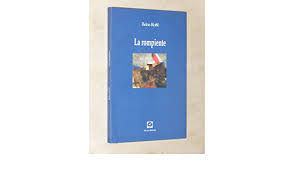


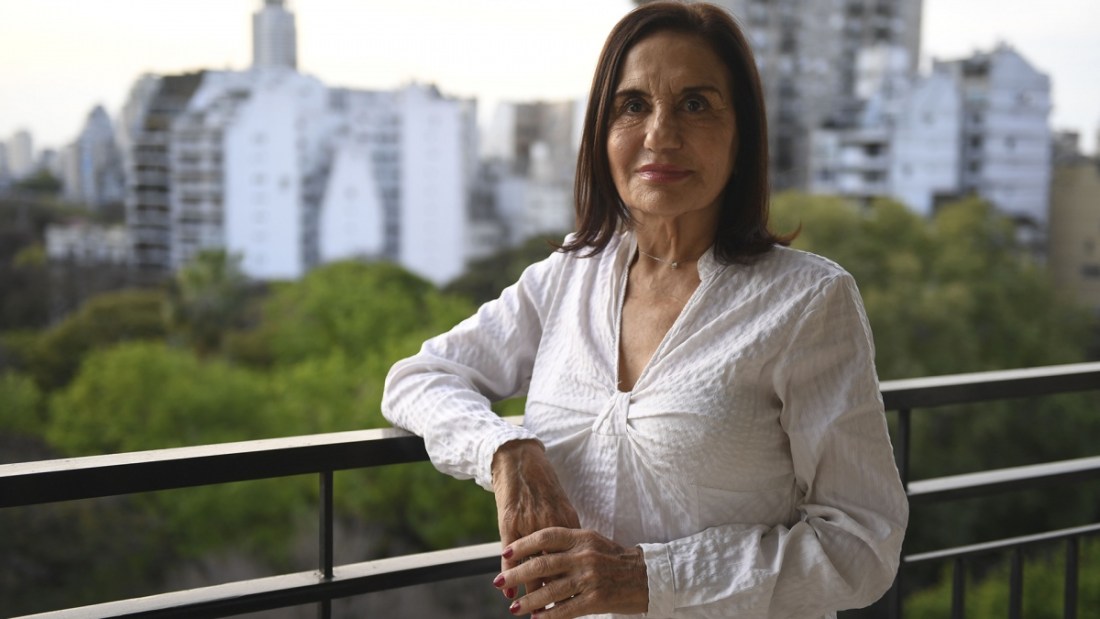















 ____________________________


